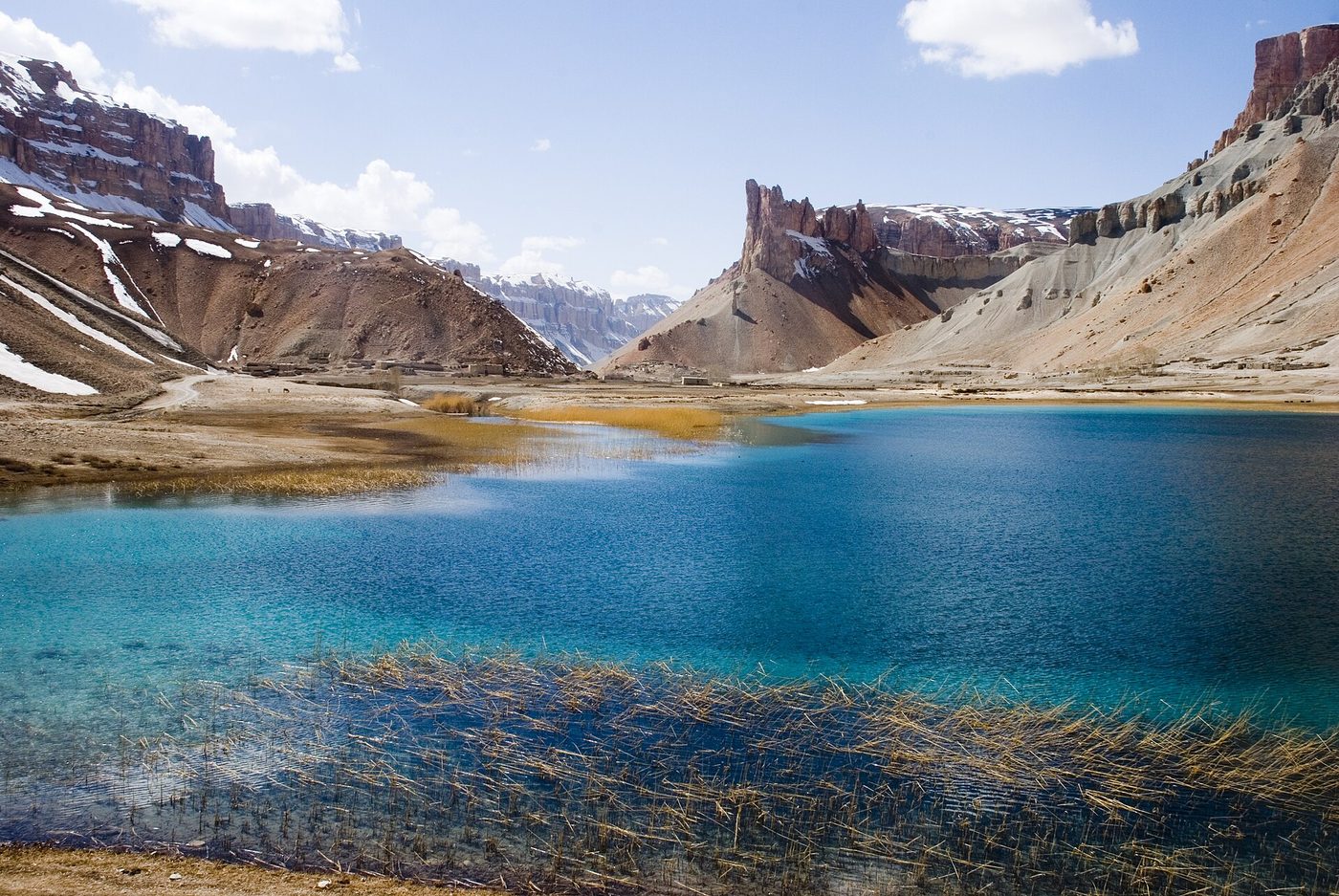
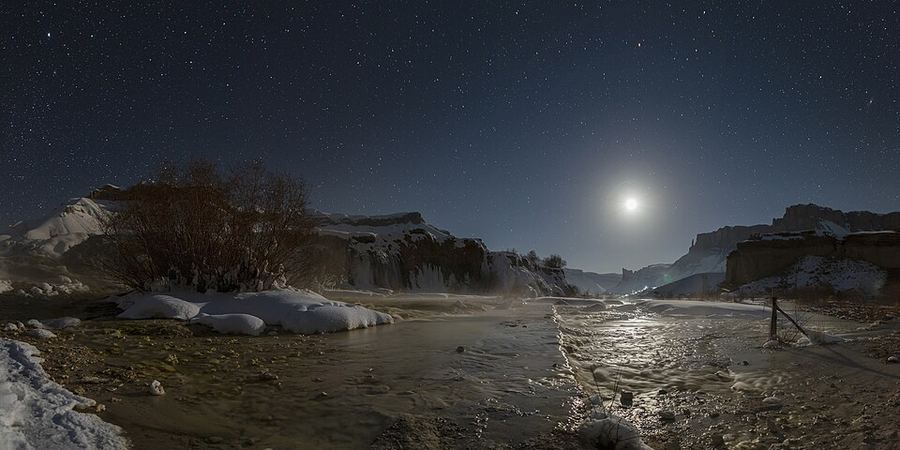
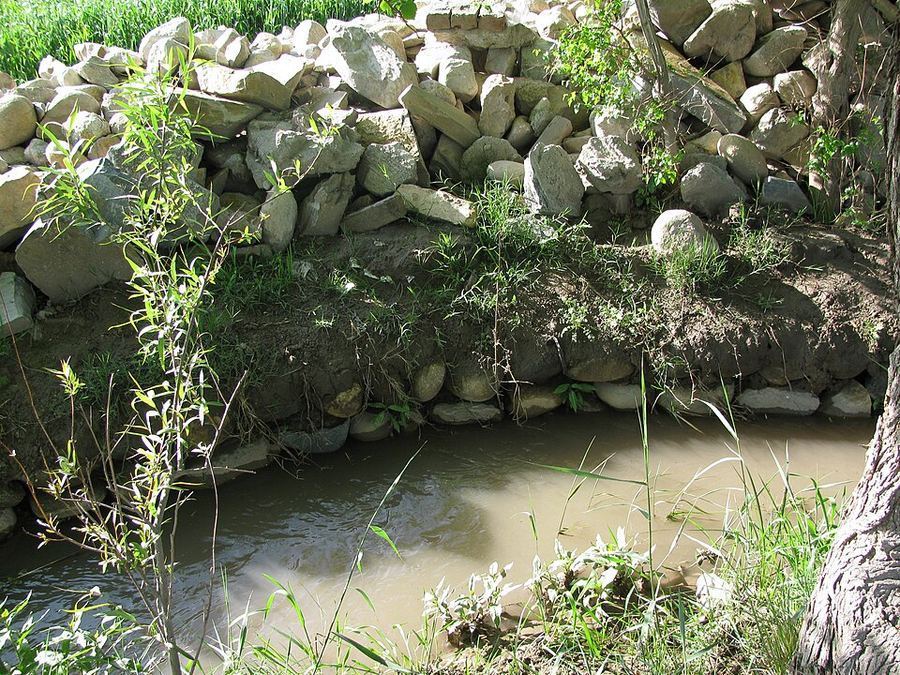
Lake in Band-e Amir National Park — Photo: Afghanistan Matters from Brunssum, Netherlands / CC BY 2.0 via Wikimedia Commons
Did You Know
Afghanistan and Pakistan are the last two countries on earth where wild poliovirus remains endemic, the final holdouts of a global eradication campaign that has otherwise succeeded everywhere. — WHO
Afghanistan is a landlocked country of roughly 49 million people at the junction of Central, South, and West Asia, built around the Hindu Kush range that runs diagonally across it from the Pamirs toward the Iranian plateau. Kabul is the capital. Its independence date of 19 August 1919 marks the end of British control over Afghan foreign affairs after the Third Anglo-Afghan War, though the state itself is conventionally traced to Ahmad Shah Durrani's founding of a Pashtun empire at Kandahar in 1747. Since August 2021 the country has been governed by the Taliban as a theocratic emirate, which the United States and most other states have declined to recognise. No reliable census data on ethnicity exists; the 2004 constitution enumerated Pashtun, Tajik, Hazara, Uzbek, Turkmen, Baloch, Pashai, Nuristani, Aymaq, Arab, Kyrgyz, Qizilbash, Gujjar, and Brahwui among others. Dari, the Afghan form of Persian, is spoken by 77 percent and Pashto by 48 percent, both official, and the overlapping figures reflect widespread multilingualism. The population is 99.7 percent Muslim, predominantly Sunni with a Shia minority of ten to fifteen percent, much of it Hazara. At a median age of 18.4 years Afghanistan has one of the youngest populations on earth, and with GDP per head near $2,000 it is among the poorest countries in Asia.
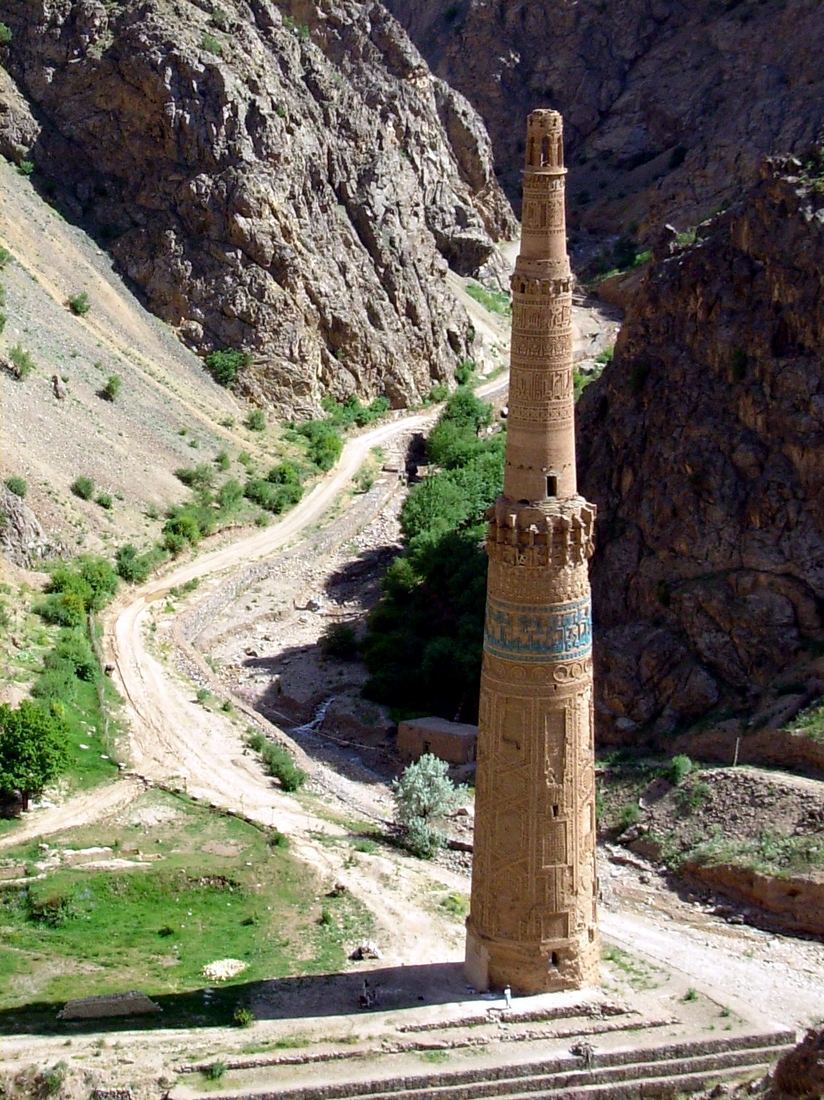
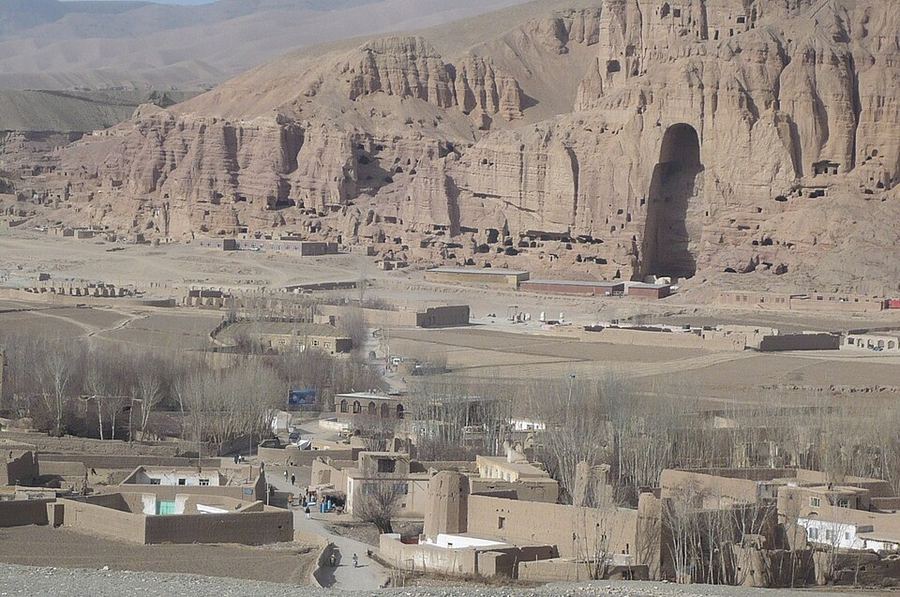
Few places have been conquered by more empires. Achaemenid Persia held Bactria and Arachosia; Alexander the Great campaigned through in 330 BCE, and the Greco-Bactrian kingdoms that followed left Hellenistic cities in the north. Ashoka's Mauryan empire reached Kandahar, where a rock edict inscribed in Greek and Aramaic still records his Buddhist proclamations. Under the Kushans, Buddhism flourished so richly that monks carved two colossal Buddhas into the cliffs at Bamiyan. Arab armies brought Islam in the seventh and eighth centuries; Mahmud of Ghazni built an empire reaching into India around the year 1000, and the Ghurids raised the minaret at Jam. Genghis Khan's armies annihilated Balkh, Herat, and Bamiyan in 1221. Timurid Herat under Shah Rukh and Queen Gawhar Shad became one of the great centres of Persianate art in the fifteenth century. Ahmad Shah Durrani founded the modern Afghan state in 1747. The nineteenth century brought the Great Game: Britain invaded three times and was mauled in the retreat from Kabul in 1842 and at Maiwand in 1880, and the Durand Line was imposed in 1893. Independence came in 1919; four decades of stability under Zahir Shah ended with the 1973 coup, the 1978 communist revolution, and the Soviet invasion of December 1979.
Afghan society is organised around family, lineage, and locality far more than around the state, and its most powerful cultural institution is hospitality. Among Pashtuns this is codified in Pashtunwali, an unwritten honour code whose principal obligations are melmastia, hospitality owed to any guest regardless of who they are, and nanawatai, the duty to grant sanctuary to someone who seeks it — obligations that carry real cost and are taken seriously. Badal, the requirement of reciprocity and revenge, and nang, honour, complete the code. Decision-making by consultative assembly is deeply rooted: village and tribal jirgas resolve disputes, and the loya jirga, a grand assembly of elders, has historically legitimated national decisions. Islam saturates public and private life, with Sufi orders, particularly the Naqshbandi and Qadiri, holding wide influence, and shrine visitation is central, above all to the blue-tiled shrine of Hazrat Ali at Mazar-i-Sharif. Poetry is a genuinely popular art rather than an elite one, recited in tea houses and at gatherings. Since August 2021 the Taliban authorities have imposed severe restrictions on women's movement, dress, employment, and education, and on music and public entertainment, altering daily cultural life profoundly.
Afghans take pride above all in a history of resisting foreign armies — a self-image summed up in the phrase graveyard of empires and drawn from the British retreats of 1842 and 1880 and the Soviet withdrawal of 1989. The country's cultural inheritance is extraordinary and is claimed accordingly: the poet Jalal al-Din Rumi was born at Balkh in 1207; Timurid Herat produced the miniature painting of Kamal ud-Din Behzad and the great musalla complex of Gawhar Shad; and the Gandhara school that flourished here produced what are generally regarded as the first anthropomorphic images of the Buddha. Afghanistan has two UNESCO World Heritage sites, the Cultural Landscape and Archaeological Remains of the Bamiyan Valley and the Minaret and Archaeological Remains of Jam, a sixty-five-metre twelfth-century Ghurid tower standing in a remote river valley — both inscribed on the List of World Heritage in Danger. The Bactrian Gold, more than twenty thousand gold objects excavated at Tillya Tepe in 1978, is a source of intense national pride, not least because museum staff concealed it through two decades of war and it emerged intact. Badakhshan's lapis lazuli has been mined and traded for some six thousand years.
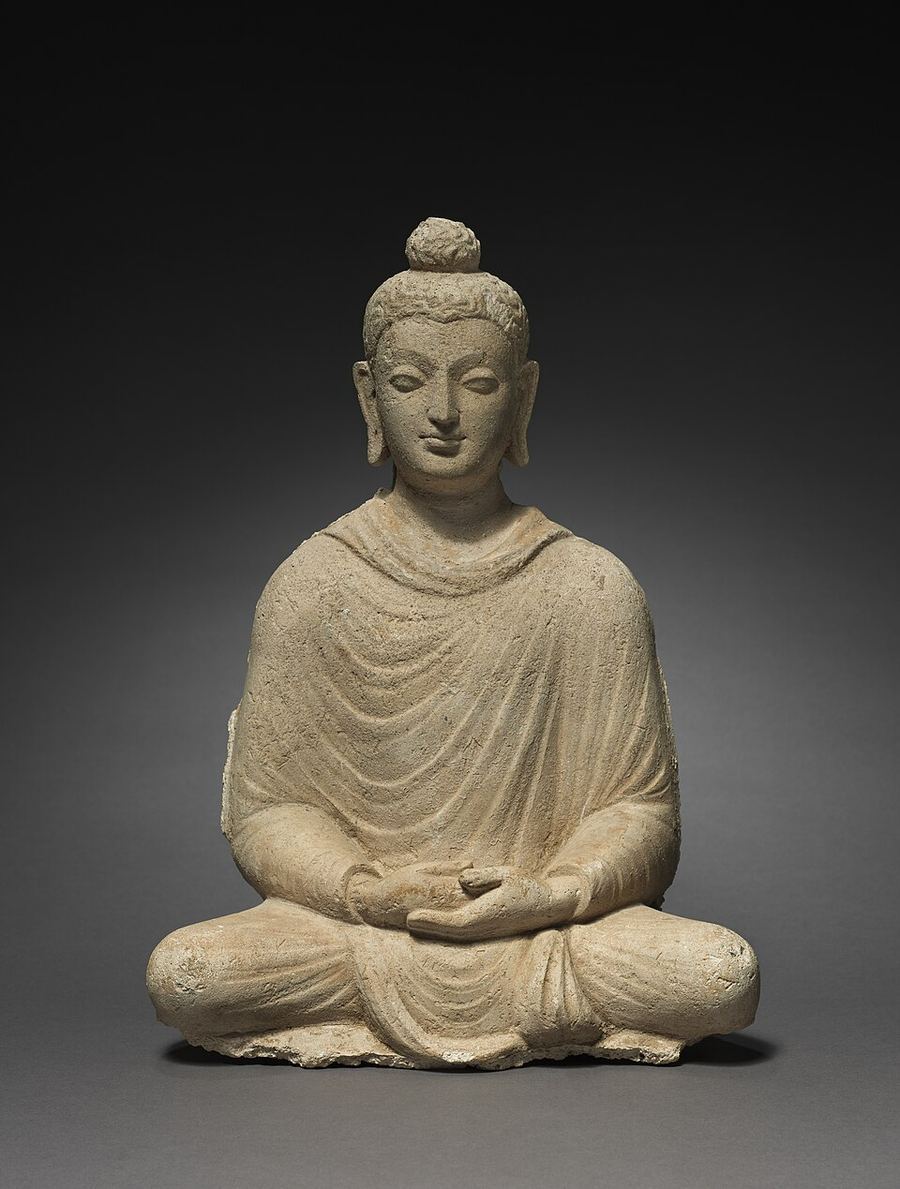
Afghanistan is where the Persian, Turkic, Indian, and Central Asian worlds meet, and the fusion is visible in its greatest art. Gandhara sculpture, produced in the region from roughly the first century CE, dressed the Buddha in the drapery of a Greek god and gave Buddhist iconography a Hellenistic body — the direct result of Alexander's successors settling among Buddhist populations. Ashoka's Kandahar edict, carved in Greek and Aramaic, is the same fusion in writing. Language layers the country similarly: Dari, a form of Persian, is the lingua franca and the medium of the classical literary tradition shared with Iran and Tajikistan; Pashto is an Eastern Iranian language with its own robust oral poetry; Uzbek and Turkmen are spoken across the north; and the Hazara of the central highlands speak a Persian dialect while carrying Mongol and Turkic descent and Shia faith. Timurid Herat fused Persian poetry, Chinese-influenced painting, and Islamic architecture into one of the most productive courts in Asian history. Even the country's material culture is hybrid: Afghan carpets follow Turkmen and Baluch design vocabularies, and Kabul's cuisine draws on Persian rice technique and Indian spicing in equal measure.
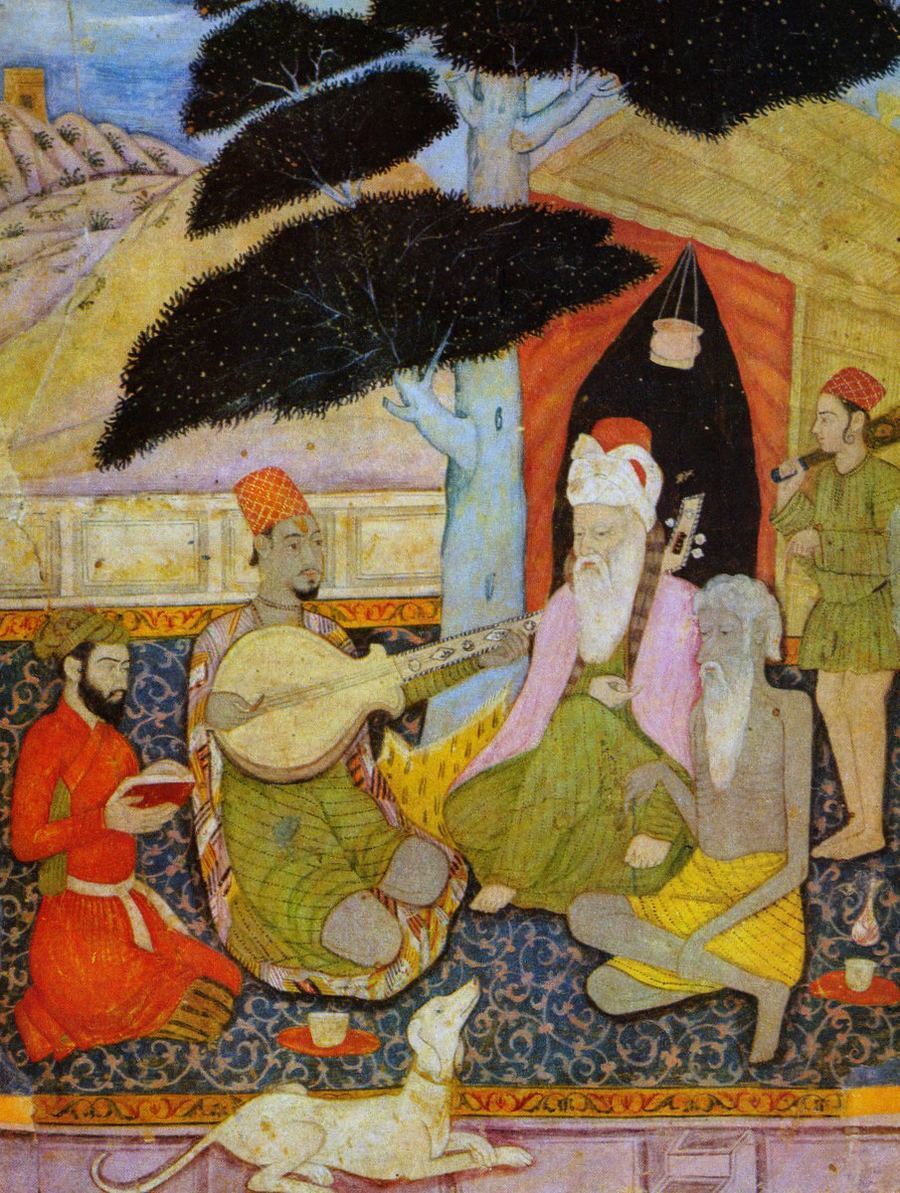
The rubab, a short-necked double-chambered lute carved from mulberry wood with sympathetic strings and a skin soundboard, is Afghanistan's national instrument and the ancestor of the Indian sarod. It anchored the classical tradition that developed in Kabul's Kucheh Kharabat, the musicians' quarter, where a school of Afghan art music grew from the nineteenth-century arrival of Indian court musicians and produced singers of the stature of Ustad Mohammad Hussain Sarahang. Popular music reached its widest audience with Ahmad Zahir, whose recordings from the 1960s and 1970s remain the country's most beloved and who is still called the Afghan Elvis. The national dance is the attan, a circular group dance of Pashtun origin performed to drum and surnai in accelerating rounds, danced at weddings and national occasions. Pashto has a remarkable oral form in the landay, a two-line folk couplet, anonymous and overwhelmingly composed and sung by women, in which grief, desire, and defiance are compressed into twenty-two syllables. The Hazara play the dambura, a two-stringed long-necked lute. Music was banned under Taliban rule from 1996 to 2001 and has been suppressed again since 2021; the Afghanistan National Institute of Music, founded in Kabul in 2010, was evacuated to Portugal in 2021 and continues in exile.
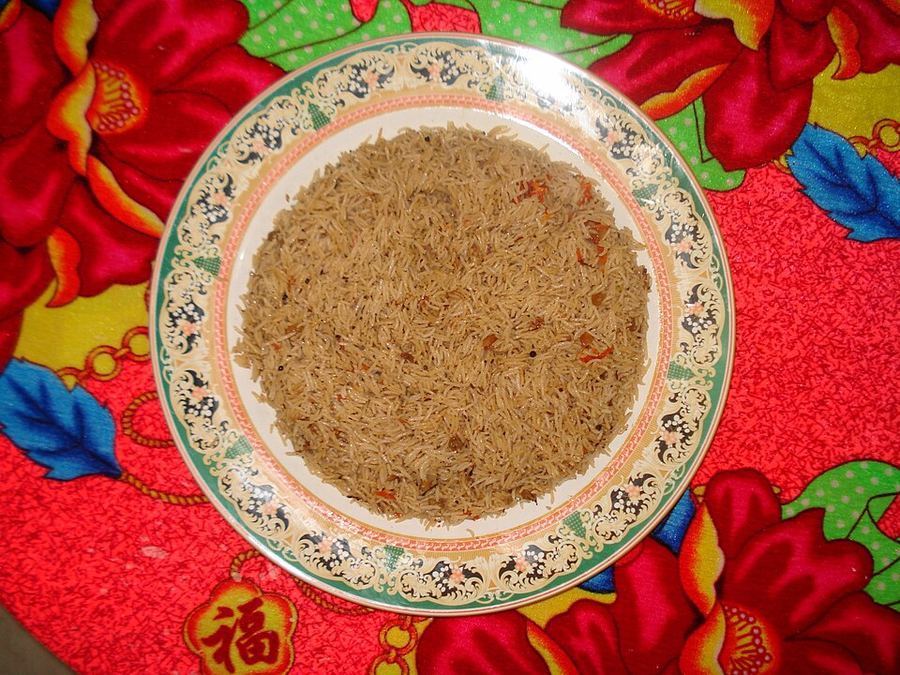
Kabuli pulao is the national dish and the centrepiece of any hospitality worth the name: long-grain rice steamed with lamb, crowned with julienned carrots caramelised in sugar, raisins, and sometimes slivered pistachio and almond, its balance of savoury and sweet inherited from Persian technique. Dumplings are a northern strength — mantu, filled with spiced minced beef or lamb and topped with yoghurt, tomato sauce, and dried mint, and ashak, filled with leek or chives and dressed the same way. Bolani are flatbreads stuffed with potato, leek, or pumpkin and shallow-fried. Qorma stews of meat with split peas, spinach, or okra are eaten with naan baked against the walls of a tandoor, and grilled meat runs from simple lamb kebab to the flattened, spiced chapli kebab of the eastern provinces. Meals close with firni, a rose- and cardamom-scented milk pudding, or with dried fruit and nuts. Tea is drunk constantly, green in the south and black in the north, and sheer chai — a salted, milky tea turned pink by the addition of soda — is a northern speciality. Kandahar pomegranates, Herat saffron, and Afghan raisins, almonds, and pistachios are the country's most valuable agricultural exports.
The universal Afghan garment is the perahan tunban, a long loose shirt reaching to the knees worn over wide drawstring trousers, made in cotton for summer and heavier cloth for the mountain winters. What is worn on the head signals region and allegiance more precisely than anything else: the lungee, a long turban wound in styles that differ between Kandahar and Kabul; the pakol, a soft rolled woollen cap from Nuristan and the northeast that became inseparable from the image of the mujahideen commander Ahmad Shah Massoud; and the karakul, a peaked cap of tightly curled lambswool worn by officials and urban men, which Hamid Karzai made internationally recognisable. Over these men wear a waistcoat or, formally, the chapan, a long striped coat of Central Asian origin draped over the shoulders. Women's dress varies enormously by region and ethnicity, from the heavily embroidered mirror-worked dresses of the Kuchi nomads to the fine khamak silk needlework of Kandahar, worn with a headscarf or chador. The pleated-crown blue chadari, the full-body veil most associated internationally with Afghanistan, is an urban garment of relatively recent standardisation; a Taliban decree in May 2022 required women to cover their faces in public.
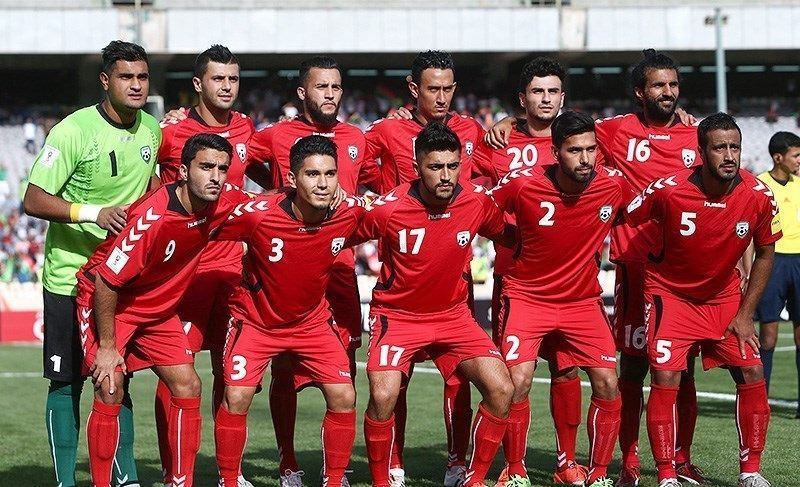
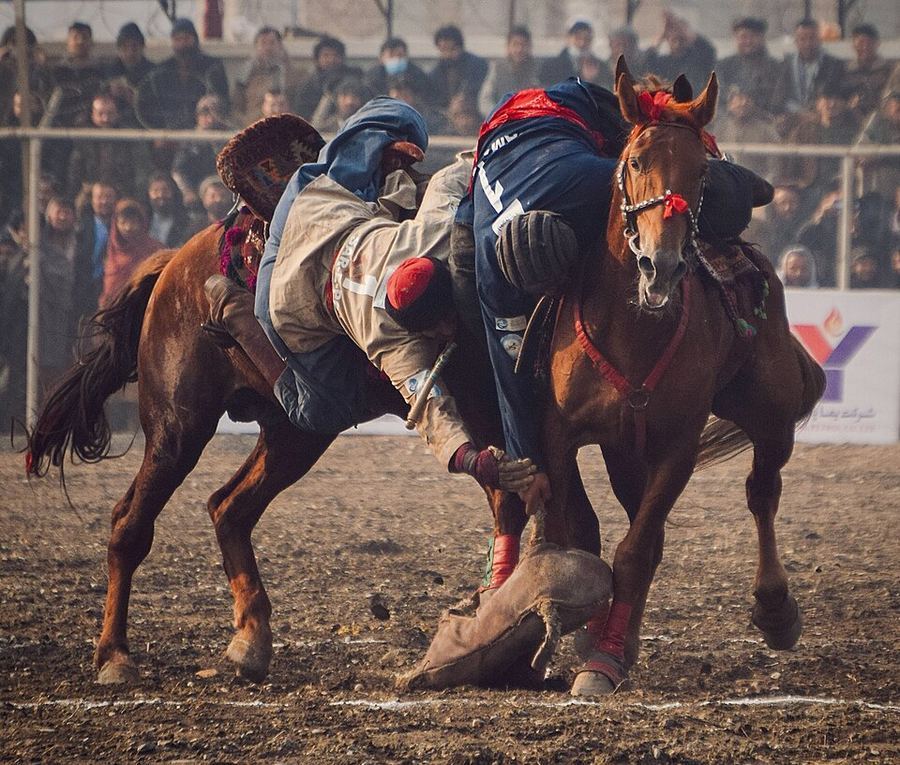
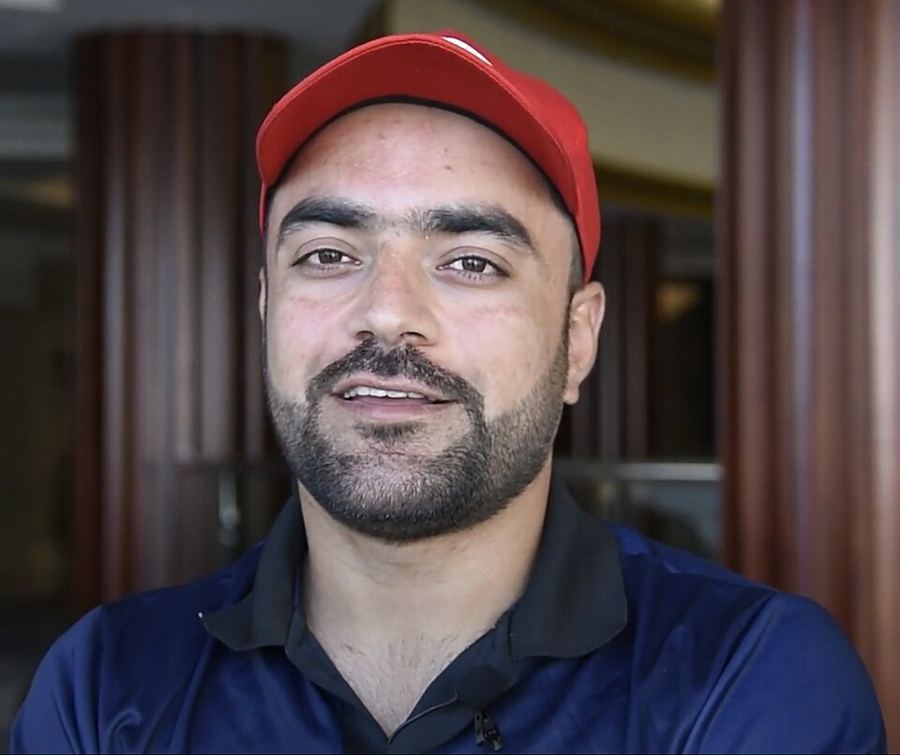
Buzkashi is the traditional national sport, a mounted contest for possession of a calf carcass that demands exceptional horsemanship and has no close equivalent outside Central Asia. But the sport that now defines Afghanistan internationally is cricket, and its origins are unusual: Afghan boys learned the game in refugee camps in Pakistan during the 1980s and 1990s and brought it home, so that a country with no colonial cricketing history built a national side from displacement. Progress was rapid — one-day international status in 2009, a first World Cup appearance in 2015, and full membership of the International Cricket Council with Test status in 2017. Rashid Khan became one of the most sought-after leg-spinners in world franchise cricket, and Mohammad Nabi and Mujeeb Ur Rahman have had similar international careers. Football is the most widely played sport at grassroots level, and the national team won the South Asian Football Federation Championship in 2013. Afghanistan's only Olympic medals are two bronzes in taekwondo won by Rohullah Nikpai, at Beijing in 2008 and London in 2012. Women's national teams in cricket and football have operated from exile in Australia and Europe since 2021, when women's sport was prohibited at home.
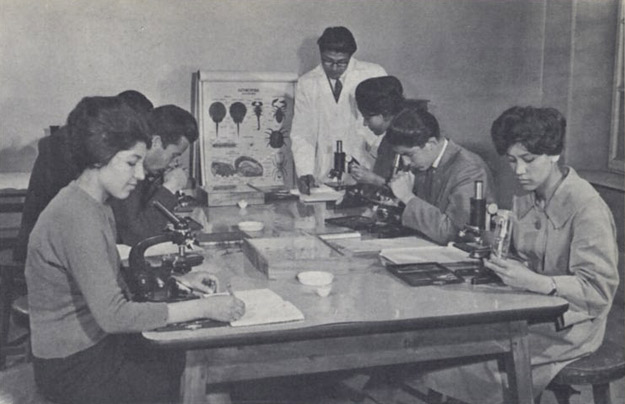
Afghanistan is the only country in the world that bars girls from secondary education and women from universities. The Taliban authorities suspended girls' attendance beyond grade six in September 2021 and closed universities to women in December 2022, prohibitions that UNESCO estimates have removed well over a million girls from classrooms and which remain in force. The reversal is the more severe because of what preceded it: between 2001 and 2021 enrolment expanded from a very low base to several million girls in school, and women entered universities, the professions, and public life in large numbers. Overall adult literacy remains low, and markedly lower among women. The institutional inheritance is older than the recent turmoil — Kabul University was founded in 1932 and its medical faculty trained the country's doctors for generations, and Kabul Polytechnic, Herat University, and Nangarhar University followed. Much of the teaching faculty has left the country. Community-based education, private tuition, and online schooling have partially substituted for formal provision, and international organisations have continued to fund primary schooling and literacy programmes where they can operate. Rebuilding human capital is widely identified as the country's binding long-term constraint.
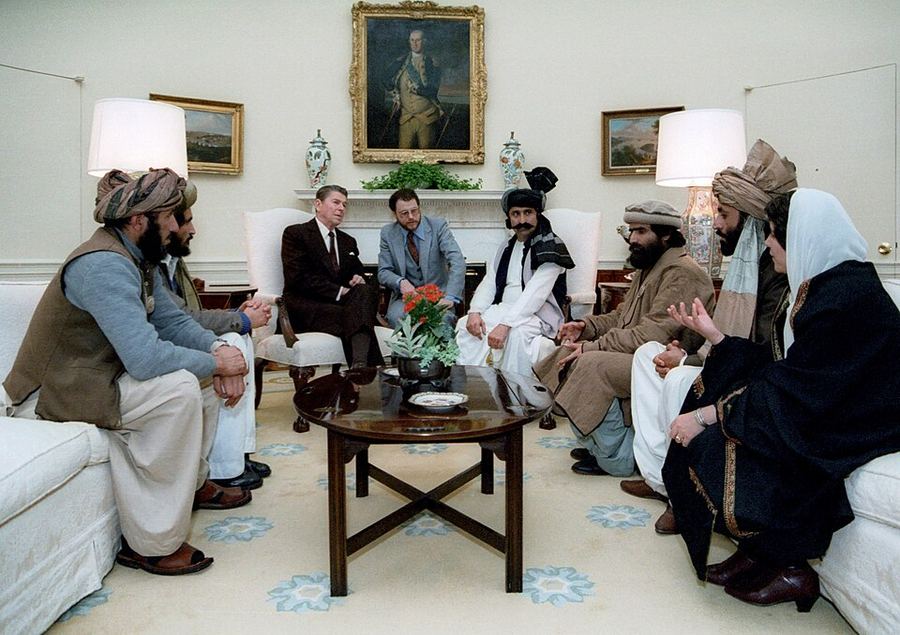
Afghanistan has been at war almost continuously since 1978. The communist coup of that year and the Soviet invasion of December 1979 produced a decade of insurgency that ended with Soviet withdrawal in February 1989; civil war among mujahideen factions followed, the Taliban took Kabul in 1996, and the United States-led intervention after the September 2001 attacks removed them. Two decades of insurgency ended with the Doha agreement of February 2020 and the Taliban's return to Kabul on 15 August 2021. Fighting has not stopped. Islamic State Khorasan Province conducts bombings against the Taliban authorities and against Shia Hazara civilians, and the National Resistance Front maintains limited armed opposition in the northeast. The most serious escalation has been with Pakistan, driven by Taliban tolerance of the Tehrik-e Taliban Pakistan: after an ISKP bombing in Islamabad in February 2026, Pakistan struck Afghan territory, Taliban forces counterattacked along the Durand Line in Khost, Paktia, Nangarhar, and Kunar on 26 February, and Pakistan bombed Kabul on 27 February. A mediated ceasefire lapsed and fighting resumed in March 2026. Layered on this is one of the world's largest humanitarian crises, with about 22 million people needing assistance in 2026 amid drought, earthquakes, and mass returns of refugees from Pakistan and Iran.
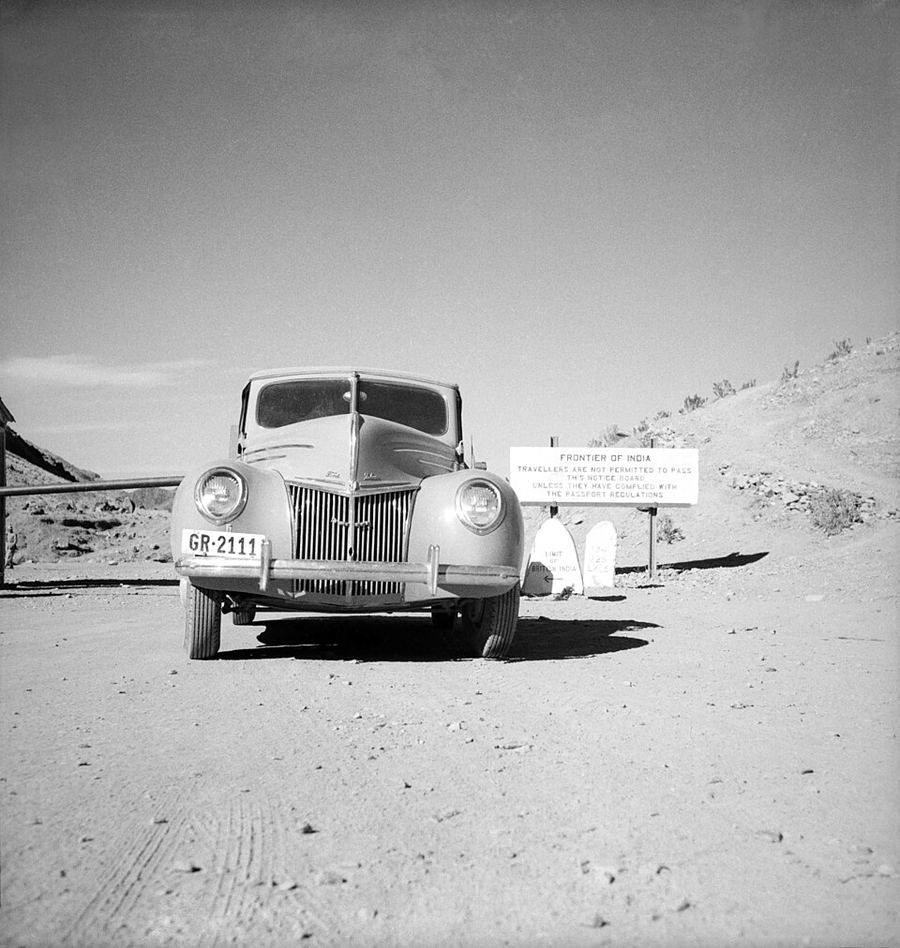
Afghanistan's defining dispute is the Durand Line, the 2,640-kilometre boundary with Pakistan demarcated in 1893 by the British official Sir Mortimer Durand. It cuts through Pashtun tribal territory, dividing the population on both sides, and no Afghan government — monarchy, republic, communist, or Taliban — has ever formally recognised it as an international frontier, a rare continuity across otherwise irreconcilable regimes. Pakistan regards the question as closed and has fenced most of the line since 2017, which Kabul rejects; the fencing, cross-border militant sanctuary, and the resulting military exchanges are the substance of the 2026 fighting. Water is the second front. The Helmand River treaty signed with Iran in 1973 allocates flows into the Sistan basin, but Iranian authorities have accused successive Afghan governments of withholding water behind the Kajaki and Kamal Khan dams during a prolonged drought, and border clashes broke out over the issue in 2023. In the north, the Qosh Tepa canal begun in 2022 will divert a substantial volume from the Amu Darya to irrigate Balkh and Jowzjan, alarming Uzbekistan and Turkmenistan, which depend on the same river and were not party to any allocation agreement covering Afghan withdrawals.
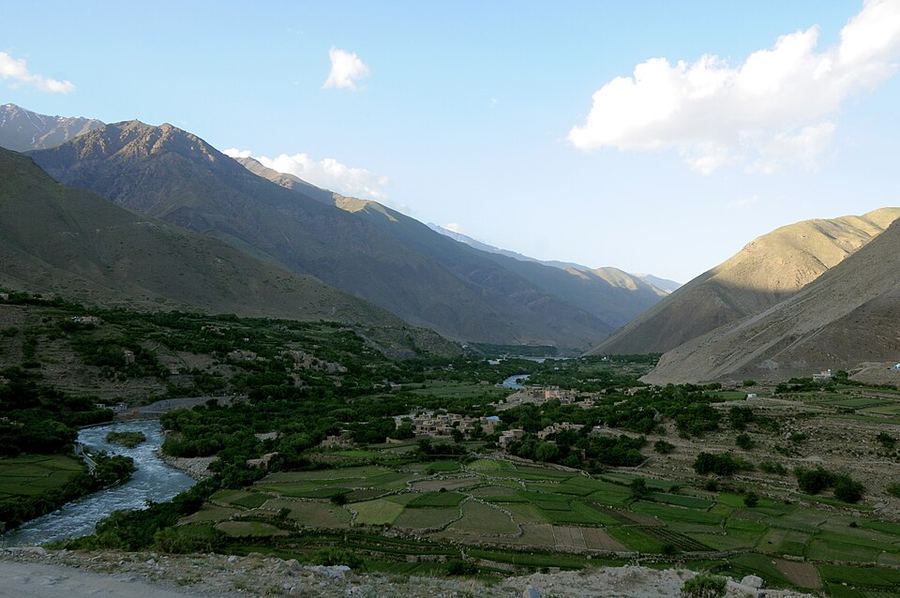
Afghanistan covers about 652,000 square kilometres and is entirely landlocked, sharing borders with Pakistan, Iran, Turkmenistan, Uzbekistan, Tajikistan, and — through the narrow Wakhan Corridor, a strip created deliberately in the 1890s as a buffer between the Russian and British empires — China. The Hindu Kush dominates the country, running from the Pamir knot in the northeast toward the southwest and rising to Noshaq at 7,492 metres; its passes, above all the Salang, have determined the movement of armies and trade for millennia. North of the range lie the fertile plains sloping to the Amu Darya, the frontier river; south and west stretch the Registan and Dasht-e Margo deserts and the endorheic Sistan basin fed by the Helmand river. Band-e-Amir, a chain of deep blue lakes dammed by natural travertine walls in the central highlands, became Afghanistan's first national park in 2009. The climate is arid to semi-arid continental, with bitterly cold, snow-laden mountain winters and hot dry summers, and rainfall concentrated in winter and spring. The Hindu Kush is seismically violent: magnitude-six earthquakes in eastern Afghanistan in August 2025 and in the north that November killed and displaced large numbers. Recurrent drought is the country's most persistent hazard.
Buzkashi is the great Afghan spectacle: mounted riders known as chapandaz compete to seize a headless calf carcass and carry it around a marker and into a scoring circle, in matches that can involve dozens of horsemen and last for hours. It is strongest in the northern provinces and is played at Nowruz and on national occasions. Kite flying — gudiparan bazi — is the other emblematic pastime, a competitive sport in which flyers coat their lines with powdered glass and manoeuvre to cut opponents' strings, with children running down the falling kites; it was banned during the first period of Taliban rule. Pigeon keeping, wrestling, and dog fighting have traditional followings. Everyday sociability happens in the chaikhana, the tea house, over green tea and long conversation, and in extended family gatherings. Nowruz on 21 March is the largest festival of the year, celebrated with picnics, the sabzi challow meal, and above all the Gul-e Surkh red flower festival at Mazar-i-Sharif, where the raising of the janda banner at the shrine of Hazrat Ali draws pilgrims from across the country. Cricket has in two decades become the most widely played and watched modern sport. Public entertainment and women's access to parks and recreation have been sharply curtailed since 2021.
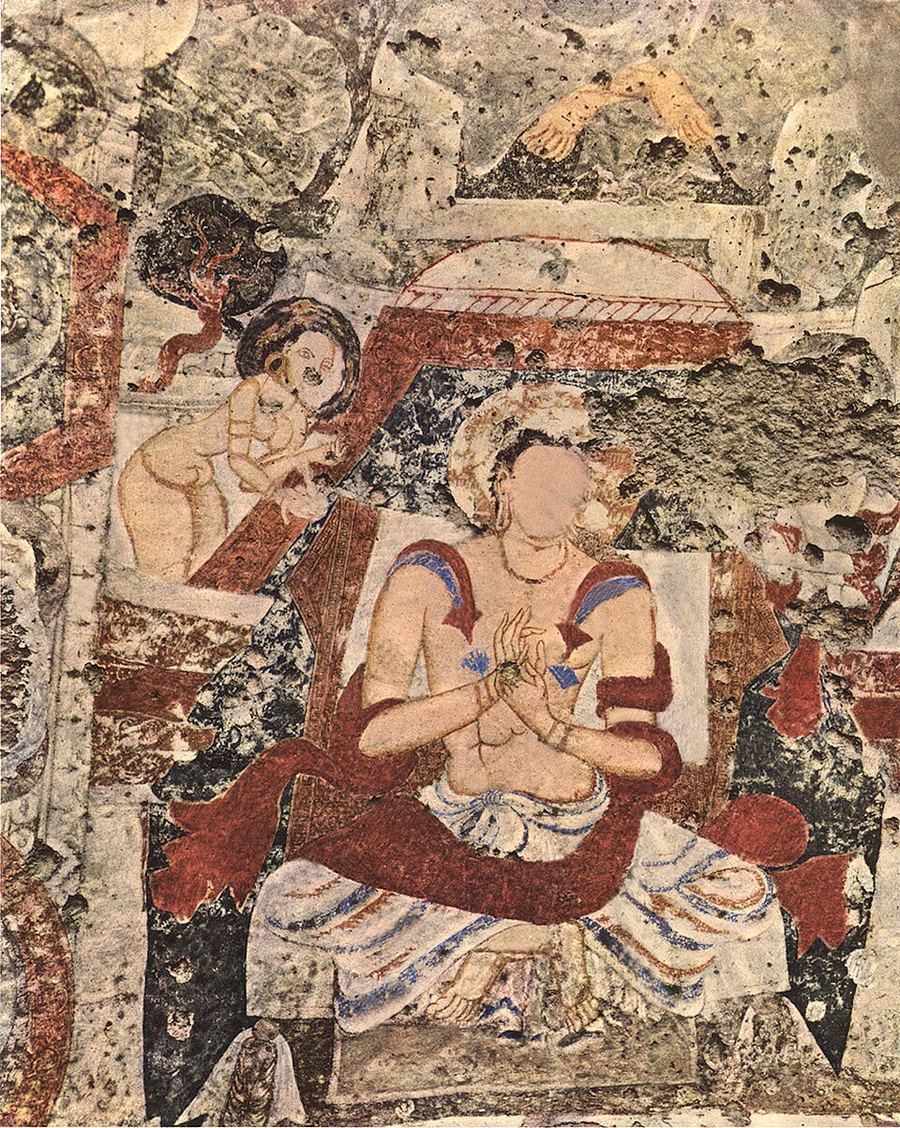
Afghanistan's artistic record is one of the richest and most damaged in Asia. The Gandhara school produced Greco-Buddhist sculpture of great refinement, and the two colossal Buddhas carved into the Bamiyan cliffs in about the sixth century, fifty-five and thirty-eight metres tall, were among the largest standing statues in the world until the Taliban dynamited them in March 2001. The caves behind them proved to hold something remarkable: analysis published in 2008 identified the seventh-century murals there as the oldest known oil paintings anywhere, using drying oils centuries before the technique appeared in Europe. Timurid Herat in the fifteenth century was the summit of Persian miniature painting under Kamal ud-Din Behzad, whose compositional innovations shaped Persian and Mughal painting for two centuries. Islamic calligraphy, tilework, and the blue glass of Herat continue as living crafts, alongside the turquoise-glazed pottery of Istalif north of Kabul. Carpet weaving remains the most economically significant art form, following Turkmen and Baluch design traditions; since the 1980s Afghan weavers have produced war rugs incorporating helicopters, tanks, and Kalashnikovs into traditional layouts, a documented folk response to four decades of conflict now collected internationally.
Jalal al-Din Muhammad Rumi, the thirteenth-century Sufi poet whose Masnavi is among the most widely read works of Persian literature, was born at Balkh in 1207 and is claimed by Afghanistan as its own. Mahmud of Ghazni built an empire from Ghazni around the year 1000 and drew the polymath al-Biruni to his court, where much of that scholar's astronomical and Indological work was written and where he died in 1048. Ahmad Shah Durrani, crowned at Kandahar in 1747, is honoured as the founder of the nation. Amanullah Khan won independence in 1919 and attempted rapid modernisation; Zahir Shah's four decades on the throne from 1933 are remembered as the country's longest peace. Ahmad Shah Massoud, the Panjshiri commander who fought both the Soviets and the Taliban, was assassinated on 9 September 2001 and remains a national figure for many Afghans. Hamid Karzai led the post-2001 state for over a decade. In music, Ahmad Zahir and Ustad Sarahang remain the defining voices, and Ahmad Sarmast founded the Afghanistan National Institute of Music. Khaled Hosseini, the Kabul-born novelist of The Kite Runner, is the country's most widely read modern writer, and Rashid Khan is among the leading spin bowlers in world cricket.
Afghanistan's contribution to invention belongs largely to antiquity and to the medieval Islamic world rather than to the modern period, and it would be dishonest to claim otherwise for a country whose research capacity has been dismantled by more than four decades of war. Two ancient technologies of the region endure. The karez, the underground irrigation tunnel that taps a mountain aquifer and carries water many kilometres by gravity with almost no evaporative loss, has watered Afghan settlements for well over two thousand years and remains in use in Kandahar and the south; it is the same system UNESCO recognises in its Persian form. The earliest documented windmills anywhere were the vertical-axis mills of the Sistan region straddling the modern Afghan-Iranian border, described by Arab geographers by the ninth century and used to grind grain and lift water. In art, the Gandhara workshops of the region produced what are generally accepted as the first images of the Buddha in human form, an iconographic innovation that spread across all of Buddhist Asia. Al-Biruni, working at Ghazni under Mahmud, devised a method for calculating the Earth's radius from a single mountaintop observation and produced a pioneering comparative study of Indian science and religion.
Afghanistan's scientific capacity today is minimal, the consequence of four decades of war, the departure of much of its educated population, and the exclusion of women from higher education since 2022. The historic high point was medieval: al-Biruni, working at Ghazni in the eleventh century, calculated the Earth's radius by measuring the dip of the horizon from a mountain and wrote a comparative account of Indian astronomy and religion that is still read. The country's most consequential modern technological question is mineral. A United States Geological Survey assessment published in 2010 identified very large deposits of iron, copper, cobalt, gold, and lithium and rare-earth potential, and the Mes Aynak copper deposit southeast of Kabul is among the largest undeveloped copper resources in the world — complicated by the fact that it sits directly on top of an extensive Buddhist monastic complex, creating an unresolved conflict between extraction and archaeology. Almost none of this wealth has been developed, for want of security, capital, power, and transport. Where technology has genuinely reached ordinary Afghans is mobile telephony, which expanded rapidly after 2001 and carries mobile money and information services, though periodic internet restrictions have curtailed it. Afghanistan and Pakistan remain the only two countries where wild poliovirus is endemic.
Cricket is Afghanistan's route onto the world stage and has produced results out of all proportion to the country's resources. Since gaining Test status in 2017 the national side has beaten established nations in all formats, and at the ICC Men's T20 World Cup in 2024 it defeated Australia in the group stage and reached the semi-finals — the country's best result in any global sporting competition. Afghan players are fixtures of the franchise circuit, with Rashid Khan a leading wicket-taker in the Indian Premier League, the Big Bash, and competitions across Asia, the Caribbean, and England. Afghanistan has competed at the Summer Olympic Games intermittently since 1936, was excluded under the first period of Taliban rule, and has taken part continuously since 2004; its two medals both came in taekwondo through Rohullah Nikpai. The country's Olympic participation has become a live governance question, with the International Olympic Committee maintaining pressure over the exclusion of women athletes and Afghan delegations to recent Games including women competing from exile. Afghan footballers and mixed martial artists have built careers abroad, and the diaspora sustains much of the country's competitive presence internationally.