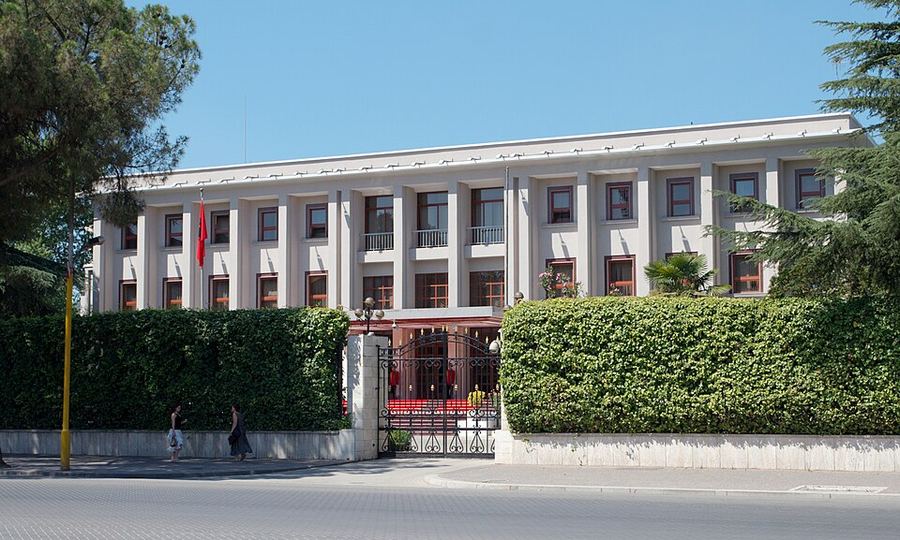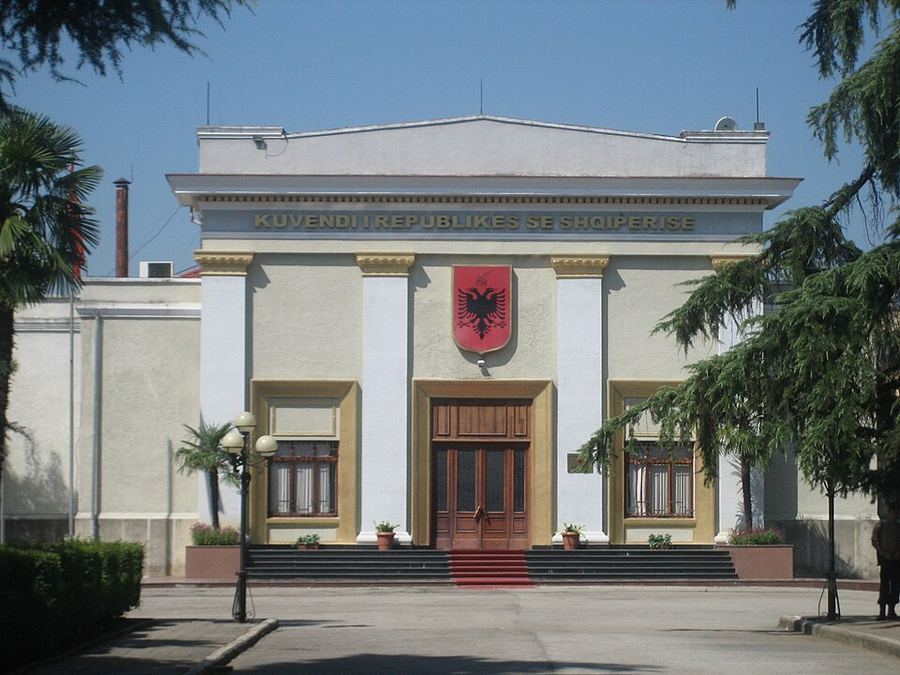
HERA · Human Entity Reference Atlas by Masego Inc

← Albania 🌐 3D View
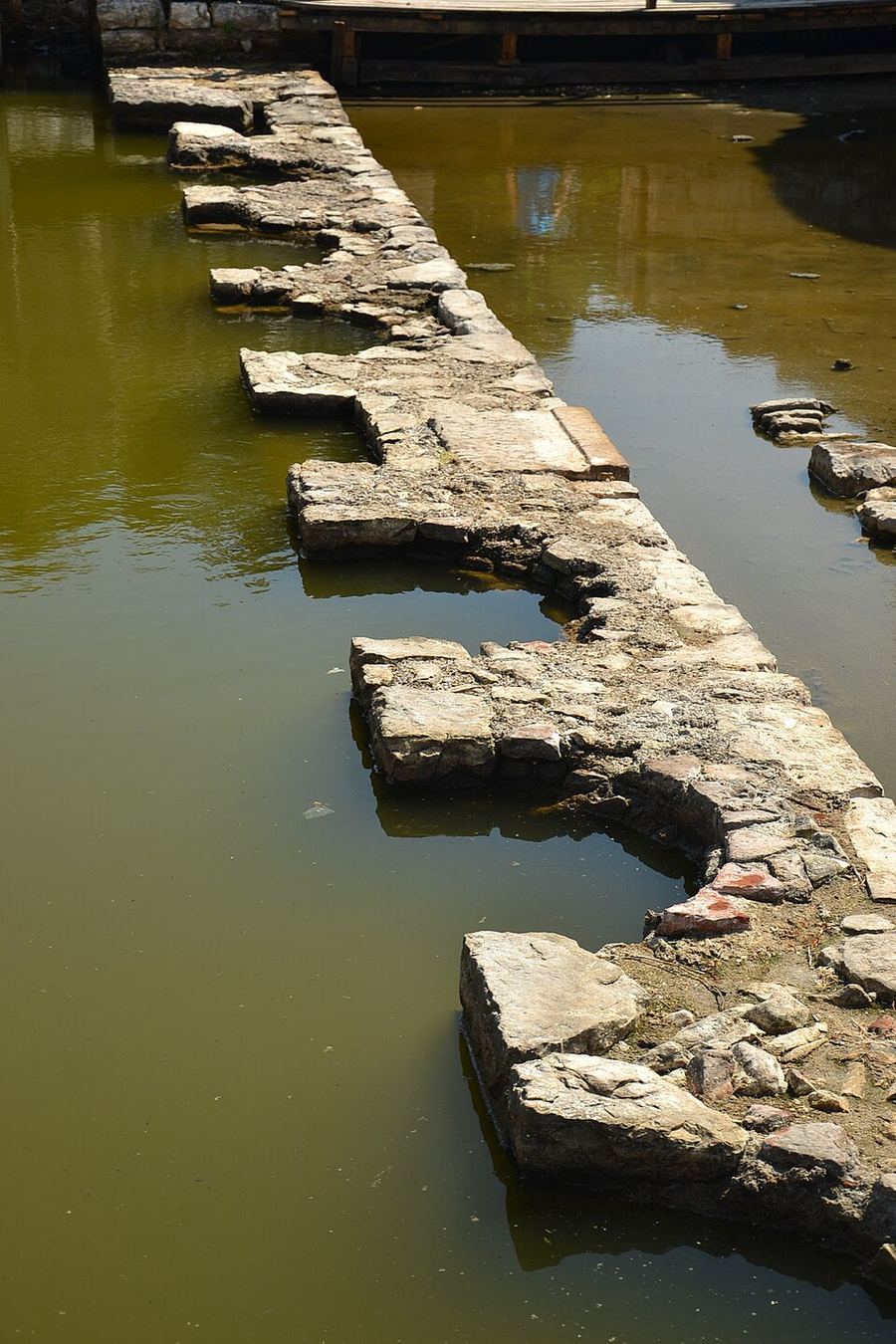
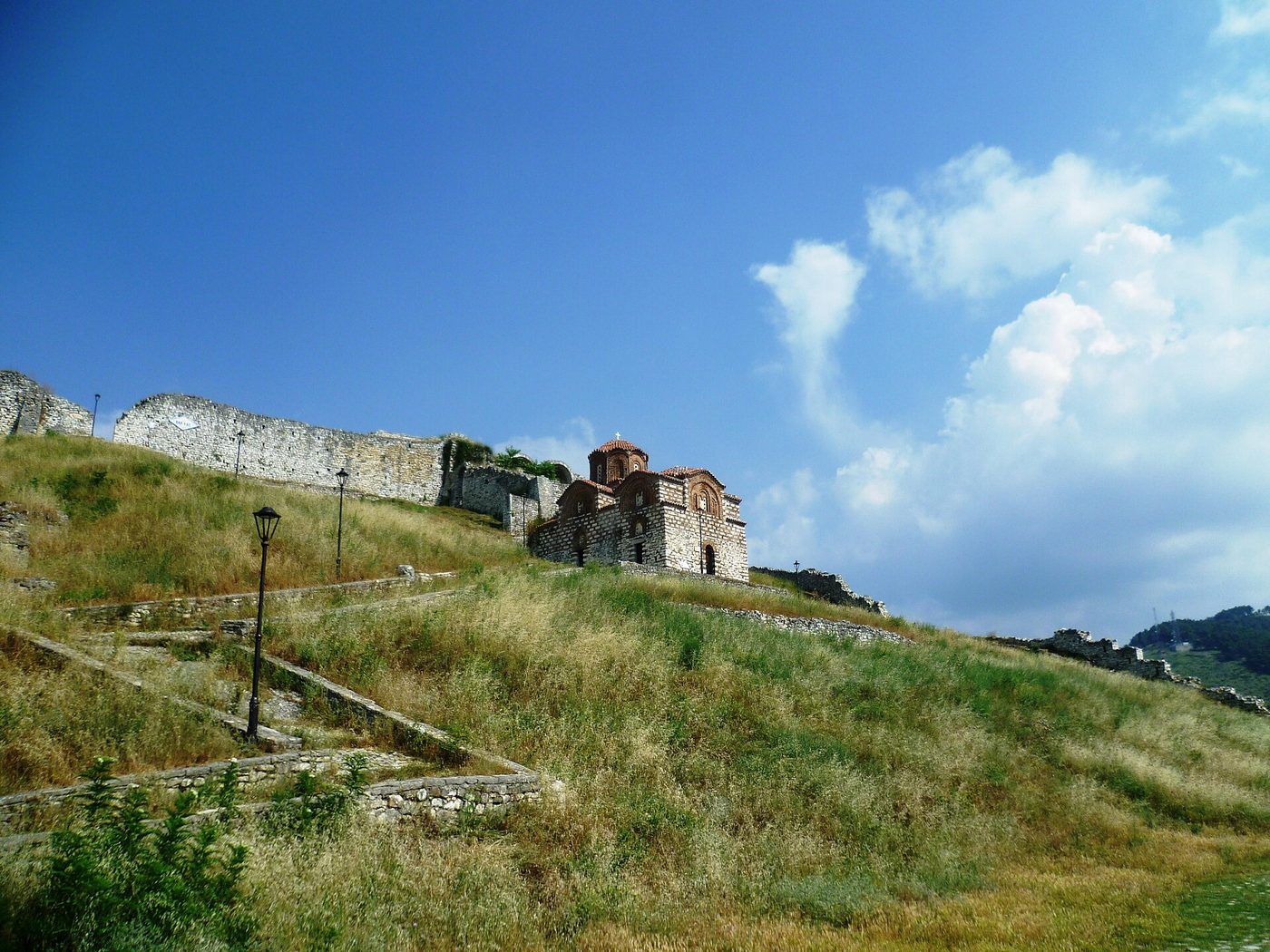
Berat Old Town Trinity Church, Albania
Albania ALB
Berat Old Town Trinity Church — Photo: Radosław Botev / CC BY-SA 4.0 via Wikimedia Commons
Did You Know Italy alone buys 41% of Albania's exports — mostly garments and footwear made under contract for Italian brands. — CIA World Factbook

Albania is a parliamentary republic of about 2.55 million people on the western edge of the Balkan Peninsula, facing Italy across the narrow Strait of Otranto and holding coastlines on both the Adriatic and the Ionian seas. Tirana, the capital, has grown from a modest Ottoman town into the country's dominant city in the space of a single generation. Albanians speak a language that forms its own independent branch of the Indo-European family, with no close living relative — a linguistic isolation that mirrors much of the country's history. Albania declared independence from the Ottoman Empire at Vlorë on 28 November 1912, and after the Second World War fell under one of the most severe and isolated communist regimes in Europe, which sequentially broke with Yugoslavia, the Soviet Union and China, and in 1967 declared itself the world's first officially atheist state. That system collapsed in 1990–92, and the country has spent the decades since rebuilding: it joined NATO in 2009 and became a candidate for European Union membership in 2014. Religion is unusually plural and unusually low-conflict — 56.7% Muslim, 10% Roman Catholic, 6.8% Orthodox, with a Bektashi Sufi community whose world headquarters is in Tirana. Garments, footwear and electricity lead exports, and Italy alone takes 41% of them.

CIA World FactbookEncyclopaedia Britannica
Population
2,551,837
Capital
Tirana (Tirane)
Currency
L ALL
Time zones
Largest city
Tirana
Human Geography Themes
Loading national figures…
Largest Cities
Tirana995,789
Durrës140,245
Vlora91,747
Shkoder78,935
Elbasan73,595
Fier55,279
In Perspective

Tirana's urban core is home to about 995,789 people.

Among the world's megacities, though, it's one of many — the giants of Asia and Latin America run larger still:

Tirana995,789
Jakarta40,545,126
Dhaka37,307,160
Tokyo33,244,670
Shanghai30,678,616
Cairo25,230,325
The Country & Its People

History

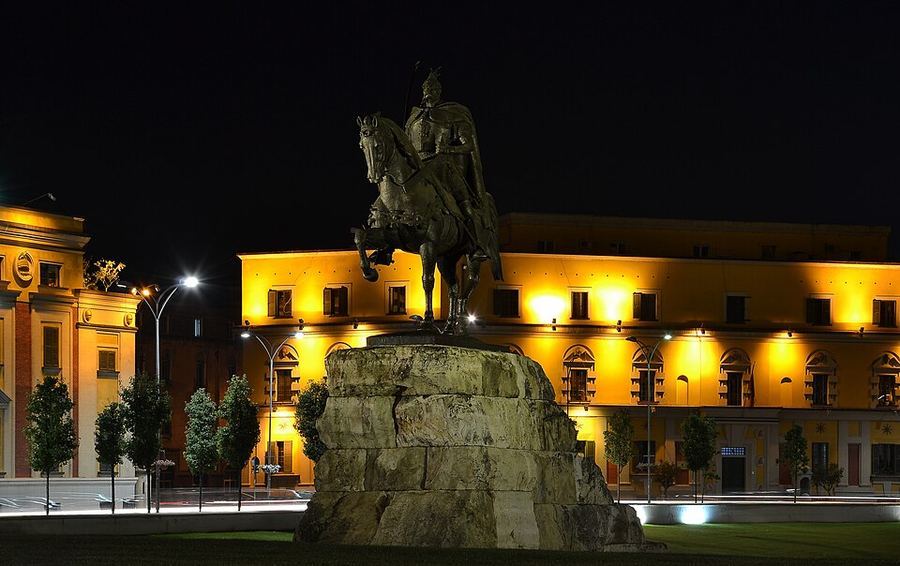
Albanians trace their ancestry to the Illyrians, the peoples of the western Balkans absorbed into the Roman province of Illyricum and later ruled from Byzantium. The formative national figure is Gjergj Kastrioti, called Skanderbeg, who from his stronghold at Krujë led a quarter-century of resistance to Ottoman expansion between 1443 and his death in 1468 — a campaign that made him a European cause célèbre and, four centuries later, the central symbol of Albanian nationhood. Ottoman rule followed and lasted more than four hundred years, during which the majority of the population converted to Islam and Albanians rose to high office across the empire. The nineteenth-century Rilindja, or National Awakening, produced the League of Prizren in 1878 and the standardisation of a single Albanian alphabet at the Congress of Manastir in 1908; independence was declared by Ismail Qemali at Vlorë on 28 November 1912. The interwar decades brought Ahmet Zogu, who made himself King Zog I in 1928, and then Italian invasion in 1939. Enver Hoxha's communist party took power in 1944 and held it until his death in 1985, imposing an isolation so complete that the country broke in turn with Yugoslavia, the Soviet Union and China. The regime fell between 1990 and 1992; a 1997 collapse of nationwide pyramid schemes brought the state close to disintegration before it stabilised.
Culture

Two ideas organise a great deal of Albanian social life, and both have names. Besa is the obligation of honour attached to a given word — the promise that must be kept whatever it costs — and it underwrites the country's reputation for hospitality, including the widely documented sheltering of Jewish refugees during the Second World War. The Kanun, the body of customary law associated with Lekë Dukagjini, codified everything from property and marriage to hospitality and, notoriously, gjakmarrja, the blood feud; it also produced the burrnesha, the sworn virgin who took an oath of celibacy to live and be treated socially as a man, a practice now nearly extinct. Language is the other pillar: Albanian is its own branch of Indo-European, divided into the northern Gheg and southern Tosk dialects, with the standard literary form built on Tosk. Religious identity is real but unusually lightly worn — 56.7% Muslim, 10% Catholic, 6.8% Orthodox, and a Bektashi Sufi order whose world centre is in Tirana — and mixed families and shared festivals are ordinary. Coffee is the medium of social life, and the xhiro, the evening walk along a town's main street, remains a genuine daily institution rather than a nostalgic one.

Points Of Pride

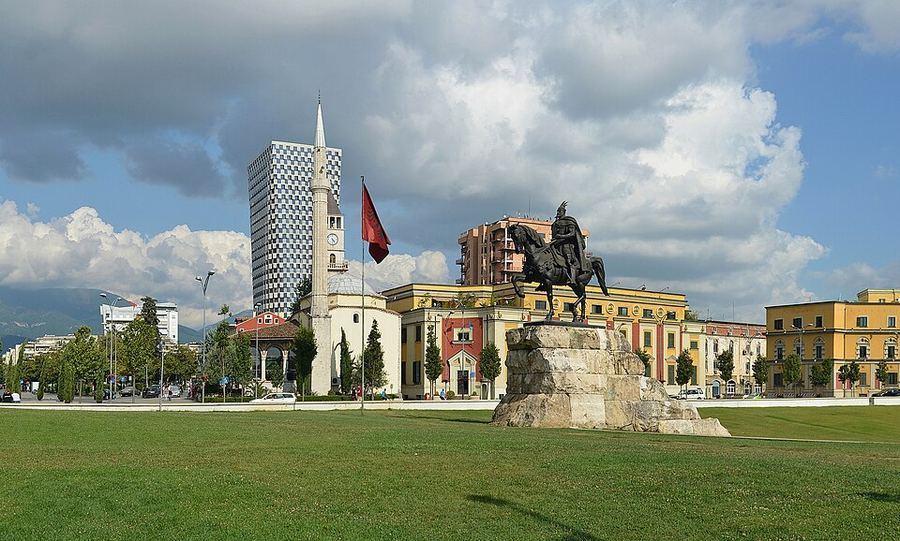
Skanderbeg comes first — the fifteenth-century commander who held off Ottoman armies for twenty-five years and whose equestrian statue anchors Tirana's central square. Albanians point next to religious coexistence, and specifically to the wartime record: Albania is cited as a country whose Jewish population was larger at the end of the Second World War than at its start, a rescue attributed to the obligations of besa. UNESCO has inscribed four cultural properties connected to Albania: the ancient city of Butrint, the historic centres of Berat and Gjirokastër, and the Ohrid region shared with North Macedonia, alongside the country's primeval beech forests. On the intangible list sit Albanian iso-polyphony, the layered unaccompanied singing of the south, and the xhubleta, the bell-shaped women's dress of the northern highlands. The Albanian language itself is a point of pride precisely because it stands alone in Indo-European. More recent achievements include the Vjosa, declared a national park in 2023 and promoted as Europe's first wild river park, protecting one of the continent's last large undammed rivers; the writer Ismail Kadare's international standing; and a football team that reached the European Championship finals for the first time in 2016 and again in 2024.

Cultural Fusion

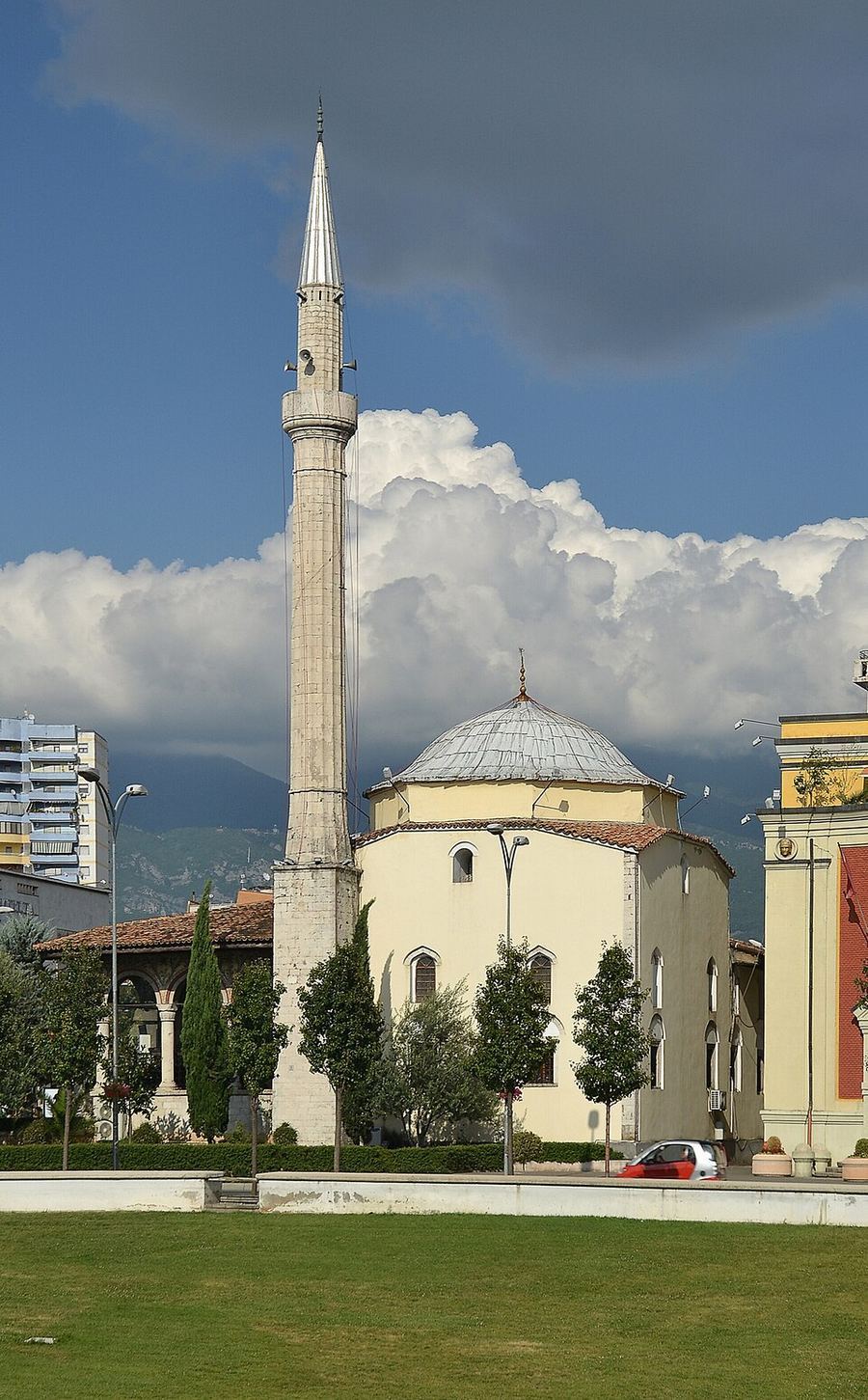
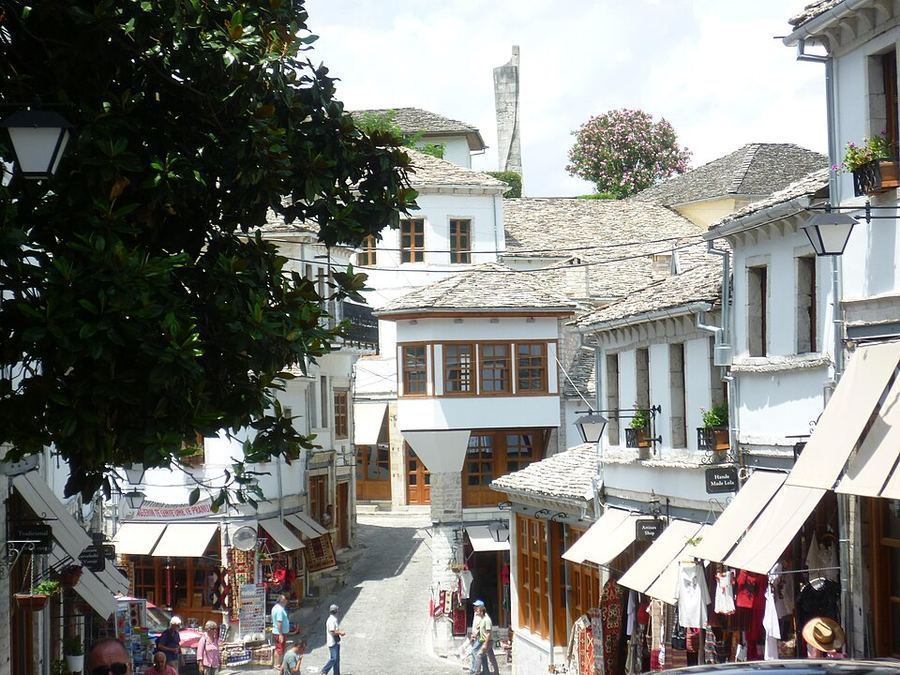
Albania sits on a seam between the Latin and Orthodox halves of Europe and between Europe and the Ottoman world, and all of it shows. Four centuries of Ottoman rule left the mosques of Berat and Tirana, a large stratum of Turkish loanwords, and a cuisine of byrek, qofte and baklava shared with the whole eastern Mediterranean. Venetian and later Italian contact left the other set of marks: architecture along the Adriatic, and — most consequentially — Italian television, watched illegally on modified aerials during the last years of the communist regime, which taught a generation the language and gave them a picture of life outside that helped delegitimise the system. After 1991 large-scale emigration to Italy and Greece made those two countries the poles of the Albanian diaspora, and returning migrants brought money, language and expectations home. Older Albanian communities abroad complete the pattern: the Arbëreshë of southern Italy and Sicily, descended from fifteenth-century refugees and still speaking an archaic Albanian, and the Arvanites of Greece. Within the country the religious mix — Sunni Muslim, Bektashi, Catholic in the north, Orthodox in the south — has produced a syncretic calendar in which neighbours attend each other's festivals as a matter of course.

Music & Dance

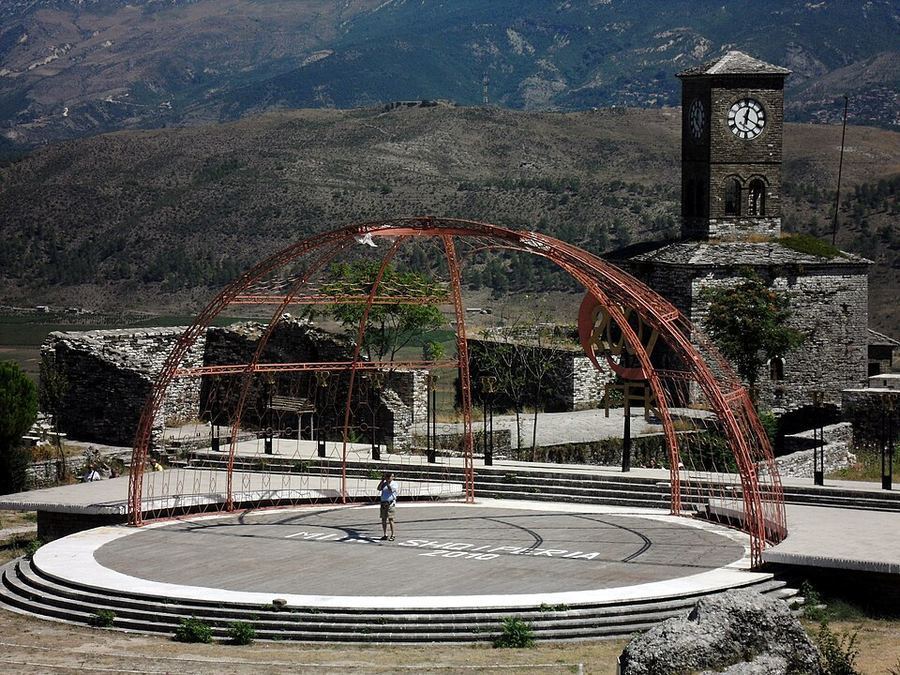
Albanian iso-polyphony is the country's most distinctive musical form and was inscribed by UNESCO as intangible cultural heritage: a group of singers carries two or three interweaving solo lines over a sustained drone — the iso — held by the rest of the ensemble, producing dense harmonies that belong to the south, in Labëria and Tosk country, and are sung by both men and women in separate traditions. The north is a different world of sound, dominated by the lahuta, a single-string bowed lute to which epic verse from the Songs of the Frontier Warriors cycle has been recited for centuries, and by the çifteli, the two-string long-necked lute that accompanies dance and satire. Circle dances called valle are the common form across the country, varying by region in step and speed, and the sword-and-shield dances of the north survive in performance. The National Folklore Festival at Gjirokastër, staged periodically inside the hilltop castle, is the country's principal gathering of these traditions. Urban popular music runs on a separate track: Tirana's pop and hip-hop scene is closely linked to Kosovo's, and Albanian-language and Albanian-descended artists have had conspicuous success in the British and American charts.

Cuisine & Misattributed Foods

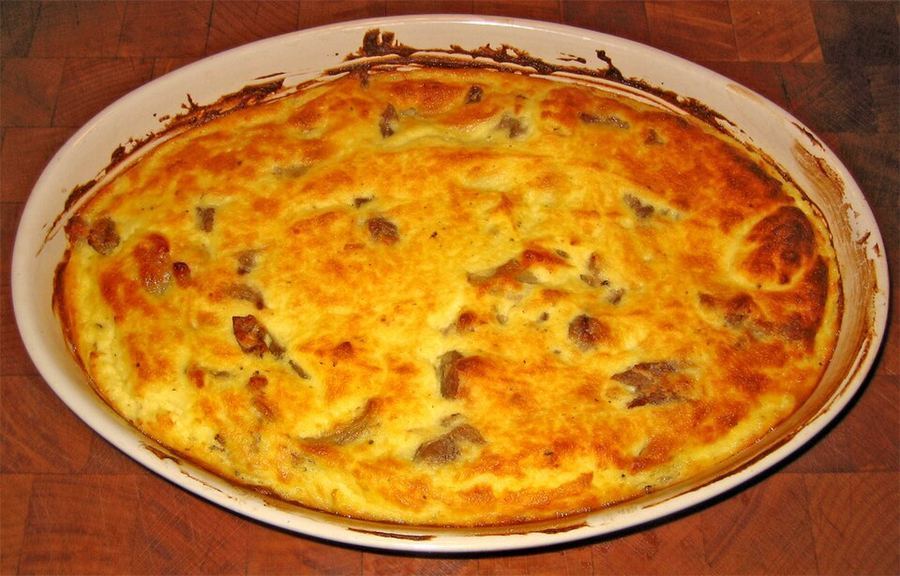
Albanian cooking is Mediterranean at its base — olive oil, lamb, yogurt, peppers, tomatoes, and a great deal of bread — with a clear Ottoman overlay and regional variation between a dairy-and-meat north and a vegetable-and-seafood south. Byrek, the layered filo pie filled with cheese, spinach, meat or squash, is the national everyday food, eaten at any hour and sold from dedicated shops. Tavë kosi, associated with Elbasan, is the dish most often named as the national one: lamb baked under a thick custard of yogurt and egg until it sets. Fërgesë combines peppers, tomatoes and the fresh curd cheese gjizë, sometimes with liver, into a skillet dish eaten with bread. Grilled qofte, stuffed peppers, pickled vegetables and the ubiquitous white cheeses fill out the table. On the coast, from Durrës down the Riviera to Sarandë, the cooking is simply grilled fish, mussels from the Butrint lagoon, and olive oil. Sweets are Ottoman — baklava, kadaif, revani — and the drink is raki, distilled from grapes or plums, usually homemade and offered as a matter of hospitality rather than choice. Korçë in the southeast has a long-established brewing tradition and its own beer festival.

National Dress

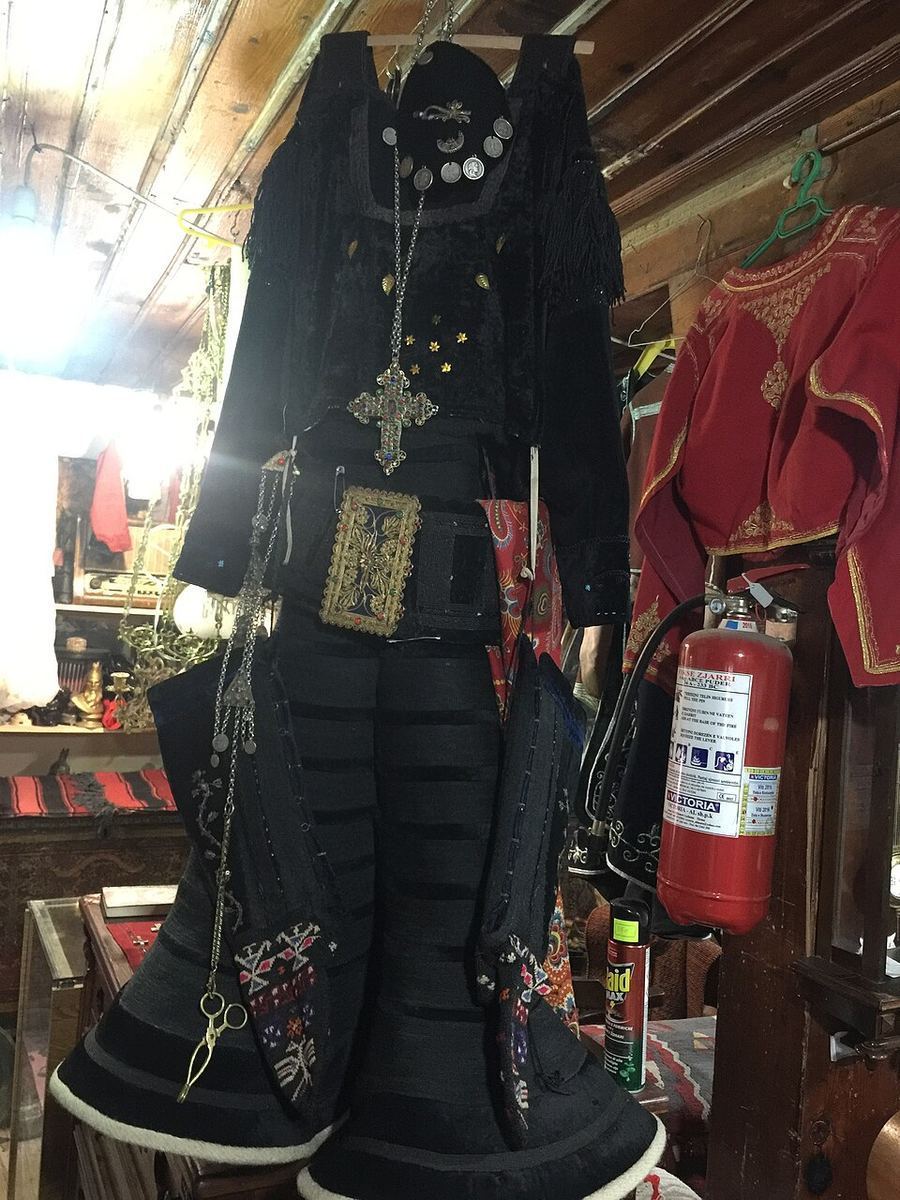
The most remarkable Albanian garment is the xhubleta, a bell-shaped, felted woollen skirt-dress of the northern highlands built from strips of cloth joined so that it flares stiffly outward, decorated with dense woven and appliquéd ornament, and worn with an apron and elaborate silver jewellery. UNESCO inscribed the xhubleta on its list of intangible cultural heritage in need of urgent safeguarding, recognising both its craft complexity — a single piece can take months — and the small number of women who still make it. For men the emblematic pieces are the fustanella, the pleated white kilt of the south worn with a fitted jacket and shared with neighbouring Greek traditions, and above all the plis or qeleshe, the brimless white felt skullcap of the north, which remains in ordinary daily use among older men and functions as an instant marker of Albanian identity. Opinga, the flat leather shoes with an upturned toe, complete the traditional outfit, and hand-woven woollen socks and sashes carry regional patterning. Everyday dress is entirely European, and traditional costume now appears at weddings, folklore festivals — Gjirokastër's above all — and national commemorations rather than in daily life.

Sports & Inspiring Athletes

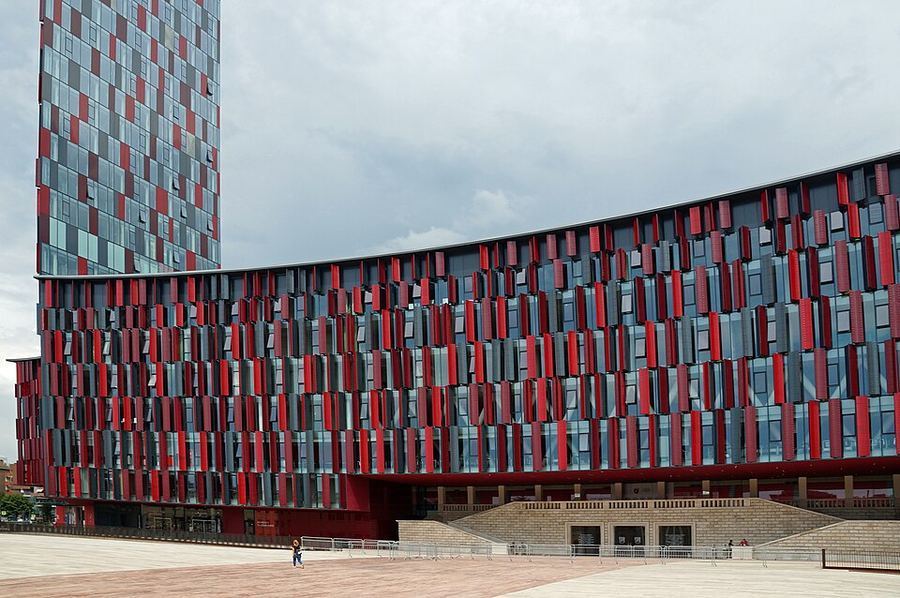
Football is the national sport by a wide margin. The domestic Kategoria Superiore is led historically by the Tirana clubs — KF Tirana, Partizani and Dinamo — and the national team, nicknamed the Kuq e Zi for the red and black of the flag, reached a major tournament for the first time at the 2016 European Championship, where a win over Romania produced one of the largest public celebrations in the country's recent history; Albania qualified again for Euro 2024. The Air Albania Stadium in Tirana, opened in 2019 on the site of the old national ground, hosted the first UEFA Europa Conference League final in 2022. Weightlifting is the country's traditional Olympic discipline and has produced its most consistent international competitors, while wrestling has more recently become the sport in which Albania's Olympic breakthrough came, with the country's first Olympic medals won at the 2024 Paris Games in freestyle wrestling after decades without one. Basketball and volleyball have modest domestic followings, and the mountainous terrain has supported a growing outdoor scene — trail running, rafting on the Vjosa and Osum, and paragliding from the Llogara Pass.

Notable Educational Programs

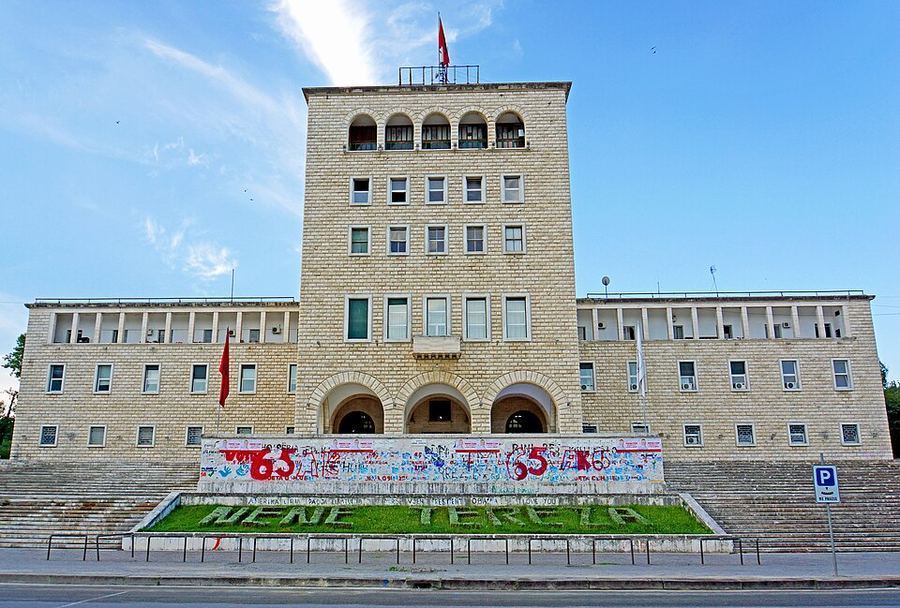
Albania has near-universal literacy and compulsory basic education of nine years, followed by three years of upper secondary schooling, and enrolment rates at those levels are comparable to those of its neighbours. The system's problems lie elsewhere: in quality, in the condition of rural schools, and above all in emigration, since a large share of the most qualified graduates leave for Italy, Germany, Britain and North America, and demographic decline has forced the closure and merging of schools in depopulating districts. Higher education is led by the University of Tirana, founded in 1957 as the country's first university and still the largest, alongside the Polytechnic University of Tirana, the Agricultural University and regional universities at Shkodër, Elbasan, Korçë, Vlorë and Gjirokastër; a substantial private higher education sector emerged after 1991 and has been the subject of repeated quality-assurance reform. Albanian students perform below the European average on international assessments, though the country's results improved measurably over the 2010s, one of the larger gains recorded among participating systems. English has displaced Russian and, increasingly, Italian as the dominant foreign language taught, and dual-language and diaspora-linked programmes connect Albanian schools to Kosovo and to Albanian-medium schooling in North Macedonia.

Wars & Conflicts

Albania has no active armed conflict and has been a NATO member since 2009. Its most serious modern episode of internal violence came in 1997, when the collapse of nationwide pyramid savings schemes — into which a very large share of households had put their money — triggered an uprising that spread from the southern towns across the country. Army depots were looted, the state effectively lost control of much of the territory, roughly two thousand people were killed, and order was restored only after elections and the deployment of a multinational protection force under an Italian-led mandate authorised by the United Nations. The other formative recent experience was the 1999 Kosovo war, when Albania received several hundred thousand refugees in a matter of weeks, an influx equivalent to a substantial fraction of its own population, and became a staging area for the international response. Within Albania, the residue of the Kanun's blood-feud provisions produced a wave of revenge killings in the 1990s and confined some families to their homes; the practice has declined markedly under sustained legal and civil-society pressure but is not entirely gone. Organised crime and cannabis cultivation have been the dominant security concerns of the past decade.
Current as of 2026-08-06

Land & Border Disputes

Albania's principal unresolved external question is its maritime boundary with Greece. The two states signed an agreement delimiting the continental shelf in 2009, but Albania's Constitutional Court annulled it the following year, and the file has remained open since; in 2020 the two governments announced their intention to refer the delimitation to the International Court of Justice for adjudication, a process that would settle a boundary complicated by the many Greek islands lying close to the Albanian coast. Bilateral relations with Greece also carry two historical irritants: the property claims of the Cham Albanians expelled from Epirus at the end of the Second World War, and the treatment of the Greek minority in southern Albania, which the 2011 census recorded at 0.9% of the population under a count that both sides dispute. Albania's land borders are otherwise settled, though the boundaries running through lakes Shkodër, Ohrid and Prespa require continuing joint management with Montenegro, North Macedonia and Greece over water quality and fisheries. Albania recognised Kosovo's independence immediately in 2008 and maintains an explicitly close relationship with it, which is itself a point of friction with Serbia.
Land, Life & Legacy

Land & Climate

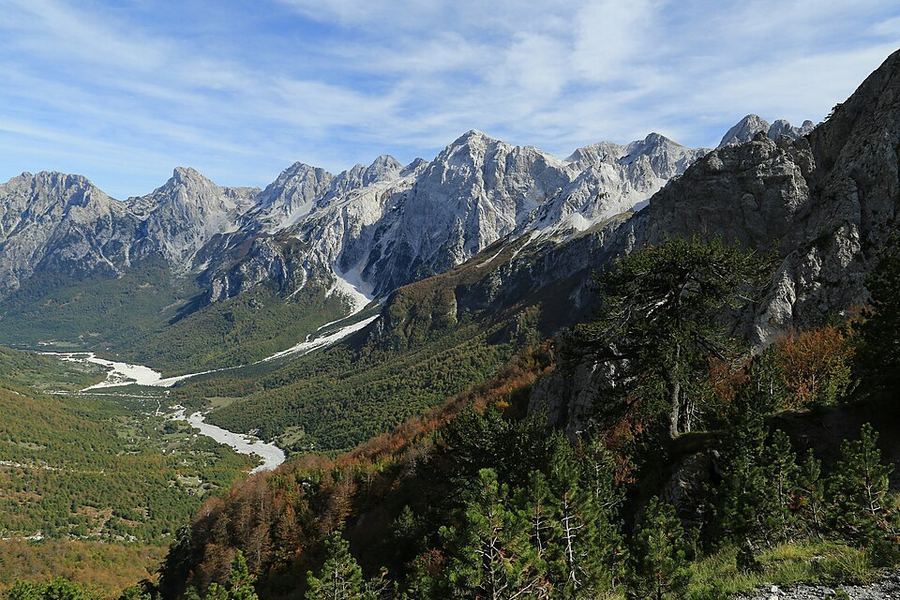
Albania is small and steep: roughly three-quarters of its territory is hill or mountain, and the flat land is confined to a coastal plain along the Adriatic. The north holds the Albanian Alps, known locally as Bjeshkët e Nemuna, the Accursed Mountains — a limestone massif of deep glacial valleys, of which Valbona and Theth are the best known, reached by a ferry the length of Lake Koman. The highest point, Korab, at about 2,764 metres, sits on the border with North Macedonia. Three large tectonic lakes lie on the eastern frontier: Shkodër, shared with Montenegro and the largest in the Balkans, and Ohrid and Prespa, shared with North Macedonia and Greece. The Vjosa runs from Greece to the Adriatic almost entirely undammed and was designated a national park in 2023. South of Vlorë the coast changes character at the Llogara Pass, where the mountains drop straight into the Ionian along the Albanian Riviera. The climate is Mediterranean on the coast — hot dry summers, mild wet winters — and markedly continental inland, with heavy winter snow in the highlands. Albania sits in an active seismic zone; a magnitude 6.4 earthquake near Durrës in November 2019 killed dozens and damaged thousands of buildings.

Entertainment

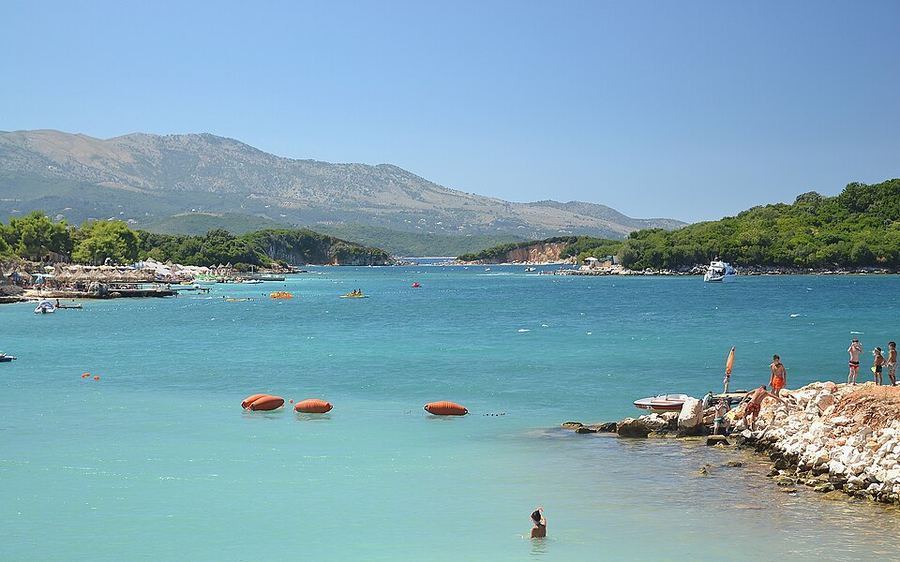
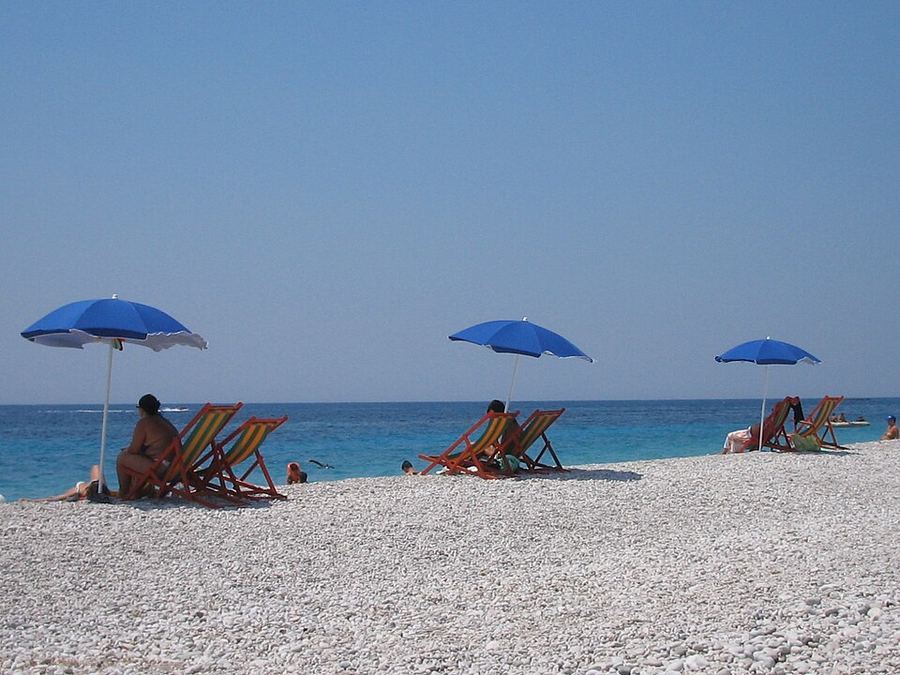
The defining Albanian leisure habit has a name: the xhiro, the slow evening walk along a town's central boulevard, undertaken by whole families and functioning as the main social exchange of the day — in many towns the street is closed to traffic for it. Coffee is the other constant, drunk slowly and in quantity, with cafés serving as the country's real public space and Albania frequently cited as having one of the densest concentrations of coffee bars in Europe. Beyond that, the summer belongs to the coast: the Riviera beaches at Dhërmi, Himarë and Ksamil draw both domestic holidaymakers and the diaspora returning from Italy, Greece and beyond, and August effectively empties the inland towns. Mountain tourism has grown quickly in the north, where the Theth-to-Valbona crossing has become one of the Balkans' best-known hiking routes, and the Blue Eye spring near Sarandë and the Osum canyons draw day visitors. Football is watched intensely, in bars as much as in stadiums. Hunting and fishing remain common in rural areas, and the Sunday family meal, often at a rural restaurant with a lamb on the grill, is a fixture of the week.

Art & Museums

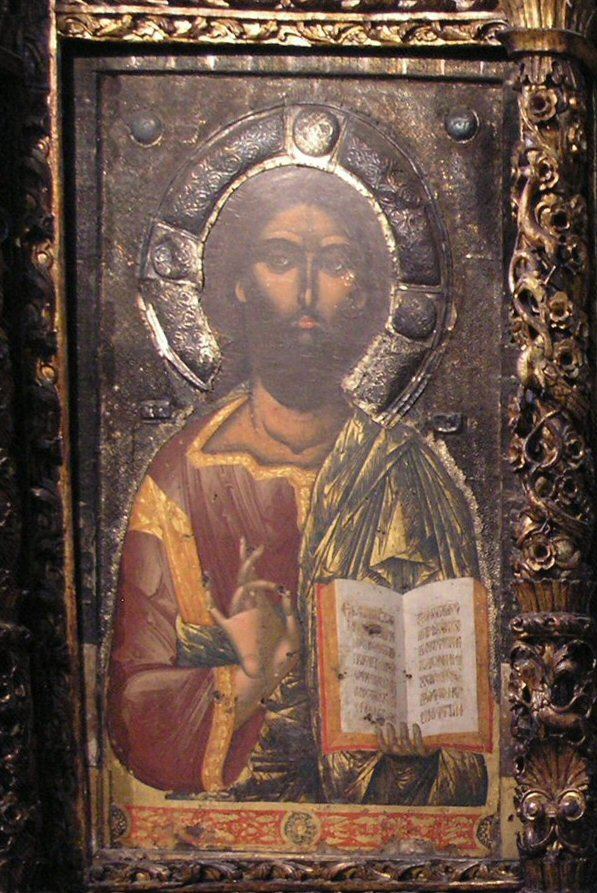
The central figure in Albanian art history is Onufri, the sixteenth-century icon painter and priest whose work survives in the churches of Berat, Elbasan and the surrounding region, and who is remembered above all for a brilliant red pigment of his own preparation that has kept its intensity for four centuries; the Onufri Museum inside Berat castle holds the principal collection. Byzantine-tradition icon and fresco painting continued in Albania long after it faded elsewhere, and the wood-carved iconostases of southern churches are a related craft tradition. The nineteenth century produced Kolë Idromeno of Shkodër, painter, architect and the country's first film exhibitor, who marks the turn toward secular European art. Under communism the state imposed socialist realism, and its most conspicuous surviving product is the vast mosaic 'The Albanians' across the front of the National History Museum on Skanderbeg Square in Tirana. The regime's other, unintended legacy is architectural: several hundred thousand concrete bunkers scattered across the landscape, two of which in Tirana have been converted into the Bunk'Art museums. Contemporary Albanian art is closely associated with Tirana's post-2000 transformation, including the painting of the city's grey apartment blocks in saturated colour as a public art programme.

Notable People

Skanderbeg — Gjergj Kastrioti — remains the pre-eminent national figure, and Ismail Qemali, who declared independence at Vlorë in 1912, the founder of the modern state. Enver Hoxha, who ruled from 1944 to 1985, is the twentieth century's dominant and most contested name. Internationally, the best-known person of Albanian origin is Mother Teresa, born Anjezë Gonxhe Bojaxhiu to an Albanian family in Skopje; Tirana's international airport carries her name. In literature, Ismail Kadare gave Albanian writing a global readership through novels including 'The General of the Dead Army' and 'Broken April', and won the inaugural Man Booker International Prize in 2005. Inva Mula has had an international operatic career as a soprano. In science, the Albanian-American pharmacologist Ferid Murad shared the Nobel Prize in Physiology or Medicine in 1998 for work on nitric oxide as a signalling molecule. The Albanian diaspora in Britain and the United States has produced a striking number of pop musicians of Albanian and Kosovar descent, and Albanian and Kosovar-Albanian footballers appear across the major European leagues and in several national teams besides Albania's own.

Inventions & Breakthroughs

Albania's distinctive contributions are institutional and cultural rather than industrial. The Kanun, the customary legal code associated with Lekë Dukagjini, is a rare example of a fully articulated oral law — covering property, marriage, hospitality, honour and the rules governing feud — that regulated highland society for centuries with no state behind it, and it has been studied as such by legal anthropologists. Two of its provisions have no real parallel elsewhere in Europe: besa, the binding word of honour, and the burrnesha or sworn virgin, a woman who took a vow of celibacy and thereafter lived with the legal and social standing of a man. The standardisation of a single Latin-based Albanian alphabet at the Congress of Manastir in 1908, replacing competing Greek, Arabic and Latin scripts, was a deliberate act of linguistic engineering that made a national literature possible. Musically, iso-polyphony is a singing technique found in this form almost nowhere else. The regime's mass bunker-building programme of the 1970s and 1980s, which scattered hundreds of thousands of small concrete domes across the country, is a genuinely unique piece of national engineering, though not one anybody set out to emulate.

Science & Technology

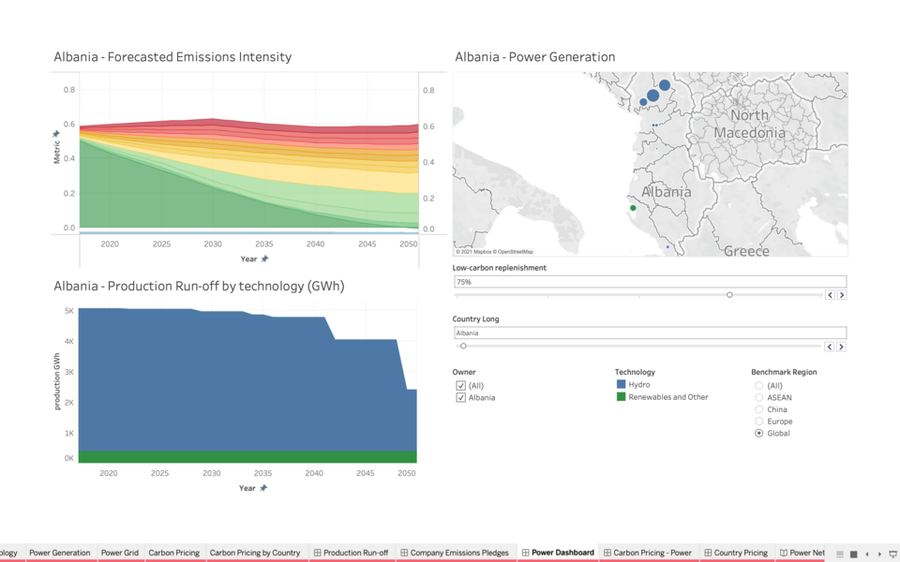
Albania's technological profile is shaped by two resources: water and hydrocarbons. Almost all of the country's electricity comes from hydropower, generated principally by the cascade of large dams on the Drin — Fierza, Koman and Vau i Dejës — which makes the national grid unusually clean by European standards and unusually exposed to drought, forcing electricity imports in dry years. The Patos-Marinza field in the coastal plain is the largest onshore oil field in continental Europe, though its heavy crude is difficult and costly to produce. Since 2020 the Trans Adriatic Pipeline has crossed Albanian territory from the Greek border to the Adriatic coast, carrying Azerbaijani gas to Italy and making the country part of European energy infrastructure for the first time. The decision to designate the Vjosa a national park in 2023, protecting one of Europe's last major free-flowing rivers instead of damming it, marked a deliberate reversal of the hydropower-first policy and has drawn international scientific attention to the river's ecology. Public research capacity is limited and concentrated in the Tirana universities and the Academy of Sciences, while the most visible technology success has been governmental: the e-Albania platform has moved the large majority of public services online.
On The World Stage

Champions & Defining Moments

Albania's international sporting profile is small in absolute terms and dominated by football. The national team's qualification for Euro 2016 was the country's first appearance at a major finals in any team sport, and the second qualification for Euro 2024 confirmed it as a competitive if not yet a leading European side; the travelling Albanian support, drawn heavily from the diaspora in Italy, Greece, Switzerland and Germany, is disproportionately large for a country of 2.5 million. That diaspora has a second sporting effect: a substantial number of players of Albanian and Kosovar-Albanian descent represent Switzerland, Germany, Italy, Sweden and other European nations, giving Albanian ancestry a visibility in international football far beyond the national team's own record. At the Olympic Games, Albania competed from 1972 and then, after the isolation years, continuously from 1992 without winning a medal until the Paris Games of 2024, where freestyle wrestlers delivered the country's first Olympic podium finishes. Weightlifting remains the discipline in which Albanians have most often reached European and world finals, and the country's competitive presence elsewhere is limited to individual athletes in shooting, swimming and athletics.

Economy, Trade & Government

Currency & GDP

Lek — ALL (L)

GDP (PPP): $51.36 billion (2024 est.)

Per capita: $18,900 (2024 est.)

Exports

$9.848 billion (2024 est.)

garments, footwear, electricity, crude petroleum, iron alloys (2023)

Partners: Italy 41%, Greece 10%, Germany 5%, Spain 5%, Serbia 4% (2023)

Imports

$11.697 billion (2024 est.)

cars, refined petroleum, garments, packaged medicine, iron bars (2023)

Partners: Italy 22%, China 11%, Turkey 9%, Germany 7%, Greece 6% (2023)

Government

Type: parliamentary republic

Independence: 28 November 1912 (from the Ottoman Empire)

Terrain → Where People Live

How mountains, coasts, and rivers shape settlement (LandScan).

Coming — data

Migration & Ethnic Settlement

Where groups settled and how people move (GeoEPR + UNHCR).

Coming — data

Universities

Notable institutions, mappable as points.

Coming — data
Economy & government facts: CIA World Factbook (public domain), via OpenFactBook / factbook.json.
Every fact and narrative claim will carry a visible source citation. Data-driven sections light up automatically wherever HERA has coverage.