HERA · Human Entity Reference Atlas by Masego Inc

← United Arab Emirates 🌐 3D View
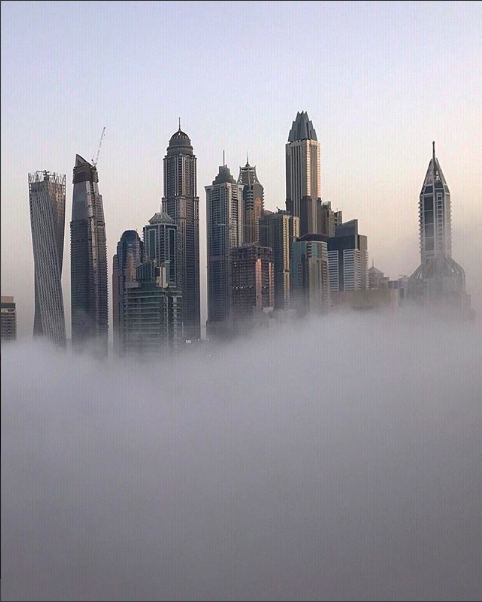
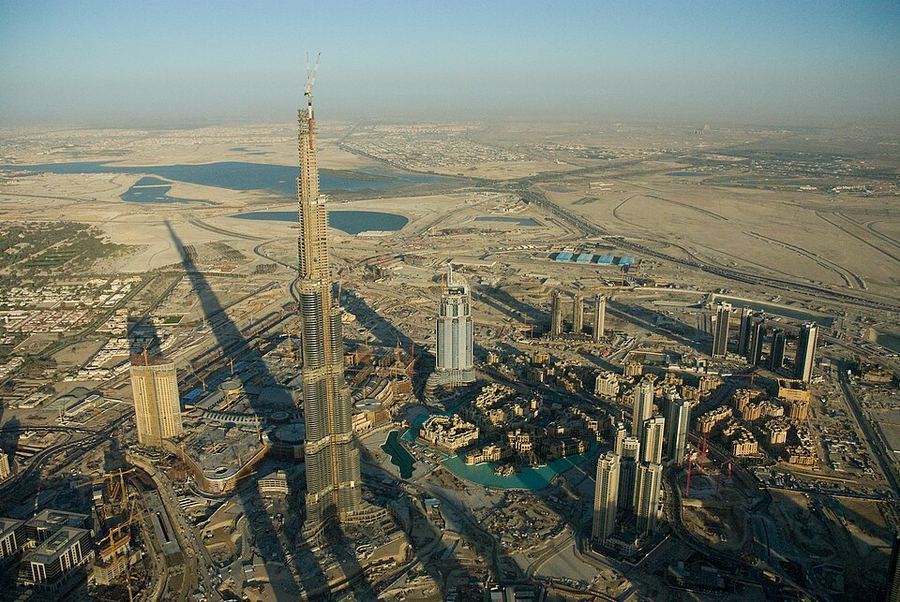
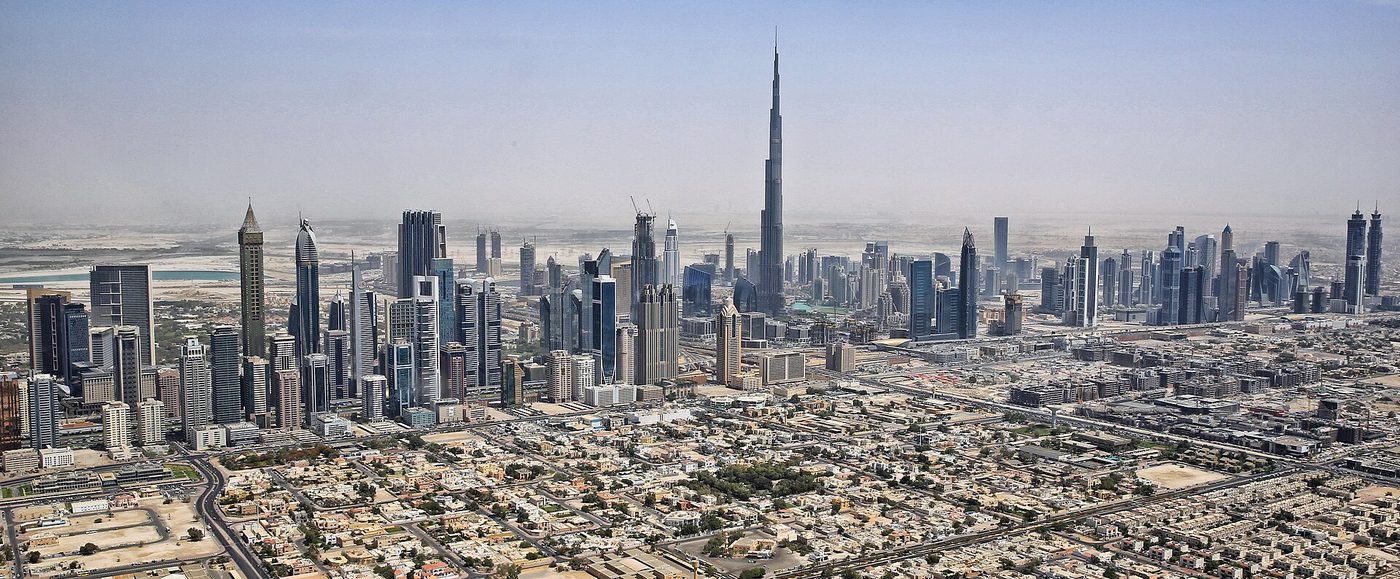
Dubai Skyline mit Burj Khalifa (cropped), United Arab Emirates
United Arab Emirates ARE
Dubai Skyline mit Burj Khalifa (cropped) — Photo: Tim Reckmann from Hamm, Deutschland / CC BY-SA 3.0 via Wikimedia Commons
Did You Know The Al Ain cultural sites — Bronze Age tombs, settlements and still-flowing falaj irrigation channels — were inscribed as the country's UNESCO World Heritage listing in 2011. — UNESCO World Heritage Centre

The United Arab Emirates is a federation of seven hereditary monarchies on the southeastern corner of the Arabian Peninsula, formed on 2 December 1971 when Britain withdrew from the Gulf. Abu Dhabi is the capital and by far the largest emirate by area and oil reserves; Dubai is the commercial and aviation hub whose name travels furthest; Sharjah, Ajman, Umm al-Quwain, Fujairah and Ras al-Khaimah complete the union. Its population structure is unlike almost any other country's: of roughly 10.1 million residents, Emirati citizens are about 11.6%, while South Asians alone make up 59.4%, with large Egyptian and Filipino communities alongside them. Arabic is the official language, but English is the practical lingua franca of commerce and much of daily life. About 74.5% of residents are Muslim, with sizeable Christian, Hindu and Buddhist minorities reflecting the workforce. Oil and gas built the state — the UAE exports crude and refined petroleum, gold and natural gas — but the striking fact of the last three decades is the deliberate construction of non-oil economies around aviation, logistics, finance, tourism and real estate, which now carry the larger share of GDP. Per-capita output stands at roughly $68,600, among the highest in the region.

CIA World FactbookEncyclopaedia Britannica
Population
10,093,593
Capital
Abu Dhabi
Currency
د.إ AED
Time zones
Largest city
Dubai
Human Geography Themes
Loading national figures…
Largest Cities
Dubai4,747,169
Abu Dhabi708,528
Al Ain672,213
ICAD I270,539
Ras Al Khaimah259,127
Al Falah139,663
Khor Fakkan120,588
Al Saja'a Industrial109,061
In Perspective

Dubai's urban core is home to about 4,747,169 people.

That's bigger than Sydney, Barcelona, Berlin and Rome — each a great world city in its own right.

Dubai4,747,169
Sydney4,375,394
Barcelona3,908,362
Berlin3,601,776
Rome2,556,354

Among the world's megacities, though, it's one of many — the giants of Asia and Latin America run larger still:

Dubai4,747,169
Jakarta40,545,126
Dhaka37,307,160
Tokyo33,244,670
Shanghai30,678,616
Cairo25,230,325
The Country & Its People

History

The southeastern Gulf has been inhabited and traded from for millennia: the Bronze Age Umm an-Nar culture built distinctive circular stone tombs, and the region's copper made it the Magan of Mesopotamian records, exporting to Sumer in the third millennium BC. Islam arrived in the seventh century. From the eighteenth century the coast was controlled by the maritime powers of the Qawasim and the Bani Yas, and their conflict with British shipping led to a British naval campaign and then to a sequence of agreements — the General Maritime Treaty of 1820, the Perpetual Maritime Truce of 1853 and the Exclusive Agreement of 1892 — that gave the area the name it carried for a century and a half, the Trucial States, and made Britain responsible for its external relations. The economy rested on pearl diving until the 1930s, when Japanese cultured pearls and the global Depression destroyed the trade almost overnight, causing severe hardship. Oil was found in Abu Dhabi in the late 1950s and first exported in 1962. When Britain announced its withdrawal from east of Suez in 1968, Sheikh Zayed bin Sultan Al Nahyan of Abu Dhabi and Sheikh Rashid bin Saeed Al Maktoum of Dubai led negotiations that produced the federation on 2 December 1971, with Ras al-Khaimah joining in February 1972.
Culture

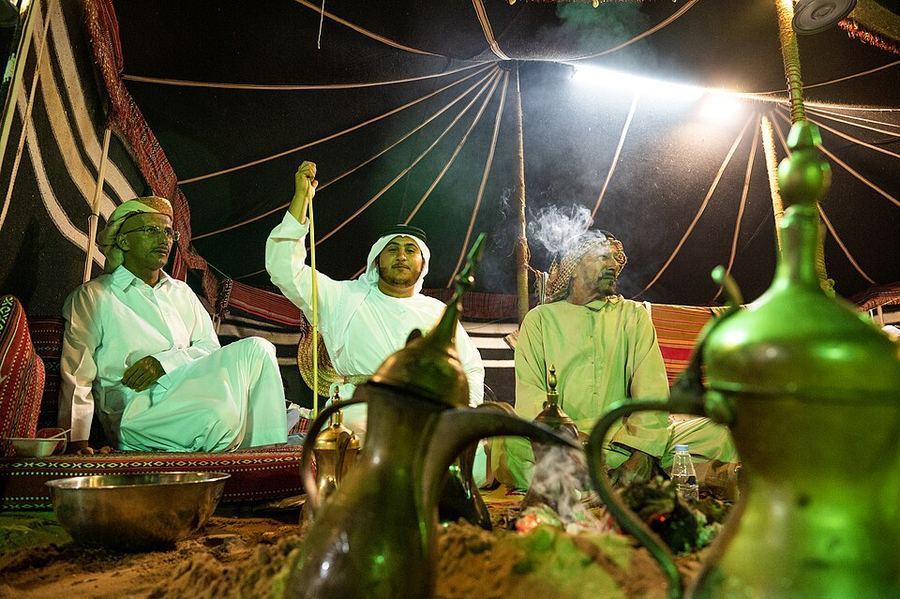
Emirati culture is Arab, Muslim and Gulf-coastal in its foundations, shaped by two older ways of life — the bedouin interior and the pearling and seafaring coast — and by the extraordinary speed with which both were displaced. Its central social institution is the majlis, the reception room and the gathering held in it, where men or women assemble to discuss community matters, settle disputes and receive petitions; UNESCO inscribed the majlis on its list of intangible cultural heritage as a cultural and social space. Hospitality is codified around Arabic coffee, gahwa, lightly roasted and spiced with cardamom, poured from a dallah in small cups and served with dates — itself a UNESCO-inscribed element — and refusing it is not really an option. Falconry, camel husbandry, date-palm cultivation and Al Sadu weaving all carry UNESCO recognition as living heritage shared with neighbouring states. Family and tribal affiliation remain the organising facts of Emirati social life, and Islamic practice structures the calendar through Ramadan, the Eids and Friday prayer. Layered over this is one of the world's most internationally mixed resident populations, whose own festivals — Diwali, Christmas, Onam — are openly observed, giving cities like Dubai a cultural texture that is Emirati in framework and global in daily content.

Points Of Pride

The founding of the federation itself is the first point of national pride, and Sheikh Zayed bin Sultan Al Nahyan, its architect and first president, is commemorated as the Father of the Nation. The physical achievements are the most visible: the Burj Khalifa in Dubai, at 828 metres the tallest building in the world since its opening in 2010, and the Sheikh Zayed Grand Mosque in Abu Dhabi, one of the largest mosques anywhere. The Al Ain cultural sites — the Hafit tombs, the Hili Bronze Age settlement, Bidaa Bint Saud and the oases with their falaj irrigation channels — were inscribed on the UNESCO World Heritage List in 2011 as evidence of continuous human settlement in a desert environment across five millennia. Louvre Abu Dhabi, opened on Saadiyat Island in 2017 under a landmark agreement with France and beneath Jean Nouvel's perforated dome, was the first universal museum in the Arab world. In space, the Emirates Mars Mission put the Hope probe into orbit around Mars in February 2021, the first interplanetary mission by an Arab nation, and Emirati astronauts have flown to the International Space Station, including a six-month mission and the first spacewalk by an Arab astronaut.

Cultural Fusion

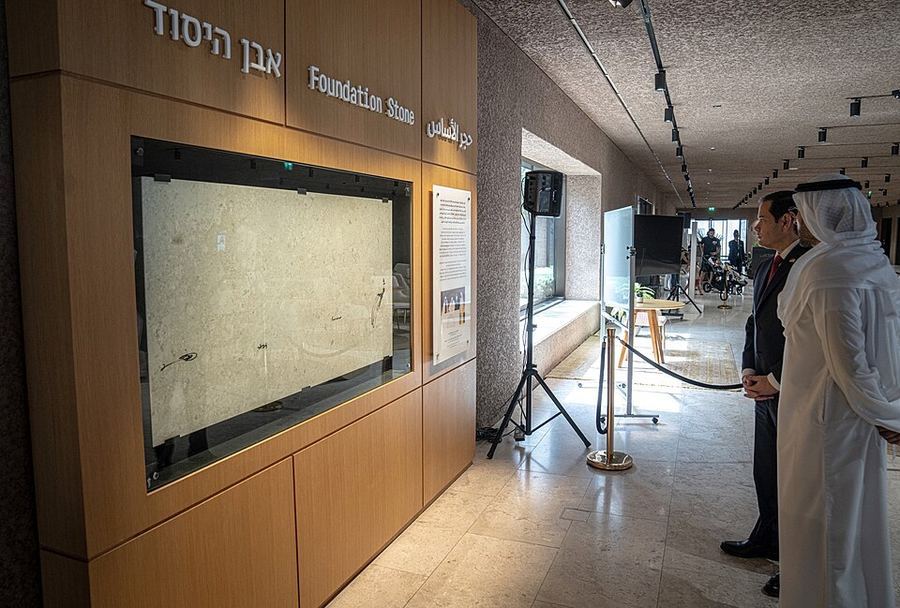
No country has a demographic profile quite like the UAE's, and the resulting fusion is the defining feature of daily life. With citizens making up about 11.6% of residents and South Asians 59.4%, the everyday culture of the cities is substantially Indian, Pakistani, Bangladeshi and Filipino. Karak chai — strong tea boiled with evaporated milk and cardamom, sold at roadside cafeterias — is the clearest example of a South Asian import that has become genuinely Emirati, and Hindi and Urdu vocabulary circulates in Gulf Arabic alongside English. The connection is old rather than new: the Gulf's dhow trade linked these coasts to Sindh, Gujarat and Malabar for centuries, the Indian rupee was legal tender in the Trucial States until 1966, and Iranian merchant families from Bastak gave Dubai the wind-tower quarter of Al Fahidi. Religious plurality follows the demography: Hindu temples, churches and a Sikh gurdwara operate openly, and the Abrahamic Family House on Saadiyat Island, opened in 2023, placed a mosque, a church and a synagogue on a single site. The persistent tension in all of this is legal rather than social — the great majority of residents live on renewable work visas without a path to citizenship, so cultural mixing coexists with sharply separated civic status.

Music & Dance

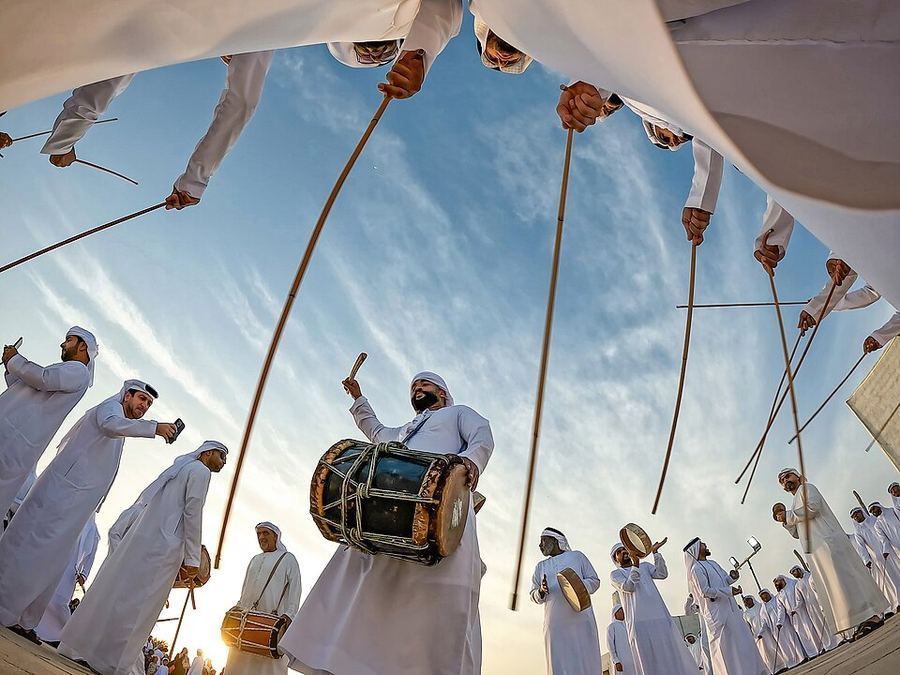
The best-known Emirati performance tradition is Al-Ayyala, inscribed by UNESCO as intangible cultural heritage shared with Oman: two facing rows of men holding thin bamboo canes sway and tilt them in unison to the beat of large drums while chanting sung poetry, with girls in front tossing their long hair in time in some versions. It is performed at weddings, national days and state occasions, and is the image most often used to represent Emirati culture officially. Related traditions include Al-Razfa, another poetry-and-drum line dance, and Al-Harbiya. The coastal repertoire comes from pearling: the fijiri songs of the diving boats, sung with hand-clapping, drums and clay-jar percussion to accompany the work and its exhaustion, preserve the memory of an industry that vanished within a decade. Bedouin traditions contribute Nabati poetry, the vernacular verse form whose recitation contests draw very large television audiences across the Gulf, and the oud and rebaba accompany sung poetry in a wider Arab idiom. Contemporary music in the Emirates is largely imported and international — Dubai and Abu Dhabi are major stops on global touring circuits, and Bollywood playback, Egyptian and Lebanese pop and Filipino cover bands are the ordinary soundtrack of the cities.

Cuisine & Misattributed Foods

Emirati home cooking is built on rice, dates, fish, lamb, camel and a spice palette — turmeric, cinnamon, dried lime, saffron and the local bezar blend — that reflects centuries of trade with India, Iran and East Africa. Machboos, the national rice dish, layers spiced rice with meat or fish and dried lime in a single pot, and is the standard centrepiece of a shared meal eaten from a large communal platter. Harees, wheat and meat cooked and beaten for hours into a smooth, almost porridge-like consistency, is the dish of Ramadan and celebration; thareed, meat and vegetable stew poured over thin regag bread, is its everyday cousin. Balaleet — sweetened vermicelli with a savoury omelette laid over it — is the classic breakfast, and luqaimat, small yeasted dough balls fried and soaked in date syrup, the classic sweet. Dates and gahwa open and close every occasion. Camel milk is drunk and is now made into commercial ice cream and chocolate. Beyond the Emirati kitchen, the food of the cities is one of the most international anywhere: Kerala and Pakistani cafeterias, Lebanese and Iranian restaurants and Filipino canteens serve the resident majority, and karak tea is the universal social lubricant.

National Dress

Emirati national dress is worn daily, not reserved for occasions, and it is one of the clearest visual markers of citizenship. Men wear the kandura, an ankle-length long-sleeved robe, in white for most of the year and in darker browns and greys in winter; the Emirati cut is distinguished from those of neighbouring states by having no collar and by the tarboosh, a short braided tassel hanging from the neckline, sometimes scented. Over it the ghutra, a square headcloth in white or red-and-white check, is folded and held by the black cord agal, with a bisht — a fine translucent cloak trimmed in gold — added for weddings, state occasions and formal photographs. Women wear the abaya, a loose black outer robe, with the shayla headscarf, and both have become sites of considerable fashion investment, with embroidery, cut and fabric marking taste and status. Under it, dress is ordinary contemporary clothing. Among older women in some communities the battoulah, a stiff metallic-looking face covering of indigo-dyed cloth shaped to the brow and nose, is still seen and is distinctively Gulf. Non-citizen residents dress as they would at home, subject to modesty expectations in public buildings.

Sports & Inspiring Athletes

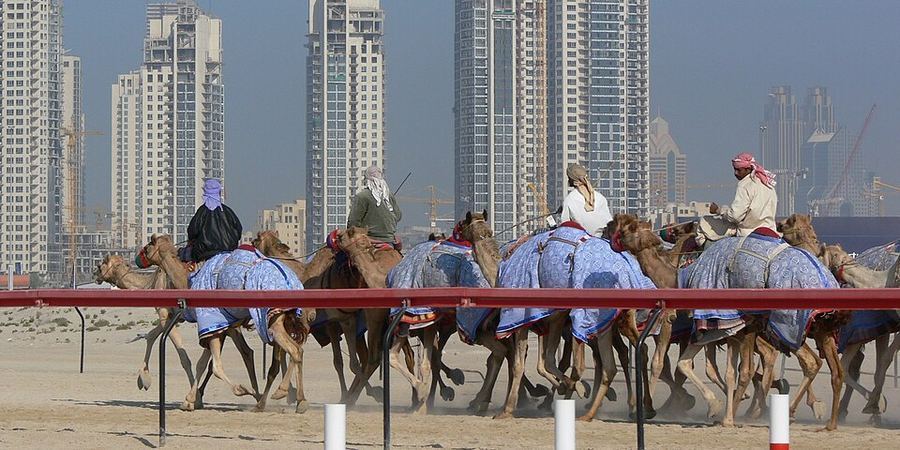
Football is the dominant participation and spectator sport among Emiratis, organised in the UAE Pro League and led by clubs including Al Ain, Al Wasl, Al Nasr, Sharjah and Al Jazira; Al Ain has won the Asian Football Confederation's premier club competition, most recently in 2024, and the national team reached the FIFA World Cup in 1990. The traditional sports carry official weight and money: camel racing, run on long desert tracks with lightweight robot jockeys operated by owners driving alongside since child jockeys were banned, and falconry, for which the country maintains dedicated hospitals and breeding programmes and hosts international festivals. Endurance horse racing over distances up to 160 kilometres is closely associated with the ruling families and the Emirates have been among its leading nations. Cricket is by a wide margin the most-played sport overall, reflecting the South Asian majority of residents; Sharjah's stadium hosted a long run of international one-day matches, and the International Cricket Council moved its headquarters to Dubai in 2005. Jiu-jitsu has been adopted as a national programme and is taught in public schools, with Abu Dhabi hosting the sport's major professional championship each year.

Notable Educational Programs

Public education is free for Emirati citizens from primary through university, and the state has invested heavily in it since the 1970s, when literacy was low and formal schooling scarce. United Arab Emirates University, founded at Al Ain in 1976, was the first national university; Zayed University and the Higher Colleges of Technology followed, and Khalifa University in Abu Dhabi has been built up as the research-intensive science and engineering institution. A deliberate policy of importing foreign universities has produced branch campuses including Sorbonne University Abu Dhabi and New York University Abu Dhabi, alongside the long-established American University of Sharjah. The most striking outcome is gendered: Emirati women outnumber men in higher education by a wide margin and dominate several professional faculties, a pattern sustained for decades. For the non-citizen majority, schooling is overwhelmingly private and fee-paying: Dubai alone regulates hundreds of private schools teaching British, Indian, American, Filipino, French and IB curricula, and the sector is a significant industry in its own right. The persistent policy problems are the quality of outcomes relative to spending, the concentration of Emirati graduates in public-sector employment, and matching schooling to a labour market dominated by expatriate workers.

Wars & Conflicts

The UAE has not fought a war on its own territory, but it has been an active military participant abroad over the past two decades. Emirati forces served in the international coalition against the Islamic State, and from 2015 the UAE was a principal partner in the Saudi-led coalition intervening in Yemen's civil war, deploying ground troops and building relationships with southern Yemeni forces including those aligned with the Southern Transitional Council. It announced a drawdown of its own ground presence in 2019 while retaining influence through those partners, and the war brought the conflict home in January 2022, when a Houthi drone and missile attack on Abu Dhabi killed three people. The UAE normalised relations with Israel under the Abraham Accords in September 2020, a significant regional realignment. More recently the country has faced sustained allegations, which it denies, of supplying Sudan's Rapid Support Forces in that country's civil war; Sudan brought proceedings against the UAE at the International Court of Justice in 2025, and the Court removed the case from its list on the ground that it lacked jurisdiction, without ruling on the underlying claims. Internally the country has been stable, with no armed opposition.
ICJReutersUNHuman Rights WatchBBC
Current as of 2026-08-06

Land & Border Disputes

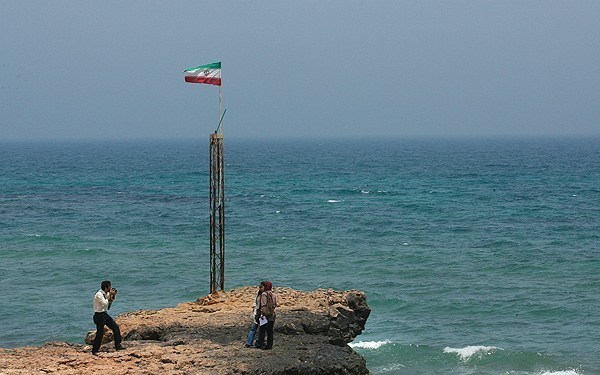
The UAE's principal territorial dispute is with Iran over three islands in the Strait of Hormuz — Greater Tunb, Lesser Tunb and Abu Musa — which Iranian forces occupied on the eve of the federation's formation in 1971, days before Britain's protection lapsed. Abu Musa had been administered by Sharjah and the Tunbs by Ras al-Khaimah. The Emirates have consistently sought either direct negotiation or referral to the International Court of Justice; Iran maintains the islands are unambiguously Iranian and declines both, and the Gulf Cooperation Council and Arab League restate the Emirati claim at each summit, keeping the matter frozen rather than resolved. The land border with Saudi Arabia was addressed by the 1974 Treaty of Jeddah, which granted Saudi Arabia a corridor to the Gulf coast and territory associated with the Shaybah oil field; the treaty's terms and the resulting alignment have periodically been contested and the boundary is not treated as fully closed by all parties. The intricate frontier with Oman, including the Madha and Nahwa enclaves nested within each other's territory, was the subject of a demarcation agreement that has largely settled the question.
Land, Life & Legacy

Land & Climate

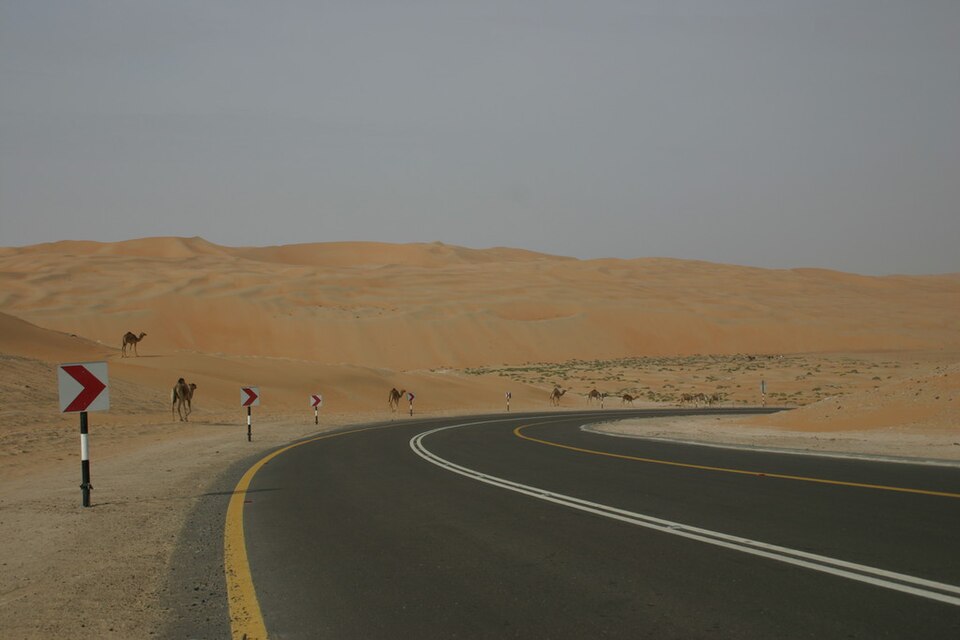
The Emirates occupy the southeastern corner of the Arabian Peninsula, with a long, shallow Gulf coastline of islands, creeks and sabkha — salt flats that flood and crust over — and a shorter frontage on the Gulf of Oman at Fujairah, reached across the Hajar Mountains. Those mountains, running along the border with Oman, are the country's only significant relief; Jebel Jais in Ras al-Khaimah, at about 1,934 metres, is the highest point and cool enough to see occasional frost. Inland and south the land becomes the Rub' al Khali, the Empty Quarter, the largest continuous sand desert on earth, where the crescent of the Liwa oasis marks the historic homeland of the Bani Yas. The territory is politically fragmented in unusual ways: Fujairah and the eastern coast are separated from the Gulf side, and small enclaves and counter-enclaves interlock with Omani territory. The climate is hot desert. Summer temperatures routinely exceed 45°C, and coastal humidity makes them harder still; the shamal wind carries dust for days. Rainfall averages under 100 millimetres a year, making the country one of the most water-stressed on earth: most drinking water comes from desalination, and cloud-seeding flights are flown operationally.

Entertainment

The heat dictates the rhythm: much of Emirati leisure happens indoors or after dark for half the year, and outdoors in the pleasant winter months from November to March. Shopping malls function as climate-controlled public space rather than merely as retail, hosting aquariums, ski slopes, cinemas and the evening promenading of whole families. The winter brings the desert back into use — weekend camping in the dunes, barbecue and shisha under tents, dune-bashing in four-wheel drives, and the falconry and camel events that anchor the traditional calendar. Beaches and corniches in Abu Dhabi, Dubai and Sharjah fill in the cooler months, and the Hajar mountains around Hatta and Jebel Jais have become a destination for hiking, mountain biking and via ferrata routes. The country's festival calendar is built around commerce and spectacle: the Dubai Shopping Festival, the Abu Dhabi and Dubai food and film events, and New Year fireworks staged on a scale designed to be seen internationally. Ramadan reshapes the whole pattern for a month, with nights becoming the social period and iftar gatherings the main event. For the large expatriate population, community sports leagues — cricket above all — occupy weekends.

Art & Museums

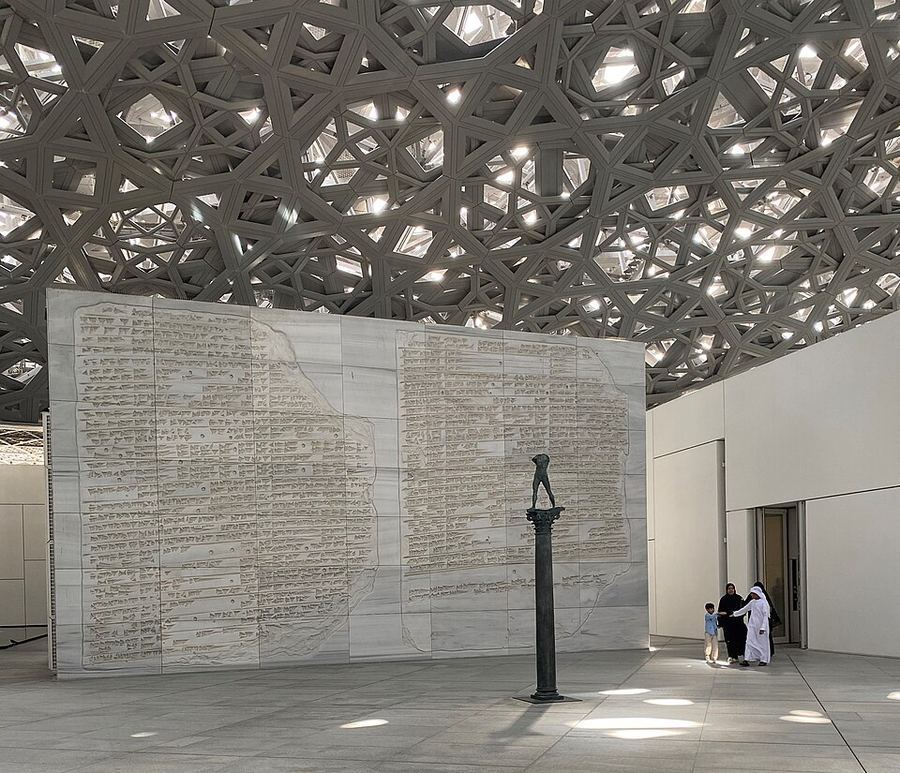
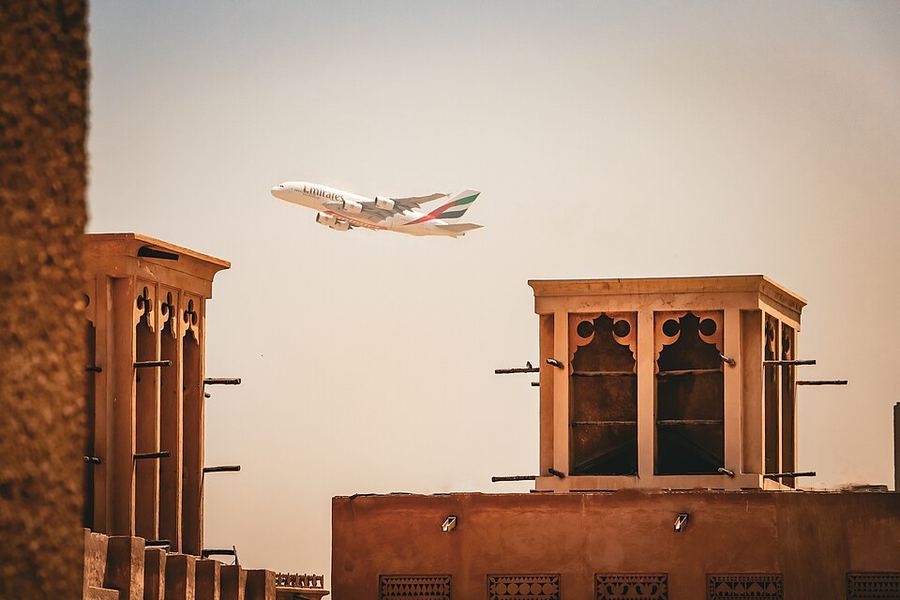
The Emirates have spent two decades buying and building their way into the international art world, and also cultivating a domestic scene that predates the spending. Louvre Abu Dhabi, designed by Jean Nouvel under a vast perforated dome that scatters light like a palm canopy, opened on Saadiyat Island in 2017 following an agreement with France that lends both the name and rotating works; the Zayed National Museum and a Guggenheim are planned on the same island. Sharjah has taken a different route, building its reputation through the Sharjah Biennial and the Sharjah Art Foundation, which have made the emirate a serious node in the global contemporary circuit, and through a network of museums of Islamic civilisation, calligraphy and archaeology. The founding figure of Emirati contemporary art is Hassan Sharif, who from the 1980s produced conceptual work, assemblages and performance in a context with almost no institutional support, and whose students form the core of the following generation. Traditional visual culture runs through architecture and craft rather than picture-making: the barjeel wind towers of Dubai's Al Fahidi quarter, Al Sadu geometric weaving in wool, palm-frond areesh construction, and gold and silver work.

Notable People

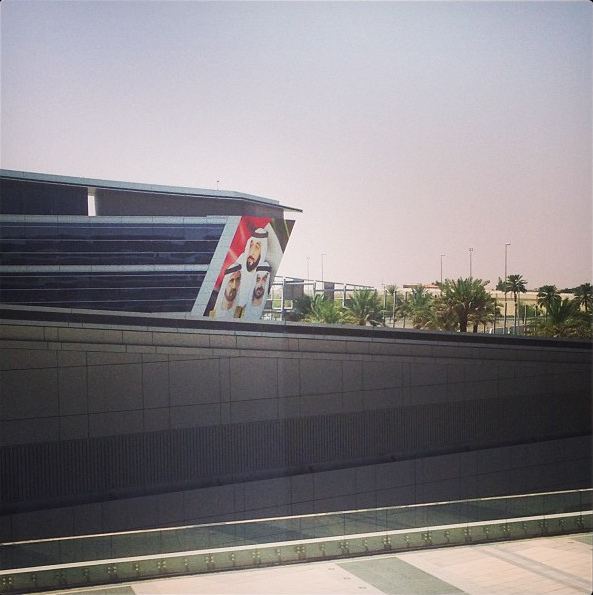
Sheikh Zayed bin Sultan Al Nahyan, ruler of Abu Dhabi from 1966 and president of the federation from its formation in 1971 until his death in 2004, is the country's defining figure, credited with both the union itself and the decision to spend oil revenue on infrastructure, education and health. Sheikh Rashid bin Saeed Al Maktoum of Dubai was his indispensable partner in negotiating the federation, and his son Sheikh Mohammed bin Rashid Al Maktoum, ruler of Dubai and the federation's vice-president and prime minister, drove the emirate's transformation into an aviation and services hub. Sheikh Mohamed bin Zayed Al Nahyan has been president since 2022. In public life, Sheikha Lubna Al Qasimi became the first Emirati woman appointed to the federal cabinet, and Sarah Al Amiri has led the science programme of the Emirates Mars Mission and chaired the space agency. Hazza Al Mansouri became the first Emirati in space in 2019, and Sultan Al Neyadi followed with a six-month stay on the International Space Station and the first spacewalk performed by an Arab astronaut. In the arts, Hassan Sharif is regarded as the founder of conceptual practice in the Gulf, and Sultan bin Muhammad Al Qasimi, ruler of Sharjah, is a published historian.

Inventions & Breakthroughs

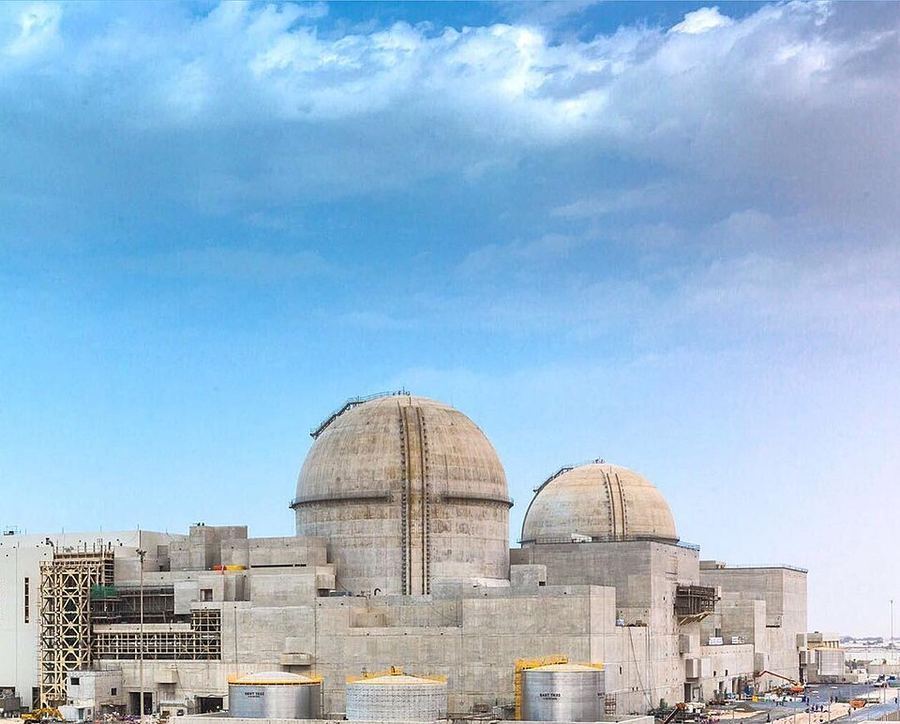
The oldest indigenous technology here is water management. The falaj — a gravity-fed channel, often tunnelled for kilometres from an aquifer at the base of the mountains to the oasis fields — made settled agriculture possible in a place with almost no rain, and the Al Ain aflaj that still run today are part of the UNESCO-inscribed cultural landscape. Dhow construction, pearl-diving equipment and technique, and Al Sadu loom weaving are the other traditional crafts that count as distinctive technologies. Modern Emirati contributions are less about invention than about being first to build things at scale in the region. Barakah, on the Gulf coast west of Abu Dhabi, is the first nuclear power station in the Arab world, with all four Korean-built reactors brought online between 2020 and 2024. Masdar City, begun in 2006 outside Abu Dhabi, was among the earliest attempts anywhere to design a low-carbon urban district from scratch, and the Mohammed bin Rashid Al Maktoum Solar Park is one of the largest single-site solar developments in the world. In governance the UAE appointed the world's first minister of state for artificial intelligence in 2017, and Abu Dhabi's Technology Innovation Institute released the openly available Falcon large language models.

Science & Technology

The UAE has pursued a state-directed technology strategy aimed explicitly at building capability rather than only buying it. Its most visible success is in space: the UAE Space Agency was established in 2014, and the Emirates Mars Mission put the Hope probe into orbit around Mars in February 2021 — the first interplanetary mission by any Arab country, with a science payload studying the Martian atmosphere and data released openly to researchers. Emirati astronauts have flown to the International Space Station, including Sultan Al Neyadi's six-month mission and the first Arab spacewalk, and the Mohammed Bin Rashid Space Centre has developed the country's own satellites. In energy the Barakah plant made the UAE the first Arab state to generate nuclear power, with four reactors completed between 2020 and 2024, while Masdar has become a large international investor in renewables and Dubai's solar park one of the world's biggest. Artificial intelligence has been a declared national priority since the appointment of a dedicated minister in 2017, and Abu Dhabi's Technology Innovation Institute released the Falcon family of open-weight large language models. The country hosted the COP28 climate conference in Dubai in 2023, a role that drew both attention and criticism given its hydrocarbon base.
ReutersIEAUNNature
On The World Stage

Champions & Defining Moments

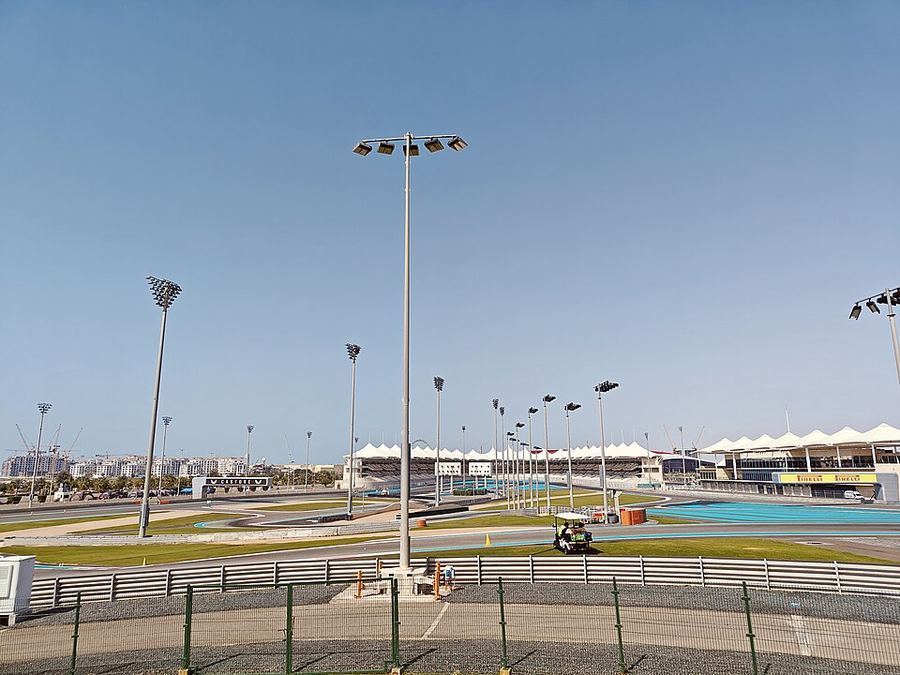
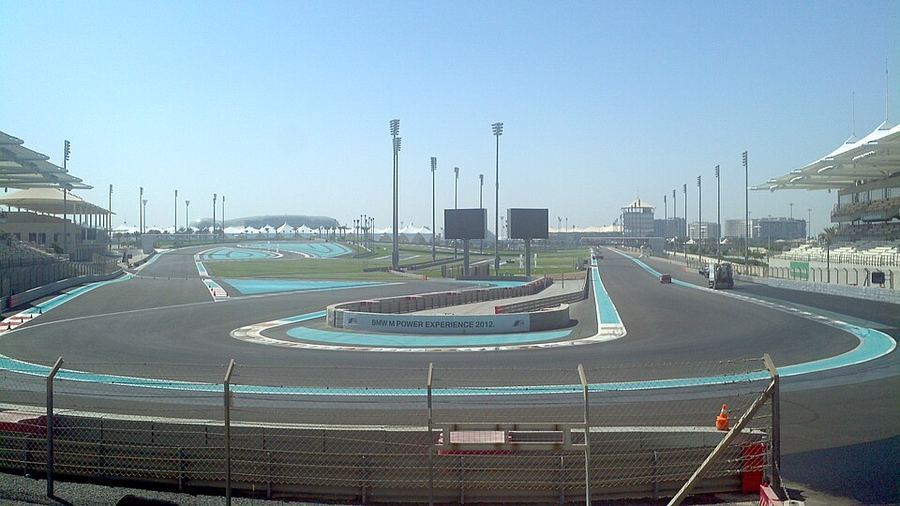
The Emirates' international sporting presence is built more on hosting and investing than on competing. Abu Dhabi's Yas Marina Circuit has staged a Formula One Grand Prix since 2009, usually as the season finale, and the Dubai World Cup at Meydan is among the richest horse races in the world. The country hosts the DP World Tour Championship in golf, the UAE Tour in professional cycling, tennis championships in both Dubai and Abu Dhabi, and the Abu Dhabi Jiu-Jitsu World Professional Championship. It has repeatedly served as a neutral venue for events that could not be held elsewhere, staging the AFC Asian Cup in 2019, the ICC T20 World Cup in 2021, and Indian Premier League seasons. Emirati investment has reshaped European football: Sheikh Mansour bin Zayed's 2008 purchase of Manchester City created the City Football Group, now the owner of clubs on several continents, and the Emirates and Etihad airlines are among the most conspicuous sponsors in world sport, with London's Emirates Stadium named for one of them. On the field the record is more modest: the UAE has one World Cup appearance, in 1990, and its Olympic medal history is very short.

Economy, Trade & Government

Currency & GDP

UAE Dirham — AED (د.إ)

GDP (PPP): $745.994 billion (2024 est.)

Per capita: $68,600 (2024 est.)

Exports

$558.402 billion (2023 est.)

crude petroleum, refined petroleum, gold, broadcasting equipment, natural gas (2023)

Partners: China 11%, India 11%, Japan 10%, Iraq 6%, Thailand 4% (2023)

Imports

$481.852 billion (2023 est.)

gold, broadcasting equipment, cars, refined petroleum, diamonds (2023)

Partners: China 19%, India 7%, USA 6%, Turkey 4%, Japan 4% (2023)

Government

Type: federation of monarchies

Independence: 2 December 1971 (from the UK)

Terrain → Where People Live

How mountains, coasts, and rivers shape settlement (LandScan).

Coming — data

Migration & Ethnic Settlement

Where groups settled and how people move (GeoEPR + UNHCR).

Coming — data

Universities

Notable institutions, mappable as points.

Coming — data
Economy & government facts: CIA World Factbook (public domain), via OpenFactBook / factbook.json.
Every fact and narrative claim will carry a visible source citation. Data-driven sections light up automatically wherever HERA has coverage.