HERA · Human Entity Reference Atlas by Masego Inc

← Argentina 🌐 3D View
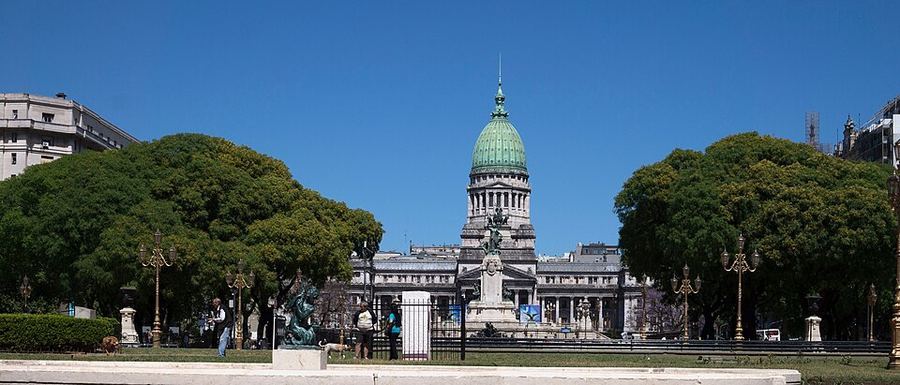
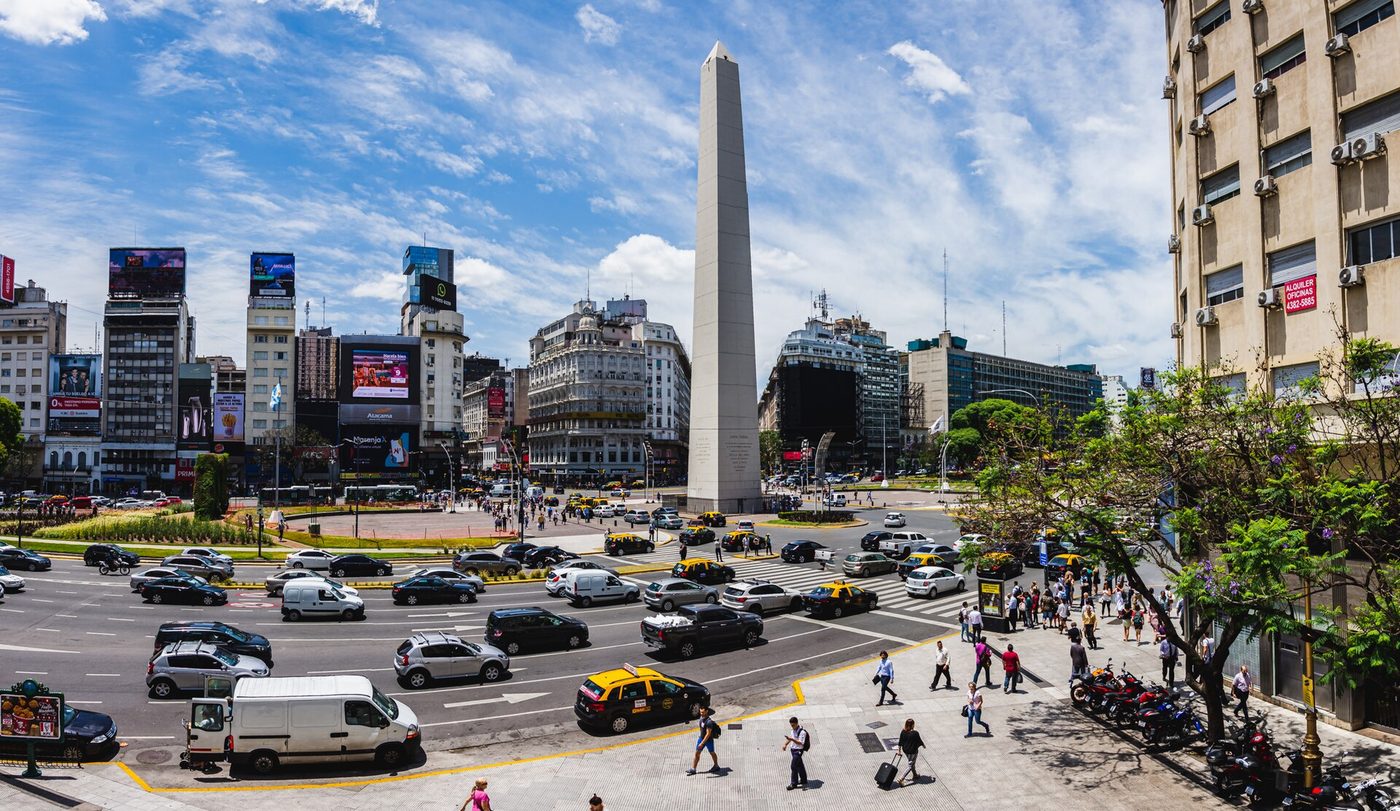
Panorama Obelisco de Buenos Aires 2019, Argentina
Argentina ARG
Panorama Obelisco de Buenos Aires 2019 — Photo: Luis Santos / CC BY-SA 2.0 via Wikimedia Commons
Did You Know Lionel Messi captained Argentina to victory at the 2022 World Cup in Qatar — the country's third title after 1978 and 1986 — in a final against France widely described as the greatest World Cup match ever played. — FIFA

Argentina sprawls across the southern cone of South America like a country designed by a maximalist: subtropical jungle at Iguazú in the north, the bone-dry Andean puna in the west, the endless grass sea of the Pampas at its heart, and glacier-carved Patagonia running down to Tierra del Fuego. It is the continent's second-largest nation, home to about 45.4 million people, more than a third of whom orbit Buenos Aires — a capital that considers itself the Paris of the South and argues the point with opera houses, boulevards, and all-night bookstores. Independent from Spain since 9 July 1816, Argentina is a presidential republic whose population is overwhelmingly of European descent, the legacy of a massive Spanish and Italian immigration wave. Its economy runs on the Pampas: soybean meal, corn, and beef anchor roughly $97 billion in exports, with Brazil the top partner, atop a GDP of about $1.2 trillion at purchasing power parity. Repeated booms, busts, and currency crises have made Argentines expert economists by necessity — and fierce, funny, unshakeable patriots by temperament.

CIA World FactbookWorld Bank
Population
45,418,098
Capital
Buenos Aires
Currency
$ ARS
Time zones
Largest city
Buenos Aires
Human Geography Themes
Loading national figures…
Largest Cities
Buenos Aires14,730,906
Cordoba1,587,356
Rosario1,187,382
Mendoza1,063,217
San Miguel de Tucumán986,267
La Plata838,701
Salta633,196
Mar del Plata627,743
In Perspective

Buenos Aires's urban core is home to about 14,730,906 people.

That's bigger than London, Paris, Madrid and Toronto — each a great world city in its own right.

Buenos Aires14,730,906
London10,408,332
Paris9,366,654
Madrid5,680,137
Toronto5,566,382

Among the world's megacities, though, it's one of many — the giants of Asia and Latin America run larger still:

Buenos Aires14,730,906
Jakarta40,545,126
Dhaka37,307,160
Tokyo33,244,670
Shanghai30,678,616
Cairo25,230,325

More people live in Buenos Aires than in the entire nation of Sweden, Greece, Portugal or Israel.

The Country & Its People

History

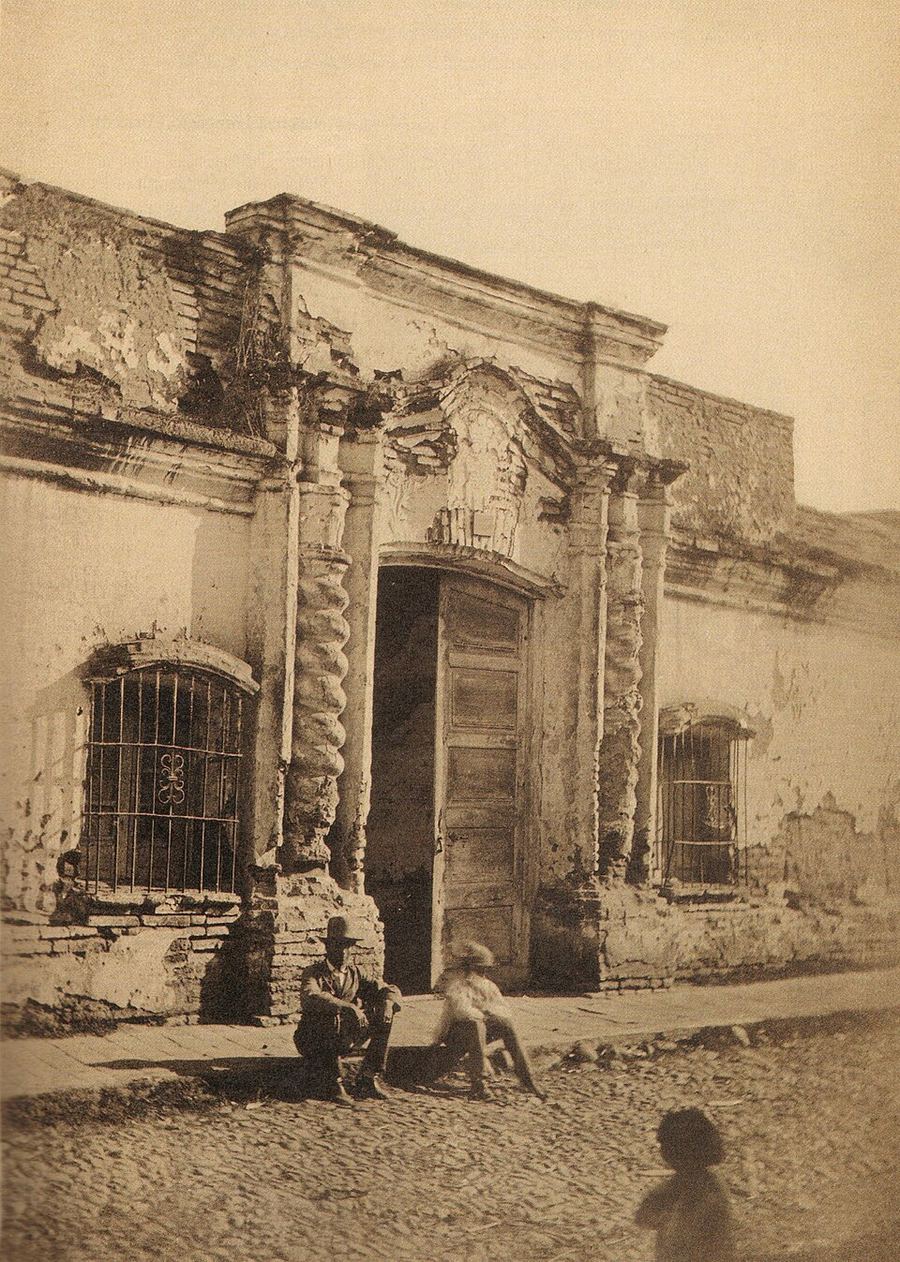
Long before Spain arrived, the land held Diaghita farmers in the northwest, Guaraní communities along the Paraná, and Mapuche and Tehuelche peoples ranging the Patagonian south. Spanish colonizers founded Buenos Aires in the 1530s (and again, more successfully, in 1580), but the region remained a backwater of the empire until the Viceroyalty of the Río de la Plata was created in 1776. The May Revolution of 1810 lit the fuse; on 9 July 1816, delegates at Tucumán declared independence, and General José de San Martín carried the liberation war across the Andes into Chile and Peru. The late nineteenth century transformed everything: railways, refrigerated beef ships, and some six million European immigrants — mostly Italians and Spaniards — made Argentina one of the world's wealthiest countries by 1913. The twentieth century brought Juan and Eva Perón's movement, military coups, and the 1976–1983 dictatorship, whose state terror disappeared thousands and whose collapse after the 1982 Falklands/Malvinas War restored democracy in 1983 — unbroken since, through hyperinflation, the 2001 default, and every crisis after.
History, Argentina
Angel Paganelli (1832-1928) / Public domain

Culture

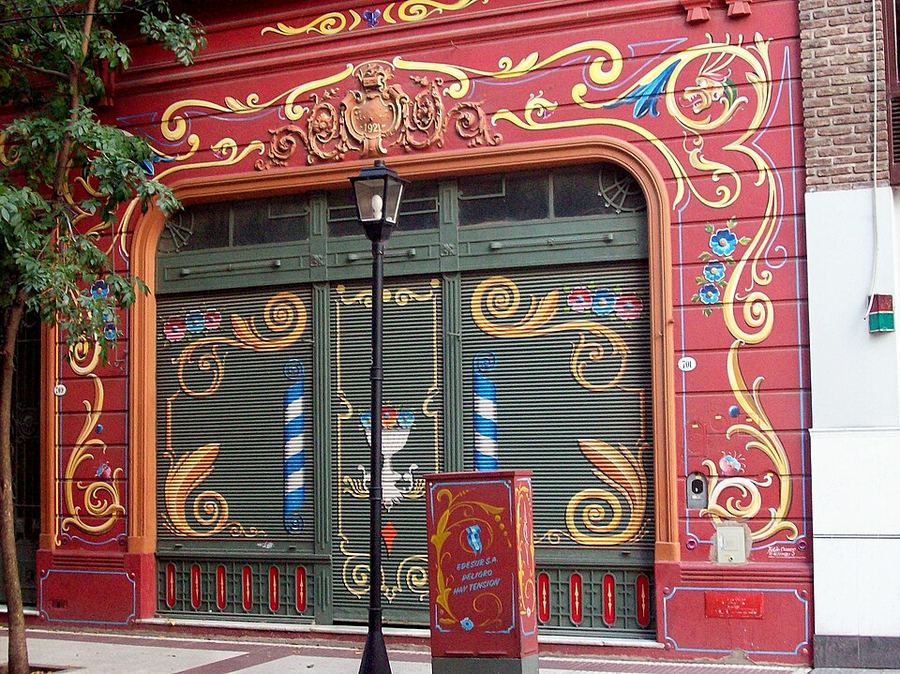
Argentine culture is an ongoing conversation conducted at high volume over coffee. Buenos Aires claims one of the highest densities of bookstores and psychoanalysts on Earth, and its literary lineage — Jorge Luis Borges, Julio Cortázar, Adolfo Bioy Casares — turned the city's labyrinth of cafés into a global literary capital. The porteño dialect glitters with lunfardo, a slang born in immigrant tenements and smuggled into respectability by tango lyrics; Argentines famously use 'vos' instead of 'tú' and pronounce 'll' as 'sh,' making their Spanish instantly recognizable. Rituals structure daily life: the shared gourd of yerba mate passed hand to hand, the Sunday asado that stretches for hours, the late dinner that begins when much of the world is asleep. Fileteado porteño, the swirling ornamental painting style that once decorated Buenos Aires carts and buses, was inscribed by UNESCO as intangible cultural heritage. Roman Catholicism remains the largest faith at about 63 percent, but nearly one in five Argentines now claims no religion — and football, many would say, fills the gap.
Culture, Argentina
I´m the owner of this work / CC BY-SA 3.0

Points Of Pride

Few countries of 45 million punch this hard. Argentina has produced five Nobel laureates — including Bernardo Houssay, Luis Leloir, and César Milstein in the sciences — and in 2013 gave the Catholic Church its first pope from the Americas, Buenos Aires-born Jorge Mario Bergoglio, Pope Francis. On the pitch, Argentina has won the FIFA World Cup three times (1978, 1986, 2022), the last with Lionel Messi lifting the trophy in Qatar to complete football's most decorated individual career. Tango, born in the port neighborhoods of Buenos Aires, was inscribed on UNESCO's Representative List of Intangible Cultural Heritage in 2009. The country's natural showpieces — Iguazú Falls, Los Glaciares with the Perito Moreno glacier, the Valdés Peninsula's whale nurseries — are UNESCO World Heritage sites that anchor a major tourism economy. The University of Buenos Aires, tuition-free and open to all, is regularly ranked among Latin America's finest. And Argentines will note, correctly, that they invented the ballpoint pen's mass-market form: László Bíró patented it in Buenos Aires.
Points Of Pride, Argentina
Luca Galuzzi (Lucag) / CC BY-SA 2.5

Cultural Fusion

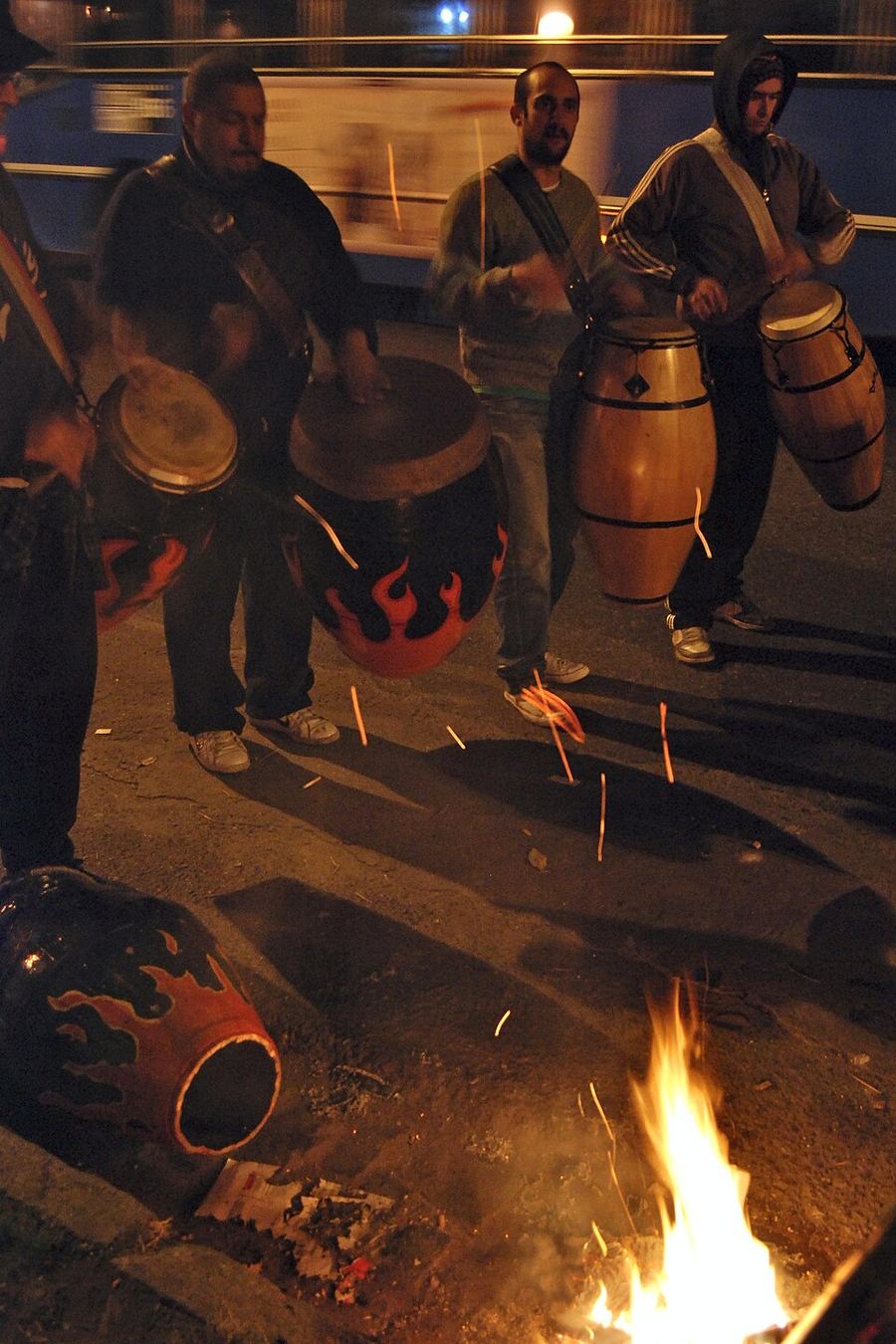
Argentina calls itself a 'crisol de razas' — a melting pot — and the census bears it out: about 97 percent of the population is of European or mixed European-Indigenous descent, with Indigenous peoples at 2.4 percent and Afro-Argentines at 0.4 percent. The Italian imprint is so deep that Buenos Aires Spanish carries an Italian melody, gnocchi is a monthly ritual (eaten on the 29th), and hand gestures are practically grammar. Spaniards, Germans, French, Welsh, Syrians, Lebanese, and Eastern European Jews all layered in during the great immigration wave; Argentina today hosts Latin America's largest Jewish community, and Welsh is still spoken in Patagonian Chubut towns like Gaiman and Trelew. Indigenous languages persist alongside official Spanish — Quechua in the northwest, Guaraní in the northeast, Mapudungun in the south — part of a linguistic mosaic that also includes Italian, German, English, and French. The Afro-Argentine legacy, though demographically small today, was foundational: candombe rhythms and Black port culture helped birth the tango itself. Fusion is not a chapter of Argentine history; it is the plot.
Cultural Fusion, Argentina
Blmurch / CC BY-SA 3.0

Music & Dance

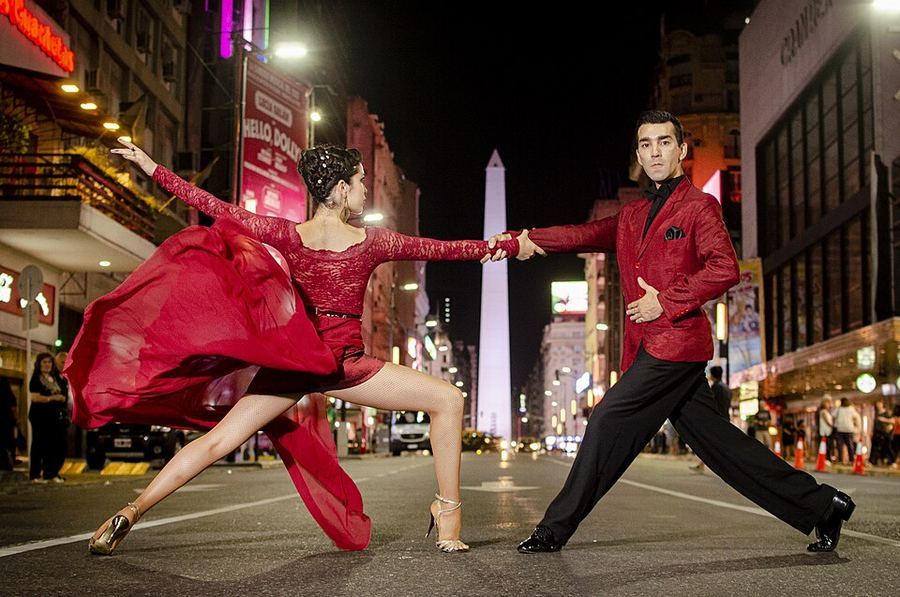
Tango is the sound Argentina exports to the world: a smoky, melancholy embrace of European melody, African-rooted rhythm, and immigrant longing, born in the brothels and courtyards of late-1800s Buenos Aires and inscribed by UNESCO — jointly with Uruguay — as intangible cultural heritage in 2009. Its saints are Carlos Gardel, the velvet-voiced singer whose 1935 death in a plane crash froze him at peak myth, and Astor Piazzolla, whose bandoneón dragged tango into the concert hall with the nuevo tango revolution. But the interior dances to different beats: the stomping chacarera of Santiago del Estero, the handkerchief-waving zamba of Salta, and the accordion-driven chamamé of Corrientes, itself added to UNESCO's heritage list in 2020. The 1960s and beyond brought rock nacional — Charly García, Luis Alberto Spinetta, Soda Stereo's Gustavo Cerati — which made Argentina the beating heart of Spanish-language rock. Córdoba contributes cuarteto, a relentlessly danceable party genre, while milongas (tango social dances) still fill Buenos Aires halls nightly, dancers young and old queuing for the floor at midnight.
Music & Dance, Argentina
Manticora87 / CC BY-SA 4.0

Cuisine & Misattributed Foods

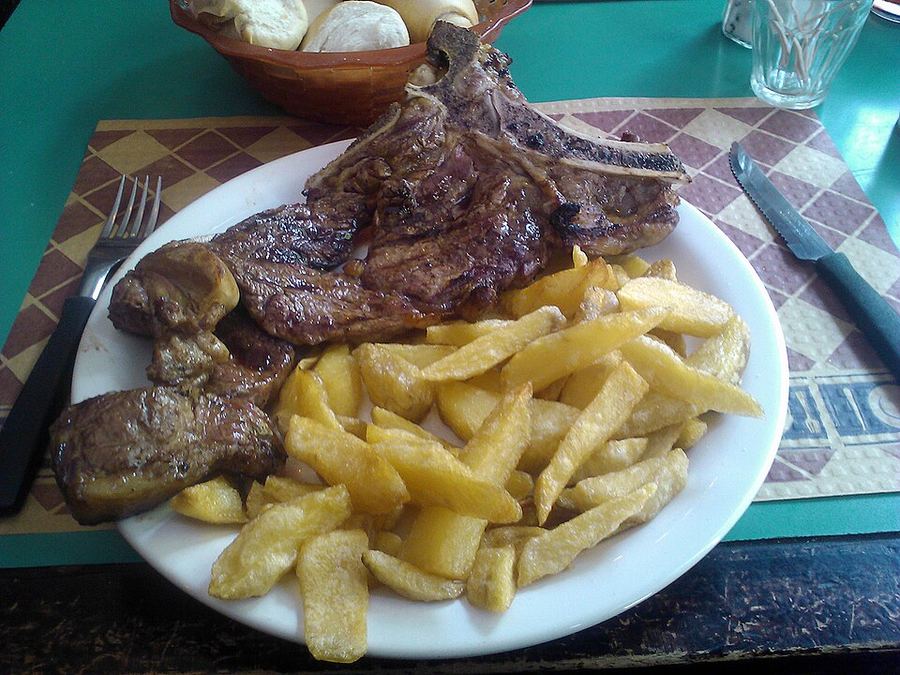
Argentine cuisine begins with fire. The asado — beef ribs, chorizo, morcilla, and sweetbreads slow-grilled over embers by a designated asador — is less a meal than a liturgy, and Argentines rank among the world's most devoted beef eaters. The Italian half of the national palate supplies milanesas (breaded cutlets, often 'a la napolitana' with ham and cheese), fresh pasta, and a pizza culture — thick-crusted, cheese-heavy porteño style with fainá chickpea flatbread — that Buenos Aires defends against Naples itself. Empanadas are regional theology: Salta's are small and spicy, Tucumán's juicy, Córdoba's faintly sweet. Everything sweet orbits dulce de leche, the caramelized milk spread that fills alfajores, layers cakes, and crowns breakfast toast. Mendoza's high-altitude vineyards made Malbec the national grape and Argentina one of the world's leading wine producers, with soybean products, corn, and beef anchoring the export economy. And threading through it all is yerba mate — the bitter, grassy infusion sipped through a metal bombilla from a shared gourd, passed in a circle in a ritual of trust that functions as Argentina's true national beverage.
Cuisine & Misattributed Foods, Argentina
Diego Torres Silvestre from Sao Paulo, Brazil / CC BY 2.0

National Dress

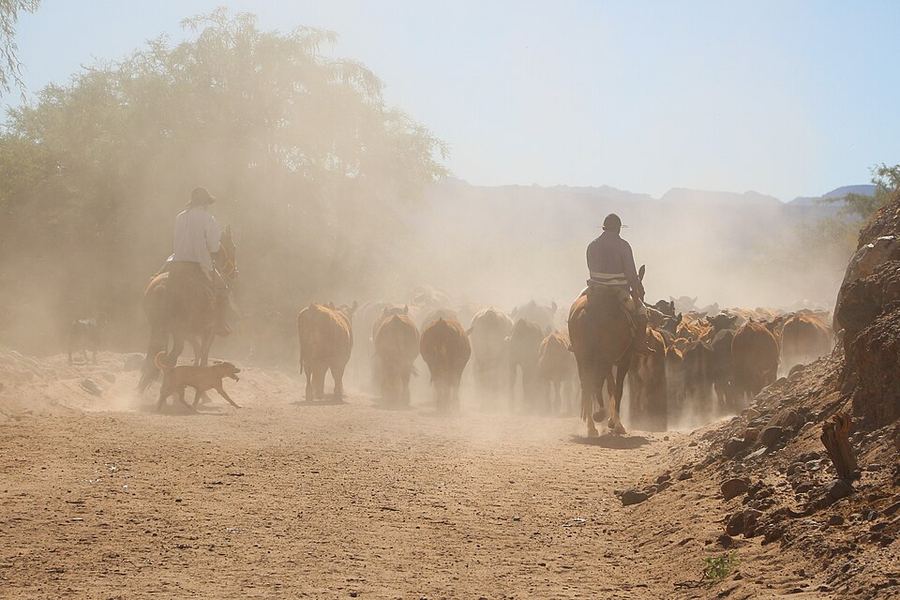
Argentina's national costume belongs to the gaucho, the horseman of the Pampas who occupies roughly the mythic space of the American cowboy — but with better knives. The classic outfit: bombachas de campo, the wide pleated trousers that tuck into leather boots; a chiripá or woven sash at the waist; the rastra, a broad belt studded with silver coins; a neckerchief; and either a flat boina beret or a wide-brimmed chambergo hat. Slung at the back rides the facón, the long-bladed knife that was tool, tableware, and dueling weapon, while boleadoras — stone weights on braided cords, inherited from Indigenous hunters — served to bring down rhea and cattle. The poncho crowns it all, and every province claims its own: the red-and-black poncho of Salta honors the gaucho militias of General Martín Miguel de Güemes, while Catamarca's vicuña-wool weavings are heirloom art. The female counterpart, the paisana, wears full flowered skirts and braids for folk festivals. Modern Argentines dress in cosmopolitan style, but gaucho dress rides again at every patriotic parade, jineteada rodeo, and the annual Tradition Day festivities in San Antonio de Areco.
National Dress, Argentina
Bernard Gagnon / CC BY-SA 4.0

Sports & Inspiring Athletes

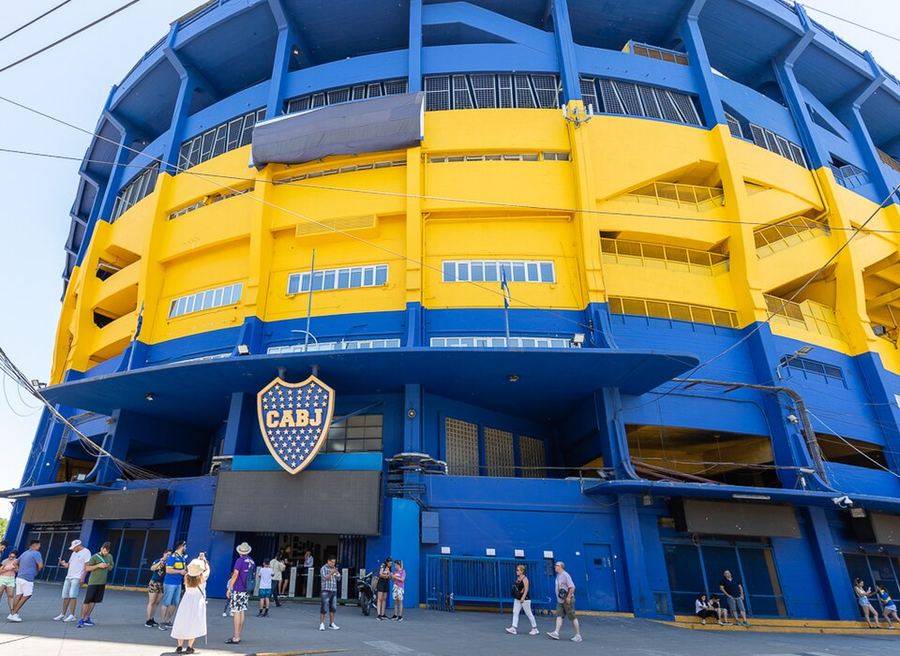
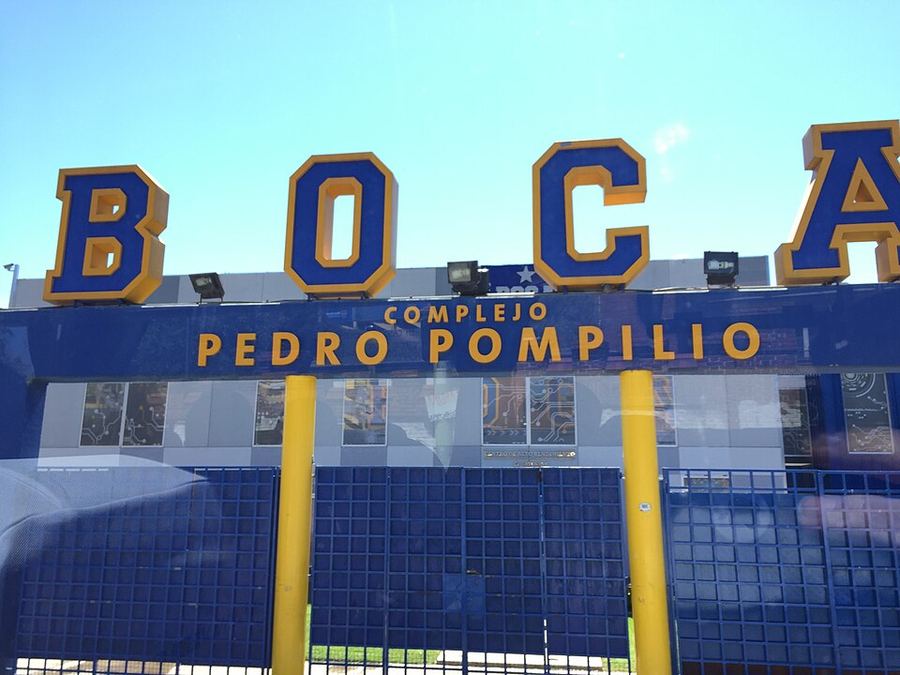
Football in Argentina is not a pastime; it is the national metaphysics. The country has won three FIFA World Cups — 1978 at home, 1986 behind Diego Maradona's genius (and infamous 'Hand of God'), and 2022 in Qatar, where Lionel Messi finally claimed the one trophy missing from history's most garlanded career. The Buenos Aires Superclásico between Boca Juniors and River Plate is routinely called the fiercest rivalry in world sport. Yet the official national sport is pato, a horseback game with colonial roots, declared so by law in 1953 — a nod to the country's equestrian soul, which also makes Argentina the undisputed world capital of polo, its Palermo Open the sport's most coveted title. The Pumas rugby side competes among the world's elite, and Argentine basketball's 'Golden Generation,' led by Manu Ginóbili, stunned the United States on the way to Olympic gold at Athens 2004. The women's field hockey team, Las Leonas, has stacked Olympic podiums for two decades, and Buenos Aires hosted the Youth Olympic Games in 2018 — the IOC's summer youth flagship — in fitting style.
Sports & Inspiring Athletes, Argentina
Julia Sumangil / CC BY-SA 4.0

Notable Educational Programs

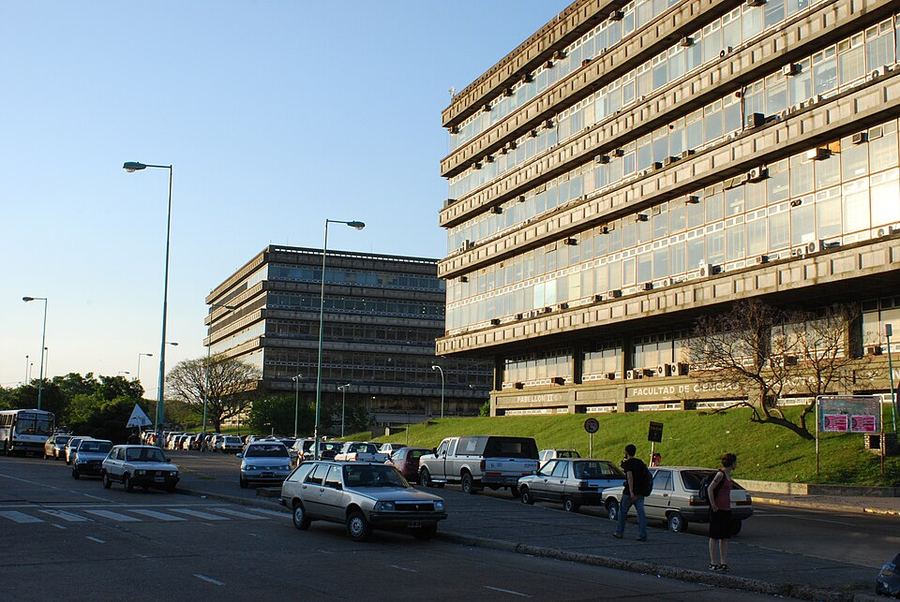
Argentina built one of Latin America's proudest education traditions on an 1884 law — championed in the spirit of schoolteacher-president Domingo Sarmiento — that made primary schooling free, secular, and compulsory decades before most of the region. Today education is mandatory for roughly fourteen years, from preschool at age four through secondary school, and adult literacy stands around 99 percent, among the highest in the Americas. The crown jewel is the public university system: tuition-free since 1949 and open-admission, headlined by the University of Buenos Aires, which has educated presidents, three of the country's five Nobel laureates, and generations of Latin American leaders drawn by the no-cost degree. Students from across the region still migrate to Argentina to study medicine and engineering for free. Distinctive programs tackle the country's vast geography: rural and 'plurigrade' schools serve remote Pampas and Andean communities, escuelas albergue board students in isolated Patagonia, and the Conectar Igualdad program distributed millions of laptops to public-school students in one of the world's largest one-to-one computing efforts. Chronic fiscal crises strain budgets and teacher pay, yet the ideal of free public education remains close to untouchable in Argentine politics.
Notable Educational Programs, Argentina
Cristian O. Arone / CC BY-SA 4.0

Wars & Conflicts

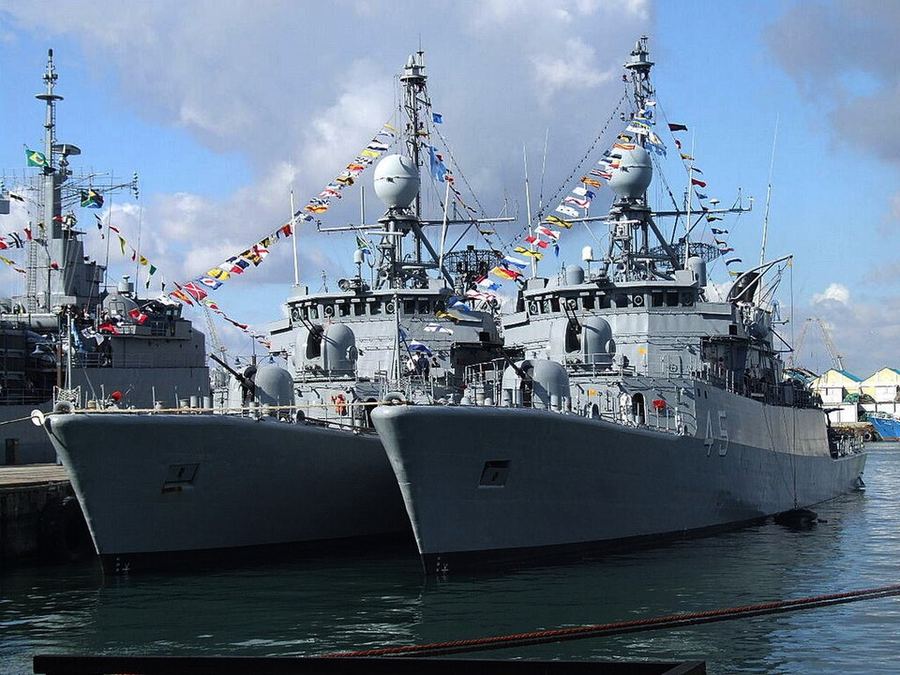
Argentina is at peace: as of mid-2026 it faces no interstate war or internal armed conflict, and the Uppsala Conflict Data Program records no active state-based armed conflict on Argentine territory. The country's principal security challenge is organized crime, centered on the port city of Rosario, a transshipment hub for cocaine moving toward Europe whose homicide rate has run several times the national average. In March 2024 President Javier Milei's government deployed federal security forces — with army logistical support such as vehicles and helicopters — to Rosario after a wave of gang killings, a response widely reported by Reuters and other international outlets; homicides in the city subsequently fell sharply. In May 2025, the government applied its new 'anti-mafia' law for the first time in Rosario, granting federal forces expanded powers against criminal organizations, according to the Buenos Aires Times. The armed forces themselves are in a constrained modernization: Argentina purchased F-16 fighter jets from Denmark, its most significant defense acquisition in decades, even as austerity keeps defense spending near historic lows. None of this constitutes armed conflict — Argentina remains one of South America's more stable security environments.
Current as of 2026-07-16
Wars & Conflicts, Argentina
Bob Adams from George, South Africa / CC BY-SA 2.0

Land & Border Disputes

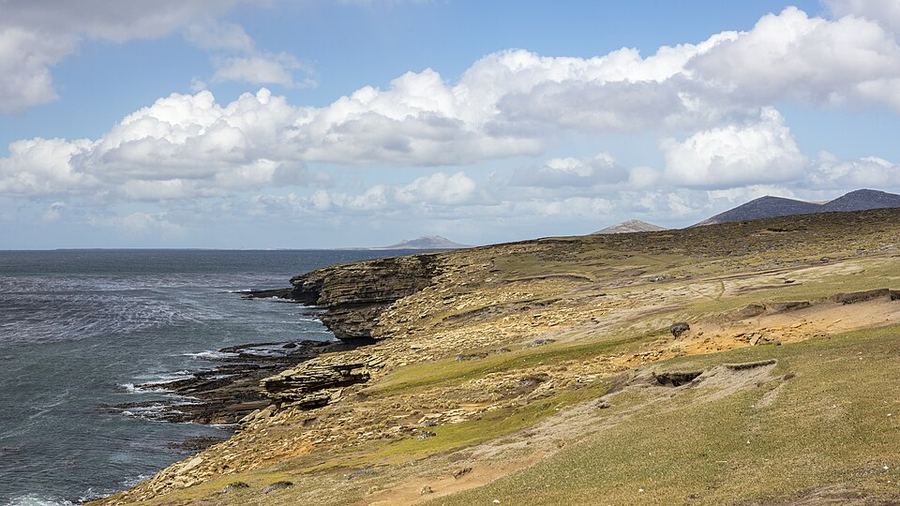
Argentina's defining international dispute is sovereignty over the Falkland Islands — Islas Malvinas to Argentines — along with South Georgia and the South Sandwich Islands, all administered by the United Kingdom. Argentina's claim dates to the early nineteenth century and to its inheritance of Spanish title; Britain has administered the Falklands continuously since 1833, interrupted only by Argentina's 1982 occupation and the ten-week war that followed, which ended in British victory and the fall of Argentina's military junta. The dispute is now entirely peaceful and diplomatic: Argentina's constitution enshrines the claim, the UN Special Committee on Decolonization keeps the question on its agenda and has repeatedly called for negotiations, and the UK points to the islanders' 2013 referendum, in which nearly all voters chose to remain a British territory. Argentina also claims a wedge of Antarctica between 25°W and 74°W that overlaps British and Chilean claims; under the 1959 Antarctic Treaty all such claims are held in abeyance, and Argentina maintains year-round scientific bases there. A separate, older dispute with Chile over the Beagle Channel islands was settled peacefully by papal mediation in 1984, per the CIA World Factbook.
Land & Border Disputes, Argentina
Godot13 / CC BY-SA 4.0
Land, Life & Legacy

Land & Climate

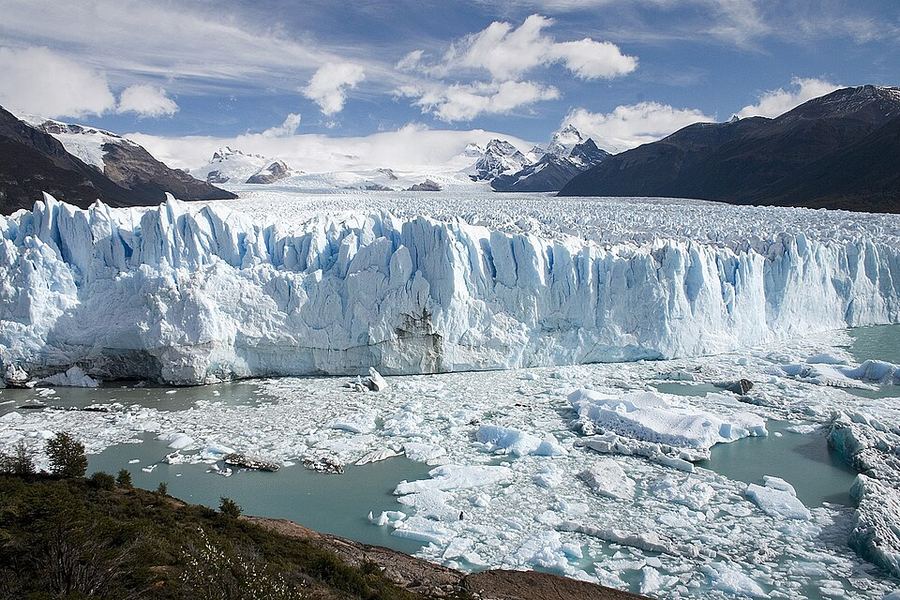
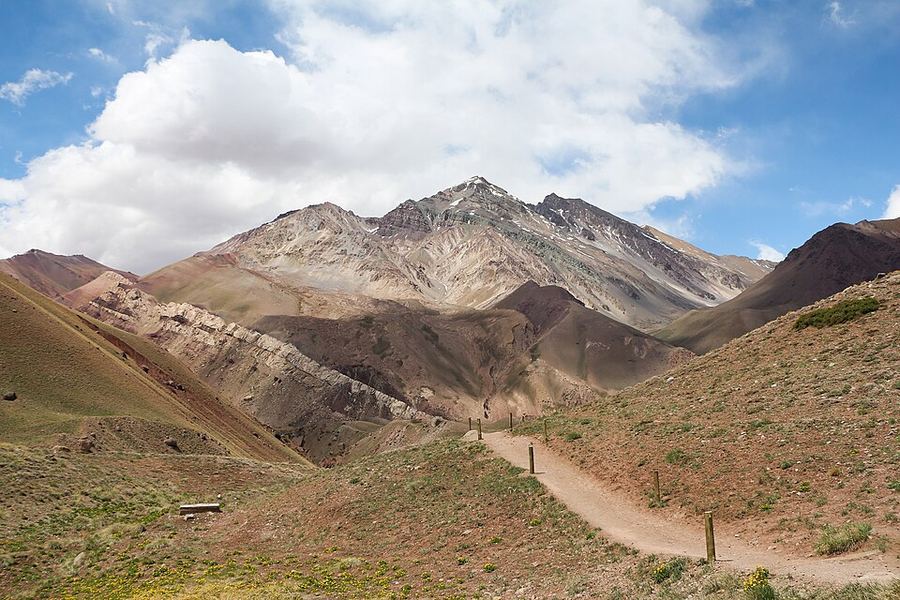
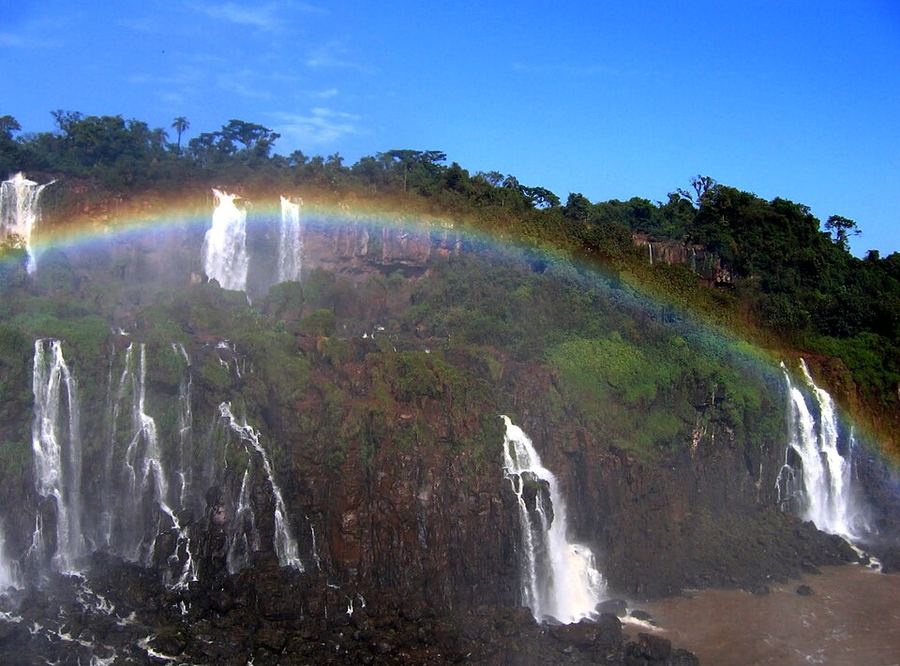
Argentina is the second-largest country in South America at about 2.78 million square kilometres, and its geography runs almost the full climatic range of the continent. The Andes form the entire western border with Chile and carry Aconcagua, at 6,961 metres the highest peak in the Western Hemisphere. East of the mountains lie the Pampas, the deep-soiled temperate grasslands of the centre that made the country a cattle and grain exporter and where most of the population lives. North of them the Gran Chaco is hot, flat and seasonally flooded, while Mesopotamia, between the Paraná and Uruguay rivers, is subtropical and holds the Iguazú Falls on the Brazilian border. South of the Río Colorado, Patagonia is an arid, wind-scoured plateau of shingle and steppe running to Tierra del Fuego, which Argentina shares with Chile and where Ushuaia sits as the southernmost city in the world. The Southern Patagonian Ice Field, including the Perito Moreno glacier in Los Glaciares National Park, is one of the largest freshwater ice reserves outside the polar regions. Climate grades from subtropical in the north to cold and subpolar in the far south, with the dry, warm zonda wind descending off the Andes.

Entertainment

Argentine leisure is social by design. The week is punctuated by café sessions — Buenos Aires's historic 'cafés notables,' like the marble-and-mirror Café Tortoni, enjoy protected status — and crowned by the Sunday asado, an hours-long grill ritual with mate circulating continuously. Night runs late: dinner at ten, milongas where tango dancers of every age share the floor past midnight, and a theater district along Avenida Corrientes anchored by the Teatro Colón, one of the world's great opera houses. Summer sends porteños to the Atlantic beaches of Mar del Plata; winter fills the ski runs of Cerro Catedral above Bariloche in the Andean Lake District. The showpieces of the tourism economy — Iguazú Falls, the Perito Moreno glacier, Mendoza's Malbec wine routes, whale-watching off Península Valdés — draw millions of foreign visitors a year, while national holidays fill plazas with folk dance, gaucho horsemanship, and the smoke of grilling chorizo.
Entertainment, Argentina
Pierre André Leclercq / CC BY-SA 4.0

Art & Museums

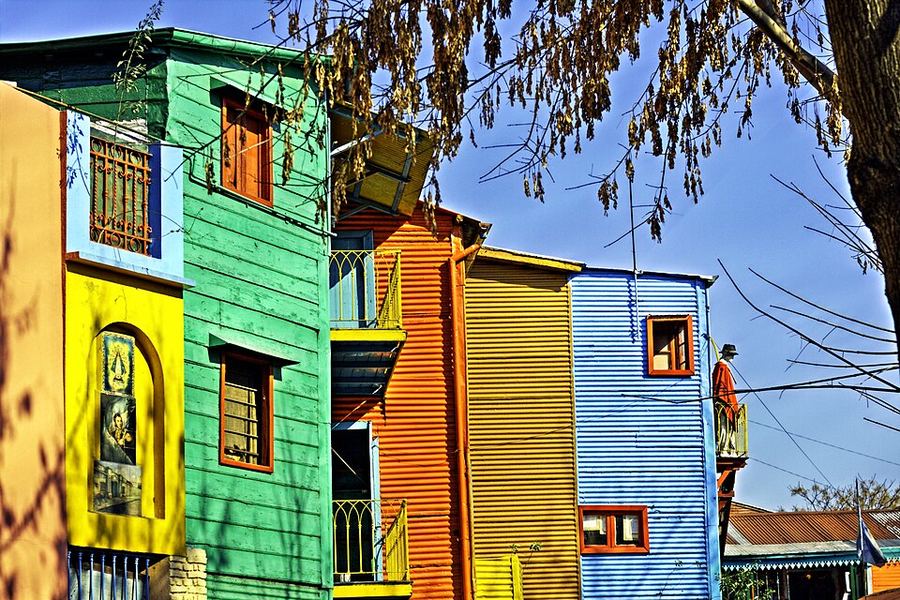
Argentine art runs from the prehistoric to the provocative. In Patagonia, the Cueva de las Manos preserves thousands of stenciled hands painted up to 9,000 years ago — a UNESCO World Heritage site since 1999. The modern canon begins with Benito Quinquela Martín, who painted the cranes and stevedores of La Boca, the Buenos Aires port district whose brightly colored houses he helped turn into a civic emblem. Antonio Berni pioneered a politically charged new realism, building collages of his slum-dwelling characters Juanito Laguna and Ramona Montiel from urban refuse; the visionary Xul Solar invented private languages and painted watercolor cosmologies; and Julio Le Parc became a leader of international kinetic art in Paris. Marta Minujín's happenings — including a Parthenon of banned books erected in 1983 after the dictatorship fell — made her a pop icon. The Museo Nacional de Bellas Artes and MALBA anchor the capital's collections, while fileteado, the swirling sign-painter's style, decorates the city itself.
Art & Museums, Argentina
Luis Argerich from Buenos Aires, Argentina / CC BY 2.0

Notable People

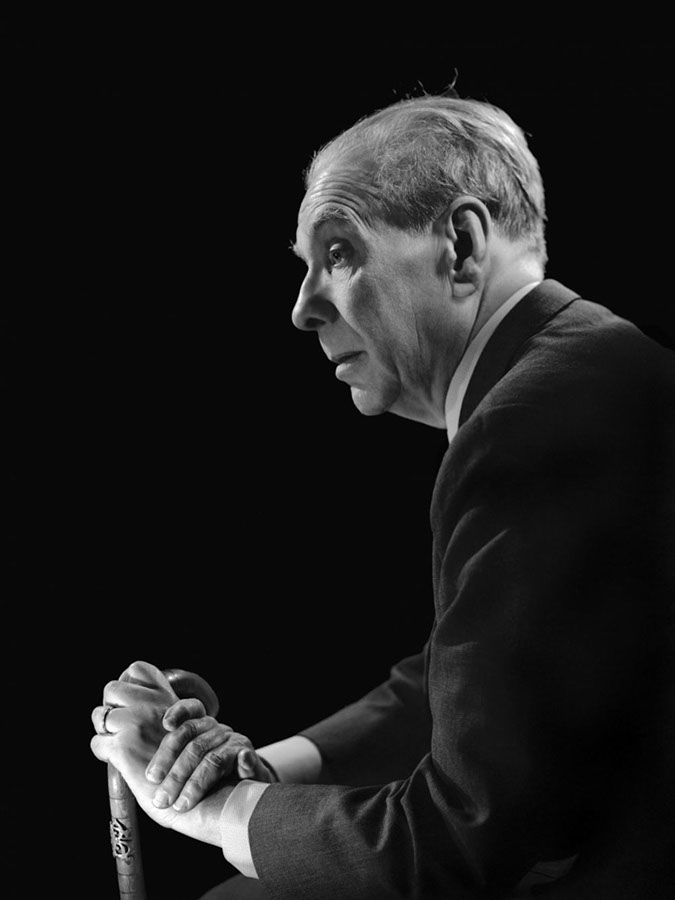
Argentina's pantheon is improbably deep for its size. Letters claim Jorge Luis Borges, the blind master of the metaphysical short story, and Julio Cortázar, while the cartoonist Quino gave Latin America a conscience in Mafalda. Independence hero José de San Martín liberated three countries; Eva Perón remains the most mythologized woman in the region's politics; and Jorge Mario Bergoglio became Pope Francis, the first pope from the Americas, in 2013. Science counts Nobel laureates Bernardo Houssay, Luis Leloir, and César Milstein, and medicine honors René Favaloro, pioneer of coronary bypass surgery. Music gives Carlos Gardel, tango's eternal voice; Astor Piazzolla, its modernist; and pianist Martha Argerich, among the greatest of any era. In sport, Juan Manuel Fangio won five Formula 1 world championships in the 1950s, Diego Maradona and Lionel Messi bookend football's greatest-player debate, and Manu Ginóbili collected four NBA titles alongside Olympic gold.
Notable People, Argentina
Annemarie Heinrich / Public domain

Inventions & Breakthroughs

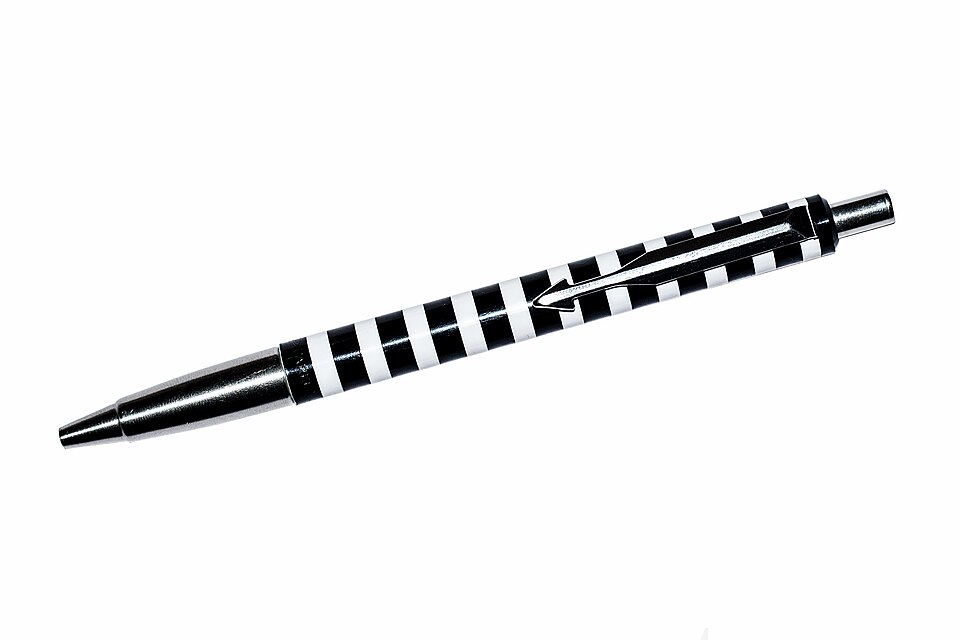
Much of the world signs its name with an Argentine invention: László Bíró, a Hungarian émigré in Buenos Aires, patented the modern ballpoint pen there in 1943, and 'birome' remains the everyday Argentine word for pen. The country's record in practical science is striking. Police official Juan Vucetich developed the first workable system of fingerprint identification, using it to solve a murder in 1892 — decades before the technique became universal. Cardiac surgeon René Favaloro standardized the coronary bypass operation in 1967, transforming heart care worldwide. The Nobel-crowned lineage runs from Bernardo Houssay's work on pituitary hormones and blood sugar (1947) through Luis Leloir's discovery of sugar nucleotides (1970) to César Milstein's method for producing monoclonal antibodies (1984), now the basis of an entire class of modern therapies. Even animation has an Argentine first: Quirino Cristiani's El Apóstol, released in Buenos Aires in 1917, is regarded as the world's first animated feature film.
Inventions & Breakthroughs, Argentina
Augustus Binu : flickr / CC BY-SA 3.0

Science & Technology

Argentina has the strongest basic-science tradition in Latin America, with three Nobel laureates in the sciences: Bernardo Houssay in 1947 for the pituitary hormones governing sugar metabolism, Luis Federico Leloir in 1970 for sugar nucleotides and carbohydrate biosynthesis, and César Milstein in 1984 for monoclonal antibodies, work done at Cambridge that underpins much of modern immunology and diagnostics. CONICET, the national research council, employs researchers across a network of institutes, and the Balseiro Institute in Bariloche is a selective physics and nuclear-engineering school. Argentina was the first country in Latin America to generate electricity from a nuclear reactor, at Atucha I in 1974, and now operates Atucha I and II and Embalse. From the same Bariloche cluster, the state company INVAP designs and exports research reactors, including the OPAL reactor supplied to Australia, and builds satellites for the national space agency CONAE, among them the SAC series and the SAOCOM radar pair launched in cooperation with the United States. Agricultural biotechnology is the other main strand, with early and near-universal adoption of genetically modified soybeans and a large seed and agronomy sector.
On The World Stage
Champions of Argentina

Champions & Defining Moments

Argentina's record is anchored by three FIFA World Cups — 1978 at home, 1986 behind Diego Maradona, and 2022 with Lionel Messi — plus a record sixteen Copa América titles, including back-to-back triumphs in 2021 and 2024, and Olympic football gold in both 2004 and 2008. Beyond the pitch, Juan Manuel Fangio's five Formula 1 world championships in the 1950s stood as the sport's record for nearly half a century. The 'Golden Generation' basketball team beat the United States on the way to gold at Athens 2004; Las Leonas, the women's field hockey side, have won medals at six Olympic Games since 2000; and the Pumas reached Rugby World Cup semi-finals in 2007 and 2015. Tennis contributed Guillermo Vilas, Gabriela Sabatini, and 2009 US Open champion Juan Martín del Potro, while Argentine polo — with its ten-goal stars and the Palermo Open — remains without serious international rival.

Mehmettorun / CC BY-SA 4.0
Economy, Trade & Government

Currency & GDP

Argentine Peso — ARS ($)

GDP (PPP): $1.213 trillion (2024 est.)

Per capita: $26,500 (2024 est.)

Exports

$96.899 billion (2024 est.)

soybean meal, corn, trucks, soybean oil, crude petroleum (2023)

Partners: Brazil 18%, USA 9%, Chile 8%, China 8%, India 4% (2023)

Imports

$79.999 billion (2024 est.)

soybeans, vehicle parts/accessories, refined petroleum, natural gas, cars (2023)

Partners: Brazil 23%, China 20%, USA 12%, Paraguay 5%, Germany 4% (2023)

Government

Type: presidential republic

Independence: 9 July 1816 (from Spain)

Terrain → Where People Live

How mountains, coasts, and rivers shape settlement (LandScan).

Coming — data

Migration & Ethnic Settlement

Where groups settled and how people move (GeoEPR + UNHCR).

Coming — data

Universities

Notable institutions, mappable as points.

Coming — data
Economy & government facts: CIA World Factbook (public domain), via OpenFactBook / factbook.json.
Every fact and narrative claim will carry a visible source citation. Data-driven sections light up automatically wherever HERA has coverage.