HERA · Human Entity Reference Atlas by Masego Inc

← Armenia 🌐 3D View
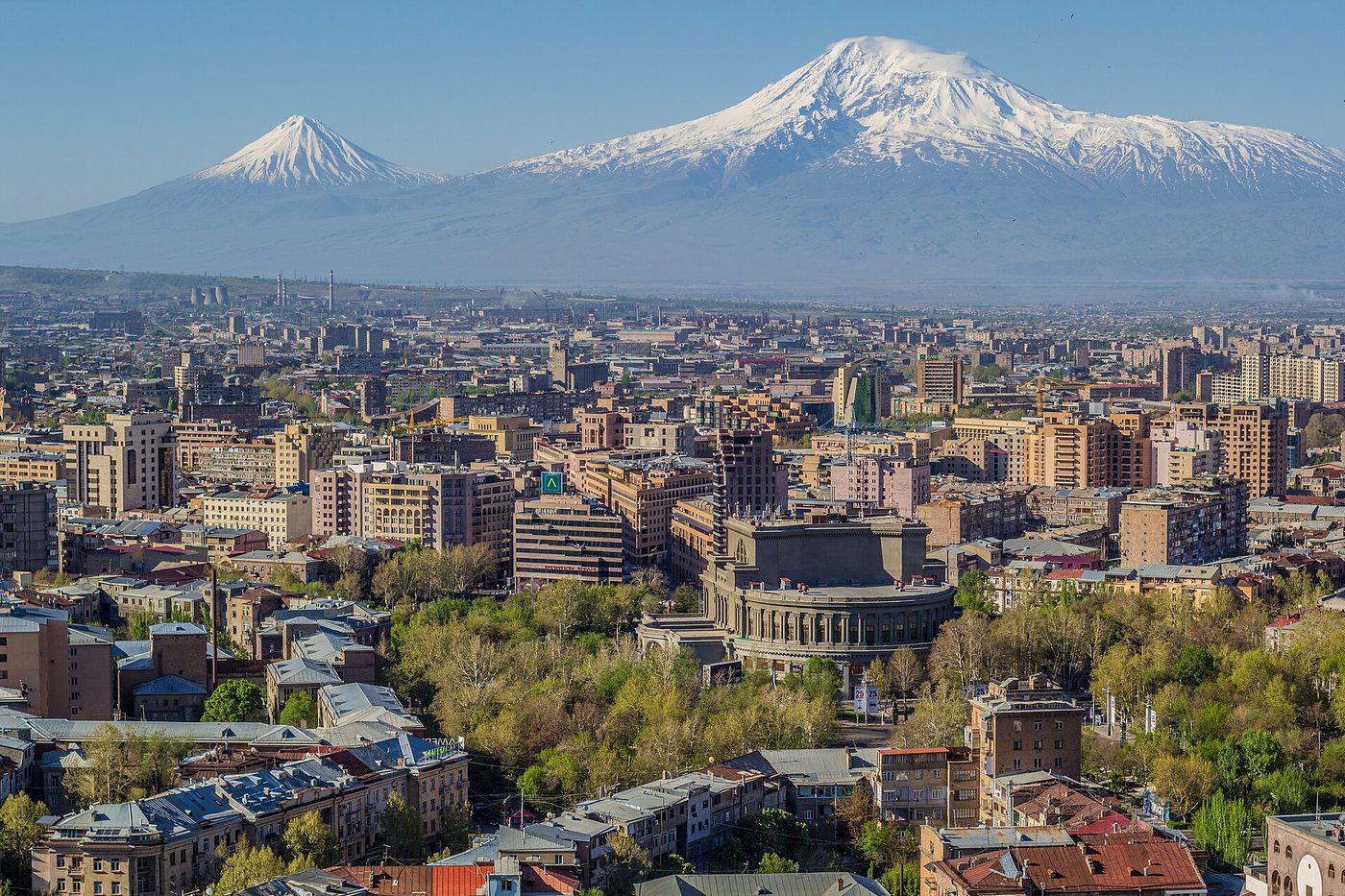
Mount Ararat and the Yerevan skyline, Armenia
Armenia ARM
Mount Ararat and the Yerevan skyline — Photo: Սէրուժ Ուրիշեան (Serouj Ourishian) / CC BY-SA 3.0 via Wikimedia Commons
Did You Know The Armenian alphabet was designed from scratch by Mesrop Mashtots in 405 to fit the sounds of the language, and has been in continuous use ever since. — Encyclopaedia Britannica

Armenia is a landlocked parliamentary republic of about 2.96 million people in the South Caucasus, bordered by Georgia, Azerbaijan, Iran and Turkey, with the frontiers to Turkey and Azerbaijan closed for most of its independent existence. Yerevan, the capital, is built on the Ararat plain within sight of Mount Ararat, the mountain that dominates the national imagination even though it lies across the Turkish border. Armenia is among the most homogeneous states in the region — 98.1% ethnic Armenian, 97.2% Armenian-speaking, and 95.2% adherent to the Armenian Apostolic Church — and Armenians count the adoption of Christianity as the state religion in 301 as the earliest such act by any kingdom. The Armenian language forms its own branch of Indo-European and is written in an alphabet devised for it in 405. The modern republic declared independence from the Soviet Union on 21 September 1991, but the country's history runs back through the Bagratid and Artaxiad kingdoms to Urartu in the ninth century BC. Its recent decades have been dominated by the conflict over Nagorno-Karabakh, which ended in 2023 with Azerbaijani control and the arrival in Armenia of more than a hundred thousand displaced Armenians. Gold, diamonds and copper ore lead exports; Russia remains the largest trading partner.

CIA World FactbookEncyclopaedia Britannica
Population
2,963,837
Capital
Yerevan
Currency
֏ AMD
Time zones
Largest city
Yerevan
Human Geography Themes
Loading national figures…
Largest Cities
Yerevan1,208,011
Gyumri99,474
In Perspective

Yerevan's urban core is home to about 1,208,011 people.

Among the world's megacities, though, it's one of many — the giants of Asia and Latin America run larger still:

Yerevan1,208,011
Jakarta40,545,126
Dhaka37,307,160
Tokyo33,244,670
Shanghai30,678,616
Cairo25,230,325
The Country & Its People

History

The Armenian highlands held the kingdom of Urartu from the ninth century BC, whose rulers founded the fortress of Erebuni in 782 BC on the site of present-day Yerevan. Armenian kingdoms followed under the Orontid, Artaxiad and Arsacid dynasties; under Tigranes the Great in the first century BC the state briefly reached from the Caspian to the Mediterranean. The decisive event of Armenian history came in 301, when King Trdat III, converted by Gregory the Illuminator, made Christianity the religion of the kingdom — by tradition the first state anywhere to do so. In 405 Mesrop Mashtots devised the Armenian alphabet, and the translation of scripture that followed founded a literary culture that has continued unbroken since. Caught between Byzantium, Persia, the Arab caliphates and later the Ottoman and Russian empires, Armenians nonetheless sustained kingdoms at Ani under the Bagratids from 884 and in Cilicia from 1198. From 1915 the Ottoman authorities carried out the deportations and mass killings of the Armenian Genocide, in which around 1.5 million Armenians died and the Armenian presence in Anatolia was destroyed. A First Republic was declared on 28 May 1918 and absorbed into the Soviet Union in 1920; independence was restored on 21 September 1991.
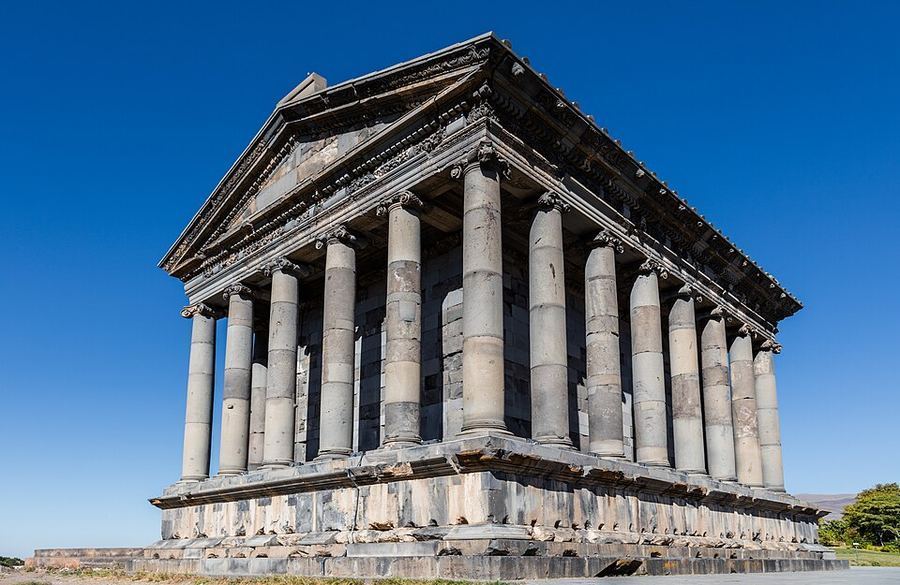
History, Armenia
Diego Delso / CC BY-SA 4.0

Culture

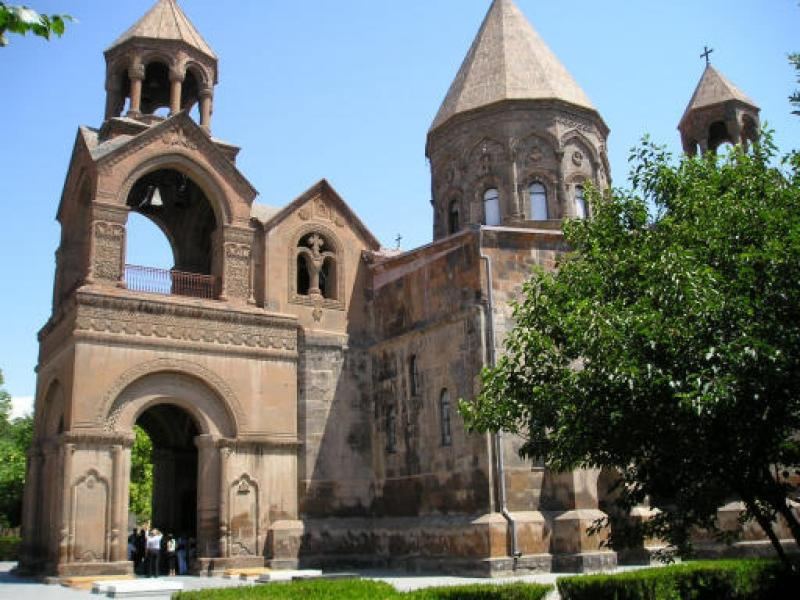
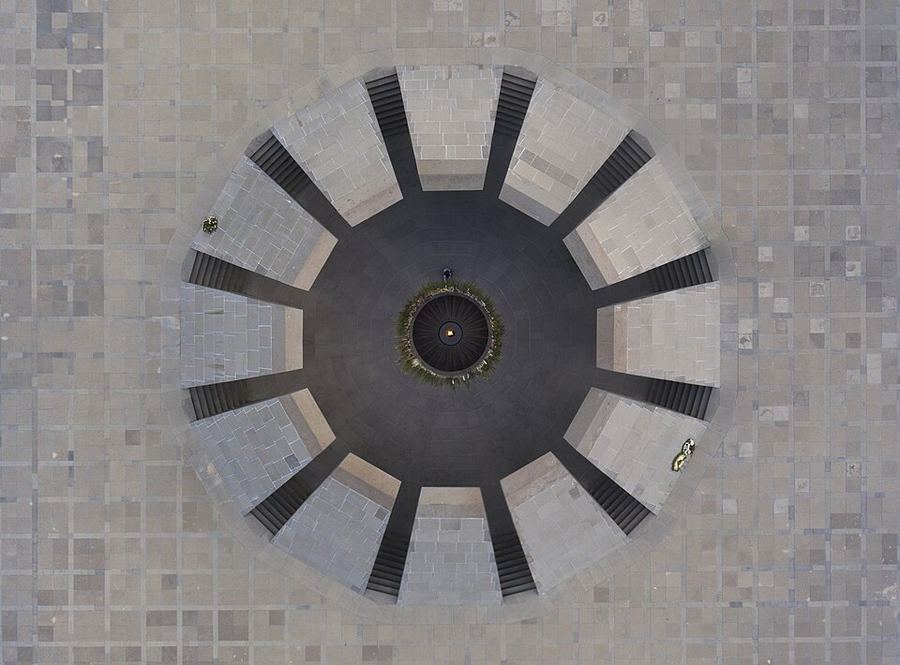
Armenian culture is organised around three things that survived every empire that ruled the territory: the church, the alphabet and the family. The Armenian Apostolic Church, one of the Oriental Orthodox communions, is followed by 95.2% of the population and has its Mother See at Holy Etchmiadzin, where the cathedral is among the oldest in the world; church membership functions as an ethnic as much as a devotional identity. The alphabet carries similar weight — its 405 creation is commemorated as a national event, its letters appear as a monument carved in stone at Artashavan, and UNESCO has recognised the art of Armenian letters and their cultural expressions as intangible heritage. The khachkar, the intricately carved cross-stone raised as a memorial or a votive act, is the country's most distinctive material form and is likewise UNESCO-inscribed. Family obligation, hospitality and the honouring of the dead structure social life, and the diaspora — larger than the resident population, concentrated in Russia, the United States, France and the Middle East — is treated as part of the nation rather than as emigration. Genocide remembrance on 24 April, centred on the Tsitsernakaberd memorial above Yerevan, is the most solemn day in the calendar.
Culture, Armenia
en:User:Eupator / CC BY-SA 3.0

Points Of Pride

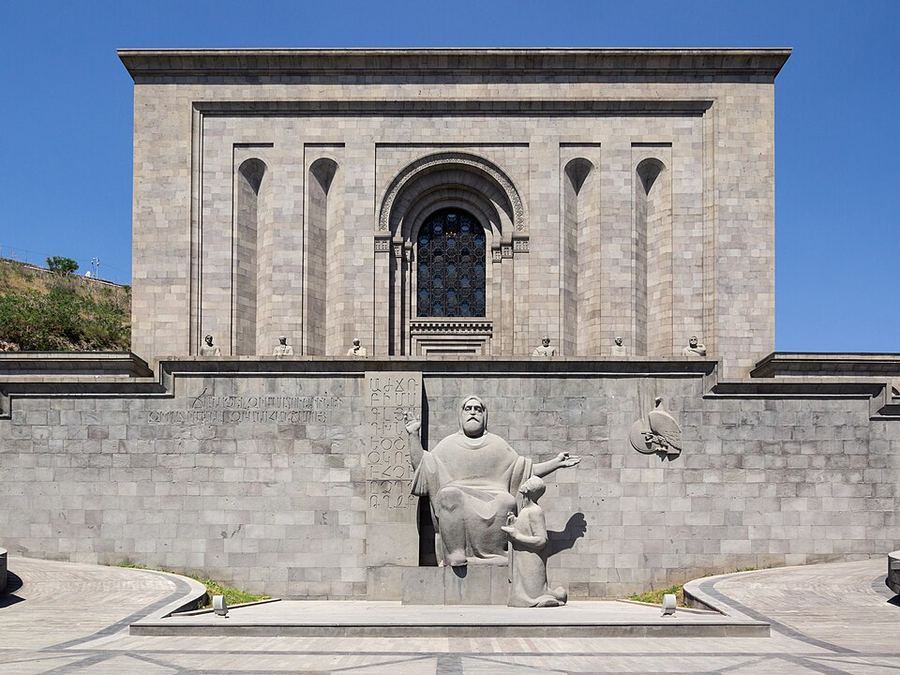
Armenians name the year 301 first — the adoption of Christianity as a state religion, held to be the earliest anywhere — and 405 second, when Mesrop Mashtots created an alphabet fitted precisely to the language and made a national literature possible. Three properties carry UNESCO World Heritage inscription: the monasteries of Haghpat and Sanahin in the northern Debed canyon; the monastery of Geghard, partly cut into rock, with the upper Azat valley; and the cathedral and churches of Echmiadzin together with the archaeological remains of Zvartnots. On the intangible list sit the khachkar, the duduk and its music, lavash bread and its baking, and the kochari line dance. Yerevan's Matenadaran holds one of the world's great collections of medieval manuscripts. Archaeology supplies two of the more remarkable claims: the Areni-1 cave in Vayots Dzor produced both the oldest known winemaking facility, roughly six thousand years old, and a well-preserved leather shoe of comparable antiquity. In chess, Armenia won the Chess Olympiad three times between 2006 and 2012 and made the game a compulsory school subject. And the apricot, whose botanical name Prunus armeniaca records where Europeans first met it, is a national emblem.
Points Of Pride, Armenia
Diego Delso / CC BY-SA 4.0

Cultural Fusion

Armenia is ethnically homogeneous at home — 98.1% Armenian — and profoundly cosmopolitan abroad, and the diaspora is the main channel through which other cultures enter. Communities formed by genocide survivors and later emigration in Russia, France, the United States, Lebanon, Syria, Iran and Argentina have produced their own hybrid Armenian cultures, and returning or investing diasporans have brought French pastry, Middle Eastern cooking, Los Angeles pop and Beirut Armenian dialect into Yerevan. Western Armenian, the diaspora's standard, differs from the Eastern Armenian of the republic to the point of being classed separately, and UNESCO lists Western Armenian as endangered. Within the country the deepest layer is Persian: centuries of Iranian rule and continuing trade across the still-open southern border left loanwords, carpet design, garden forms and cuisine, and Iran remains one of only two land routes out. Russian influence is more recent and pervasive — Soviet architecture, engineering education, and a Russian-language competence that persists across generations — while the borders with Turkey and Azerbaijan have been closed since the 1990s, foreclosing exchange with the immediate west and east. Yerevan's small Yezidi minority, at 1.1% the largest non-Armenian group, maintains a distinct religious tradition with its principal temple at Aknalich.
Cultural Fusion, Armenia
Author of the photo is Heretiq / Public domain

Music & Dance

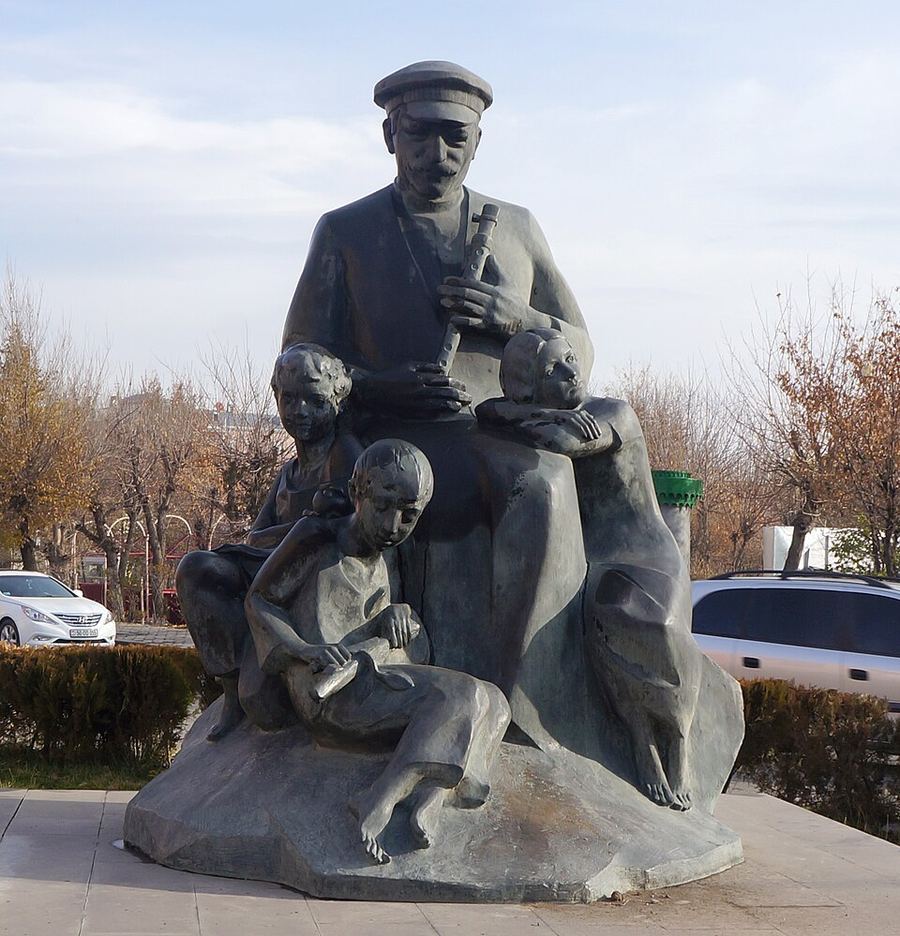
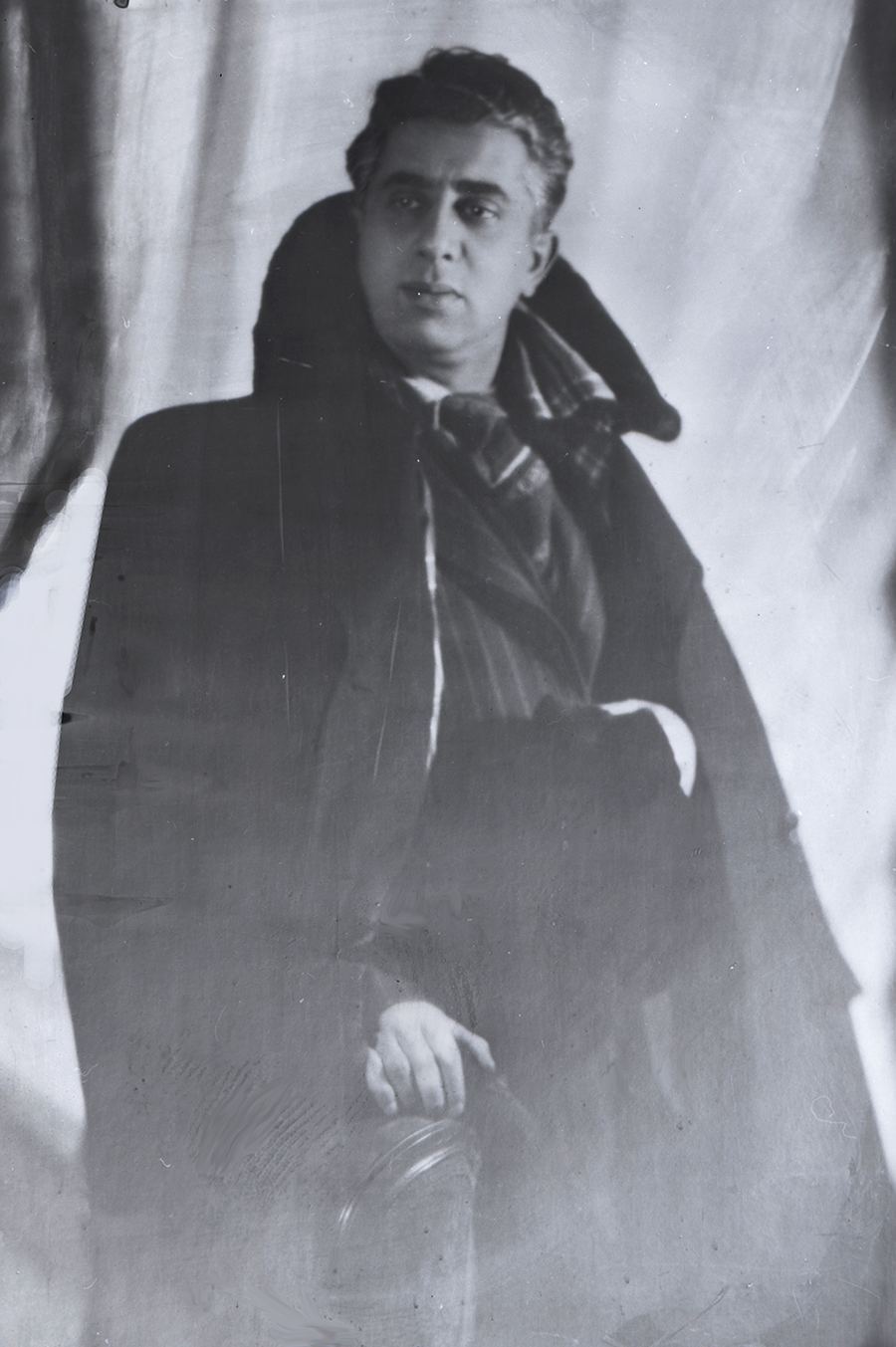
The instrument that stands for Armenia is the duduk, a double-reed pipe of apricot wood with a soft, breathy, unmistakably mournful tone, played by a soloist over a second player's sustained drone; UNESCO inscribed the duduk and its music as intangible cultural heritage, and its sound has been borrowed extensively by film composers abroad. The other traditional instruments — the zurna and dhol for outdoor celebration, the kanun and the long-necked tar — belong to a wider regional family. The pivotal modern figure is Komitas, the priest and musicologist who from the 1890s travelled the Armenian countryside transcribing thousands of folk songs, established Armenian sacred and folk music as a scholarly subject, and was broken by his experience of the deportations in 1915; the Yerevan conservatory carries his name. Aram Khachaturian took Armenian melodic material into the international concert repertoire with the ballets 'Gayane' and 'Spartacus' and the Sabre Dance. Dance is line-and-circle based: kochari, a vigorous men's line dance performed shoulder to shoulder, is UNESCO-inscribed and danced at every wedding, alongside the shalakho and the yarkhushta. Charles Aznavour, born in Paris to Armenian refugees, carried Armenian identity into French popular song for six decades.
Music & Dance, Armenia
Armenak Margarian / CC BY-SA 4.0

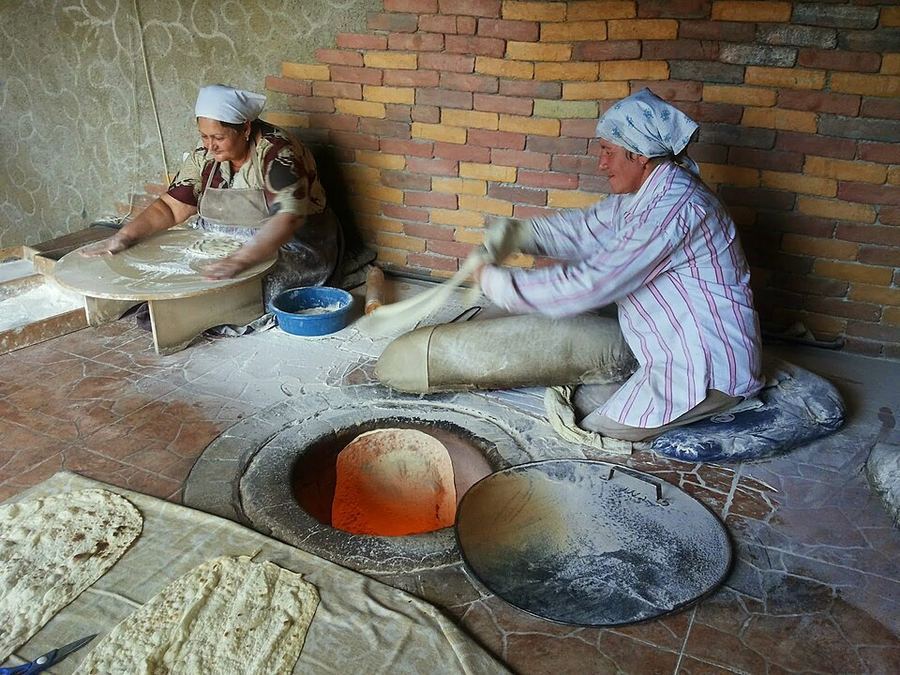
Cuisine & Misattributed Foods

Armenian food is built around bread, herbs, lamb, wheat and dairy, and its foundation is lavash — a thin unleavened flatbread slapped onto the wall of a clay tonir oven, which UNESCO inscribed as an expression of culture in Armenia, and which is used as plate, wrapper and utensil as much as as bread. Khorovats, meat grilled over vine cuttings and served with fire-blistered vegetables, is the centrepiece of any gathering and the subject of considerable regional argument. Tolma wraps spiced meat and rice in grape or cabbage leaves; harissa, wheat and chicken beaten together over many hours into a thick pottage, carries strong commemorative associations; khash, a winter dish of slowly boiled cow's feet eaten at dawn with garlic and lavash, is as much a ritual as a meal. Ghapama, a pumpkin baked with rice, dried fruit and honey, appears at feasts. Dairy is everywhere in the form of matsun yogurt and brined cheeses, and preserved meats — basturma cured under fenugreek paste, and spiced sujuk — are Armenian specialities widely adopted across the region. Fruit is exceptional: apricots above all, along with pomegranates, grapes and mulberries. Armenia has one of the world's oldest winemaking traditions, and Armenian brandy is its best-known drink abroad.
Cuisine & Misattributed Foods, Armenia
Alessandro Bezzi / CC BY 4.0

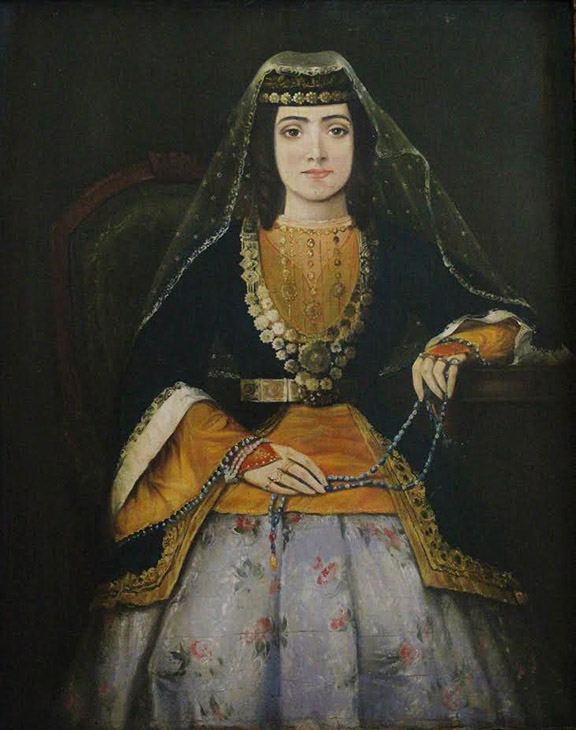
National Dress

Armenian traditional dress is called taraz, and it varied by province rather than forming a single national costume, with the styles of Vaspurakan, Syunik, Karabakh and Western Armenia each identifiable by cut, colour and ornament. The women's ensemble is layered: a long chemise, over it a fitted open-fronted coat called an arkhalig, and over that a sleeveless outer garment, with a wide silver or silver-gilt belt worked in filigree at the waist. The headdress carried the most information — a padded or towered cap wrapped with veils and hung with coins and chains, its form indicating region, age and marital status — and forehead and temple ornaments completed it. Men wore a shirt and wide trousers under their own arkhalig, gathered with a sash or a leather belt, with a sheepskin or felt hat and a fur-trimmed outer coat in the highlands. Red and deep blue dominate the palette, and the Armenian red dye known as vordan karmir, made from a cochineal insect of the Ararat plain, was a prized export of the medieval period. Everyday clothing today is entirely European, and taraz is worn for weddings, folk-dance performance and national commemorations.
National Dress, Armenia
Hakob Hovnatanyan (1806 – 1881) / Public domain

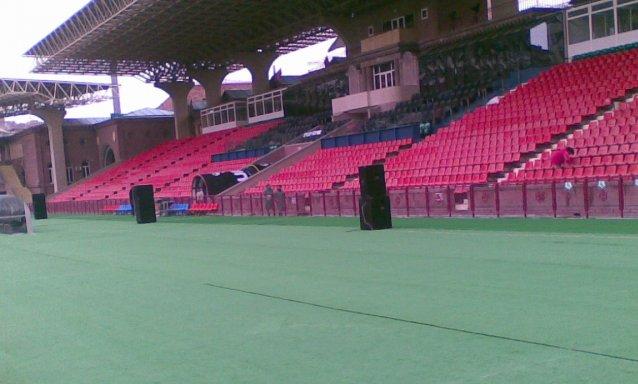
Sports & Inspiring Athletes

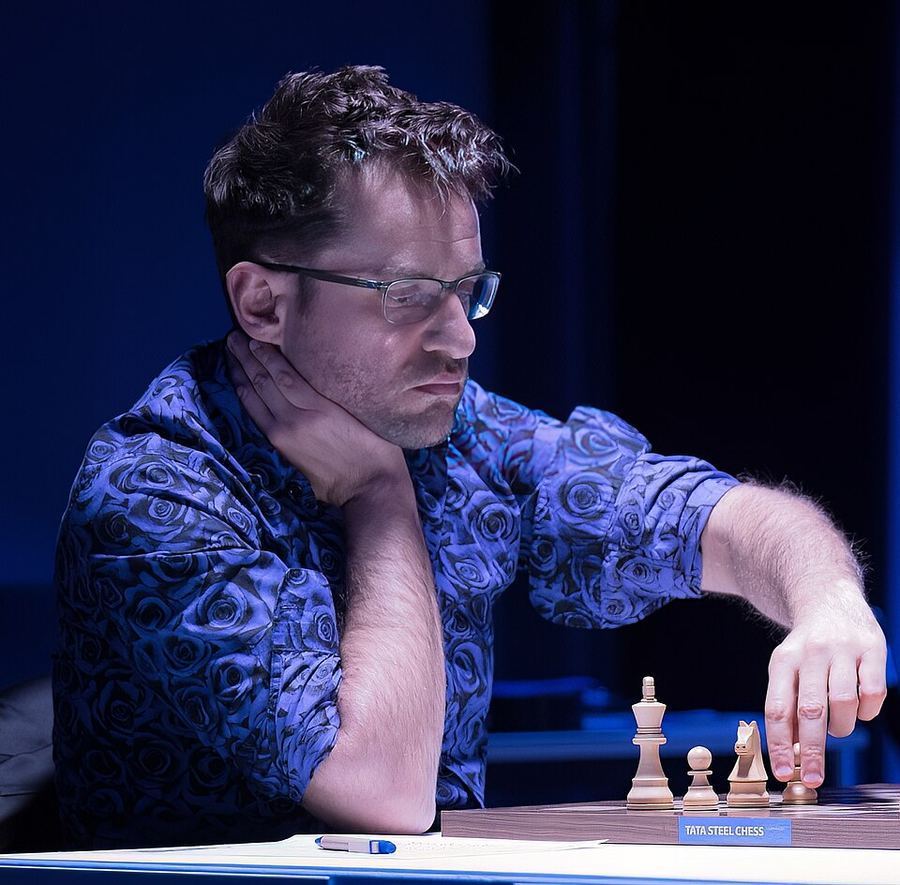
Chess occupies a place in Armenian sporting life that it holds almost nowhere else. The national team won the Chess Olympiad in 2006, 2008 and 2012, an extraordinary record for a country of under three million; Tigran Petrosian was world champion from 1963 to 1969 and Levon Aronian has spent much of his career in the world's top ten. Armenia made chess a compulsory subject in primary schools from 2011, the first country to do so, on the argument that it develops general reasoning. Beyond the board, the country's Olympic record rests on the combat and strength sports: Greco-Roman and freestyle wrestling, weightlifting and boxing account for nearly all of Armenia's medals, and the wrestling schools of Gyumri and Yerevan feed both the national team and the diaspora. Football is the most watched sport, with the Armenian Premier League and a national side that has never reached a major finals but produced Henrikh Mkhitaryan, a long-serving player at Borussia Dortmund, Manchester United, Roma and Inter Milan. Gymnastics has produced world and Olympic medallists, and futsal, weightlifting and sambo have organised followings. Skiing at Tsaghkadzor and hiking are the main recreational sports.
Sports & Inspiring Athletes, Armenia
Kevorkmail (talk) / CC BY-SA 3.0

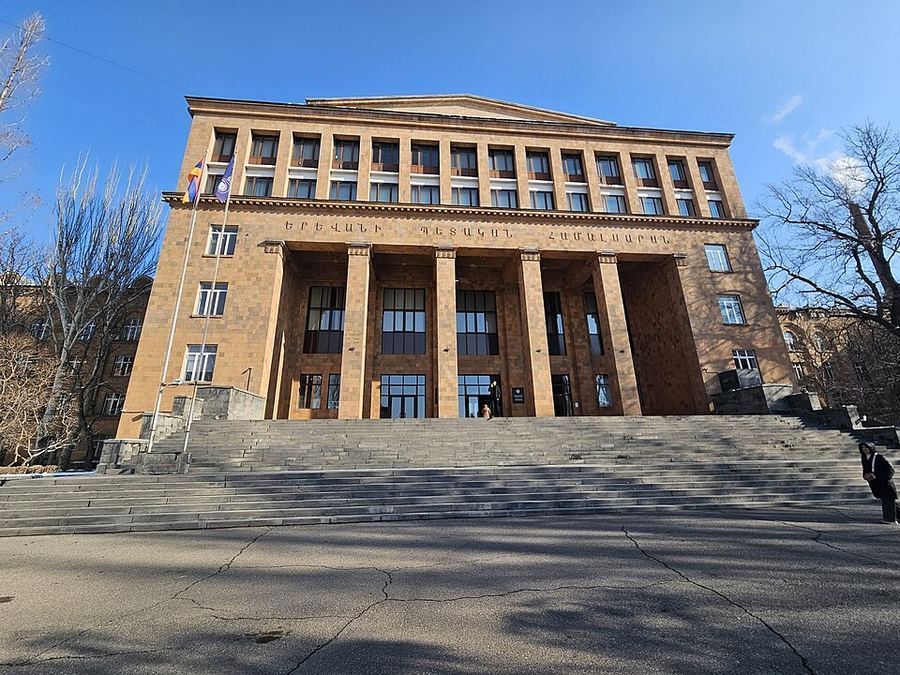
Notable Educational Programs

Armenia inherited a Soviet system with near-universal literacy and strong technical training, and literacy remains effectively total. Schooling is compulsory for twelve years, and enrolment is high, though rural depopulation has closed schools and the quality gap between Yerevan and the provinces is wide. Yerevan State University, founded in 1919 in the First Republic's brief existence, is the flagship institution, alongside the National Polytechnic University, the Yerevan State Medical University and the Komitas Conservatory; the National Academy of Sciences runs the research institutes inherited from the Soviet period. The American University of Armenia, established in 1991 with diaspora funding and affiliated to the University of California, teaches in English and has become a principal route into international graduate study. The country's most distinctive educational innovation is the TUMO Center for Creative Technologies, opened in Yerevan in 2011: free, self-directed after-school programmes in animation, game development, film, music and robotics for teenagers, funded philanthropically, which has expanded to regional centres across Armenia and been replicated in Paris, Berlin, Beirut and elsewhere. Chess instruction in primary school is the other widely noted policy. Emigration of graduates remains the system's largest structural problem.
Notable Educational Programs, Armenia
Furkan Akkurt / CC BY-SA 4.0

Wars & Conflicts

Armenia's modern history is dominated by two catastrophes. The first is the Armenian Genocide of 1915 and the years following, in which Ottoman authorities deported and killed around 1.5 million Armenians and ended the Armenian presence in Anatolia; it is recognised as genocide by many states and international bodies and denied by Turkey, and that denial remains the central obstacle between the two countries. The second is the conflict over Nagorno-Karabakh, an Armenian-majority mountain region within Soviet Azerbaijan. War from 1988 to 1994 left Armenian forces in control of the region and surrounding districts and displaced hundreds of thousands on both sides. Azerbaijan reversed that outcome in a forty-four-day war in September and November 2020, and after a months-long closure of the Lachin corridor launched a further offensive in September 2023 that ended the self-declared republic; more than a hundred thousand Armenians left for Armenia within days, which accounts for the country's recorded population of 145,354 refugees and displaced people. Both states have brought proceedings against each other before the International Court of Justice under the racial discrimination convention, and the Court has issued provisional measures. Negotiations toward a peace treaty and border delimitation have continued since.
ICJUNHCRUNReutersHuman Rights Watch
Current as of 2026-08-06
Wars & Conflicts, Armenia
Aleksey Chalabyan (a.k.a. Xelgen) / CC BY-SA 4.0

Land & Border Disputes

Armenia's borders with two of its four neighbours are closed. Turkey shut the frontier in 1993 in support of Azerbaijan and has kept it closed since; normalisation talks have opened repeatedly, including a set of protocols signed in 2009 that were never ratified, and more recent contacts have produced limited movement without reopening the border. The dispute with Azerbaijan over Nagorno-Karabakh was settled on the ground by force in 2023, but the associated questions remain live: delimitation of a boundary that was an internal Soviet administrative line and was never surveyed as an international one; the status and property of the displaced Armenian population and of Armenian cultural heritage in the territory; and Azerbaijani demands for a transport route across Armenia's southern Syunik province linking it to its Nakhchivan exclave, which Armenia has resisted in any form that would remove its own jurisdiction. As part of delimitation, Armenia transferred control of four villages in the northern Tavush region to Azerbaijan in 2024. The dispute with Turkey over recognition of the 1915 genocide is not territorial but conditions everything else, and Armenia's landlocked position leaves Georgia and Iran as its only open land routes.
Land & Border Disputes, Armenia
Diego Delso / CC BY-SA 4.0
Land, Life & Legacy

Land & Climate

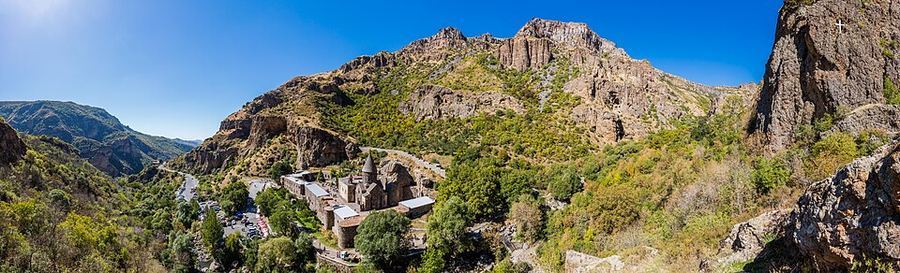
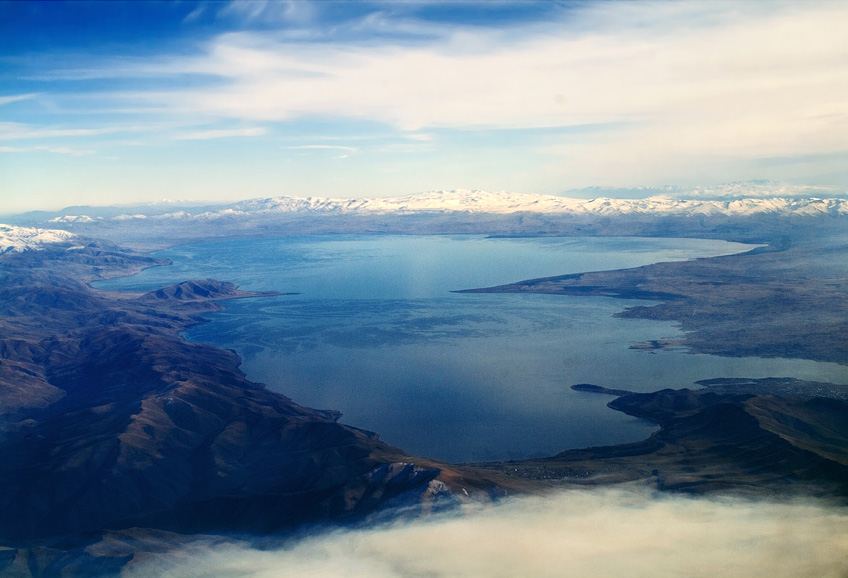
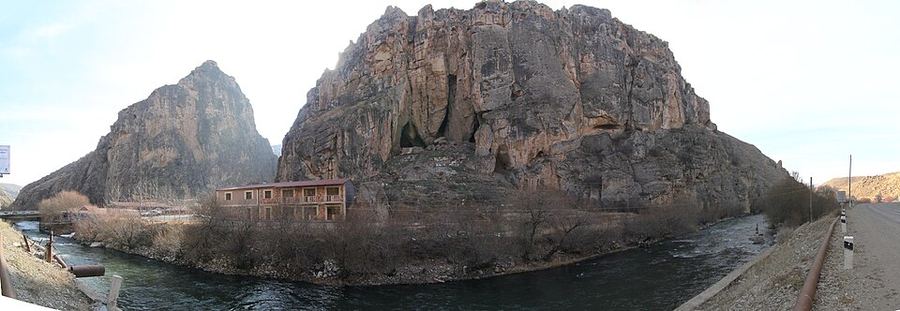
Armenia is small, landlocked and almost entirely upland — most of the country lies above 1,000 metres, and the average elevation is among the highest of any state. It occupies the northeastern part of the Armenian highlands, in the Lesser Caucasus, a landscape of volcanic massifs, deep river gorges and high plateaus. Mount Aragats, an extinct four-peaked volcano rising to about 4,090 metres, is the highest point within the country; Mount Ararat, the national symbol that fills the southern horizon from Yerevan, stands across the closed Turkish border. Lake Sevan, at roughly 1,900 metres, is one of the largest high-altitude freshwater lakes in the world and covers a substantial share of national territory; Soviet-era draining for irrigation and power dropped its level by around twenty metres, and its partial restoration has been a long-running environmental project. The Debed, Azat and Vorotan rivers have cut the gorges in which many of the medieval monasteries sit. The climate is highland continental — hot, dry summers on the Ararat plain and cold winters with heavy snow at altitude — and the country is seismically active: the Spitak earthquake of December 1988 killed around twenty-five thousand people and destroyed the northern towns of Spitak and Gyumri.
Land & Climate, Armenia
photo-armenia.com / CC0

Entertainment

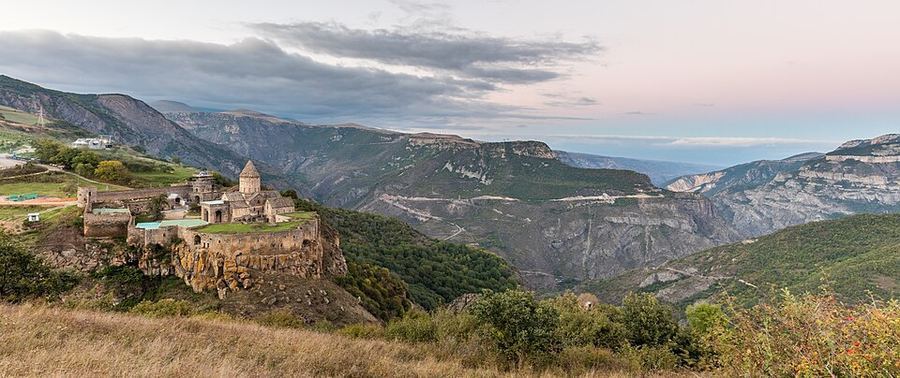
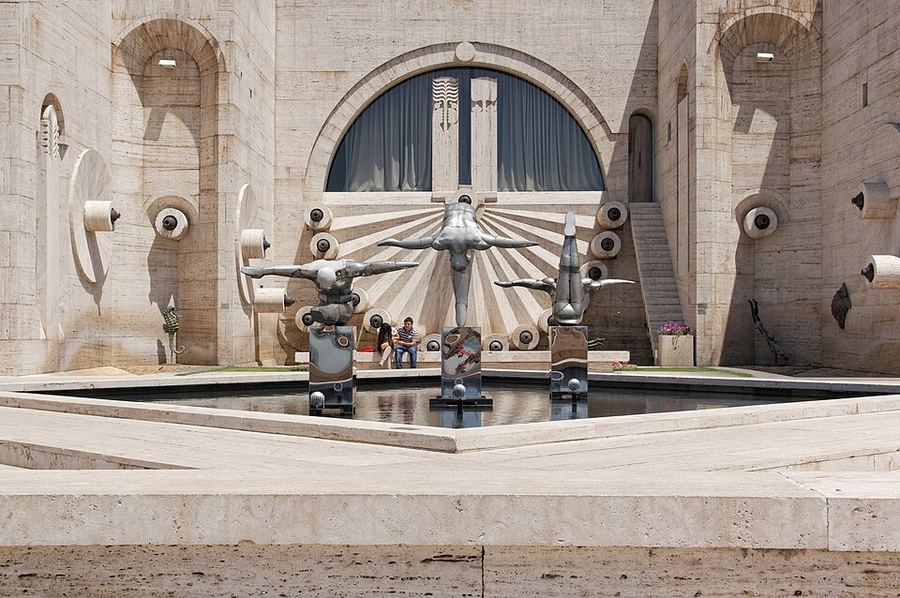
Yerevan's social life happens outdoors from spring to autumn, and its focus is Republic Square and the wide pedestrian streets around it, where open-air cafés occupy the pavements and stay full late; the Cascade, a vast stepped stairway climbing north from the centre with sculpture terraces and a museum built into it, functions as the city's public living room. Weekends belong to the countryside: families drive out for khorovats in the gorges, to the monasteries at Geghard, Haghartsin and Tatev, and to Lake Sevan, whose beaches fill in July and August despite the cold water. The Tatev aerial tramway, one of the longest reversible cableways in the world, has made the remote monastery above the Vorotan gorge a mass destination. Winter brings skiing at Tsaghkadzor, developed as a Soviet training resort. Chess is a genuinely popular pastime rather than only an elite sport, played in parks and clubs and taught in schools. Hiking on the long-distance Transcaucasian Trail has grown quickly, as has wine tourism in Vayots Dzor and Areni. Festivals punctuate the year, including the Golden Apricot international film festival in Yerevan and Vardavar, when people drench each other with water in a custom of pre-Christian origin.
Entertainment, Armenia
Vyacheslav Argenberg / CC BY 4.0

Art & Museums

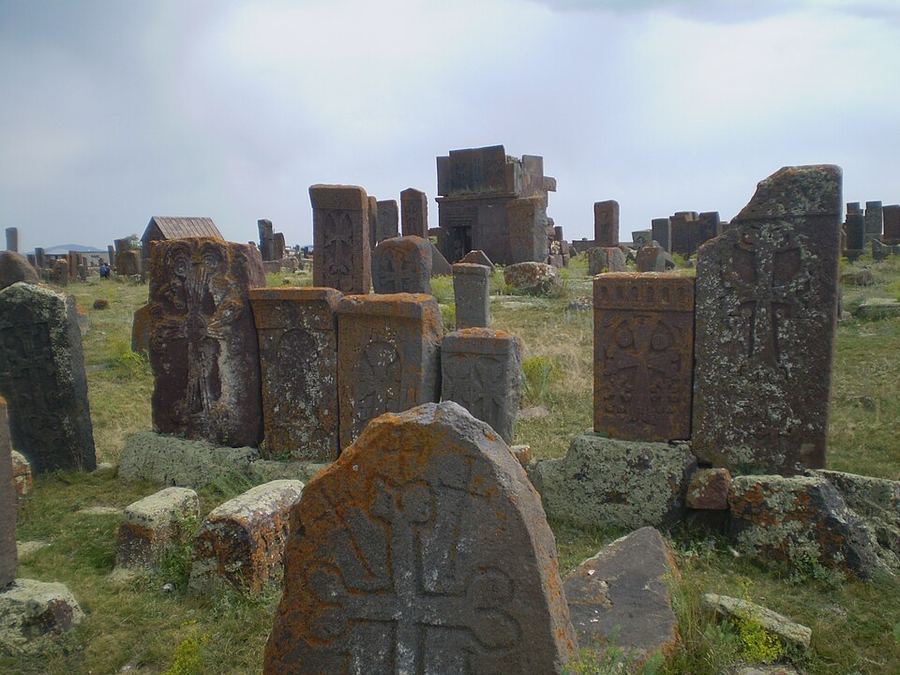
Armenian art's two supreme forms are the illuminated manuscript and the khachkar. The Matenadaran in Yerevan, the national manuscript institute, holds thousands of codices in which Armenian scribes and painters worked from the fifth century onward; the thirteenth-century miniaturist Toros Roslin, working in Cilicia, is the tradition's most celebrated artist, and the pigments and gold of these books survived in monastery libraries through repeated destruction. The khachkar — an upright stone slab carved with a cross set amid interlace, rosettes and vegetal ornament, each one different — was raised in the tens of thousands as memorial and votive object; the surviving field at Noratus above Lake Sevan is the largest, after the greater field at Julfa was destroyed. Architecture is the third strength: the domed churches of Zvartnots, Etchmiadzin, Geghard and Haghpat developed a stone vocabulary that influenced building far beyond Armenia. Modern painting is dominated by Martiros Saryan, whose saturated Armenian landscapes defined the national style, and by the Russian-Armenian marine painter Ivan Aivazovsky. Arshile Gorky, a genocide survivor who reached New York, became a central figure of American abstract expressionism, and the filmmaker Sergei Parajanov made 'The Colour of Pomegranates', a work of moving tableaux drawn directly from Armenian visual tradition.
Encyclopaedia BritannicaMetropolitan Museum of ArtUNESCO
Art & Museums, Armenia
Vyacheslav Argenberg / CC BY 4.0

Notable People

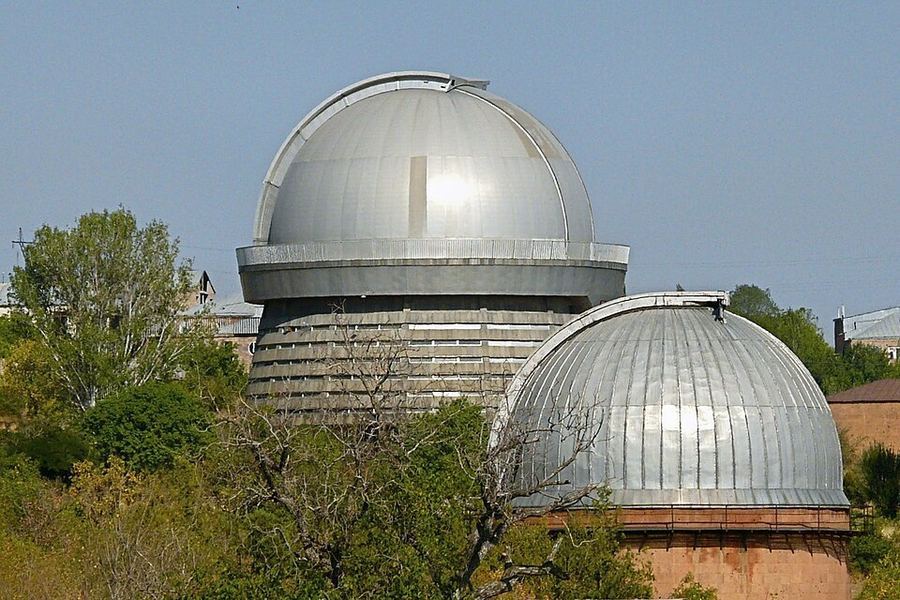
Mesrop Mashtots, who devised the alphabet in 405, and Gregory the Illuminator, who brought the kingdom to Christianity around 301, are the two founding figures of Armenian identity; Tigranes the Great is the emblem of its brief imperial moment. Komitas, priest, ethnomusicologist and composer, salvaged the Armenian folk repertoire before 1915 and is a national figure as much for his fate as for his work. Aram Khachaturian brought Armenian material into the international ballet and concert repertoire. Charles Aznavour, born in Paris to refugee parents, became one of the most recorded singers in French history and later served as Armenia's ambassador to Switzerland. In painting, Martiros Saryan and Ivan Aivazovsky are the canonical names, and Arshile Gorky the diaspora's contribution to modernism; Sergei Parajanov is the country's great filmmaker. Viktor Hambardzumyan founded the Byurakan Astrophysical Observatory and was an influential theorist of stellar formation. In chess, Tigran Petrosian held the world championship from 1963 to 1969 and Levon Aronian has been among the world's leading players for two decades. Henrikh Mkhitaryan is the most prominent Armenian footballer, and the diaspora has produced internationally known figures in American music, business and public life.
Notable People, Armenia
Liana Karapetyan H / CC BY-SA 4.0

Inventions & Breakthroughs

Armenia's foundational invention is its alphabet — thirty-six letters devised by Mesrop Mashtots in 405 specifically to fit the sounds of Armenian, an act of deliberate script design that predates most European vernacular literatures by centuries and has been used continuously ever since. Two archaeological finds from the Areni-1 cave in Vayots Dzor point to much older technical achievement: a winemaking installation with press, vat and storage jars dated to roughly six thousand years ago, the oldest known, and a stitched leather shoe of similar antiquity preserved by the cave's conditions. Vordan karmir, the crimson dye extracted from a cochineal insect of the Ararat plain, was a medieval Armenian speciality traded across Eurasia for manuscript illumination and textiles. In building, Armenian masons developed the drum-and-dome church in stone early and exported the technique. Soviet-era Armenia was assigned a role in precision electronics and computing, and the Yerevan institutes produced the Nairi series of computers in the 1960s, leaving an engineering base that underpins today's software sector. Contemporary Armenian invention is concentrated there: companies founded by Armenians have produced widely used image-editing and audio-processing software, and the country markets itself as a technology exporter rather than a manufacturer.
Inventions & Breakthroughs, Armenia
Serouj / CC BY 3.0

Science & Technology

Armenia's scientific reputation was built in the Soviet period, when the republic was assigned a role in physics, astronomy and precision electronics. Viktor Hambardzumyan founded the Byurakan Astrophysical Observatory on the slopes of Mount Aragats in 1946 and made it an internationally significant centre for the study of stellar associations and active galactic nuclei; the Aragats cosmic-ray station at high altitude has operated for decades and still contributes to particle astrophysics. The Yerevan Physics Institute and the computing institutes that produced the Nairi machines in the 1960s left an engineering culture that survived the collapse of the Soviet order. Energy is the country's most consequential technical dependency: the Metsamor nuclear plant supplies roughly a third of electricity and, sited in a seismic zone, has been the subject of long international scrutiny and repeated upgrading, while imported Russian and Iranian gas covers most of the rest. The clearest contemporary success is software: Armenian-founded companies in image editing, audio processing and field-service software have reached global scale, technology exports have grown into a leading source of foreign earnings, and the TUMO programme has become a widely copied model for teaching digital skills to teenagers.
Science & Technology, Armenia
Rita Willaert / CC BY 2.0
On The World Stage
Champions of Armenia

Champions & Defining Moments

Armenia's international sporting identity is chess first and combat sports second. Three Chess Olympiad gold medals between 2006 and 2012 made the country a genuine world power in the game, and Armenian grandmasters remain fixtures of elite tournaments; the national federation's schools programme is studied by other countries as a model. At the Olympic Games, competing independently since 1996 after Soviet-era Armenians won medals under other flags, the country has taken its medals overwhelmingly in weightlifting, wrestling and boxing, disciplines in which it punches far above its population. Armenian wrestlers and weightlifters also compete for Russia, the United States and other nations, so the ethnic footprint in these sports exceeds the national one. In football the country's global visibility has come through individual players rather than the national team, with Henrikh Mkhitaryan playing in the Champions League and winning the Europa Conference League with Roma. The diaspora extends this pattern across other sports and countries: Armenian-descended athletes and coaches appear in American football, tennis and motorsport, and the Pan-Armenian Games, held in Yerevan every four years, gather teams from Armenian communities worldwide.

Frans Peeters / CC BY-SA 2.0
Government & Leadership

Parliamentary democracy; note - constitutional changes adopted in December 2015 transformed the government to a parliamentary system

Seat of the executive

Executive

Vahagn Khachaturyan — PresidentINDEPENDENT

In office since 13 March 2022

Nikol Pashinyan — Prime Minister

The legislature

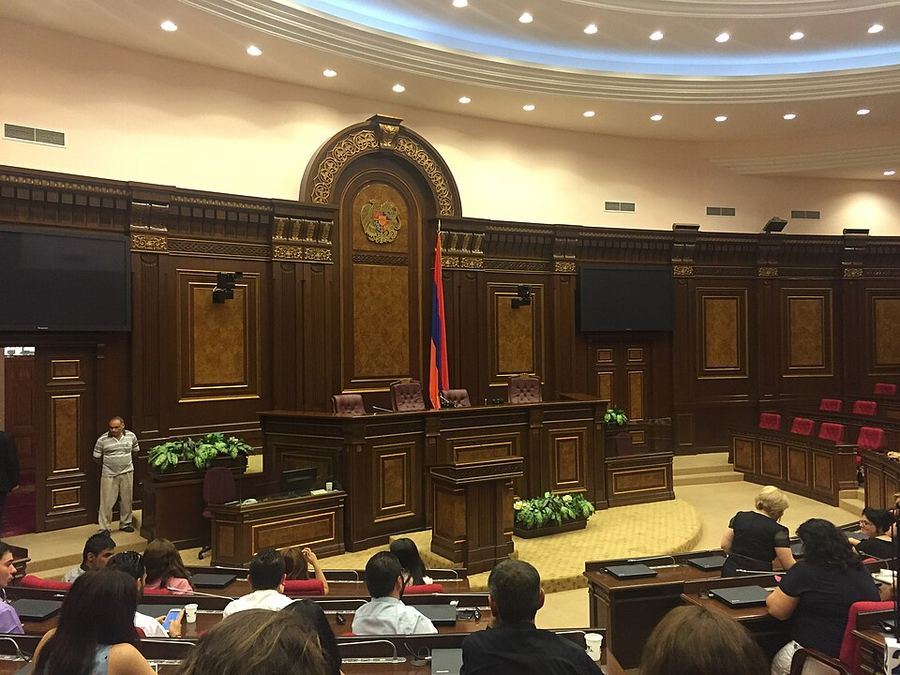
National Assembly (Azgayin Zhoghov)

Unicameral

Composition — Civil Contract Party majority

Civil Contract Party 71 · Armenia Alliance 29 · I Have the Honour Alliance 7

Last election 6/20/2021 · 38.3% women

Pandukht / CC BY-SA 4.0
The highest court
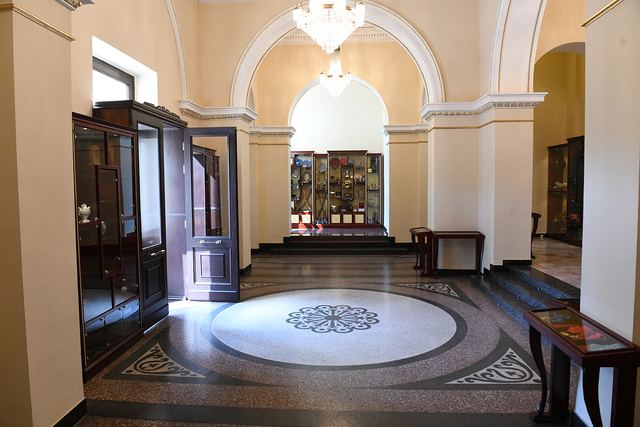
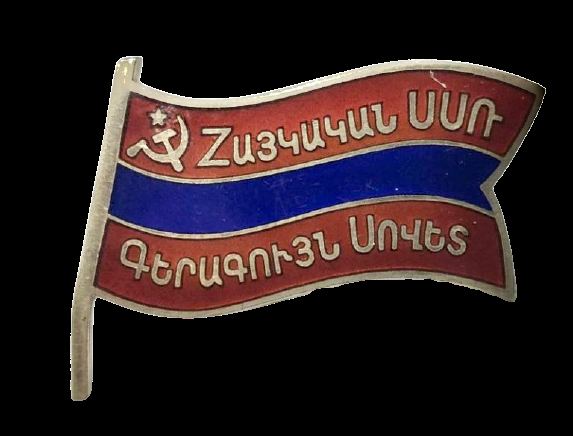
The highest court — Supreme Soviet of the Armenian Soviet Socialist Republic / Public domain

Court of Cassation or Appeals Court

consists of the Criminal Chamber with a chairman and 5 judges and the Civil and Administrative Chamber with a chairman and 10 judges – with both civil and administrative specializations); Constitutional Court (consists of 9 judges

Economy, Trade & Government

Currency & GDP

Armenian Dram — AMD (֏)

GDP (PPP): $60.909 billion (2024 est.)

Per capita: $20,100 (2024 est.)

Exports

$18.618 billion (2024 est.)

gold, diamonds, copper ore, broadcasting equipment, jewelry (2023)

Partners: Russia 37%, UAE 25%, Hong Kong 7%, China 5%, Georgia 4% (2023)

Imports

$19.087 billion (2024 est.)

cars, gold, diamonds, broadcasting equipment, natural gas (2023)

Partners: Russia 29%, China 12%, Vietnam 6%, Georgia 5%, Iran 4% (2023)

Government

Type: parliamentary democracy; note - constitutional changes adopted in December 2015 transformed the government to a parliamentary system

Independence: 21 September 1991 (from the Soviet Union); notable earlier dates: 321 B.C. (Kingdom of Armenia established under the Orontid Dynasty), A.D. 884 (Armenian Kingdom reestablished under the Bagratid Dynasty); 1198 (Cilician Kingdom established); 28 May 1918 (Democratic Republic of Armenia declared)

Terrain → Where People Live

How mountains, coasts, and rivers shape settlement (LandScan).

Coming — data

Migration & Ethnic Settlement

Where groups settled and how people move (GeoEPR + UNHCR).

Coming — data

Universities

Notable institutions, mappable as points.

Coming — data
Economy & government facts: CIA World Factbook (public domain), via OpenFactBook / factbook.json.
Every fact and narrative claim will carry a visible source citation. Data-driven sections light up automatically wherever HERA has coverage.