History
Belgium is a federal parliamentary democracy under a constitutional monarchy, with about 12 million people crowded into 30,000 square kilometres between the North Sea, the Netherlands, Germany, Luxembourg and France. It is one of Europe's densest and most heavily traded economies: exports of refined petroleum, natural gas, vaccines, medicines and vehicles run to more than half a trillion dollars a year, and its GDP per capita of about $63,100 in purchasing-power terms is among the highest in the European Union. The country's organising fact is language. Dutch is spoken by roughly sixty per cent of the population in Flanders to the north, French by about forty per cent in Wallonia to the south, and German by a small community in the east; Brussels, the capital, is officially bilingual and predominantly French-speaking, and sits inside Flemish territory. Six successive state reforms since 1970 have converted a unitary state into a federation of three regions and three language communities with overlapping competences, an arrangement of legendary complexity. Belgium declared independence from the Netherlands in 1830 and has been a founding member of the European institutions, the Benelux union and NATO; Brussels hosts the European Commission and Council and NATO headquarters, giving a small country outsized diplomatic weight.
Brussels's urban core is home to about 1,468,754 people.
That's bigger than Amsterdam — each a great world city in its own right.
Among the world's megacities, though, it's one of many — the giants of Asia and Latin America run larger still:
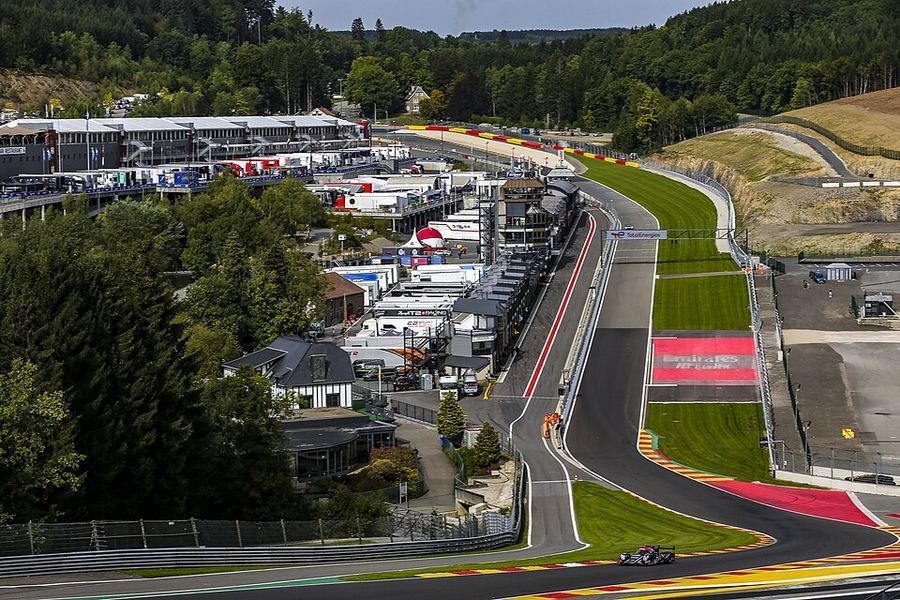
Belgium's global sporting weight comes first from cycling, where its riders, races and racing culture set the sport's terms. The cobbled classics are the discipline's spiritual home, the Flandrien ideal of racing in cold rain over broken roads is a recognised international archetype, and Eddy Merckx's palmarès has never been approached. Remco Evenepoel's grand tour and world championship victories and Wout van Aert's range across road and cyclo-cross keep Belgium at the front of the modern peloton. The second pillar is Spa-Francorchamps, a circuit through the Ardennes forest whose Eau Rouge and Raidillon complex is among the most celebrated corners in motorsport; the Belgian Grand Prix and the 24 Hours of Spa draw worldwide audiences, and Jacky Ickx was one of endurance racing's greats. Belgian football's golden generation made a country of twelve million the top-ranked national side in the world for much of the period after 2015, and Belgian players are ubiquitous in Europe's leading leagues. In field hockey, the Red Lions have been world and Olympic champions, and Nafissatou Thiam's three straight Olympic heptathlon golds are among the outstanding achievements in modern athletics.
Federal parliamentary democracy under a constitutional monarchy
Philippe — King
In office since 21 July 2013
Bart De Wever — Prime Minister
Bicameral
Senate (Sénat - Senaat - Senat) — 60 seats
Last election 7/18/2024 · 47.5% women
House of Representatives (Chambre des Représentants) — N-VA largest party
N-VA 24 · Vlaams Belang (Flemish Interest) 20 · MR 20 · PS 16 · PTB*PVDA 15 · LES ENGAGÉS 14 · Vooruit 13 · CD&V 11 · Other 17
Last election 6/9/2024 · 41.3% women
in Dutch) and Cour Constitutionelle (in French) (consists of 12 judges - 6 Dutch-speaking and 6 French-speaking); Supreme Court of Justice or Hof van Cassatie (in Dutch) and Cour de Cassation (in French) (court organized into 3 chambers: civil and commercial; criminal; social, fiscal, and armed forces; each chamber includes a Dutch division and a French division, each with a chairperson and 5-6 ju
Euro — EUR (€)
GDP (PPP): $749.229 billion (2024 est.)
Per capita: $63,100 (2024 est.)
$525.458 billion (2024 est.)
refined petroleum, natural gas, vaccines, cars, packaged medicine (2023)
Partners: France 20%, Netherlands 15%, Germany 14%, Italy 6%, USA 5% (2023)
$531.029 billion (2024 est.)
cars, natural gas, vaccines, packaged medicine, crude petroleum (2023)
Partners: Netherlands 20%, Germany 13%, France 11%, USA 7%, Ireland 4% (2023)
Type: federal parliamentary democracy under a constitutional monarchy
Independence: 4 October 1830 (a provisional government declared independence from the Netherlands); 21 July 1831 (King LEOPOLD I ascended to the throne)
How mountains, coasts, and rivers shape settlement (LandScan).
Coming — dataWhere groups settled and how people move (GeoEPR + UNHCR).
Coming — dataNotable institutions, mappable as points.
Coming — data