HERA · Human Entity Reference Atlas by Masego Inc

← Benin 🌐 3D View
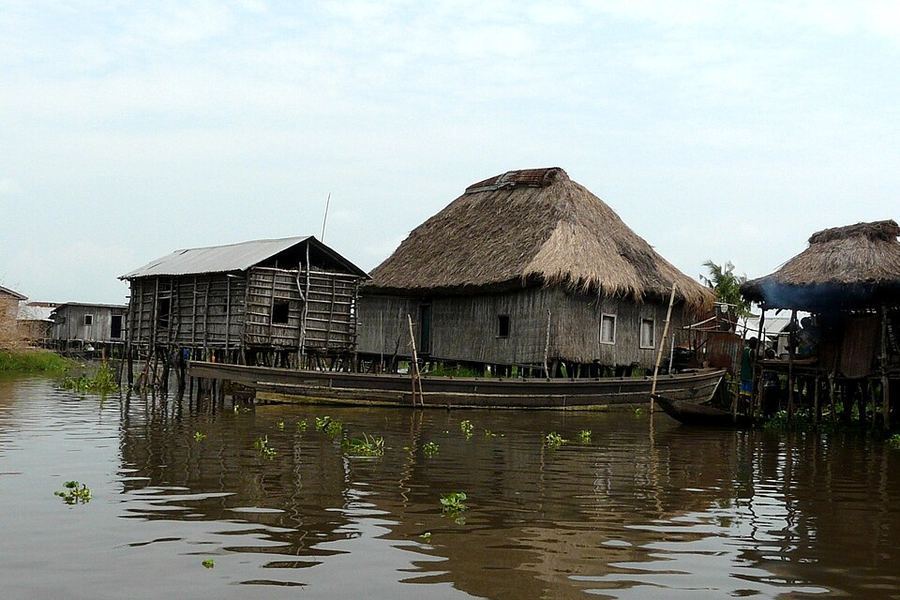
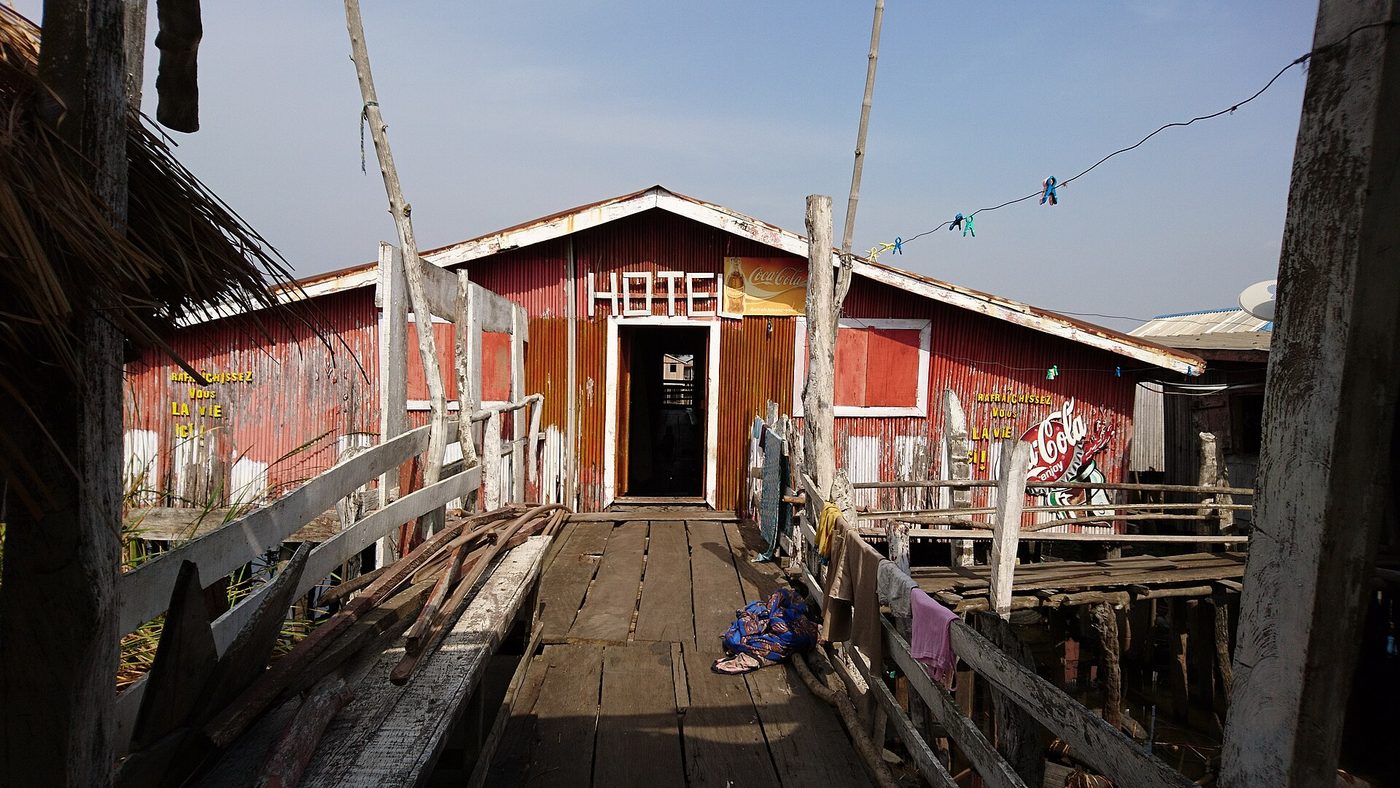
Ganvie, Lake Village, Lake Nokoué, Benin 05, Benin
Benin BEN
Ganvie, Lake Village, Lake Nokoué, Benin 05 — Photo: Asabiyya / CC BY-SA 4.0 via Wikimedia Commons
Did You Know In November 2021 France returned twenty-six royal treasures looted from the palaces of Abomey in 1892, and their exhibition in Cotonou drew enormous crowds. — Reuters

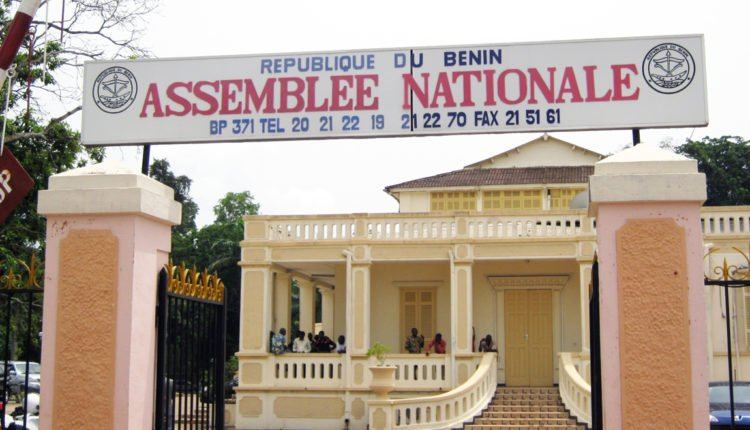
Benin is a narrow, north–south republic in West Africa, about 700 kilometres long and in places barely 125 wide, running from a short Atlantic coastline on the Bight of Benin up to the Niger River. Around 15.2 million people live there, more than half of them in the crowded south. Porto-Novo is the constitutional capital, but the government, the port and the economic weight sit in Cotonou. French is the official language of a country that speaks some fifty-five others, with Fon, Yoruba and Adja languages dominant in the south and Bariba, Fulfulde and Dendi in the north. Religion is genuinely plural: roughly a quarter Muslim, a quarter Roman Catholic, a further fifth Protestant and other Christian, and around twelve per cent declaring Vodoun, whose influence extends far beyond those who name it as their religion. The economy rests on cotton — Benin has become one of Africa's largest producers — cashews, gold re-export and the transit trade through Cotonou's port to landlocked Niger, with GDP per capita of about $3,900 in purchasing-power terms. Independence from France came on 1 August 1960, and the country's national conference of 1990 became the template for democratic transition across francophone Africa.

CIA World FactbookEncyclopaedia BritannicaWorld Bank
Population
15,186,090
Capital
Porto-Novo (constitutional capital); Cotonou (seat of government)
Currency
Fr XOF
Time zones
Largest city
Cotonou
Human Geography Themes
Loading national figures…
Largest Cities
Cotonou2,647,117
Porto-Novo864,132
Parakou392,541
Bohicon299,164
Whydah197,063
Djougou183,801
Kandi156,135
Malanville137,116
In Perspective

Cotonou's urban core is home to about 2,647,117 people.

That's bigger than Rome and Amsterdam — each a great world city in its own right.

Cotonou2,647,117
Rome2,556,354
Amsterdam1,223,407

Among the world's megacities, though, it's one of many — the giants of Asia and Latin America run larger still:

Cotonou2,647,117
Jakarta40,545,126
Dhaka37,307,160
Tokyo33,244,670
Shanghai30,678,616
Cairo25,230,325
The Country & Its People

History

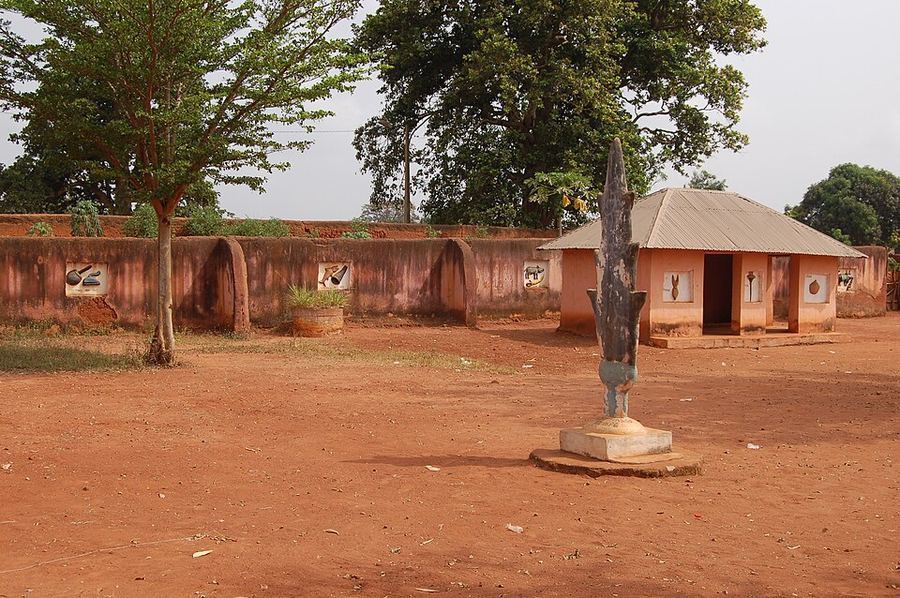
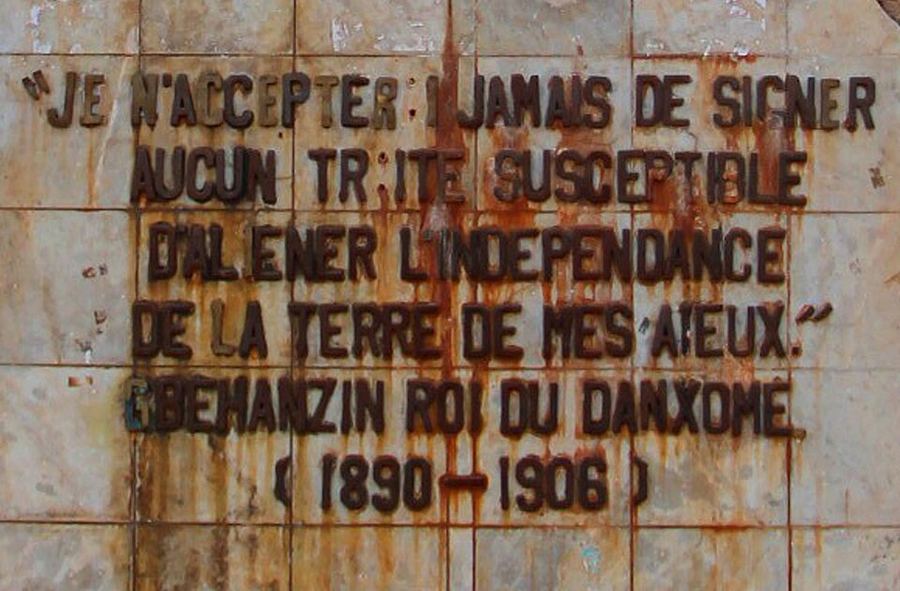
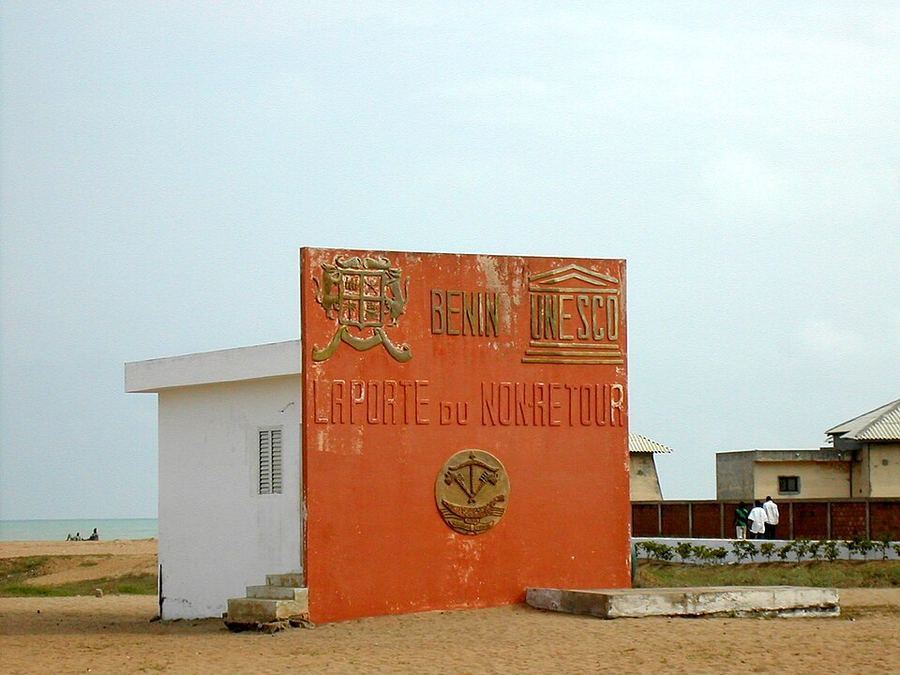
The Kingdom of Dahomey, centred on Abomey from around 1600, was one of West Africa's most tightly organised states, with a standing army, a royal bureaucracy and a court art that recorded each king's reign in appliqué banners and palace bas-reliefs; its royal palaces are a UNESCO World Heritage site. Its most unusual institution was the corps of women soldiers Europeans called the Dahomey Amazons and Beninese know as the Mino or Agojie, a permanent regiment in the king's service. Dahomey expanded to the coast under Agaja in the 1720s and became a major supplier in the Atlantic slave trade, with Ouidah among the largest embarkation ports on what Europeans named the Slave Coast; the route from the town's auction square to the shore is now marked by memorials ending at the Door of No Return. Neighbouring kingdoms at Porto-Novo and Allada were separate polities. France defeated King Béhanzin in the war of 1892–94 and exiled him, incorporating the territory into French West Africa as the colony of Dahomey. Independence came on 1 August 1960 and was followed by twelve years of coups. Mathieu Kérékou seized power in 1972, declared a Marxist-Leninist state in 1974 and renamed the country the People's Republic of Benin in 1975.
Culture

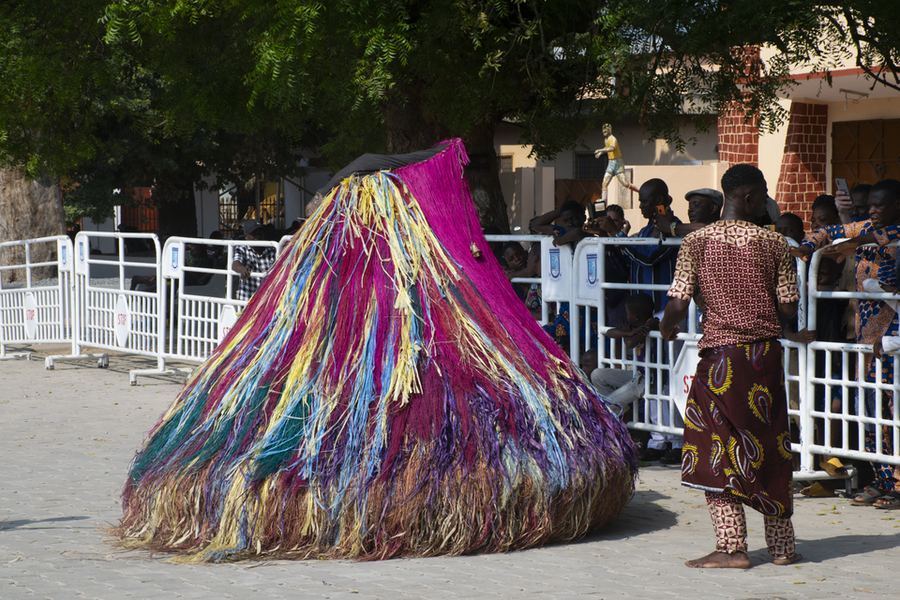
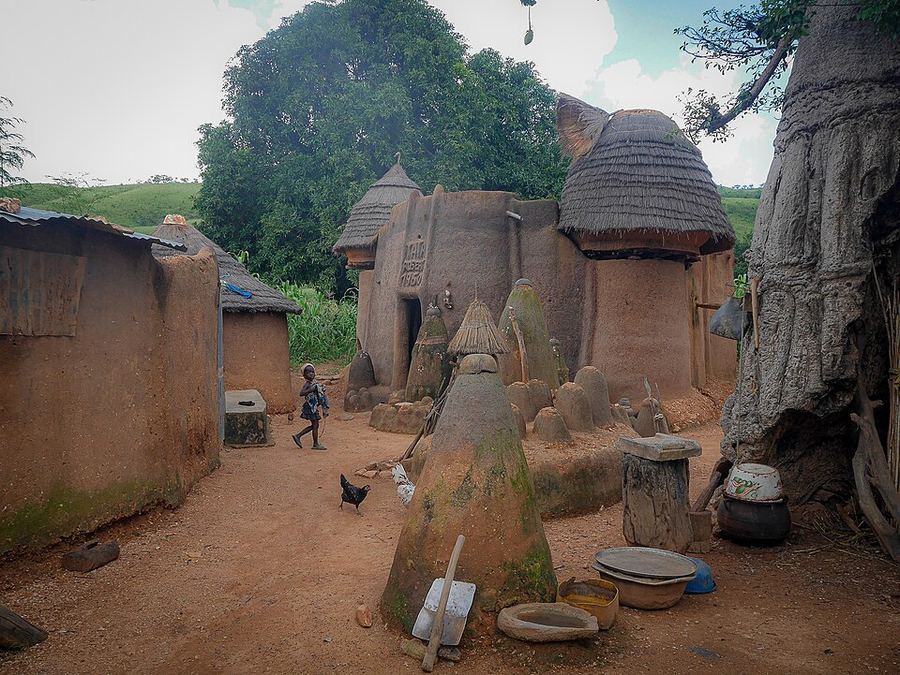
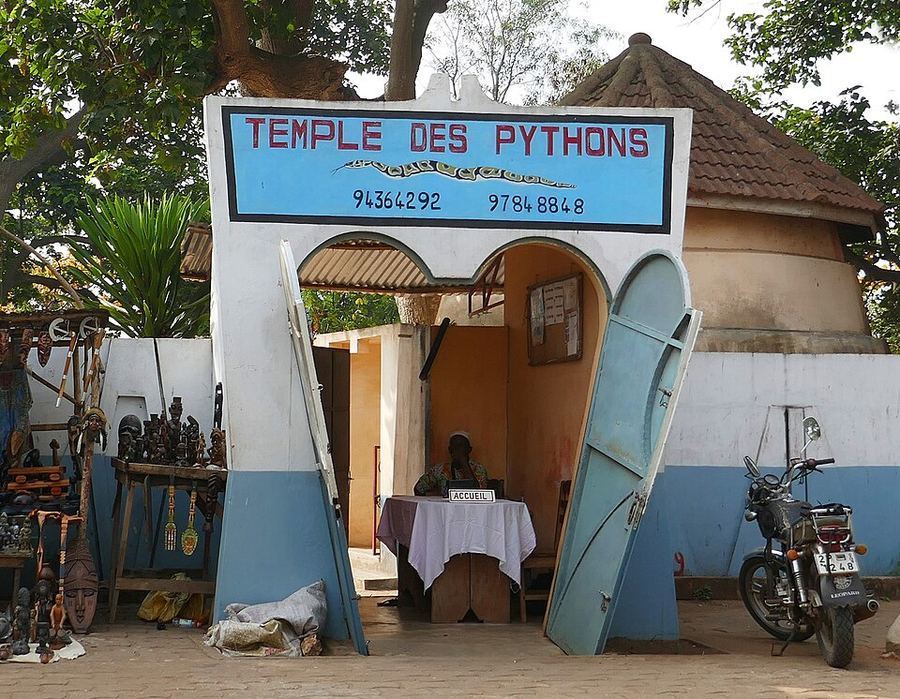
Benin is the historic homeland of Vodun, and no account of its culture works without it. Vodun is a structured religious system of deities, ancestors, oracles, initiation and priesthood, not a residue of something older, and it operates alongside Christianity and Islam rather than beneath them; many families move between them without contradiction. The state recognised this in 1996 by making 10 January a public holiday for Vodun, celebrated most spectacularly at Ouidah, where the Temple of Pythons stands directly opposite the Catholic basilica. Masquerade traditions are central to public culture: the Zangbeto, tall conical straw figures that whirl as night guardians among the Ogu of the coast, the Egungun ancestral masks of the Yoruba-speaking east, and Gelede, the masked dance honouring the spiritual power of women, whose oral heritage among the Yoruba-Nago was recognised by UNESCO in 2001. Northern cultures differ sharply, with Bariba horsemanship, Fulani cattle-keeping and the Batammariba's fortified tower-houses of the Atakora. Extended family, age grades and respect for elders structure social life, ceremonies for the dead are more elaborate than those for the living, and markets — above all Dantokpa in Cotonou — are social institutions as much as commercial ones.

Points Of Pride

Beninese point first to a political achievement. The national conference convened in February 1990 brought together political, religious, trade union and civil-society delegates who declared themselves sovereign, stripped Kérékou's Marxist government of power and set a transition in motion without bloodshed; it became the model copied across francophone Africa, and in 1991 Nicéphore Soglo's victory made Kérékou one of the first sitting presidents on the African mainland to lose an election and hand over power. Culturally, the royal palaces of Abomey and the Vodun tradition give Benin a heritage claim recognised worldwide, and Vodun's transatlantic descendants — Haitian Vodou, Brazilian Candomblé, Cuban and New Orleans traditions — make it one of Africa's most consequential cultural exports. The Agojie, the women's regiment of Dahomey, have become an international symbol. In November 2021 France returned twenty-six royal treasures looted from Abomey in 1892, and their exhibition in Cotonou drew enormous crowds — the most visible restitution of African heritage yet achieved. Pendjari and the W complex in the north hold West Africa's largest surviving populations of elephant and lion. And Angélique Kidjo is among the most decorated African musicians alive.

Cultural Fusion

Benin's fusion runs in both directions across the Atlantic. Vodun travelled with enslaved people from the Bight of Benin to Saint-Domingue, Bahia and Cuba, where it became Vodou, Candomblé and related traditions; in the nineteenth century some of those families came back. The Agudás — returnees and freed people from Brazil, together with the descendants of Afro-Brazilian traders — settled in Ouidah and Porto-Novo, kept Portuguese surnames such as de Souza, d'Almeida and Paraiso, built Brazilian-style houses with stucco façades that still line the old quarters, and celebrate a Carnival-derived festival each year. Religious syncretism is unusually developed: the Celestial Church of Christ, founded in Porto-Novo in 1947, is an African-initiated church that has spread across West Africa and its diaspora and accounts for a substantial share of Benin's Protestants. Ethnically the country is a mosaic, with Fon and Adja peoples in the south, Yoruba communities continuous with those across the Nigerian border, Bariba and Ottamari in the north and Fulani herders throughout. French administration, Islam arriving overland through Dendi and Hausa trade routes, and Nigerian commercial and cultural gravity — Nollywood, Afrobeats, the naira — all layer onto that base.

Music & Dance

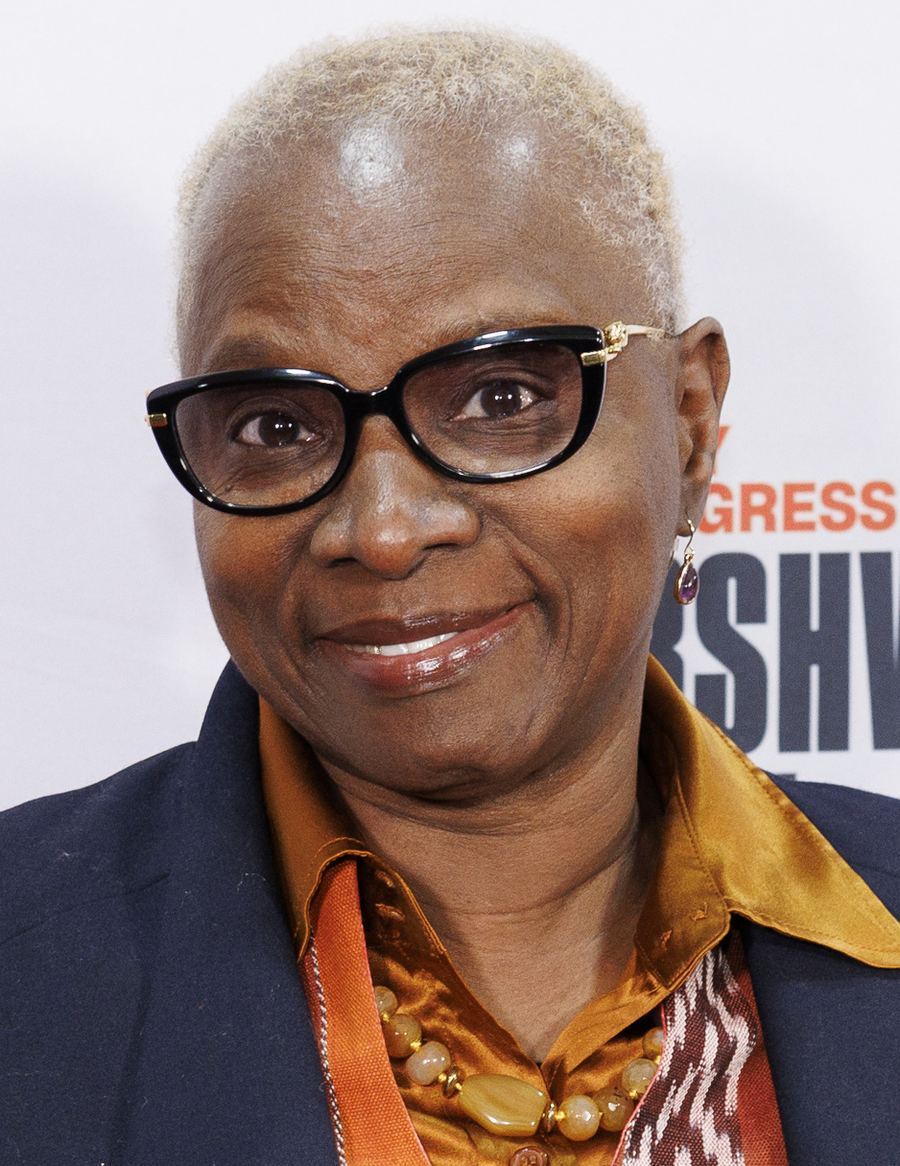
Beninese rhythm is built on the drum ensembles of Vodun and royal ceremony, each divinity and occasion having its own patterns. Zinli, from the Abomey plateau, began as a funeral rhythm played on a large clay pot drum and became a popular genre; sato uses a drum tall enough that the player stands to strike it, and agbadja is the widespread social rhythm of the south. In the north the tipenti and Bariba drum and flute traditions accompany horsemen at Gaani festivities. This foundation fed one of Africa's great popular-music scenes: Orchestre Poly-Rythmo de Cotonou, formed in the late 1960s, recorded prolifically through the 1970s in a mix of Vodun rhythm, Afrobeat, funk and Latin styles, and international reissues from the 2000s made the band a cult name worldwide. Gnonnas Pedro sang in a dozen languages and later fronted the pan-African group Africando. Angélique Kidjo, born in Ouidah, has become one of the most decorated African artists in the world, winning multiple Grammy Awards and moving between Beninese traditional song, jazz, funk and international pop. Wally Badarou, of Beninese parentage, was a key producer and keyboardist in the Compass Point sound of the 1980s. Dance is participatory, and no ceremony proceeds without it.

Cuisine & Misattributed Foods

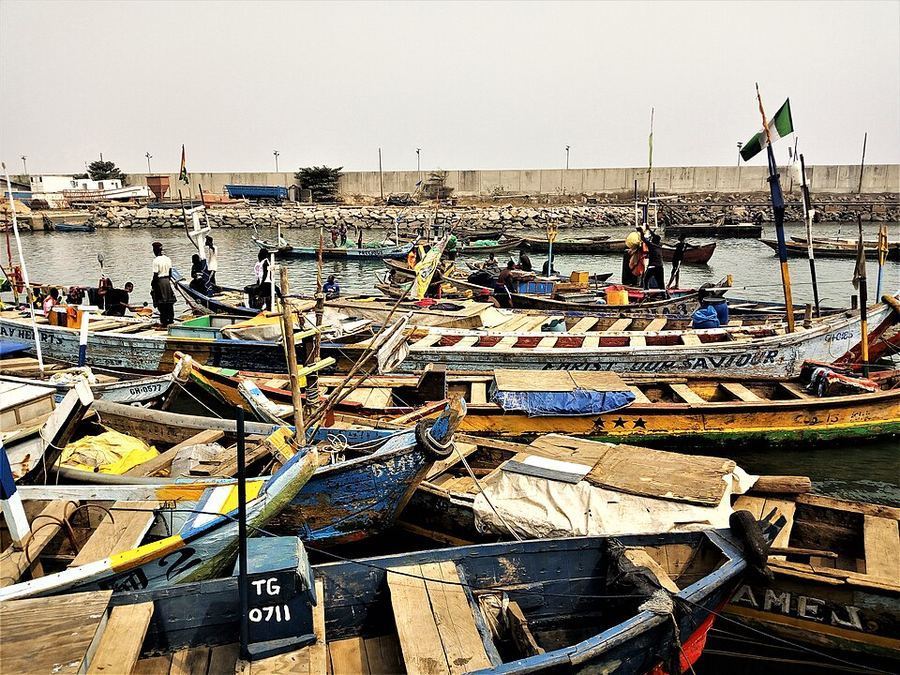
Beninese food is built on starchy staples eaten with strongly flavoured sauces. In the south the base is maize: akassa, a fermented maize dough steamed in leaves, and amiwo, maize dough cooked in tomato sauce, are the classic accompaniments, alongside gari made from grated cassava and pâte of cassava or yam flour. In the north pounded yam predominates. The sauces carry the meal — sauce arachide of ground peanuts, sauce graine pressed from palm nuts, sauce gombo thickened with okra, and the fresh tomato, onion and chilli moyo served with grilled fish. Fish from Lake Nokoué, the Ouémé lagoons and the Atlantic is central to coastal cooking, smoked or grilled; chicken and goat are festival meat. The most distinctive northern speciality is wagasi, a soft cheese made by Fulani herders and usually fried until golden, a rarity in a region where cheese is uncommon. Snacks include kuli-kuli peanut sticks, ablo steamed maize bread and fried plantain. Benin grows a prized sugarloaf pineapple that it exports fresh and as juice. The national spirit is sodabi, distilled from palm wine, poured in libation at Vodun ceremonies as readily as it is drunk, and northern communities brew sorghum beer.

National Dress

Beninese dress is regionally coded and made from wax-print or woven cloth cut to a small number of recognised forms. Men wear the boubou or, in the Yoruba-influenced east, the agbada, a wide-sleeved outer robe over a tunic and trousers, often with an embroidered cap; northern Muslim communities favour long plain robes and turbans. Women wear a wrapper of printed cloth with a matching tailored top and a headwrap, tied elaborately and known in Yoruba-speaking areas as gele, with the whole ensemble commissioned as a set for a wedding, funeral or political rally so that a family or association appears in a single fabric. The country's most distinctive textile is not clothing but the appliqué banner of Abomey: brightly coloured shapes cut and sewn onto a cotton ground, made historically by a hereditary guild of court craftsmen to record royal symbols, campaigns and proverbs, and still produced in workshops around the palace. Vodun practice has its own dress codes — white cloth for certain divinities, the layered raffia and cloth of Zangbeto and Egungun masqueraders, and the beads and scarifications that mark initiation. Everyday clothing in Cotonou is a mixture of these and imported Western dress.

Sports & Inspiring Athletes

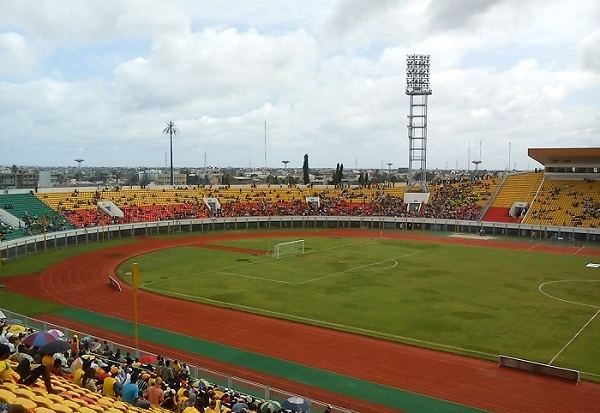
Football is Benin's dominant sport at every level, played on beaches, in schoolyards and on the sand pitches of Cotonou. The national team, the Écureuils or Squirrels, qualified for the Africa Cup of Nations in 2004, 2008, 2010 and 2019, and the 2019 campaign was the country's finest: an unbeaten group stage followed by the elimination of Morocco on penalties and a first quarter-final appearance, which brought crowds into the streets of Cotonou. The domestic league is semi-professional and clubs are concentrated in Cotonou, Porto-Novo and Parakou. Beyond football, the sports with organised national federations and school pathways are athletics, judo, taekwondo, boxing and basketball, and Benin has taken part in the Summer Olympic Games since the 1970s with small delegations, so far without reaching a podium. Traditional wrestling remains a serious competitive activity in the north, with village and regional tournaments tied to the festival calendar, and Bariba horsemanship displays at Gaani in Nikki are a sporting spectacle as much as a ceremonial one. Cycling has a following, and the Tour du Bénin has run as a national stage race.

Notable Educational Programs

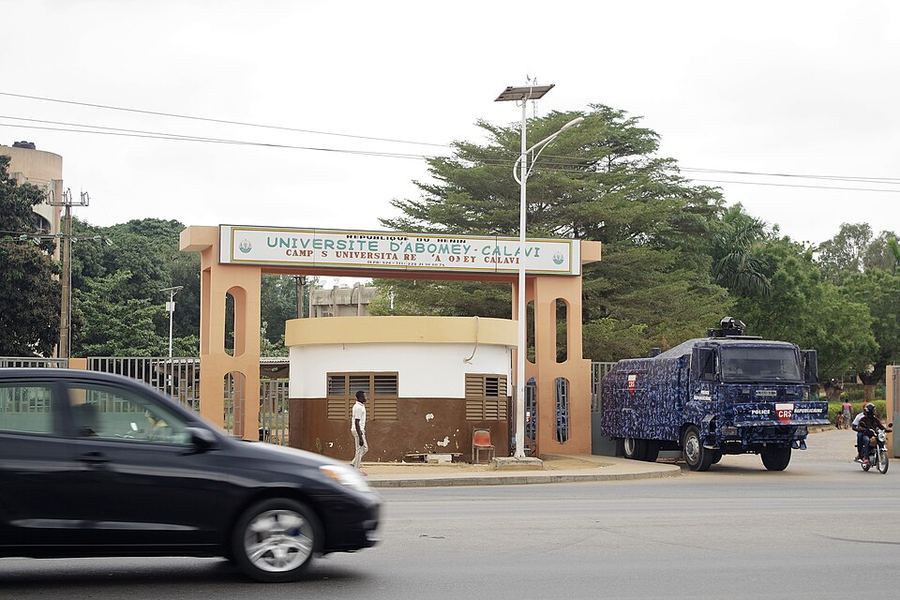
Benin was known in the colonial and early independence period as the Quartier Latin of Africa, because its schools produced teachers, clerks and administrators in numbers far beyond local need who staffed institutions across francophone West Africa — a reputation the country still invokes. The modern system teaches in French from the first year, and the gap between the language of the classroom and the fifty-five languages spoken at home is a recognised constraint on early learning. Primary school fees were abolished in the mid-2000s and enrolment rose sharply, but completion, learning outcomes and adult literacy — which remains below half the adult population, with a wide gender gap — lag well behind access. The Université d'Abomey-Calavi near Cotonou is the principal public institution and by far the largest, joined by the Université de Parakou in the north and a growing private sector. Two specialist institutions have regional reach: the Institut de Mathématiques et de Sciences Physiques, which trains postgraduate mathematicians and physicists from across the continent, and the Songhaï Centre at Porto-Novo, which trains farmers in integrated agroecology. Technical and vocational education has been expanded to serve the cotton and cashew processing industries.

Wars & Conflicts

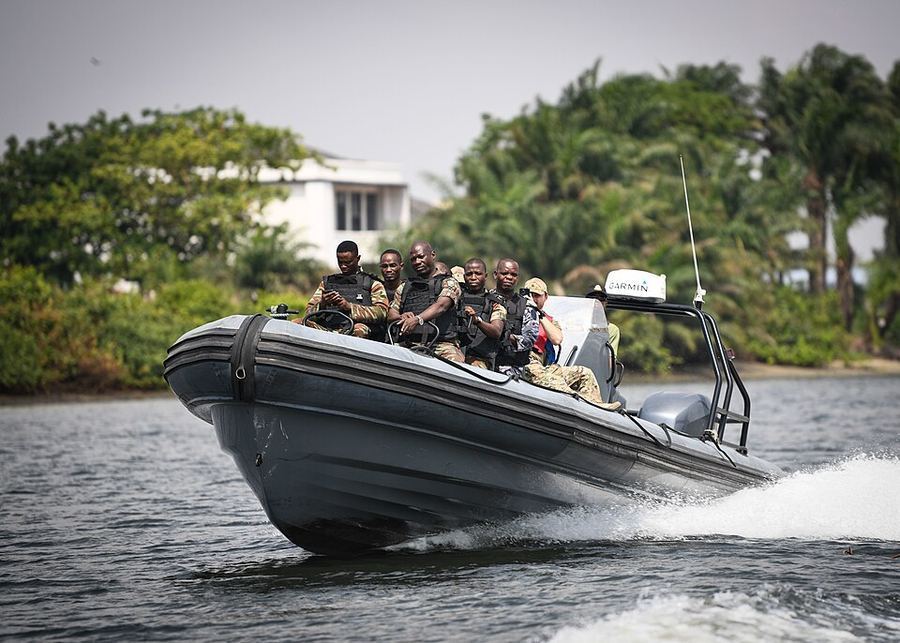
Benin has never had a civil war, but its first twelve years of independence produced repeated coups and short-lived governments before Mathieu Kérékou's seizure of power in 1972 imposed stability. In January 1977 a force of foreign mercenaries led by Bob Denard landed at Cotonou airport in an attempt to overthrow the government and was repelled within hours; the United Nations Security Council sent a commission of inquiry. The country's serious contemporary security problem is new and comes from the Sahel. Since 2021 armed groups affiliated with jihadist networks operating in Burkina Faso and Niger have pushed into the northern departments of Alibori and Atacora, using the W and Pendjari park complex as cover, and have killed substantial numbers of Beninese soldiers and park rangers in ambushes and camp attacks; the army's Operation Mirador has deployed thousands of troops to the north in response. Relations with Niger deteriorated sharply after the July 2023 coup in Niamey, with border closures, disputes over the Niger–Benin oil pipeline and the detention of Beninese nationals. Domestic politics have also turned tense, with opposition parties excluded from the 2019 legislative elections and protests met with force.
Current as of 2026-08-06

Land & Border Disputes

Benin's best-documented territorial dispute was settled by the International Court of Justice. In 2005 a chamber of the court delivered judgment in the frontier dispute between Benin and Niger, fixing the boundary in the Niger and Mekrou river sectors and allocating the river islands between them; the largest, Lété Island, long occupied and contested, was awarded to Niger, and both states accepted the ruling. The boundary with Burkina Faso has been more stubborn: a zone around Kourou and Koualou has remained undelimited and jointly administered for decades, and demarcation work has proceeded slowly through a joint commission. The border with Nigeria is not contested in law but is economically fraught, since Benin's re-export trade depends on the flow of goods into its far larger neighbour; Nigeria closed the land border entirely from 2019 to 2020 to curb rice and fuel smuggling, with severe effects on Beninese commerce. Since 2023 the frontier with Niger has been the sharpest problem, closed from the Nigerien side after the coup and entangled with the pipeline carrying Nigerien crude to the Beninese coast. Maritime boundaries in the Gulf of Guinea are largely settled.
Land, Life & Legacy

Land & Climate

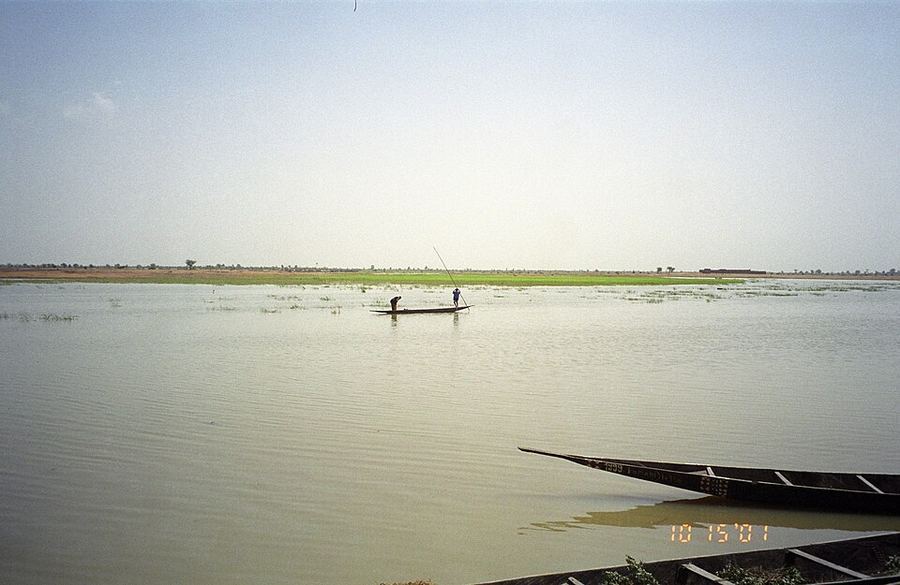
Benin is a long strip running inland from a 121-kilometre coast of sandbar and surf on the Bight of Benin, where there is no natural harbour and the sea is dangerous. Behind the bar lies a chain of lagoons and lakes — Lake Nokoué, the Porto-Novo lagoon, Lake Ahémé — on which the Tofinu people built the stilt village of Ganvié, founded by communities taking refuge from Dahomean slave raiders in water their pursuers would not enter, and now the largest lake village in Africa. Inland the ground rises through the fertile terre de barre plateaux and the Ouémé valley to a drier savanna, and in the northwest the Atakora range, reaching around 650 metres at Mont Sokbaro, carries the tower-house settlements of the Batammariba. The far north is bounded by the Niger River. Pendjari National Park and the Beninese portion of W form part of a transboundary UNESCO-listed complex shared with Burkina Faso and Niger that holds West Africa's most significant remaining populations of elephant, lion and cheetah. The climate is equatorial in the south with two rainy seasons and a single wet season further north, with the dry harmattan blowing dust off the Sahara from December. Coastal erosion east of Cotonou is severe and accelerating.

Entertainment

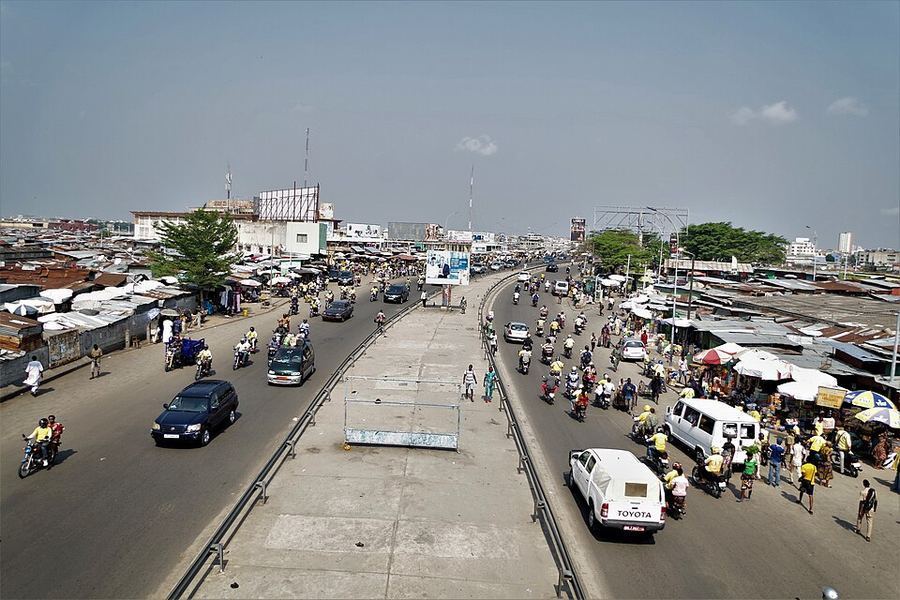
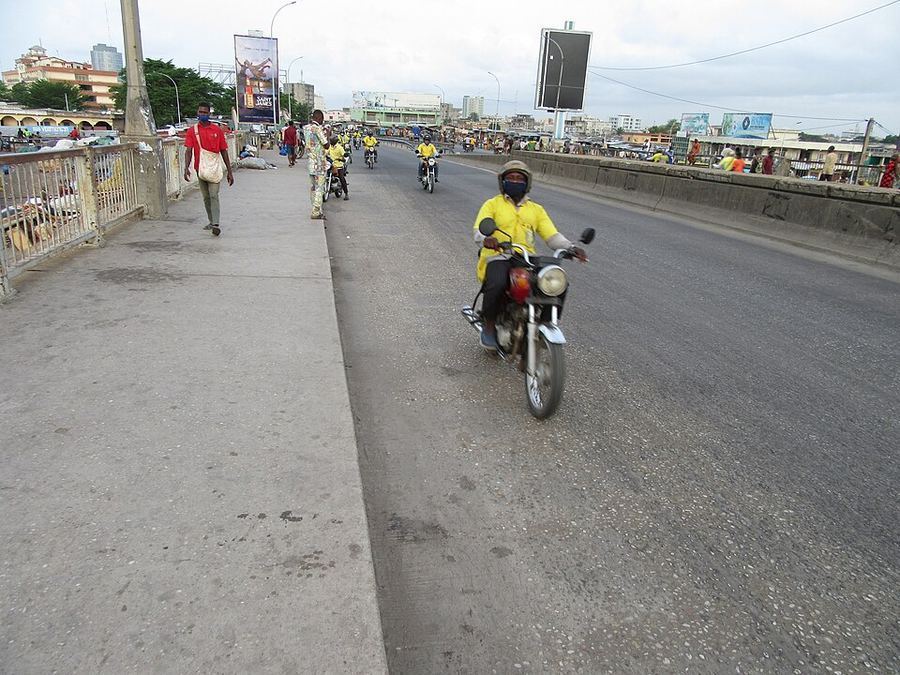
Cotonou's social life happens outdoors and on two wheels. The zémidjan motorcycle taxis in their numbered yellow shirts are the city's circulatory system and part of its identity, and the maquis — open-air bars and eating places serving grilled fish, chicken and cold Béninoise beer — are where evenings are spent. Football is watched everywhere, on television from the European leagues and played on any open ground. Markets are a leisure destination as much as a necessity, and Dantokpa, spreading over the lagoon's edge in Cotonou, is one of the largest in West Africa. The beaches at Fidjrossè, Grand-Popo and Ouidah draw weekend crowds despite a fierce undertow. Festivals punctuate the year: the Vodun holiday on 10 January at Ouidah, with processions, drumming and masquerades, is the largest, and the Gaani festival of the Bariba in Nikki fills the north with horsemen. Board games of the mancala family, played fast on wooden boards under trees, are a standing pastime, as are cards and draughts. Church and mosque attendance is high and social. Ganvié boat trips, the palace museum at Abomey and safaris in Pendjari serve a small but growing domestic and international tourism market.

Art & Museums

Court art from Abomey is Benin's most celebrated visual tradition. The royal palaces carry earthen bas-reliefs in which each king's emblem and exploits are modelled and painted, and the appliqué banners made by hereditary court craftsmen served the same commemorative function in cloth. Metalwork produced the asen, portable iron memorial altars topped with figurative scenes, made to receive offerings to named ancestors and now held in museums worldwide. Vodun sculpture includes the bocio, carved wooden power figures bound with cord, cloth and sacrificial material, whose aesthetic influenced twentieth-century European modernism through the Paris trade in African objects. The 2021 return by France of twenty-six treasures looted from Abomey in 1892 — including anthropomorphic royal statues and a carved throne — transformed the country's museum ambitions, and a museum devoted to the kings and Amazons of Dahomey has been planned at Abomey. Contemporary Beninese artists have an international profile out of proportion to the country's size: Romuald Hazoumè makes masks from cut and mounted jerrycans, and his large installation on the slave trade entered the British Museum's collection; Georges Adéagbo builds documentary installations shown at the Venice Biennale; Meschac Gaba and the late Vodun painter Cyprien Tokoudagba are likewise internationally exhibited.

Notable People

King Ghezo and King Glele shaped nineteenth-century Dahomey, and King Béhanzin, who fought the French invasion of 1892–94 and died in exile, is the emblem of resistance; the Agojie, the women soldiers of the royal army, have become as widely known internationally as any Beninese figure. In the modern period, Mathieu Kérékou governed as a Marxist military ruler from 1972, accepted defeat at the ballot box in 1991, and returned as an elected president in 1996; Nicéphore Soglo led the 1990–91 transition. Angélique Kidjo, born in Ouidah in 1960, is the country's most famous living citizen, a singer with multiple Grammy Awards and a career spanning traditional Beninese song, jazz and international pop. Wally Badarou shaped the sound of 1980s international pop as a producer and keyboardist. Romuald Hazoumè is Benin's leading contemporary artist. The philosopher Paulin Hountondji, whose African Philosophy: Myth and Reality reframed debate about knowledge and identity on the continent, taught at the University of Abomey-Calavi. Djimon Hounsou, born in Cotonou in 1964, became a twice Oscar-nominated actor in Hollywood, and Stéphane Sessègnon was the country's most prominent footballer in Europe.

Inventions & Breakthroughs

Benin's most consequential invention is political. The sovereign national conference of February 1990 — an assembly of delegates from across society that declared itself supreme, suspended the constitution and negotiated the handover of power from a Marxist military government — was a genuinely new mechanism for regime change without violence, and it was rapidly copied in Congo, Niger, Mali, Togo and elsewhere in francophone Africa. Older Dahomean institutions were themselves organisational innovations: a professional standing army including a permanent women's regiment, a system of census-taking and taxation administered from Abomey, and the appliqué banner and palace bas-relief used as a durable record of dynastic history in a society without alphabetic writing. The asen memorial altar is a distinctive technology of ancestor commemoration. In agriculture, the Songhaï Centre at Porto-Novo, founded in 1985, developed an integrated model of zero-waste tropical farming in which each output feeds another process, and was designated a regional centre of excellence for training farmers across Africa. Benin's craft economy also produced the recycling ingenuity that Romuald Hazoumè turned into art, converting the jerrycans of the informal fuel trade into sculpture.

Science & Technology

Benin's technical capacity is applied and agricultural. Cotton is the country's industrial backbone, and Benin has grown into one of Africa's largest producers; the Glo-Djigbé industrial zone outside Cotonou was built from 2021 to spin and weave that cotton and to process cashew nuts domestically rather than exporting raw, the clearest current example of national industrial strategy. The Songhaï Centre at Porto-Novo, founded in 1985, developed and teaches an integrated zero-waste farming system linking crops, livestock, fish and biogas, and functions as a regional training institution recognised by international agricultural bodies. The Institut de Mathématiques et de Sciences Physiques trains postgraduate mathematicians and physicists drawn from across Africa. Public health research addresses malaria, which remains a leading cause of death, alongside maternal health and neglected tropical diseases. Digital government and connectivity have been priorities since the late 2010s, with the Sèmè City innovation and higher-education campus near Cotonou intended to concentrate technology training and start-ups. The port of Cotonou, and the corridor and pipeline linking it to Niger, are the country's most consequential pieces of infrastructure, and conservation science in Pendjari, managed since 2017 under an African Parks partnership, is internationally followed.
On The World Stage

Champions & Defining Moments

Benin's international sporting presence is modest and rests mainly on footballers who have made careers in Europe. Stéphane Sessègnon played in France for Paris Saint-Germain and in England for Sunderland and West Bromwich Albion, becoming the best-known Beninese player of his generation; Steve Mounié has played in the English Premier League and in France, and Jodel Dossou and others have featured in European leagues, with a growing number of dual-national players choosing Benin over their country of birth. The 2019 Africa Cup of Nations quarter-final run, achieved after knocking out Morocco, is the country's highest sporting moment on the continental stage and gave the team its first sustained international television exposure. At the Olympic Games Benin competes principally in athletics, judo, swimming and taekwondo, sending small teams and not yet having won a medal. Beninese athletes and coaches also feature in West African regional competition, and the country has hosted stages of international cycling and athletics events. Traditional wrestling remains local rather than exported, and Benin has no presence in winter sport.

FIFAIOCWorld Athletics
Economy, Trade & Government

Currency & GDP

CFA Franc BCEAO — XOF (Fr)

GDP (PPP): $56.424 billion (2024 est.)

Per capita: $3,900 (2024 est.)

Exports

$4.511 billion (2023 est.)

gold, cotton, coconuts/brazil nuts/cashews, soybeans, wood (2023)

Partners: UAE 42%, Bangladesh 20%, India 11%, China 5%, Togo 3% (2023)

Imports

$6.189 billion (2023 est.)

rice, refined petroleum, palm oil, poultry, cars (2023)

Partners: China 21%, India 15%, USA 6%, France 6%, Nigeria 4% (2023)

Government

Type: presidential republic

Independence: 1 August 1960 (from France)

Terrain → Where People Live

How mountains, coasts, and rivers shape settlement (LandScan).

Coming — data

Migration & Ethnic Settlement

Where groups settled and how people move (GeoEPR + UNHCR).

Coming — data

Universities

Notable institutions, mappable as points.

Coming — data
Economy & government facts: CIA World Factbook (public domain), via OpenFactBook / factbook.json.
Every fact and narrative claim will carry a visible source citation. Data-driven sections light up automatically wherever HERA has coverage.