HERA · Human Entity Reference Atlas by Masego Inc

← Burkina Faso 🌐 3D View
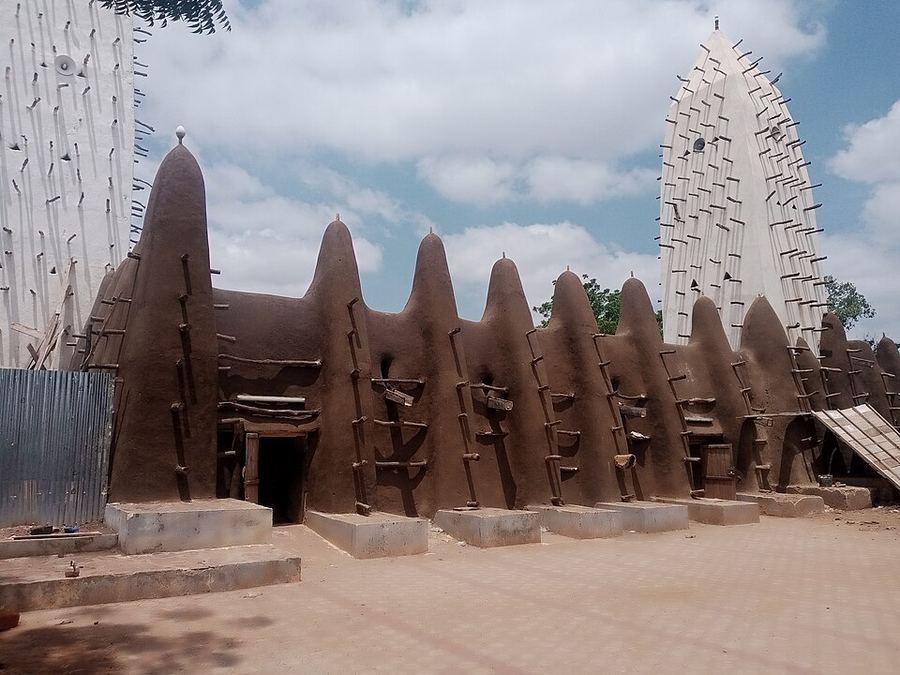
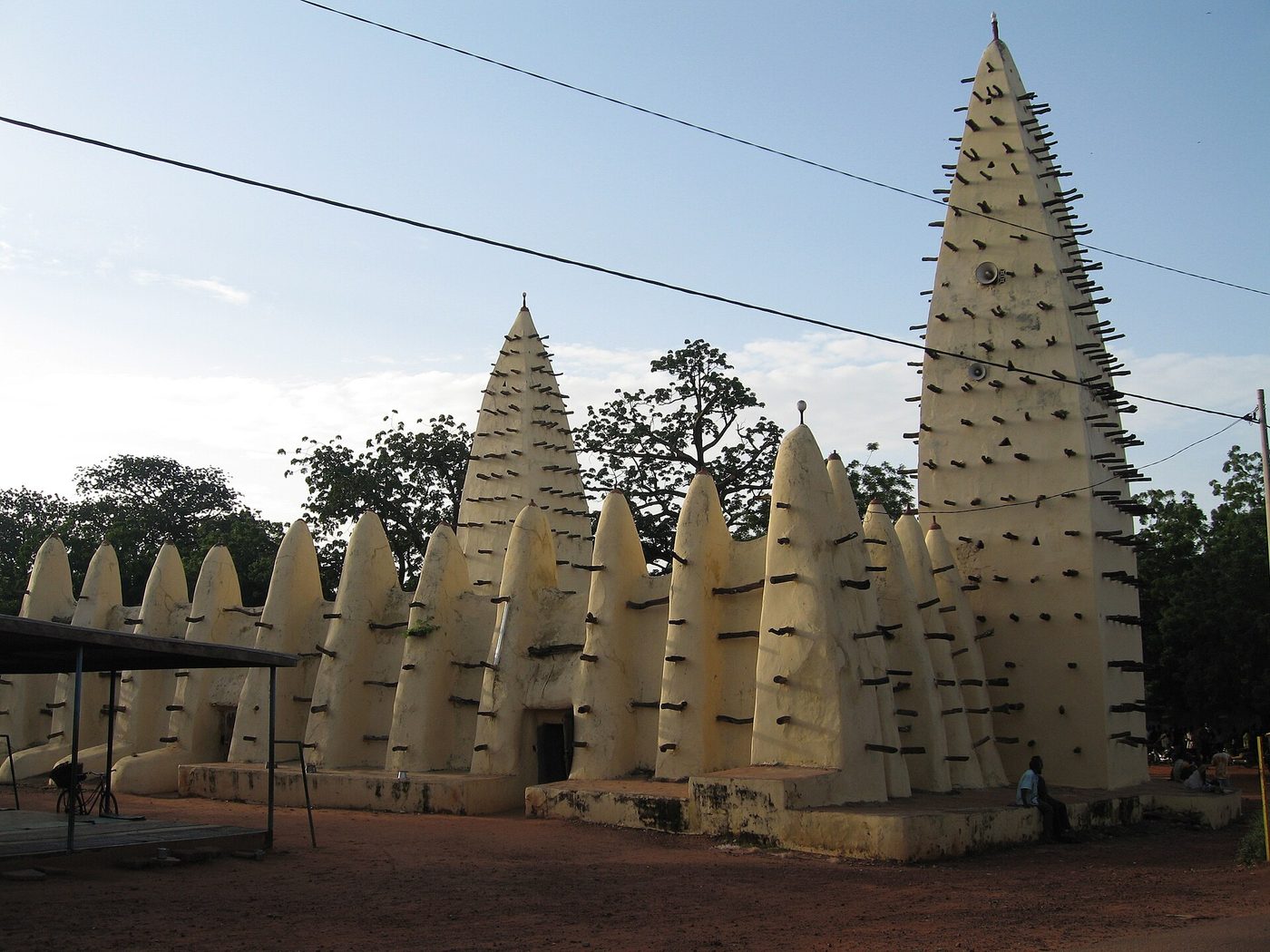
Bobo-Dioulasso Mosque, Burkina Faso
Burkina Faso BFA
Bobo-Dioulasso Mosque — Photo: Jurgen / CC BY 2.0 via Wikimedia Commons
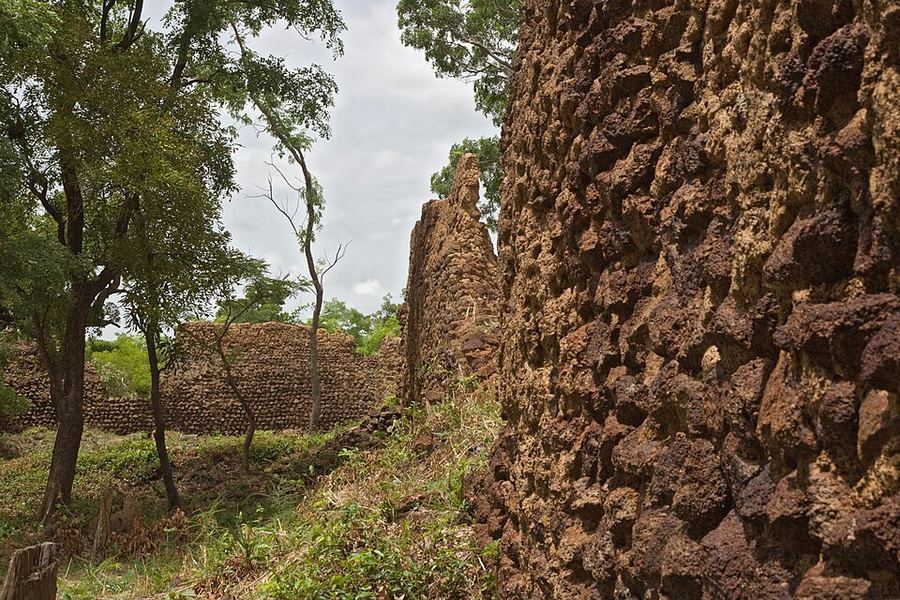
Did You Know The Ruins of Loropeni, laterite walls up to six metres high enclosing a settlement linked to the medieval trans-Saharan gold trade, became the country's first UNESCO World Heritage Site only in 2009. — UNESCO World Heritage Centre

Burkina Faso is a landlocked country of roughly 23 million people in the West African Sahel, bordered by Mali, Niger, Benin, Togo, Ghana and Cote d'Ivoire. Its capital, Ouagadougou, sits on the central plateau that has been the heartland of the Mossi kingdoms since about the fifteenth century; Bobo-Dioulasso, in the wetter southwest, is the second city and the country's older commercial centre. The name dates only to 1984, when the revolutionary government of Thomas Sankara replaced the colonial label Upper Volta with a compound drawn from More and Dyula meaning roughly the land of upright people. Independence from France came on 5 August 1960. The population is overwhelmingly young, with a median age of about 19, and predominantly Mossi, alongside Fulani, Gurunsi, Bissa, Gurma, Bobo, Senufo and Lobi communities; Muslims are a clear majority, with substantial Catholic, Protestant and traditional religious populations. The economy is agricultural and extractive: cotton and livestock in the countryside, and gold, which now dominates exports and flows largely to Swiss refineries. Since 2015 the country has been at the centre of the Sahel's jihadist insurgency, which has displaced large numbers of people, closed thousands of schools and helped produce two military coups in 2022. Burkina Faso nonetheless retains an outsized cultural reputation in Africa, above all through cinema, craft and music.

CIA World FactbookEncyclopaedia BritannicaWorld Bank
Population
23,490,300
Capital
Ouagadougou
Currency
Fr XOF
Time zones
Largest city
Ouagadougou
Human Geography Themes
Loading national figures…
Largest Cities
Ouagadougou3,616,268
Bobo-Dioulasso1,297,389
Banfora187,824
Koudougou165,240
Fada N'Gourma140,171
Ouahigouya137,709
Kaya124,686
Tenkodogo105,419
In Perspective

Ouagadougou's urban core is home to about 3,616,268 people.

That's bigger than Berlin, Rome and Amsterdam — each a great world city in its own right.

Ouagadougou3,616,268
Berlin3,601,776
Rome2,556,354
Amsterdam1,223,407

Among the world's megacities, though, it's one of many — the giants of Asia and Latin America run larger still:

Ouagadougou3,616,268
Jakarta40,545,126
Dhaka37,307,160
Tokyo33,244,670
Shanghai30,678,616
Cairo25,230,325
The Country & Its People

History

The central plateau was organised from roughly the fifteenth century into the Mossi states of Ouagadougou, Yatenga and Tenkodogo, ruled by the Mogho Naba and his subordinate chiefs. Their cavalry armies were strong enough to raid the Niger Bend and to resist absorption by the Songhai and later by the jihad states of the nineteenth century, which is why the Mossi polities survived intact until the French arrived. In the southwest, stone-walled settlements such as Loropeni attest to a much older economy tied to the trans-Saharan gold trade. French forces took Ouagadougou in 1896 and the territory was constituted as Upper Volta in 1919, dissolved in 1932 and its districts parcelled out to neighbouring colonies, then reconstituted in 1947 after sustained Mossi lobbying. Independence came on 5 August 1960 under Maurice Yameogo. The next quarter-century brought repeated military interventions, culminating in the 1983 revolution led by Captain Thomas Sankara, who renamed the country Burkina Faso, pushed mass vaccination and literacy campaigns, and was assassinated on 15 October 1987. His successor Blaise Compaore governed for 27 years until a popular uprising forced him out in October 2014. A democratic interlude under Roch Marc Christian Kabore ended with coups in January and September 2022 as the insurgency deepened.
Culture

Burkinabe culture rests on a dense layer of village institutions that colonial rule and the modern state never displaced. Mossi society is organised around chieftaincy, with the Mogho Naba in Ouagadougou still performing the weekly Nabayius Gou ceremony, a stylised re-enactment in which the ruler prepares to ride out and is dissuaded by his court. Age grades, initiation, masking societies and joking relationships between ethnic groups, known as rakire, are living practices rather than folklore; the joking-kinship convention, which licenses ritual insult between particular groups and obliges them to reconcile, is credited locally with defusing conflict. Religious life is layered rather than exclusive: Islam and Christianity coexist with earth-priest cults and ancestor veneration, often within the same family. Hospitality centres on water offered to any arriving visitor and on shared bowls of to. The country's reputation in Africa rests heavily on the arts economy of Ouagadougou, which hosts the continent's largest film festival and a major international craft fair, and on a self-image, sharpened by the Sankara years, of integrity and self-reliance in a poor country. That reputation has been strained but not erased by insecurity and displacement since 2015.

Points Of Pride

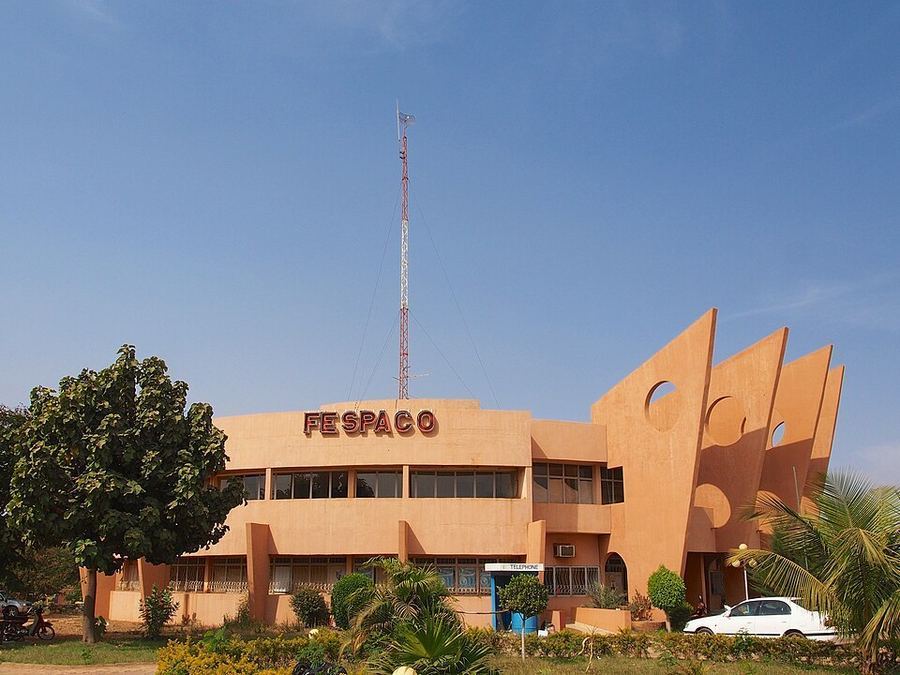
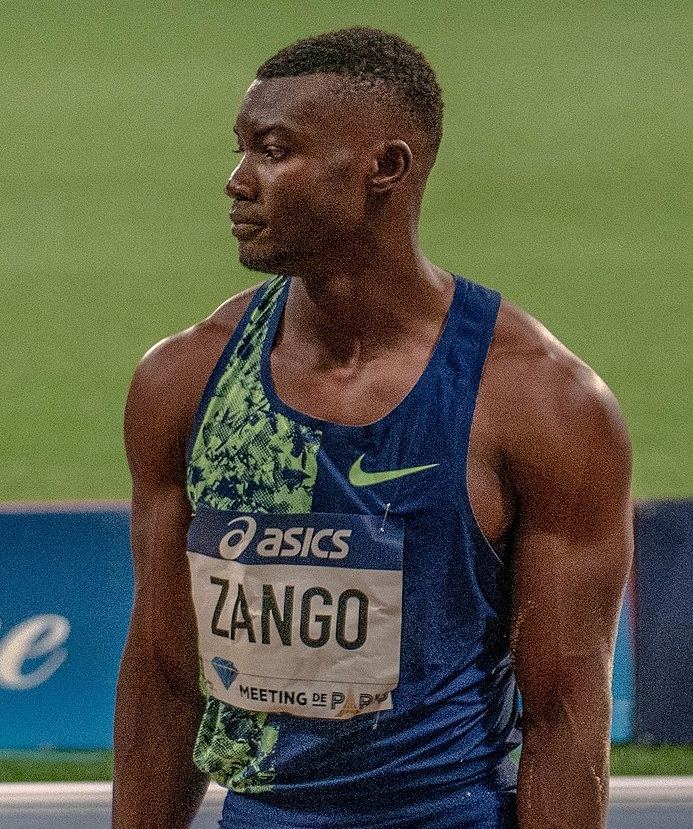
The greatest single source of national pride is FESPACO, the Panafrican Film and Television Festival of Ouagadougou, founded in 1969 and held biennially in the capital. It is the largest film event in Africa and its top prize, the Etalon de Yennenga, is named for the legendary Mossi princess whose flight from her father's court is the founding story of the dynasty. The Salon International de l'Artisanat de Ouagadougou, held in alternate years, is a comparable showcase for West African craft. The Ruins of Loropeni, inscribed by UNESCO in 2009, were the country's first World Heritage Site and preserve the laterite walls of a settlement tied to the medieval gold trade; the Ancient Ferrous Metallurgy Sites, inscribed in 2019, document iron smelting furnaces going back some two millennia. Burkina Faso also shares the W-Arly-Pendjari transboundary park complex with Benin and Niger. In athletics, Hugues Fabrice Zango won the country's first Olympic medal, a triple jump bronze at Tokyo in 2021, and its first gold at Paris in 2024. Thomas Sankara remains a continental icon, and the survival of Mossi chieftaincy alongside a modern republic is itself widely cited as a point of pride.

Cultural Fusion

Burkina Faso sits where the Sahel meets the Sudanian savanna, and its culture reflects that seam. Islam arrived overland with Dyula merchants working the routes between the Niger Bend and the Akan goldfields, which is why the Dyula language survives as a trade lingua franca in the southwest and why Bobo-Dioulasso's Grand Mosque is built in the mud-and-timber Sudano-Sahelian style shared with Mali. Fulani herders moving seasonally between pasture zones have long exchanged milk, meat and labour with settled Mossi and Gurunsi farmers, an interdependence that the current conflict has strained by casting pastoralists as suspect. French colonial rule left the administrative language, the education system, the CFA franc and a long labour migration to Cote d'Ivoire that put hundreds of thousands of Burkinabe into Abidjan's economy and brought back money, music and clothing styles. In the arts, the fusion is deliberate: Burkinabe film-makers trained in Moscow, Paris and Ouagadougou's own school have used European technique to tell village stories in More and Dyula, and the balafon repertoire shared with Mali and Cote d'Ivoire has moved into recorded popular music. Religious syncretism is the everyday case, with mosque, church and earth shrine drawing on the same families.

Music & Dance

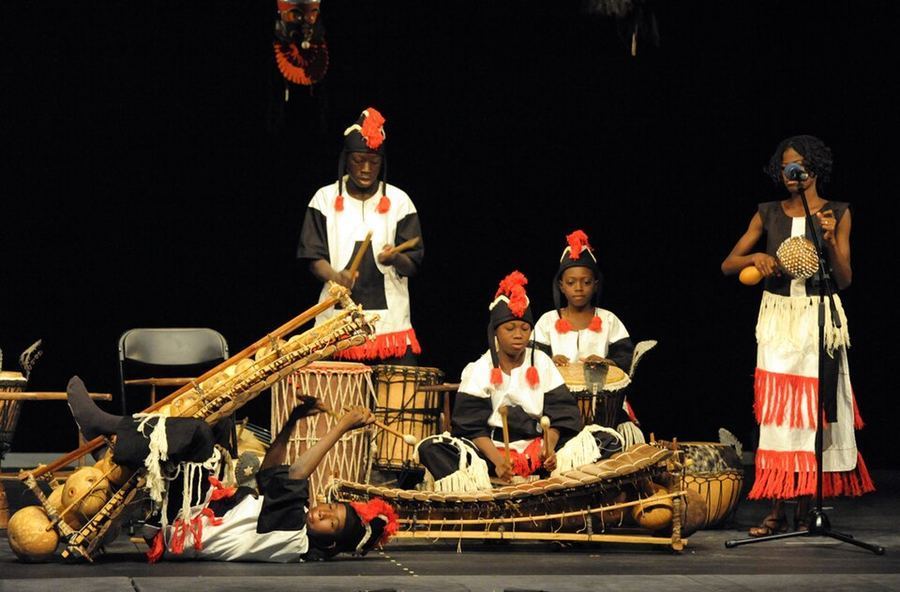
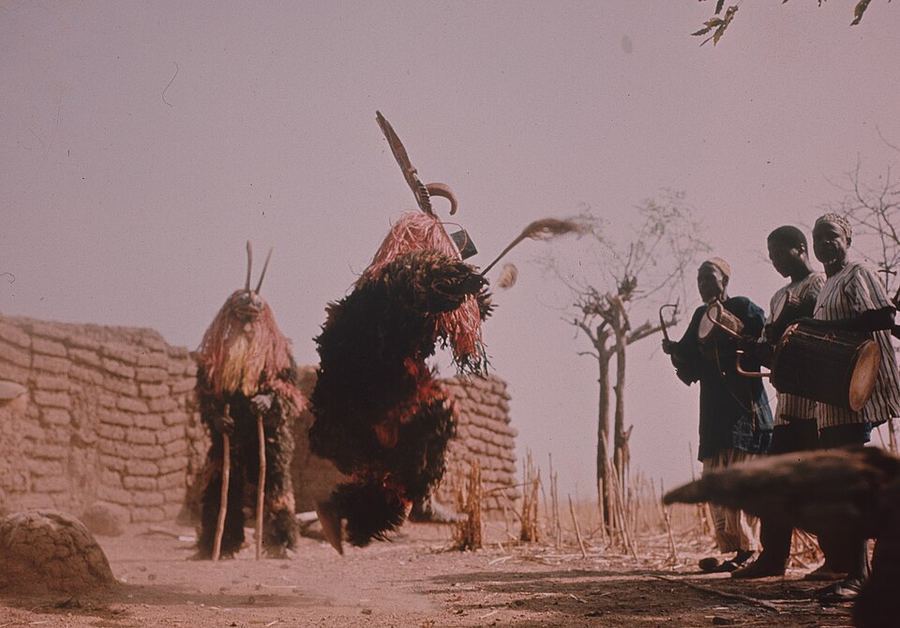
The signature instrument is the balafon, a gourd-resonated wooden xylophone whose Senufo tradition, shared with Mali and Cote d'Ivoire, was inscribed by UNESCO in 2012 as intangible cultural heritage; the Sambla and Tusia peoples of the southwest maintain a distinct and highly virtuosic balafon practice. Alongside it sit the djembe and dunun drums, the bendre calabash drum used in Mossi royal contexts, the kora and ngoni in the Mande-influenced west, and end-blown flutes among Fulani herders. Court music has a specific job: griots and drummers at the Mogho Naba's palace recite genealogies and announce ceremonies, and the bendre is used to praise and to remind the ruler of his obligations. Masked dance, particularly among the Bwa, Nuna and Bobo, is the most spectacular performance form, with towering plank masks and fibre costumes appearing at funerals and initiations. Recorded popular music runs from the Afro-Cuban and mande-inflected songs of Amadou Balake through Farafina's percussion ensembles to the late Victor Deme's guitar ballads and a strong hip-hop and reggae scene; the rapper Smockey co-founded the Balai Citoyen movement that helped bring down the government in 2014, an unusually direct link between popular music and politics.

Cuisine & Misattributed Foods

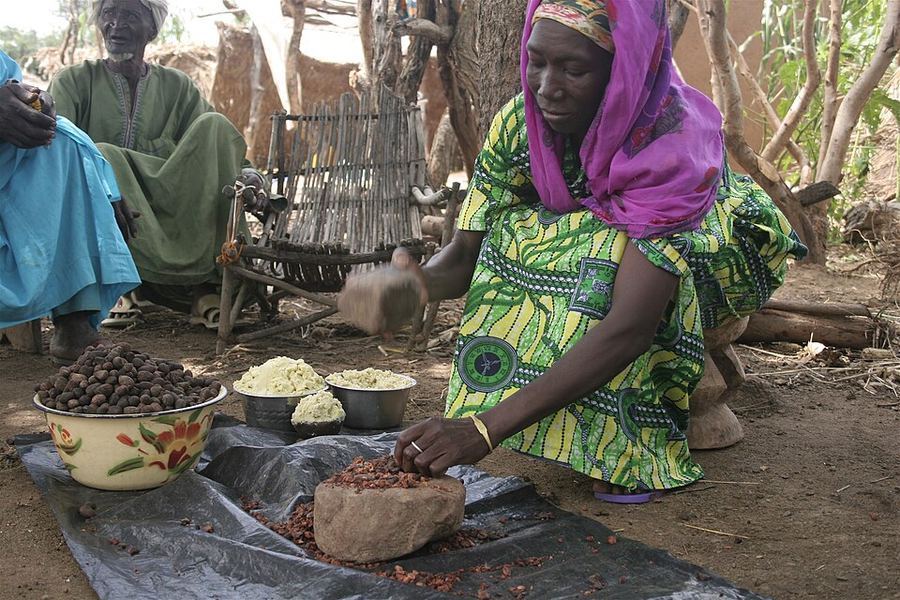
The staple is to, a stiff porridge of millet, sorghum or maize flour beaten to a smooth mass and eaten with the fingers, dipped into sauces of baobab leaf, sorrel, okra, groundnut or dried fish. Sauces are thickened and flavoured with soumbala, the strong fermented seed of the nere or African locust bean, which functions as the region's bouillon and is one of the clearest markers of Burkinabe and Malian cooking. Rice dishes are the festive register: riz gras, rice cooked down in tomato, oil and meat stock, and riz sauce arachide with groundnut sauce. Poulet bicyclette, a lean free-range chicken grilled whole and served with a chilli and onion relish, is the standard dish of roadside maquis bars. Yams, cassava, cowpeas, sweet potato and fonio fill out the diet, and grilled mutton and beef brochettes are the urban street food. Shea, harvested and processed largely by women's cooperatives, supplies both cooking fat and a major export. Drinks include dolo, a sour millet or sorghum beer brewed and sold by women in neighbourhood cabarets, zoom-koom made from millet flour, ginger and tamarind, and bissap from hibiscus.

National Dress

The garment that carries national meaning is Faso Dan Fani, literally woven cloth of the homeland: narrow strips of handwoven cotton, usually in blue, white, black and ochre stripes or checks, sewn edge to edge into wraps, shirts and dresses. Thomas Sankara made wearing it a matter of policy after 1983, requiring officials to appear in locally woven cloth as a way of supporting Burkinabe cotton growers and weavers and refusing imported fabric; the practice outlasted the revolution and remains a mark of patriotic dress at weddings, official ceremonies and independence day. Faso Dan Fani was granted geographical indication protection to guard the name against machine-made imitation. The other distinctly Burkinabe textile is Koko Dunda, the vividly dyed and tied cotton associated with the women dyers of Bobo-Dioulasso. Everyday clothing includes the boubou, a wide embroidered robe worn with a matching cap by men, and the pagne, a wrapped cloth worn with a fitted top and headtie by women. Fulani dress is distinct, with silver and amber jewellery, large hoop earrings and indigo. Western clothing dominates urban daily wear, with traditional cloth reserved for ceremony and public occasion.

Sports & Inspiring Athletes

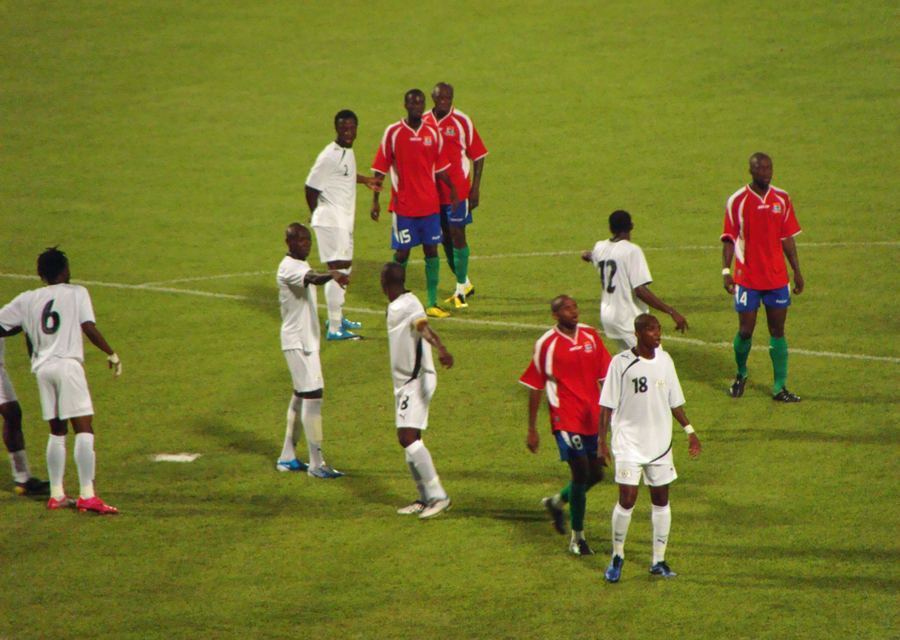
Football is the dominant sport. The national team, the Etalons or Stallions, named for Princess Yennenga's horse, plays at the Stade du 4-Aout in Ouagadougou and draws crowds far beyond the capacity of the domestic league, whose leading clubs include Etoile Filante and Rail Club du Kadiogo in Ouagadougou and Association Sportive du Faso-Yennenga. Burkina Faso hosted the Africa Cup of Nations in 1998, reaching the semi-finals, and its best result came in 2013 when it lost the final to Nigeria; it finished third in 2017. Cycling is the clear second sport, with the Tour du Faso, run since 1987, the best-established stage race in West Africa and a genuine national event. Athletics has produced the country's Olympic success, with Hugues Fabrice Zango's triple jump medals, and boxing, handball, basketball and volleyball have organised federations. Traditional wrestling remains popular at village festivals, particularly in the west and among Fulani communities. Facilities are limited and most competition happens on unsurfaced ground; insecurity in the north and east has curtailed sporting life in the regions worst affected by the insurgency.

Notable Educational Programs

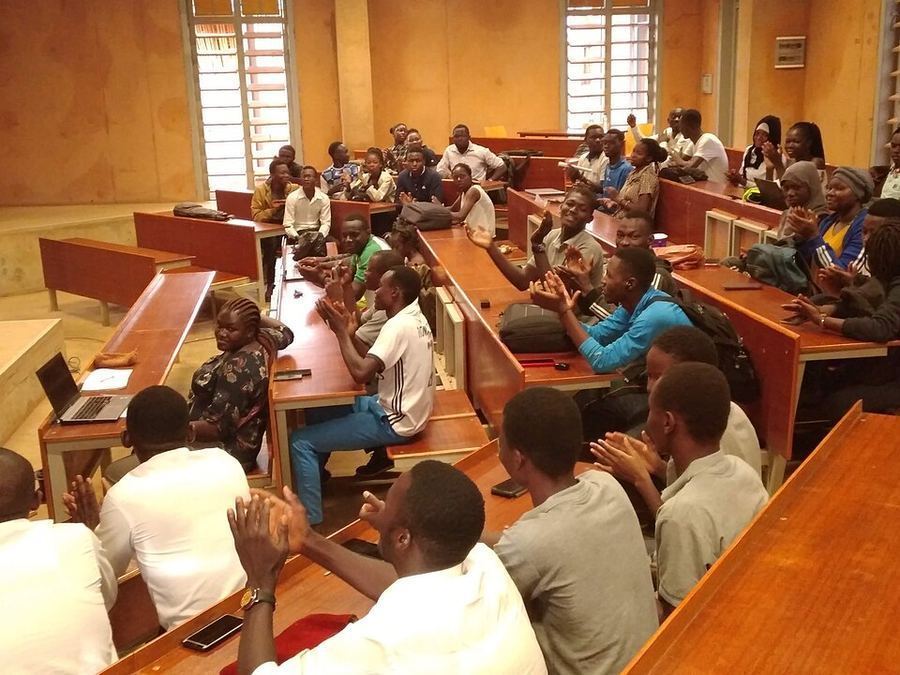
Education is free and officially compulsory from age six, but Burkina Faso has one of the lowest adult literacy rates in the world and the system is under severe strain. Instruction has historically been in French, a language spoken by a small minority, and the most significant reform effort has been the bilingual school movement developed from the 1990s, in which children begin in a national language such as More, Dyula or Fulfulde and transition to French, with evaluations showing better retention and completion than the monolingual model. Non-formal centres for out-of-school adolescents and adult literacy classes run alongside the state system, and Koranic schools are widespread. Higher education is led by Universite Joseph Ki-Zerbo in Ouagadougou, founded in 1974 and renamed for the historian, with Universite Nazi Boni in Bobo-Dioulasso and a growing private sector; the Institut International d'Ingenierie de l'Eau et de l'Environnement, known as 2iE, in Ouagadougou trains water and environmental engineers from across francophone Africa. The insurgency has been catastrophic for schooling: thousands of schools in the Sahel, Est, Nord and Boucle du Mouhoun regions have closed under threat, displacing both pupils and teachers, and UNICEF has repeatedly identified the country as one of the world's worst education emergencies.

Wars & Conflicts

Burkina Faso has been the most intensely affected country in the central Sahel insurgency since violence spread from Mali across the northern border in 2015 and 2016. Two broad jihadist coalitions operate on its territory: Jama'at Nusrat al-Islam wal-Muslimin, affiliated with al-Qaida, and the Islamic State Sahel Province, which are also in conflict with each other. Attacks have moved from the Sahel region in the north into the Est, Nord, Centre-Nord and Boucle du Mouhoun, and large towns such as Djibo have endured prolonged blockade. State security forces and allied civilian auxiliaries, the Volontaires pour la Defense de la Patrie recruited in large numbers from 2020, have themselves been credibly accused of mass abuses against Fulani civilians, and human rights organisations have documented massacres attributed to both sides. Displacement rose past two million people before the government stopped publishing figures in 2023, and hundreds of health facilities and thousands of schools have closed. The security crisis drove the two coups of January and September 2022, after which the government expelled French forces, turned toward Russian partners, and formed the Alliance of Sahel States with Mali and Niger, the three subsequently announcing their withdrawal from ECOWAS.
Current as of 2026-08-06

Land & Border Disputes

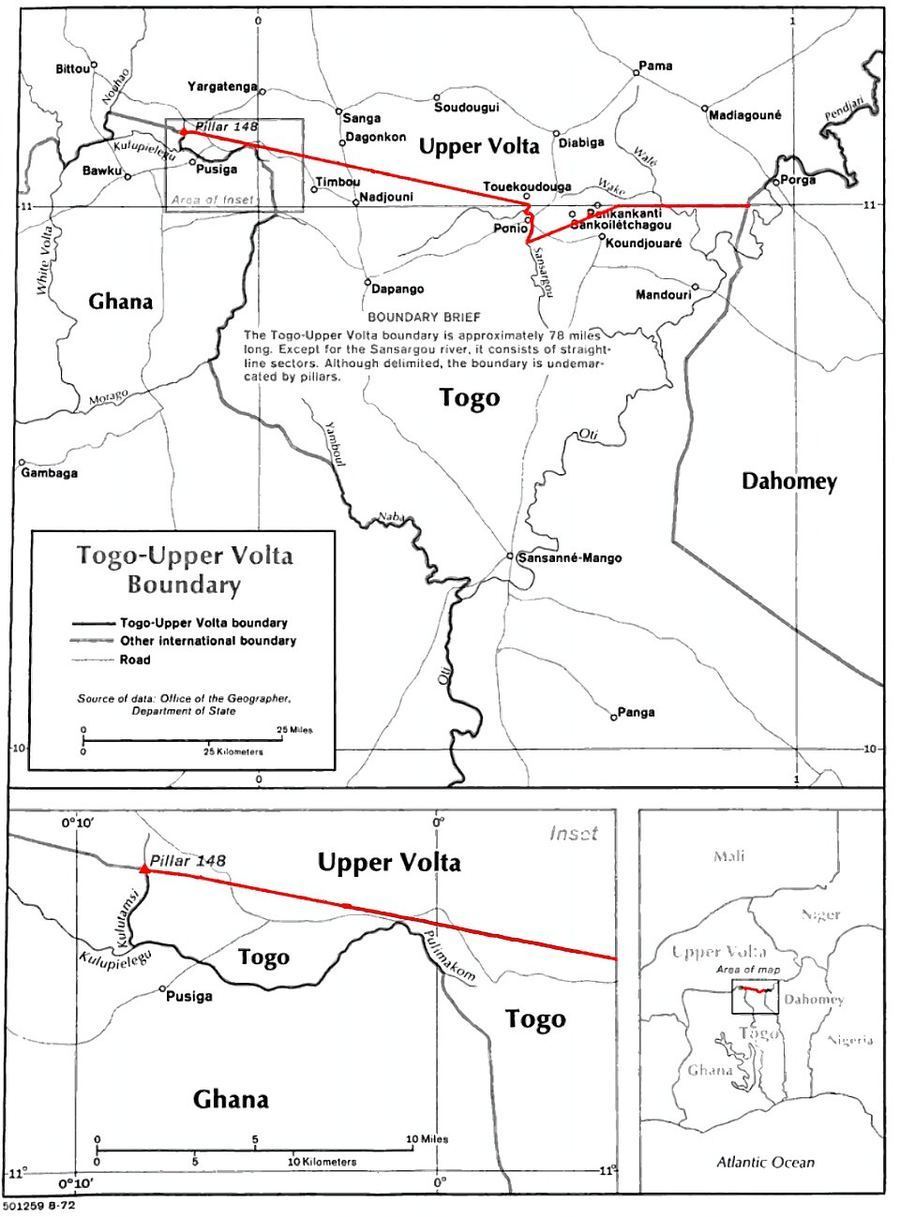
Burkina Faso's boundary disputes have been settled through international adjudication rather than left open, and the country is unusual in West Africa for having twice taken a frontier question to the International Court of Justice and complied with the outcome. The dispute with Mali over the mineral-prospective Agacher Strip in the north produced fighting in December 1985, a brief war of a few days that ended in Nigerian and Libyan mediation; the ICJ, which the two states had already seised, delivered its judgment in the Frontier Dispute case on 22 December 1986, dividing the contested zone between them, and both accepted it. A second reference, agreed with Niger, led to the ICJ judgment of 16 April 2013 fixing the remaining unsettled sector of that boundary, followed by joint demarcation work. Boundaries with Benin, Togo, Ghana and Cote d'Ivoire have likewise been the subject of demarcation projects rather than active claims. The practical border problems today are not legal but operational: armed groups and traffickers move freely across the tri-border zone with Mali and Niger, and relations with coastal neighbours and with ECOWAS have been strained by the post-2022 government's political realignment rather than by any territorial claim.
Land, Life & Legacy

Land & Climate

Burkina Faso is a landlocked plateau country of about 274,000 square kilometres, most of it a gently undulating peneplain between 200 and 400 metres above sea level, with the highest point, Tenakourou, reaching only 749 metres in the southwest. Three rivers of the Volta system drain the country and give it its former name: the Mouhoun or Black Volta, the Nakambe or White Volta and the Nazinon or Red Volta, all flowing south into Ghana; only the Mouhoun runs year-round along part of its course. The climate is tropical with a sharp wet and dry alternation. The north is Sahelian, receiving under 600 millimetres of rain in a short season from June to September, while the southwest gets more than 1,000 millimetres and supports denser woodland and cotton farming. From roughly November to February the harmattan blows dust off the Sahara, dropping visibility and night temperatures; March to May is the hot season, when daytime highs regularly exceed 40 degrees Celsius. Drought, erratic onset of the rains, soil crusting and loss of tree cover are the central environmental problems, and Sahelian rainfall variability makes the farming year unpredictable. Wildlife survives mainly in the southeast, in the Arly and W parks bordering Benin and Niger.

Entertainment

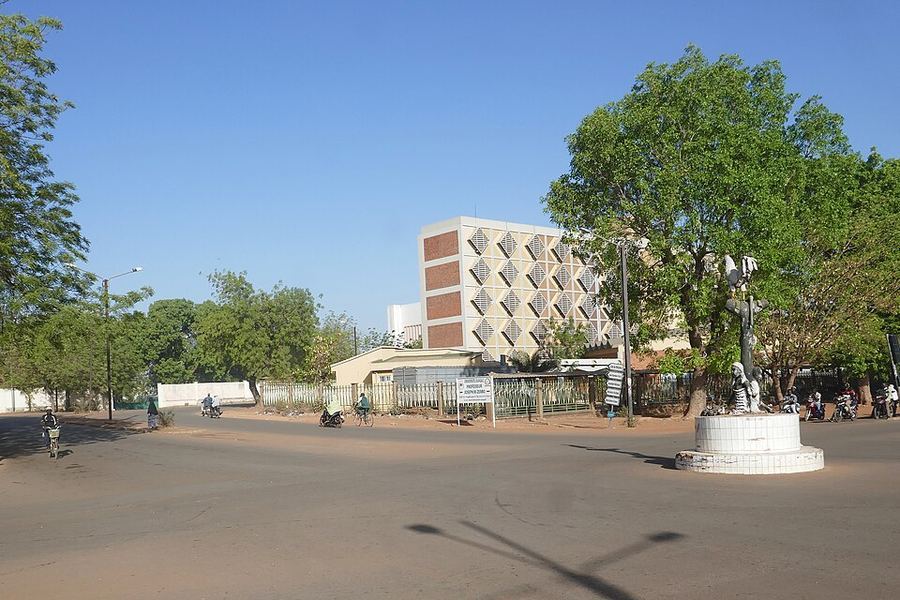
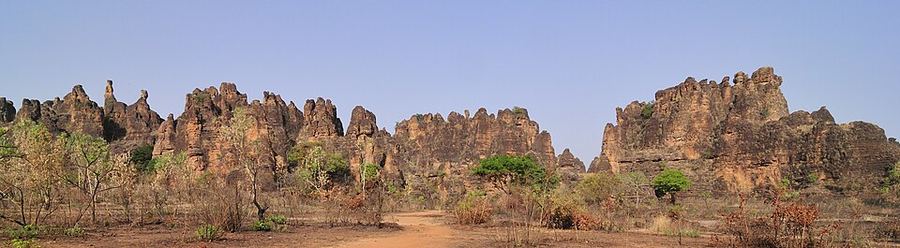
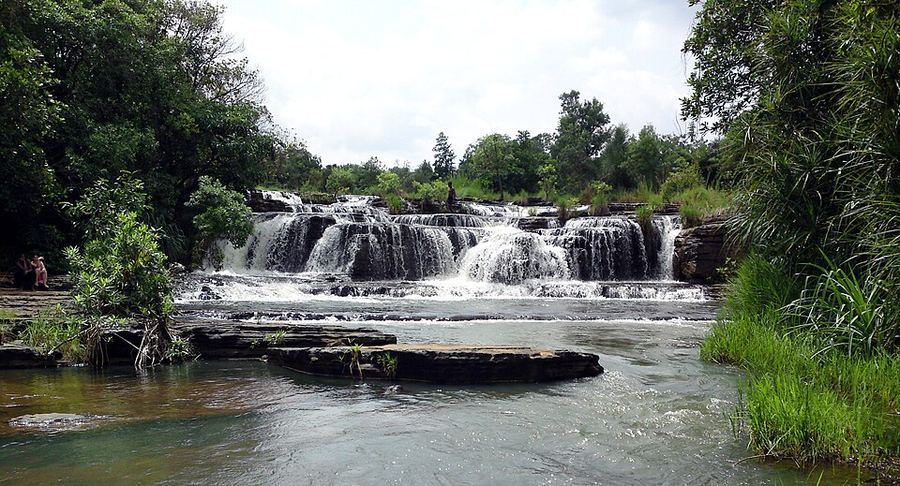
Ordinary leisure is sociable, outdoor and cheap. The maquis, an open-air bar serving grilled chicken and cold beer, is the standard evening venue in Ouagadougou and Bobo-Dioulasso, and the dolo cabaret, where millet beer is sold by the calabash from a brewer's courtyard, is its rural counterpart. Football is played constantly on unsurfaced neighbourhood pitches and watched collectively in bars and courtyards whenever the Etalons or a European league are on. Cycling has a following unusual in West Africa, sustained by the Tour du Faso stage race and by the bicycle's role as basic transport; motorbikes and mopeds dominate the streets of the capital to the point of being a defining sight. Cinema-going has a real popular history here, and FESPACO fortnight fills open-air screens across the capital. Board and boardless games, wrestling matches, card playing and long conversations over strong sweet tea occupy afternoons. Weekend social life turns heavily on ceremony: baptisms, weddings and funerals draw large numbers and involve music, dancing and cooking on a scale that doubles as entertainment. Around Banfora the waterfalls, lake and rock formations draw domestic weekend visitors, and hunting and fishing persist in the southwest.

Art & Museums

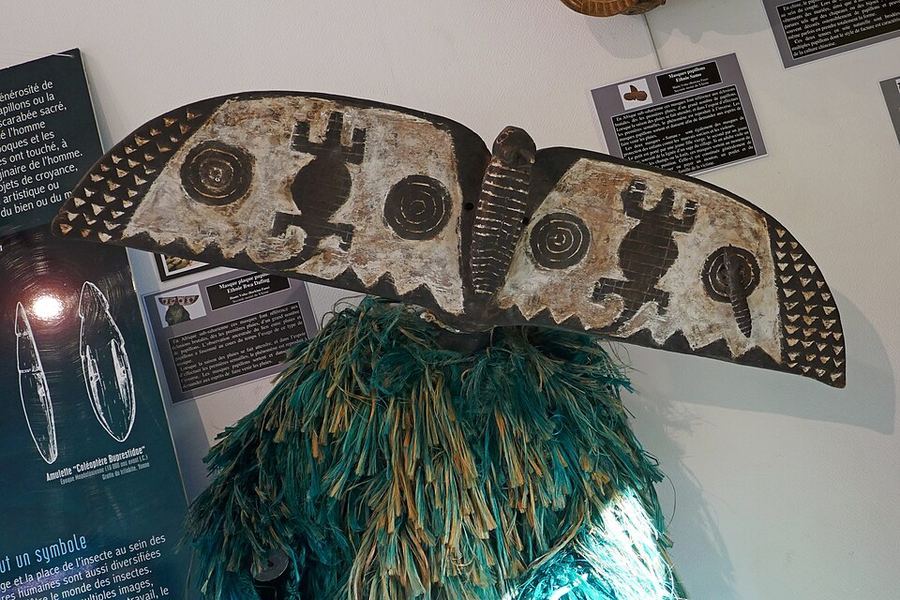
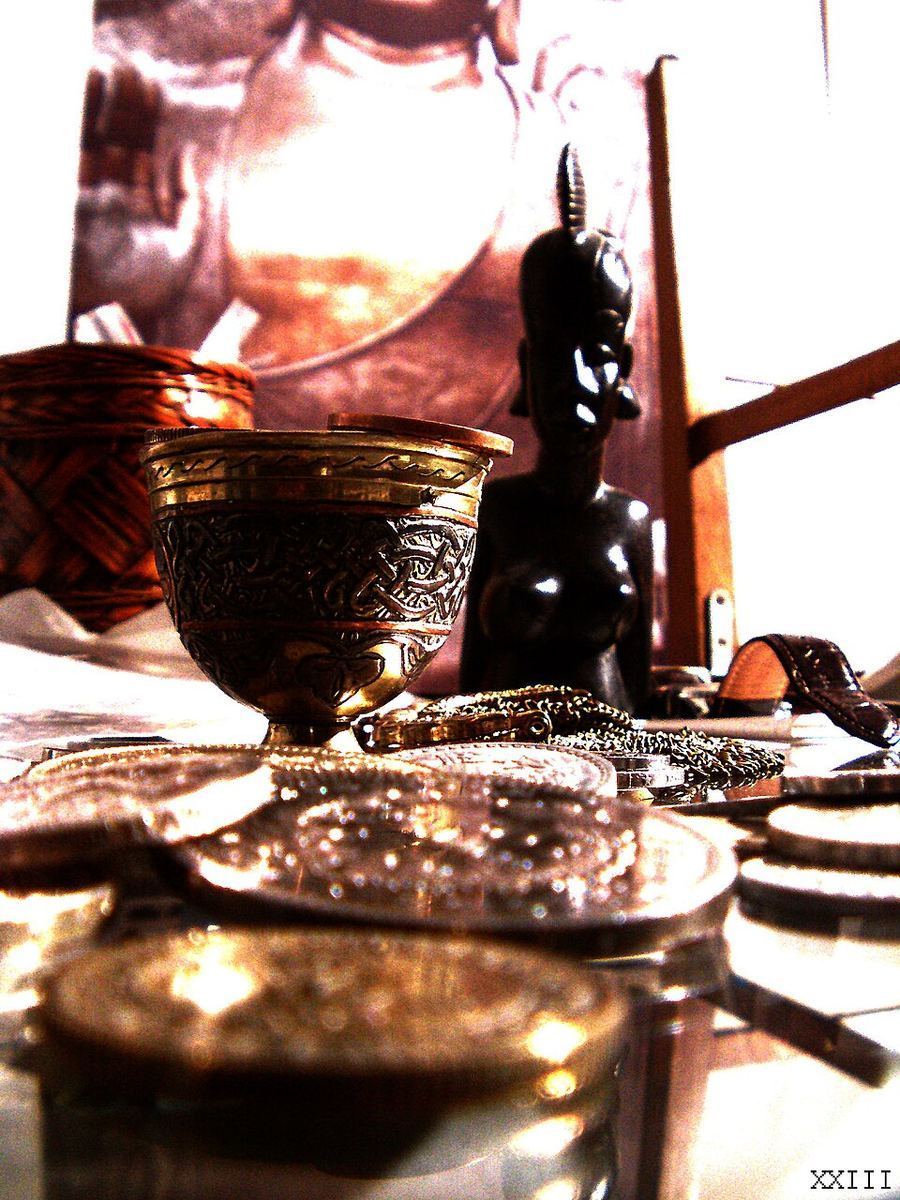
Burkina Faso is best known internationally for two art forms: masks and cinema. The plank masks of the Bwa and Nuna, tall flat boards painted in black, white and red geometric registers and topped with a crescent or hook, are among the most reproduced objects of West African art and are held by major museums including the Smithsonian's National Museum of African Art and the Metropolitan Museum of Art. Bobo helmet masks, Mossi karan-wemba masks with a female figure above the face, and the small carved bateba figures of the Lobi, made to be placed on household shrines and to act on behalf of their owners, complete the sculptural repertoire. Bronze casting by the lost-wax method is a living Ouagadougou trade, sold at the Village Artisanal and the international craft fair. Since 1989 the granite outcrops at Laongo, east of the capital, have hosted an international sculpture symposium that has left dozens of carved works in the rock. Film is the country's most celebrated modern art: Gaston Kabore's Wend Kuuni and Idrissa Ouedraogo's Yaaba and Tilai, the latter awarded the Grand Prix at Cannes in 1990, established a Burkinabe school of unhurried village storytelling that shaped African cinema well beyond its borders.
SmithsonianMetropolitan Museum of ArtEncyclopaedia Britannica

Notable People

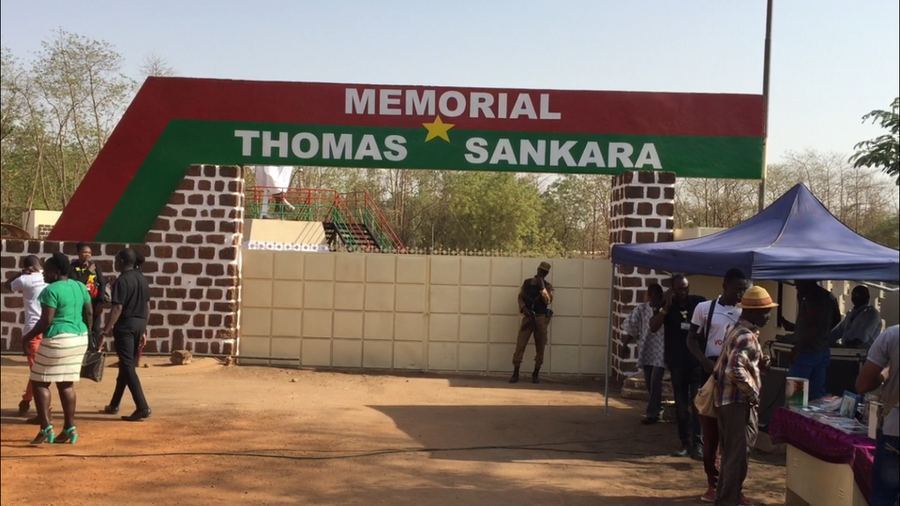
Thomas Sankara, the army captain who took power in 1983 at 33 and was killed in a coup four years later, is the country's defining modern figure and a continental symbol of anti-colonial austerity; a Ouagadougou court convicted his successor Blaise Compaore in absentia in April 2022 of complicity in his murder. Joseph Ki-Zerbo, historian and opposition politician, wrote a widely used general history of Africa and has the national university named after him. In cinema, Gaston Kabore and Idrissa Ouedraogo are the two towering names, Ouedraogo winning the Cannes Grand Prix for Tilai in 1990; Fanta Regina Nacro was among the first Burkinabe women to direct feature-length work. In music, Amadou Balake, the ensemble Farafina and the singer Victor Deme reached international audiences, and the rapper Smockey, born Serge Bambara, helped organise the 2014 uprising through the Balai Citoyen movement. Hugues Fabrice Zango is the country's only Olympic medallist, taking triple jump bronze at Tokyo in 2021 and gold at Paris in 2024 alongside a world title in 2023. The farmer Yacouba Sawadogo, who revived and improved the zai planting-pit technique in Yatenga and reforested degraded land, received the Right Livelihood Award in 2018.

Inventions & Breakthroughs

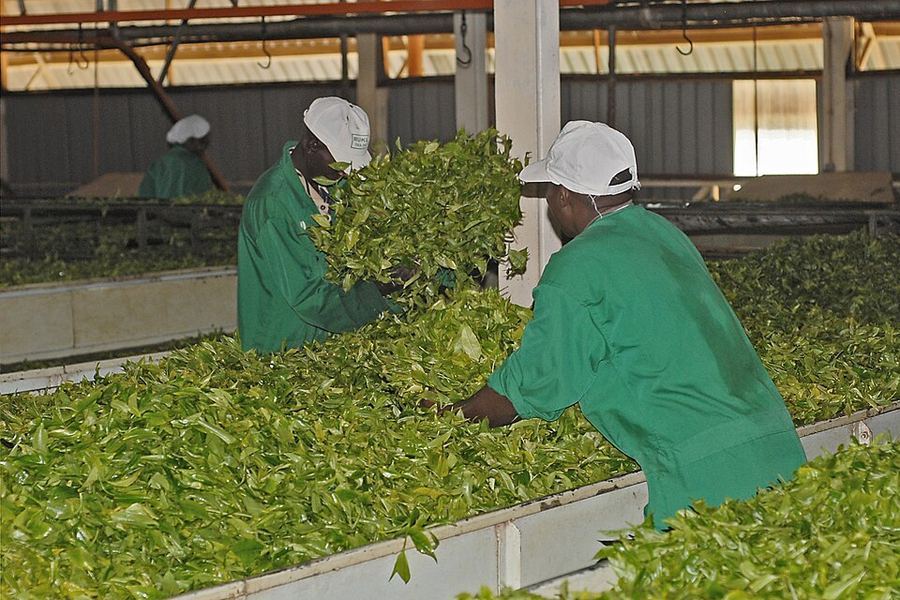
Burkina Faso's contributions are agronomic and social rather than industrial. The best documented is the revival of zai, the practice of digging small planting pits during the dry season, filling them with manure and compost so they concentrate scarce rainfall and attract termites that break up hardpan. Farmers in Yatenga, above all Yacouba Sawadogo, enlarged and adapted the traditional pits from the 1980s and combined them with contour stone bunds, restoring thousands of hectares of crusted land; the technique has since been promoted across the Sahel as a low-cost answer to desertification. Faso Dan Fani represents a different kind of innovation, a state-backed attempt to build a domestic textile value chain from Burkinabe cotton, and it now carries geographical indication protection. Shea butter processing, long a women's craft, has been reorganised into cooperatives supplying the international cosmetics and confectionery trade. In research, the country hosts some of Africa's most closely watched work on malaria vector control: the Target Malaria project, based with the Institut de Recherche en Sciences de la Sante, carried out the first release of genetically modified mosquitoes on the African continent in 2019 at Bana. Burkina Faso was also an early large-scale adopter of insect-resistant Bt cotton, abandoned in 2016 over fibre quality.

Science & Technology

Research capacity is concentrated in a small number of public institutes, chiefly the Centre National de la Recherche Scientifique et Technologique and the Institut de l'Environnement et de Recherches Agricoles, which work on drought-tolerant sorghum and millet varieties, soil and water conservation and cotton agronomy. Health research is the country's international strength: the Institut de Recherche en Sciences de la Sante and the Centre National de Recherche et de Formation sur le Paludisme in Ouagadougou, together with the Clinical Research Unit of Nanoro, have run large malaria vaccine and drug trials, including work on the R21 vaccine, and Nanoro was among the trial sites whose data supported its authorisation. Burkina Faso hosts Target Malaria, which in 2019 conducted the first release of genetically modified mosquitoes anywhere in Africa. Off-grid and utility-scale solar has expanded quickly given high irradiance and limited grid coverage, with the Zagtouli plant near Ouagadougou among West Africa's larger installations at the time it opened. Mobile telephony rather than fixed line carries most connectivity, and mobile money has spread rapidly. Constraints are severe: research funding is thin, electricity supply is unreliable and imported, and the insurgency has closed off fieldwork across much of the north and east.
NatureWHOWorld BankIEA
On The World Stage

Champions & Defining Moments

Burkina Faso's clearest global sporting achievement is in athletics. Hugues Fabrice Zango took triple jump bronze at the Tokyo Olympics in 2021, the country's first Olympic medal of any colour, added the world outdoor title in Budapest in 2023, and won Olympic gold at Paris in 2024; he also set a world indoor best in the event in 2021. In football, the Etalons reached the final of the 2013 Africa Cup of Nations in South Africa, losing 1-0 to Nigeria, with Jonathan Pitroipa named player of the tournament; the team took third place in Gabon in 2017 and has been a consistent qualifier without yet reaching a World Cup finals. Burkinabe players are established in European leagues, most prominently the forward Bertrand Traore, who has played for Chelsea, Ajax, Lyon and Aston Villa, and the midfielder Charles Kabore, long-serving captain. The Tour du Faso attracts European and African professional teams and has served as a route into continental cycling for Burkinabe riders. Participation at the Olympic Games has been continuous since 1972 apart from the 1976 boycott, generally with small teams in athletics, boxing, judo and swimming.

World AthleticsOlympediaFIFAIOC
Economy, Trade & Government

Currency & GDP

CFA Franc BCEAO — XOF (Fr)

GDP (PPP): $60.001 billion (2024 est.)

Per capita: $2,500 (2024 est.)

Exports

$5.912 billion (2023 est.)

gold, cotton, oil seeds, coconuts/brazil nuts/cashews, cement (2023)

Partners: Switzerland 72%, UAE 10%, India 3%, Mali 3%, Cote d'Ivoire 2% (2023)

Imports

$6.834 billion (2023 est.)

refined petroleum, plastic products, cement, electricity, packaged medicine (2023)

Partners: Cote d'Ivoire 14%, China 13%, Ghana 9%, Russia 9%, France 7% (2023)

Government

Type: presidential republic

Independence: 5 August 1960 (from France)

Terrain → Where People Live

How mountains, coasts, and rivers shape settlement (LandScan).

Coming — data

Migration & Ethnic Settlement

Where groups settled and how people move (GeoEPR + UNHCR).

Coming — data

Universities

Notable institutions, mappable as points.

Coming — data
Economy & government facts: CIA World Factbook (public domain), via OpenFactBook / factbook.json.
Every fact and narrative claim will carry a visible source citation. Data-driven sections light up automatically wherever HERA has coverage.