HERA · Human Entity Reference Atlas by Masego Inc

← Belarus 🌐 3D View
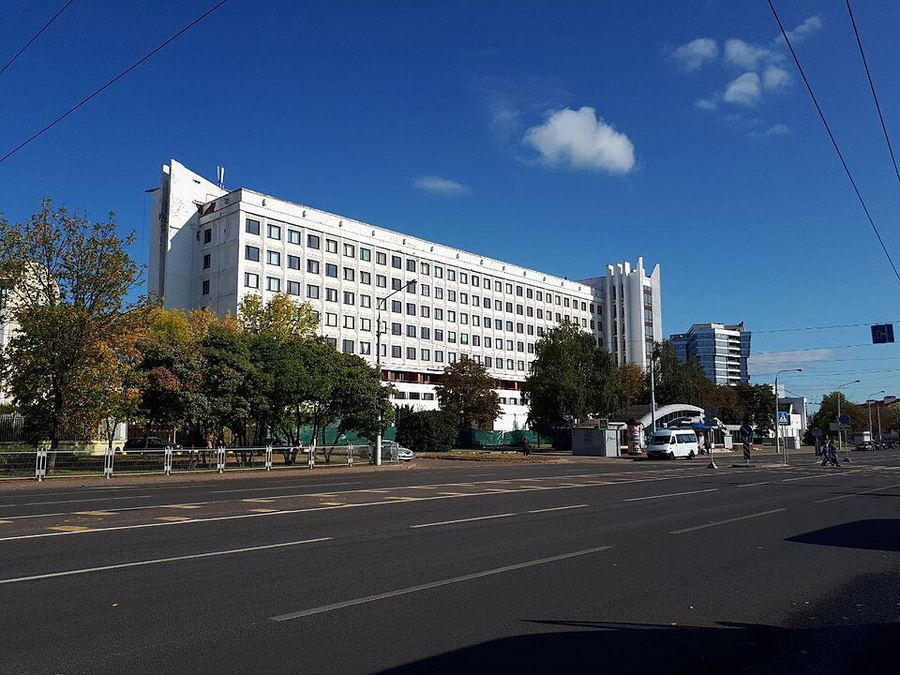
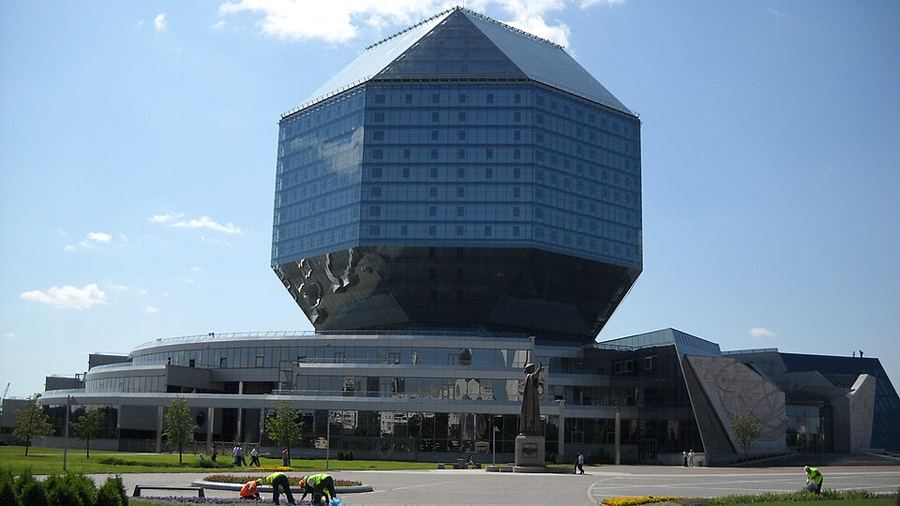
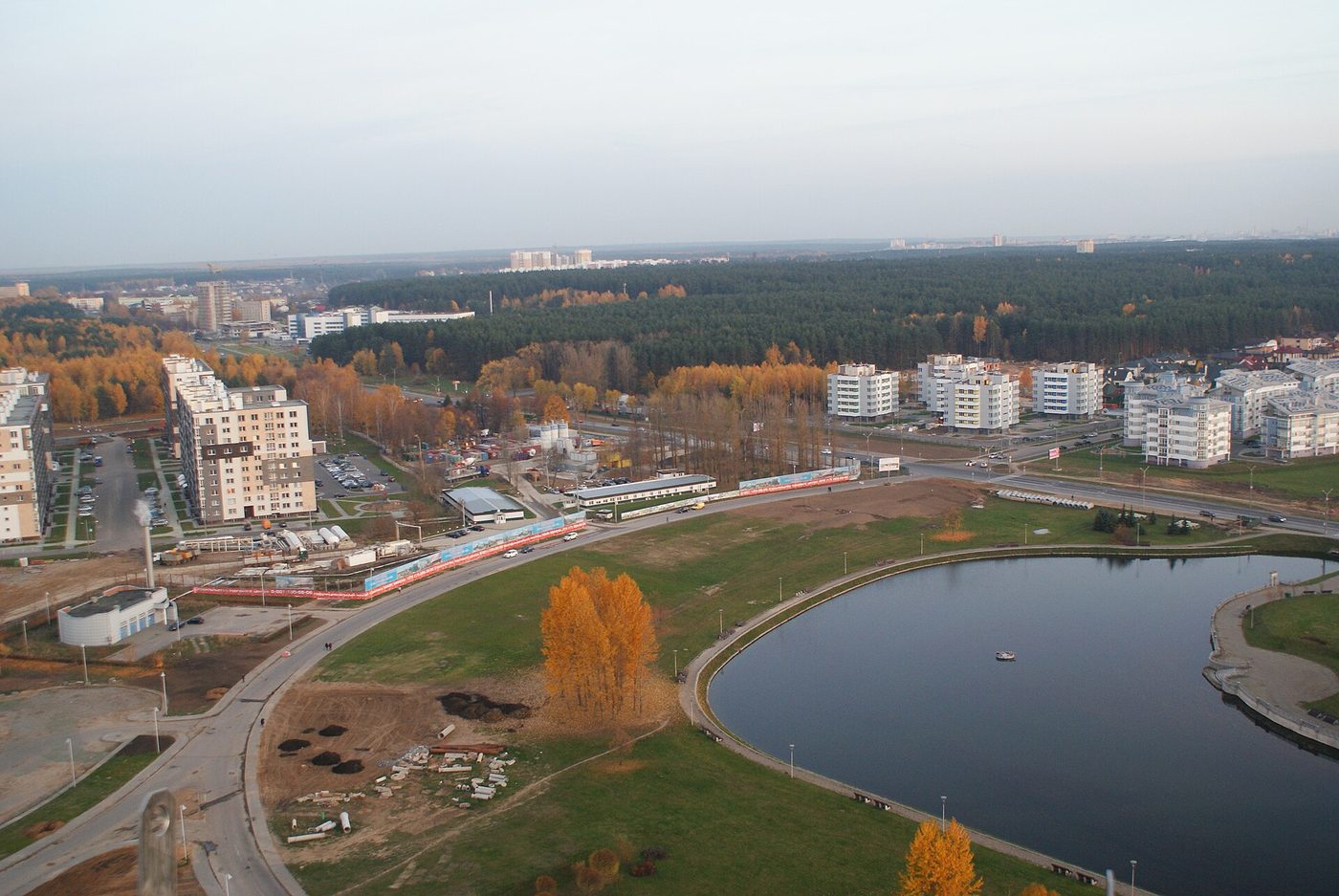
View of Minsk from the National Library of Belarus 14, Belarus
Belarus BLR
View of Minsk from the National Library of Belarus 14 — Photo: Хомелка / CC BY-SA 3.0 via Wikimedia Commons
Did You Know Francysk Skaryna of Polotsk printed the Psalter at Prague in 1517, the first book ever printed in an East Slavic language, some decades before printing reached Moscow. — UNESCO

Belarus is a landlocked country of about 9.5 million people in eastern Europe, bordered by Russia, Ukraine, Poland, Lithuania and Latvia. It is flat, forested and lake-strewn, with no point higher than about 345 metres, and roughly two-fifths of its territory under woodland. Minsk, the capital, holds close to two million people and was rebuilt almost from nothing after the Second World War, giving it one of the most complete Stalinist urban ensembles anywhere. The population is overwhelmingly Belarusian, with Russian, Polish and Ukrainian minorities. Both Belarusian and Russian are official, but Russian dominates public and private life and only about a quarter of the population reports Belarusian as the language it usually speaks, a balance that itself carries political weight. Orthodox Christianity is the largest confession, with a significant Catholic minority in the west and a very large share reporting no religion. Belarus declared independence from the Soviet Union on 25 August 1991. Alexander Lukashenko has governed since 1994. The economy remains heavily state-owned and industrial, exporting potash fertiliser, refined fuels, machinery, timber and dairy, and it has become closely bound to Russia through the Union State and through the sanctions imposed after 2020 and 2022.

CIA World FactbookEncyclopaedia BritannicaWorld Bank
Population
9,460,972
Capital
Minsk
Currency
Br BYN
Time zones
Largest city
Minsk
Human Geography Themes
Loading national figures…
Largest Cities
Minsk2,093,512
Homel571,257
Mahilioŭ399,369
Brest397,637
Hrodna395,330
Vitsebsk382,195
Babruysk194,302
Baranavichy179,059
In Perspective

Minsk's urban core is home to about 2,093,512 people.

That's bigger than Amsterdam — each a great world city in its own right.

Minsk2,093,512
Amsterdam1,223,407

Among the world's megacities, though, it's one of many — the giants of Asia and Latin America run larger still:

Minsk2,093,512
Jakarta40,545,126
Dhaka37,307,160
Tokyo33,244,670
Shanghai30,678,616
Cairo25,230,325
The Country & Its People

History

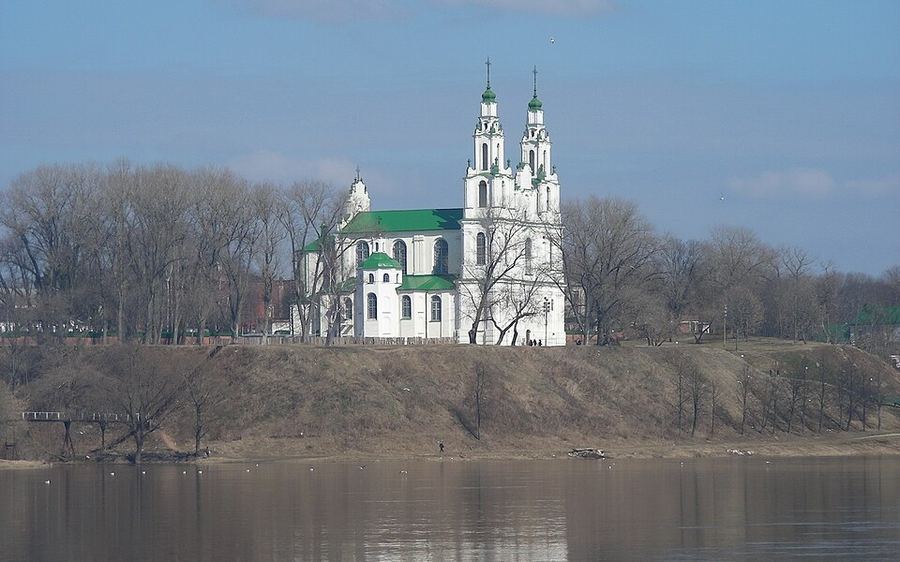
The Principality of Polotsk, first recorded in the tenth century, is the earliest state on Belarusian soil and produced Vseslav the Sorcerer and the twelfth-century abbess Euphrosyne of Polotsk. From the thirteenth century the lands were absorbed into the Grand Duchy of Lithuania, where Ruthenian, the ancestor of Belarusian, served as the chancery language and in which the celebrated Statutes of 1529, 1566 and 1588 were written. Francysk Skaryna of Polotsk printed the first book in an East Slavic language at Prague in 1517. The Union of Lublin in 1569 created the Polish-Lithuanian Commonwealth, bringing Polish culture, Catholicism and a Uniate church that became the majority faith. The partitions of the late eighteenth century transferred the territory to the Russian Empire, which pursued Russification, abolished the Uniate church in 1839 and confined much of the empire's Jewish population here within the Pale of Settlement. A Belarusian People's Republic was declared on 25 March 1918 and quickly overrun; a Soviet republic followed, with the western third under Poland until 1939. The Second World War was catastrophic, killing a quarter or more of the population. Independence came in 1991, and Alexander Lukashenko won the presidency in 1994 and has held it since.
Culture

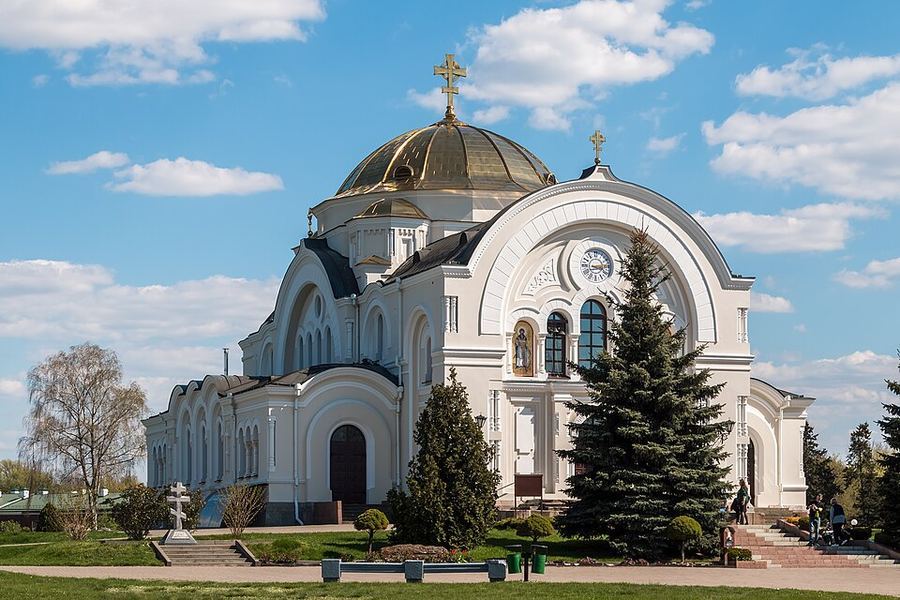
Belarusian culture is rural in its roots, Soviet in much of its public form, and quietly contested in its language. The agricultural year still structures folk practice: Kupalle at midsummer, when young people jump bonfires, float wreaths of flowers on rivers and search for the mythical fern flower; Kalyady at midwinter, with masked carollers leading a figure dressed as a goat from house to house; and Dziady, the autumn commemoration of the dead. Several of these survive in forms recognised by UNESCO, including the Kalyady Tsars rite at Semezhava, the spring Jurauski Karahod procession in the Polesie village of Pahost, and the Budslau church festival. Straw weaving, inscribed in 2022, and the tree beekeeping tradition shared with Poland are living crafts. Hospitality centres on bread and salt and on the sauna, and mushroom and berry gathering in the forests is close to a universal national pastime rather than a rural survival. Language is the country's sharpest cultural question: Belarusian is official but Russian dominates, many people speak the mixed idiom called trasianka, and the use of Belarusian has come to signal political dissent in a way its speakers did not originally choose.

Points Of Pride

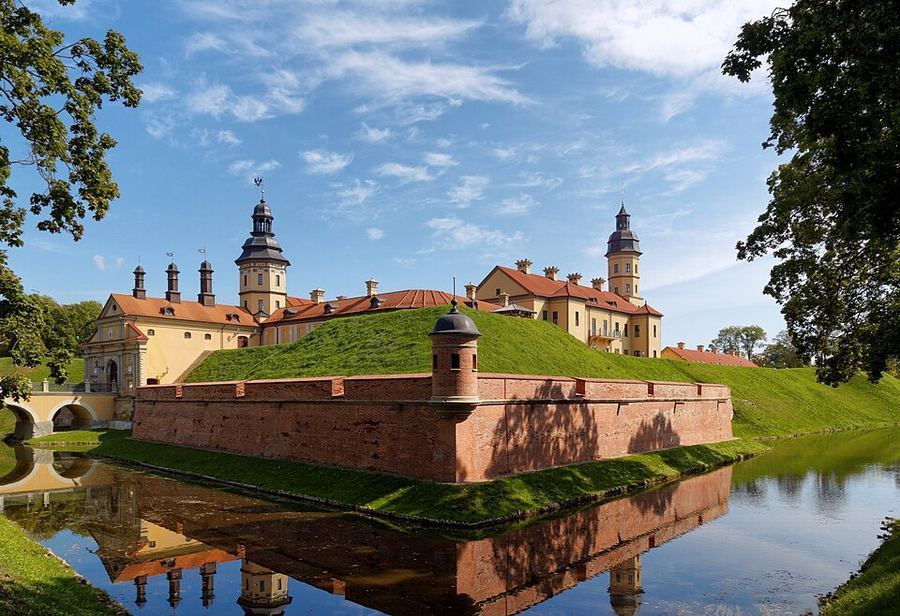
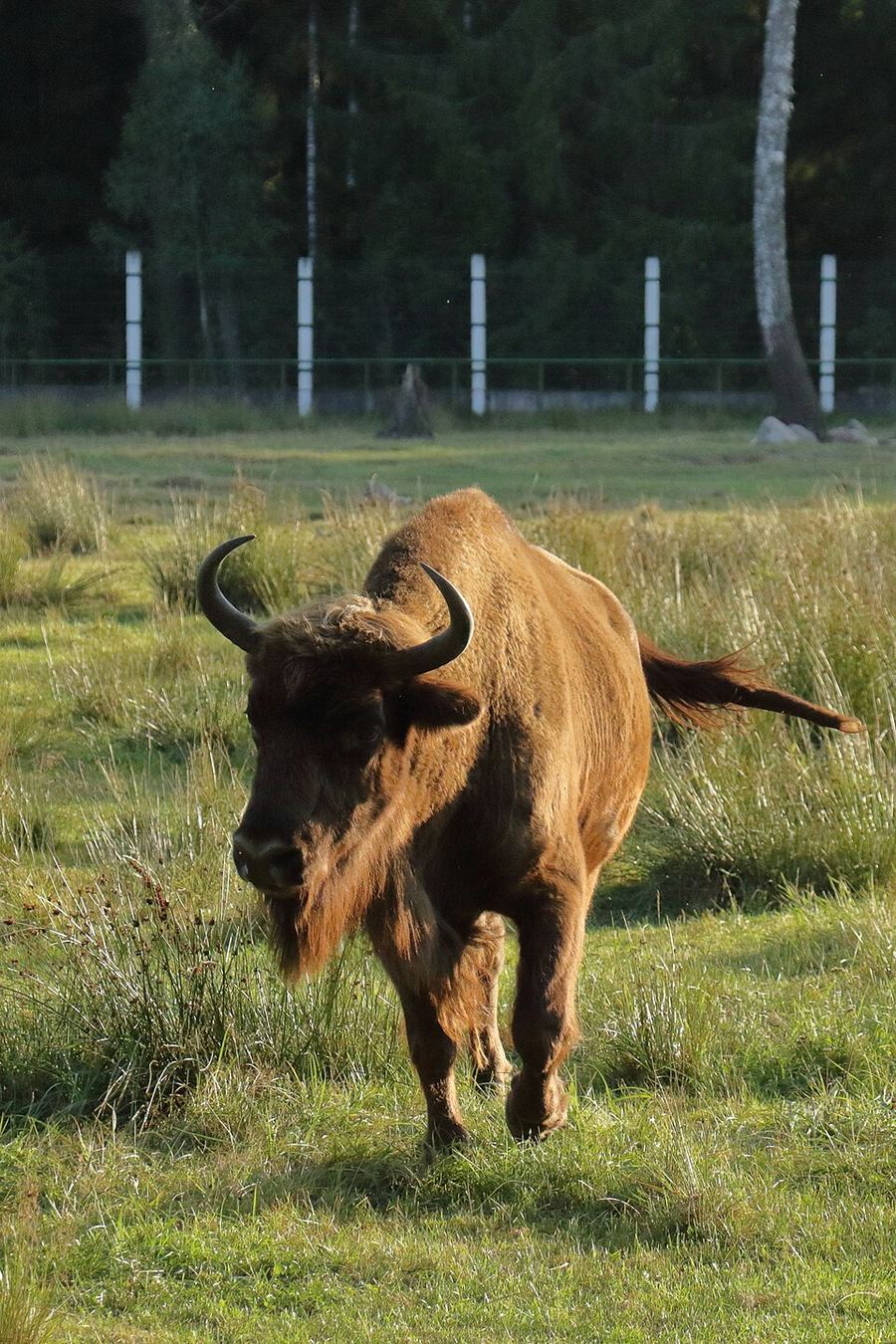
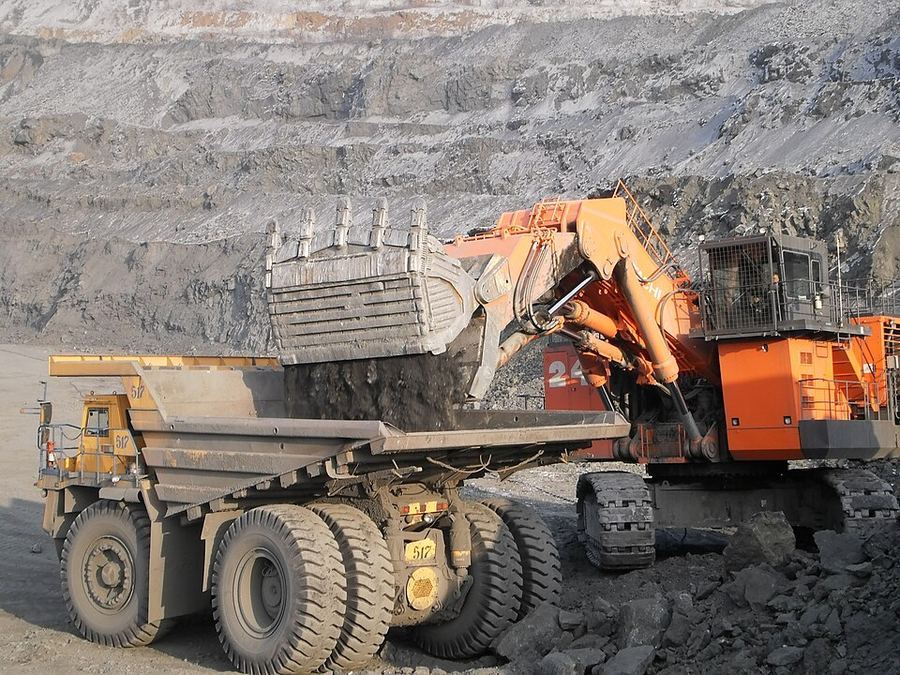
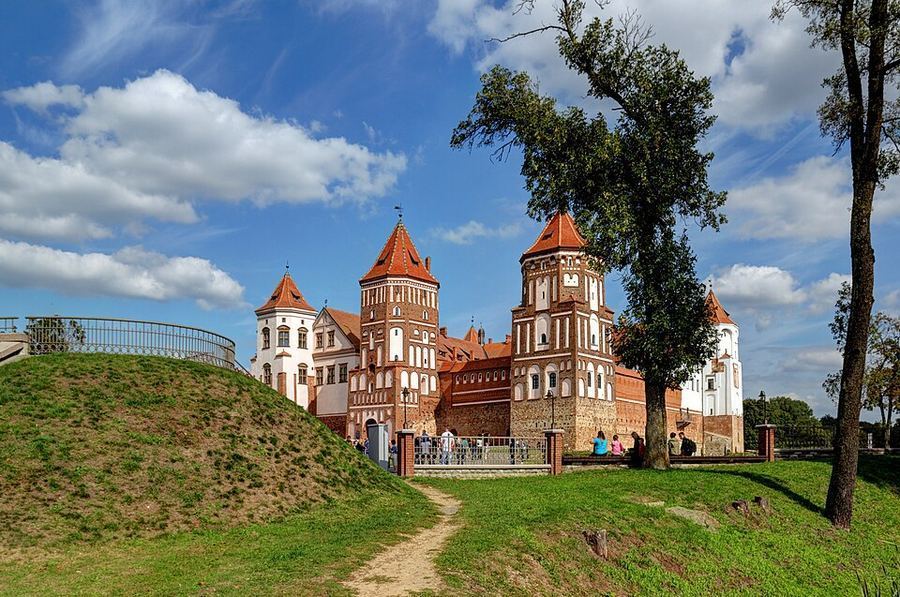
Belovezhskaya Pushcha, the last substantial primeval lowland forest in Europe, is the country's greatest natural treasure and a UNESCO World Heritage Site shared with Poland; it is the home of the European bison, the zubr, which was brought back from the brink of extinction here and is a national emblem. It was also at the Viskuli hunting lodge inside the forest that the leaders of Russia, Ukraine and Belarus signed the accords dissolving the Soviet Union on 8 December 1991. Belarus has three other World Heritage listings: the sixteenth-century Mir Castle, the Radziwill family residence at Nesvizh, and its segment of the Struve Geodetic Arc. Francysk Skaryna's 1517 Prague Psalter, the first printed book in an East Slavic language, is a foundational point of national pride, as are the Statutes of the Grand Duchy. Svetlana Alexievich won the Nobel Prize in Literature in 2015 for her documentary prose, and the human rights defender Ales Bialiatski won the Nobel Peace Prize in 2022. Vitebsk produced Marc Chagall. Industrially, Belarusian tractors from the Minsk works and the enormous BelAZ mining trucks, including the 450-tonne 75710, are sold worldwide.

Cultural Fusion

Belarus lies on the fault between the Polish-Lithuanian and the Russian worlds and carries both. Centuries in the Grand Duchy and the Commonwealth left Catholic parishes and baroque churches across the west, Polish surnames, the gentry culture that produced Mickiewicz and Kosciuszko, both born on what is now Belarusian territory, and a legal tradition written in Ruthenian. Russian rule after the partitions brought Orthodoxy, the Cyrillic-only norm and, eventually, a Soviet identity that most Belarusians still hold in some form. Belarus was one of the great centres of Ashkenazi Jewish life: the Pale of Settlement covered it, Yiddish was an official language of the early Soviet republic alongside Belarusian, Polish and Russian, the yeshivas of Volozhin and Mir shaped Lithuanian rabbinic learning, and the founder of the Chabad movement came from Liozna. That world was almost entirely destroyed in the Holocaust. Lipka Tatars, Muslims settled by the grand dukes from the fourteenth century, still maintain wooden mosques at Iuje and elsewhere, and Old Believer and Roma communities add further layers. The mixed Belarusian-Russian speech called trasianka is the everyday linguistic result of the whole history.

Music & Dance

Belarusian folk music is calendar music, tied to sowing, harvest, midsummer and midwinter, and sung mostly by women in tight two- and three-part harmony with a hard, forward vocal placement. The characteristic instruments are the tsymbaly, a hammered dulcimer that became the emblem of Belarusian folk orchestras, the dudka and zhaleika reed and duct pipes, the duda bagpipe, the violin and the lira hurdy-gurdy once played by wandering singers of religious songs. Ritual song cycles for Kupalle, Kalyady and the spring processions carry the oldest layer of repertoire, and several are protected as intangible heritage. Dance includes the fast circle and couple forms Lyavonikha, Kryzhachok and Bulba, the last named for the potato. In the Soviet period the ensemble Pesniary, formed in Minsk in 1969, arranged Belarusian folk songs with electric instruments and became one of the most popular acts in the entire USSR, followed by Syabry and Verasy. Vitebsk has hosted the Slavianski Bazaar international festival since 1992. Contemporary Belarusian music has produced the politically outspoken rock of Lyapis Trubetskoy and N.R.M. and, unexpectedly, the international cult success of the Minsk post-punk band Molchat Doma.

Cuisine & Misattributed Foods

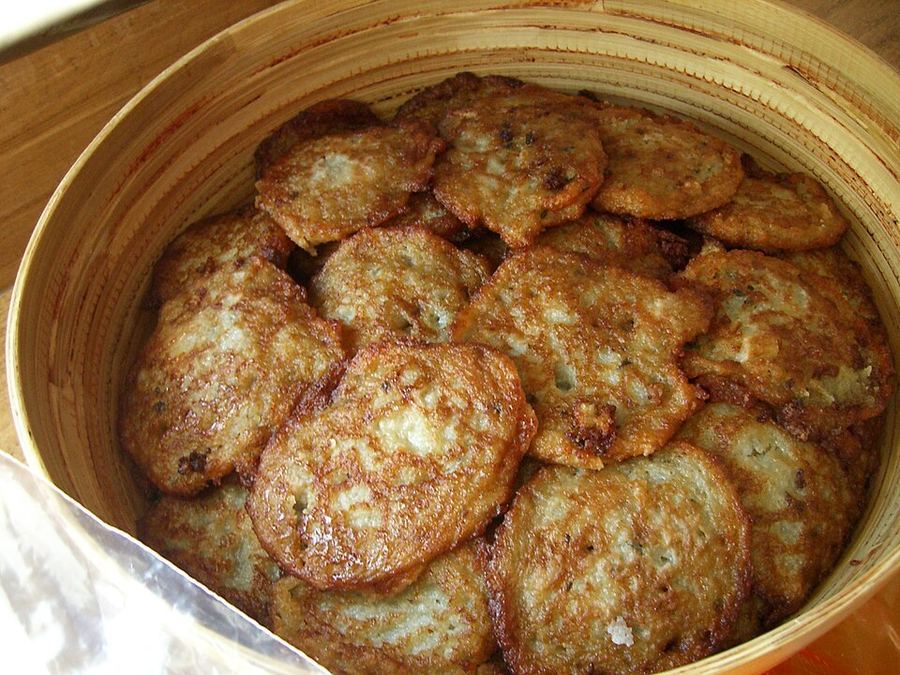
The potato is so central to Belarusian cooking that the country's neighbours nickname Belarusians after it, and the national dish is draniki, coarsely grated potato pancakes fried crisp and eaten with sour cream or with machanka, a rich pork and sausage gravy. Babka is a baked grated potato pudding with pork and onion, and kolduny are potato dumplings stuffed with meat. Beyond the potato the repertoire is northern and forest-based: sorrel and mushroom soups, cold kholodnik made from beetroot and kefir and served bright pink in summer, zhur soup soured with fermented oat flour, buckwheat, rye bread, salted pork fat, blood sausage and cured meats. Wild food is not a garnish but a staple, with families gathering ceps and chanterelles, bilberries and cranberries, and drawing birch sap in early spring to drink fresh or ferment. Dairy is a major industry and a major export, and Belarusian butter, cheese and smetana are ubiquitous. Drinks include kvass, the honey-and-spice liqueur krambambulya revived from Commonwealth-era recipes, herbal balsam, home-distilled samahon and, in the west, mead. Meals are substantial, and pickling and preserving for winter remain widespread household practice.

National Dress

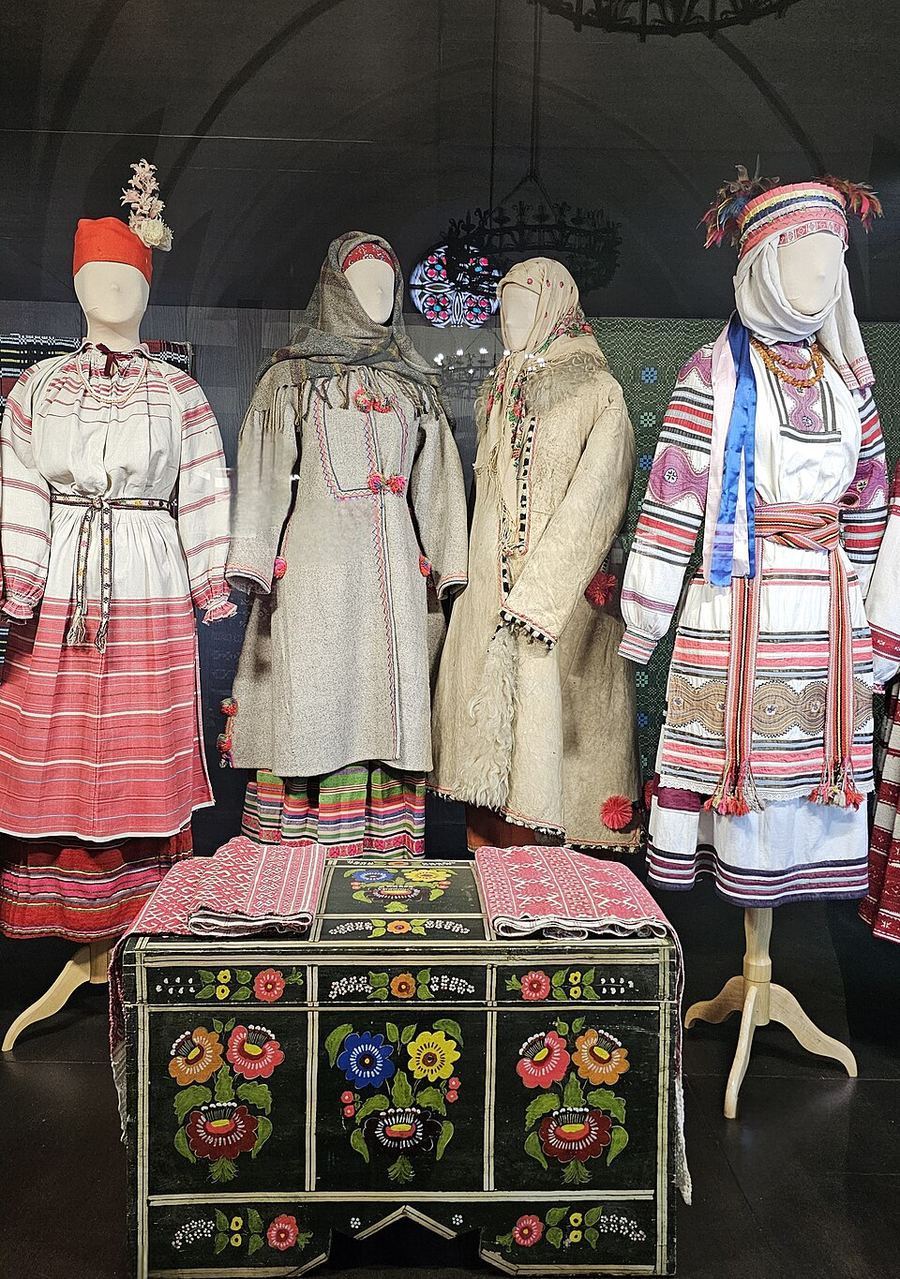
The Belarusian costume is built on white or unbleached linen, decorated with red geometric embroidery in counted-thread patterns, with black used sparingly as an accent; the restraint of the palette, essentially two colours, distinguishes it from the more polychrome dress of neighbouring peoples. A woman's outfit consists of a long embroidered shift, a woven apron, and either the striped woollen andarak skirt or a wrapped ponyova, with a sleeveless vest and, for married women, the namitka, a long linen cloth wound elaborately around the head, or later a simple scarf. Men wore an embroidered linen shirt worn loose over trousers and belted with a woven sash, sometimes the elaborate Slutsk-type sash whose silk originals from the eighteenth-century Radziwill workshops are prized museum objects. Footwear was lapti, shoes plaited from bast, or leather boots for the better off. Regional variants number in the dozens and are catalogued in detail by Belarusian ethnographers. The red ornamental band on the hoist of the state flag is adapted from a traditional woven rushnyk pattern, so the folk ornament is carried in national symbolism, and embroidered shirts have become a common form of cultural and political self-expression.

Sports & Inspiring Athletes

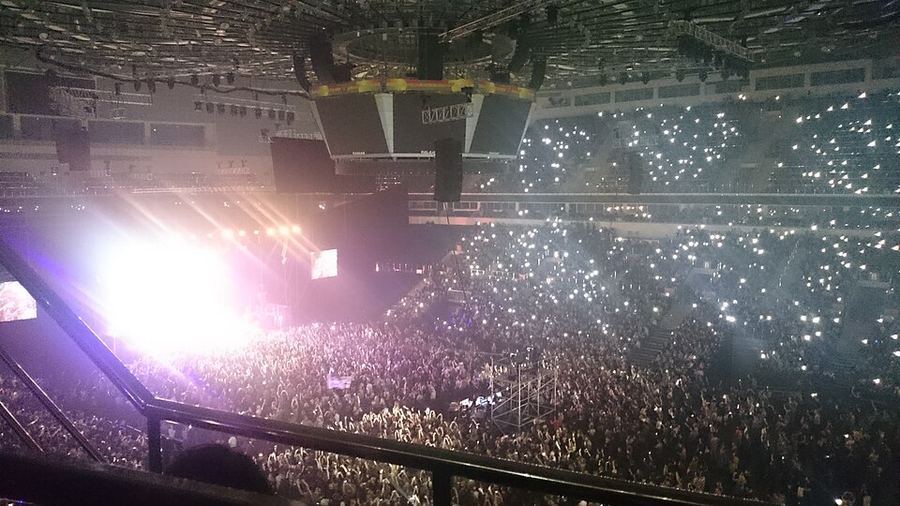
Ice hockey has been promoted as the national sport since the 1990s, backed by heavy state investment in arenas in Minsk and provincial cities, a professional club in the Kontinental Hockey League and the hosting of the world championship in Minsk in 2014. Football is more widely played, with BATE Borisov the outstanding domestic club and a regular in European group stages, though the national team has never qualified for a major tournament; Belarus drew international attention in 2020 as one of the very few countries that kept its football league running through the pandemic. Gymnastics, both artistic and rhythmic, is a long-standing strength with a serious school system behind it, as are wrestling, weightlifting, judo, shooting, canoeing and rowing. Winter sport centres on biathlon and cross-country skiing at the Raubichi complex outside Minsk, which hosts international competition. Tennis has produced two women who reached world number one within a decade of each other, and the country reached the Fed Cup final in 2017. Since 2022 Belarusian athletes have been excluded from many international competitions or admitted only as neutrals, a restriction that has reshaped the country's entire sporting calendar.

Notable Educational Programs

Belarus inherited and largely preserved the Soviet education system: schooling is free and compulsory, adult literacy is effectively universal at close to 100 percent, and enrolment in tertiary education is high by regional standards. Instruction is overwhelmingly in Russian, with Belarusian-language schooling concentrated in rural areas and a small number of urban schools, a balance that has narrowed steadily and is a recurring grievance for cultural activists. Belarusian State University, founded in Minsk in 1921, is the flagship institution, alongside the Belarusian National Technical University and the Belarusian State University of Informatics and Radioelectronics, whose graduates staffed the software industry that grew up around the High Technologies Park established in Minsk in 2005. Specialist mathematics and physics schools and a strong olympiad tradition feed those faculties. The system's structural problem since 2020 is political: universities expelled students and dismissed staff who took part in the post-election protests, several rectors were replaced, and the European Humanities University, expelled from Minsk in 2004, continues to teach Belarusian students in exile in Vilnius. Large numbers of students and skilled graduates have left for Poland, Lithuania and further afield.
UNESCOWorld BankHuman Rights WatchUNICEF

Wars & Conflicts

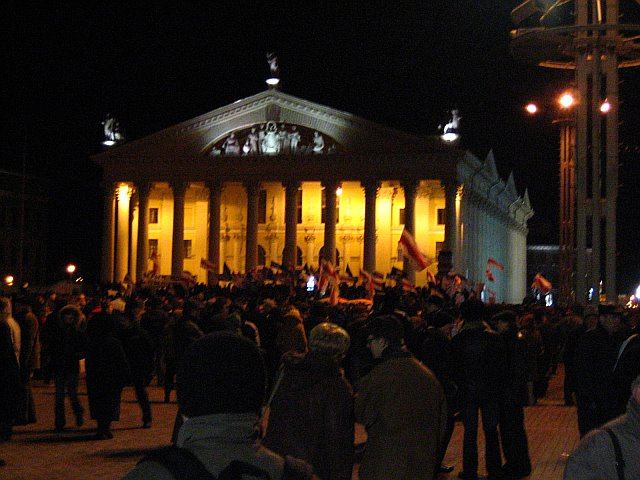
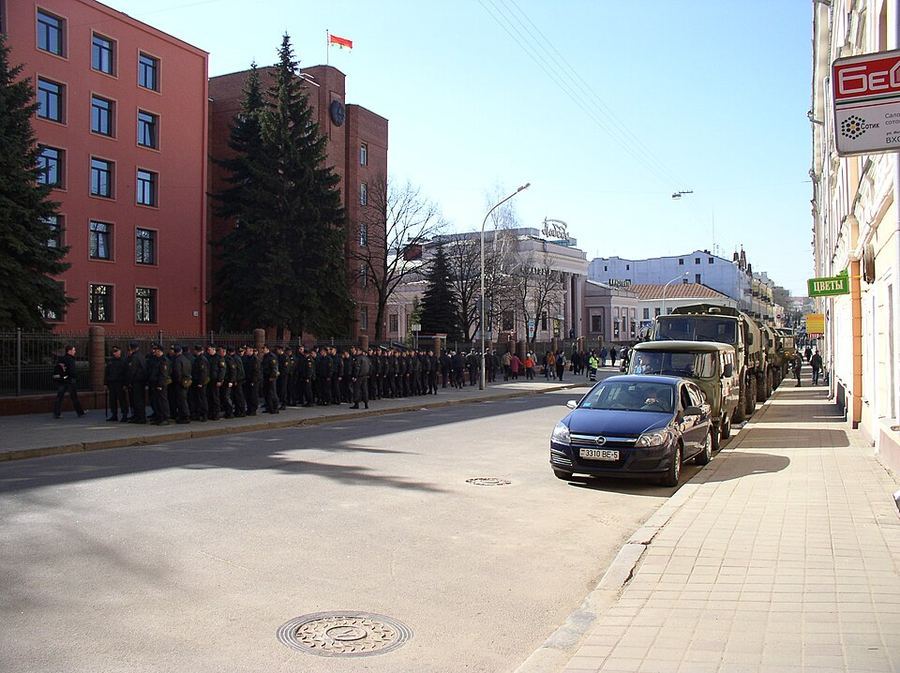
No war has been fought on Belarusian territory since 1945, but the memory of the Second World War is the central fact of national identity: German occupation and anti-partisan operations killed at least a quarter of the population, destroyed some 9,000 villages, of which hundreds were burned with their inhabitants inside, and annihilated the country's large Jewish community at the Minsk ghetto and the Maly Trostenets killing site. The Khatyn memorial, opened in 1969, commemorates the burned villages. Contemporary conflict is political rather than military. The disputed presidential election of August 2020 brought the largest protests in the country's history and a sustained crackdown; human rights groups have documented mass detentions, torture and more than a thousand political prisoners, among them the Nobel laureate Ales Bialiatski, and independent media and civil society organisations were dissolved and designated extremist. In May 2021 a Ryanair flight was forced to land in Minsk so that a journalist aboard could be arrested. From 2021 the government was accused of engineering a migration crisis on the Polish and Lithuanian borders. In February 2022 Belarus allowed Russian forces to invade Ukraine from its territory and has since hosted Russian troops and, by official statement, nuclear weapons.
Human Rights WatchAmnesty InternationalUCDPReutersUN
Current as of 2026-08-06

Land & Border Disputes

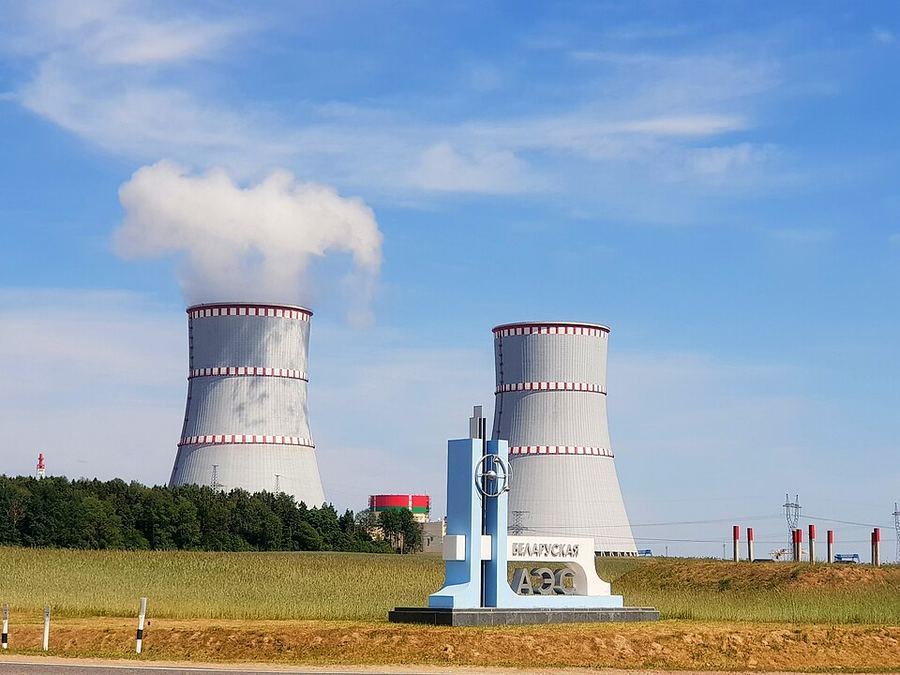
Belarus has no active territorial claims and its borders with all five neighbours are settled by treaty, though demarcation of the boundary with Ukraine was never fully completed and the frontier has effectively been militarised since 2022. The country's serious external disputes are political, economic and environmental. Lithuania has objected continuously to the Astravets nuclear power station, built by Rosatom about 50 kilometres from Vilnius and brought online from 2020, arguing that siting and safety concerns were not adequately addressed, and has refused to buy electricity from it. Poland, Lithuania and Latvia have restricted or closed border crossings in response to the engineered movement of migrants toward their frontiers from 2021 and to the presence of Russian forces and the Wagner group. Sanctions imposed by the European Union, United States, United Kingdom and others after 2020 and 2022 cut Belarusian potash off from Lithuanian ports, forcing exports through Russia, and are contested by Minsk as illegal. With Russia itself, Belarus has had repeated disputes over oil and gas transit and pricing, and the deepening integration of the Union State raises persistent questions inside and outside the country about the limits of Belarusian sovereignty.
Land, Life & Legacy

Land & Climate

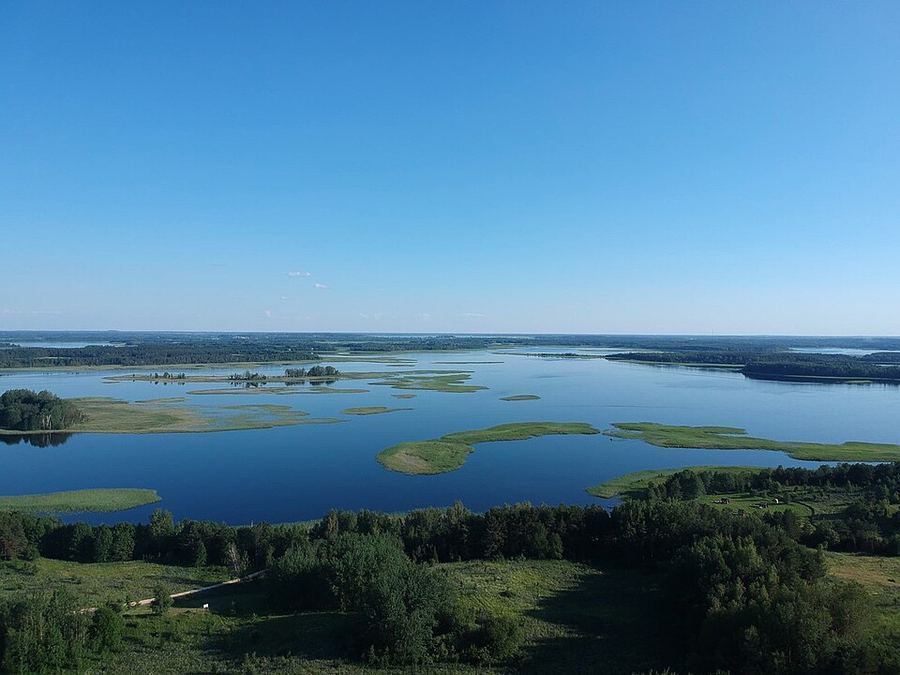
Belarus covers about 207,000 square kilometres of gently rolling lowland shaped by the last glaciation, which left moraine ridges, boulder fields and thousands of lakes. The highest point, Dzyarzhynskaya Hara, reaches only 345 metres. Forest covers roughly two-fifths of the country, and Belovezhskaya Pushcha on the Polish border preserves the largest remnant of the primeval lowland forest that once ran across the north European plain, supporting the continent's biggest population of European bison. The south is occupied by Polesie, an enormous zone of marsh, peat bog and floodplain along the Pripyat, historically the largest wetland in Europe and heavily drained for agriculture in the Soviet period. Rivers drain in two directions: the Dnieper and Pripyat to the Black Sea, the Neman and Western Dvina to the Baltic. The Lake District around Braslau and Lake Naroch in the north holds most of the country's ten thousand lakes. The climate is continental and moderated by Atlantic air, with cold snowy winters, mild to warm summers and rainfall spread through the year. There are no mountains, no coast and few natural hazards, and the country's defining environmental problem is radioactive contamination from Chernobyl.

Entertainment

The dacha is the organising institution of Belarusian leisure: a large share of urban families keep a plot outside the city where weekends from spring to autumn are spent growing potatoes, cucumbers, tomatoes and berries, putting up preserves and using a small wooden bathhouse. Foraging is a mass activity rather than a hobby, with whole families driving out for ceps, chanterelles, bilberries and cranberries in season, and fishing, including ice fishing, is widely practised on the lakes and rivers. The banya, taken hot with birch besoms and followed by cold water, is a fixed ritual. Belarus retains and actively markets an unusually large network of Soviet-era sanatoria offering mineral baths, mud treatment and rest cures, mainly to domestic and Russian visitors. Ice hockey has been promoted heavily from the top since the 1990s and Minsk Arena fills for the domestic and continental leagues; football, cycling and cross-country skiing have solid followings. Cultural outings include the Slavianski Bazaar festival in Vitebsk each July, the restored castles at Mir and Nesvizh, and the Ded Moroz residence in Belovezhskaya Pushcha, a substantial winter attraction. Minsk itself has a lively cafe, theatre and ballet scene.

Art & Museums

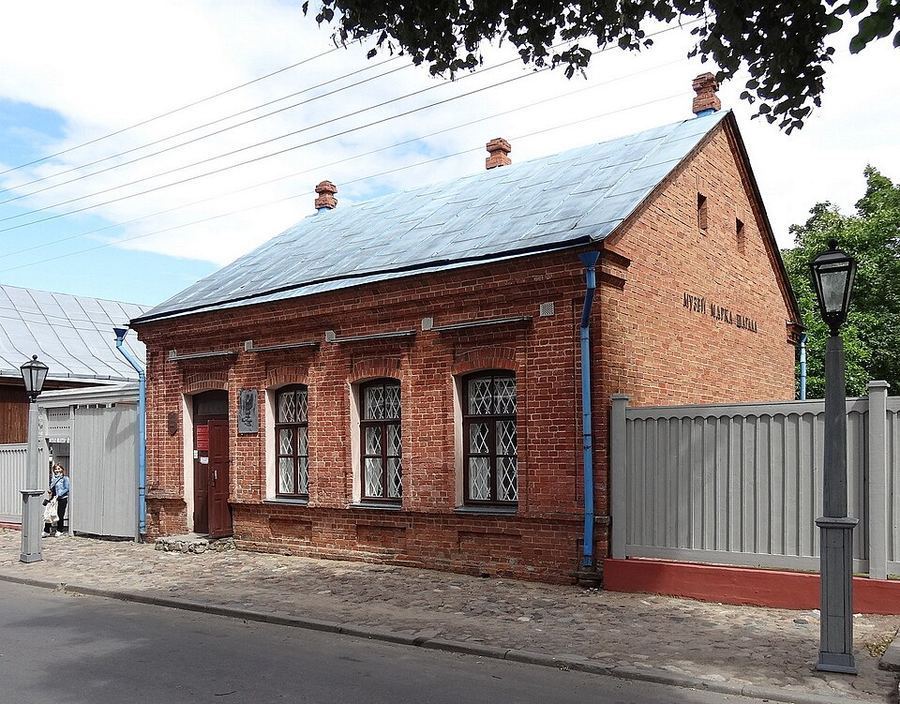
Belarus's greatest contribution to modern art came out of Vitebsk. Marc Chagall was born there in 1887 into a Hasidic family, and the town's rooftops, fiddlers, goats and lovers recur throughout his work; after the revolution he returned as commissar for the arts and founded the Vitebsk People's Art School in 1918, recruiting El Lissitzky and Kazimir Malevich. Malevich then displaced him and turned the school into the base of UNOVIS, where Suprematism was worked out as a programme, making provincial Vitebsk one of the birthplaces of geometric abstraction. Other Belarusian-born Jewish artists, including Chaim Soutine from Smilavichy and the sculptor Ossip Zadkine from Vitebsk, became leading figures of the School of Paris. Older traditions run deep as well: the Slutsk silk sashes woven for the Commonwealth nobility in the eighteenth century are among the finest textiles of eastern Europe, Belarusian icon painting developed a distinct provincial baroque manner, and the woodcarvers of the seventeenth century were recruited to work in Moscow. Folk crafts of straw weaving, ceramics, weaving and wooden architecture are actively maintained, and the National Art Museum in Minsk holds the principal collections.
Encyclopaedia BritannicaMetropolitan Museum of ArtUNESCO

Notable People

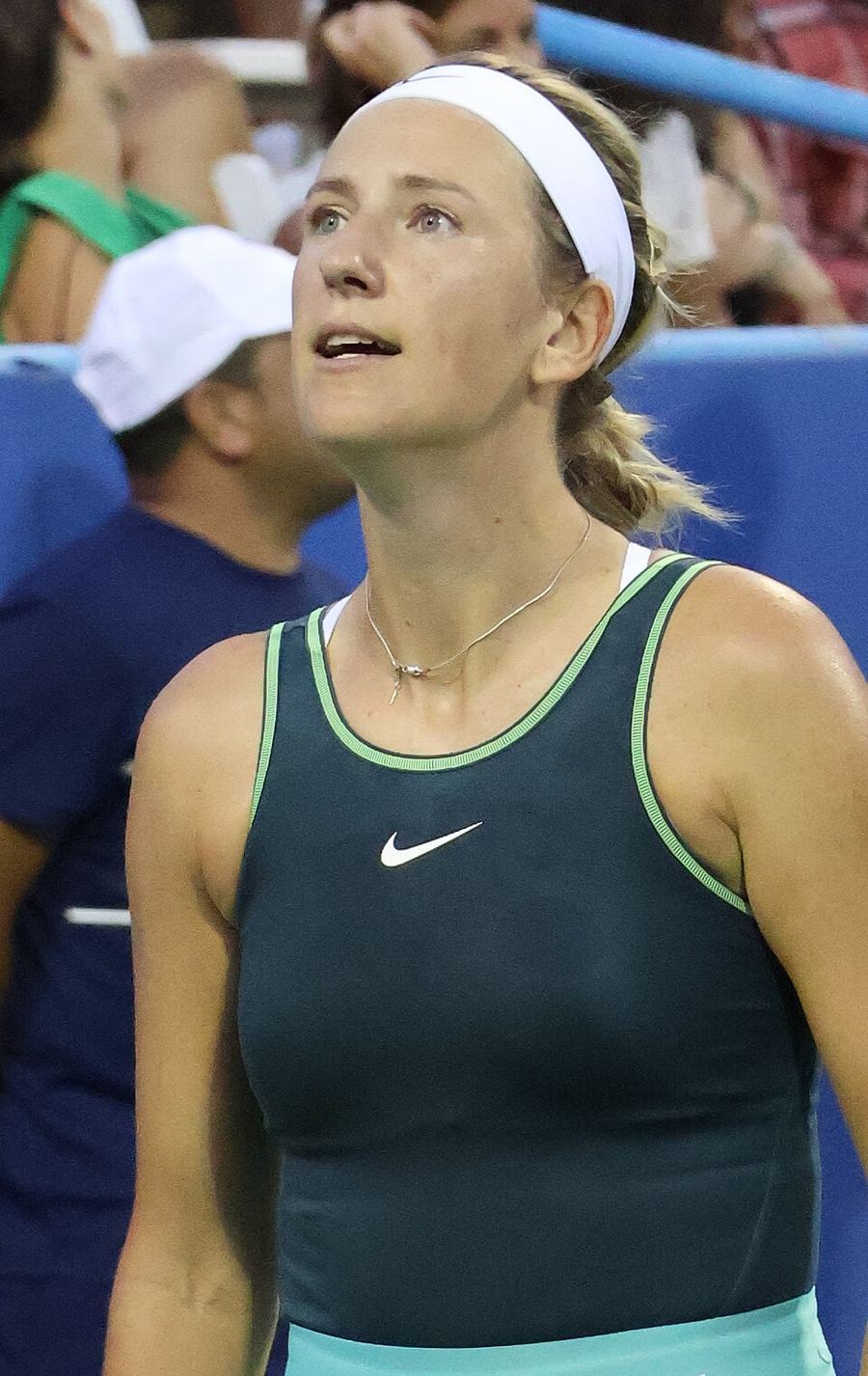
Svetlana Alexievich won the Nobel Prize in Literature in 2015 for oral histories of Soviet and post-Soviet catastrophe, including The Unwomanly Face of War and Chernobyl Prayer, and Ales Bialiatski, founder of the Viasna human rights centre, won the Nobel Peace Prize in 2022 while imprisoned. Three further Nobel laureates were born on Belarusian soil: the physicist Zhores Alferov of Vitebsk, who shared the 2000 prize for semiconductor heterostructures underlying modern lasers and fibre optics; the economist Simon Kuznets of Pinsk, who received the 1971 prize and did much to create modern national income accounting; and Menachem Begin of Brest, awarded the Peace Prize in 1978. Yanka Kupala and Yakub Kolas are the national poets, and Vasil Bykau wrote the country's most respected war fiction. Marc Chagall is its most famous artist. In sport, the gymnast Vitaly Scherbo of Minsk won six gold medals at the 1992 Barcelona Games, the most by any gymnast at a single Olympics; the biathlete Darya Domracheva won three golds at Sochi in 2014; and the tennis players Victoria Azarenka and Aryna Sabalenka have both been world number one. Sviatlana Tsikhanouskaya has led the exiled opposition since 2020.

Inventions & Breakthroughs

Belarus's contributions run from early printing to heavy engineering. Francysk Skaryna, a physician and scholar from Polotsk, printed the Psalter at Prague in 1517 in a Ruthenian recension, the first book printed in an East Slavic language, and went on to establish a press in Vilnius; his editions introduced prefaces, marginal glosses and illustrations aimed at ordinary readers rather than clergy. The Statutes of the Grand Duchy of Lithuania, codified in Ruthenian in 1529, 1566 and 1588, were among the most advanced legal codes in Europe of their time and remained in force in parts of the region into the nineteenth century. In the Soviet and post-Soviet period Belarus specialised in very large machinery: the Minsk Tractor Works became one of the world's largest producers of wheeled tractors, and BelAZ in Zhodzina builds the biggest mining haul trucks made anywhere, its 75710 model rated to carry 450 tonnes. Zhores Alferov's work on semiconductor heterostructures, honoured with the Nobel Prize in 2000, underlies the laser diodes in every optical fibre network and disc reader. More recently Minsk-founded software has travelled globally, including the game World of Tanks and the messaging application Viber.

Science & Technology

The National Academy of Sciences, founded in 1929, remains the organising institution for research, with particular strength in physics, optics, materials and laser science, a legacy that connects directly to Zhores Alferov's Nobel-winning work on semiconductor heterostructures. Belarus operates the Astravets nuclear power station, whose two Russian-built reactors came online in 2020 and 2023 and substantially changed the country's electricity mix, and it retains a large chemical and fertiliser research base tied to the Soligorsk potash deposits, among the largest in the world. The Chernobyl accident of 1986 deposited the majority of its fallout on Belarus and contaminated roughly a fifth of the country's land, and the resulting long-term programmes on radioecology, thyroid cancer and the abandoned Polesie State Radioecological Reserve constitute a distinctive national research field. Space activity resumed with the launch of a domestic remote sensing satellite in 2012, and Marina Vasilevskaya became the first Belarusian woman in space when she flew to the International Space Station in March 2024. The High Technologies Park in Minsk, created in 2005 with tax privileges, produced internationally used software including World of Tanks and Viber, though many firms and engineers relocated abroad after 2020.
NatureScienceIEAWHOReuters
On The World Stage

Champions & Defining Moments

Belarusian athletes competed for the Soviet Union until 1991 and for the Unified Team in 1992, when the Minsk gymnast Vitaly Scherbo won six gold medals in Barcelona, still the most won by any gymnast at a single Olympic Games. Competing independently since 1994, Belarus has taken most of its medals in gymnastics, wrestling, weightlifting, athletics, rowing, shooting and biathlon. Its outstanding winter athlete is Darya Domracheva, who won three individual biathlon golds at Sochi in 2014 and added a relay gold in Pyeongchang in 2018; the freestyle skiers Alexei Grishin and Anton Kushnir won aerials golds in 2010 and 2014. In tennis, Victoria Azarenka won the Australian Open in 2012 and 2013 and held the world number one ranking, Max Mirnyi was the world's leading doubles player and won multiple grand slam titles, and Aryna Sabalenka has won multiple grand slam singles titles and reached number one. The Belarusian Olympic record has also been marked by a comparatively high number of doping disqualifications, and since Russia's invasion of Ukraine in 2022 Belarusian competitors have been barred from many events or required to compete without national symbols.

OlympediaIOCWorld AthleticsReuters
Economy, Trade & Government

Currency & GDP

Belarusian Ruble — BYN (Br)

GDP (PPP): $265.22 billion (2024 est.)

Per capita: $29,000 (2024 est.)

Exports

$49.386 billion (2024 est.)

fertilizers, rapeseed oil, wood, poultry, beef (2023)

Partners: China 34%, Kazakhstan 10%, Uzbekistan 7%, Poland 6%, Brazil 5% (2023)

Imports

$50.679 billion (2024 est.)

cars, broadcasting equipment, fabric, plastic products, video displays (2023)

Partners: China 33%, Poland 16%, Germany 11%, Lithuania 10%, Turkey 9% (2023)

Government

Type: presidential republic in name, although in fact a dictatorship

Independence: 25 August 1991 (from the Soviet Union)

Terrain → Where People Live

How mountains, coasts, and rivers shape settlement (LandScan).

Coming — data

Migration & Ethnic Settlement

Where groups settled and how people move (GeoEPR + UNHCR).

Coming — data

Universities

Notable institutions, mappable as points.

Coming — data
Economy & government facts: CIA World Factbook (public domain), via OpenFactBook / factbook.json.
Every fact and narrative claim will carry a visible source citation. Data-driven sections light up automatically wherever HERA has coverage.