HERA · Human Entity Reference Atlas by Masego Inc

← Bermuda 🌐 3D View
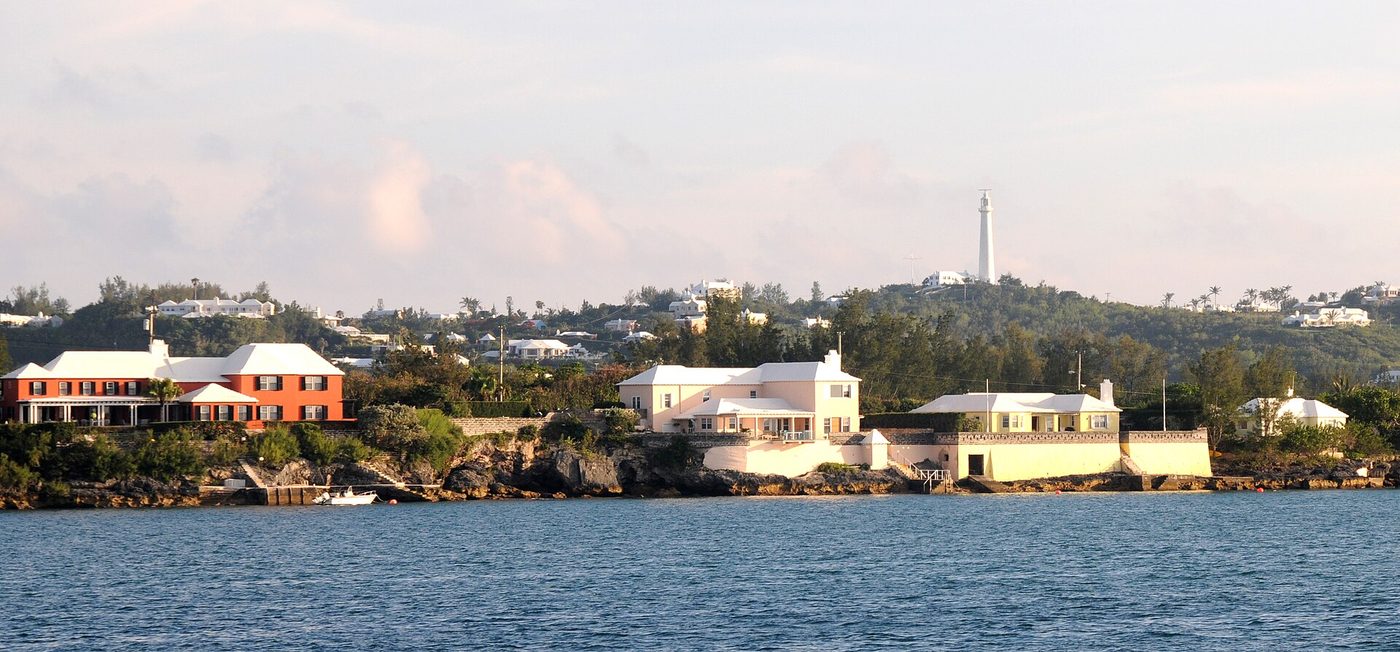
Gibbs Hill Lighthouse Bermuda, Bermuda
Bermuda BMU
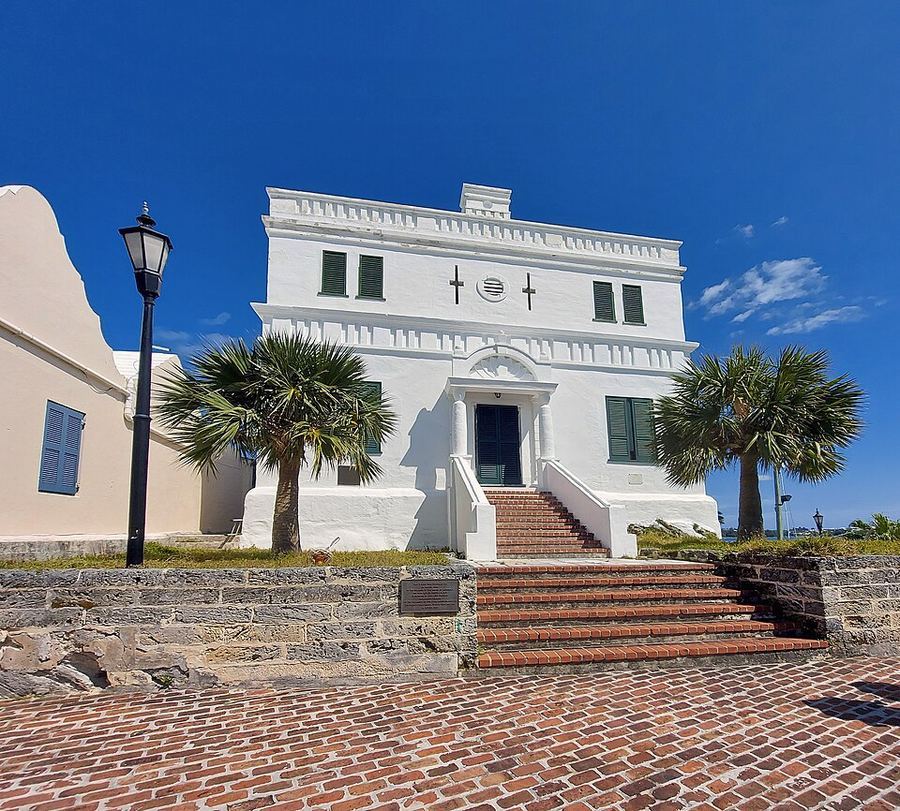
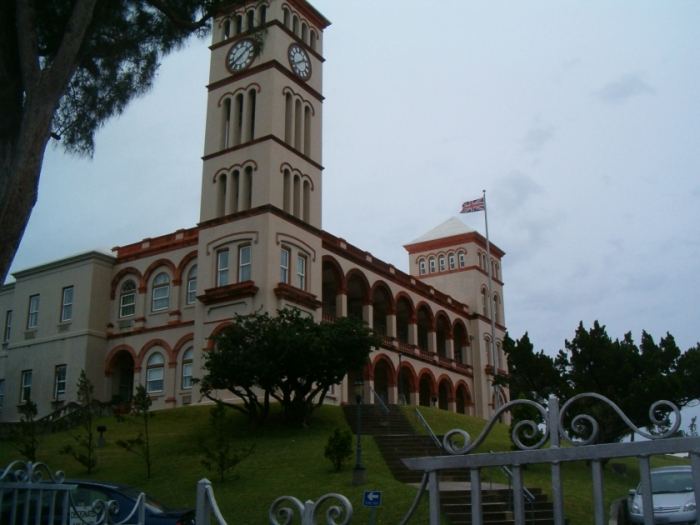
Gibbs Hill Lighthouse Bermuda — Photo: David Broad / CC BY 3.0 via Wikimedia Commons
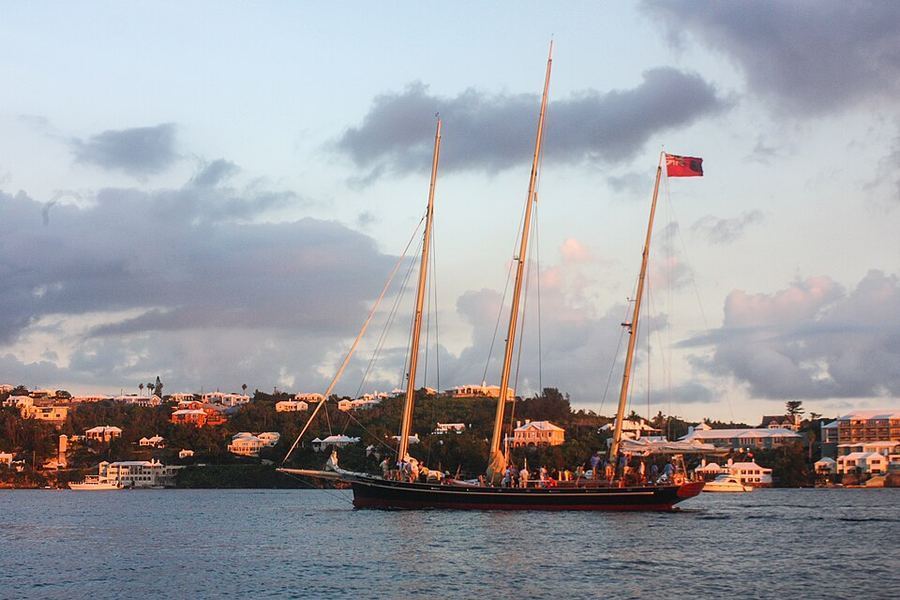
Did You Know The Bermuda rig — the tall triangular mainsail developed here for sailing to windward among reefs — became the standard configuration for modern sailing yachts worldwide. — Encyclopaedia Britannica

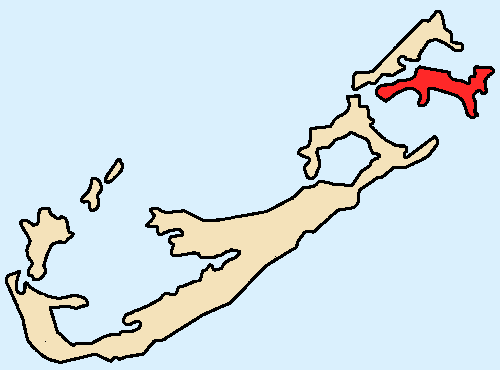
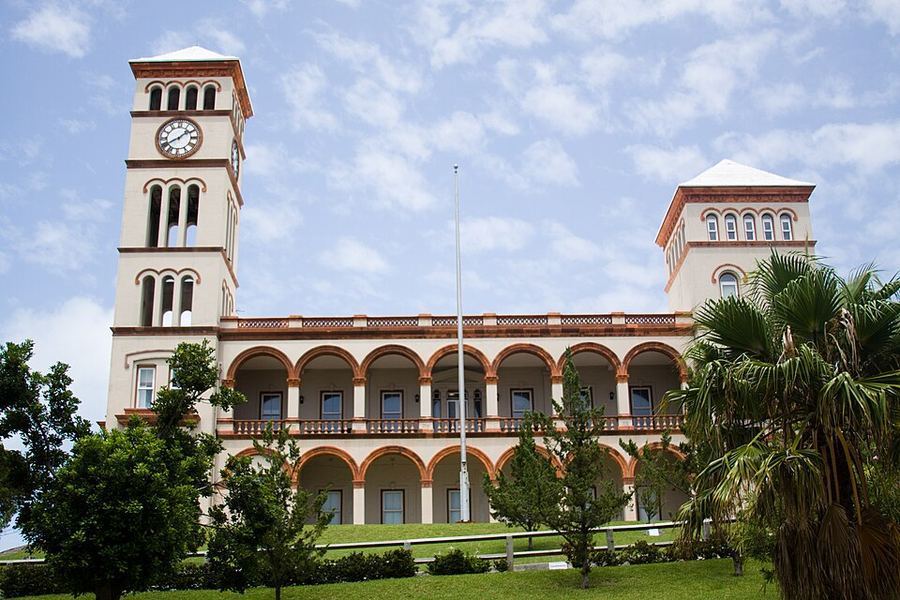
Bermuda is a British Overseas Territory of roughly 54 square kilometres in the western North Atlantic, about 1,050 kilometres east of Cape Hatteras on the North Carolina coast — far from the Caribbean, with which it is routinely and wrongly grouped. Some 181 islands and islets sit on the rim of an extinct volcanic seamount capped with limestone, joined by bridges and causeways into a fish-hook shape barely a kilometre wide in places. The capital is Hamilton; St George's, founded in 1612, is the oldest continuously inhabited English town in the New World. About 72,800 people live here, with a median age near 44 — one of the oldest populations anywhere — and a majority of African descent alongside White, mixed, Portuguese-Bermudian and Asian communities. Bermuda governs itself internally under a 1968 constitution, with a governor appointed by the Crown retaining responsibility for defence, external affairs, policing and the courts; a 1995 referendum rejected independence decisively. Its House of Assembly, first convened in 1620, is among the oldest legislatures in the world. Insurance and reinsurance, not tourism, now anchor an economy with GDP per capita around $105,300, among the highest recorded anywhere, alongside a very high cost of living.

CIA World FactbookEncyclopaedia BritannicaWorld Bank
Population
72,800
Capital
Hamilton
Currency
$ BMD
Time zones
Largest city
Human Geography Themes
Loading national figures…
The Country & Its People

History

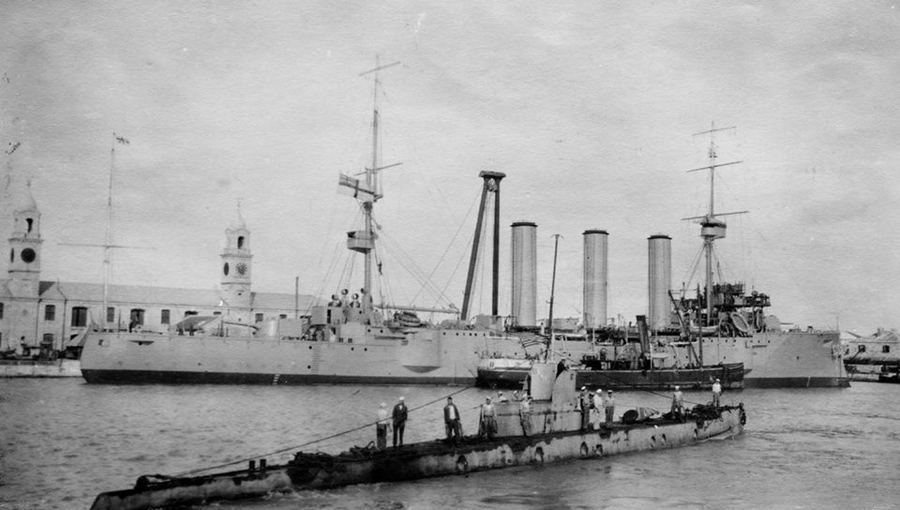
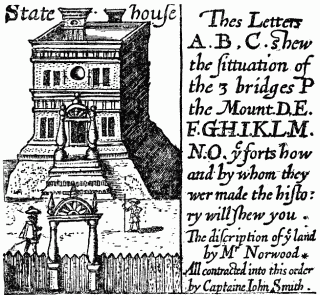
The Spanish navigator Juan de Bermúdez sighted the islands early in the sixteenth century and left his name, but reef-ringed and uninhabited they stayed empty until 1609, when the Sea Venture, flagship of a Virginia Company relief fleet under Sir George Somers, was driven onto the eastern reefs in a hurricane. The castaways survived, built two new vessels and reached Jamestown; accounts of the wreck circulated in London and are widely held to have shaped Shakespeare's The Tempest. Settlement followed in 1612 with the arrival of the Plough and the founding of St George's, and the House of Assembly first met in 1620. Bermuda's early economy turned from tobacco to salt raking in the Turks Islands, shipbuilding in Bermuda cedar, privateering and maritime trade, worked by enslaved Africans and by Indigenous people transported from New England. Emancipation came in 1834. The Royal Naval Dockyard on Ireland Island, built from 1809 with convict labour, made Bermuda the 'Gibraltar of the West'; United States bases arrived under the 1941 destroyers-for-bases agreement. Segregation was broken by the 1959 Theatre Boycott, universal adult suffrage followed, and Britain and the US closed their bases in 1995.
Culture

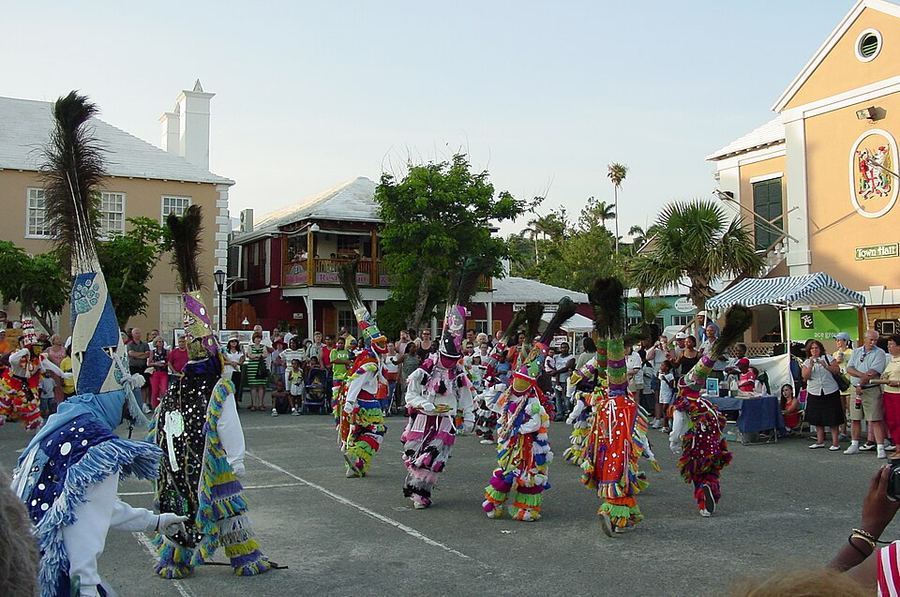
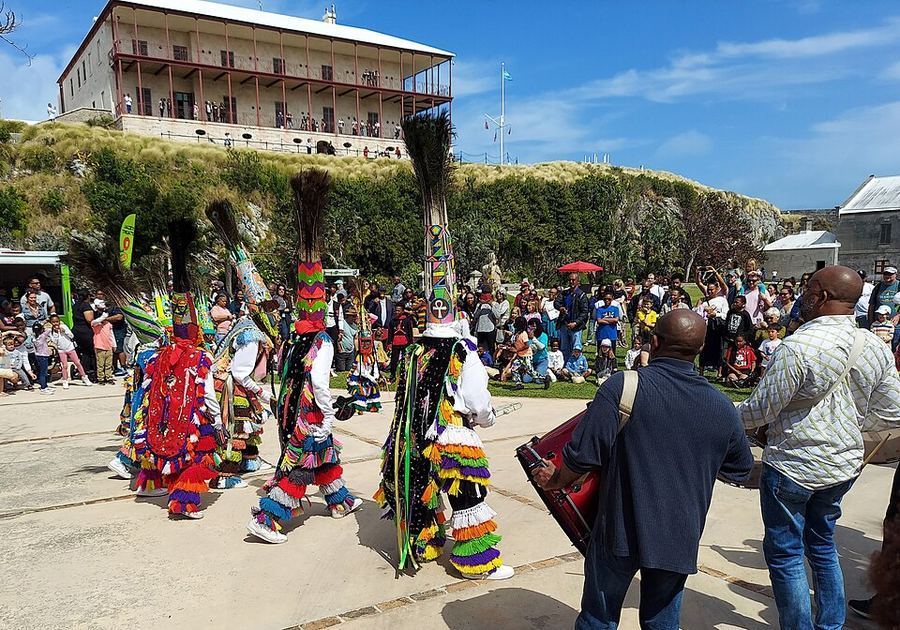
Bermudian culture is Atlantic rather than Caribbean — British in its institutions, deeply African in its expressive traditions, and shaped by four centuries of seafaring. The Gombeys are its defining public art form: masked troupes in tall peacock-feather headdresses, mirrored capes and ribbons who dance to snare and bass drums and a whistle, performing traditionally at Christmas, Boxing Day and New Year's Day and now at civic events year-round. The tradition fuses West African, Indigenous American, Caribbean and British mumming elements and was long suppressed by colonial ordinance, which is part of why its survival matters locally. Bermuda Day on 24 May opens the summer, with a parade, majorette troupes and the first sanctioned swim of the year. Cup Match, a two-day public holiday at the end of July, functions as the national festival. Church attendance across a dense array of Anglican, African Methodist Episcopal, Adventist and Pentecostal congregations remains high. Neighbourhood identity is strong and often expressed through the St George's–Somerset rivalry that divides the island into blue-and-blue and red-and-navy. Portuguese-Bermudian families, descended from Azorean and Madeiran migration beginning in 1849, form a distinct and long-established community.

Points Of Pride

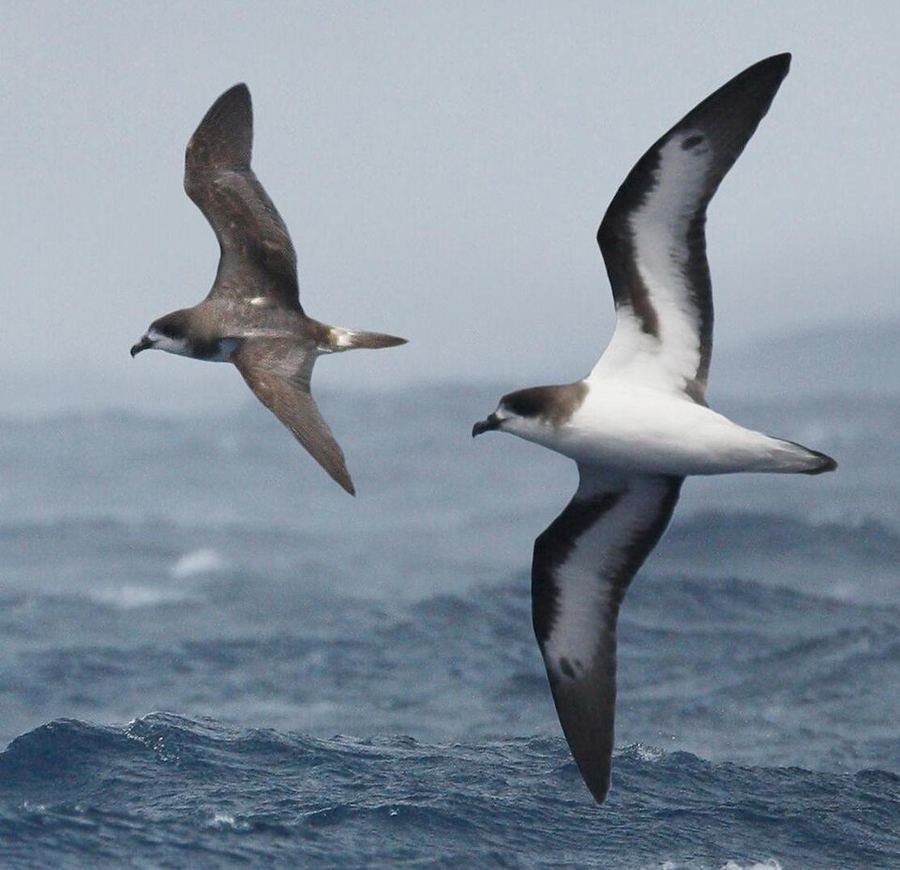
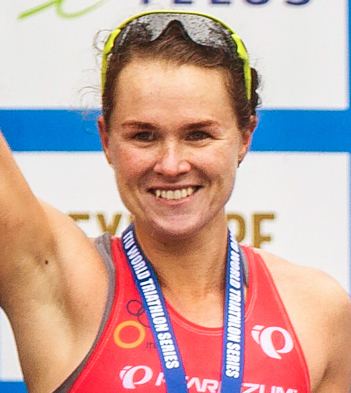
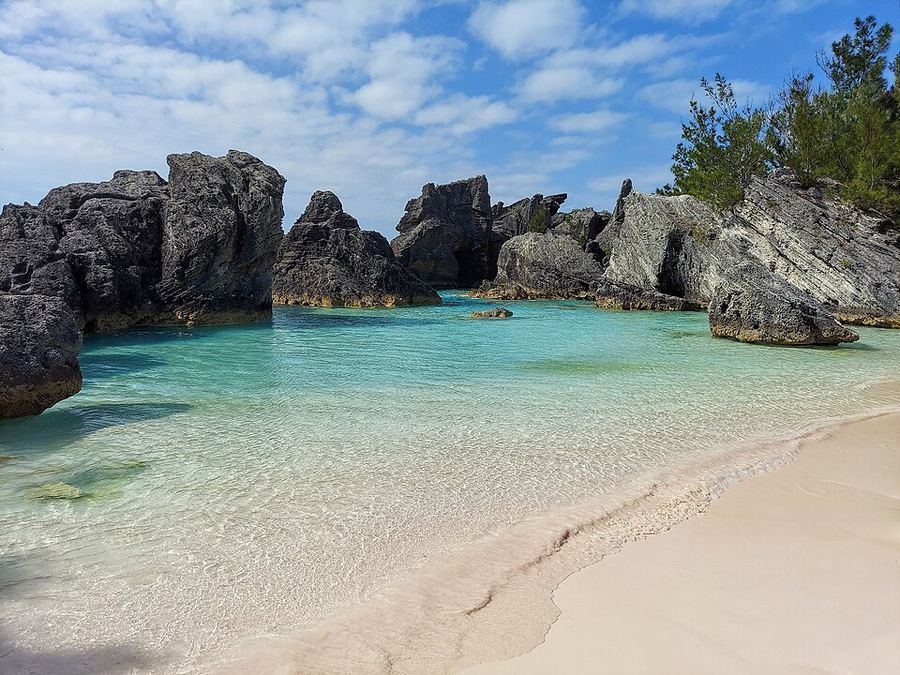
The Historic Town of St George and Related Fortifications was inscribed on the UNESCO World Heritage List in 2000 as the earliest surviving English town in the New World, together with a chain of coastal fortifications built from the seventeenth to the twentieth century that documents the evolution of English artillery defence. Bermuda's House of Assembly, sitting since 1620, is one of the oldest continuously functioning legislatures on earth. The cahow, or Bermuda petrel, was believed extinct for more than three centuries until nesting pairs were confirmed on offshore islets in 1951; the recovery programme led for decades by David Wingate, and the associated restoration of Nonsuch Island as a 'living museum' of pre-colonial Bermuda, is one of conservation's best-known comebacks. The islands hold the northernmost coral reefs in the world, sustained by the Gulf Stream. Bermuda's pink beaches at Horseshoe Bay and Warwick Long Bay owe their colour to the crushed shells of a red foraminiferan. And in 2021 Flora Duffy's triathlon gold made Bermuda the smallest jurisdiction ever to win an Olympic title.

Cultural Fusion

Bermuda's population was assembled by the Atlantic. English settlers arrived from 1612; enslaved Africans were brought from the 1610s onward and formed the majority of the labouring population well before emancipation; Indigenous people from New England, including Pequot captives sold after the seventeenth-century wars in the colonies, were transported here and their descendants are strongly associated with St David's Island, where families have in recent decades formally renewed ties with the Mashantucket Pequot Nation. Portuguese-speaking labourers began arriving from Madeira and the Azores in 1849 and their descendants are now a large minority whose surnames, bakeries, festas and Holy Ghost celebrations are woven into the island; Portuguese is still spoken. West Indian workers came for Dockyard and construction work, adding Caribbean inflections to food, music and speech. The result is a distinct Bermudian English with its own vowel shifts and vocabulary, a cuisine that puts Azorean and West Indian dishes on the same table, and religious practice ranging from Anglican formality inherited from the establishment to African Methodist Episcopal congregations founded in the nineteenth century.

Music & Dance

The Gombey is Bermuda's signature performance tradition — a captain leading a troupe of dancers whose costumes carry mirrors, tassels, ribbons and a towering peacock-feather crown, driven by snare, bass and kettle drums and a shrill whistle, with steps that dramatise biblical and folk narratives. Troupes are family lineages, costumes are made by hand each year, and the tradition passes largely through apprenticeship. Beyond it, Bermuda produced a strong mid-century calypso scene centred on hotel entertainment: the Talbot Brothers toured North America and recorded through the 1940s and 1950s, and the blind jazz pianist Lance Hayward, discovered in Bermuda, later recorded in New York. Contemporary Bermudian musicians include the singer-songwriter Heather Nova, whose alternative rock albums found large European audiences from the mid-1990s, and the reggae and dancehall artist Collie Buddz, raised in Bermuda, whose 2007 single Come Around broke internationally. Church music remains a major channel, with gospel choirs and AME congregations central to musical training. The Bermuda Festival of the Performing Arts each winter and the Bermuda Regiment's band, which plays the Beat Retreat ceremony, cover the formal end of the repertoire.

Cuisine & Misattributed Foods

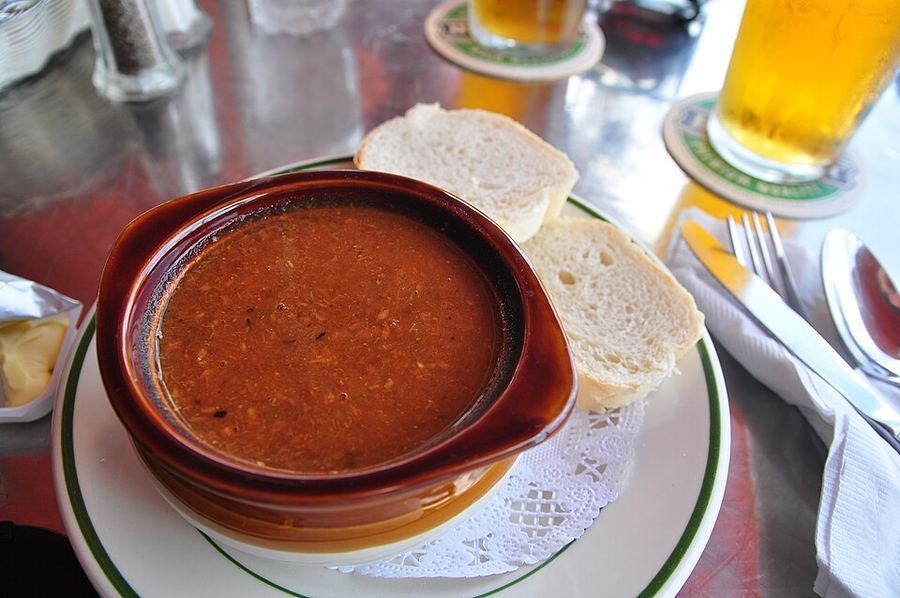
Bermuda fish chowder is the national dish: a dark, long-simmered stock of rockfish or snapper with tomato, finished at the table with black rum and sherry peppers, a hot condiment of sherry steeped with peppers that has been bottled on the island by Outerbridge's since the 1960s. The Bermuda fish sandwich is an institution — battered or fried fish, tartare sauce, coleslaw and hot sauce piled on thick-cut raisin bread. Sunday codfish and potatoes, a legacy of salt-cod trading, is served with hard-boiled egg, banana, avocado and either a tomato-onion sauce or an Azorean-influenced butter sauce. Cassava pie, a baked pudding of grated cassava with pork or chicken, appears only at Christmas and is made from family recipes. Pawpaw casserole, Hoppin' John on New Year's Day and the sweet, mild Bermuda onion — once a major export to New York, giving the islands the nickname 'the Onion Patch' — round out the local repertoire. The drinks are the rum swizzle and the Dark 'n Stormy, made with Gosling's Black Seal rum and ginger beer, a combination Gosling's has protected as a registered trademark.

National Dress

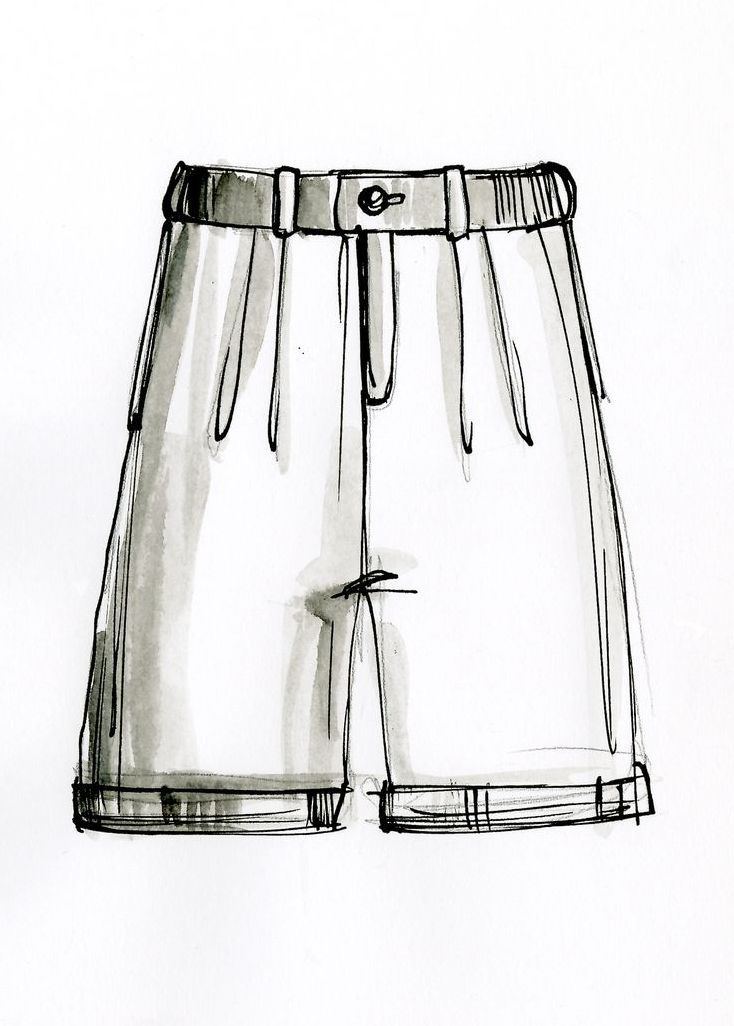
Bermuda shorts are the rare national garment that is also genuine daily business dress. Tailored, cut to about an inch above the knee, worn in pastel or bold solid colours with a blazer, dress shirt, tie and knee-length socks, they are entirely acceptable in banks, law firms, government offices and the House of Assembly, and are worn by the Premier and by executives in Hamilton's insurance towers. The style descends from tropical uniform shorts issued to British forces stationed on the island and was adopted by civilians in the early twentieth century, with local ordinances and etiquette conventions once policing the permitted length. Trimingham's and other Front Street outfitters made the look canonical. Alongside it, the Gombey costume is Bermuda's ceremonial dress: a headdress of peacock feathers over a mirrored, ribboned and tasselled tunic and cape, with a wire-mesh or painted mask and a small bow and arrow or tomahawk carried by certain characters, each element handmade and passed within troupes. Regimental full dress, worn by the Royal Bermuda Regiment at Beat Retreat and state occasions, is the third strand of formal islandwear.

Sports & Inspiring Athletes

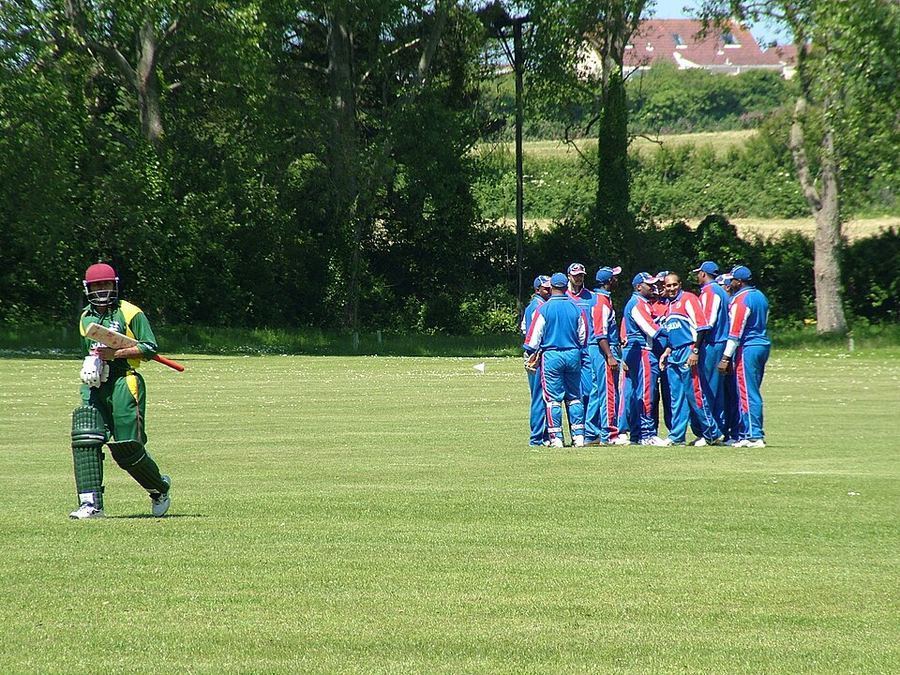
Cricket is the national sport in the fullest sense. Cup Match, first played in 1902, pits Somerset Cricket Club against St George's Cricket Club over two days at the end of July, and the fixture carries two public holidays — Emancipation Day and Mary Prince Day, formerly Somers Day — with the whole island effectively closed, camps pitched along the shore, and the classic Bermudian gambling game Crown and Anchor legal for the duration. The holder retains the cup on a draw, which shapes the tactics. Football is the other mass sport, run by the Bermuda Football Association with a domestic premier division and clubs including North Village, Devonshire Cougars and PHC Zebras; the national team competes in CONCACAF and reached the Gold Cup in 2019. Sailing is embedded from childhood, and the Bermuda Fitted Dinghy — a wildly overcanvassed 14-foot class raced only here since the nineteenth century — is the island's own competition. Rugby, netball, field hockey, athletics, boxing, cycling and golf all have strong club structures, and the Royal Bermuda Regiment sustains its own sporting programme.

Notable Educational Programs

Education is free and compulsory in the public system between roughly ages five and sixteen, delivered in English through primary, middle and senior schools, with the Cambridge curriculum used in public secondary schooling. Bermuda also has an unusually strong private and endowed sector for its size: Warwick Academy traces its foundation to 1662 and is among the oldest schools in the Western Hemisphere, Saltus Grammar School dates from 1888, and the Berkeley Institute, opened in 1897, was founded expressly to provide secondary education to Black Bermudians in a segregated society and remains a landmark institution. Bermuda College, established in 1974 in Paget, is the only tertiary institution, offering associate degrees, technical and professional certification and transfer pathways rather than full undergraduate degrees. As a result almost every Bermudian seeking a bachelor's degree studies overseas — predominantly in the United Kingdom, Canada and the United States — supported by a dense system of government, corporate and trust scholarships, many funded by the insurance sector. Attracting graduates home, and closing persistent attainment gaps between public and private schooling, are the central and long-running policy debates.

Wars & Conflicts

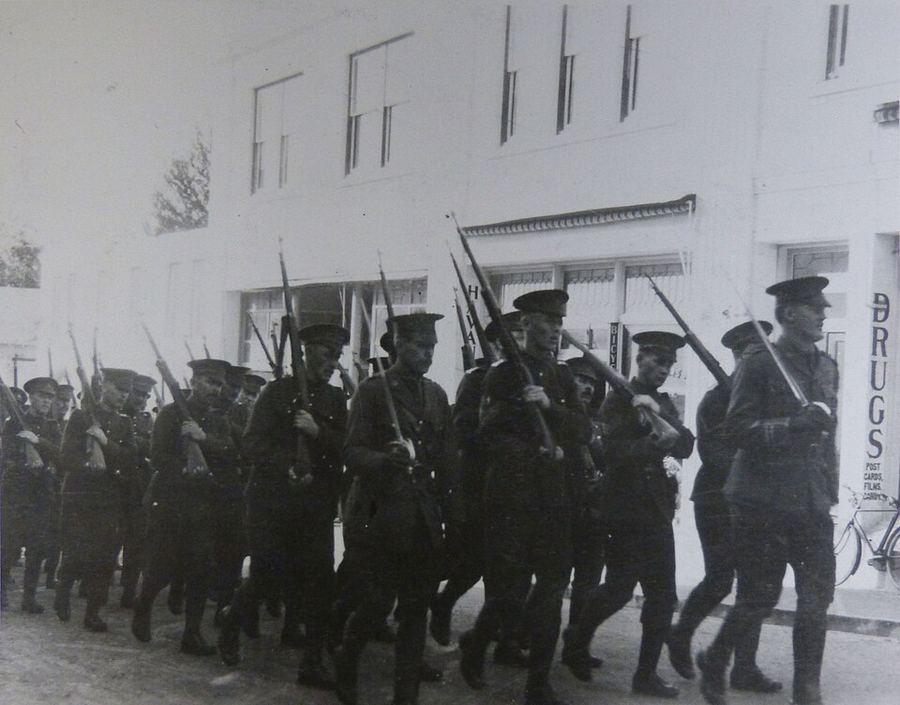
Bermuda has no armed conflict, no insurgency and no external military threat; its defence rests with the United Kingdom, and the Royal Bermuda Regiment is a part-time infantry unit used chiefly for hurricane response and ceremonial duty. Historically the islands were a fortified naval station rather than a battlefield, supplying Confederate blockade runners in the 1860s and hosting Royal Navy and, from 1941, United States forces; both closed their bases in 1995. The territory's serious internal conflicts have been about race and constitutional status. Segregation in cinemas, hotels and restaurants ended after the Theatre Boycott of 1959, and the 1968 disturbances and the assassinations of the police commissioner in 1972 and Governor Sir Richard Sharples in 1973 led to the trials of Erskine Burrows and Larry Tacklyn, whose hangings in 1977 triggered severe rioting and were the last executions carried out in Bermuda. Independence remains a live and unresolved argument rather than a violent one, decisively rejected in the 1995 referendum. Gang-related shootings rose sharply from around 2009 and remain the principal domestic security concern.
Current as of 2026-08-06

Land & Border Disputes

Bermuda has no territorial or maritime disputes; its exclusive economic zone is uncontested open Atlantic. Its external friction is entirely fiscal and regulatory. As a jurisdiction with no personal income tax and, until recently, no corporate income tax, Bermuda has been repeatedly assessed by the European Union and the OECD on tax transparency and economic substance; it appeared briefly on the EU list of non-cooperative jurisdictions in 2019 over substance rules and was removed the same year after legislating changes. Bermuda responded to the OECD's global minimum tax framework by enacting a corporate income tax of fifteen percent applying to large multinational groups for fiscal years beginning in 2025, ending its status as a zero-corporate-tax domicile for those firms while seeking to keep the revenue onshore. Its insurance regime holds Solvency II equivalence from the European Union and qualified jurisdiction status in the United States, both of which Bermuda defends vigorously as the foundation of its reinsurance market. Constitutionally, the periodic argument with London over the reserved powers of the governor and over independence is political rather than legal.
Land, Life & Legacy

Land & Climate

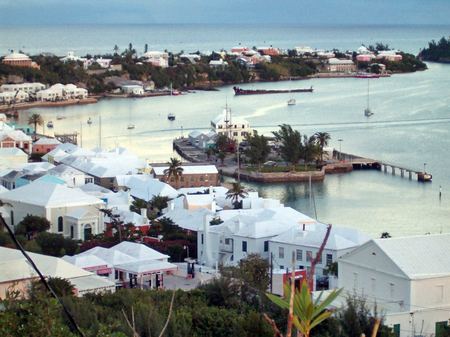
Bermuda is the exposed limestone cap of an extinct mid-ocean volcano, its rock built from wind-blown carbonate dunes lithified over successive glacial cycles. The archipelago's highest point, Town Hill, reaches only about 76 metres, and the total land area is roughly 54 square kilometres. There are no rivers, streams or natural freshwater lakes, which is why Bermudian architecture is functional as well as picturesque: the stepped white limestone roofs are water-catchment surfaces, and legislation requires new buildings to harvest rainfall into a tank. The Gulf Stream keeps the climate humid subtropical and frost-free, with warm summers, mild winters and no true dry season; it also sustains the world's northernmost coral reef system, which encircles the islands and has wrecked hundreds of ships. Hurricanes are the principal hazard, and Bermuda's building code — heavy limestone construction, shuttered openings — reflects direct experience of Fabian in 2003, Gonzalo in 2014, Nicole in 2016 and Humberto in 2019. The endemic Bermuda cedar, once the basis of shipbuilding, was devastated by introduced scale insects in the 1940s, and replanting from resistant stock continues.

Entertainment

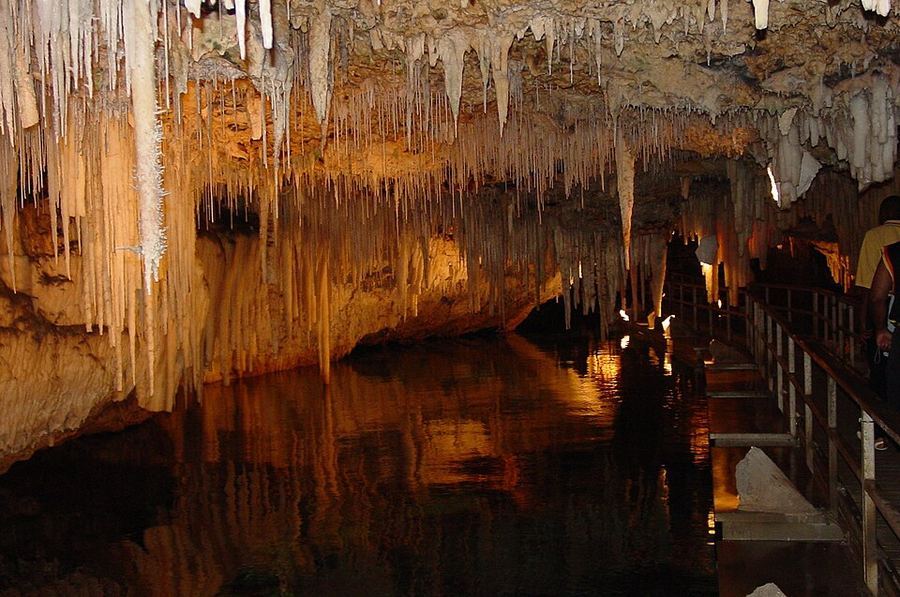
Bermuda's leisure life is oriented to water. Horseshoe Bay, Elbow Beach, Warwick Long Bay and Church Bay draw residents and visitors alike, and the surrounding reefs have claimed enough vessels over four centuries to make the islands one of the Atlantic's densest wreck-diving grounds, with the Cristóbal Colón, the Mary Celestia and the Hermes among the best-known dives. Sailing is close to a civic religion, with Hamilton Harbour and the Great Sound busy through the season. Golf is played at an unusually high course density for the land area, at Port Royal, Mid Ocean, Tucker's Point and Belmont Hills. The Railway Trail, running along the roadbed of the Bermuda Railway that operated from 1931 to 1948, gives eighteen miles of walking and cycling. Crystal and Fantasy Caves at Bailey's Bay, the Botanical Gardens, the Royal Naval Dockyard and Harbour Nights in Hamilton fill the visitor calendar. Because non-residents cannot rent cars and households are limited to one vehicle, mopeds, ferries and buses do much of the moving. Codfish breakfasts, Cup Match camping and beach barbecues mark the domestic summer.

Art & Museums

Bermuda's light and water attracted major visiting painters long before it had institutions of its own. Winslow Homer produced a celebrated body of watercolours during Bermuda visits at the turn of the twentieth century; Georgia O'Keeffe painted here in the 1930s; Charles Demuth, Marsden Hartley, Ogden Pleissner and the Cubist Albert Gleizes, who spent part of the First World War period on the island, all worked in Bermuda. The Masterworks Museum of Bermuda Art, in the Botanical Gardens at Paget, was founded specifically to repatriate and display works painted in Bermuda by such artists, and its collection is the fullest record of that visiting tradition. The Bermuda National Gallery, opened in 1992 in Hamilton City Hall, holds European and Bermudian collections and mounts the Bermuda Biennial. Among resident artists, the watercolourist Alfred Birdsey established the most recognisable local idiom in the mid-twentieth century with rapid, luminous harbour scenes, and Charles Lloyd Tucker and Sharon Wilson extended a distinctly Bermudian figurative tradition. The Bermuda Society of Arts, cedar carving and traditional Bermuda kite-making complete a small but active scene.
Encyclopaedia BritannicaMetropolitan Museum of ArtSmithsonian

Notable People

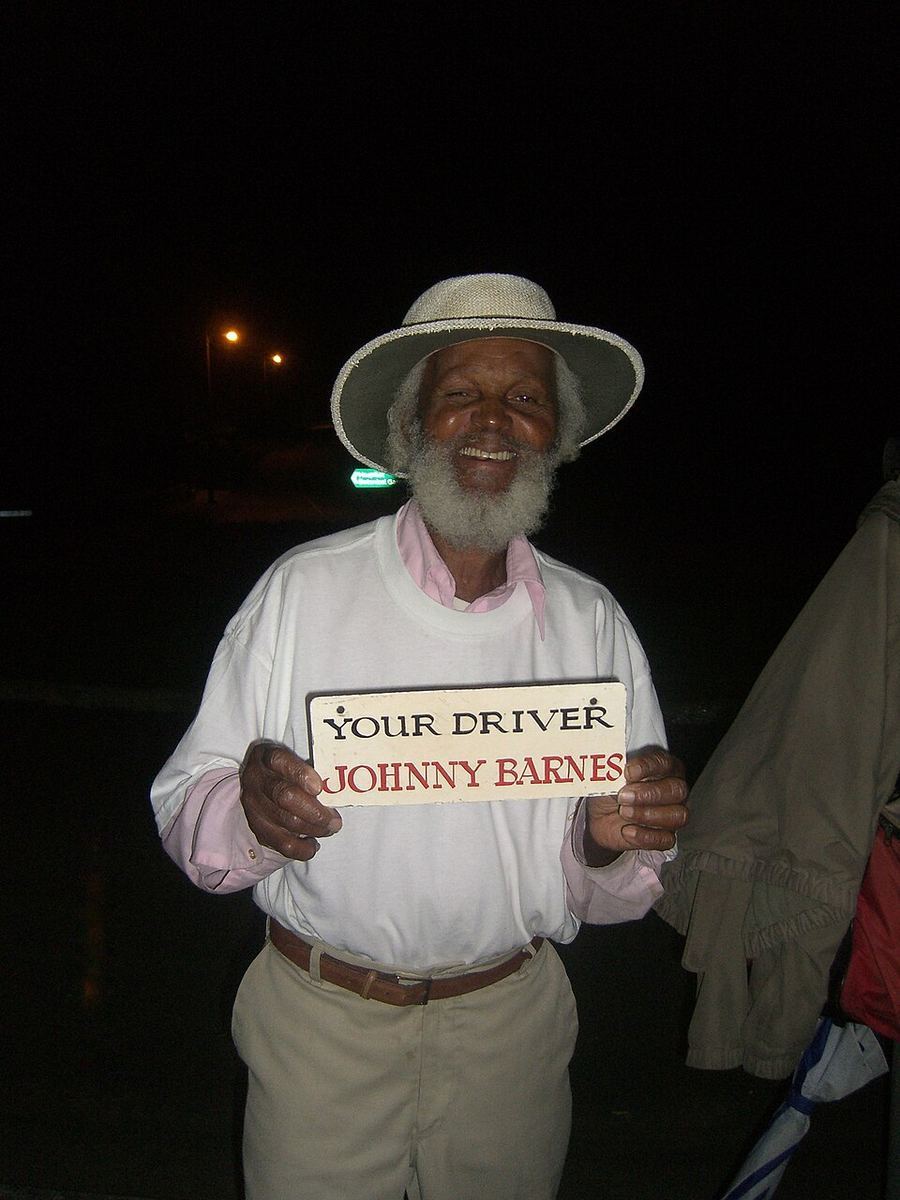
Mary Prince, born enslaved in Bermuda around 1788, dictated The History of Mary Prince in London in 1831 — the first narrative of a Black woman's life published in Britain, and a document that shaped the final phase of the abolition campaign. Sir George Somers, whose 1609 shipwreck founded the colony, is commemorated across the eastern parishes. Dame Lois Browne-Evans became Bermuda's first female barrister, the first woman to lead an opposition in the Commonwealth, and later Attorney General. Sir Edward Richards was the first Black head of government. The footballer Clyde Best broke ground as one of the first Black players in English top-flight football with West Ham United from 1969; Shaun Goater became a Manchester City favourite; Nahki Wells has played extensively in the English Football League. Flora Duffy won Olympic triathlon gold in 2021 and bronze in 2024 and has been world champion. Earl Cameron, born in Pembroke, became one of the first Black actors to hold leading roles in British cinema. The singer Heather Nova and the actor Michael Douglas, whose mother was Bermudian, both keep island ties, and Johnny Barnes, who greeted commuters at Crow Lane for decades, is memorialised in bronze.

Inventions & Breakthroughs

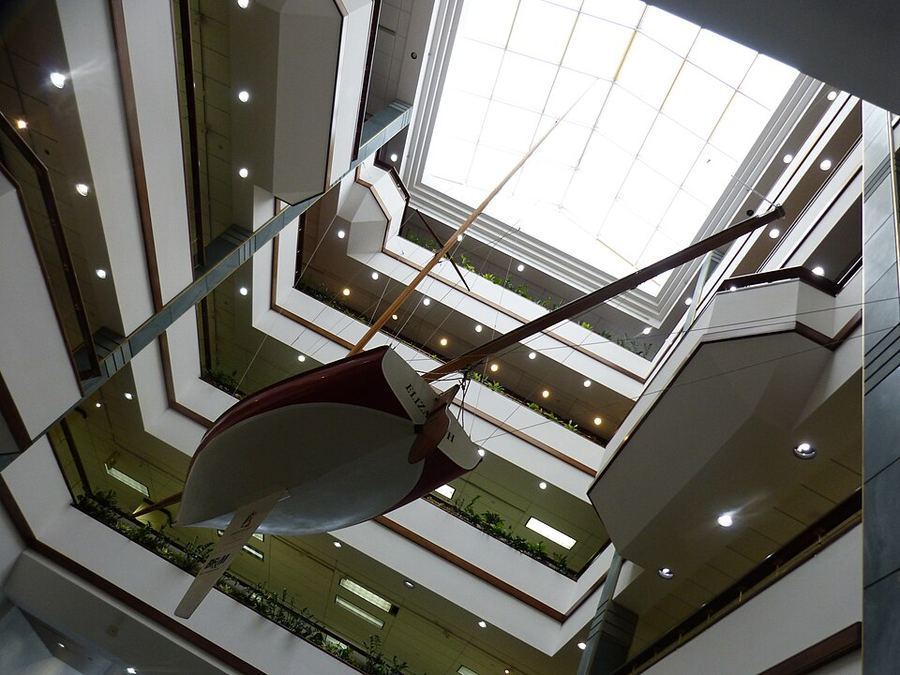
The Bermuda rig is the islands' largest contribution to the world, and an unusually consequential one: the tall triangular mainsail set on a single mast, developed on Bermuda sloops from the seventeenth century for working to windward among reefs, displaced gaff rigs almost entirely and is now the standard configuration on modern sailing yachts worldwide. The fast, weatherly Bermuda sloop itself was prized for trade, privateering and naval dispatch work. Bermuda shorts are a second genuine export of form. The stepped limestone roof, cut from the island's own rock and whitewashed to purify runoff into a household tank, is an indigenous water-harvesting technology developed out of necessity on an island with no surface fresh water, and is still mandated in the building code. In science, the Bermuda Principles agreed at an international genomics strategy meeting held on the island in 1996 committed publicly funded sequencing centres to release human genome sequence data within twenty-four hours — a norm that shaped open data practice well beyond genomics. In finance, Bermuda pioneered the modern catastrophe reinsurance and insurance-linked securities markets.

Science & Technology

For an island of seventy thousand people Bermuda carries remarkable scientific weight, because its position in the open Sargasso Sea makes it the best available platform for studying the North Atlantic. The Bermuda Institute of Ocean Sciences, founded in 1903 as the Bermuda Biological Station for Research and affiliated with Arizona State University since 2021, operates Hydrostation S, sampled since 1954, and the Bermuda Atlantic Time-series Study, running since 1988 — together among the longest continuous open-ocean records in existence and foundational to measuring ocean carbon uptake and acidification. The station's reef and coral work underpins much of what is known about high-latitude coral systems. Bermuda's genomics footprint comes from the 1996 meeting on the island that produced the Bermuda Principles on rapid public release of sequence data. Terrestrially, the cahow recovery and the Nonsuch Island restoration are textbook island-ecology projects, now supplemented by translocation and artificial-burrow monitoring. The applied technology agenda is narrower: undersea fibre landings that make Bermuda a transatlantic cable node, reverse-osmosis desalination supplementing rainwater catchment, and the data and modelling capability concentrated in the catastrophe-reinsurance industry.
NatureScienceIPCCEncyclopaedia Britannica
On The World Stage

Champions & Defining Moments

Bermuda has competed at the Olympic Games since 1936 and holds an outsized record for its size. Clarence Hill's heavyweight boxing bronze at Montreal in 1976 made Bermuda, then with fewer than sixty thousand people, the least populous entity ever to win an Olympic medal — a distinction it still holds. Flora Duffy won the women's triathlon at the Tokyo Games held in 2021, delivering Bermuda's first Olympic gold and the smallest-ever gold-medal jurisdiction, and added bronze at Paris in 2024; she has also taken world triathlon and cross-triathlon titles. Bermuda qualified for the ICC Cricket World Cup in 2007, where the spinner Dwayne Leverock's diving slip catch against India became one of the tournament's enduring images. The islands hosted the 35th America's Cup on the Great Sound in 2017, won by Emirates Team New Zealand, and the biennial Newport Bermuda Race has run since 1906 as one of ocean racing's classic offshore courses. The PGA Tour's Butterfield Bermuda Championship has been played at Port Royal since 2019, and Bermuda has hosted World Triathlon Championship Series racing.

IOCOlympediaReutersBBC
Economy, Trade & Government

Currency & GDP

Bermudian Dollar — BMD ($)

GDP (PPP): $6.808 billion (2024 est.)

Per capita: $105,300 (2024 est.)

Exports

$1.599 billion (2023 est.)

crude petroleum, ships, aircraft, liquor, railway cargo containers (2023)

Partners: Germany 40%, South Africa 38%, Netherlands 15%, USA 2%, Angola 2% (2023)

Imports

$2.3 billion (2023 est.)

ships, refined petroleum, railway cargo containers, packaged medicine, cars (2023)

Partners: USA 38%, Cyprus 31%, UK 6%, China 6%, Canada 4% (2023)

Government

Type: Overseas Territory of the UK with limited self-government; parliamentary democracy

Independence: none (overseas territory of the UK)

Terrain → Where People Live

How mountains, coasts, and rivers shape settlement (LandScan).

Coming — data

Migration & Ethnic Settlement

Where groups settled and how people move (GeoEPR + UNHCR).

Coming — data

Universities

Notable institutions, mappable as points.

Coming — data
Economy & government facts: CIA World Factbook (public domain), via OpenFactBook / factbook.json.
Every fact and narrative claim will carry a visible source citation. Data-driven sections light up automatically wherever HERA has coverage.