HERA · Human Entity Reference Atlas by Masego Inc

← Barbados 🌐 3D View
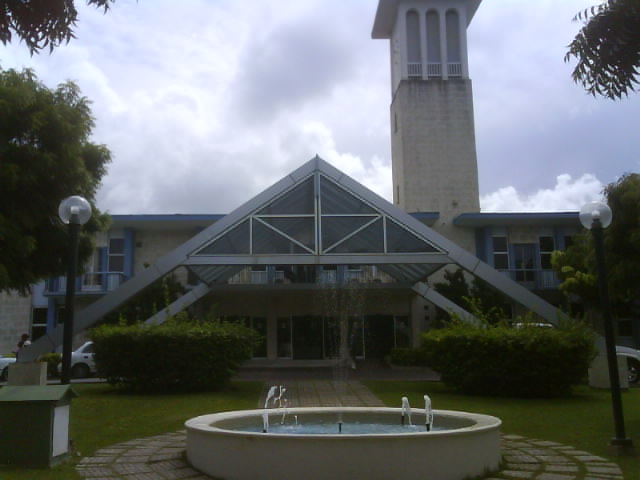
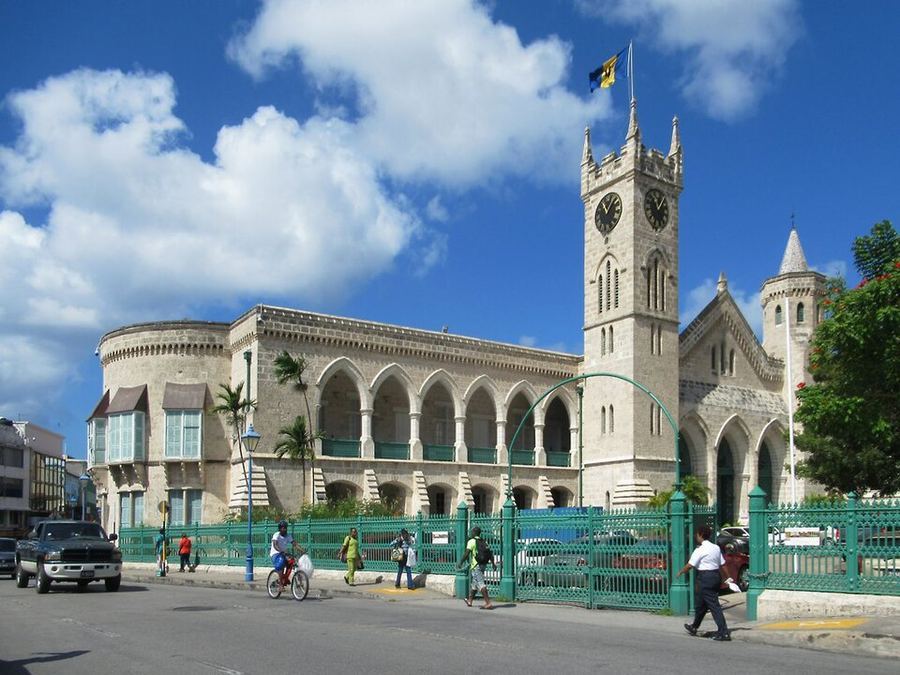
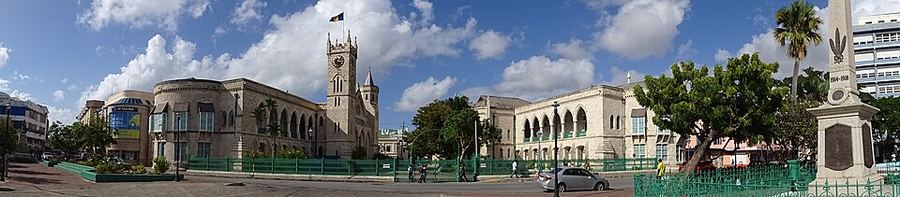
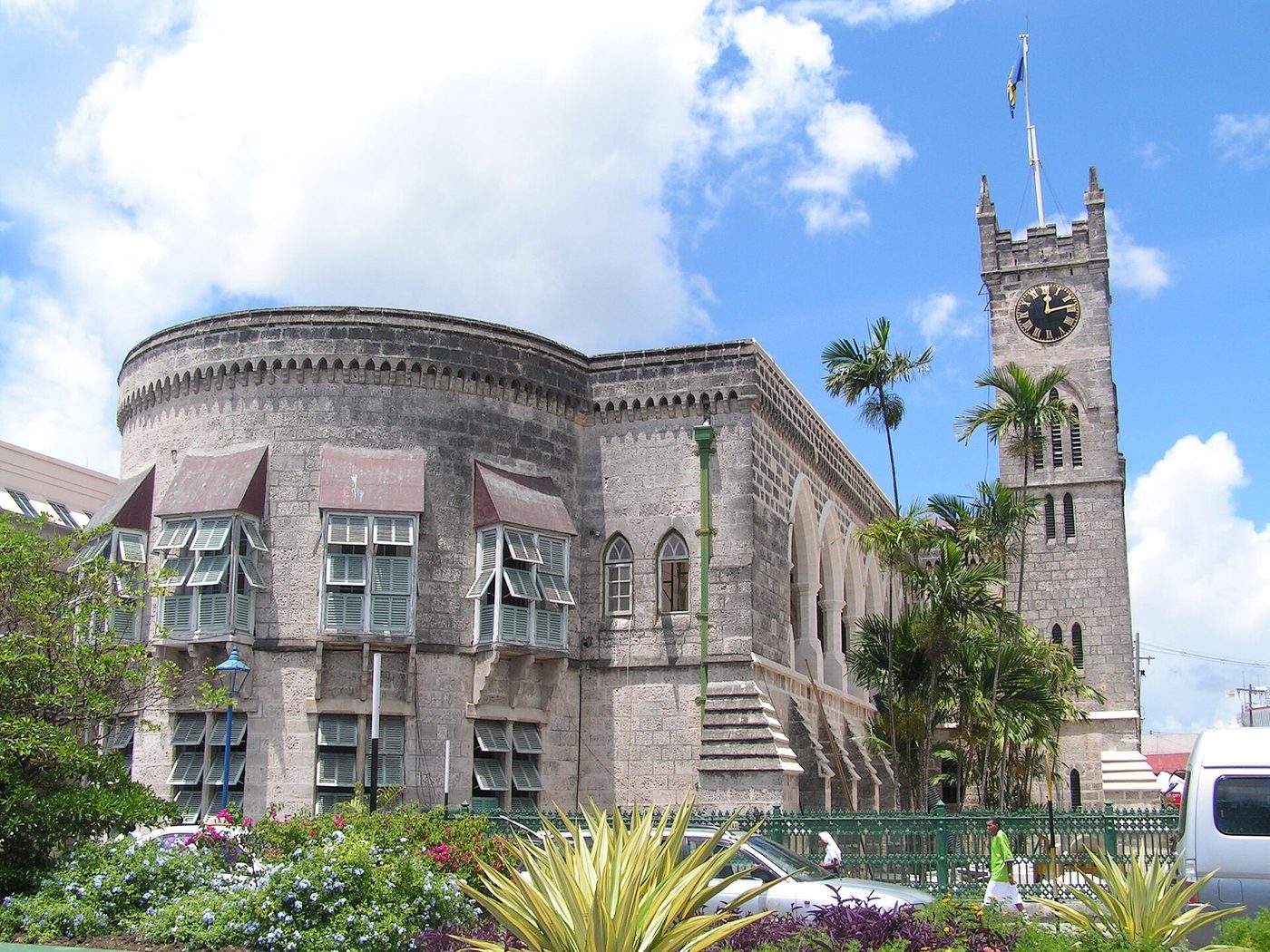
Bridgetown barbados parliament building, Barbados
Barbados BRB
Bridgetown barbados parliament building — Photo: regani / Public domain via Wikimedia Commons
Did You Know Sir Frank Worrell, Sir Everton Weekes and Sir Clyde Walcott — the Three Ws of West Indies cricket — were all born within a short distance of each other in St Michael, within eighteen months. — Encyclopaedia Britannica

Barbados is the easternmost country in the Caribbean, a coral limestone island of 432 square kilometres lying out in the Atlantic beyond the volcanic arc of the Lesser Antilles. About 304,000 people live there, over ninety percent of African descent, in eleven parishes still named for saints in the Anglican pattern laid down in the seventeenth century. The capital, Bridgetown, sits on the sheltered southwestern coast around Carlisle Bay. Barbados became independent from the United Kingdom on 30 November 1966 under Errol Barrow, and on the fifty-fifth anniversary of that date, 30 November 2021, it removed the British monarch as head of state and became a parliamentary republic within the Commonwealth, with Dame Sandra Mason as its first president and Mia Mottley, in office since 2018, as prime minister. English is official and Bajan Creole is the language of daily life. Sugar built the island and no longer sustains it; the economy now runs on tourism, international business and financial services, light manufacturing and rum, with GDP per capita around $19,900 on a purchasing-power basis. Free education from primary school through university, introduced in the 1960s, remains the island's proudest social institution.

CIA World FactbookEncyclopaedia BritannicaWorld Bank
Population
304,139
Capital
Bridgetown
Currency
$ BBD
Time zones
Largest city
Bridgetown
Human Geography Themes
Loading national figures…
Largest Cities
Bridgetown157,005
In Perspective

Bridgetown's urban core is home to about 157,005 people.

Among the world's megacities, though, it's one of many — the giants of Asia and Latin America run larger still:

Bridgetown157,005
Jakarta40,545,126
Dhaka37,307,160
Tokyo33,244,670
Shanghai30,678,616
Cairo25,230,325
The Country & Its People

History

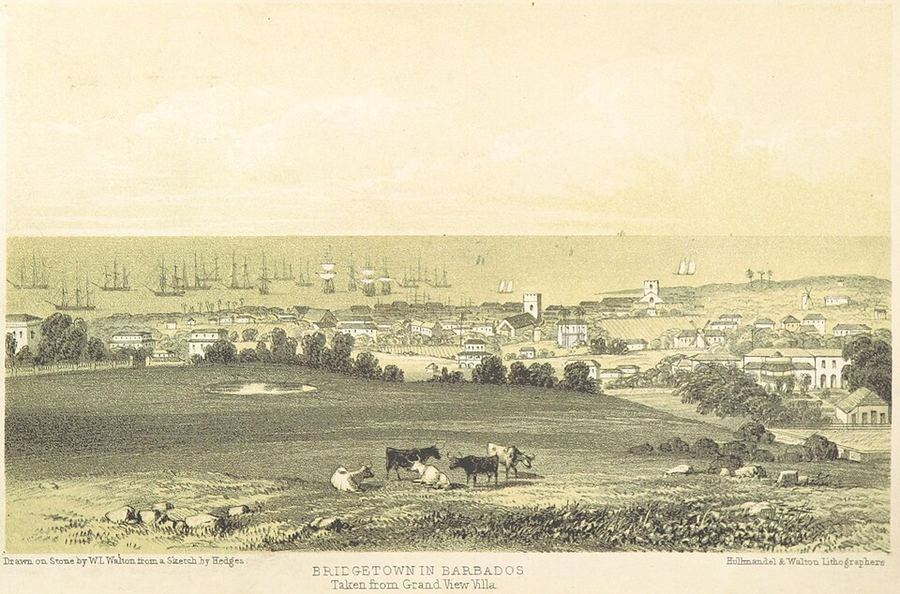
Amerindian peoples settled Barbados in successive waves and had largely left or been removed before Europeans arrived; Portuguese navigators named it Os Barbados, most likely for the aerial roots of its bearded fig trees. English colonists landed in 1627, and Barbados then became the only Caribbean island never to change colonial hands, remaining British for 339 unbroken years and earning the nickname Little England. From the 1640s the island underwent the sugar revolution, adopting plantation technology from Dutch and Brazilian sources and importing enslaved Africans on a scale that transformed the population within a generation; Barbados became the richest English colony in the Americas and the template for the plantation system. Its Slave Code of 1661 was copied into law in Jamaica, Antigua and the Carolinas, making Barbadian legislation the ancestor of slave law across the English-speaking Americas. Bussa's rebellion in 1816 was the island's largest uprising; emancipation followed in 1834 and full freedom in 1838. Labour unrest in 1937 launched the modern political era of Clement Payne and Sir Grantley Adams, who led the short-lived West Indies Federation. Errol Barrow brought Barbados to independence in 1966, and the island became a republic in 2021.
Culture

Barbadian culture is West African in substance and British in form, and Bajans move fluently between the two registers. The parish church, the cricket pitch, the racecourse and the law courts are inherited institutions; the rum shop, the tuk band, the Landship and Crop Over are the island's own. Crop Over, which began as the plantation celebration marking the end of the sugar harvest and was revived as a national festival in 1974, now runs through July into the first Monday in August, when the Grand Kadooment parade brings costumed bands down from Warrens to Spring Garden. The season carries the Pic-O-De-Crop calypso competition, Bridgetown Market, cohobblopot and the pre-dawn Foreday Morning jam. The Landship is unique to Barbados: a mutual-aid friendly society organised in the ranks and ritual of the Royal Navy, whose members parade and dance manoeuvres to tuk music. Speech is a genuine art form, with proverbs, picong and Bajan Creole grammar deployed with precision. Religious observance is high and predominantly Protestant, and the Sunday routine of church, lunch and a long afternoon remains close to universal.

Points Of Pride

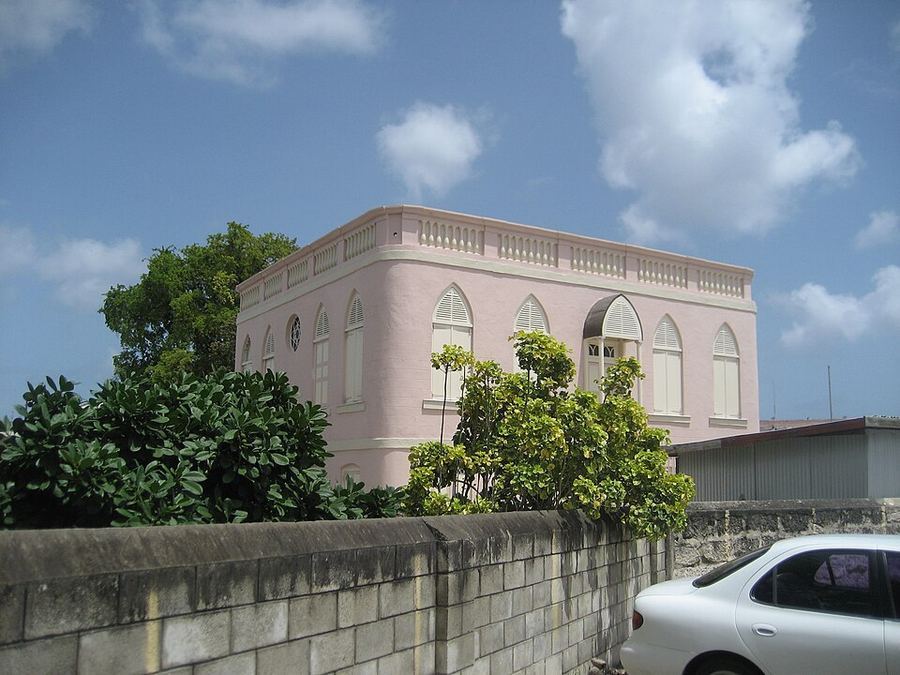
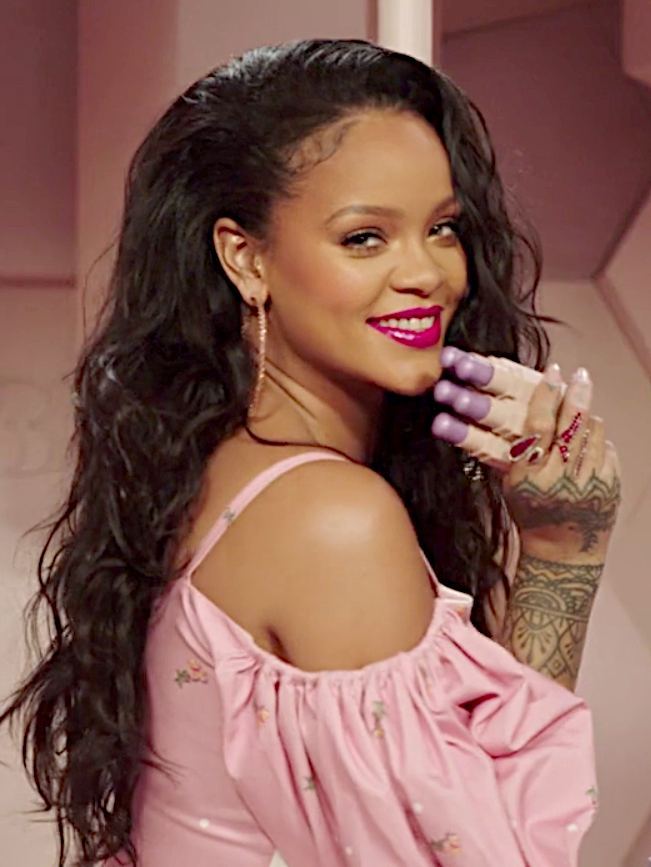
Historic Bridgetown and its Garrison was inscribed on the UNESCO World Heritage List in 2011 for its exceptionally intact early British colonial townscape and for the Garrison, the principal British military headquarters in the eastern Caribbean, which also holds the largest surviving collection of seventeenth-century English iron cannon anywhere. The Nidhe Israel Synagogue in Bridgetown, founded in 1654 by Sephardic Jews from Brazil and restored with its mikvah excavated in the 2000s, is among the oldest in the Western Hemisphere. Barbados introduced free education from primary through tertiary level in the 1960s and has sustained one of the highest literacy rates in the developing world since. Cricket gives the island a claim no country of comparable size can match: Sir Garfield Sobers, Sir Frank Worrell, Sir Everton Weekes, Sir Clyde Walcott, Malcolm Marshall and Joel Garner were all born here. Rihanna, born in Saint Michael, was named a National Hero in 2021. And the Bridgetown Initiative, launched by Mia Mottley in 2022 to restructure development and climate finance for vulnerable states, put a Barbadian argument at the centre of global economic debate.

Cultural Fusion

The island's dominant fusion is Afro-British, and it is unusually thoroughgoing because the colonial connection was never interrupted. Anglican parish structure, Westminster procedure, common law, horse racing at the Garrison Savannah and the ritual of cricket sit alongside African-derived rhythmic and social forms — the tuk band's kettle drum, bass drum and penny whistle playing British military marches at Caribbean tempo, accompanied by the masqueraded Mother Sally, Shaggy Bear, Donkey Man and stilt-walking Green Monkey. Two smaller strands complicate the picture. The Redlegs of St John and St Philip descend from poor White indentured labourers, Irish and Scottish prisoners and Monmouth rebels transported to Barbados in the seventeenth century, and their communities remained distinct for generations. The Sephardic Jewish community, arriving from Recife in the 1650s with sugar expertise, left the Bridgetown synagogue and cemetery. Later Indian, Guyanese, Syrian-Lebanese and Chinese arrivals added to the mix. Bajan Creole itself is the fusion in miniature: English lexicon on a West African grammatical base, with a distinctive intonation that Barbadians can place by parish.

Music & Dance

Calypso arrived from Trinidad and was thoroughly domesticated; the Pic-O-De-Crop competition each Crop Over is the island's central lyrical contest, and figures such as the Mighty Gabby and Red Plastic Bag built long careers on social commentary set to it. Spouge is Barbados's own invention: created by the singer Jackie Opel in the mid-1960s, it welded ska's offbeat to Caribbean rhythm and cowbell into a genre that dominated the island for a decade and is still revived at festival time. Soca now drives Crop Over, and Alison Hinds, who fronted the band Square One before going solo, is widely called the Queen of Soca across the region. Tuk is the older folk music — bass drum, snare and penny whistle, a fife-and-drum inheritance played with African phrasing, and the sound of the Landship's dance manoeuvres. Barbados's largest musical export is Rihanna, born in Saint Michael in 1988, one of the best-selling recording artists in history and a National Hero of Barbados. Rupee, Shontelle, Cover Drive and Livvi Franc have also charted internationally.

Cuisine & Misattributed Foods

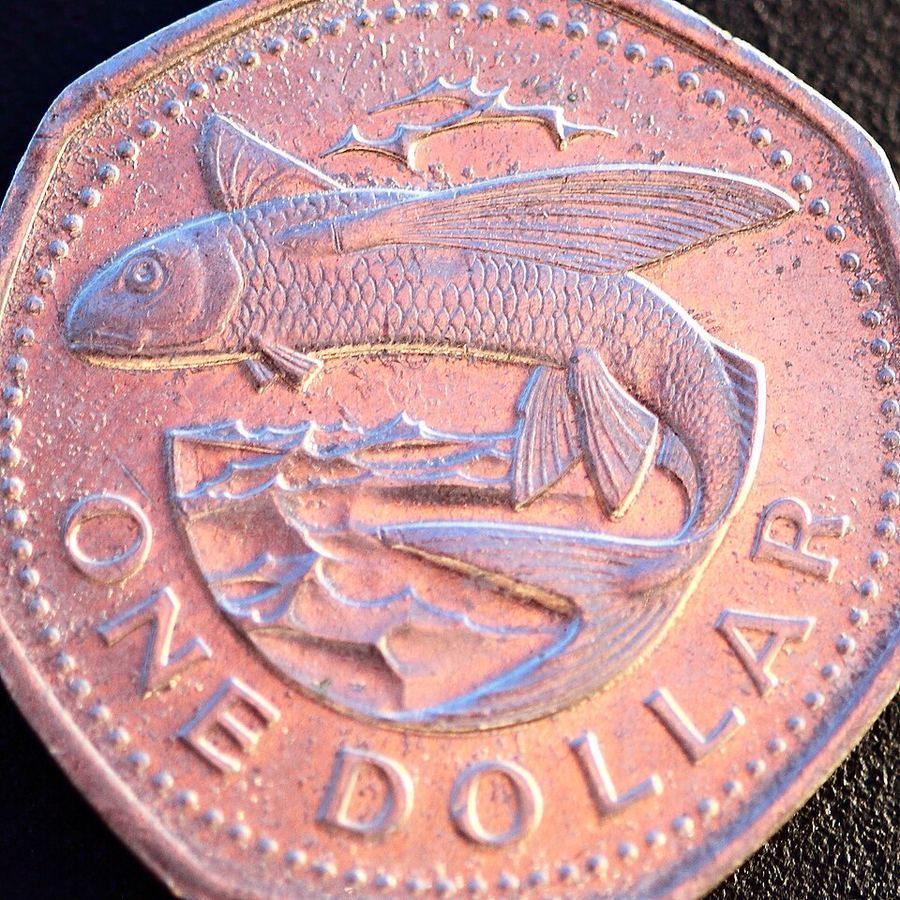
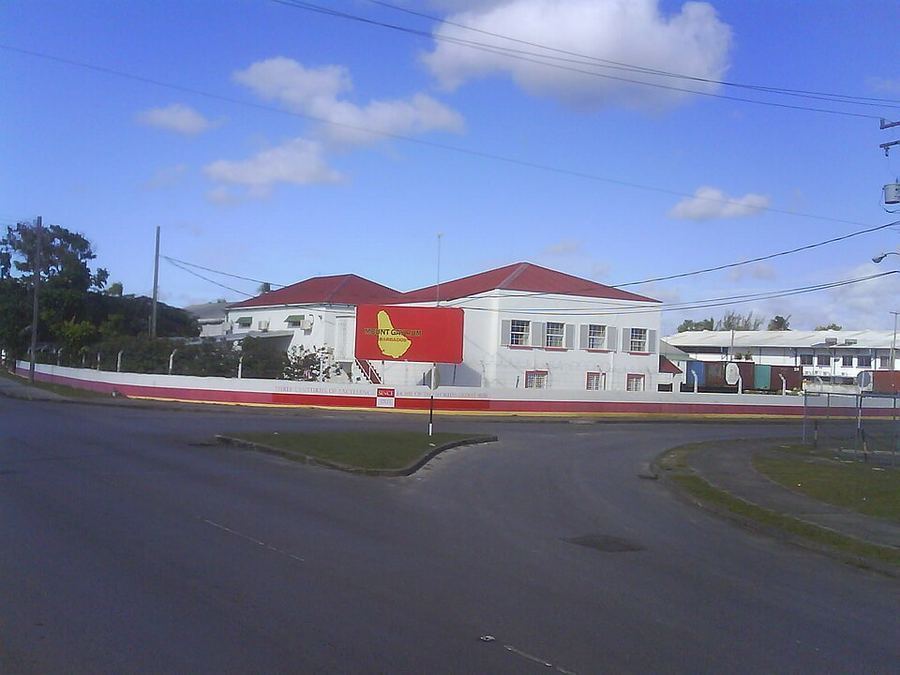
The national dish is cou-cou and flying fish: a stiff cornmeal and okra polenta turned with a wooden cou-cou stick, served with flying fish either steamed in a tomato and herb gravy or filleted and fried. Pudding and souse is the Saturday institution — steamed sweet potato pudding seasoned dark, eaten with pickled pork dressed in lime, cucumber and hot pepper. Macaroni pie, a dense baked cheese macaroni, accompanies almost everything, and fish cakes made from salt cod are the classic snack, best eaten hot from a rum shop counter. Bajan seasoning, a green paste of marjoram, thyme, onion, garlic and hot pepper, goes into nearly every savoury dish, and the island's yellow pepper sauce is mustard-based rather than fruit-based. Conkies — cornmeal, coconut, pumpkin and spice steamed in banana leaf — appear around Independence in November, and Bajan great cake soaked in rum at Christmas. Sea eggs, the roe of the white sea urchin, are a seasonal delicacy under strict harvest control. Barbados claims the invention of rum, and Mount Gay traces its deeds to 1703; falernum, mauby and sorrel are the non-alcoholic counterparts. Friday night at the Oistins fish fry is the national meal out.

National Dress

Barbados has no single prescribed national costume, and formal Barbadian dress has historically been British formal dress worn very correctly — a habit that produced the island's reputation for propriety and gave rise to the shirt-jac and, in the tropics, the linen suit as acceptable business wear. What functions as national dress is the folk and festival costume. Landship members wear naval uniform: white ducks, blue jackets, caps and rank insignia, worn with complete seriousness in parade. Tuk band players and their attendant masqueraders wear the Shaggy Bear's shredded costume, the Mother Sally's exaggerated padded figure and skirts, the Donkey Man's frame, and the stilt-walker's long trousers. Crop Over dress is the modern mass costume — feathered, beaded and jewelled bikini-and-plume bands for Grand Kadooment, designed and produced by island bandleaders through the spring. Older rural dress, still worn for folk performance and heritage days, is the plaid or madras headtie, white blouse and full skirt with an apron, echoing the wider eastern Caribbean tradition. National colours, ultramarine and gold with the broken trident, appear on everything through November's Independence season.

Sports & Inspiring Athletes

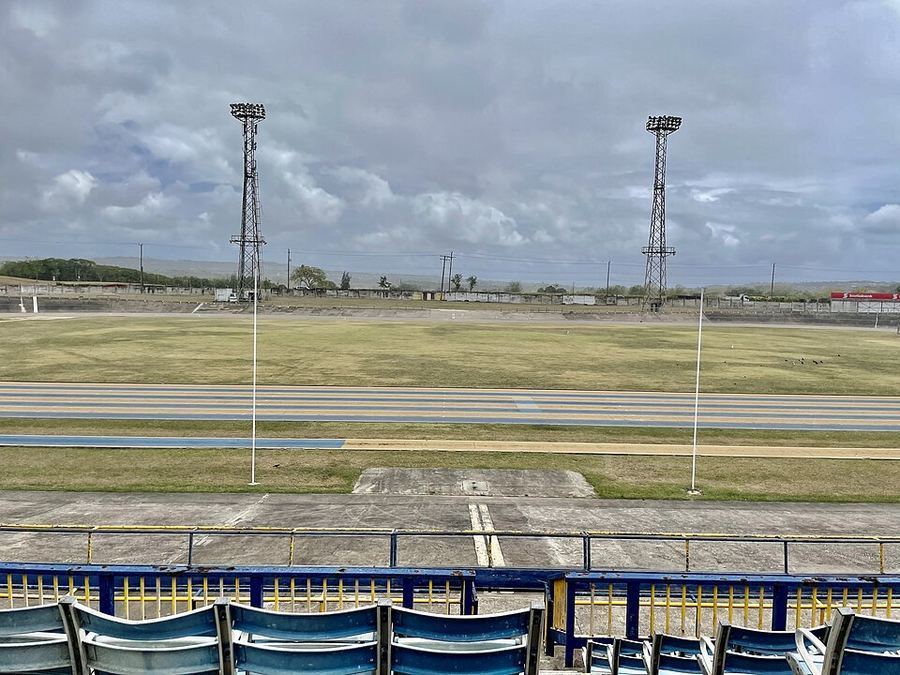
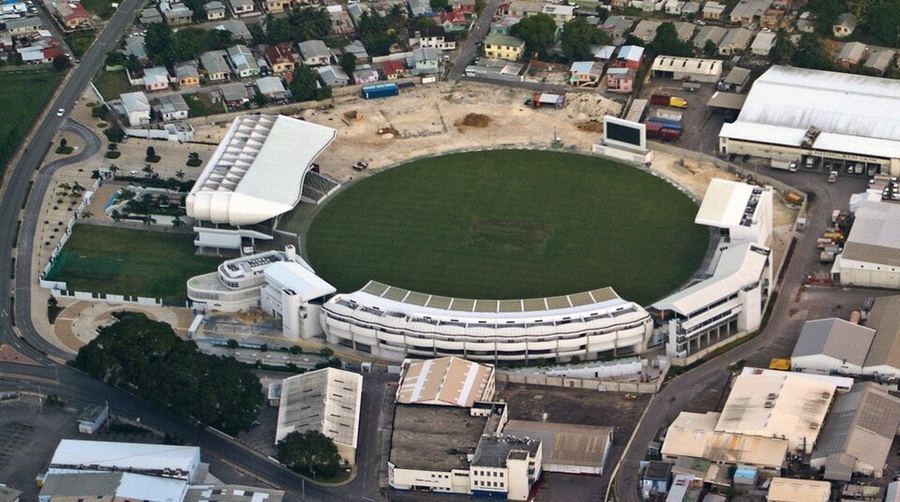
Cricket is not simply the national sport but a central element of Barbadian self-understanding. Kensington Oval in Bridgetown, rebuilt for the 2007 World Cup, is treated as the spiritual home of West Indies cricket; Barbados fields its own side in the regional first-class and limited-overs competitions while its players represent the West Indies internationally, and the island has supplied more Test cricketers per head than anywhere on earth. Football has a large participation base with a domestic premier league, and netball is the leading women's team sport. Athletics is strong in the schools system and produces the island's individual international performers. Road tennis, played competitively on courts across the island with its own governing body, ranking system and prize circuit, is the genuinely local code. Horse racing at the Garrison Savannah, polo, sailing, surfing at the Soup Bowl, rally driving at the Barbados Rally Carnival and the annual Run Barbados road races all draw serious followings. Rugby, hockey, swimming, volleyball and basketball are widely played, and boxing has a long amateur tradition.

Notable Educational Programs

Free education at every level, from primary school through university, was introduced under Errol Barrow in the 1960s and is the policy Barbadians most consistently name as the foundation of the modern country; adult literacy has been near-universal for decades as a result. The school system retains the older grammar-school structure, with Harrison College, founded in 1733, Combermere School, tracing its origins to 1695, Queen's College and the Lodge School among the historic institutions, and entry historically determined by the eleven-plus Common Entrance examination, whose retention is a perennial argument. Secondary students sit Caribbean Examinations Council qualifications at secondary and advanced proficiency levels. The University of the West Indies opened its Cave Hill campus in Barbados in 1963, and it is now a full campus with faculties of law, medicine, humanities, science and social sciences serving the eastern Caribbean; Barbados also hosts Codrington College, an Anglican theological college founded in 1745 and among the oldest in the Western Hemisphere, the Barbados Community College and the Samuel Jackman Prescod Institute of Technology. Retaining graduates against emigration remains the persistent structural problem.

Wars & Conflicts

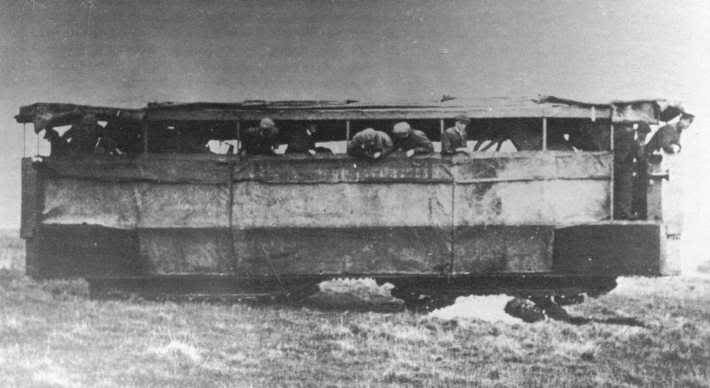
Barbados has no armed conflict, no insurgency and no external military threat, and it is one of the few Caribbean territories never fought over between European powers. Its historic internal conflicts were about slavery and labour: Bussa's rebellion of 1816, put down with heavy loss of life among the enslaved, and the riots of 1937 sparked by the deportation of the labour organiser Clement Payne, which triggered the Royal Commission whose findings underpinned the modern labour movement and the road to self-government. The Barbados Defence Force is small and oriented to disaster response, coastguard duties and regional cooperation; Barbados hosts the headquarters of the Regional Security System, established in 1982 by eastern Caribbean states, and Barbadian personnel participated in the 1983 intervention in Grenada. Contemporary security concerns are domestic and transnational rather than military: firearms trafficked into the region and an associated rise in gun homicides from historically low levels, narcotics transhipment, and the recurring pressure of hurricanes and marine disasters on a small state's emergency capacity. Barbados has also become a leading voice on historical reparations through the CARICOM commission chaired by the historian Sir Hilary Beckles.
Current as of 2026-08-06

Land & Border Disputes

Barbados has no land borders and no territorial disputes, but its maritime boundaries have generated real legal contest. In 2004 Barbados initiated arbitration against Trinidad and Tobago under Annex VII of the UN Convention on the Law of the Sea over the delimitation of the exclusive economic zone and continental shelf between the two states, a dispute rooted in the arrest of Barbadian flying-fish fishermen in waters Trinidad claimed. The tribunal issued its award in 2006, drawing a single maritime boundary and declining to grant Barbados the fishing access it had sought, while urging the parties to negotiate a fisheries arrangement — both states accepted the award. Barbados has concluded delimitation arrangements with Guyana, including a joint cooperation zone agreed in 2003, and with other neighbours, though the wider tangle of overlapping claims in the eastern Caribbean, including those involving Venezuela and Aves Island, leaves some tripoints unresolved. As an international financial centre Barbados has periodically been placed on and then removed from European Union and multilateral tax and financial-monitoring lists, each round prompting legislative amendment and vigorous diplomatic objection from Bridgetown.
Land, Life & Legacy

Land & Climate

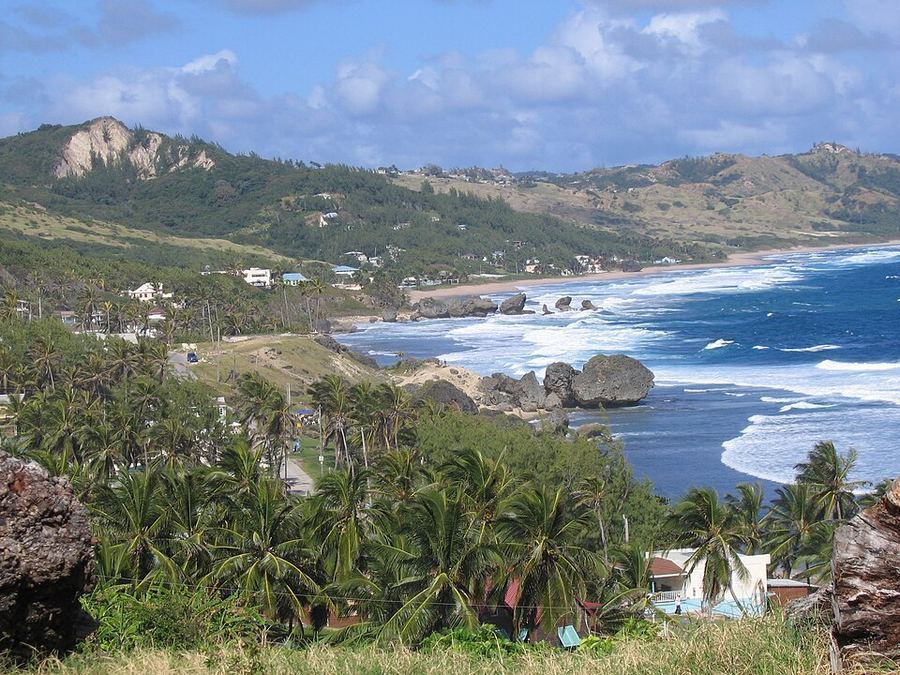
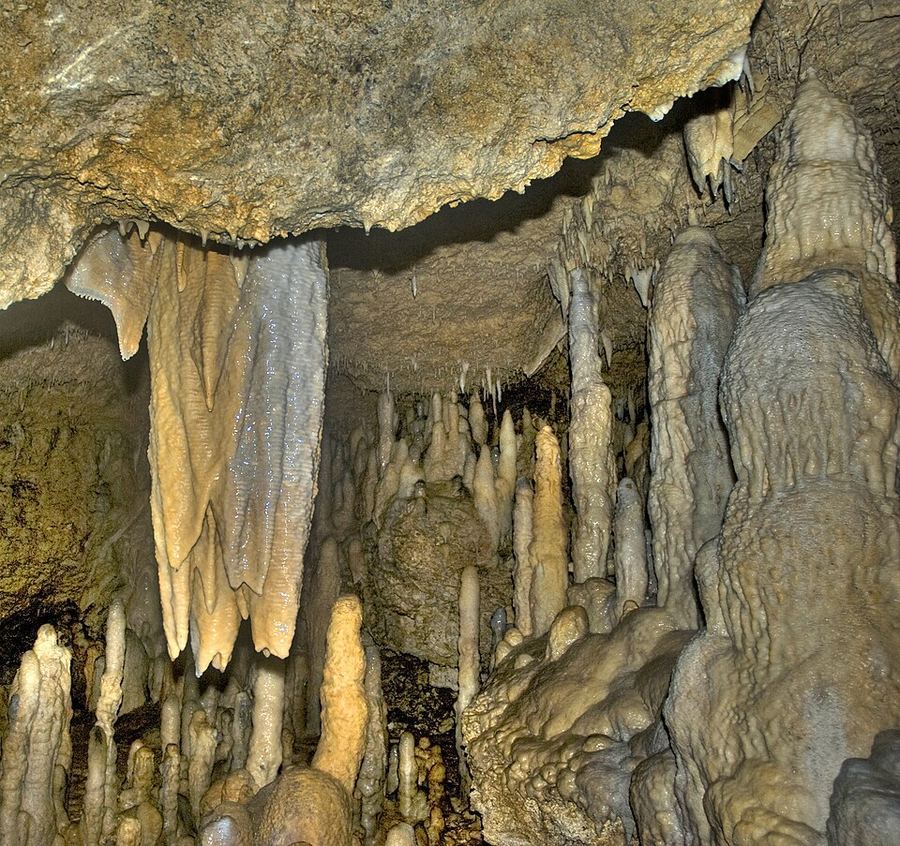
Barbados is geologically unlike its neighbours: not a volcano but an accretionary prism capped by coral limestone, lifted clear of the sea as the Atlantic plate subducts beneath the Caribbean. The result is a gently terraced island rising to Mount Hillaby at about 336 metres, with a porous limestone cap through which almost all rainfall drains underground rather than running off — hence very few surface streams and an economy dependent on aquifers. The exception is the Scotland District in the northeast, where the limestone has eroded away to expose older, unstable clays and sandstones and produce the broken landscape around Bathsheba. Caves are extensive, Harrison's Cave being the largest developed system. The climate is tropical, moderated by near-constant northeast trade winds, with a dry season from December to May and a wet season from June to November. Barbados lies at the eastern edge of the hurricane belt and is struck less often than islands to the west, but not never: Janet in 1955 and Beryl in 2024, which wrecked much of the Bridgetown fishing fleet, are the modern benchmarks. Sargassum inundations, coral bleaching and water scarcity are the principal environmental pressures.

Entertainment

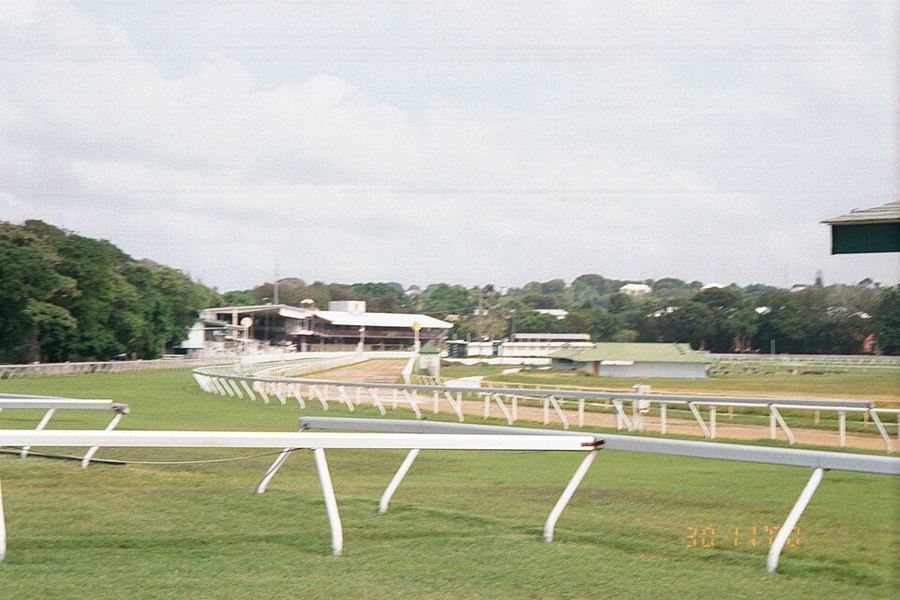
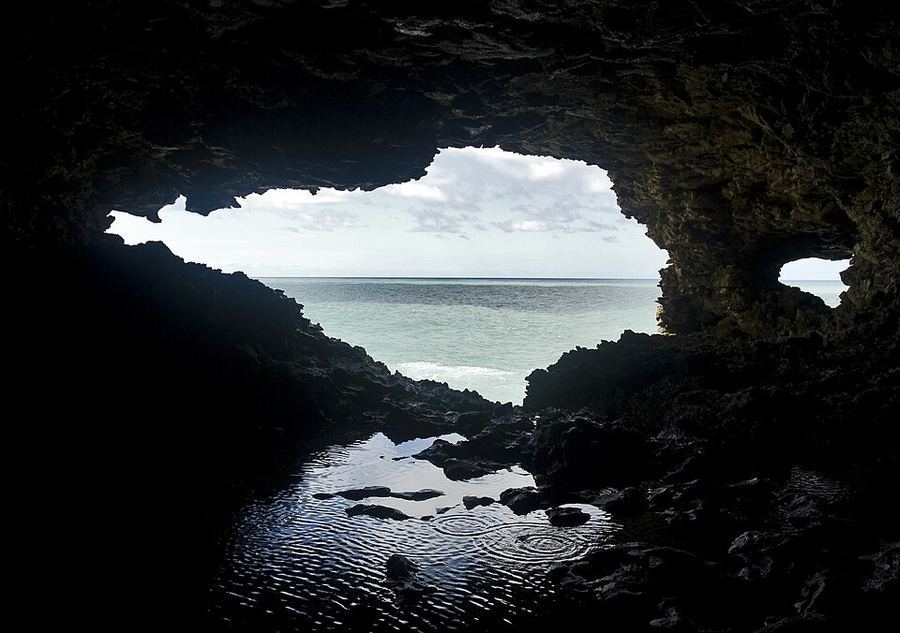
The west and south coasts hold the calm swimming beaches — Carlisle Bay, Accra, Mullins — while the Atlantic east coast at Bathsheba is for looking rather than swimming, except at the Soup Bowl, a right-hand reef break that has drawn professional surfers for decades and hosts international competition. Carlisle Bay's shallow shipwrecks and hawksbill turtle populations make it an unusually accessible snorkelling site. The Friday night fish fry at Oistins, where fishermen's stalls grill marlin, mahi-mahi and flying fish beside sound systems and dominoes tables, is the island's default weekend outing, and rum shops — of which Barbados has several hundred — function as the neighbourhood social institution. Horse racing at the Garrison Savannah, culminating in the Sandy Lane Gold Cup, is a national event, as is polo in the winter season. Harrison's Cave, the Animal Flower Cave in the northern cliffs, Hunte's Gardens and Andromeda Botanic Gardens fill the sightseeing calendar. Road tennis is played on painted courts and quiet streets all over the island, and cricket is played anywhere flat enough to set a stump.

Art & Museums

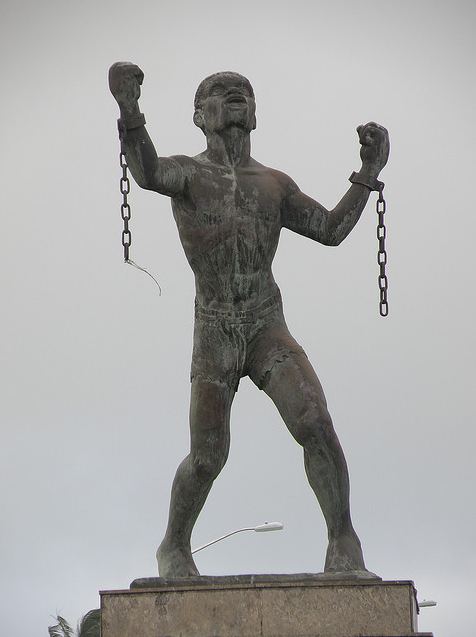
Barbadian visual art came into its own with independence and with the search for an Afro-Caribbean idiom to replace colonial landscape painting. Karl Broodhagen, a sculptor and painter born in Guyana and long resident in Barbados, produced the island's most publicly significant work: the Emancipation Statue at the Haggatt Hall roundabout, unveiled in 1985, a figure of a man with broken chains raised in both hands, universally known as Bussa. Ras Akyem-i Ramsay and Ras Ishi Butcher, working from the 1980s, established a powerful expressionist painting tradition addressing slavery, spirituality and Caribbean identity, and are the best-known Barbadian artists internationally. Fielding Babb's landscapes and Ivan Payne's work belong to an earlier generation. The Barbados Museum and Historical Society, housed in the Garrison's former military prison, holds the principal historical and decorative collections, and the Barbados Gallery of Art and the National Art Gallery project have carried the contemporary programme. Craft traditions include the red clay pottery of Chalky Mount in the Scotland District, worked by families for generations, mahogany carving, and the elaborate costume design that Crop Over supports each year.

Notable People

Sir Garfield Sobers is regarded by most authorities as the greatest all-rounder cricket has produced; he made 365 not out against Pakistan in 1958, a Test record that stood for thirty-six years, and struck six sixes in an over in 1968. Sir Frank Worrell, the first Black man appointed to captain the West Indies on a permanent basis, gives his name to the trophy contested with Australia; with Sir Everton Weekes and Sir Clyde Walcott — all three born in the same small area of St Michael within eighteen months — he formed the Three Ws. Malcolm Marshall and Joel Garner anchored the fast-bowling era that followed. Errol Barrow led the island to independence and introduced free education; Sir Grantley Adams led the West Indies Federation; Mia Mottley became the first woman to serve as prime minister. George Lamming's In the Castle of My Skin and the poetry and criticism of Kamau Brathwaite, who theorised Caribbean nation language, define the literary tradition, alongside the Barbadian-Canadian novelist Austin Clarke. Rihanna is among the best-selling musicians in history, and Obadele Thompson won Barbados its only Olympic medal.

Inventions & Breakthroughs

Barbados claims the origin of rum, and the claim is well supported: sugar planters here were distilling cane by-products by the mid-seventeenth century, and the words rumbullion and kill-devil appear in Barbadian sources before they appear anywhere else. Mount Gay traces documentary evidence for its distillery to a deed of 1703 and is widely described as the oldest surviving rum brand. The grapefruit is believed to have originated on the island as a chance hybrid of sweet orange and pomelo, first described in Barbados in the mid-eighteenth century as the forbidden fruit before it was propagated worldwide. Road tennis is an outright Barbadian invention of the 1930s — played on a paved court with solid wooden paddles, a de-fuzzed tennis ball and a low wooden board for a net, with its own professional circuit and national championships. Spouge is a Barbadian musical invention of the 1960s. In the darker column, the Barbados Slave Code of 1661 was an innovation in law whose provisions were carried into Jamaica, Antigua and the Carolinas. In policy, the Bridgetown Initiative has reshaped how development banks discuss climate-related lending terms.

Science & Technology

Barbados punches above its weight in earth science because of its geology. The island's uplifted coral terraces preserve one of the world's most important records of past sea level, and cores drilled from Barbados reefs supplied the benchmark reconstruction of deglacial sea-level rise, including the abrupt meltwater pulse that followed the last ice age — a dataset central to modern sea-level and ice-sheet modelling. In the 1960s the island hosted the High Altitude Research Project, a joint McGill University and United States Army programme that fired instrumented projectiles from a modified naval gun at Paragon on the south coast, setting an altitude record for a gun-launched object that still stands. Applied technology is dominated by energy and water: Barbados adopted solar water heating on a mass scale from the 1970s through domestic manufacture and tax incentives, achieving one of the highest per-capita installation rates in the world, and is pursuing a target of near-complete renewable electricity. The island is among the most water-scarce countries on earth, driving investment in desalination and aquifer management, and the University of the West Indies at Cave Hill runs long-running sea turtle and coral reef monitoring programmes.
NatureScienceIPCCIEA
On The World Stage

Champions & Defining Moments

Barbados has competed at the Olympic Games as an independent nation since 1968, and Obadele Thompson's bronze in the 100 metres at Sydney in 2000 remains its only Olympic medal. Its strongest international results have come at world and Commonwealth level: Ryan Brathwaite won the 110 metres hurdles at the World Athletics Championships in Berlin in 2009, and Sada Williams took a Commonwealth Games title and a world championship bronze in the 400 metres in 2022. Barbados competes as a separate nation at the Commonwealth Games, where it has medalled in athletics, boxing and swimming, and in the Pan American and Central American and Caribbean Games. In cricket, Barbadians play under the West Indies flag rather than their own, and the island's contribution to two Test-dominant eras is disproportionate to any measure of its size. Kensington Oval hosted the 2007 Cricket World Cup final and the men's T20 World Cup finals of 2010 and 2024, the latter won by India over South Africa. Barbadian surfers compete internationally out of Bathsheba.

IOCOlympediaWorld AthleticsCommonwealth Games FederationReuters
Economy, Trade & Government

Currency & GDP

Barbados Dollar — BBD ($)

GDP (PPP): $5.634 billion (2024 est.)

Per capita: $19,900 (2024 est.)

Exports

$2.228 billion (2017 est.)

liquor, refined petroleum, packaged medicine, margarine, baked goods (2023)

Partners: USA 22%, Jamaica 17%, Trinidad & Tobago 8%, Canada 6%, Guyana 6% (2023)

Imports

$2.12 billion (2021 est.)

refined petroleum, crude petroleum, cars, plastic products, ships (2023)

Partners: USA 32%, Trinidad & Tobago 19%, Netherlands 6%, UK 6%, Guyana 5% (2023)

Government

Type: parliamentary republic; a Commonwealth realm

Independence: 30 November 1966 (from the UK)

Terrain → Where People Live

How mountains, coasts, and rivers shape settlement (LandScan).

Coming — data

Migration & Ethnic Settlement

Where groups settled and how people move (GeoEPR + UNHCR).

Coming — data

Universities

Notable institutions, mappable as points.

Coming — data
Economy & government facts: CIA World Factbook (public domain), via OpenFactBook / factbook.json.
Every fact and narrative claim will carry a visible source citation. Data-driven sections light up automatically wherever HERA has coverage.