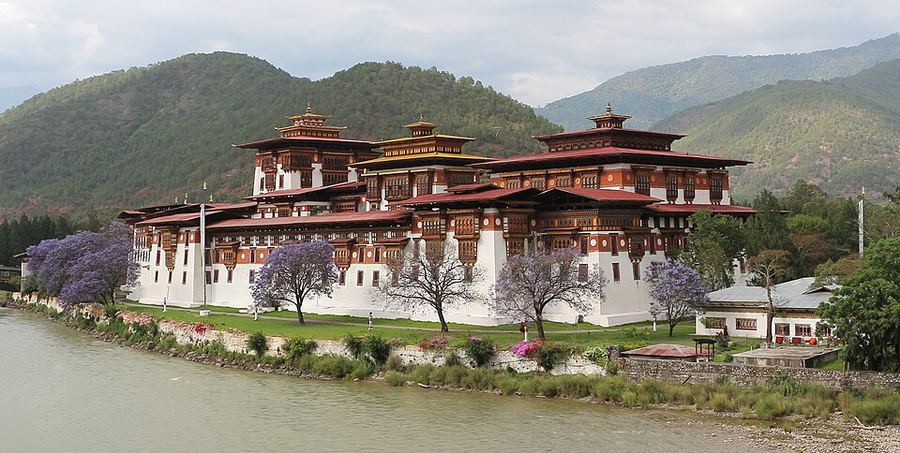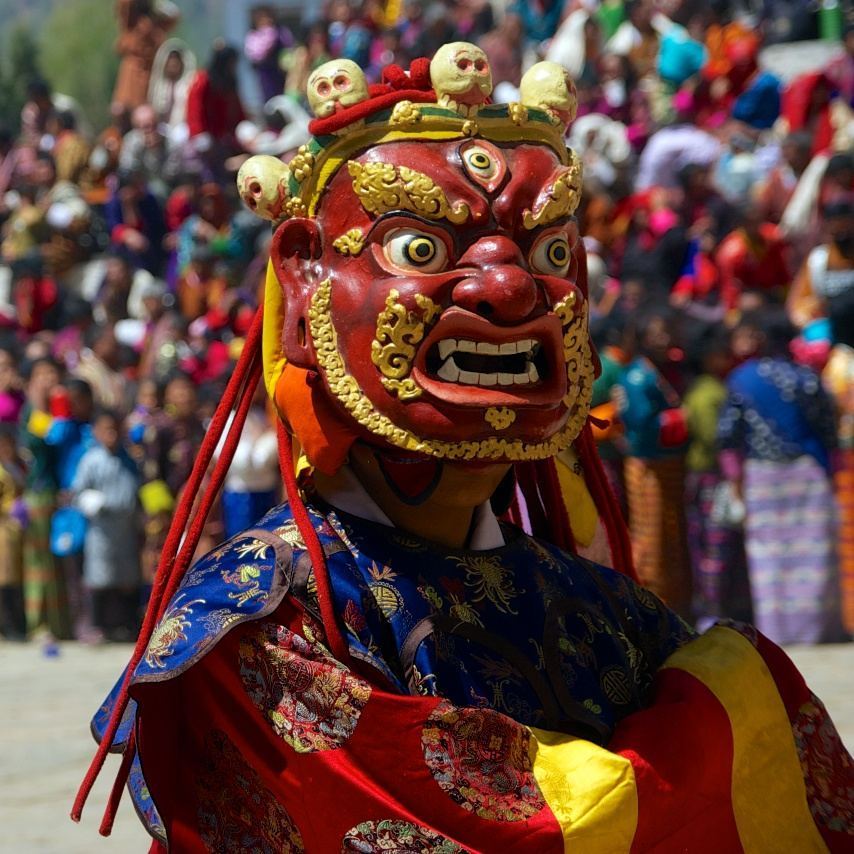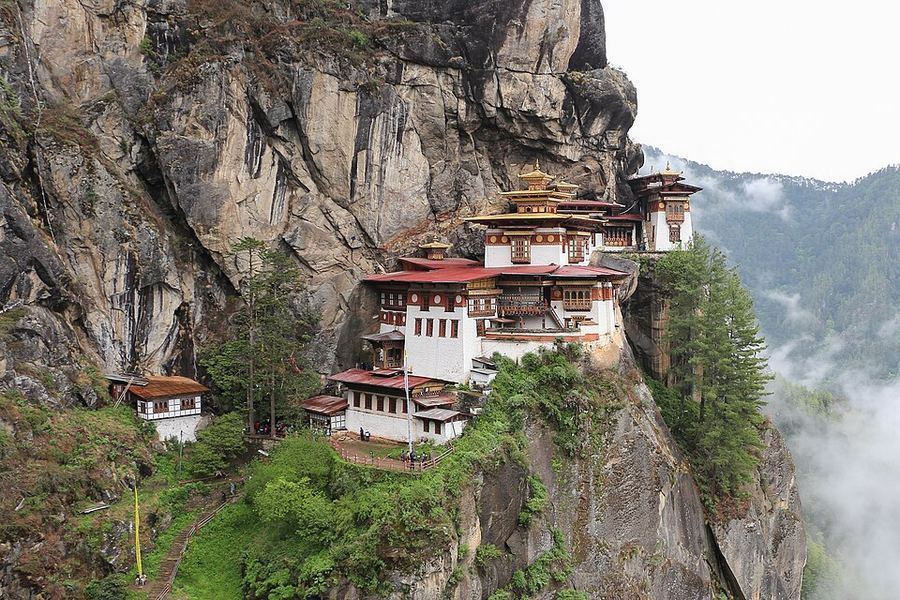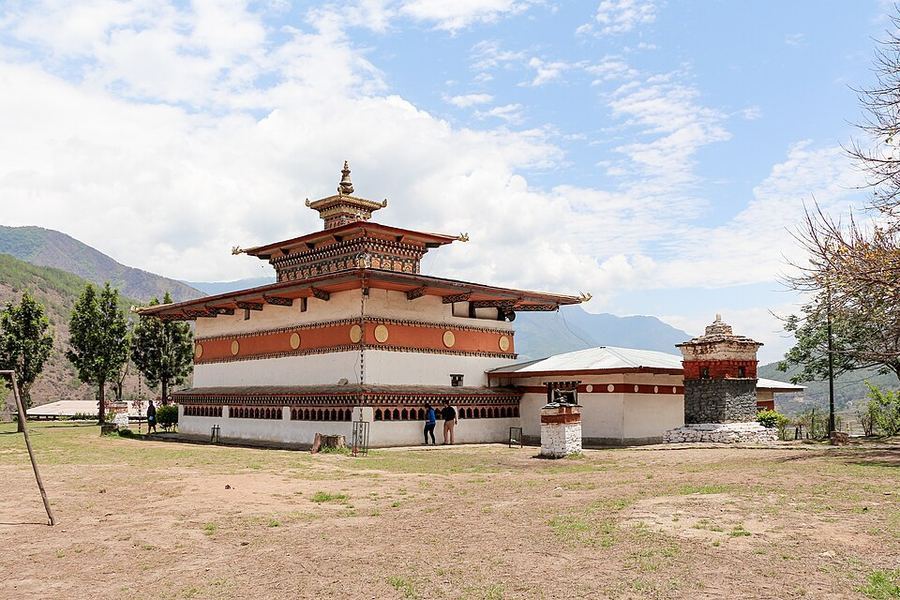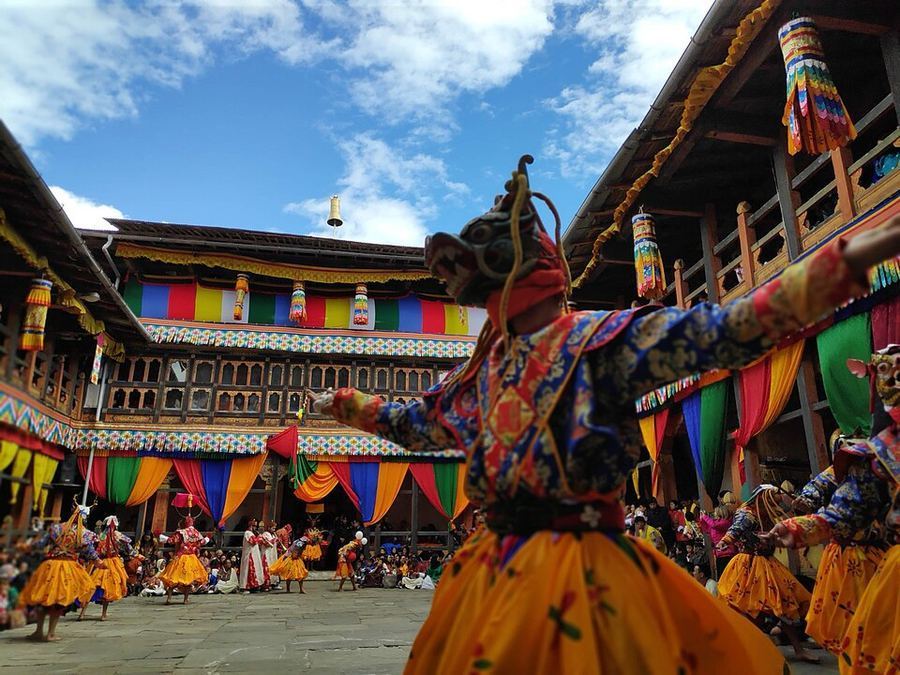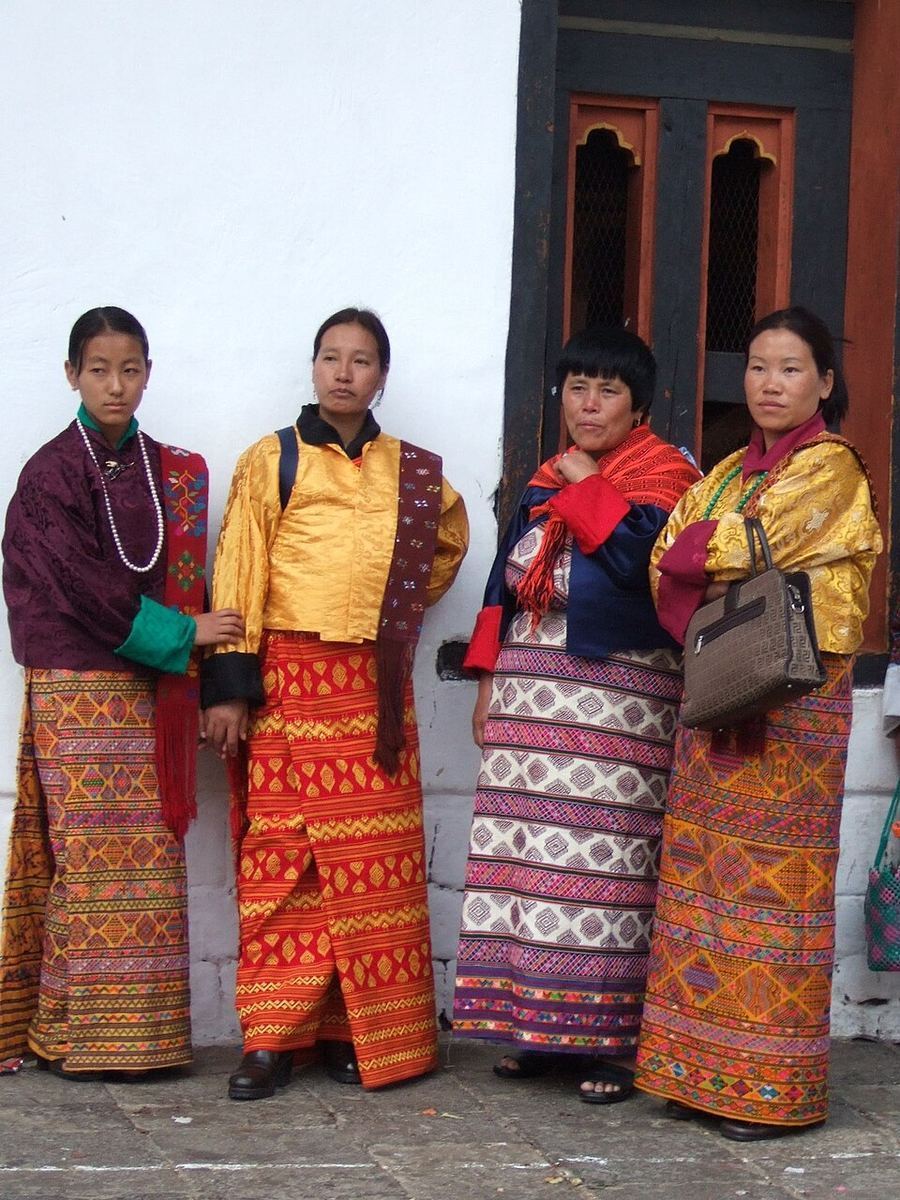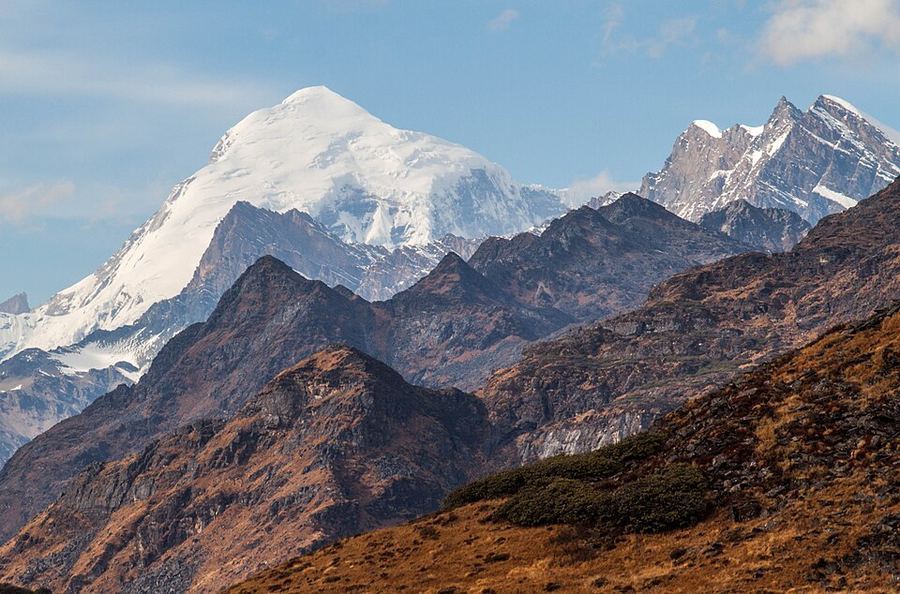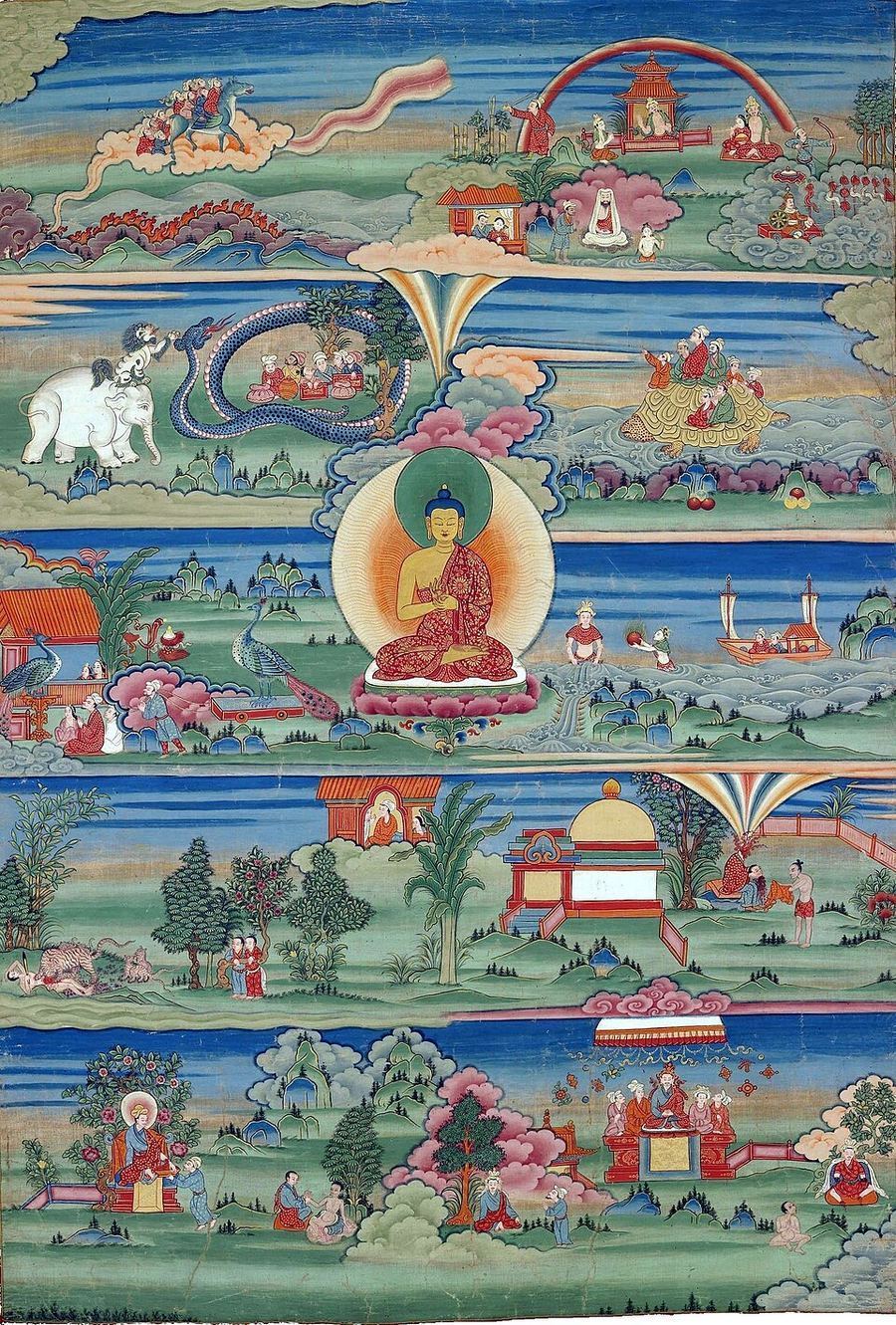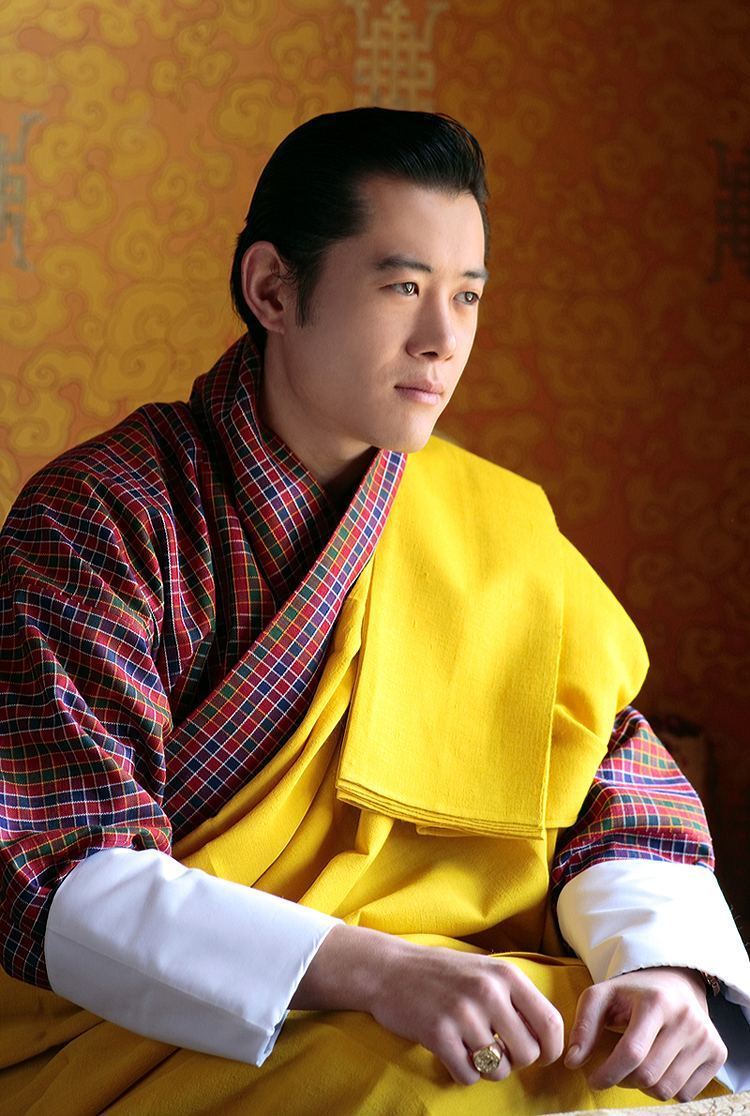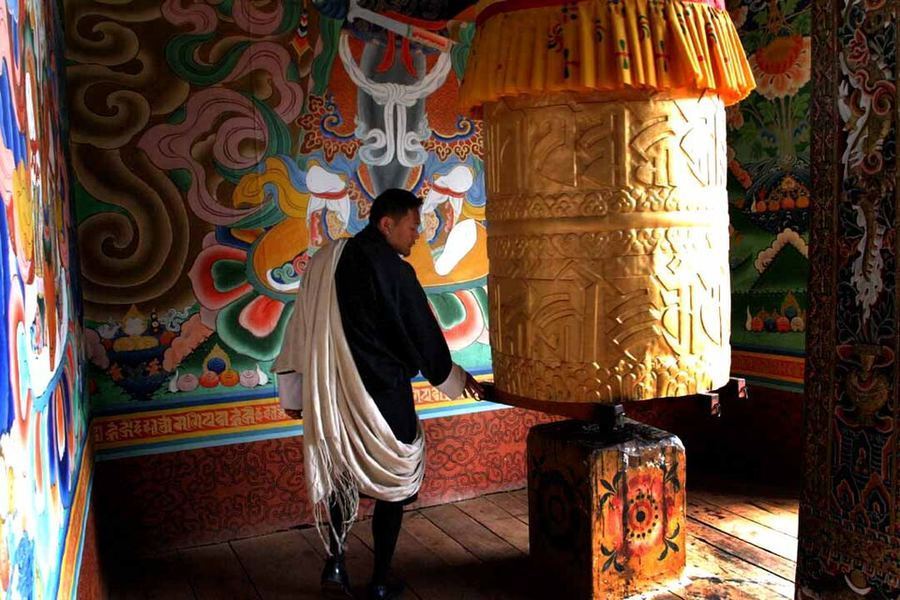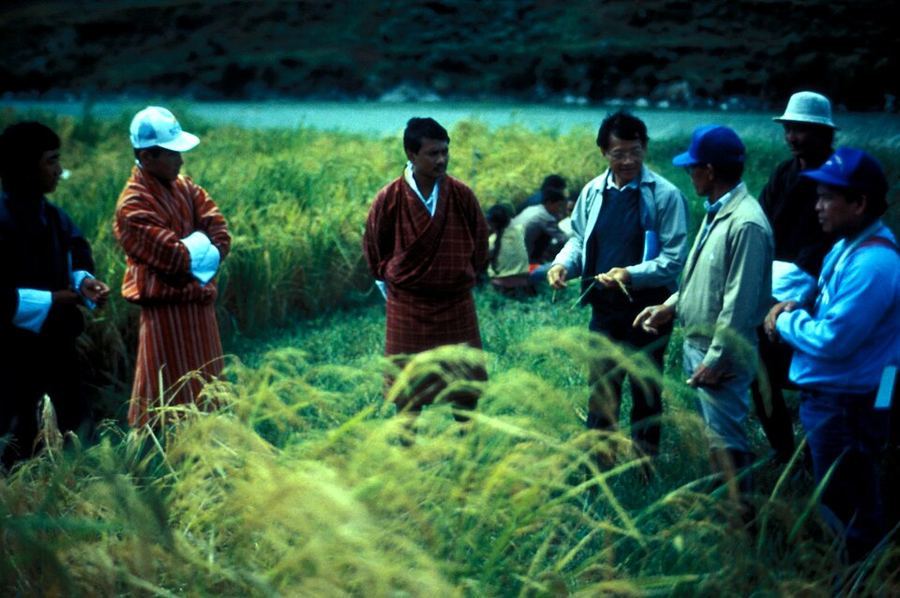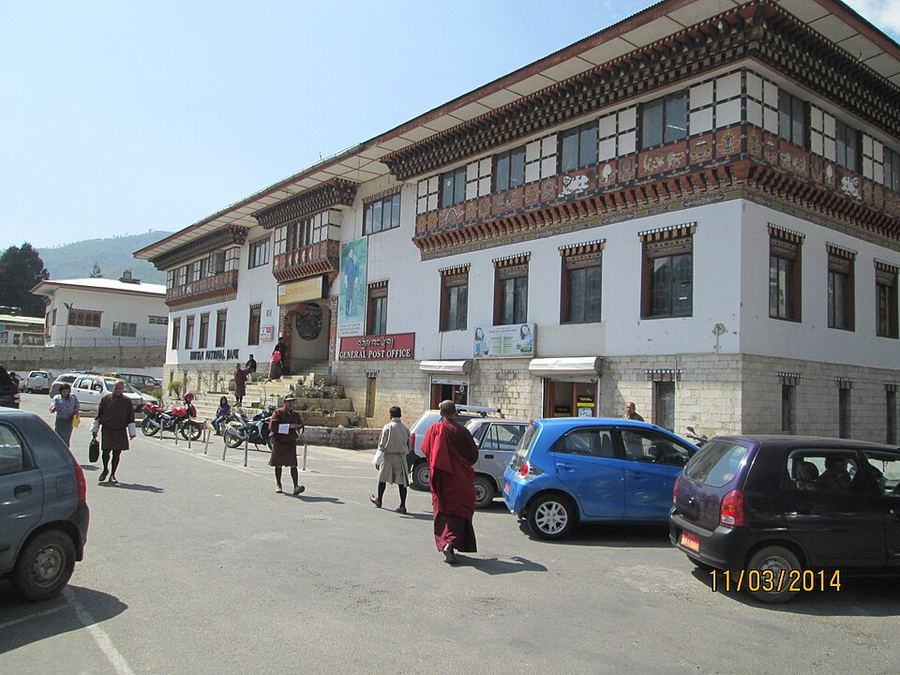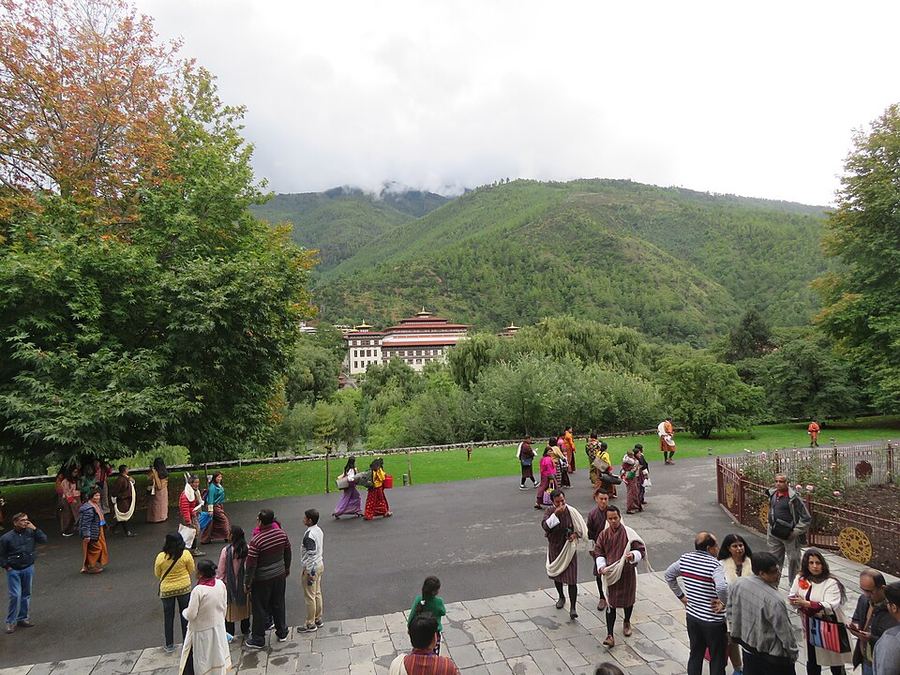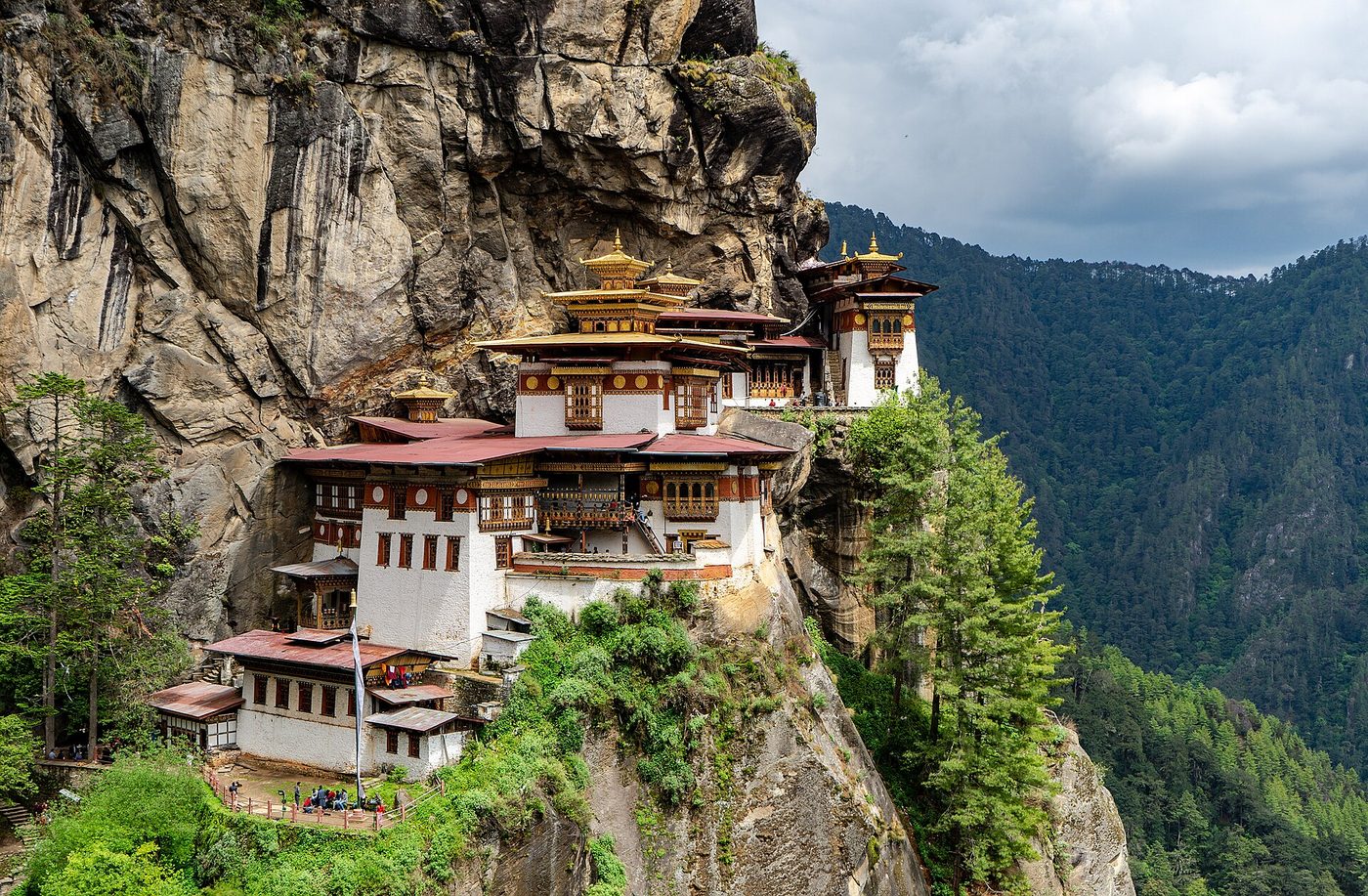
Bhutan — Druk Yul, the Land of the Thunder Dragon — is a landlocked Himalayan kingdom of about 893,000 people wedged between India and the Tibetan plateau of China. Its territory of roughly 38,400 square kilometres climbs from subtropical Duars plain at barely 100 metres to Gangkhar Puensum at 7,570 metres, and its people are concentrated in a belt of temperate central valleys. Thimphu is the capital. Bhutan is a constitutional monarchy: the fourth Druk Gyalpo, Jigme Singye Wangchuck, initiated the transition to parliamentary democracy and abdicated in 2006 in favour of his son Jigme Khesar Namgyel Wangchuck, and the country's first constitution and general election followed in 2008 — a democracy handed down from the throne rather than won from it. Drukpa Kagyu Buddhism is the state religion and shapes law, architecture and calendar; Dzongkha is the official language among some nineteen spoken, and Sharchopkha and Lhotshamkha have more speakers in their regions. Hydropower sold to India, high-value tourism and agriculture support GDP per capita around $14,600 on a purchasing-power basis. Bhutan is best known for measuring its progress by Gross National Happiness and for remaining one of the very few net carbon sinks on earth.
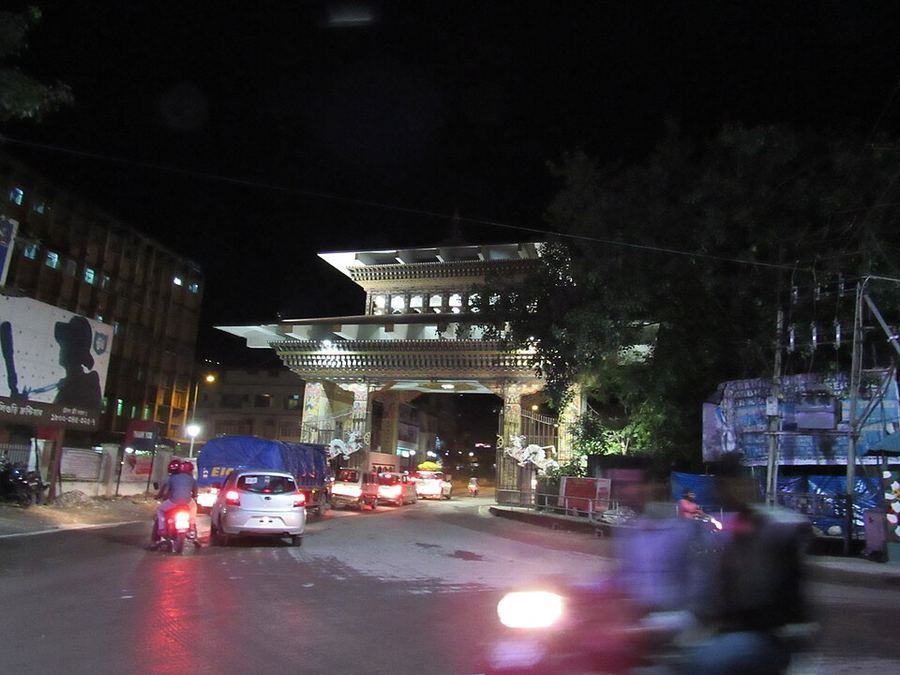
Phuntsholing's urban core is home to about 76,648 people.
Among the world's megacities, though, it's one of many — the giants of Asia and Latin America run larger still:
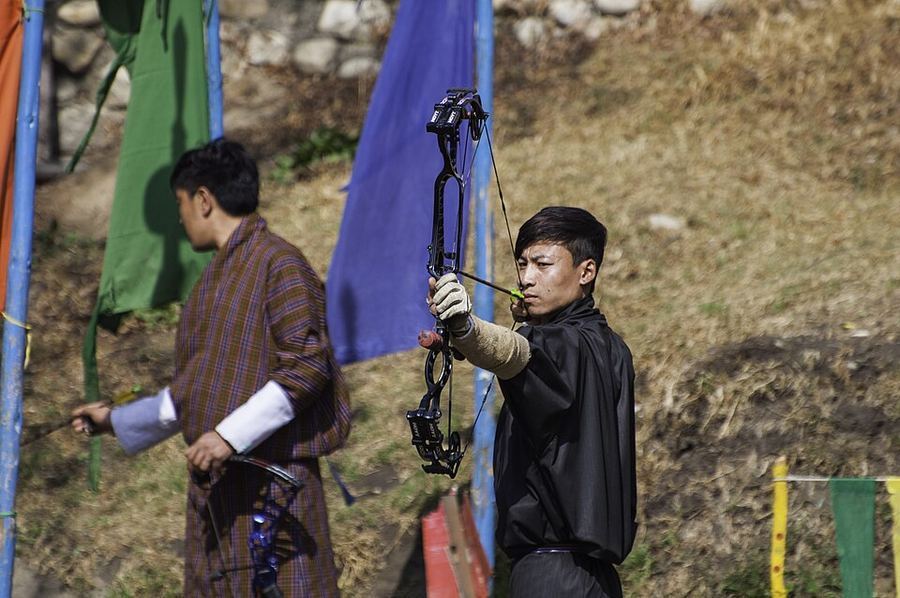
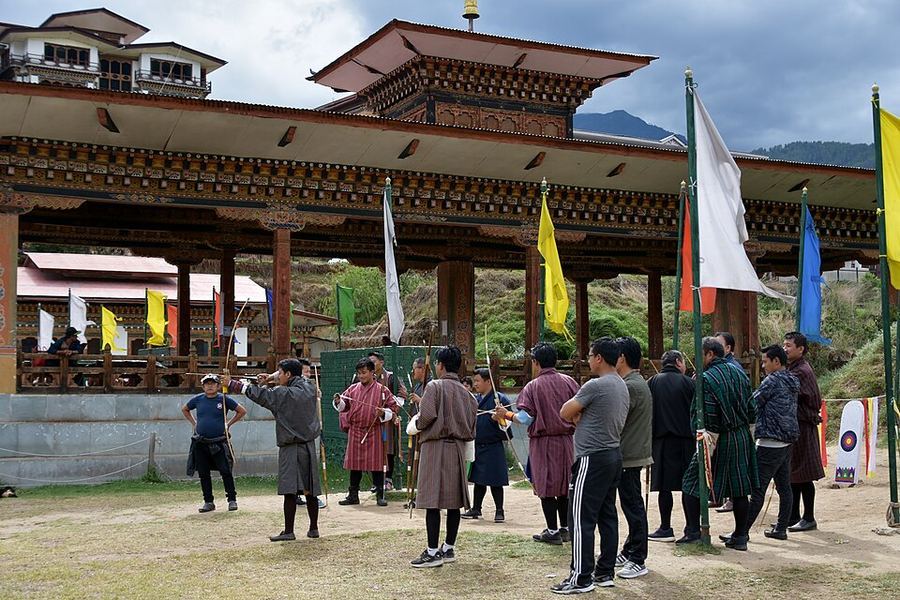
Bhutan has competed at every Summer Olympic Games since Los Angeles in 1984 and has entered archers at almost all of them, without winning a medal; its teams are small and generally admitted under universality places. Its most famous sporting moment came in football. On 30 June 2002, the day of the World Cup final in Yokohama, Bhutan played Montserrat in Thimphu in a match arranged between the two lowest-ranked teams in FIFA's rankings and billed as the Other Final; Bhutan won 4-0 before a full Changlimithang Stadium, and the documentary made of it gave the national team an international following it had never had on results. Bhutan later recorded its first competitive World Cup qualifying wins by beating Sri Lanka home and away in 2015, a result that lifted it dozens of places in the world rankings. The women's national team has become the stronger side in recent years, and Bhutanese clubs compete in AFC continental competition. Bhutan also takes part in the South Asian Games, where it has taken medals in archery, taekwondo, boxing and shooting.
Ngultrum — BTN (Nu)
GDP (PPP): $11.517 billion (2023 est.)
Per capita: $14,600 (2023 est.)
$944.391 million (2024 est.)
iron alloys, aircraft, dolomite, semi-finished iron, cement (2023)
Partners: India 92%, Italy 4%, Indonesia 1%, China 1%, Singapore 0% (2023)
$1.513 billion (2024 est.)
refined petroleum, gold, plastics, broadcasting equipment, iron reductions (2023)
Partners: India 82%, Singapore 8%, China 5%, Thailand 2%, Indonesia 1% (2023)
Type: constitutional monarchy
Independence: 17 December 1907 (became a unified kingdom under its first hereditary king); 8 August 1949 (Treaty of Friendship with India maintains Bhutanese independence)
How mountains, coasts, and rivers shape settlement (LandScan).
Coming — dataWhere groups settled and how people move (GeoEPR + UNHCR).
Coming — dataNotable institutions, mappable as points.
Coming — data