HERA · Human Entity Reference Atlas by Masego Inc

← Botswana 🌐 3D View
Okavango Delta Botswana, Botswana
Botswana BWA
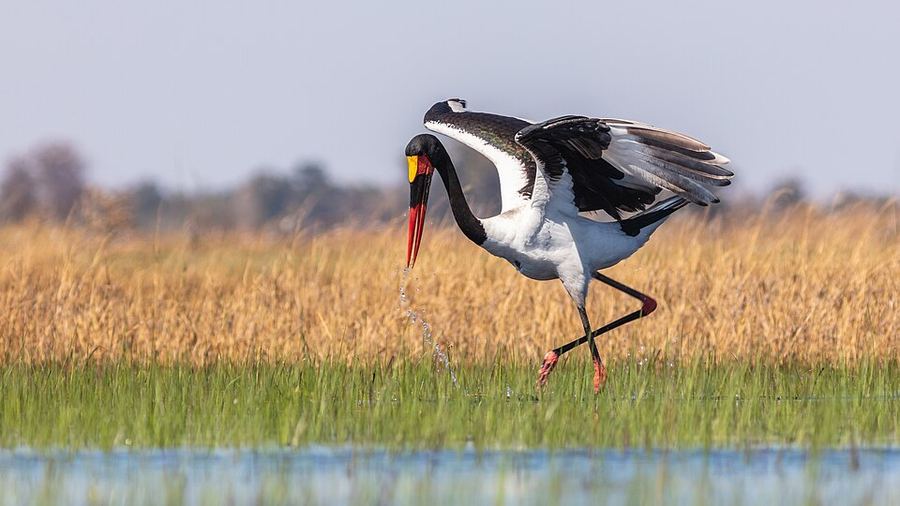
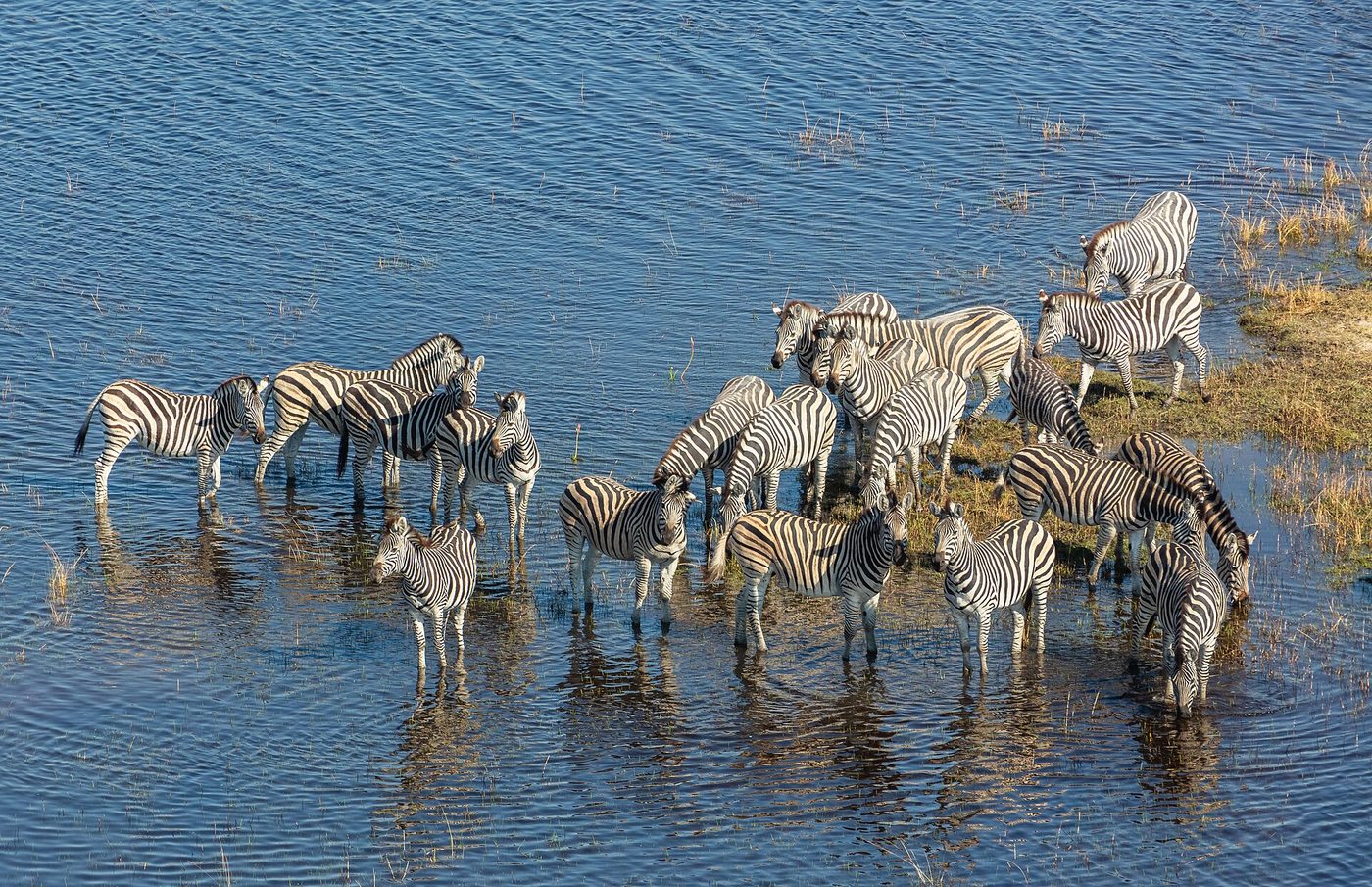
Okavango Delta Botswana — Photo: Diego Delso / CC BY-SA 4.0 via Wikimedia Commons
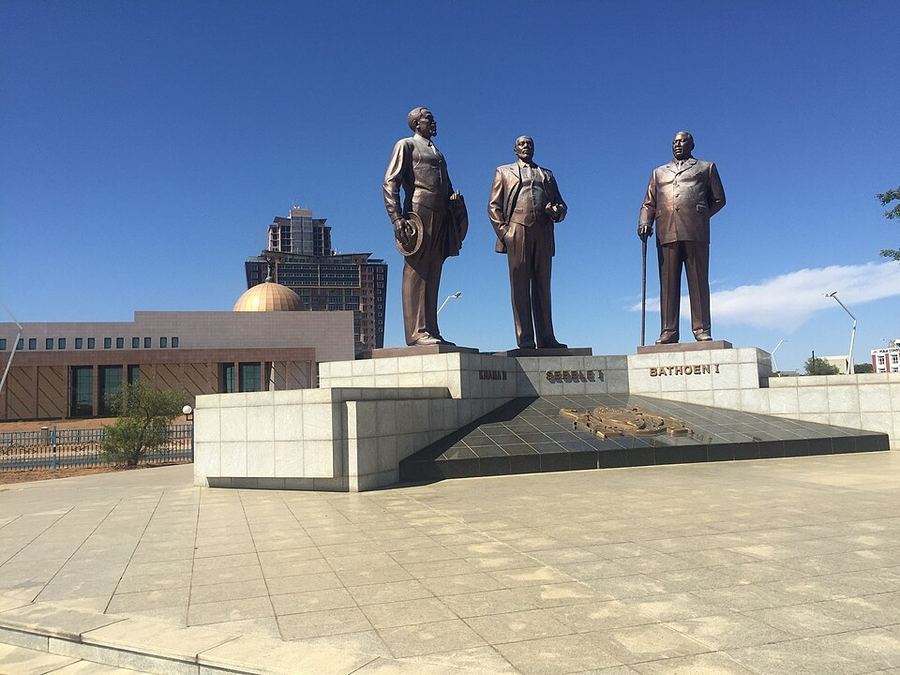
Did You Know In 1895 three Tswana chiefs — Khama III, Bathoen I and Sebele I — sailed to London and persuaded the Colonial Office to keep their territory out of the hands of Cecil Rhodes's British South Africa Company, a lobbying trip that arguably determined that Botswana would exist at all. — Encyclopaedia Britannica

Botswana is a landlocked southern African republic of roughly 2.5 million people occupying about 582,000 square kilometres between Namibia, South Africa, Zimbabwe and a short frontier with Zambia at the Kazungula quadripoint. The Kalahari sand sheet covers most of the country, so settlement clusters along the eastern corridor from Gaborone, the capital, north through Serowe, Palapye and Francistown, and around Maun at the edge of the Okavango Delta. Independent from the United Kingdom on 30 September 1966, it is a parliamentary republic in which the National Assembly elects the president. Setswana is the national language and English the official one; nearly four in five residents are Christian and about eight per cent of the population identifies with Kalanga. Diamonds discovered at Orapa a year after independence transformed one of the poorest countries in the world into an upper-middle-income economy, and the pula is among Africa's more stable currencies. In October 2024 voters ended fifty-eight years of Botswana Democratic Party rule, the country's first transfer of power between parties.

CIA World FactbookWorld BankEncyclopaedia BritannicaReuters
Population
2,521,534
Capital
Gaborone
Currency
P BWP
Time zones
Largest city
Gaborone
Human Geography Themes
Loading national figures…
Largest Cities
Gaborone298,993
Molepolole121,562
Francistown116,209
Lobatse62,160
Mahalapye61,469
Selebi Phikwe54,137
Kanye52,206
In Perspective

Gaborone's urban core is home to about 298,993 people.

Among the world's megacities, though, it's one of many — the giants of Asia and Latin America run larger still:

Gaborone298,993
Jakarta40,545,126
Dhaka37,307,160
Tokyo33,244,670
Shanghai30,678,616
Cairo25,230,325
The Country & Its People

History

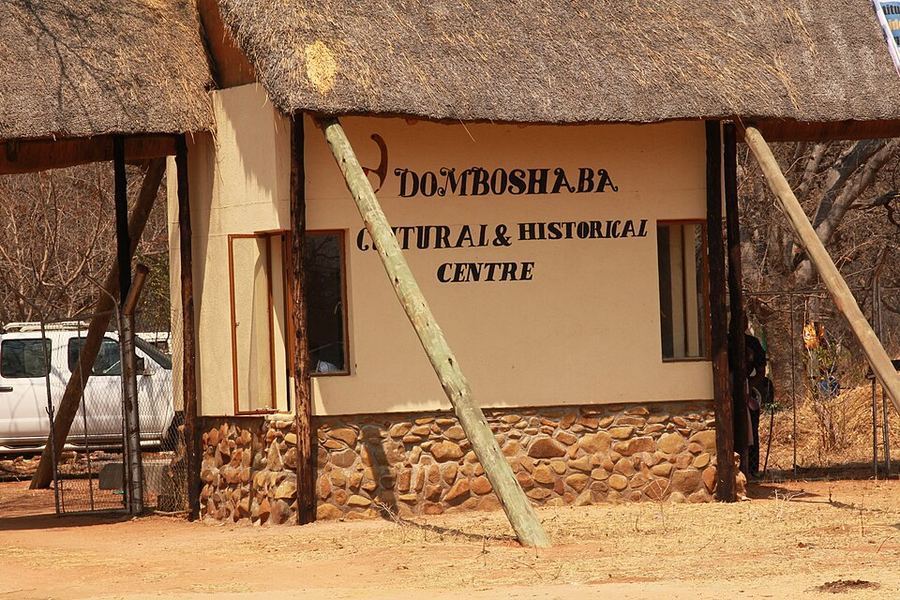
Tswana-speaking chiefdoms — among them the Bangwato, Bakwena and Bangwaketse — consolidated across the eastern hardveld before the upheavals of the early nineteenth century, and Christian missions of the London Missionary Society arrived alongside them. In 1885 Britain declared the Bechuanaland Protectorate, largely to block Boer and later Portuguese expansion. A decade later, in 1895, the chiefs Khama III of the Bangwato, Bathoen I of the Bangwaketse and Sebele I of the Bakwena travelled to London and successfully petitioned the Colonial Office to keep the territory out of the hands of Cecil Rhodes's British South Africa Company — a decision that shaped the country's separate path. The protectorate was administered, oddly, from Mafikeng outside its own borders. Seretse Khama, heir to the Bangwato chieftaincy, married Ruth Williams in 1948 and was exiled by Britain under pressure from apartheid South Africa until 1956; he returned, founded the Botswana Democratic Party, and led the country to independence on 30 September 1966. Diamond discoveries at Orapa in 1967 funded schools, clinics and roads within a generation. Presidents Ketumile Masire, Festus Mogae, Ian Khama and Mokgweetsi Masisi followed in unbroken constitutional succession until the 2024 election handed power to Duma Boko of the Umbrella for Democratic Change.
Culture

Botswana's public culture is built around the kgotla, the open assembly ground at the centre of a village where a chief presides and any adult may speak. Consultation through the kgotla was carried into the independent state, and national policy is still taken on tour to village assemblies before it is legislated. The organising social value is botho — the conviction that a person becomes fully human through the way they treat others, the Setswana cousin of the more widely known ubuntu — and it is invoked in schools, courts and government vision statements alike. Cattle remain the deep currency of status and kinship: the mafisa system, by which a wealthy owner lends cattle to a poorer household to herd and milk, has historically spread both risk and obligation across families. Most households maintain three sites — a village home, a lands area for ploughing, and a cattle post out in the veld — and move between them by season. Serowe and Mochudi remain important chiefly centres. Setswana proverbs carry the moral vocabulary, and the greeting ritual, in which one asks after a person's household before any business, is treated as a matter of manners that visitors are expected to learn.

Points Of Pride

Botswana's principal claim is one of stewardship. Diamond revenue, which elsewhere has funded wars, was channelled through Debswana — the fifty-fifty partnership with De Beers formed in 1969 — and through the Pula Fund, a sovereign savings vehicle established by the Bank of Botswana in 1994, into schooling, clinics and tarred roads. In 2013 De Beers moved its rough-diamond sorting and sales operation from London to Gaborone, bringing the valuing of the world's stones to the country that mines many of them. The Okavango Delta, the great inland alluvial fan that empties into the Kalahari rather than the sea, was inscribed on the World Heritage list in 2014 as its one-thousandth site; the Tsodilo Hills, dense with rock paintings, were inscribed in 2001. Botswana holds the largest elephant population of any country, generally estimated at around 130,000 animals, and its conservation model gives communities a direct financial stake in wildlife. Politically, the country ran fifty-eight years of uninterrupted multiparty elections before the opposition's 2024 victory demonstrated that the system could also change hands peacefully.

Cultural Fusion

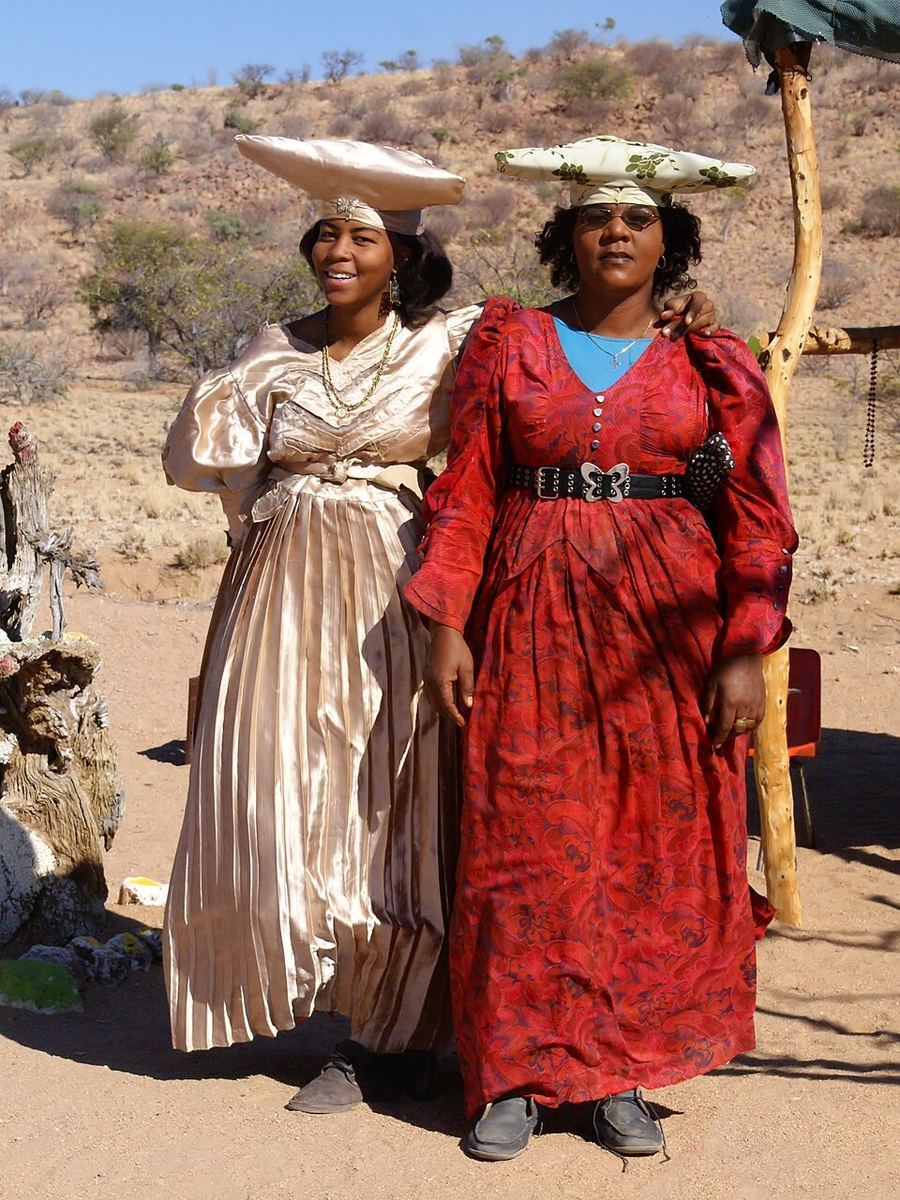
Although Setswana is spoken by more than three-quarters of the population, Botswana is layered rather than uniform. The Kalanga of the north-east, close kin to communities across the Zimbabwean border, form the largest minority and have pressed for recognition of Ikalanga in schools. In Ngamiland the Bayei, Hambukushu and Basubiya of the Okavango floodplain live by fishing and flood-recession farming quite unlike the cattle-and-sorghum pattern of the east. The Basarwa, the San peoples of the Kalahari, hold the oldest presence of all and speak languages of the Khoe and Ju families that Setswana speakers cannot understand. In Maun and the north-west, Herero women wear the long Victorian-style dress with its horned otjikaiva headdress, a costume adopted from nineteenth-century missionaries and later carried into Botswana by families fleeing German colonial violence in South West Africa. English serves as the language of law, business and secondary schooling, and South African retail, television and music saturate daily life, so that a Gaborone teenager may move between Setswana at home, English at school and South African slang among friends without remark.

Music & Dance

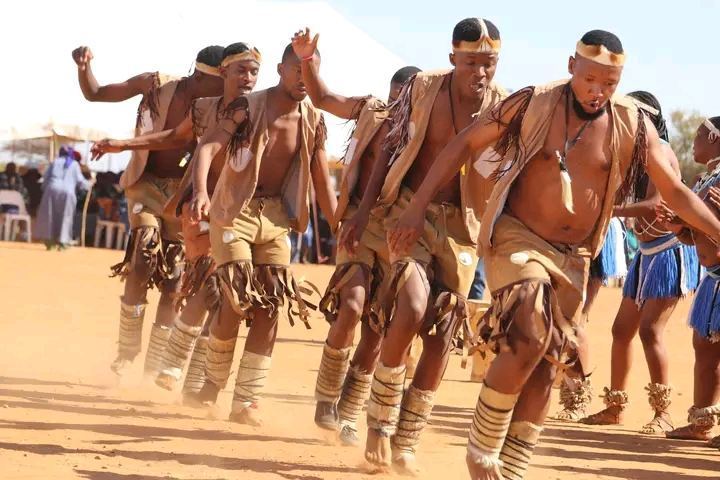
Traditional Tswana performance is largely vocal and percussive. Setapa, danced with a rolling shuffle and stamping that raises dust in time with handclaps, and phathisi, in which men leap with rattles bound to the calves, are the best-known forms, and borankana is the umbrella term under which school and village troupes compete at national festivals. The San dances of the Kalahari, including the healing dances that continue through the night around a fire, belong to an older and quite separate tradition. Instruments are few and made locally: the segaba, a single-stringed bowed instrument played with a resonator, and the setinkane, a small thumb piano. Church choirs, singing in dense four-part harmony without accompaniment, are the most widely practised musical form in the country. Popular music runs to kwaito and house imported from Johannesburg alongside home-grown acts such as Culture Spears and Vee Mampeezy, whose kwasa-kwasa-inflected pop dominates radio. Botswana also sustains a small, internationally photographed heavy-metal scene whose leather-clad followers have drawn documentary attention from well beyond southern Africa. The Maitisong Festival in Gaborone has been the country's main performing-arts showcase since the late 1980s.

Cuisine & Misattributed Foods

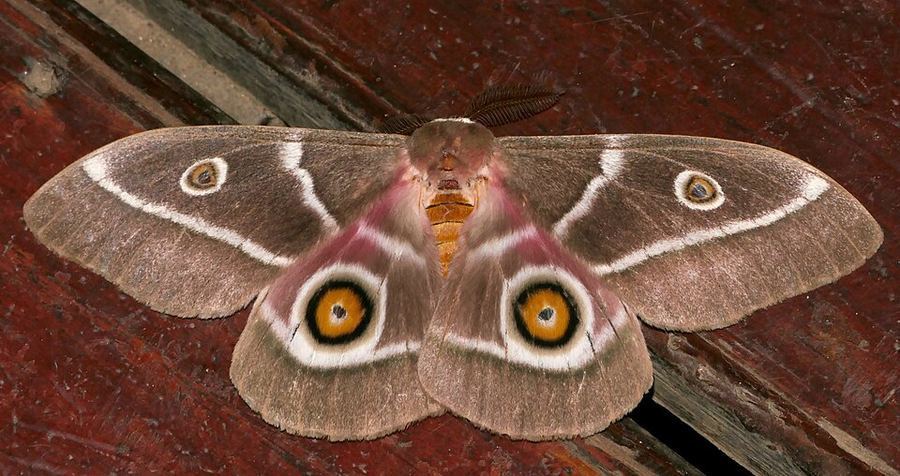
Botswana cooking is built on sorghum, maize and beef, and it is unapologetically plain. The signature dish is seswaa, beef or goat simmered for hours in salted water and then pounded in a wooden mortar until it falls into threads, traditionally prepared by men at weddings and funerals and served without sauce. It is eaten with bogobe, a stiff porridge of sorghum or maize meal; a soured version made with fermented sorghum and sometimes enriched with milk and melon is called ting. Vegetables come mainly as morogo, the wild and cultivated leaves — pumpkin, cowpea, amaranth — boiled and dressed with a little oil. Madila, thick soured milk kept in a gourd or bucket, accompanies almost everything. The most distinctive protein is phane, the caterpillar of the emperor moth harvested from mopane trees, dried and then fried with onion and tomato or eaten as a snack; it is a genuine cash crop in the north-east. Samp, dried melon, wild fruits such as marula and morula beer, and the sorghum beverage sold commercially as Chibuku round out the everyday table. Braaied meat is the universal weekend ritual.

National Dress

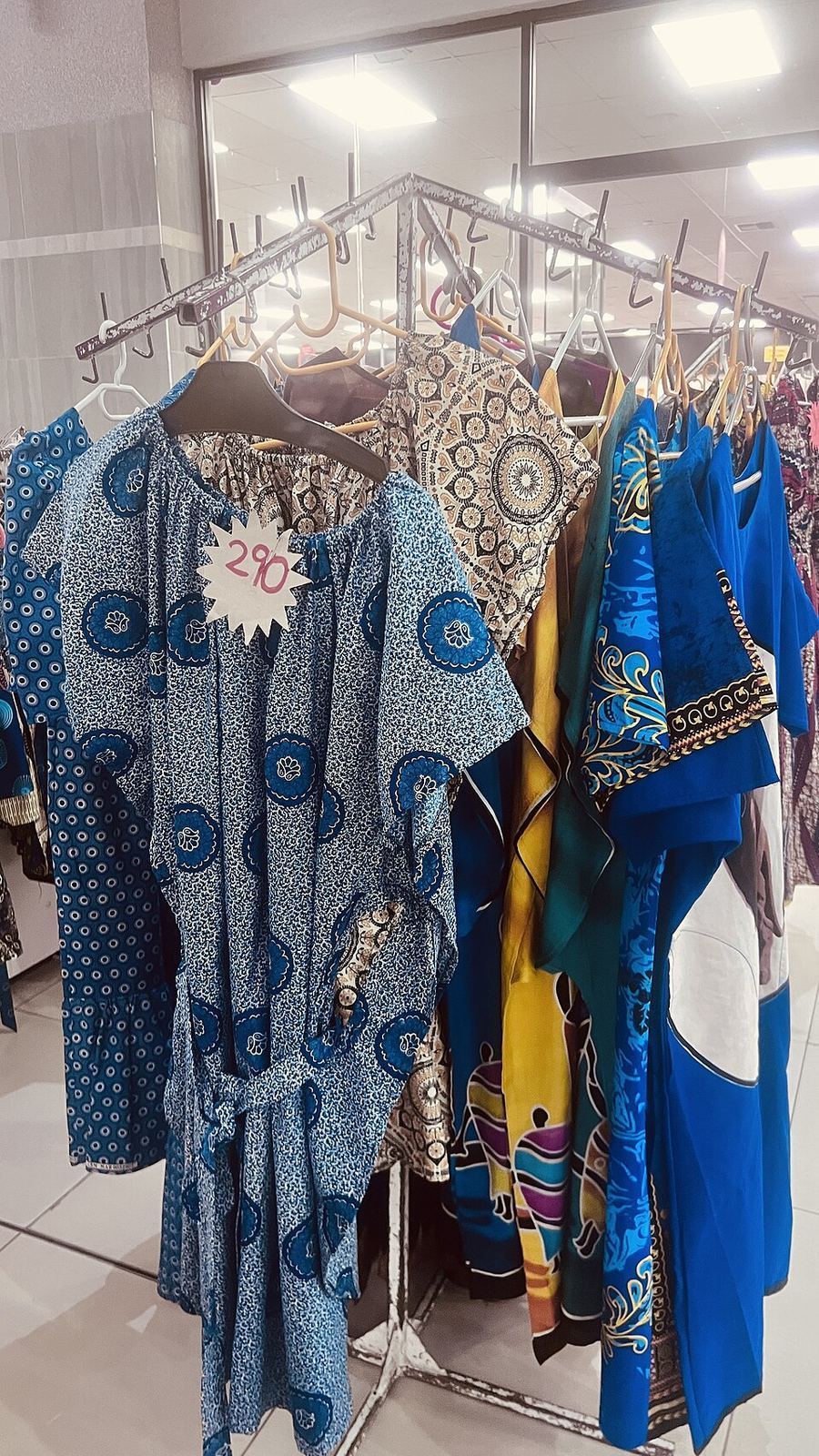
The fabric that carries national meaning in Botswana is leteisi, the indigo-and-white printed cotton usually called German print, whose small repeating motifs are cut into full skirts, wrap dresses, shirts and headwraps. It has no ancient pedigree — the cloth arrived through trade and mission channels — but it has been thoroughly adopted, and a leteisi outfit is the standard dress for weddings, patriotic occasions, graduations and Independence Day. Designers in Gaborone now cut it into tailored jackets and evening wear, and the print appears on airline uniforms and government delegations abroad. Older ceremonial dress used tanned animal skins: the kaross, a cloak of hide worn over the shoulder, and skin aprons, which survive in chiefly regalia and in dance-troupe costume alongside beadwork and ankle rattles. Herero women in the north-west wear an entirely different and instantly recognisable costume, the floor-length layered Victorian gown with the horn-shaped otjikaiva headdress, sewn from bright printed cotton. San dress in performance settings uses hide, ostrich-eggshell beadwork and simple leather aprons. Everyday clothing is otherwise indistinguishable from that of neighbouring South Africa.

Sports & Inspiring Athletes

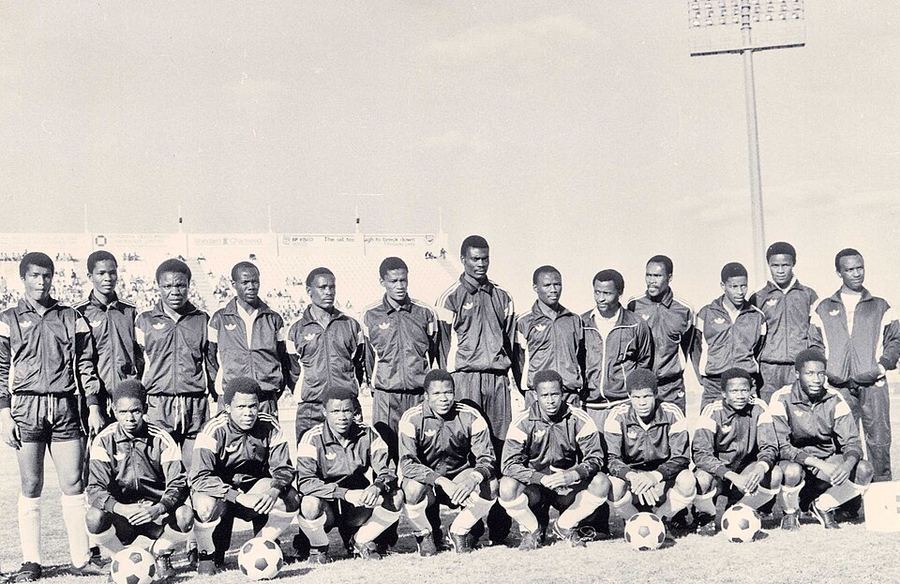
Football is the mass sport. The domestic Premier League is dominated by the Gaborone clubs Township Rollers and Gaborone United, with Notwane, Orapa United and the mine- and force-sponsored sides making up the rest; crowds are modest and many of the best players move to South Africa. The men's national team, the Zebras, plays at the Botswana National Stadium in Gaborone. Athletics, however, is where the country's international reputation now sits, built on a sprint and 400-metre programme that has produced world and Olympic champions from a population of two and a half million; the annual national championships and the schools athletics circuit feed it. Boxing has a long amateur tradition and has supplied most of Botswana's Commonwealth Games representation, and softball is unusually strong for the region, with the women's national team a regular African contender. Netball and volleyball dominate girls' school sport. Traditional pursuits persist alongside the codified ones: stick fighting, donkey and horse racing at district shows, and the marathon village football tournaments played on sand pitches in the dry season.
CIA World FactbookFIFACommonwealth Games FederationBBC

Notable Educational Programs

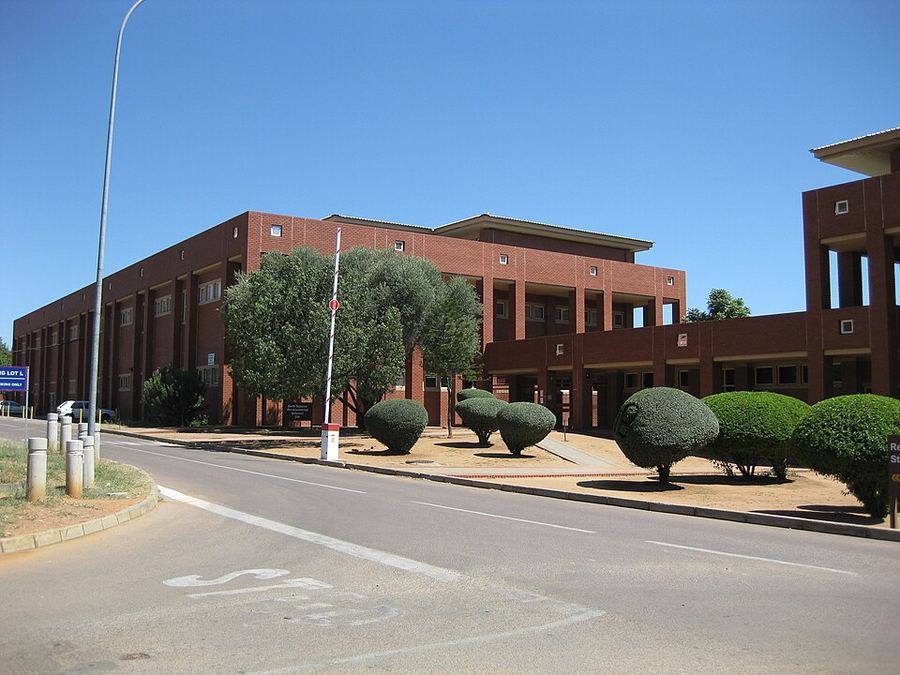
Botswana committed early and heavily to schooling: at independence in 1966 the territory had only a handful of secondary graduates, and successive governments spent a large share of diamond revenue on classrooms, so that primary enrolment became effectively universal within a generation. Primary education is free, and the state has long operated a sponsorship scheme that funds tertiary study for qualifying students at home and abroad — an unusually generous arrangement that trained the professional class but has been repeatedly trimmed as costs rose. The University of Botswana, established in Gaborone in 1982 when the shared University of Botswana, Lesotho and Swaziland was divided among its three members, remains the flagship, with the Okavango Research Institute at Maun as its wetland and wildlife arm. The Botswana International University of Science and Technology opened at Palapye in 2012 with a deliberate engineering, mining and applied-science mandate, intended to diversify skills away from the diamond sector. Botho University and a network of technical colleges and brigades supply vocational training, and the Botswana Open University serves distance learners across the districts.

Wars & Conflicts

Botswana has never fought a civil war and has never been invaded, but it was not spared the violence of the region's liberation struggles. It refused to host guerrilla bases while sheltering refugees from Rhodesia, South Africa and Namibia, and paid for that position. The Botswana Defence Force was created in 1977 after repeated Rhodesian cross-border raids; an ambush at Lesoma in the north in 1978 killed fifteen of its soldiers. In June 1985 South African commandos raided houses in Gaborone, killing twelve people in an operation aimed at the African National Congress. Since then the country's conflicts have been legal and internal rather than military. The relocation of Basarwa communities out of the Central Kalahari Game Reserve from the 1990s produced the country's most contentious case, decided in 2006 when the High Court ruled in Sesana and Others that the residents had been unlawfully deprived of possession of their land and were entitled to return, a judgment whose implementation has remained disputed. Anti-poaching policy, the arming of wildlife rangers and the 2019 lifting of the elephant hunting ban have all generated sustained domestic and international argument.
Encyclopaedia BritannicaHuman Rights WatchAmnesty InternationalBBCReuters
Current as of 2026-08-06

Land & Border Disputes

Botswana's one formal territorial dispute was settled in court and accepted without incident. Kasikili Island — Sedudu to Botswana — is a small, seasonally flooded island in the Chobe River claimed by both Botswana and Namibia, the question turning on which channel of the river constituted the main channel under an 1890 Anglo-German agreement. The two states took the matter to the International Court of Justice by special agreement, and on 13 December 1999 the Court found for Botswana, ruling that the boundary followed the northern channel and that the island belonged to Botswana, while affirming freedom of navigation for both parties. Namibia accepted the judgment. The other sensitive point on the map is the Kazungula crossing, where Botswana, Namibia, Zambia and Zimbabwe meet in an arrangement that may or may not constitute a true quadripoint depending on how the river boundaries are read; the question was rendered largely academic in practice by the opening of the Kazungula Bridge to Zambia in 2021. Botswana's long veterinary cordon fences and the fence erected along the Zimbabwean border in 2003 have drawn criticism from neighbours and conservationists.
Land, Life & Legacy

Land & Climate

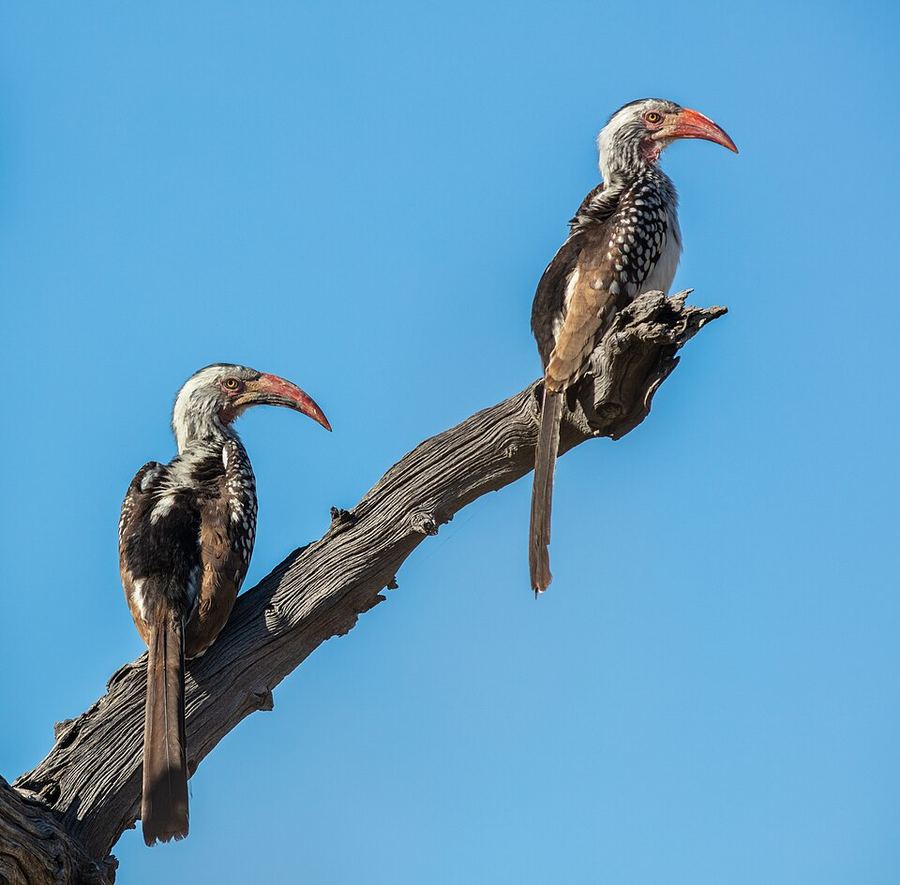
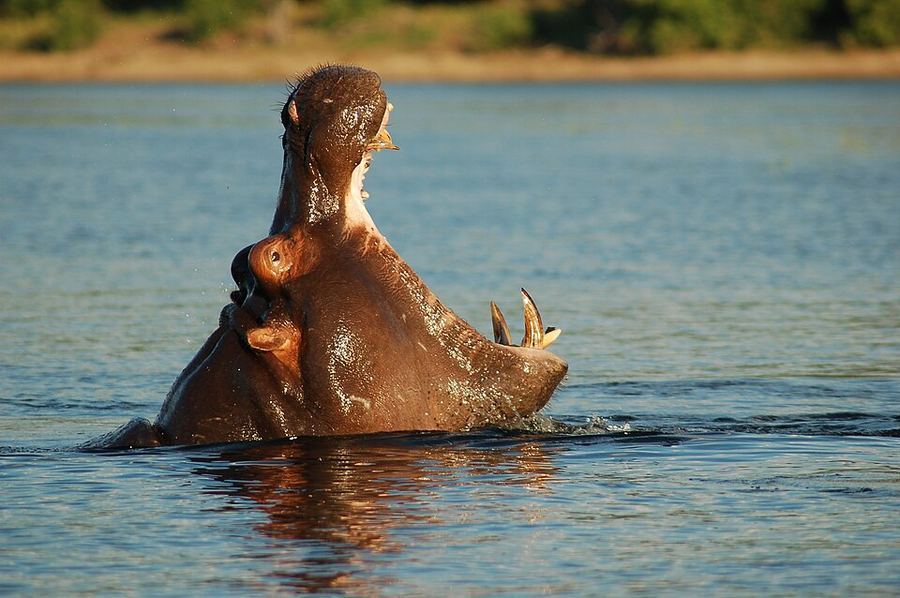
Botswana is a high, flat, dry country: an interior plateau averaging around a thousand metres, with no coastline and no permanent rivers over most of its surface. Kalahari sands cover roughly two-thirds to three-quarters of the territory — not true desert, but semi-arid scrub and grassland that greens dramatically after rain. Three features break the flatness. The Okavango Delta, fed by rain falling in the Angolan highlands months earlier, spreads across some 15,000 square kilometres of papyrus channels and seasonal islands before evaporating; its flood arrives in the dry season, when the surrounding land is barren, which is why it concentrates wildlife so spectacularly. The Makgadikgadi complex, chiefly the Sua and Ntwetwe pans, is the bed of a vast former lake, a blinding salt crust that fills shallowly in good years and draws flamingos. In the north the Chobe and Linyanti rivers form the Namibian border and support enormous elephant herds. Rain falls between November and March and averages under 500 millimetres, declining sharply to the south-west; drought is a recurring national emergency. The highest ground, near Otse in the south-east, reaches only about 1,490 metres.

Entertainment

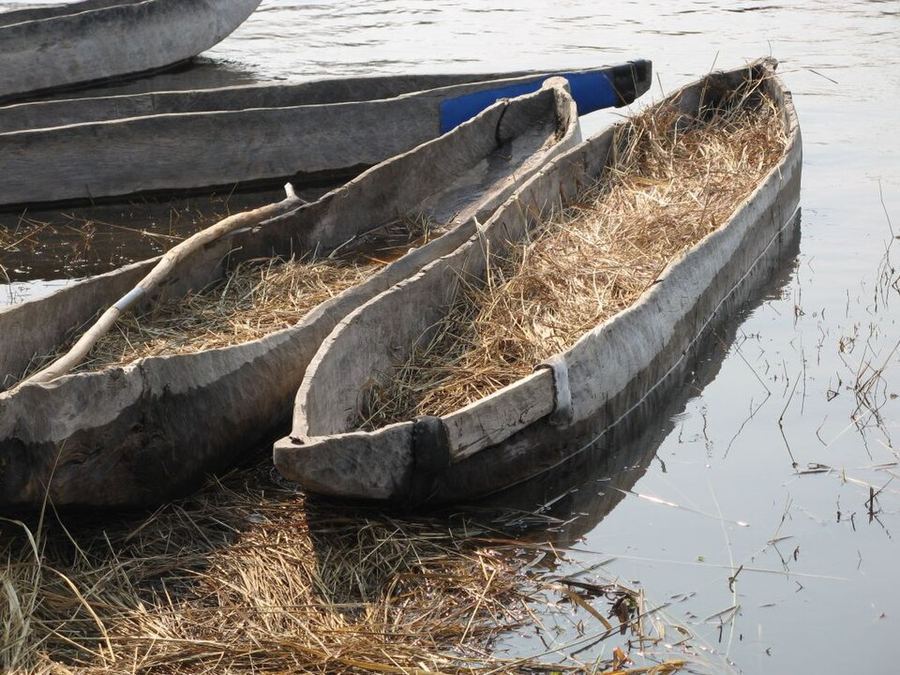
Weekend life revolves around the braai, the extended-family gathering and the long drive to the village. Households with rural ties return to the lands or the cattle post at ploughing and harvest, and funerals — attended in very large numbers and lasting through Saturday — are a central social obligation rather than a private event. Football on television, particularly the South African and English leagues, fills bars and living rooms. Domestic tourism is growing but the wildlife economy is still driven largely by foreign visitors: mokoro poling through the Delta's channels from Maun, game drives in Chobe National Park and Moremi Game Reserve, self-drive camping in the Central Kalahari, and quad-biking and sleeping out on the Makgadikgadi pans. Gaborone offers the Gaborone Dam, the Kgale Hill hike that overlooks the city, shopping malls, and a lively live-music and comedy circuit. Traditional games such as morabaraba, played on a board scratched in the sand with bottle tops, remain common among older men. Choir competitions, church conventions and the annual round of cultural festivals in the districts absorb much of the rest of the calendar.

Art & Museums

The oldest art in Botswana is on rock. The Tsodilo Hills in the north-west carry several thousand painted images — eland, giraffe, cattle, geometric forms — accumulated over millennia and still treated as a sacred place by San and Hambukushu communities; UNESCO inscribed the site in 2001, calling it a repository of a very long human religious record. The country's most celebrated living craft is basketry. Women of the Bayei and Hambukushu communities around Etsha and Gumare in Ngamiland coil mokola palm fibre dyed with bark and root into lidded storage baskets and shallow winnowing trays whose named patterns — the tears of the giraffe, the forehead of the zebra, the knees of the tortoise — are recognised by collectors and museums internationally. Pottery from Thamaga and Gabane, and the wood carving and printed textiles produced at community workshops, feed both domestic and export markets. Contemporary practice centres on the Thapong Visual Arts Centre in Gaborone, which runs residencies and an annual artist-of-the-year competition, and on the National Museum and Art Gallery, which has collected Botswana's modern painters since the 1960s.

Notable People

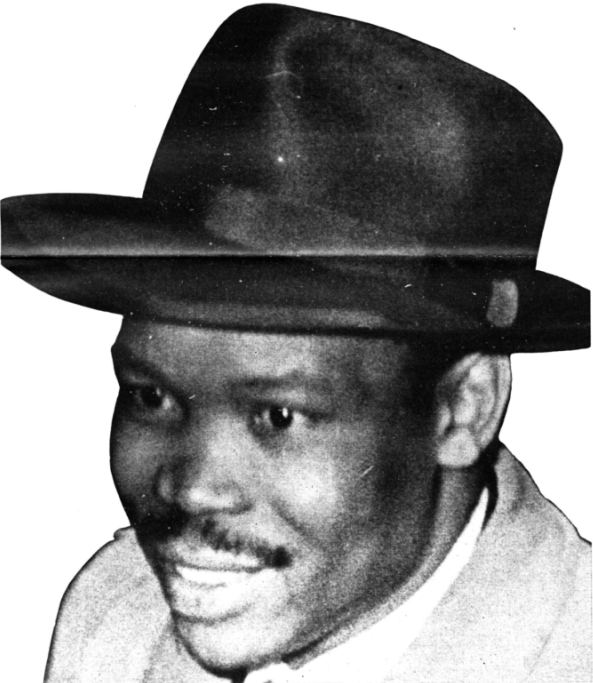
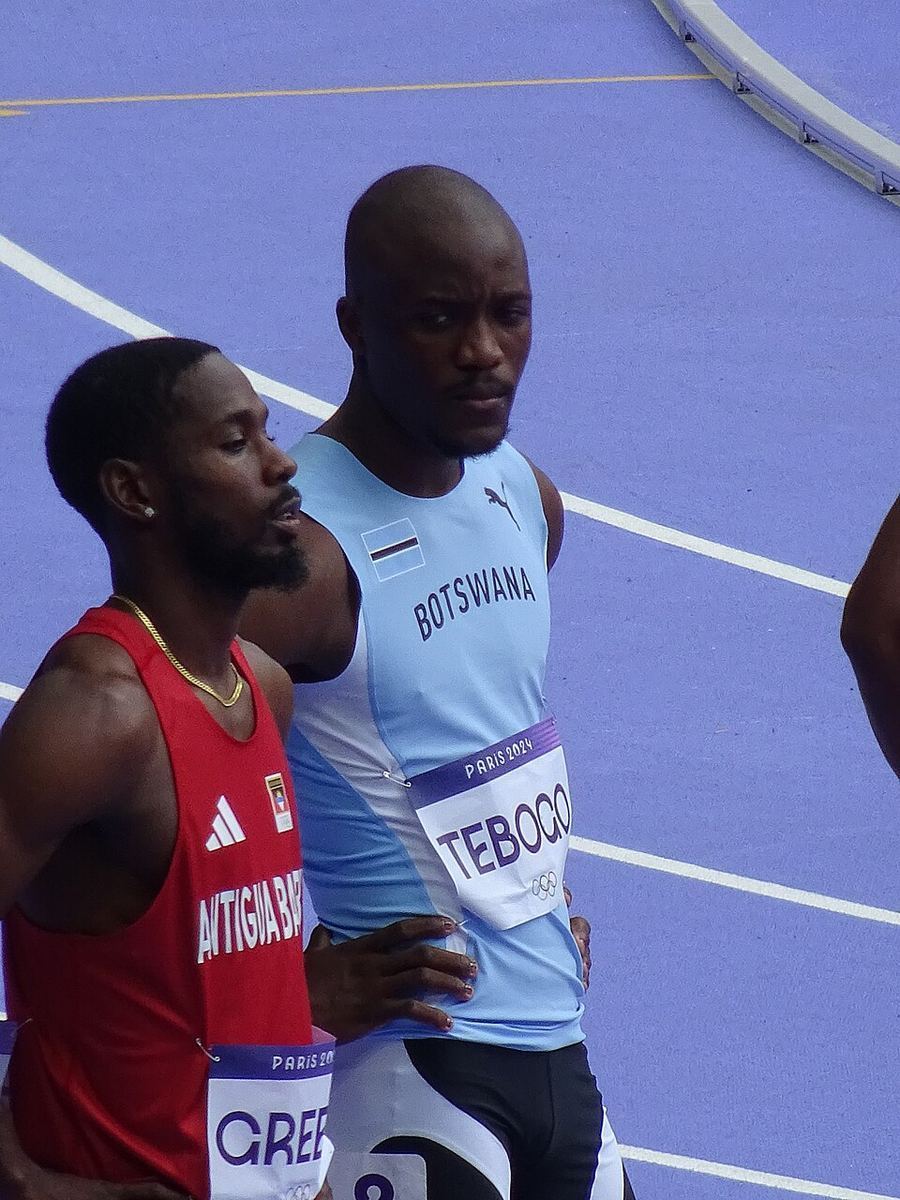
Sir Seretse Khama, the exiled heir who became the founding president, remains the defining national figure; his removal from the chieftaincy over his marriage to Ruth Williams, and his return to lead an independent state, is the country's central story. Sir Ketumile Masire steered the diamond years; Festus Mogae, president from 1998 to 2008, presided over one of Africa's most aggressive antiretroviral rollouts against HIV and received the Mo Ibrahim Prize for African leadership in 2008. Ian Khama, Seretse's son, and Mokgweetsi Masisi followed, and Duma Boko took office in 2024. In letters, Bessie Head — born in South Africa, a refugee who settled in Serowe — wrote When Rain Clouds Gather and A Question of Power, and remains the writer most closely identified with the country. Unity Dow, the first woman appointed to Botswana's High Court, won a landmark citizenship case and later served as a cabinet minister while publishing novels. In sport, Amantle Montsho became world 400-metre champion in Daegu in 2011, Nijel Amos took 800-metre silver at London 2012, and Letsile Tebogo won the 200 metres at Paris 2024.

Inventions & Breakthroughs

Botswana has not been a source of mechanical invention, and it is more honest to say so than to manufacture a claim. Its distinctive contributions have been institutional. The most consequential is the arrangement it struck over diamonds: rather than granting a concession and collecting a royalty, the government took a half share of the producing company and a stake in De Beers itself, and then insulated the proceeds from political appetite through the Pula Fund and a fiscal rule that treats mineral revenue as capital to be converted into other assets rather than income to be spent. Economists have studied the arrangement precisely because it is unusual. A second is the transfer of rough-diamond sorting, valuing and selling from London to Gaborone in 2013, which moved a step of the value chain to the source country. A third is community-based natural resource management, under which trusts in the Okavango and Chobe hold wildlife-use rights and receive tourism revenue directly, an approach copied elsewhere in the region. The kgotla itself, adapted from chiefly assembly into a formal instrument of national consultation, is arguably the oldest of these inventions.

Science & Technology

Botswana's research effort is concentrated where the economy and the environment are. The Okavango Research Institute at Maun, part of the University of Botswana, is the leading centre for wetland hydrology, flood modelling and wildlife ecology in the region, and its long data series on the Delta's annual flood underpin both conservation policy and tourism planning. Debswana's mines at Jwaneng and Orapa are among the most heavily automated in Africa, using X-ray transmission sorting to recover stones and, increasingly, autonomous haulage underground; Jwaneng is routinely described as the world's richest diamond mine by value. The Botswana International University of Science and Technology at Palapye anchors the country's engineering and materials research, and the Botswana Innovation Hub in Gaborone is the government's attempt to seed a technology and biotechnology cluster outside mining. Botswana is one of the African partner countries in the continental radio-astronomy programme built around the Square Kilometre Array, which is developing very-long-baseline capability across the region. In health, the national antiretroviral programme launched in 2002 was among the first universal public treatment schemes in Africa and has been closely studied ever since.
On The World Stage

Champions & Defining Moments

Botswana's international breakthrough came on the track. Amantle Montsho won the 400 metres at the 2011 World Championships in Daegu, the country's first global title. Nijel Amos took silver in the 800 metres at the London Olympics in 2012, Botswana's first Olympic medal of any colour, in a race won in a world record by David Rudisha. The decisive moment arrived at Paris in 2024, when Letsile Tebogo won the 200 metres to claim Botswana's first Olympic gold, and the men's four-by-four-hundred-metre relay squad took silver — an extraordinary return for a nation of its size, and one that made Tebogo a continental figure overnight. In football the Zebras qualified for the Africa Cup of Nations for the first time in 2012, losing all three group matches in Gabon and Equatorial Guinea but marking the country's arrival at the continental tournament. Botswana has competed at every Summer Olympics since Moscow in 1980 and is a consistent Commonwealth Games participant, where its boxers and sprinters have taken medals. It has never appeared at a FIFA World Cup.

IOCOlympediaWorld AthleticsFIFACommonwealth Games Federation
Economy, Trade & Government

Currency & GDP

Pula — BWP (P)

GDP (PPP): $45.553 billion (2024 est.)

Per capita: $18,100 (2024 est.)

Exports

$6.398 billion (2023 est.)

diamonds, copper ore, insulated wire, carbonates, cattle (2023)

Partners: UAE 27%, India 17%, Belgium 16%, South Africa 8%, USA 7% (2023)

Imports

$7.228 billion (2023 est.)

refined petroleum, diamonds, cars, flavored water, electricity (2023)

Partners: South Africa 65%, Namibia 8%, Canada 5%, China 3%, India 3% (2023)

Government

Type: parliamentary republic

Independence: 30 September 1966 (from the UK)

Terrain → Where People Live

How mountains, coasts, and rivers shape settlement (LandScan).

Coming — data

Migration & Ethnic Settlement

Where groups settled and how people move (GeoEPR + UNHCR).

Coming — data

Universities

Notable institutions, mappable as points.

Coming — data
Economy & government facts: CIA World Factbook (public domain), via OpenFactBook / factbook.json.
Every fact and narrative claim will carry a visible source citation. Data-driven sections light up automatically wherever HERA has coverage.