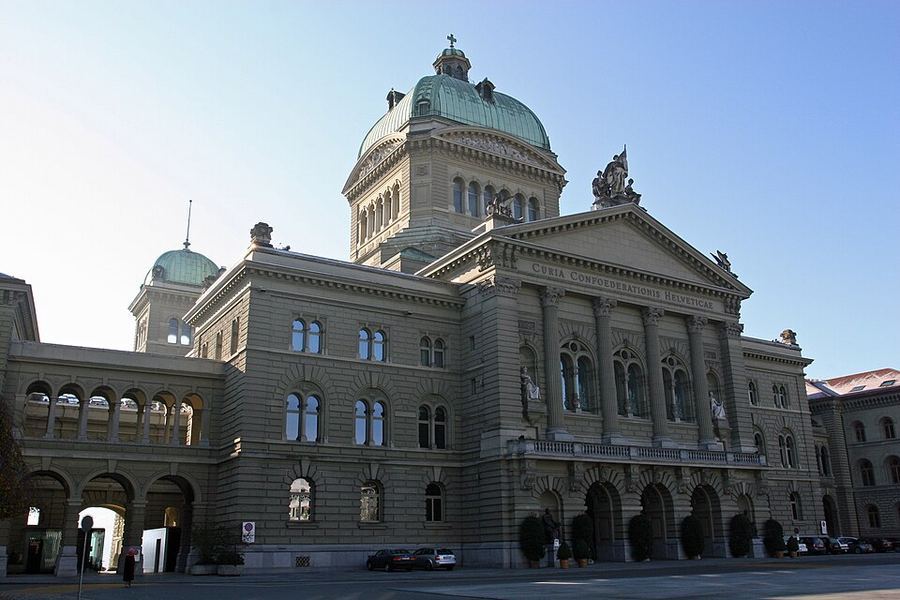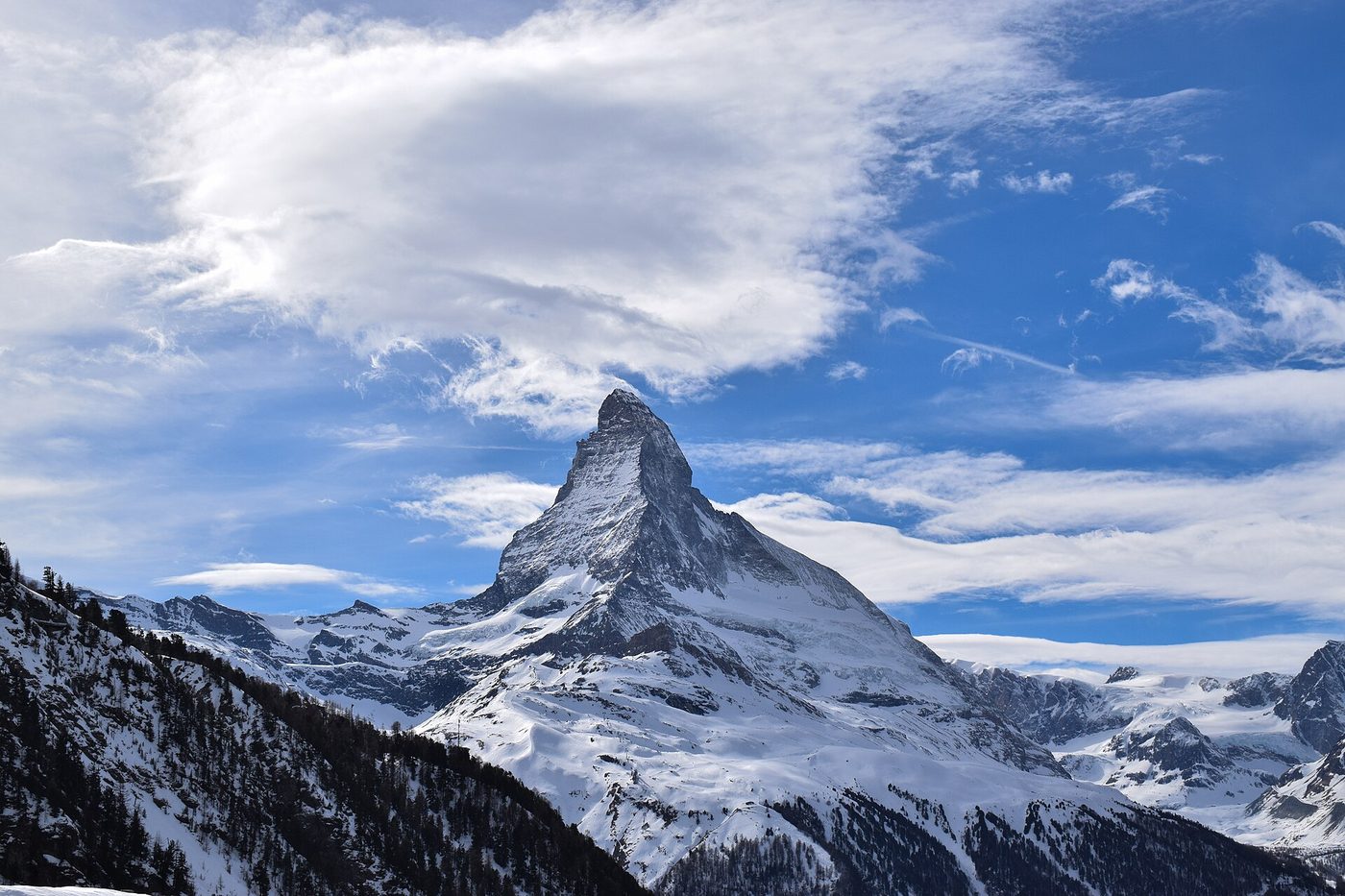
Switzerland is a landlocked federal state of about 8.9 million people occupying some 41,000 square kilometres in the middle of the Alps, bordered by Germany, France, Italy, Austria and Liechtenstein. It is formally a confederation and in practice a federation of twenty-six cantons, each with its own constitution, courts, schools and taxes, joined under a federal constitution first adopted in 1848. Bern is the seat of government, though Zurich is the financial capital and Geneva the diplomatic one. There are four national languages — German, spoken by around three-fifths of residents, French by nearly a quarter, Italian by about eight per cent, and Romansh by well under one — and no single national church, with Catholics, Protestants and the religiously unaffiliated each accounting for large shares. Executive power rests with a seven-member Federal Council whose presidency rotates annually, and citizens can force a national vote on almost any law or constitutional change. The country dates its founding to a pact of 1291, has stayed out of foreign wars for more than two centuries, and has one of the highest per-capita incomes in the world.
Zurich's urban core is home to about 746,614 people.
Among the world's megacities, though, it's one of many — the giants of Asia and Latin America run larger still:
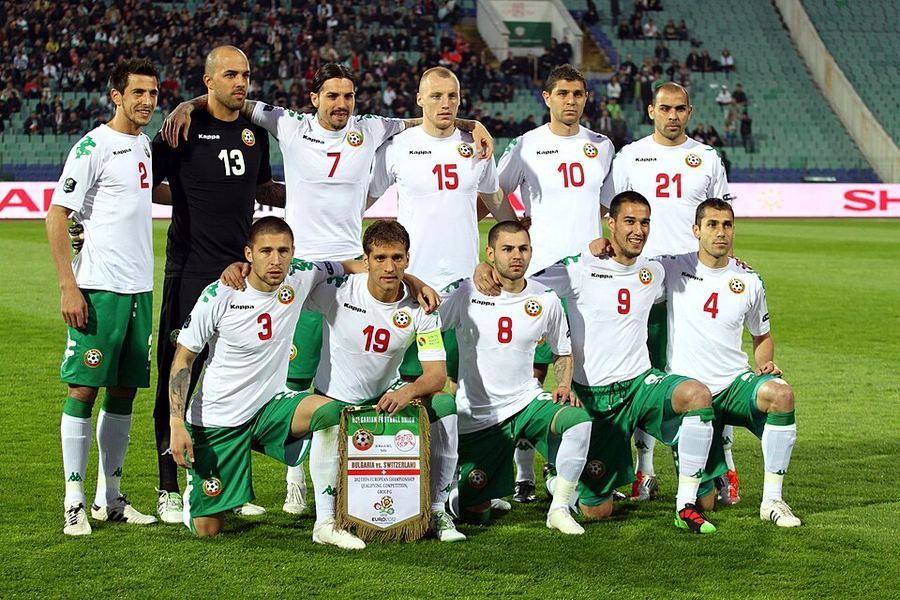
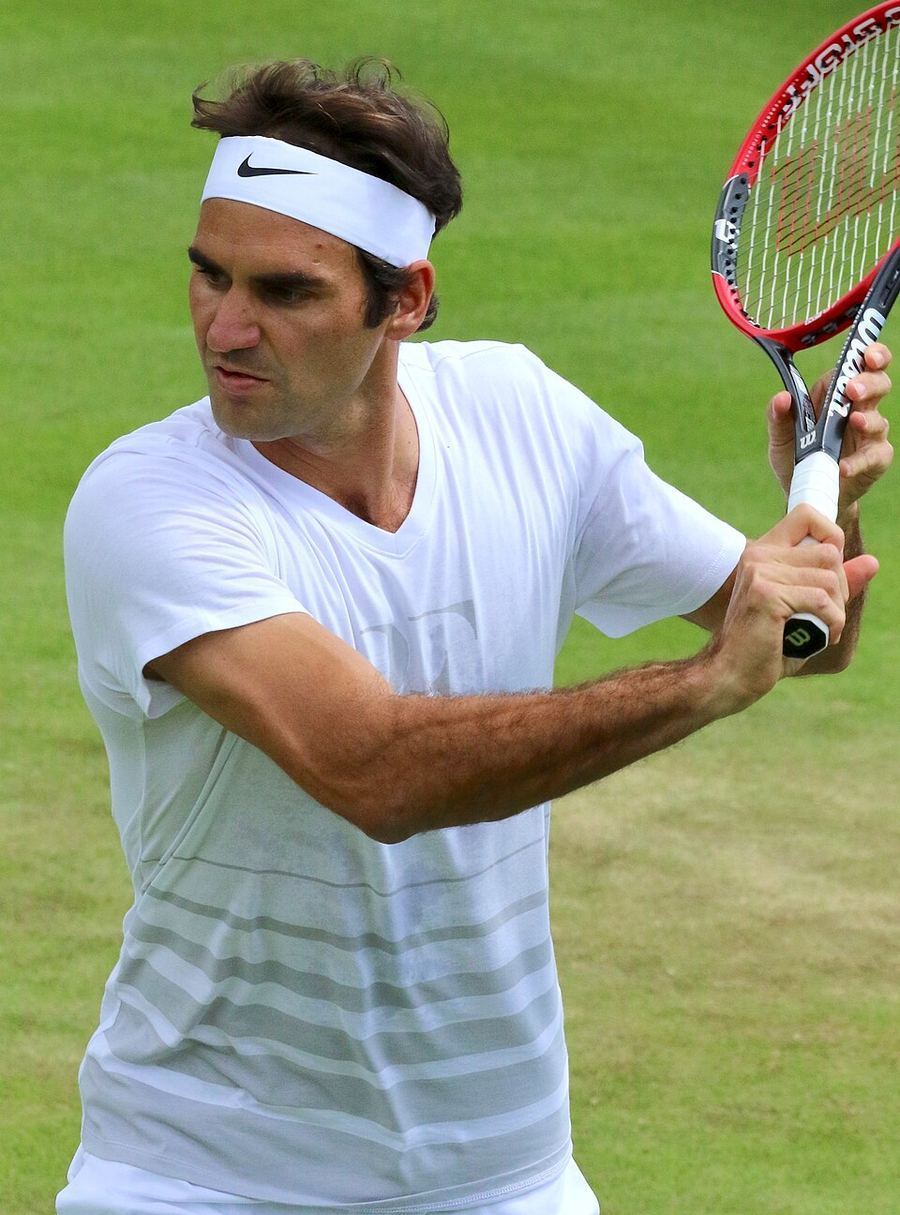
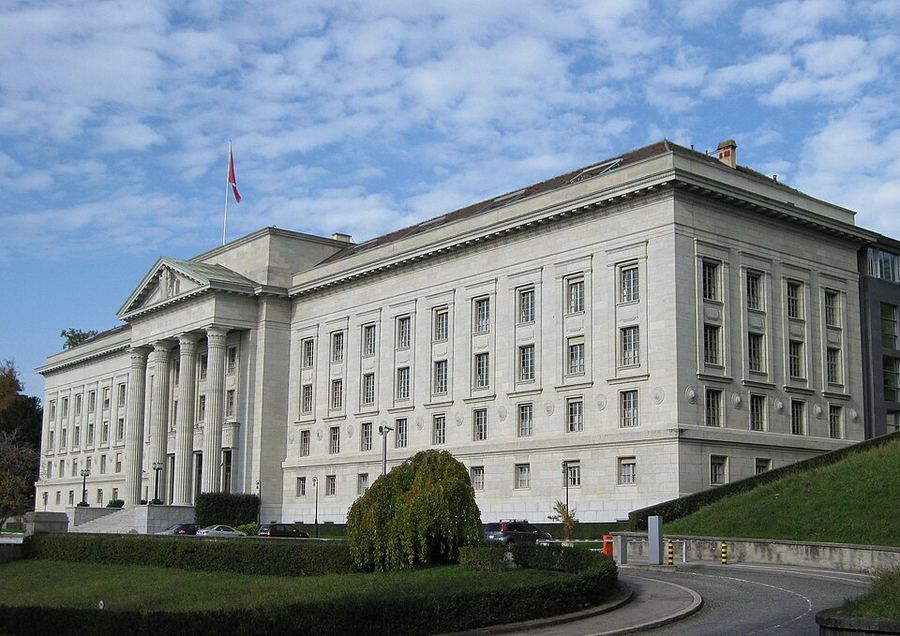
Switzerland is the administrative centre of world sport. The International Olympic Committee has been in Lausanne since 1915, and the city styles itself the Olympic Capital; the Court of Arbitration for Sport sits there too. FIFA is headquartered in Zurich and UEFA at Nyon on Lake Geneva, along with dozens of other international federations. On the field, Roger Federer is the country's most globally recognised figure of any kind: twenty Grand Slam singles titles, eight Wimbledons, and an Olympic doubles gold with Stan Wawrinka at Beijing in 2008, followed by singles silver at London in 2012. Martina Hingis was world number one at sixteen; Belinda Bencic won Olympic singles gold at Tokyo in 2020. In alpine skiing the country has produced Vreni Schneider, Didier Cuche, Lara Gut-Behrami and Marco Odermatt, and it sits permanently among the leading nations at the Winter Olympics, which it hosted twice at St. Moritz, in 1928 and 1948. The men's football team reached the quarter-finals of the delayed European Championship in 2021 after eliminating the world champions France on penalties in Bucharest.
Swiss Franc — CHF (CHF)
GDP (PPP): $741.035 billion (2024 est.)
Per capita: $82,000 (2024 est.)
$675.059 billion (2024 est.)
gold, packaged medicine, vaccines, nitrogen compounds, base metal watches (2023)
Partners: Germany 14%, China 12%, USA 11%, Italy 5%, Turkey 5% (2023)
$582.554 billion (2024 est.)
gold, packaged medicine, vaccines, cars, jewelry (2023)
Partners: Germany 17%, USA 9%, Italy 8%, France 6%, China 5% (2023)
Type: federal republic (formally a confederation)
Independence: 1 August 1291 (founding of the Swiss Confederation)
How mountains, coasts, and rivers shape settlement (LandScan).
Coming — dataWhere groups settled and how people move (GeoEPR + UNHCR).
Coming — dataNotable institutions, mappable as points.
Coming — data