HERA · Human Entity Reference Atlas by Masego Inc

← China 🌐 3D View
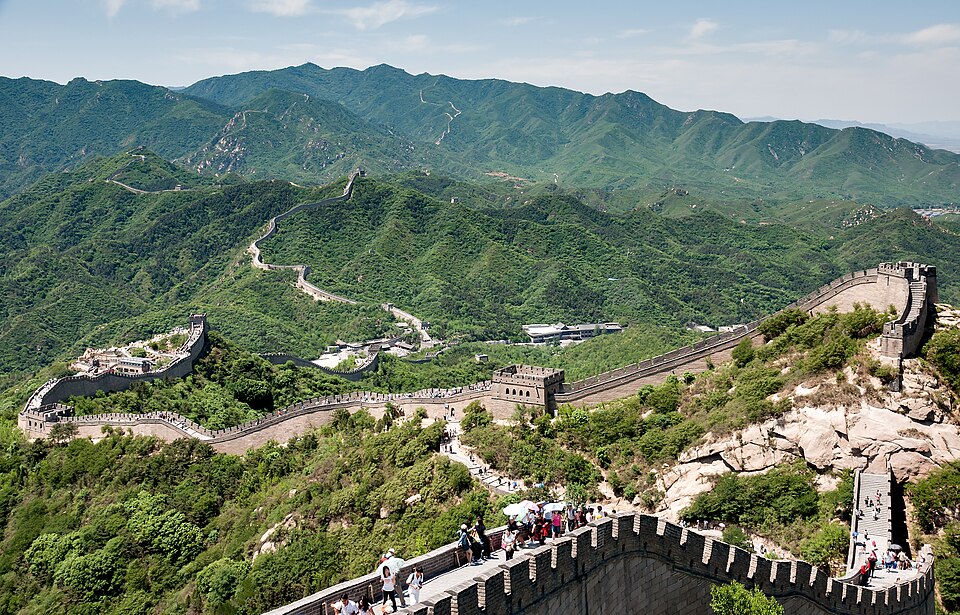
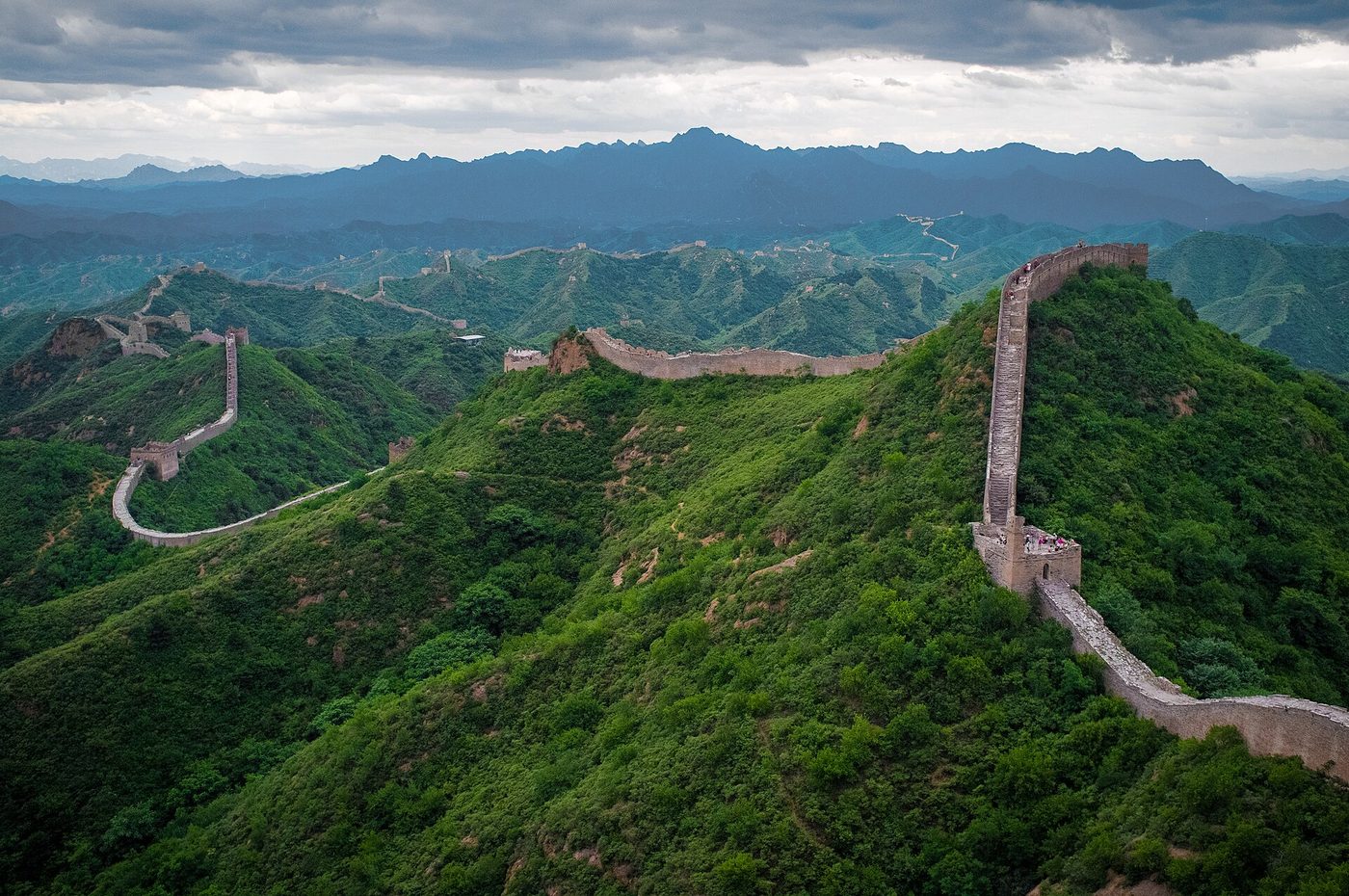
Great Wall of China, China
China CHN
Great Wall of China — Photo: Severin.stalder / CC BY-SA 3.0 via Wikimedia Commons
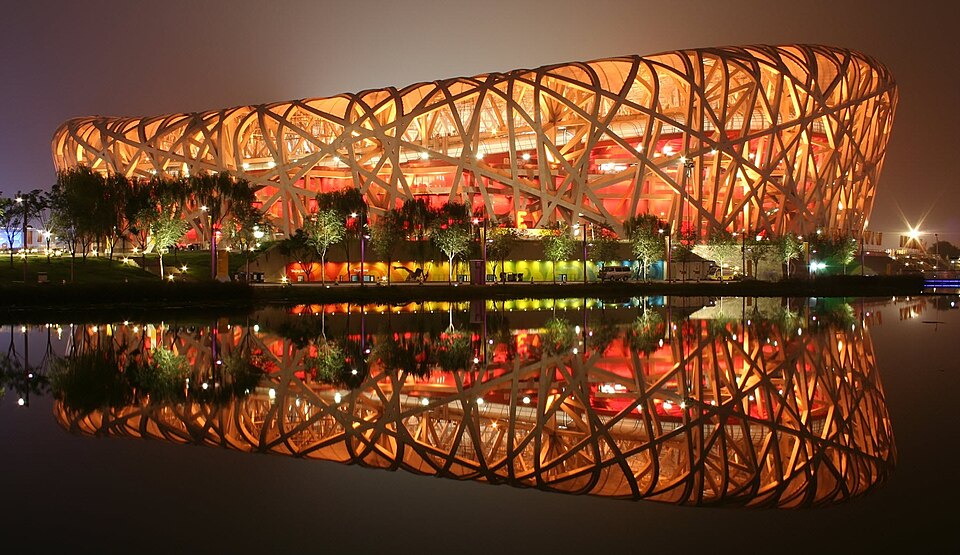
Did You Know Beijing is the only city in the world to have hosted both the Summer Olympic Games (2008) and the Winter Olympic Games (2022). — IOC

China is a country of superlatives that still manages to surprise. Home to 1,407,181,209 people (2025 est.), it stretches from the Himalayan ice walls of Tibet across the Gobi's dune seas to a Pacific coastline studded with megacities. Its civilization runs in an unbroken thread from Bronze Age dynasties through the Qin unification of 221 B.C. to the People's Republic proclaimed on 1 October 1949 — a continuity no other major state can claim. Today it is the world's second-largest economy at market exchange rates and the largest measured by purchasing power, with GDP of roughly $33.6 trillion PPP and exports of $3.8 trillion in broadcasting equipment, computers, and integrated circuits. Yet the aggregate numbers flatten a startling diversity: 56 officially recognized ethnic groups, hundreds of languages, and regional cuisines so distinct they might belong to different countries. The median age of 40.8 years signals a society that grew prosperous fast and is now aging fast — one of the defining demographic stories of the century, unfolding from Beijing's ministries to the smallest Yunnan mountain village.

CIA World FactbookIMFEncyclopaedia Britannica
Population
1,407,181,209
Capital
Beijing
Currency
¥ CNY
Time zones
1
Largest city
Guangzhou
Local Time
Shanghai
Human Geography Themes
Loading national figures…
Largest Cities
Guangzhou42,987,704
Shanghai30,678,616
Beijing18,150,576
Suzhou11,540,430
Shantou10,579,303
Chongqing8,449,690
Wuhan8,079,484
Nanjing8,061,029
In Perspective

Guangzhou's urban core is home to about 42,987,704 people.

That's bigger than London, Paris, Madrid and Toronto — each a great world city in its own right.

Guangzhou42,987,704
London10,408,332
Paris9,366,654
Madrid5,680,137
Toronto5,566,382

And it holds its own among the world's largest urban centres:

Guangzhou42,987,704
Jakarta40,545,126
Dhaka37,307,160
Tokyo33,244,670
Shanghai30,678,616
Cairo25,230,325

More people live in Guangzhou than in the entire nation of Sweden, Greece, Portugal or Israel.

The Country & Its People

History

Chinese history is usually told in dynasties, and the rhythm is real: the Qin unified the warring states in 221 B.C. and standardized script, weights, and axle widths; the Han gave the majority ethnicity its name; the Tang presided over a cosmopolitan golden age when Chang'an was likely the world's largest city; the Song produced paper money, movable-type printing, and a proto-industrial iron industry centuries before Europe. The Ming sent Zheng He's treasure fleets as far as East Africa, then turned inward. The Qing doubled the empire's territory before colliding with industrialized Europe in the Opium Wars, opening a century of unequal treaties, rebellion, and collapse that Chinese textbooks still call the 'century of humiliation.' The dynastic system ended on 1 January 1912 with the Republic of China; civil war and Japanese invasion followed, and the Communist Party's victory brought the People's Republic in 1949. The pivot came in 1978, when Deng Xiaoping's reform and opening launched the fastest sustained economic expansion in recorded history — the World Bank estimates about 800 million people lifted out of extreme poverty in four decades.
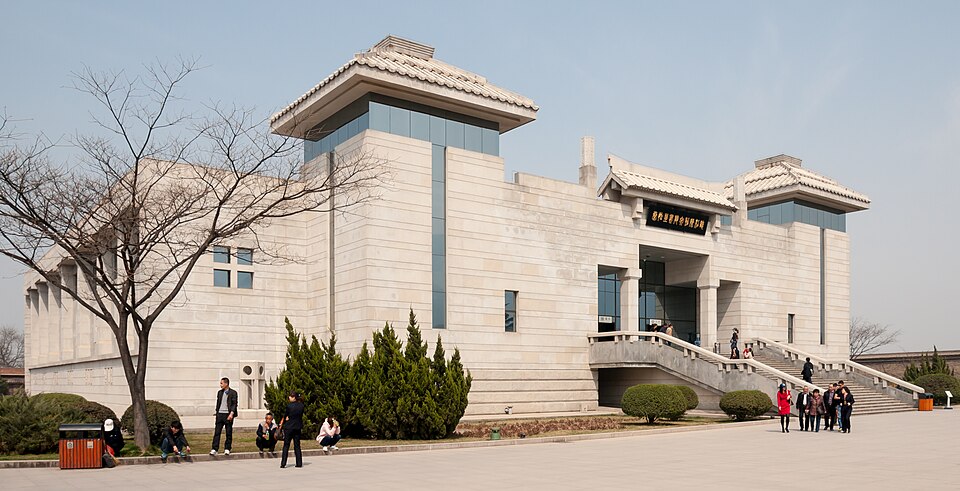
History, China
CEphoto, Uwe Aranas / CC BY-SA 3.0

Culture

China's cultural bedrock is a braid of three traditions: Confucian social ethics, Daoist naturalism, and Buddhism, absorbed from India and thoroughly sinicized. In practice they were never rivals — the same scholar might govern as a Confucian, retire as a Daoist, and be buried with Buddhist rites. The 2021 estimates capture this fluidity: 21.9% follow folk religion, 18.2% are Buddhist, and 52.1% report no affiliation, though ancestral veneration and temple festivals thrive among the 'unaffiliated.' Calligraphy remains the most prestigious art form — the brush-written character prized as painting, poetry, and moral self-cultivation at once. The festival calendar still runs on the lunar cycle: Lunar New Year triggers the largest annual human migration on Earth as hundreds of millions travel home, while Mid-Autumn mooncakes and Qingming grave-sweeping bind families across generations. Beyond the Han majority (91.1%), 55 recognized minority nationalities — Zhuang, Hui, Uyghur, Tibetan, Mongol, Miao, and dozens more — maintain distinct scripts, faiths, and festivals, with Zhuang, Uyghur, Tibetan, and Mongolian holding official status in their autonomous regions.
Culture, China
Anonymous (China)Unknown author / Public domain

Points Of Pride

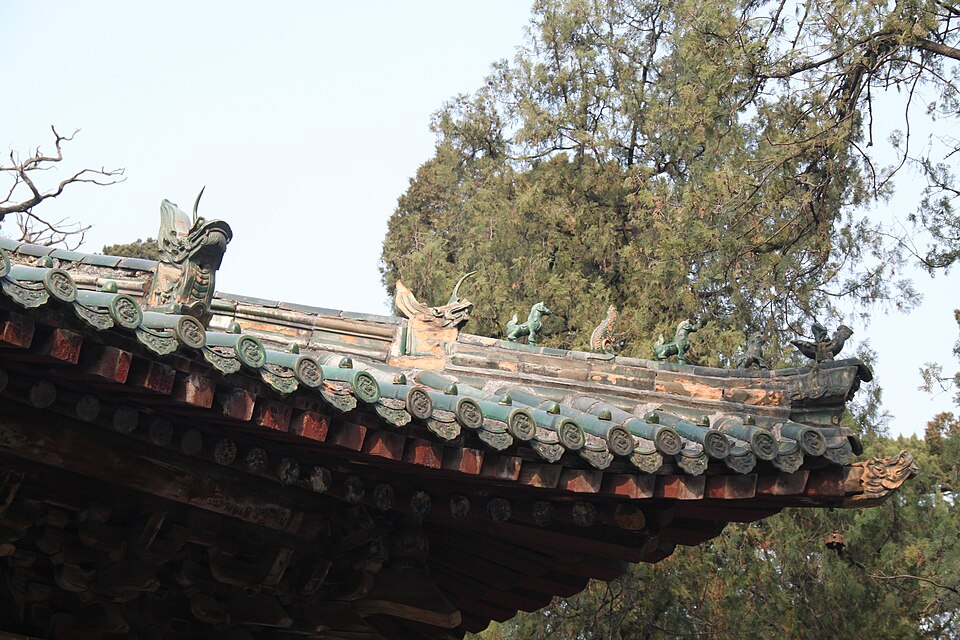
Few countries can match China's inventory of civilizational landmarks. The Great Wall — not one wall but overlapping fortification systems built across two millennia — was inscribed by UNESCO in 1987, alongside the Forbidden City's 9,000-room palace complex and the Terracotta Army guarding the first Qin emperor. China now counts 59 World Heritage sites, among the highest totals on Earth. Modern pride runs just as deep: a high-speed rail network longer than the rest of the world's combined, whisking passengers from Beijing to Shanghai — roughly the distance from London to Milan — in about four and a half hours. The space program has landed rovers on the Moon and Mars, returned lunar samples, and operates the Tiangong space station. The World Bank-documented reduction of extreme poverty — some 800 million people over four decades — is arguably history's largest. And Beijing holds a distinction no other city can claim: host of both the Summer Olympics (2008) and Winter Olympics (2022), a double confirmed by the IOC record books.
Points Of Pride, China
CEphoto, Uwe Aranas / CC BY-SA 3.0

Cultural Fusion

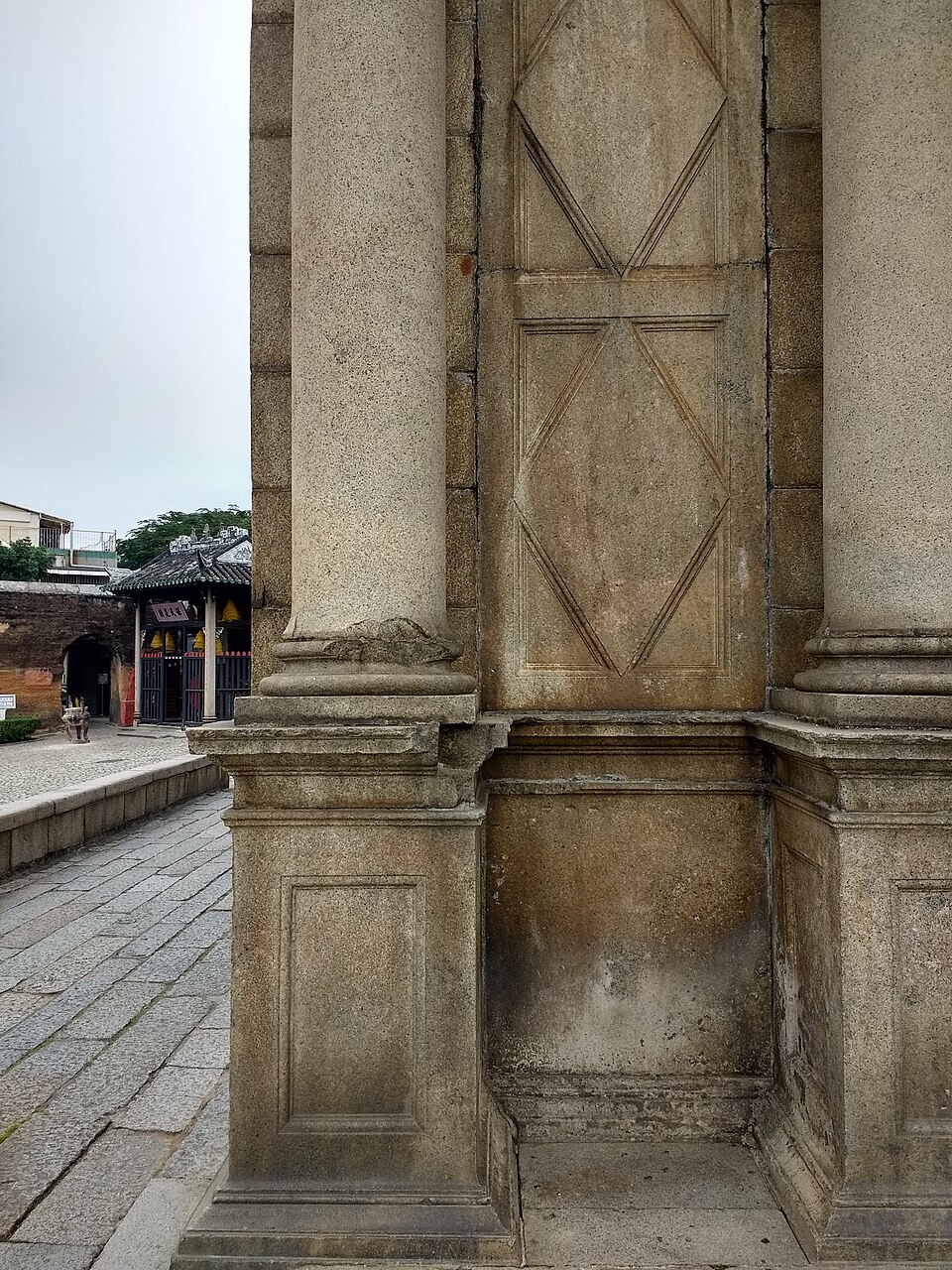
China has never been the sealed kingdom of caricature. The Silk Road carried far more than silk: Buddhism arrived from India along its caravan routes and was reshaped into distinctly Chinese schools like Chan (which traveled onward to Japan as Zen), while grapes, glassware, and Central Asian music flowed into Tang dynasty courts. The Hui people — Chinese-speaking Muslims descended partly from Silk Road traders — created a celebrated halal cuisine whose hand-pulled lamian noodles are now a lunchtime staple nationwide. In the far west, Uyghur muqam music and Central Asian bazaar culture meet Han commerce; on the plateau, Tibetan Buddhism maintains its monastic universities; in the northeast, Korean and Manchu heritage persists. The coastal periphery adds European layers: Macau blends Cantonese and Portuguese into a unique creole cuisine and architecture, while Hong Kong's common-law courts and milk tea testify to its British century. Glottolog's catalog of the country's languages spans Sinitic, Tibeto-Burman, Turkic, Mongolic, Tai-Kadai, and Austronesian families — a linguistic map that reads less like one nation than a compressed continent.
Cultural Fusion, China
Mx. Granger / CC0

Music & Dance

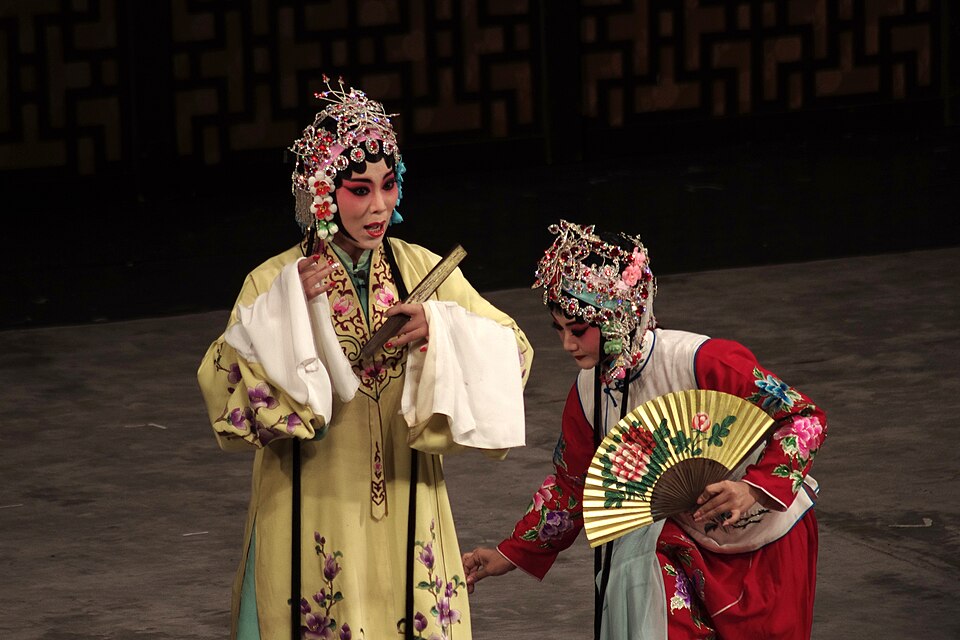
China's classical soundscape is built on instruments with lineages measured in millennia: the guqin, a seven-string zither whose refined solo repertoire UNESCO recognized as intangible cultural heritage; the pipa lute, sung about in Tang poetry; and the two-string erhu, whose voice-like wail anchors folk ensembles. The grandest synthesis is Peking opera — inscribed by UNESCO in 2010 — where falsetto singing, acrobatics, martial choreography, and painted-face symbolism (red for loyalty, white for treachery) merge into total theater. Regional opera traditions like Kunqu, older and more literary, earned UNESCO recognition even earlier. Dance is equally layered: lion and dragon dances explode through New Year streets to drumming and firecrackers, while minority traditions — the Uyghur muqam suites, Mongolian throat-singing and horse-themed dances, Dai peacock dances of Yunnan, Tibetan guozhuang circle dances — remain living practice rather than museum pieces. Modern China added its own genres: revolutionary ballets of the 1960s, the Mandopop wave that conquered Asian charts, and today's conservatory-trained virtuosos who alternate Rachmaninoff with pipa concertos in the same season.
Music & Dance, China
陈文 https://www.flickr.com/photos/univers-finder/ / CC BY 2.0

Cuisine & Misattributed Foods

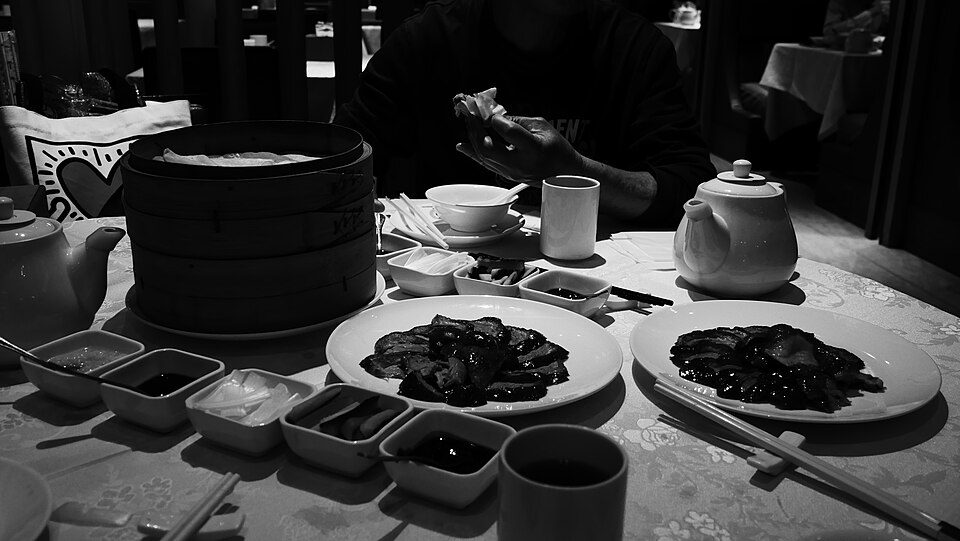
Calling it 'Chinese food' is like calling Europe's cooking 'European food.' Tradition organizes the map into eight great cuisines: Sichuan's numbing-hot málà built on chili and Sichuan pepper; Cantonese precision, from dawn dim sum carts to whole steamed fish; Shandong's imperial banquet cooking; Jiangsu's sweet, knife-perfect refinement; plus Zhejiang, Fujian, Hunan, and Anhui schools. The deeper divide is agricultural — wheat north, rice south — so northern tables fill with hand-pulled noodles, dumplings, and steamed buns while southern ones center on rice and quick stir-fries. Beijing's lacquer-skinned roast duck, carved tableside and wrapped in pancakes, descends from Ming palace kitchens; hot pot, the communal simmering cauldron, ranges from Chongqing's fiery oil to Beijing's mild mutton broth. Tea is the constant thread: China domesticated the plant, and UNESCO inscribed its traditional tea-processing techniques and social practices — spanning green, black, oolong, white, and pu-erh craft — as intangible heritage in 2022. Add breakfast jianbing crepes, Shanghai soup dumplings, and Xinjiang lamb skewers, and the national cuisine reveals itself as dozens of cuisines in loose federation.
Cuisine & Misattributed Foods, China
Peachyeung316 / CC BY-SA 4.0

National Dress

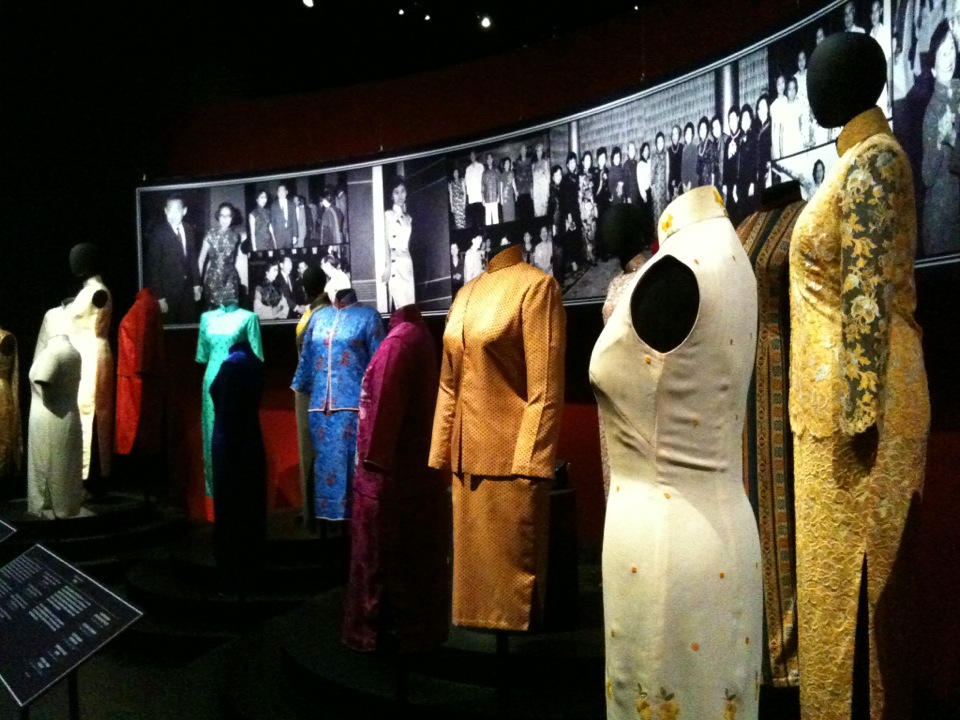
No single garment claims the title of China's national dress — instead, three silhouettes carry the story. The qipao (cheongsam), the high-collared, side-slit sheath that became the emblem of 1920s–30s Shanghai glamour, evolved from loose Manchu robes into a fitted modern icon still worn at weddings and formal occasions. The zhongshan suit — known abroad as the Mao suit — was promoted by Sun Yat-sen as republican dress and became the uniform of twentieth-century Chinese politics; its four pockets were said to represent civic virtues. The twenty-first century brought a third current: the hanfu revival, in which mostly young enthusiasts wear flowing, cross-collared robes styled on Han, Tang, and Ming precedents, filling parks and social media with silk sleeves on festival days. The richest textile traditions, though, belong to the minority nationalities: Miao festival dress layered with pounds of hammered silver jewelry, Tibetan chuba robes worn off one shoulder against plateau temperature swings, Mongolian deel sashed for riding, and Yi, Dong, and Zhuang embroidery and batik so intricate that regional textile arts feature prominently in China's intangible-heritage inventories.
National Dress, China
Jacklee. / CC BY-SA 4.0

Sports & Inspiring Athletes

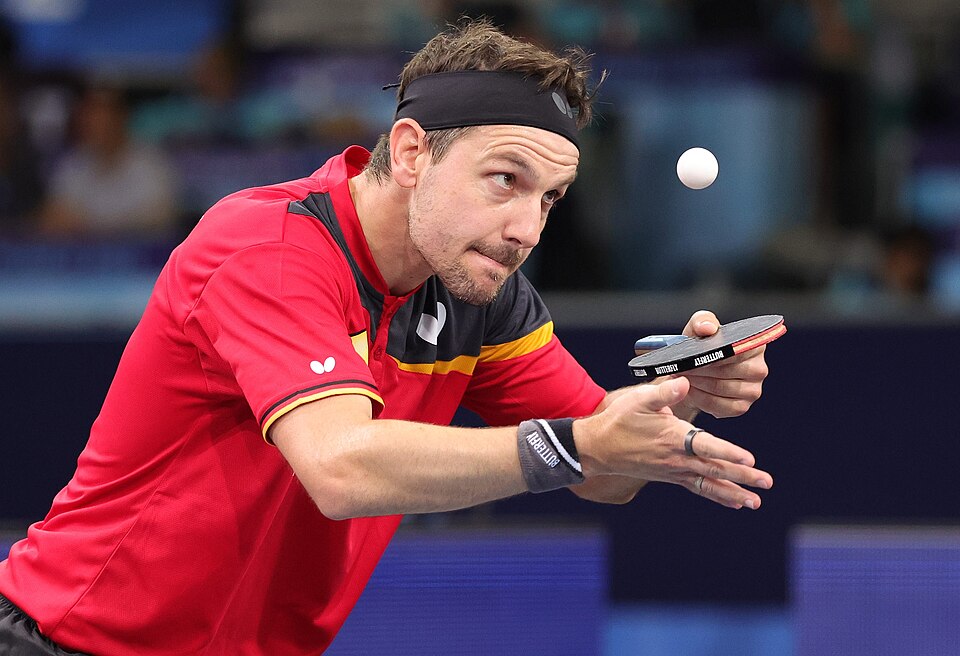
Table tennis is the closest thing China has to a national religion of sport — since the game entered the Olympics in 1988, Chinese players have won the overwhelming majority of available gold medals, a dominance without parallel in any Olympic discipline, and 'ping-pong diplomacy' famously helped reopen U.S.–China relations in 1971. Badminton, diving, gymnastics, and weightlifting form the rest of the medal machine that has placed China at or near the top of every Summer Olympic table since Beijing 2008, when it topped the gold count outright. The IOC record shows Beijing as the only city ever to host both Summer (2008) and Winter (2022) Games. Basketball commands the biggest fan base — Yao Ming's NBA career made the sport a shared language between Chinese and American fans — while football remains the great unfinished project: enormous state investment, a men's team with a single FIFA World Cup appearance (2002), and a women's team with a far prouder record, including a 1999 World Cup final. The oldest traditions endure too: wushu's acrobatic forms fill sports schools, and tai chi, inscribed by UNESCO in 2020, animates every city park at dawn.
Sports & Inspiring Athletes, China
Sandro Halank, Wikimedia Commons / CC BY-SA 4.0

Notable Educational Programs

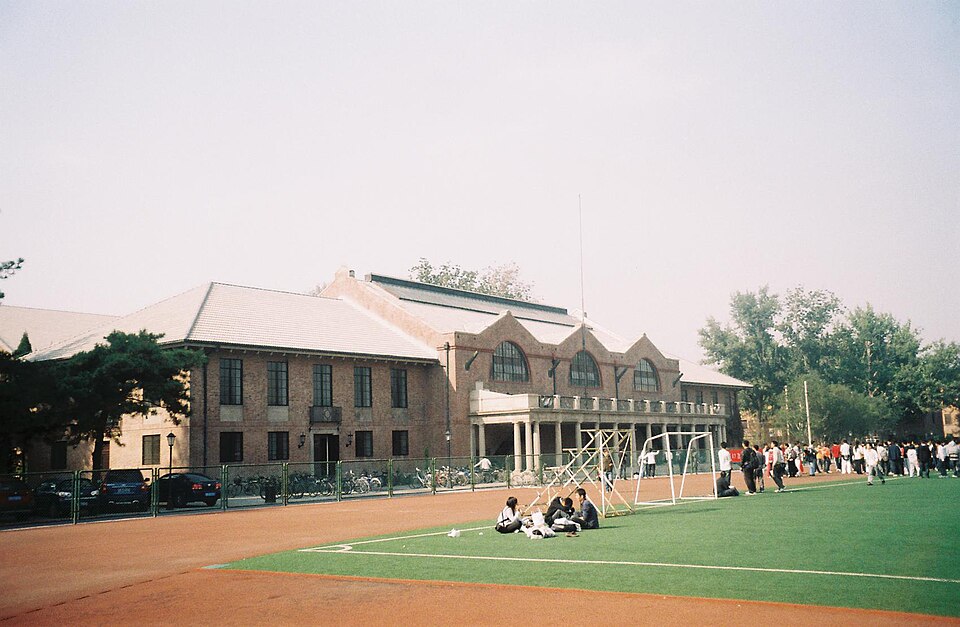
Chinese education funnels toward a single June ritual: the gaokao, the national college entrance examination taken by roughly 13 million students a year, whose score largely determines university placement. Cities reroute traffic around exam halls; construction sites fall silent. The system beneath it provides nine years of compulsory schooling, and literacy is now near-universal — a transformation from mid-twentieth-century levels that UNESCO tracks as one of the fastest in modern history. At the top, the state has spent three decades concentrating resources on elite universities: Project 211 (1990s) selected about a hundred key institutions, Project 985 (1998) anointed an inner circle led by Tsinghua and Peking universities, and the current Double First-Class initiative supersedes both with the explicit goal of building world-class universities and disciplines. The bet has paid off in rankings and research output, and China now runs the world's largest higher-education system, enrolling over 40 million students. When Shanghai and later Beijing-Shanghai-Jiangsu-Zhejiang cohorts sat the OECD's PISA assessment, they topped the world in mathematics, science, and reading — results that ignited global debate about intensity, equity, and the exam-centered culture that produces them.
Notable Educational Programs, China
Costi / CC BY 2.0

Wars & Conflicts

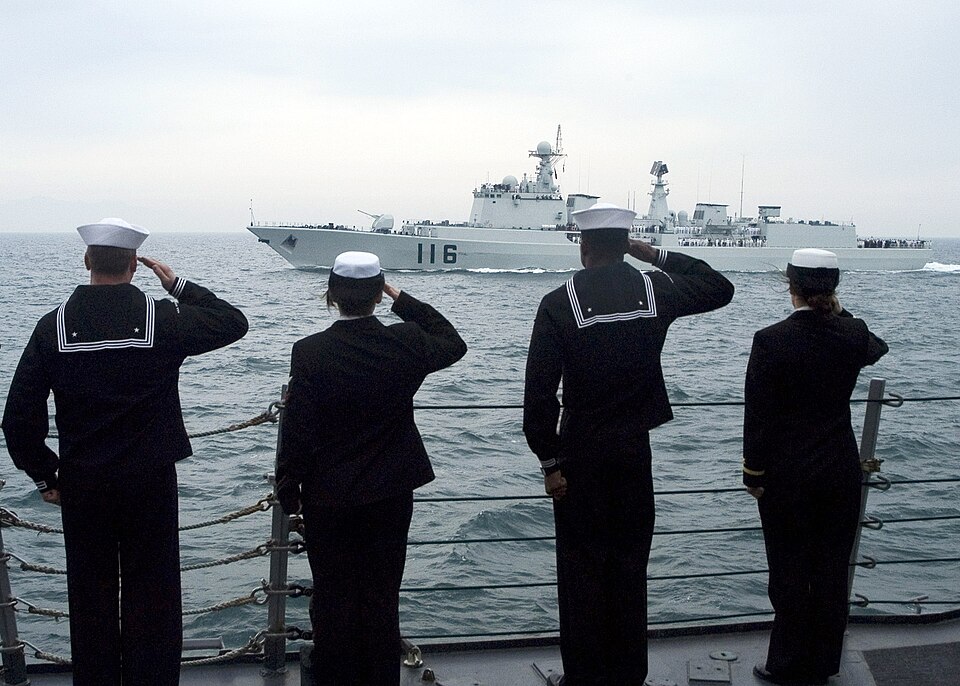
As of mid-2026, China is not a party to any open interstate war — UCDP records no active armed conflict between China and another state — but tensions run high on three maritime fronts. The Taiwan Strait dominates: in late December 2025 the People's Liberation Army staged its second large blockade-simulation exercise of that year around Taiwan, and Al Jazeera reported the U.S. State Department urging restraint and calling the drills a source of unnecessary tension; Beijing says the exercises target 'separatism,' while Taiwan's President Lai Ching-te has called 2026 a crucial year and pressed a roughly $40 billion defense-spending increase, stalled in Taipei's legislature. In the South China Sea, Reuters published satellite imagery in April 2026 showing a floating barrier and coast guard vessels at Scarborough Shoal's entrance — removed after Philippine protests — and a rare standoff between Chinese warships and a Philippine Navy vessel followed in late June; Manila, chairing ASEAN, is pushing a Code of Conduct, while Beijing calls its actions lawful sovereignty enforcement. Relations with Japan deteriorated after Prime Minister Sanae Takaichi's November 2025 remark that a Taiwan contingency could be 'survival-threatening' for Japan, which Beijing condemned; coast guard face-offs near the Senkaku/Diaoyu islands continued into July 2026. The India border, by contrast, has calmed: the October 2024 patrolling agreement has held, with disengagement at Depsang and Demchok, though both armies remain heavily deployed.
Current as of 2026-07-16
Wars & Conflicts, China
U.S. Navy photo by Mass Communication Specialist 2nd Class Matthew R. White / Public domain

Land & Border Disputes

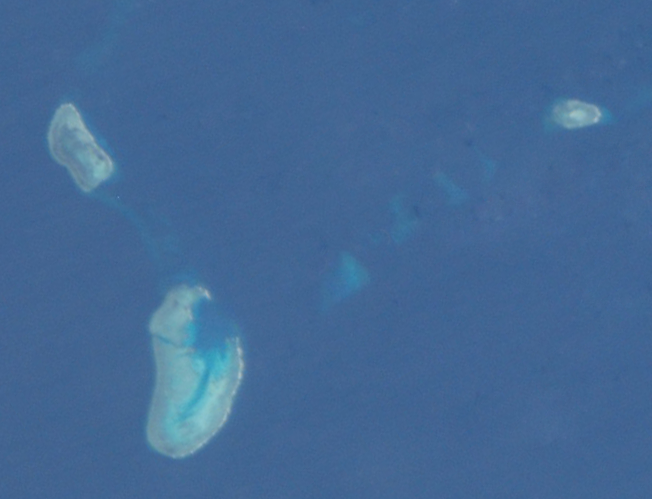
China's territorial disputes are among the world's most consequential. Taiwan is the core issue: Beijing holds that the island is part of one China and has never renounced the use of force for unification, while Taiwan's government maintains that only its people can decide their future; the two sides have been separately administered since 1949. In the South China Sea, China's 'nine-dash line' claim to most of the waterway overlaps claims by the Philippines, Vietnam, Malaysia, and Brunei; a 2016 arbitral tribunal constituted under the UN Convention on the Law of the Sea ruled that the line had no legal basis for maritime entitlements, a decision China rejects as void, and Beijing has built and fortified artificial islands across the Spratlys. In the East China Sea, China disputes Japan's control of the Senkaku islands (Diaoyu to China) and the maritime boundary near gas fields. On land, the China–India frontier has never been formally delimited: China administers Aksai Chin, which India claims, while India administers Arunachal Pradesh, which China claims as 'South Tibet,' and the two fought a border war in 1962. Smaller unresolved boundary questions persist with Bhutan. Each dispute is documented by the CIA World Factbook, and the maritime cases turn on interpretations of UN law of the sea.
Land & Border Disputes, China
NASA / Public domain
Land, Life & Legacy

Land & Climate

China covers about 9.6 million square kilometres and its terrain descends from west to east in three great steps. The highest is the Tibetan Plateau, averaging over 4,000 metres and known as the roof of the world, bounded by the Himalaya on the southern frontier where Mount Everest, called Qomolangma in Chinese, reaches 8,849 metres on the Nepalese border. The second step comprises the basins and plateaus of the interior: the Tarim and Junggar basins with the Taklamakan desert, the Inner Mongolian plateau along the Gobi, the wind-blown Loess Plateau, and the fertile Sichuan Basin. The third is the eastern coastal plains, where the great majority of the population lives. The Yangtze, the longest river in Asia, and the heavily silted Yellow River both rise on the plateau and cross the country to the sea; the Yellow River's floods and course changes shaped Chinese history. Climate is monsoonal in the east, with hot wet summers and dry winters, arid in the northwest, alpine in the southwest, and tropical on Hainan, while typhoons strike the southeastern coast in late summer.

Entertainment

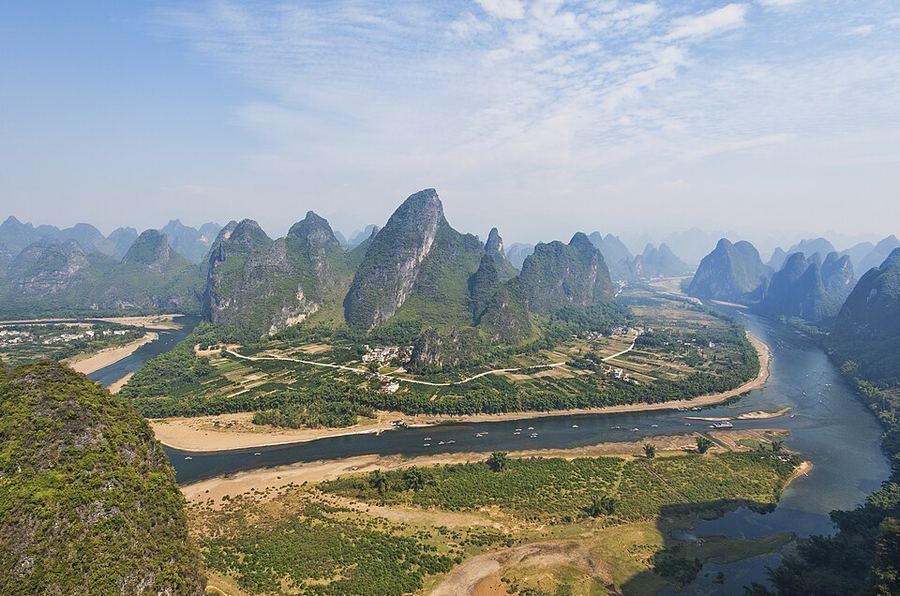
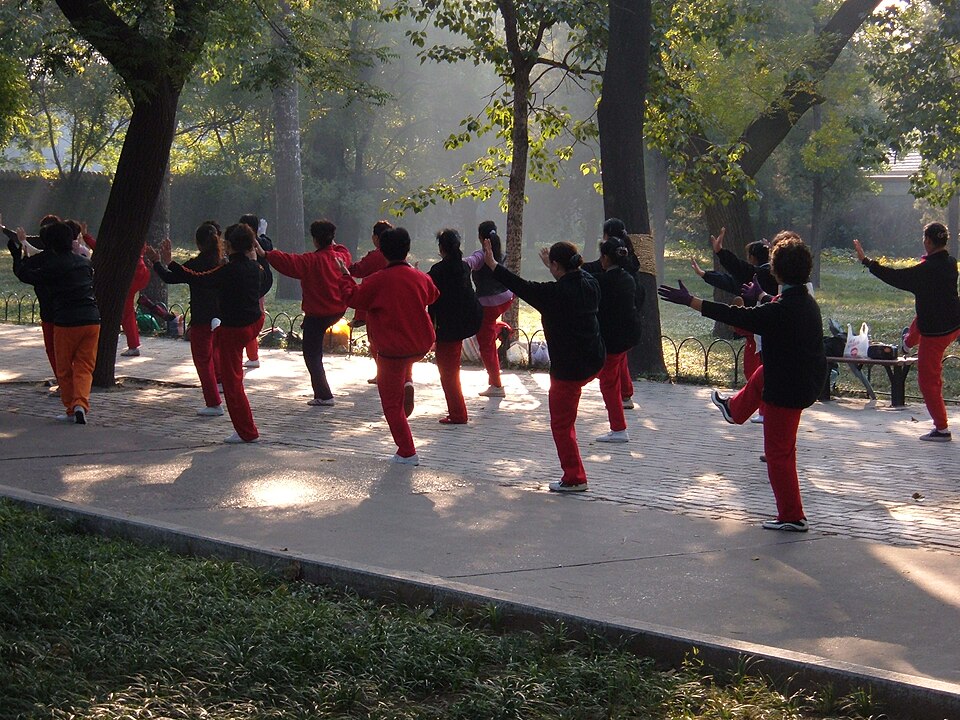
Chinese leisure is at its most visible at dawn, when parks fill with tai chi circles, sword-form practitioners, and ballroom couples — and again at dusk, when legions of 'square-dancing' retirees move in synchronized formation to portable speakers. Teahouses remain civic institutions, nowhere more than in Chengdu, where bamboo chairs, mahjong tiles, and ear-cleaning attendants preserve a Qing-era rhythm. Mahjong itself may be the true national pastime, played at family tables from Harbin to Haikou, while KTV karaoke boxes anchor urban nightlife. Domestic tourism operates at a scale without precedent: the Golden Week holidays around National Day and Lunar New Year generate hundreds of millions of trips, per official statistics, to destinations like Hangzhou's UNESCO-listed West Lake, the sandstone pillars of Zhangjiajie, Guilin's karst rivers, and the Great Wall at Badaling. Temple fairs, lantern festivals, and dragon-boat races keep the lunar calendar's celebrations alive as living recreation rather than heritage display.
Entertainment, China
BrokenSphere / CC BY-SA 3.0

Art & Museums

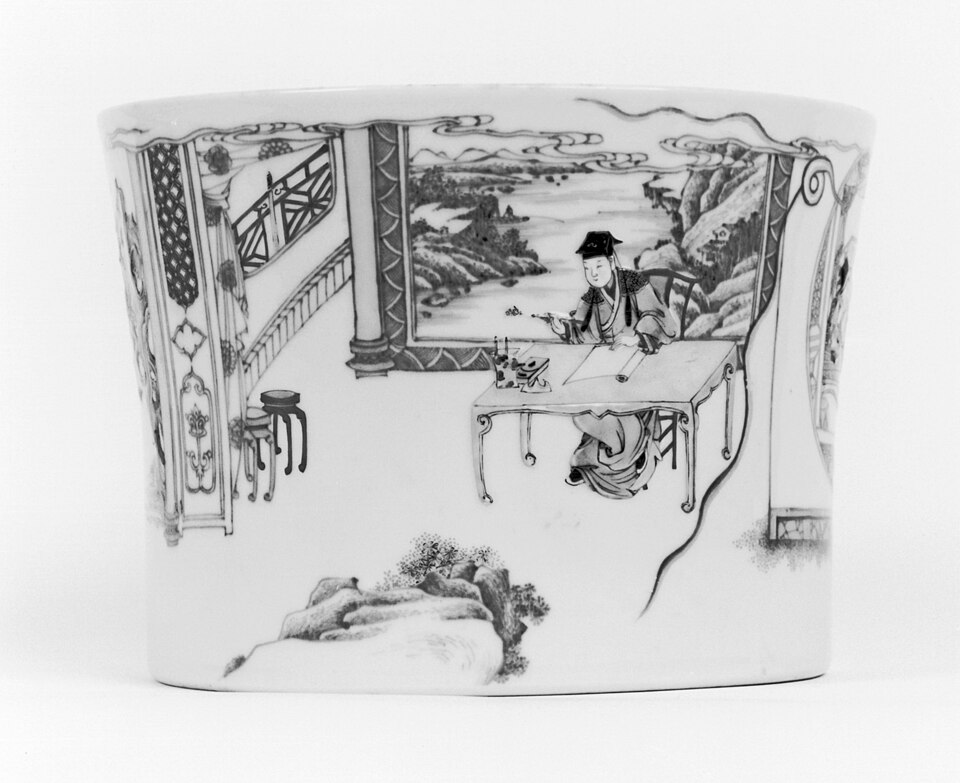
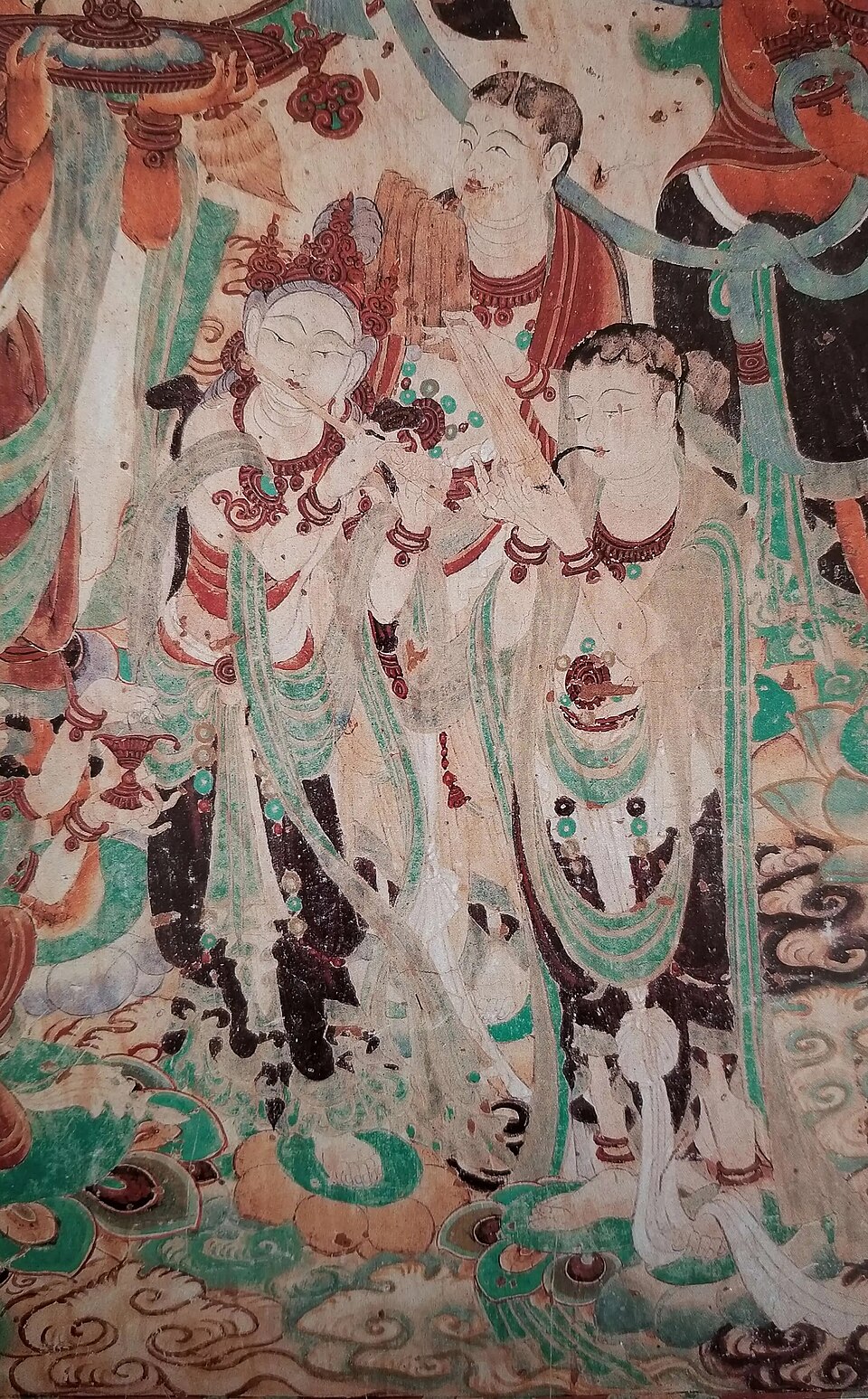
Chinese art's prestige hierarchy was set by the scholar's brush: calligraphy first, then ink landscape painting, in which Song dynasty masters like Fan Kuan built monumental mountainscapes and Zhang Zeduan's scroll Along the River During the Qingming Festival compressed a whole capital's street life into five metres of silk. The Buddhist cave complexes preserve another lineage: the Mogao Caves at Dunhuang, a UNESCO World Heritage site, hold hundreds of decorated grottoes of murals and sculpture spanning a millennium of Silk Road devotion. The Palace Museum in Beijing's Forbidden City and the Shanghai Museum anchor the great public collections, running from Shang dynasty ritual bronzes to Ming porcelain. The twentieth century produced beloved modern masters — Qi Baishi's shrimp and Xu Beihong's galloping horses hang in reproduction across the country — while Beijing's 798 Art Zone, a converted Bauhaus-style factory district, helped make contemporary Chinese art a global market force in the 2000s.
Art & Museums, China
Unknown painter, Mid-Tang Dynasty, 618 to 907 AD / Public domain

Notable People

Any list must begin with Confucius, the sixth-century BCE teacher whose ethics shaped East Asia for two and a half millennia, and Laozi, traditional author of the Daodejing. The Tang poets Li Bai and Du Fu remain the language's twin lyric summits; Lu Xun founded modern Chinese literature; Mo Yan won the 2012 Nobel Prize in Literature. Sun Yat-sen toppled the two-thousand-year dynastic system, and Deng Xiaoping engineered the reform era that remade the world economy. Science claims Tu Youyou, whose extraction of artemisinin from sweet wormwood — honoured with the 2015 Nobel Prize in Medicine — has saved millions of lives from malaria. Contemporary fame is just as varied: pianist Lang Lang fills the world's concert halls, filmmaker Zhang Yimou directed the opening ceremonies of both Olympics Beijing staged, Yao Ming carried basketball across the Pacific, and Alibaba founder Jack Ma became a fixture of Forbes's billionaire rankings during China's internet boom.
Notable People, China
Gary Todd from Xinzheng, China / CC0

Inventions & Breakthroughs

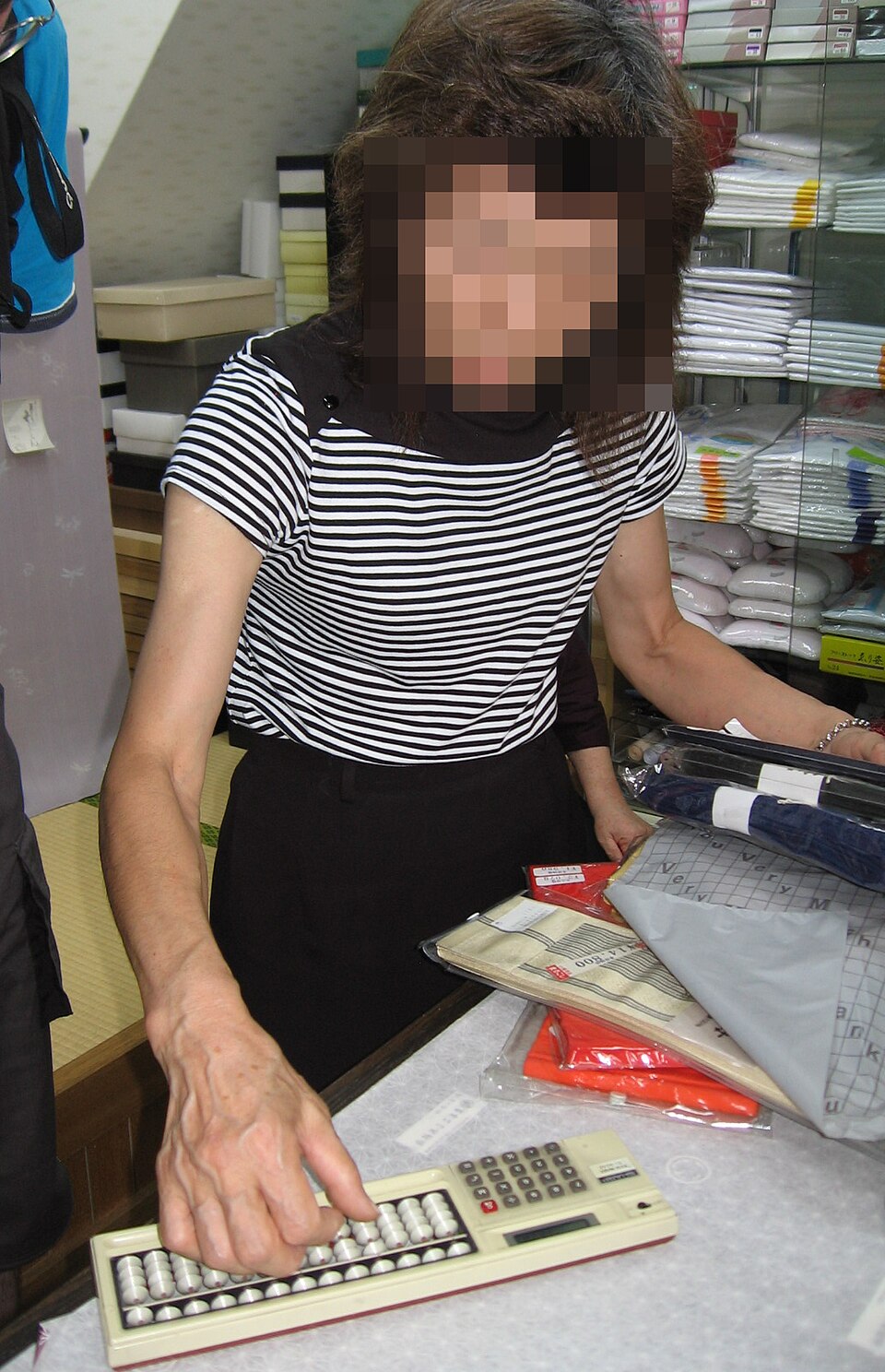
The 'Four Great Inventions' — paper, credited to the court official Cai Lun around 105 CE; woodblock and then movable-type printing perfected under the Song; the magnetic compass; and gunpowder — each reordered world history after reaching Europe. The deeper inventory is longer still. Zhang Heng built a seismoscope in 132 CE that indicated an earthquake's direction; Chinese founders were casting iron centuries before Europe managed it; Song officials issued the world's first government paper money; and porcelain and silk were trade secrets so valuable that their production methods were smuggled westward like weapons technology. Traditional tea processing, now inscribed by UNESCO, domesticated and refined the world's most consumed beverage after water. The modern era has resumed the habit: Tu Youyou's artemisinin became the backbone of global malaria treatment, the Micius satellite demonstrated quantum-encrypted communication from orbit in 2016-17, and Chinese high-speed rail engineering now runs a network longer than every other country's combined.
Inventions & Breakthroughs, China
Syced / CC0

Science & Technology

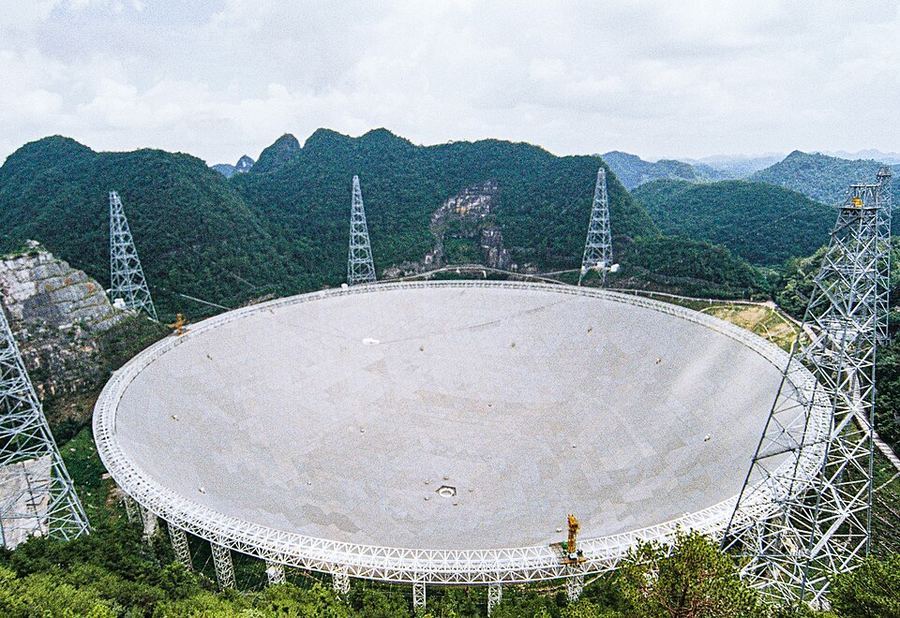
China's technological rise over the past three decades has been broad and state-directed. It built and operates the world's largest high-speed rail network, and it dominates manufacturing of solar photovoltaic modules and lithium-ion batteries while hosting the largest electric-vehicle market. In space, the Shenzhou programme launched Yang Liwei in 2003, making China the third country to put a human in orbit independently; the Chang'e programme achieved the first soft landing on the far side of the Moon in 2019 and returned lunar samples in 2020; Tianwen-1 placed the Zhurong rover on Mars in 2021; and the Tiangong station is permanently crewed. The BeiDou constellation provides independent satellite navigation. In basic science, the Five-hundred-metre Aperture Spherical Telescope in Guizhou is the largest filled-aperture radio telescope in the world, and the Micius satellite launched in 2016 demonstrated satellite-based quantum key distribution. Tu Youyou received the 2015 Nobel Prize in Physiology or Medicine for artemisinin, an antimalarial derived from traditional pharmacopoeia. The Three Gorges Dam is the largest power station by installed capacity.
NatureScienceIEAEncyclopaedia Britannica
On The World Stage
Champions of China

Champions & Defining Moments

China's Olympic ascent is precisely datable: shooter Xu Haifeng won the country's first gold on the opening day of Los Angeles 1984, and by Beijing 2008 the host topped the table with 48 golds. Table tennis remains the crown jewel — Ma Long's consecutive singles titles at Rio and Tokyo sealed his claim as the greatest ever — and the diving squad is so dominant it is nicknamed the Dream Team, with Wu Minxia collecting seven medals across four Games. Liu Xiang's 110-metre hurdles victory at Athens 2004 made him a national hero as China's first male Olympic track champion, and sprinter Su Bingtian's 9.83-second semifinal in Tokyo set an Asian 100-metre record. Li Na's 2011 French Open title was the first Grand Slam singles win by an Asian player, freestyle skier Eileen Gu took double gold at Beijing 2022, and the women's football team — finalists at the 1999 World Cup — remains the game's national standard-bearer.

Peter23 / CC BY-SA 3.0
Economy, Trade & Government

Currency & GDP

Renminbi (yuan) — CNY (¥)

GDP (PPP): $33.598 trillion (2024 est.)

Per capita: $23,800 (2024 est.)

Exports

$3.793 trillion (2024 est.)

broadcasting equipment, computers, integrated circuits, garments, machine parts (2023)

Partners: USA 13%, Hong Kong 8%, Japan 5%, Germany 5%, S. Korea 4% (2023)

Imports

$3.254 trillion (2024 est.)

crude petroleum, integrated circuits, iron ore, gold, natural gas (2023)

Partners: S. Korea 7%, USA 7%, Japan 6%, Australia 6%, Russia 6% (2023)

Government

Type: communist party-led state

Independence: 1 October 1949 (People's Republic of China established); notable earlier dates: 221 B.C. (unification under the Qin Dynasty); 1 January 1912 (Qing Dynasty replaced by the Republic of China)

Terrain → Where People Live

How mountains, coasts, and rivers shape settlement (LandScan).

Coming — data

Migration & Ethnic Settlement

Where groups settled and how people move (GeoEPR + UNHCR).

Coming — data

Universities

Notable institutions, mappable as points.

Coming — data
Economy & government facts: CIA World Factbook (public domain), via OpenFactBook / factbook.json.
Every fact and narrative claim will carry a visible source citation. Data-driven sections light up automatically wherever HERA has coverage.