HERA · Human Entity Reference Atlas by Masego Inc

← Cameroon 🌐 3D View
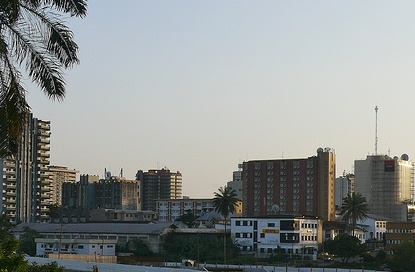
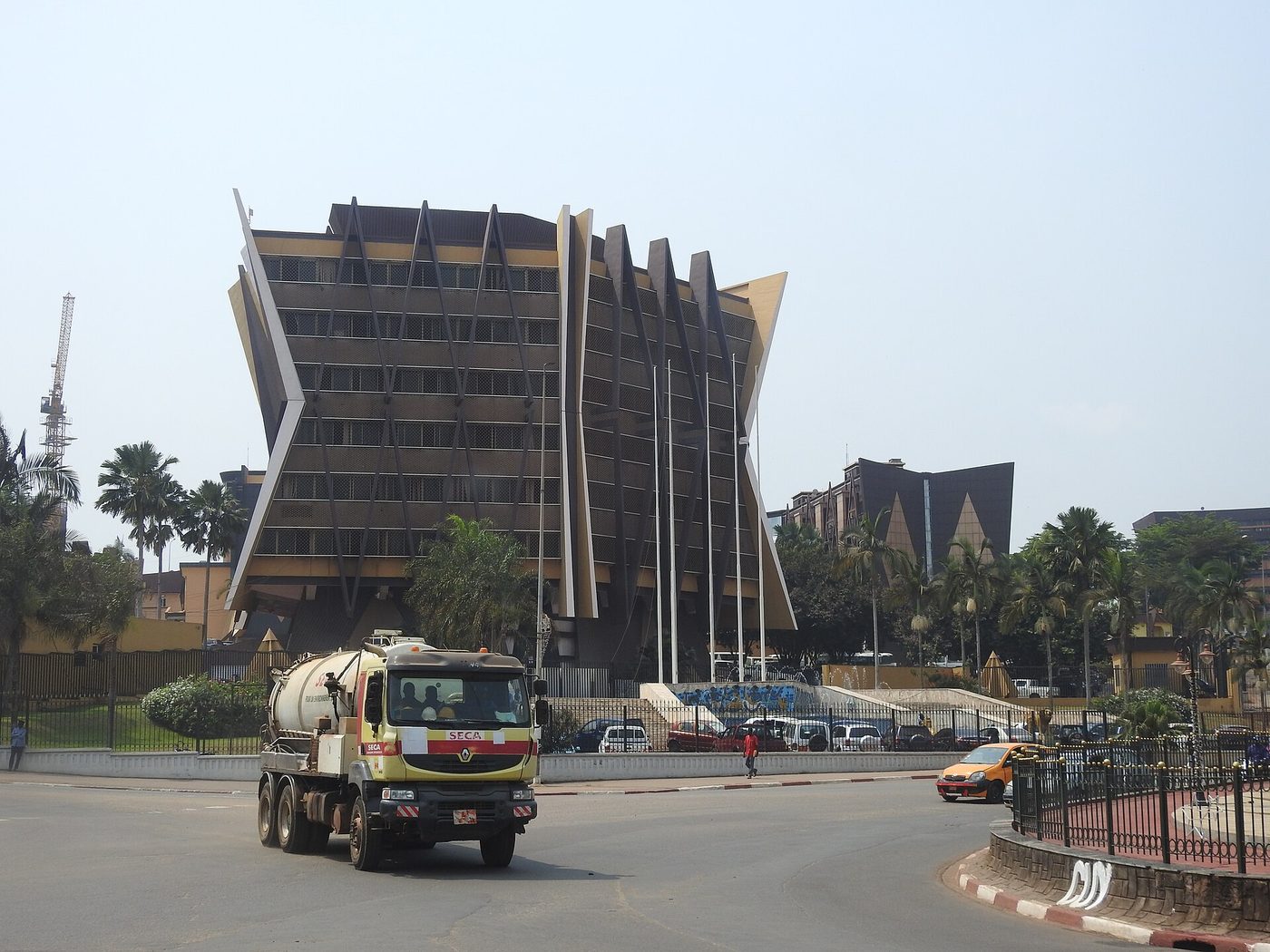
The Star Building, Yaoundé, Cameroon, Cameroon
Cameroon CMR
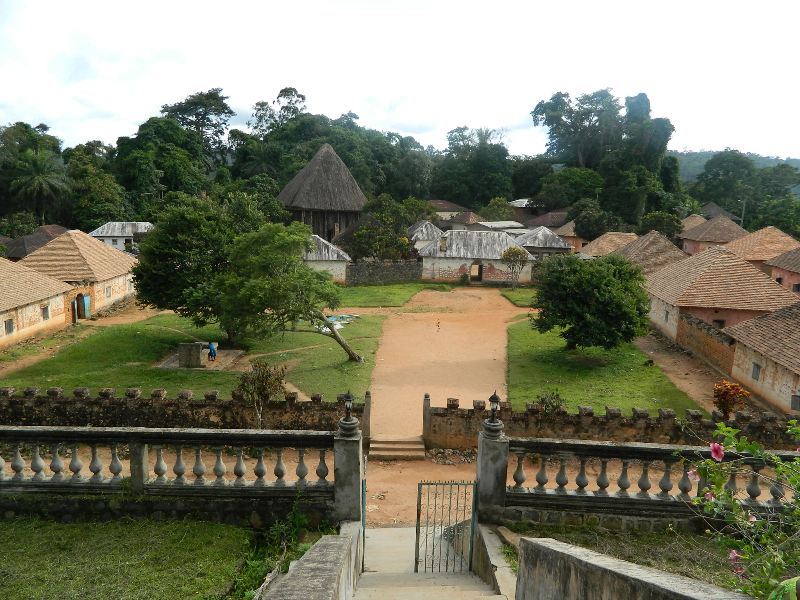
The Star Building, Yaoundé, Cameroon — Photo: Ryanvanhuyssteen / CC BY-SA 4.0 via Wikimedia Commons
Did You Know Debundscha, at the foot of Mount Cameroon, receives around ten thousand millimetres of rain a year, placing it among the wettest inhabited places on earth. — Encyclopaedia Britannica

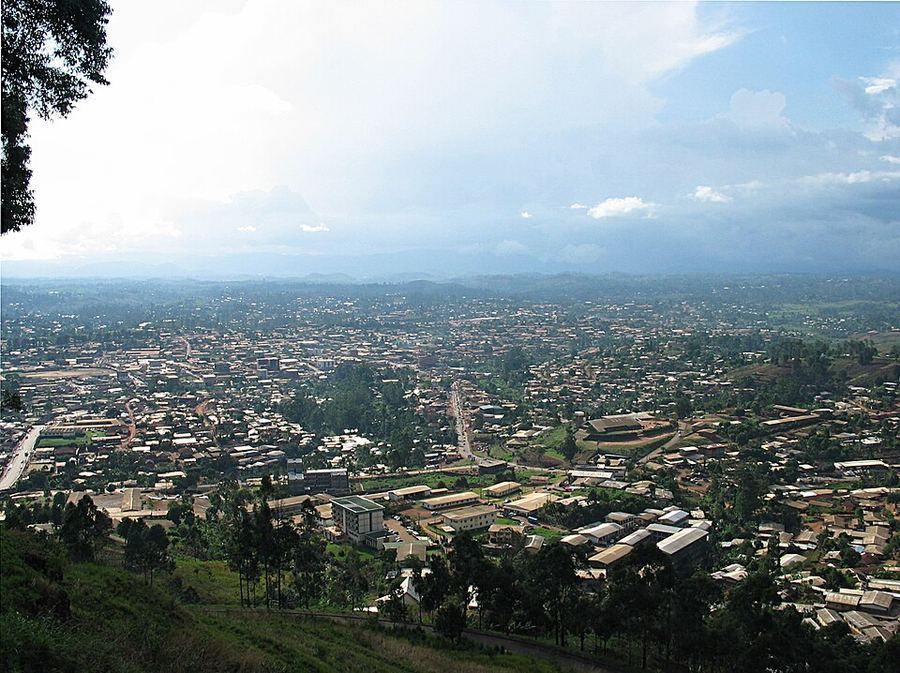
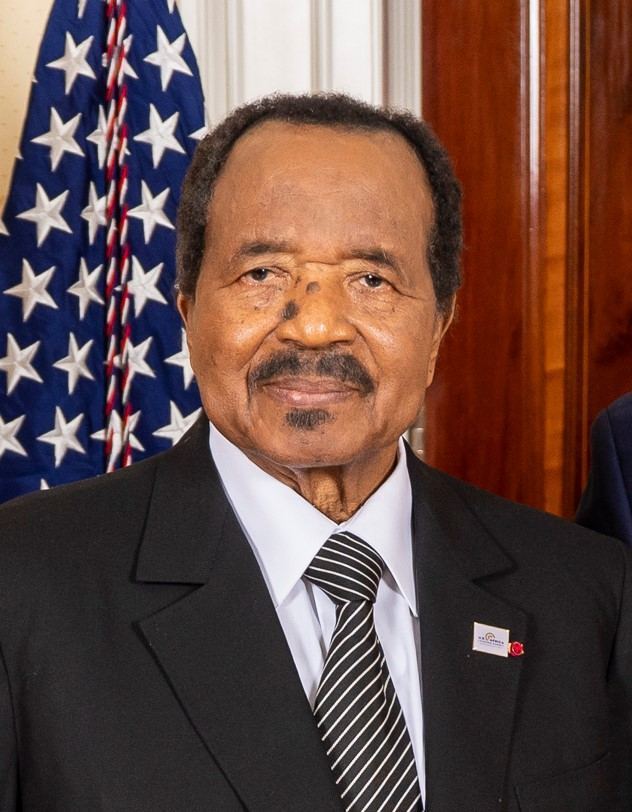
Cameroon is a central African republic of about 31.5 million people occupying some 475,000 square kilometres between the Gulf of Guinea and Lake Chad, bordered by Nigeria, Chad, the Central African Republic, the Republic of the Congo, Gabon and Equatorial Guinea. Yaoundé is the political capital, while Douala on the Wouri estuary is the largest city and the country's port. Its wedge shape carries it from mangrove and equatorial rainforest in the south, across the Adamawa plateau, to Sahelian plains in the far north, a range so complete that the country is routinely described as Africa in miniature. Cameroon is the only African state whose two official languages are English and French, an inheritance of the partition of German Kamerun between Britain and France after the First World War; alongside them are more than two hundred and fifty local languages. Independence came on 1 January 1960, with the British Southern Cameroons joining in 1961. The population is roughly two-thirds Christian and around thirty per cent Muslim. Paul Biya has been president since November 1982.

CIA World FactbookEncyclopaedia BritannicaWorld BankUN
Population
31,518,954
Capital
Yaounde
Currency
Fr XAF
Time zones
Largest city
Yaoundé
Human Geography Themes
Loading national figures…
Largest Cities
Yaoundé5,479,204
Douala4,457,862
Garoua721,599
Maroua512,801
Bamenda399,784
Ngaoundéré359,176
Bafoussam331,777
Limbe311,015
In Perspective

Yaoundé's urban core is home to about 5,479,204 people.

That's bigger than Chicago, Sydney, Barcelona and Berlin — each a great world city in its own right.

Yaoundé5,479,204
Chicago5,318,735
Sydney4,375,394
Barcelona3,908,362
Berlin3,601,776

Among the world's megacities, though, it's one of many — the giants of Asia and Latin America run larger still:

Yaoundé5,479,204
Jakarta40,545,126
Dhaka37,307,160
Tokyo33,244,670
Shanghai30,678,616
Cairo25,230,325

More people live in Yaoundé than in the entire nation of Ireland or New Zealand.

The Country & Its People

History

Portuguese sailors reaching the Wouri estuary in the 1470s found it swarming with prawns and named it Rio dos Camarões, the river of shrimps — the origin of the country's name. Inland, the Sao civilisation flourished near Lake Chad, Kanem-Bornu extended Islamic influence into the north, the Bamum kingdom took shape at Foumban, and the jihad of Modibbo Adama from 1809 created the Fulani emirates of Adamawa. Germany declared a protectorate over Kamerun in July 1884 after Gustav Nachtigal signed treaties with the Douala chiefs, and built plantations, railways and the port. Defeated in the First World War, Germany lost the territory, which was divided between France and Britain under League of Nations mandates. The nationalist Union of the Peoples of Cameroon, banned in 1955, fought an insurgency in which its leader Ruben Um Nyobè was killed in 1958. French Cameroun became independent on 1 January 1960 under Ahmadou Ahidjo; a plebiscite in February 1961 took the British Southern Cameroons into the new state and the Northern Cameroons into Nigeria. A federation gave way to a unitary republic in 1972, and Ahidjo handed power to Paul Biya in November 1982.
Culture

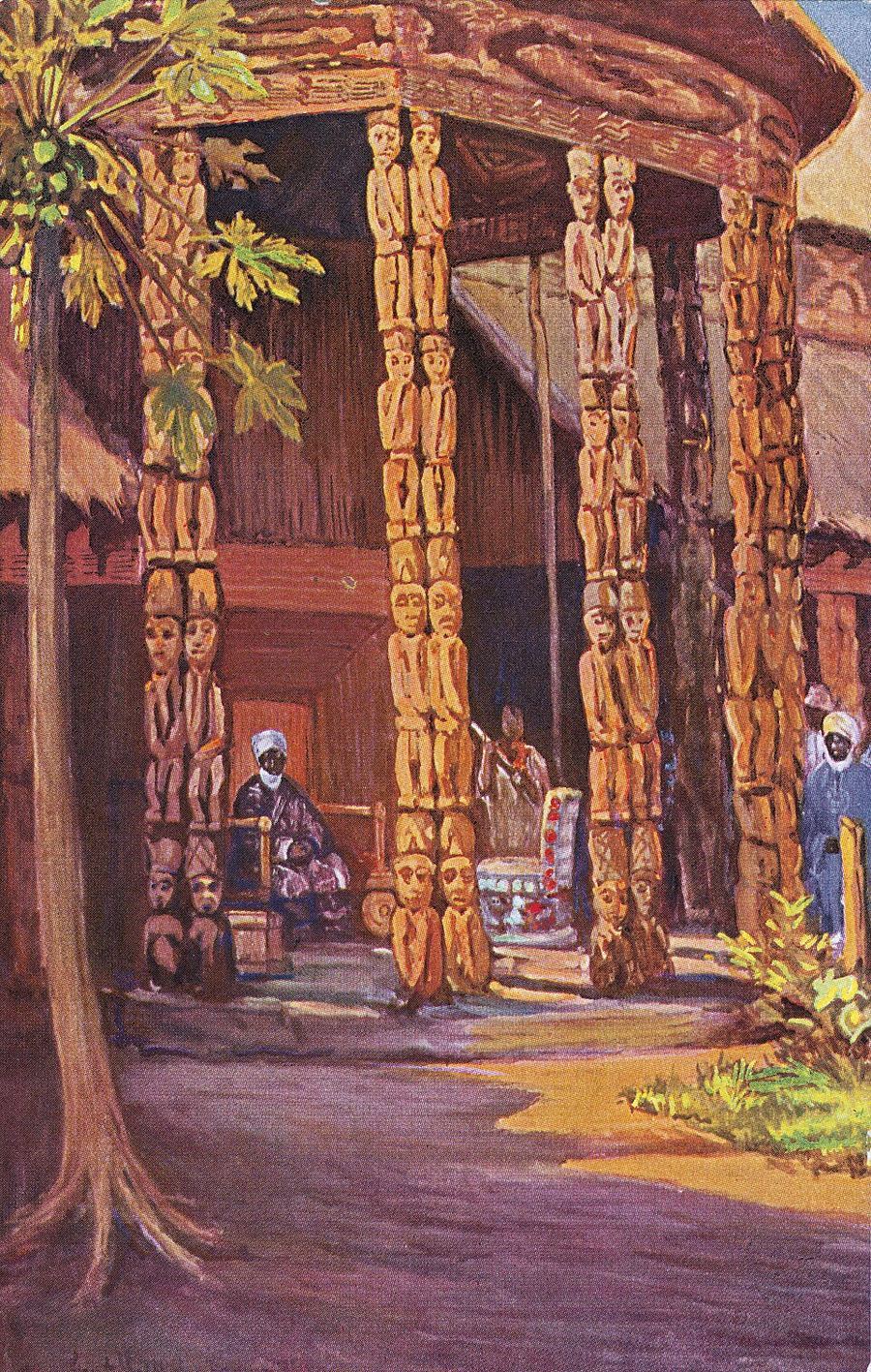
Cameroon contains more than two hundred and fifty ethnic groups and correspondingly many forms of authority, which is why the country is described as Africa in miniature in a social sense as well as a geographical one. In the Grassfields of the west and north-west, hierarchical fondoms centred on a fon and his palace — Bafut, Bandjoun, Bali — maintain regulatory societies, palace museums and elaborate ceremonial with beaded thrones, elephant masks and carved doorposts. At Foumban the Bamum sultanate has ruled continuously for six centuries and holds its Nguon festival, a gathering at which the sultan is traditionally held to account by his people, inscribed by UNESCO in 2023. In the northern lamidats of Garoua, Maroua and Rey Bouba, Fulani Islamic aristocracies preside and mark the Muslim festivals with mounted processions in quilted armour. Along the coast, the Sawa peoples hold the Ngondo each December on the Wouri, with canoe races and rites addressed to the water spirits. Cutting across all of it are the njangi or tontine, rotating savings and mutual aid associations that finance weddings, funerals, school fees and small businesses, and which function as the real social infrastructure of the country.

Points Of Pride

Cameroon's football team, the Indomitable Lions, became in 1990 the first African side to reach a World Cup quarter-final, beating the holders Argentina in the opening match, and it remains the achievement most cited when Cameroonians speak of their country abroad. The nation's ecological range is a second source of pride: from Atlantic mangroves through the Dja Faunal Reserve, inscribed on the World Heritage list in 1987 and one of the largest and best-protected rainforests in Africa, and the Sangha Trinational property shared with Congo and the Central African Republic, to the Sahelian plains of Waza. Mount Cameroon, at 4,095 metres, is the highest peak in west and central Africa and an active volcano. In cultural history, Sultan Ibrahim Njoya's invention at Foumban of a writing system for the Bamum language in the 1890s is one of the very few scripts devised independently in modern Africa. Cameroon also holds two of the continent's earliest protected geographical indications, granted in 2013 to Penja white pepper and Oku white honey, a rare instance of African producers capturing value through origin labelling.

Cultural Fusion

Cameroon's defining fusion is linguistic and legal. English and French are both official, and the anglophone North-West and South-West regions retained common law courts and a British-derived school system with its own examinations board while the rest of the country works in French, civil law and the francophone curriculum — a coexistence that has been the source of both national distinctiveness and profound conflict. Between the two sits Camfranglais, an urban slang of Douala and Yaoundé built from French, English, Pidgin and local languages, and Cameroonian Pidgin English, which serves as a lingua franca across the west and coast regardless of official language. Religiously, an Islamic north layered over Fulani conquest meets a Christian south shaped by German, French, British and American missions, with ancestral practice threaded through both. Bamileke traders from the Grassfields have spread across the country and into a global diaspora, carrying their savings associations and funeral obligations with them. Musically, makossa absorbed Congolese rumba, Caribbean and jazz influences at the port of Douala, and Nigerian film and music saturate the anglophone west.

Music & Dance

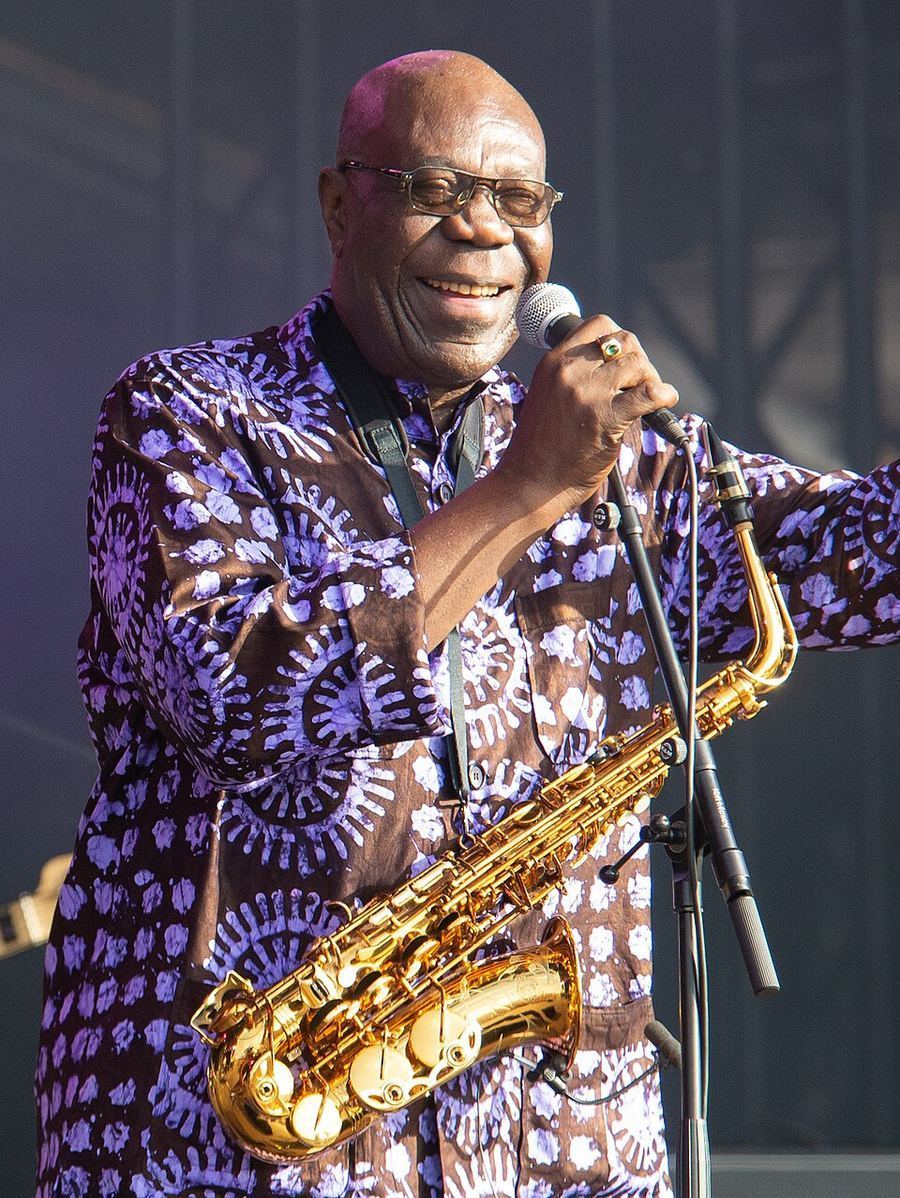
Makossa, born in Douala from local ambasse bey and assiko guitar styles crossed with rumba and jazz, is the country's great musical export. Manu Dibango's Soul Makossa, released in 1972, became one of the first African records to chart internationally and one of the most sampled in popular music, and its opening chant reappeared in a Michael Jackson hit, producing a copyright settlement decades later. Bikutsi is the counterpart from the Beti-Fang country around Yaoundé — a fast, driving rhythm originally played on the balafon and carried into electric guitar music by bands such as Les Têtes Brûlées, whose body paint and stage energy took it to European stages in the late 1980s. Anne-Marie Nzié, the golden voice of Cameroon, sang bikutsi for six decades. The bassist Richard Bona has become one of the most admired musicians in international jazz. Contemporary stars work in bikutsi-pop, Afrobeats and rap: Charlotte Dipanda, Lady Ponce, Petit Pays and a large Douala studio scene. Ceremonial dance remains central — the masked appearances at Grassfields funerals and the Nguon and Ngondo festivals structure the performance calendar.

Cuisine & Misattributed Foods

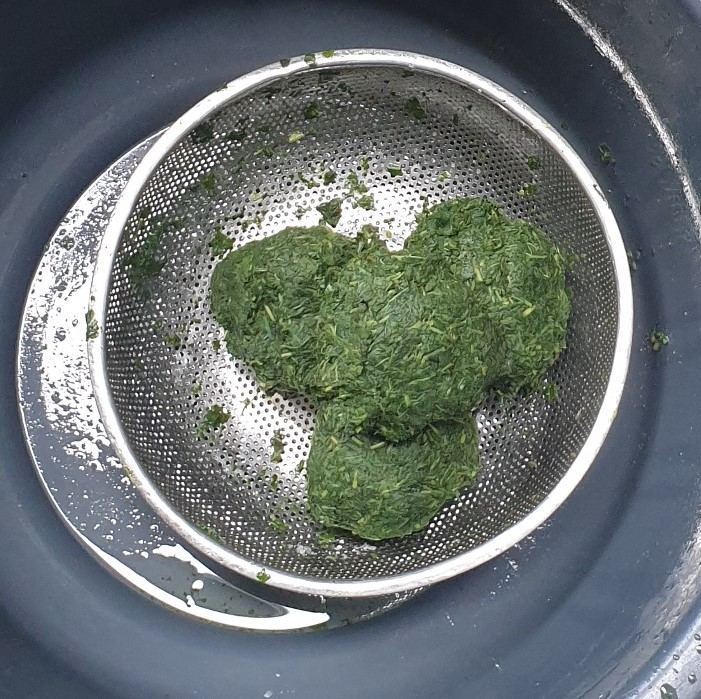
Ndolé is the dish most often called national: bitterleaf, boiled repeatedly to draw out the bitterness, then simmered with ground peanuts, dried shrimp or smoked fish and beef, served with fried ripe plantain or with miondo, fermented cassava sticks steamed in leaves. Poulet DG — chicken sautéed with plantain and vegetables, the initials standing for director general, since it was a dish for people who could afford chicken — is the celebration plate. From the anglophone west come eru, finely shredded forest leaves cooked with waterleaf, palm oil and crayfish, and the Northwest's achu, pounded cocoyam eaten with a bright yellow palm oil and limestone soup. Mbongo tchobi, a jet-black stew from the Bassa country coloured by charred mbongo spice, is the most distinctive regional preparation, and koki is a steamed pudding of ground black-eyed peas. In the north, grilled soya skewers and millet dominate. Two Cameroonian products carry protected geographical indications: the white pepper of Penja, grown on volcanic soil in the Moungo valley, and the white honey of Oku, gathered in the highland forest.
FAOEncyclopaedia BritannicaFinancial Times

National Dress

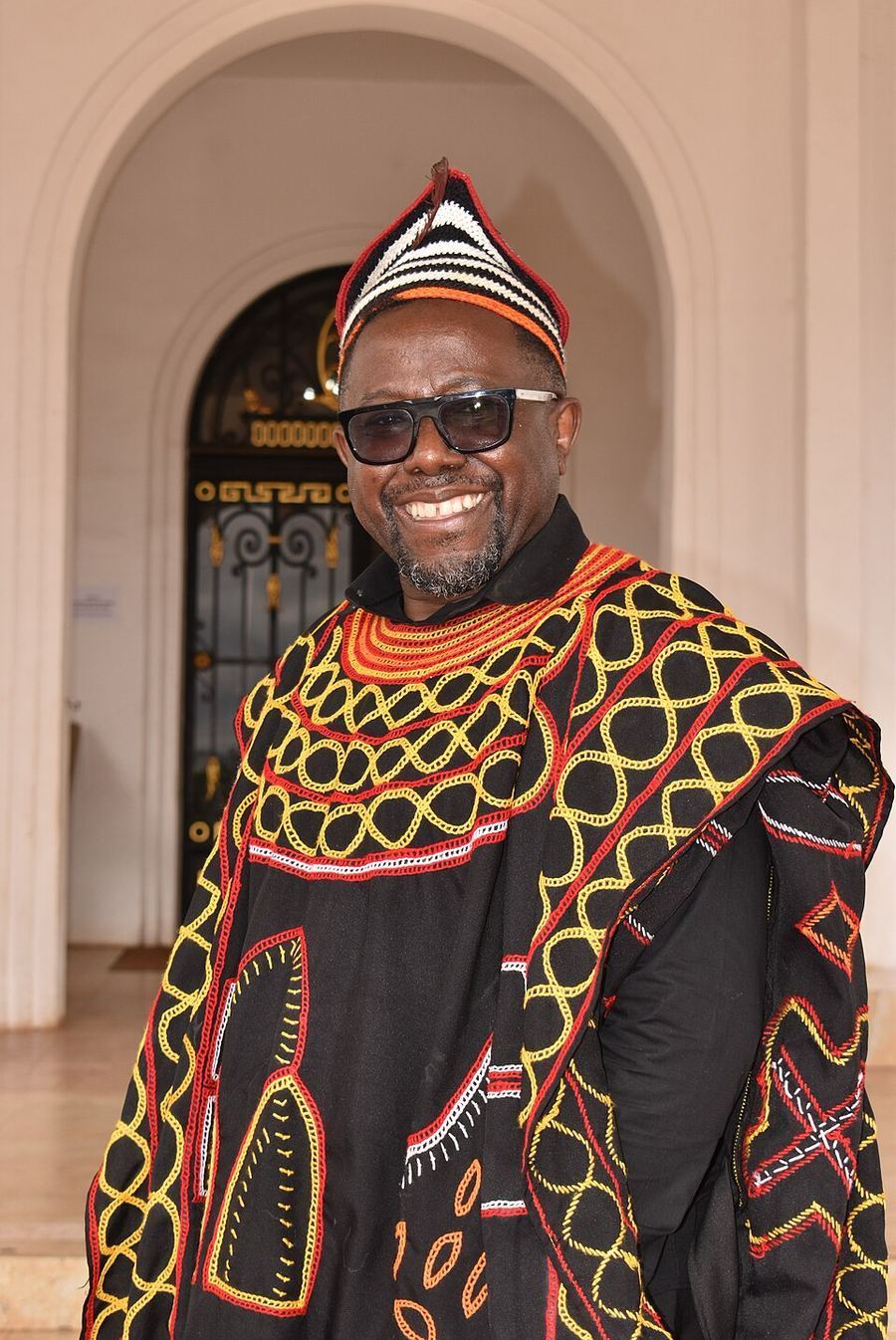
Cameroon has several regional costumes with national reach. The toghu, or atoghu, of the North-West Grassfields — a black velvet tunic or gown densely embroidered at the collar, cuffs and hem in geometric bands of red, gold and green, worn with a matching cap — was chiefly regalia and has become formal national dress worn at weddings, inaugurations and by Cameroonians abroad. The Grassfields also produce ndop, an indigo resist-dyed cotton with bold white geometric figures, historically the cloth of fons and used to hang palace interiors and wrap thrones. The Bamum and Bamileke courts add beaded elephant masks, beaded stools and heavy regalia for masquerades. Along the coast, the kaba ngondo is the Douala women's dress, a loose, flowing wide-sleeved gown adapted from a nineteenth-century missionary garment and now cut in vivid printed cloth. In the Muslim north, men wear the gandoura and the flowing boubou with embroidered yoke and a turban or embroidered cap, and Fulani women's dress is distinguished by elaborate braided hair, silver and amber jewellery. Wax-print pagne remains the everyday fabric everywhere.
Encyclopaedia BritannicaSmithsonianBritish MuseumUNESCO

Sports & Inspiring Athletes

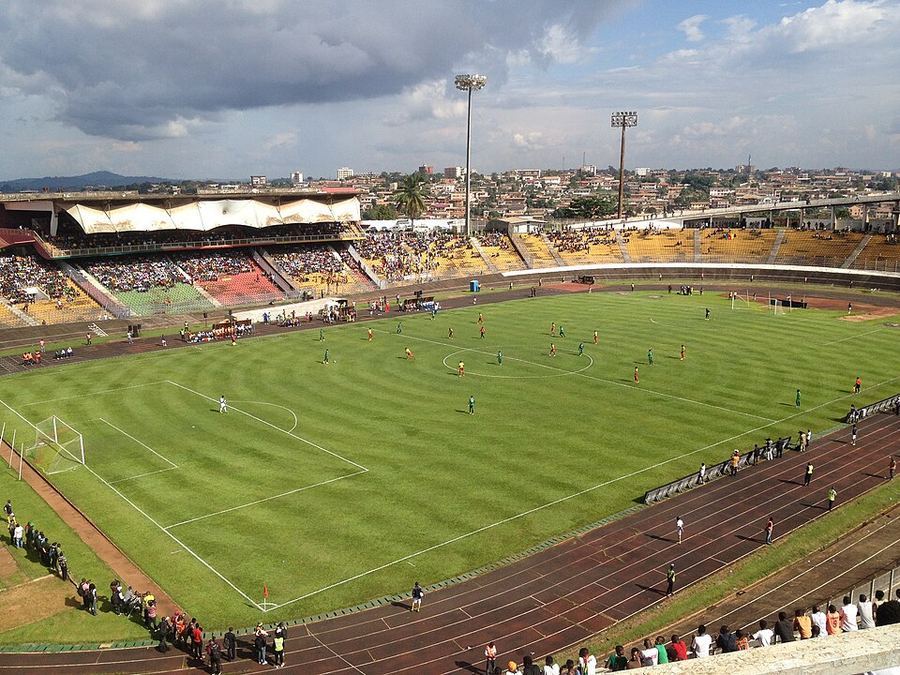
Football is not merely popular in Cameroon; it is the principal vehicle of national identity in a country whose other loyalties are regional. The Indomitable Lions draw support across both language communities and every region. Domestically, Canon Yaoundé is the historic power, winner of the African champions' competition in 1971, 1978 and 1980, with Coton Sport de Garoua the dominant modern club, and the Elite One league operates on modest resources while the best players leave young for Europe. Cameroon built or refurbished half a dozen large stadiums to host the continental championship, including the Olembe stadium in Yaoundé and grounds at Douala, Garoua, Bafoussam and Limbe. Beyond football, women's volleyball has been consistently among Africa's strongest, athletics has produced Olympic champions in the jumps, and boxing and judo have long amateur traditions. Mixed martial arts acquired a national following through Francis Ngannou. The Mount Cameroon Race of Hope, a brutal ascent and descent of the volcano, is the country's signature endurance event and a genuine spectator occasion.

Notable Educational Programs

Cameroon runs two parallel education systems, a legacy of the partition: a francophone subsystem following the French model and an anglophone one following the British, with its own General Certificate of Education examinations board created in 1993 after sustained agitation in the North-West and South-West. The universities divide similarly. The University of Yaoundé, founded in 1962 and later split into Yaoundé I and II, is the oldest; the University of Buea, opened in 1993, was established as the anglophone institution; and the universities of Douala, Dschang, Ngaoundéré, Bamenda and Maroua complete the public network. The National Advanced School of Engineering in Yaoundé is the leading technical school. Enrolment rates are relatively high by regional standards and literacy is well above the central African average. But the anglophone conflict has devastated schooling in two regions: separatists imposed school boycotts, hundreds of schools were closed for years, and attacks on pupils — including the killing of seven children at a school in Kumba in October 2020 — have left a generation of children out of the classroom.
UNESCOUNICEFWorld BankHuman Rights Watch

Wars & Conflicts

Cameroon's first war was the nationalist insurgency of the Union of the Peoples of Cameroon, fought in the Bassa and Bamileke regions from the mid-1950s into the early 1970s and suppressed with French assistance at a cost long unacknowledged. Two conflicts are active today. In the Far North, Boko Haram and its offshoots have raided from Nigeria since 2014, prompting Cameroon's participation in the Multinational Joint Task Force and displacing large numbers of civilians in the Logone-et-Chari and Mayo-Sava. In the North-West and South-West, lawyers' and teachers' strikes in late 2016 against the posting of francophone-trained personnel into common law courts and English-language schools escalated after a violent crackdown; separatists declared an independent Ambazonia on 1 October 2017, and the fighting since has killed thousands and displaced hundreds of thousands, with atrocities documented on both sides by United Nations bodies and human rights organisations. Cameroon simultaneously hosts several hundred thousand refugees from the Central African Republic and north-east Nigeria, one of the larger refugee populations in Africa relative to national capacity.
International Crisis GroupUNHuman Rights WatchUNHCRUCDPAmnesty International
Current as of 2026-08-06

Land & Border Disputes

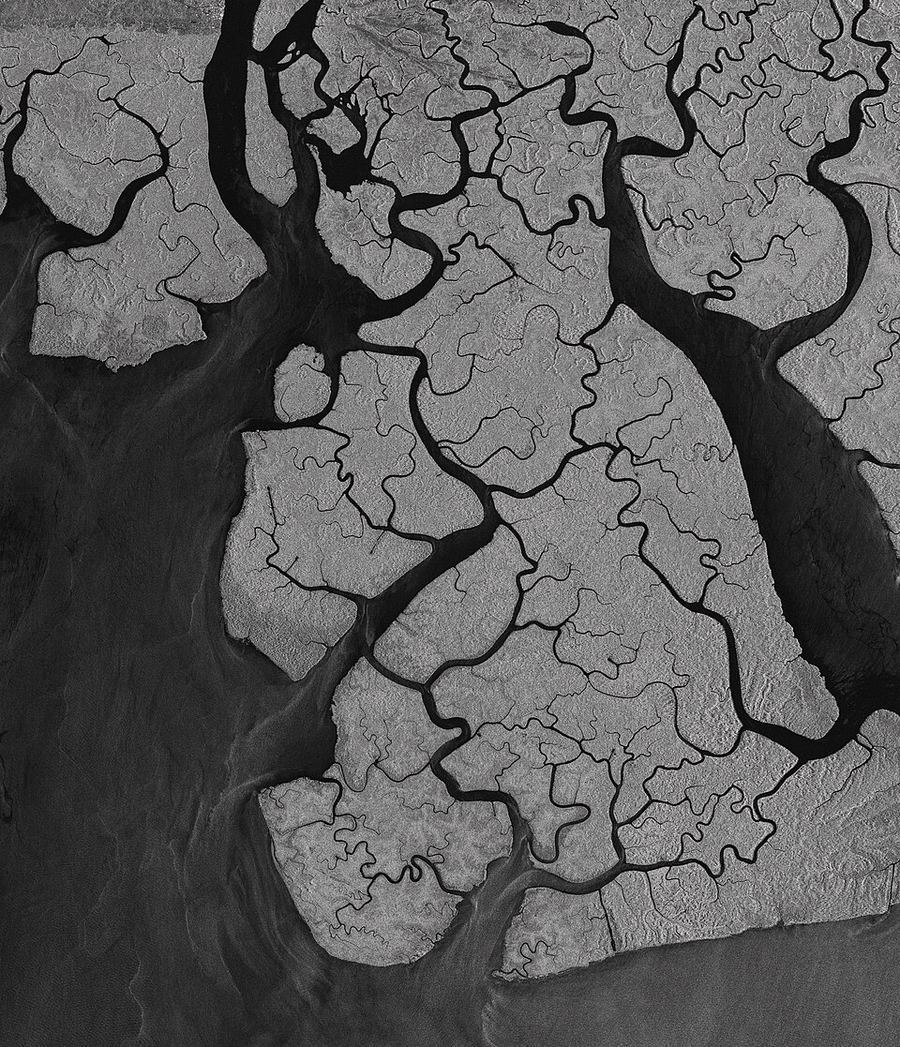
Cameroon's territorial dispute with Nigeria over the Bakassi Peninsula was one of the more dangerous in Africa and one of the more successfully resolved. Bakassi is a mangrove peninsula in the Gulf of Guinea with rich fisheries and offshore oil potential, populated largely by Nigerian fishing communities but claimed by Cameroon on the basis of colonial-era agreements. After armed clashes in the 1990s, Cameroon took the case to the International Court of Justice, which on 10 October 2002 awarded sovereignty over the peninsula to Cameroon and settled the whole land boundary from Lake Chad to the sea. Nigeria initially resisted, then agreed under the Greentree Agreement of June 2006 to withdraw, and the handover was completed in August 2008 — a rare instance of a state relinquishing populated territory on the strength of a court judgment. A United Nations-chaired Cameroon-Nigeria Mixed Commission has continued the physical demarcation of the roughly two-thousand-kilometre boundary, including the pillars in the receding waters of Lake Chad. Cameroon has no other significant territorial claim outstanding.
Land, Life & Legacy

Land & Climate

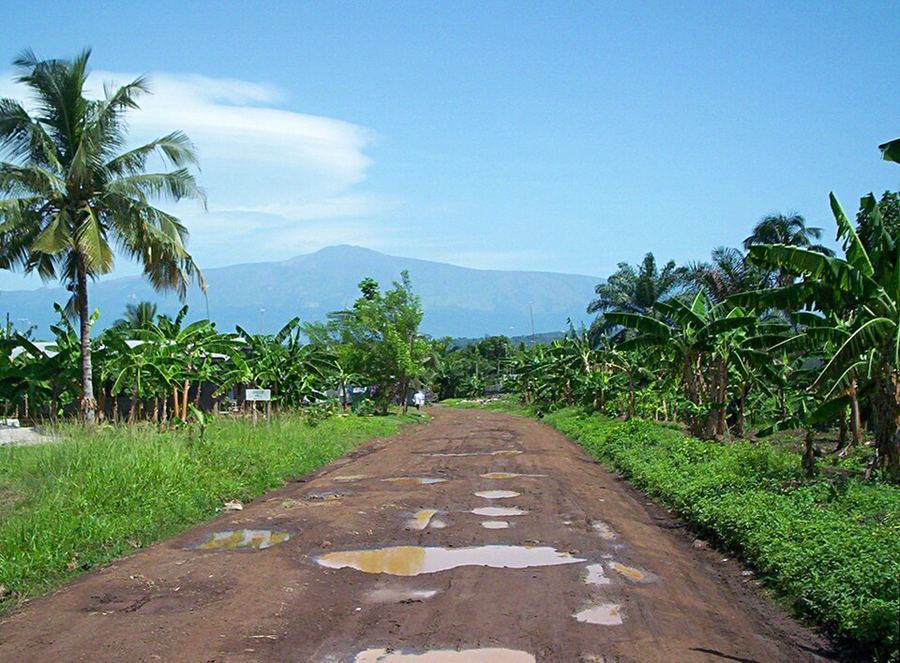
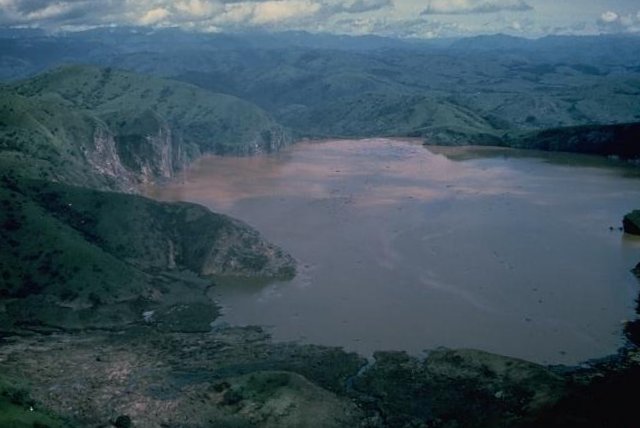
Cameroon's triangular territory crosses almost every African environment in about twelve hundred kilometres. The south is equatorial rainforest, hot and wet year round, drained by the Sanaga and the Nyong; the centre rises to the Adamawa plateau, a grassy tableland around a thousand metres that acts as the country's climatic and cultural hinge; and the far north falls to Sudano-Sahelian plain and the Mandara mountains, ending in the shallow, shrinking waters of Lake Chad. The western highlands follow the Cameroon Volcanic Line, a chain of volcanoes and crater lakes running from the Gulf of Guinea islands north-east into the interior. Mount Cameroon, at 4,095 metres, is the region's highest peak and remains active, with eruptions recorded in 1999, 2000 and 2012; Debundscha at its foot receives around ten thousand millimetres of rain a year, among the wettest places on earth. The volcanic lakes are also a hazard: on 21 August 1986 Lake Nyos released a vast cloud of carbon dioxide that flowed down the valleys and asphyxiated roughly 1,700 people, after a smaller event at Lake Monoun in 1984; both lakes are now artificially degassed.
Encyclopaedia BritannicaNatureScienceIPCC

Entertainment

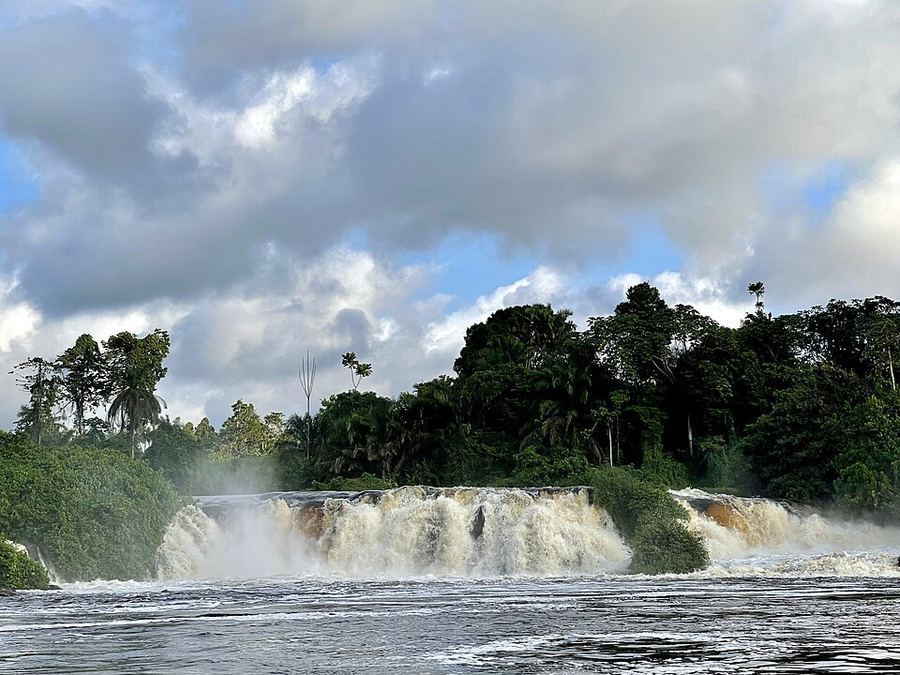
Football is the organising leisure activity of the country, watched in bars with plastic chairs pulled onto the street and played on any patch of ground; a Lions match empties the roads. The other reliable social form is the njangi meeting, which is as much a gathering with food and drink as a savings mechanism, and the vast, days-long funeral celebrations of the Grassfields, to which families return from Douala, Yaoundé and abroad. Beer culture is serious — Cameroon is one of Africa's larger beer markets — and Douala's nightlife is the liveliest in central Africa. Beaches at Kribi, where the Lobé falls drop directly into the sea, and the black volcanic sand at Limbe draw domestic holidaymakers. The Mount Cameroon Race of Hope, run annually since the 1970s, takes competitors from Buea to the summit and back in a single punishing day and has become a national event. Festivals fill the calendar: the Ngondo on the Wouri in December, the Nguon at Foumban, and the mask outings of the western fondoms. Draughts, card games and heated political argument occupy the rest.

Art & Museums

The Grassfields kingdoms produced one of Africa's great court art traditions: beaded thrones, stools supported by leopards and human figures, carved palace posts, and the mbap mteng elephant masks whose long beaded panels hang from the face during masquerades. A beaded throne made for Sultan Ibrahim Njoya and given to Kaiser Wilhelm II in 1908 has been among the most discussed objects in Berlin's ethnological collection and in current restitution debates. At Foumban, the artisans' quarter still casts bronze by the lost-wax method and carves in wood, and the sultan's palace museum holds the kingdom's regalia and Njoya's manuscripts. Bamileke ndop cloth, terracotta and monumental carved doorframes complete the historical repertoire. Contemporary Cameroonian art has an unusually strong international presence: Barthélémy Toguo, who works between Paris and Bandjoun, founded the Bandjoun Station arts centre and residency in the western highlands in 2007, and Pascale Marthine Tayou has exhibited widely in Europe's major institutions. The National Museum of Cameroon in Yaoundé opened in 2015 in the former presidential palace and holds the national ethnographic collection.
British MuseumSmithsonianMetropolitan Museum of ArtEncyclopaedia BritannicaThe Guardian

Notable People

Sultan Ibrahim Njoya of Bamum, who devised a script for his language, compiled a history and a pharmacopoeia, mapped his kingdom and built the Foumban palace before the French deposed and exiled him in 1931, is the country's most remarkable historical figure. Ruben Um Nyobè led the nationalist movement and was killed in 1958; Ahmadou Ahidjo took the country to independence and Paul Biya has governed since 1982. In music, Manu Dibango and the bassist Richard Bona are the internationally known names, with Anne-Marie Nzié the revered voice of bikutsi. In literature, Mongo Beti and Ferdinand Oyono wrote the classic francophone novels of the colonial encounter, and Calixthe Beyala is among the most widely read living Cameroonian authors; the philosopher and historian Achille Mbembe, author of On the Postcolony, is one of the most cited African thinkers of his generation. Sport supplies the household names: Roger Milla, Samuel Eto'o — four times African footballer of the year and now head of the national federation — Rigobert Song, André Onana, the triple jumper Françoise Mbango Etone, twice Olympic champion, and the heavyweight fighter Francis Ngannou.

Inventions & Breakthroughs

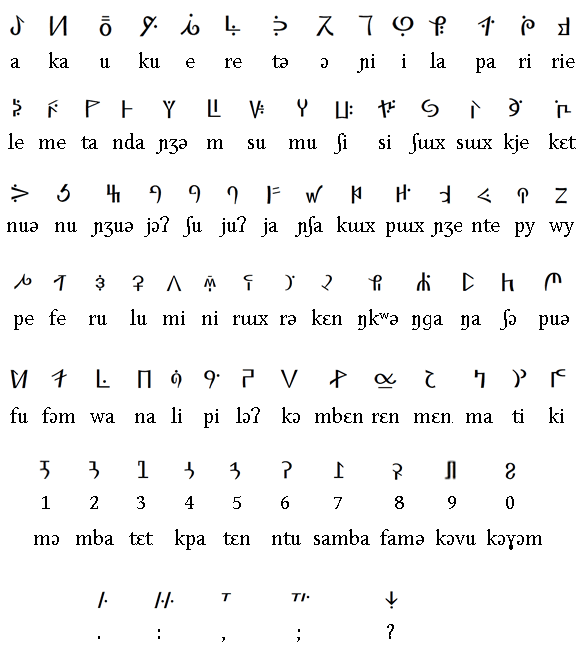
Cameroon's outstanding invention is a writing system. Around 1896 Sultan Ibrahim Njoya of Bamum, having decided his kingdom needed a script of its own, directed the creation of one: it began pictographic with several hundred characters and was refined through six further versions over three decades into a compact syllabary known from its first characters as a-ka-u-ku. Njoya used it to write a dynastic history, a book of medicine and a legal code, established schools and a printing operation to teach it, and also produced a surveyed map of his kingdom and experimented with a mechanical grain mill. The French suppressed the schools and destroyed much of the material after deposing him, but the script survives and has been revived at Foumban. The modern counterpart is medical: the engineer Arthur Zang developed the CardioPad, a tablet-based device that lets a nurse in a rural clinic record a patient's electrocardiogram and transmit it to a cardiologist in the city, and won the Royal Academy of Engineering's Africa Prize for it in 2016. Cameroonian startups in drones and fintech have followed.

Science & Technology

The Centre Pasteur du Cameroun in Yaoundé, part of the Pasteur network since 1959, is the country's principal biomedical laboratory and a regional reference centre for mpox, HIV, tuberculosis, measles and yellow fever surveillance. Cameroon holds a particular place in the history of HIV research: the pandemic strain, HIV-1 group M, was traced through the study of wild chimpanzee populations to south-eastern Cameroon, and the rarer groups N and P were first identified in Cameroonian patients — findings that made the country's forests central to understanding where the virus came from. Agricultural research runs through the Institute of Agricultural Research for Development, working on cocoa, cassava, plantain and livestock. Engineering capacity has been built around energy and transport: the 1,070-kilometre Chad-Cameroon oil pipeline completed in 2003 with its terminal at Kribi, the deep-water port at Kribi opened in 2018, and a hydropower programme on the Sanaga anchored by the Lom Pangar reservoir and the Nachtigal plant. Arthur Zang's CardioPad is the country's best-known indigenous medical technology, and mobile money has spread rapidly through both networks.
NatureScienceWHOWorld BankIEA
On The World Stage

Champions & Defining Moments

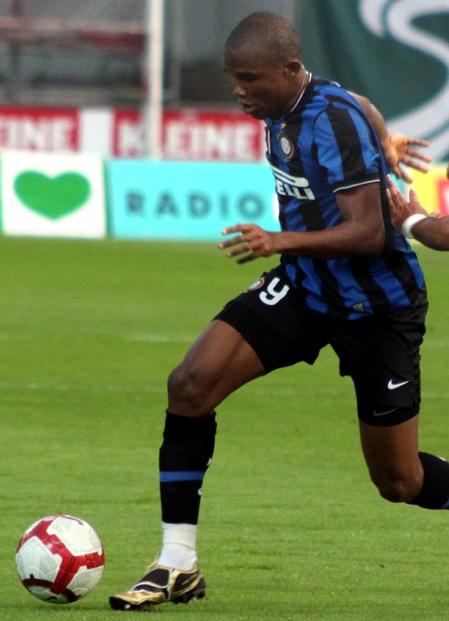
At Italia 1990 Cameroon became the first African team to reach a World Cup quarter-final. They beat the reigning champions Argentina one-nil in the opening match at the San Siro with nine men on the field at the end, topped their group, beat Colombia in extra time and led England before losing three-two in Naples. The tournament's emblem was Roger Milla, recalled from semi-retirement at thirty-eight, who scored four goals and celebrated each with a dance at the corner flag. Cameroon has won the Africa Cup of Nations five times — in 1984, 1988, 2000, 2002 and 2017 — and hosted the tournament in 2021, played in early 2022. It won the Olympic football title at Sydney in 2000. Françoise Mbango Etone won the triple jump at both Athens in 2004 and Beijing in 2008, the country's only individual Olympic golds. Samuel Eto'o won the Champions League three times, twice with Barcelona and once with Internazionale, and was four times African footballer of the year. Francis Ngannou became UFC heavyweight champion in 2021.

Economy, Trade & Government

Currency & GDP

CFA Franc BEAC — XAF (Fr)

GDP (PPP): $143.264 billion (2024 est.)

Per capita: $4,900 (2024 est.)

Exports

$8.353 billion (2023 est.)

crude petroleum, natural gas, gold, cocoa beans, wood (2023)

Partners: Netherlands 21%, France 14%, UAE 13%, India 9%, China 8% (2023)

Imports

$10.294 billion (2023 est.)

garments, refined petroleum, plastic products, wheat, rice (2023)

Partners: China 43%, France 6%, India 6%, Belgium 4%, UAE 4% (2023)

Government

Type: presidential republic

Independence: 1 January 1960 (from French-administered UN trusteeship)

Terrain → Where People Live

How mountains, coasts, and rivers shape settlement (LandScan).

Coming — data

Migration & Ethnic Settlement

Where groups settled and how people move (GeoEPR + UNHCR).

Coming — data

Universities

Notable institutions, mappable as points.

Coming — data
Economy & government facts: CIA World Factbook (public domain), via OpenFactBook / factbook.json.
Every fact and narrative claim will carry a visible source citation. Data-driven sections light up automatically wherever HERA has coverage.