HERA · Human Entity Reference Atlas by Masego Inc

← Colombia 🌐 3D View
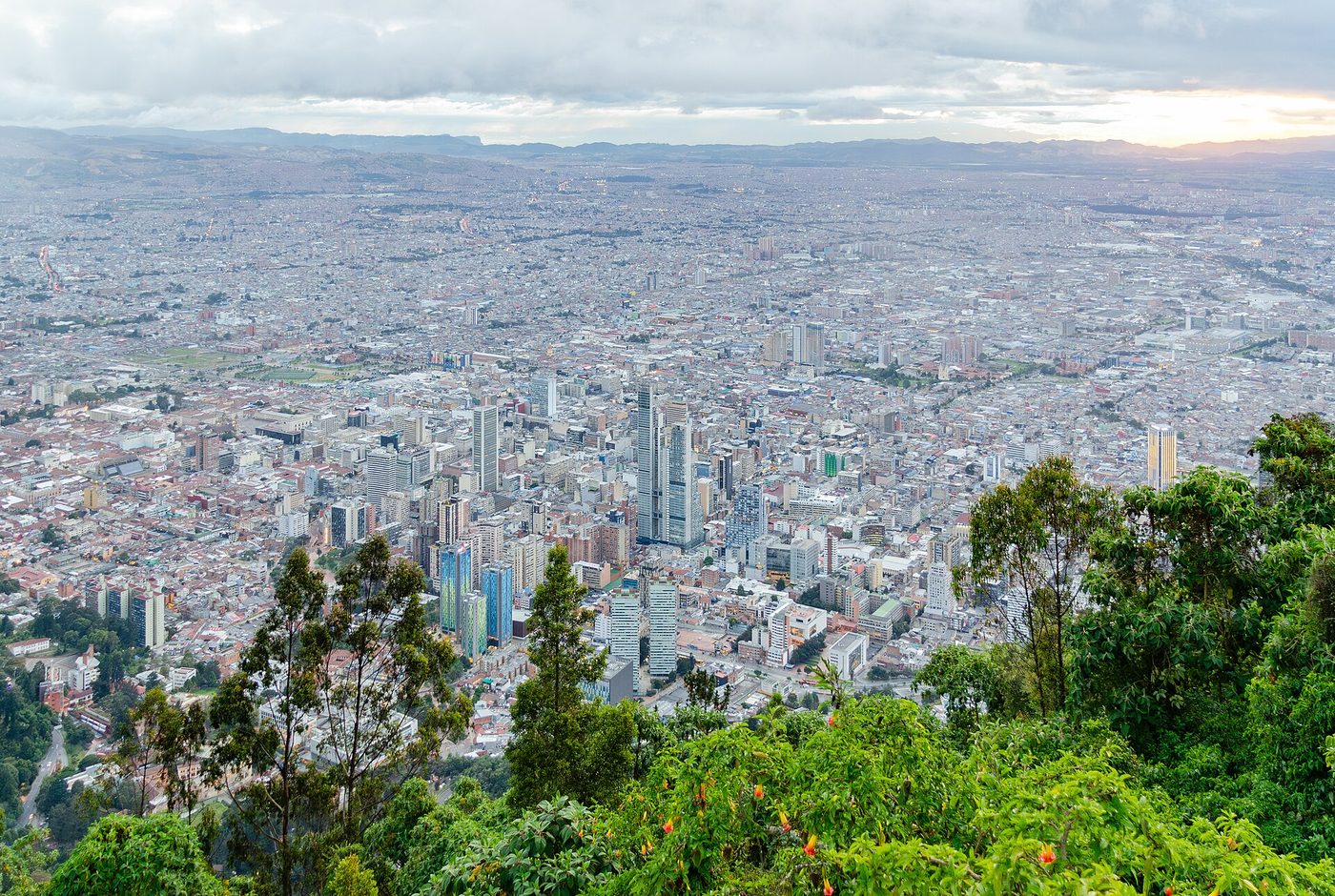
Bogotá, Monserrate, 2023-06 CN, Colombia
Colombia COL
Bogotá, Monserrate, 2023-06 CN — Photo: Steffen Schmitz ( more photos ) / CC BY-SA 4.0 via Wikimedia Commons
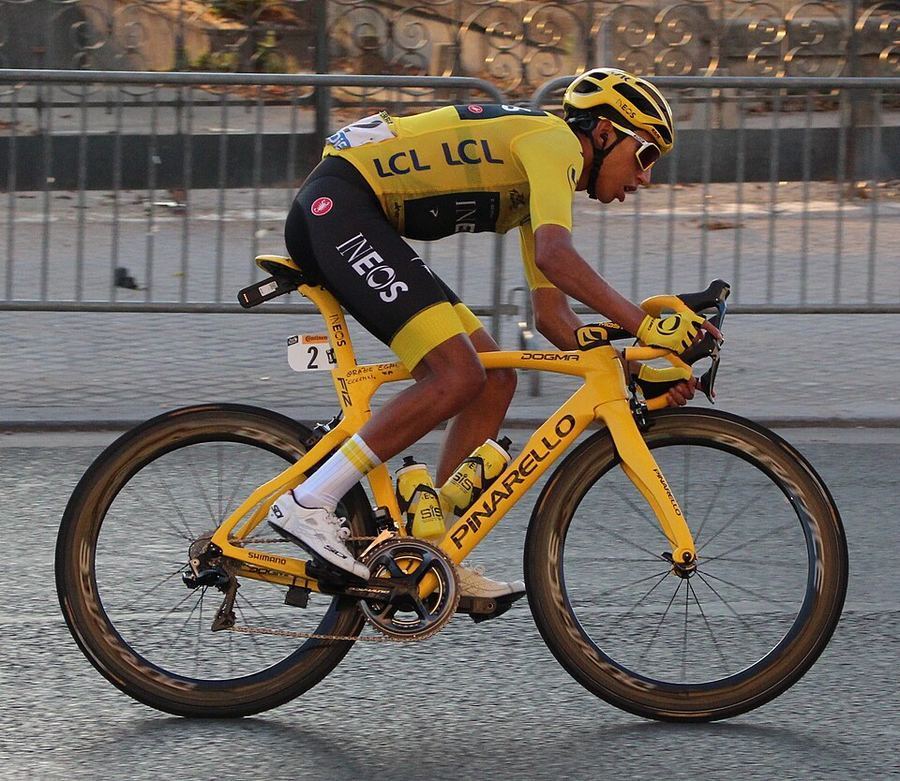
Did You Know Egan Bernal's victory in the 2019 Tour de France made him the first Colombian and the first Latin American rider to win the race. — IOC

Colombia occupies the northwestern corner of South America and is the only country on the continent with coastlines on both the Caribbean Sea and the Pacific Ocean. Roughly fifty million people live in a territory that the Andes split into three parallel cordilleras, creating a set of largely self-contained regions — the cool Bogota savanna, the coffee slopes of Antioquia and the Eje Cafetero, the Caribbean lowlands around Barranquilla and Cartagena, the humid Pacific Choco, the eastern Llanos and the Amazon — whose distinct accents, foods and music make regional identity unusually strong. Bogota, at about 2,600 metres, is one of the highest capitals in the world. The economy is diversified but still led by extraction: crude petroleum, coal and gold dominate exports, with coffee and cut flowers giving the country its best-known consumer brands. Colombia is one of the most biodiverse countries on earth, first in the world for bird species. Its recent history is shaped by an armed conflict that ran for more than half a century and by the 2016 peace agreement with the FARC, which ended the largest guerrilla war in the Americas without resolving all of its causes.

CIA World FactbookEncyclopaedia Britannica
Population
49,842,298
Capital
Bogotá
Currency
$ COP
Time zones
Largest city
Bogota
Human Geography Themes
Loading national figures…
Largest Cities
Bogota10,419,361
Cali3,234,964
Medellín3,215,457
Barranquilla2,166,638
Cartagena925,945
Bucaramanga893,662
Cúcuta817,158
Pereira596,363
In Perspective

Bogota's urban core is home to about 10,419,361 people.

That's bigger than London, Paris, Madrid and Toronto — each a great world city in its own right.

Bogota10,419,361
London10,408,332
Paris9,366,654
Madrid5,680,137
Toronto5,566,382

Among the world's megacities, though, it's one of many — the giants of Asia and Latin America run larger still:

Bogota10,419,361
Jakarta40,545,126
Dhaka37,307,160
Tokyo33,244,670
Shanghai30,678,616
Cairo25,230,325

More people live in Bogota than in the entire nation of Greece, Portugal, Israel or Austria.

The Country & Its People

History

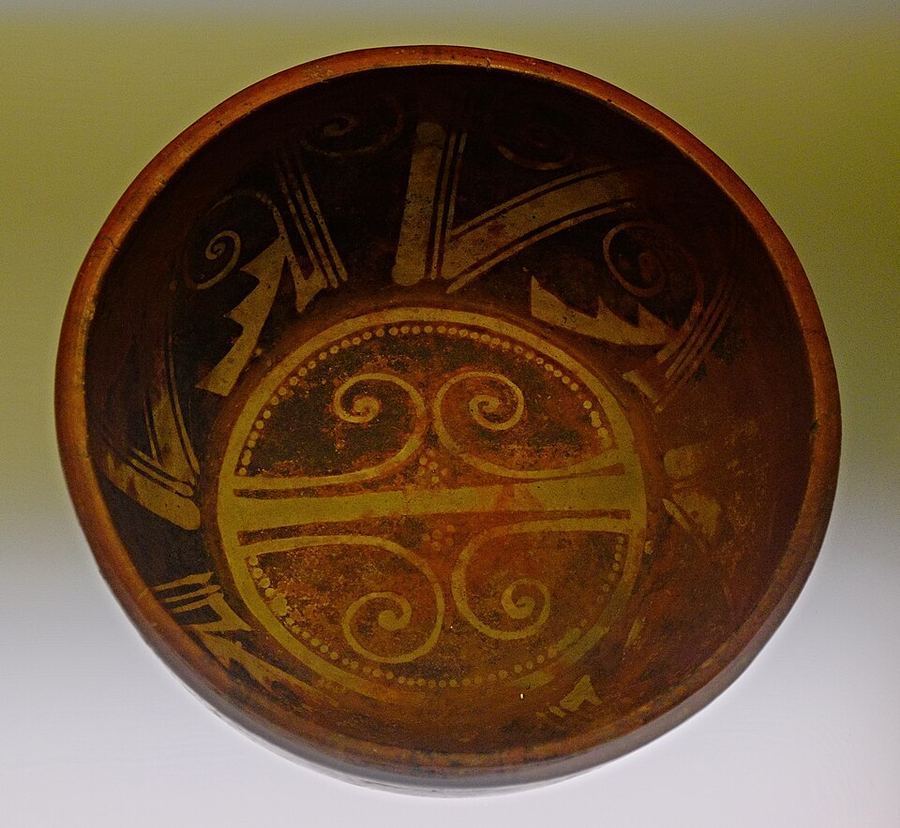
Before the Spanish arrived, the highland savanna around present-day Bogota was governed by Muisca chiefdoms whose goldwork and lake offerings gave rise to the El Dorado legend, while the Tairona built stone-terraced towns in the Sierra Nevada de Santa Marta. Spanish settlement followed the coast and then the rivers: Cartagena was founded in 1533 and became the principal fortified slave-trading port of the Spanish Main, and Gonzalo Jimenez de Quesada founded Bogota in 1538. The territory became the Viceroyalty of New Granada in the eighteenth century. Independence was declared on 20 July 1810 and secured militarily at the Battle of Boyaca on 7 August 1819 under Simon Bolivar, who then presided over the short-lived union of Gran Colombia, dissolved in 1831. The nineteenth century was consumed by conflict between Liberals and Conservatives, culminating in the Thousand Days' War of 1899 to 1902 and, in 1903, the separation of Panama. The assassination of the Liberal leader Jorge Eliecer Gaitan in Bogota on 9 April 1948 triggered the Bogotazo riots and the decade of partisan slaughter known as La Violencia, ended by the power-sharing National Front. Marxist guerrillas including the FARC and ELN emerged in 1964, and a new constitution was adopted in 1991.
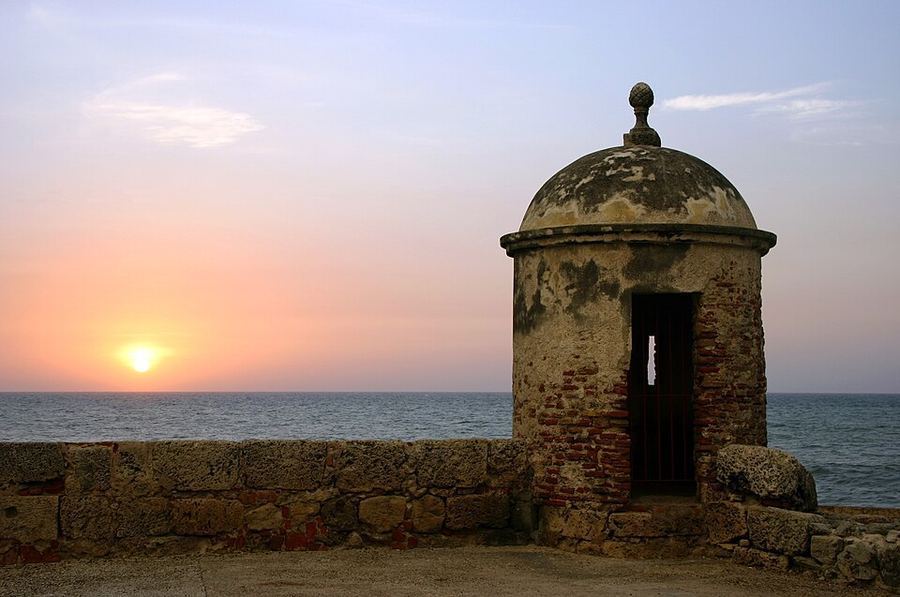
History, Colombia
Igvir Ramirez / CC BY-SA 2.0

Culture

Colombian culture is best understood region by region rather than nationally. The costeno Caribbean, centred on Barranquilla, Cartagena and Santa Marta, is loud, African-inflected and carnival-driven; the paisa culture of Antioquia and the coffee belt is entrepreneurial, Catholic and famously voluble; the Andean interior around Bogota and Boyaca is more formal and reserved; the Llanos have a cattle-frontier culture shared with Venezuela; the Pacific Choco is overwhelmingly Afro-Colombian with its own musical and funerary traditions; and the Amazon and Sierra Nevada sustain Indigenous nations including the Kogi, Arhuaco, Wayuu, Nasa and Misak. UNESCO has recognised an unusual number of these traditions as intangible cultural heritage, among them the Carnival of Barranquilla, the cultural space of Palenque de San Basilio, the Holy Week processions of Popayan, the Carnival of Blacks and Whites in Pasto, the marimba music and chants of the southern Pacific, the traditional vallenato music of the Greater Magdalena, and the normative system of the Wayuu applied by the palabrero. Catholicism remains the largest religion, though Evangelical churches have grown rapidly. Family, hospitality and an insistence on formal courtesy cut across every region.
Culture, Colombia
Aquos / CC0

Points Of Pride

Colombians name biodiversity first: the country records more bird species than any other on earth and is among the world leaders in orchids, amphibians and butterflies, with the Amazon, the Andes, the Choco and the Sierra Nevada packed into one national territory. Literature is a close second — Gabriel Garcia Marquez won the Nobel Prize in Literature in 1982, and One Hundred Years of Solitude made the imagined town of Macondo a global reference point. Coffee is the third: the Coffee Cultural Landscape of Colombia was inscribed by UNESCO as a World Heritage site in 2011, joining the fortifications of Cartagena, the archaeological parks of San Agustin and Tierradentro, the historic centre of Mompox, Los Katios and Malpelo, and Chiribiquete National Park, inscribed in 2018 for both its ecology and its rock art. Colombians also point to the 2016 peace agreement with the FARC, for which President Juan Manuel Santos received the Nobel Peace Prize, and to Medellin's transformation from the world's most violent city into a reference case in urban policy, recognised internationally in 2013.
Points Of Pride, Colombia
Astromario / CC BY-SA 3.0

Cultural Fusion

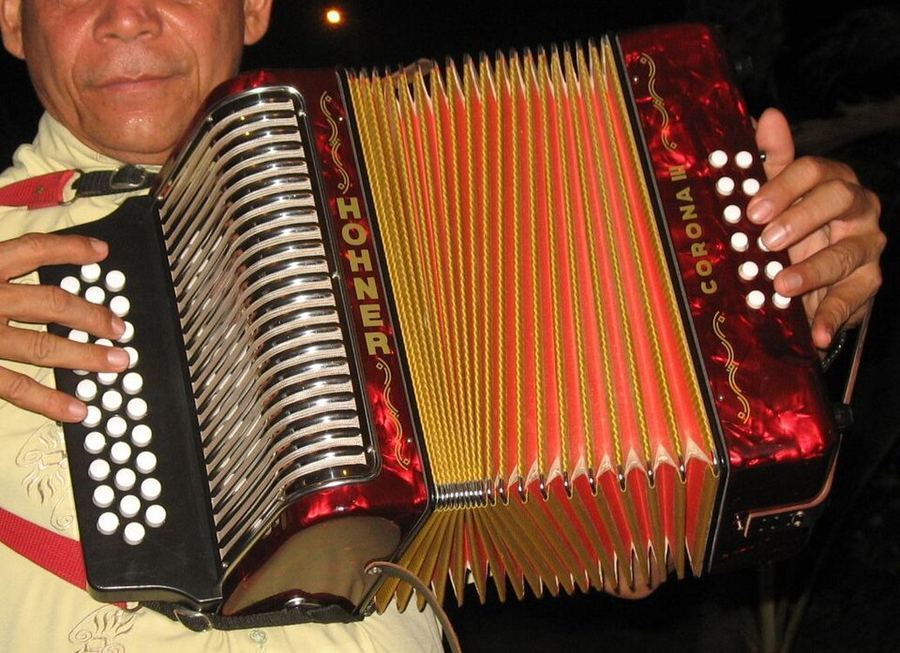
Colombia's popular culture is the product of three streams — Indigenous, Spanish and African — mixing along particular rivers and ports rather than uniformly. Vallenato is the clearest illustration: its three instruments are a German button accordion that arrived through Caribbean trade, the caja drum descended from African percussion, and the guacharaca, a notched scraper of Indigenous origin, and the songs themselves preserve a tradition of sung news carried between towns of the Magdalena. Cumbia, the country's most widely exported rhythm, pairs African drumming with Indigenous gaita flutes under a Spanish-derived courtship choreography. Palenque de San Basilio, founded by escaped enslaved Africans and recognised as the first free African town in the Americas, still speaks Palenquero, a Spanish-lexicon creole with Kikongo grammar, and was proclaimed by UNESCO a masterpiece of oral and intangible heritage. In Cartagena, champeta grew in the 1970s and 1980s out of Congolese and West African records unloaded at the port and replayed on enormous sound systems, an African music returning to an African-descended Caribbean city and becoming Colombian. Wayuu weaving, Andean Catholic ritual and Lebanese and Syrian migration to the coast add further layers.
Cultural Fusion, Colombia
Wikimedia Commons / CC BY 2.0

Music & Dance

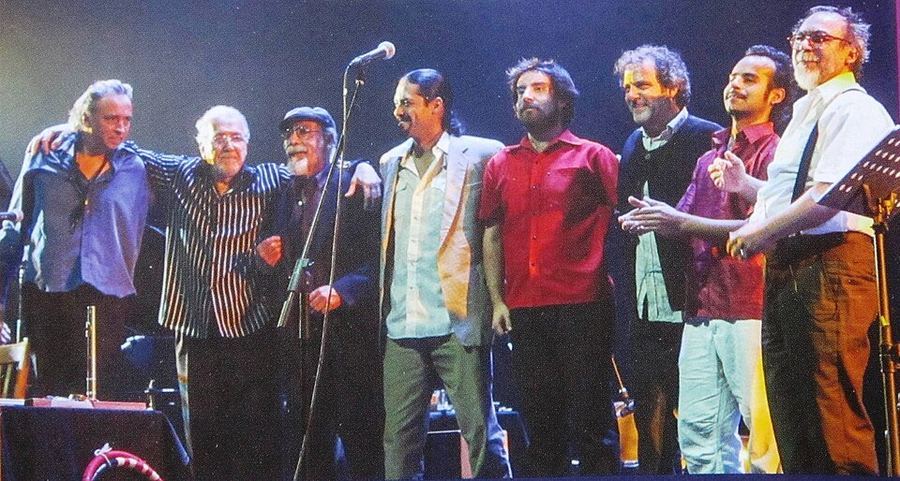
No Latin American country of comparable size produces as many distinct musical regions. On the Caribbean coast, cumbia, porro and mapale set the template, and vallenato — accordion, caja and guacharaca — became the dominant popular form nationally, celebrated each April at the Festival de la Leyenda Vallenata in Valledupar and inscribed by UNESCO on its urgent-safeguarding list in 2015. The southern Pacific has the marimba de chonta and the currulao, with chants and drum ensembles that UNESCO also recognised, and whose funerary song traditions are among the most distinctive in the Americas. The Andean interior holds the bambuco, pasillo and torbellino, played on tiple and bandola, and the Llanos share the harp-driven joropo with Venezuela. Barranquilla's carnival, a UNESCO masterpiece, is the largest annual mobilisation of all of it. Colombian artists have carried these forms outward on an extraordinary scale: Totó la Momposina and Petrona Martinez from the traditional side; Joe Arroyo and Grupo Niche in salsa; Carlos Vives, who rebuilt vallenato for a rock audience; and Shakira, Juanes, J Balvin, Maluma and Karol G, who made Medellin one of the centres of global Spanish-language pop and reggaeton.
Music & Dance, Colombia
Jdvillalobos / Public domain

Cuisine & Misattributed Foods

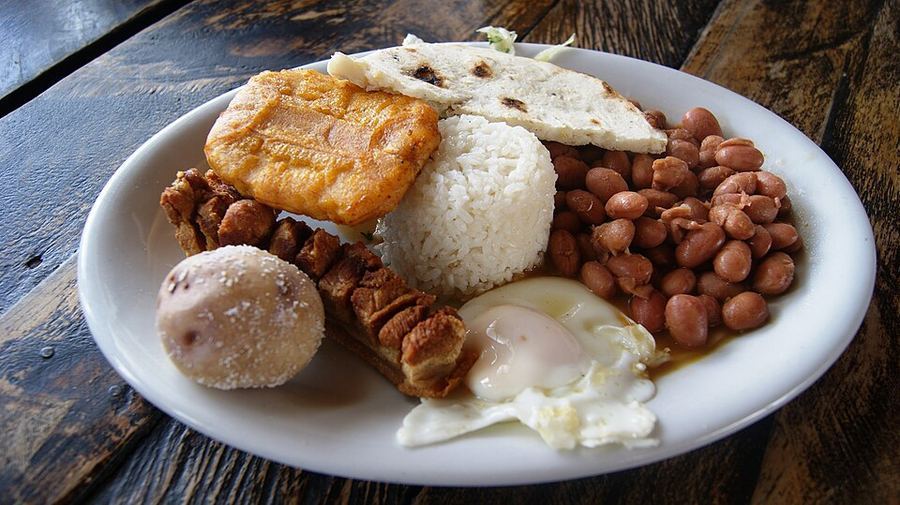
Colombian food is regional to the point of being several cuisines. The Andean interior produces ajiaco santafereno, a Bogota soup of chicken and three varieties of potato scented with the herb guasca and finished with capers and cream, and changua, a milk and egg breakfast broth. Antioquia contributes the bandeja paisa, an outsized platter of beans, rice, ground beef, chicharron, chorizo, fried egg, plantain, arepa and avocado. Arepas — griddled maize cakes — are eaten nationwide in forms that change every few hundred kilometres, from the thin arepa de queso of the coast to the stuffed arepa de huevo. Sancocho, a stew of meat with plantain, yuca and maize, is the shared Sunday dish, and lechona, a whole pig stuffed with rice and peas, is Tolima's contribution. The Caribbean coast leans on fish, coconut rice and patacones, the Pacific on seafood with the aromatic herbs chillangua and poleo, and the Amazon and Llanos on river fish and slow-roasted beef. Fruit is the country's quiet superpower — lulo, guanabana, granadilla, curuba, borojo and zapote among dozens with no English names. Colombian arabica coffee, grown on Andean smallholdings, is the national drink and the national brand.
Cuisine & Misattributed Foods, Colombia
Dtarazona / CC BY-SA 3.0

National Dress

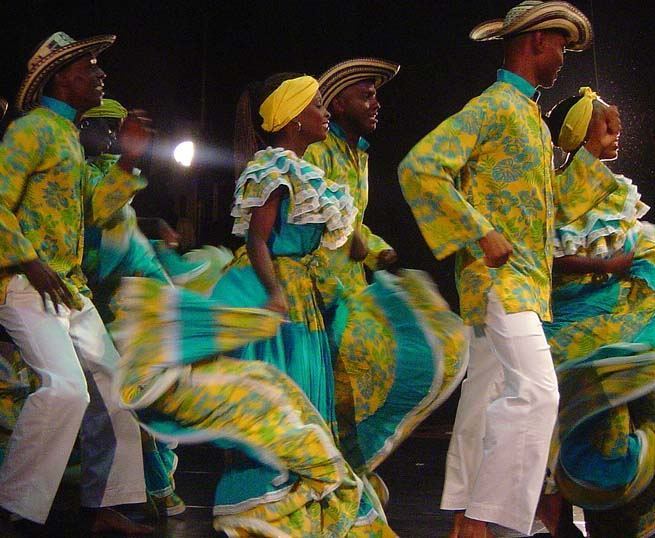
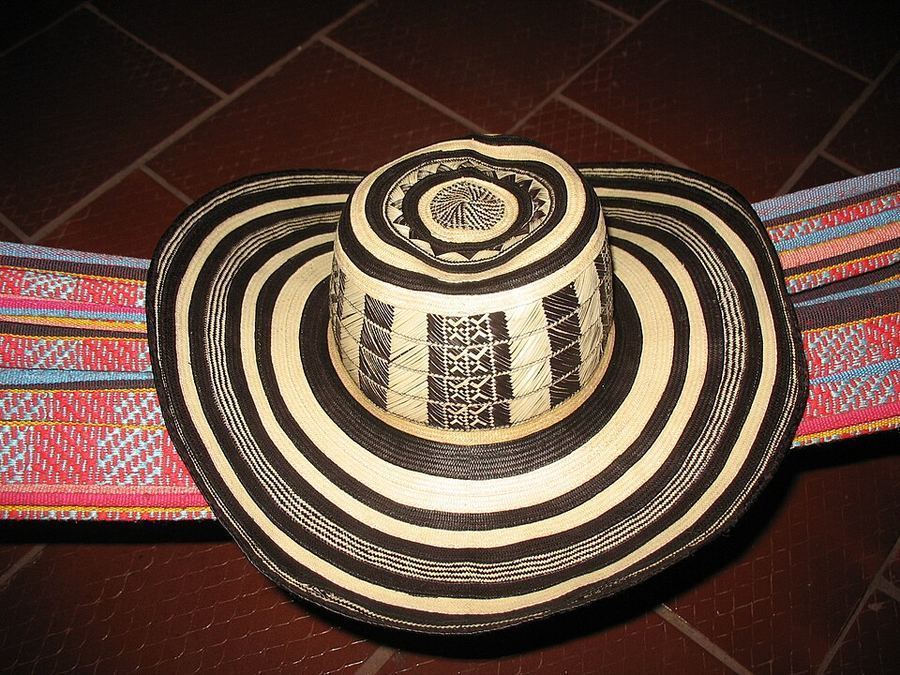
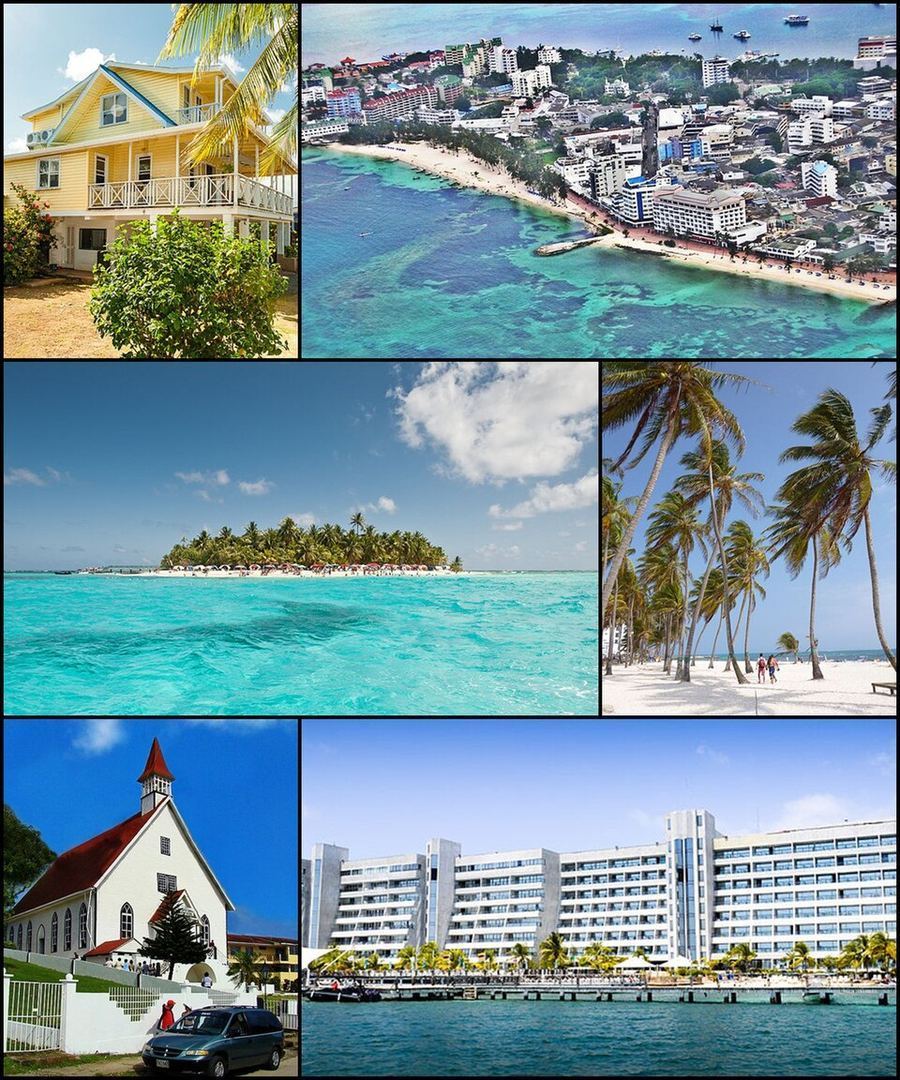
Colombia has no single national costume, but it has one universally recognised national garment: the sombrero vueltiao, a black-and-white hat woven from cana flecha fibre by Zenu artisans in Tuchin, Cordoba, whose quality is graded by the number of vueltas or plaited strips it contains. It was adopted as a national cultural symbol in the 2000s and is worn from Caribbean festivals to presidential photo-opportunities. In the Andes, the ruana — a heavy open wool poncho from Boyaca — is genuinely everyday wear in cold highland towns, paired with alpargata sandals. Regional festival dress is elaborate and specific: the pollera and full ruffled skirt worn for cumbia, with a candle carried in one hand and the male partner in white with a red neckerchief and sombrero vueltiao; the sayo and anaco of Andean Indigenous communities; the blue and black woven dress of the Guambiano of Cauca; and, among the Wayuu of La Guajira, the loose printed manta and the crocheted mochila bag that has become a national export. San Andres and Providencia keep Anglophone Caribbean dress traditions. Everyday clothing is otherwise entirely contemporary.
National Dress, Colombia
Jdvillalobos / Public domain

Sports & Inspiring Athletes

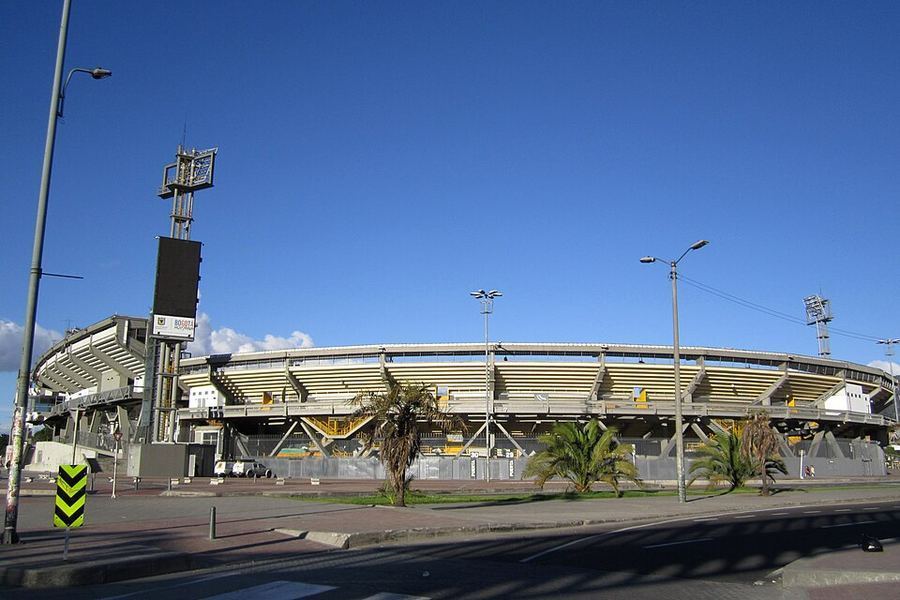
Football is the national sport and the national mood barometer. The men's team won the Copa America in 2001 as hosts and reached the quarter-finals of the 2014 World Cup in Brazil, where James Rodriguez won the Golden Boot; Atletico Nacional of Medellin won the Copa Libertadores in 1989 and again in 2016, and its rivalry with Independiente Medellin, and Millonarios' with Santa Fe in Bogota, drive the domestic league. Cycling is the second national passion and arguably the greater success: raised at altitude on Andean climbs, Colombian riders have won all three Grand Tours, with Egan Bernal taking the Tour de France in 2019 and Nairo Quintana the Giro and the Vuelta. Roller speed skating is a Colombian near-monopoly at world championship level. Tejo, in which a disc is thrown at gunpowder charges, is the legally designated national sport and is played socially everywhere. Baseball is strong on the Caribbean coast, boxing and weightlifting produce Olympic medallists, and BMX racing has been transformed by Mariana Pajon's success into a mass participation sport.
Sports & Inspiring Athletes, Colombia
Felipe Restrepo Acosta / CC BY-SA 3.0

Notable Educational Programs

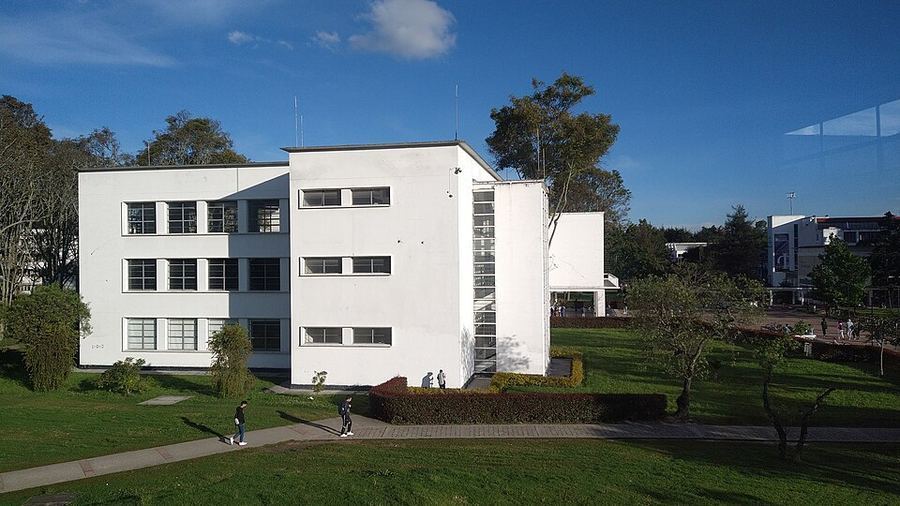
Education is compulsory through basic secondary level, and net primary enrolment is near universal, but quality and completion vary enormously between private urban schools and rural public ones, and between regions — the Pacific and Amazonian departments trail the Andean interior by wide margins on national test results. Higher education is anchored by the Universidad Nacional de Colombia, founded in 1867 with its main campus in Bogota, and by the Universidad de Antioquia in Medellin, one of the oldest in the Americas; the private Universidad de los Andes and the Jesuit Pontificia Universidad Javeriana are the leading private institutions. SENA, the national vocational training service established in 1957, is one of Latin America's largest technical training systems and reaches well beyond the cities. Access has been the central policy fight: successive scholarship programmes for low-income high-scoring students were followed from 2023 by a free-tuition policy for public university students. Bilingual and ethno-educational programmes serve Indigenous and Afro-Colombian communities in their own languages, and Medellin's library parks became an internationally studied model of placing major public educational infrastructure in the poorest neighbourhoods.
Notable Educational Programs, Colombia
Carlos25i / CC BY-SA 4.0

Wars & Conflicts

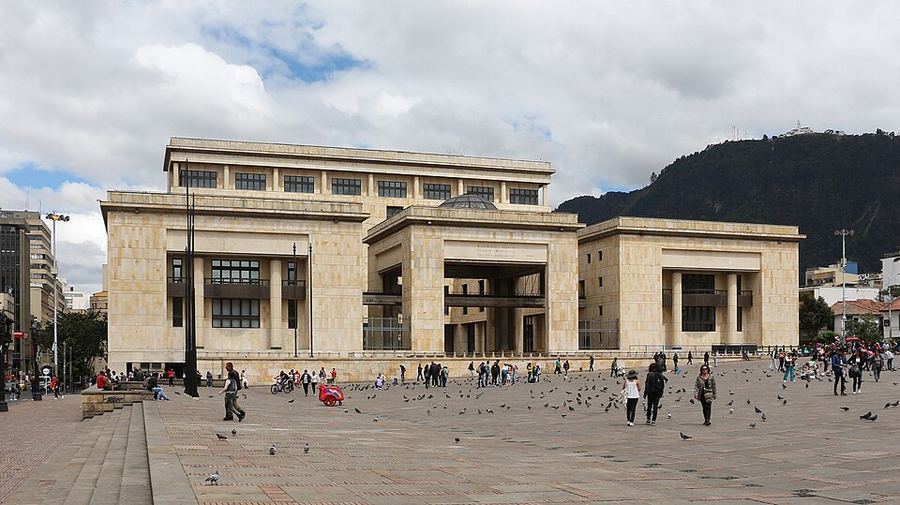
Colombia's internal armed conflict is among the longest in modern history. The FARC and the ELN were both founded in 1964 out of the rural self-defence groups of La Violencia; the M-19 emerged in 1974 and seized the Palace of Justice in Bogota in 1985 with catastrophic loss of life. From the 1980s cocaine finance transformed the war, funding guerrilla expansion, the Medellin and Cali cartels, and the paramilitary confederation that became the AUC, whose massacres in the 1990s and early 2000s drove mass displacement. The Truth Commission established under the peace process reported in 2022 that the conflict had killed hundreds of thousands and displaced millions, with civilians bearing the overwhelming share. A peace agreement signed with the FARC in 2016 — narrowly rejected in a referendum, then revised and approved by Congress — demobilised the largest guerrilla army in the Americas and created the Special Jurisdiction for Peace to try the gravest crimes; President Juan Manuel Santos received the Nobel Peace Prize that year. Violence persists at lower intensity: the ELN remains active, FARC dissident structures and the Clan del Golfo contest coca and mining corridors, and killings of social leaders and demobilised combatants have continued. Colombia also hosts the largest population of displaced Venezuelans in the world.
Current as of 2026-08-06
Wars & Conflicts, Colombia
Bernard Gagnon / CC BY-SA 4.0

Land & Border Disputes

Colombia's principal territorial dispute is with Nicaragua over the San Andres and Providencia archipelago and the maritime spaces around it. In its 2012 judgment in Territorial and Maritime Dispute the International Court of Justice confirmed Colombian sovereignty over the disputed islands and cays but redrew the maritime boundary substantially in Nicaragua's favour, awarding it a large area of the western Caribbean; Colombia rejected the delimitation as applied and withdrew from the Pact of Bogota, the treaty that had conferred the Court's jurisdiction. Nicaragua brought two further cases: in 2022 the Court found that Colombia had violated Nicaraguan rights in the zone awarded in 2012, and in 2023 it rejected Nicaragua's claim to an extended continental shelf reaching beyond 200 nautical miles from its coast, a ruling read in Bogota as a significant vindication. Colombia's maritime boundary with Venezuela in the Gulf of Venezuela, including the status of the Los Monjes islets, has never been delimited and remains the country's oldest unresolved frontier question. The land border with Venezuela, closed for long stretches between 2015 and 2022, was reopened by agreement, and the frontier with Panama through the Darien Gap is unroaded and heavily used by migrants.
Land & Border Disputes, Colombia
Mr.Jhosimar / CC BY-SA 3.0
Land, Life & Legacy

Land & Climate

The Andes enter Colombia from Ecuador and immediately divide into three ranges — the Western, Central and Eastern cordilleras — separated by the deep valleys of the Cauca and Magdalena rivers, and this fragmentation explains as much about Colombian history as any political fact. East of the mountains lie the Llanos, flat seasonally flooded grasslands draining to the Orinoco, and beyond them the Amazon rainforest, which covers roughly a third of the national territory but holds a tiny share of its people. Between the Western cordillera and the Pacific sits the Choco, one of the wettest places on the planet, where annual rainfall is measured in metres. The Caribbean lowlands run from the Gulf of Uraba to the Guajira desert, interrupted by the Sierra Nevada de Santa Marta — an isolated triangular massif rising directly from the sea to snow peaks above 5,000 metres, the highest coastal mountain range in the world. Because the country straddles the Equator, temperature is governed by altitude rather than season, and Colombians speak of thermal floors: tierra caliente, templada, fria and paramo, the last a high wet grassland ecosystem that supplies most of the country's drinking water.
Land & Climate, Colombia
Bernard Gagnon / CC BY-SA 4.0

Entertainment

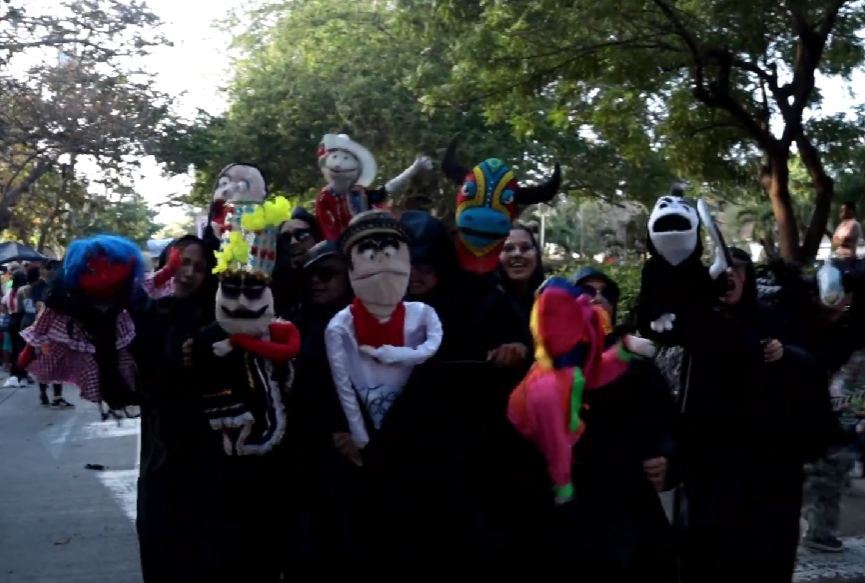
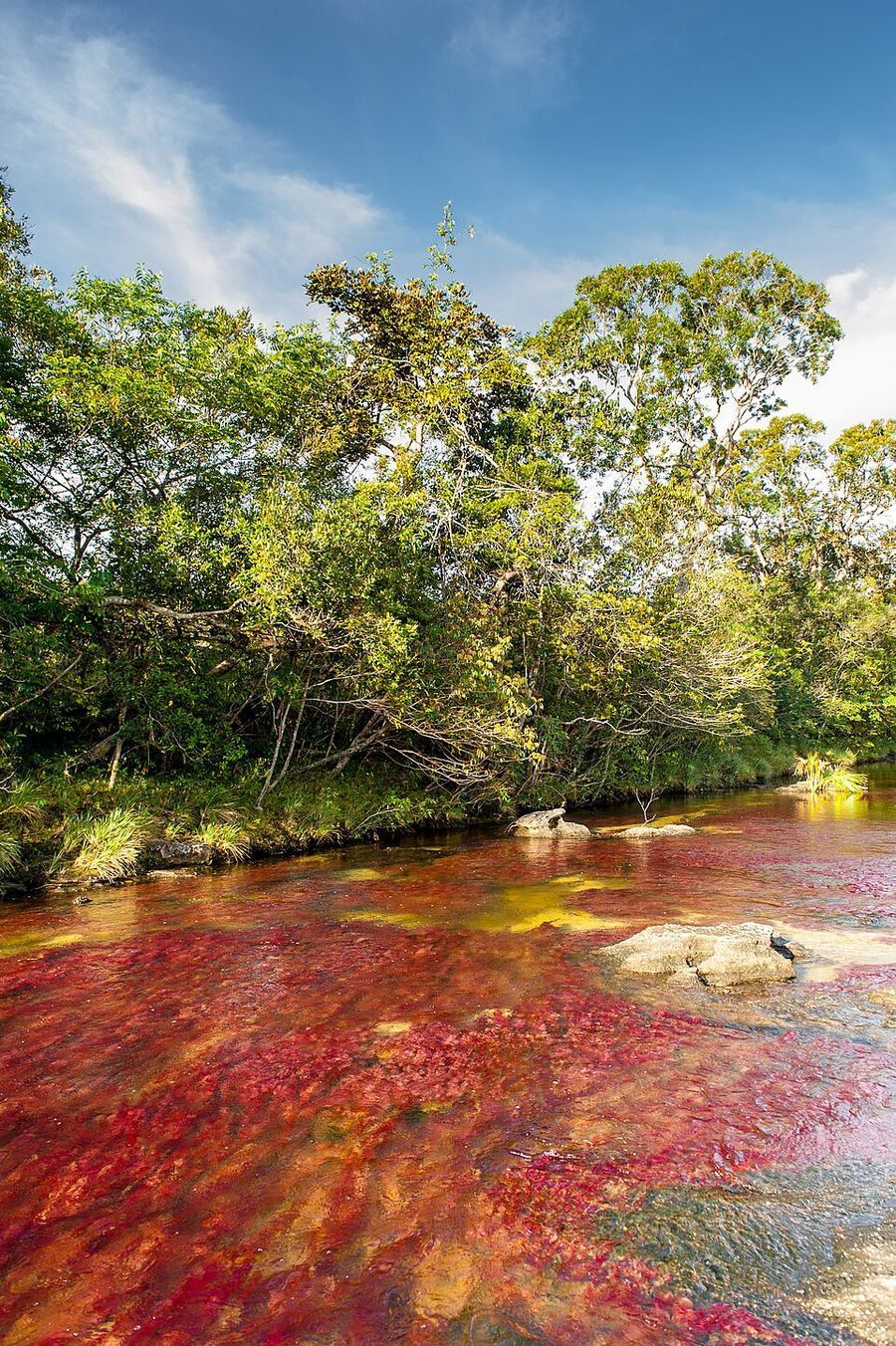
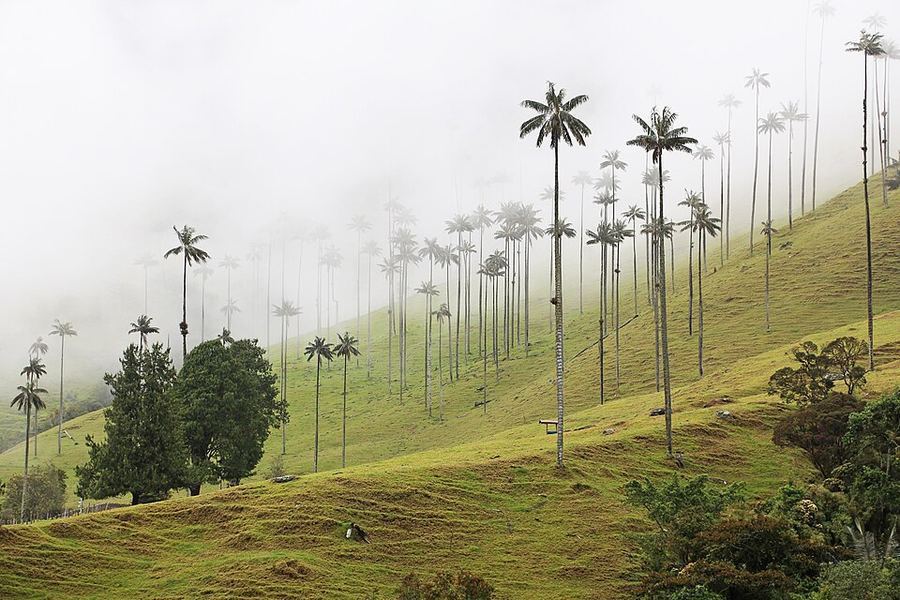
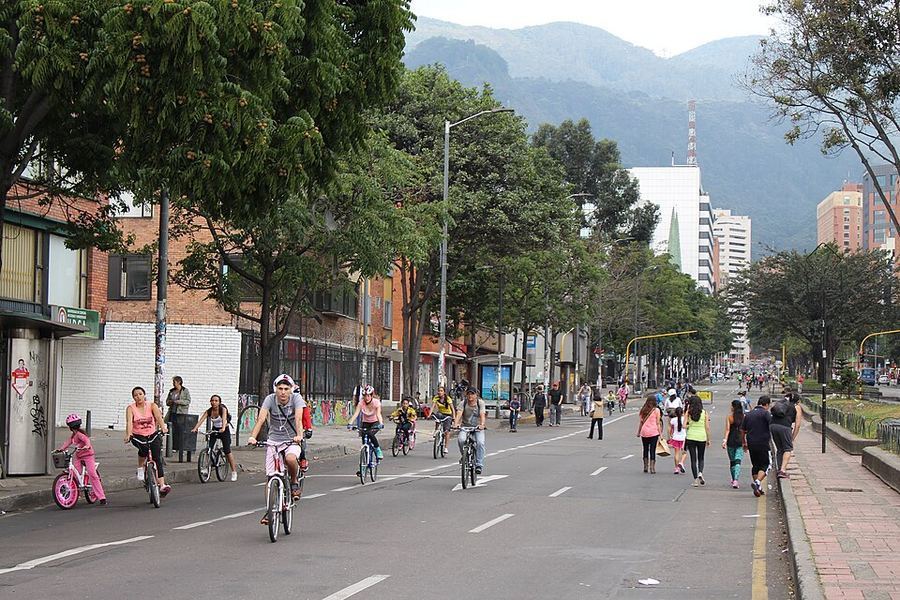
Sunday in Bogota belongs to the Ciclovia, when well over a hundred kilometres of arterial roads close to cars from morning until mid-afternoon and fill with cyclists, runners, skaters and families; begun in the mid-1970s, it is the model for open-streets programmes in cities worldwide. Football fills the rest of the weekend, and tejo — the national sport, in which a metal disc is thrown at gunpowder-charged targets set in clay, usually with beer in hand — fills the evening. The festival calendar is dense: the Barranquilla Carnival before Lent, the Feria de las Flores in Medellin in August with its silleteros carrying flower displays on their backs, the Cali Fair at the end of December, the Manizales Fair, the Vallenato Festival in Valledupar and the free Rock al Parque festival in Bogota. Domestic tourism runs to the Caribbean beaches of Tayrona and Cartagena, the colonial towns of Villa de Leyva and Barichara, the Cocora valley's wax palms, and Cano Cristales in the Macarena, where aquatic plants turn the riverbed red for a few months each year. Long lunches, aguardiente and dominoes complete the picture.
Entertainment, Colombia
Lombana / CC BY-SA 4.0

Art & Museums

Colombia's most famous visual export is Fernando Botero, whose inflated volumetric figures in painting and monumental bronze made boterismo instantly recognisable and whose donations created public collections in Bogota and Medellin; he died in 2023. He was preceded by Alejandro Obregon, whose Caribbean abstractions defined mid-century Colombian modernism, and by Debora Arango, whose unsparing paintings of politics, prostitution and the church were suppressed in her lifetime and rehabilitated afterwards. Sculptors Edgar Negret and Eduardo Ramirez Villamizar worked in geometric abstraction; Doris Salcedo has become one of the most respected artists working anywhere on the memory of political violence, and her Shibboleth, a fissure cut across the floor of Tate Modern's Turbine Hall in 2007, is among the best-known installations of the century. Pre-Columbian goldwork is the deepest layer: Bogota's Museo del Oro, run by the central bank, holds tens of thousands of pieces including the small Muisca votive raft that the El Dorado legend describes. In literature, Garcia Marquez's Nobel in 1982 sits alongside Alvaro Mutis, winner of the Cervantes Prize, and a strong contemporary generation.
Art & Museums, Colombia
Reg Natarajan from Vancouver, Canada / CC BY 2.0

Notable People

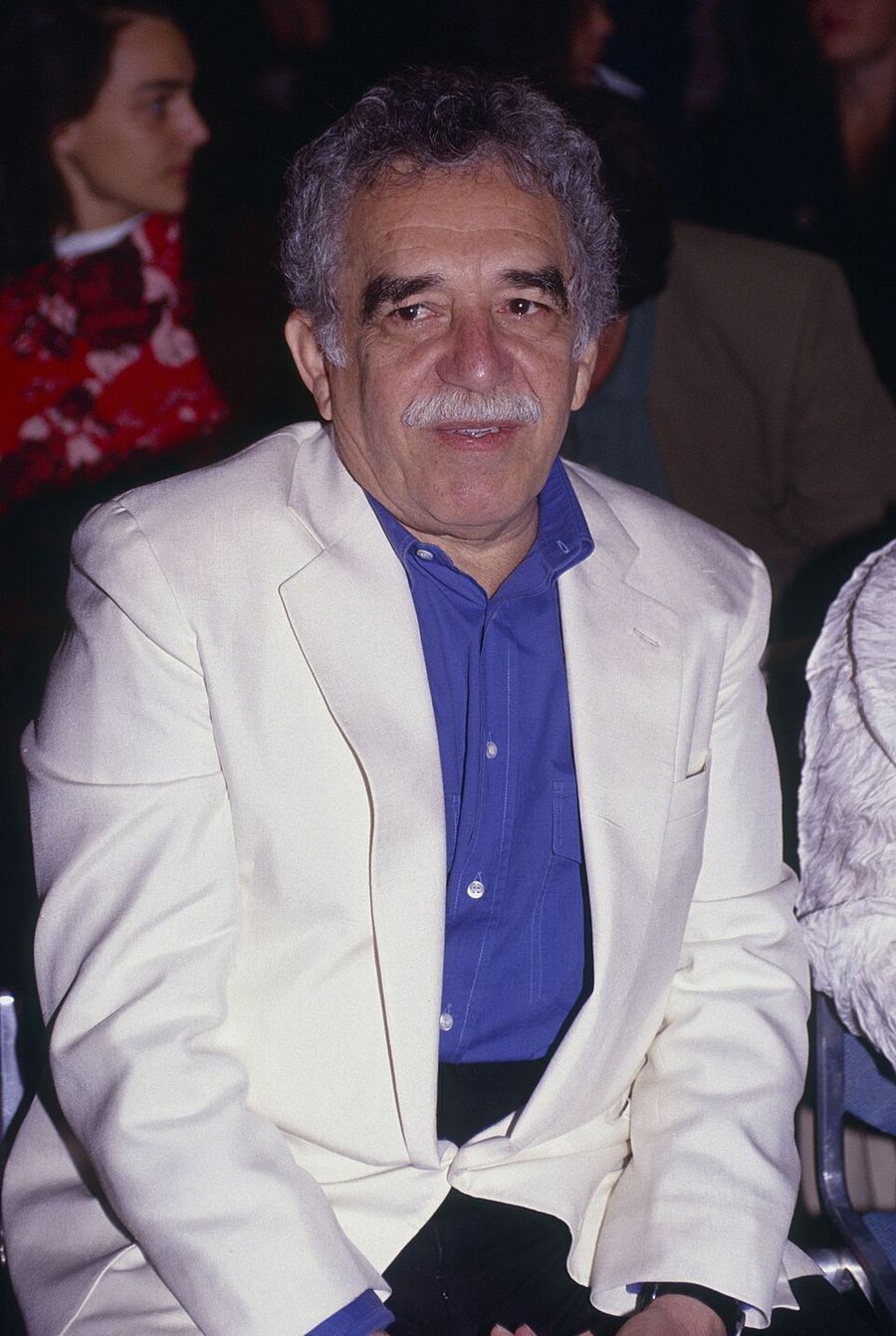
Gabriel Garcia Marquez is the country's towering figure — journalist, novelist, and Nobel laureate in 1982, whose Macondo drew directly on his childhood in Aracataca. Fernando Botero gave Colombia its most recognisable visual signature. In politics, Simon Bolivar's campaigns founded the republic; Jorge Eliecer Gaitan's assassination in 1948 changed its course; Juan Manuel Santos negotiated the 2016 peace agreement and won the Nobel Peace Prize; Gustavo Petro became the country's first left-wing president in 2022, with Francia Marquez, an Afro-Colombian environmental activist, as vice-president. In science, Manuel Elkin Patarroyo developed an early synthetic candidate malaria vaccine and gave the patent to the World Health Organization, and the neuroscientist Rodolfo Llinas built a distinguished career in the United States. In sport, Egan Bernal won the Tour de France in 2019 and Nairo Quintana the Giro d'Italia and the Vuelta a Espana; Mariana Pajon won consecutive Olympic BMX titles; Edgar Renteria delivered the winning hit in a World Series and was later a series most valuable player. Shakira, Juanes and J Balvin carried Colombian music worldwide.
Notable People, Colombia
Gorup de Besanez / CC BY-SA 4.0

Inventions & Breakthroughs

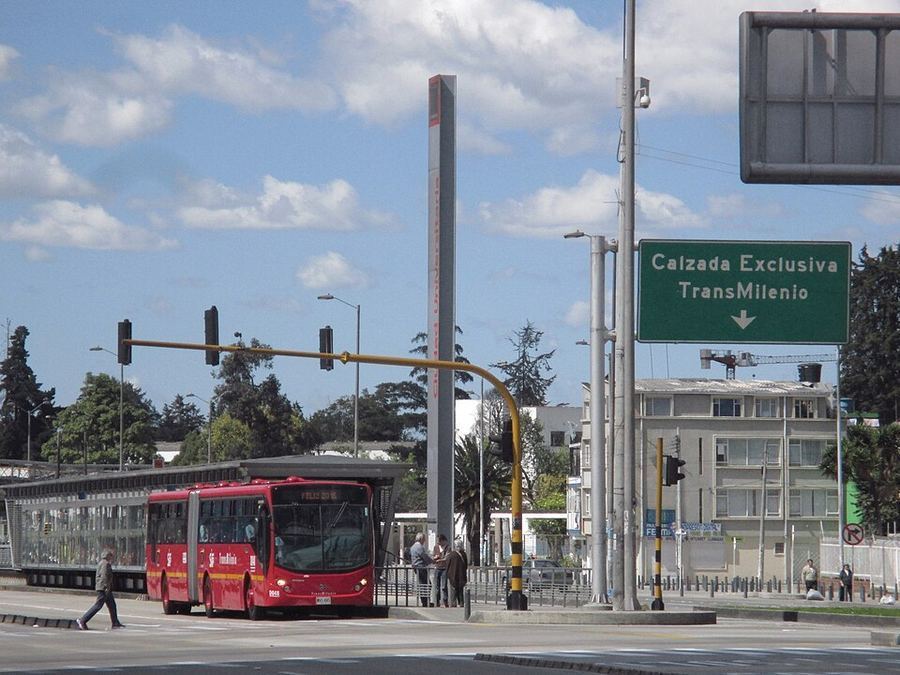
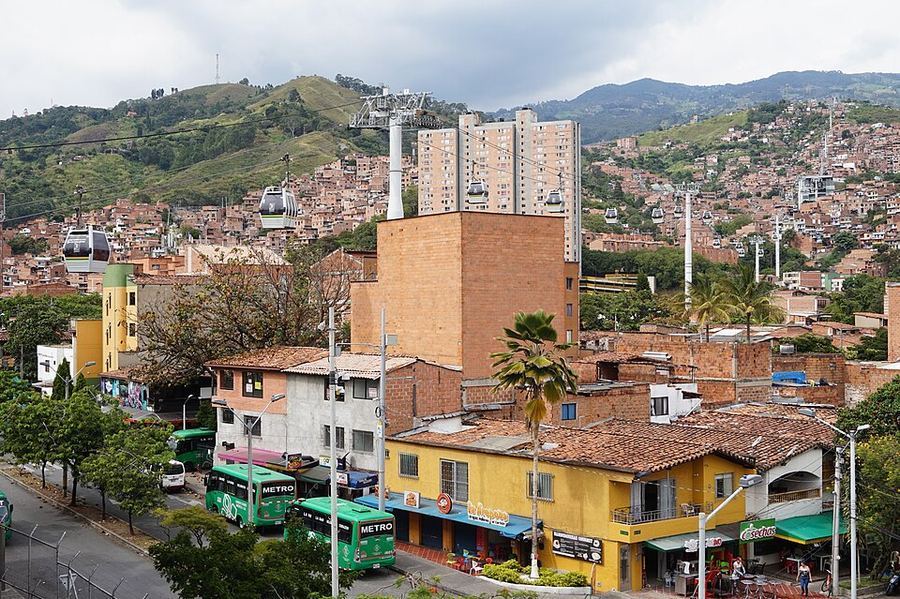
Colombia's most widely copied inventions are in urban policy rather than in hardware. The Ciclovia, begun in Bogota in the mid-1970s, established the practice of closing major roads to cars on Sundays and has been reproduced in hundreds of cities on every continent. TransMilenio, the bus rapid transit system opened in Bogota in 2000, took the Brazilian busway concept and scaled it with dedicated trunk corridors, articulated buses and off-board fare collection into a template exported to cities across Asia, Africa and Latin America. Medellin went further with the Metrocable, opened in 2004, which used aerial gondolas as scheduled mass transit to connect steep informal hillside settlements to the metro — the first system of its kind integrated into a formal transit network, and now imitated from La Paz to Mexico City — and paired it with library parks and public escalators in an approach that came to be called social urbanism. In science, Manuel Elkin Patarroyo's SPf66 was among the first chemically synthesised vaccine candidates against a parasitic disease. Colombian agronomy also produced the breeding and processing standards that made washed Andean arabica a distinct commercial category.
Inventions & Breakthroughs, Colombia
Felipe Restrepo Acosta / CC BY-SA 4.0

Science & Technology

Colombia's research strength is concentrated in health, biodiversity and agriculture. Manuel Elkin Patarroyo's work on a synthetic malaria vaccine candidate in the 1980s brought international attention and an unusual decision to assign the patent to the World Health Organization; the neuroscientist Rodolfo Llinas is among the most cited Colombian-born scientists. The Alexander von Humboldt Institute leads biodiversity inventory in a country that is a global leader in described species, and the Centro Internacional de Agricultura Tropical near Cali holds one of the world's major genebanks for beans, cassava and tropical forages, making Colombia a hub of international crop research. Industrially, the economy remains dominated by petroleum, coal, gold and agriculture, but Medellin's Ruta N district and Bogota's software sector have produced a genuine technology cluster, and Rappi, founded in Bogota in 2015, became the country's best-known technology company. Colombia joined the Organisation for Economic Co-operation and Development in 2021, a process that drove reform of statistical, regulatory and competition institutions. Research and development spending remains low as a share of national income by OECD standards, and the retention of doctoral graduates is a persistent constraint.
Science & Technology, Colombia
Bernard Gagnon / CC BY-SA 4.0
On The World Stage
Champions of Colombia

Champions & Defining Moments

Colombia's international sporting reputation rests on cycling and football. Colombian climbers have been a fixture of European professional cycling since the 1980s, and Egan Bernal's 2019 Tour de France victory made him the first Colombian and the first Latin American to win the race, following Grand Tour wins by Nairo Quintana and consistent podium finishes by Rigoberto Uran. In football, Colombian players are dispersed through the top European leagues, and the 2014 World Cup run remains the country's high-water mark. At the Olympic Games, Colombia's medals have come principally in weightlifting, BMX cycling, boxing and track cycling, with Mariana Pajon's back-to-back BMX golds in 2012 and 2016 making her the country's most decorated Olympian; the national team's medal haul has grown markedly since the 2000s. In athletics the country's strength lies in the triple jump and race walking, and Caterine Ibarguen won Olympic and world titles in the former. As a host, the country staged the Copa America in 2001, the Pan American Games in Cali in 1971, the World Games in Cali in 2013, and the Central American and Caribbean Games in Barranquilla in 2018.

IOCFIFAOlympedia
Chabe01 / CC BY-SA 4.0
Government & Leadership

Presidential republic

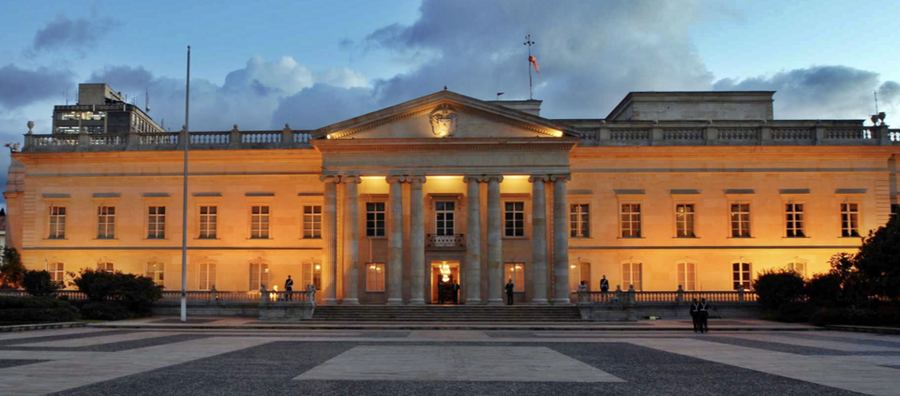
Seat of the executive

Executive

Gustavo Francisco Petro Urrego — President

In office since 7 August 2022

The legislature

Congress (Congreso)

Bicameral

Senate (Senado de la República) — Historic Pact largest party

Historic Pact 20 · CP 15 · PL 14 · Green Alliance - Hope Centre coalition 13 · CD 13 · CR 11 · Union Party for the People “Partido de la U” 10 · Other 4

Last election 3/13/2022 · 31.4% women

House of Representatives (Cámara de Representantes) — 187 seats

Last election 3/13/2022 · 29.4% women

Tommy Boy / CC BY-SA 3.0
The highest court
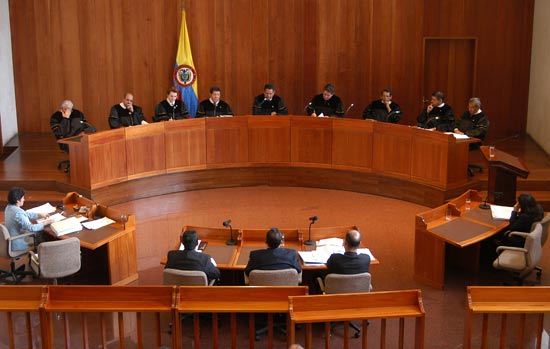
The highest court — Torax / CC BY-SA 4.0

Supreme Court of Justice or Corte Suprema de Justicia

consists of the Civil-Agrarian and Labor Chambers each with 7 judges, and the Penal Chamber with 9 judges); Constitutional Court (consists of 9 magistrates); Council of State (consists of 27 judges); Superior Judiciary Council (consists of 13 magistrates

Economy, Trade & Government

Currency & GDP

Colombian Peso — COP ($)

GDP (PPP): $978.592 billion (2024 est.)

Per capita: $18,500 (2024 est.)

Exports

$68.866 billion (2024 est.)

crude petroleum, coal, gold, coffee, refined petroleum (2023)

Partners: USA 27%, Panama 9%, India 5%, China 5%, Netherlands 4% (2023)

Imports

$78.633 billion (2024 est.)

refined petroleum, cars, broadcasting equipment, aircraft, packaged medicine (2023)

Partners: USA 26%, China 22%, Brazil 6%, Mexico 5%, Germany 4% (2023)

Government

Type: presidential republic

Independence: 20 July 1810 (from Spain)

Terrain → Where People Live

How mountains, coasts, and rivers shape settlement (LandScan).

Coming — data

Migration & Ethnic Settlement

Where groups settled and how people move (GeoEPR + UNHCR).

Coming — data

Universities

Notable institutions, mappable as points.

Coming — data
Economy & government facts: CIA World Factbook (public domain), via OpenFactBook / factbook.json.
Every fact and narrative claim will carry a visible source citation. Data-driven sections light up automatically wherever HERA has coverage.