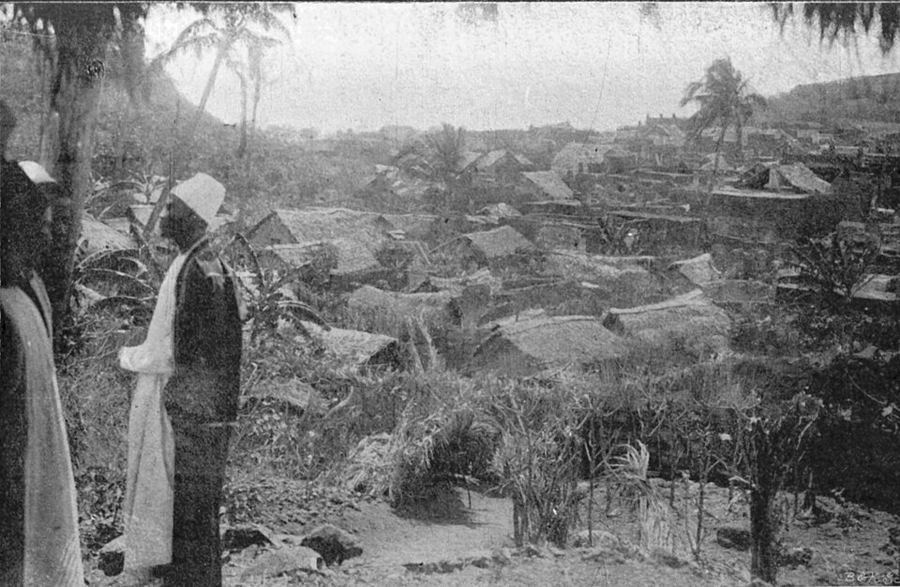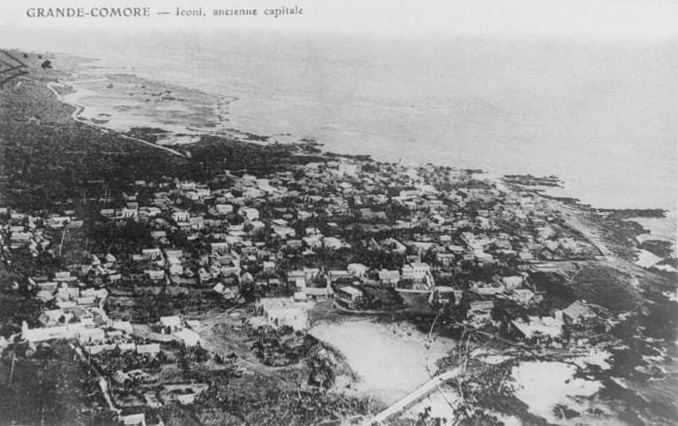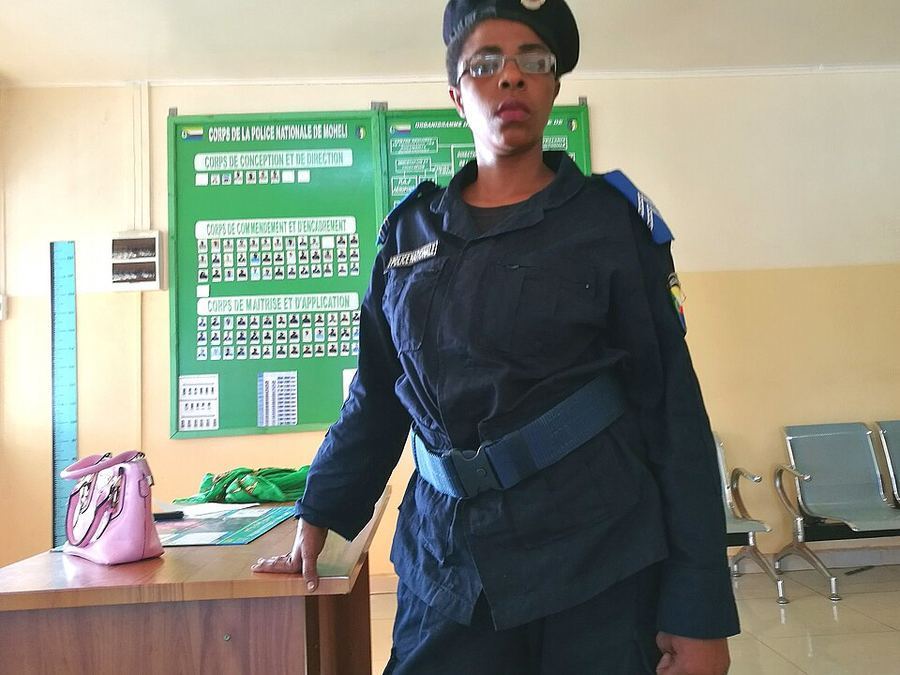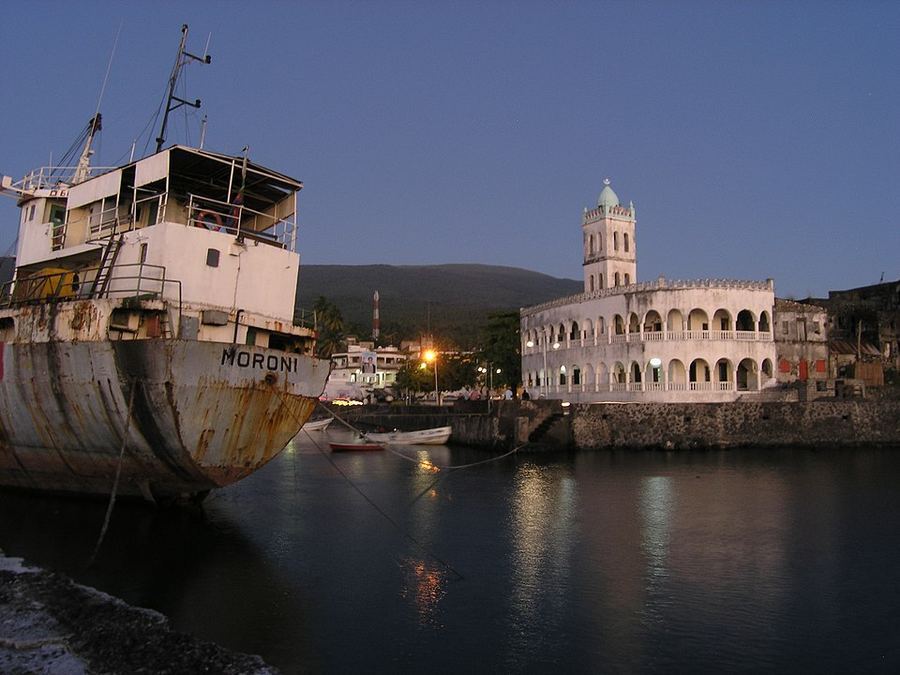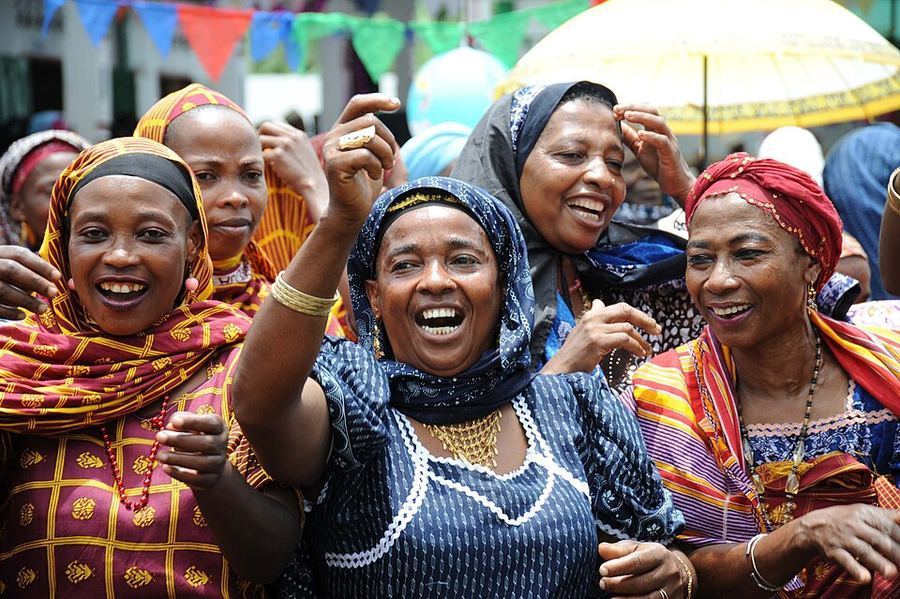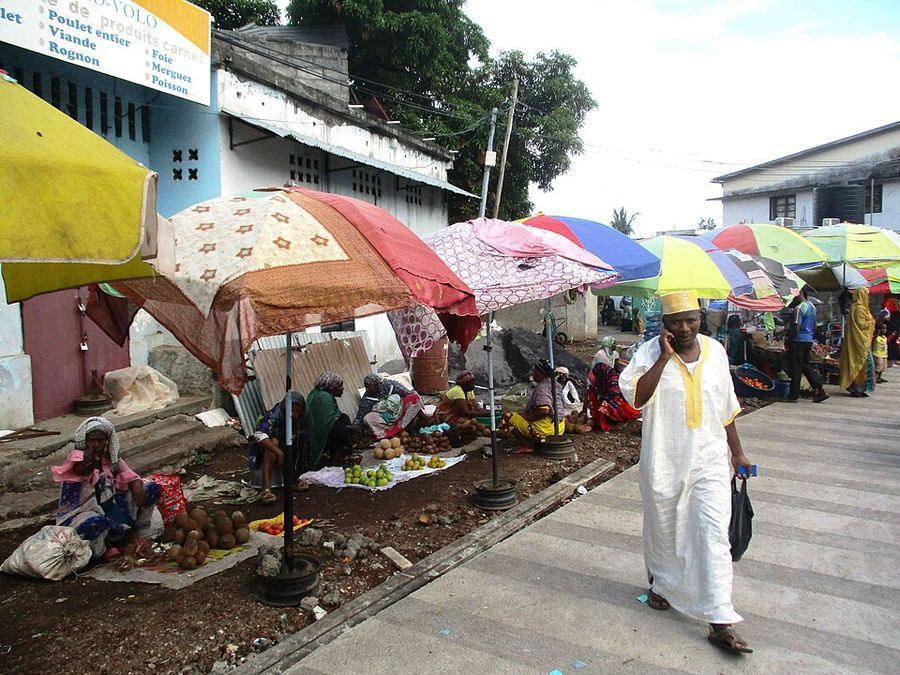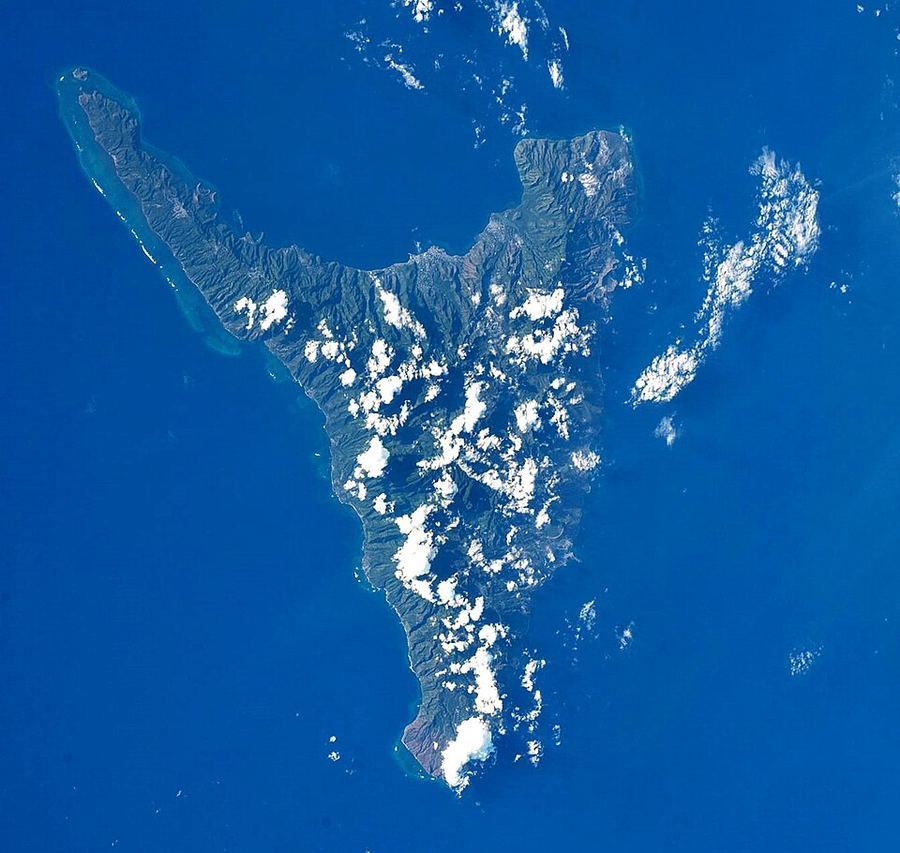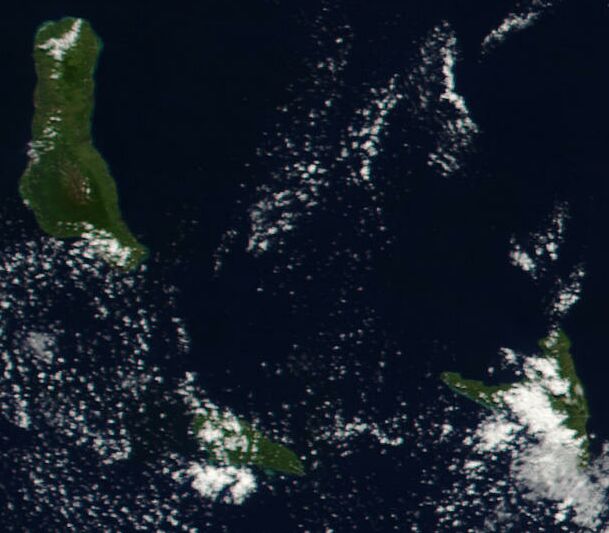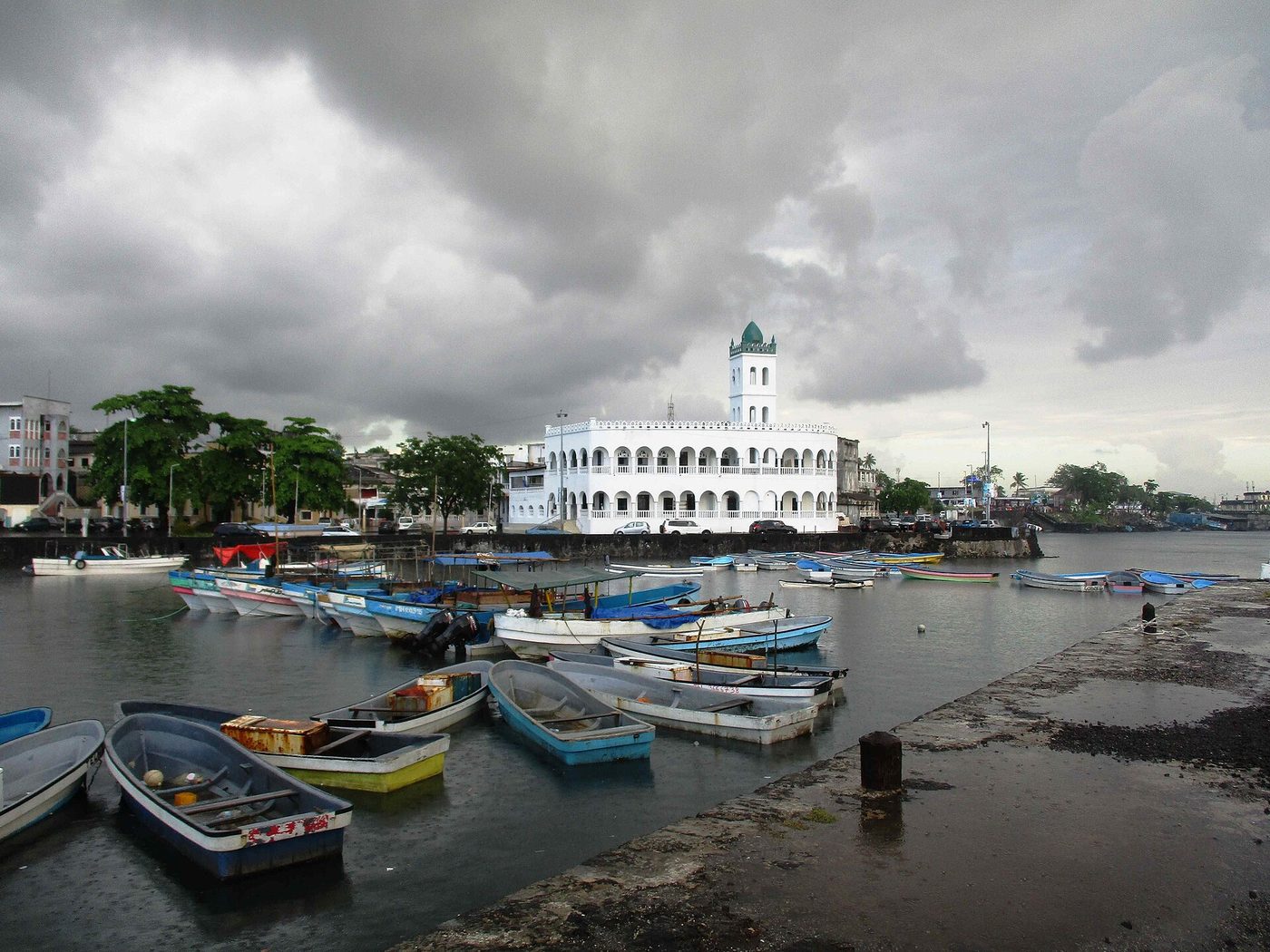
The Union of the Comoros is a volcanic archipelago of roughly nine hundred thousand people in the northern Mozambique Channel, set between Madagascar and the East African mainland. It governs three islands — Ngazidja, known in French as Grande Comore and holding the capital Moroni; Nzwani, or Anjouan; and Mwali, or Moheli — while the fourth island of the archipelago, Maore or Mayotte, voted to remain with France in 1974 and is administered as a French department, a division the Comorian state has never accepted. The population is overwhelmingly Sunni Muslim of the Shafi'i school, and Comorian society blends Bantu, Arab, Malagasy and Swahili inheritances into a culture that is distinctively its own. Three languages are official: Arabic, French and Shikomori, the Comorian language whose island dialects are closely related to Swahili. The economy is small, agricultural and heavily dependent on remittances from a large diaspora in France; cloves, vanilla and above all ylang-ylang essence — of which Comoros is one of the world's principal producers — dominate exports. Political life since independence in 1975 has been marked by an extraordinary frequency of coups and by a constitutional experiment in rotating the presidency between the islands.
Fomboni's urban core is home to about 236,188 people.
Among the world's megacities, though, it's one of many — the giants of Asia and Latin America run larger still:
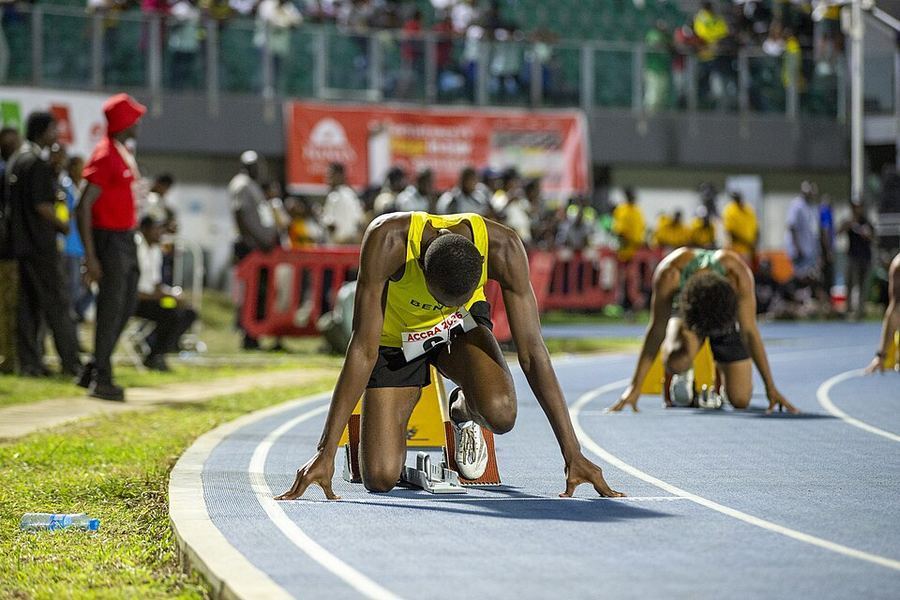
Comoros has competed at the Olympic Games since 1996, sending very small teams in athletics and swimming, usually under universality places, and has not won a medal. Its international sporting profile rests almost entirely on football, and specifically on the diaspora: the great majority of the national squad was born or raised in France, came through French club academies, and plays in the French, Belgian and Turkish leagues, which is why a country of under a million people can field a side capable of beating Ghana. The 2021 Africa Cup of Nations campaign transformed the team's standing and made Comorian football a recognised name in continental competition, and the side has continued to compete seriously in qualifying since. Comorian and Comorian-descended athletes are also present in French handball, athletics and mixed martial arts. The country takes part in the Indian Ocean Island Games, the regional multi-sport competition contested with Madagascar, Mauritius, Reunion, Seychelles and Maldives, where its athletes have their most realistic prospect of medals and where participation questions involving Mayotte have periodically become political.
Comorian Franc — KMF (Fr)
GDP (PPP): $3.092 billion (2024 est.)
Per capita: $3,600 (2024 est.)
$148.455 million (2023 est.)
cloves, ships, essential oils, vanilla, scrap iron (2023)
Partners: Indonesia 25%, India 23%, Turkey 16%, UAE 11%, USA 3% (2023)
$504.036 million (2023 est.)
refined petroleum, poultry, rice, flavored water, additive manufacturing machines (2023)
Partners: China 24%, UAE 21%, Tanzania 12%, France 7%, India 6% (2023)
Type: federal presidential republic
Independence: 6 July 1975 (from France)
How mountains, coasts, and rivers shape settlement (LandScan).
Coming — dataWhere groups settled and how people move (GeoEPR + UNHCR).
Coming — dataNotable institutions, mappable as points.
Coming — data