HERA · Human Entity Reference Atlas by Masego Inc

← Cuba 🌐 3D View
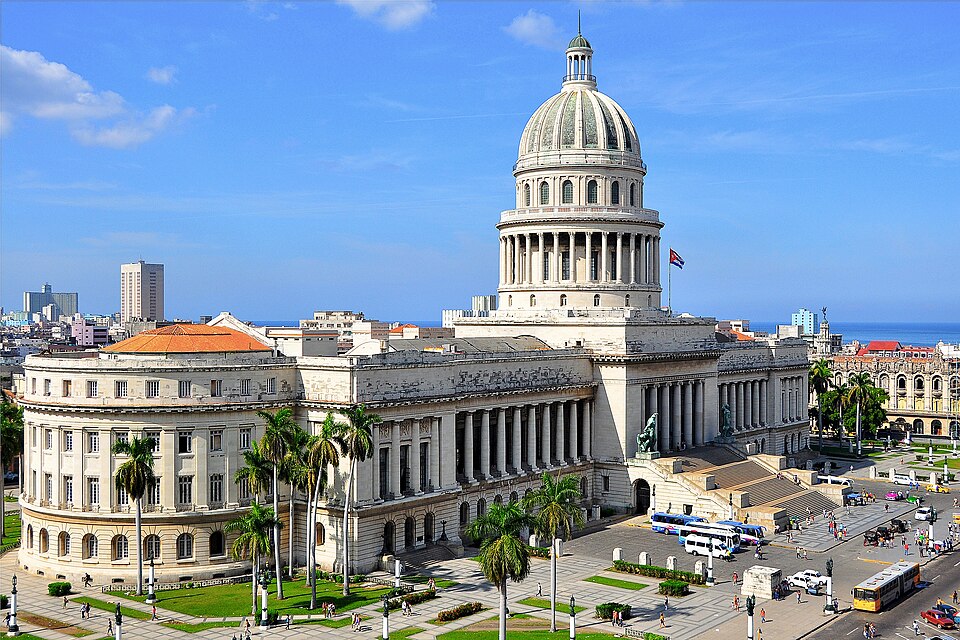
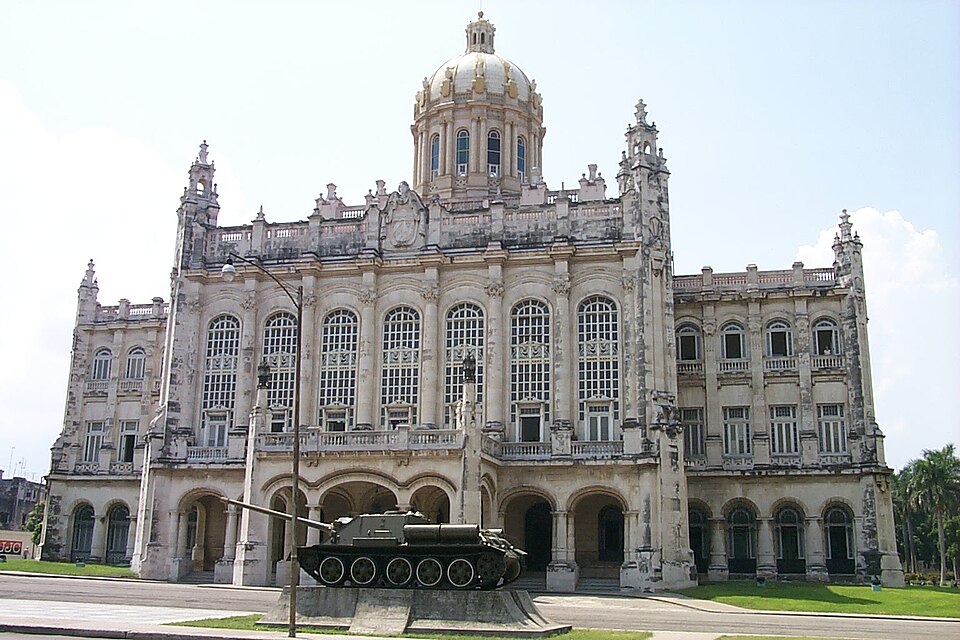
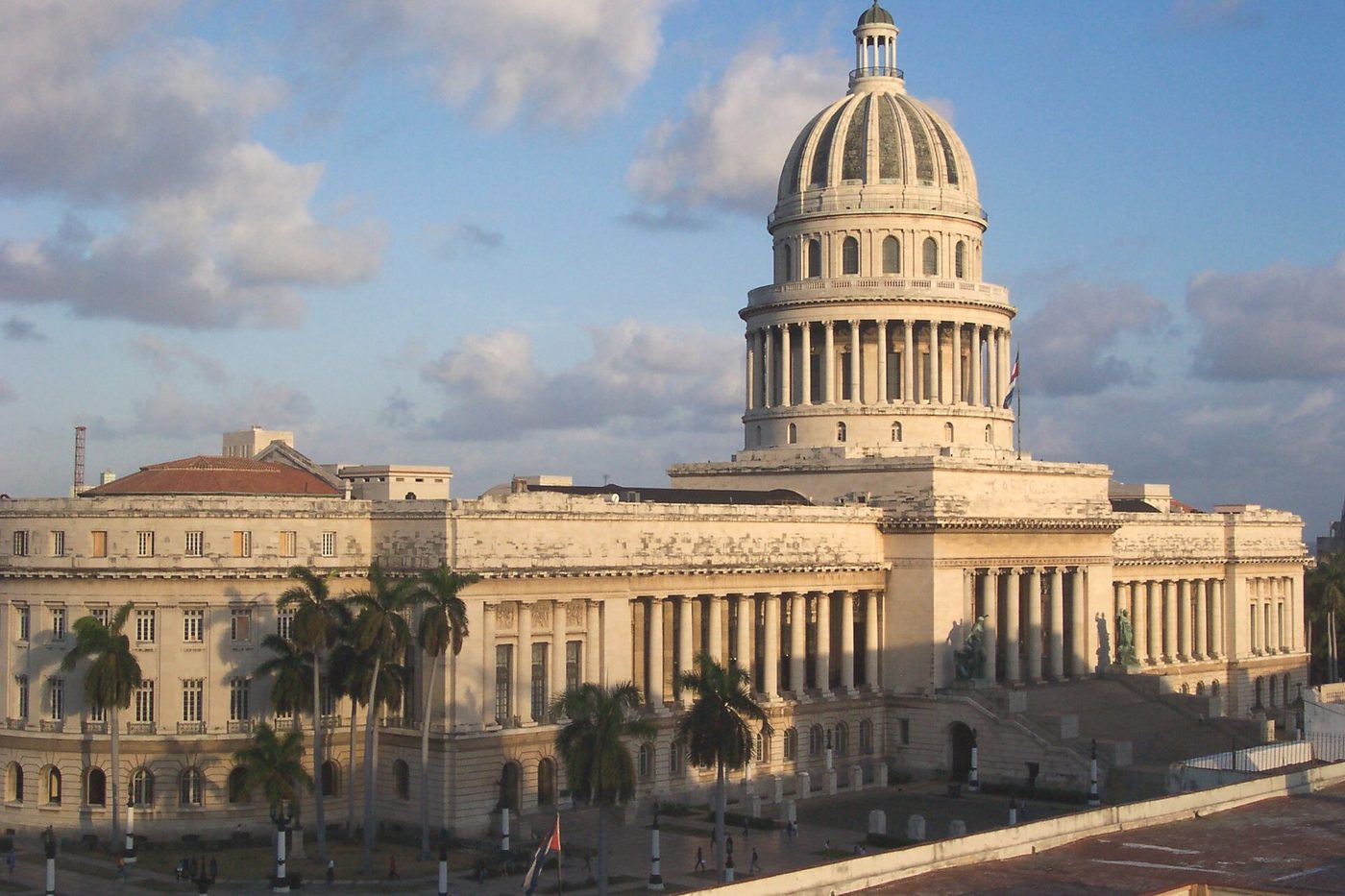
El Capitolio, Havana, Cuba
Cuba CUB
El Capitolio, Havana — Photo: Yomangani / Public domain via Wikimedia Commons
Did You Know In 2015 Cuba became the first country in the world validated by the WHO to have eliminated mother-to-child transmission of HIV and syphilis. — WHO

Cuba is the largest island in the Caribbean and one of the world's last communist states, home to about 10.06 million people (2025 est.) governed from Havana, its storied capital of colonnaded plazas, sea-sprayed Malecón and 1950s American automobiles still running on ingenuity. Spanish is the official language, and the population — a blend of Spanish, African and mixed heritage — is among the oldest in the Americas, with a median age of 46.2 years. The state-dominated economy leans on exports of tobacco, nickel, liquor and zinc ore, with China and Spain as leading trade partners, while imports of staples such as rice, poultry and cooking oil underline chronic scarcity at home. Since 2022 the island has experienced the largest emigration wave in its history, accelerating population decline and aging. Yet Cuba's cultural gravity far exceeds its size: it gave the world son, mambo and cha-cha-chá, hand-rolled cigars regarded as the finest anywhere, an Olympic boxing dynasty, and a medical and literacy tradition studied across the developing world. Nine UNESCO World Heritage sites — from Old Havana to the tobacco valley of Viñales — anchor an island where hardship and exuberance have long coexisted.

CIA World FactbookUNESCOUN
Population
10,059,519
Capital
Havana
Currency
$ CUP
Time zones
Largest city
Havana
Human Geography Themes
Loading national figures…
Largest Cities
Havana1,766,308
Santiago de Cuba441,985
Holguín313,757
Camagüey286,045
Santa Clara222,229
Bayamo201,288
Guantanamo201,036
Las Tunas188,546
In Perspective

Havana's urban core is home to about 1,766,308 people.

That's bigger than Amsterdam — each a great world city in its own right.

Havana1,766,308
Amsterdam1,223,407

Among the world's megacities, though, it's one of many — the giants of Asia and Latin America run larger still:

Havana1,766,308
Jakarta40,545,126
Dhaka37,307,160
Tokyo33,244,670
Shanghai30,678,616
Cairo25,230,325
The Country & Its People

History

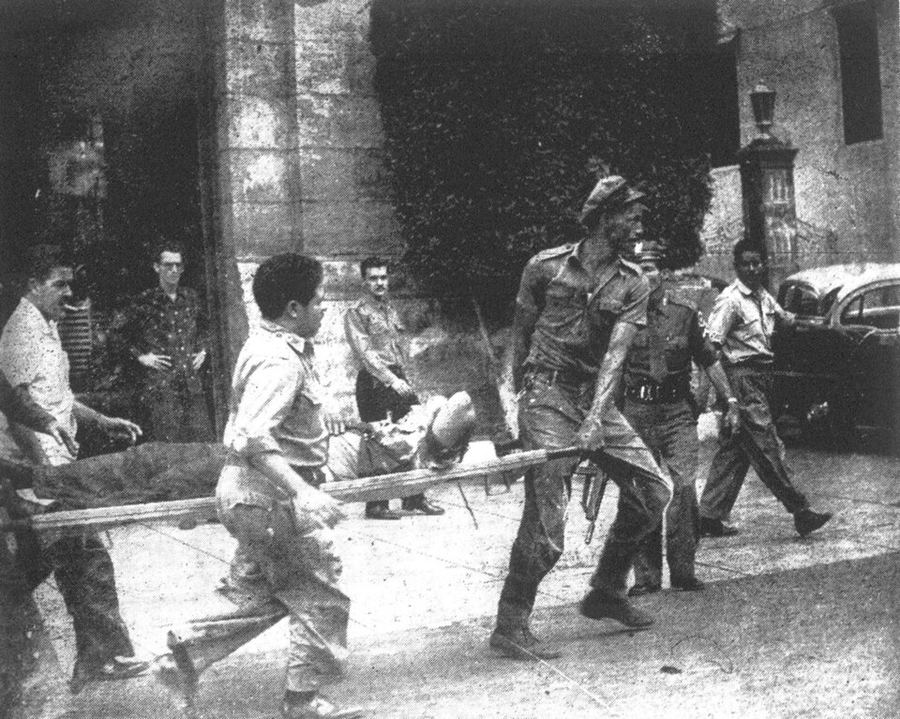
Taíno and Ciboney peoples inhabited Cuba when Christopher Columbus landed in 1492, claiming the island for Spain. Havana's fine harbor made it the assembly point for Spain's treasure fleets, and by the 19th century Cuba was the world's leading sugar producer, an economy built on the labor of hundreds of thousands of enslaved Africans; slavery was not abolished until 1886. Independence came slowly and violently: the Ten Years' War (1868–78) failed, and the 1895 rebellion inspired by poet-patriot José Martí — killed in battle that year — precipitated the Spanish-American War. Spain relinquished Cuba in 1898, and the republic was inaugurated under US tutelage on 20 May 1902, dates the current government does not acknowledge as independence. After decades of instability and the Batista dictatorship, Fidel Castro's guerrillas triumphed on 1 January 1959. The revolution nationalized the economy, aligned with the Soviet Union, repelled the 1961 Bay of Pigs invasion, and brought the world to the brink during the 1962 Cuban Missile Crisis. The Soviet collapse triggered the austere 'Special Period' of the 1990s. Raúl Castro succeeded his brother in 2008, a brief US thaw followed in 2015, and Miguel Díaz-Canel assumed the presidency in 2018 under a constitution reaffirming one-party rule.
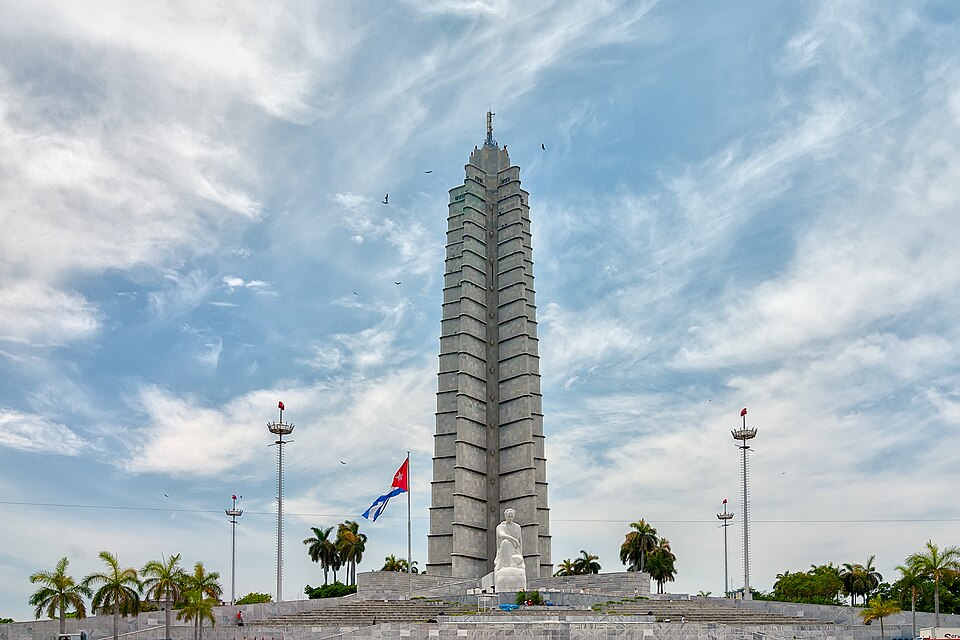
History, Cuba
This photo was taken by Anton Zelenov. Please credit this with : Photo : Anton Zelenov in the immediate vicinity of the image. If you use one of my photos, please email me (account needed) or leave me a short message on my discussion page. It would be greatly appreciated. Do not copy this image illegally by ignoring the terms of the license below, as it is not in the public domain. If you would like special permission to use, license, or purchase the image please contact me to negotiate terms. / CC BY-SA 3.0

Culture

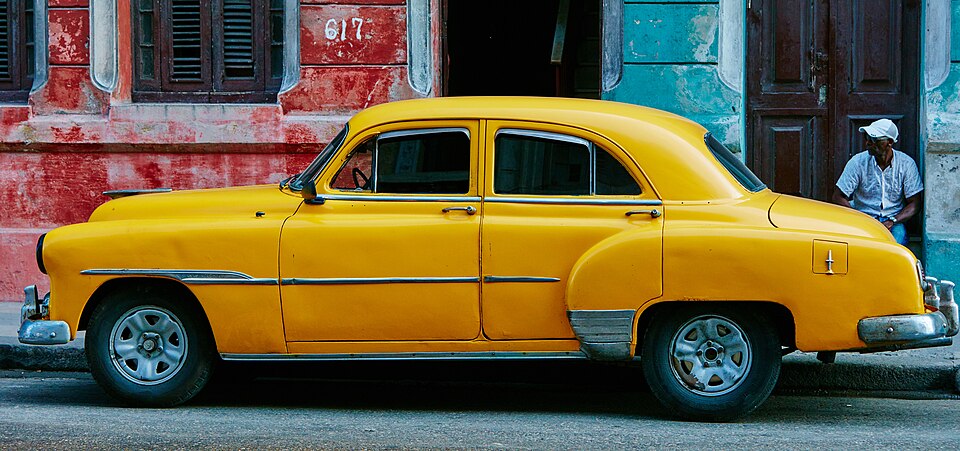
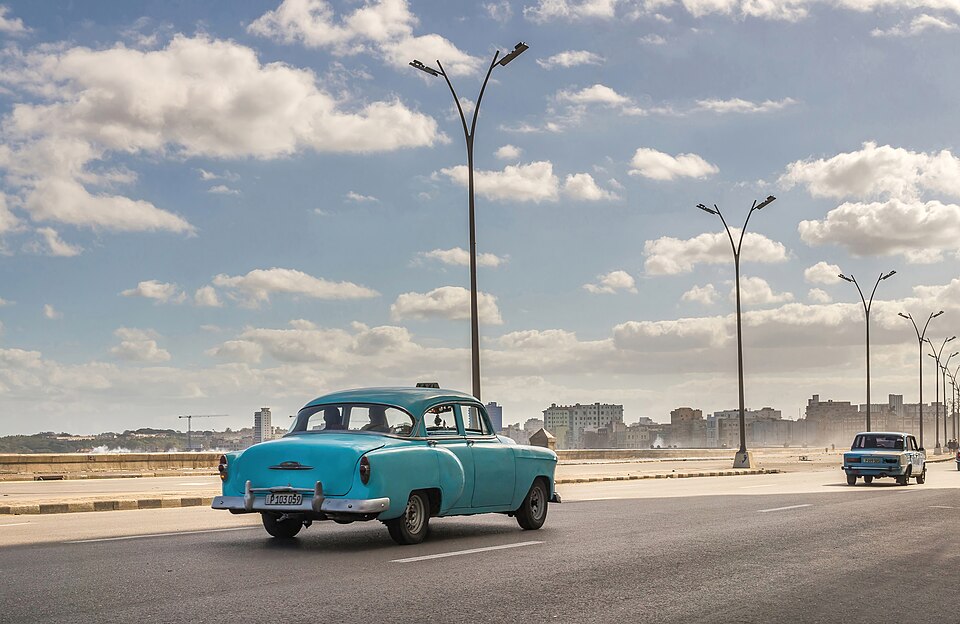
Cuban culture is a centuries-long conversation between Spain and Africa, conducted in music, religion, language and street life. Roughly 59% of Cubans identify as Christian and nearly 18% follow folk religions (2020 est.) — above all Santería, the Yoruba-Catholic fusion in which orishas wear the faces of saints and white-clad initiates are a common sight in Havana. Decades of official atheism gave way after 1992 to a constitutionally secular state, and Pope John Paul II's 1998 visit marked a public religious revival. Daily life is intensely social and improvisational: dominoes slapped down on folding tables, baseball arguments at Havana's Esquina Caliente, neighbors gathered on the Malecón seawall at dusk. Scarcity has bred the celebrated ethic of 'resolver' — making do — embodied by the meticulously maintained pre-1959 Chevrolets and Fords that still cruise the streets. Literature runs deep, from Martí's essays to Alejo Carpentier's baroque novels and Nicolás Guillén's Afro-Cuban verse, while the cigar, rolled by hand in centuries-old factories where lectors read aloud to the torcedores, remains the island's most famous ambassador. UNESCO has recognized Cuban expressions from rumba to the punto as intangible heritage of humanity.
Culture, Cuba
Wolf Schram wolfbroadcast / CC0

Points Of Pride

Cubans take fierce pride in achievements that outsize their island. The 1961 literacy campaign sent more than 250,000 volunteer teachers, many of them teenagers, into the countryside and slashed illiteracy within a year; Cuba's adult literacy is now near-universal, and its 'Yo, sí puedo' teaching method earned UNESCO literacy-prize recognition and has been exported to dozens of countries. Cuban medicine is another emblem: the island trains physicians from across the developing world and in 2015 became the first country validated by the WHO to have eliminated mother-to-child transmission of HIV and syphilis. In sport, Cuba built an Olympic boxing dynasty — Teófilo Stevenson and Félix Savón each won three consecutive gold medals — and wrestler Mijaín López retired with five straight Olympic titles. Nine UNESCO World Heritage sites celebrate the island's patrimony, from Old Havana's fortifications (inscribed 1982) to colonial Trinidad and the mogote-studded Viñales Valley. And in music, the 1997 Buena Vista Social Club phenomenon carried the golden age of Cuban son to every corner of the globe, reminding the world that Havana's soundtrack is one of humanity's great cultural exports.
Points Of Pride, Cuba
Nigel Pacquette / CC BY-SA 3.0

Cultural Fusion

Cuba's population — about 64% white, 27% mulatto or mixed, and 9% Black by the 2012 census — is the demographic record of a profound fusion. Spanish colonists from Andalusia, the Canary Islands and Galicia supplied the language and Catholic framework; enslaved Africans, above all Yoruba, Congo and Carabalí peoples, brought religions, drumming traditions and foodways that never disappeared but instead syncretized. Santería (Regla de Ocha) pairs Yoruba orishas with Catholic saints; the Abakuá brotherhoods preserve secret societies of Calabar origin; Palo Monte carries Congo tradition. French planters fleeing the Haitian Revolution settled eastern Cuba around Santiago, planting coffee — their ruined plantations are a UNESCO World Heritage site — and seeding the tumba francesa drum-and-dance societies, inscribed by UNESCO as intangible heritage. More than 100,000 Chinese indentured laborers arrived in the mid-1800s, giving Havana one of Latin America's oldest Chinatowns. Even Cuba's signature genres are fusions: son married Spanish guitar and verse to African percussion and call-and-response, and Santería's batá drums flow directly into modern Cuban jazz. The result is a creole culture in which, as Cubans often say, everyone — regardless of ancestry — dances to the same clave.
Cultural Fusion, Cuba
Dudva / CC0

Music & Dance

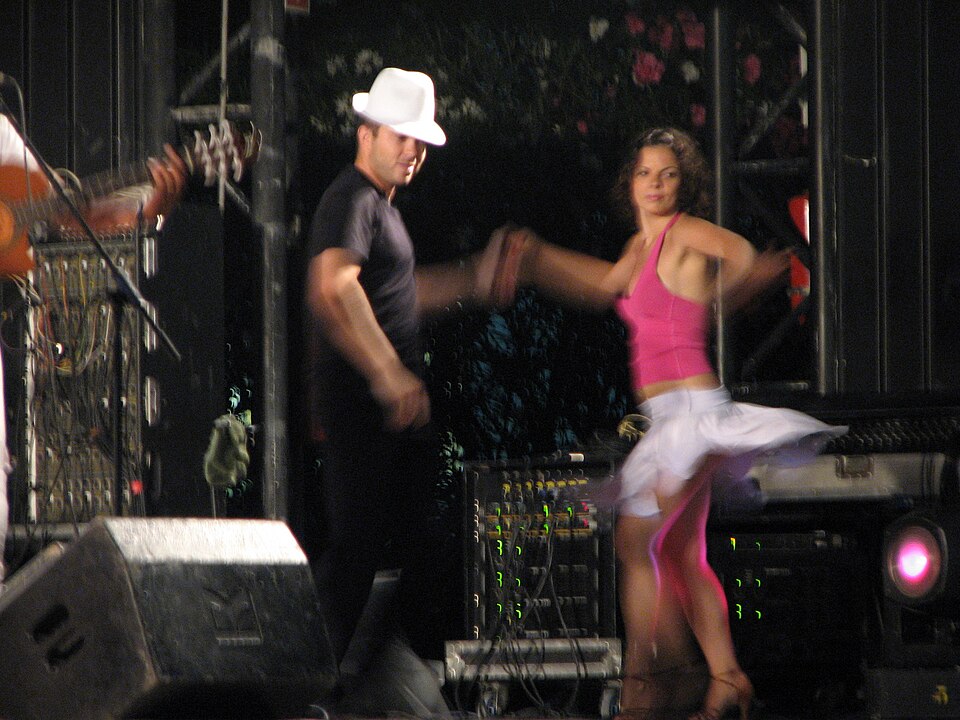
Few countries have exported more rhythm per capita. Son cubano, born in eastern Cuba in the late 19th century from Spanish strings and African percussion, is the trunk from which salsa worldwide grew. Havana's danzón became the elegant ballroom standard of the early republic; in the 1950s Dámaso Pérez Prado detonated the mambo craze and violinist Enrique Jorrín invented the cha-cha-chá. Rumba — the drum-and-dance complex of guaguancó, yambú and columbia forged in the docklands of Havana and Matanzas — was inscribed by UNESCO on the Representative List of the Intangible Cultural Heritage of Humanity in 2016, and the improvised sung poetry of punto cubano followed in 2017. Benny Moré, 'El Bárbaro del Ritmo,' remains the revered voice of the golden age, while Celia Cruz carried Cuban song to global salsa stardom from exile. The 1997 Buena Vista Social Club album and film resurrected veterans Compay Segundo, Ibrahim Ferrer, Rubén González and Omara Portuondo for worldwide audiences. Modern Cuba dances timba with bands like Los Van Van, and couples still turn casino — the Cuban salsa danced in ruedas — in every casa de la música on the island.
Music & Dance, Cuba
Glen Bowman from Newcastle, England / CC BY 2.0

Cuisine & Misattributed Foods

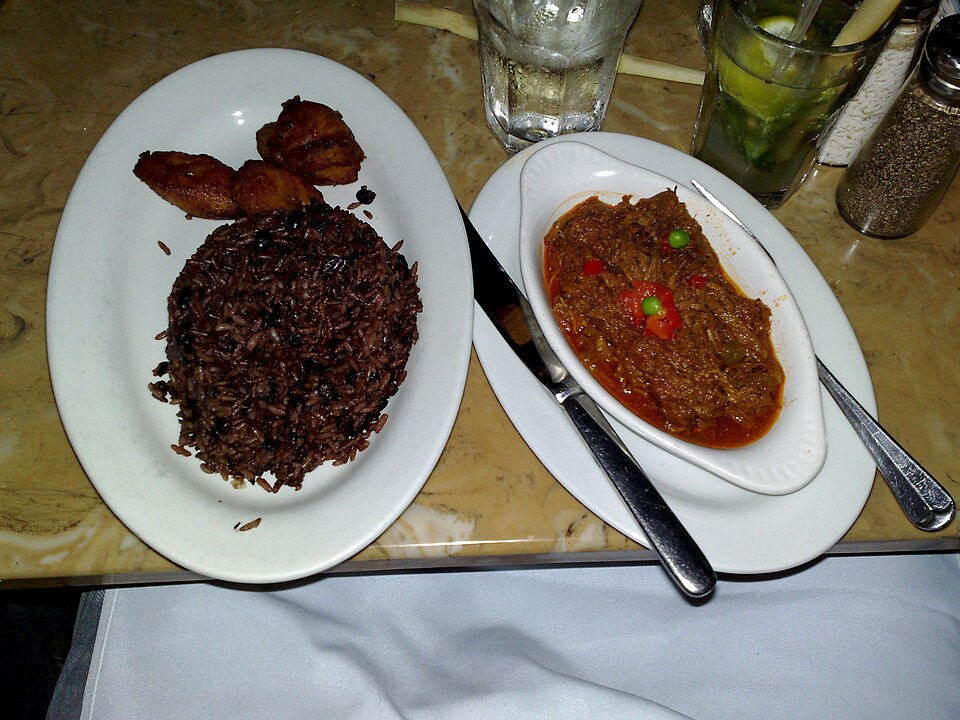
Cuban cooking is criollo comfort food: Spanish technique, African depth, tropical abundance tempered by decades of scarcity. The national dish, ropa vieja — 'old clothes' — is beef braised and shredded into a tomato-pepper sofrito, served with white rice, sweet plantains and black beans. Rice and beans appear at nearly every table, either as moros y cristianos (cooked together) or congrí in the east. Lechón asado, pork marinated in mojo of sour orange and garlic and slow-roasted, anchors celebrations, flanked by yuca con mojo, tostones (twice-fried plantains) and tamales. The Cuban sandwich — roast pork, ham, Swiss cheese, pickles and mustard pressed in Cuban bread — traveled with émigrés to Florida and became a classic in its own right. Cuba is equally a drinking culture of world consequence: its sugarcane rum underpins the daiquirí, perfected at Havana's El Floridita bar where Ernest Hemingway held court, and the mojito of mint, lime and rum associated with La Bodeguita del Medio, while the Cuba Libre commemorates independence itself. Strong, sweet cafecito punctuates the day. Rationing and shortages have made home cooks masters of improvisation, but the flavors — garlic, cumin, citrus, bay — remain defiantly constant.
Cuisine & Misattributed Foods, Cuba
George Kelly / CC BY 2.0

National Dress

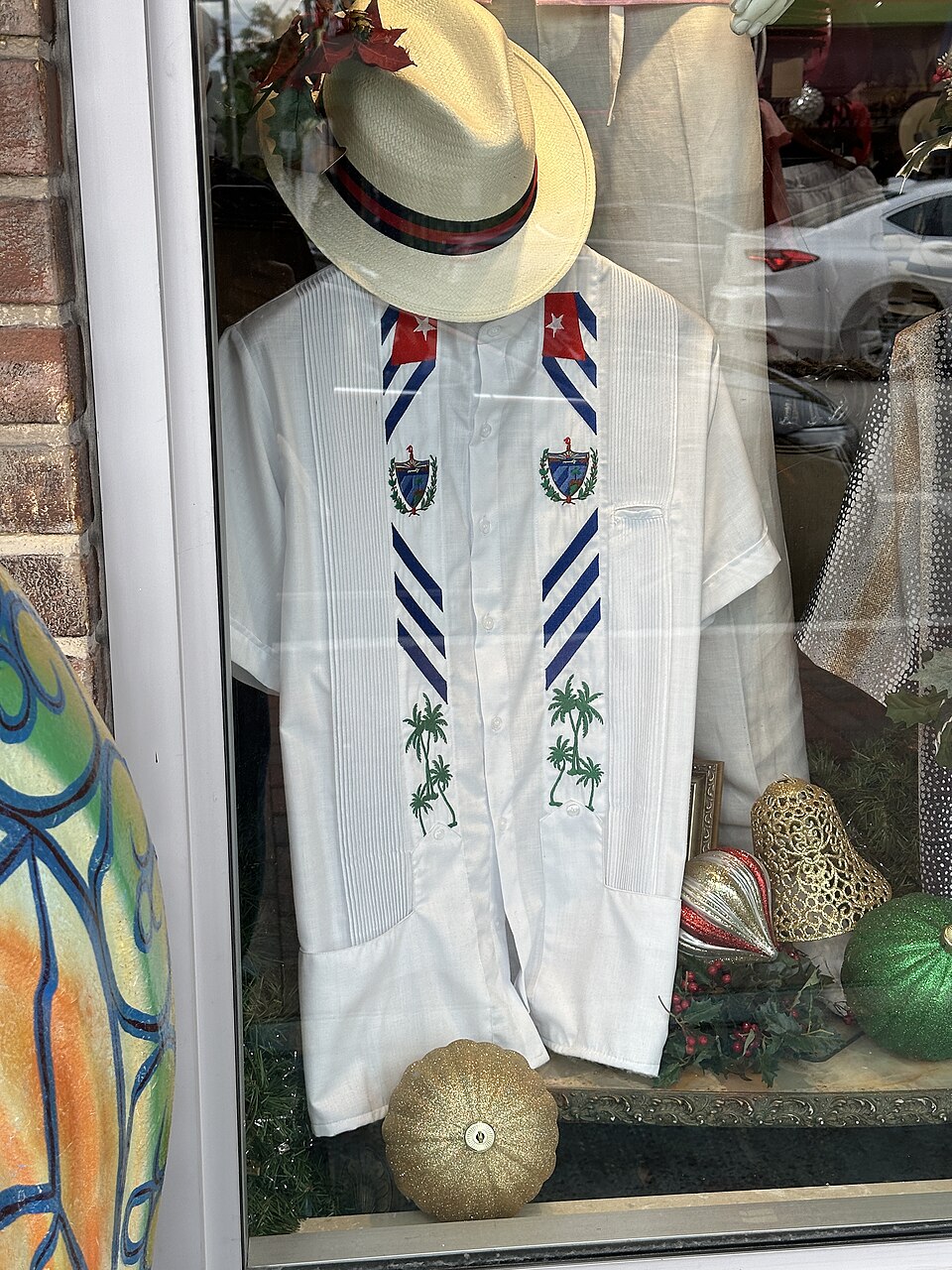
Cuba's signature garment is the guayabera, a lightweight shirt worn untucked, distinguished by four front pockets and twin rows of fine vertical pleats (alforzas) running down front and back. Islanders claim it originated in the Sancti Spíritus region along the Yayabo River in the 18th century, and it has since spread across Latin America — in Cuba it doubles as formal attire, accepted at weddings, government offices and diplomatic receptions in place of a suit, and versions in white linen remain the standard for official occasions. Women's traditional dress reaches its most theatrical form in the bata cubana, the rumba dress: a flounced, ruffled gown with long trailing sleeves and layered skirts in bright colors or Cuban-flag motifs, derived from the dress of 19th-century creole women and Spanish flamenco costume and elaborated in Afro-Cuban performance. Practitioners of Santería are recognizable by all-white clothing worn during the year-long initiation as iyawó, along with the beaded collares of their orishas. In the eastern tumba francesa societies, recognized by UNESCO as intangible heritage, dancers still perform in colonial-era French-Haitian finery — long gowns, headscarves and sashes — preserving an 18th-century wardrobe in living tradition.
National Dress, Cuba
Phillip Pessar / CC BY 2.0

Sports & Inspiring Athletes

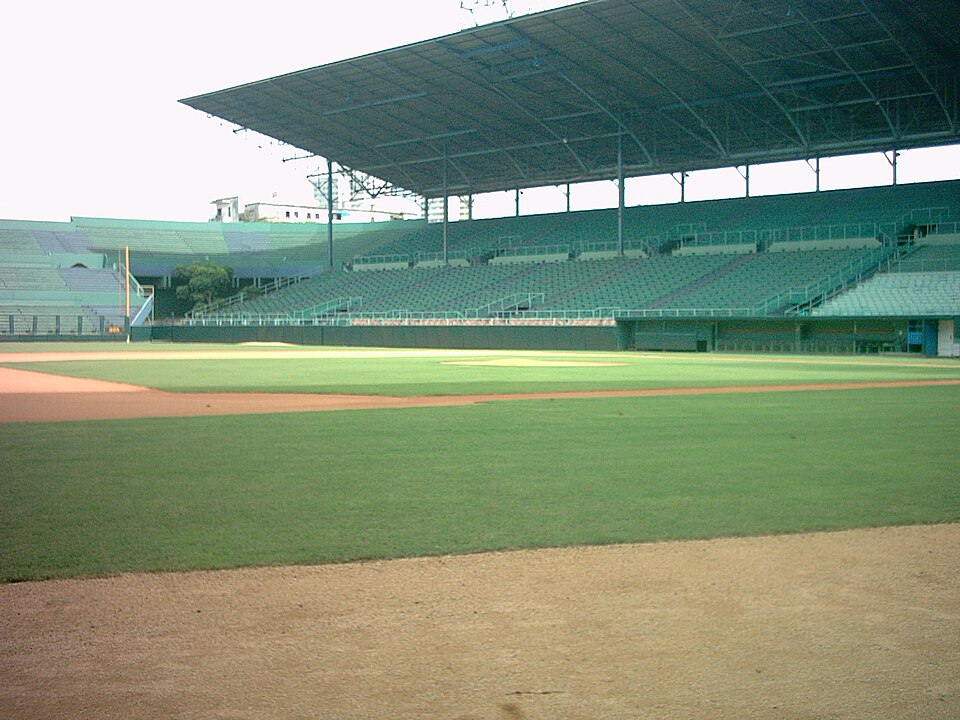
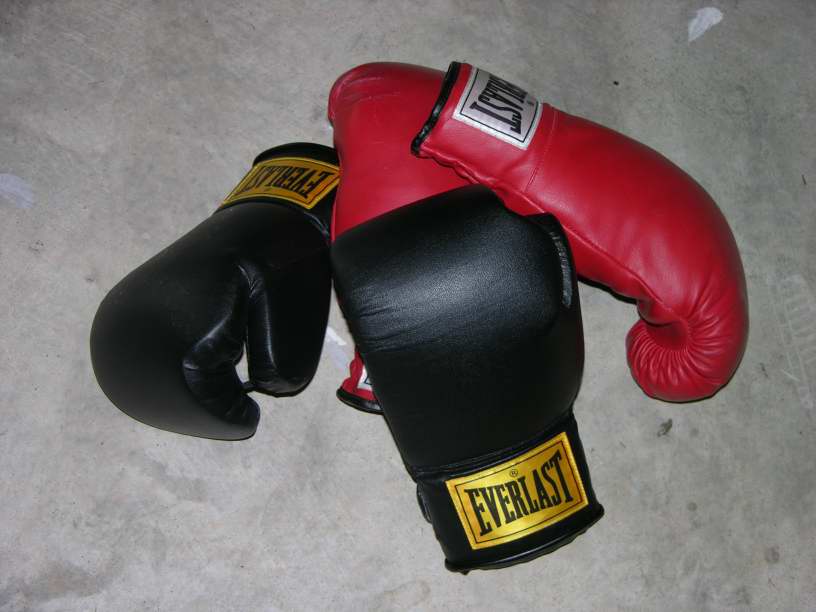
Baseball is Cuba's national passion, played since the 1860s — the island was among the first places outside the United States to adopt the game, and it became a symbol of independence-era identity against Spain. The domestic Serie Nacional, founded in 1962, sustains fierce loyalties, none greater than that surrounding Havana's Industriales, and fans famously debate lineups at the capital's Esquina Caliente ('hot corner') in Parque Central. Cuban teams dominated international amateur baseball for decades, winning Olympic gold in 1992, 1996 and 2004. Boxing is the revolution's other crown jewel: a state-run school built around technical, amateur-style boxing produced Teófilo Stevenson, the heavyweight who won three consecutive Olympic golds (1972–1980) and famously refused professional millions, and Félix Savón, who matched the feat from 1992 to 2000. The women's volleyball team, 'Las Morenas del Caribe,' won three straight Olympic titles (1992–2000). Greco-Roman wrestler Mijaín López became the first athlete to win the same individual Olympic event five times (2008–2024), and judoka Idalys Ortiz collected four Olympic medals. Track stars Alberto Juantorena — the only man to win both the 400m and 800m at one Games (1976) — and high-jump world-record holder Javier Sotomayor complete a remarkable sporting pantheon.
Sports & Inspiring Athletes, Cuba
Goodgirl / CC BY-SA 2.0 de

Notable Educational Programs

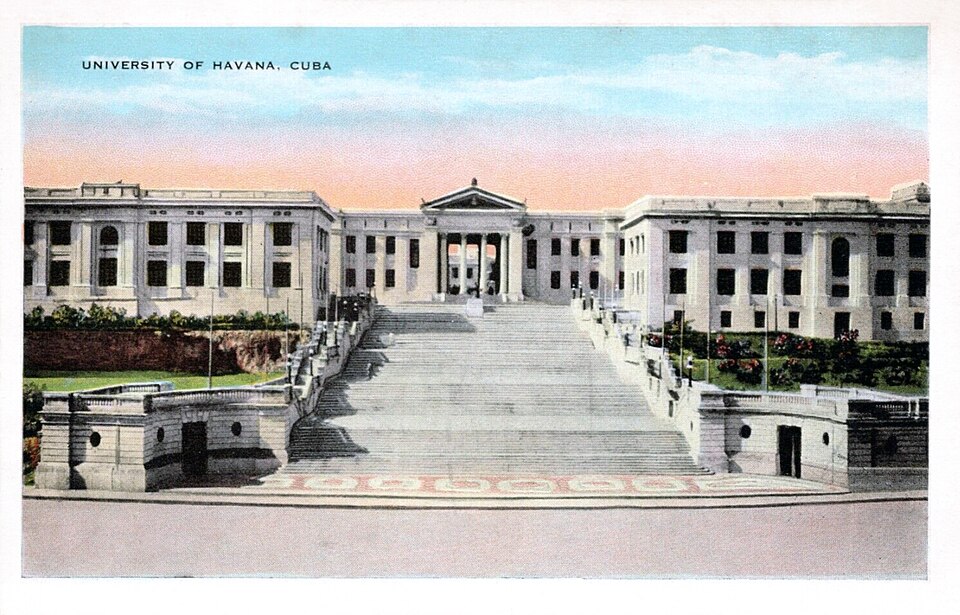
Education has been the revolution's flagship social program since the 1961 National Literacy Campaign, when Cuba declared the 'Year of Education' and mobilized more than 250,000 volunteer teachers and student brigadistas — over half of them women, many under 18 — who fanned out to farms and mountain villages with lanterns and primers. Within roughly a year the campaign taught more than 700,000 adults to read, cutting illiteracy to among the lowest rates in the hemisphere; adult literacy today is effectively universal at about 99%. Schooling is free at every level and compulsory through age 14 or 15, and Cuba devotes an unusually large share of national resources to education. The Cuban-developed literacy method 'Yo, sí puedo' ('Yes, I Can') received the UNESCO King Sejong Literacy Prize in 2006 and has been deployed in dozens of countries from Venezuela to Timor-Leste. The Latin American School of Medicine (ELAM), founded outside Havana in 1999, has trained tens of thousands of physicians from low-income communities across Latin America, Africa, Asia and even the United States on full scholarships — the educational engine behind Cuba's signature 'medical diplomacy,' which has dispatched doctors to disaster zones and underserved regions worldwide.
Notable Educational Programs, Cuba
Roberts & Co., Havana (publisher) / Public domain

Wars & Conflicts

Cuba has no active armed conflict, but as of July 2026 it is enduring its most severe peacetime crisis since the post-Soviet 'Special Period.' The national power grid has collapsed repeatedly in 2026 — including three nationwide blackouts in just nine days in July (on the 6th, 10th and 14th), the last triggered by a generating-unit failure in Holguín province that left roughly 10 million people without electricity, according to Al Jazeera and Reuters. Outages of 12–20 hours a day have disrupted water supply, food refrigeration, transport and communications. Scattered protests — residents banging pots and chanting 'turn on the lights' — were reported in July 2026 in Havana neighborhoods including Centro Habana, El Vedado and El Cerro and in Santiago de Cuba, per Al Jazeera and wire reports. The crisis has been deepened by the collapse of Venezuelan fuel shipments and tightened US sanctions: Washington reinstated Cuba's State Sponsor of Terrorism designation in January 2025 and imposed further restrictions on oil deliveries in early 2026, per Reuters and Euronews. Amid triple-digit inflation, partial dollarization and food scarcity, more than one million Cubans have emigrated since 2022 — the largest exodus in the island's history — with one demographic study cited by Euronews estimating up to 1.7 million departures between 2020 and 2024. This section is a snapshot as of 22 July 2026.
Current as of 2026-07-22
Wars & Conflicts, Cuba
Paul Mannix / CC BY-SA 2.0

Land & Border Disputes

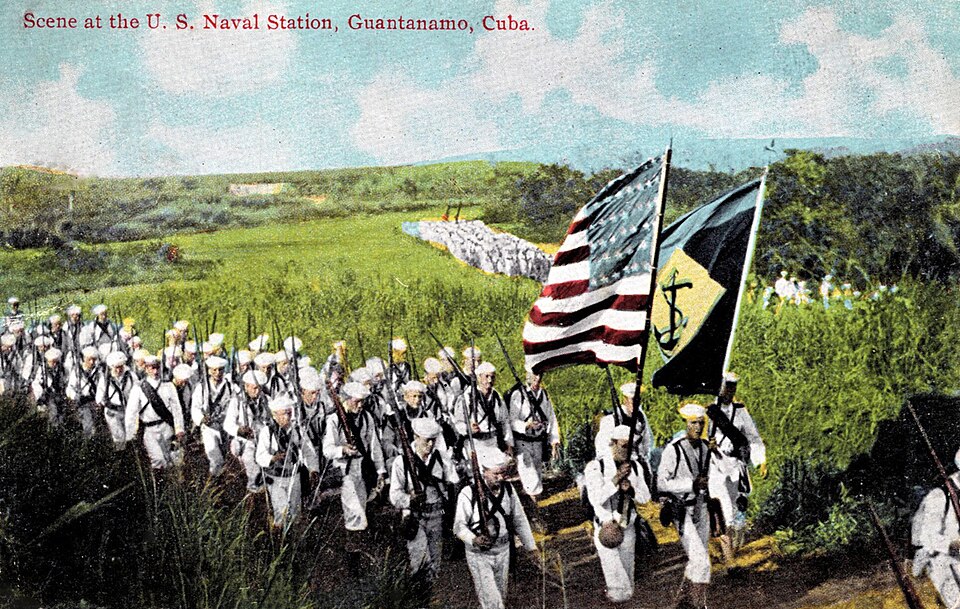
Cuba's defining external dispute concerns the US Naval Station at Guantánamo Bay. Under a 1903 lease agreement imposed in the aftermath of the Spanish-American War, and reaffirmed by a 1934 treaty, the United States exercises complete jurisdiction over roughly 116 square kilometers surrounding the bay while recognizing Cuba's ultimate sovereignty. The revolutionary government maintains that the lease is illegal and was extracted under coercion, has demanded the territory's return since 1959, and pointedly refuses to cash the annual rent checks — a symbolic protest sustained for over six decades. The United States holds that the lease can be terminated only by mutual agreement or abandonment, and the base remains the oldest US overseas naval installation. The second standing dispute is the US economic embargo in force since the early 1960s, which Havana terms a 'blockade'; the UN General Assembly has condemned it in an annual resolution nearly every year since 1992, most recently by overwhelming margins with only the United States and Israel opposed. Cuba also engages in routine maritime-boundary cooperation with the United States and Mexico in the Gulf of Mexico, where delimitation agreements are in place, and has no significant territorial disputes with its Caribbean neighbors.
Land & Border Disputes, Cuba
H. H. Stratton / Public domain
Land, Life & Legacy

Land & Climate

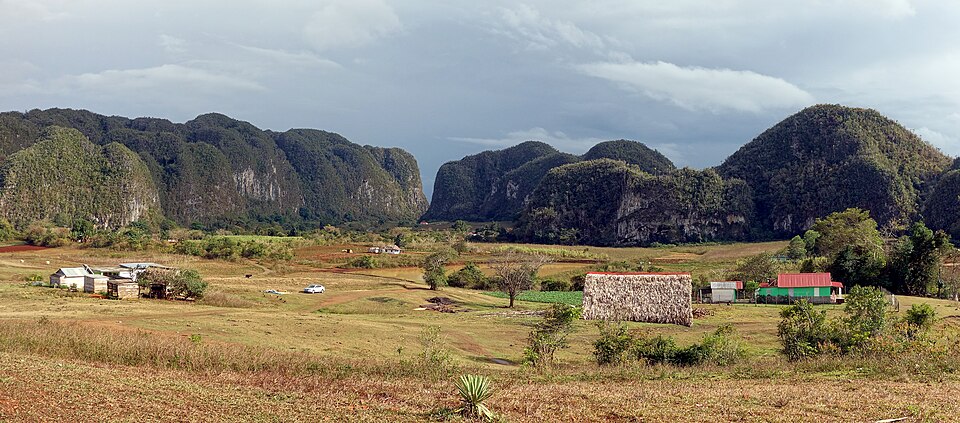
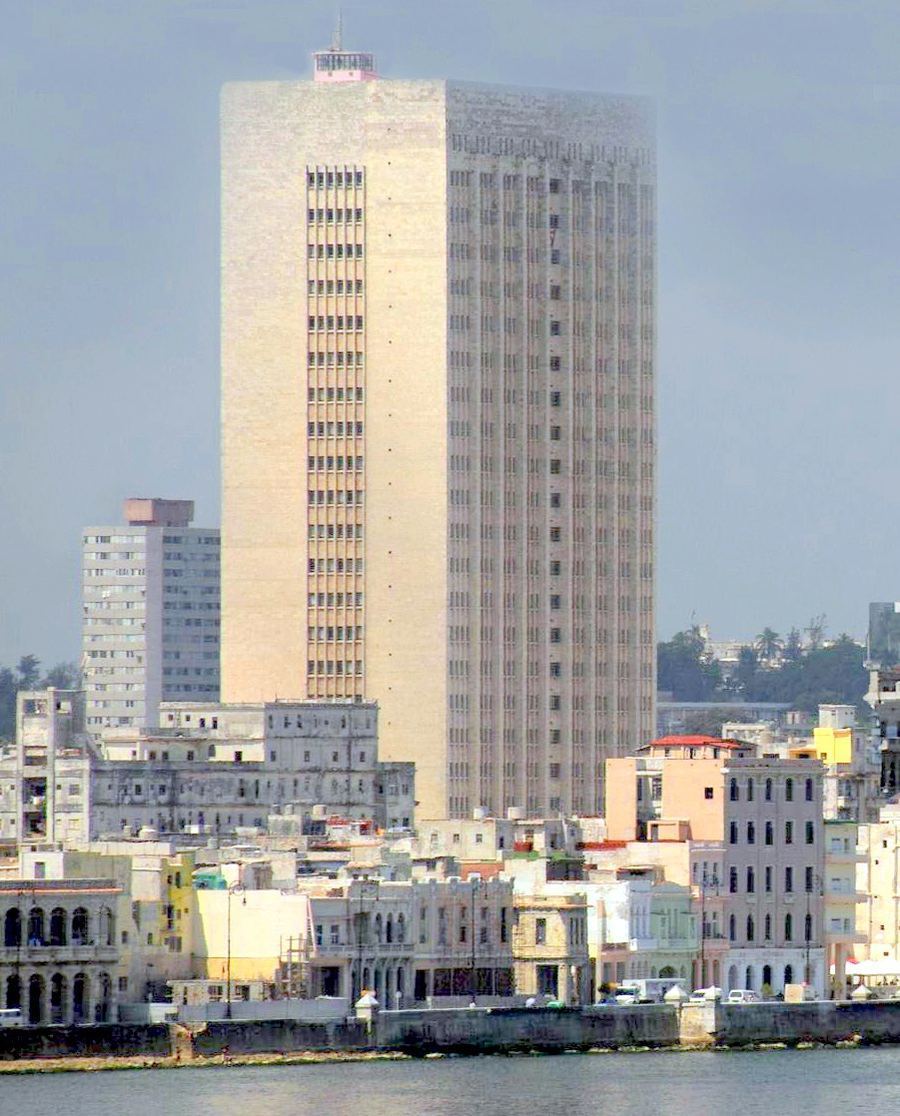
Cuba is the Caribbean's largest island — about 110,860 square kilometers, long and narrow like the crocodile Cubans see in its outline — lying just 150 kilometers south of Key West at the meeting of the Gulf of Mexico, the Caribbean Sea and the Atlantic. Roughly two-thirds of the land is plains and rolling hills suited to sugarcane, tobacco and cattle, framed by three mountain systems: the Guaniguanico range in the west, the Guamuhaya (Escambray) in the center, and the rugged Sierra Maestra in the east, where Pico Turquino rises to 1,974 meters. The west's Viñales Valley, a UNESCO World Heritage cultural landscape, is famous for dome-like limestone mogotes towering over red-soil tobacco fields, while the vast Zapata Peninsula wetlands shelter Cuban crocodiles and flamingos. Some 4,000 islands and cays fringe the coast, including the Jardines de la Reina archipelago, whose protected coral reefs are among the healthiest in the Caribbean, and the eastern Alejandro de Humboldt National Park — another World Heritage site — holds extraordinary biodiversity. The climate is tropical, moderated by trade winds, with a wet season from May to October; Cuba sits squarely in the hurricane belt, and storms from August to November are a recurring national hazard.
Land & Climate, Cuba
Velvet / CC BY-SA 4.0

Entertainment

Cuban leisure is lived outdoors and in company. Havana's Malecón — eight kilometers of seawall — is the island's living room, filling at sunset with musicians, fishermen, couples and debaters. Dominoes is the universal pastime, played loudly at tables on every block, and pickup baseball occupies vacant lots wherever a stick and a taped ball can be found; the game's endless arguments have their shrine at the Esquina Caliente in Havana's Parque Central. Evenings mean music and dance — casas de la música and neighborhood peñas host everything from son septets to timba orchestras, and cabaret survives most famously at the open-air Tropicana, running since 1939. Tourism is also central to national life as a top earner of hard currency: before the pandemic Cuba drew more than 4 million international visitors a year to attractions such as Varadero's 20-kilometer beach, colonial Trinidad and Old Havana, though arrivals have fallen sharply during the current crisis, a decline tracked by the UNWTO. Cubans themselves flock to beaches like Playas del Este on summer weekends, take in films during Havana's December festival of New Latin American Cinema, and celebrate carnival most exuberantly in Santiago de Cuba each July — conga drums, floats and all.
Entertainment, Cuba
Ezarate This is a retouched picture, which means that it has been digitally altered from its original version. Modifications: rebuild from raw fixing light compensation in shadows and lights, White balance, tonemaping balance, fix lens distortion, fix vertical distortions, remove dust spots, noise reduction and chromatic aberration fix, cut element distracting and remove oil spot and finally export in full jpeg quality by The Photographer 13:39, 12 February 2017 (UTC). / CC BY-SA 4.0

Art & Museums

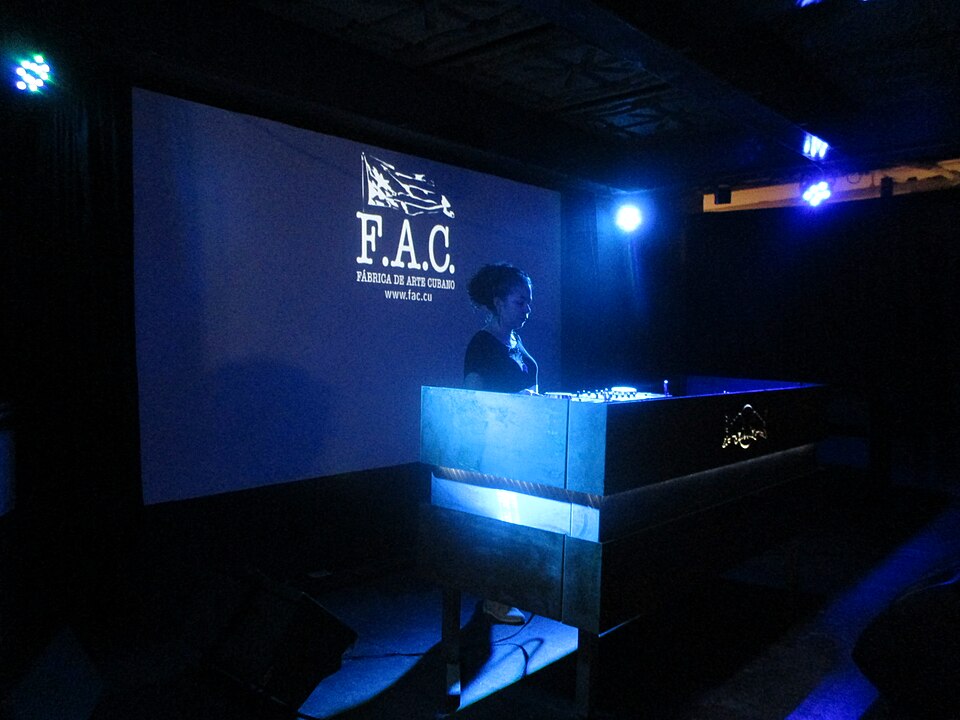
Modern Cuban art announced itself to the world through Wifredo Lam, the Sagua la Grande-born painter of Chinese, African and Spanish descent whose masterpiece 'The Jungle' (1943) fused Cubism and Surrealism with Afro-Cuban imagery and hangs in New York's Museum of Modern Art. The republican-era vanguardia — Amelia Peláez with her stained-glass-bright still lifes, Víctor Manuel, and later René Portocarrero's swirling visions of Havana — built a distinctly Cuban modernism. After 1959 the state poured resources into the arts: the National Art Schools rose on the fairways of a former country club, evolving into the Instituto Superior de Arte, while the film institute ICAIC fostered both a golden age of cinema and a world-renowned school of silkscreen poster design. The Havana Biennial, founded in 1984 as a showcase for artists of the Global South, made the city a fixture of the international art circuit, and the Fábrica de Arte Cubano, a converted cooking-oil factory, has become one of Latin America's most celebrated contemporary art spaces. In dance, Alicia Alonso — the near-blind prima ballerina assoluta — founded the Cuban National Ballet and its internationally admired school, making Havana an unlikely world capital of classical ballet.
Art & Museums, Cuba
Jersey Devil / CC BY-SA 4.0

Notable People

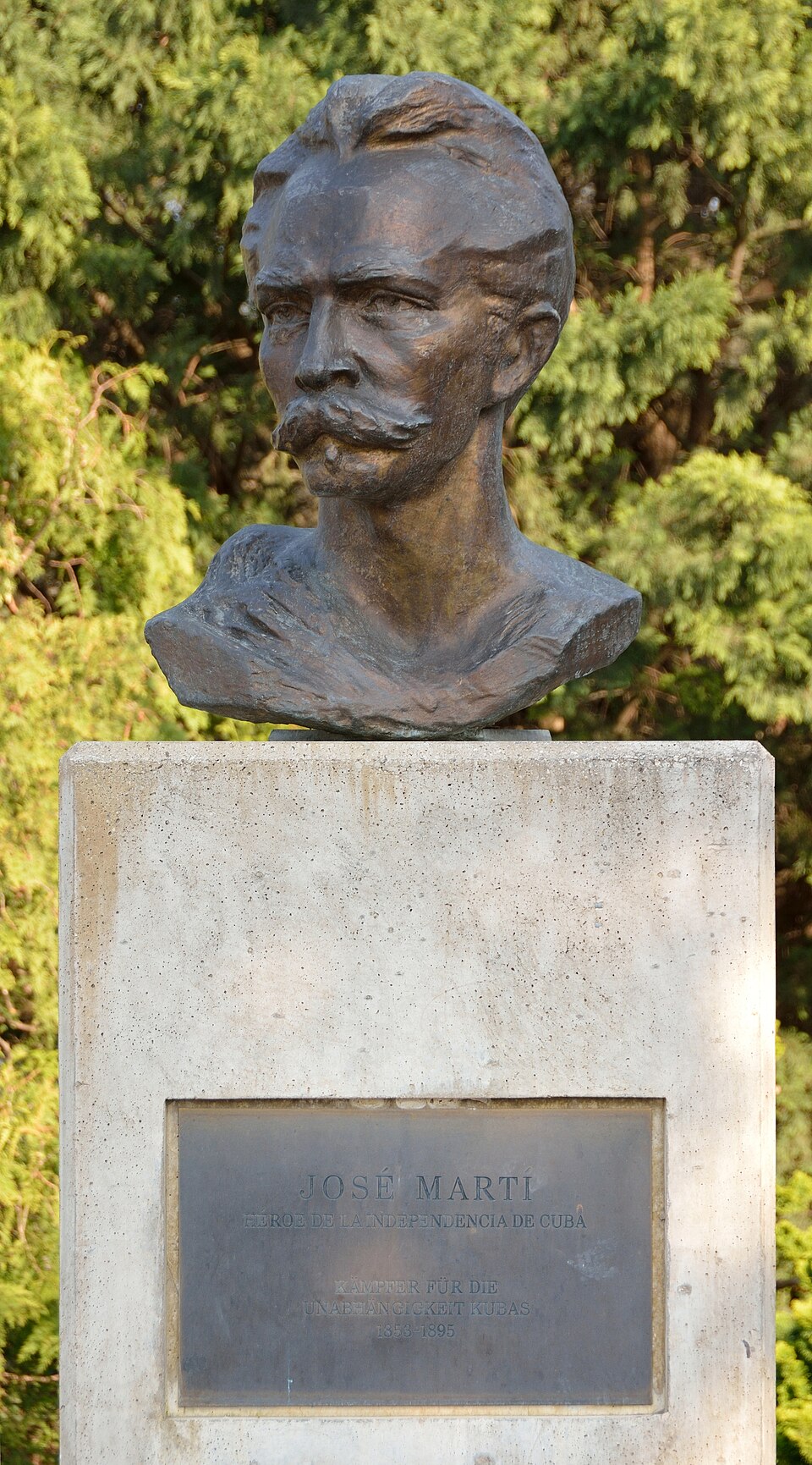
Cuba's pantheon begins with José Martí (1853–1895), poet, essayist and apostle of independence, whose verses gave the world 'Guantanamera' and whose name graces Havana's airport. Fidel Castro, who ruled from 1959 to 2008, was among the 20th century's most consequential and polarizing figures, succeeded by his brother Raúl. Letters claim Alejo Carpentier, pioneer of 'lo real maravilloso' and author of 'The Kingdom of This World'; national poet Nicolás Guillén, voice of Afro-Cuban identity; and novelist Leonardo Padura, chronicler of contemporary Havana. Ernest Hemingway, though American, wrote 'The Old Man and the Sea' — set in the fishing village of Cojímar — while living at his Finca Vigía outside Havana, and his 1954 Nobel Prize is inseparable from the island. Music gave the world Benny Moré, Celia Cruz, composer Alejandro García Caturla — the classical modernist who fused Afro-Cuban rhythm with the symphonic avant-garde before his murder at 34 — and jazz masters from Chucho Valdés to Arturo Sandoval. Alicia Alonso reigned over world ballet; Wifredo Lam over modern painting. Science claims epidemiologist Carlos Juan Finlay, sport claims Stevenson, Savón, Sotomayor and Mijaín López, and Hollywood counts Havana-born Ana de Armas among its leading stars.
Notable People, Cuba
P e z i / CC BY-SA 3.0 at

Inventions & Breakthroughs

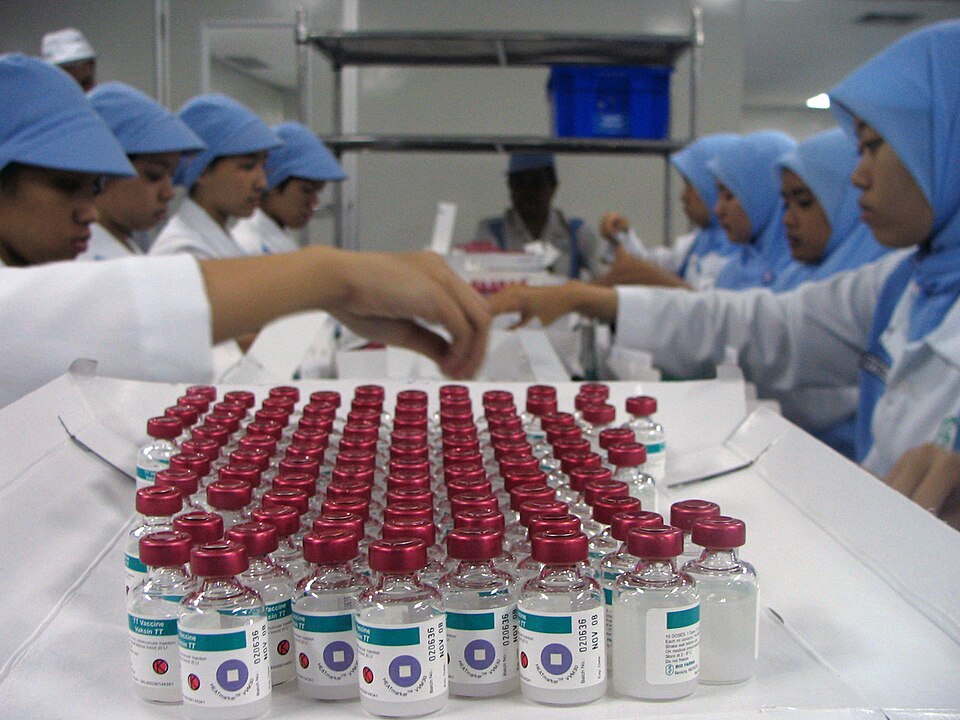
Cuba's most consequential contribution to science came from Carlos Juan Finlay, the Camagüey-born physician who in 1881 proposed — decades ahead of acceptance — that yellow fever was transmitted by the Aedes aegypti mosquito, a hypothesis vindicated by the Reed Commission in 1900 that revolutionized tropical medicine and made the Panama Canal possible. That legacy carried into the modern era: despite its poverty, Cuba built one of the developing world's most advanced biotechnology sectors, producing the world's first meningitis B vaccine in the 1980s, the therapeutic lung-cancer vaccine CIMAvax-EGF, and the diabetic-ulcer treatment Heberprot-P. During the COVID-19 pandemic Cuba developed its own vaccines, Abdala and Soberana, becoming one of the smallest countries ever to produce homegrown immunizations, and in 2015 it achieved a world first validated by the WHO: eliminating mother-to-child transmission of HIV and syphilis. Cultural invention is just as significant — the cha-cha-chá was literally invented by one man, violinist Enrique Jorrín, around 1951, the mambo was forged by Cuban bandleaders, and the daiquirí and mojito are Cuban originals that conquered the world's bars. Even the guayabera shirt, by island tradition born near the Yayabo River, is a Cuban design classic.
Inventions & Breakthroughs, Cuba
Ümit Kartoğlu for VOA / Public domain

Science & Technology

Cuba's most distinctive technical sector is medical biotechnology, built deliberately from the 1980s as a state priority and clustered in western Havana around the Centre for Genetic Engineering and Biotechnology and the Finlay Institute, named for Carlos Finlay, who proposed the mosquito transmission of yellow fever. Cuban laboratories developed a meningococcal B vaccine at a time when no other was available, and later products include Heberprot-P for diabetic foot ulcers and CIMAvax-EGF, a therapeutic lung-cancer vaccine that has been studied in clinical trials with the Roswell Park Comprehensive Cancer Center in the United States. During the COVID-19 pandemic Cuba was the only country in Latin America to develop and deploy its own vaccines, Abdala and Soberana 02, rather than rely on imports. The sector is closely tied to the health system, which has an unusually high physician density and a universal primary-care model organised around neighbourhood family doctors, and to medical education for foreign students at the Latin American School of Medicine and to the medical brigades Cuba sends abroad.
On The World Stage
Champions of Cuba

Champions & Defining Moments

For a nation of ten million, Cuba's Olympic record is astonishing: more than 200 medals overall, historically placing it among the leading medal-winning nations per capita and, for decades, first in Latin America. Boxing is the crown — Cuba stands second only to the United States in Olympic boxing gold medals, with heavyweights Teófilo Stevenson (1972, 1976, 1980) and Félix Savón (1992, 1996, 2000) each winning three consecutive titles, a feat unmatched until countryman Julio César La Cruz and the modern generation extended the dynasty. Greco-Roman wrestler Mijaín López made history at Paris 2024 as the first athlete to win five consecutive gold medals in the same individual Olympic event (2008–2024). Alberto Juantorena remains the only runner to sweep the 400m and 800m at a single Games (Montreal 1976); Javier Sotomayor won high-jump gold in 1992 and still holds the world record of 2.45 meters set in 1993. The women's volleyball team won three straight Olympic tournaments (1992–2000), judoka Idalys Ortiz medaled at four consecutive Games, and Cuban baseball took Olympic gold in 1992, 1996 and 2004. Cuba's boycotts of the 1984 and 1988 Games likely cost it dozens more medals — a measure of how deep the talent ran.

en:User:Andman8 / CC BY 2.5
Economy, Trade & Government

Currency & GDP

Cuban Peso — CUP ($)

GDP (PPP): $81.165 billion (2024 est.)

Per capita: $23,700 (2024 est.)

Exports

$8.768 billion (2020 est.)

tobacco, nickel, liquor, zinc ore, precious metal ore (2023)

Partners: China 34%, Spain 12%, Germany 6%, Switzerland 5%, Hong Kong 4% (2023)

Imports

$8.067 billion (2020 est.)

beer, poultry, rice, plastic products, soybean oil (2023)

Partners: Spain 24%, China 13%, Netherlands 10%, USA 9%, Canada 6% (2023)

Government

Type: communist state

Independence: 20 May 1902 (from US administration); 10 December 1898 (from Spain); not acknowledged by the Cuban Government as days of independence

Terrain → Where People Live

How mountains, coasts, and rivers shape settlement (LandScan).

Coming — data

Migration & Ethnic Settlement

Where groups settled and how people move (GeoEPR + UNHCR).

Coming — data

Universities

Notable institutions, mappable as points.

Coming — data
Economy & government facts: CIA World Factbook (public domain), via OpenFactBook / factbook.json.
Every fact and narrative claim will carry a visible source citation. Data-driven sections light up automatically wherever HERA has coverage.