HERA · Human Entity Reference Atlas by Masego Inc

← Cayman Islands 🌐 3D View
Seven Mile Beach National Park banner, Cayman Islands
Cayman Islands CYM
Seven Mile Beach National Park banner — Photo: Peter Jones / CC BY-SA 4.0 via Wikimedia Commons
Did You Know The highest point in the entire territory is the eastern end of the Bluff on Cayman Brac, at just 43 metres above sea level. — CIA World Factbook

The Cayman Islands are a British Overseas Territory of about 67,000 people spread across three low limestone islands — Grand Cayman, Cayman Brac and Little Cayman — lying south of Cuba and north-west of Jamaica in the western Caribbean. George Town, on Grand Cayman, is the capital and the working centre of one of the world's largest offshore financial jurisdictions, a role that has given a territory smaller than many towns a GDP per head above $78,000. There is no direct taxation: no income tax, no corporate tax, no capital gains tax and no property tax, and the government funds itself through import duties, work-permit fees and financial-services licensing. The islands had no indigenous population, and the modern community was assembled from seafarers, enslaved Africans and later waves of migration; today more than a hundred nationalities live there, with Caymanians making up barely a third of residents. English is the official language, Protestant Christianity the dominant faith, and the second economic pillar is tourism built on Seven Mile Beach, the reef walls and a diving industry of global reputation.

CIA World FactbookEncyclopaedia Britannica
Population
66,653
Capital
George Town (on Grand Cayman)
Currency
$ KYD
Time zones
Largest city
Human Geography Themes
Loading national figures…
The Country & Its People

History

Christopher Columbus sighted Cayman Brac and Little Cayman on 10 May 1503, during his fourth voyage, and named them Las Tortugas for the sea turtles crowding the water. The islands had no permanent indigenous population, and for a century and a half they served passing ships as a place to take on turtle meat and water. Britain acquired them alongside Jamaica under the 1670 Treaty of Madrid, and permanent settlement followed — sailors, deserters, shipwrecked crews and enslaved Africans brought from Jamaica. In 1794 ten ships ran onto the reef off East End in a single night; the islanders' rescue effort became the Wreck of the Ten Sail, and with it the persistent local tradition that a grateful King George III exempted Cayman from taxation, a story cherished locally though unsupported by any surviving grant. Emancipation came with the rest of the British Empire in 1834. Cayman was administered as a dependency of Jamaica until 1962, when Jamaica took independence and Caymanians chose to remain under the Crown. The Banks and Trust Companies Law of 1966 launched the financial sector that transformed the economy within a generation, and Hurricane Ivan in September 2004 remains the defining modern disaster, flooding much of Grand Cayman.
Culture

Caymanian culture is maritime at its root. Before finance, the islands lived by turtling, schooner-building and sending their men to sea — a generation of Caymanians crewed the ships of National Bulk Carriers, and remittances from seafaring built houses across the islands. That inheritance survives in boat-building, in the catboat races, and in a strong tradition of thatch-plaiting: rope twisted from the fronds of the endemic silver thatch palm was once the territory's main export. Church life is central; Protestant denominations, led by the Church of God, account for around 61% of residents, and Sunday observance still shapes the week. The National Trust for the Cayman Islands and the Cayman National Cultural Foundation, whose Harquail Theatre opened in 1986, maintain heritage sites and stage local work. The calendar turns on two festivals: Batabano, the spring carnival with masquerade bands and costume, and Pirates Week in November, a national festival of mock landings and district heritage days. Caymanian Creole English, with Jamaican, Scottish and West African strands running through it, is the everyday register alongside standard English.

Points Of Pride

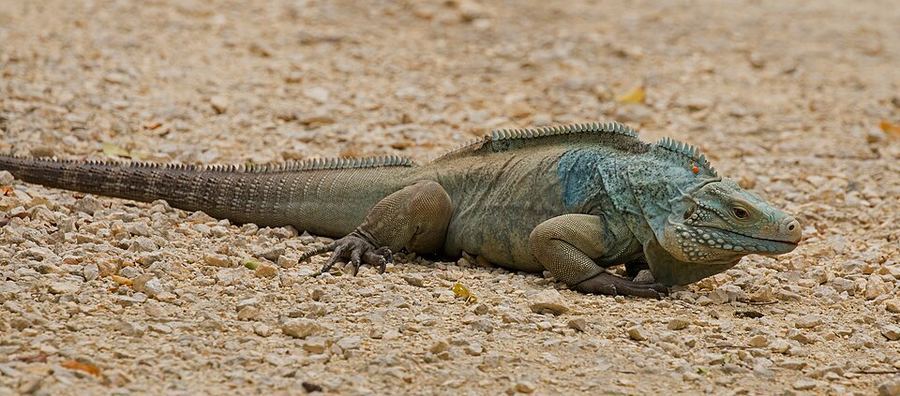
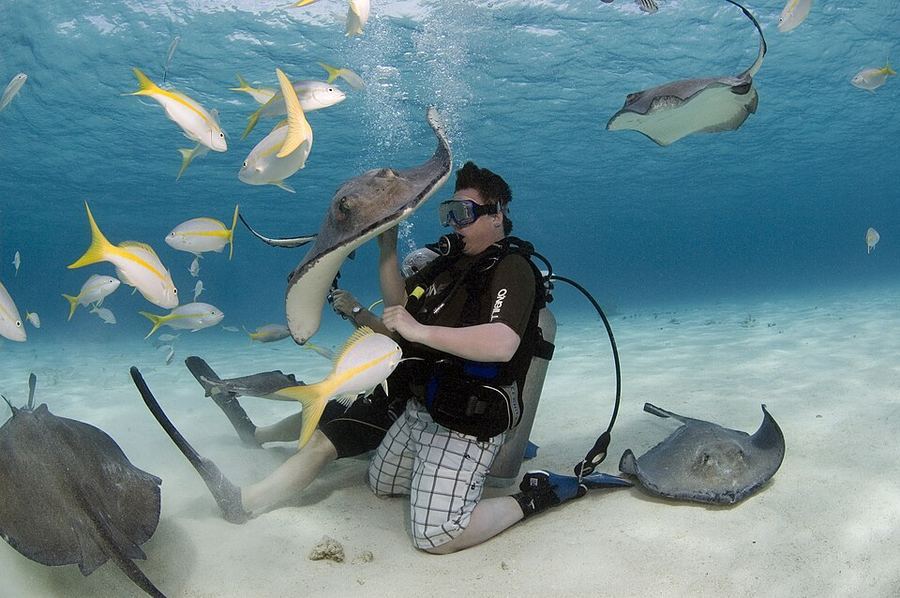
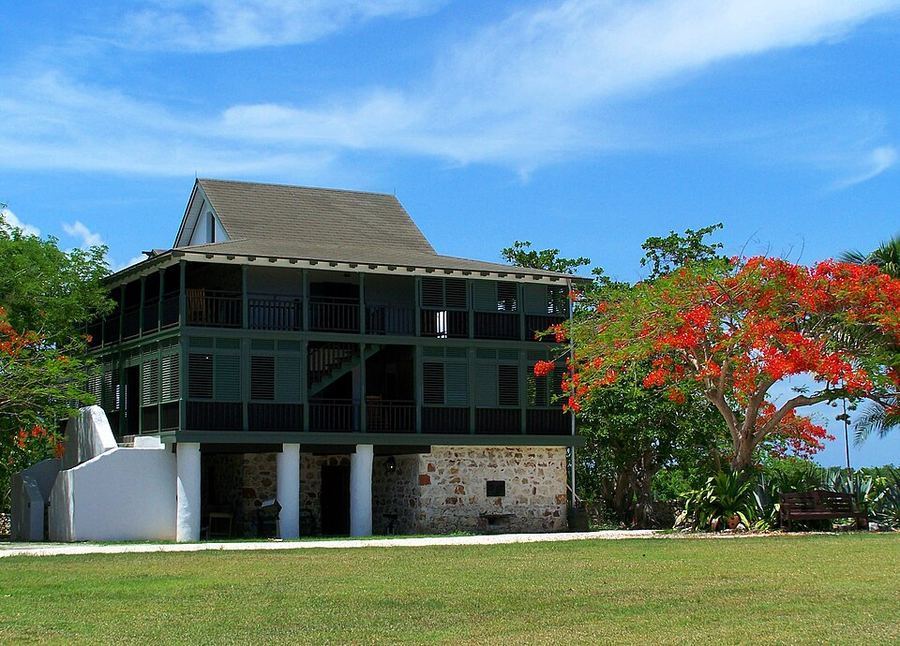
Caymanians point first to a standard of living built without natural resources — a jurisdiction of 67,000 people that became one of the world's principal domiciles for investment funds and captive insurance, funding itself without direct taxation. The diving is the second: the Bloody Bay Wall off Little Cayman, which drops from shallow reef to abyss within metres, Stingray City in the North Sound where southern stingrays gather in waist- deep water, and the deliberately sunk USS Kittiwake are fixtures on any list of the Caribbean's best sites. A third is conservation. The Grand Cayman blue iguana, endemic to the island and reduced to a few dozen animals by the early 2000s, has been brought back through a captive-breeding and release programme run from the Queen Elizabeth II Botanic Park — one of the better-documented recoveries of a critically endangered reptile. Booby Pond Nature Reserve on Little Cayman, a Ramsar-listed wetland, holds the largest red-footed booby colony in the Caribbean. Caymanians also take pride in a low crime rate, in the National Trust's restoration of historic Bodden Town and Pedro St James, and in Cydonie Mothersille's Commonwealth Games sprint gold.
Encyclopaedia BritannicaCommonwealth Games FederationUN

Cultural Fusion

No society in the Caribbean is more visibly assembled from elsewhere. Caymanians by birth are 35.4% of residents; Jamaicans are 24.8%, and Filipinos, British, Americans, Hondurans, Canadians, Indians, Cubans and Nicaraguans each hold a measurable share, with more than a hundred nationalities represented in a population that could fill a mid-sized stadium. The Jamaican connection is the oldest and deepest — Cayman was governed from Kingston until 1962, and Jamaican patois, food and church traditions are woven into Caymanian life rather than sitting alongside it. Filipino workers dominate hospitality and domestic service and have built their own congregations and grocery networks; the Honduran and Nicaraguan presence reflects long-standing Bay Islands and Miskito Coast maritime links, which also brought Caymanian settlers the other way to Roatán, where a Cayman- descended community persists. The financial sector adds a rotating British, Canadian, South African and Irish professional class. The friction this produces is the territory's central political question: work-permit policy, the rollover term limit on foreign workers, and the terms of Caymanian status dominate election campaigns.

Music & Dance

The traditional Caymanian sound is the kitchen band — a string-and-percussion ensemble in which a fiddle carries the melody over guitar, and rhythm comes from household objects pressed into service: a kitchen grater scraped with a nail, a washtub bass, maracas and jawbone. It accompanies the quadrille, a set dance inherited from European ballroom forms and reworked locally, along with the polka, the schottische and the heel-and-toe. Traditional dances survive largely through deliberate revival: the Cayman National Cultural Foundation runs young people's ensembles and stages the traditional arts at the Harquail Theatre, and district heritage days during Pirates Week put kitchen bands and quadrille sets in front of audiences each November. Alongside this, the everyday soundtrack of the islands is imported and Caribbean — Jamaican reggae and dancehall above all, reflecting the size of the Jamaican community, with soca driving the Batabano carnival road march each spring and gospel and choral singing filling the Protestant churches that most Caymanians attend.

Cuisine & Misattributed Foods

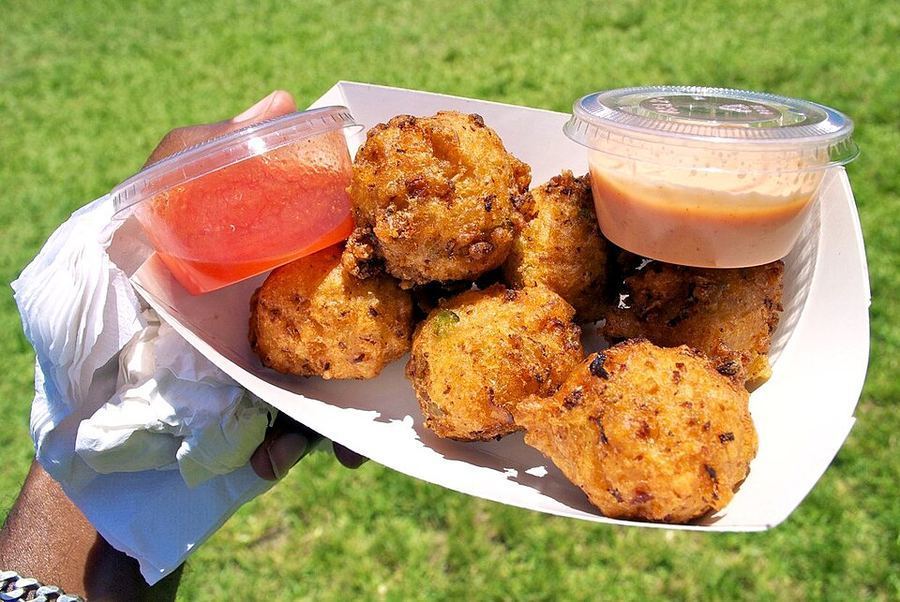
Caymanian cooking is a seafarer's kitchen: what the reef, the sea and a small garden plot could supply, stretched with coconut and cassava. Turtle remains the signature meat, eaten as turtle stew with a thick brown gravy, and the Cayman Turtle Centre at West Bay — which farms green turtles and also releases them — is the legal source, a practice that keeps the dish alive while drawing criticism from conservation groups. Fish rundown simmers snapper or other reef fish down in coconut milk with breadfruit, cassava and plantain. Conch appears as stew, fritters and marinated salad, and fried or grilled fish with rice and peas is the everyday plate. Heavy cake — dense, sweet and made from grated cassava or breadfruit with coconut milk and brown sugar, traditionally baked in a caboose oven under coals — is the great Caymanian dessert, and plantain tarts and coconut drops sit alongside it. Swanky, a simple lime-and-brown-sugar drink, is what field and boat work was carried out on. Jamaican patties and Filipino cooking are now as easy to find as any of it.

National Dress

The Cayman Islands have no formally codified national costume in the way that older Caribbean societies do; what functions as traditional dress is a working nineteenth- and early twentieth-century style revived for heritage occasions. For women that means a long, modest cotton or gingham dress with an apron and a head-tie, worn for quadrille sets and district heritage days; for men, a plain shirt, dark trousers and a broad hat. The genuinely Caymanian element is the material rather than the cut: hats, bags and baskets plaited from the fronds of the silver thatch palm, the endemic tree that is now the national tree and whose rope was the islands' chief export into the twentieth century. Plaiting the thatch is still taught as a heritage craft, and thatch hats are the recognisable marker of Caymanian traditional wear. The wild banana orchid, the national flower, and the Cayman parrot are the other emblems that appear in costume and decoration. Day-to-day dress is Caribbean-casual, with the financial district in George Town keeping to conventional business clothing.

Sports & Inspiring Athletes

For a territory of this size the sporting infrastructure is unusually developed. The Truman Bodden Sports Complex in George Town provides the national track, pool and stadium, and the Cayman Islands Football Association fields national teams in CONCACAF competition, where results are modest against far larger neighbours. Athletics is the strongest discipline, with a sprint and jumps tradition that has produced the territory's only international titles. Swimming has a deep club base, helped by year-round water and a population that lives on the sea. Cricket, inherited from the British Caribbean, is played through the Cayman Islands Cricket Association, and rugby has a small but organised following centred on the South Sound grounds. The distinctively local competitions are aquatic: the Flowers Sea Swim, an annual mile race in open water off Seven Mile Beach that draws international entrants alongside hundreds of residents, and catboat and sailing regattas that keep the old workboat design in the water. Recreational diving and sport fishing sit somewhere between sport and national pastime.
IOCCommonwealth Games Federation

Notable Educational Programs

Education is free and compulsory in the government system, and the territory's literacy and enrolment figures are among the highest in the Caribbean, supported by public spending that the financial sector's revenues make possible. The University College of the Cayman Islands in George Town is the national institution: founded in 1975 as the Community College of the Cayman Islands and reconstituted as UCCI in 2004, it offers associate and bachelor's degrees and functions as the main route to higher education for Caymanians who do not study abroad. The International College of the Cayman Islands, a private institution operating since 1970, offers degrees to both residents and international students. Two offshore medical schools operate in the territory, St Matthew's University on Grand Cayman among them, teaching largely North American students. The Cayman Islands Law School, which delivers a University of Liverpool law degree locally, trains attorneys for a legal profession sized by the offshore industry. A large share of Caymanian students still complete degrees in the United Kingdom, Canada or the United States, often on government scholarships.

Wars & Conflicts

The Cayman Islands have no armed conflict, no history of insurgency and no defence force in the conventional sense. The nearest thing to organised violence in the islands' past belongs to the age of sail: Spanish privateers raided the settlements in the seventeenth and eighteenth centuries, the small settler militia was raised against them, and the Wreck of the Ten Sail in 1794 occurred against the backdrop of war between Britain and revolutionary France. External defence remains a United Kingdom responsibility, and the Royal Cayman Islands Police Service handles internal security. In 2020 the territory stood up the Cayman Islands Regiment, a small volunteer reserve unit whose purpose is hurricane response, search and rescue and support to the civil authorities rather than combat. The security concerns that actually occupy the territory are transnational rather than military: narcotics trafficking through Caribbean waters, Cuban migrant vessels making landfall, and the money-laundering and sanctions-evasion risks that come with hosting a very large financial centre.
Current as of 2026-08-06

Land & Border Disputes

The Cayman Islands have no territorial or maritime disputes; their boundaries with Cuba, Jamaica and Honduras are settled and uncontested. The territory's real disputes are regulatory and constitutional. Its status as a zero-direct-tax jurisdiction has repeatedly put it in conflict with international bodies: the European Union placed Cayman on its list of non-cooperative tax jurisdictions in February 2020 and removed it that October after legislative changes, and the Financial Action Task Force kept the territory on its increased-monitoring "grey list" from February 2021 until October 2023. A parallel and unresolved argument runs with London over public registers of company beneficial ownership, which the UK Parliament legislated to require of the overseas territories in 2018 and which Cayman has resisted as a matter of constitutional competence. A third dispute is domestic and legal: after the Grand Court found a right to same-sex marriage in 2019, the Court of Appeal reversed it, the Governor imposed a civil partnership framework, and the Judicial Committee of the Privy Council ruled in 2022 that the constitution confers no such right.
ReutersFinancial TimesThe Guardian
Land, Life & Legacy

Land & Climate

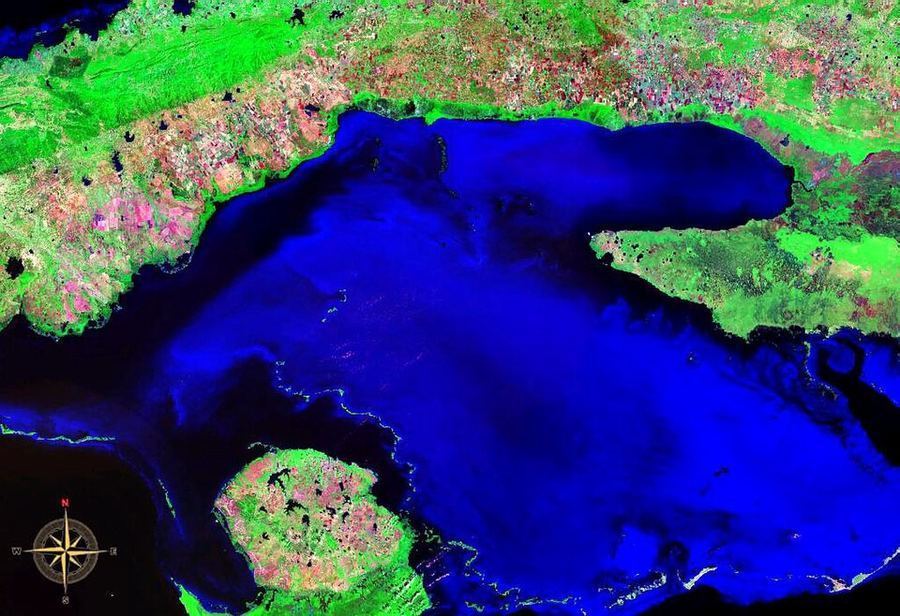
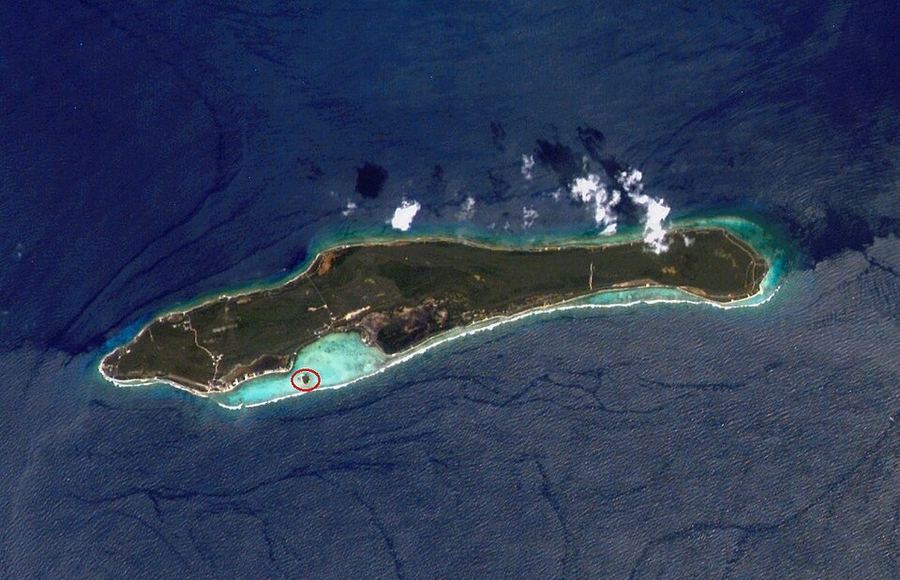
The territory covers roughly 264 square kilometres of low, porous limestone — the exposed tops of a submarine ridge — with no rivers and very little soil. Grand Cayman, the largest and most developed island, is shaped around the shallow North Sound, a lagoon that supplies the sandbars where stingrays gather and much of the island's mangrove. Cayman Brac, about 145 kilometres to the north-east, is defined by the Bluff, a limestone spine that rises steadily along the island's length to 43 metres at its eastern end — the highest point in the territory. Little Cayman, adjacent to the Brac, has fewer than three hundred residents and is largely given over to nature reserve and diving. The surrounding walls plunge to great depth close inshore, which is what makes the diving exceptional. The climate is tropical marine, with a dry season from November to April and a wet, humid season from May to October that coincides with the Atlantic hurricane season. Low elevation makes the islands acutely exposed: Hurricane Ivan in September 2004 flooded much of Grand Cayman and remains the benchmark for storm risk.

Entertainment

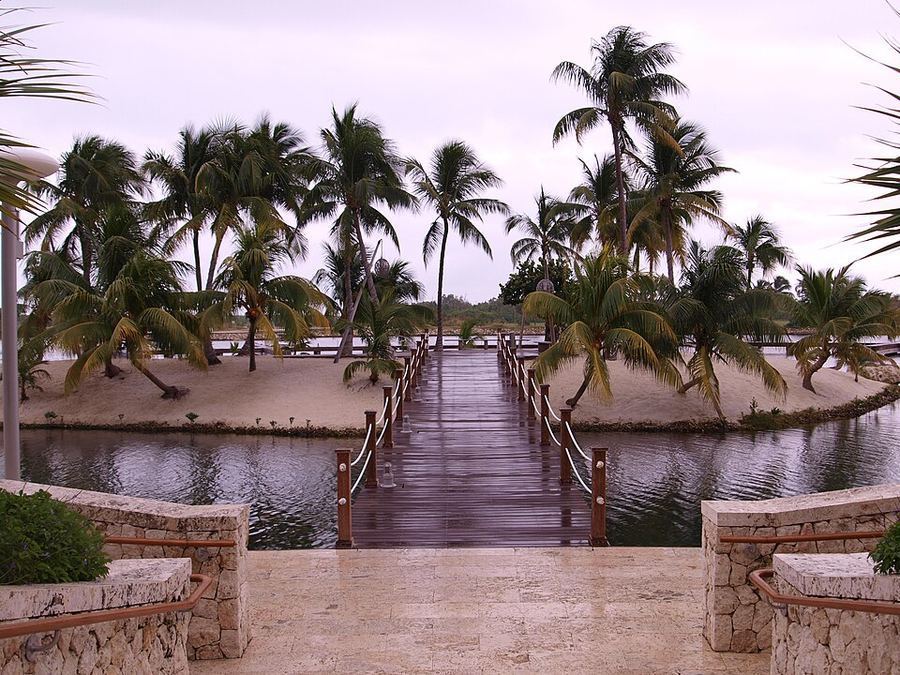
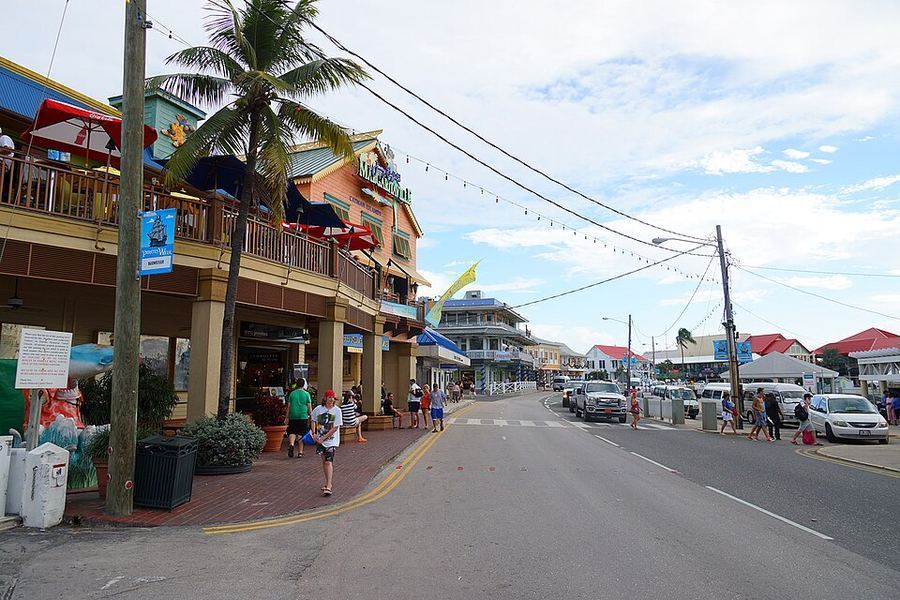
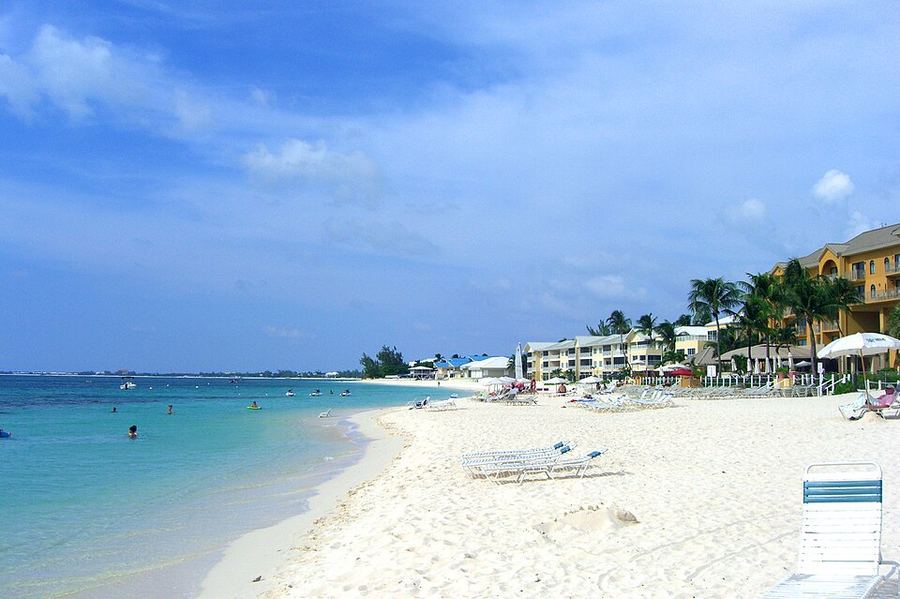
Life outdoors is organised around the water. Seven Mile Beach on Grand Cayman's western shore is the territory's best-known stretch of sand and the spine of its resort trade; Rum Point and the North Sound sandbars draw boating parties, and Stingray City is the single most visited attraction. Diving and snorkelling are less a holiday activity than a local habit, with the Kittiwake wreck, the Cayman Brac wall and Little Cayman's Bloody Bay all within reach. On land, the Queen Elizabeth II Botanic Park combines gardens with the blue iguana breeding facility, the Mastic Trail crosses old-growth dry forest in the island's interior, and the Crystal Caves at North Side opened the underground limestone formations to visitors. Camana Bay, a purpose-built town centre near Seven Mile Beach, supplies cinema, restaurants and an observation tower. Sport fishing, catboat and sailing regattas, and the annual Flowers Sea Swim — a mile-long open-water race off Seven Mile Beach — fill the competitive calendar, and domino tables, church socials and district fairs remain the core of community life.

Art & Museums

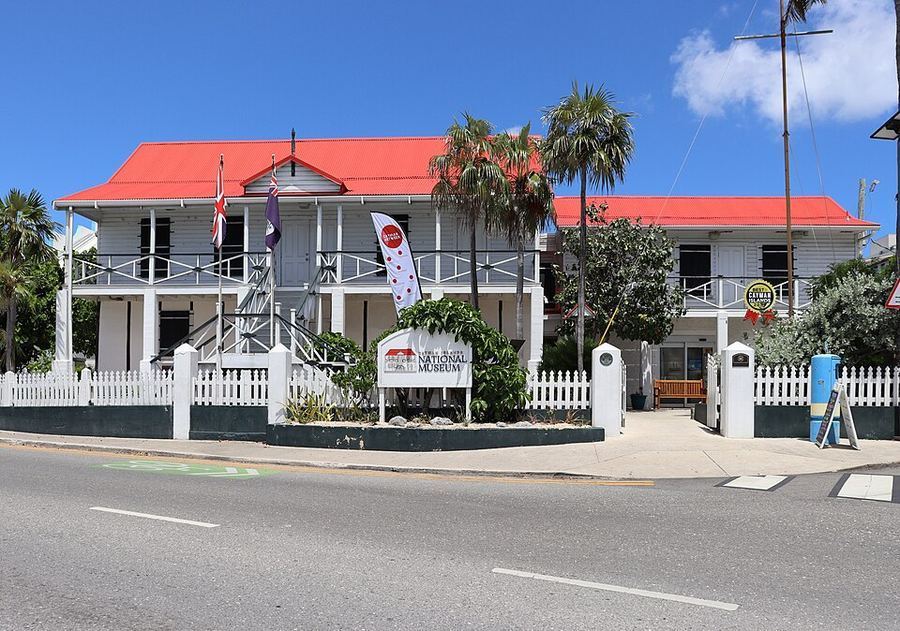
The National Gallery of the Cayman Islands, established in 1996 and housed since 2012 in a purpose-built space near Camana Bay, is the centre of the territory's visual arts, holding a national collection and running the education programmes that most local artists have passed through. The dominant figure in Caymanian art is Gladwyn "Miss Lassie" Bush (1914–2003), an intuitive painter who began work in her sixties after a vision and covered the interior walls, doors and shutters of her West Bay home with religious and dream imagery. Her house, Mind's Eye, is preserved as a heritage site, and her paintings are the territory's most recognisable artistic signature. Bendel Hydes, who left Cayman for New York, is the best-known Caymanian painter working internationally, his abstract canvases drawing on the colour and light of the reef. Alongside the fine arts sits a strong craft tradition — thatch plaiting, caymanite carving from the banded stone found on Cayman Brac, and model catboat building — which the National Trust and the Cayman National Cultural Foundation actively teach.

Notable People

Sir Vassel Johnson (1922–2015) is the figure most credited with the modern territory: as financial secretary he drafted and drove the legislation of the 1960s that created the offshore financial industry, and he was the first Caymanian knighted. Ormond Panton, his political contemporary, led the movement that shaped Cayman's constitutional path after Jamaica's independence. In sport, Cydonie Mothersille is the territory's most decorated athlete, winning the 200 metres at the 2010 Commonwealth Games in Delhi — the Cayman Islands' first Commonwealth gold — after a long career on the international circuit. Kareem Streete-Thompson competed at the highest level in the long jump and sprints, and the swimmers Shaune and Brett Fraser carried the territory at successive Olympic Games. In the arts, Gladwyn "Miss Lassie" Bush is the defining Caymanian painter, and the poet and storyteller tradition of the districts is preserved through the Cayman National Cultural Foundation. Because the population is so small and so recently assembled, much of the territory's public memory attaches to seafaring families and schooner captains rather than to individual national figures.
Commonwealth Games FederationEncyclopaedia Britannica

Inventions & Breakthroughs

The Cayman Islands' one genuine indigenous invention is a boat. The Cayman catboat, developed on Cayman Brac in the early twentieth century and credited to the builder Daniel Jervis, is a small, beamy, shallow-draught craft with a single mast stepped well forward, designed for turtling and for working the reef in short chop; hundreds were built by hand and it became the standard Caymanian workboat before outboard engines displaced it. The Cayman Catboat Club now preserves surviving hulls and races them. The territory's other original contributions are craft technologies rather than machines — the plaiting of silver thatch fronds into rope strong enough to sustain an export trade, and the working of caymanite, a hard banded stone found in the Bluff on Cayman Brac, into carved objects. Beyond that, Cayman's exported innovation has been legal and financial rather than material: the statutory architecture of the exempted company, the segregated portfolio company and the STAR trust has been copied by other offshore jurisdictions, and the territory is a leading domicile for investment funds and captive insurance.

Science & Technology

Research in the Cayman Islands is concentrated in marine science and in financial technology. The Central Caribbean Marine Institute operates the Little Cayman Research Centre, a permanent field station on one of the least-disturbed reef systems in the Caribbean, where long-run monitoring of coral cover, bleaching and reef fish populations feeds into regional climate and reef science. The Cayman Turtle Centre at West Bay maintains a captive green turtle population and a release programme, and the genetic and tagging work associated with it has contributed to understanding of Caribbean green turtle stocks. The Blue Iguana Conservation programme run from the Queen Elizabeth II Botanic Park is the territory's most cited applied-science success, having brought an endemic reptile back from a few dozen wild animals through captive breeding and managed release. On the commercial side, Cayman Enterprise City, a special economic zone established in 2011, hosts technology, media and commodities firms under a streamlined licensing regime, and the territory's regulators have written a virtual-asset service provider framework to bring digital-asset businesses under supervision.
On The World Stage

Champions & Defining Moments

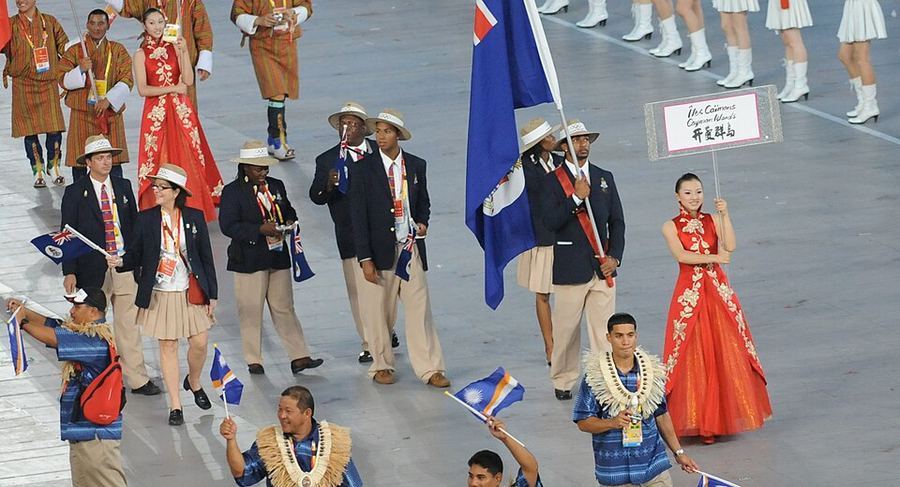
The Cayman Islands have competed at the Olympic Games since Montreal in 1976 and have not yet won a medal, which is unremarkable for a population of 67,000 but makes the territory's Commonwealth Games record all the more prominent. Cydonie Mothersille's victory in the 200 metres at Delhi in 2010 gave Cayman its first Commonwealth gold and remains the high point of its international sport; she had earlier reached Olympic finals, and her career anchors the athletics programme that followed. Kareem Streete-Thompson competed internationally in the long jump and 100 metres, and the swimmers Shaune and Brett Fraser reached Olympic and Commonwealth finals in sprint freestyle. In football, the national side plays in CONCACAF qualifying without having approached a World Cup, and the territory's realistic global presence is instead in the water: as one of the world's most recognised recreational diving destinations, and as a regular host of international open-water swimming and game- fishing events that bring competitors to the islands rather than sending Caymanians abroad.

IOCCommonwealth Games FederationFIFA
Economy, Trade & Government

Currency & GDP

Cayman Islands Dollar — KYD ($)

GDP (PPP): $5.705 billion (2023 est.)

Per capita: $78,100 (2023 est.)

Exports

$4.6 billion (2023 est.)

aircraft, ships, refined petroleum, natural gas, broadcasting equipment (2023)

Partners: UK 40%, Cyprus 21%, Germany 9%, Grenada 8%, Italy 5% (2023)

Imports

$3.444 billion (2023 est.)

ships, refined petroleum, cars, furniture, jewelry (2023)

Partners: Germany 30%, USA 29%, Italy 20%, Turkey 5%, China 5% (2023)

Government

Type: parliamentary democracy; self-governing overseas territory of the UK

Independence: none (overseas territory of the UK)

Terrain → Where People Live

How mountains, coasts, and rivers shape settlement (LandScan).

Coming — data

Migration & Ethnic Settlement

Where groups settled and how people move (GeoEPR + UNHCR).

Coming — data

Universities

Notable institutions, mappable as points.

Coming — data
Economy & government facts: CIA World Factbook (public domain), via OpenFactBook / factbook.json.
Every fact and narrative claim will carry a visible source citation. Data-driven sections light up automatically wherever HERA has coverage.