HERA · Human Entity Reference Atlas by Masego Inc

← Germany 🌐 3D View
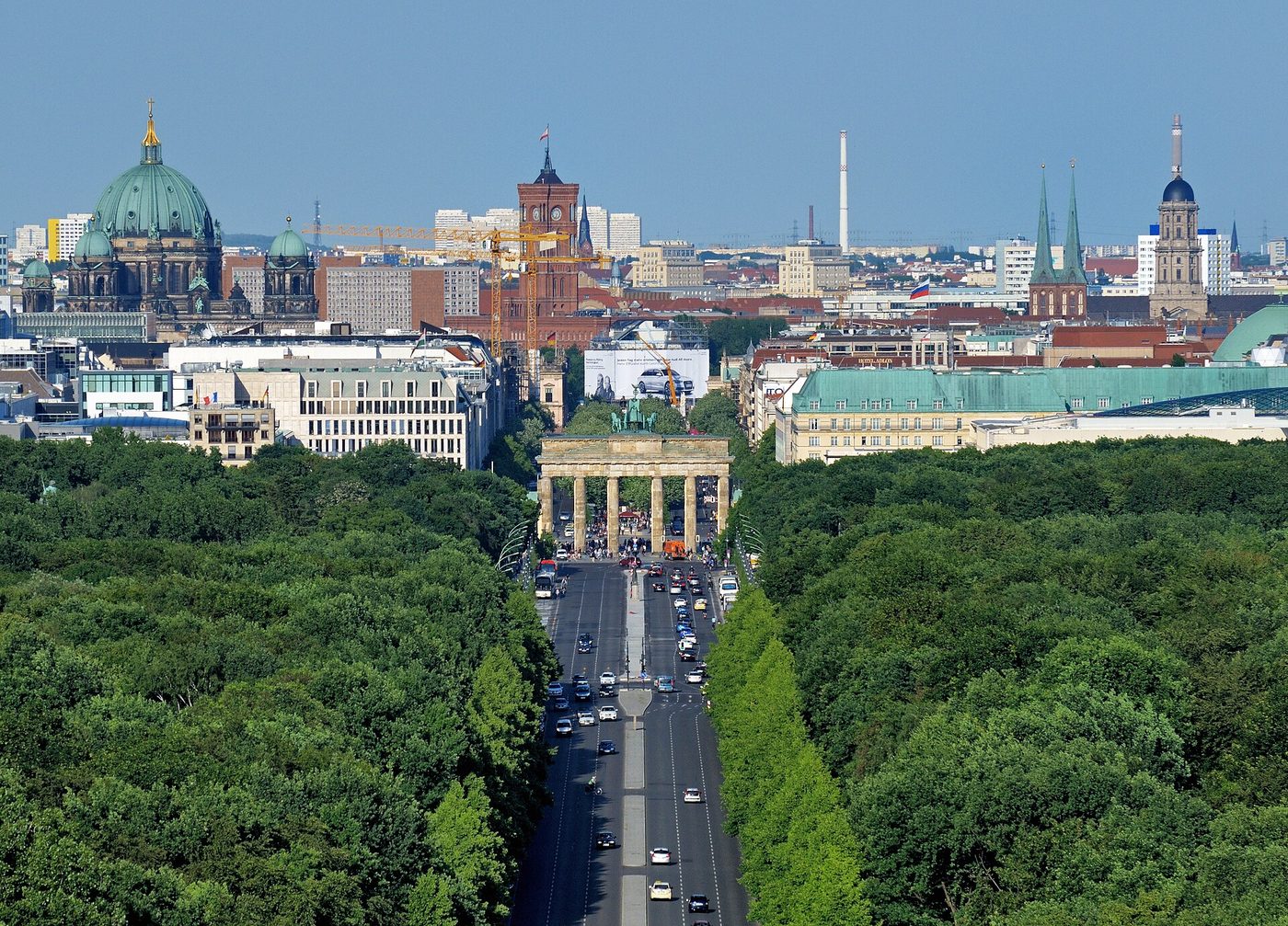
View of the Brandenburg Gate from Victory Column. Berlin, Germany, Germany
Germany DEU
View of the Brandenburg Gate from Victory Column. Berlin, Germany — Photo: Ввласенко / CC BY-SA 3.0 via Wikimedia Commons
Did You Know Germany is the only country to have won both the men's FIFA World Cup (four times: 1954, 1974, 1990, 2014) and the women's FIFA World Cup (2003 and 2007). — FIFA

Germany sits at the crossroads of Europe in every sense: 84 million people, nine land borders, and an economy — $5.2 trillion at purchasing power parity — that anchors the continent. It is a federal parliamentary republic of sixteen Länder, each guarding its own dialects, broadcasters, school systems, and beer. The capital returned to Berlin after reunification on 3 October 1990, an event so central to national identity that the country's founding story is really two: the empire Bismarck forged in 1871 and the peaceful revolution that brought down the Wall in 1989. Today's Germany is older than most nations — median age 46.9 — and more plural: about 85 percent of residents identify as ethnically German, alongside significant Turkish, Ukrainian, Syrian, Romanian, and Polish communities, and 43.8 percent claim no religion at all, outnumbering both Catholics and Protestants. The country hosts more than three million refugees and displaced people, among the most anywhere. Its exports — cars, machine parts, medicines — still define 'Made in Germany' as a global promise of precision.

CIA World FactbookIMF
Population
84,012,284
Capital
Berlin
Currency
€ EUR
Time zones
Largest city
Berlin
Human Geography Themes
Loading national figures…
Largest Cities
Berlin3,601,776
Essen2,718,996
Munich1,827,704
Hamburg1,776,852
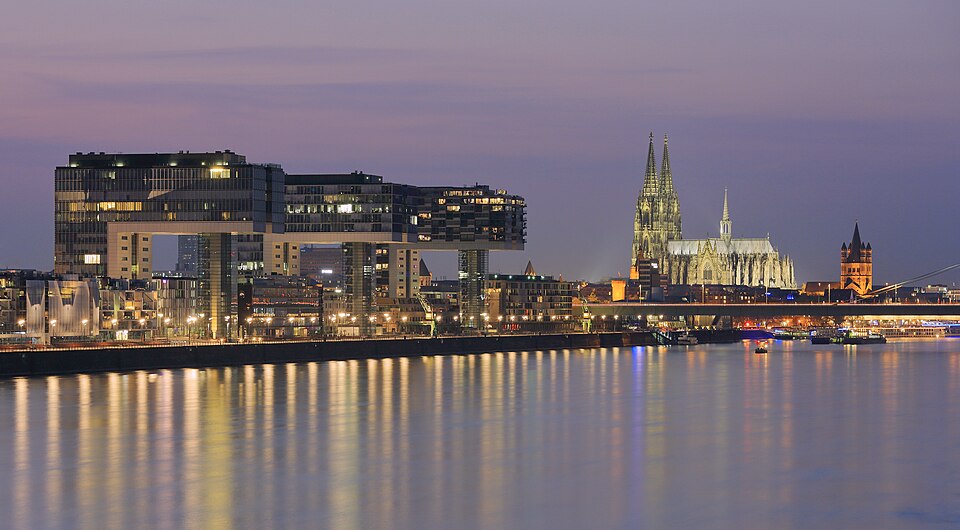
Cologne1,156,303
Stuttgart954,267
Dusseldorf921,669
Frankfurt916,259
In Perspective

Berlin's urban core is home to about 3,601,776 people.

That's bigger than Rome and Amsterdam — each a great world city in its own right.

Berlin3,601,776
Rome2,556,354
Amsterdam1,223,407

Among the world's megacities, though, it's one of many — the giants of Asia and Latin America run larger still:

Berlin3,601,776
Jakarta40,545,126
Dhaka37,307,160
Tokyo33,244,670
Shanghai30,678,616
Cairo25,230,325
The Country & Its People

History

German history begins, by one common reckoning, in 843, when the Carolingian Empire was carved up and Eastern Francia emerged; in 962 Otto I was crowned the first Holy Roman Emperor, launching a sprawling, decentralized empire that lasted eight centuries. That fragmentation mattered: while France and England centralized, 'Germany' remained a patchwork of hundreds of principalities — fertile ground for Martin Luther's Reformation in 1517, which split Western Christianity from a church door in Wittenberg. Unification came late and fast. Prussia's Otto von Bismarck stitched the empire together in 1871 through war and diplomacy. Two catastrophic world wars followed; the Nazi dictatorship of 1933–1945 perpetrated the Holocaust, the systematic murder of six million Jews, a crime Germany has made central to its civic memory. Defeat in 1945 brought four-power occupation and, by 1949, two rival states: the Federal Republic in the west and the communist German Democratic Republic in the east, divided from 1961 by the Berlin Wall. The Wall fell on 9 November 1989, peaceful reunification followed on 3 October 1990, and the four wartime powers formally relinquished their rights in March 1991.
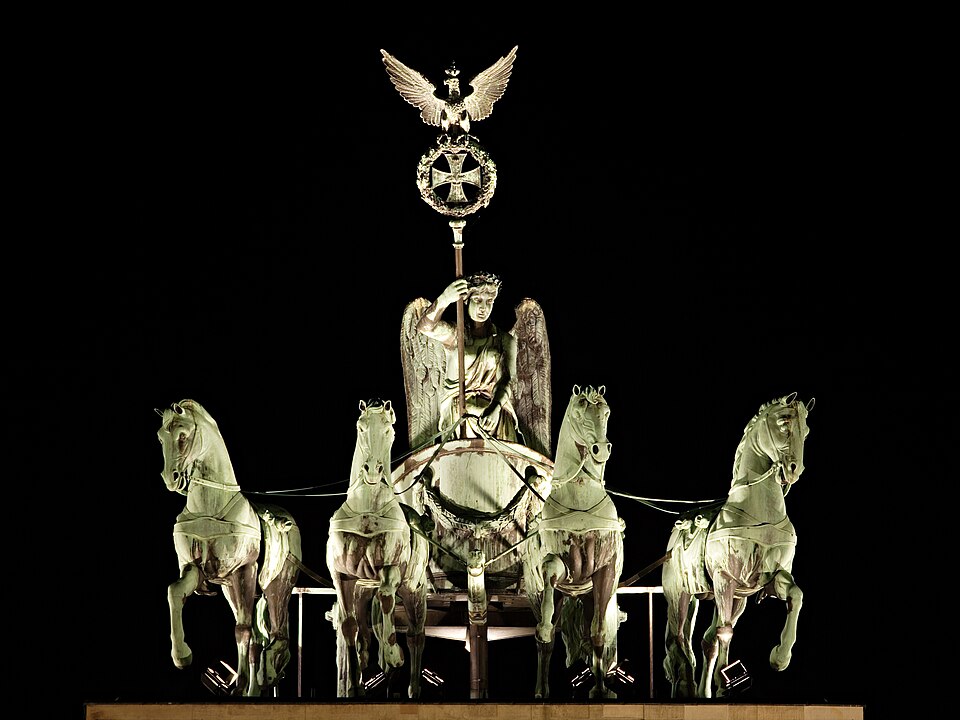
History, Germany
א (Aleph) Creator: Johann Gottfried Schadow / CC BY-SA 2.5

Culture

Germans call their country 'das Land der Dichter und Denker' — the land of poets and thinkers — and the résumé holds up: Goethe and Schiller in Weimar, Kant in Königsberg, the Brothers Grimm collecting folk tales that the world now knows by heart. But German culture is stubbornly federal. There is no single cultural capital; Munich, Hamburg, Cologne, Leipzig, and Dresden each maintain world-class opera houses, orchestras, and museums because cultural policy belongs to the sixteen Länder, not Berlin. The calendar reveals the regional soul: Rhineland Karneval erupts every February with costumed parades and satirical floats, Bavaria hosts Oktoberfest, and nearly every town square becomes a Christmas market in Advent — a tradition dating to the Middle Ages. Linguistic diversity persists too: beyond German, the constitution protects Danish, Frisian, Sorbian, and Romani as minority languages, with Upper and Lower Sorbian — Slavic languages of Lusatia — still spoken in the east. Modern Germany is also strikingly secular: more residents profess no religion (43.8 percent) than belong to either the Catholic or Protestant churches that once defined public life.
Culture, Germany
Wilfredor / CC0

Points Of Pride

Germany's proudest export may be reliability itself. 'Made in Germany' — ironically coined by Britain in 1887 as a warning label — became a badge of engineering excellence, carried by the Mittelstand, thousands of family-owned firms that quietly dominate global niches from laser optics to industrial valves. The country exported $1.9 trillion in goods in 2024, led by cars and machinery. Its intellectual ledger is just as deep: Germans and German institutions account for more than a hundred Nobel Prizes, from Röntgen (the first physics laureate, for X-rays) to Einstein and Planck. Beethoven's 'Ode to Joy' serves as the anthem of Europe. UNESCO has inscribed more than fifty German World Heritage sites — Cologne Cathedral, the Bauhaus, the Wadden Sea — among the most of any country. And perhaps the deepest pride is the newest: a peaceful revolution in 1989 that toppled a dictatorship without a shot, followed by the absorption of reunification's enormous costs. The candlelit Monday demonstrations of Leipzig are taught as proof that the country that once exported war learned to export the opposite.
Points Of Pride, Germany
Martin Falbisoner / CC BY-SA 4.0

Cultural Fusion

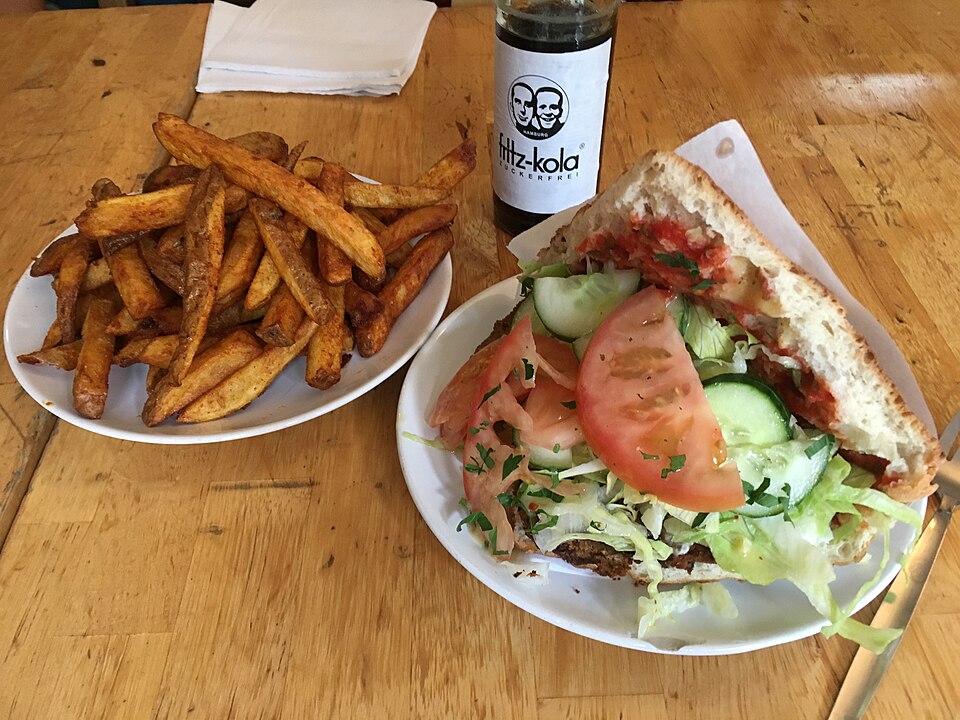
Modern Germany is a migration country, though it took decades to say so out loud. The Gastarbeiter (guest worker) agreements of the 1950s and 60s brought hundreds of thousands of Turkish, Italian, Greek, and Yugoslav workers to power the Wirtschaftswunder; the 'guests' stayed, and today people of Turkish background form the largest minority community, having reshaped everything from street food to the Bundestag. East Germany ran its own parallel program, recruiting Vietnamese contract workers whose descendants anchor thriving communities in Berlin and Leipzig. After the Soviet collapse, millions of Russlanddeutsche — ethnic German 'late resettlers' from Kazakhstan and Siberia — arrived speaking Russian and carrying German surnames. Then came the great waves of the 2010s and 2020s: over a million Syrians and others during 2015–16, and more than a million Ukrainians after 2022. The result: Germany hosts roughly 3.1 million refugees and displaced people, and its census now records Turkish, Ukrainian, Syrian, Romanian, and Polish communities each numbering in the hundreds of thousands. The emblem of it all is the döner kebab — perfected by Turkish immigrants in Berlin and now arguably the country's true national fast food.
Cultural Fusion, Germany
Andy Hay from UK / CC BY 2.0

Music & Dance

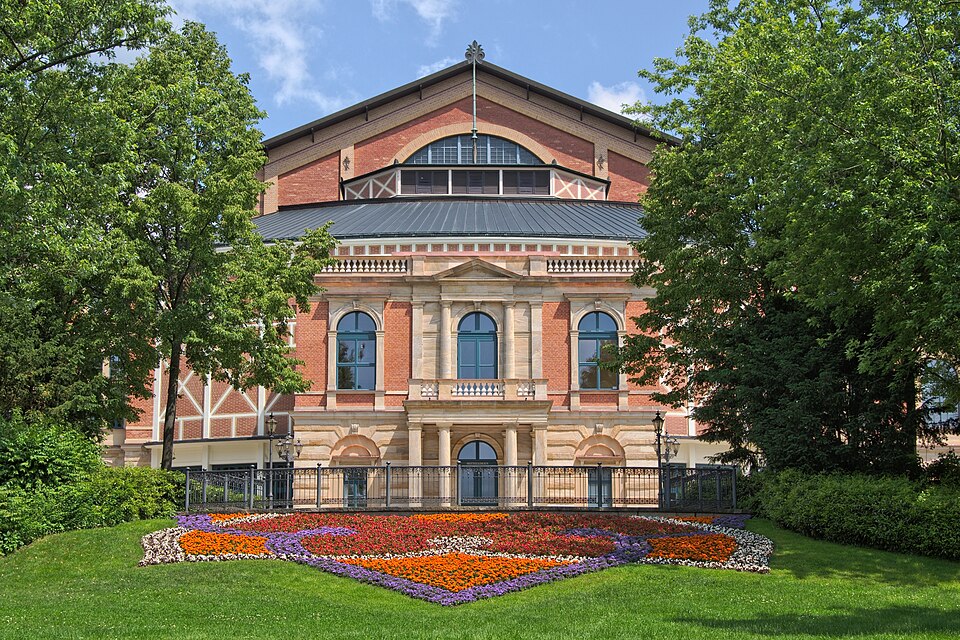
No country has shaped Western art music more. Bach wrote the fugue's bible in Leipzig; Beethoven, born in Bonn, broke the symphony open; Brahms, Schumann, and Wagner — whose operas still summon pilgrims to the Bayreuth Festival he built in 1876 — completed a canon that concert halls worldwide still orbit. The Berlin Philharmonic remains a byword for orchestral perfection, and Germany maintains one of the world's densest networks of publicly funded opera houses and orchestras. UNESCO has recognized German organ craftsmanship and music on its intangible cultural heritage list — some 50,000 organs and a living tradition of builders and organists. Then Germany reinvented popular music from the other end: Düsseldorf's Kraftwerk practically invented electronic pop in the 1970s, Giorgio Moroder-era Munich shaped disco, and after the Wall fell, abandoned East Berlin power plants and vaults became techno temples — Berghain foremost — making Berlin the global capital of club culture. Folk tradition survives in the Alpine south, where the Schuhplattler, a thigh-slapping courtship dance, is still performed in earnest at Bavarian festivals rather than only for tourists.
Music & Dance, Germany
El Grafo / CC BY-SA 4.0

Cuisine & Misattributed Foods

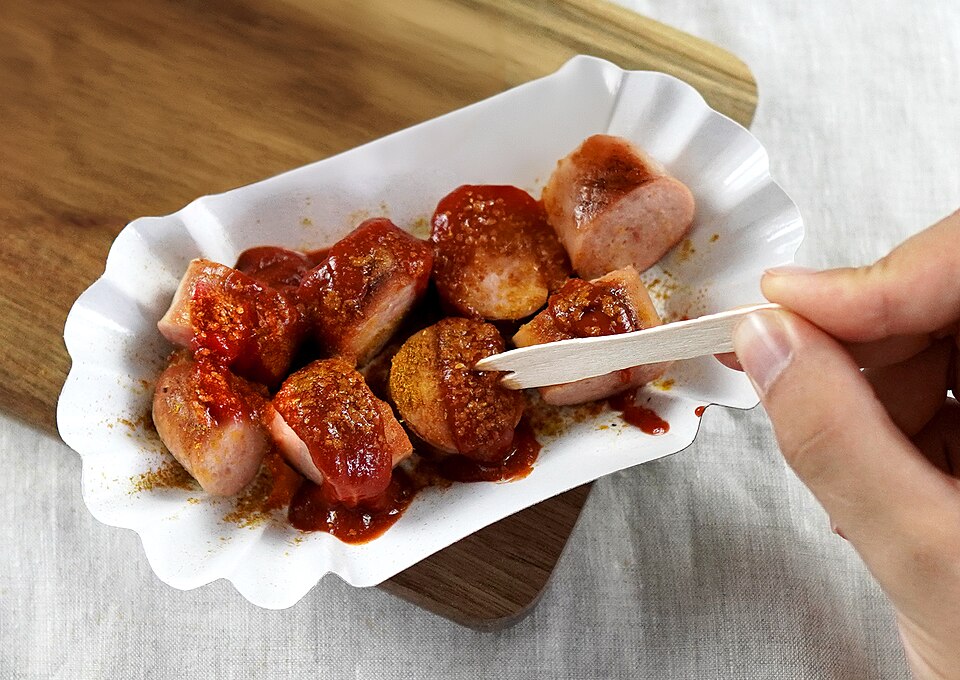
German cuisine is bread-first: registered bakers maintain thousands of distinct bread varieties, from dense Westphalian pumpernickel to Swabian pretzels, and the corner Bäckerei remains a daily ritual. The sausage universe is nearly as vast — well over a thousand kinds, each with fierce regional loyalty: Nürnberger grilled over beechwood, Thüringer on the fairground grill, Bavarian Weisswurst eaten strictly before noon, and Berlin's currywurst, invented in 1949 by Herta Heuwer with ketchup and curry powder scrounged in the postwar city. Beer is regulated by memory as much as law: the Reinheitsgebot, the 1516 Bavarian purity decree limiting beer to barley, hops, and water, is often called the world's oldest food regulation still in effect. Spring brings Spargelzeit, an asparagus obsession in which the white spears get their own festivals and roadside stands. German wine deserves more fame than it gets — Rieslings from the vertiginous slate slopes of the Mosel rank among the world's great whites. And modern German kitchens have quietly gone haute: the country now holds more Michelin-starred restaurants than any in Europe except France.
Cuisine & Misattributed Foods, Germany
Richard Mischau, Britta Mischau / CC BY-SA 4.0

National Dress

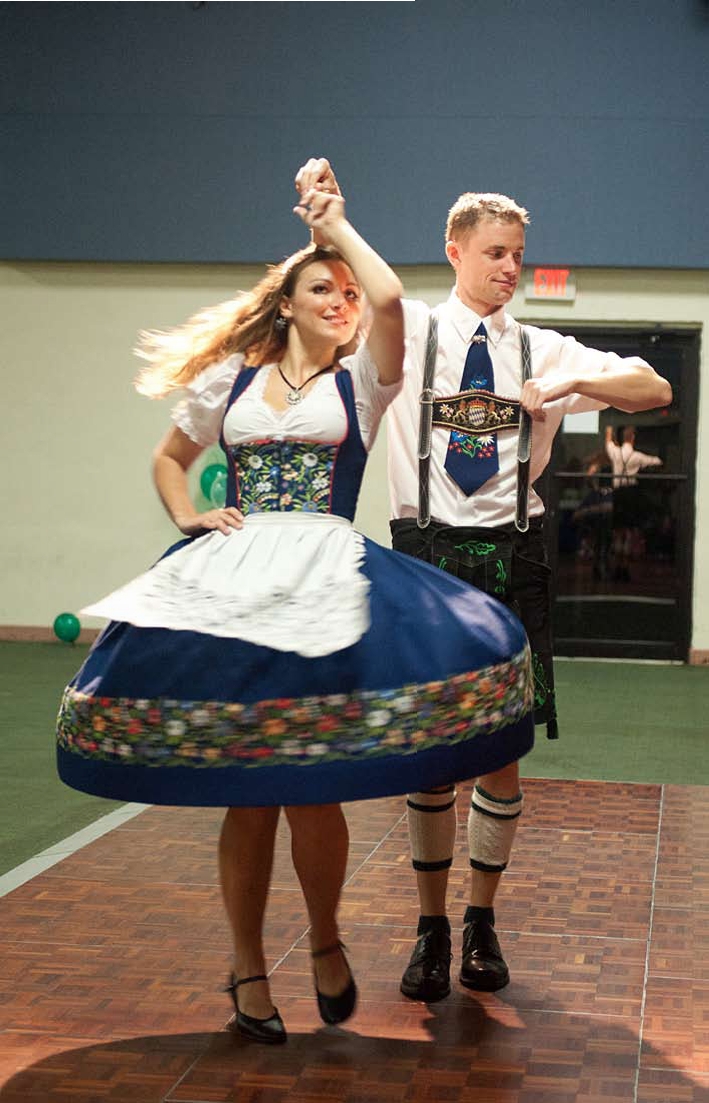
Germany has no single national costume — fittingly, for a country assembled from kingdoms and duchies — but it has Tracht, the family of regional folk dress whose Bavarian branch conquered the world's imagination. The Dirndl (bodice, blouse, full skirt, and apron whose knot placement traditionally signals whether the wearer is single or taken) and Lederhosen (leather breeches built for Alpine work and dance) are southern, not national, yet Oktoberfest turned them into global shorthand for Germany. Far from fading, Tracht has boomed since the 1990s: Munich festival-goers of every background now rent or buy it, and designers produce both faithful and playful versions. Other regions keep quieter traditions. In the Black Forest, unmarried women once wore the Bollenhut, a straw hat crowned with fourteen woolen pom-poms — red for the unmarried, black for wives — now an emblem of the region. The Sorbian minority of Lusatia maintains some of Europe's most elaborate surviving folk dress, with intricately embroidered festival costumes still worn for Catholic and Protestant feast days. In the Frisian north, traditional dress leans maritime and Protestant-plain, a reminder that Germany's cultural weather changes every hundred kilometers.
National Dress, Germany
Benjamin Cossel / Public domain

Sports & Inspiring Athletes

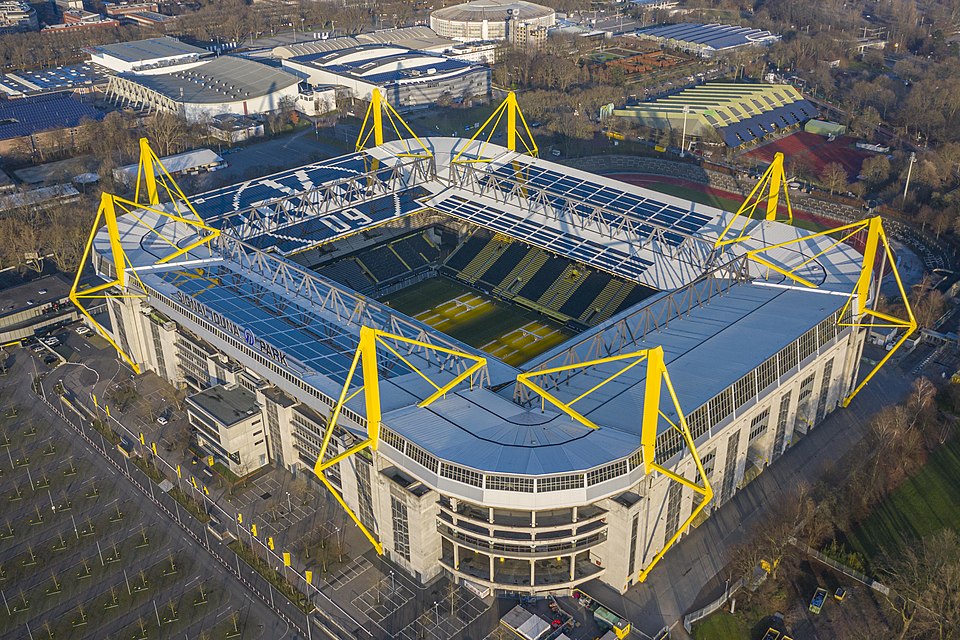
Football is Germany's true established church. The men's national team has won the FIFA World Cup four times (1954, 1974, 1990, 2014) — the 1954 'Miracle of Bern' upset of Hungary is remembered as the moment postwar West Germany regained self-respect — and the women's team added World Cups in 2003 and 2007, making Germany the only nation to win both. The German Football Association is the largest single-sport national federation on earth, with millions of registered members, and Bundesliga matches draw some of the highest average attendances in world football, anchored by Borussia Dortmund's 80,000-strong home crowds. Germany's Olympic story is heavyweight and complicated: Berlin 1936 became a Nazi propaganda stage famously punctured by Jesse Owens; Munich 1972 brought both a joyful Games and the terrorist attack on Israeli athletes. On the ice and snow, Germany is a superpower — its luge and bobsled programs have dominated Winter Olympics medal tables for decades. Handball, tennis (Becker, Graf), and motorsport (Schumacher's seven Formula One titles) round out a sporting culture built on the Verein, the local club, where most Germans first learn to compete.
Sports & Inspiring Athletes, Germany
Arne Müseler / www.arne-mueseler.com / CC BY-SA 3.0 de

Notable Educational Programs

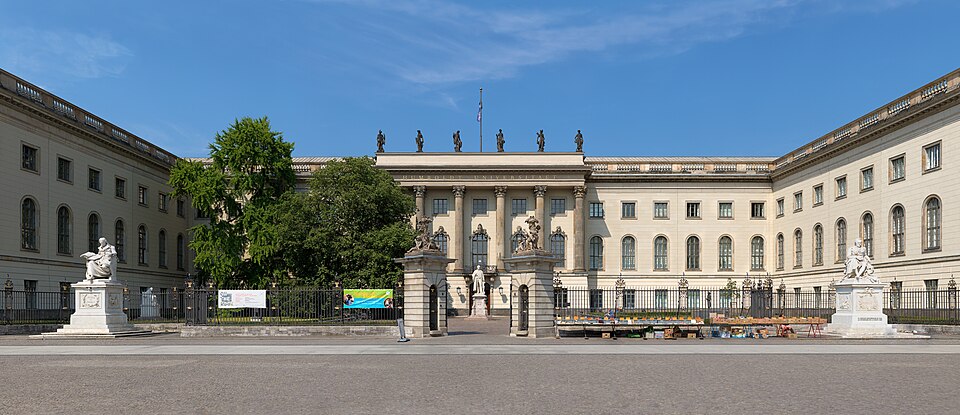
Germany invented the Kindergarten — Friedrich Fröbel opened the first in Bad Blankenburg in 1837, and the word itself is a German export — and its educational fingerprints run through the modern world: Wilhelm von Humboldt's Berlin university model, uniting teaching and research, became the template for research universities everywhere. Schooling is run by the sixteen Länder, with a distinctive early tracking system that channels pupils toward the academic Gymnasium (ending in the Abitur), intermediate Realschule, or vocational paths. The crown jewel is the dual vocational system: roughly half of each cohort enters an apprenticeship combining paid workplace training — in some 300 recognized occupations, from mechatronics to baking — with part-time vocational school, a model the OECD credits with keeping German youth unemployment among the lowest in the developed world and one that countries from Spain to South Korea have tried to copy. Higher education is essentially tuition-free, including for international students, at public universities — a policy that has made Germany one of the world's top non-English-speaking study destinations. The Excellence Strategy channels federal funding to top research universities, alongside the Max Planck and Fraunhofer institutes that anchor German science.
Notable Educational Programs, Germany
Christian Wolf (www.c-w-design.de) / CC BY-SA 3.0 de

Wars & Conflicts

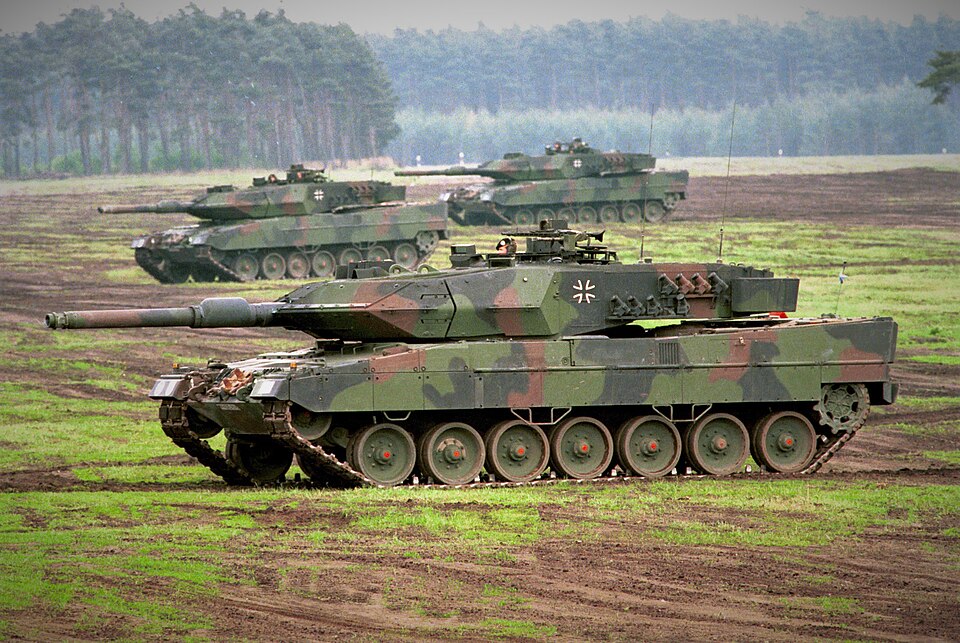
Germany is not a party to any armed conflict on its own soil, but as of mid-2026 it is executing its largest military reorientation since the Cold War — the 'Zeitenwende' declared after Russia's 2022 invasion of Ukraine. Its most visible commitment is the 45th Panzer Brigade in Lithuania, the Bundeswehr's first permanent foreign basing since World War II: Euronews reported the brigade grew to roughly 1,800–2,000 soldiers by early 2026 after Germany subordinated two armored battalions to it in February, on a path to about 4,800 troops and 2,000 vehicles at Rūdninkai, some 30 km from the Belarusian border, by the end of 2027. Germany remains one of Ukraine's largest military backers; in April 2026, Al Jazeera reported a Germany–Ukraine strategic defense partnership covering joint drone production and expanded air defenses. At home, authorities logged 172 drone-related air-traffic disruptions in 2025 — including sightings over Ramstein Air Base and Rheinmetall facilities — which officials link to suspected Russian espionage and sabotage; AP reporting described a likely Russian drone campaign across Europe, and Berlin responded with draft shoot-down legislation and a new federal drone-defense center.
Current as of 2026-07-16
Wars & Conflicts, Germany
Bundeswehr-Fotos / CC BY 2.0

Land & Border Disputes

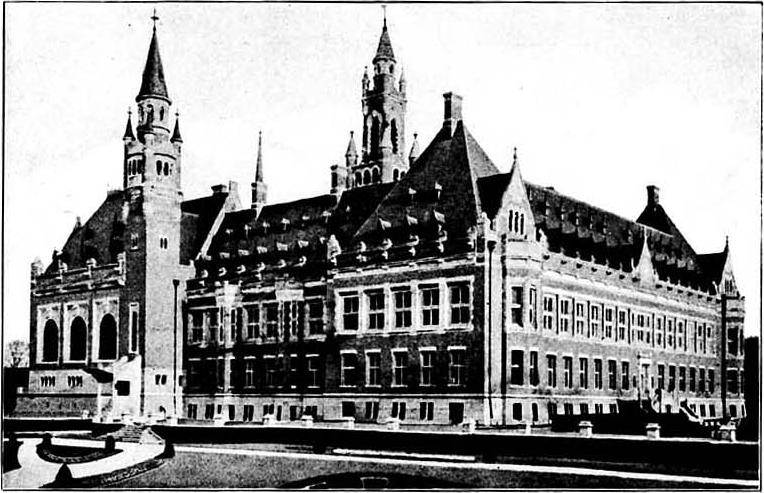
Germany is nearly unique among large nations in having no active territorial or maritime disputes — an outcome bought at great historical cost and sealed deliberately. The 1990 Treaty on the Final Settlement (the 'Two Plus Four' agreement) fixed Germany's borders as final, and Germany's separate treaty with Poland that year definitively recognized the Oder–Neisse line, renouncing any claim to former eastern territories. Its maritime boundaries in the North Sea were settled decades ago; indeed, Germany helped make legal history there — the North Sea Continental Shelf cases it brought against Denmark and the Netherlands produced the ICJ's landmark 1969 judgment establishing equitable principles for dividing continental shelves, a foundation of modern maritime law. Germany's more recent appearances at the ICJ have concerned legal principle rather than territory: in Jurisdictional Immunities of the State (2012), the court upheld Germany's sovereign immunity against Italian court judgments arising from World War II, and in 2024 the court declined to order provisional measures in Nicaragua's case concerning German arms exports to Israel. In short: the borders are settled, and the disputes that remain are fought by lawyers in The Hague, not soldiers.
Land & Border Disputes, Germany
Anonymous (photographer) / Public domain
Land, Life & Legacy

Land & Climate

Germany covers about 357,000 square kilometres and falls into three broad belts running west to east. The North German Plain is low, sandy and glacially shaped, reaching the North Sea and the Baltic; the Frisian Islands and the tidal Wadden Sea, a World Heritage site, lie along the northwestern coast. The centre is the Mittelgebirge, a band of forested uplands including the Rhenish Massif, the Harz, the Thuringian Forest, the Black Forest and the Bavarian Forest, cut by steep river valleys such as the Rhine gorge between Bingen and Koblenz. In the far south the land rises through the Alpine foreland to the Bavarian Alps, where the Zugspitze at 2,962 metres is the highest point, and to Lake Constance on the Swiss and Austrian border. The rivers organise the country: the Rhine as the industrial artery past the Ruhr, the Elbe to Hamburg, the Main, the Oder along the Polish border, and the Danube, which rises in the Black Forest and flows east. The climate is temperate, oceanic in the northwest under Atlantic westerlies and increasingly continental eastward, with heavy flooding a recurring hazard, as in the Ahr valley in 2021.

Entertainment

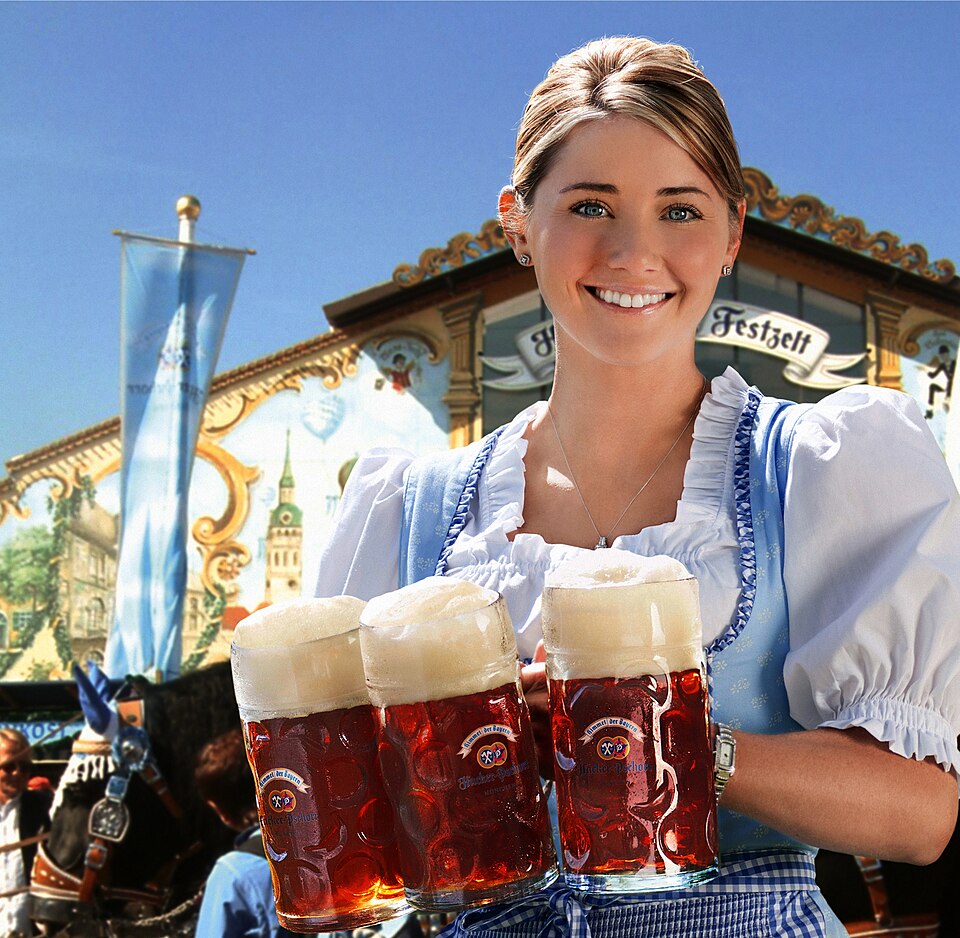
German leisure is famously organized: roughly one in three Germans belongs to a Verein, a registered club, whether for football, choral singing, carnival, or rabbit breeding. The beer garden is the great social equalizer, and Munich's Oktoberfest, held since 1810, draws some six million visitors to the Theresienwiese each autumn. Wandern — serious recreational hiking — sends millions onto waymarked trails through the Black Forest, the Harz, and the Bavarian Alps, while hundreds of thousands of allotment gardens give apartment dwellers their own hedged plots. The calendar supplies ritual: Cologne's Karneval erupts each February in costumed street parades, and winter brings the Christmas markets, led by Nuremberg's Christkindlesmarkt, that have become a national export. Berlin's techno club culture — added to Germany's national inventory of intangible cultural heritage in 2024 — anchors one of the world's storied nightlife scenes, and the castle-lined Upper Middle Rhine gorge, a UNESCO site, remains the classic tourist artery.
Entertainment, Germany
File:Hacker-Pschorr Oktoberfest Girl.jpg by Markburger83 Derivative work: Lauro Sirgado (talk · contribs) / CC BY-SA 3.0

Art & Museums

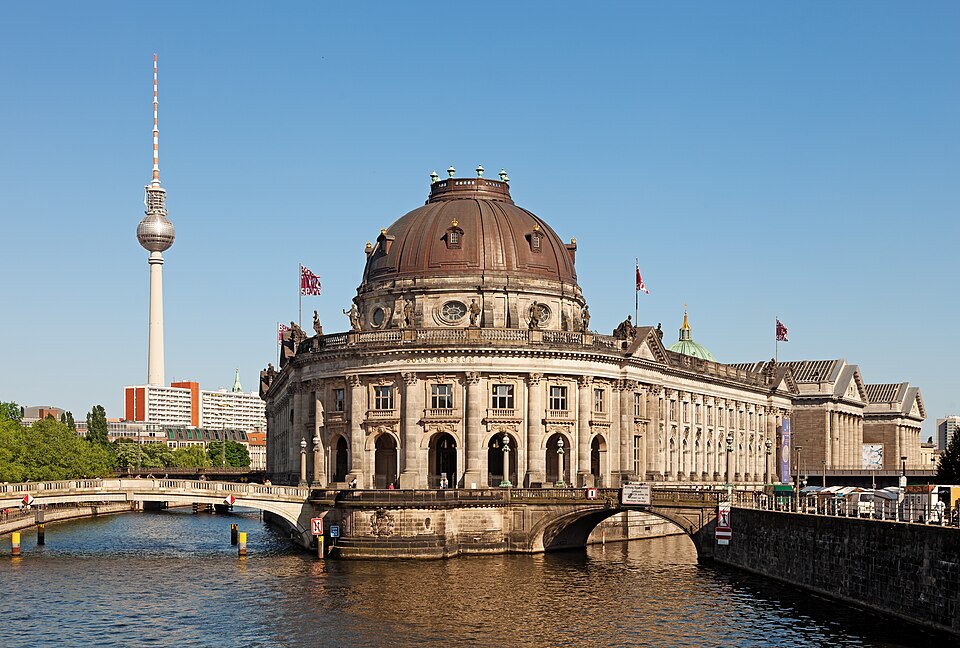
German art history moves in powerful pulses. Albrecht Durer made Nuremberg a Renaissance capital, his engravings and self-portraits setting a standard of northern precision, while Lucas Cranach and Hans Holbein defined the Reformation's visual world. Romanticism found its emblem in Caspar David Friedrich, whose Wanderer above the Sea of Fog still supplies the very image of the contemplative individual before nature. The early twentieth century detonated twice: the Brucke group founded Expressionism in Dresden in 1905, Der Blaue Reiter followed in Munich with Kandinsky and Franz Marc, and the Bauhaus school, opened at Weimar in 1919, reinvented design so thoroughly that its buildings are UNESCO-listed. Branded 'degenerate' by the Nazis, this modernism was purged, then rehabilitated as postwar Germany produced Joseph Beuys, Gerhard Richter, and Anselm Kiefer. Berlin's Museum Island — five museums on a UNESCO World Heritage site — and Kassel's documenta exhibition, held every five years, anchor the institutional landscape.
Art & Museums, Germany
Thomas Wolf, www.foto-tw.de / CC BY-SA 3.0

Notable People

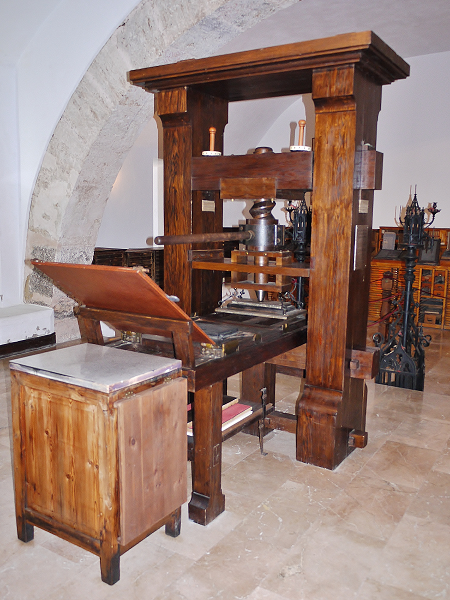
The roll call is almost unfairly deep. Johannes Gutenberg's printing press made mass literacy possible; Johann Wolfgang von Goethe stands as the national poet, with Friedrich Schiller beside him; Immanuel Kant reordered philosophy from Konigsberg; and Karl Marx, born in Trier, produced the nineteenth century's most consequential critique of capitalism. Music alone would secure the reputation: Bach, Beethoven, Brahms, and Wagner were all German-born. Science claims Alexander von Humboldt, Wilhelm Rontgen — winner of the first Nobel Prize in Physics in 1901 for discovering X-rays — Max Planck, and Ulm-born Albert Einstein. Thomas Mann won the 1929 literature Nobel; Marlene Dietrich conquered Hollywood. The contemporary era offers Angela Merkel, who led the federal republic for sixteen years as its first woman chancellor; BioNTech founders Ugur Sahin and Ozlem Tureci, whose mRNA vaccine reshaped the pandemic; and sporting icons from Franz Beckenbauer to Steffi Graf.
Notable People, Germany
Tsungam / CC BY-SA 4.0

Inventions & Breakthroughs

Germany's inventive record clusters around moments that changed daily life everywhere. Gutenberg's movable-type press, perfected at Mainz around 1450, is routinely ranked the most consequential invention of the past millennium. In 1885-86 Karl Benz built the first practical automobile while Gottlieb Daimler and Wilhelm Maybach developed the high-speed petrol engine; Rudolf Diesel added his compression-ignition engine in the 1890s. Wilhelm Rontgen's discovery of X-rays in 1895 opened modern medical imaging, and Bayer chemist Felix Hoffmann synthesized a stable form of aspirin in 1897. The Haber-Bosch process for fixing atmospheric nitrogen, industrialized before the First World War, underpins the fertilizer that feeds much of humanity. Konrad Zuse completed the Z3, arguably the first programmable digital computer, in Berlin in 1941; the Fraunhofer Institute developed the MP3 audio format in the 1990s; and BioNTech's mRNA COVID-19 vaccine, created in Mainz, extended the tradition into the 2020s.
Inventions & Breakthroughs, Germany
Graferocommons / CC BY-SA 3.0

Science & Technology

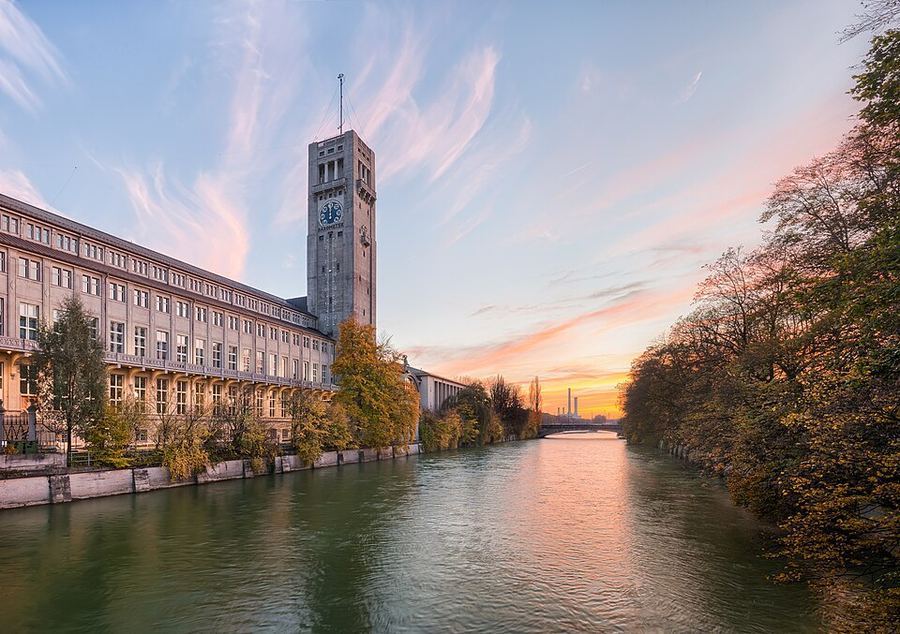
Germany's research system is unusually institutionalised, built on four pillars: the Max Planck Society for basic science, the Fraunhofer Society for applied work, the Helmholtz Association for large facilities and the Leibniz Association, funded alongside the universities through the DFG. The historical record is formidable: Wilhelm Röntgen's discovery of X-rays won the first Nobel Prize in Physics in 1901, Max Planck and Werner Heisenberg founded quantum theory, Albert Einstein worked in Berlin, Otto Hahn and Lise Meitner's collaboration produced nuclear fission, and the Haber-Bosch process for synthesising ammonia made industrial fertiliser possible. Applied research continues to pay off commercially: Fraunhofer engineers co-developed the MP3 audio coding format. Industry remains the country's economic core, in automobiles, machine tools, chemicals and electrical engineering, alongside SAP in enterprise software. In 2020 BioNTech of Mainz, founded by Uğur Şahin and Özlem Türeci, produced with Pfizer the first authorised mRNA vaccine against COVID-19. Large facilities include the Wendelstein 7-X stellarator at Greifswald and DESY in Hamburg with the European XFEL.
On The World Stage
Champions of Germany

Champions & Defining Moments

Germany is one of football's true superpowers: four men's FIFA World Cup titles — the 1954 'Miracle of Bern' upset of Hungary, then 1974, 1990, and 2014, sealed by Mario Gotze's extra-time winner after a 7-1 semifinal demolition of host Brazil — plus women's World Cup victories in 2003 and 2007, making Germany the only nation to have won both the men's and women's tournaments. The Olympic record includes hosting Berlin 1936 and Munich 1972 and consistent medal-table strength, with winter dominance in luge and biathlon so complete it approaches monopoly. Individual legends abound: Steffi Graf's 1988 'Golden Slam' — all four majors plus Olympic gold in a single year — remains unmatched by any player of either sex; Boris Becker won Wimbledon at seventeen; Michael Schumacher took seven Formula One world championships; and Dirk Nowitzki became the first European named NBA Most Valuable Player in 2007, then carried Dallas to the 2011 title.

Martin Falbisoner / CC BY-SA 4.0
Economy, Trade & Government

Currency & GDP

Euro — EUR (€)

GDP (PPP): $5.247 trillion (2024 est.)

Per capita: $62,800 (2024 est.)

Exports

$1.949 trillion (2024 est.)

cars, vehicle parts/accessories, packaged medicine, plastic products, vaccines (2023)

Partners: USA 10%, France 8%, Netherlands 7%, China 7%, Italy 6% (2023)

Imports

$1.774 trillion (2024 est.)

cars, vehicle parts/accessories, garments, natural gas, vaccines (2023)

Partners: China 12%, Netherlands 7%, USA 7%, Poland 6%, France 5% (2023)

Government

Type: federal parliamentary republic

Independence: 18 January 1871 (establishment of the German Empire); divided into four zones of occupation (UK, US, USSR, and France) in 1945 after World War II; Federal Republic of Germany (FRG or West Germany) proclaimed on 23 May 1949 and included the former UK, US, and French zones; German Democratic Republic (GDR or East Germany) proclaimed on 7 October 1949 and included the former USSR zone; West Germany and East Germany unified on 3 October 1990, with all four powers formally relinquishing rights on 15 March 1991; notable earlier dates: 10 August 843 (Eastern Francia established from the division of the Carolingian Empire); 2 February 962 (crowning of OTTO I, recognized as the first Holy Roman Emperor)

Terrain → Where People Live

How mountains, coasts, and rivers shape settlement (LandScan).

Coming — data

Migration & Ethnic Settlement

Where groups settled and how people move (GeoEPR + UNHCR).

Coming — data

Universities

Notable institutions, mappable as points.

Coming — data
Economy & government facts: CIA World Factbook (public domain), via OpenFactBook / factbook.json.
Every fact and narrative claim will carry a visible source citation. Data-driven sections light up automatically wherever HERA has coverage.