HERA · Human Entity Reference Atlas by Masego Inc

← Djibouti 🌐 3D View
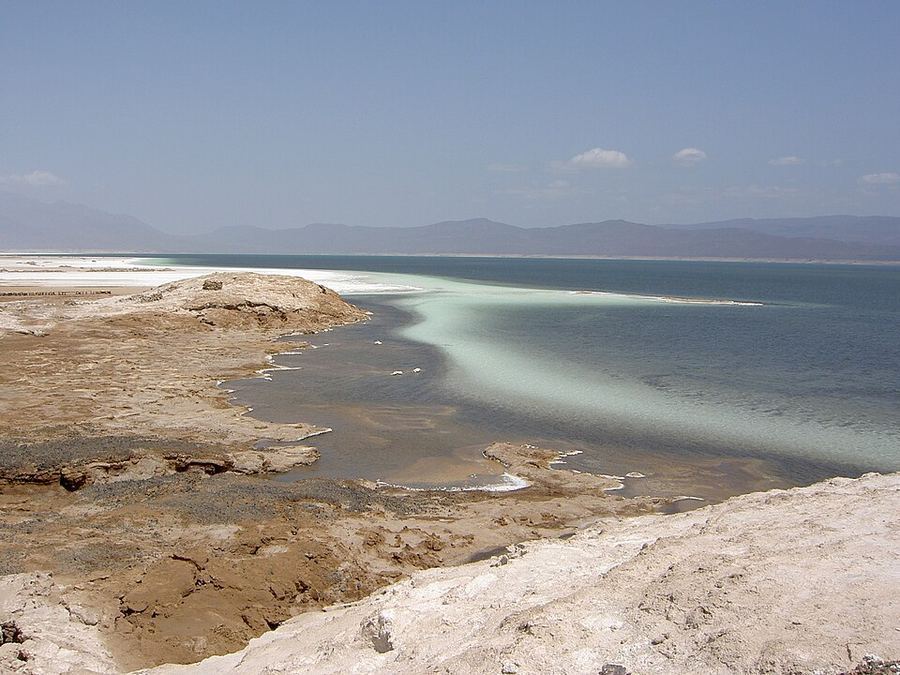
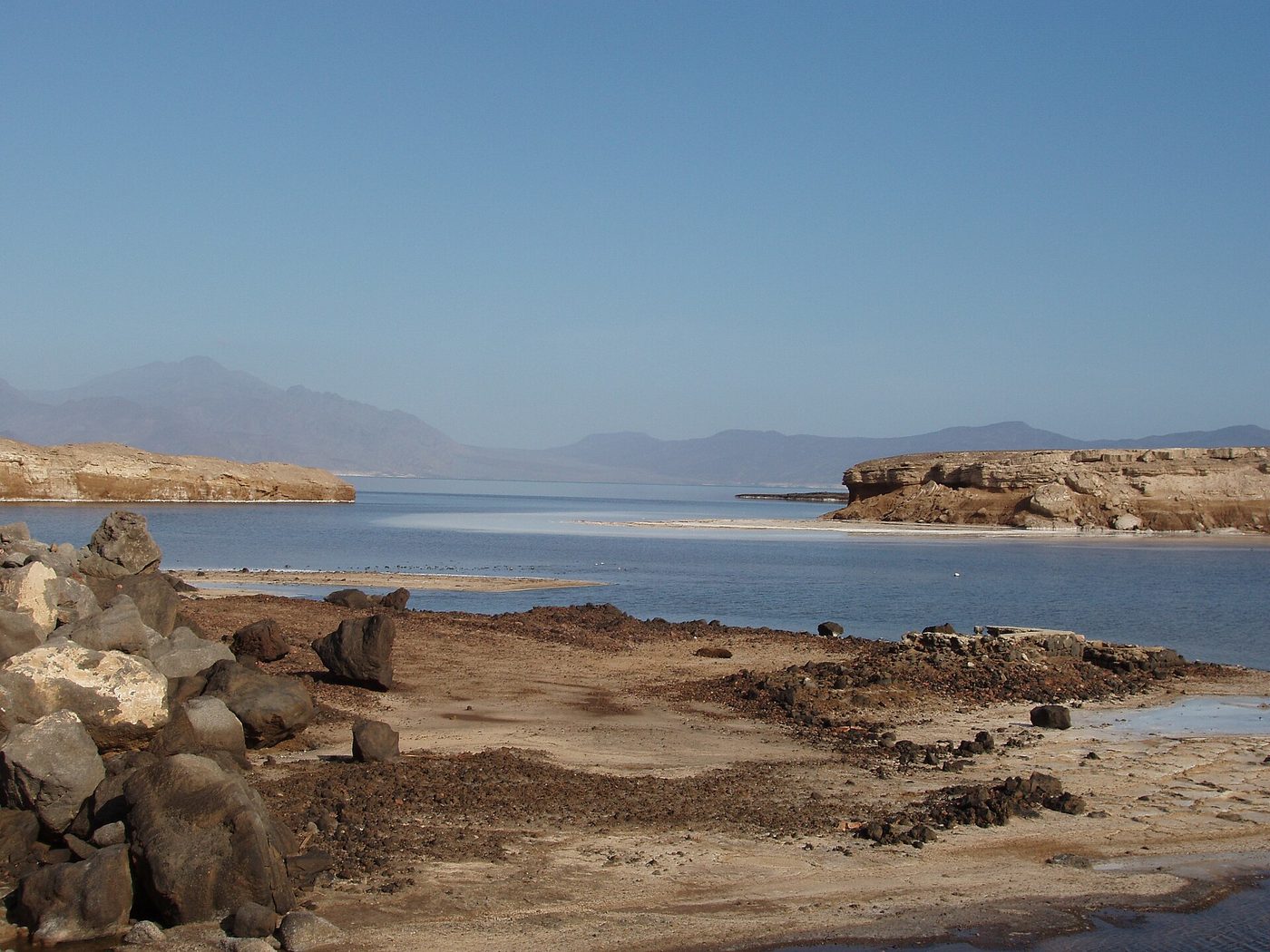
Lake Assal 1-Djibouti, Djibouti
Djibouti DJI
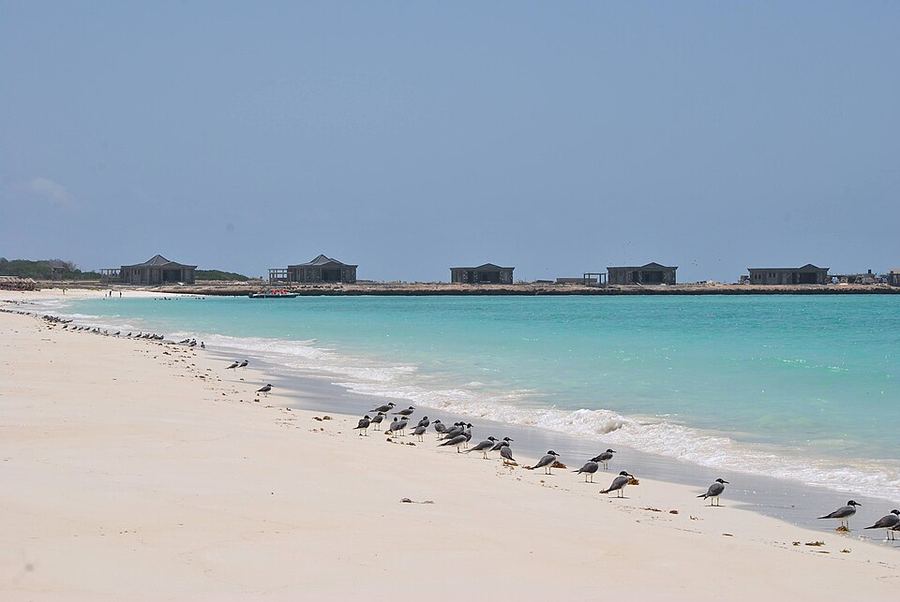
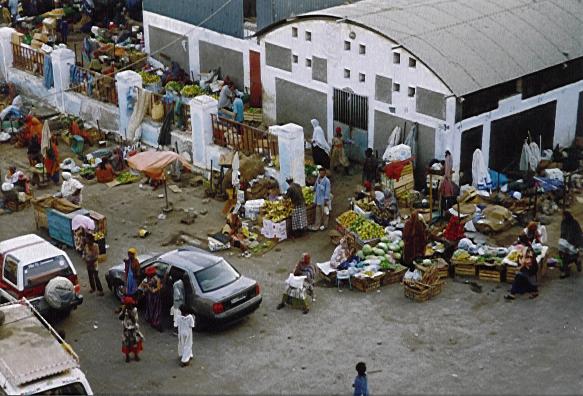
Lake Assal 1-Djibouti — Photo: Fishercd / Public domain via Wikimedia Commons
Did You Know Lake Assal lies 155 metres below sea level, making it the lowest point in Africa, and its salt crust has been cut and carried by Afar caravans into the Ethiopian highlands for centuries. — CIA World Factbook

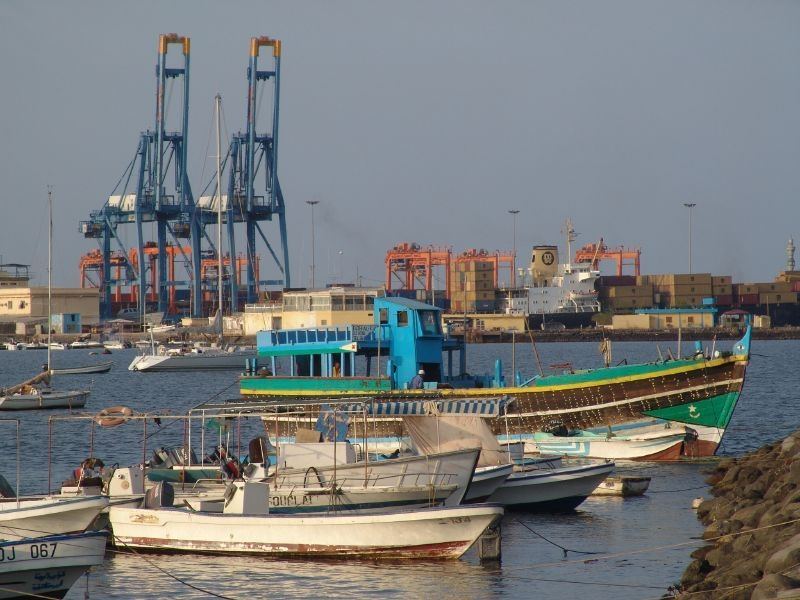
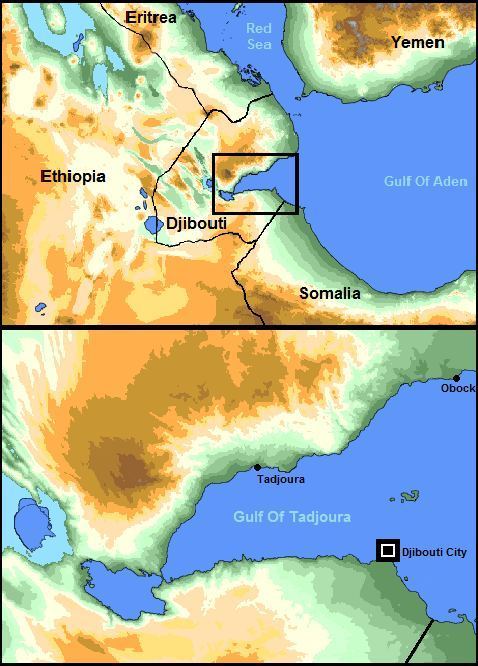
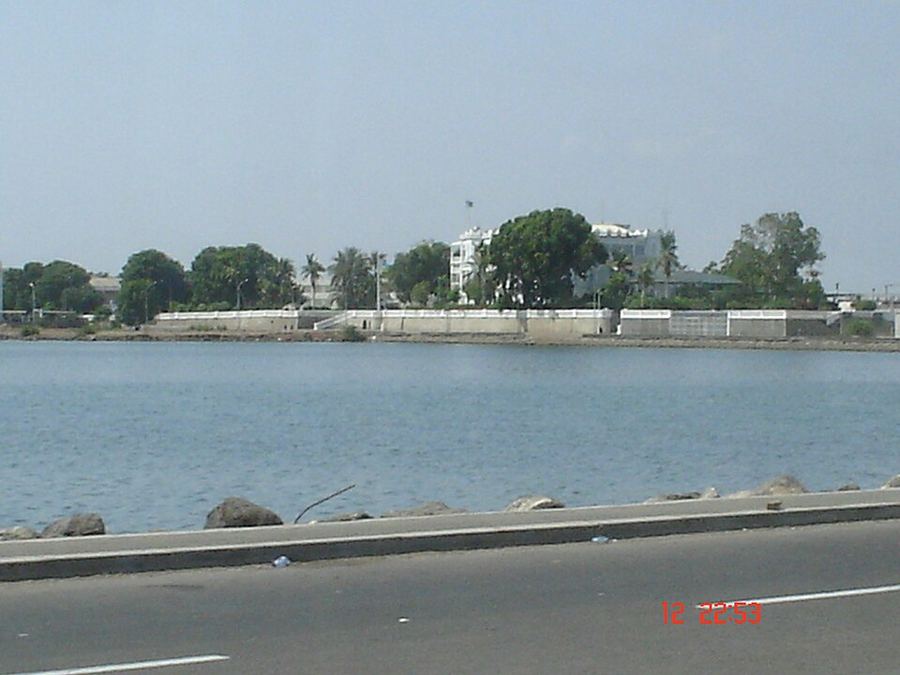
Djibouti is a small, hot and strategically placed republic of just over a million people at the point where the Red Sea narrows into the Bab el-Mandeb strait and opens onto the Gulf of Aden. It occupies about 23,200 square kilometres of desert, salt flat and volcanic rift between Eritrea, Ethiopia and Somalia, and roughly three-quarters of its population lives in the capital, also called Djibouti. The country gained independence from France on 27 June 1977 and has had only two presidents since — Hassan Gouled Aptidon, and Ismail Omar Guelleh, in office since 1999. Its population is about 60% Somali, principally of the Issa clan, and 35% Afar, and it is 94% Sunni Muslim; French and Arabic are the official languages, with Somali and Afar spoken at home. Djibouti has almost no agriculture, minerals or industry, and its economy rests almost entirely on its geography: the ports and rail corridor that carry the overwhelming majority of landlocked Ethiopia's trade, and the rent from foreign military bases. Ethiopia takes 77% of its exports.

CIA World FactbookEncyclopaedia Britannica
Population
1,013,703
Capital
Djibouti
Currency
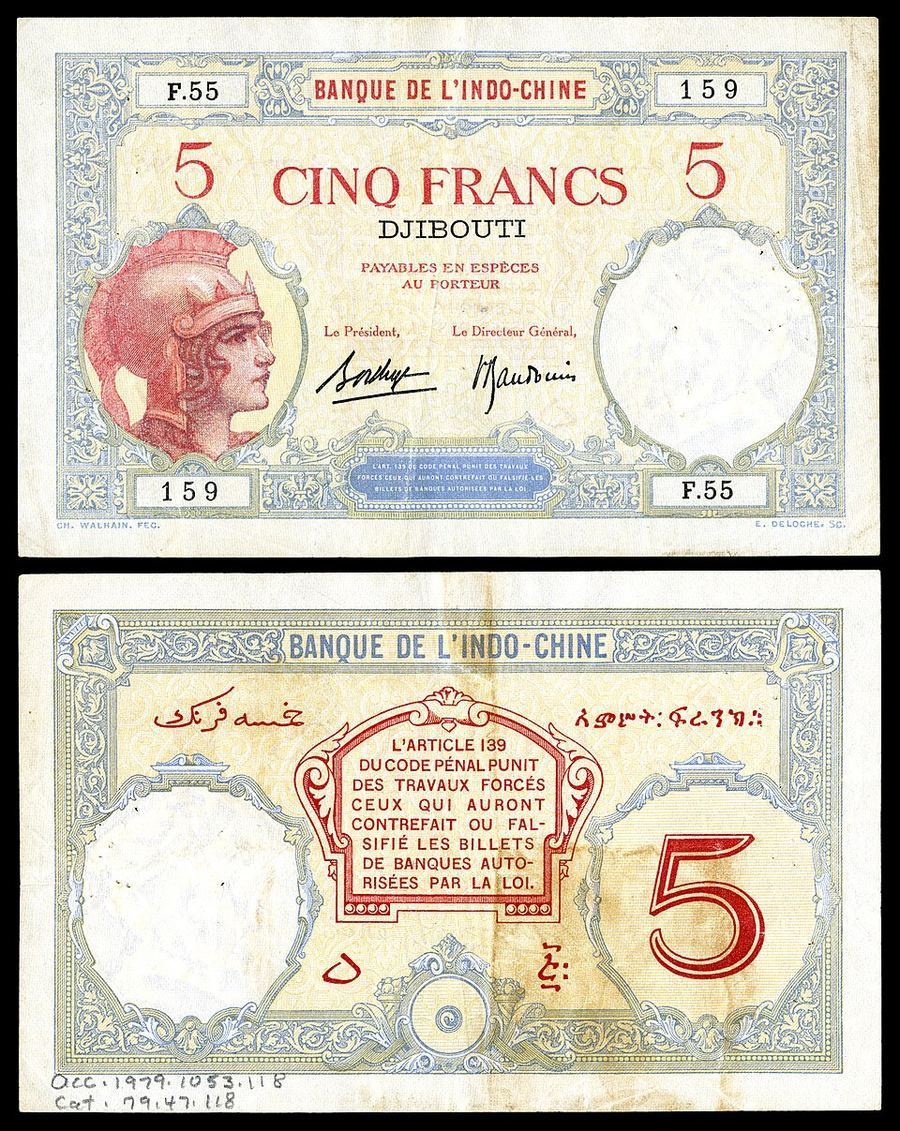
Fdj DJF
Time zones
Largest city
Djibouti
Human Geography Themes
Loading national figures…
Largest Cities
Djibouti735,132
Ali Sabieh86,781
Tadjoura62,279
In Perspective

Djibouti's urban core is home to about 735,132 people.

Among the world's megacities, though, it's one of many — the giants of Asia and Latin America run larger still:

Djibouti735,132
Jakarta40,545,126
Dhaka37,307,160
Tokyo33,244,670
Shanghai30,678,616
Cairo25,230,325
The Country & Its People

History

The territory's people were drawn into the Red Sea trading world early; Islam reached the coast within the first centuries of the faith, and the Afar sultanates of Tadjoura, Rahayto and Gobaad, together with the Issa Somali clan structures, governed the region before European arrival. France established a foothold in 1862 by purchasing the anchorage at Obock from Afar sultans, formalised the protectorate of French Somaliland in the 1880s, and moved the capital to the new port of Djibouti in 1892 because of its deeper harbour. The decisive colonial project was the railway to Addis Ababa, begun in 1897 and completed in 1917, which bound the port to the Ethiopian highlands and set the pattern the economy still follows. After a contested referendum in 1967 the colony was renamed the French Territory of the Afars and the Issas, and independence followed on 27 June 1977 under Hassan Gouled Aptidon. A civil war between the government and the largely Afar Front for the Restoration of Unity and Democracy ran from 1991, ending in peace agreements in 1994 and 2001. Ismail Omar Guelleh succeeded his uncle as president in 1999.
Culture

Djiboutian culture is built from two closely related pastoral traditions, Somali and Afar, overlaid by Arab trading contact and a century of French administration. Both communities are historically nomadic or semi-nomadic herders of camels, goats and sheep, and both organise social life through clan lineage, elder mediation and customary law — xeer among the Issa, madqa among the Afar — that still operates alongside the formal courts. Oral poetry carries the prestige that written literature carries elsewhere: Somali verse forms such as the gabay, composed and memorised rather than written, function as argument, news, courtship and political commentary, and Afar poetry serves comparable purposes. The central daily ritual is khat, the mildly stimulant leaf flown and trucked in from Ethiopia each morning and chewed through the afternoon in the mabraz, a session that structures male social life and absorbs a substantial share of household spending. Islam shapes the calendar, and hospitality obligations towards travellers and kin are strongly held.

Points Of Pride

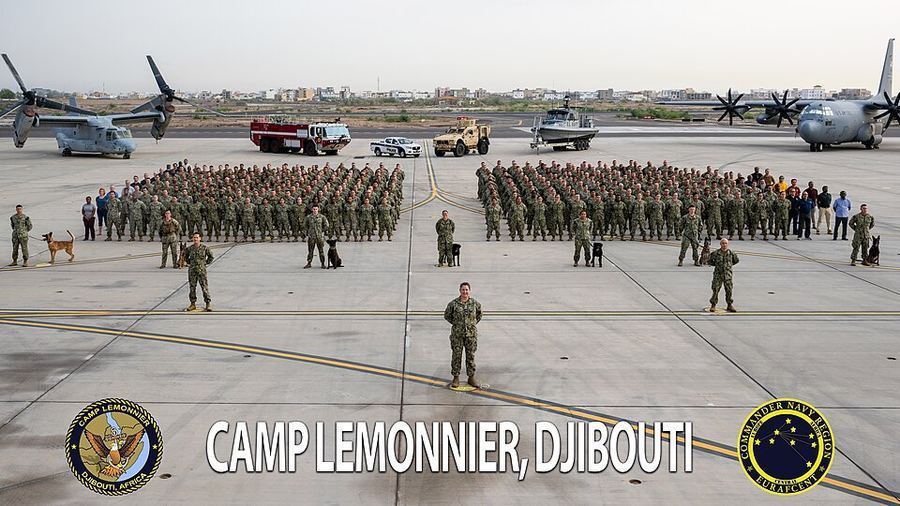
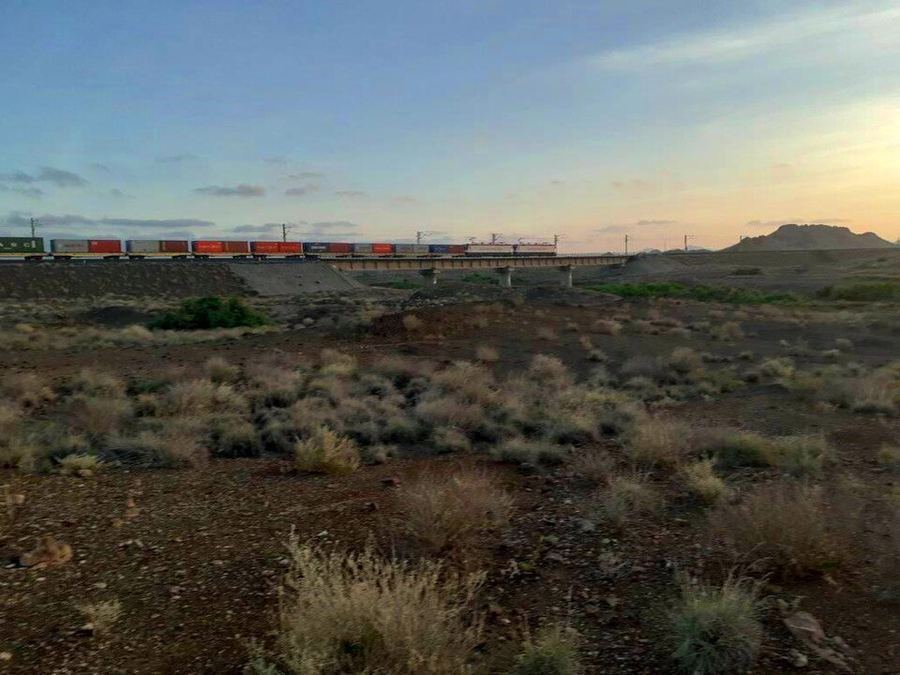
Djiboutians point first to a location that has made a country with almost no natural resources indispensable. The port complex at Djibouti and Doraleh handles the great majority of Ethiopia's foreign trade, serving a landlocked neighbour of well over a hundred million people, and the electrified standard-gauge railway to Addis Ababa that opened in January 2018 replaced the French line of 1917 on the same strategic logic. The country hosts military installations of the United States, France, Japan, Italy and China simultaneously and has managed those relationships without letting any of them destabilise it. Djibouti has also made itself a diplomatic venue: it hosts the headquarters of the Intergovernmental Authority on Development, the eastern African regional bloc, and the conference it convened at Arta in 2000 produced Somalia's first transitional national government after a decade of collapse. Physically, Lake Assal, at 155 metres below sea level, is the lowest point in Africa and one of the saltiest bodies of water on earth.

Cultural Fusion

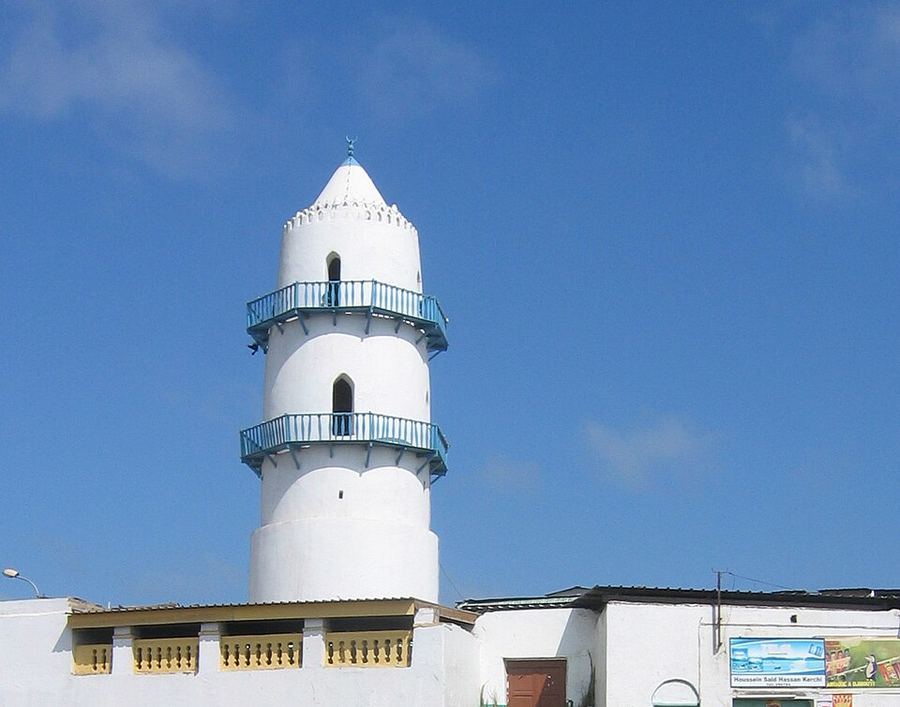
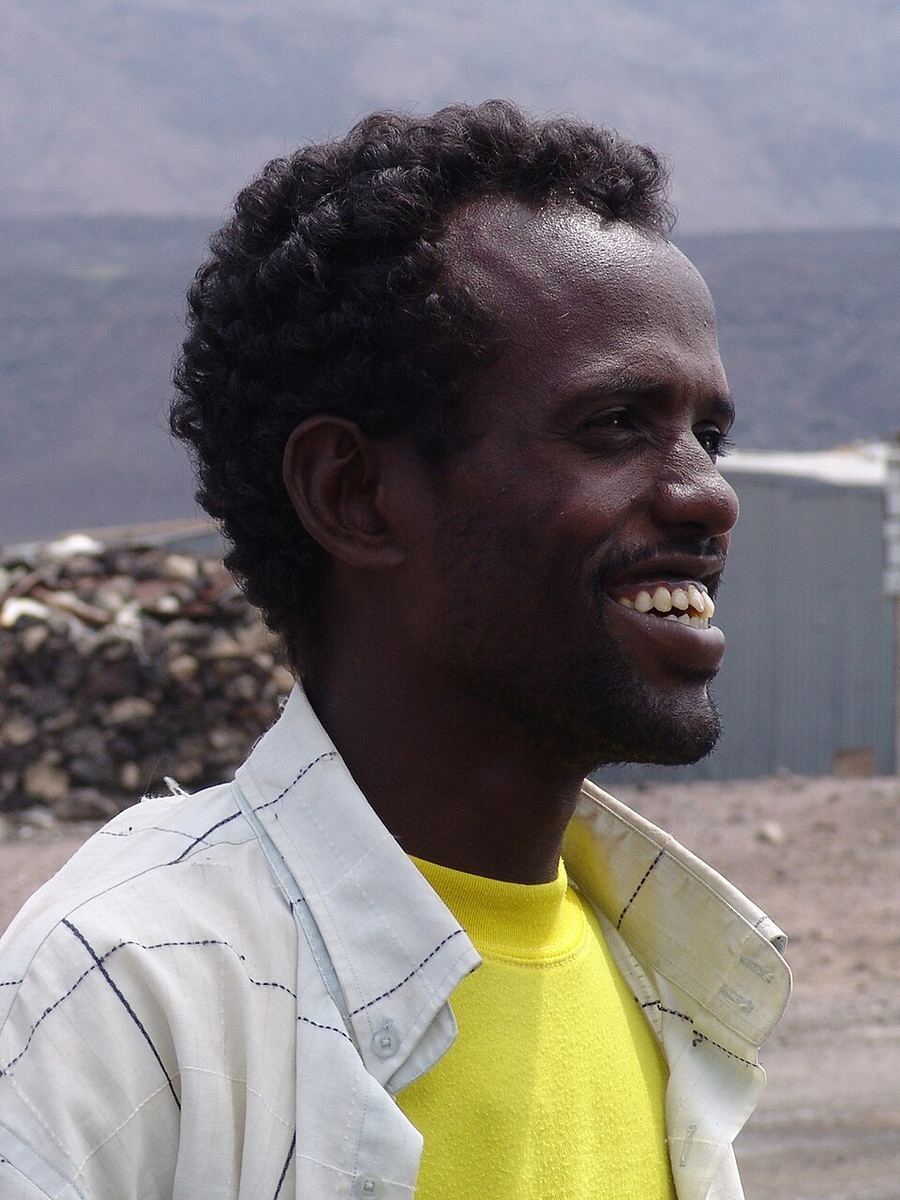
Djibouti's defining internal relationship is between the Somali Issa, about 60% of the population and concentrated in the south and the capital, and the Afar, about 35% and dominant in the north and west around Tadjoura and Obock. The two share Islam, a Cushitic language family and a pastoral inheritance, but the balance between them has been the country's central political question since independence, and it was the substance of the 1991-94 civil war; power-sharing conventions now reserve senior offices along community lines. Layered on this is a long-standing Yemeni Arab merchant presence on the coast, which brought Arabic, trading networks and the tandoor-baked fish now regarded as a local speciality, and an Ethiopian community tied to the trade corridor. French rule left the administrative language, the legal framework, the baguette and a lasting French military presence. The capital is unusually cosmopolitan for its size because of the foreign bases and the shipping industry, with American, French, Japanese, Italian and Chinese personnel alongside Somali, Ethiopian and Yemeni communities.

Music & Dance

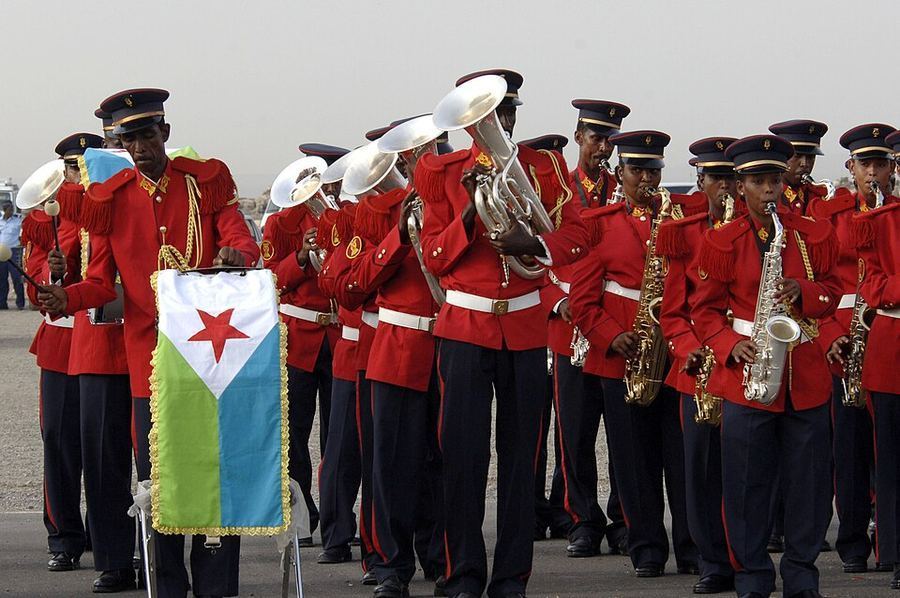
Djiboutian music draws on Somali and Afar song traditions and on the wider Red Sea world, mixing the pentatonic melodic sense of the Horn with Arab modal music, the oud and, since the mid-twentieth century, electric instruments and brass. State patronage shaped the modern scene: 4 Mars, the orchestra named for the date the ruling party was founded, became the country's flagship ensemble after independence, and the band of Radiodiffusion Television de Djibouti developed a distinctive style blending Somali and Afar melody with reggae and funk rhythms and Bollywood-inflected keyboard lines. Because the state broadcaster held effective control of recording, very little Djiboutian music circulated abroad until the album The Dancing Devils of Djibouti, recorded with Groupe RTD and released internationally in 2020, brought it to a wider audience. Dance is communal and performed at weddings and religious festivals, with line and circle forms, hand-clapping and drum patterns shared with Somali and Afar communities across the borders.

Cuisine & Misattributed Foods

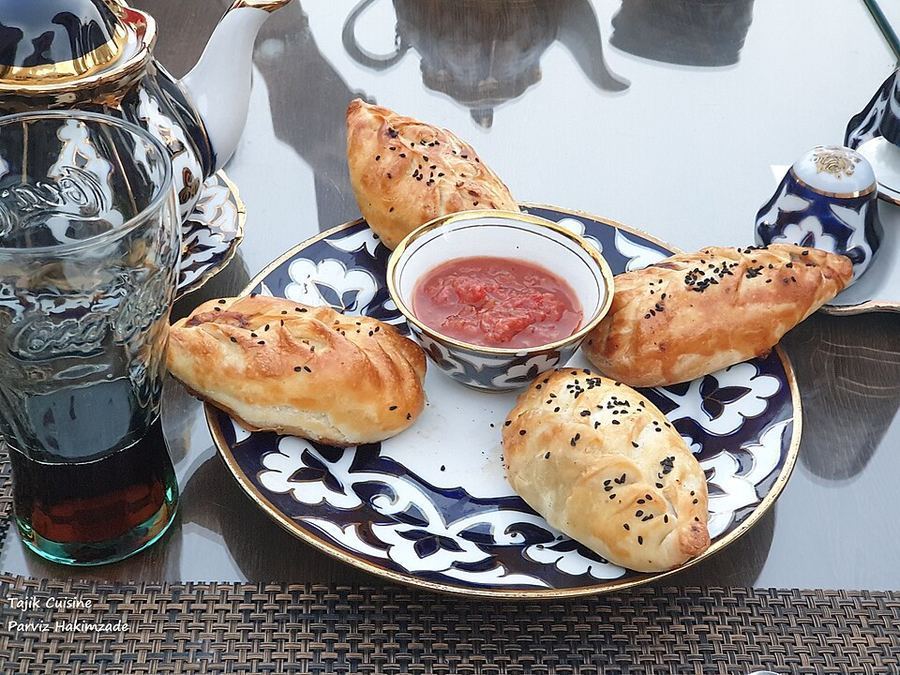
Djiboutian cooking sits between the Horn of Africa, Yemen and France. The dish most often named as national is skudahkharis, a one-pot rice with lamb or beef scented with cardamom, cumin and clove, cooked slowly and served communally. Fah-fah, a fiery broth of goat or beef with chilli and green pepper eaten with torn flatbread, is the everyday restaurant staple. Bread comes as lahoh, a spongy fermented sorghum or wheat pancake related to Ethiopian injera and Somali canjeero, and equally as French baguette, a colonial inheritance that never left. Yemeni influence is strongest in the fish: whole grouper or snapper rubbed with spice and baked upright against the wall of a clay tandoor is the signature dish of the capital's seafront restaurants. Sambusas, fried pastry triangles of spiced meat or lentil, are ubiquitous at Ramadan. Tea is drunk heavily sweetened with cardamom and cinnamon, and the afternoon khat session is as much a part of consumption habits as any meal.

National Dress

Everyday dress reflects the heat and the two communities. Men across both groups commonly wear the macawiis, a sarong-like wrapped cotton cloth, with a light shirt and often a small embroidered cap; the Afar equivalent is the sanafil, and the traditional Afar male accessory is the jile, a broad curved dagger worn at the waist, which today appears mainly at ceremonies. Women wear the dirac, a long, light, semi-transparent voile or polyester dress worn over a full-length underskirt, with a shawl called a garbasaar draped over the shoulders and head; Afar women traditionally wear a wrapped cloth with a distinctive black head covering, and married women's headdresses differ from those of the unmarried. Silver and amber jewellery, heavy bangles and elaborately braided hairstyles carry status and marital information, and henna is applied to hands and feet for weddings and Eid. Western dress and Islamic modest dress are both common in the capital, and the abaya is widespread.

Sports & Inspiring Athletes

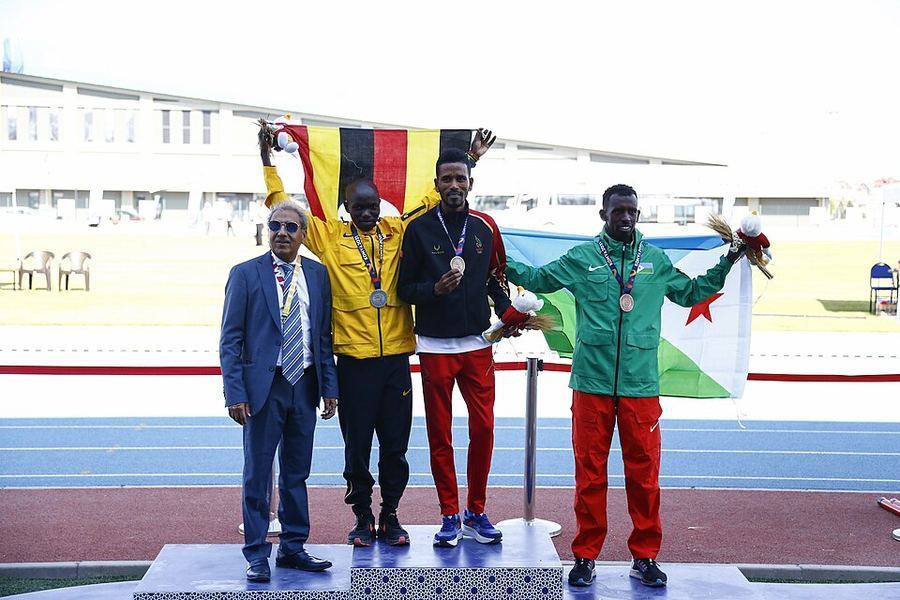
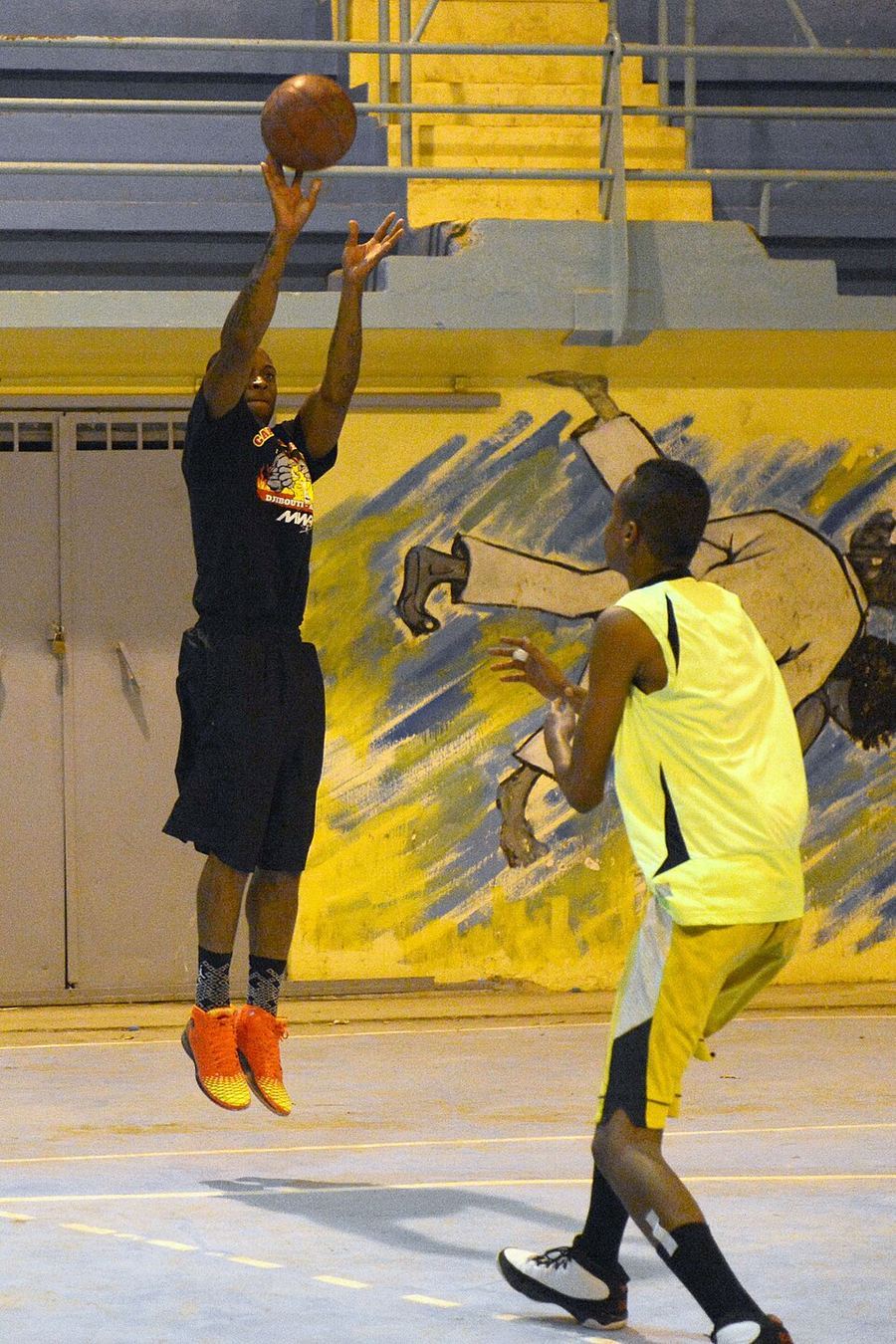
Football is the most widely played sport, run by the Djiboutian Football Federation with a national league centred on the capital and the Stade du Ville as the principal ground; the national side has never come close to qualifying for a World Cup or an Africa Cup of Nations, and its resources are among the slightest on the continent. The country's real sporting strength is in distance running, which it shares with its Ethiopian and Somali neighbours: the highlands to the west and a running culture built around a handful of clubs have produced marathon and middle-distance athletes far out of proportion to the population, and athletics is the discipline that carries national expectation at the Olympic Games. Basketball and volleyball are played in schools and at the military bases, and the foreign garrisons have introduced facilities and fixtures that local teams use. The sea supports sailing and sport fishing, largely for expatriates. Traditional pastimes include camel racing and the board game shax, played in the street with stones on a scratched grid.

Notable Educational Programs

Djibouti built its education system almost from nothing after independence, and the expansion since 2000 has been rapid from a very low base: primary enrolment has risen sharply, though completion, secondary transition and adult literacy remain among the weakest indicators in the region, and girls' participation lags in the rural Afar and Issa herding areas where schools are distant and pastoral households mobile. Instruction follows the French model and is delivered chiefly in French, with Arabic taught alongside it, which places a substantial language burden on children who speak Somali or Afar at home. Higher education is very young. The University of Djibouti was established in 2006, growing out of a university centre created in 2000, and is the country's only public university, offering law, economics, science, engineering and teacher training; before it existed, students went to France, Morocco or the Gulf. The Centre for Study and Research of Djibouti conducts the country's public scientific research, and technical training is increasingly geared to port and logistics employment.

Wars & Conflicts

Djibouti's own war was internal: fighting between the government and the Front for the Restoration of Unity and Democracy, drawing on Afar grievance over political exclusion, began in 1991 and was settled by agreements in 1994 and 2001 that brought FRUD into government. Since then the country's security profile has been shaped by other people's conflicts. It borders Somalia and has contributed troops to the African Union mission there; Ethiopia's wars and the 1998-2000 Eritrean-Ethiopian war both pushed trade and refugees through its territory; and it holds around 32,600 refugees, chiefly Somali, Ethiopian and Yemeni, the last arriving across the strait since 2015. Its harbour and airfield have made it the base for international counter-piracy operations in the Gulf of Aden, including EU NAVFOR Atalanta. Since late 2023, Houthi attacks on shipping in the Red Sea and Bab el-Mandeb have diverted vessels around the Cape of Good Hope, cutting the traffic on which Djibouti's port revenues depend and drawing naval operations to its doorstep.
Current as of 2026-08-06

Land & Border Disputes

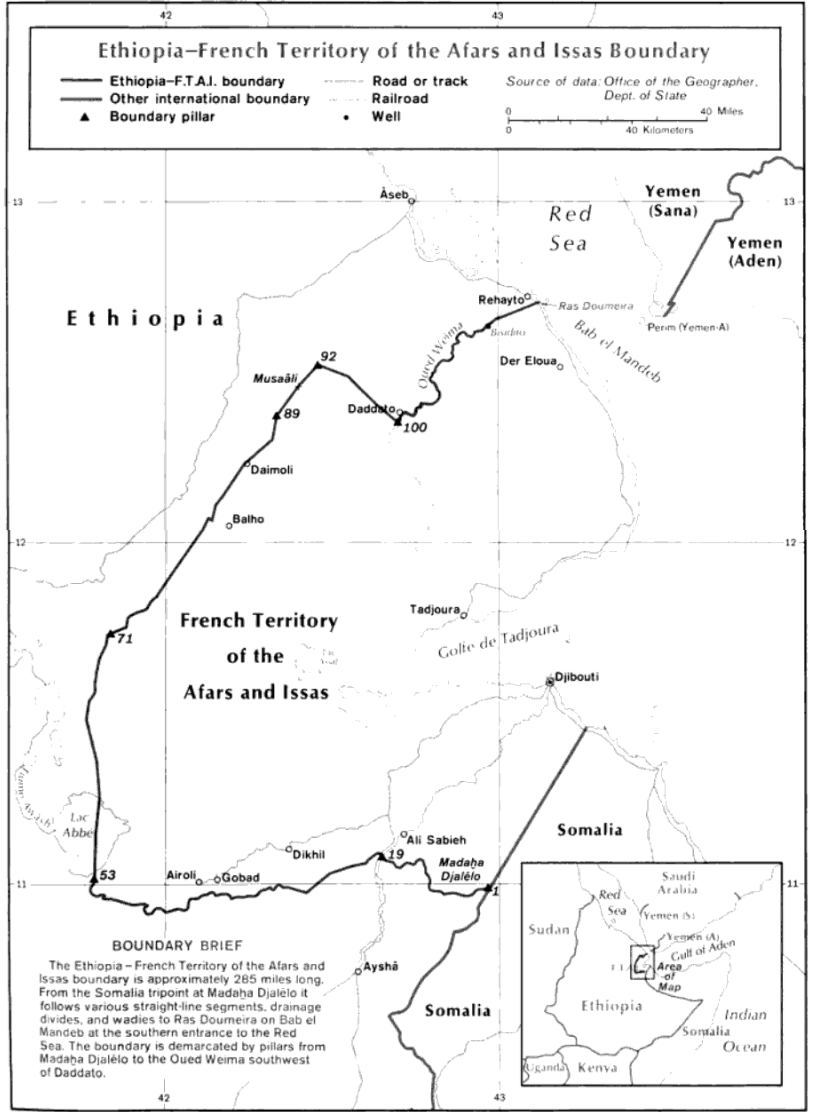
Djibouti's one live territorial dispute is with Eritrea over Ras Doumeira, a promontory on the Red Sea coast, and the small island of Doumeira offshore. Eritrean forces moved into the area and clashes broke out in June 2008, killing soldiers on both sides; Qatar mediated and deployed observers from 2010, and the dispute remained frozen rather than settled. When Qatar abruptly withdrew its monitors in June 2017 during the Gulf diplomatic crisis, both sides moved forces back towards the boundary, which remains undemarcated, and the question of Djiboutian soldiers held prisoner in Eritrea is unresolved. Djibouti's other major disputes are commercial and concern the assets on which the state depends: the government terminated DP World's concession over the Doraleh Container Terminal in 2018 and seized the facility, and the Dubai operator has since won a series of rulings in international arbitration that Djibouti has not implemented. Ethiopia's search for sovereign sea access, including its 2024 memorandum with Somaliland, is a further source of unease.
Land, Life & Legacy

Land & Climate

Djibouti sits astride the Afar Triple Junction, the point where the African, Somali and Arabian tectonic plates pull apart, which makes it one of the few places on land where an ocean basin can be watched forming. The resulting landscape is volcanic and extreme: the Gulf of Tadjoura cuts deep into the country from the east, and west of it lies Lake Assal, a hypersaline crater lake 155 metres below sea level — the lowest point in Africa — ringed by salt pans that Afar caravans have quarried for centuries. Lake Abbe on the Ethiopian border is studded with limestone chimneys venting steam. The Ardoukoba volcano erupted in November 1978, opening new fissures in the rift. The highest ground is Moussa Ali at about 2,028 metres on the Eritrean border, and the Goda mountains behind Tadjoura hold the relict juniper woodland of the Day Forest, a fragment of a much wetter past that is now in decline. The climate is among the hottest on earth, with almost no rainfall, and water scarcity and drought are chronic.

Entertainment

Leisure in Djibouti is organised around the sea, the afternoon and the cooler months. The Gulf of Tadjoura is the main draw: whale sharks gather in the bay off Arta and Ghoubbet el-Kharab between roughly November and February, and the concentration is one of the more reliable in the world, supporting a small but growing snorkelling and diving trade alongside the reefs and wrecks off the Musha and Maskali islands. Trips out to Lake Assal to see the salt flats and to Lake Abbe's steaming chimneys are the standard excursions, and the Day Forest in the Goda mountains offers the only cool, green walking in the country. In the capital, the working day is built around an early start, a long midday break through the worst heat, and the afternoon khat session, which is the principal male social activity. Football on any available ground, seafront promenading along the corniche in the evening, café life inherited from the French, and weddings that run for days fill out the rest.

Art & Museums

Djibouti's artistic traditions are predominantly verbal, textile and functional rather than pictorial, which follows both from Islamic convention and from a mobile pastoral life in which portable goods matter more than permanent ones. The strongest craft forms are woven and plaited fibre — mats, food covers and the panels used in the Afar and Somali portable dwelling — along with basketry, leatherwork, carved wooden headrests and milk vessels, and silver jewellery. Rock art gives the country its oldest images: engraved and painted panels in sites such as Balho and Abourma in the north depict cattle, hunters and long-horned herds from a period when the region was far wetter, and they constitute the most significant archaeological art in the country. Contemporary visual art is a small scene centred on the capital, supported by the French Institute of Djibouti, which provides most of the exhibition space and cultural programming. The country's best-known creative export is literary: Abdourahman Waberi, who writes in French, is Djibouti's most internationally recognised author.

Notable People

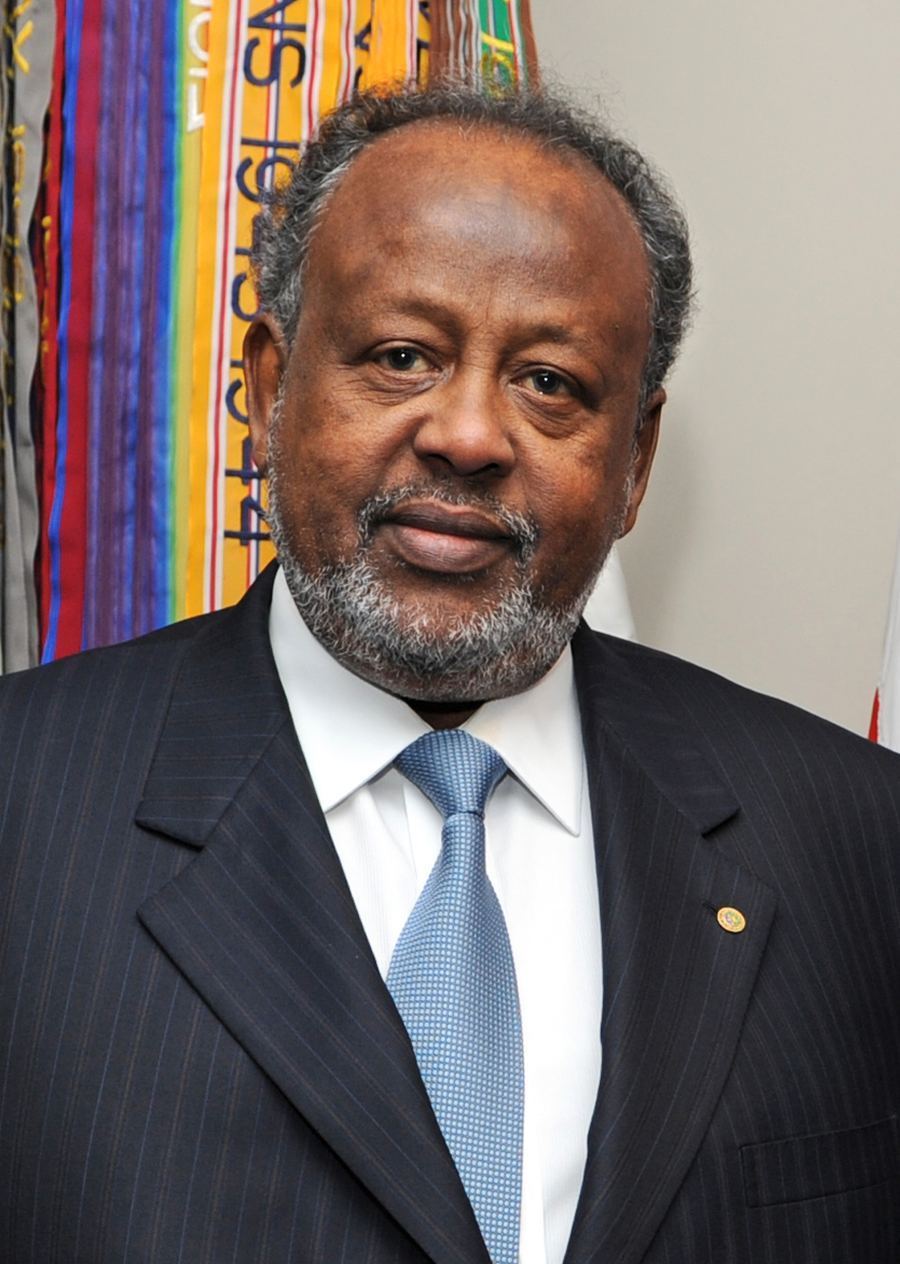
Hassan Gouled Aptidon led Djibouti to independence in 1977 and served as its first president until 1999, when he was succeeded by his nephew Ismail Omar Guelleh, who remains in office. The country's best-known writer is Abdourahman Waberi, a novelist and essayist working in French whose books, including a satirical inversion of global inequality set in a prosperous Africa, have been widely translated and who has taught in the United States. Its most celebrated athlete is Hussein Ahmed Salah, who won the bronze medal in the marathon at the 1988 Seoul Olympics — the only Olympic medal Djibouti has ever won — after taking the World Cup marathon title in 1985. Ayanleh Souleiman carried the middle-distance tradition forward, winning the world indoor 1,500 metres title in 2014 and a world championship bronze over the same distance in 2013, and setting an indoor 1,000 metres world best. Given the small population and the recency of independence, much of the national pantheon is composed of clan leaders, poets and sultans remembered orally rather than through published record.

Inventions & Breakthroughs

Djibouti is not a source of patented technology, and it would be misleading to claim otherwise; its contributions are adaptive techniques worked out for one of the harshest inhabited environments on earth. The oldest is the salt economy of Lake Assal, where Afar workers have cut and shaped salt from the crust for centuries and moved it by camel caravan into the Ethiopian highlands, where amole salt bars circulated as currency well into the modern era. Pastoral technology is the other genuinely local body of knowledge: the portable Afar and Somali dwelling, framed in bent saplings and covered in woven mats, can be struck, loaded and re-pitched in hours, and herd management strategies spreading camels, goats and sheep across different water and browse cycles represent centuries of accumulated drought engineering. On the coast, the Red Sea dhow-building and navigation tradition connected the ports to Arabia and India. Modern Djibouti's distinctive contribution is organisational rather than technical: the deliberate construction of a national economy out of transit logistics, port concessions and base leases.

Science & Technology

Djibouti's scientific significance is mostly geological and its technological effort mostly energy and connectivity. The Afar rift is one of the world's principal natural laboratories for the study of continental break-up, and international teams monitor the faulting, volcanism and seafloor-spreading processes visible on land there. That same geology offers the country its clearest development opportunity: the Assal rift holds substantial geothermal potential, and exploratory drilling in the Fiale caldera, supported by the World Bank and other partners, has tested whether it can be brought into production. Djibouti has committed to a fully renewable electricity supply and commissioned its first utility-scale wind farm, a 60 MW project at Ghoubet near Lake Assal, in 2023, with solar projects at Grand Bara in development. The country's other technical asset is digital: it sits at a landing point for many of the submarine cables linking Europe, the Gulf, East Africa and Asia, and Djibouti Telecom's data centre functions as a regional carrier interconnection hub.
On The World Stage

Champions & Defining Moments

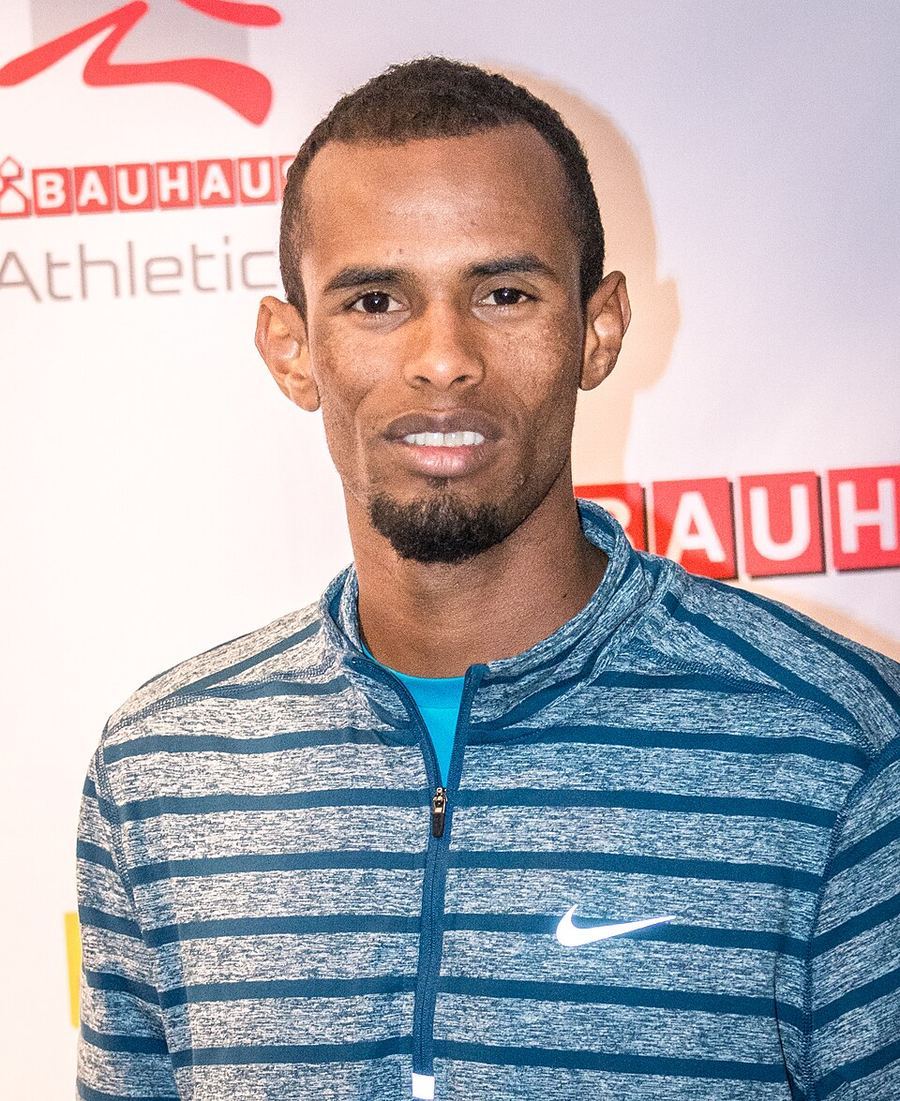
Djibouti has competed at the Olympic Games since Los Angeles in 1984 and has won a single medal: Hussein Ahmed Salah's bronze in the marathon at Seoul in 1988. Salah was, for a period in the mid-1980s, among the best marathon runners in the world, winning the 1985 World Cup marathon and finishing on the podium at major city races, and his career established distance running as the country's international calling card. Ayanleh Souleiman became the second Djiboutian to reach the global top rank, taking bronze in the 1,500 metres at the 2013 World Championships in Moscow, winning the world indoor 1,500 metres title in Sopot in 2014, and setting an indoor world best over 1,000 metres. Beyond athletics, Djibouti's international sporting presence is negligible: the football team competes in CECAFA and African qualifying without success, and the delegation to each Olympic Games numbers only a handful of athletes, usually runners and a swimmer entered under universality places.

IOCWorld AthleticsFIFA
Economy, Trade & Government

Currency & GDP

Djibouti Franc — DJF (Fdj)

GDP (PPP): $7.995 billion (2024 est.)

Per capita: $6,800 (2024 est.)

Exports

$5.25 billion (2024 est.)

raw sugar, seed oils, cars, palm oil, rice (2023)

Partners: Ethiopia 77%, UAE 5%, China 3%, Singapore 2%, France 2% (2023)

Imports

$4.765 billion (2024 est.)

refined petroleum, palm oil, fertilizers, cars, seed oils (2023)

Partners: China 32%, India 12%, UAE 10%, Turkey 6%, Morocco 5% (2023)

Government

Type: presidential republic

Independence: 27 June 1977 (from France)

Terrain → Where People Live

How mountains, coasts, and rivers shape settlement (LandScan).

Coming — data

Migration & Ethnic Settlement

Where groups settled and how people move (GeoEPR + UNHCR).

Coming — data

Universities

Notable institutions, mappable as points.

Coming — data
Economy & government facts: CIA World Factbook (public domain), via OpenFactBook / factbook.json.
Every fact and narrative claim will carry a visible source citation. Data-driven sections light up automatically wherever HERA has coverage.