HERA · Human Entity Reference Atlas by Masego Inc

← Dominica 🌐 3D View
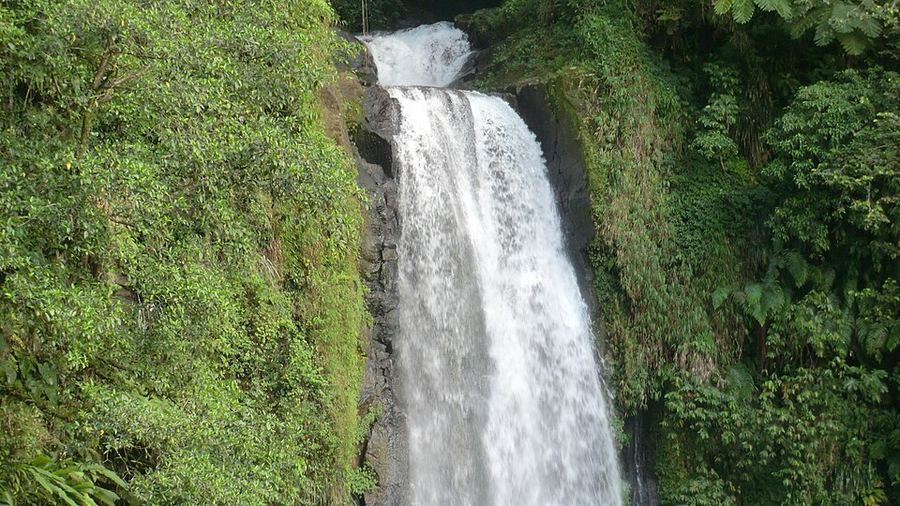
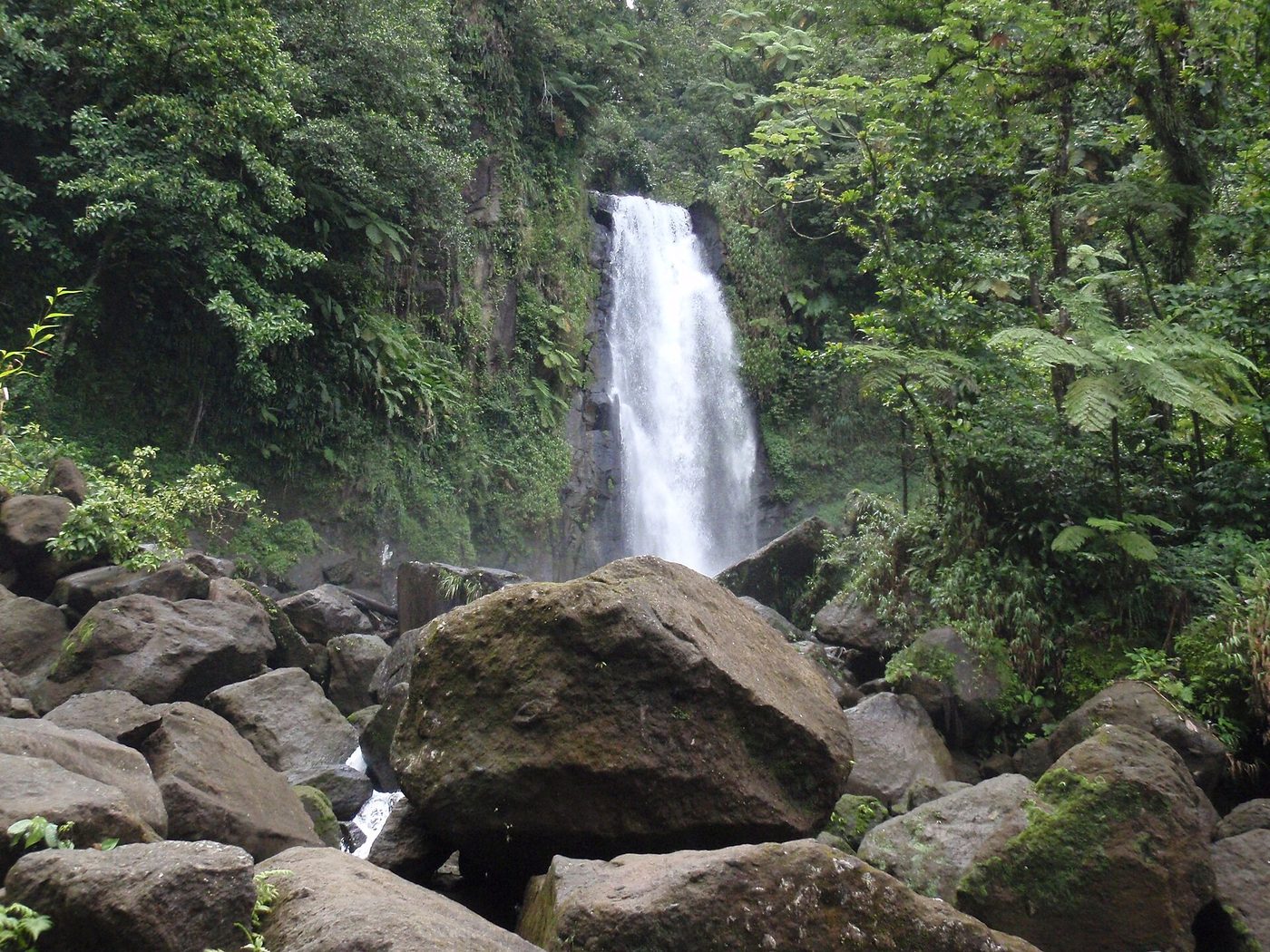
Trafalgar Falls at Morne Trois Pitons National Park, Dominica
Dominica DMA
Trafalgar Falls at Morne Trois Pitons National Park — Photo: Nelro ( talk ) / Public domain via Wikimedia Commons
Did You Know Two unrelated creole languages are spoken on this one small island: French-based Kwéyòl almost everywhere, and English-based Kokoy in the north-eastern villages of Marigot and Wesley. — Glottolog

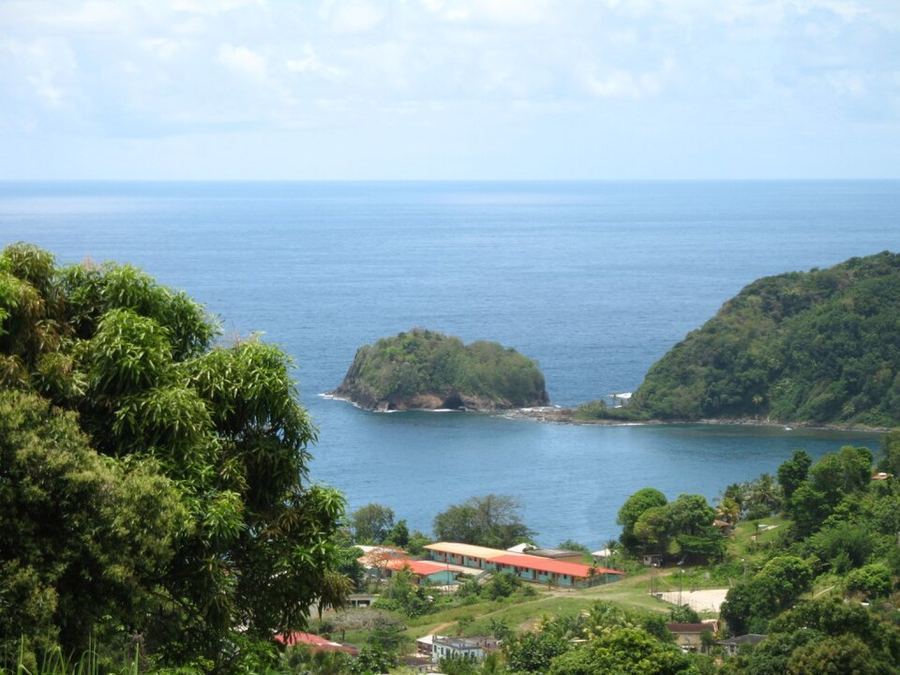
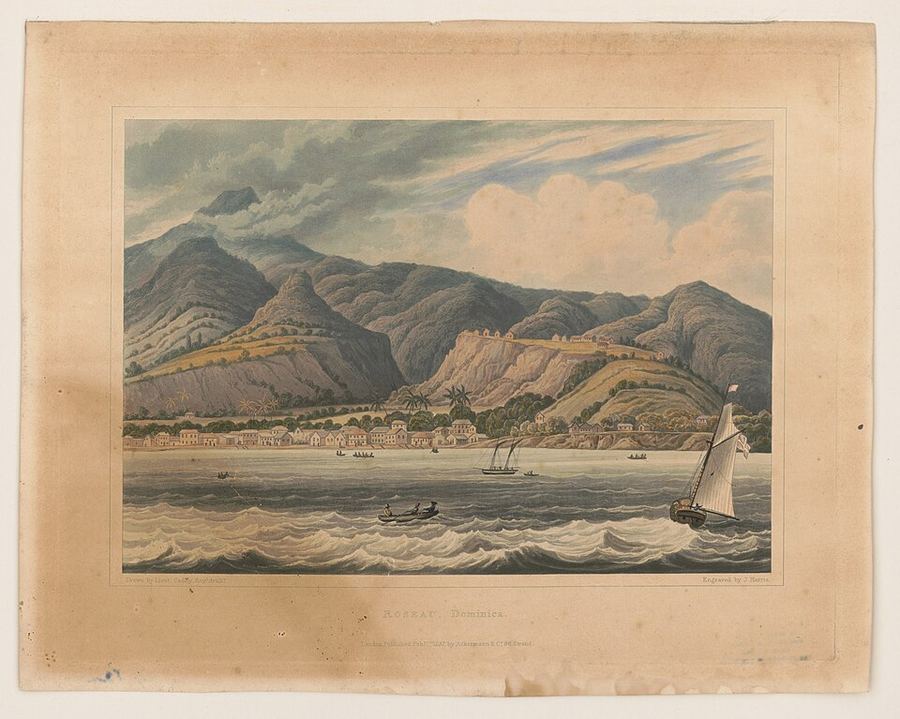
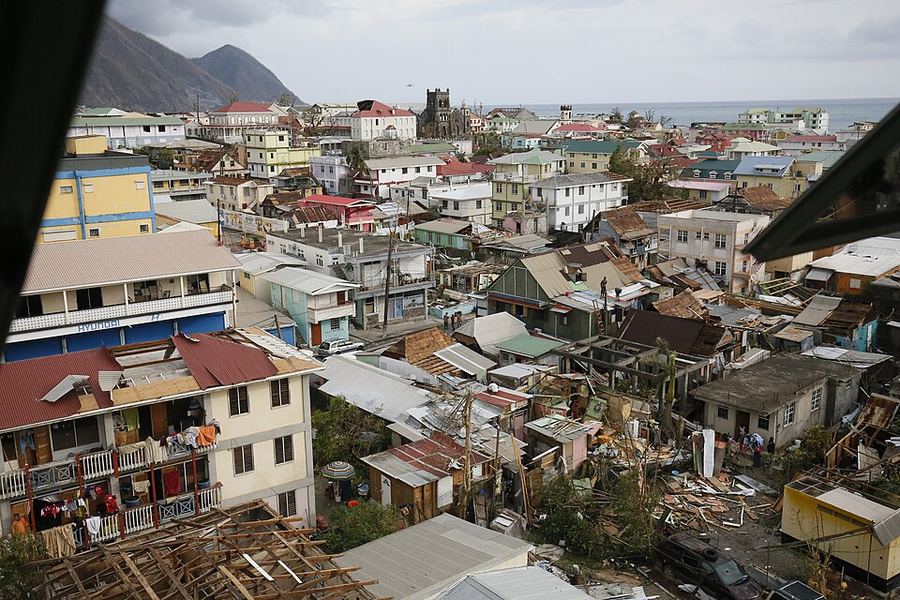
Dominica is a mountainous volcanic island of about 75,000 people in the Lesser Antilles, lying between the French departments of Guadeloupe and Martinique and known throughout the Caribbean as the Nature Isle. It took independence from the United Kingdom on 3 November 1978 and, unusually for the region, became a republic immediately, with a president as head of state rather than the British monarch. Roseau, on the sheltered south-western coast, is the capital. The island is the last place in the Caribbean with an organised Indigenous community: the Kalinago Territory on the east coast holds around three thousand people under an elected chief, and in October 2023 Sylvanie Burton became the first Kalinago head of state anywhere in the Americas. English is official, but Kwéyòl, a French-based creole, remains the language of the villages. The economy is small and exposed — agriculture, ecotourism and a citizenship-by-investment programme — and it has twice been shattered by storms, most severely by Hurricane Maria in September 2017, after which the government committed to making Dominica the world's first climate-resilient nation.

CIA World FactbookEncyclopaedia Britannica
Population
74,661
Capital
Roseau
Currency
$ XCD
Time zones
Largest city
Human Geography Themes
Loading national figures…
The Country & Its People

History

Kalinago people, who called the island Waitukubuli — tall is her body — were established here when Columbus sighted it on a Sunday, 3 November 1493, and named it for the day. The terrain was steep enough and the Kalinago resistance effective enough that European settlement was repeatedly frustrated; by the Treaty of Aix-la-Chapelle in 1748 Britain and France agreed to leave the island neutral, an arrangement neither respected. France established plantations and the Kwéyòl language took root before Britain took possession under the Treaty of Paris in 1763. Escaped Africans formed maroon communities in the interior, and their leaders — among them Chief Jacko, whose camp above the Layou river was reached by a stone stairway still visible — fought two protracted wars against the planters between 1785 and 1814. After emancipation in 1834, Dominica in 1838 became the first British Caribbean colony with a legislature controlled by men of African descent. It moved to associated statehood in 1967 and to independence in 1978, and was struck by Hurricane David within a year. Dame Eugenia Charles governed from 1980 to 1995 as the Caribbean's first woman prime minister.
Culture

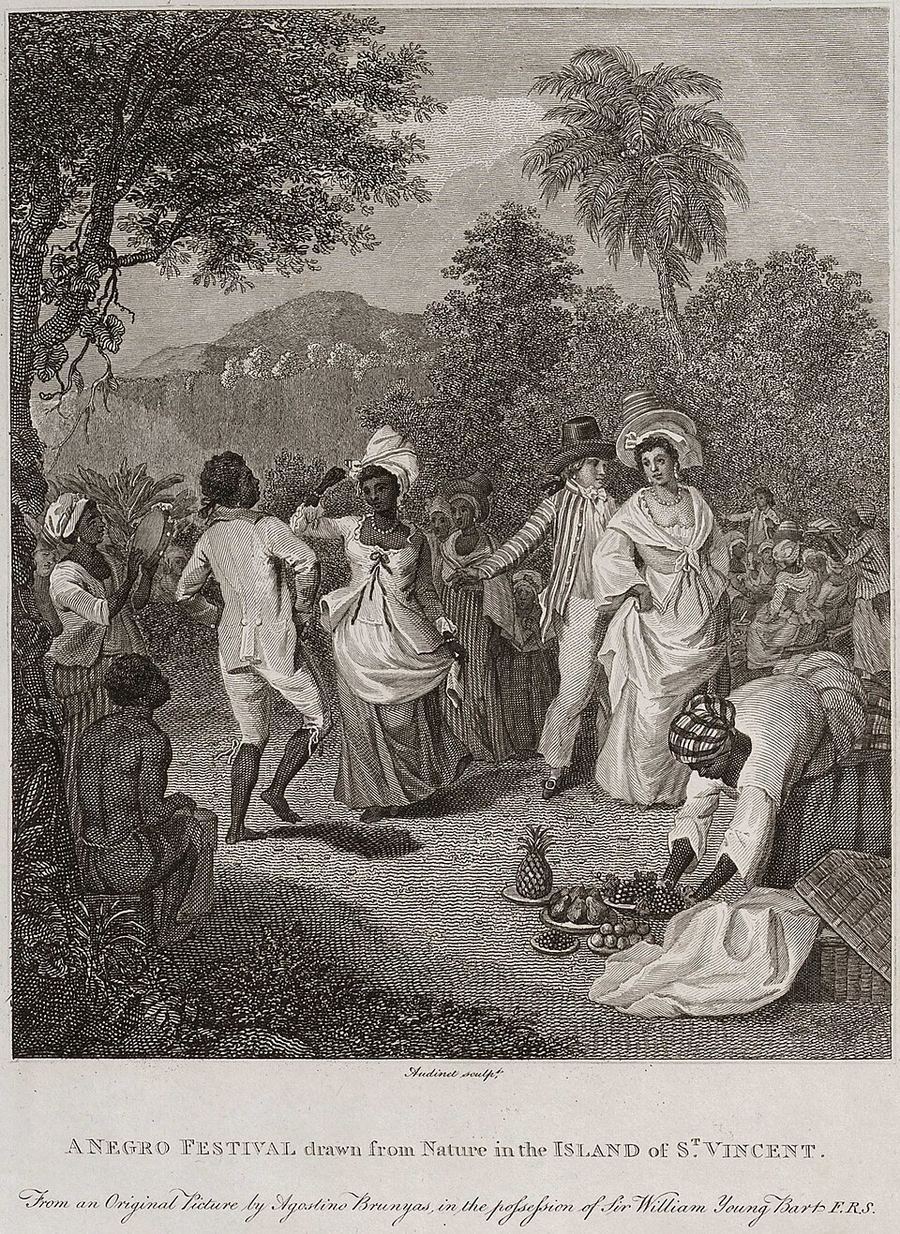
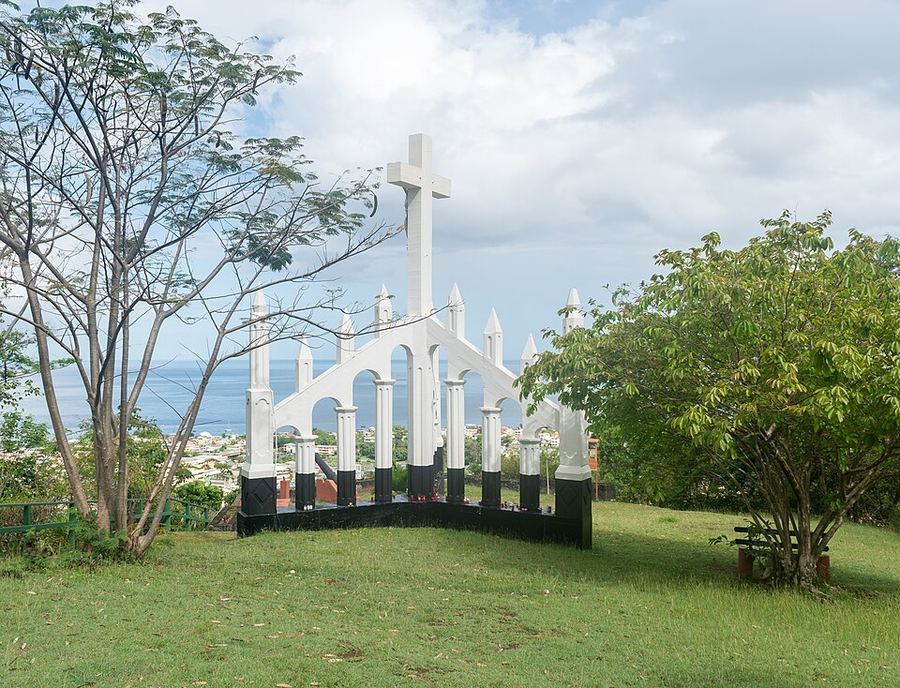
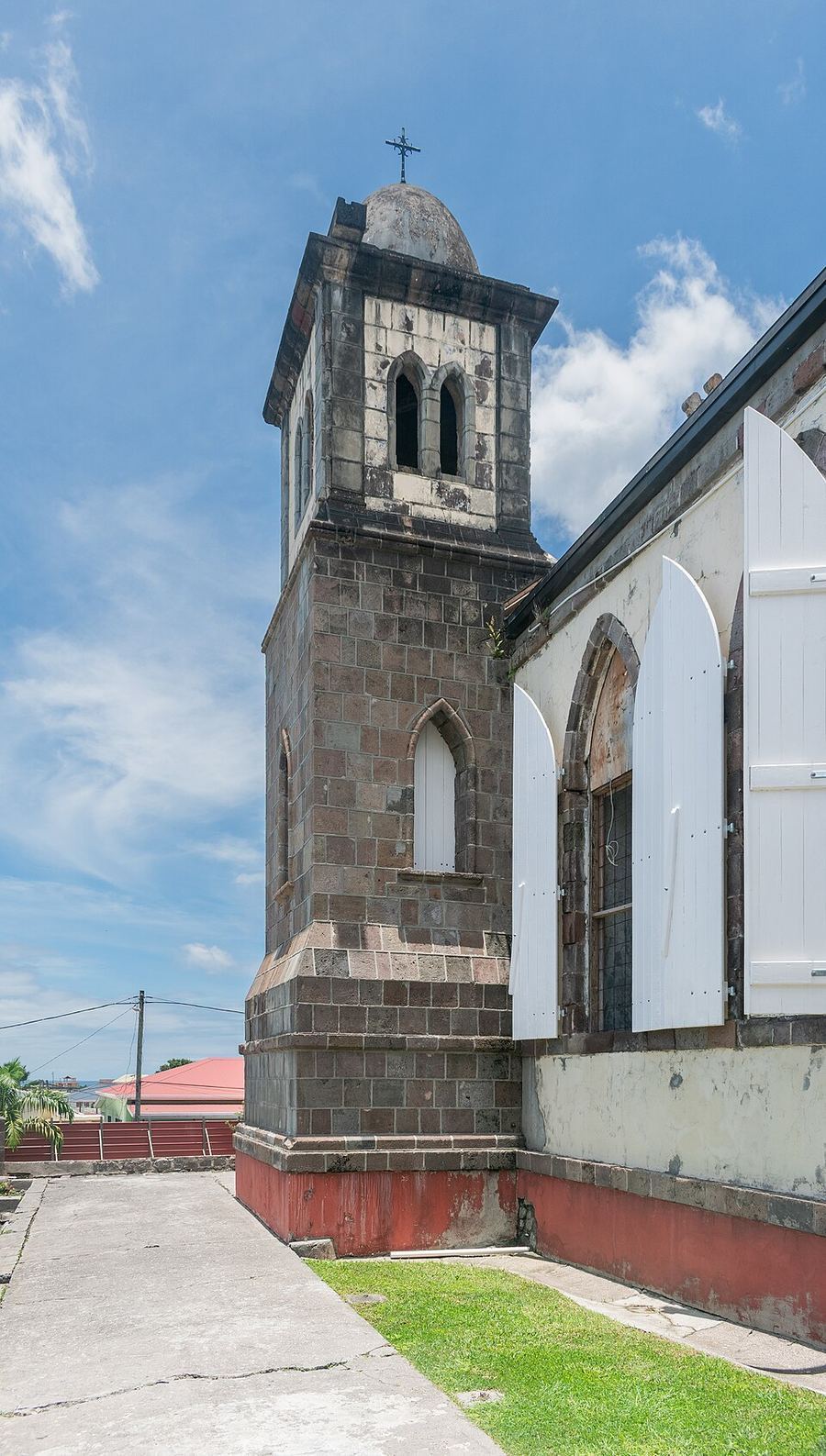
Dominican culture is Creole in the full sense: African in rhythm and social form, French in language and Catholic observance, British in institutions, and Kalinago in its oldest layer. Kwéyòl, though not the official language, carries the proverbs, the storytelling and the humour, and its public standing has risen steadily since independence — Creole Day, Jounen Kwéyòl, on the last Friday of October, sees schools, offices and parliament conducted in Kwéyòl and in traditional dress, and it opens a season of independence festivities. Roman Catholicism claims about 53% of the population, with a substantial Protestant minority and a visible Rastafarian presence. Village life turns on the church, the rum shop, the agricultural round of bananas, dasheen and citrus, and on koudmen, the reciprocal labour exchange by which neighbours build a house or clear a plot together. The Kalinago Territory maintains its own council and chief and keeps canoe-building, larouma reed basketry and cassava processing as living crafts rather than displays.

Points Of Pride

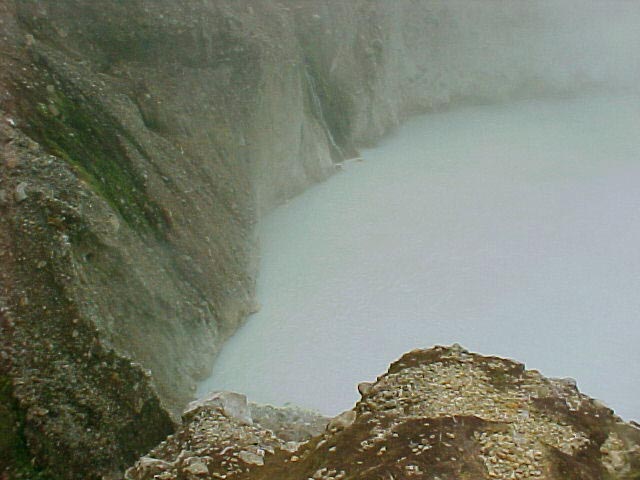
Dominicans point first to the Kalinago Territory — the only place in the Caribbean where an organised Indigenous community holds collective land and elects its own chief — and, since October 2023, to Sylvanie Burton as the first Kalinago president and the first Indigenous head of state in the Americas. The Morne Trois Pitons National Park, inscribed as a UNESCO World Heritage site in 1997, is the island's natural centrepiece, containing the Boiling Lake, a flooded fumarole and one of the largest features of its kind in the world, along with the Valley of Desolation and the Emerald Pool. The Waitukubuli National Trail, opened in 2011 and running about 184 kilometres in fourteen segments from the far south to the northern tip, was the Caribbean's first long-distance footpath. Dame Eugenia Charles was the region's first woman prime minister. In 2023 Dominica announced the world's first marine reserve dedicated to sperm whales, which live off its west coast year-round, and in 2024 Thea LaFond won the country's first Olympic medal — a gold in the triple jump.
Cultural Fusion

Dominica is one of only two Commonwealth countries where a French-based creole is the popular language, a legacy of the French planting period that survived a century and a half of British rule; the island belongs to the Francophonie as well as to the Commonwealth, and its position between Guadeloupe and Martinique keeps the French connection commercially and musically alive. Kwéyòl is not the only creole spoken: in the north-eastern villages of Marigot and Wesley, settled from Antigua and Montserrat in the nineteenth century, people speak Kokoy, an English-based creole, so that a single small island carries two unrelated creole languages a few valleys apart. The Kalinago inheritance survives less in speech — the language is effectively lost — than in material culture, place names and the canoe, basketry and cassava traditions. African descent accounts for about 85% of the population and supplies the drum, the dance and the maroon history. Catholic feast days, English common law and Rastafarian practice coexist without much friction.

Music & Dance

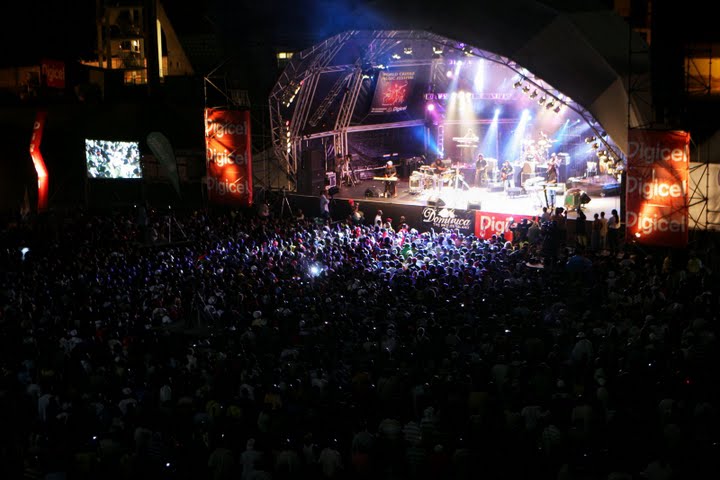
For an island of 75,000 people, Dominica's musical output is remarkable: it has invented two genres that travelled. The first is cadence-lypso, created in the 1970s by Exile One, the band led by Gordon Henderson and based in Guadeloupe, which fused Haitian cadence rampa with calypso, sang in Kwéyòl, and was among the first Caribbean groups to build its sound around synthesizers — a direct ancestor of Antillean zouk. The second is bouyon, developed in the late 1980s by the band Windward Caribbean Kulture, which layered cadence-lypso and zouk over the drum and chant patterns of the traditional jing ping band and became the dominant party music of the island and much of the eastern Caribbean. Jing ping itself is the older tradition: an ensemble of accordion, boum-boum bamboo tube, shak-shak rattle and tambal drum accompanying the quadrille, the flirtation dance and the bèlè. The World Creole Music Festival, staged in Roseau each October since 1997, is the island's largest event.

Cuisine & Misattributed Foods

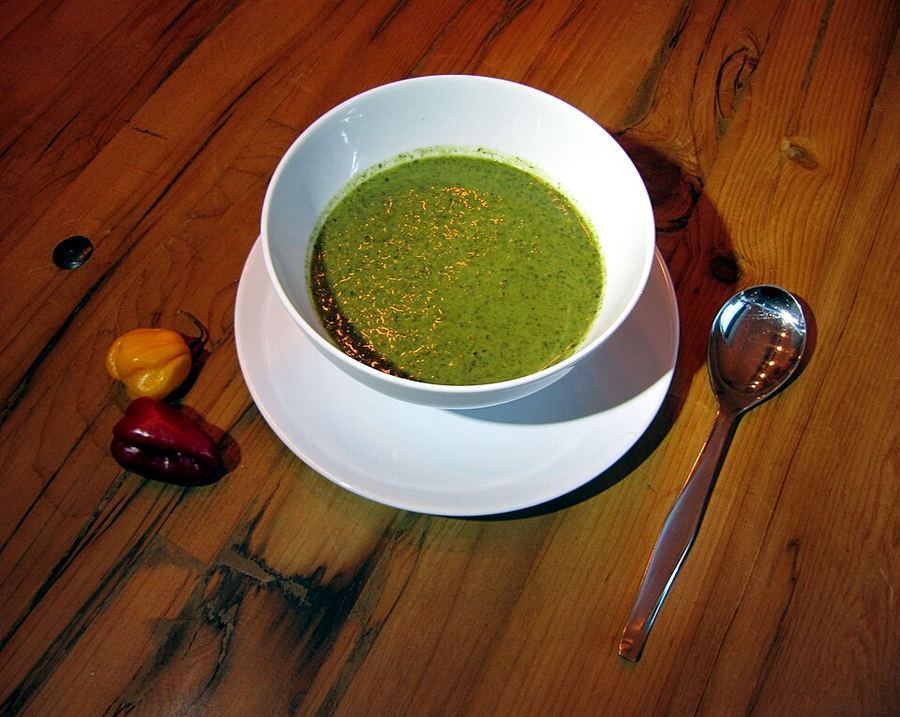
Dominican cooking draws on volcanic soil that grows almost anything and on a river-and-reef larder. The old national dish is mountain chicken — crapaud, a large native frog — which was eaten fried or stewed until the chytrid fungus and hunting pressure collapsed the population and it became critically endangered and legally protected, so that the dish is now a memory rather than a menu item. What remains everyday is the "one pot": callaloo soup thickened with dasheen leaf and coconut, sancoche and bouyon stews carrying provisions — breadfruit, green banana, yam, tannia — with salted meat, and saltfish with bakes or with green fig. Crab backs, seasoned land crab returned to its shell, are a delicacy, as are accras made from titiwi, the tiny transparent river fry netted at the river mouths in season. Cassava bread, kasav, is the Kalinago inheritance, still baked on a flat griddle. Kubuli beer is brewed on the island, and Macoucherie rum is still pressed with a water-wheel-driven cane mill.

National Dress

The national dress is the wob dwiyèt, a Creole gown descended from eighteenth-century French colonial fashion and transformed by African dressmakers into something entirely local: a long, full outer robe of madras or floral cotton worn over a white embroidered chemise, with the skirt gathered and hitched up at the hip to show the petticoat, a matching foulard folded across the shoulders and pinned, and heavy gold jewellery. The distinguishing element is the tête en l'air, the stiffened madras head-tie, whose number of peaks is traditionally read as a signal of the wearer's marital availability. Men's traditional dress is simpler — dark trousers, a white shirt and a madras sash or neckerchief. The whole ensemble comes out for Jounen Kwéyòl, the Creole Day held on the last Friday of October, when schools, government offices and shops turn over to Kwéyòl dress and language, and for independence celebrations on 3 November and the national queen pageants. The Kalinago maintain separate ceremonial dress using woven and natural materials.

Sports & Inspiring Athletes

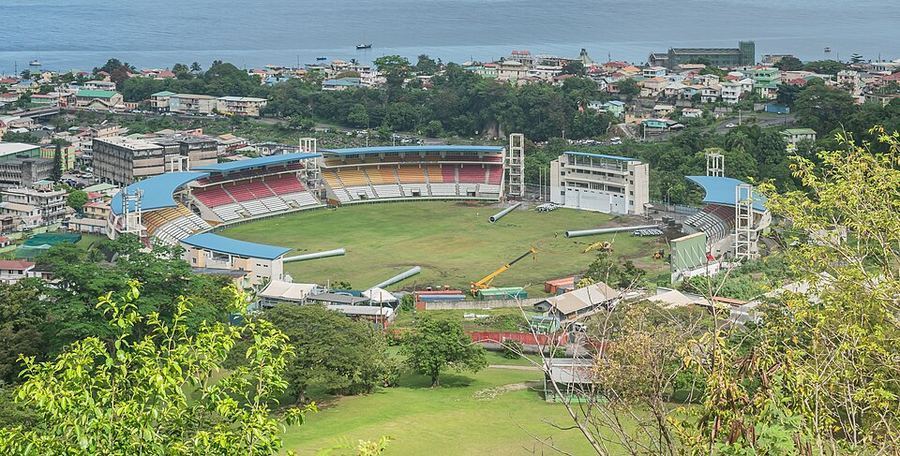
Cricket is the sport with the deepest hold, played on village grounds and followed through the West Indies team rather than a national one — Dominica contributes players to the Windward Islands side in regional competition and, through it, to the West Indies. Windsor Park in Roseau, completed in 2007 with Chinese assistance and rebuilt after Hurricane Maria, is the island's international ground and has staged Test and Twenty20 cricket. Dominican cricketers who have played Test cricket for the West Indies include the off-spinner Shane Shillingford, the fast bowler Adam Sanford and, more recently, the batter Alick Athanaze. Football is widely played and administered by the Dominica Football Association within CONCACAF, though results at senior level are modest. Netball and basketball have strong school and club followings, and athletics is the discipline that has brought the island its greatest international success. Recreational hiking, sea swimming and dominoes fill out a sporting culture that is necessarily improvised on very steep ground.

Notable Educational Programs

Education is free and compulsory, and Dominica's literacy and primary enrolment figures are high by regional standards, sustained through repeated disaster reconstruction — Hurricane Maria damaged or destroyed a large share of the island's schools in 2017 and rebuilding them to a higher storm standard became a central plank of the national resilience programme. Dominica State College in Roseau, formed in 2002 from the merger of the island's teacher training, technical and sixth-form institutions, is the main domestic provider of tertiary education, and the University of the West Indies Open Campus delivers degree programmes locally. Offshore medical education was for four decades a significant part of the economy: Ross University School of Medicine operated at Portsmouth from 1978 and taught mainly North American students, but relocated to Barbados after Hurricane Maria in 2018, removing a substantial source of employment and rental income. All Saints University School of Medicine continues to operate in Roseau. Government scholarships send students to Cuba, the wider Caribbean, the United Kingdom and Canada.

Wars & Conflicts

Dominica has no army and has fought no war since independence, but its early modern history is one of sustained armed resistance: Kalinago defence of the island frustrated European settlement for well over a century, and maroon communities in the interior fought two wars against the plantation regime between 1785 and 1814 under leaders including Chief Jacko and Chief Balla. The most extraordinary episode in the modern record came in 1981, when Prime Minister Eugenia Charles faced two attempts to overthrow her: one led by the former premier Patrick John with elements of the disbanded defence force, and a second, stranger plot in which a group of American and Canadian mercenaries with white-supremacist ties chartered a boat in New Orleans intending to seize the island, and were arrested on the dockside by United States federal agents before sailing. Charles disbanded the Dominica Defence Force afterwards; policing is now the only armed service, and the island's security concerns are narcotics transhipment and disaster response.
Current as of 2026-08-06

Land & Border Disputes

Dominica has no land borders and therefore no territorial disputes, but it is one of the more assertive Caribbean states on a long-running maritime question. It disputes Venezuela's use of Isla de Aves — a low, storm-swept sandbank far out in the eastern Caribbean — as a basepoint for a very large exclusive economic zone and continental shelf claim, arguing along with several neighbours that the feature cannot sustain human habitation or economic life of its own and so cannot generate such a zone under the UN Convention on the Law of the Sea. Maritime boundaries with the neighbouring French departments of Guadeloupe and Martinique have been addressed by agreement with France. Dominica's other external frictions are regulatory. Its citizenship-by-investment programme, running since 1993 and a major share of government revenue, has drawn sustained scrutiny from the European Union and the United States over due diligence and the risk of visa-free access being sold to unsuitable applicants, and successive rounds of tightened vetting have followed.
Land, Life & Legacy

Land & Climate

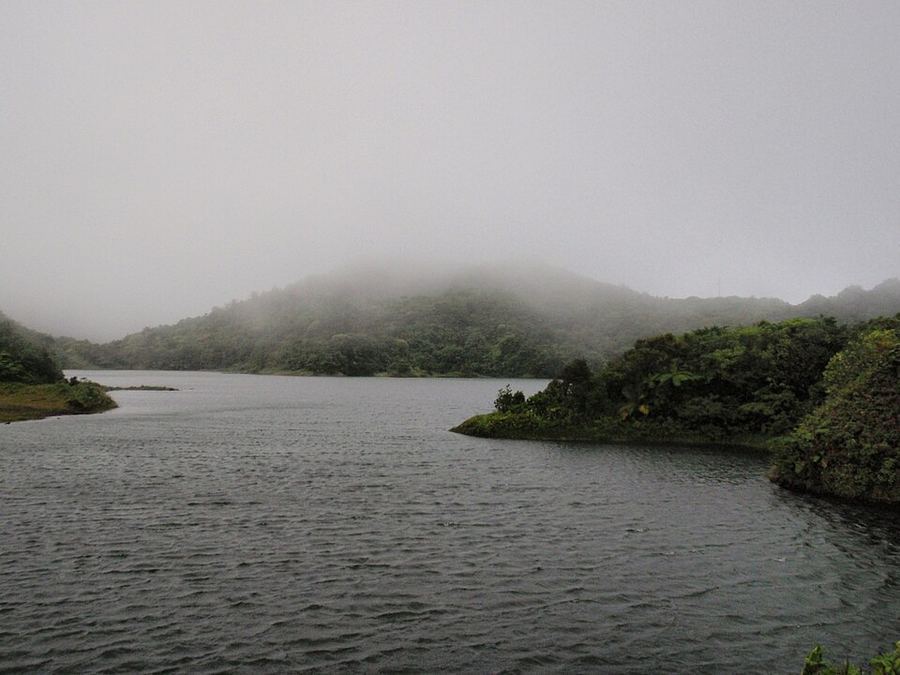
Dominica is the youngest and most rugged island in the Lesser Antilles, built of overlapping volcanic centres that have never been worn down. It has nine potentially active volcanic systems, an unusually high concentration for an island of 750 square kilometres, and their heat surfaces as fumaroles, sulphur springs and the Boiling Lake, a flooded fumarole in the Valley of Desolation whose grey water is kept at a rolling simmer. Morne Diablotins rises to 1,447 metres in the north and Morne Trois Pitons anchors the World Heritage park in the south. The steep, forested interior wrings very high rainfall out of the trade winds — the mountains receive several times what the coast does — and feeds the dense river network that gives rise to the island's proud claim of a river for every day of the year. Rainforest, elfin woodland and cloud forest cover much of the interior. The climate is tropical and the hurricane exposure severe: Hurricane David in 1979 and Hurricane Maria in September 2017 both caused catastrophic, nation-wide damage.

Entertainment

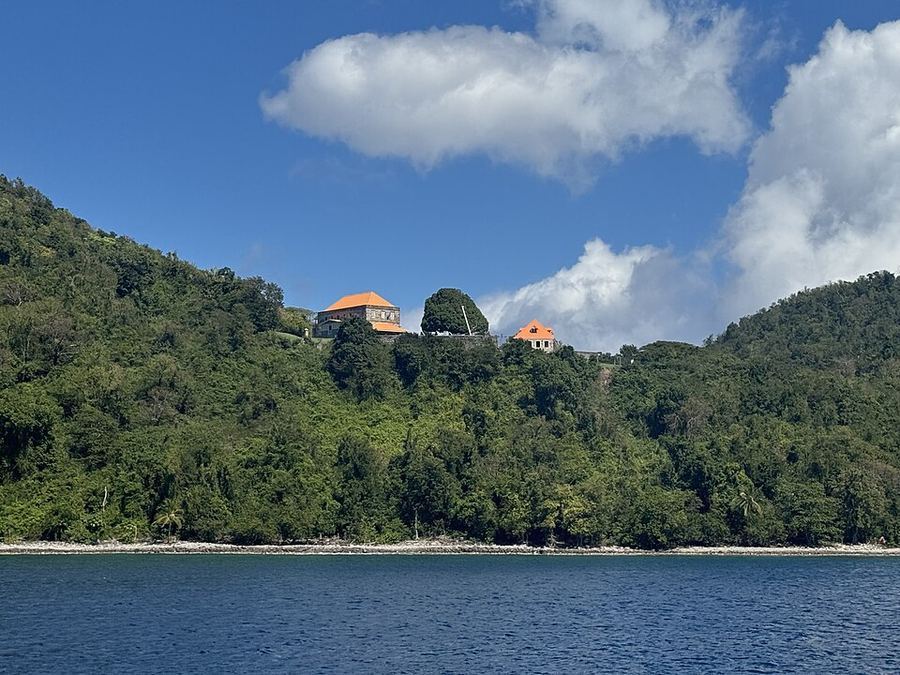
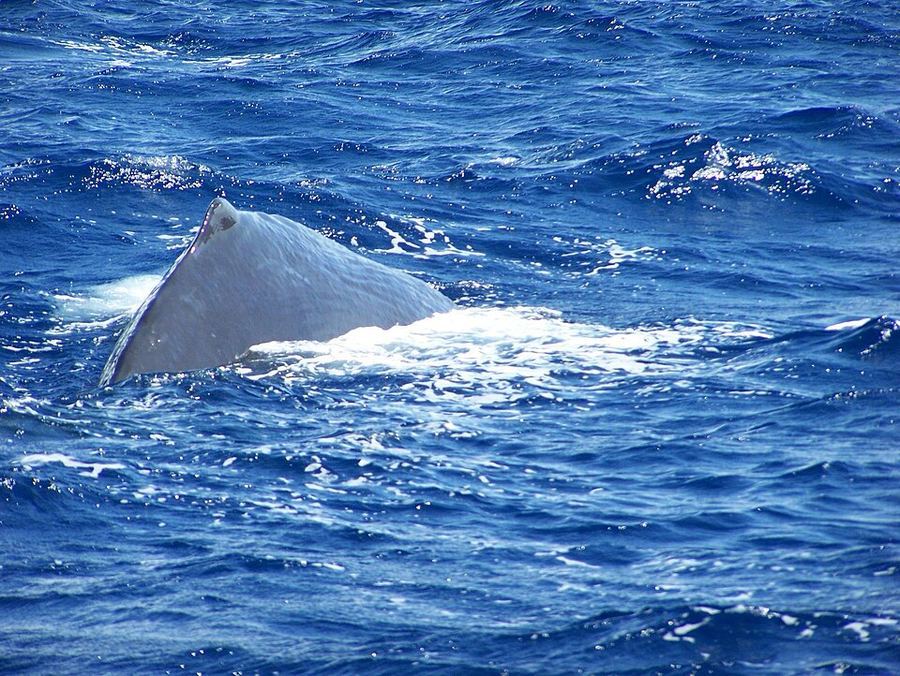
Dominica's leisure is emphatically outdoor and has never been a beach economy — the sand is mostly dark volcanic and the draw is the interior. Hiking is the organising activity, from short walks to Trafalgar Falls, the Emerald Pool and Middleham Falls to the punishing full-day round trip through the Valley of Desolation to the Boiling Lake, with the Waitukubuli National Trail's fourteen segments available for those walking the island end to end. Titou Gorge, a slot canyon swum rather than walked, and the sulphur pools at Wotten Waven are standard stops. Offshore, the resident sperm whales make whale-watching reliable in a way few places can match, and the volcanic vents at Champagne Reef release bubbles through the shallows for snorkellers. Scotts Head and Soufriere Bay hold the best diving. On land the social calendar runs on the pre-Lenten Mas Domnik carnival with its sensay costumes, the World Creole Music Festival in October, Creole Day, cricket, dominoes and the rum shop.

Art & Museums

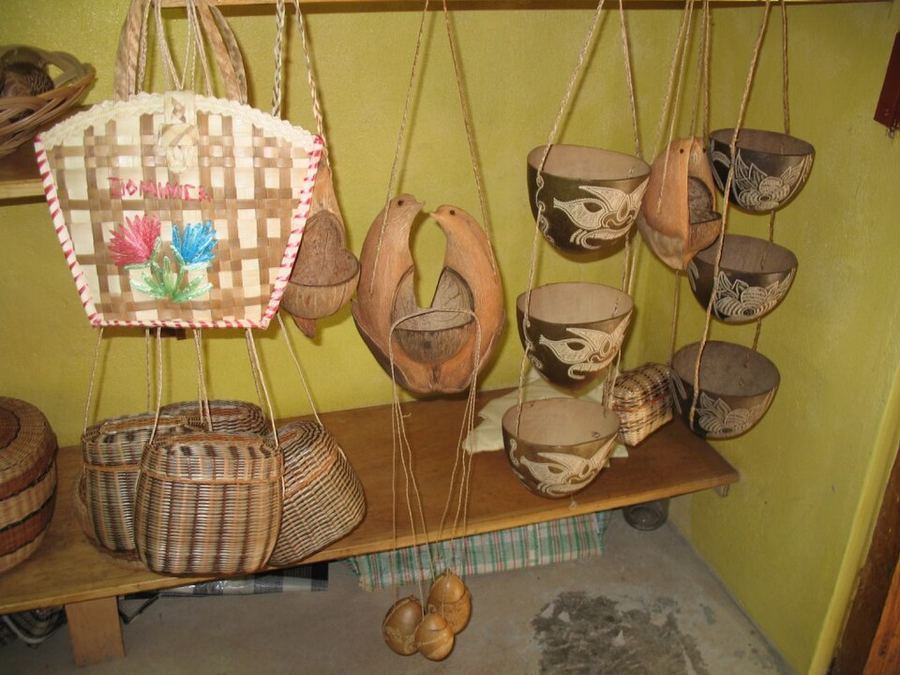
Dominica's strongest artistic tradition is literary and disproportionately female. Jean Rhys was born in Roseau in 1890, left as a teenager, and returned to the island imaginatively in Wide Sargasso Sea, the 1966 novel that rewrote Jane Eyre from the Creole wife's perspective and became one of the defining works of Caribbean literature. Phyllis Shand Allfrey, novelist of The Orchid House and a founder of the Dominica Labour Party, combined writing with a political career. In visual art the leading figure is Earl Etienne, whose bouzaille technique — using the smoke of a flambeau torch on the canvas surface — is a distinctly Dominican method, and Canute Caliste and other regional intuitive painters are widely collected. Craft carries at least as much weight as fine art: Kalinago larouma reed basketry, with its patterned double weave, is the island's most recognisable handmade object, alongside carved gommier canoes, calabash work and coconut craft. The Dominica Botanic Gardens in Roseau, laid out in 1891, remain the country's principal cultural landscape.

Notable People

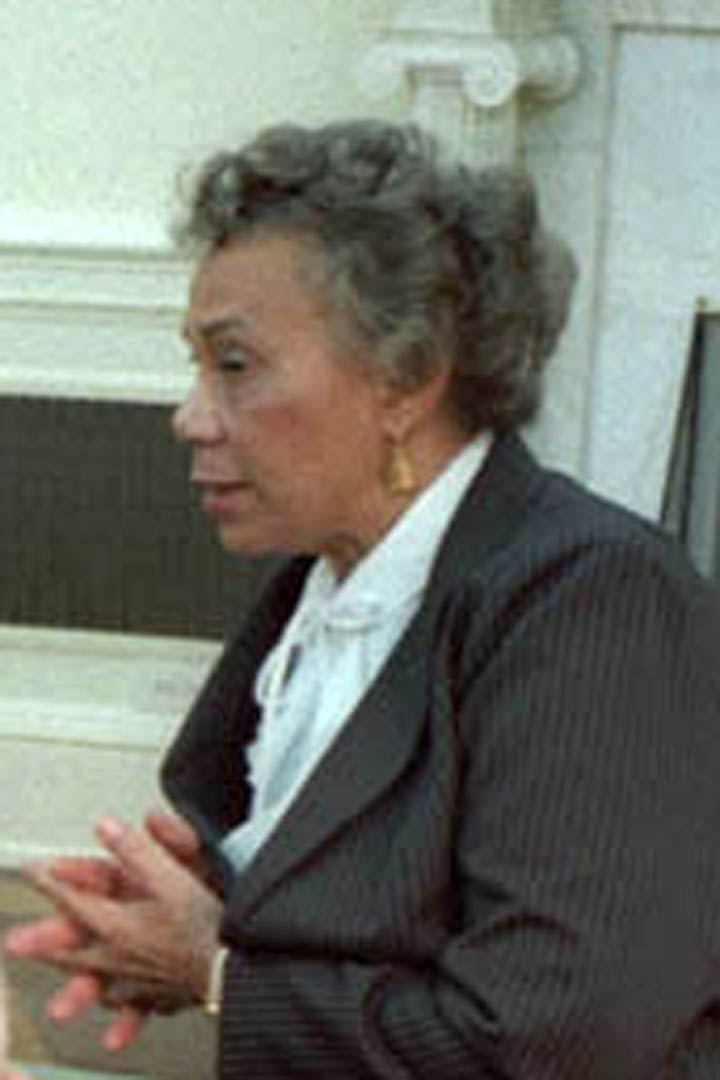
Dame Mary Eugenia Charles, prime minister from 1980 to 1995, was the first woman to lead a Caribbean government and the region's most forceful political personality of her era, calling for international action after two coup attempts against her in 1981 and chairing the Organisation of Eastern Caribbean States during the 1983 Grenada crisis. Jean Rhys, born in Roseau in 1890, is the island's most internationally significant writer, and Phyllis Shand Allfrey combined the novel with party politics. Sylvanie Burton became president in October 2023, the first Kalinago to hold the office and the first Indigenous head of state in the Americas. Gordon Henderson founded Exile One and with it the cadence-lypso genre, and Ophelia Marie is Dominica's best-known Creole singer. In sport, Thea LaFond won the women's triple jump at the Paris Olympics in 2024, delivering the country's first Olympic medal of any colour, and the off-spinner Shane Shillingford and batter Alick Athanaze have represented the West Indies in Test cricket.

Inventions & Breakthroughs

Dominica's inventions are musical and material rather than industrial. Cadence-lypso, assembled by Exile One in the 1970s, and bouyon, created by Windward Caribbean Kulture in the late 1980s, are both genuinely new genres that spread well beyond the island — cadence-lypso feeding directly into the development of zouk in the French Antilles, and bouyon becoming a standard party form across the eastern Caribbean. The jing ping ensemble, built around the accordion, the boum-boum bamboo resonator and the shak-shak, is a distinctive local instrumental configuration. In craft, Kalinago larouma basketry uses a double-layered weave that makes containers effectively waterproof, and the associated cassava technology — grating, pressing out the toxic liquid in a woven tube press, and baking the flour into kasav — is a pre-Columbian food processing chain still practised. The painter Earl Etienne's bouzaille method, applying flambeau smoke to the canvas, is an original technique. The Macoucherie distillery still crushes cane with a water wheel, one of the last operating anywhere.

Science & Technology

Dominica's scientific profile is unusually distinctive for a microstate, and it rests on whales and on heat. The waters off the west coast hold a resident population of sperm whales that does not migrate away, which has made the island the base for the Dominica Sperm Whale Project, a long-running study of individual whales, their family units and the patterned click sequences called codas that function as social markers; that work now underpins an international effort using machine learning to analyse sperm whale communication, one of the most ambitious animal-communication research programmes anywhere. In November 2023 the government announced a marine reserve of roughly 800 square kilometres dedicated to protecting these whales, the first of its kind. On land, the same volcanic system that produces the Boiling Lake is being developed for geothermal power, with a small plant in the Roseau valley intended to supply the island's own grid. After Hurricane Maria, Dominica created a dedicated resilience agency and set out to become the world's first climate-resilient nation.
On The World Stage

Champions & Defining Moments

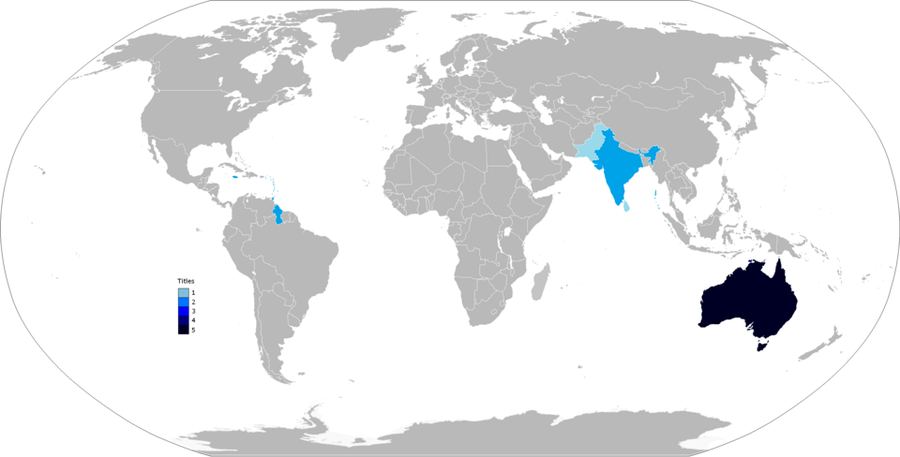
On 3 August 2024 Thea LaFond won the women's triple jump at the Paris Olympic Games, giving Dominica its first Olympic medal in any sport and making it one of the smallest nations ever to win a gold; she had built the result over more than a decade of competition after first representing the island as a teenager, and the country declared a public holiday. That single result transformed a record which, before it, consisted of appearances without medals since Dominica's Olympic debut at Atlanta in 1996. The country's other route to global sport is collective rather than individual: Dominican players appear for the West Indies, the multinational team that represents the English-speaking Caribbean in international cricket, and Windsor Park in Roseau is part of the regional Test and Twenty20 circuit. The triple jumper Yordanys Duranona has also competed internationally for Dominica. In football the national side plays in CONCACAF qualifying and has never reached a World Cup or a Gold Cup finals tournament.

IOCWorld AthleticsFIFA
Economy, Trade & Government

Currency & GDP

East Caribbean Dollar — XCD ($)

GDP (PPP): $1.241 billion (2024 est.)

Per capita: $18,700 (2024 est.)

Exports

$212.753 million (2024 est.)

iron blocks, medical instruments, excavation machinery, power equipment, soap (2023)

Partners: Bahamas, The 13%, Saudi Arabia 11%, Iceland 10%, Guyana 7%, Antigua & Barbuda 7% (2023)

Imports

$387.532 million (2024 est.)

refined petroleum, ships, plastic products, semi-finished iron, cars (2023)

Partners: USA 24%, China 11%, Indonesia 8%, Trinidad & Tobago 7%, Italy 7% (2023)

Government

Type: parliamentary republic

Independence: 3 November 1978 (from the UK)

Terrain → Where People Live

How mountains, coasts, and rivers shape settlement (LandScan).

Coming — data

Migration & Ethnic Settlement

Where groups settled and how people move (GeoEPR + UNHCR).

Coming — data

Universities

Notable institutions, mappable as points.

Coming — data
Economy & government facts: CIA World Factbook (public domain), via OpenFactBook / factbook.json.
Every fact and narrative claim will carry a visible source citation. Data-driven sections light up automatically wherever HERA has coverage.