HERA · Human Entity Reference Atlas by Masego Inc

← Egypt 🌐 3D View
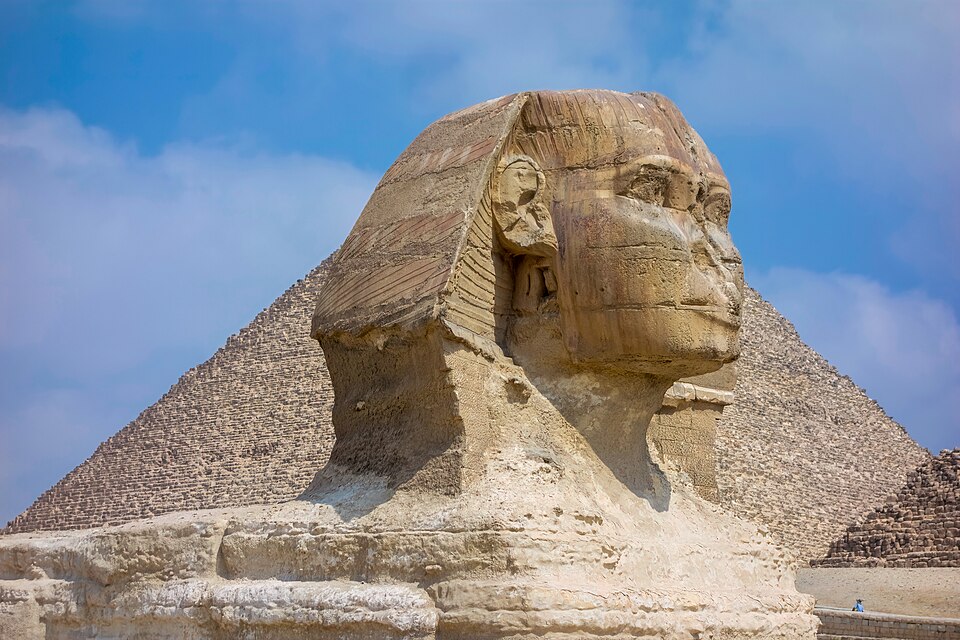
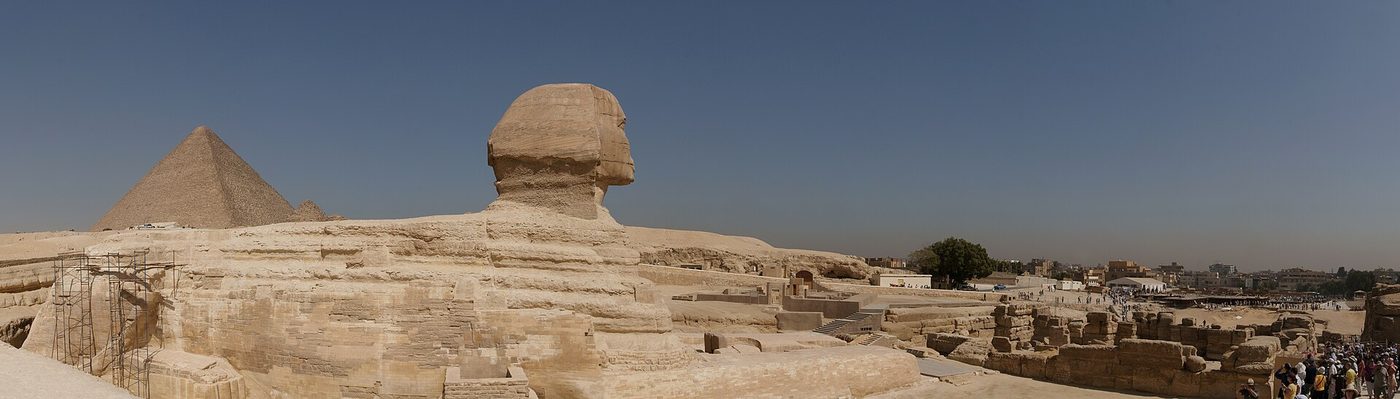
Sphinx and the Great Pyramid of Giza panorama, Egypt
Egypt EGY
Sphinx and the Great Pyramid of Giza panorama — Photo: kallerna / CC BY-SA 3.0 via Wikimedia Commons
Did You Know In 1934, Egypt became the first country from Africa or the Middle East ever to play in a FIFA World Cup — more than two decades before any other African side qualified. — FIFA

Egypt is where recorded history begins and where the Arab world's story is still being written. Nearly 113 million people — the Arab world's largest population, with a median age of just 24.6 — crowd almost entirely into the green ribbon of the Nile Valley and Delta, a sliver of the country's vast desert territory. Cairo, the sprawling capital, is the region's undisputed hub of film, music, publishing, and religious scholarship. The economy runs on a distinctive mix: Suez Canal tolls, natural gas, tourism to the pyramids and Red Sea resorts, remittances from millions of Egyptians abroad, and a GDP of roughly $1.96 trillion in purchasing-power terms. Around 90 percent of Egyptians are Sunni Muslim, and roughly 10 percent are Christian — mostly Coptic Orthodox, heirs to one of Christianity's oldest churches. A presidential republic since 1953, Egypt anchors the diplomacy of the Middle East and Africa alike, bridging both as it has since a unified pharaonic state first emerged along the Nile more than five thousand years ago.

CIA World FactbookEncyclopaedia BritannicaWorld Bank
Population
112,870,457
Capital
Cairo
Currency
£ EGP
Time zones
Largest city
Cairo
Human Geography Themes
Loading national figures…
Largest Cities
Cairo25,230,325
Alexandria6,931,369
Luxor6,314,420
Banha1,876,792
El Mansura1,707,877
Al Zaqaziq1,296,062
Asyut1,152,515
Suhaj1,104,285
In Perspective

Cairo's urban core is home to about 25,230,325 people.

That's bigger than London, Paris, Madrid and Toronto — each a great world city in its own right.

Cairo25,230,325
London10,408,332
Paris9,366,654
Madrid5,680,137
Toronto5,566,382

Among the world's megacities, though, it's one of many — the giants of Asia and Latin America run larger still:

Cairo25,230,325
Jakarta40,545,126
Dhaka37,307,160
Tokyo33,244,670
Shanghai30,678,616
Mumbai20,453,270

More people live in Cairo than in the entire nation of Sweden, Greece, Portugal or Israel.

The Country & Its People

History

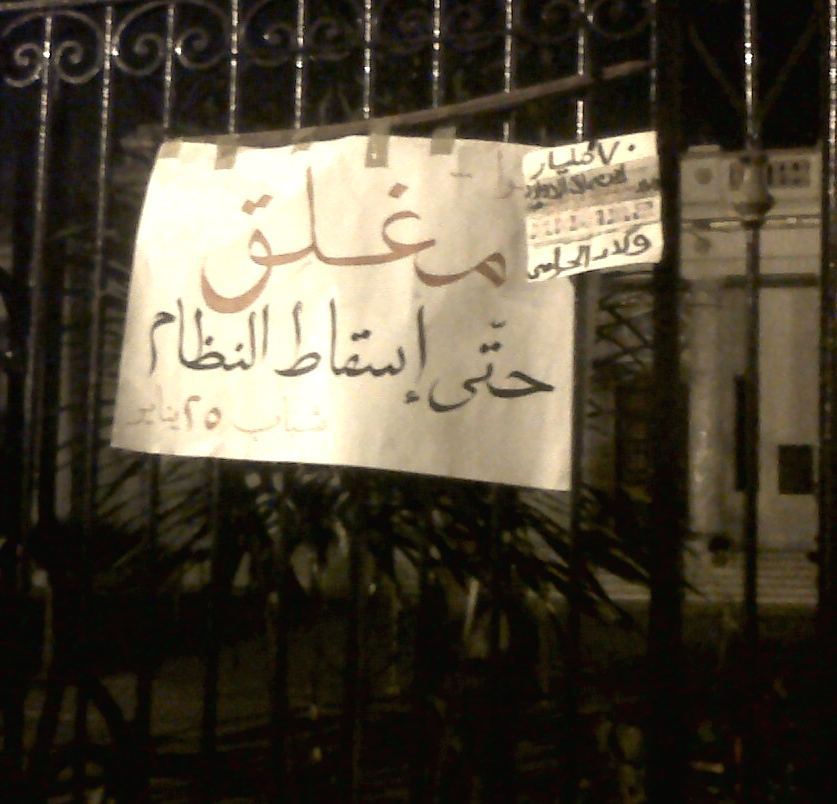
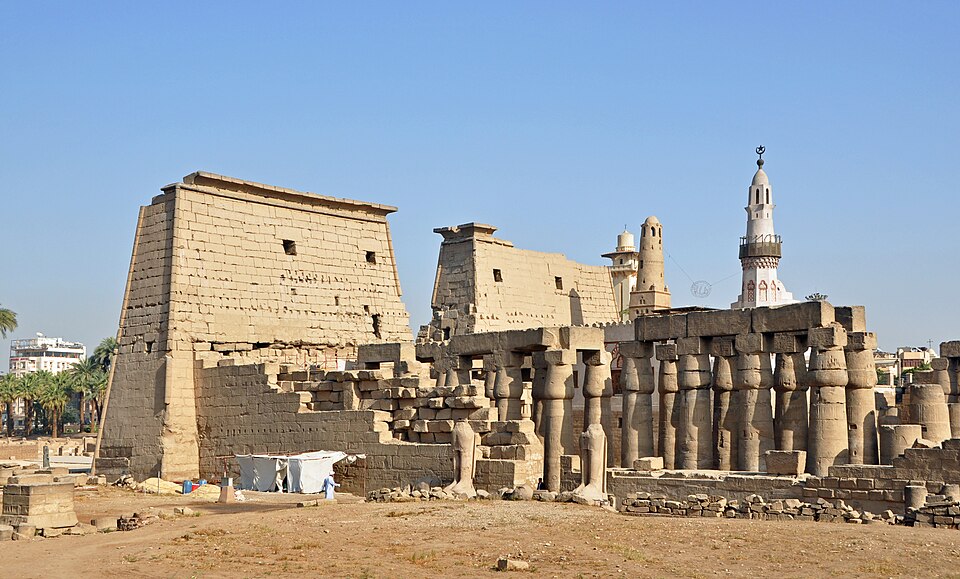
Around 3100 BCE, the kingdoms of Upper and Lower Egypt were unified under a single crown, launching three millennia of pharaonic civilization that raised the pyramids at Giza, carved temples at Luxor and Abu Simbel, and invented one of humanity's first writing systems. Alexander the Great's conquest in 332 BCE made Alexandria a Greek-speaking capital of learning; Rome and Byzantium followed, and Egypt became an early heartland of Christianity. The Arab conquest of 641 CE brought Islam and the Arabic language, and in 969 the Fatimids founded Cairo, soon home to al-Azhar, a thousand-year center of Islamic scholarship. After centuries of Mamluk and Ottoman rule, the modernizing dynasty of Muhammad Ali opened the Suez Canal in 1869 — and drew in British occupation by 1882. Nominal independence came in 1922, but the pivotal break was the 1952 revolution: a republic was declared in 1953, and Gamal Abdel Nasser's nationalization of the canal in 1956 made Egypt a standard-bearer of Arab nationalism. Anwar Sadat's 1979 peace treaty with Israel, the 2011 uprising that toppled Hosni Mubarak, and the post-2013 era under Abdel Fattah el-Sisi — including construction of a New Administrative Capital east of Cairo — mark its turbulent modern chapters.
History, Egypt
Marc Ryckaert / CC BY 3.0

Culture

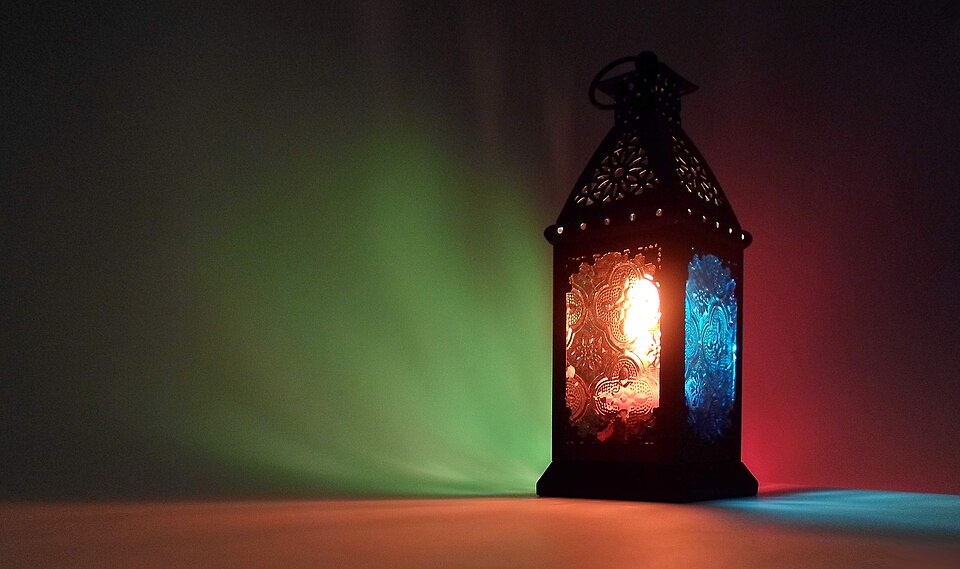
Egyptian culture radiates outward across the Arab world. The Egyptian dialect of Arabic, carried by a century of Cairo cinema, television serials, and song, is understood from Morocco to Iraq, making it the lingua franca of Arab popular culture even though Modern Standard Arabic is the official written language. Daily life is intensely social: the ahwa (coffeehouse) with its backgammon boards and shisha pipes, multigenerational family gatherings, and a famously quick national wit — Egyptians call their country Umm al-Dunya, 'Mother of the World,' and themselves the region's best joke-tellers. Religion structures the calendar for Muslims and Christians alike. Ramadan transforms Cairo's streets with colored fanous lanterns and lavish iftar tables, while the Coptic Orthodox Church — roughly a tenth of the population — keeps ancient liturgies partly in the Coptic language, the last descendant of the tongue of the pharaohs. Popular saints' festivals called moulids blend devotion with carnival. Hospitality is near-compulsory: a guest will be fed, and refusal is negotiated in an elaborate ritual of insistence. Beneath modern life, pharaonic habits persist — villagers still celebrate Sham el-Nessim, a spring festival with roots in ancient Egypt, with salted fish and painted eggs.
Culture, Egypt
Ibrahim.ID / CC BY-SA 3.0

Points Of Pride

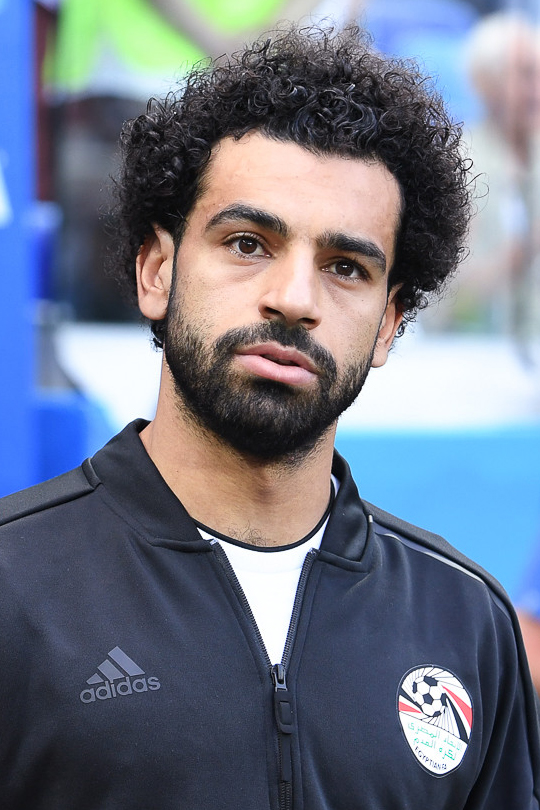
Egypt's signature boast needs no embellishment: the Great Pyramid of Giza is the only survivor of the Seven Wonders of the Ancient World, anchoring the Memphis necropolis inscribed on UNESCO's very first World Heritage list in 1979 — one of seven Egyptian World Heritage sites that also include Islamic Cairo, ancient Thebes, and the rescued temples of Abu Simbel. In late 2025 the country opened the Grand Egyptian Museum near the pyramids, a vast complex displaying Tutankhamun's treasures together for the first time. The Suez Canal, dug by Egyptian labor and nationalized in 1956, remains one of the world's most strategic waterways. The intellectual ledger is deep: novelist Naguib Mahfouz won the 1988 Nobel Prize in Literature, chemist Ahmed Zewail the 1999 Nobel in Chemistry, and Anwar Sadat and Mohamed ElBaradei each earned the Peace Prize. On the pitch, Egypt's Pharaohs have won the Africa Cup of Nations a record seven times, Cairo's Al Ahly is Africa's most decorated club, and Mohamed Salah has become a global icon. Egyptians take equal pride in al-Azhar's millennium of scholarship and in a tourism sector that drew record visitor numbers in the mid-2020s.
Points Of Pride, Egypt
Petar Milošević / CC BY-SA 4.0

Cultural Fusion

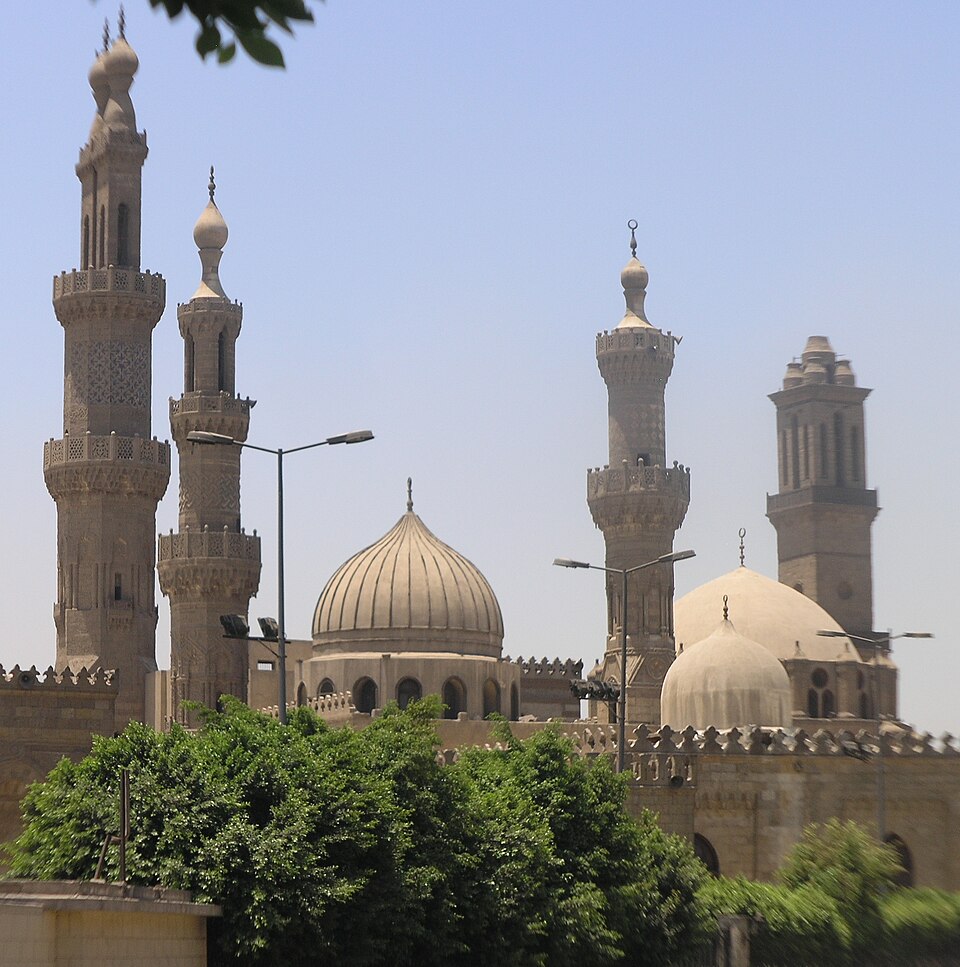
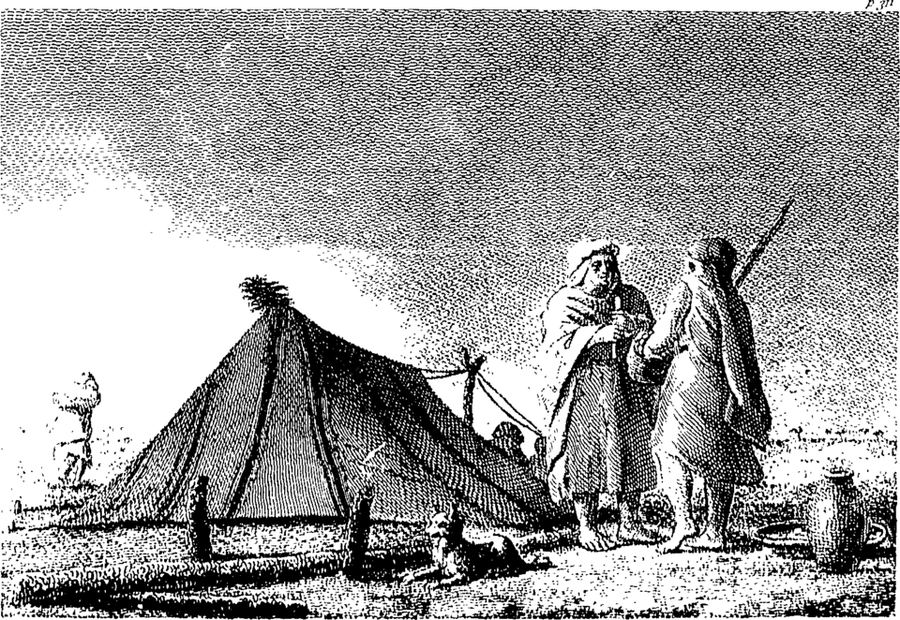
Few identities are as many-layered as Egypt's. The base stratum is pharaonic — visible in temple ruins, in the Coptic language preserved in church liturgy, and in festivals like Sham el-Nessim. Over it lie Greek and Roman Alexandria, once home to the ancient world's greatest library; the Coptic Christian centuries; and the Arab-Islamic transformation that made Cairo a capital of the medieval world, its skyline studded with Fatimid, Mamluk, and Ottoman minarets. The south belongs also to the Nubians, whose distinct languages, music, and brightly painted villages survive the displacement caused by the Aswan High Dam. Bedouin tribes carry their own dialects and customary law across Sinai and the Eastern and Western Deserts, while the remote oasis of Siwa speaks Siwi, a Berber language — Egypt's linguistic outlier, cataloged among the country's living languages. Nineteenth-century rulers grafted on a European layer: downtown Cairo was laid out on Parisian lines, and Alexandria became a polyglot Mediterranean port of Greeks, Italians, Armenians, and Jews whose cosmopolitan memory still flavors the city. Modern Egyptians toggle effortlessly among these registers — a Friday sermon, a Coptic mass, a Nubian wedding song, and a French-named patisserie can share the same street.
Cultural Fusion, Egypt
Vyacheslav Argenberg / CC BY 4.0

Music & Dance

Cairo is the recording studio of the Arab world, and its golden-age voices remain a shared regional heritage. Umm Kulthum, 'the Star of the East,' held monthly radio concerts from the 1930s to the 1970s that emptied streets across the Middle East; her funeral in 1975 drew millions of mourners. Composers Mohammed Abdel Wahab and Sayed Darwish — author of the national anthem — and the crooner Abdel Halim Hafez built the classical Arabic song around the oud, qanun, and full string orchestra. Egypt is equally the historic home of raqs sharqi, the cabaret-refined belly dance the world associates with the country, and of tanoura, a whirling, skirt-spinning Sufi-derived performance. Folk traditions run deep: al-Sirah al-Hilaliyyah, an oral epic sung by hereditary poets to the rababa fiddle, is inscribed on UNESCO's intangible heritage list, as is tahtib, the Upper Egyptian stick-fighting art performed as a percussive martial dance. Nubian music brings pentatonic melodies and distinctive rhythms from the south. On the street, shaabi working-class pop long ruled weddings and microbuses — and since the 2010s its raucous electronic descendant, mahraganat, has become the defiant, auto-tuned soundtrack of young urban Egypt.
Music & Dance, Egypt
Not credited / Public domain

Cuisine & Misattributed Foods

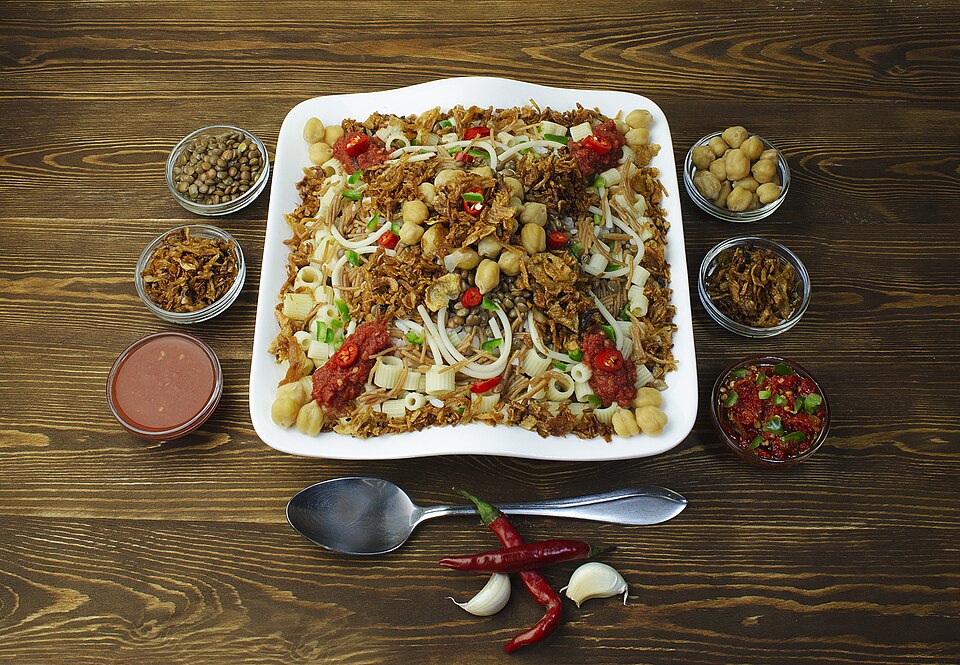
Egyptian food is the Nile's bounty made humble and generous. The unofficial national dish is koshary: a carbohydrate anthem of rice, macaroni, lentils, and chickpeas buried under spiced tomato sauce and crispy fried onions, ladled out at dedicated koshary houses across every city. Breakfast belongs to ful medames — slow-simmered fava beans dressed with oil, lemon, and cumin, a dish with roots reaching back centuries — and to ta'ameya, Egypt's own falafel, made from fava beans rather than chickpeas and fried a vivid green. Molokhia, a garlicky soup of finely chopped jute leaves, divides visitors and unites Egyptians. Bread is sacred in more than name: the round baladi loaf is called aish — literally 'life' — and subsidized bread is a pillar of national policy. Celebration dishes include mahshi (vegetables stuffed with herbed rice), hamam mahshi (stuffed pigeon, an Egyptian delicacy raised in mud-brick dovecotes), and slow-roasted fattah for feasts. Alexandria answers with grilled fish and seafood sayadeya. Dessert means syrup-soaked basbousa, konafa's crisp shredded pastry — a Ramadan fixture — and Umm Ali, a creamy bread pudding with a dynastic backstory. It is washed down with mint tea, thick Turkish-style coffee, or cane juice pressed fresh at street stalls.
Cuisine & Misattributed Foods, Egypt
Dina Said / CC BY-SA 4.0

National Dress

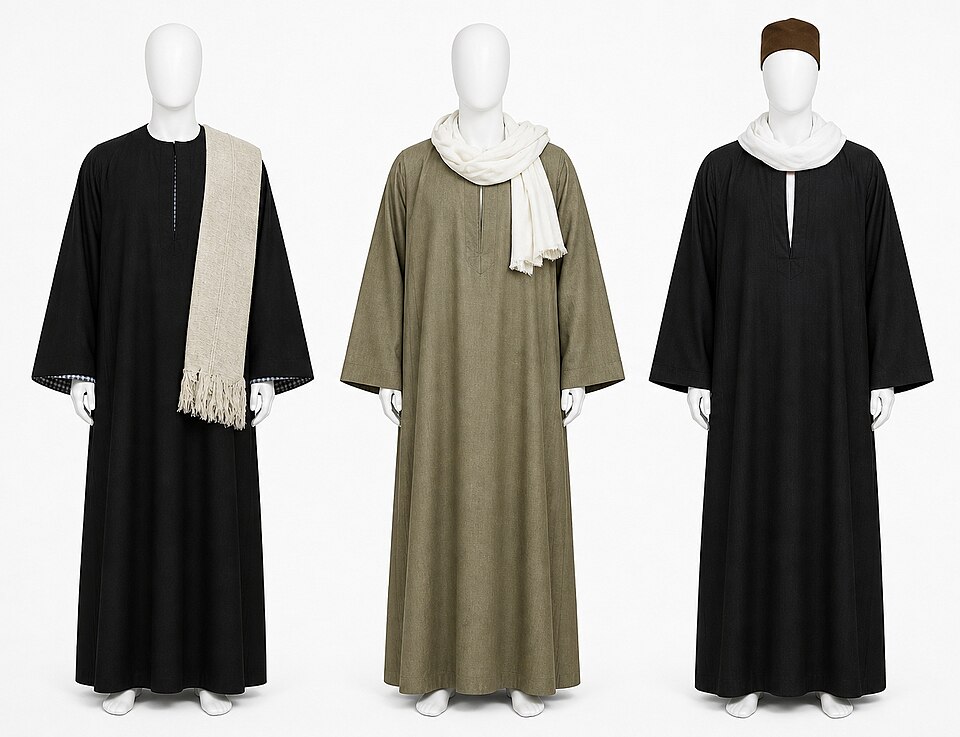
The garment most identified with Egypt is the galabeya, the loose, ankle-length robe worn for centuries by men and women of the countryside — cool in the Nile Valley heat, cut from cotton that was itself Egypt's most famous export. In Upper Egypt, men pair dark galabeyas with a white turban-like headwrap and sometimes the staff used in tahtib; farmers' versions are plain, while festive ones carry embroidery at the collar. Bedouin communities of Sinai and the deserts maintain their own codes: women's black thobes dense with cross-stitch embroidery whose colors and motifs signal tribe and marital status, and face veils ornamented with coins. Nubian women in the south favor brilliantly colored gowns and the sheer black gargara overdress. Egypt also produced one of the world's most coveted textile crafts: tulle bi telli, the Asyut shawl of black net hand-worked with hammered silver strips, which dazzled Paris in the 1920s Egyptomania craze. Urban Egyptians today dress largely in global styles — suits, jeans, and for many Muslim women the hijab in endlessly inventive fashions — but the galabeya returns for prayer, for village weddings, and for the comfort of home, a living link to the fellahin heritage most families claim.
National Dress, Egypt
عبدالرحمن / CC0

Sports & Inspiring Athletes

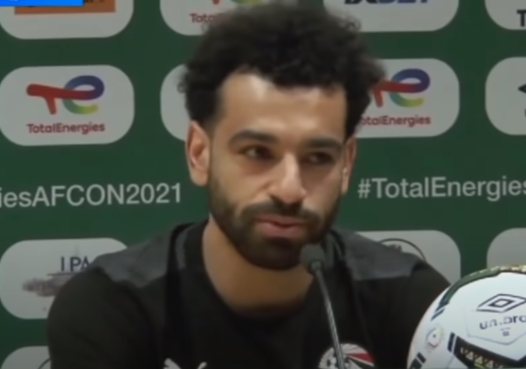
Football is Egypt's consuming passion and its greatest sporting export. The national team, the Pharaohs, has lifted the Africa Cup of Nations a record seven times, and in 1934 Egypt became the first African and Middle Eastern nation ever to play at a FIFA World Cup. The Cairo derby between Al Ahly — Africa's most-titled club and CAF's club of the twentieth century — and Zamalek halts the country twice a year. Mohamed Salah, the Liverpool forward from a Nile Delta village, is arguably the most famous living Egyptian, a multiple African Footballer of the Year. Less noticed abroad but astonishing in scale is Egypt's dominance of squash: for years Egyptian men and women have monopolized the sport's world rankings and world championships, the product of a Cairo club pipeline with no global rival. Handball is a growing force — Egypt hosted the 2021 world championship and its national team ranks among the sport's elite outside Europe. Olympic tradition runs long: Egypt first competed in 1912, was the first African and Middle Eastern country to host a regional multi-sport games, and has mined medals in weightlifting, wrestling, and taekwondo, including gold in Tokyo and Paris-cycle competition.
Sports & Inspiring Athletes, Egypt
Al AHLY TV / CC BY 3.0

Notable Educational Programs

Egypt runs one of the world's largest school systems — well over twenty million students — with free public education a constitutional promise since the Nasser era. The academic gauntlet culminates in the Thanaweya Amma, the high-stakes secondary examination whose scores mechanically assign university places and dominate family life each summer; recent reforms have pushed tablets, new curricula, and continuous assessment to loosen its grip. Uniquely, Egypt operates a complete parallel religious track: the Al-Azhar system enrolls roughly two million students from primary school onward, blending the national curriculum with Quranic and Islamic sciences, and feeds Al-Azhar University — founded in the tenth century and among the world's oldest continuously operating centers of higher learning, still the leading authority of Sunni scholarship. The secular flagship, Cairo University (1908), anchors a network of public universities now joined by a wave of new technological universities and branch campuses in the New Administrative Capital aimed at engineering and digital skills. Distinctive experiments include Egyptian-Japanese schools adopting Japan's whole-child tokkatsu model, STEM schools for gifted students, and the Egyptian Knowledge Bank, a national digital library offering free access to global research. Persistent challenges remain: crowded classrooms, a heavy private-tutoring economy, and adult literacy still around three-quarters.
Notable Educational Programs, Egypt
Daniel Mayer / CC BY-SA 4.0

Wars & Conflicts

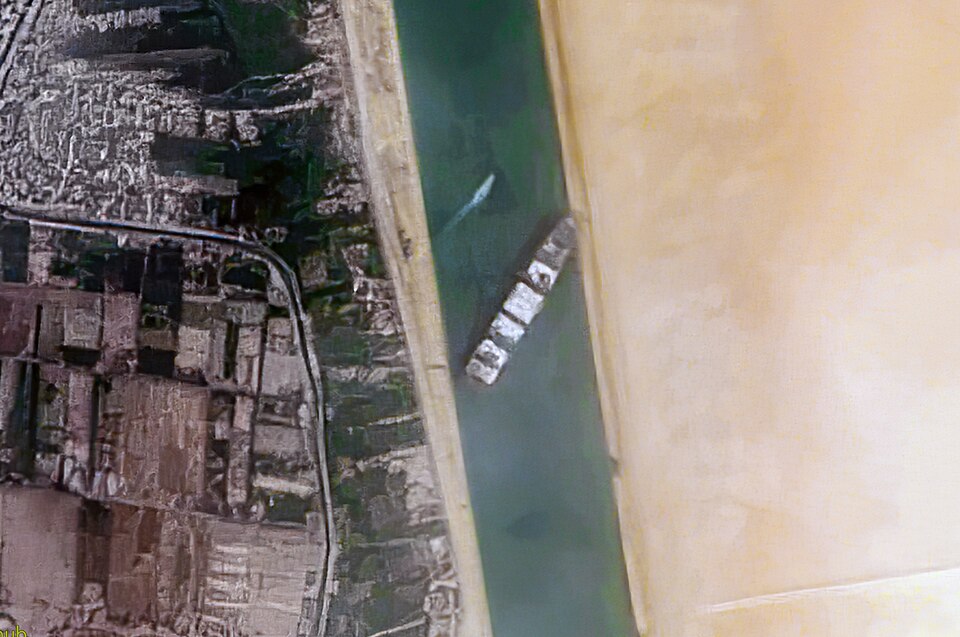
Egypt's security picture as of mid-2026 is calmer at home than at any point in a decade, but its borders are ringed by others' wars. The Sinai insurgency, which killed thousands after 2013, is largely dormant: the Islamic State's Sinai Province has claimed no major attack since early 2023, after Egyptian military operations conducted with allied Bedouin tribal fighters dismantled the group — a decline documented in UCDP conflict data — though analysts caution the peninsula's underlying neglect is unresolved. On Gaza, Egypt has been a central mediator: with Qatar and the United States it brokered the ceasefire framework agreed in October 2025, whose second phase took effect in February 2026 following exchanges of hostages and prisoners, as reported by Reuters and Al Jazeera. Egypt has channeled hundreds of thousands of tons of humanitarian aid through the Rafah crossing while firmly refusing any mass displacement of Palestinians into Sinai. In the Red Sea, Houthi attacks on shipping from late 2023 slashed Suez Canal traffic and cost Egypt billions in transit revenue; by early 2026 attacks had fallen to sporadic incidents and canal traffic and revenues were recovering, per Reuters and BBC News reporting, though shippers remain wary. Tensions with Ethiopia over the Nile dam persist diplomatically (see disputes).
Current as of 2026-07-16
Wars & Conflicts, Egypt
Contains modified Copernicus Sentinel data [2021], processed by Pierre Markuse / CC BY 2.0

Land & Border Disputes

Egypt's two principal external disputes concern a border and a river. The Hala'ib Triangle, roughly 20,500 square kilometers on the Red Sea coast, is claimed by both Egypt and Sudan — a legacy of conflicting 1899 political and 1902 administrative boundaries drawn under Anglo-Egyptian rule. Egypt has administered the area with a military presence since the mid-1990s; Sudan maintains its claim, and the dispute has never been submitted to international adjudication. A geographic curiosity results: neighboring Bir Tawil is claimed by neither state, since each country's preferred boundary assigns it to the other. Far weightier is the Nile. Egypt draws the overwhelming share of its fresh water from the river and invokes historic treaty allocations, while Ethiopia completed and inaugurated the Grand Ethiopian Renaissance Dam — Africa's largest hydroelectric project — on the Blue Nile in 2025 without the legally binding agreement on filling and drought operations that Egypt and Sudan demand. Cairo calls unilateral operation an existential threat; Addis Ababa calls the dam a sovereign development right. Years of African Union-led and internationally sponsored negotiations have not produced a binding accord, and UN Security Council sessions have urged the parties back to talks. The dispute remains diplomatic, not armed, but unresolved.
Land & Border Disputes, Egypt
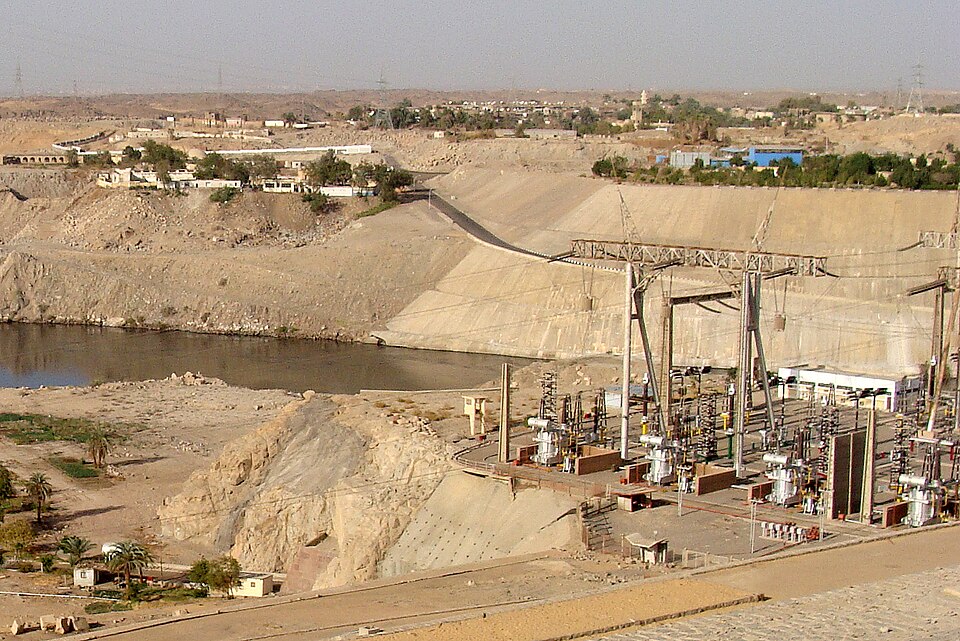
Silar / CC BY-SA 4.0
Land, Life & Legacy

Land & Climate

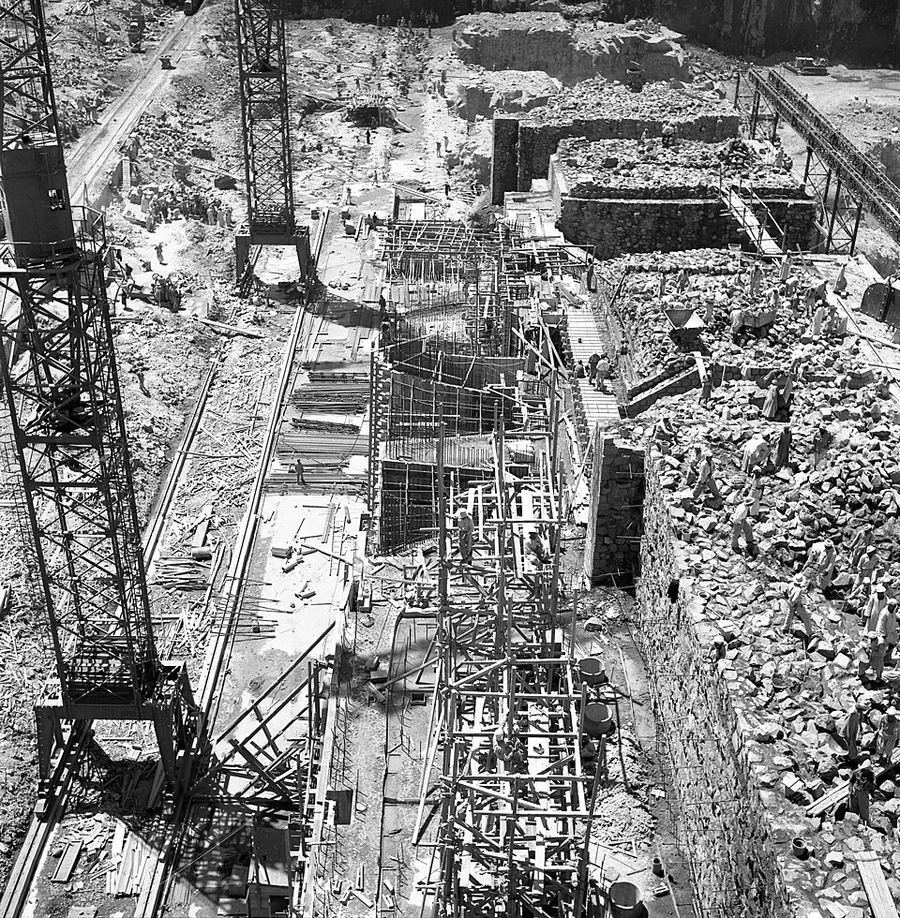
Egypt covers about one million square kilometres, almost all of it Sahara, and its population is concentrated on the few percent of land watered by the Nile. The valley and delta form one of the most extreme settlement patterns on earth, a thin green ribbon and fan visible from orbit. West of the river the Western Desert runs to Libya, broken by depressions and oases: Siwa, Kharga and Dakhla, and the Qattara Depression, which lies well below sea level. East of it the Eastern Desert rises to mountains along the Red Sea and holds the country's mineral and quarrying districts. The Sinai Peninsula, joining Africa to Asia, is mountainous in the south, where Mount Catherine at 2,629 metres is the highest point in Egypt. The Suez Canal cuts between the Mediterranean and the Red Sea. The Aswan High Dam, completed in 1970, created Lake Nasser and ended the annual Nile flood that had deposited silt on the fields for millennia. The climate is hot desert with negligible rainfall, slightly moderated on the Mediterranean coast around Alexandria; the low-lying delta is exposed to sea-level rise and saline intrusion.

Entertainment

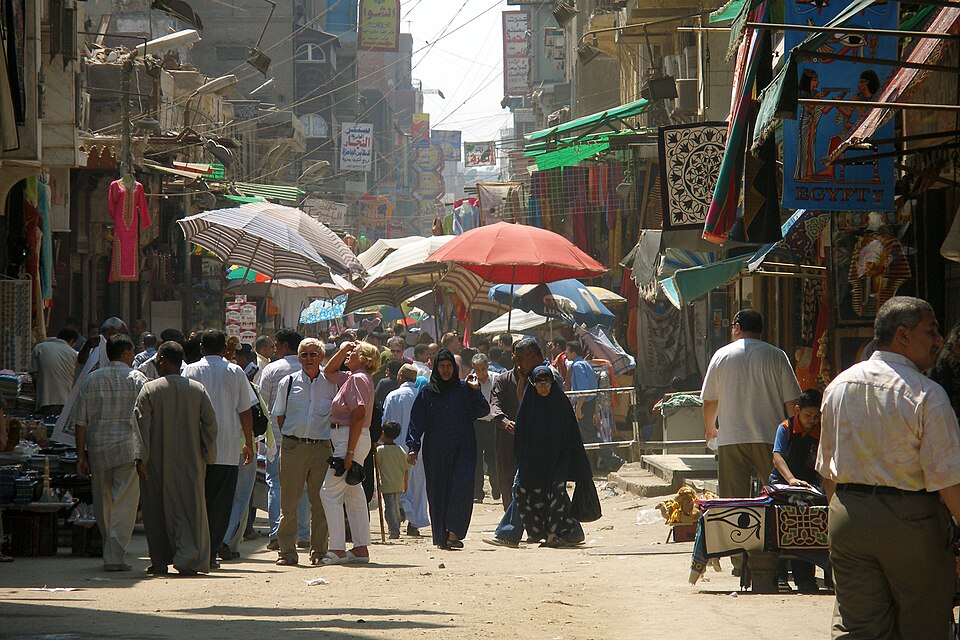
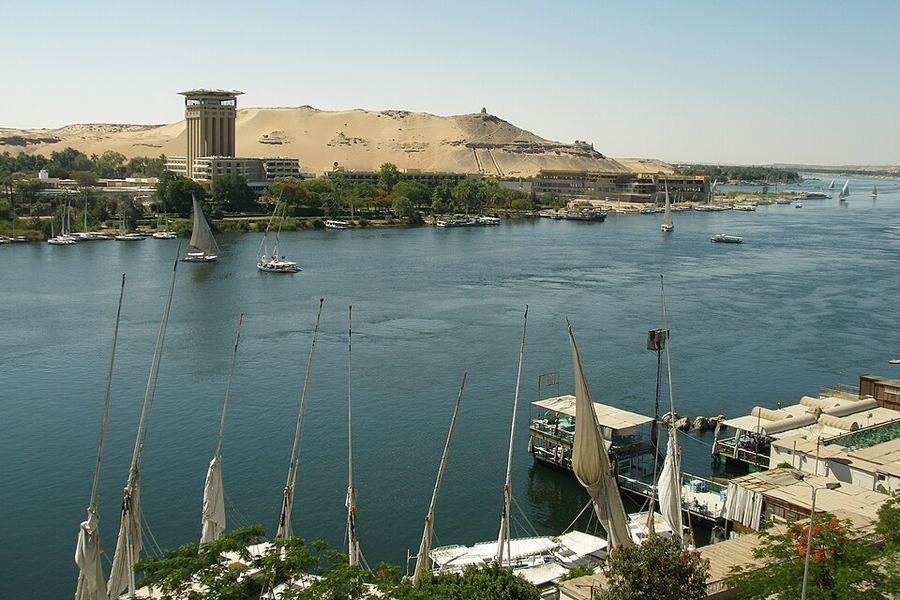
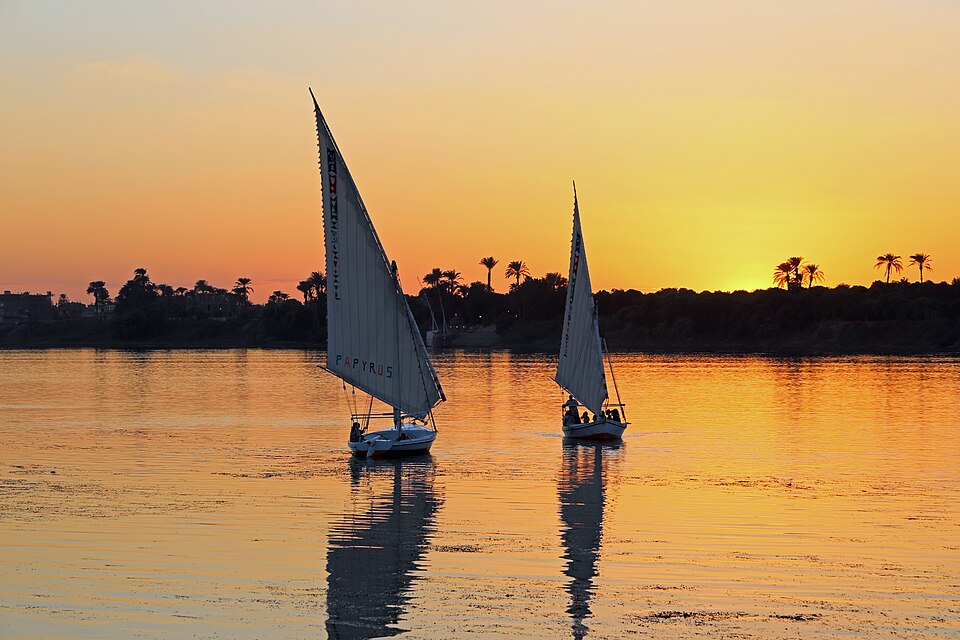
Egyptian leisure is social, nocturnal, and river-fed. Evenings belong to the ahwa, the coffeehouse where backgammon, dominoes, shisha, and conversation stretch past midnight; Ramadan inverts the clock entirely, with families promenading and cafés full until dawn. The Nile is the national promenade — Cairo's corniche fills nightly, feluccas sail at sunset, and multi-day cruises between Luxor and Aswan remain the classic Egyptian holiday. The Red Sea coast serves another appetite: Sharm El Sheikh, Hurghada, and Dahab rank among the world's premier diving and snorkeling grounds, part of a tourism sector that drew a record fifteen-million-plus visitors in 2024. Alexandria's beaches absorb the summer exodus from Cairo's heat. The cultural calendar runs from the Cairo International Film Festival — the Arab world's oldest, founded in 1976 — to the moulid saints' festivals that blend devotion with funfair, while the medieval lanes of Khan el-Khalili make shopping itself a pastime.
Entertainment, Egypt
Marc Ryckaert / CC BY-SA 4.0

Art & Museums

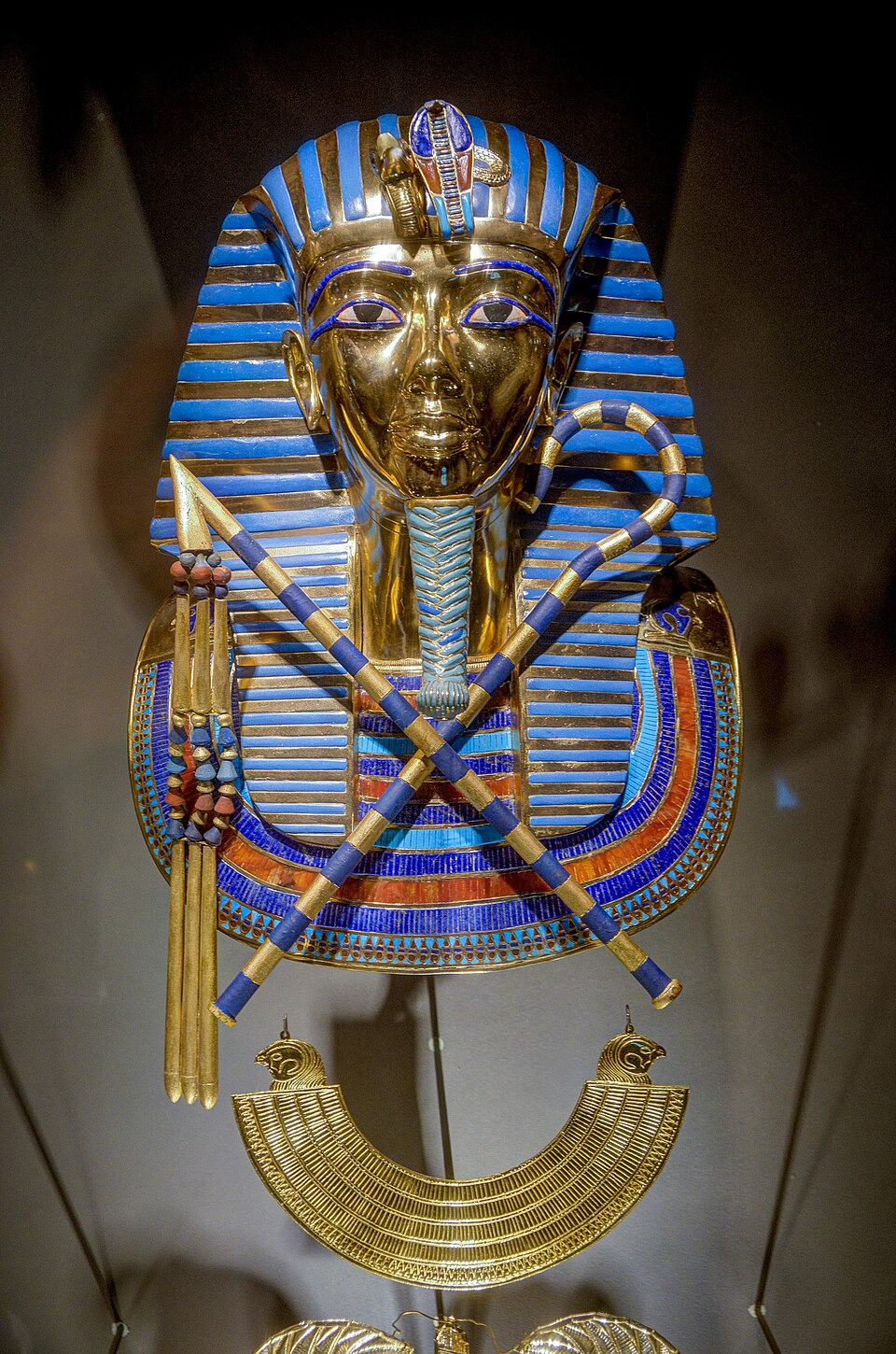
Egyptian art opens the story of art itself: tomb painting, monumental sculpture, and the strict frontal canon of the pharaonic workshops held steady for three thousand years, from the Palette of Narmer to the gold funerary mask of Tutankhamun — now the centerpiece of the Grand Egyptian Museum, opened near the pyramids in 2025 as one of the largest archaeological museums on Earth. Cairo's older Egyptian Museum on Tahrir Square, the Coptic Museum, and the Museum of Islamic Art curate the succeeding layers. Modern Egyptian art was born with the Cairo School of Fine Arts in 1908: sculptor Mahmoud Mokhtar fused pharaonic monumentality with nationalist feeling in his granite 'Egypt's Awakening,' unveiled in 1928; Alexandria's Mahmoud Saïd painted luminous scenes of ordinary Egyptians; and later figures like Inji Efflatoun and Abdel Hadi El-Gazzar turned to social realism and the surreal. The Mahmoud Khalil Museum in Giza holds one of the region's finest collections of French Impressionism.
Art & Museums, Egypt
Kenneth C. Zirkel / CC0

Notable People

Egypt's modern pantheon spans letters, science, and statecraft. Naguib Mahfouz, chronicler of Cairo's alleys in the Cairo Trilogy, won the 1988 Nobel Prize in Literature — the first Arabic-language laureate; Taha Hussein, the blind 'Dean of Arabic Letters,' had remade the language's prose a generation earlier. Chemist Ahmed Zewail earned the 1999 Nobel for femtochemistry, and surgeon Magdi Yacoub became one of the world's most celebrated heart-transplant pioneers. Diplomat Boutros Boutros-Ghali served as the first African Secretary-General of the United Nations (1992–96), while Anwar Sadat and Mohamed ElBaradei each received the Nobel Peace Prize. Umm Kulthum remains the Arab world's most revered voice, and actor Omar Sharif carried Egyptian charisma from Cairo studios into 'Lawrence of Arabia' and 'Doctor Zhivago.' Feminist pioneer Huda Shaarawi shaped the region's women's movement a century ago; footballer Mohamed Salah and squash champion Nour El Sherbini carry the flag today.
Notable People, Egypt
Unknown authorUnknown author / Public domain

Inventions & Breakthroughs

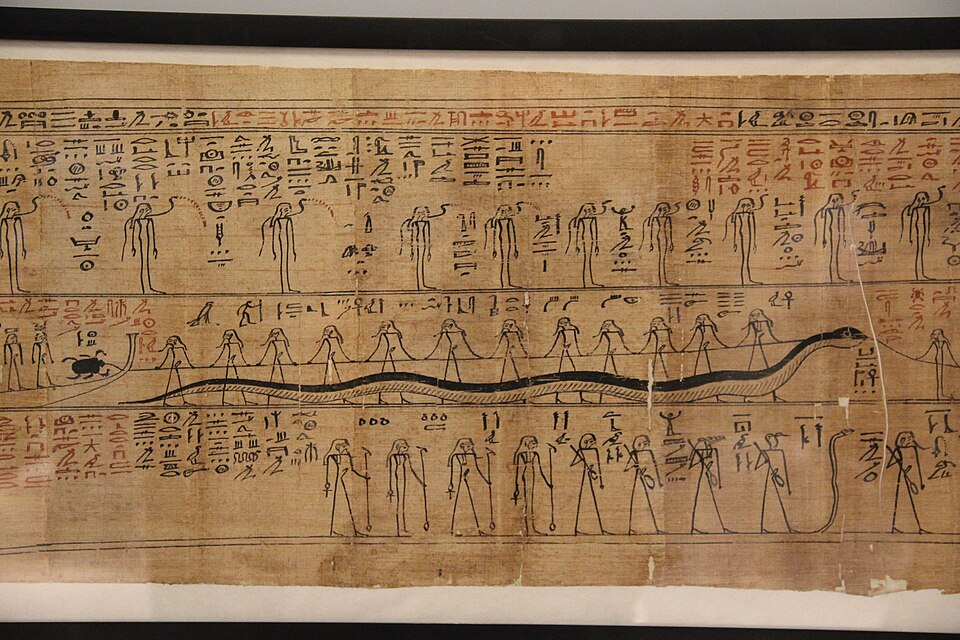
Ancient Egypt engineered much of civilization's toolkit. Its priests devised a 365-day solar calendar whose structure underlies the one the world keeps today; its scribes developed hieroglyphic writing and papyrus, the medium whose name gave 'paper' to European languages. Egyptian surveyors, re-measuring fields after each Nile flood, worked out the practical geometry later systematized by the Greeks; builders raised the pyramids with ramp, lever, and astonishing precision; and craftsmen pioneered glassmaking, faience, and large-scale copper metallurgy. Medicine matured early: the Edwin Smith Papyrus, copied around 1600 BCE, records surgical diagnosis and treatment with startling rationality, and Imhotep — architect of the first pyramid at Saqqara — was later deified as a god of healing. Egyptians also brewed beer, baked leavened bread, and kept some of history's earliest written records of taxation and administration. In the modern era, Ahmed Zewail's femtosecond chemistry — capturing atoms in the act of reacting — won the 1999 Nobel Prize.
Inventions & Breakthroughs, Egypt
Gary Todd from Xinzheng, China / CC0

Science & Technology

Egypt's best-known modern scientist is Ahmed Zewail, who received the 1999 Nobel Prize in Chemistry for femtochemistry, the use of ultrashort laser pulses to observe chemical bonds breaking and forming in real time; Zewail City of Science and Technology near Giza is named for him. Magdi Yacoub, one of the leading cardiothoracic surgeons of his generation, founded the Aswan Heart Centre. The Bibliotheca Alexandrina, opened in 2002 near the site of the ancient library, functions as a research and digital-library institution. Egypt's most striking recent public-health achievement is its campaign against hepatitis C, historically among the highest burdens in the world: a national screening and treatment programme reached tens of millions of people with direct-acting antivirals and cut prevalence sharply, a result recognised by the World Health Organization. In energy, the Benban solar park in Aswan is one of the largest photovoltaic complexes in the world, and the El Dabaa nuclear plant is under construction. The Egyptian Space Agency operates Earth-observation and communications satellites in the EgyptSat and NileSat series.
On The World Stage
Champions of Egypt

Champions & Defining Moments

Egypt's international scoreboard starts early: weightlifter El Sayed Nosseir won gold at Amsterdam 1928 — Egypt's first Olympic title — and in 1934 Egypt became the first African or Middle Eastern side to play at a FIFA World Cup. The Pharaohs' seven Africa Cup of Nations titles, most recently in 2010, remain the tournament record; Al Ahly of Cairo is Africa's most decorated club; and Mohamed Salah — a multiple African Footballer of the Year and Premier League top scorer — is the country's global face. Squash is Egypt's quiet empire: Nour El Sherbini has won the women's world championship many times over, and Egyptian men and women have simultaneously dominated the world rankings for much of the past decade. Recent Olympic cycles added Feryal Abdelaziz's karate gold at Tokyo 2020 — the first by an Egyptian woman — and Ahmed Elgendy's modern pentathlon gold at Paris 2024, won with a world-record score.

Анна Нэсси / CC BY-SA 3.0
Economy, Trade & Government

Currency & GDP

Egyptian Pound — EGP (£)

GDP (PPP): $1.958 trillion (2024 est.)

Per capita: $16,800 (2024 est.)

Exports

$68.218 billion (2023 est.)

refined petroleum, natural gas, fertilizers, garments, crude petroleum (2023)

Partners: Saudi Arabia 10%, Turkey 9%, Italy 6%, USA 5%, UAE 5% (2023)

Imports

$82.265 billion (2023 est.)

refined petroleum, wheat, plastics, natural gas, packaged medicine (2023)

Partners: China 16%, Saudi Arabia 6%, Russia 6%, USA 6%, Germany 5% (2023)

Government

Type: presidential republic

Independence: 28 February 1922 (from UK protectorate status; the military-led revolution that began on 23 July 1952 led to a republic being declared on 18 June 1953 and all British troops withdrawn on 18 June 1956)

Terrain → Where People Live

How mountains, coasts, and rivers shape settlement (LandScan).

Coming — data

Migration & Ethnic Settlement

Where groups settled and how people move (GeoEPR + UNHCR).

Coming — data

Universities

Notable institutions, mappable as points.

Coming — data
Economy & government facts: CIA World Factbook (public domain), via OpenFactBook / factbook.json.
Every fact and narrative claim will carry a visible source citation. Data-driven sections light up automatically wherever HERA has coverage.