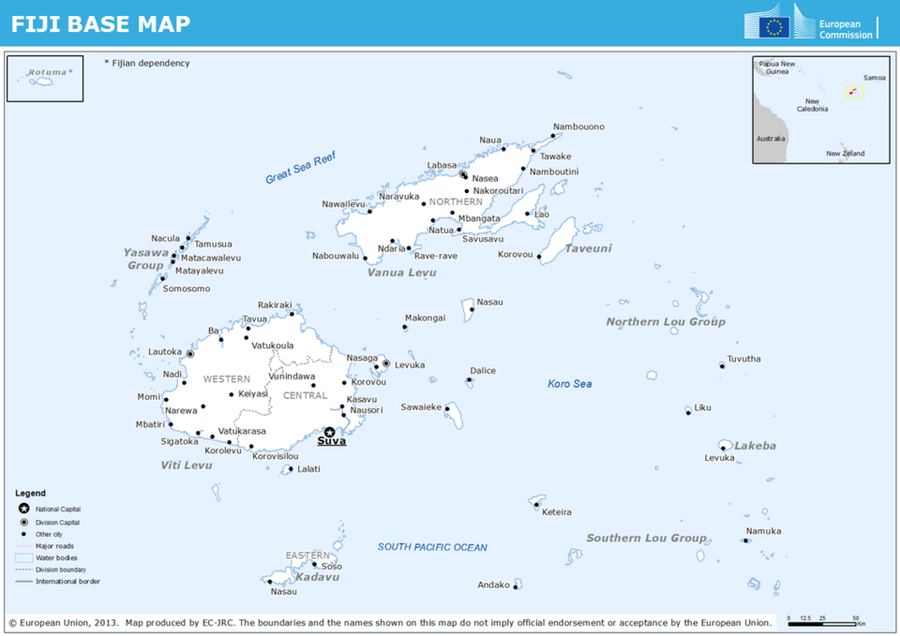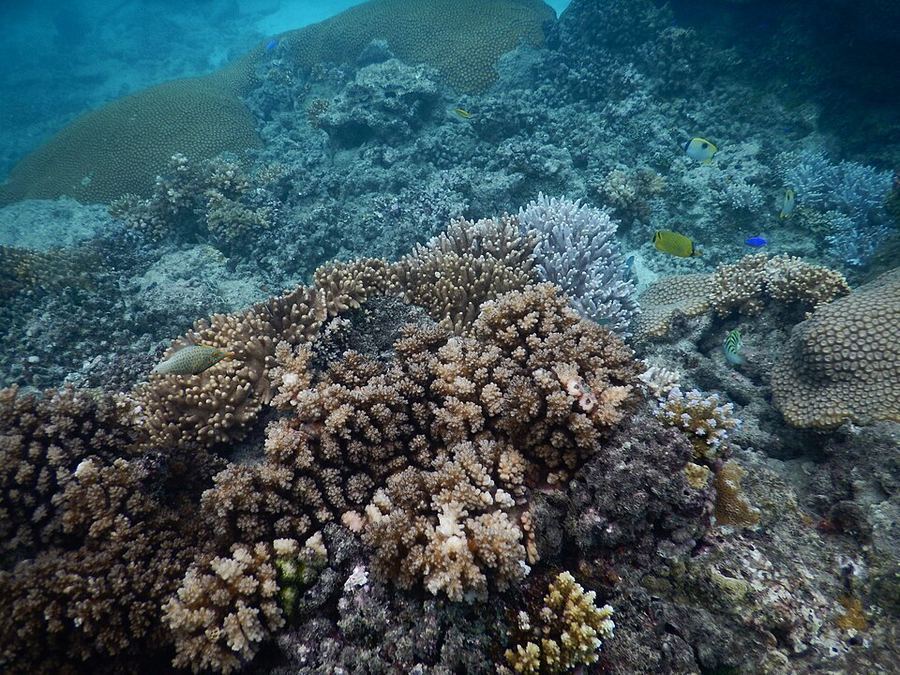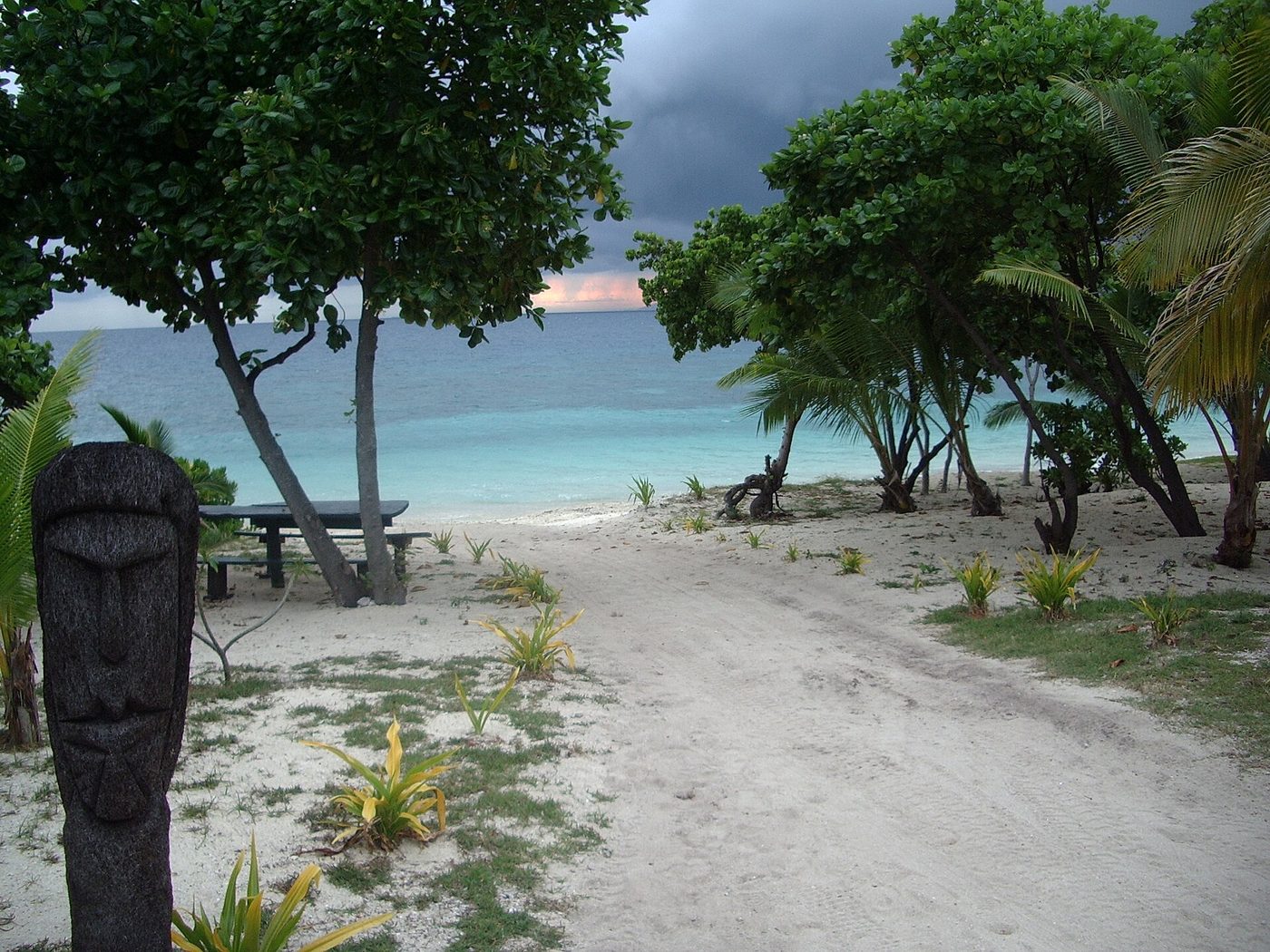
Fiji is a parliamentary republic of about 950,000 people spread across some 330 islands and more than 500 islets in the southwest Pacific, of which roughly a third are inhabited. Two large volcanic islands dominate: Viti Levu, which holds most of the population and the capital Suva, and Vanua Levu to the north, with the Yasawa, Mamanuca and Lau groups and the island of Taveuni completing the archipelago. Independence from Britain came on 10 October 1970. The population is built on two communities of comparable size and very different origins — the Indigenous iTaukei, who are close to three-fifths of the total, and Indo-Fijians descended from indentured labourers brought to the sugar plantations between 1879 and 1916, now about 37 percent — and this relationship has been the central fact of Fijian politics since independence. English, iTaukei and Fiji Hindi are all official. Methodist and other Protestant churches, Hinduism, Catholicism and Islam are all substantial. The economy runs on tourism, bottled water, fish, sugar and remittances, with GDP per head at purchasing power parity around 14,100 dollars, and Fiji functions as the transport, university and diplomatic hub of the central Pacific.
Suva's urban core is home to about 242,910 people.
Among the world's megacities, though, it's one of many — the giants of Asia and Latin America run larger still:
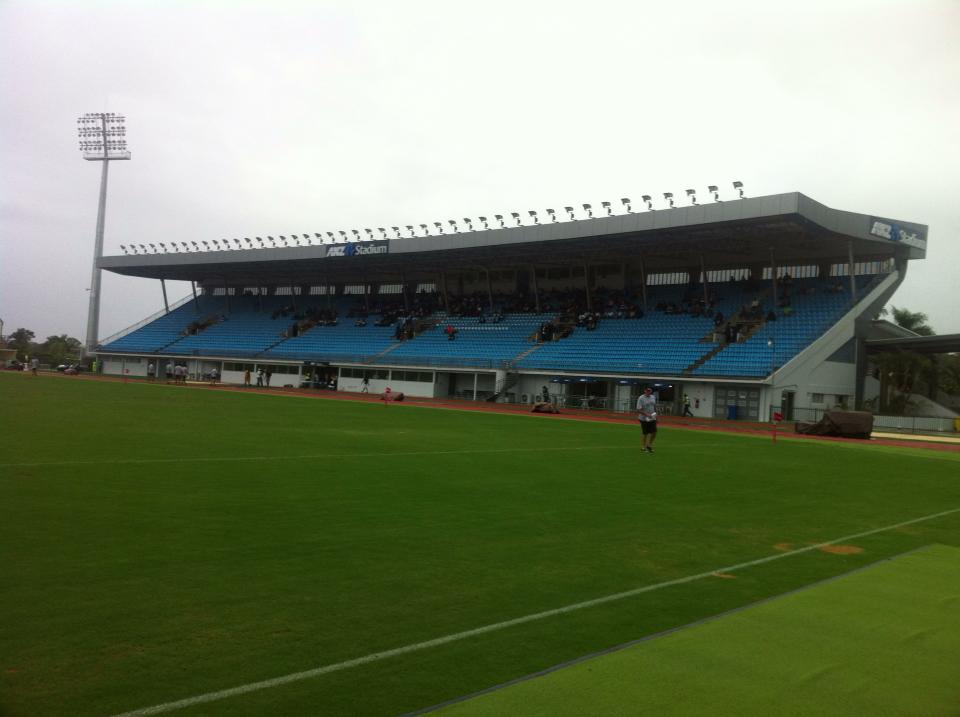
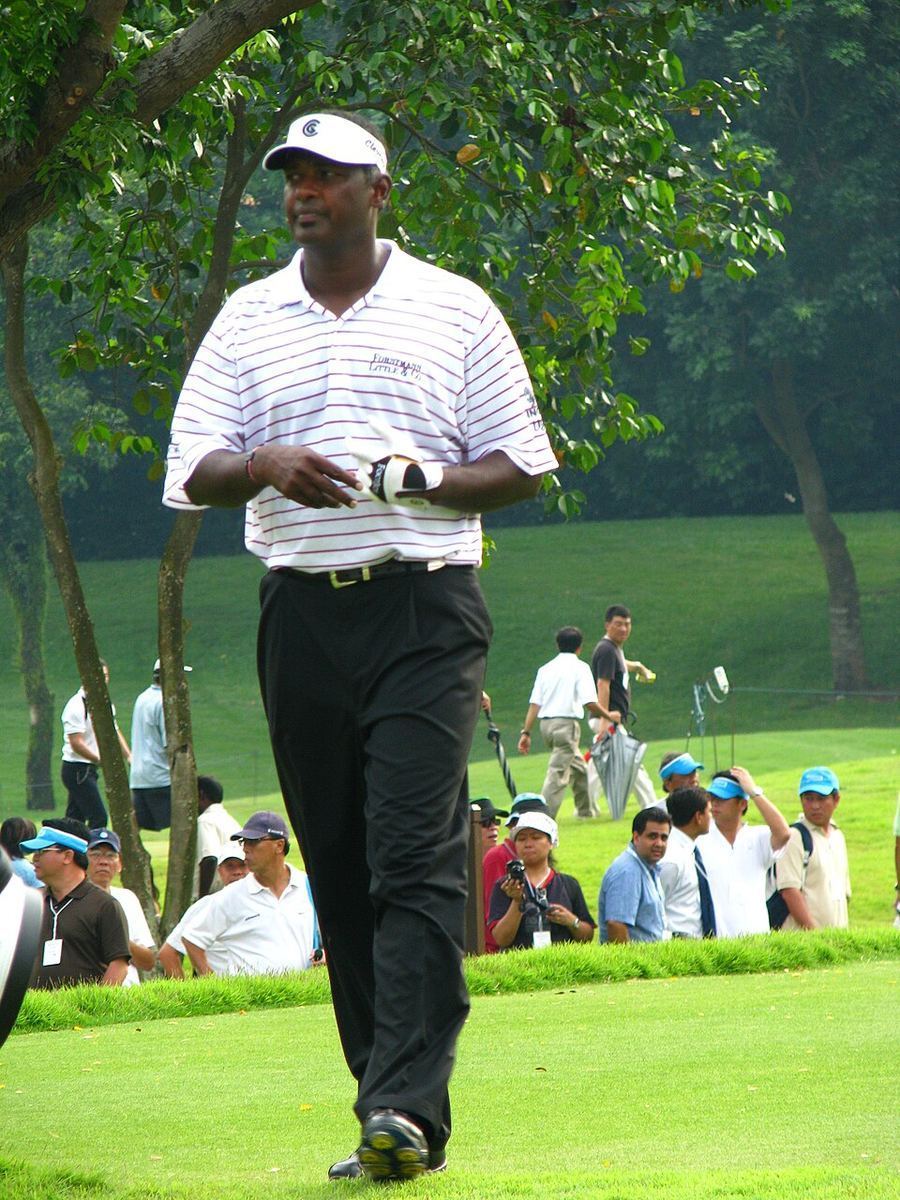
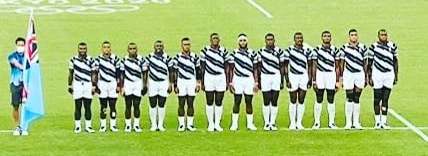
Fiji's arrival at the top of world sport came on 11 August 2016 in Rio de Janeiro, when the men's rugby sevens team beat Great Britain 43-7 in the final of the discipline's first Olympic tournament to win the country's first Olympic medal of any kind. The team defended the title at Tokyo in 2021, and Jerry Tuwai became one of very few players to win sevens gold twice. The women's sevens team won bronze in Tokyo. Beyond the Olympics, Fiji has won the Rugby World Cup Sevens and multiple World Rugby Sevens Series titles, and the Flying Fijians beat Australia at the 2023 Rugby World Cup, their first win over that side in more than sixty years, before narrowly missing the quarter-finals. In golf, Vijay Singh won the PGA Championship in 1998 and 2004 and the Masters in 2000, and displaced Tiger Woods as world number one in 2004. Fijian rugby league players have been prominent in Australian competition, and the national league side reached the World Cup semi-finals in 2013 and 2017.
Fiji Dollar — FJD ($)
GDP (PPP): $13.1 billion (2024 est.)
Per capita: $14,100 (2024 est.)
$2.376 billion (2022 est.)
water, fish, raw sugar, refined petroleum, garments (2023)
Partners: USA 32%, Australia 12%, Tonga 6%, NZ 6%, Samoa 4% (2023)
$3.434 billion (2022 est.)
refined petroleum, medical instruments, cars, broadcasting equipment, plastics (2023)
Partners: Singapore 25%, China 16%, Australia 15%, NZ 14%, USA 5% (2023)
Type: parliamentary republic
Independence: 10 October 1970 (from the UK)
How mountains, coasts, and rivers shape settlement (LandScan).
Coming — dataWhere groups settled and how people move (GeoEPR + UNHCR).
Coming — dataNotable institutions, mappable as points.
Coming — data