HERA · Human Entity Reference Atlas by Masego Inc

← Guinea 🌐 3D View
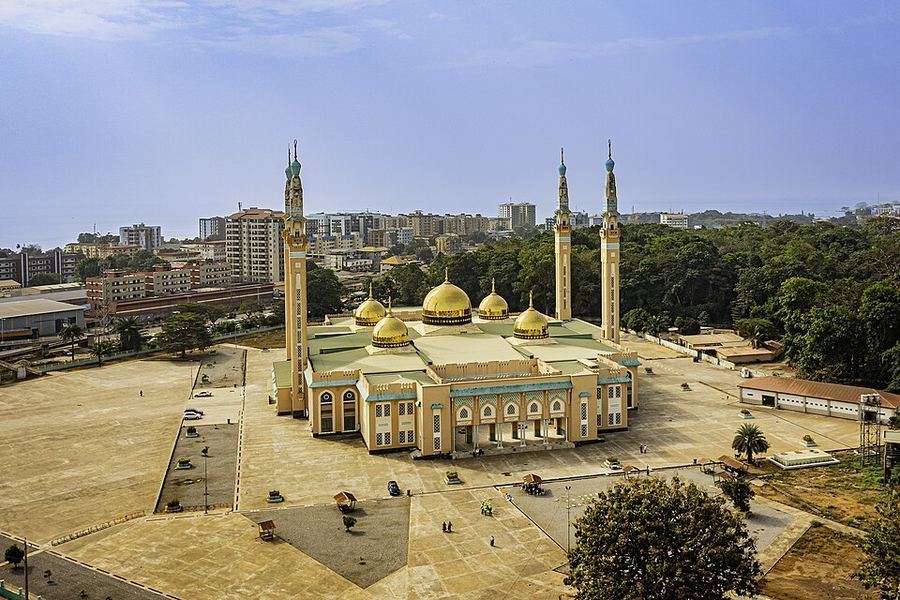
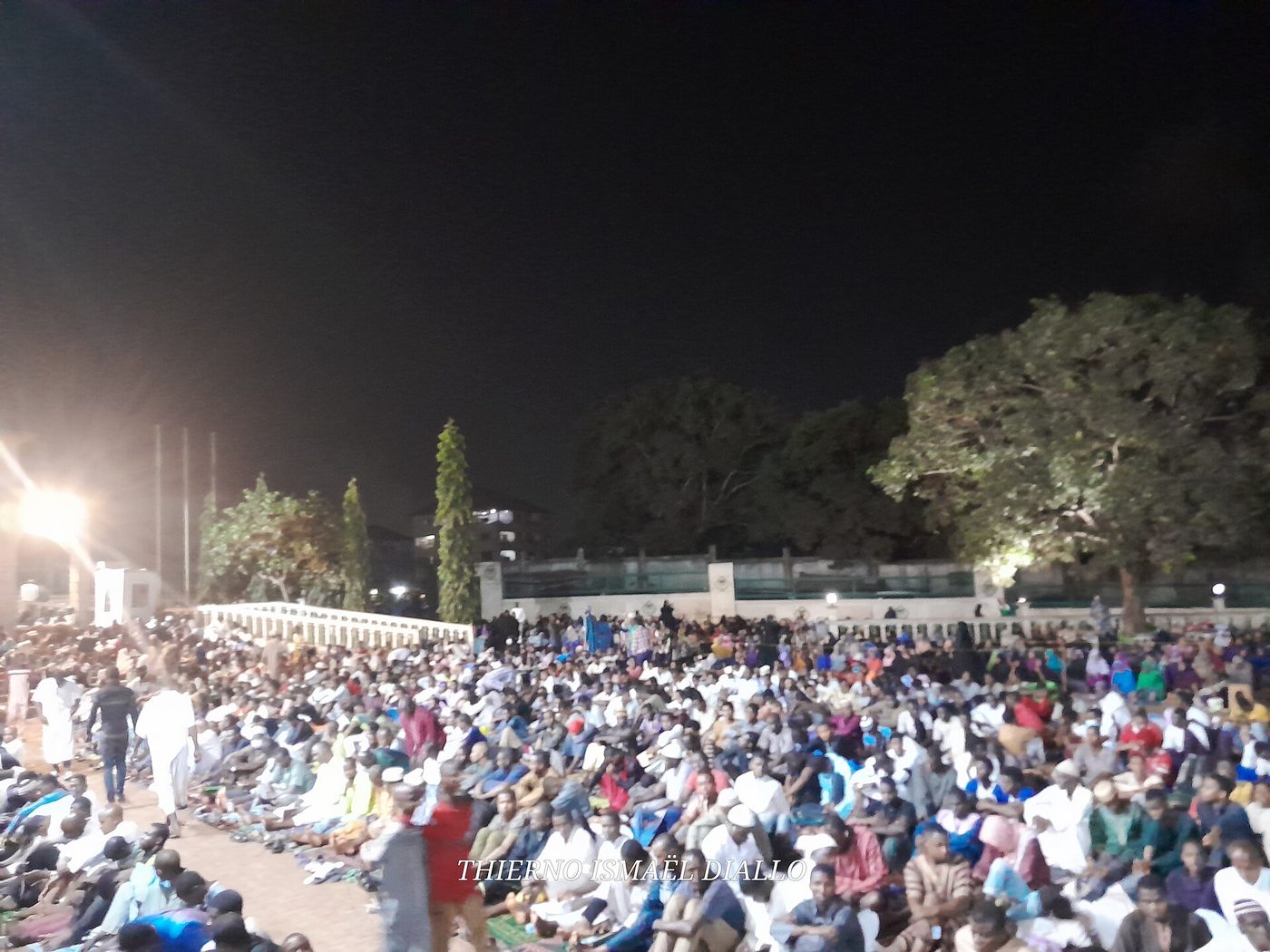
C'était le 1ère jour de l'ayde elfitre au mosquée turque de koloma, Guinea
Guinea GIN
C'était le 1ère jour de l'ayde elfitre au mosquée turque de koloma — Photo: Thierno ismaël jallow / CC BY-SA 4.0 via Wikimedia Commons
Did You Know The Sosso-Bala, a sacred balafon kept at Niagassola whose custodians trace it to the founding of the Mali empire in the thirteenth century, is recognised by UNESCO as intangible cultural heritage. — UNESCO

Guinea is a West African republic of roughly 14 million people on the Atlantic, bordered by Guinea-Bissau, Senegal and Mali to the north, Côte d'Ivoire to the east and Sierra Leone and Liberia to the south. Conakry, the capital, occupies the narrow Kaloum peninsula and the island of Tombo and holds a large share of the country's urban population. The country is conventionally divided into four natural regions that differ almost entirely from one another: the mangrove coast of Lower Guinea, the highland plateau of the Fouta Djallon in Middle Guinea, the Niger savanna of Upper Guinea around Kankan, and the rainforest of Forest Guinea in the southeast. Those highlands give Guinea a role far beyond its borders — the Niger, the Senegal and the Gambia all rise there, which is why the country is often called the water tower of West Africa. Guinea holds the world's largest bauxite reserves and is among its leading exporters, and it sits on the Simandou iron ore deposit, one of the largest untapped high-grade bodies anywhere. It became independent on 2 October 1958 after being the only French African territory to reject de Gaulle's proposed community outright. Politics since has been dominated by long authoritarian rule and repeated military seizures of power, most recently in September 2021.

CIA World FactbookEncyclopaedia BritannicaWorld Bank
Population
14,374,590
Capital
Conakry
Currency
Fr GNF
Time zones
Largest city
Coyah
Human Geography Themes
Loading national figures…
Largest Cities
Coyah2,991,111
Siguiri304,099
Nzérékoré298,616
Kankan287,892
Labé245,719
Kindia199,159
Kamsar127,958
Kissidougou117,154
In Perspective

Coyah's urban core is home to about 2,991,111 people.

That's bigger than Rome and Amsterdam — each a great world city in its own right.

Coyah2,991,111
Rome2,556,354
Amsterdam1,223,407

Among the world's megacities, though, it's one of many — the giants of Asia and Latin America run larger still:

Coyah2,991,111
Jakarta40,545,126
Dhaka37,307,160
Tokyo33,244,670
Shanghai30,678,616
Cairo25,230,325
The Country & Its People

History

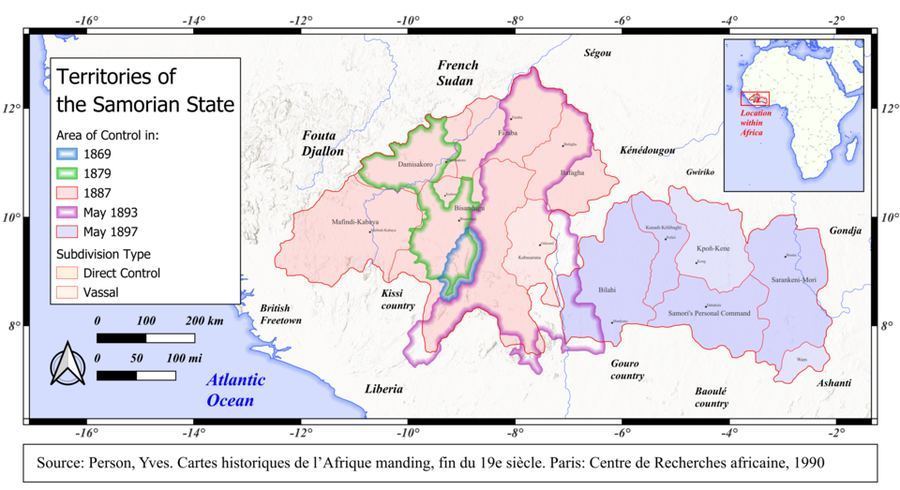
Much of Upper Guinea lay within the medieval empires of Ghana and then Mali, and the Mandinka heartland around Kankan and Siguiri remains culturally continuous with that inheritance. In the Fouta Djallon, Fulani pastoralists and Muslim clerics established an Islamic state in the 1720s — one of West Africa's earliest jihad states — governed by an imamate that alternated between two lineages and that made the highlands a centre of Qur'anic learning. In the second half of the nineteenth century Samori Touré built the Wassoulou empire out of Mandinka territory and fought a sustained sixteen-year war against French expansion before his capture in 1898, an episode Guineans treat as foundational. French Guinea was consolidated into French West Africa thereafter. In September 1958 Guinea became the only territory to vote no in de Gaulle's referendum on the French Community, and Sékou Touré declared that Guineans preferred poverty in liberty to riches in slavery; France withdrew abruptly and comprehensively. Touré ruled until his death in 1984 through a one-party state whose Camp Boiro detention centre became notorious. Lansana Conté seized power in 1984 and held it until 2008; a junta followed, elections in 2010 brought Alpha Condé to office, and soldiers under Mamadi Doumbouya deposed him in September 2021.
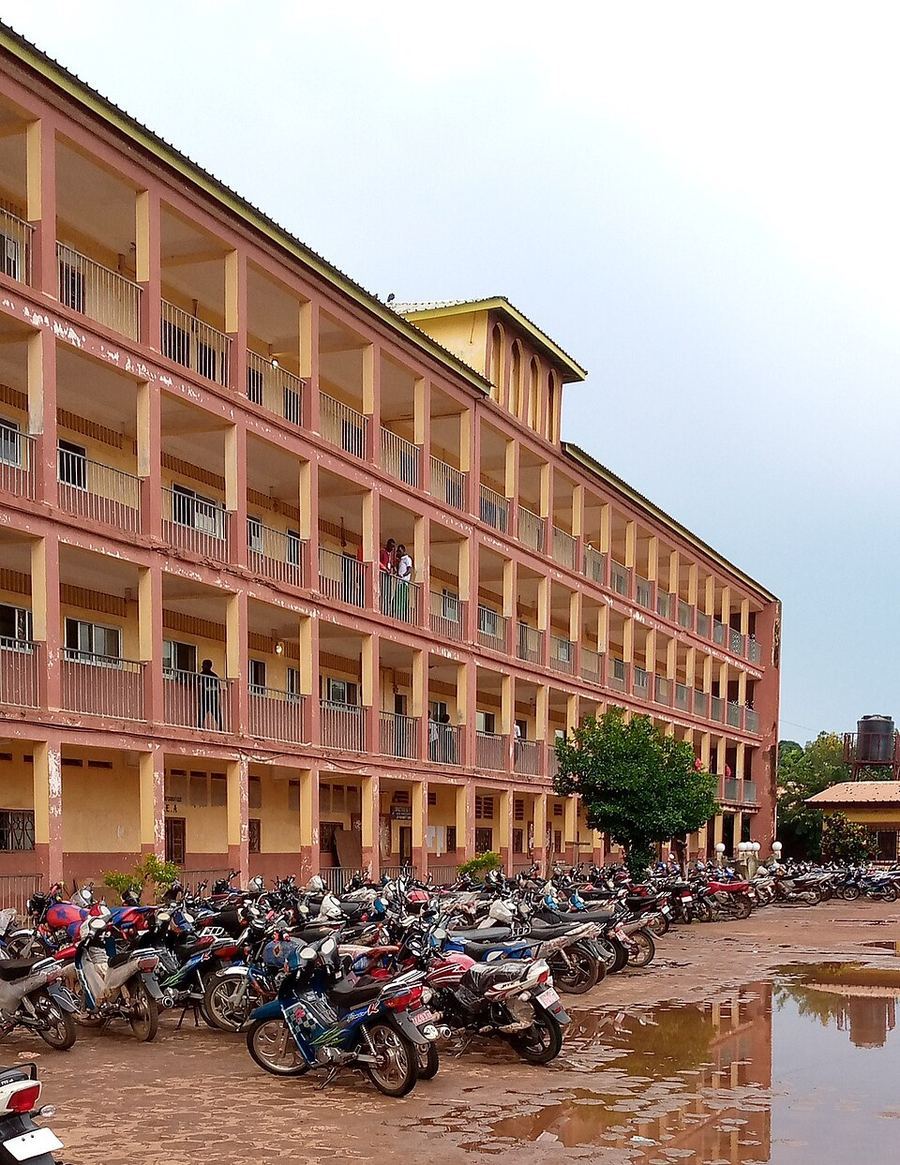
Culture

Guinean society maps closely onto its four regions. The Fulani, the largest group at about a third of the population, are concentrated in the Fouta Djallon and combine a long pastoral tradition with an unusually deep Islamic scholarly culture. The Malinke of Upper Guinea are Mande-speakers whose social order retains the old distinction between free lineages, artisan castes and the hereditary jeli or griots who carry history, genealogy and music. The Susu dominate the coast and Conakry, and their language works as an urban lingua franca alongside French. In the southeastern forest the Kpelle, Kissi and Loma maintain masking societies and initiation associations that regulate age, knowledge and authority. Islam is overwhelming — more than eight Guineans in ten are Muslim, mostly Maliki Sunni shaped by the Tijaniyya and Qadiriyya Sufi orders — with Christian and traditional minorities concentrated in the forest region. Extended family obligation, deference to elders and to religious authority, and a strong ethic of hospitality run through all four regions. Regional and ethnic identity remains politically charged, and electoral contests have repeatedly been read along Fulani and Malinke lines.

Points Of Pride

The vote of 1958 is Guinea's foundational point of pride: alone among France's African territories it chose immediate independence, accepted the punitive withdrawal that followed, and became a reference point for anti-colonial movements across the continent. Musically the country's standing is extraordinary for its size. Les Ballets Africains, founded by Keïta Fodéba and adopted as the national company after independence, was the first African dance troupe to tour the world and carried the Malinké djembe to a global audience; Bembeya Jazz National and Mory Kanté, whose Yé ké yé ké became one of the first African records to sell in the millions in Europe, followed. Two UNESCO recognitions anchor the heritage claim: the Mount Nimba Strict Nature Reserve, shared with Côte d'Ivoire and inscribed as World Heritage in 1981, and the cultural space of the Sosso-Bala at Niagassola, a sacred balafon whose custodians trace it to the thirteenth century and the founding of the Mali empire. Guineans also point to the Fouta Djallon as the source of three of West Africa's great rivers, to Samori Touré's long resistance, and to the world's largest bauxite reserves.

Cultural Fusion

Guinea sits at the junction of the Sahelian Mande world, the Fulani highlands and the Atlantic forest, and its culture is a negotiation among the three. Islam arrived with trans-Saharan and Mande trade and was consolidated by the Fouta Djallon imamate, but it settled over older practice rather than erasing it: masking societies, initiation groves and shrine observance persist in the forest region and, in attenuated form, elsewhere. Mande griot traditions, Fulani devotional poetry and coastal Susu popular music have cross-pollinated for generations, and the state-sponsored authenticité programme after 1958 deliberately fused traditional instruments — kora, balafon, bolon, djembe — with electric guitars and horns in the great national orchestras. French remains the language of the state, schooling and the press, but it competes with a genuinely indigenous literacy movement: the N'Ko script devised in Kankan in 1949 is taught in informal schools and used in publishing across the Mande-speaking region. Lebanese merchant families are long established in Conakry, Chinese and Emirati capital dominates the mining sector, and a large Guinean diaspora in France, the United States and neighbouring West African states sends back both remittances and cultural influence.

Music & Dance

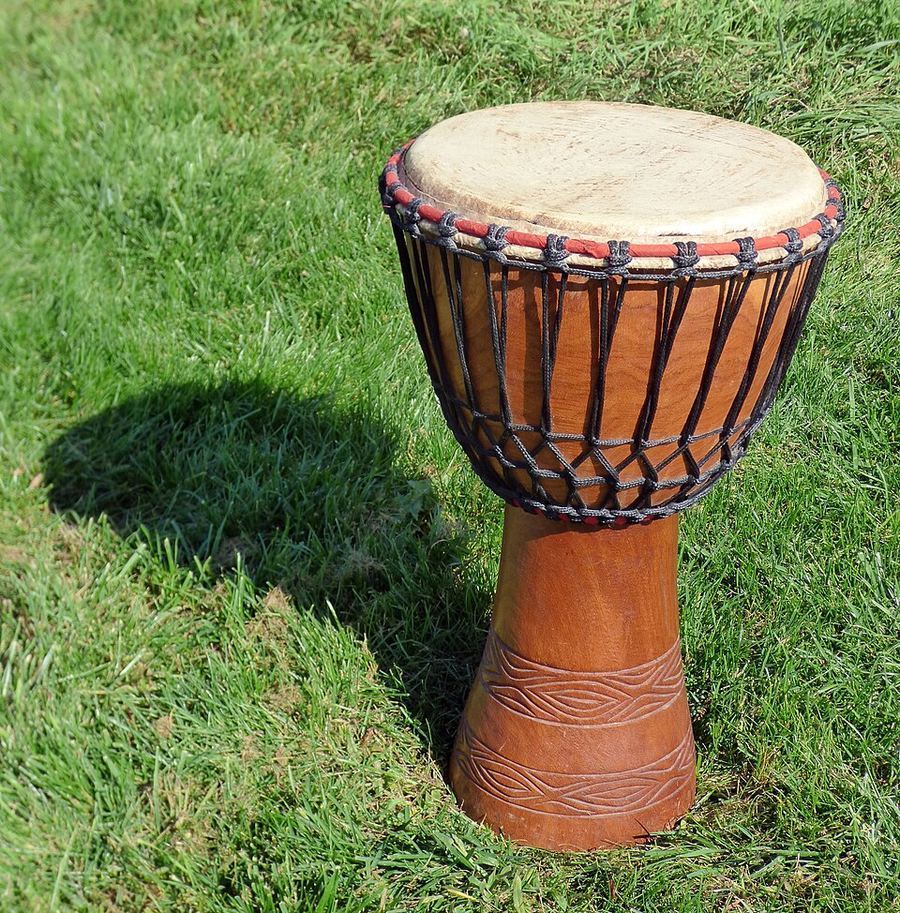
Guinea's musical influence is out of all proportion to its size. The djembe, a goblet drum played with bare hands and tuned with a rope system, is a Malinké instrument that Guinean performers carried to the world; the drum is played in an ensemble with the deeper dunun bass drums, and the choreographed repertoire attached to it — rhythms for harvest, initiation, marriage and hunting — reached international audiences through Les Ballets Africains after 1959 and through the teaching of Mamady Keïta, whose schools trained djembe players on several continents. The Mande jeli tradition supplies the other pillar: hereditary griot families performing epic and praise song on the kora, the balafon and the ngoni, transmitting the Sundiata cycle and the genealogies of the old empires. The Sosso-Bala balafon kept at Niagassola, treated as a relic of that era, is recognised by UNESCO and is played only on prescribed occasions. In popular music the state orchestras of the 1960s and 1970s — Bembeya Jazz National above all, with the guitarist Sékou Diabaté — created a distinctive Guinean sound, and Mory Kanté later brought kora-driven dance music to European charts.

Cuisine & Misattributed Foods

Rice is the centre of the Guinean plate, eaten daily and usually served under a thick sauce. Sauce arachide, a groundnut stew with meat or fish, and sauce feuille made from pounded cassava leaves cooked slowly with palm oil and smoked fish are the two most common; okra sauce, sweet potato leaf sauce and tomato-based riz gras cooked in one pot complete the everyday range. Smoked and dried fish from the coast and from the Niger travels far inland and gives much Guinean cooking its base flavour, alongside palm oil, chilli, onion and the fermented locust-bean condiment sold in dark cakes. In the Fouta Djallon, fonio — a fine-grained ancient West African cereal that grows on poor soil and cooks quickly — is a regional speciality and a point of local pride, served with sauce or as a couscous-like accompaniment; Guinea is among its principal producers. Cassava, plantain, maize, taro and sweet potato supplement rice, and mangoes, papaya, pineapple and citrus are abundant. Latchiri, a Fulani millet couscous eaten with curdled milk, is the classic highland dish, and sweetened ginger drinks and bissap made from hibiscus are the common refreshments.

National Dress

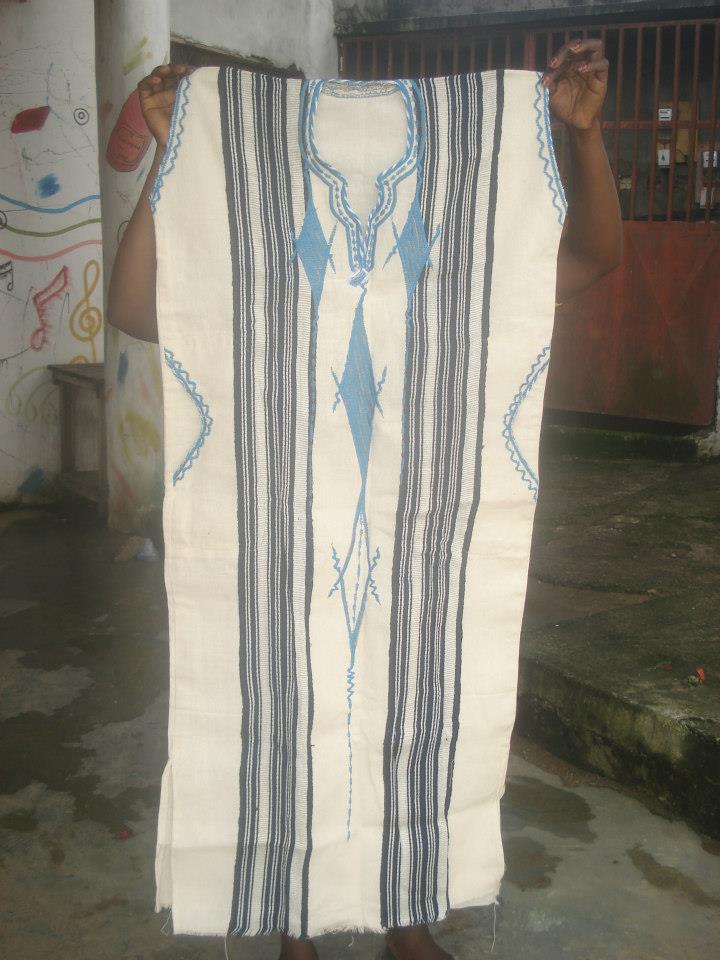
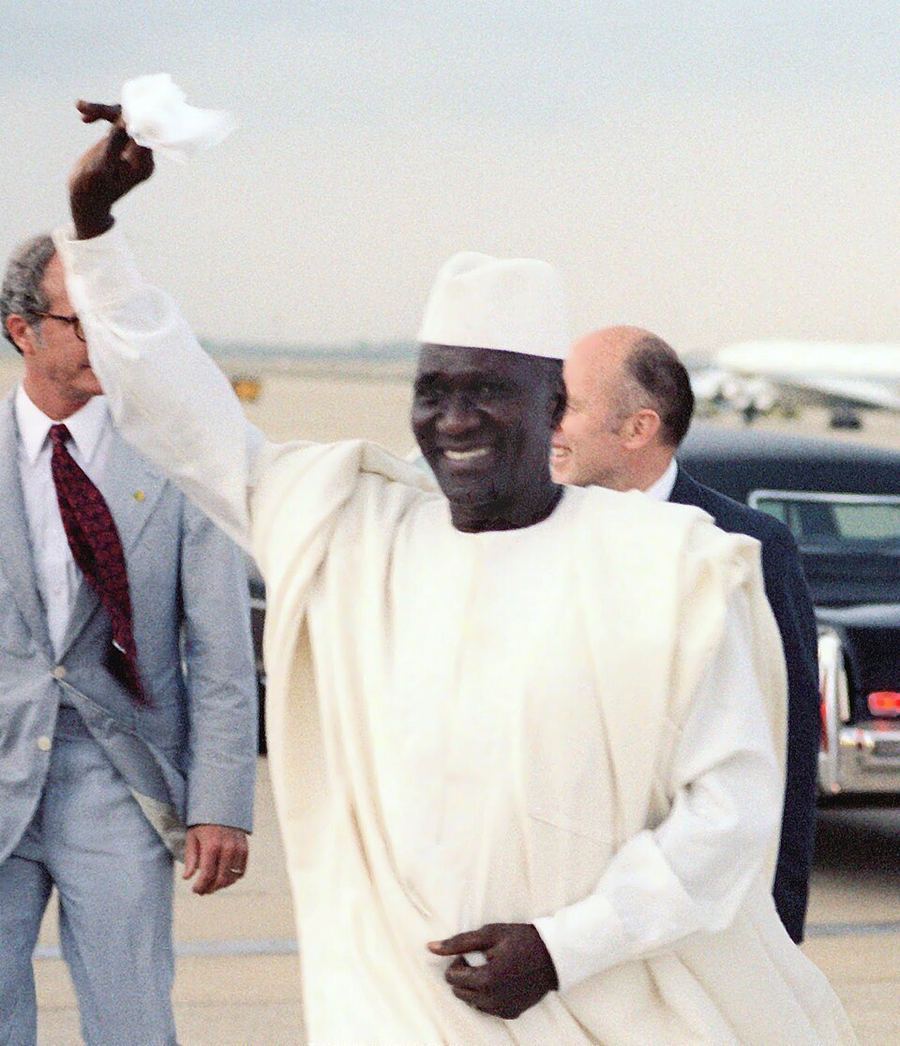
The grand boubou is the standard formal dress for Guinean men — a wide, ankle-length robe worn over a matching shirt and drawstring trousers, often in bazin riche, a heavily starched and beaten damask whose sheen signals expense and care. Embroidery around the neck and chest is done by hand or machine, and a small embroidered cap completes it. Women wear a matching three-piece of wrapper, tailored top and headwrap, also frequently in bazin or in printed wax cloth, with the tying of the headwrap treated as a genuine skill. Regional dress carries real meaning: in the Fouta Djallon, indigo-dyed cotton cloth woven and resist-dyed locally is the traditional textile, and Fulani women are known for large crescent-shaped gold ear ornaments and elaborately plaited hair with a raised central crest. In the forest region, raffia, bark cloth and fibre costumes belong to masking societies rather than to daily wear. Since independence the state has periodically promoted locally woven and dyed cloth over imported fabric as a matter of cultural policy, and Guinean tailoring remains almost entirely made to measure rather than ready to wear.

Sports & Inspiring Athletes

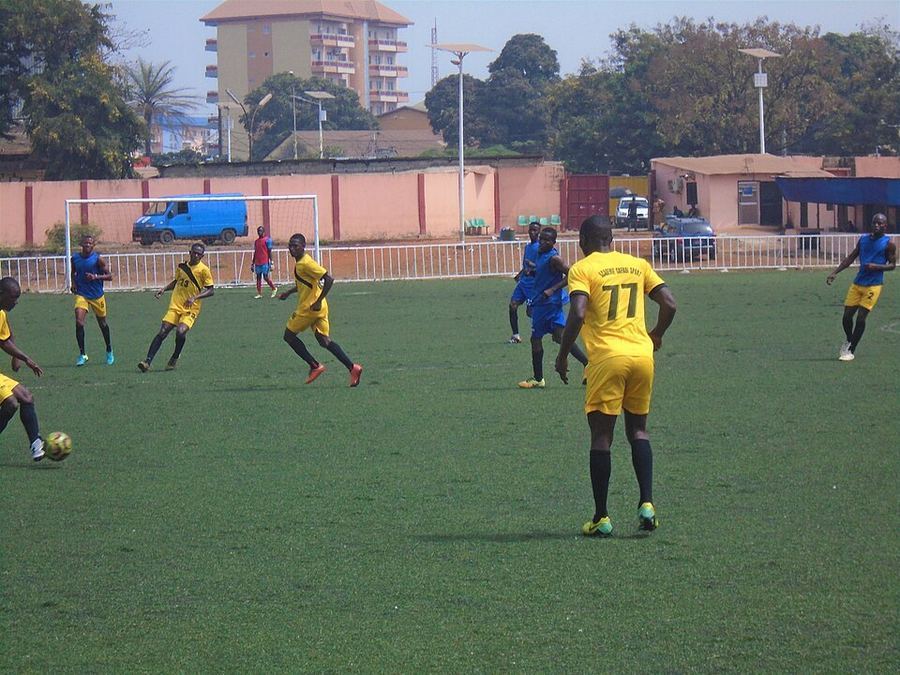
Football dominates Guinean sport. The national team, the Syli National — the elephants, in Susu — finished as runners-up at the 1976 Africa Cup of Nations, their best result, and have qualified regularly since without reaching a FIFA World Cup. The domestic game's golden era belonged to Hafia FC of Conakry, which won the African Cup of Champions Clubs three times in the 1970s, in 1972, 1975 and 1977, an achievement no other Guinean club has approached; Horoya AC has been the strongest modern side. Guinea was awarded the hosting of the 2025 Africa Cup of Nations but was stripped of it in 2022 after inspections found the infrastructure unready, a decision that was felt keenly at home. Beyond football, athletics, judo and boxing have modest federations, and basketball has a following in Conakry. Traditional Mande wrestling remains popular in Upper Guinea, and canoe racing persists on the coast and the Niger. Guinean players have long been a significant export to the French league system, and the country's academies now supply clubs across Europe and North Africa.

Notable Educational Programs

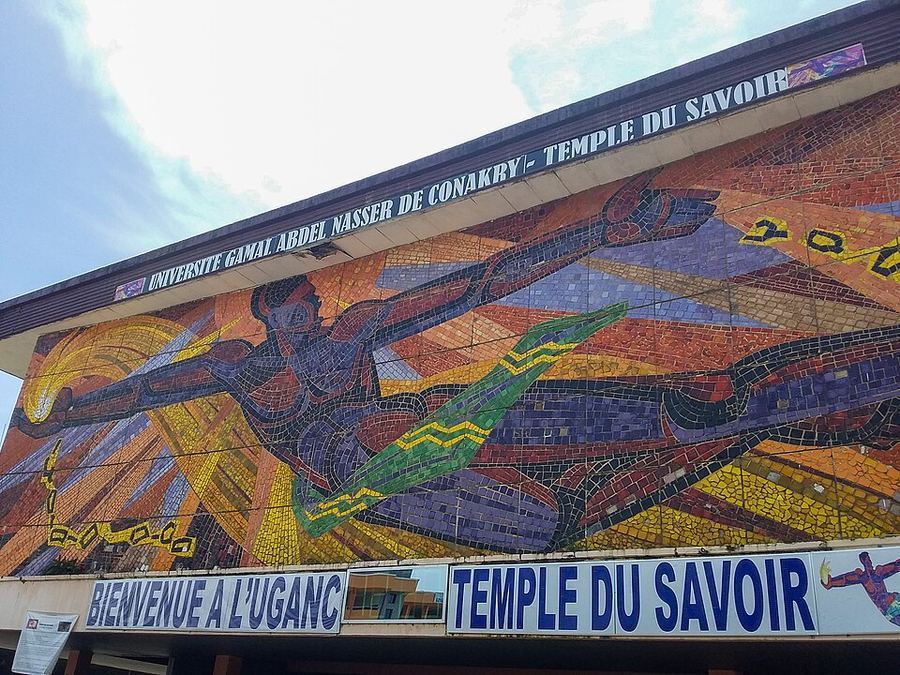
Guinea's education system reaches far fewer children than those of its coastal neighbours, and adult literacy remains among the lowest in West Africa, with a wide gap between men and women and between Conakry and the rural interior. Primary schooling is officially free and compulsory, and enrolment has risen substantially since the 1990s, but completion rates, teacher qualifications and the availability of textbooks remain weak, and the system was badly disrupted first by the Ebola epidemic, which closed schools for months in 2014 and 2015, and later by political unrest. French is the language of instruction throughout; an ambitious attempt under Sékou Touré to teach in national languages was reversed in the 1980s. Qur'anic schools are widespread, particularly in the Fouta Djallon, and function as the first or only schooling for many children, while N'Ko literacy classes offer an informal adult route to reading and writing in Maninka. Higher education is centred on the Université Gamal Abdel Nasser in Conakry, founded in 1962, and the Université Julius Nyerere at Kankan, supplemented by mining, health and teacher-training institutes and by substantial student emigration to Morocco, Senegal and France.

Wars & Conflicts

Guinea has escaped full civil war but has endured sustained state violence and repeated coups. Under Sékou Touré the one-party state responded to real and alleged plots with mass arrests; the Camp Boiro detention centre in Conakry became the emblem of a repression in which large numbers of prisoners died or disappeared, and successive governments have faced unresolved demands for accounting. In the 1990s and early 2000s Guinea absorbed several hundred thousand refugees from the wars in Liberia and Sierra Leone, and in 2000 and 2001 rebel incursions into the Parrot's Beak salient near Guéckédou drew the army into cross-border fighting that displaced tens of thousands. A general strike in 2007 was met with lethal force. The gravest single episode came on 28 September 2009, when security forces attacked an opposition rally in a Conakry stadium, killing more than 150 people and raping many women; a domestic trial opened in 2022 and in 2024 convicted the former junta leader Moussa Dadis Camara and several co-defendants of crimes against humanity. Soldiers deposed President Alpha Condé in September 2021, and the African Union and ECOWAS suspended Guinea's membership.
UCDPHuman Rights WatchAmnesty InternationalReutersBBCUNHCR
Current as of 2026-08-06

Land & Border Disputes

Guinea's borders are largely settled, and its one persistent territorial disagreement is small but stubborn: the village of Yenga on the Makona river, on the frontier with Sierra Leone. Guinean troops moved into the area during joint operations against Sierra Leonean rebels around 2001 and did not fully withdraw, and although the two governments have repeatedly agreed in principle that Yenga is Sierra Leonean and have signed communiqués on demilitarising the area, the matter has never been finally closed. Guinea's maritime boundary with Guinea-Bissau was determined by an arbitral tribunal in 1985, and the boundary with Sierra Leone at sea and the land frontiers with Senegal, Mali, Côte d'Ivoire and Liberia are not actively contested, though all are porous and lightly policed. The disputes that matter most in practice are internal and resource-related: compensation, land loss, water contamination and resettlement around the bauxite operations in the Boké region have produced repeated protests and litigation, and the long-delayed development of the Simandou iron ore deposit has generated significant contractual and corruption litigation in several foreign jurisdictions.
CIA World FactbookUNHuman Rights WatchReuters
Land, Life & Legacy

Land & Climate

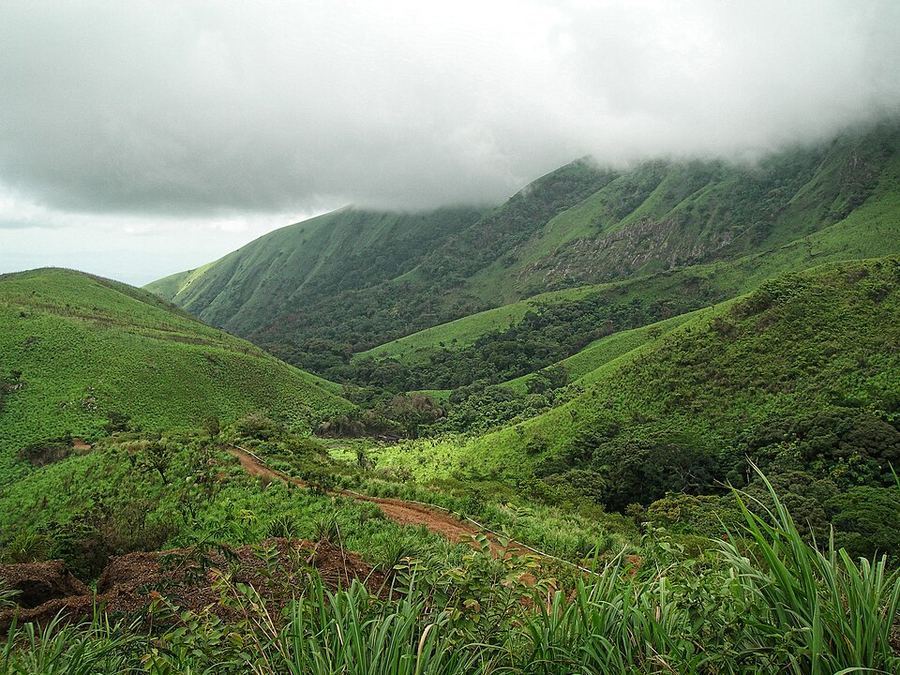
Guinea's four natural regions are unusually distinct. Lower Guinea is a humid coastal plain roughly 300 kilometres long, fringed with mangrove and cut by tidal estuaries, and it receives some of the heaviest rainfall in West Africa — Conakry's wet season is among the wettest of any capital city. Behind it the land climbs to the Fouta Djallon, a sandstone plateau of steep escarpments, waterfalls and cool nights that functions as the region's principal watershed: the Niger, the Senegal and the Gambia all rise within it, along with numerous coastal rivers, which is the basis for calling Guinea the water tower of West Africa. East of the plateau, Upper Guinea is drier savanna draining to the upper Niger around Kankan and Siguiri. In the southeast, Forest Guinea holds the surviving block of Upper Guinean rainforest and rises to the Nimba range on the Liberian and Ivorian frontier, where Mount Richard-Molard is the country's highest point. The climate is tropical with a sharply marked wet season from roughly May to November and a dry season dominated by the dusty harmattan; deforestation, mining disturbance and erosion on the plateau are documented environmental pressures.

Entertainment

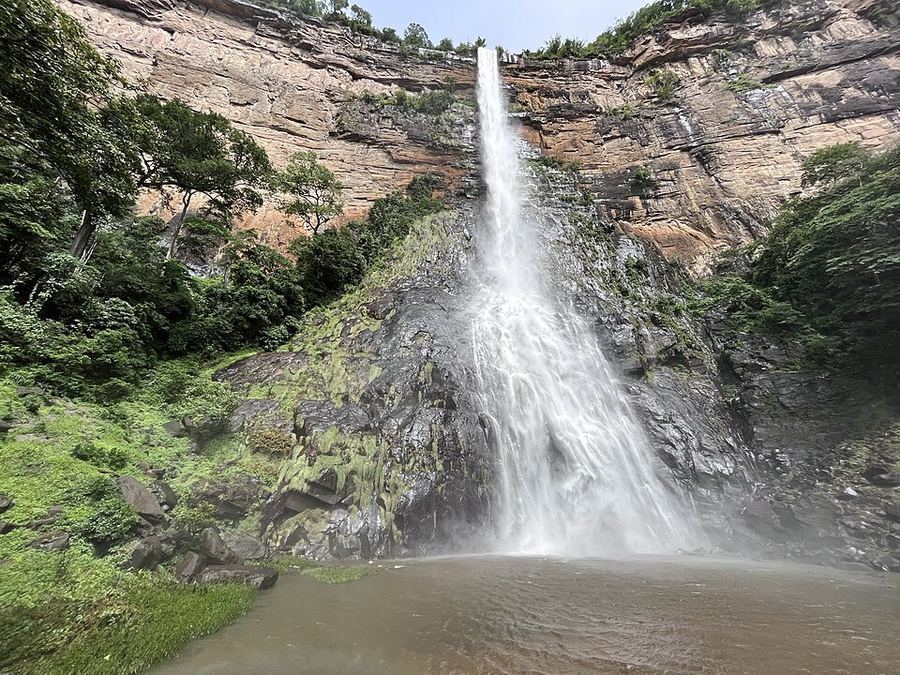
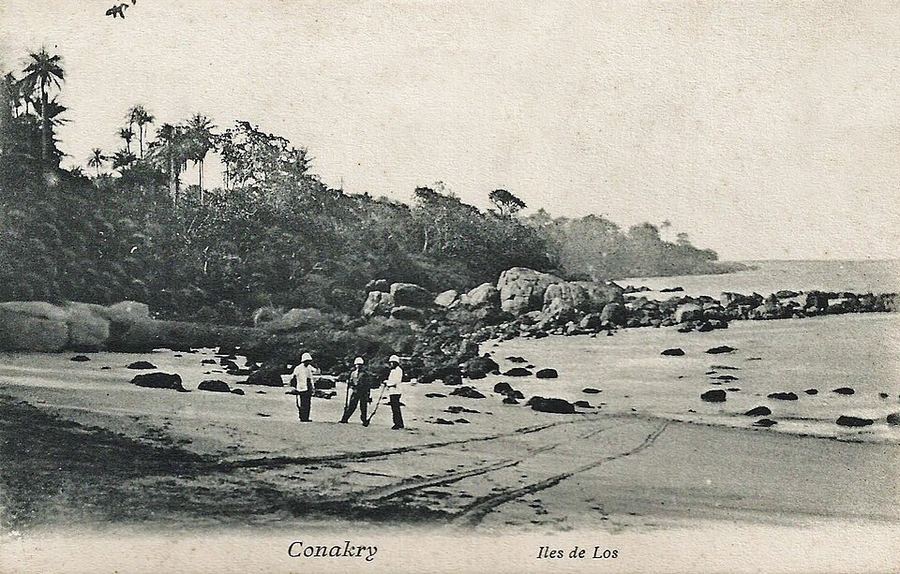
Guinean leisure is overwhelmingly communal and takes place outdoors. Football is watched and played everywhere, on sand pitches and in the street as much as in stadiums, and the fortunes of the Syli National are a national preoccupation during Africa Cup of Nations qualifying. Weddings, naming ceremonies held a week after a birth, and religious festivals — Tabaski and the end of Ramadan above all — are the major occasions for gathering, and they mobilise music, cooking, new clothes and the redistribution of meat on a substantial scale. Griot performance and drum and dance events remain live entertainment rather than heritage display, particularly in Upper Guinea. In Conakry, beach outings to the Îles de Los just offshore, open-air bars, live music and a vigorous nightlife occupy weekends, and green tea prepared in three successive rounds is the standard setting for long conversation. Domestic travel for leisure is limited by roads and income, but the Fouta Djallon's waterfalls around Dalaba, Pita and Labé, the Ditinn and Kambadaga falls and the cool highland air draw visitors, and the Nimba range and the forest region attract a small research and ecotourism traffic.

Art & Museums

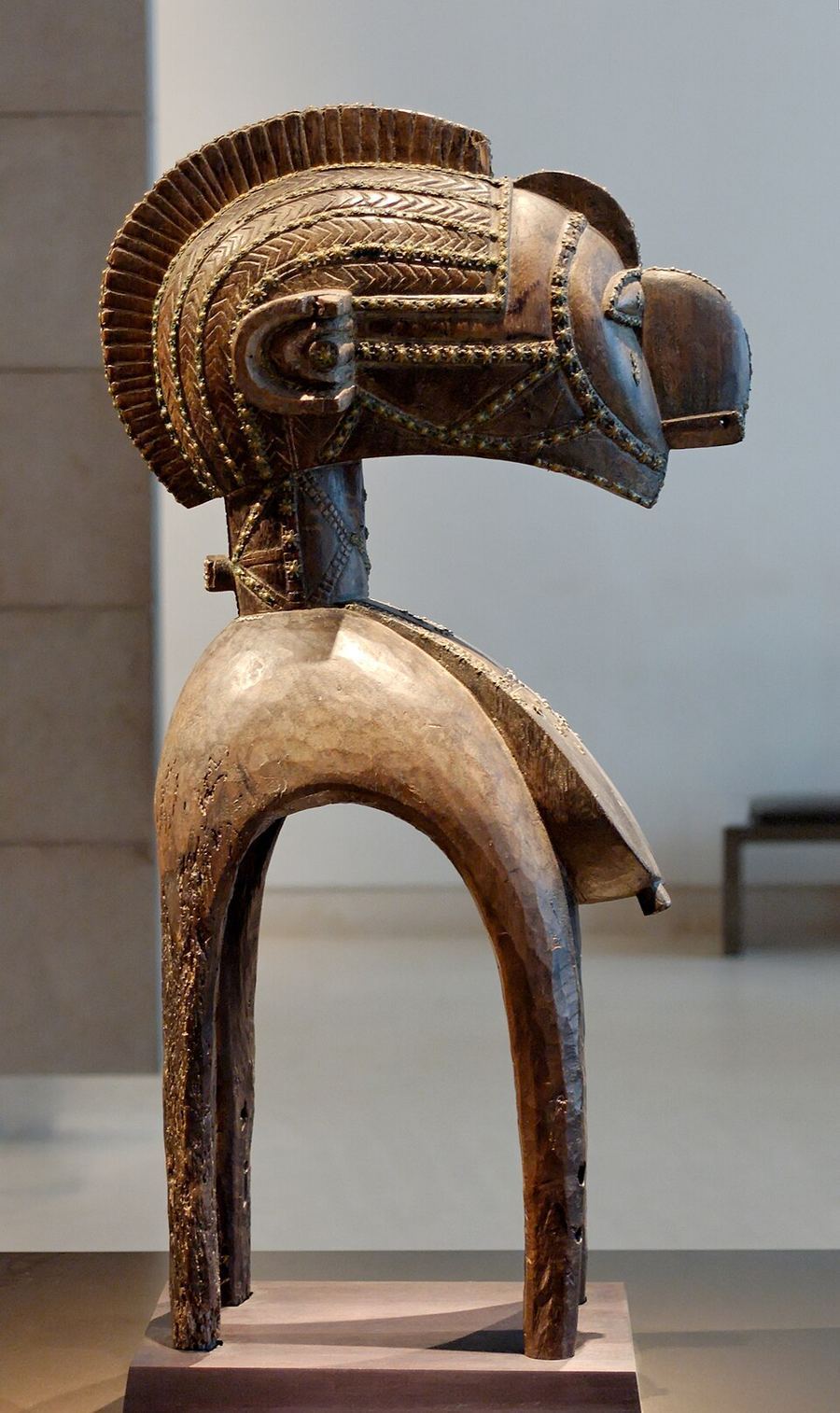
Guinea's coastal Baga produced one of the most celebrated sculptural forms in African art: the D'mba, a monumental shoulder mask carried by a dancer whose body is concealed beneath raffia, representing an idealised mother — a great head with a strongly ridged nose, pendulous breasts and an elaborate crest, supported on four legs. Examples entered European collections early and were admired by modernist artists in Paris; major museums abroad hold important pieces. The Baga also carved a-Tshol or elek shrine sculptures, sinuous bird-headed forms mounted on posts. In the forest region the Loma and Toma made large horizontal landai masks used in initiation, while the Kissi are associated with pomdo, small soapstone figures unearthed in their territory and reused as ancestral objects. Mande blacksmith and leatherworker castes supply the region's metalwork, amulets and instrument-making. Contemporary practice is concentrated in Conakry, where painting, photography and design have grown around independent galleries and the biennial cultural festivals, and where much of the visual energy of the country now goes into album art, textile design and the graphic culture of the music industry.
Metropolitan Museum of ArtBritish MuseumEncyclopaedia Britannica

Notable People

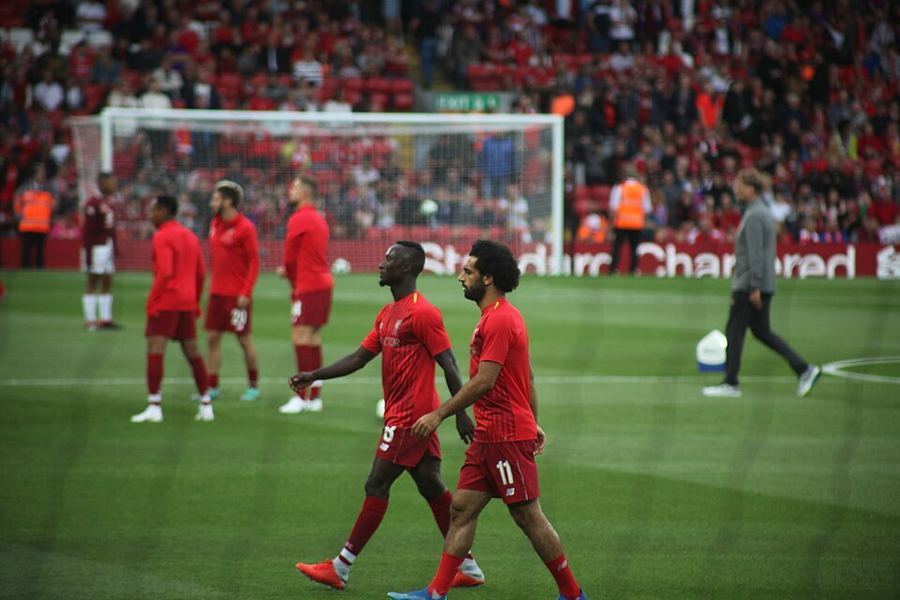
Samori Touré, who built the Wassoulou empire and fought the French for sixteen years before his capture in 1898, is Guinea's great pre-colonial figure. Ahmed Sékou Touré, the trade unionist who led the country to independence in 1958 and then governed it until 1984, is the defining and most contested figure of the modern state; Lansana Conté, Alpha Condé and Mamadi Doumbouya have led it since. In literature, Camara Laye's L'Enfant noir, published in 1953, is among the foundational works of francophone African writing and remains a school text across the region, and Tierno Monénembo won the Prix Renaudot in 2008. Guinea's musical figures are the best known abroad: Keïta Fodéba, who founded Les Ballets Africains in Paris and made it the national company; Mory Kanté, the kora player whose Yé ké yé ké became an international hit in 1987; Mamady Keïta, who did more than anyone to teach the djembe outside Africa; and Sékou Diabaté of Bembeya Jazz National. In football, Naby Keïta of Liverpool and RB Leipzig and Serhou Guirassy are the highest-profile contemporary players, following Titi Camara and Pascal Feindouno.
Encyclopaedia BritannicaBBCAgence France-Presse

Inventions & Breakthroughs

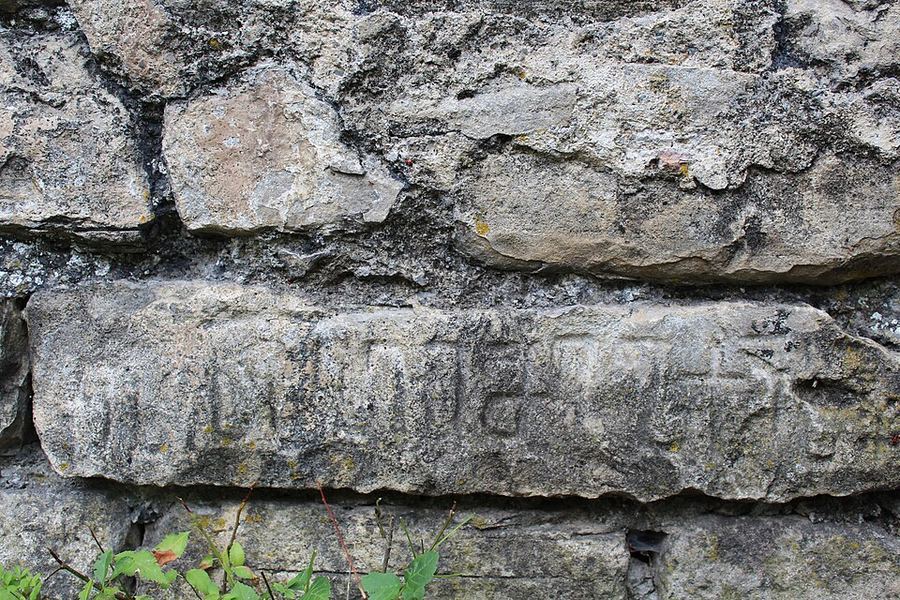
Guinea's most remarkable invention has a name and a date: N'Ko, an alphabet devised in 1949 by Solomana Kanté of Kankan for the Manding languages, written right to left, with letters designed to represent the tones and vowels of Manding accurately rather than being adapted from Arabic or Latin script. Kanté created it in response to claims that African languages could not be written, then produced dictionaries, textbooks and translations in it; the script spread through informal schools across Guinea, Mali and Côte d'Ivoire, acquired a printing and publishing culture, and has been encoded in Unicode. It is one of the few writing systems invented in the twentieth century to achieve genuine everyday use. Guinea's other distinctive contributions are agronomic and musical. The tapade system of the Fouta Djallon — intensively manured, fenced household gardens worked in rotation on steep slopes — is a well-documented indigenous solution to farming a fragile plateau. The djembe and dunun ensemble, the bolon harp and the balafon are Mande instrument designs that Guinean players standardised and exported, and the rope-tuning system now used on djembes worldwide came out of that professionalisation.

Science & Technology

Guinea's most consequential contribution to global science came out of catastrophe. The West African Ebola epidemic of 2013 to 2016 began in the village of Meliandou in Guéckédou prefecture in December 2013 and spread from there into Liberia and Sierra Leone, killing more than eleven thousand people in the three countries. Guinea was also where the response produced its most important scientific result: the Ebola ça suffit ring vaccination trial, run in Basse-Guinée in 2015 with Guinean health authorities and international partners, tested the rVSV-ZEBOV vaccine using a ring design around confirmed cases and demonstrated very high protective efficacy, leading directly to the first licensed Ebola vaccine. Guinean laboratories and field teams also contributed the genomic sampling that allowed the outbreak's transmission chains to be reconstructed, and the country later applied the same infrastructure to smaller Ebola and Marburg events in the region. Outside health, national research capacity is thin and public research spending is very low. The country's main technical effort is directed at its mining sector — bauxite processing, alumina refining and the rail and port engineering required to bring Simandou's iron ore to the coast.
WHONatureScienceWorld Bank
On The World Stage

Champions & Defining Moments

Guinea's international sporting profile rests almost entirely on individual footballers rather than on team results. Naby Keïta, a midfielder who moved from Istres to Red Bull Salzburg and RB Leipzig before joining Liverpool, is the most decorated Guinean player, winning the Premier League and the Champions League; Serhou Guirassy's scoring record in the Bundesliga has made him the country's most prominent current striker, and earlier generations were represented by Titi Camara at Liverpool and Pascal Feindouno at Bordeaux and Saint-Étienne. The national team has never qualified for a World Cup, and its 1976 Africa Cup of Nations runners-up finish remains the high-water mark. Guinea has competed at the Olympic Games since Munich in 1972 and has not yet won a medal, sending small delegations principally in athletics, judo, swimming and wrestling; its athletes usually compete under universality places rather than qualifying marks. The country did make an unusual kind of Olympic history in 1976, when it was among the African states that withdrew from the Montreal Games in the boycott over New Zealand's rugby contacts with apartheid South Africa.

FIFAIOCOlympedia
Economy, Trade & Government

Currency & GDP

Guinean Franc — GNF (Fr)

GDP (PPP): $59.439 billion (2024 est.)

Per capita: $4,000 (2024 est.)

Exports

$12.008 billion (2023 est.)

gold, aluminum ore, cocoa beans, crude petroleum, coconuts/brazil nuts/cashews (2023)

Partners: UAE 50%, China 36%, India 8%, Switzerland 1%, Spain 1% (2023)

Imports

$8.365 billion (2023 est.)

refined petroleum, rice, garments, construction vehicles, cars (2023)

Partners: China 39%, India 9%, Netherlands 7%, Belgium 6%, UAE 4% (2023)

Government

Type: presidential republic

Independence: 2 October 1958 (from France)

Terrain → Where People Live

How mountains, coasts, and rivers shape settlement (LandScan).

Coming — data

Migration & Ethnic Settlement

Where groups settled and how people move (GeoEPR + UNHCR).

Coming — data

Universities

Notable institutions, mappable as points.

Coming — data
Economy & government facts: CIA World Factbook (public domain), via OpenFactBook / factbook.json.
Every fact and narrative claim will carry a visible source citation. Data-driven sections light up automatically wherever HERA has coverage.