HERA · Human Entity Reference Atlas by Masego Inc

← Guadeloupe 🌐 3D View
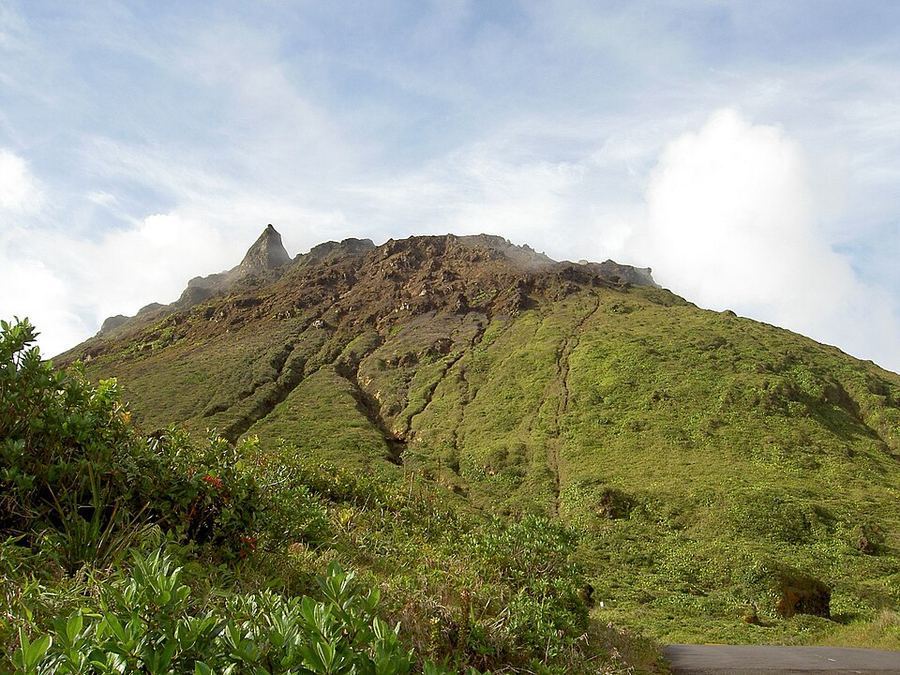
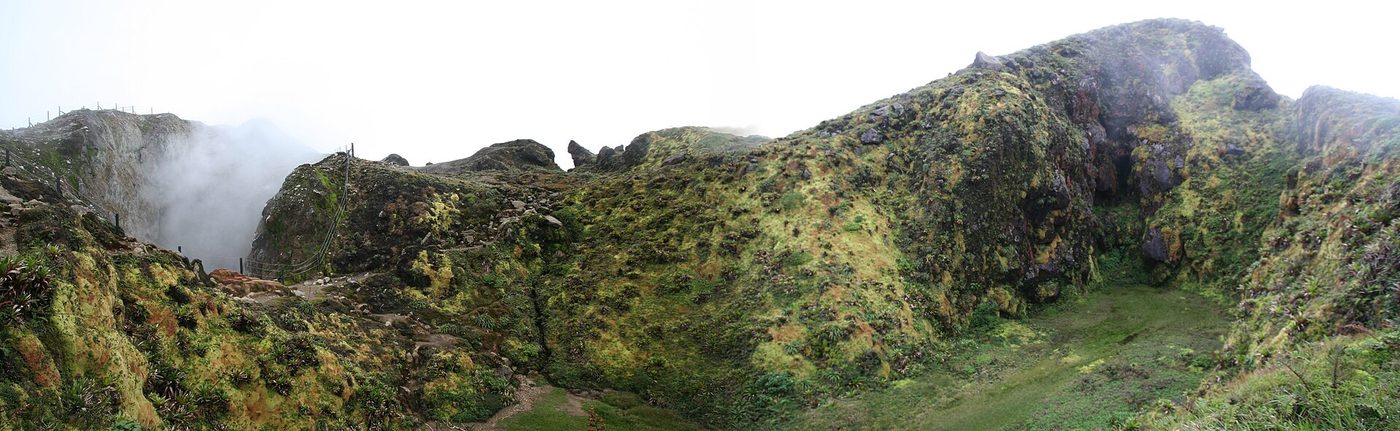
Pano sommet Soufrière (Guadeloupe), Guadeloupe
Guadeloupe GLP
Pano sommet Soufrière (Guadeloupe) — Photo: Grook Da Oger / CC BY-SA 3.0 via Wikimedia Commons
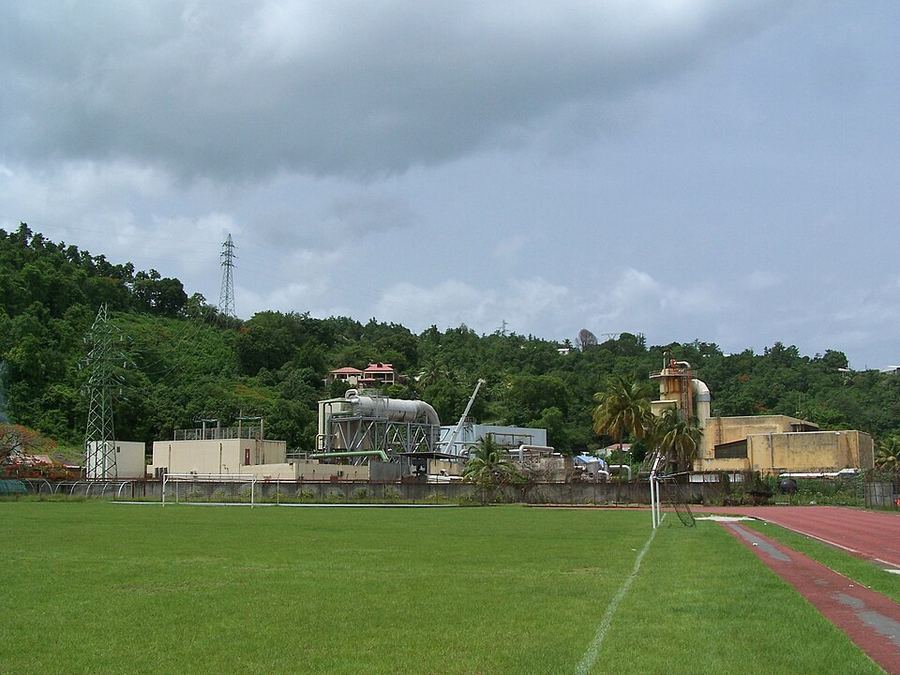
Did You Know The geothermal plant at Bouillante on Basse-Terre taps the island's volcanic heat to generate electricity, making Guadeloupe the site of the reference geothermal power installation in the French system. — IEA

Guadeloupe is a Caribbean archipelago in the Lesser Antilles that is legally and administratively part of France, and through France part of the European Union as an outermost region. Its two main islands form a butterfly on the map: mountainous, volcanic Basse-Terre to the west and flat limestone Grande-Terre to the east, joined across the narrow Riviere Salee channel and accompanied by Marie-Galante, La Desirade and the Iles des Saintes. Basse-Terre town is the prefecture and seat of the state; the Pointe-a-Pitre and Les Abymes conurbation is the commercial and port centre. INSEE estimated the population at 380,400 on 1 January 2025, a figure that has been falling by roughly half a percent a year for a decade as young people leave for metropolitan France and the population ages. French is the official language and Guadeloupean Creole the everyday one; Roman Catholicism predominates. The euro is the currency, French law the legal framework, and the tension between full French citizenship and a distinct Afro-Caribbean identity forged under slavery is the central thread of Guadeloupean public life.

national statistics officeEncyclopaedia BritannicaEurostat
Population
Capital
Currency
Time zones
Largest city
Human Geography Themes
Loading national figures…
The Country & Its People

History

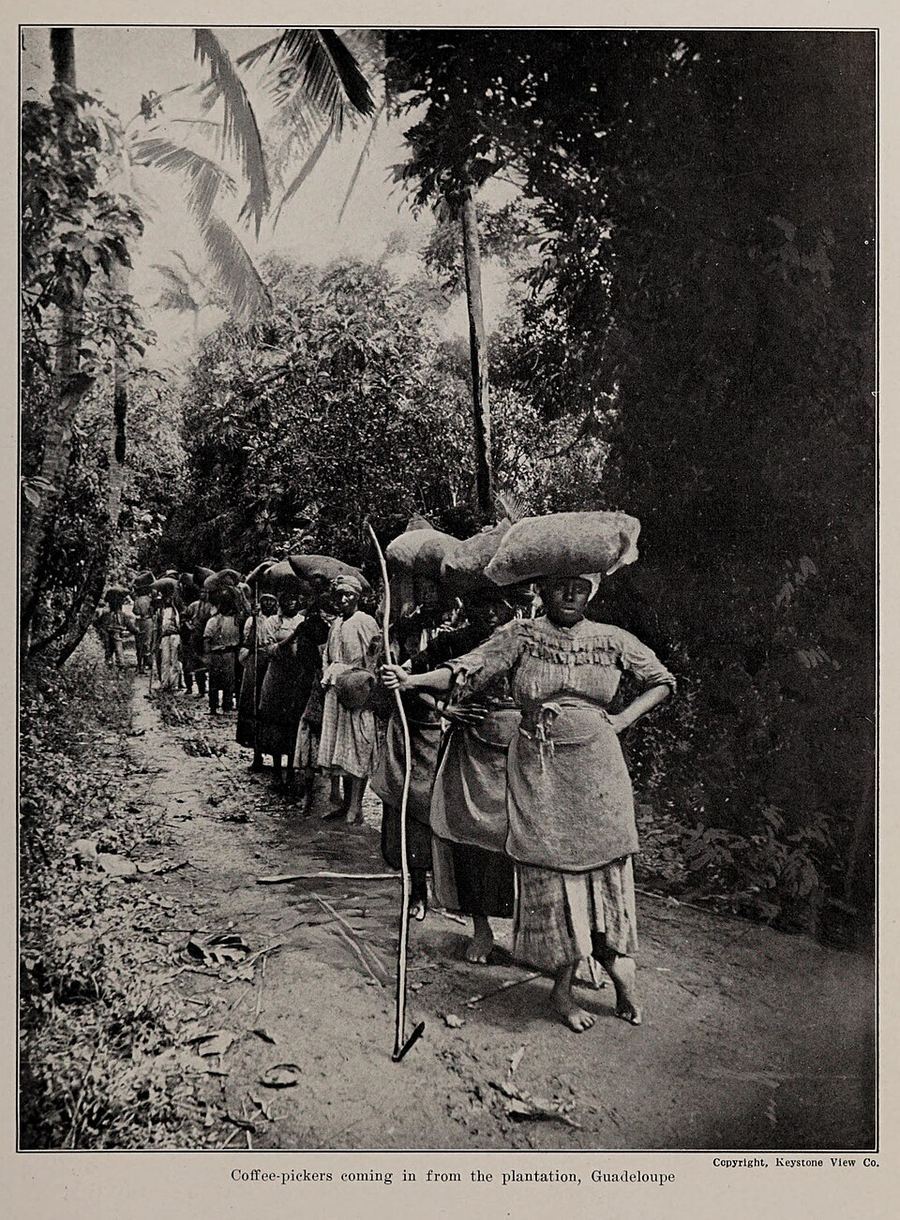
Arawak-speaking peoples settled the archipelago first, followed by Kalinago (Island Carib) communities who called the larger island Karukera. Columbus sighted it in 1493 and named it after the Spanish monastery of Santa Maria de Guadalupe in Extremadura, but Spain never settled it. French colonisation began in 1635 under the Compagnie des Iles d'Amerique, and within a century sugar had reorganised the islands around plantations worked by enslaved Africans. Britain occupied Guadeloupe several times, most consequentially in 1759-1763. The French Revolution reached the colony in 1794 when Victor Hugues proclaimed the abolition of slavery; Napoleon reversed it in 1802, and the officer Louis Delgres led an armed resistance that ended when he and his followers blew themselves up at the Danglemont estate at Matouba rather than surrender. Slavery was abolished definitively by the decree of 27 April 1848. Indentured labourers from India arrived from the 1850s. Guadeloupe ceased to be a colony on 19 March 1946, when the departmentalisation law made it a full department of France. Post-war decades brought French social protections alongside recurring unrest over cost of living, autonomy and the plantation legacy.
Culture

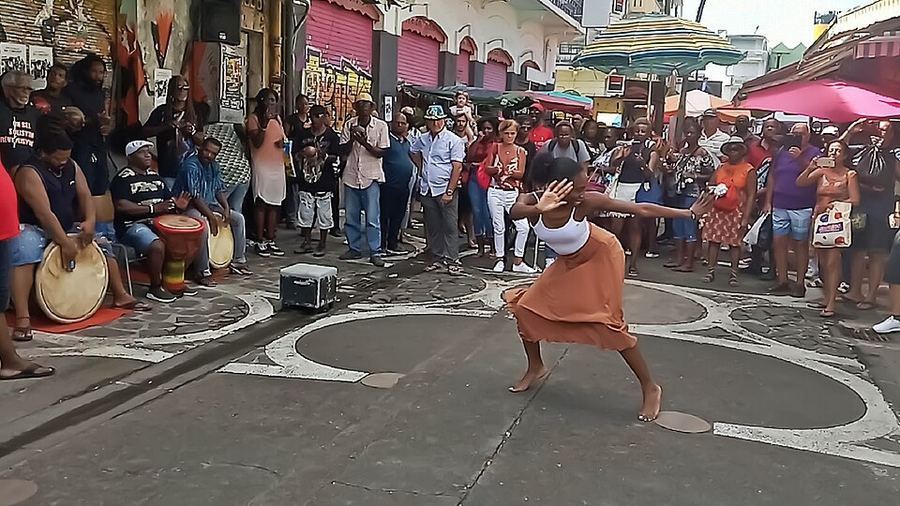
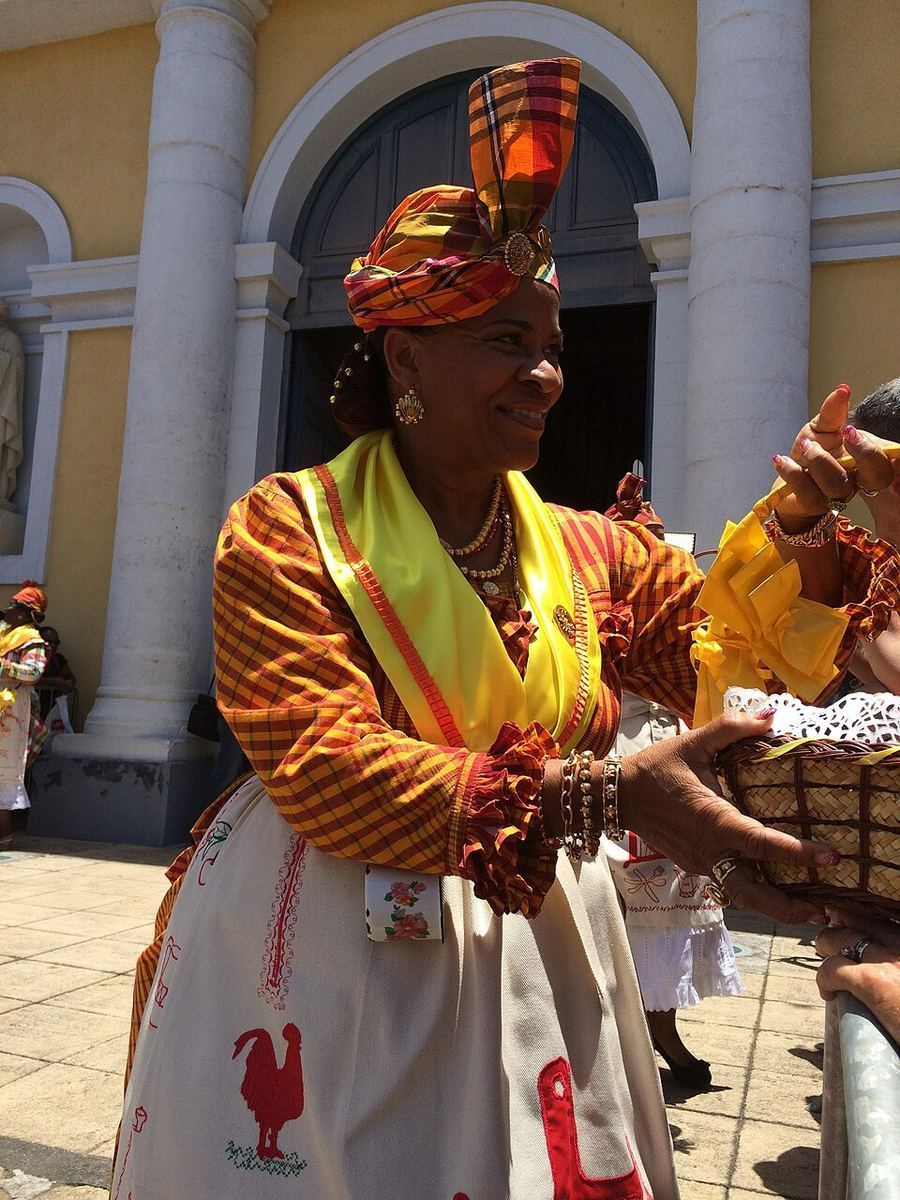
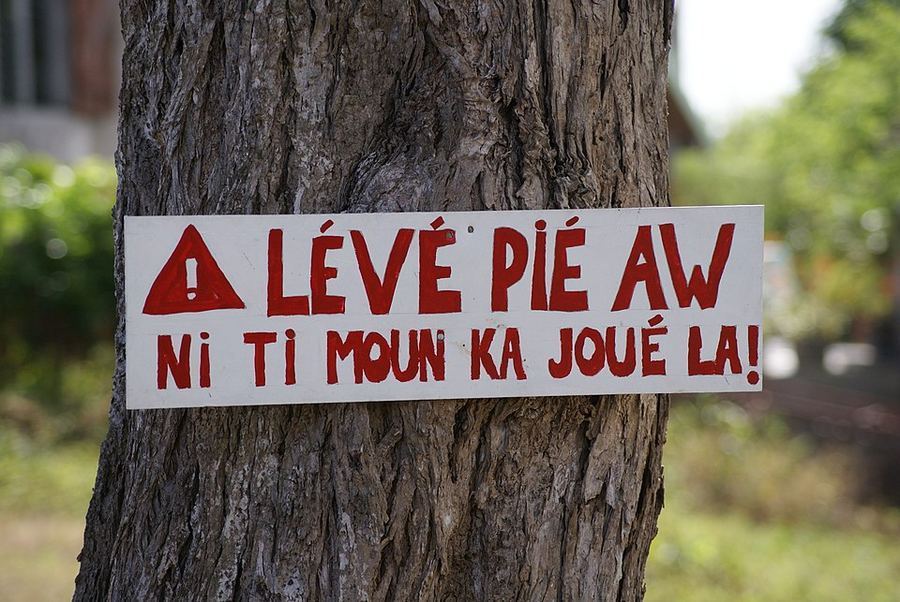
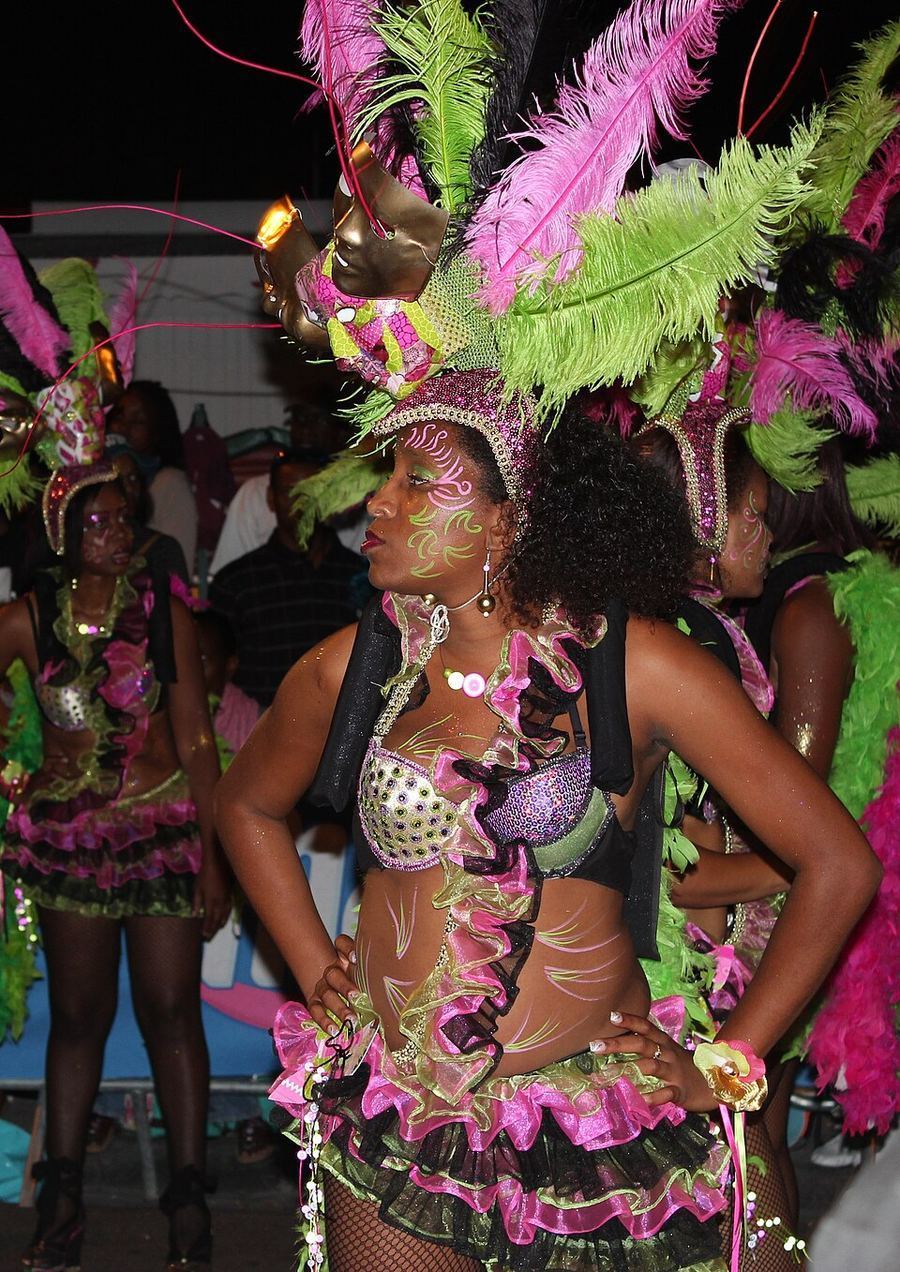
Guadeloupean culture is Creole culture: a synthesis of West and Central African inheritance, French institutions, Amerindian traces and later Indian and Levantine arrivals, carried in a language of its own. Guadeloupean Creole is a French-lexifier creole spoken across every social class, and the movement to write it, teach it and publish in it has been a central cultural project since the 1970s. Catholic feast days structure the year, but so do the ka drum gatherings called lewoz, held in the open air on Friday nights, where singing, drumming and dancing take turns inside a circle. Carnival runs from Epiphany to Ash Wednesday, with organised mas groups whose costumes, whips, conch shells and skin drums are closer to West African masquerade than to European parade. The Fete des Cuisinieres each August sees the island's cooks process through Pointe-a-Pitre in madras with the tools of their trade. Family networks stretch across the Atlantic to metropolitan France, and the back-and-forth of migration, remittance and return shapes music, food and speech as much as anything on the islands themselves.

Points Of Pride

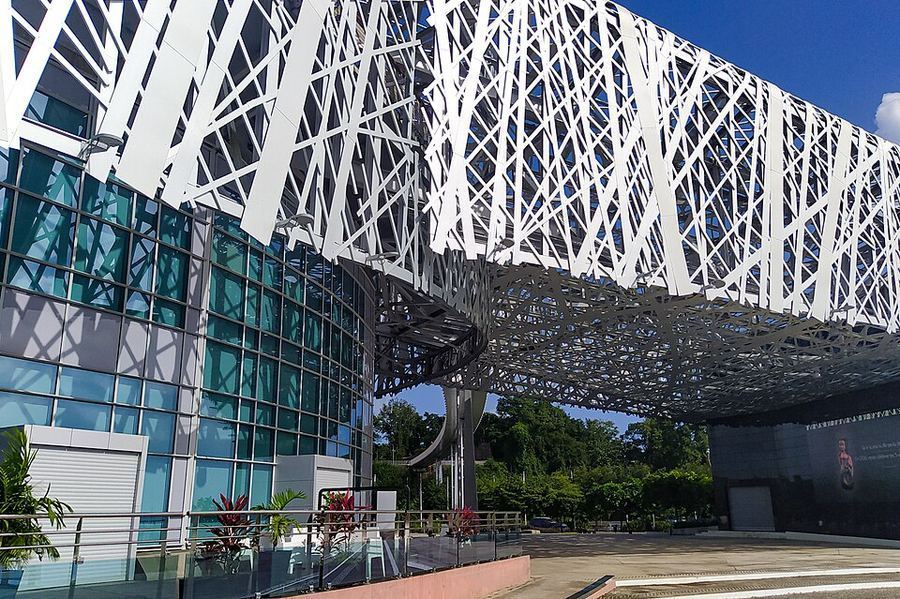
The single greatest source of pride is Gwoka, inscribed by UNESCO on 26 November 2014 on the Representative List of the Intangible Cultural Heritage of Humanity as music, song, dance and cultural practice representative of Guadeloupean identity. It is an unusual inscription: not a monument but a living practice that was once dismissed as backward and became a badge of self-assertion. Alongside it stands the Memorial ACTe in Pointe-a-Pitre, the Caribbean centre for expression and memory of the slave trade and slavery, built on the site of the former Darboussier sugar factory. La Soufriere, an active volcano rising 1,467 metres on Basse-Terre, is the highest point in the Lesser Antilles and the centrepiece of the Guadeloupe national park, whose surrounding waters and mangroves form a UNESCO biosphere reserve. In literature Guadeloupe claims Saint-John Perse, awarded the Nobel Prize in Literature in 1960, and Maryse Conde. In sport it claims Marie-Jose Perec and Laura Flessel. For an archipelago of under 400,000 people, that is a formidable roll.

Cultural Fusion

Guadeloupe is a place where several populations arrived by very different routes and their inheritances did not stay separate. The African majority came in chains and rebuilt religion, rhythm and kinship out of fragments; the French brought law, language, Catholicism and the plantation; Kalinago and Arawak peoples left place names, canoe and basket forms, cassava processing and manioc-based cooking. After abolition in 1848 the planters recruited indentured labourers from India, mainly from the Tamil-speaking south, and their descendants kept temples and ceremonies alive on Basse-Terre; the Indian contribution is most visible today in the colombo, a curry that has become one of the archipelago's signature dishes. Levantine merchants and, more recently, Haitian and Dominican migrants added further layers. The fusion is clearest in the Creole language itself, whose vocabulary is largely French while its grammar owes much to African structures, and in music, where the ka drum, the European quadrille and the Catholic calendar all appear inside the same weekend. Guadeloupeans generally describe this not as mixture but as creolisation: a process that made something new.

Music & Dance

Gwoka is the foundation. It is built on the ka, a drum historically made from a salted-meat barrel, played in pairs: the boula holds the ground rhythm while the marker drum converses with the dancer. The repertoire is organised into seven core rhythms, among them the militant lewoz, the gentle toumblak and the driving mende, each with its own dance vocabulary and social meaning. Performance happens in a circle where singer, drummer and dancer take turns, and the July gwoka festival at Sainte-Anne has become the archipelago's cultural high point. Alongside gwoka sit the biguine and the Creole quadrille inherited from the nineteenth-century salon, and the chanted mas of Carnival. Guadeloupe's biggest global export is zouk: the band Kassav', formed in 1979 by Guadeloupean and Martinican musicians, took the carnival rhythm, added studio production and electric bass, and turned it into a music heard across Africa and the Americas. Later generations produced zouk love, and a dancehall and rap scene in Creole whose best-known figure internationally is Admiral T.

Cuisine & Misattributed Foods

Guadeloupean cooking is Creole cooking at its most confident, and locals will tell you it is better than Martinique's. The archetypal dish is the colombo, a curry of chicken, goat or pork whose spice blend arrived with Indian indentured labourers and was rebuilt with local ingredients. Accras de morue, fritters of salt cod and herbs, open almost every meal, usually with a ti-punch of white rhum agricole, cane syrup and a twist of lime. Court-bouillon is fish poached in a tomato, lime and chilli broth; blaff is a lighter poaching in a spiced, sour bouillon. Dombre are small flour dumplings simmered with red beans or with ouassous, the freshwater prawns of the Basse-Terre rivers. Matete de crabes, a crab and rice dish, belongs to Easter, especially on Marie-Galante. The bokit, a puff of dough fried and split and filled with cod, chicken or cheese, is the street food that Guadeloupeans abroad miss most. Fiery sauce chien, colombo powder, bois d'Inde and the local scotch bonnet do the seasoning; sorbet coco, churned in the street, finishes it.

National Dress

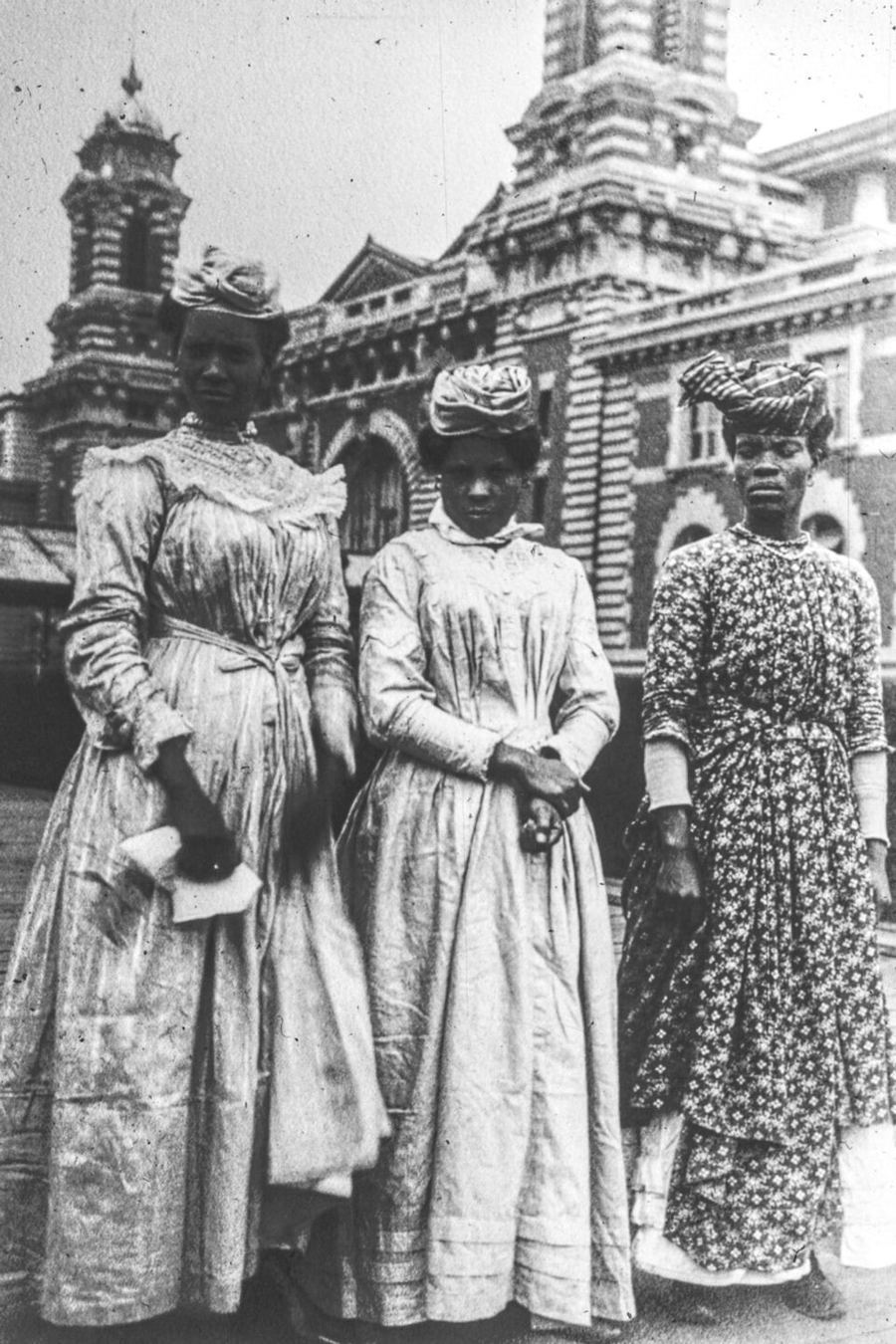
The Guadeloupean Creole costume is built around madras, the brightly checked cotton whose name records its origin in the Indian port of Madras and whose route to the Caribbean ran through colonial trade. The full dress consists of a long skirt over a lace-trimmed jupon, a fitted bodice, a foulard draped across the shoulders and, above all, the tete calendee: a starched madras headtie folded into points. The number of points was read as a message about the wearer's availability, one for unattached, two for spoken for, three for married, and the flourish is still explained that way at Carnival. Heavy gold jewellery completes it, notably the collier-chou, a hollow, twisted torque, and long chains of gold beads that once represented a woman's savings held in wearable form. The costume is no longer daily wear, but it is not a museum piece either: it comes out for Carnival, for weddings and first communions, for the August procession of the Fete des Cuisinieres, and increasingly for graduations, worn deliberately as a statement of who the wearer is.

Sports & Inspiring Athletes

Football is the mass sport. The Ligue Guadeloupeenne de Football runs a domestic championship whose long-standing clubs, among them Solidarite Scolaire, l'Etoile de Morne-a-l'Eau and Racing Club de Basse-Terre, draw committed local followings, and the Stade Rene Serge Nabajoth at Les Abymes serves as the main national ground. Athletics is the second pillar and the one that produces the most international champions, supported by a network of clubs and school competitions that has repeatedly fed the French national team; sprinting and hurdling are the specialities. Cycling matters more than a visitor expects: the Tour cycliste international de la Guadeloupe, run since the late 1940s, is the sporting event of the summer, with stages climbing the Basse-Terre volcano road and roadside crowds to match. Basketball, handball and volleyball all have strong club structures. Traditional competition survives too, in rowing and sailing regattas of saintoise boats between coastal communes, and in the cockfighting pitts that remain a legally tolerated local custom.

Notable Educational Programs

Guadeloupe runs the French national education system, with its own rectorate, the Academie de la Guadeloupe, and pupils sitting the same baccalaureat as in metropolitan France. Higher education centres on the Universite des Antilles, whose Guadeloupe campus at Fouillole in Pointe-a-Pitre houses law, economics, science and technology and the medical faculty attached to the university hospital. The institution has a complicated recent history: the former Universite des Antilles et de la Guyane split in 2014 when French Guiana established its own university, leaving a two-campus institution shared between Guadeloupe and Martinique. Creole has a formal place in the system rather than an informal one; a competitive teaching qualification in Creole language and culture was created in the early 2000s, and Creole can be taken as a subject at the baccalaureat, which gave the language institutional standing it had never had. As an outermost region of the European Union, Guadeloupe participates in Erasmus and in EU-funded research and training programmes, and student mobility to metropolitan France remains very high.

Wars & Conflicts

Guadeloupe has no armed conflict, and its confrontations are social and political rather than military. The historical reference points are the 1802 war against the restoration of slavery, in which Louis Delgres and his followers died at Matouba, and the events of May 1967 in Pointe-a-Pitre, when a building-trades strike escalated and security forces opened fire on demonstrators; the death toll was disputed for decades and a French government-commissioned report later revisited the archives. Independence-minded groups carried out bombings in the 1980s, but political violence has long since receded. The defining modern episode is the general strike of 2009, when the Liyannaj Kont Pwofitasyon coalition shut the archipelago down for forty-four days over the cost of living and the concentration of economic power; a trade unionist, Jacques Bino, was killed during the unrest. Health and environmental grievance has been the more recent flashpoint, from the chlordecone pesticide contamination of Antillean soils to protests in 2021 against Covid-19 vaccination requirements for health workers, which involved roadblocks and unrest.
Agence France-PresseReutersBBCLe Monde
Current as of 2026-08-08

Land & Border Disputes

Guadeloupe has no territorial dispute with a foreign state. Its maritime boundaries run against Dominica, Montserrat and Antigua and Barbuda, and are managed by France as part of the state's external competence rather than being contested locally. The live disputes are internal and constitutional. In December 2003 voters in Guadeloupe rejected a proposal to merge the departmental and regional councils into a single territorial collectivity, a reform that Martinique and French Guiana later adopted; Guadeloupe consequently still has two assemblies where its neighbours have one, and whether to revisit that decision is a standing political argument. The same referendum detached Saint-Martin and Saint-Barthelemy, previously communes of Guadeloupe, which voted to become separate overseas collectivities in their own right from 2007. Beyond institutional questions, the sharpest dispute is over the chlordecone pesticide used in banana cultivation into the 1990s, which has contaminated soil and water for generations; the judicial handling of the case, including the decision by investigating magistrates to dismiss it, has been fiercely contested by Guadeloupean and Martinican plaintiffs.
Land, Life & Legacy

Land & Climate

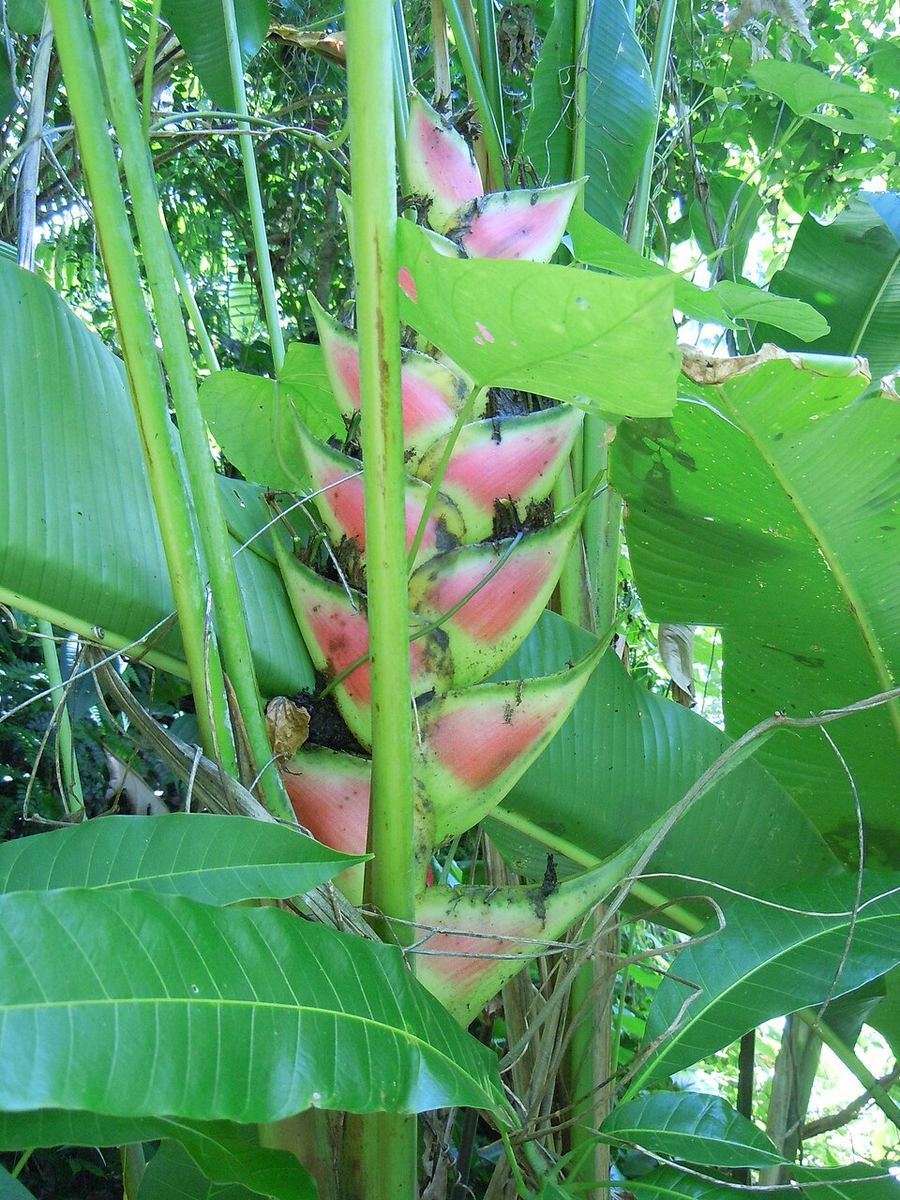
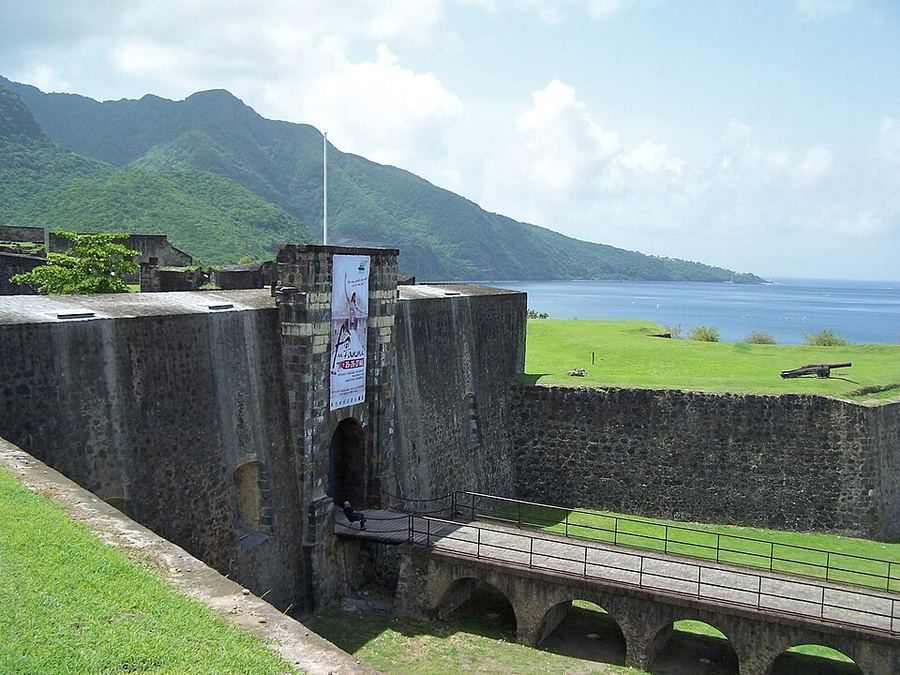
The two wings of the butterfly are geologically opposite. Basse-Terre is young and volcanic, a spine of forested peaks culminating in La Soufriere at 1,467 metres, drenched by orographic rain that feeds rivers and the Carbet waterfalls and sustains dense tropical rainforest inside the national park. Grande-Terre is an uplifted limestone platform, drier and lower, with the rolling hillocks of the Grands Fonds, sugar-cane plains, and the white beaches and cliffs that run out to Pointe des Chateaux. Between them the Riviere Salee, a mangrove-lined saltwater channel, opens into the Grand Cul-de-Sac Marin lagoon and its coral barrier. The dependencies each have their own character: Marie-Galante, low and round and known for its windmills and rum, La Desirade, arid and cliff-edged, and the Iles des Saintes with their sheltered bay. The climate is tropical maritime, moderated by the trade winds, with a drier season called careme from roughly January to April and a humid hivernage from June to November that is also the hurricane season; Hurricane Hugo in 1989 remains the reference disaster.

Entertainment

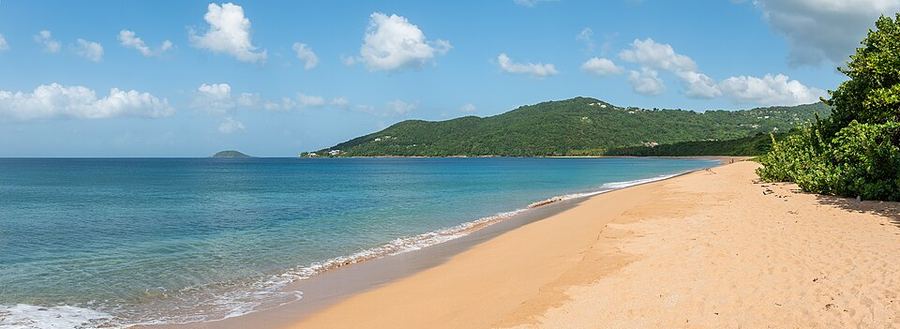
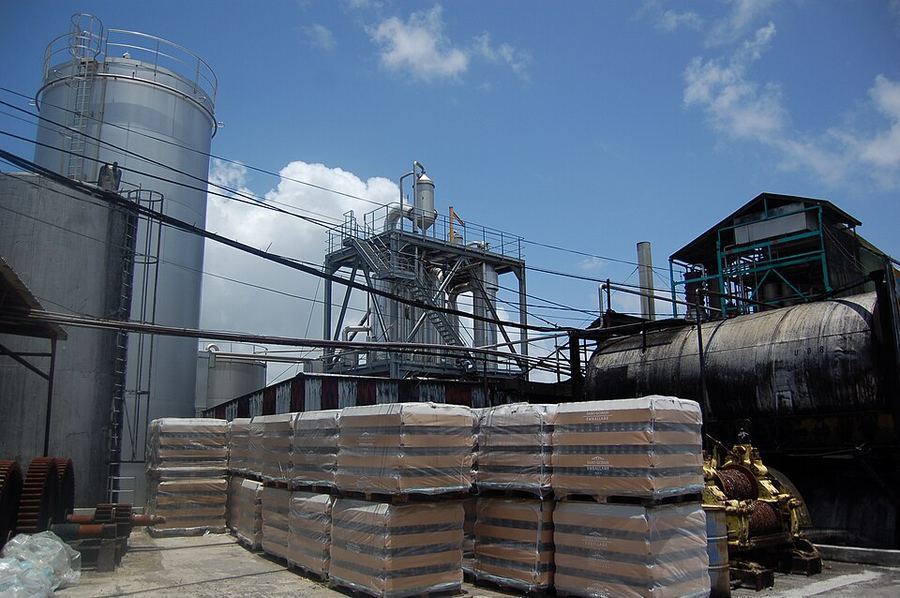
Leisure in Guadeloupe is organised around water and the weekend. Families claim a stretch of sand early on Sunday and stay all day, with coolers, dominoes slammed onto folding tables, and a grill; Grande Anse at Deshaies and the calm shallows of Sainte-Anne and Le Gosier are the classics. Hiking is a serious pursuit on Basse-Terre, where marked trails climb through rainforest to the steaming summit of La Soufriere and cross the massif along the Trace des Cretes. Divers head for the Cousteau reserve off Pigeon Island near Malendure, named for the oceanographer who publicised the site. Sailing is close to a civic passion, from local racing in traditional saintoise boats to the arrival of the Route du Rhum, the solo transatlantic race that leaves Saint-Malo every four years and finishes at Pointe-a-Pitre. Inland the rum distilleries function as visitor attractions, and the markets of Pointe-a-Pitre and Saint-Francois are as much a social round as a shopping trip. Cockfighting persists in local pitts as a legally tolerated traditional exception.

Art & Museums

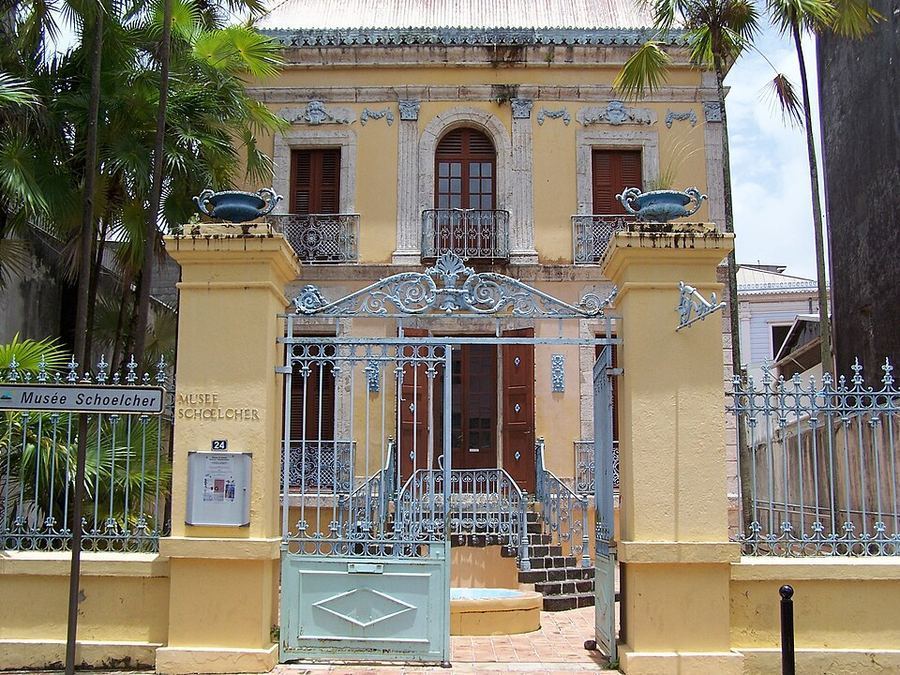
Guadeloupe's strongest artistic tradition is literary. Saint-John Perse, born Alexis Leger in Pointe-a-Pitre in 1887, wrote a dense, oceanic French poetry that won the Nobel Prize in Literature in 1960 and returned repeatedly to a Caribbean childhood. Maryse Conde, born in Pointe-a-Pitre in 1934, built an international body of fiction reaching from precolonial West Africa in Segu to seventeenth-century Salem, and was awarded the New Academy Prize in Literature in 2018. Simone Schwarz-Bart's Pluie et vent sur Telumee Miracle gave Creole peasant women a literary voice, and Guy Tirolien, Ernest Pepin and Gisele Pineau extended the line. In the visual arts, the archipelago's museums carry the work: the Musee Saint-John Perse and the Musee Schoelcher in Pointe-a-Pitre, and the Memorial ACTe, whose galleries commission contemporary Caribbean artists rather than only displaying historical material. Craft remains genuinely alive rather than merely touristic, in madras textile work, gold-bead jewellery, basketry and the elaborate costume-making of the Carnival mas groups, which is where much of the island's design energy actually goes.

Notable People

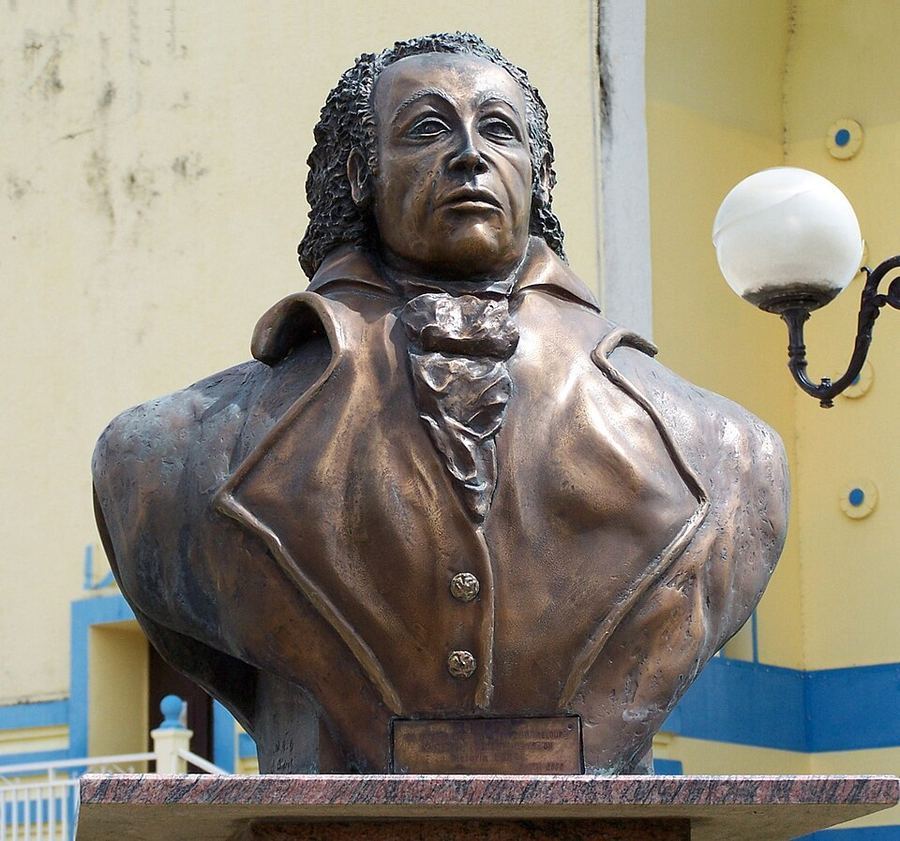
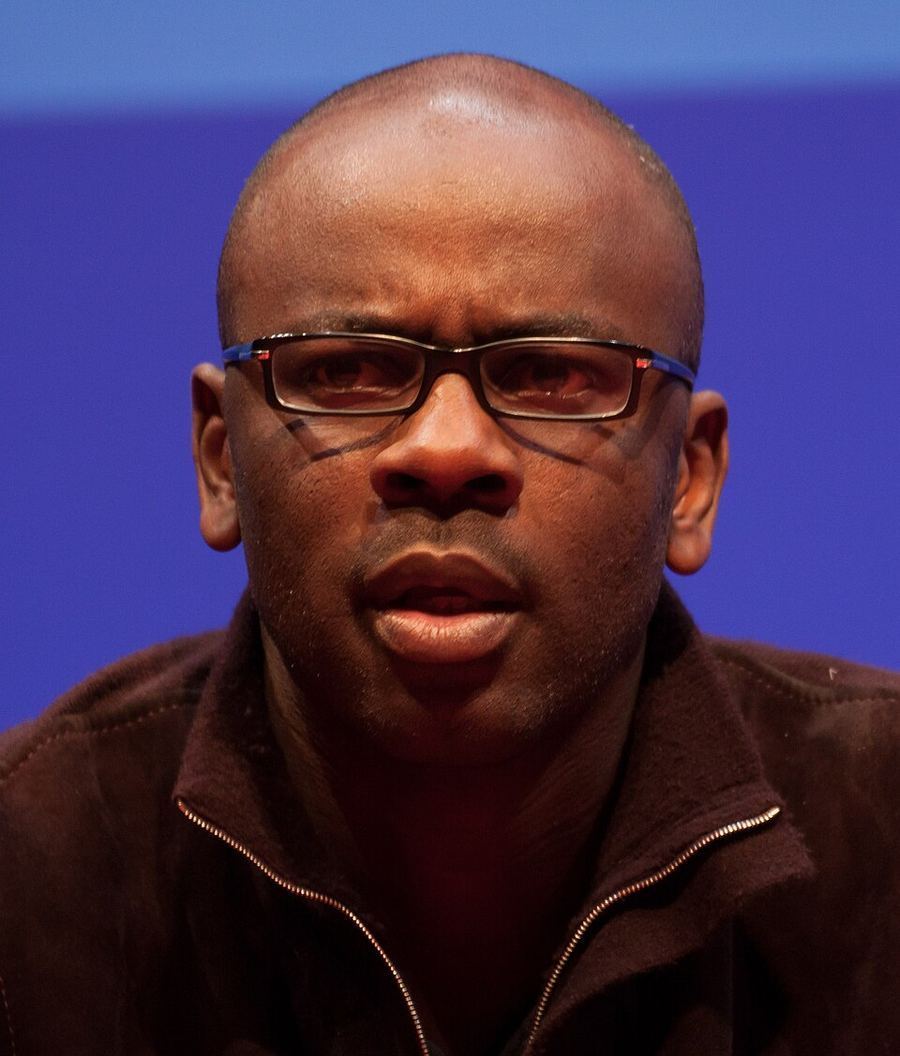
Louis Delgres, the free-coloured officer who chose death at Matouba in 1802 over the restoration of slavery, is the founding figure of Guadeloupean political memory. In letters, Saint-John Perse took the 1960 Nobel Prize in Literature and Maryse Conde became one of the most widely translated Caribbean novelists of her generation before her death in 2024; Simone Schwarz-Bart and Gisele Pineau are read across the francophone world. In sport the list is disproportionate to the population. Marie-Jose Perec, born in Basse-Terre in 1968, won the Olympic 400 metres in 1992 and then both the 200 and 400 metres in 1996. Laura Flessel, born in Pointe-a-Pitre in 1971, won five Olympic fencing medals including two golds and later served as France's sports minister. Lilian Thuram, born in Pointe-a-Pitre in 1972, became France's most-capped footballer and a world champion in 1998; Marius Tresor captained France in the 1970s and 1980s. The brothers Mickael and Florent Pietrus, from Les Abymes, played international basketball, Mickael in the NBA.

Inventions & Breakthroughs

Guadeloupe is not a patent economy, and it would be dishonest to claim otherwise; its inventive record lies in cultural and agricultural technology rather than in industry. The clearest example is the ka itself, a drum improvised from the salted-meat barrels that arrived on plantations as provisions and rebuilt into an instrument with its own tuning, playing technique and repertoire, from which an entire performance system was developed. Rum making is the other: the French Antilles refined rhum agricole, distilled from fresh pressed cane juice rather than molasses, and Guadeloupean rum carries a protected geographical indication under European Union rules. The bokit adapted an unleavened fried bread of Amerindian and colonial origin into a portable filled sandwich found nowhere else. In boatbuilding, the saintoise, the open, high-bowed fishing craft of the Iles des Saintes, was developed for local seas and is now built specifically for racing. Contemporary technical work concentrates on tropical problems: geothermal energy at Bouillante, volcano monitoring, and the sargassum seaweed influxes that have hit Caribbean coasts since 2011.

Science & Technology

Scientific activity in Guadeloupe concentrates on the hazards and resources of a tropical volcanic archipelago. The Guadeloupe volcanological and seismological observatory, operated by the Institut de physique du globe de Paris, monitors La Soufriere continuously; the volcano's unrest in the mid-1970s produced one of the most famous controversies in the history of hazard forecasting, when a mass evacuation was ordered for an eruption that did not come, and the episode reshaped how French institutions communicate volcanic risk. Energy research has a concrete showpiece in the geothermal plant at Bouillante on Basse-Terre, which taps the volcanic field to generate electricity and is the reference geothermal installation in the French system. The university hospital and the Universite des Antilles support work in tropical medicine, sickle-cell disease and vector-borne infection, fields where the Caribbean has both the burden and the expertise. Marine and environmental science has been dominated since 2011 by the sargassum seaweed influxes, which have driven monitoring, forecasting and disposal research across the region.
On The World Stage

Champions & Defining Moments

Guadeloupe occupies an unusual double position in international sport. Because it is part of France, its athletes represent France at the Olympic Games under the French flag, and they have done so with remarkable success: Marie-Jose Perec's three Olympic athletics golds and Laura Flessel's five fencing medals are Guadeloupean achievements recorded in the French column. The same is true in football, where Lilian Thuram and Marius Tresor were pillars of French national teams, and in basketball through the Pietrus brothers. At the same time, Guadeloupe fields its own football team in the Caribbean and North American region: it is a member of CONCACAF without being a member of FIFA, which allows it to enter the Gold Cup but not the World Cup. That team reached the semi-finals of the 2007 CONCACAF Gold Cup, a result still cited locally as proof of what an independent Guadeloupean side could do. The arrangement produces a recurring public argument about whether the archipelago's sporting talent is being counted under the right flag.

IOCFIFAOlympediaBBC
Economy, Trade & Government

Terrain → Where People Live

How mountains, coasts, and rivers shape settlement (LandScan).

Coming — data

Migration & Ethnic Settlement

Where groups settled and how people move (GeoEPR + UNHCR).

Coming — data

Universities

Notable institutions, mappable as points.

Coming — data
Every fact and narrative claim will carry a visible source citation. Data-driven sections light up automatically wherever HERA has coverage.