HERA · Human Entity Reference Atlas by Masego Inc

← Greece 🌐 3D View
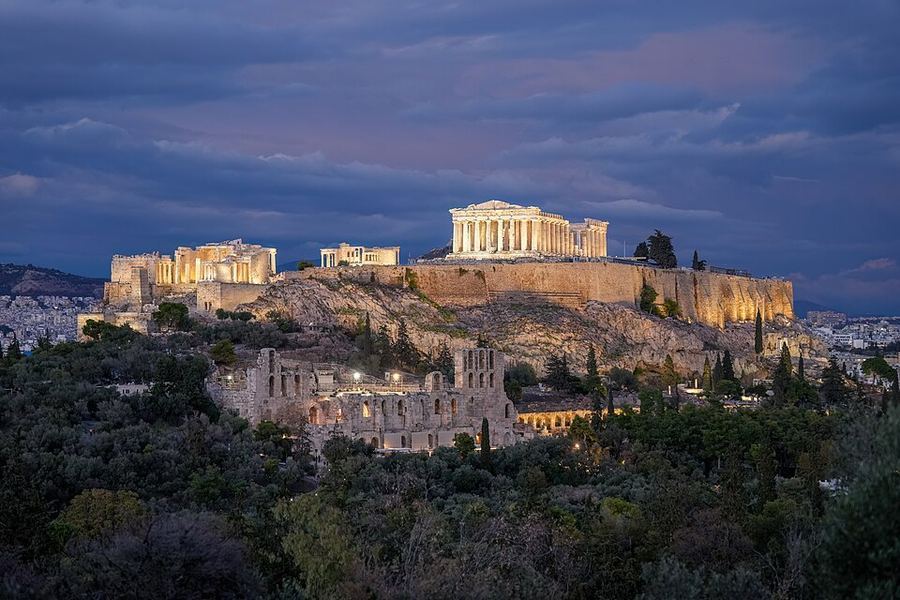
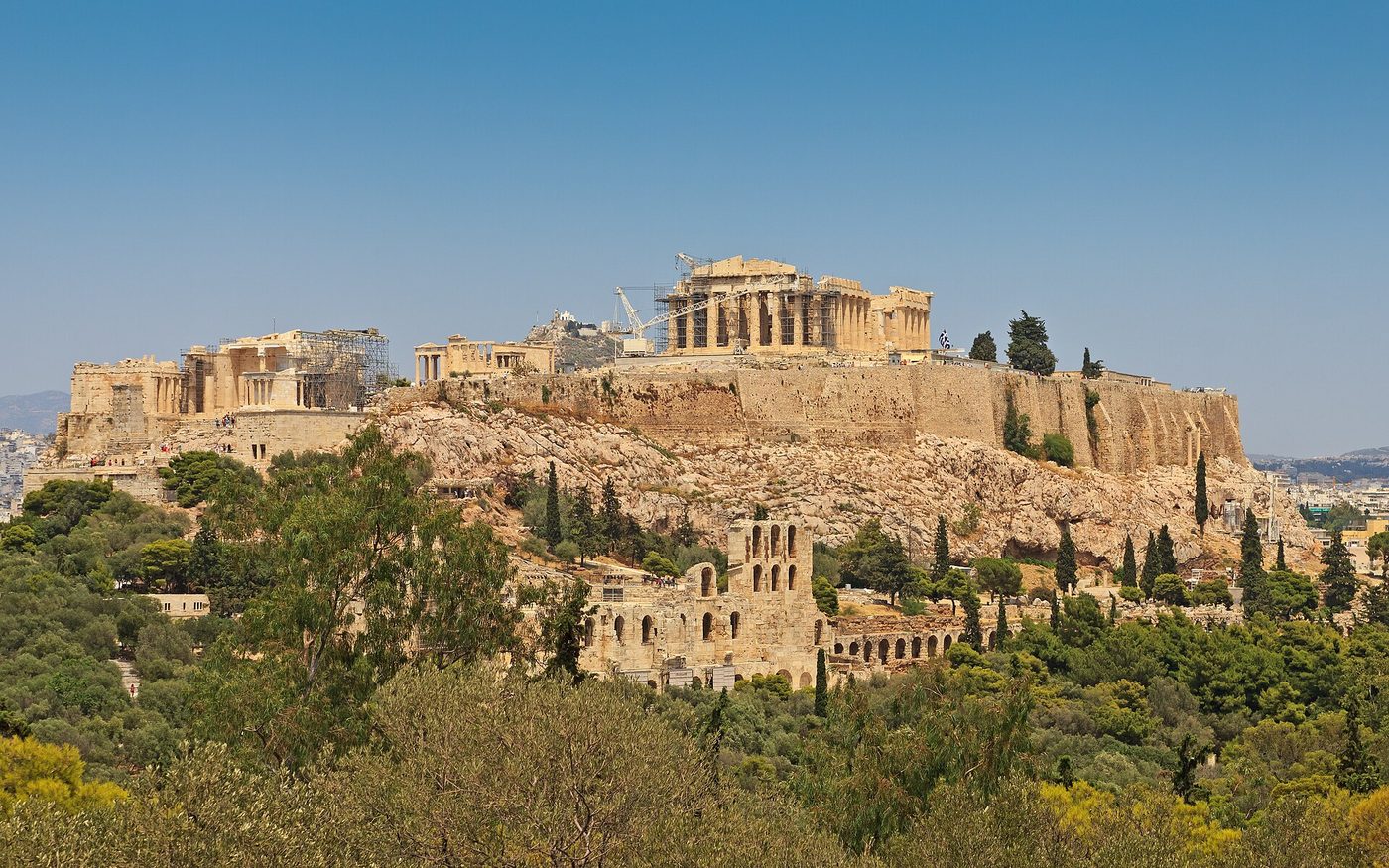
Attica 06-13 Athens 50 View from Philopappos - Acropolis Hill, Greece
Greece GRC
Attica 06-13 Athens 50 View from Philopappos - Acropolis Hill — Photo: A.Savin / CC BY-SA 3.0 via Wikimedia Commons
Did You Know Greek has the longest documented history of any Indo-European language, recorded continuously from Mycenaean Linear B tablets of the second millennium BC to the present day. — Encyclopaedia Britannica

Greece is a parliamentary republic of about 10.4 million people at the southern tip of the Balkan Peninsula, spread across a deeply indented mainland and some six thousand islands and islets scattered through the Aegean and Ionian seas. Athens, the capital, holds close to a third of the national population in its metropolitan area and sits beneath the Acropolis, whose fifth-century BC monuments remain the single most recognisable image of the country. Modern Greece dates its statehood to independence from the Ottoman Empire in 1830, but its cultural claim is far older: the city-states of the classical era, the Hellenistic world that followed Alexander, and the thousand-year Byzantine Empire centred on Constantinople all form part of the national story. Greek is spoken by essentially the whole population and is the oldest continuously recorded Indo-European language, and Greek Orthodoxy remains the dominant religious tradition. The country joined the European Communities in 1981 and adopted the euro in 2001, and it endured a decade-long debt crisis after 2009 that shrank its economy by roughly a quarter before recovery took hold. Shipping, tourism, refined petroleum, pharmaceuticals, aluminium and olive oil anchor an economy of about $392 billion in purchasing-power terms.

CIA World FactbookEncyclopaedia BritannicaEurostat
Population
10,424,536
Capital
Athens
Currency
€ EUR
Time zones
Largest city
Athens
Human Geography Themes
Loading national figures…
Largest Cities
Athens3,241,470
Thessaloniki790,901
Heraklion159,049
Patras146,128
Larissa120,588
Volos99,656
Ioannina94,900
Chania66,403
In Perspective

Athens's urban core is home to about 3,241,470 people.

That's bigger than Rome and Amsterdam — each a great world city in its own right.

Athens3,241,470
Rome2,556,354
Amsterdam1,223,407

Among the world's megacities, though, it's one of many — the giants of Asia and Latin America run larger still:

Athens3,241,470
Jakarta40,545,126
Dhaka37,307,160
Tokyo33,244,670
Shanghai30,678,616
Cairo25,230,325
The Country & Its People

History

Greek history begins archaeologically with the Bronze Age palace cultures — Minoan Crete, centred on Knossos, and the Mycenaean citadels of the mainland — followed by a long post-palatial contraction from which the polis emerged. The Archaic and Classical periods produced the city-state world of Athens and Sparta, the repulse of Persian invasions at Marathon and Salamis, Athenian democracy and drama, and the ruinous Peloponnesian War. Macedonian ascendancy under Philip II and Alexander the Great carried Greek language and urban forms as far as the Indus, creating the Hellenistic world that Rome absorbed from the second century BC. The eastern Roman Empire, Byzantium, was Greek-speaking and Orthodox and endured until the fall of Constantinople to the Ottomans in 1453; Ottoman rule then lasted, in most Greek lands, for roughly four centuries. The War of Independence begun in 1821 secured recognition of an independent Greek kingdom in 1830, initially a fraction of today's territory, which expanded through the Balkan Wars and the First World War. The 1919–22 campaign in Anatolia ended in defeat and the compulsory population exchange with Turkey that moved well over a million people. Occupation in the Second World War was followed by civil war, a period of unstable parliamentary rule, a military dictatorship from 1967 to 1974, and the restoration of democracy and a republic thereafter.
History, Greece
User:Mountain / Public domain

Culture

Greek culture holds together an ancient inheritance, an Orthodox religious calendar and an intensely social daily life. Around eight or nine in ten Greeks identify with the Greek Orthodox Church, and its year structures the national one: Easter, not Christmas, is the principal feast, preceded by Lent and by the Clean Monday kite-flying that opens it, and celebrated with midnight resurrection services, red-dyed eggs and lamb roasted on the spit. Name days — the feast of the saint one is named for — are often marked more than birthdays. Family remains the organising social unit, with grandparents heavily involved in childcare and property held and transmitted along family lines; the kafeneio and its modern café descendants serve as the village and neighbourhood forum. Philoxenia, the obligation of hospitality to strangers, is a value Greeks name explicitly and trace to Homer. Meals are long, shared from the middle of the table, and inseparable from conversation. Regional identity is strong — Cretan, Cypriot-adjacent Dodecanesian, Macedonian, Epirot, Ionian — each with dialect, dance and dish, and the panigyri, a saint's-day village festival with food and all-night dancing, is the characteristic form in which that identity is performed.
Culture, Greece
Jolovema / CC BY 4.0

Points Of Pride

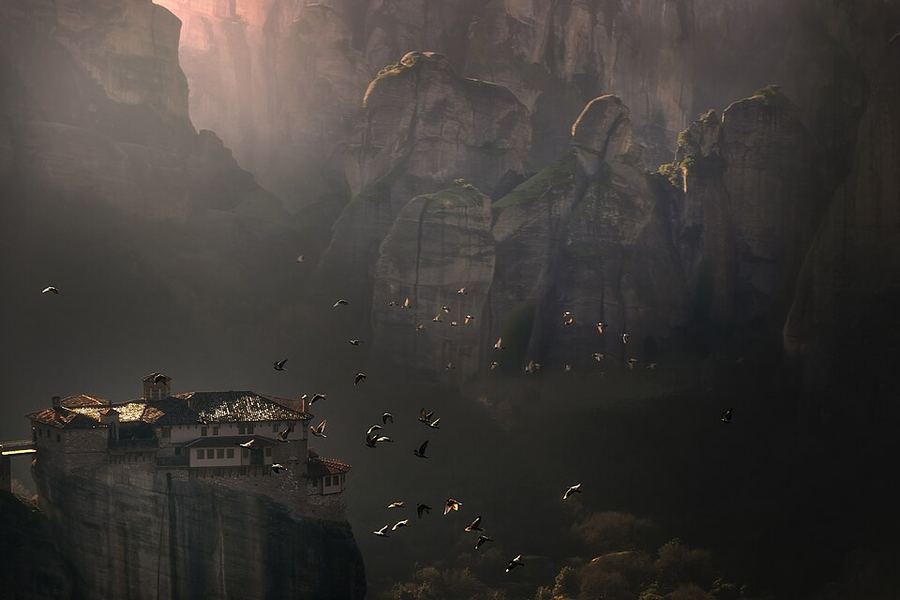
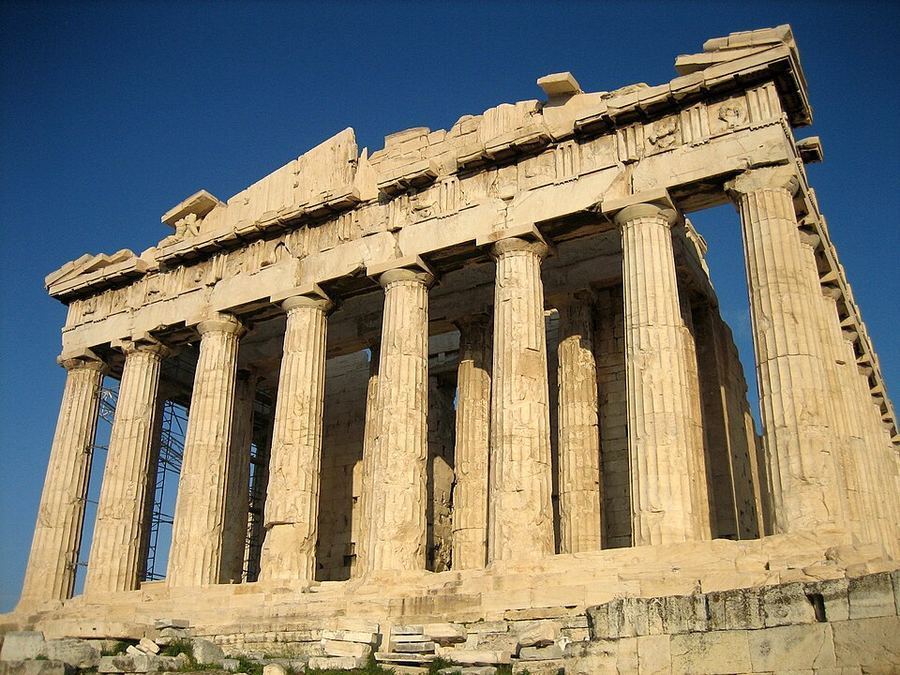
Greece's foremost claim is intellectual: the vocabulary and institutions of democracy, philosophy, tragedy, comedy, history as a discipline, and the Olympic Games all carry Greek names because they took their first recognisable form here. The Acropolis of Athens, with the Parthenon at its centre, is a UNESCO World Heritage site and among the most visited monuments on earth, and Greece has eighteen inscribed World Heritage properties, including Delphi, Olympia, Mycenae and Tiryns, Meteora, Mount Athos, the medieval city of Rhodes, the archaeological site of Vergina and the island of Delos. The country revived the Olympic Games at Athens in 1896 and hosted them again in 2004, and the flame for every Games is still lit at Olympia. Greek shipowners control one of the largest merchant fleets in the world by tonnage, an extraordinary position for a country of ten million. The Greek language has the longest documented history of any Indo-European language, running from Mycenaean Linear B through Homer and the New Testament to the present, and Greek cuisine's Mediterranean diet is itself inscribed by UNESCO as intangible cultural heritage.
Points Of Pride, Greece
Giles Laurent / CC BY-SA 4.0

Cultural Fusion

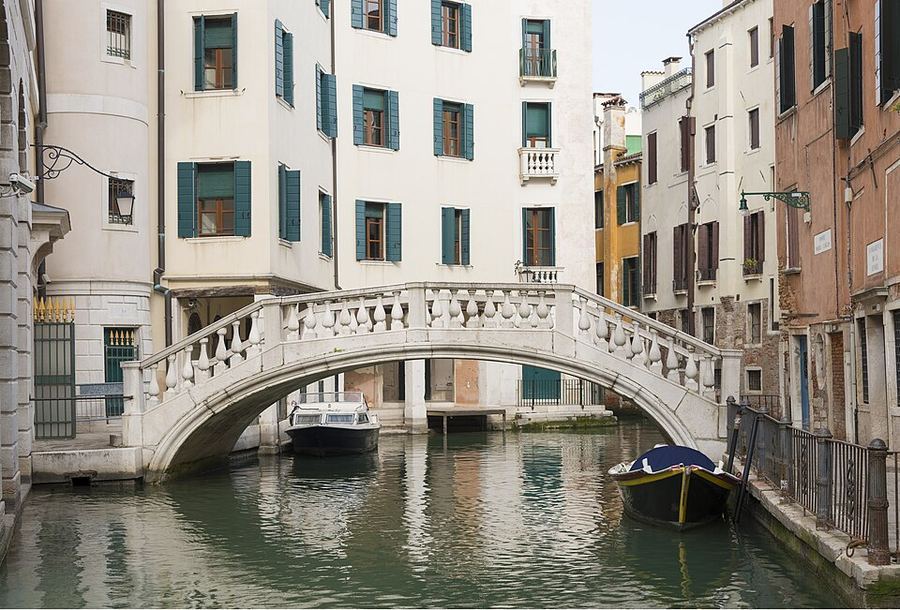
Greece has been a crossroads rather than a cul-de-sac, and its culture shows the traffic. The Hellenistic centuries fused Greek with Egyptian, Persian and Indian elements across Alexander's successor kingdoms; Rome then absorbed Greek philosophy, art and religion so completely that educated Romans wrote in Greek. Byzantium blended Greek language, Roman law and Christian theology into a distinct civilisation whose iconography still governs Orthodox church art. Four centuries of Ottoman rule left a deep culinary and musical layer — coffee, yogurt-based dishes, filo pastries, many vegetable preparations, and a shared vocabulary of instruments and modal scales that Greek, Turkish, Armenian and Sephardic musicians all drew on. Venetian rule shaped the Ionian islands and Crete, producing Renaissance-influenced painting and architecture, and the Cretan school gave the world Domenikos Theotokopoulos, who became El Greco in Spain. The Frankish crusader states, the Genoese, and long-established Jewish communities — Romaniote Greek-speaking Jews and the Sephardim who made Thessaloniki a major Jewish city until the Holocaust — all contributed. The 1923 population exchange brought over a million Anatolian Greek refugees whose food and music, above all rebetiko, transformed the mainland's urban culture within a generation.
Cultural Fusion, Greece
George E. Koronaios / CC0

Music & Dance

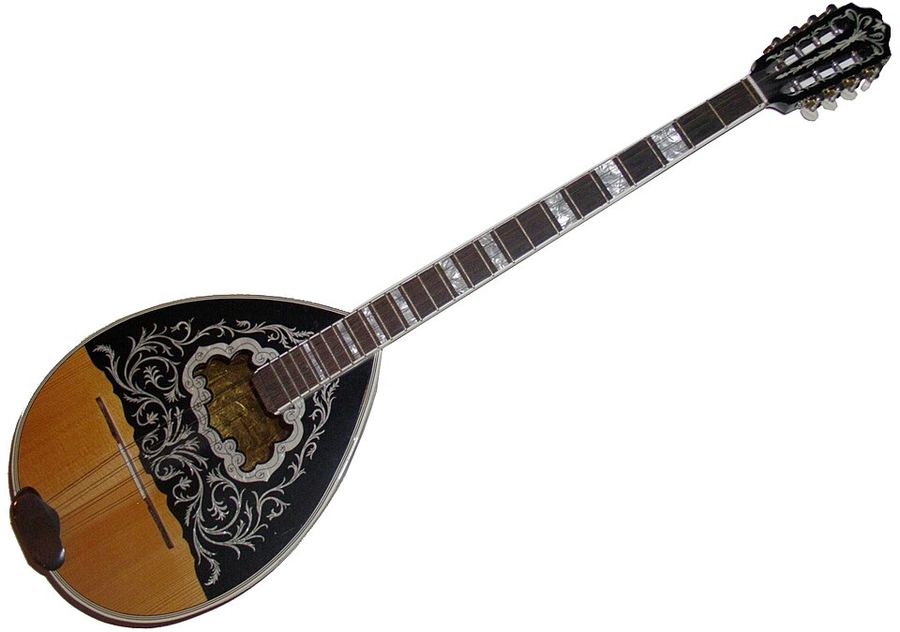
Greek music divides between demotic folk traditions, which vary sharply by region, and the urban genres that emerged in the twentieth century. Folk repertoires are tied to dances performed in open or closed circles: the syrtos and kalamatianos across much of the mainland, the leaping tsamikos, the Cretan pentozali and syrtos led by the lyra, the Pontic dances of Black Sea refugees played on the kemenche, and the island syrtos of the Aegean accompanied by violin and laouto. The clarinet, adopted in the nineteenth century, became the lead voice of mainland and Epirot music, whose slow, free-metre laments are among the most distinctive sounds in European folk music. Rebetiko, the urban song of the ports and of the Asia Minor refugees, built around the bouzouki and baglamas, moved from marginality to national status and is inscribed by UNESCO as intangible cultural heritage. From it came laiko, the popular song of the post-war decades, and entechno, the art-song tradition of composers such as Mikis Theodorakis and Manos Hadjidakis, who set major poets to music and gave Greek film and protest their soundtrack. Bouzouki nightclubs, the panigyri and the syrtaki choreographed for cinema all belong to the same living continuum.
Music & Dance, Greece
Wikimedia Commons / CC BY 2.5

Cuisine & Misattributed Foods

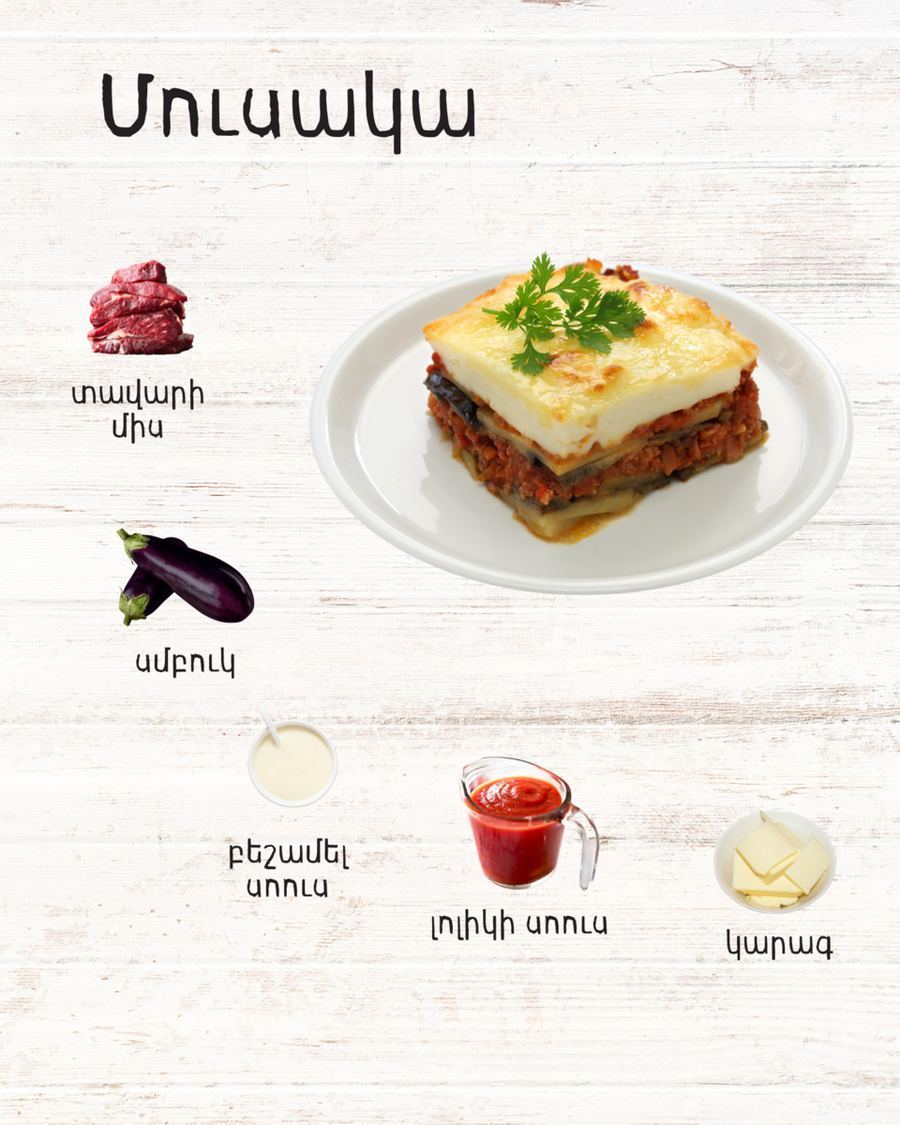
Greek cooking is the archetype of the Mediterranean diet that UNESCO inscribed as intangible cultural heritage: olive oil as the principal fat, bread and pulses as the base, abundant vegetables and wild greens, cheese and yogurt, fish on the coasts, and meat used sparingly and festively. Greece is one of the world's largest olive-oil producers and the largest per-capita consumer, and olive oil is listed among its leading exports alongside refined petroleum and pharmaceuticals. The mezze table — many small dishes shared slowly — is the characteristic form of eating, and the tavern rather than the formal restaurant is the characteristic setting. Signature preparations include moussaka and pastitsio, dolmades, souvlaki and gyros, grilled octopus, horta of boiled wild greens, fava from Santorini, and the filo pastries that run from savoury spanakopita to syrup-soaked baklava. Feta, protected as a designated origin product in the EU, is the emblematic cheese, and Greek yogurt has become a global export category. The country's wine culture is ancient and has been rebuilt around indigenous grapes — assyrtiko from Santorini's volcanic soils, agiorgitiko, xinomavro — alongside resinated retsina and the distilled ouzo, tsipouro and Cretan raki that accompany mezze.
Cuisine & Misattributed Foods, Greece
GeoO / CC BY-SA 4.0

National Dress

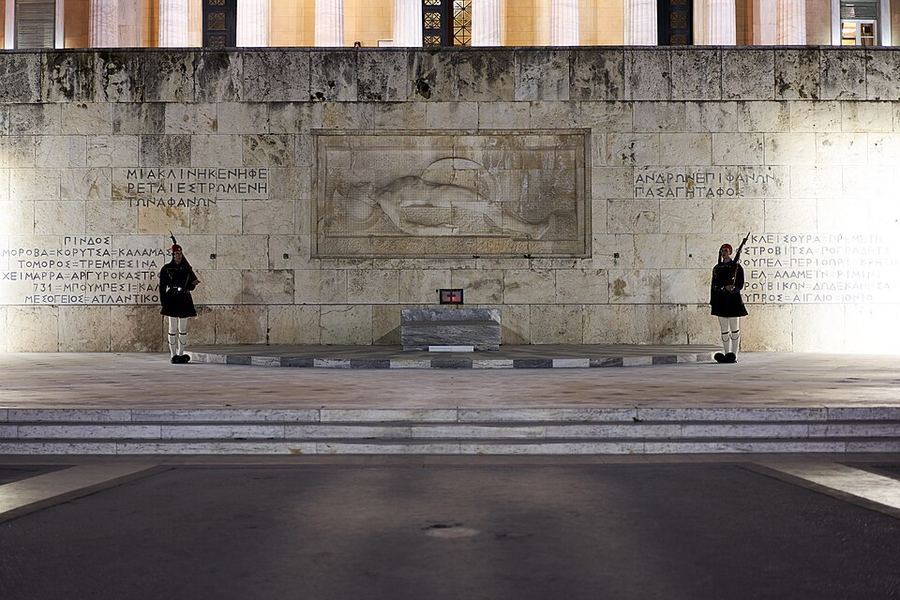
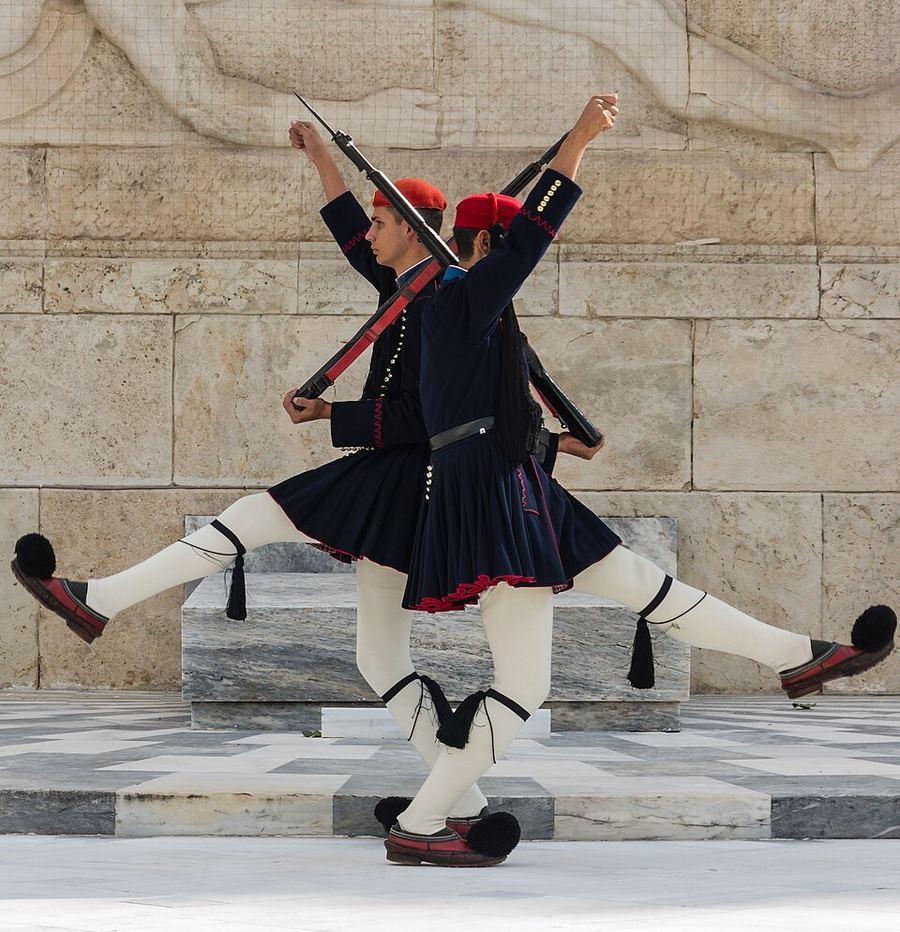
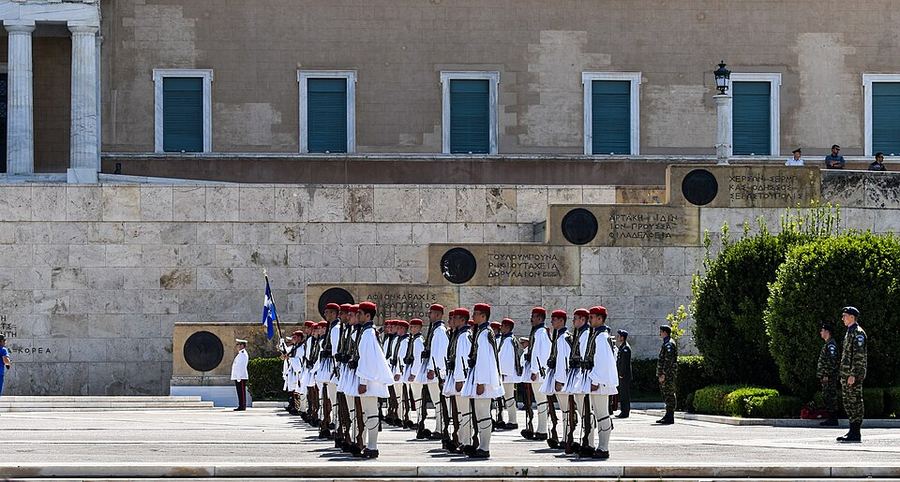
Greece has no single national costume but a wide regional repertoire, most of it now ceremonial. The best-known men's outfit is the foustanella, the pleated white kilt worn with a white shirt, embroidered waistcoat and tsarouchia — the red leather clogs with black pompoms — which entered national iconography through the fighters of the 1821 War of Independence and survives as the uniform of the Evzones, the presidential guard who keep watch at the Tomb of the Unknown Soldier in Athens and change guard in a slow ceremonial march. Island men's dress is quite different: the baggy vraka trousers, sash and cap of the Aegean seafaring islands. Women's costume varies by island and district in cut, embroidery and headdress, from the heavily embroidered Cretan and Dodecanesian dresses to the mainland's sleeveless sigouni coat, and gold coin jewellery frequently formed part of a dowry displayed on the body. Amalia dress, the urban style named for Greece's first queen, combined a velvet jacket and long skirt with a fez-like cap and became the nineteenth-century bourgeois national costume. Today these are worn for national holidays, folk dance performances, panigyria and school parades.
National Dress, Greece
George E. Koronaios / CC BY-SA 4.0

Sports & Inspiring Athletes

Football and basketball are the two mass sports. The football league is dominated by Olympiacos of Piraeus, Panathinaikos and AEK of Athens, and PAOK of Thessaloniki, whose derbies carry an intensity that regularly draws international attention; the national team's defining moment was winning the 2004 UEFA European Championship in Portugal as a rank outsider, one of the great upsets in the tournament's history. Basketball is arguably the stronger sport internationally: Greece won the European championship in 1987 and 2005, Panathinaikos and Olympiacos have between them won the European club title many times, and the country produces players of the first rank. Water polo is a genuine national strength, with the men's and women's teams both regular medallists at world and European level. Track and field retains prestige from the ancient Games and from Olympic champions in the jumps and throws, and weightlifting has produced world-beaters. Sailing, given the geography, is widespread and has been a reliable source of Olympic medals, and Greek athletes also compete strongly in wrestling, judo and gymnastics.
IOCFIFAWorld Athletics
Sports & Inspiring Athletes, Greece
Jakub Hałun / CC BY 4.0

Notable Educational Programs

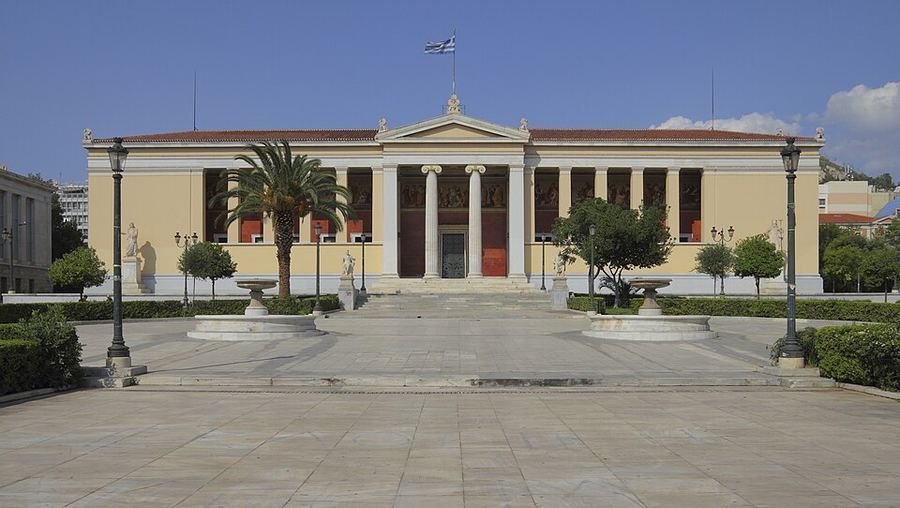
Education is free and compulsory from age six through the lower secondary gymnasio, and public higher education is tuition-free at the undergraduate level, a constitutional principle that has shaped the system's politics for decades. Entry to university is decided almost entirely by the Panhellenic examinations taken at the end of upper secondary school, a high-stakes system that has produced a very large private tutoring sector — the frontistiria — which most families use and which functions as a parallel education economy. The oldest and largest institutions are the National and Kapodistrian University of Athens, founded in 1837 as the first university of the modern Greek state, the National Technical University of Athens, and the Aristotle University of Thessaloniki, the largest in the country; the University of Crete and the University of Patras have strong research profiles. Greece produces more graduates per head than the EU average and its diaspora academics are prominent internationally, but a long-standing problem is emigration of the highly qualified, which accelerated sharply during the debt crisis after 2009. Vocational education has historically been less prestigious than the academic track, and successive reforms have tried to strengthen it.
Notable Educational Programs, Greece
A.Savin / CC BY-SA 3.0

Wars & Conflicts

Greece is not currently at war and faces no insurgency, and its armed forces are configured largely around deterrence in the Aegean. Its twentieth century, however, was exceptionally violent: the Asia Minor campaign and catastrophe of 1919–22, Axis occupation from 1941 with a severe famine in Athens and the destruction of the Jewish communities of Thessaloniki and elsewhere, and a civil war from 1946 to 1949 between government forces and the communist-led Democratic Army whose divisions marked politics for decades. A military junta held power from 1967 until 1974, when its collapse followed the Cyprus crisis: the junta-backed coup in Nicosia was answered by Turkey's invasion of northern Cyprus, and the island remains divided with a United Nations buffer zone. Greek and Turkish forces have come close to armed confrontation in the Aegean on several occasions, most seriously over the Imia/Kardak islets in 1996. The other sustained pressure is migratory rather than military: Greece has been a principal European Union entry point for people crossing from Turkey, with around 145,000 refugees and asylum seekers recorded in the country, and conditions on the Aegean islands and pushback allegations have drawn criticism from UNHCR and human rights organisations.
UNHCRHuman Rights WatchEncyclopaedia BritannicaUNReuters
Current as of 2026-08-06
Wars & Conflicts, Greece
Jebulon / CC0

Land & Border Disputes

Greece's disputes are almost entirely with Turkey and almost entirely maritime. The two states disagree over the delimitation of the continental shelf and exclusive economic zone in the Aegean, over the breadth of territorial waters — Greece claims the right to extend from six to twelve nautical miles, which Turkey has declared would be a cause for war — over the extent of national airspace, over the control of Aegean air traffic and search and rescue areas, and over the demilitarised status of certain eastern Aegean islands. Turkey has also raised questions about sovereignty over some small islets and rocks, a dispute that produced the 1996 Imia/Kardak crisis. Greece maintains that these questions should be referred to the International Court of Justice; Turkey has preferred bilateral negotiation, and periodic exploratory talks have not resolved them. In the eastern Mediterranean the two states support competing maritime boundary agreements — Greece with Egypt and Italy, Turkey with the Libyan Government of National Accord — which overlap. Cyprus remains the central unresolved political question in the region. Greece's boundary with North Macedonia was accompanied by a long-running dispute over that country's name, settled by the Prespa Agreement of 2018.
Land & Border Disputes, Greece
Jebulon / CC0
Land, Life & Legacy

Land & Climate

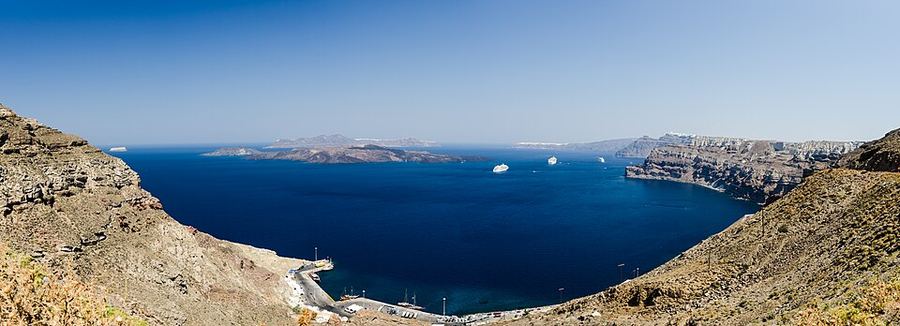
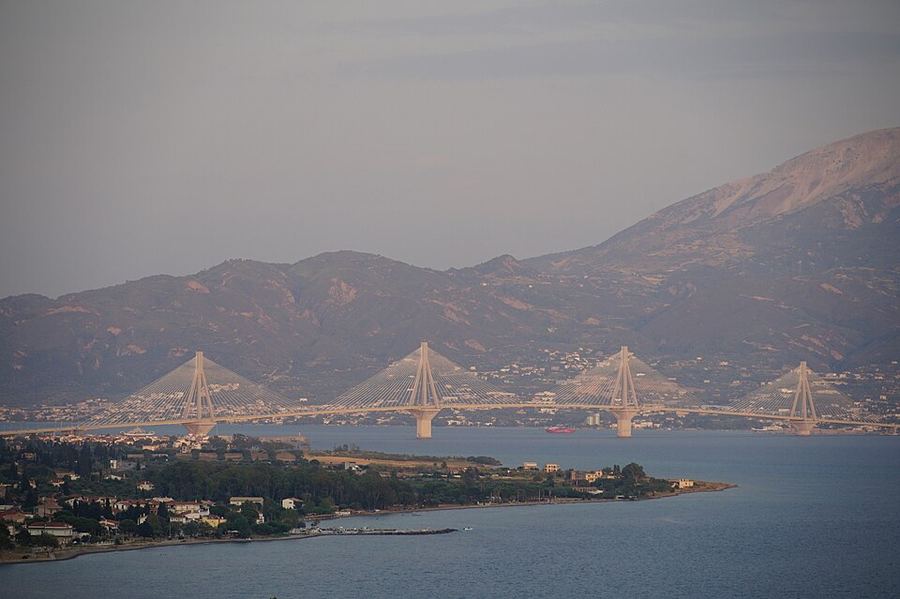
Greece occupies the southern Balkans and an extraordinary quantity of coastline — one of the longest of any country relative to its area — thanks to a fragmented peninsula and roughly six thousand islands and islets, of which a couple of hundred are inhabited. Mountains dominate: the Pindus range runs down the mainland's spine, Mount Olympus reaches 2,917 metres as the highest point and the mythological seat of the gods, and even the islands are largely mountainous, with Crete's Lefka Ori and Psiloritis rising above 2,400 metres. Plains are limited to Thessaly, Macedonia and Thrace, which carry most of the arable farming. The country sits on one of the most seismically active margins in Europe, along the boundary where the African plate subducts beneath the Aegean, giving frequent earthquakes and the volcanic arc that includes Santorini, whose Bronze Age eruption is among the largest in recorded human history. The climate is Mediterranean — hot dry summers, mild wet winters — grading to continental in the northern interior and alpine in the high mountains. Summer heatwaves and wildfire have become the country's most acute climate hazards, alongside water stress on the islands.
Land & Climate, Greece
Norbert Nagel / CC BY-SA 3.0

Entertainment

Greek leisure is public, outdoor and food-centred. The volta, an evening stroll along a seafront or main square, is an institution, as is the long café sitting that can occupy an entire afternoon over a single iced coffee — the freddo espresso and freddo cappuccino are near-universal habits. Taverns and mezze bars serve as the default social venue, and Sunday lunch with extended family is a fixture. Summer empties the cities: August in particular sees a mass movement to the islands and to ancestral villages, and swimming is a national pastime with beaches within reach of nearly everyone. Winter brings skiing at Parnassos, Kalavryta and the northern resorts, and hiking on the Pindus trails and Crete's Samaria Gorge has grown steadily. Football and basketball dominate spectator life, with derby matches between the Athens and Piraeus clubs among the most intense in Europe. Backgammon in its Greek variants, card games, and the panigyri with its all-night circle dancing fill out the calendar, while Athens supports a dense theatre scene and the summer Athens and Epidaurus Festival stages ancient drama in the ancient theatre at Epidaurus itself.
Entertainment, Greece
Wilnel José Verdú Guerrero / CC BY-SA 4.0

Art & Museums

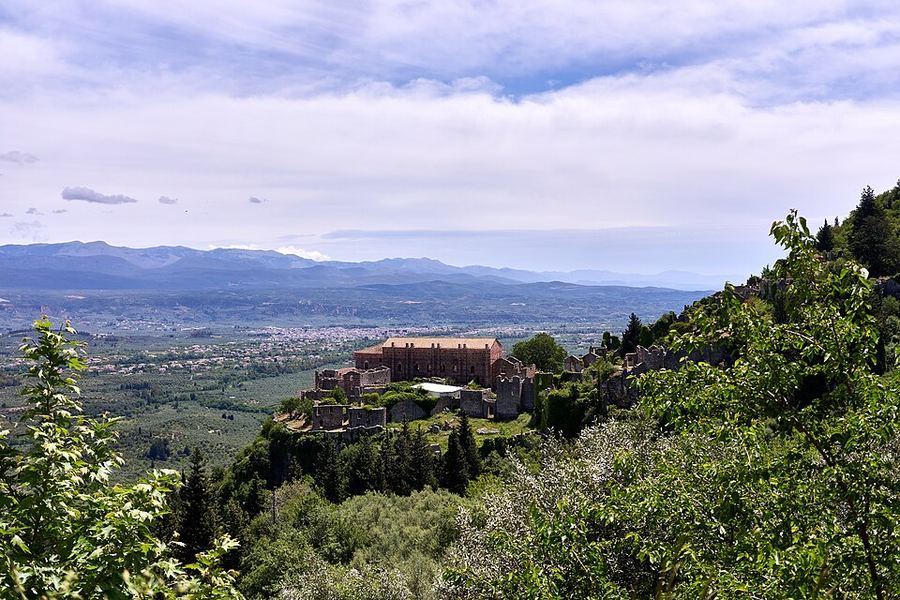
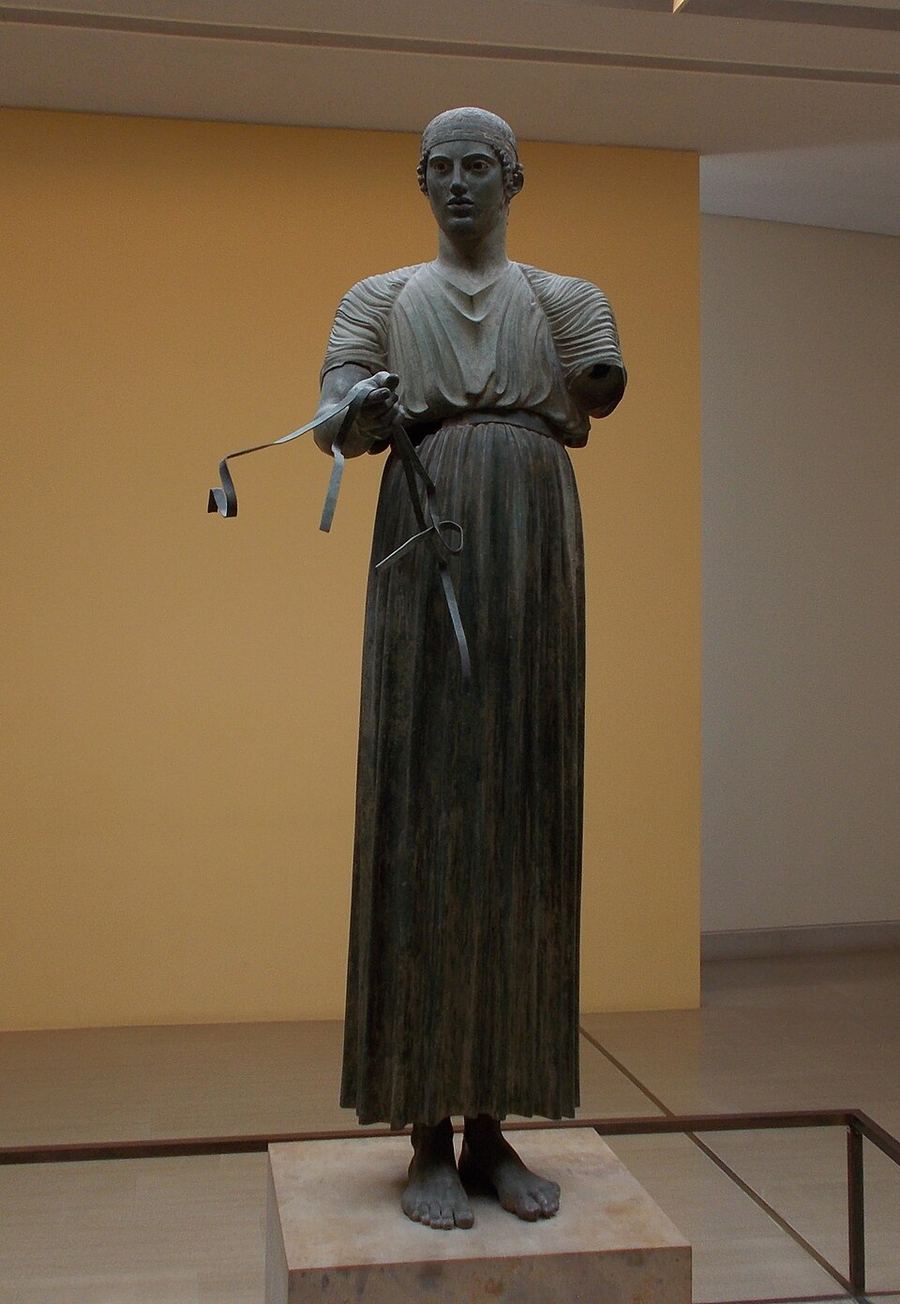
Greek art supplies much of the Western canon's vocabulary. Cycladic marble figurines of the third millennium BC, austere and near-abstract, were admired by twentieth-century modernists; Minoan frescoes at Knossos and Akrotiri show a fluid naturalism unlike anything contemporary. Archaic kouroi gave way in the fifth century BC to the classical sculpture of Phidias, Polykleitos and Praxiteles, whose canon of proportion governed European art for two millennia, and to the Parthenon's architectural refinements. Painted pottery — black-figure and then red-figure — is the best-preserved record of ancient image-making, and major holdings sit in the British Museum, the Louvre and the Metropolitan Museum of Art alongside Athens's own National Archaeological Museum and the Acropolis Museum. Byzantine art shifted the emphasis to icon and mosaic, with gold grounds and codified iconography seen at Daphni, Hosios Loukas and Mystras, and the Cretan school of icon painting under Venetian rule produced Domenikos Theotokopoulos, later El Greco. Modern Greek art runs from nineteenth-century Munich School painters to Nikos Hadjikyriakos-Ghikas, Yannis Tsarouchis and Yannis Moralis, and to the sculptor and installation artist Jannis Kounellis, a central figure of Italy's Arte Povera movement.
British MuseumLouvreMetropolitan Museum of ArtEncyclopaedia Britannica
Art & Museums, Greece
Odysses / CC BY-SA 4.0

Notable People

No country of comparable size has contributed as many names to the shared curriculum. From antiquity: Homer, whose epics open Western literature; the tragedians Aeschylus, Sophocles and Euripides and the comic playwright Aristophanes; Herodotus and Thucydides, who founded history-writing; Socrates, Plato and Aristotle; the mathematicians Euclid, Pythagoras and Archimedes; Hippocrates, whose name still attaches to medical ethics; and the statesman Pericles. Alexander the Great carried Greek rule to the Indus. In the modern era, Eleftherios Venizelos dominated early twentieth-century politics; Constantine Cavafy, writing in Alexandria, is among the century's most translated poets; George Seferis and Odysseas Elytis both won the Nobel Prize in Literature, in 1963 and 1979; Nikos Kazantzakis wrote Zorba the Greek and The Last Temptation; and Mikis Theodorakis and Manos Hadjidakis defined modern Greek music, Hadjidakis winning an Academy Award for the song from Never on Sunday. Maria Callas, born in New York to Greek parents, became the defining operatic soprano of her century, and Melina Mercouri moved from acting to serve as culture minister and to launch the campaign for the return of the Parthenon sculptures.
Encyclopaedia BritannicaOxford Reference
Notable People, Greece
Didier Descouens / CC BY-SA 4.0

Inventions & Breakthroughs

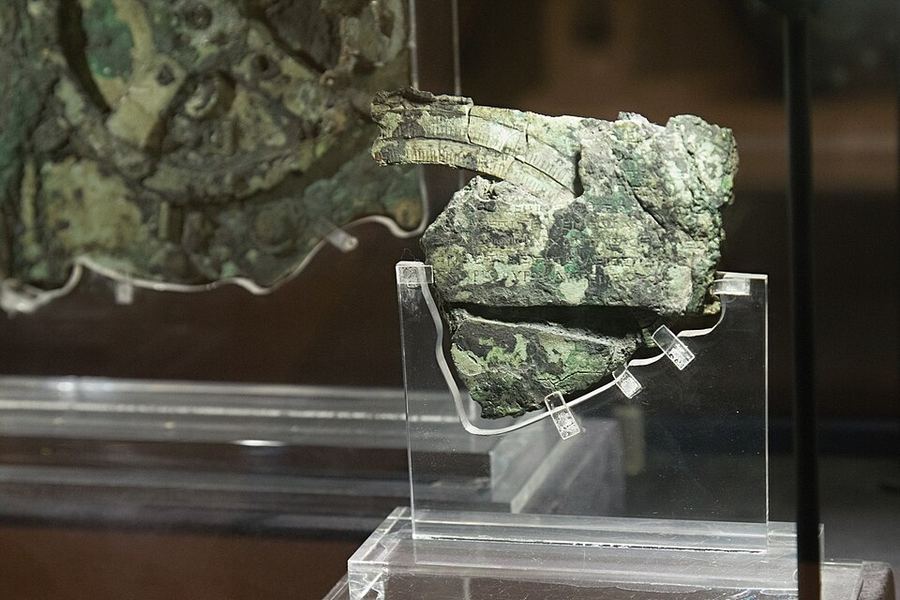
Greek antiquity produced not only ideas but machines. Archimedes of Syracuse described the principle of buoyancy, the law of the lever, the compound pulley and the water-raising screw that bears his name, and calculated pi within tight bounds. Hero of Alexandria built the aeolipile, a steam-driven rotating sphere, along with automata, a wind-powered organ and a coin-operated dispenser. The Antikythera mechanism, recovered from a shipwreck in 1901 and now in the National Archaeological Museum in Athens, is a geared bronze calculator that modelled the motions of the sun, moon and planets and predicted eclipses — an instrument of a complexity not matched again for over a thousand years, and the subject of continuing research published in journals including Nature. Ctesibius laid the foundations of pneumatics, and Greek shipwrights developed the trireme. Conceptually, the contributions are larger still: axiomatic geometry from Euclid, formal logic from Aristotle, atomic theory from Democritus, the heliocentric proposal of Aristarchus, and the systematic separation of natural explanation from myth. Modern Greek invention is more scattered, though Greek shipping introduced organisational and financial practices that reshaped world bulk trade in the twentieth century.
Encyclopaedia BritannicaNatureSmithsonian
Inventions & Breakthroughs, Greece
Zde / CC BY-SA 4.0

Science & Technology

Greece's research base is concentrated in its public universities and in national centres such as the National Centre for Scientific Research Demokritos and the Foundation for Research and Technology–Hellas in Crete, with strengths in physics, materials, computer science, marine science and archaeology-adjacent conservation science. Greek researchers participate heavily in European Union framework programmes and in international collaborations at CERN and in astronomy; the country's research and development spending has risen over the past decade but remains below the EU average, and the debt crisis after 2009 drove a sustained outflow of scientists. Applied strengths follow the economy: shipping technology, marine engineering and aquaculture, where Greece is Europe's leading producer of farmed sea bass and sea bream; and energy, where the country has moved rapidly on solar and wind, with renewables supplying a large and rising share of electricity and the interconnection of islands to the mainland grid a major national project. Archaeological science is an unusually visible field, from ongoing study of the Antikythera mechanism to the conservation programme on the Acropolis, one of the longest-running restoration projects in the world. A start-up sector has grown in Athens and Thessaloniki around software and logistics.
EurostatOECDNatureIEA
Science & Technology, Greece
Bekuletz / Public domain
On The World Stage
Champions of Greece

Champions & Defining Moments

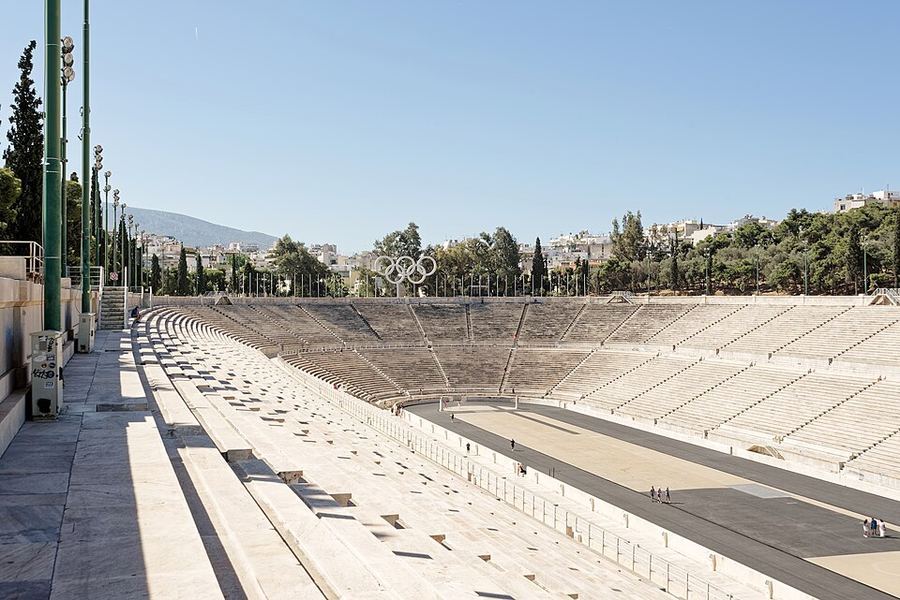
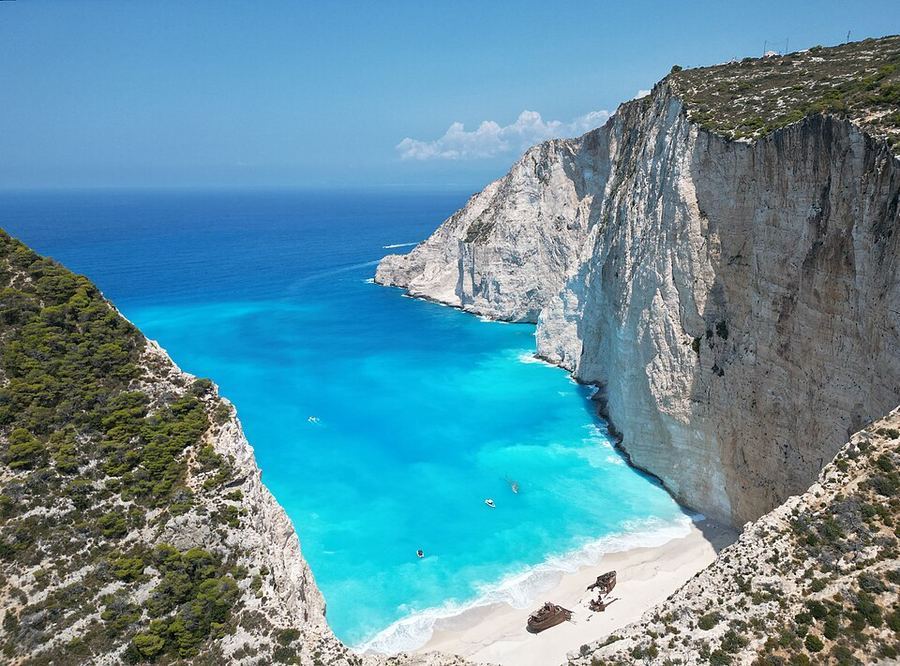
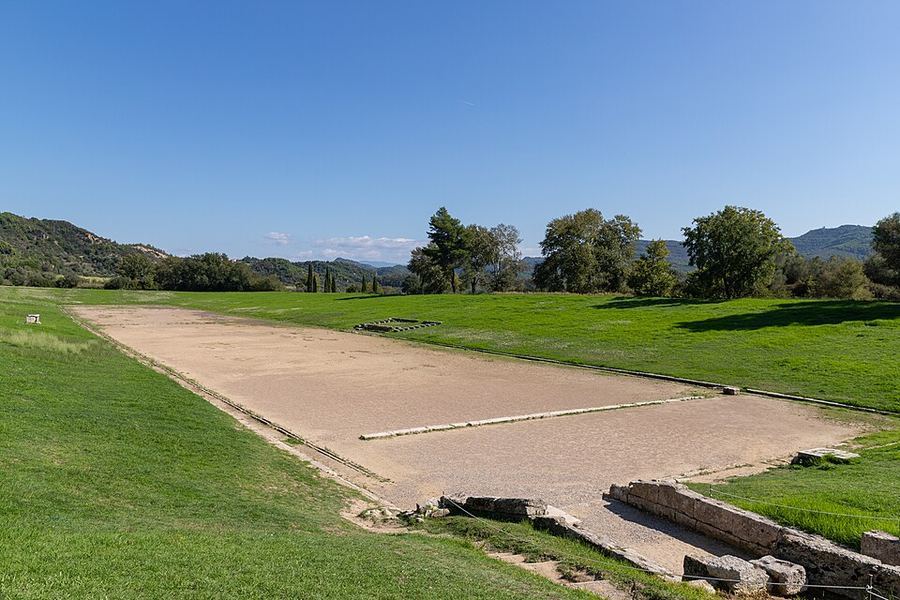
Greece's place in world sport is foundational as well as competitive: the ancient Olympic Games were held at Olympia from the eighth century BC, the modern Games were revived in Athens in 1896, and the Olympic flame for every edition is still kindled at Olympia and carried from there. Athens hosted the Games again in 2004, and the marathon itself is named for the Greek plain from which a runner is said to have carried news of victory to Athens. In competition, the 2004 European football championship victory remains the country's most celebrated international result. Greek basketball has global reach through its clubs and through Giannis Antetokounmpo, the Athens-born forward who has been named the NBA's most valuable player and won a championship, becoming the most prominent Greek athlete in the world. Water polo teams have reached Olympic finals, and Greek sailors, weightlifters and track athletes have won Olympic titles — Pyrros Dimas's three weightlifting golds and the pole vaulter Katerina Stefanidi's Rio title among them. The country also hosts the Acropolis Rally and major open-water and marathon events on the original route.

IOCFIFAWorld AthleticsOlympedia
dronepicr / CC BY 2.0
Government & Leadership

Parliamentary republic

Seat of the executive

Executive

Konstantinos Tasoulas — PresidentND

In office since 13 March 2025

Kyriakos Mitsotakis — Prime Minister

The legislature

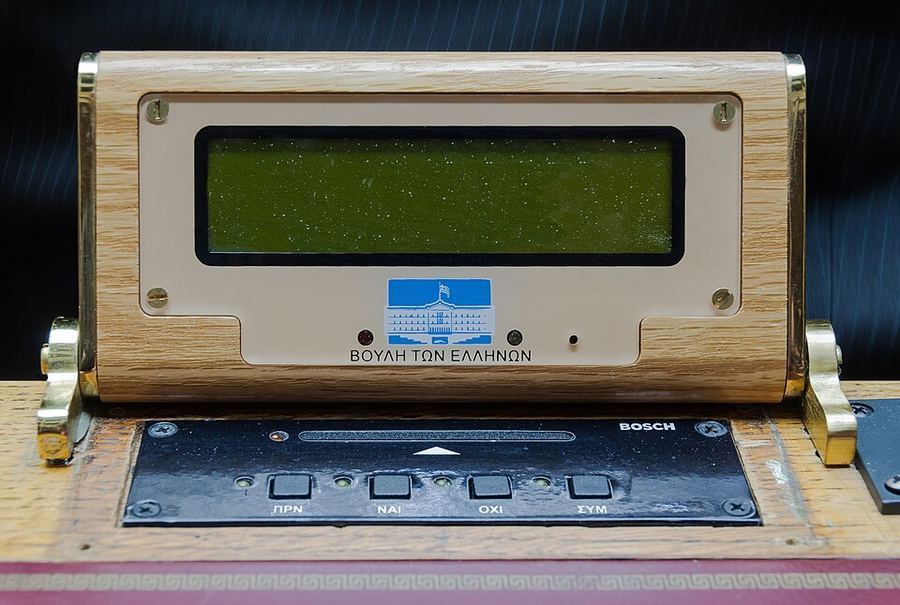
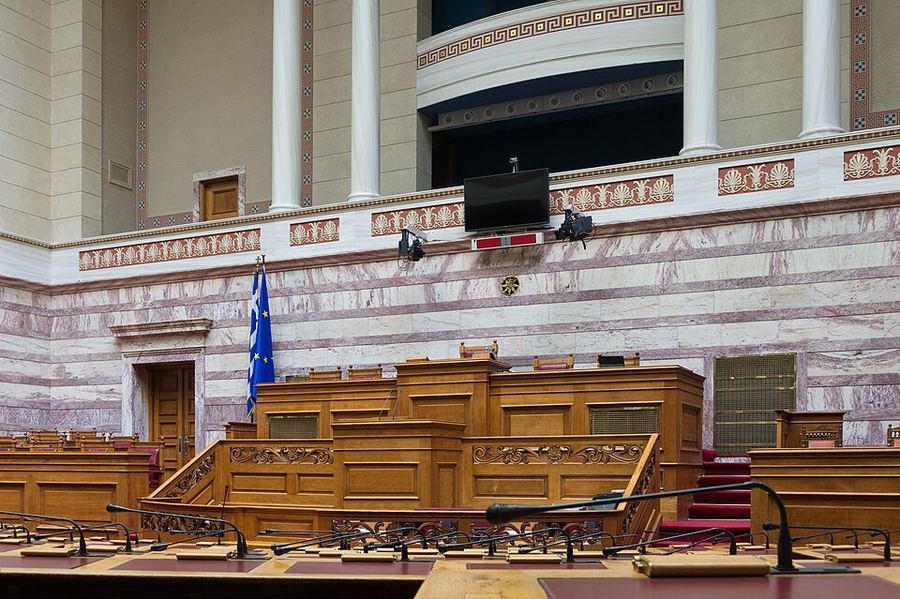
Hellenic Parliament (Vouli Ton Ellinon)

Unicameral

Composition — ND majority

ND 158 · SYRIZA 47 · PASOK-KINAL 32 · KKE 21 · Other 42

Last election 6/25/2023 · 22.9% women

Jebulon / CC0

Supreme Civil and Criminal Court or Areios Pagos (consists of 56 judges, including the court presidents); Council of State (supreme administrative court) consists of the president, 7 vice presidents, 42 privy councilors, 48 associate councilors and 50 reporting judges, organized into six 5- and 7-member chambers; Court of Audit (government audit and enforcement) consists of the president, 5 vice presidents, 20 councilors, and 90 associate and reporting judges

Economy, Trade & Government

Currency & GDP

Euro — EUR (€)

GDP (PPP): $392.205 billion (2024 est.)

Per capita: $37,800 (2024 est.)

Exports

$108.424 billion (2024 est.)

refined petroleum, packaged medicine, aluminum, olive oil, tobacco (2023)

Partners: Italy 12%, Germany 6%, Cyprus 6%, Bulgaria 4%, USA 4% (2023)

Imports

$122.408 billion (2024 est.)

crude petroleum, refined petroleum, natural gas, cars, packaged medicine (2023)

Partners: Germany 10%, China 10%, Italy 8%, Iraq 7%, Netherlands 6% (2023)

Government

Type: parliamentary republic

Independence: 3 February 1830 (from the Ottoman Empire)

Terrain → Where People Live

How mountains, coasts, and rivers shape settlement (LandScan).

Coming — data

Migration & Ethnic Settlement

Where groups settled and how people move (GeoEPR + UNHCR).

Coming — data

Universities

Notable institutions, mappable as points.

Coming — data
Economy & government facts: CIA World Factbook (public domain), via OpenFactBook / factbook.json.
Every fact and narrative claim will carry a visible source citation. Data-driven sections light up automatically wherever HERA has coverage.