HERA · Human Entity Reference Atlas by Masego Inc

← Grenada 🌐 3D View
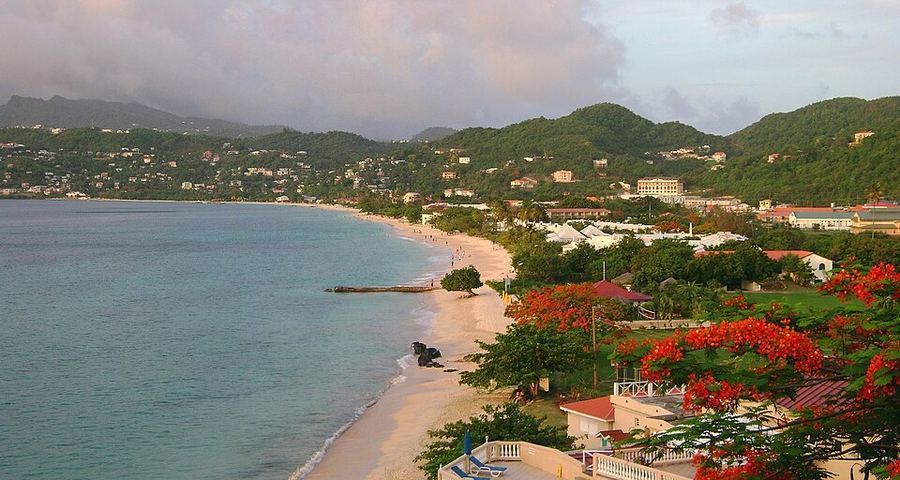
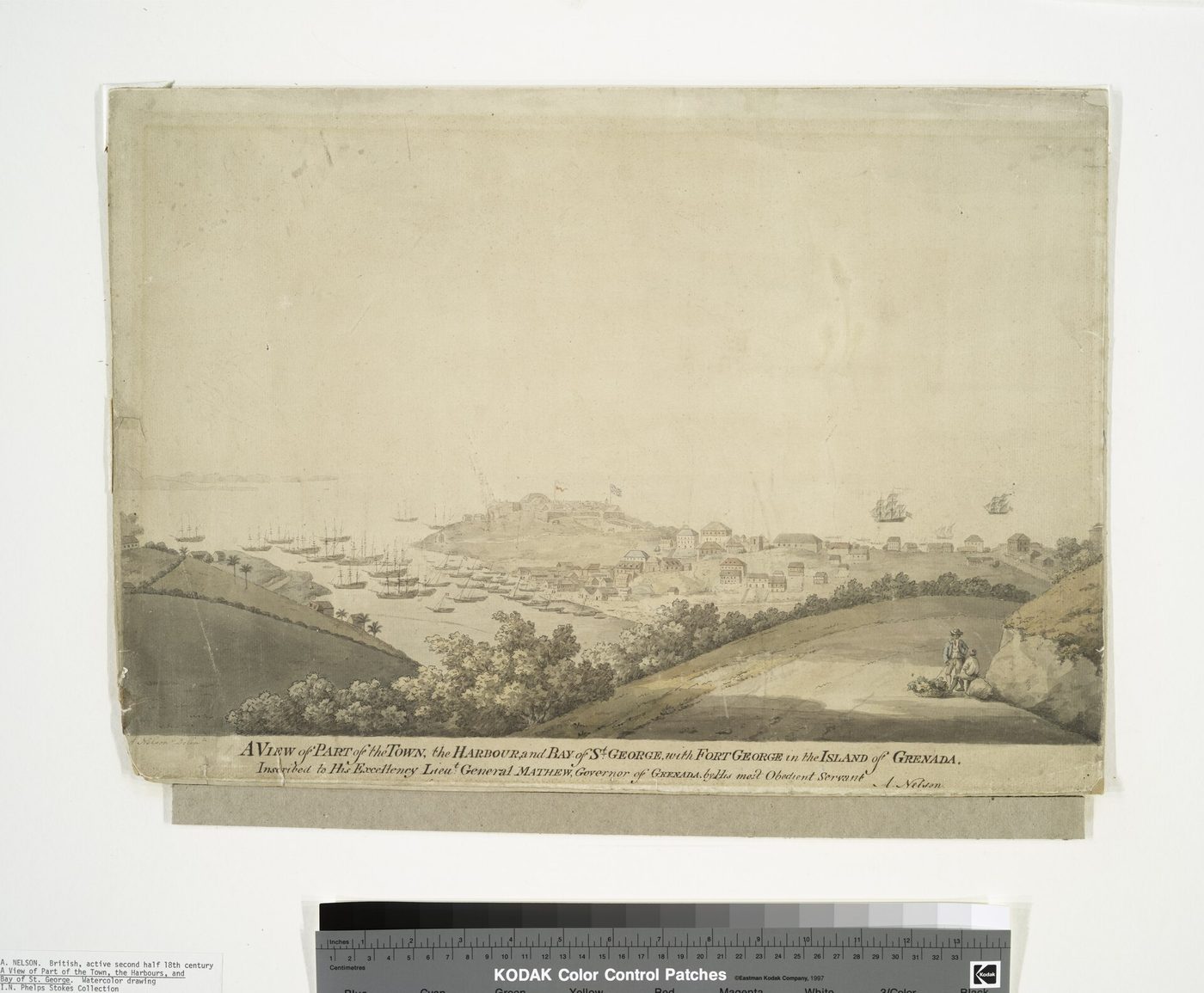
St George's Grenada harbour, Grenada
Grenada GRD
St George's Grenada harbour — Photo: Scan by NYPL / Public domain via Wikimedia Commons
Did You Know An active submarine volcano called Kick 'em Jenny lies just north of the island and is one of the most closely monitored in the world, with a permanent maritime exclusion zone around it. — CIA World Factbook

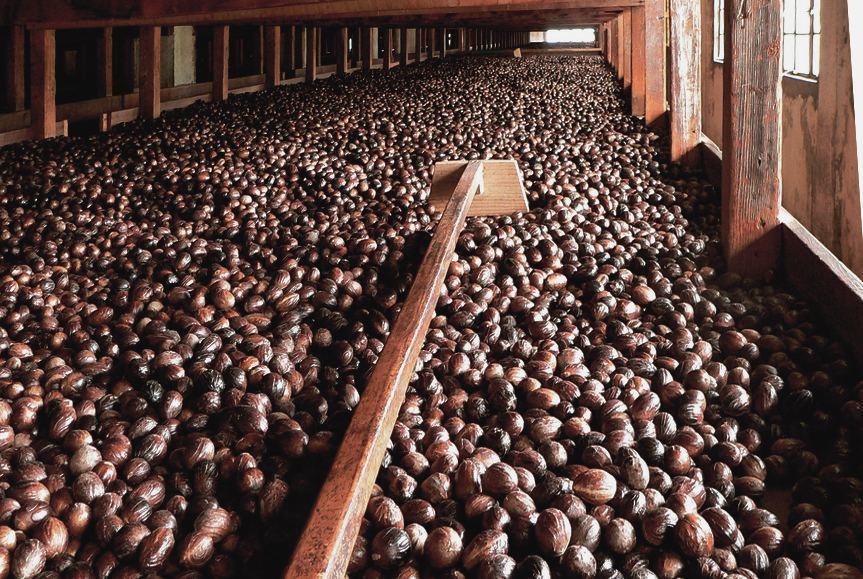
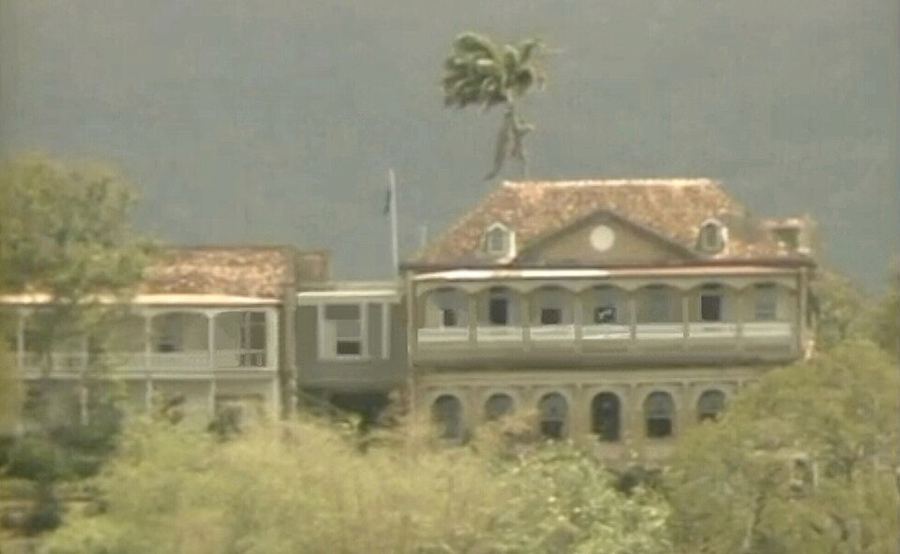
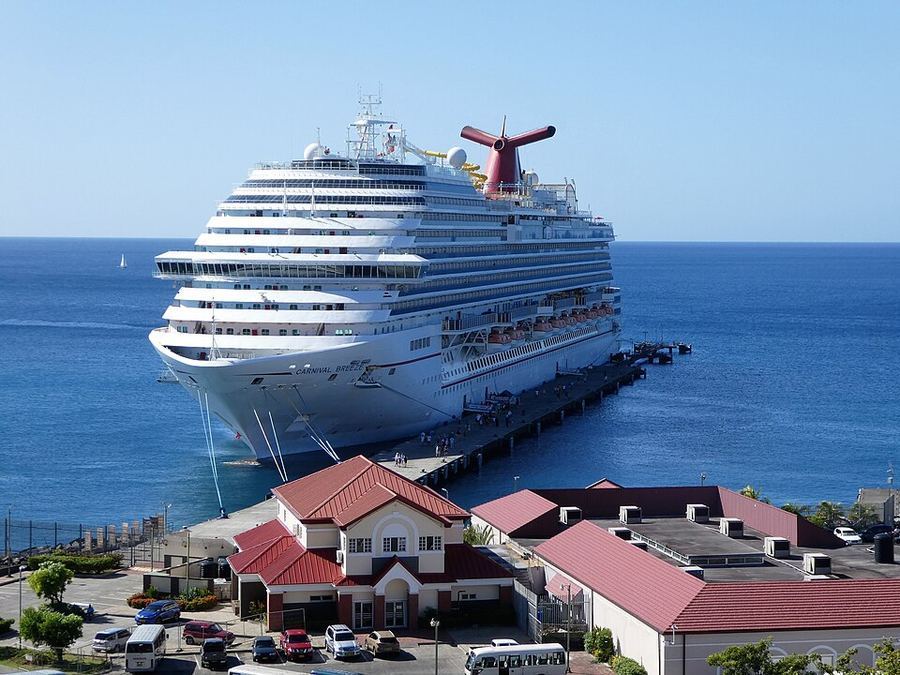
Grenada is a Commonwealth realm of about 115,000 people at the southern end of the Windward Islands chain in the eastern Caribbean, comprising the main volcanic island of Grenada together with Carriacou, Petite Martinique and a scatter of smaller islands in the Grenadines. Its capital, Saint George's, is built around a drowned volcanic crater that forms one of the most photographed harbours in the region, its horseshoe of red-tiled Georgian and French colonial buildings climbing the hillside above the Carenage. Grenada is universally known as the Spice Isle: nutmeg and mace remain emblematic exports and appear on the national flag, and nutmeg and cardamom head the country's export list. Independence from the United Kingdom came on 7 February 1974, and the country retains a parliamentary democracy under a constitutional monarchy. English is official, with a French-derived patois surviving in older speech and place names, and the population is overwhelmingly of African descent, with a Protestant majority and a large Roman Catholic minority reflecting the island's alternating French and British rule. The economy of roughly $2.1 billion in purchasing-power terms rests on tourism, offshore education, agriculture and remittances, with a GDP per capita of about $17,700.

CIA World FactbookEncyclopaedia Britannica
Population
114,621
Capital
Saint George's
Currency
$ XCD
Time zones
Largest city
Human Geography Themes
Loading national figures…
The Country & Its People

History

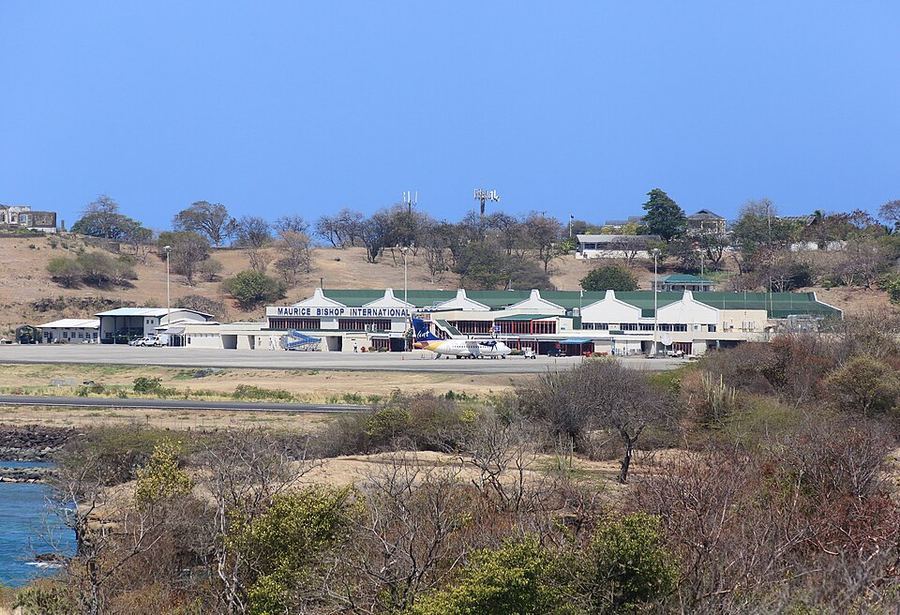
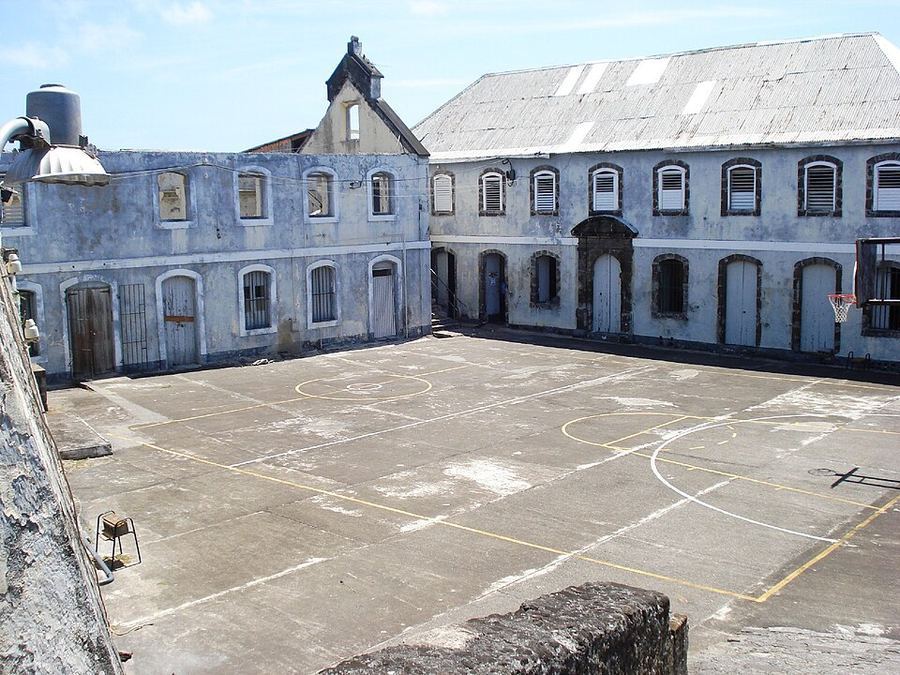
Grenada was settled first by Arawak-speaking peoples and later by Kalinago, who resisted European settlement for more than a century after Columbus sighted the island in 1498. French colonists from Martinique established a foothold in 1650 and broke that resistance within a few years; tradition holds that the last Kalinago defenders threw themselves from the cliffs at the island's northern tip rather than surrender, giving the town of Sauteurs and the site called Leapers' Hill their names. France developed the island with enslaved African labour, first for indigo and tobacco and then for sugar, until Britain took possession under the Treaty of Paris in 1763; France briefly recovered it during the American Revolutionary War, and Britain regained it in 1783. A major uprising led by the free coloured planter Julien Fédon in 1795–96 came close to expelling the British and remains a central episode of national memory. Nutmeg, introduced in the nineteenth century, reshaped the economy after the decline of sugar. Independence came in 1974 under Eric Gairy. In 1979 the New Jewel Movement seized power under Maurice Bishop; his killing in October 1983 during an internal split triggered a United States-led military intervention, after which constitutional government was restored.
Culture

Grenadian culture is Afro-Caribbean at its core, shaped by the plantation past, by alternating French and British rule, and by the tight social scale of a small island where village identity matters. Christianity is central — around half the population is Protestant, with Pentecostal and Seventh-day Adventist congregations the largest, and about 36% Roman Catholic, a legacy of the French period — and church life structures Sunday and the calendar. Extended family and the practice of sending remittances home from a large diaspora in Britain, the United States, Canada and Trinidad are defining features of social life. The most concentrated expression of national culture is Spicemas, the carnival held in August rather than before Lent, whose signature figure is the Jab Jab: masqueraders coated in black oil, wearing horns and dragging chains, who take over the streets at the pre-dawn J'ouvert. Other traditional masquerade characters include the padded Shortknee. Carriacou maintains its own distinct culture, including the Big Drum or Nation Dance, in which songs are addressed to named African nations remembered from the era of enslavement, and a boat-building and sailing tradition unlike anything on the main island.

Points Of Pride

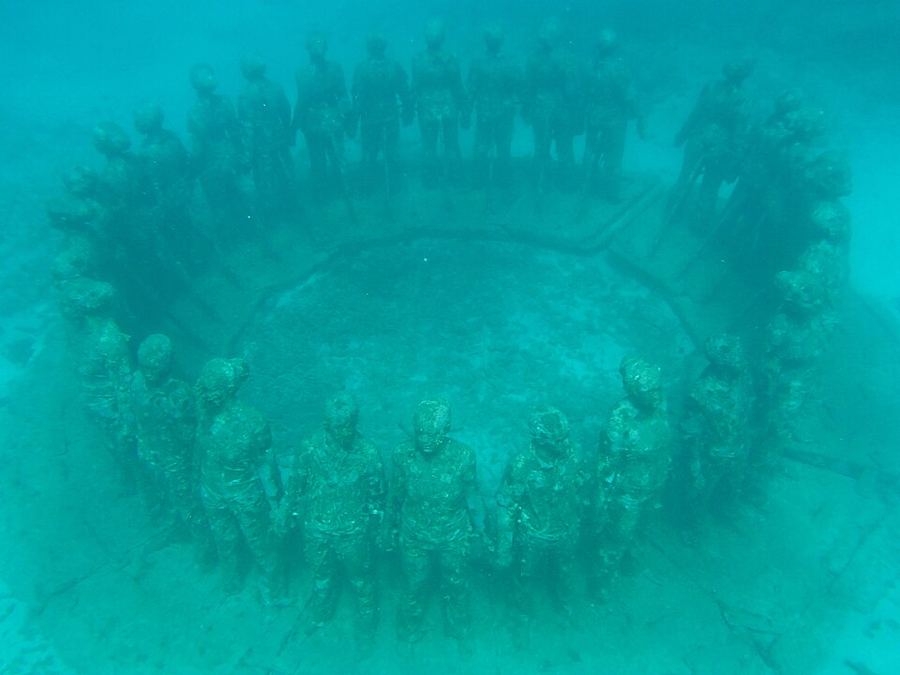
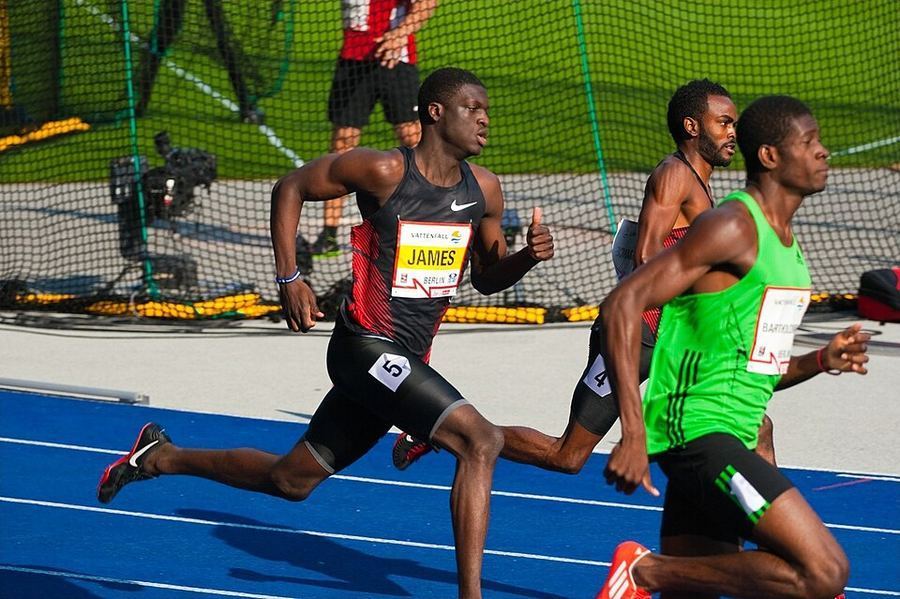
The first source of pride is the spice trade that gives the island its nickname: Grenada has long been one of the world's leading producers of nutmeg and mace relative to its size, and the nutmeg appears on the national flag — the only national flag to carry the crop. The second is the landscape: the Grand Etang crater lake in the interior rainforest, the waterfalls at Annandale and Concord, and the beaches of Grand Anse, consistently ranked among the Caribbean's finest. The third is athletic, and it is enormous for a country of this size — Kirani James won the 400 metres at the London Olympics in 2012, making Grenada an Olympic champion nation and giving it, at the time, one of the highest medal-per-capita figures in the world, and Anderson Peters has twice won the world championship in the javelin. The Molinere Underwater Sculpture Park, created off the west coast in 2006 by the artist Jason deCaires Taylor, was the first of its kind in the world and has become both an art destination and an artificial reef. St George's University has made the island a significant centre of international medical education.

Cultural Fusion

Grenada's culture is a compound of African, French, British and, more faintly, Indigenous and Indian elements. The African inheritance is the deepest: over 82% of the population is of African descent, and it shows in drumming, in the call-and-response structure of the Carriacou Big Drum, in food preparation, in proverb and in folk belief. The French period left Roman Catholicism, place names such as Sauteurs and Lance aux Épines, surnames, and a French-lexicon Creole patois that was widely spoken into the twentieth century and survives in vocabulary, songs and older rural speech; a Grenadian Creole English is the everyday vernacular. The British left the parliamentary system, the legal code, cricket and the English language. Indentured labourers brought from India after emancipation account for the East Indian minority of about 2%, and contributed curry and roti to the everyday menu. Kalinago and Arawak survivals are largely toponymic and archaeological, including petroglyphs at Duquesne Bay. Rastafarian communities, recorded at over 1% of the population, add another layer of religious and musical practice, and returning migrants from Britain and North America continually re-import influences into music and food.

Music & Dance

Grenada shares the eastern Caribbean's calypso and soca traditions and has its own carnival competition circuit: calypso monarch contests where lyrics turn on politics and social commentary, and soca competitions built for the road. The distinctively Grenadian carnival sound is jab jab music, a heavy, chant-driven, iron-and-drum idiom that accompanies the oil-covered Jab Jab masqueraders through J'ouvert, and which has been developed into a recorded genre in its own right. Steelpan, invented in neighbouring Trinidad, is played by panyards across the island and is a fixture of Spicemas. Older folk forms persist alongside these: the quadrille and other set dances inherited from the European planter repertoire but reworked; string band music with guitar, banjo, shak-shak and bass; and above all the Big Drum or Nation Dance of Carriacou, in which a lead drum and two boula drums accompany songs identified with specific African nations — Cromanti, Igbo, Manding and others — performed at maroons, boat launchings, tombstone feasts and other communal rites. Reggae, dancehall and gospel from the wider region and from the diaspora are heard everywhere, and the Mighty Sparrow, one of calypso's greatest figures, was born in Grenada.

Cuisine & Misattributed Foods

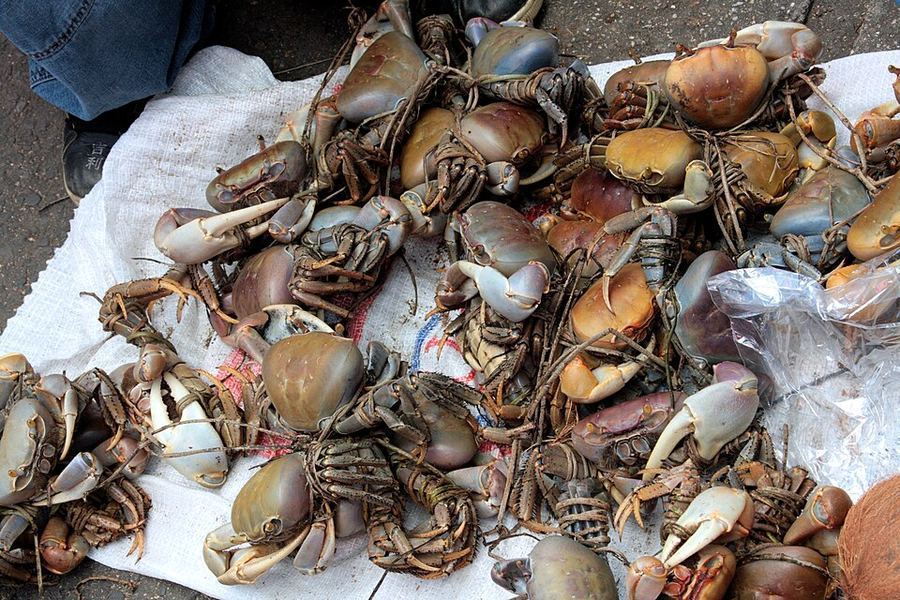
The national dish is oil down, a one-pot meal in which breadfruit, salted meat or saltfish, callaloo leaves, dumplings, turmeric and vegetables are simmered in coconut milk until the liquid is absorbed and only the oil remains at the bottom — traditionally cooked outdoors in a large pot for a crowd, which makes it as much a social form as a recipe. Spices are the island's signature: nutmeg and mace above all, but also cinnamon, cloves, ginger, turmeric and bay, which flavour everything from stews to ice cream to the nutmeg syrup poured over rum punch. Fish and seafood are central, with lambi (conch) stewed or curried, and Gouyave on the west coast holding a weekly fish fry that has become a national institution. Other staples include callaloo soup, pelau of rice and pigeon peas with browned meat, roti and curry from the East Indian inheritance, souse, and river-caught crayfish. Ground provisions — yam, dasheen, sweet potato, green banana — accompany most meals. Cocoa is grown alongside nutmeg and has supported a small high-quality chocolate industry, and locally distilled rums, including a famously overproof river-driven estate rum, are the national spirit.

National Dress

Grenada, like most of the eastern Caribbean, has no single codified national costume, but it does have a recognised traditional dress used for cultural performance and national occasions. For women it is based on the nineteenth-century douillette or wob dwiyet pattern common across the formerly French Windward Islands: a full skirt and overdress in madras plaid, worn with a white cotton blouse, a foulard or shoulder scarf, and a head-tie folded in madras, whose number of points was traditionally read as a signal of the wearer's marital availability. Men's traditional dress is simpler — dark trousers, a white or madras shirt and a straw or felt hat. This costume is worn for folk dance troupes, the Big Drum and quadrille performances, Independence Day on 7 February, and cultural pageants rather than for daily life. Everyday clothing is thoroughly contemporary and Caribbean-American in style, with modest dress expected for church and for entering shops and government offices. Carnival costume is an entirely separate register: the elaborate feathered and beaded bands of the road march, the padded Shortknee masquerade suits, and the horns, chains and black oil of the Jab Jab.

Sports & Inspiring Athletes

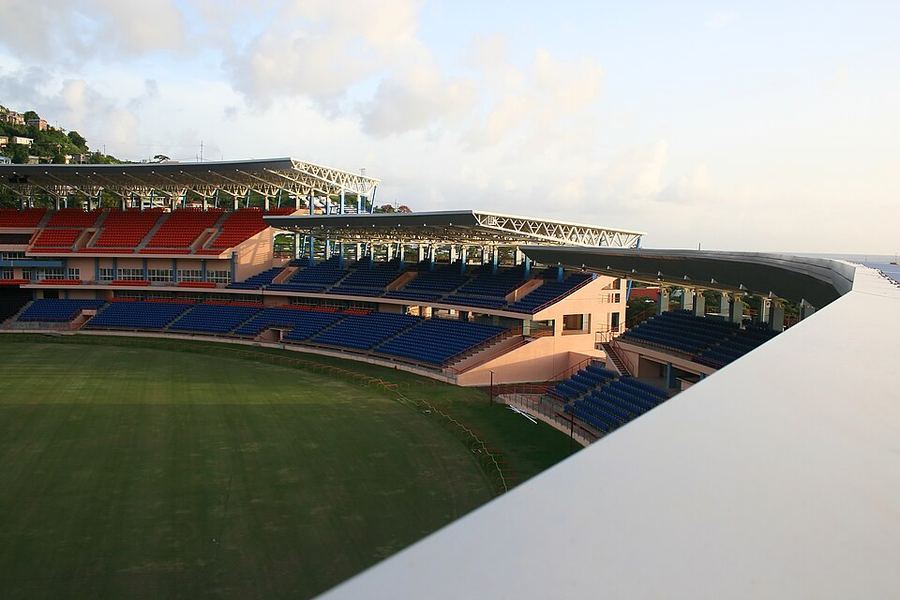
Cricket is the traditional national sport and the cultural default: Grenada plays as part of the West Indies at international level and within the Windward Islands in regional competition, and the National Cricket Stadium at Queen's Park in Saint George's — rebuilt after Hurricane Ivan and used for Cricket World Cup matches in 2007 — hosts international fixtures and Caribbean Premier League games. Football is the most widely played sport and has the largest participation base, with a domestic league and a national team nicknamed the Spice Boyz that has reached the CONCACAF Gold Cup. But it is athletics that has given Grenada its global standing, wholly out of proportion to its size: sprinting and the throws are supported by school and club competition, and the country has produced an Olympic 400-metre champion and a double world champion in the javelin. Sailing is a serious tradition in Carriacou, where the annual regatta races locally built wooden workboats. Basketball, netball, volleyball and cycling all have followings, and sport fishing and diving are significant recreational and tourism activities.
IOCFIFAWorld Athletics

Notable Educational Programs

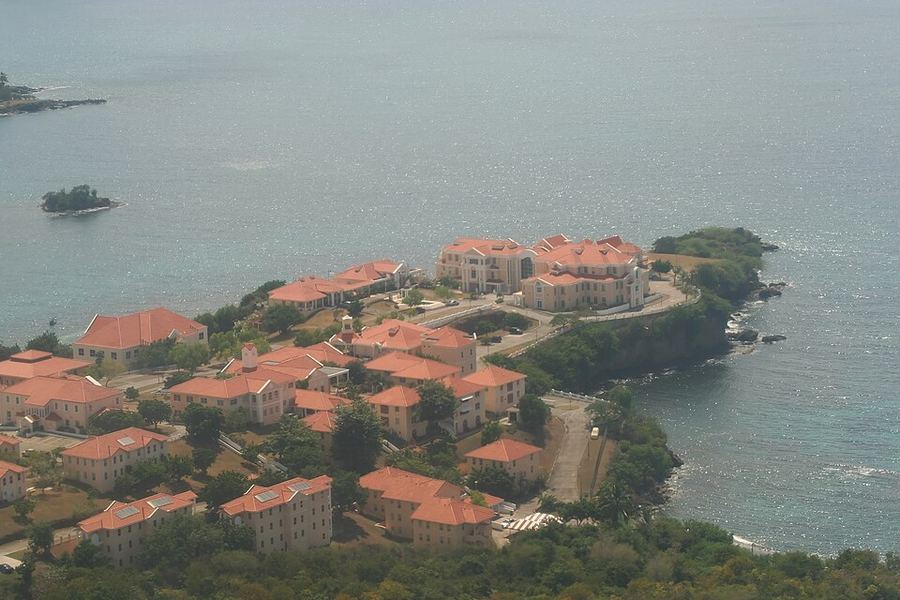
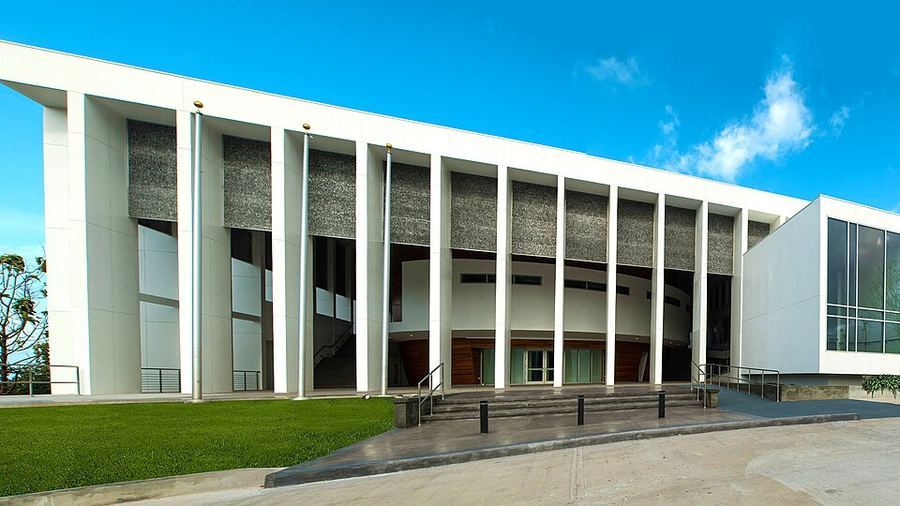
Education is free and compulsory at primary and lower secondary level, and Grenada reports high literacy in line with the eastern Caribbean generally. Schooling follows the British-derived model shared across the region: primary school to age eleven, secondary school leading to the Caribbean Examinations Council's CSEC certificates and then CAPE for those continuing, with results administered regionally rather than nationally. Post-secondary provision within the state system centres on the T. A. Marryshow Community College in Saint George's, which offers associate degrees and technical and vocational programmes and links to the University of the West Indies, of which Grenada is a contributing member state through the regional Open Campus. The country's most internationally significant institution is St George's University, an independent university founded in 1976 whose medical school draws several thousand students, mainly from North America, and which has become one of the largest single contributors to the national economy; its veterinary and public health schools and its role in graduate medical placement give the island an unusual academic profile. Emigration of graduates is a persistent structural issue, as it is throughout the eastern Caribbean.

Wars & Conflicts

Grenada is at peace and has no armed forces beyond a police force with a paramilitary special services unit, and it faces no insurgency or territorial threat. Its one episode of modern political violence remains the defining trauma of national life. The New Jewel Movement took power in a coup in 1979 under Maurice Bishop and governed as the People's Revolutionary Government, aligning with Cuba and the Soviet bloc and beginning construction of an international airport at Point Salines. A split within the movement led to Bishop's detention and, on 19 October 1983, his execution along with several ministers and supporters. Six days later a United States-led force with troops from several Caribbean states landed on the island in an operation that met resistance from Grenadian and Cuban personnel and left dead on all sides; constitutional government was restored and elections held in 1984. Seventeen people were later convicted in connection with the killings and served long sentences before their release, and the location of Bishop's remains has never been established — a grievance that continues to generate calls for a full accounting. Contemporary security concerns are ordinary ones: crime, drug transhipment through the eastern Caribbean, and disaster response.
Current as of 2026-08-06

Land & Border Disputes

Grenada has no outstanding land boundary disputes and no territory claimed by another state; its land frontier question does not arise, since the country consists entirely of islands. Its external boundary business is therefore maritime, and it has been settled largely by negotiation. Grenada concluded a maritime delimitation treaty with Trinidad and Tobago covering the waters between the two states, and its remaining maritime boundaries lie with Saint Vincent and the Grenadines to the north, where the island chain runs continuously between the two countries and the boundary passes through the Grenadines, and with Venezuela to the south. Grenada is a party to the United Nations Convention on the Law of the Sea and claims a twelve-nautical-mile territorial sea and a two-hundred-mile exclusive economic zone. Sovereignty over Grenada's own dependencies — Carriacou, Petite Martinique and the southern Grenadine islets — is uncontested. The one recurring maritime issue is not a dispute over sovereignty but a safety restriction: the permanent exclusion zone maintained around the active submarine volcano Kick 'em Jenny north of the main island, whose radius is adjusted according to the alert level set by regional seismic monitoring.
Land, Life & Legacy

Land & Climate

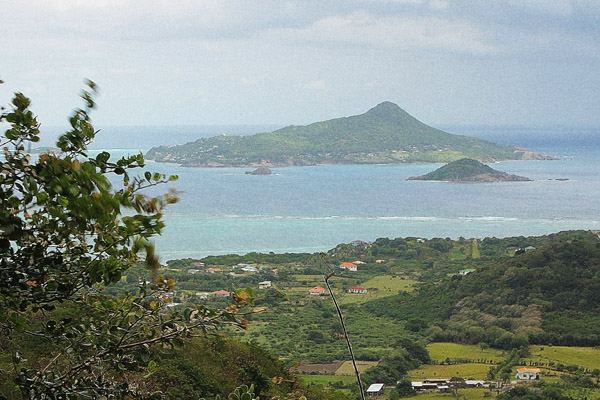
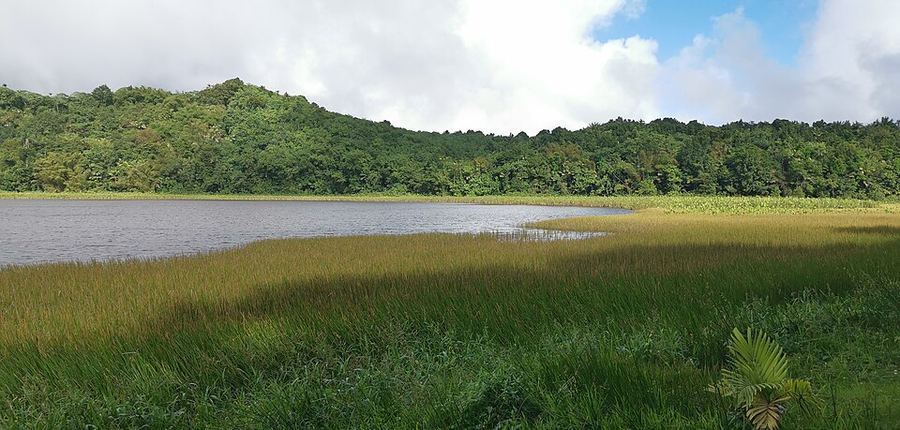
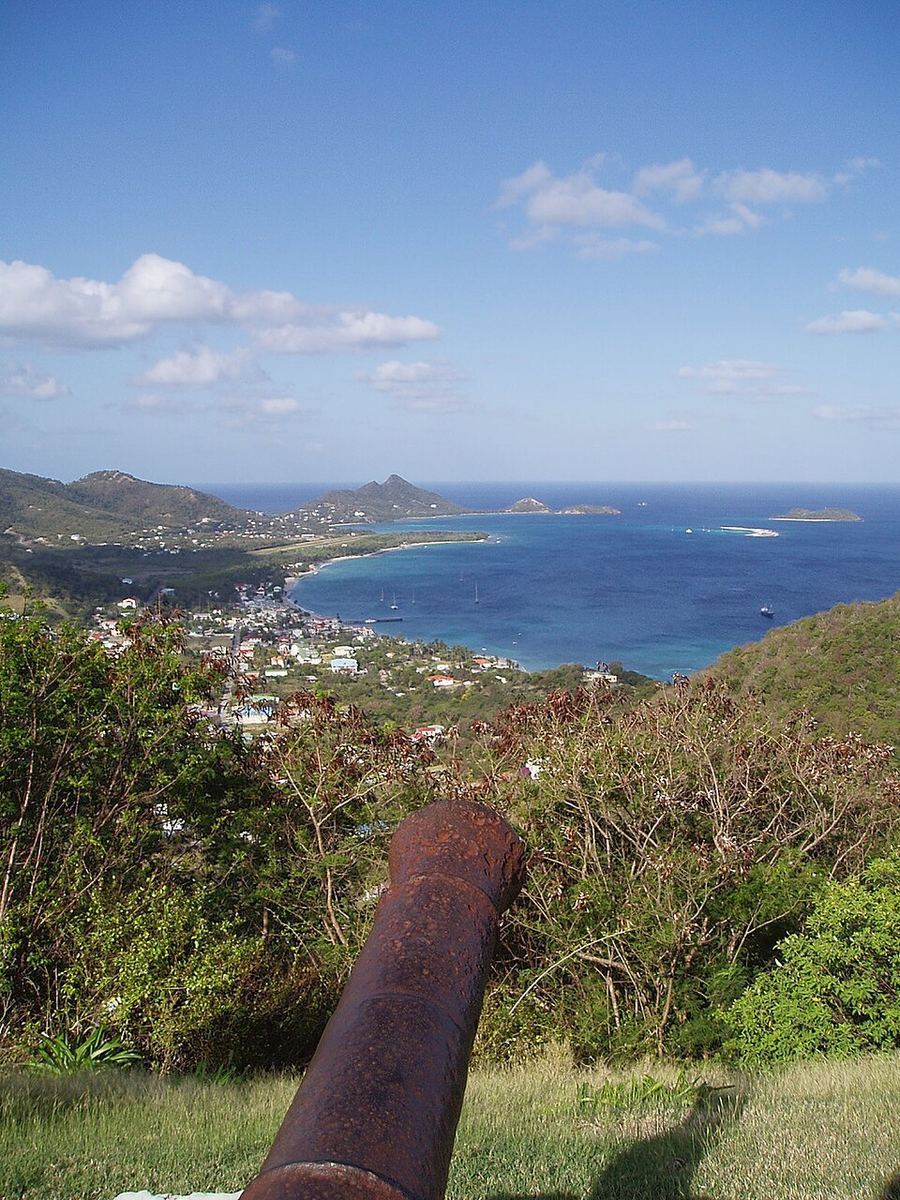
Grenada is a volcanic island of about 344 square kilometres, roughly 34 kilometres long, with a mountainous forested spine rising to Mount Saint Catherine at just over 840 metres. Its interior holds the Grand Etang crater lake within a forest reserve, and short steep rivers drop to the coast in waterfalls at Annandale, Concord and Royal Mount Carmel. The coastline alternates between sheltered bays — including the drowned crater that forms Saint George's harbour — and long beaches, of which Grand Anse is the best known. To the north, across a shallow bank, lie Carriacou and Petite Martinique, drier and lower, and a string of uninhabited islets in the southern Grenadines. Offshore to the north sits Kick 'em Jenny, an active submarine volcano monitored continuously by the regional seismic research centre and subject to a permanent maritime exclusion zone. The climate is tropical maritime, tempered by the northeast trade winds, with a dry season from roughly January to May and a wetter season from June to December. Grenada lies at the southern edge of the main hurricane belt but is not exempt: Hurricane Ivan in September 2004 damaged or destroyed the great majority of the island's buildings and devastated the nutmeg plantations, which took years to recover.

Entertainment

Leisure in Grenada is coastal, communal and closely tied to the calendar of fêtes. The beach is the default weekend destination, with Grand Anse and the coves of the southwest drawing both residents and visitors, and sea bathing, fishing and boating are ordinary pastimes rather than tourist novelties. The Friday night fish fry at Gouyave, where the fishing town closes its streets for grilled and fried seafood, is the best-known regular event, and rum shops function as the village social centre across the island. Hiking in the Grand Etang forest, visiting the waterfalls, and diving — on reefs, on the wreck of the Bianca C, and on the Molinere Underwater Sculpture Park — fill out the outdoor calendar. The sporting year revolves around cricket, watched intensely and played informally on any flat ground, and around football. Sailing is a genuine popular tradition in Carriacou, whose annual regatta features locally built wooden workboats and is one of the oldest and most authentic sailing festivals in the Caribbean. Spicemas in August is the year's peak, and the Grenada Chocolate Fest and the Carriacou Maroon and String Band Music Festival have become established fixtures.

Art & Museums

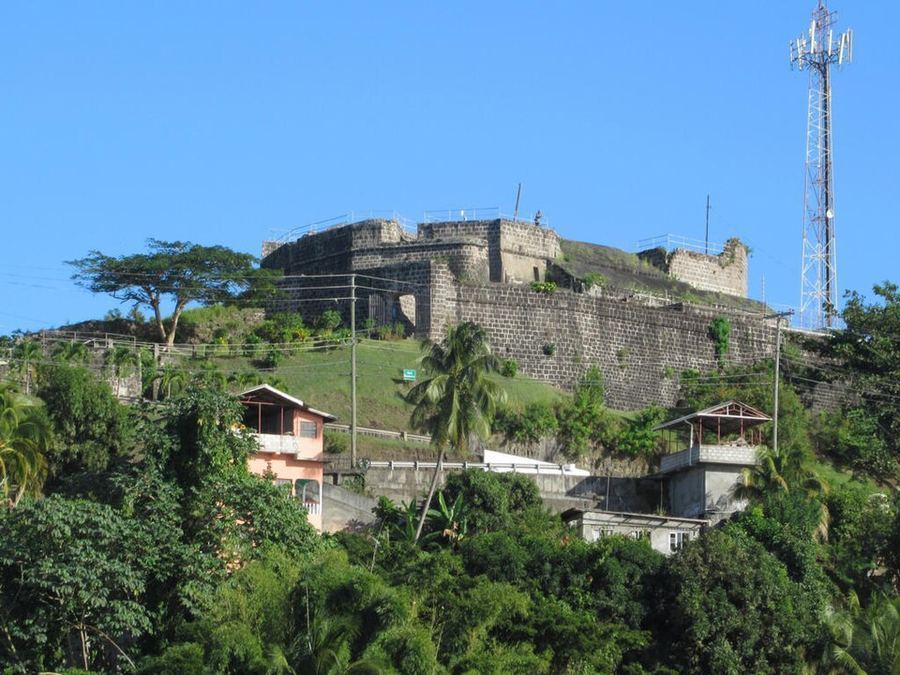
Grenada's most internationally known artwork sits underwater. The Molinere Bay Underwater Sculpture Park, installed from 2006 by the British-Guyanese sculptor Jason deCaires Taylor in a marine protected area on the west coast, was the first underwater sculpture park in the world; its concrete figures — a ring of children holding hands, a man at a desk, casts taken from local models — were designed to accrete coral and function as an artificial reef, and the project has been widely imitated since. On land, the visual tradition runs to painting of landscape and village life, with the Grenadian painter Canute Caliste of Carriacou the best-known folk artist, celebrated for naïve scenes of boats, mermaids, dancing and island ceremony. Craft traditions include basketry, wood carving, and the spice-based crafts sold at markets. The country's built heritage is itself a visual signature: the Georgian and French colonial architecture of Saint George's, the forts above the harbour, and the pantiled roofs made from ballast tiles brought as cargo. Grenada has taken part in the Venice Biennale with a national pavilion, giving contemporary Grenadian and diaspora artists an international platform.

Notable People

The dominant political figures of the modern era are Eric Gairy, the trade unionist who led the country to independence in 1974 and served as its first prime minister, and Maurice Bishop, the lawyer and leader of the New Jewel Movement who governed from 1979 until his killing in October 1983 — an event still central to national memory and to the country's unfinished reckoning with the revolutionary period. In sport, Kirani James is the country's most celebrated figure: Olympic champion over 400 metres in London in 2012 and the first Grenadian to win an Olympic medal of any colour, followed by silver in Rio and bronze in Tokyo, and world champion in 2011. Anderson Peters won the world championship in the javelin in 2019 and 2022 and took an Olympic medal. In music, Slinger Francisco — the Mighty Sparrow, one of the towering figures in the history of calypso — was born in Grand Roy, Grenada, before making his career in Trinidad. Canute Caliste of Carriacou is the island's best-known painter, and the Grenadian-born writer and activist Jean Augustine became the first Black woman elected to Canada's House of Commons and a federal cabinet minister.

Inventions & Breakthroughs

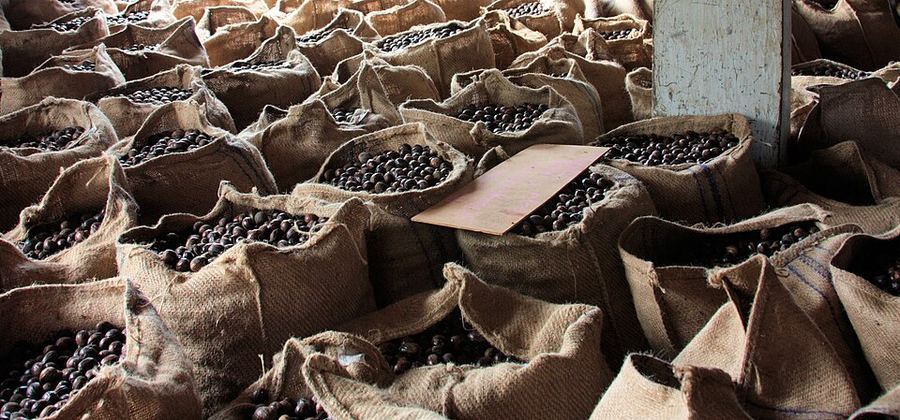
Grenada is a very small economy and is not a source of patented technology; its distinctive contributions are agricultural, culinary and artistic rather than industrial, and it would be misleading to claim otherwise. The most substantial is the nutmeg industry itself: introduced in the nineteenth century, the island developed the processing chain — floating to grade, drying, cracking and separating mace from the nut — around cooperative nutmeg stations, and the Grenada Cooperative Nutmeg Association became a model of smallholder-owned commodity organisation in the Caribbean. In cocoa, the Grenada Chocolate Company pioneered a small-scale, solar-powered, farmer-owned tree-to-bar model in the 1990s that has been widely cited and copied as an alternative to exporting raw beans, and shipped cocoa to Europe by sailing vessel as a low-carbon experiment. In craft, Carriacou's shipwrights build wooden sloops and schooners by eye without formal plans, a transmitted design tradition that still produces working and racing boats. And the Molinere Underwater Sculpture Park introduced a genuinely new form — sculpture designed as coral substrate — that has since been reproduced in several other countries.

Science & Technology

Grenada's scientific capacity is small and concentrated in areas where the island's geography makes it useful. The most substantial is medical and public health research and training through St George's University, whose faculty and graduate programmes work on tropical medicine, one-health veterinary research and Caribbean epidemiology, and which functions as the country's principal research institution. Marine and volcanic science is the second strand: the waters off the north coast contain Kick 'em Jenny, one of the most closely monitored submarine volcanoes in the world, watched by the University of the West Indies Seismic Research Centre, and Grenada's reefs and marine protected areas — including the area around the underwater sculpture park — support coral restoration and fisheries research. Agricultural science focuses on nutmeg, cocoa and disease resistance in tree crops, work made urgent by the destruction of plantations in the 2004 hurricane and by the long replanting cycle of nutmeg trees. In energy, the country depends heavily on imported refined petroleum for electricity and has pursued solar installation and geothermal exploration, the latter attractive because of the island's volcanic geology, though no geothermal plant is yet in production.
On The World Stage

Champions & Defining Moments

Grenada's international profile in sport rests overwhelmingly on track and field. Kirani James won the 400 metres at the 2012 London Olympics, the country's first Olympic medal of any kind and its first gold, having already taken the world title in Daegu in 2011; he added Olympic silver in Rio in 2016 and bronze in Tokyo. Anderson Peters won the world championship in the javelin in 2019 and defended it in 2022, and took an Olympic medal in the event, making Grenada one of the very few small island states with world champions in two different disciplines. Those results have given the country one of the highest Olympic-medals-per-capita ratios in the world. In cricket, Grenadian players reach the global stage through the West Indies team, and the island's stadium has hosted World Cup and Caribbean Premier League fixtures. Football competes in CONCACAF and Caribbean competition without having reached a World Cup. Grenada also competes at the Commonwealth Games, where its athletes have won medals in athletics, and its athletes take part in the Pan American Games and the regional CARIFTA Games, which serve as the main junior development pathway.

IOCWorld AthleticsCommonwealth Games FederationOlympedia
Economy, Trade & Government

Currency & GDP

East Caribbean Dollar — XCD ($)

GDP (PPP): $2.08 billion (2024 est.)

Per capita: $17,700 (2024 est.)

Exports

$858.949 million (2024 est.)

nutmeg/cardamons, fish, wheat flours, frozen fruits and nuts, aqueous paints (2023)

Partners: USA 24%, Antigua & Barbuda 13%, St. Vincent & the Grenadines 8%, Dominica 6%, Trinidad & Tobago 5% (2023)

Imports

$990.587 million (2024 est.)

refined petroleum, cars, poultry, ships, plastic products (2023)

Partners: USA 37%, Trinidad & Tobago 13%, Cayman Islands 10%, China 4%, UK 3% (2023)

Government

Type: parliamentary democracy under a constitutional monarchy; a Commonwealth realm

Independence: 7 February 1974 (from the UK)

Terrain → Where People Live

How mountains, coasts, and rivers shape settlement (LandScan).

Coming — data

Migration & Ethnic Settlement

Where groups settled and how people move (GeoEPR + UNHCR).

Coming — data

Universities

Notable institutions, mappable as points.

Coming — data
Economy & government facts: CIA World Factbook (public domain), via OpenFactBook / factbook.json.
Every fact and narrative claim will carry a visible source citation. Data-driven sections light up automatically wherever HERA has coverage.