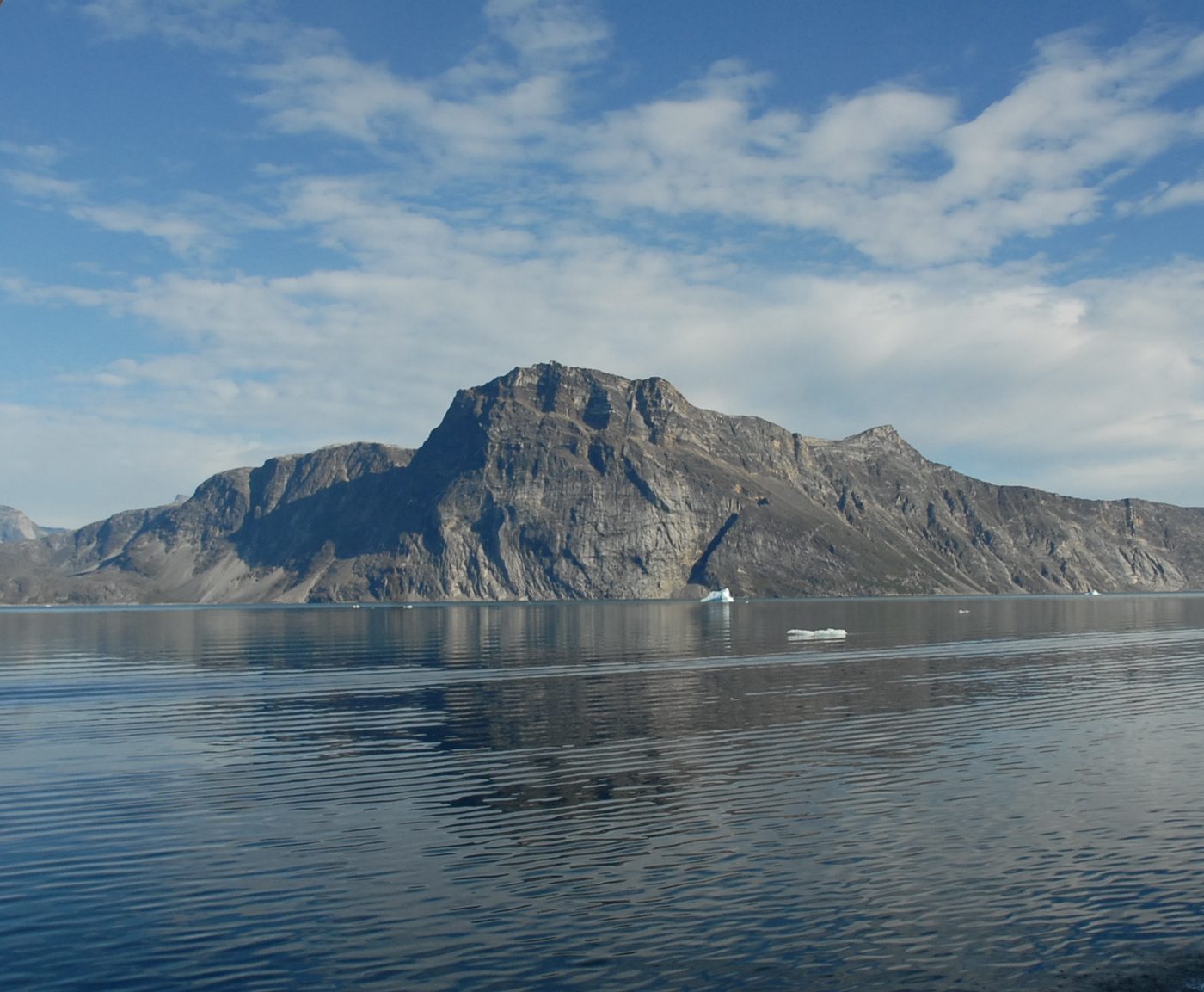
Greenland — Kalaallit Nunaat, 'the land of the people' — is the world's largest island and a self-governing part of the Kingdom of Denmark, home to about 58,000 people spread along a habitable rim of coast that surrounds an ice sheet covering roughly four-fifths of its surface. Nuuk, the capital, holds close to a third of the population; the remaining settlements are strung along fjords with no roads between them, so travel is by boat, plane and helicopter. About 88% of the population is Greenlandic Inuit, and Greenlandic, an Inuit language, is the sole official language, with Danish and English widely used. Home Rule was granted in 1979 and replaced by the Self-Government Act of 2009, which recognised Greenlanders as a distinct people under international law, transferred control over most domestic matters including mineral resources, and set out a path to independence should Greenland choose it; Denmark retains foreign affairs, defence and currency, and pays an annual block grant that remains the largest single item in Greenland's public finances. The economy of about $4 billion depends overwhelmingly on fishing — shrimp, halibut and cod dominate exports, half of which go to Denmark — with tourism and mineral prospecting the main hopes for diversification.
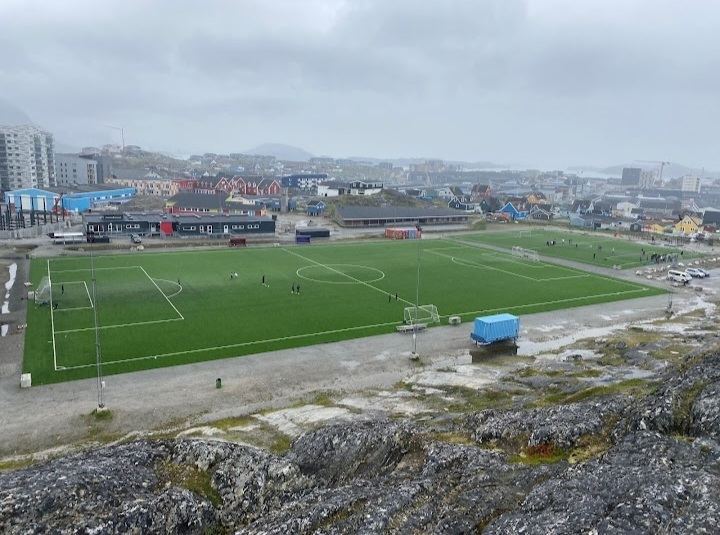
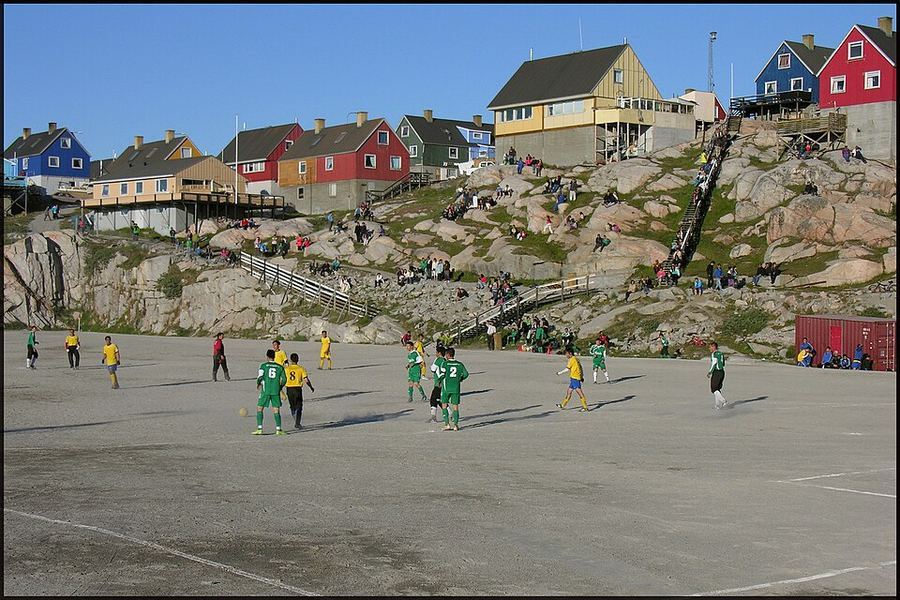
Greenland's international sporting presence is shaped by a constraint no other territory faces quite so sharply: 58,000 people, no roads between towns and a climate that rules out grass. Handball is where it has gone furthest — the men's national team has qualified for and played at the world championship, and it competes in Pan American and continental qualifying, making it far and away the country's most successful national side. In football, Greenland is not a FIFA member and has played its international fixtures against other non-member and island teams; the association's application to join a continental confederation, and the debate over the infrastructure it would require, has been followed well beyond the Arctic. The Arctic Winter Games are Greenland's principal multi-sport arena, contested against Alaska, northern Canada and Scandinavia, and the Island Games provide another. Greenlandic athletes who reach the Olympics do so on Danish teams, since Greenland has no separate National Olympic Committee, and cross-country skiers and handball players have taken that route. Long-distance expedition sport — ice sheet crossings, ski traverses and ultra-races — brings a steady flow of international athletes to Greenland rather than the reverse.
Danish Krone — DKK (kr)
GDP (PPP): $4.04 billion (2023 est.)
Per capita: $71,000 (2023 est.)
$1.357 billion (2023 est.)
fish, shellfish, processed crustaceans, ships, precious stones (2023)
Partners: Denmark 50%, China 23%, UK 5%, Japan 5%, Germany 3% (2023)
$1.7 billion (2023 est.)
refined petroleum, ships, garments, plastic products, furniture (2023)
Partners: Denmark 58%, Sweden 19%, Spain 8%, Iceland 7%, Canada 2% (2023)
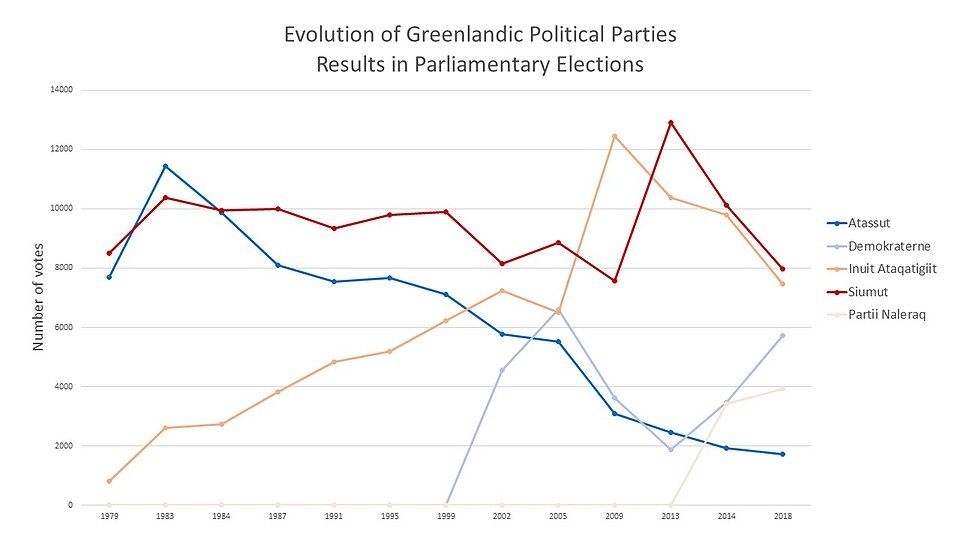
Type: parliamentary democracy (Parliament of Greenland or Inatsisartut)
Independence: none (extensive self-rule as part of the Kingdom of Denmark)
How mountains, coasts, and rivers shape settlement (LandScan).
Coming — dataWhere groups settled and how people move (GeoEPR + UNHCR).
Coming — dataNotable institutions, mappable as points.
Coming — data