HERA · Human Entity Reference Atlas by Masego Inc

← French Guiana 🌐 3D View
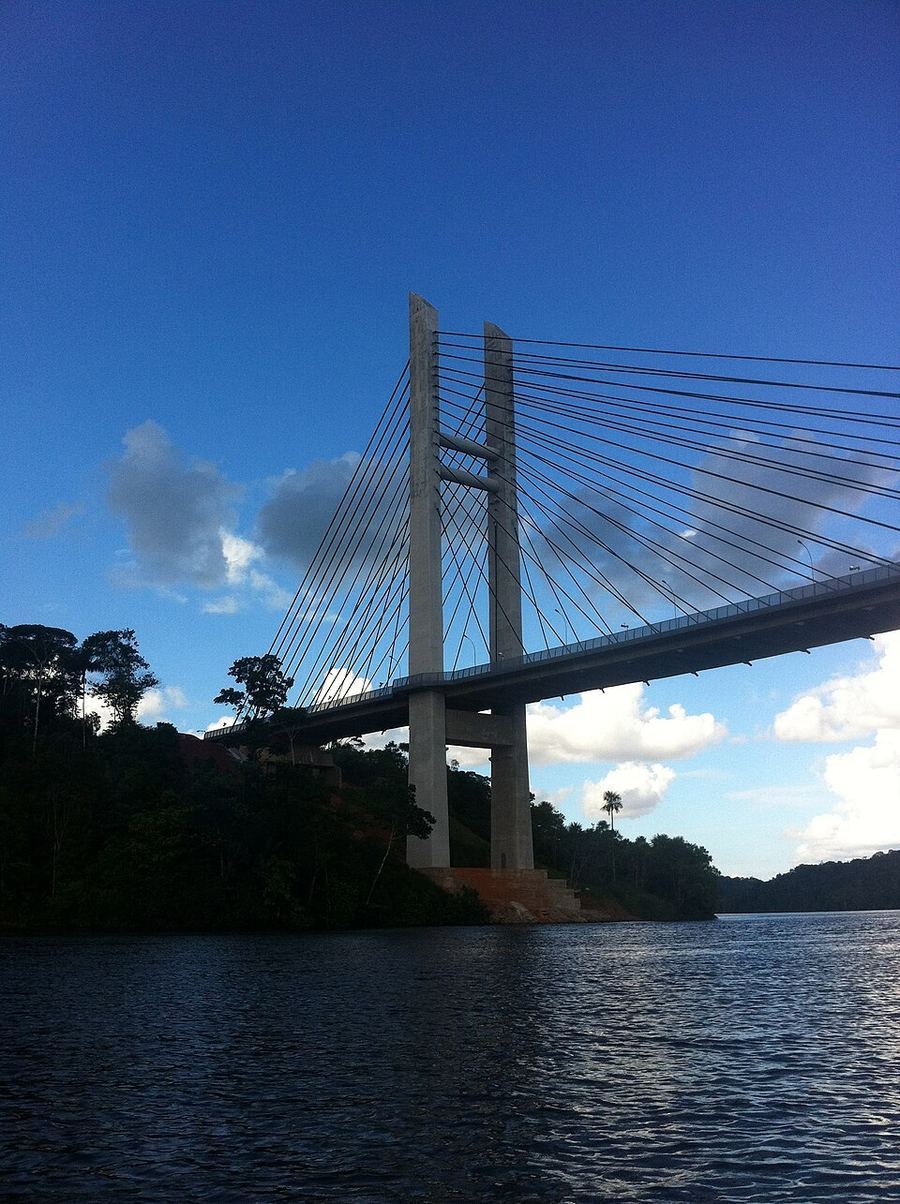
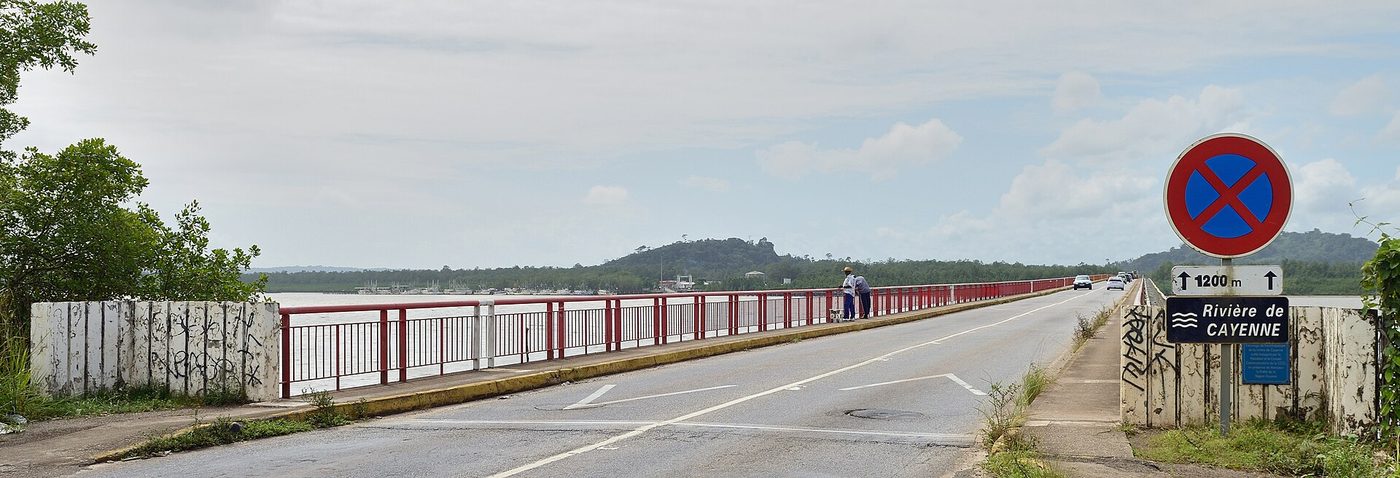
Bridge over river Cayenne French Guiana 2013, French Guiana
French Guiana GUF
Bridge over river Cayenne French Guiana 2013 — Photo: Cayambe / CC BY-SA 3.0 lu via Wikimedia Commons
Did You Know Europe's Spaceport at Kourou sits at 5.2 degrees north, closer to the equator than any other major launch site, so rockets leaving it borrow more of the Earth's rotational velocity than they could from anywhere else. — Encyclopaedia Britannica

French Guiana is a territory of roughly 84,000 square kilometres on the northeast shoulder of South America that is legally part of France and, through France, the European Union's largest territory outside Europe. It is administered as a single territorial collectivity created in December 2015, with Cayenne as its capital and a state-appointed prefect alongside the elected assembly. More than nine tenths of the land is dense equatorial rainforest; the population, around 300,000 and growing by about 1.2 percent a year according to INSEE, lives almost entirely on the Atlantic coastal strip and along the Maroni and Oyapock rivers. It is the youngest and fastest-growing French region, the opposite demographic case to the ageing Antilles. French is the official language, but Guianese Creole, the Businenge Tongo of the Maroon peoples, at least six Amerindian languages, Hmong, Portuguese and Haitian Creole are all in daily use. The euro is the currency. Europe's spaceport at Kourou, the Amazon rainforest and one of the most plural populations in the French Republic define the place.

national statistics officeEncyclopaedia BritannicaEurostat
Population
Capital
Currency
Time zones
Largest city
Cayenne
Human Geography Themes
Loading national figures…
Largest Cities
Cayenne79,055
In Perspective

Cayenne's urban core is home to about 79,055 people.

Among the world's megacities, though, it's one of many — the giants of Asia and Latin America run larger still:

Cayenne79,055
Jakarta40,545,126
Dhaka37,307,160
Tokyo33,244,670
Shanghai30,678,616
Cairo25,230,325
The Country & Its People

History

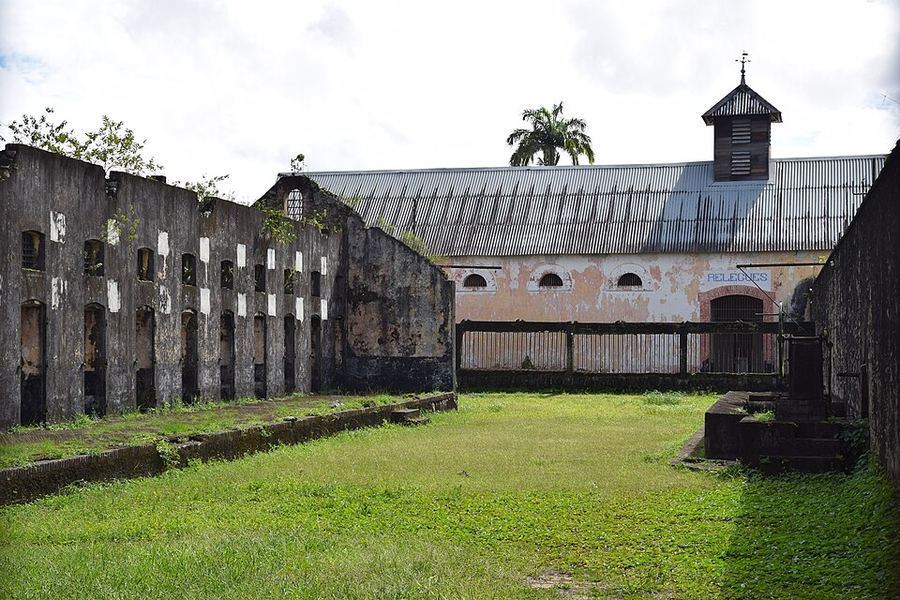
Amerindian peoples have occupied the Guiana Shield for millennia, and Kali'na, Wayana, Wayampi, Teko, Palikur and Lokono communities are still present. French settlement began in the seventeenth century and repeatedly failed: disease, poor planning and hostility from the interior defeated one colonising attempt after another, most catastrophically the Kourou expedition of the 1760s, in which thousands of settlers died within months. A plantation economy worked by enslaved Africans took hold along the coast, and Africans who escaped, particularly from Dutch Suriname across the Maroni, established independent Maroon societies in the forest that survive as distinct peoples today. Slavery was abolished in 1848. From 1852 the Second Empire turned Guiana into a penal colony, and for a century convicts were transported there; Alfred Dreyfus was held on Devil's Island in the Iles du Salut from 1895 to 1899, and the bagne was not finally wound up until 1953. Departmentalisation came on 19 March 1946. The choice of Kourou for France's space centre in 1964 reoriented the whole territory's economy.
Culture

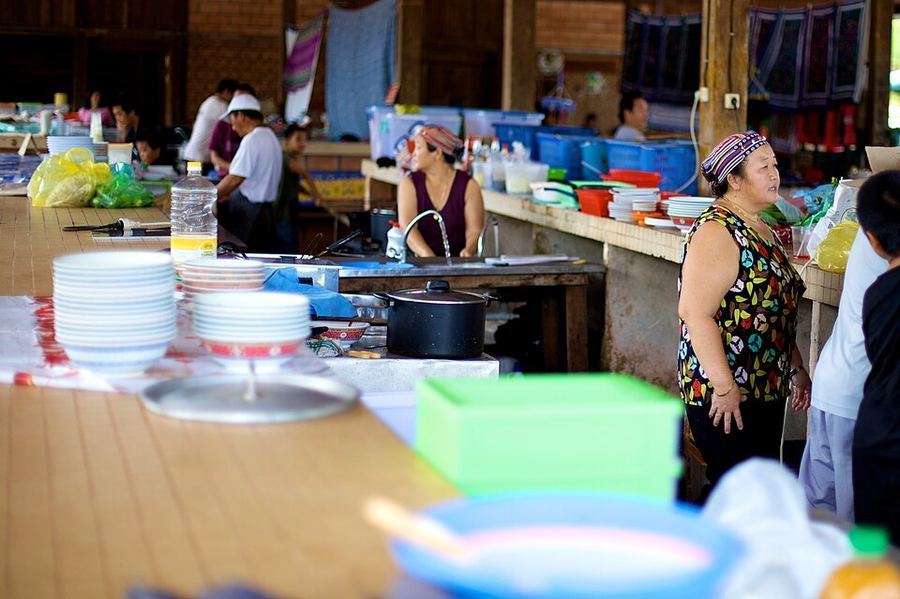
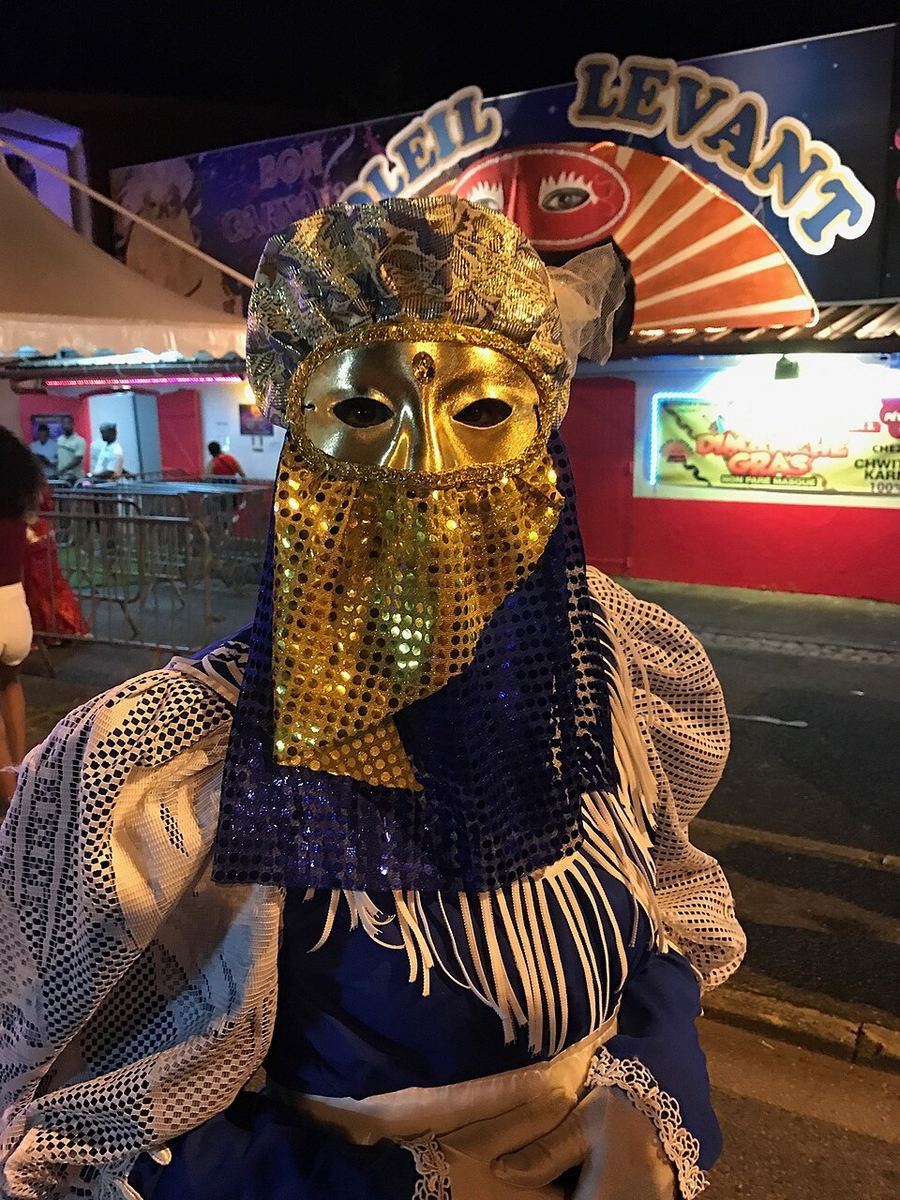
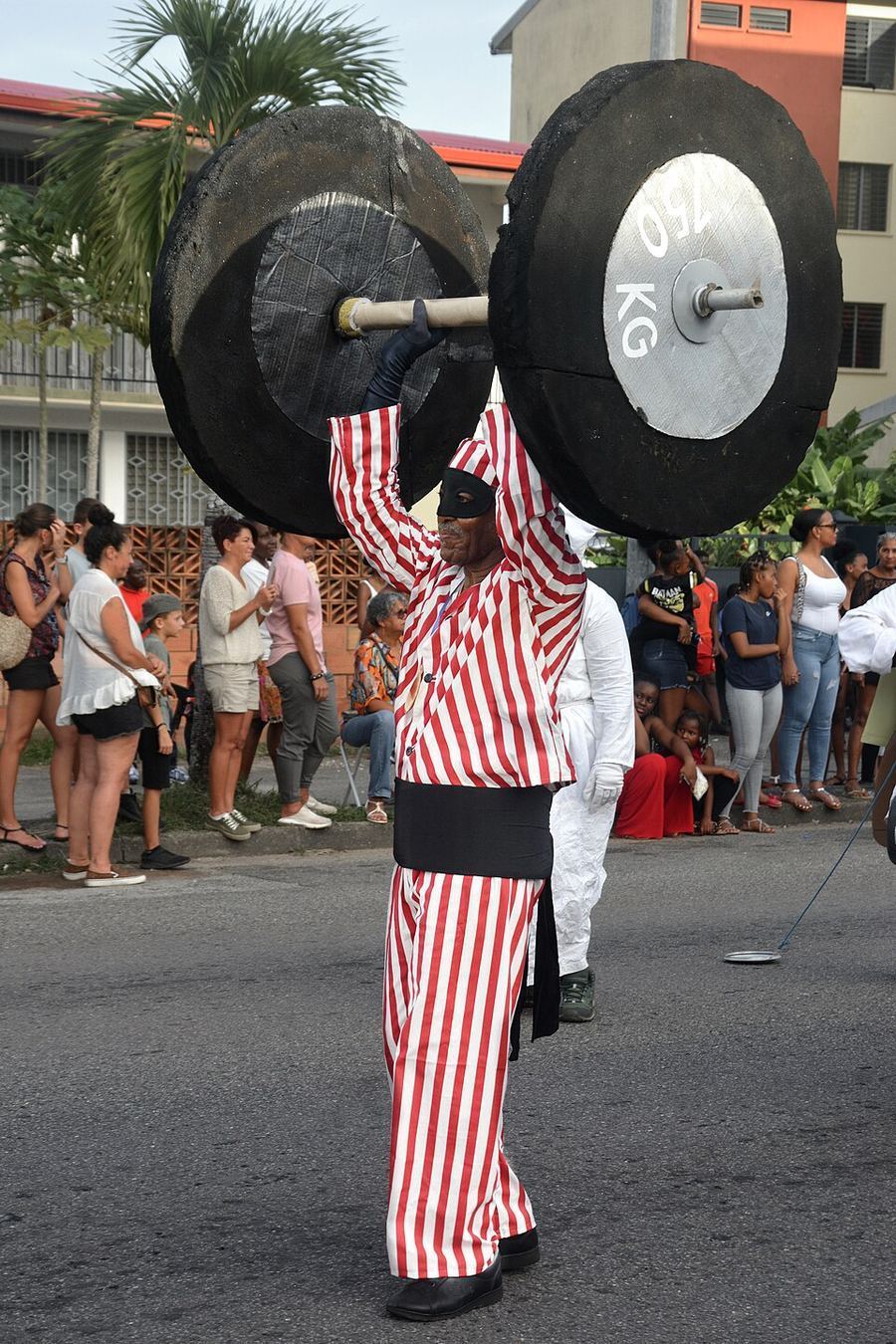
French Guiana has no single culture but a working coexistence of several, which is precisely how Guianese describe it. Creole society, French-speaking and Catholic, historically held the coastal towns and the administration. Maroon peoples along the Maroni maintain their own languages, matrilineal clan structures, funerary practice and the geometric art called tembe. Amerindian communities on the rivers and at Awala-Yalimapo keep distinct languages and ceremonial life, with formal customary authorities recognised by the state. Hmong families resettled from Laos in the 1970s built villages at Cacao and Javouhey, kept their language and New Year festival, and became the territory's principal market gardeners. Large Haitian, Brazilian and Surinamese populations add further languages and religious practice. Carnival is the one event that pulls all of it together: from Epiphany to Ash Wednesday, Cayenne fills with masked balls where women in the head-to-toe touloulou costume invite men to dance and cannot be refused, and the season closes with the burning of the effigy Vaval.

Points Of Pride

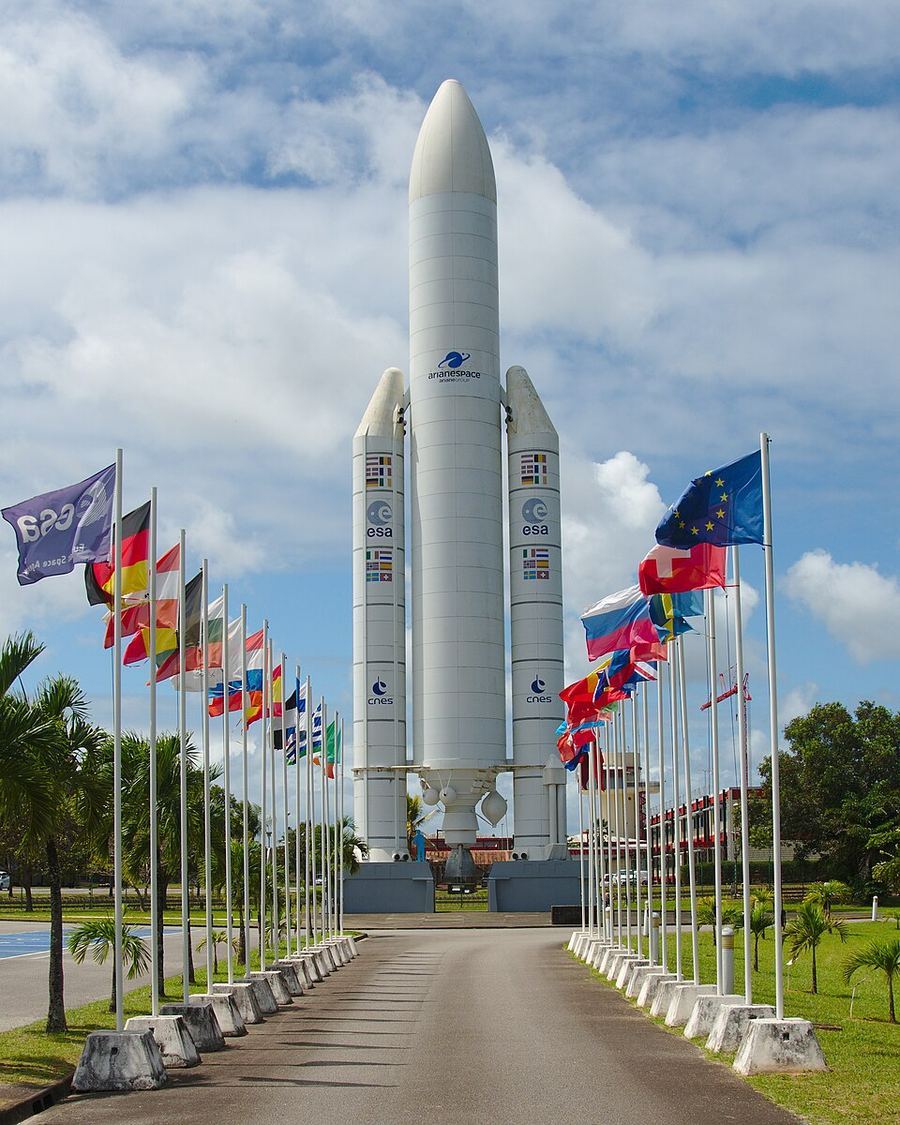
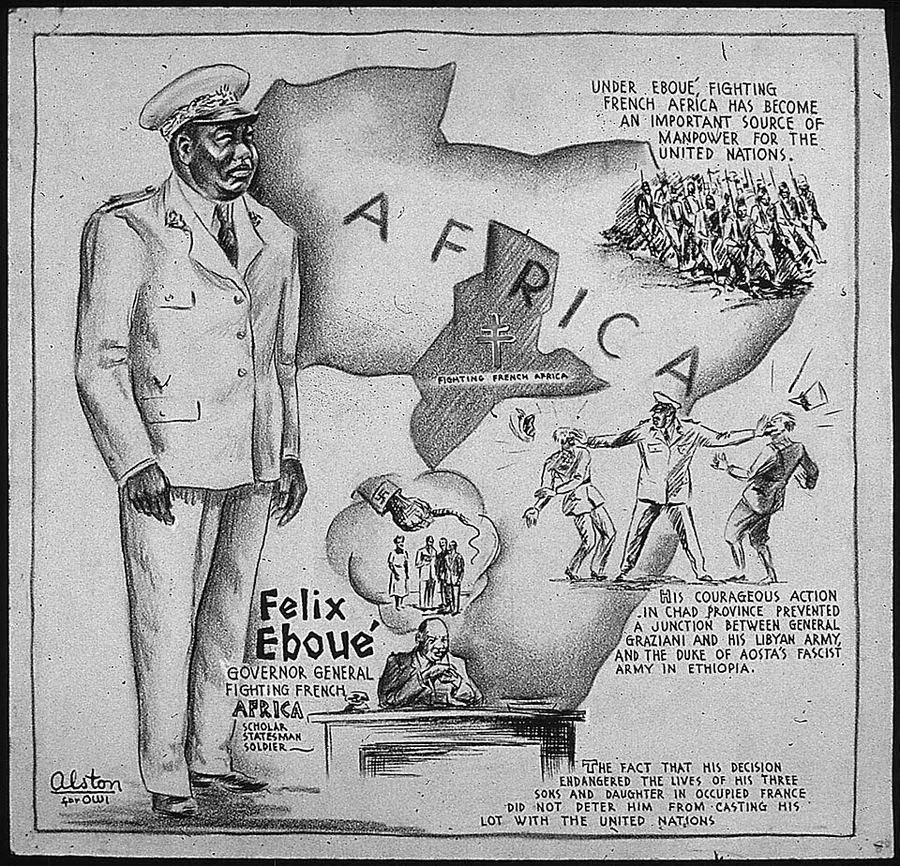
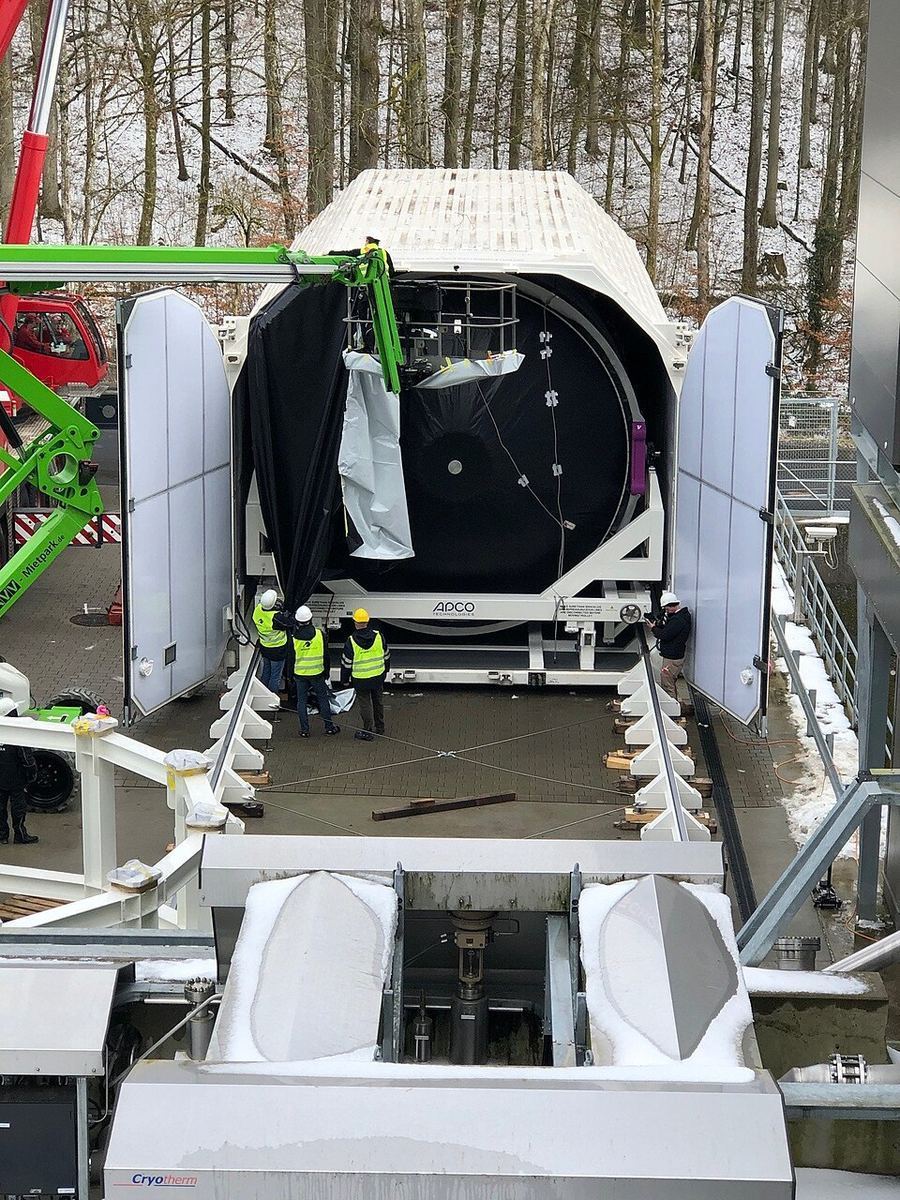
The Guiana Space Centre near Kourou is the territory's showpiece and Europe's Spaceport. France selected the site in 1964 and launches began in 1968; it is operated by CNES on behalf of the European Space Agency and the European Commission, and at 5.2 degrees north it sits closer to the equator than any other major launch site, giving satellites a rotational velocity bonus no rival can match. Ariane 6 made its maiden flight from the ELA-4 pad on 9 July 2024. The second source of pride is the forest: the Parc amazonien de Guyane, created by decree on 27 February 2007 and covering some 34,000 square kilometres, is the largest national park in France and in the European Union, protecting a stretch of Amazonian biodiversity alongside the Amerindian and Maroon communities who live in it. The beach at Awala-Yalimapo is one of the world's most important nesting sites for leatherback turtles. Guianese also take pride in the political stature of Felix Eboue, Gaston Monnerville and Christiane Taubira.

Cultural Fusion

The mixing in French Guiana is unusual because the constituent groups did not dissolve into one another; they remain legible while sharing markets, schools, music and food. Creole culture is itself a fusion of African, French and Amerindian elements, and it supplies the territory's lingua franca after French. Maroon societies preserved West and Central African social forms more completely than almost anywhere in the Americas because they were formed in flight rather than under supervision, and their tembe carving and painting is now the visual signature of the whole territory, used on public buildings and album covers. Amerindian peoples contributed cassava agriculture and processing, the pirogue and much of the forest pharmacopoeia. The Hmong arrival in the 1970s reorganised the food supply within a generation, and Cacao's Sunday market is where Laotian noodle soup is eaten next to Creole blaff. Brazilian Portuguese is heard everywhere along the Oyapock, and Brazilian forro and Surinamese kaseko circulate through the same clubs. The result is plural rather than blended, and Guianese generally treat that as a strength.

Music & Dance

Kaseko is the Guianese sound: a brass-driven, drum-heavy dance music that grew out of Carnival street bands and shares roots and repertoire with Suriname across the river. Its rhythms descend from the grage and other Creole dance forms played on the tambour dibas and the ti-bwa. Carnival is the season that organises the musical year, and its distinctive institution is the bal pare-masque, where women in the touloulou costume, gloved and veiled so that no skin is visible and no voice recognisable, choose their partners from the men lining the hall; the orchestras play through the night from January to Ash Wednesday. Maroon communities on the Maroni have their own repertoires, including the aleke drumming and songs that developed in the twentieth century and now circulate as recorded popular music, and the apinti drum used in ceremony. Amerindian communities maintain flute and dance traditions tied to seasonal and initiation ceremonies. Brazilian, Haitian and Hmong communities add forro, kompa and Hmong New Year music to the same territory.

Cuisine & Misattributed Foods

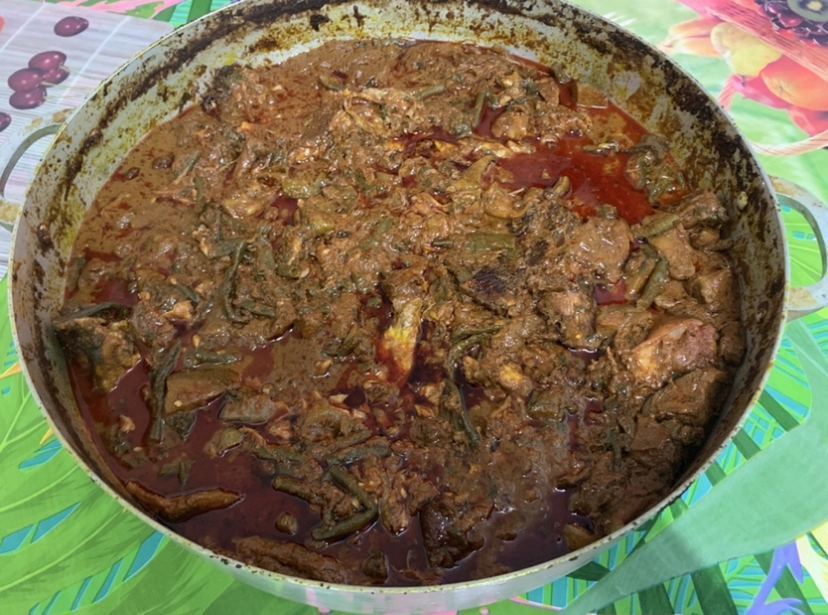
Cassava is the base layer. Amerindian processing of bitter manioc into couac, a coarse roasted semolina, and into cassava bread underpins Guianese eating across every community, and couac is served with almost everything. The territory's signature dish is bouillon d'awara, eaten at Easter: a long-simmered thick sauce made from the pulp of the awara palm fruit, cooked with smoked fish, salt meat, chicken, prawns, cabbage and beans over a day or more, and surrounded by a tradition that whoever eats it will return to Guiana. Creole cooking supplies blaff, fricassees, pimentade and fish poached with lime and chilli. Maroon and Amerindian cooking brings smoked game and river fish, palm fruit and forest seasonings. The Hmong villages of Cacao and Javouhey grow most of the territory's vegetables and sell noodle soup and spring rolls at Sunday markets that Cayenne residents drive an hour to reach. Brazilian churrasco and Surinamese roti are everyday options, and the local scotch bonnet and roucou colour almost everything.

National Dress

There is no single national dress, which is itself characteristic. Creole women's formal costume follows the Antillean pattern, built from madras check with a starched headtie and heavy gold jewellery, worn for Carnival, weddings and cultural occasions. The garment specific to French Guiana is the touloulou costume of Carnival: a full-length gown with gloves, stockings, a hat and a veiled mask that conceals the wearer entirely, adopted so that a woman can enter the masked ball unrecognised and invite any man she chooses to dance. Maroon dress uses the pangi, a wrapped cloth in strong geometric patterns whose designs correspond to the tembe visual system, worn with beadwork and, for ceremony, elaborate hairstyles. Amerindian communities use the kalimbe waistcloth, beadwork aprons, feather ornament and body paint made from roucou for ceremonial occasions. Hmong families keep the embroidered and appliqued paj ntaub textiles and silver ornaments of their New Year celebrations. On any given festival day in Cayenne, all of these appear in the same street.

Sports & Inspiring Athletes

Football is the leading sport, run by the Ligue de football de la Guyane, with a territorial championship whose clubs are based mainly in Cayenne, Matoury, Remire-Montjoly, Kourou and Saint-Laurent-du-Maroni and which feeds players into mainland French academies. Athletics, basketball, handball and judo have solid club structures supported by the French sports system, and cycling has its own stage race across the coastal communes. What sets the territory apart is water: pirogue and canoe racing on the Maroni and the Approuague is a genuine competitive tradition rather than a folkloric one, contested between river communities with crews from Maroon and Amerindian villages, and the long-distance river descents draw large followings. Fishing competitions, motocross across laterite tracks and forest trail running fill out the calendar. Distance and infrastructure are the constraints on organised sport: several communes are reachable only by river or air, so school and club competition on the interior rivers operates on a completely different logistical basis from the coast.

Notable Educational Programs

French Guiana runs the French national curriculum through its own rectorate, and the challenge is unlike anywhere else in the Republic. The school-age population is growing fast while much of it lives in communes along the Maroni and Oyapock reachable only by pirogue or light aircraft, so building and staffing schools, and teaching children who arrive speaking Businenge Tongo, a Amerindian language, Portuguese or Haitian Creole rather than French, is a permanent structural problem; multilingual classroom assistants drawn from local communities have been used to bridge it. Higher education is provided by the Universite de Guyane in Cayenne, established as an independent institution in 2014 after Guiana separated from the former Universite des Antilles et de la Guyane, a split driven by long-standing complaints that the territory's needs were subordinate to those of the Antilles campuses. The university concentrates on law, economics, science, health and Amazonian studies. As an outermost region of the European Union, the territory participates in Erasmus and EU-funded training programmes.

Wars & Conflicts

There is no armed conflict in French Guiana, but there is sustained low-level violence tied to illegal gold mining. Clandestine operations run by garimpeiros, largely from Brazil, work rivers deep inside the forest and inside the Amazonian park, using mercury that poisons watercourses and the fish that Amerindian and Maroon communities depend on; French gendarmerie and armed forces have run a permanent interdiction operation against the sites since 2008, and it produces regular armed confrontations. Cayenne and Saint-Laurent-du-Maroni also record homicide and armed-robbery rates well above metropolitan French levels, which is a standing political grievance. The defining civil episode of recent years was the general strike of March and April 2017, when a coalition under the slogan Pou Lagwiyann Dekole blocked roads and shut the space centre for weeks over crime, health care, schools and land rights, ending in a negotiated agreement with the French state worth over a billion euros. Border management along the Maroni and Oyapock, and irregular migration, remain persistent flashpoints.
Agence France-PresseReutersLe MondeFrance Info
Current as of 2026-08-08

Land & Border Disputes

France, on behalf of French Guiana, has a long-dormant territorial disagreement with Suriname over the upper Maroni basin, where the two states place the source of the boundary river differently, leaving a wedge of forest between the Litani and Marouini claimed by both; the area is uninhabited apart from Amerindian communities and the dispute has been managed rather than litigated for more than a century. The border with Brazil, fixed by arbitration in 1900 along the Oyapock, is settled, and the two countries built a road bridge across the river that was completed in 2011 and opened to traffic in 2017. The live disputes are internal. Land rights are the sharpest: Amerindian and Maroon communities have pressed for recognition of collective customary rights over territory that French law treats as state domain, and the 2017 accords committed the state to transferring substantial areas. Mining authorisations, particularly the rejected Montagne d'Or industrial gold project, and the balance between economic development and forest protection remain contested.
Land, Life & Legacy

Land & Climate

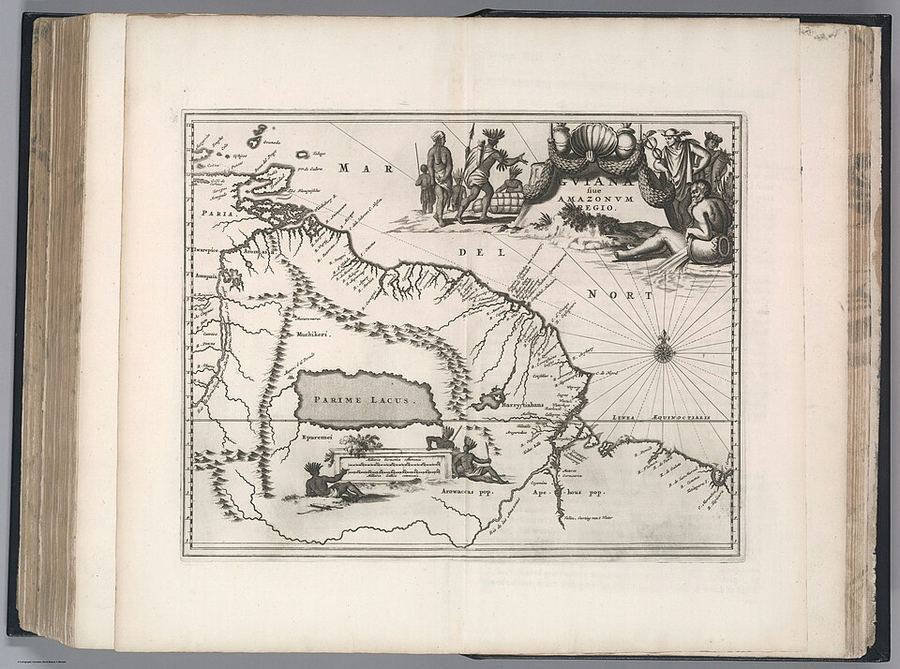
French Guiana sits on the Guiana Shield, one of the oldest exposed rock formations on Earth, and its interior is a low, ancient, deeply weathered plateau of forested hills broken by granite inselbergs; the high point, Bellevue de l'Inini, rises only a little over 800 metres. Over nine tenths of the territory is dense equatorial rainforest, drained by rivers that define the frontiers: the Maroni with Suriname and the Oyapock with Brazil, which gives France its longest land border with any country. The coastal plain is a young and mobile landscape of mangrove and mud banks that migrate northwest along the shore, carried by the current from the mouth of the Amazon, so beaches appear and disappear over decades. The Kaw marshes and the Iles du Salut offshore are the other landmarks. The climate is equatorial: hot, humid and wet year-round, with a long rainy season from roughly December to June interrupted by a short drier spell around March, and a dry season from July to November. There are no hurricanes at this latitude.

Entertainment

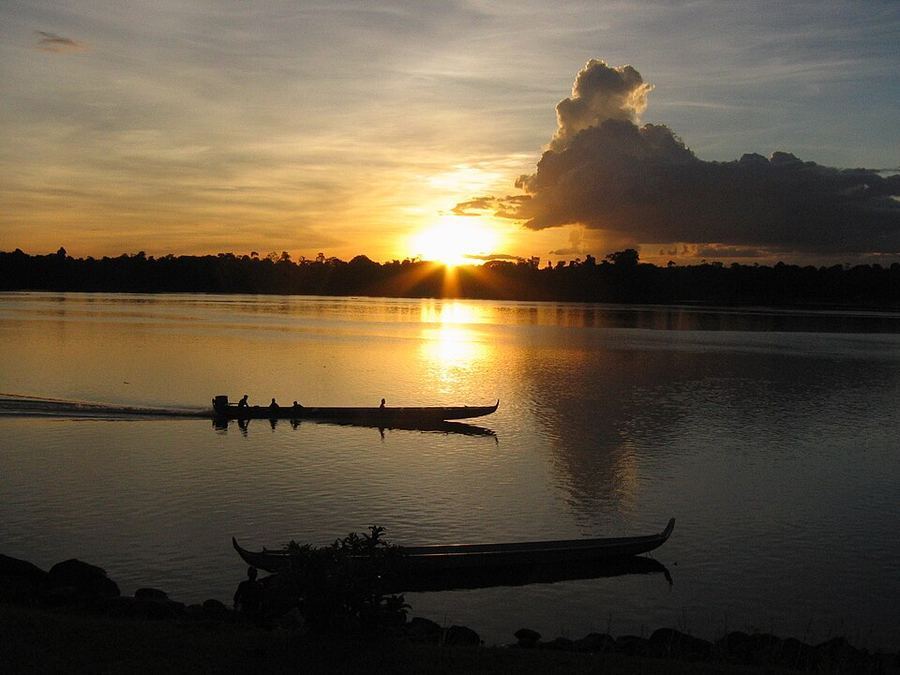
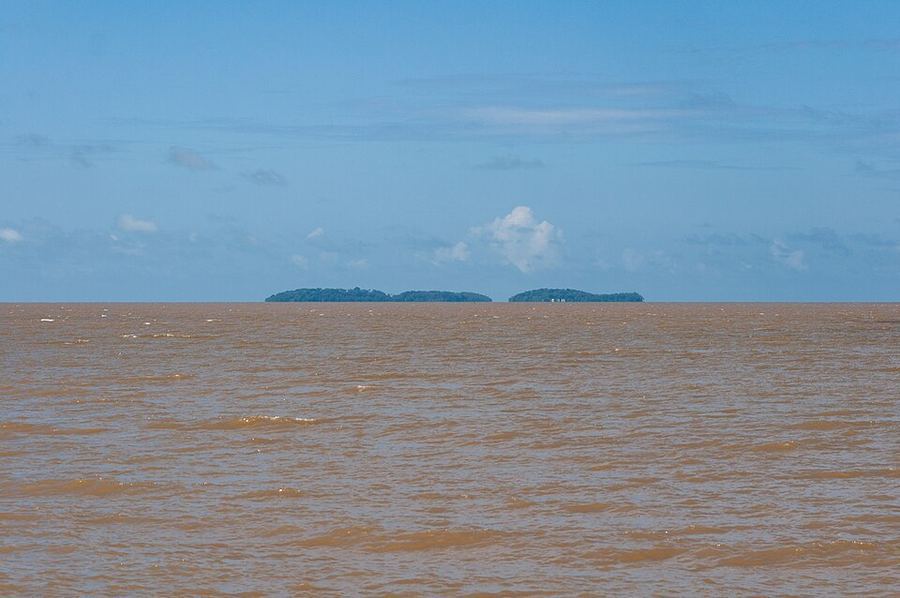
Life outdoors here means the river rather than the beach; the coast is muddy and brown with Amazon sediment, so weekends run on pirogues. Families take motorised dugouts up the Maroni, the Approuague or the Oyapock to sandbanks, rapids and forest carbets, the open thatched shelters where hammocks are slung for the night, and a carbet weekend is the standard Guianese holiday. Sport fishing, kayaking and canopy walks fill out the same landscape. Wildlife watching is genuinely accessible: the Kaw marshes for caiman by night, the Nouragues and Trinite reserves for forest, and above all the beaches at Awala-Yalimapo where leatherback turtles come ashore to nest between March and July, one of the great wildlife spectacles of the Atlantic. The Iles du Salut, reached by boat from Kourou, combine a former penal colony with clear water and monkeys. In town, Carnival dominates from January to Lent, football grounds fill at weekends, and the Sunday market at Cacao is a destination in itself.

Art & Museums

The most distinctive Guianese art form is tembe, the Maroon tradition of carving and painting interlocking geometric and curvilinear patterns onto wood, calabashes, house fronts, paddles and textiles. Developed by Ndyuka, Aluku, Saramaka and Paramaka communities on both sides of the Maroni, it functions as decoration, as gift-giving language and as identity, and it has moved from the villages onto murals, public buildings and contemporary canvases across the territory. Amerindian art includes the painted maluana, the wooden disc set in the roof of a Wayana communal house, along with intricate basketry, feather work and ceramics. In literature, French Guiana produced Leon-Gontran Damas, born in Cayenne in 1912, whose collection Pigments made him one of the three founders of Negritude alongside Cesaire and Senghor, and later writers including Bertene Juminer, Serge Patient and Elie Stephenson. The penal colony left its own dark iconography, transmitted worldwide by Henri Charriere's Papillon. Contemporary Guianese artists work heavily with forest, gold-mining and memory as subject matter.

Notable People

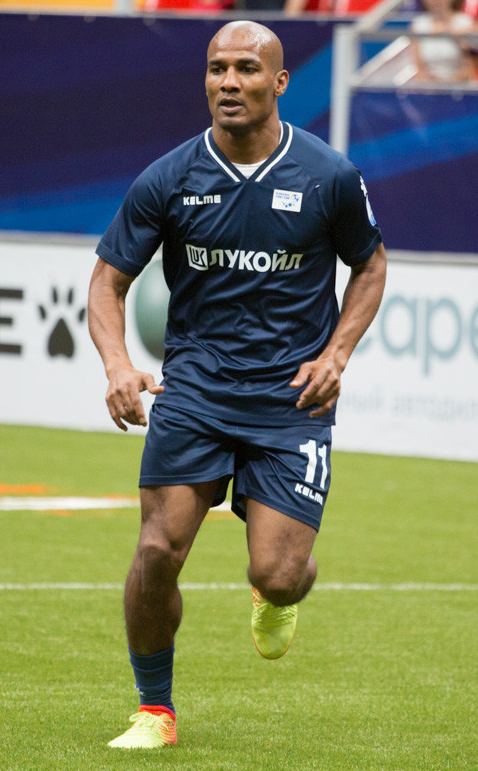
Felix Eboue, born in Cayenne in 1884, rose through the colonial administration to become governor of Chad, and in August 1940 rallied his territory to Charles de Gaulle, the first colony to break with Vichy and a decision that gave Free France a base in Africa; he was interred in the Pantheon in 1949. Gaston Monnerville, also born in Cayenne, in 1897, served as President of the French Senate from 1958 to 1968 and was for a decade the second-ranking figure in the French state. Leon-Gontran Damas, born in Cayenne in 1912, co-founded the Negritude movement and gave it its sharpest poetic voice in Pigments. Christiane Taubira, born in Cayenne in 1952, authored the 2001 French law recognising the transatlantic slave trade and slavery as crimes against humanity, and as Minister of Justice from 2012 piloted the legislation opening marriage to same-sex couples. In sport, the footballer Florent Malouda, born in Cayenne in 1980, played for Chelsea and won more than eighty caps for France.
Encyclopaedia BritannicaFIFAAgence France-Presse

Inventions & Breakthroughs

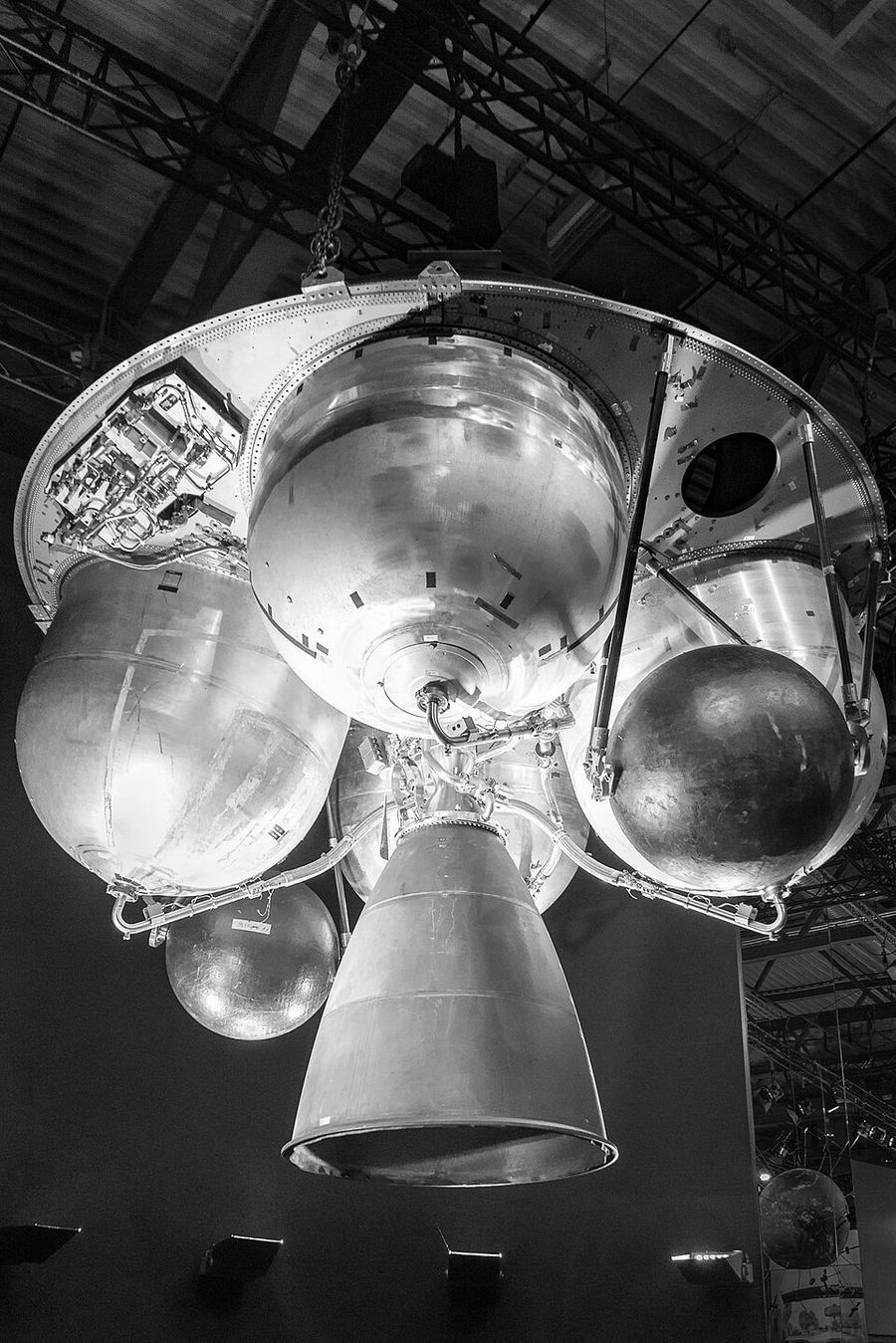
French Guiana's technical significance is almost entirely a matter of location applied with engineering. The decision to build Europe's spaceport at Kourou was itself an insight about physics: a launch site 5.2 degrees from the equator lets a rocket borrow the maximum possible boost from the Earth's rotation and reach geostationary orbit with less fuel than from anywhere else in the developed world, and an eastward range over open ocean makes the trajectory safe. Everything from the Ariane family to Vega and, for a decade, Russian Soyuz rockets has been launched on that advantage. Older Guianese technologies are Amerindian and remain in daily use: the processing of bitter manioc, which is toxic raw, through the woven couleuvre press that squeezes out the cyanogenic juice before the pulp is roasted into couac, is a food technology of real sophistication, and the dugout pirogue remains the only practical vehicle on much of the territory. Current research effort concentrates on tropical medicine, forest carbon and the environmental damage from illegal gold mining.

Science & Technology

The Guiana Space Centre makes French Guiana one of the most significant sites in European science. Operated by CNES for the European Space Agency and the European Commission, it has launched from Kourou since 1968 and hosts the Ariane, Vega and, formerly, Soyuz pads; Ariane 6 flew its maiden mission from the ELA-4 complex on 9 July 2024, and the payloads that leave from here include Europe's science and Earth-observation flagships. On the ground, the forest is the other laboratory. Long-term research stations at Nouragues and Paracou, run with French research institutes, measure tropical forest carbon, growth and biodiversity in plots monitored for decades, making the Guiana Shield one of the best-instrumented stretches of Amazonia. The Institut Pasteur de la Guyane in Cayenne works on malaria, dengue, arboviruses and Chagas disease, and was central to regional responses during the Zika and chikungunya epidemics. Mercury contamination from illegal gold mining, and its accumulation in fish and in the people who eat them, is a continuing focus of public health research.
On The World Stage

Champions & Defining Moments

French Guiana competes internationally under two different arrangements. As part of France, its athletes represent France at the Olympic Games, and the territory's best-known international sportsman, the footballer Florent Malouda, played more than eighty times for the French national team and won the Champions League era honours of a long club career in England. Separately, French Guiana fields its own football team as a member of CONCACAF, the confederation covering North and Central America and the Caribbean, without being a member of FIFA; that lets it enter the Caribbean competitions and the Gold Cup while excluding it from World Cup qualifying. Its appearance at the 2017 Gold Cup produced an instructive collision between the two statuses: Malouda played for the territory despite his previous full international career with France, and the match against Honduras was awarded against French Guiana for fielding an ineligible player. The episode is remembered locally as an argument about who a Guianese athlete is allowed to be.

IOCFIFABBCOlympedia
Economy, Trade & Government

Terrain → Where People Live

How mountains, coasts, and rivers shape settlement (LandScan).

Coming — data

Migration & Ethnic Settlement

Where groups settled and how people move (GeoEPR + UNHCR).

Coming — data

Universities

Notable institutions, mappable as points.

Coming — data
Every fact and narrative claim will carry a visible source citation. Data-driven sections light up automatically wherever HERA has coverage.