HERA · Human Entity Reference Atlas by Masego Inc

← Guyana 🌐 3D View
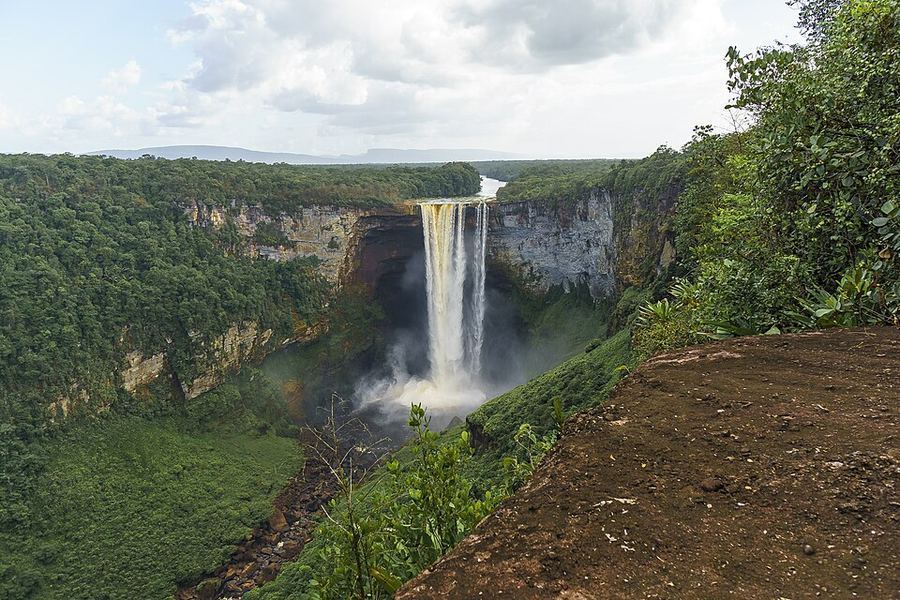
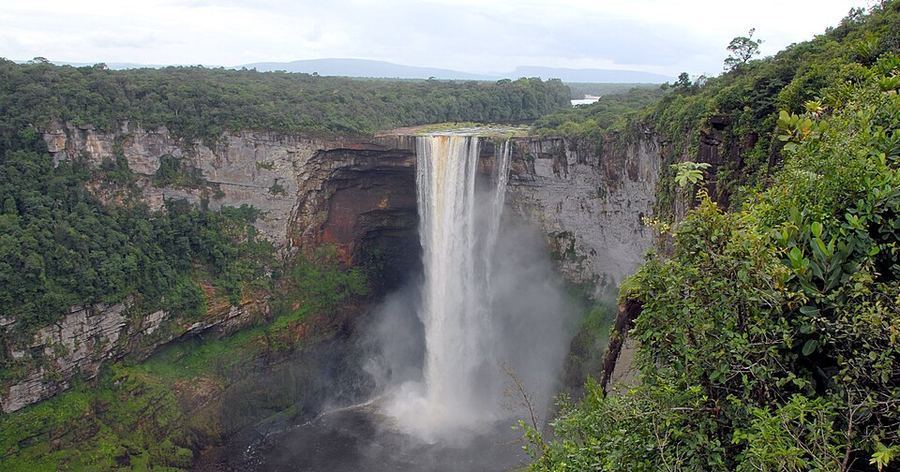
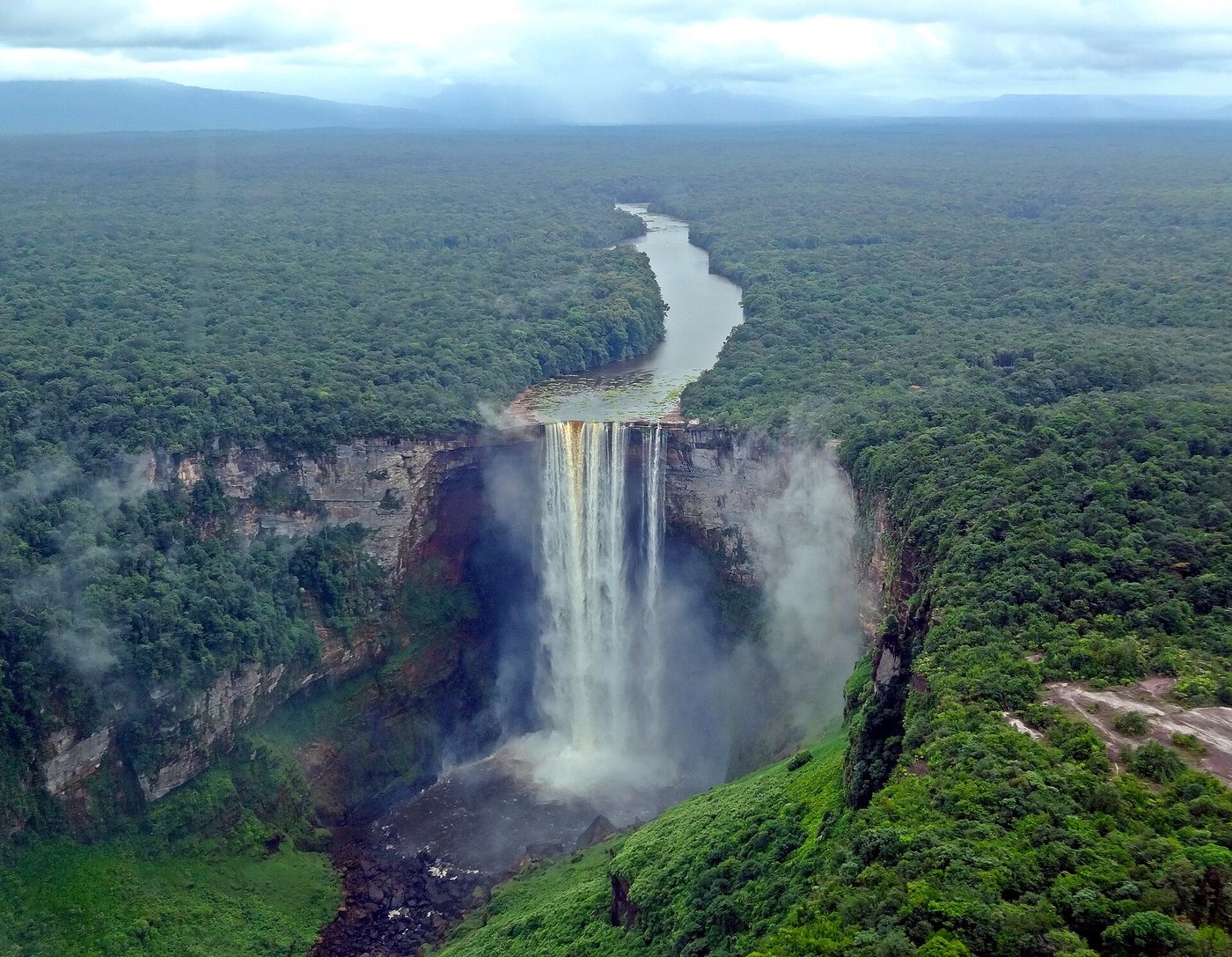
Kaieteur Falls Aerial 01, Guyana
Guyana GUY
Kaieteur Falls Aerial 01 — Photo: Amanda / CC BY 2.0 via Wikimedia Commons
Did You Know Demerara sugar takes its name from a Guyanese river and the colony along it, one of three Dutch sugar colonies — with Essequibo and Berbice — that Britain merged into British Guiana in 1831. — Encyclopaedia Britannica

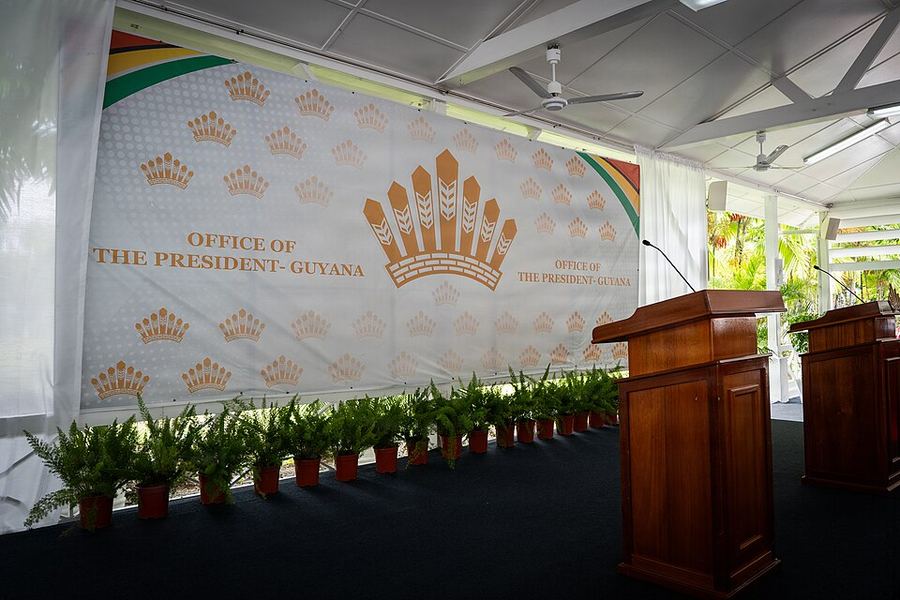
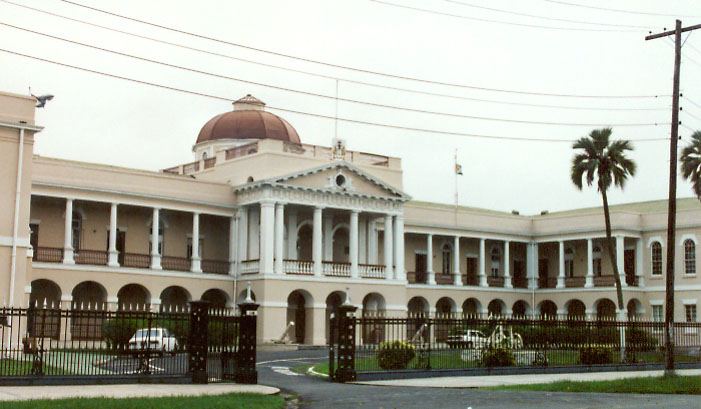
Guyana is a parliamentary republic of roughly 794,000 people on the northeastern shoulder of South America, and the only country on the continent whose official language is English. Geographically South American, it is culturally and politically Caribbean: a founding member of CARICOM, whose Secretariat sits at Turkeyen on the edge of the capital, Georgetown. That capital lies on a narrow coastal plain below the level of high tide, held back by a sea wall and a system of drainage sluices inherited from Dutch planters, while some 85% of the national territory behind it is rainforest that almost nobody lives in. The population is among the most plural in the Americas — East Indian 39.8%, African descent 29.3%, mixed 19.9% and Indigenous 10.5% — and its religious profile follows suit, with Protestant 34.8%, Hindu 24.8%, Roman Catholic 7.1% and Muslim 6.8%. Since offshore oil production began in December 2019, the economy has been transformed: crude petroleum now leads an export list that also carries gold, rice and shipping containers, and GDP per capita on a purchasing-power basis reached about $70,300 in 2024. Politics remain polarised along ethnic lines, and Venezuela's claim to the two-thirds of the country west of the Essequibo River is the defining external question.

CIA World FactbookEncyclopaedia Britannica
Population
794,099
Capital
Georgetown
Currency
$ GYD
Time zones
Largest city
Georgetown
Human Geography Themes
Loading national figures…
Largest Cities
Georgetown130,680
Paradise103,152
In Perspective

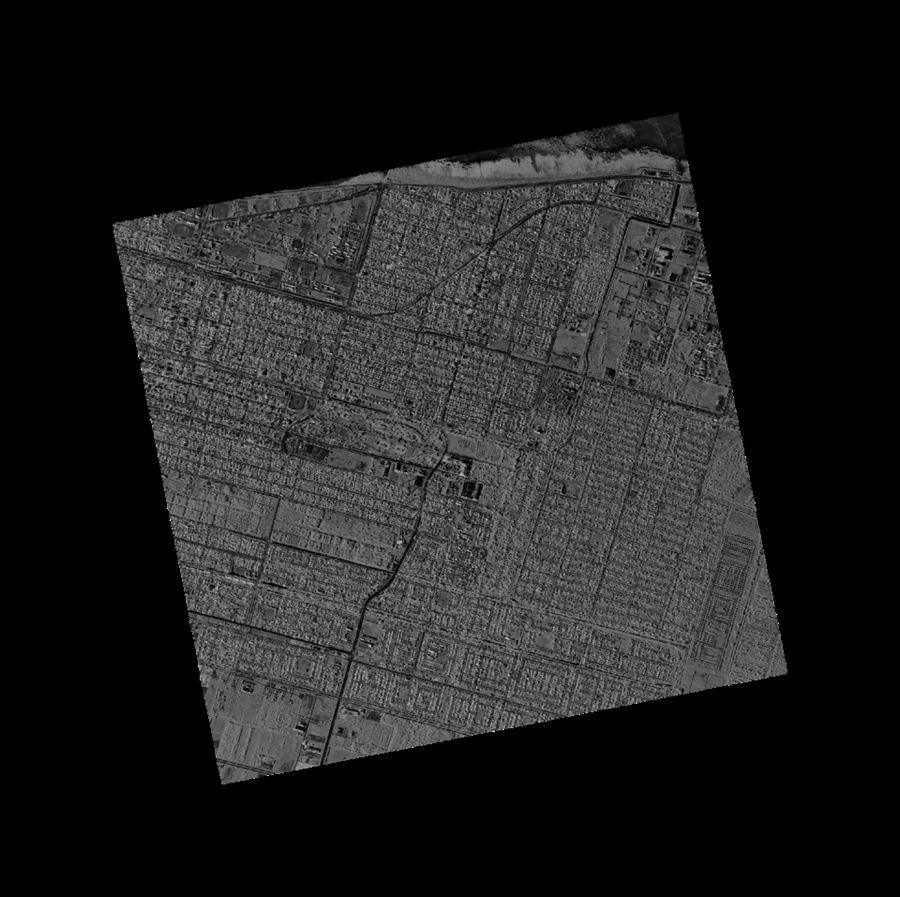
Georgetown's urban core is home to about 130,680 people.

Among the world's megacities, though, it's one of many — the giants of Asia and Latin America run larger still:

Georgetown130,680
Jakarta40,545,126
Dhaka37,307,160
Tokyo33,244,670
Shanghai30,678,616
Cairo25,230,325
The Country & Its People

History

The Guianas were home to Arawak, Carib and Warrau peoples long before Europeans arrived, and Dutch traders established the first permanent settlements from the late sixteenth century, organising three colonies — Essequibo, Demerara and Berbice — around sugar estates diked and drained on the Dutch model. Enslaved Africans worked those estates, and in 1763 they rose in Berbice under a man remembered as Cuffy, holding much of the colony for the better part of a year before the revolt was crushed; a further rising broke out in Demerara in 1823. Britain took the colonies during the Napoleonic wars, retained them by treaty in 1814, and merged them into British Guiana in 1831. Abolition came in 1834 and full freedom in 1838, whereupon planters recruited indentured labourers from India — the first ships arrived on 5 May 1838, a date still marked as Indian Arrival Day — alongside smaller streams of Portuguese from Madeira and Chinese. Freed Africans meanwhile pooled their savings to buy whole plantations outright, founding the village of Victoria in 1839 and a wider village movement after it. Modern politics began with the People's Progressive Party, founded in 1950 by Cheddi Jagan with Forbes Burnham; Britain suspended the constitution after the party's 1953 election win, the leadership split along ethnic lines, and the 1960s brought serious communal violence. Independence came on 26 May 1966 and republican status on 23 February 1970.
Culture

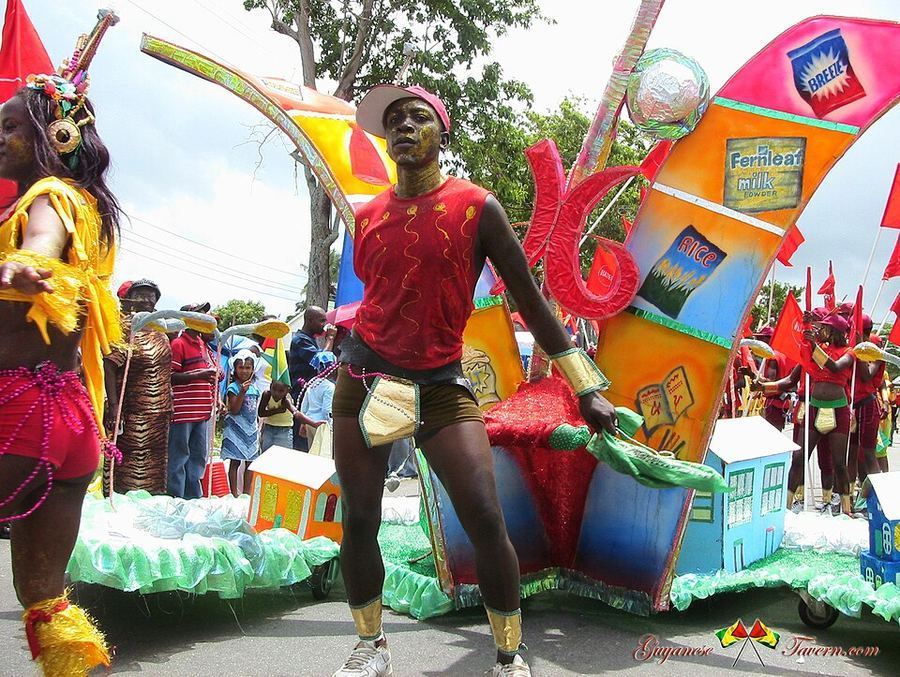
Guyanese often describe their country as the Land of Six Peoples — Indigenous, African, Indian, Portuguese, Chinese and European — and the national motto, One People, One Nation, One Destiny, states the aspiration rather than a settled fact. The public calendar is the clearest expression of that plurality: Christmas and Easter sit alongside Diwali, Phagwah, Eid, Emancipation Day on 1 August, Indian Arrival Day on 5 May, Amerindian Heritage Month in September, and Mashramani on 23 February, the republic anniversary that has grown into the country's carnival. The everyday language of the street is Creolese, an English-lexicon creole carrying Dutch, West African and Bhojpuri inheritances — the word koker, for the sluice gates that drain the coast, is straight Dutch. Village life on the coastal strip, the rum shop, the game of dominoes and the practice of liming — unhurried public sociability — structure ordinary time, while religion structures the year. Family networks stretch far beyond the borders: emigration to North America, Britain and the Caribbean has been heavy enough that remittances and returning relatives are a normal part of household economics, and the diaspora in New York and Toronto is culturally productive in its own right.

Points Of Pride

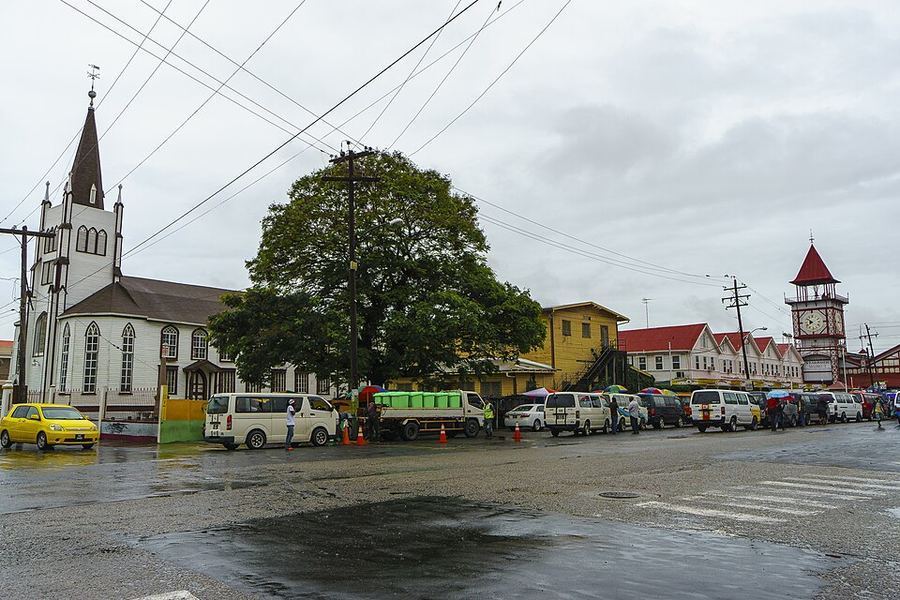
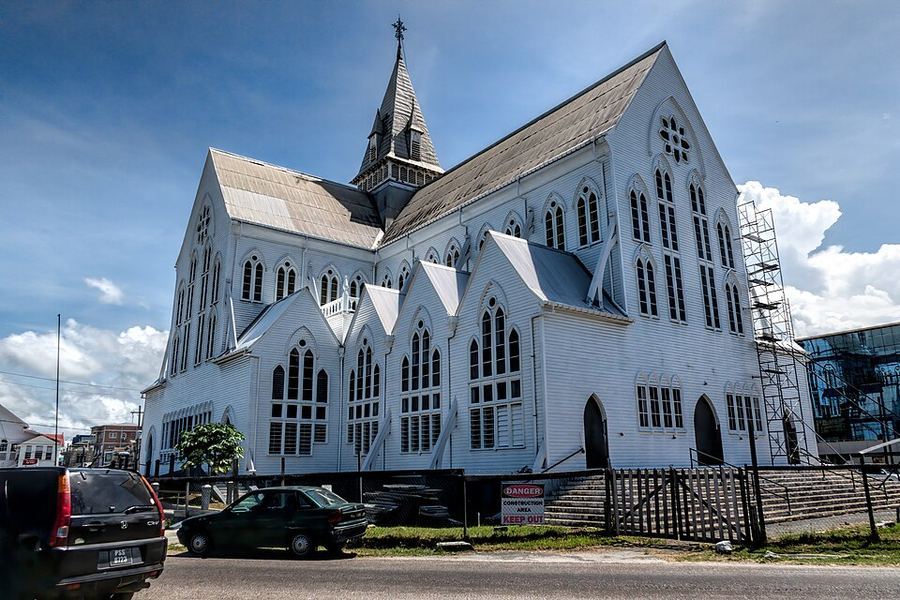
Kaieteur Falls is the image Guyanese put first: a single uninterrupted drop of about 226 metres where the Potaro River goes over a sandstone escarpment, set in a national park declared in 1929 and reachable only by light aircraft or a long trek. The country's status as the only English-speaking state in South America is a second, and its diplomatic weight a third — Georgetown hosts the CARICOM Secretariat, making a small country the administrative centre of the anglophone Caribbean, and Guyana's Shridath Ramphal served as Commonwealth Secretary-General from 1975 to 1990. Cricket supplies the deepest popular pride: Clive Lloyd captained the West Indies to the first two World Cup titles in 1975 and 1979, Lance Gibbs became the leading wicket-taker in Test history in 1976, and Rohan Kanhai and Shivnarine Chanderpaul are named in the same breath. The rainforest is a fourth — roughly 85% forest cover, with the Iwokrama reserve offered to the international community as a conservation experiment. Georgetown's timber architecture, above all St George's Cathedral, among the tallest wooden buildings anywhere, and the iron clock tower of Stabroek Market, complete the list, along with two words that carry the country's name worldwide: Demerara sugar and Demerara rum.

Cultural Fusion

Guyana is a laboratory of Caribbean creolisation, and the mechanism was indenture: when the plantations lost enslaved labour after 1838, planters imported workers from India, and their descendants are now the largest single group in the country. What followed was mutual absorption rather than separation. Pepperpot, the national dish, is an Amerindian preparation built on cassareep and is eaten at Christmas by everyone. Curry and roti are ordinary Guyanese food regardless of ancestry, chow mein arrived with Chinese migrants and became a fixture of birthday tables, and garlic pork is a Madeiran Portuguese Christmas dish that outlived the community that brought it. In music the fusion is explicit: chutney sets Bhojpuri folk singing and the tassa drum against calypso and soca rhythms, producing a genre that belongs to no single ancestral tradition. Diwali and Phagwah are national holidays observed well beyond the Hindu population, and Creolese draws its vocabulary from English, Dutch, African languages and Hindi at once. The honest counterpoint is that this cultural intimacy has never dissolved political division: the two major parties still draw their support overwhelmingly from the Indo-Guyanese and Afro-Guyanese populations respectively, and elections are read through that lens.

Music & Dance

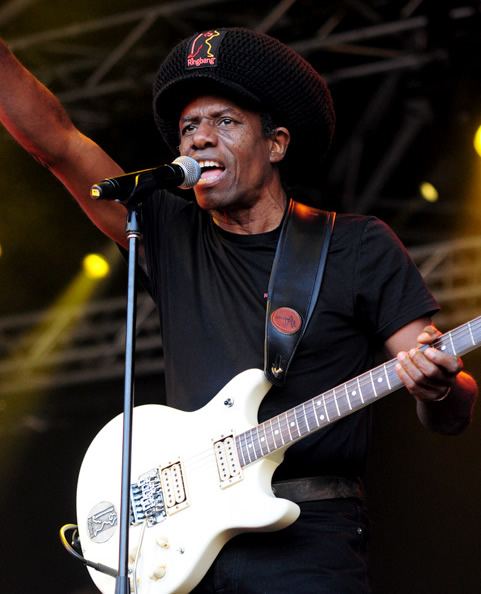
The country's most distinctive musical invention is chutney, and later chutney-soca, in which Bhojpuri-derived singing and the tassa drum — a hand-beaten kettle drum central to Indo-Guyanese weddings — are set against calypso and soca arrangements. Calypso and soca themselves arrive from the wider Caribbean and dominate Mashramani, when costume bands and music trucks move through Georgetown on 23 February. At Christmas the masquerade bands come out, a survival of African-Guyanese street performance with flute, kettle drum and bass drum, dancers on stilts and the long-skirted figure of Mother Sally. Kweh-kweh, the pre-wedding ritual of African-Guyanese communities, keeps a call-and-response song and dance tradition alive as instruction and licensed teasing before a marriage. Amerindian flute and dance traditions are performed publicly during Heritage Month each September. Reggae, dancehall and American popular music saturate the radio. The country's most internationally successful musician is Eddy Grant, born in Plaisance on the East Coast Demerara, first with the Equals and then as a solo artist behind 'Electric Avenue' and 'Gimme Hope Jo'anna'; the closest thing to a patriotic standard is Dave Martins and the Tradewinds' 'Not a Blade o' Grass', written in response to the Venezuelan border claim.

Cuisine & Misattributed Foods

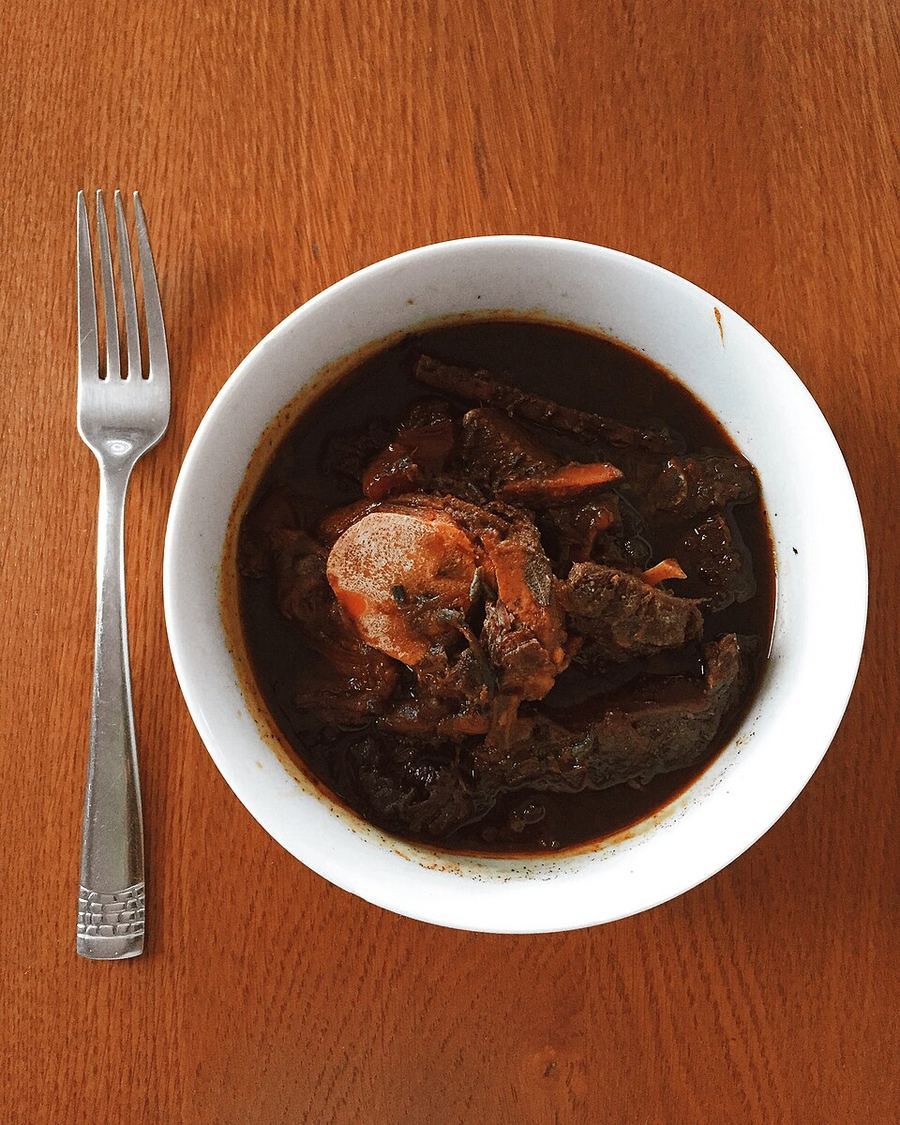
The national dish is pepperpot, a dark stew of meat simmered with cassareep — the boiled-down juice of bitter cassava, which both flavours and preserves — plus cinnamon and hot pepper, eaten on Christmas morning with dense plait bread and capable of being kept and reheated for days. Its base technology is Indigenous; almost everything else on the Guyanese table records another arrival. Cook-up rice, rice simmered with peas and coconut milk and whatever meat is at hand, is the everyday one-pot. Roti — dhal puri, oil roti, sada — comes with chicken or the celebrated duck curry cooked outdoors in large pots for gatherings. Metemgee sets ground provisions in coconut milk under dumplings, garlic pork is the Portuguese Christmas inheritance, and Guyanese chow mein the Chinese one. Snacks run to pholourie with sour, egg balls, cassava bread and farine from the interior, and the bakery counter to pine tarts, cheese rolls and the red coconut roll called salara. Drinks and sweets carry the plantation past directly: Demerara sugar, dark rum from Demerara Distillers, mauby, ginger beer and sorrel at Christmas, and a black cake steeped in rum for months before it is cut.

National Dress

Guyana has no single national costume, and its formal wardrobe is plural in the same way its holidays are. The garment that comes closest to a shared national formal style for men is the shirt-jac, a short-sleeved tailored shirt-jacket worn open-necked in place of a suit and tie, standard at official functions across the anglophone Caribbean and well suited to the coastal heat. Indo-Guyanese formal dress means the sari, the shalwar kameez and the men's kurta, worn for weddings, Diwali and Phagwah and visible far beyond the Hindu and Muslim communities on those days. African-Guyanese dress for Emancipation Day on 1 August draws on West African textiles — printed wax cloth, wrapped skirts and elaborately tied head wraps — in a deliberate act of reclamation rather than unbroken inheritance. Amerindian communities wear beadwork aprons, woven cotton, feather ornament and annatto body paint for ceremony and for the public events of Heritage Month in September, and their craft supplies much of the country's souvenir economy. Everyday clothing is otherwise light, Western and practical, with traditional dress reserved for religious observance, weddings, national days and cultural performance.

Sports & Inspiring Athletes

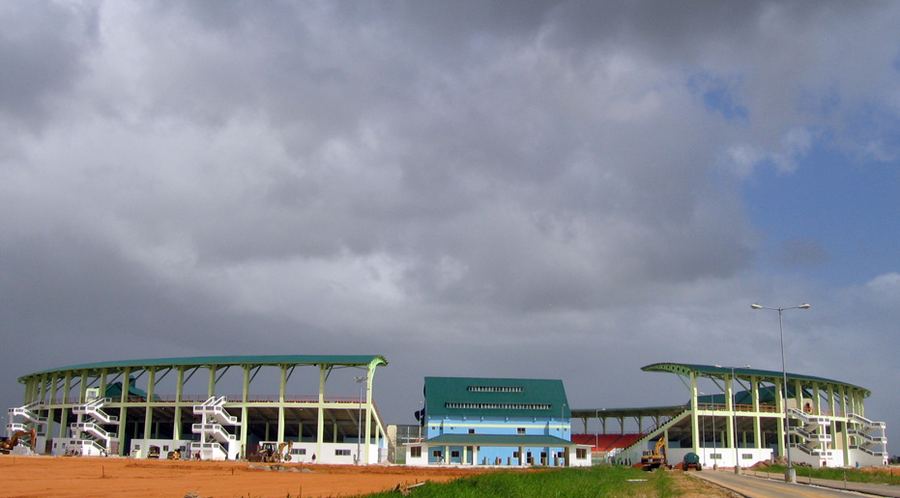
Cricket is the national sport and is played internationally through the West Indies rather than alone, an arrangement that has given a very small country an outsized share of great players. The Georgetown Cricket Club ground at Bourda was for decades the Test venue and was famous for sitting below sea level; international cricket has since moved to the Guyana National Stadium at Providence, built for the 2007 World Cup. The domestic first-class side plays as the Guyana Harpy Eagles, and the Guyana Amazon Warriors carry the country in the Caribbean Premier League, winning the title in 2023 after a long run of near misses. Football has a growing profile: the Golden Jaguars reached the CONCACAF Gold Cup for the first time in 2019. Boxing is the sport that has produced Guyana's Olympic and world honours — Michael Anthony took a bronze at the 1980 Moscow Games, and Andrew Lewis won a world welterweight title in 2001. Beyond the organised codes, dominoes is close to a competitive discipline, horse racing draws large crowds at coastal tracks, and cycling road races, the Easter regatta at Bartica and school athletics fill the calendar.

Notable Educational Programs

Public education is free and compulsory through the secondary years, delivered in English and administered centrally by the Ministry of Education, with a nationwide sequence of examinations culminating in the regional Caribbean secondary and advanced proficiency certificates. The University of Guyana was founded in 1963 under Cheddi Jagan's government and operates campuses at Turkeyen outside Georgetown and at Tain in Berbice; the Cyril Potter College of Education trains teachers, and technical institutes serve the trades. The system's headline achievement is high literacy by regional standards; its headline problem is not access but retention of the people it educates. Guyana has for years been cited among the countries with the highest emigration rates of tertiary-educated citizens anywhere in the world, with graduates leaving in large numbers for North America and the wider Caribbean, and the resulting shortage of teachers, nurses and engineers shapes every other public service. The second structural gap is geographic: hinterland communities are served by dormitory schools and small village schools with thin staffing, and Amerindian children face both distance and instruction in a second language. Oil revenue has begun to be directed at the problem through a large government online scholarship programme launched in 2021.

Wars & Conflicts

Guyana has never fought an interstate war, and its violence has been internal, episodic and political. The most serious period ran from 1962 to 1964, when the split of the independence movement along ethnic lines produced strikes, arson and communal killing in Georgetown and on the sugar estates, with Cold War intervention feeding the disorder. In January 1969 ranchers in the Rupununi mounted a short-lived armed revolt that was put down within days. The Venezuelan border claim has produced military facts rather than open war: Venezuelan forces occupied the Guyanese half of Ankoko Island in the Cuyuni River in 1966 and have remained there. In November 1978 the country became the site of one of the worst mass deaths of the century when more than 900 members of the American Peoples Temple died at Jonestown in the northwest, after gunmen from the settlement killed the visiting US congressman Leo Ryan at the Port Kaituma airstrip. In 1980 the historian Walter Rodney was killed by a bomb in Georgetown; a commission of inquiry reporting in 2016 concluded the state had been implicated. More recent tension has been electoral and diplomatic: a five-month standoff over the 2020 count, and the sharp escalation of Venezuelan rhetoric around its December 2023 referendum on Essequibo, defused when both presidents met at Argyle in St Vincent that month and committed not to use force.
Current as of 2026-08-06

Land & Border Disputes

The defining dispute is Venezuela's claim to Guayana Esequiba — everything west of the Essequibo River, roughly two-thirds of Guyana's territory and the ground beneath most of its recent oil and gold discoveries. An arbitral tribunal sitting in Paris fixed the boundary in 1899; Venezuela accepted the line for six decades, then repudiated the award in 1962 as fraudulent. The 1966 Geneva Agreement, signed weeks before Guyanese independence, established a machinery for settlement that produced no result, and in 2018 the UN Secretary-General referred the matter to the International Court of Justice. Guyana filed there the same year; the Court found it had jurisdiction in December 2020 and rejected Venezuela's preliminary objections in April 2023, with the merits still before it. Venezuela continues to occupy part of Ankoko Island. A second, quieter dispute runs with Suriname, which claims the New River Triangle in the southeast and asserts sovereignty over the whole width of the Courantyne River. The maritime element of that quarrel — after Surinamese naval vessels expelled a drilling rig from disputed water in 2000 — went to an arbitral tribunal under the UN Convention on the Law of the Sea, which delimited the offshore boundary in 2007; the land claim remains unsettled.
Land, Life & Legacy

Land & Climate

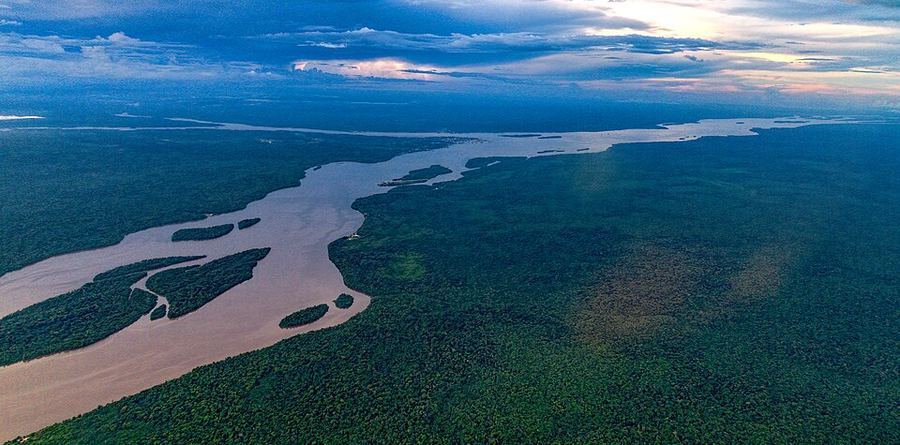
Guyana occupies about 215,000 square kilometres of the Guiana Shield, one of the oldest exposed rock formations on earth, and divides into four sharply different belts. The coastal plain is a strip rarely more than 65 kilometres wide, much of it below the level of high tide and kept dry by a sea wall, earthen dams and the Dutch-derived koker sluices; roughly nine in ten Guyanese live on it. Behind that lies a white sand belt, then the forested highlands that cover most of the country, and in the southwest the open Rupununi savannah, ranching country cut off from the coast for much of the wet season. Four great rivers run north to the Atlantic — the Essequibo, longest of them, with the Demerara, Berbice and Courantyne — and the Potaro, an Essequibo tributary, drops over the Kaieteur escarpment. The Pakaraima Mountains rise in the west toward Mount Roraima, the country's highest point and a flat-topped tepui shared with Venezuela and Brazil. The climate is equatorial, hot and humid year-round with two rainy seasons, roughly May to August and November to January. Flooding is the defining hazard: the coastal floods of early 2005 inundated Georgetown and the surrounding farmland and ranked among the most costly disasters in the country's history.

Entertainment

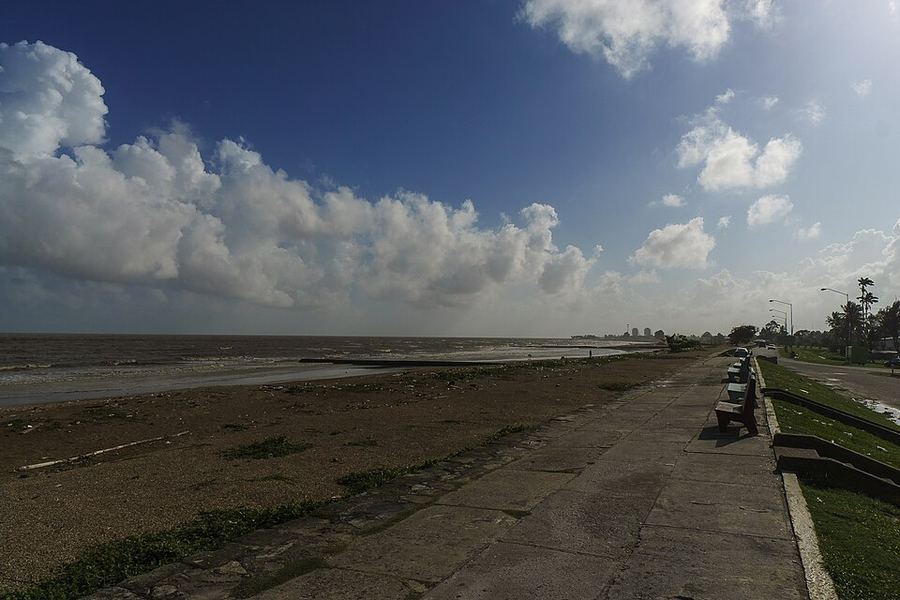
Leisure in Guyana is sociable, outdoor and cheap. Liming — unhurried talk in a yard, at a rum shop or on a bridge — is the base activity, and dominoes slammed onto a table its usual accompaniment. The Georgetown sea wall is the country's great public promenade, filling on Sunday evenings with families, food vendors, music and parked cars facing the Atlantic. Cricket is played wherever there is flat ground, from the road to the beach at Number 63 in Berbice. Easter belongs to kite flying, a genuinely national tradition in which handmade kites of tissue and pointer wood are launched from the sea wall, the national park and every open field on Easter Monday, and Easter also brings the regatta at Bartica on the Essequibo. Interior travel is a growing pastime for those who can afford it — day flights to Kaieteur, river trips, ranch stays in the Rupununi, and birdwatching that draws specialists from abroad in search of harpy eagles and cock-of-the-rock. Football, basketball, horse racing and cycle road races fill out the sporting calendar, and Mashramani in February is the year's largest single public celebration.

Art & Museums

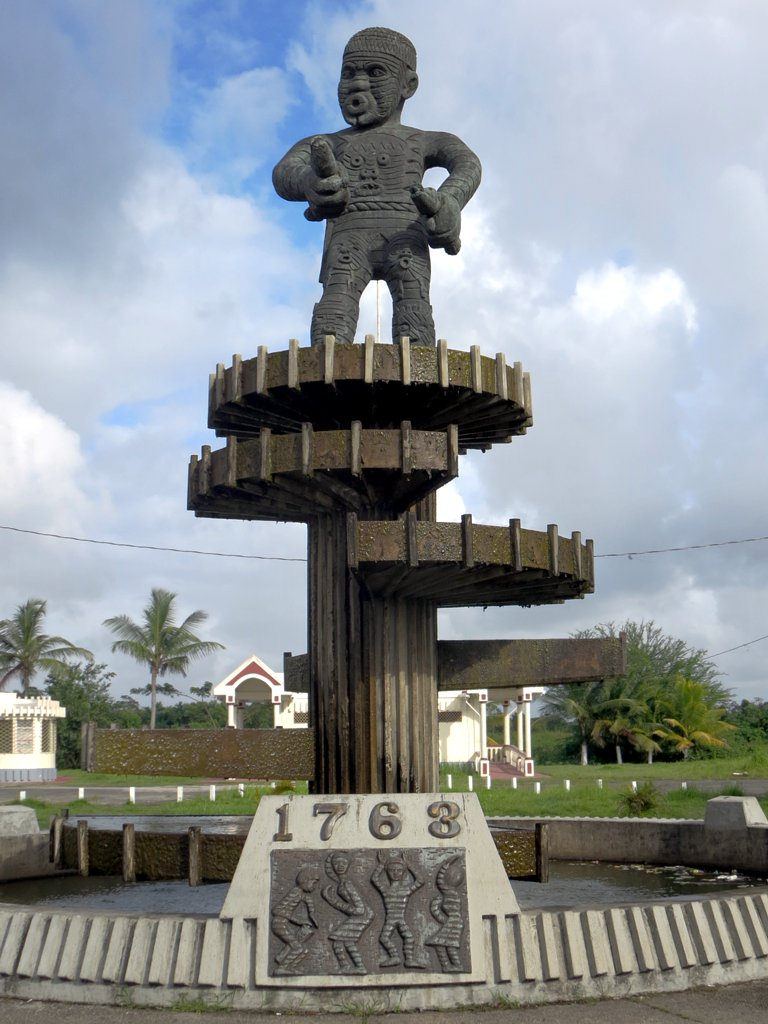
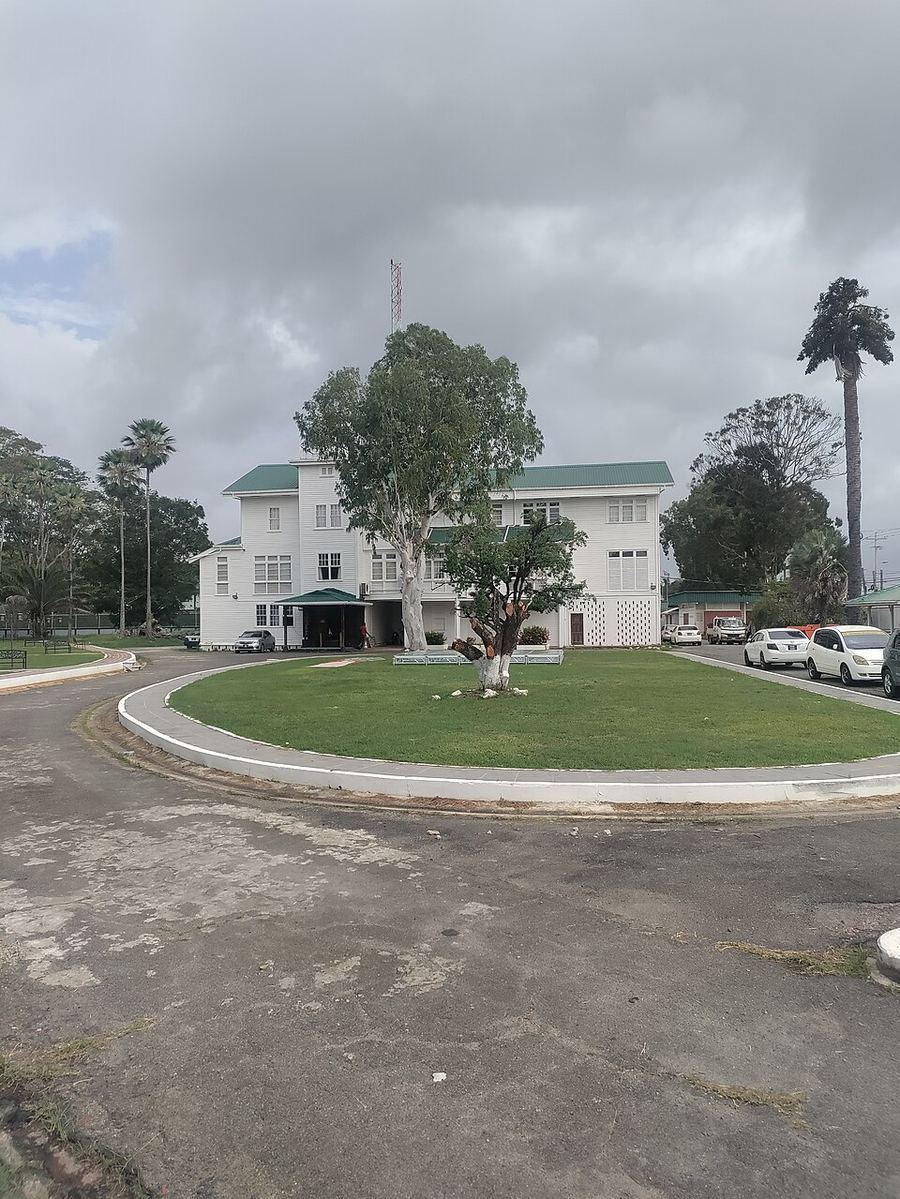
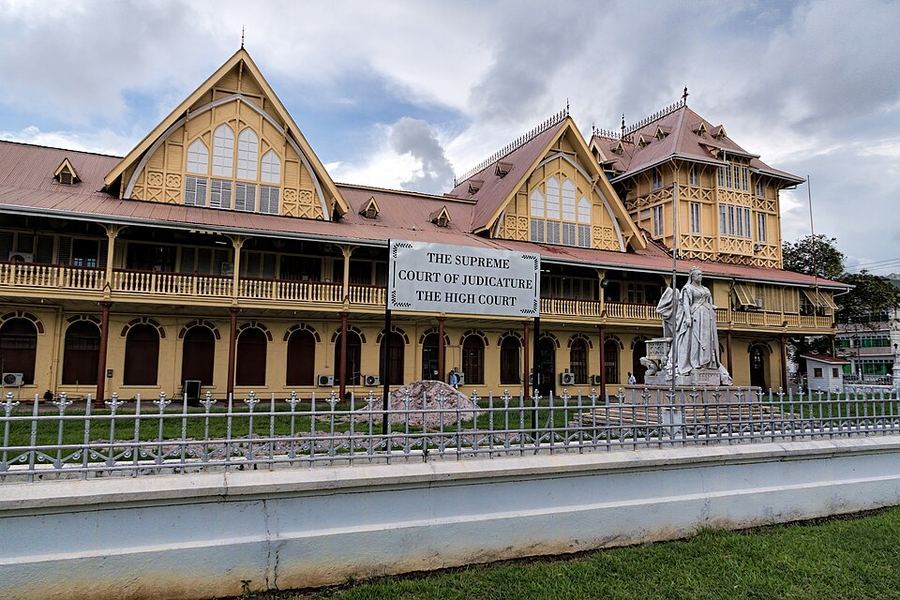
The oldest art in the country is on rock: petroglyphs incised at Timehri and other river sites by Indigenous peoples, studied systematically by Denis Williams, an artist who turned archaeologist and became the founding director of the Walter Roth Museum of Anthropology in Georgetown. Guyana's most internationally recognised painter is Aubrey Williams, who left for London in 1952, helped form the Caribbean Artists Movement, and built a body of abstract painting that drew openly on pre-Columbian and Warrau motifs alongside a lifelong preoccupation with music. Stanley Greaves worked as both painter and poet and belongs to the same generation of post-independence artists. In sculpture the dominant figure is Philip Moore, whose 1763 Monument in Georgetown — the towering bronze of Cuffy raised for the republic's anniversary in 1976 — is the country's best-known public artwork. Training runs through the E. R. Burrowes School of Art, and the National Collection is housed at Castellani House, a nineteenth-century timber mansion that is itself an example of the form. That timber architecture is arguably the country's most complete artistic achievement: the louvred Demerara window designed to move air without admitting sun, the Gothic timber of St George's Cathedral, and the cast-iron clock tower of Stabroek Market.

Notable People

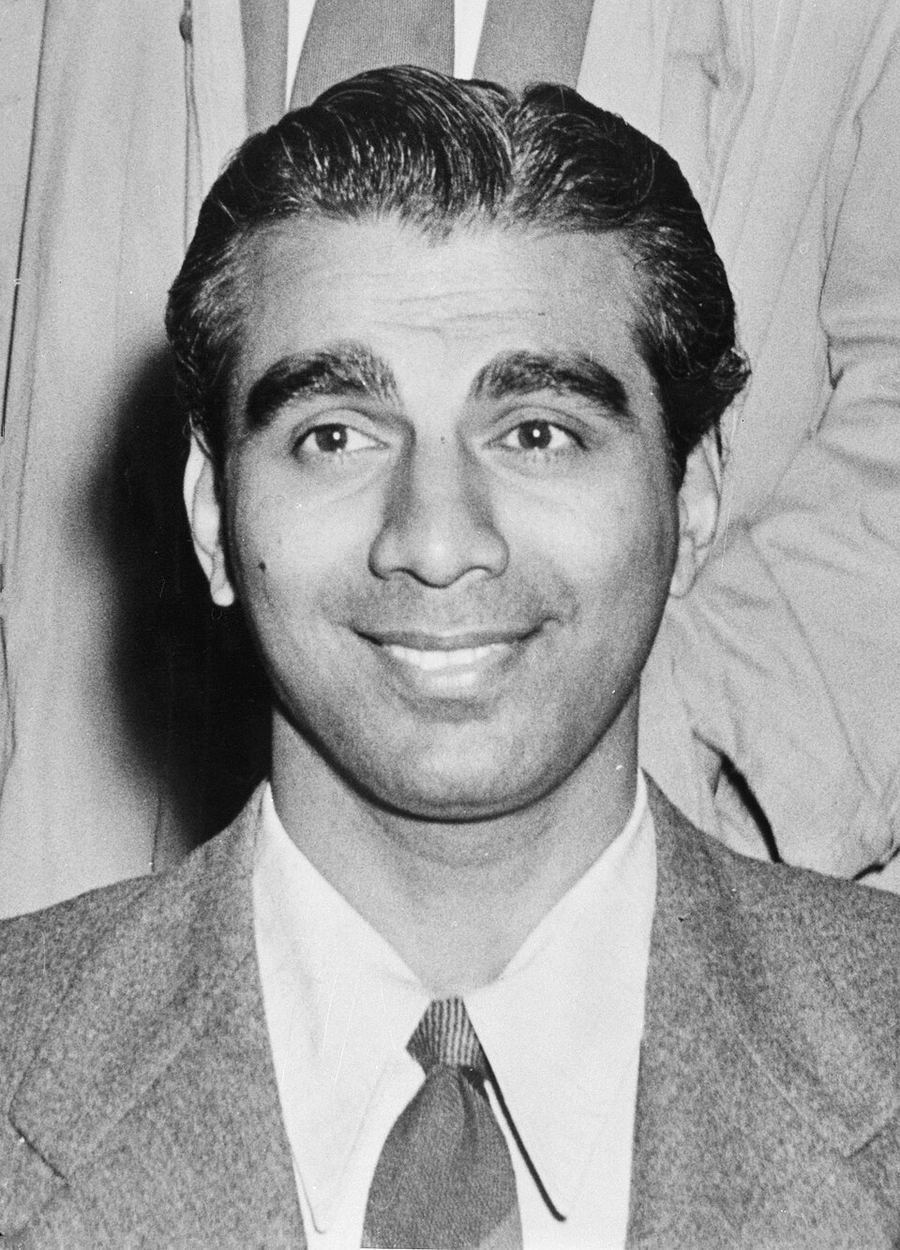
Cheddi Jagan, a US-trained dentist who founded the People's Progressive Party in 1950, was the dominant political figure of the independence generation, premier in the early 1960s and president from 1992 until his death in 1997; his American-born wife Janet Jagan succeeded him and became the country's first woman president. Forbes Burnham, his former ally and then rival, led the country from independence through the co-operative republic years until his death in 1985. Walter Rodney, the historian whose How Europe Underdeveloped Africa reshaped a field, returned home to organise against Burnham's government and was killed by a bomb in Georgetown in 1980. Shridath Ramphal served as Commonwealth Secretary-General for fifteen years. In literature Wilson Harris wrote Palace of the Peacock and a long sequence of novels that made the Guyanese interior a metaphysical landscape; Martin Carter's Poems of Resistance remain the country's most quoted verse; E. R. Braithwaite wrote To Sir, With Love; Grace Nichols carried Guyanese material into British poetry. Aubrey Williams stands for the visual arts and Eddy Grant for popular music, while Clive Lloyd, Rohan Kanhai, Lance Gibbs and Shivnarine Chanderpaul make up an extraordinary cricketing roll for a country of under a million people.

Inventions & Breakthroughs

Guyana is not a patent economy, and its contributions are better described as techniques and institutions than devices. The most consequential is Indigenous: cassareep, the reduction of the juice of bitter cassava into a dark syrup that both detoxifies a poisonous root and preserves cooked meat for days without refrigeration — the technology that makes pepperpot possible and one of the Amazon basin's real food-science achievements. The second is hydraulic. Guyana's coastal civilisation is an engineered landscape: polders, front and back dams, drainage canals and the koker sluice gates that release water at low tide, a Dutch system adapted and maintained for three centuries to keep a populated plain below sea level in cultivation. The third is distilling. Demerara rum is a protected regional style, and the plant at Diamond preserves working wooden stills — including a wooden Coffey still and a double wooden pot still from the old Port Mourant estate — that exist nowhere else in the world and give the rum a character that cannot be reproduced elsewhere. To these can be added a genuinely original institutional experiment: the dedication of the Iwokrama forest to international research in 1989, and the low-carbon forest strategy built on it.

Science & Technology

Guyana's technical story since 2015 has been petroleum. An ExxonMobil-operated consortium announced the Liza discovery in the offshore Stabroek Block in May 2015, and first oil flowed in December 2019 from a floating production vessel; successive developments have followed, making a country of under a million people a significant new producer and, for several years, one of the fastest-growing economies in the world. A domestic gas-to-energy project aims to bring associated gas ashore for power generation rather than flare it. Running alongside the oil is an unusually developed forest-carbon programme: a Low Carbon Development Strategy first published in 2009, a results-based payment partnership with Norway that made Guyana an early test case for paying countries to keep forests standing, and in 2022 the sale of jurisdictional forest-carbon credits to an oil major under an independent certification standard. The scientific institution at the centre of this is the Iwokrama International Centre, established on 371,000 hectares of rainforest that President Desmond Hoyte offered to the Commonwealth in 1989 as a living laboratory for sustainable use. Biodiversity research runs through the University of Guyana's Centre for the Study of Biological Diversity, while public health effort concentrates on malaria in the mining districts. Research capacity overall remains small and is constrained by the same emigration that thins the professions.
On The World Stage

Champions & Defining Moments

Guyana's global sporting presence is inseparable from West Indies cricket. Clive Lloyd, born in Georgetown, captained the side through its period of dominance and lifted the first two World Cups in 1975 and 1979. Lance Gibbs, an off-spinner from the same city, became the leading wicket-taker in the history of Test cricket in 1976 and was the first spin bowler to reach 300 Test wickets. Rohan Kanhai's batting is part of the standard canon of the game, and Shivnarine Chanderpaul, with a crab-like stance no coach would teach, compiled more than 11,000 Test runs over two decades to rank among the most prolific batsmen the West Indies has produced. The Caribbean Premier League has since given the country an annual global television window through the Amazon Warriors. Outside cricket the record is thinner: Guyana has competed at the Olympic Games since 1948, first as British Guiana, and has won a single medal, Michael Anthony's boxing bronze at Moscow in 1980. The country is a regular at the Commonwealth Games, and its football side's 2019 Gold Cup appearance was a first. Many athletes of Guyanese descent compete for Britain, Canada and the United States.

OlympediaEncyclopaedia BritannicaCommonwealth Games Federation
Economy, Trade & Government

Currency & GDP

Guyana Dollar — GYD ($)

GDP (PPP): $58.423 billion (2024 est.)

Per capita: $70,300 (2024 est.)

Exports

$13.739 billion (2023 est.)

crude petroleum, railway cargo containers, gold, ships, rice (2023)

Partners: USA 20%, Trinidad & Tobago 11%, Netherlands 10%, Singapore 10%, Germany 7% (2023)

Imports

$10.956 billion (2023 est.)

refined petroleum, ships, construction vehicles, excavation machinery, cars (2023)

Partners: USA 28%, China 13%, Trinidad & Tobago 11%, Brazil 5%, Bahamas, The 4% (2023)

Government

Type: parliamentary republic

Independence: 26 May 1966 (from the UK)

Terrain → Where People Live

How mountains, coasts, and rivers shape settlement (LandScan).

Coming — data

Migration & Ethnic Settlement

Where groups settled and how people move (GeoEPR + UNHCR).

Coming — data

Universities

Notable institutions, mappable as points.

Coming — data
Economy & government facts: CIA World Factbook (public domain), via OpenFactBook / factbook.json.
Every fact and narrative claim will carry a visible source citation. Data-driven sections light up automatically wherever HERA has coverage.