HERA · Human Entity Reference Atlas by Masego Inc

← Indonesia 🌐 3D View
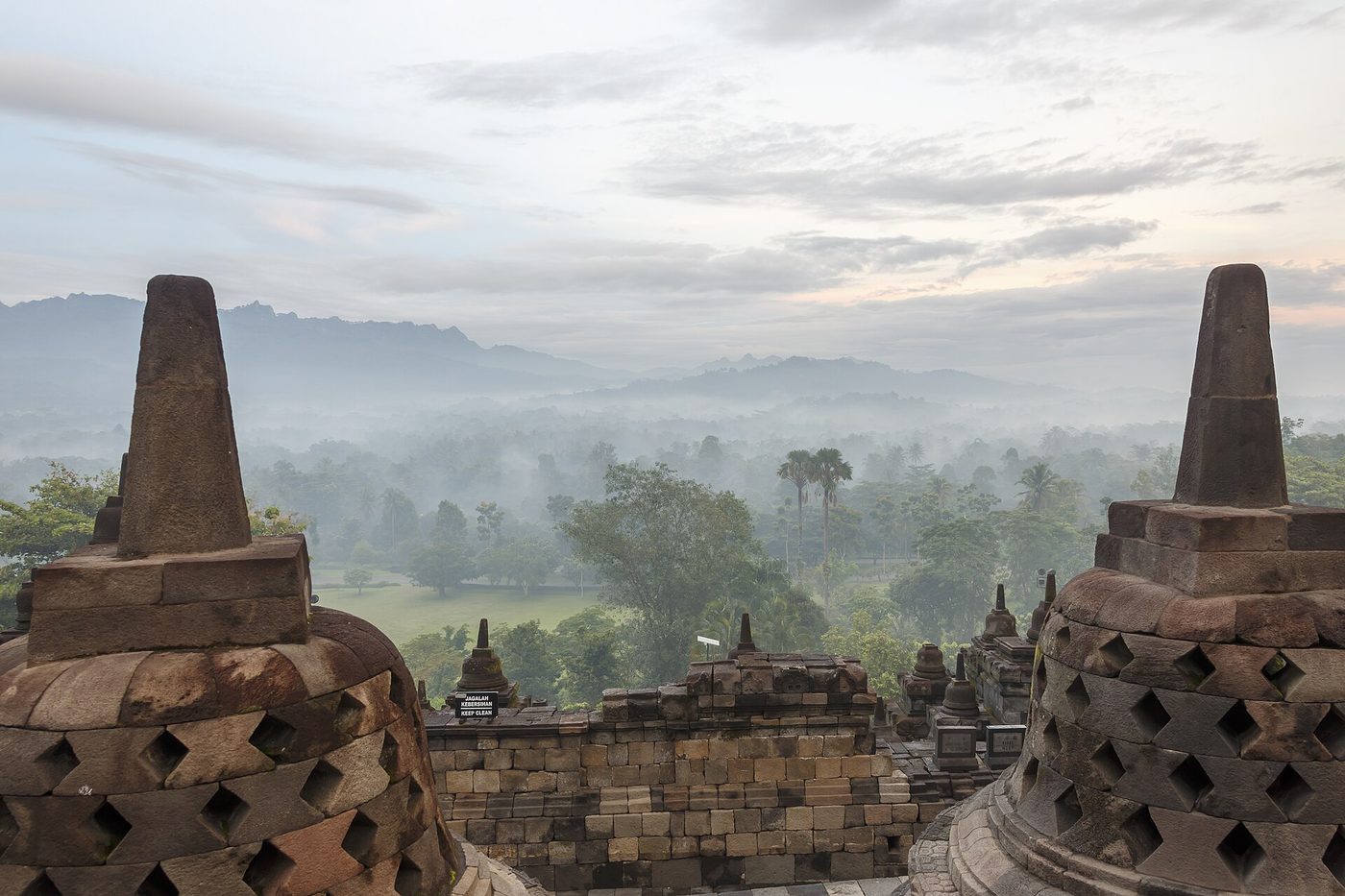
Borobudur-Temple-Park Indonesia Stupas-of-Borobudur, Indonesia
Indonesia IDN
Borobudur-Temple-Park Indonesia Stupas-of-Borobudur — Photo: CEphoto, Uwe Aranas / CC BY-SA 3.0 via Wikimedia Commons
Did You Know Every Olympic gold medal Indonesia won for over 30 years came from badminton — starting the moment the sport joined the Games in 1992 — until speed climber Veddriq Leonardo broke the pattern with gold at Paris 2024. — IOC

Indonesia is a country that defies easy summary: more than 17,000 islands flung across three time zones, straddling the equator between the Indian and Pacific Oceans, home to some 283.6 million people — the world's fourth-largest population and its largest Muslim-majority nation. Java alone, an island smaller than England, holds over half of them. The national motto, Bhinneka Tunggal Ika ("Unity in Diversity"), is less a slogan than a survival strategy for a state stitching together Javanese, Sundanese, Batak, Minangkabau, Balinese, Dayak, and hundreds of other peoples speaking more than 700 languages. Since throwing off Dutch rule in 1945 and authoritarianism in 1998, Indonesia has become Southeast Asia's largest democracy and economy, with GDP of roughly $4.1 trillion at purchasing power parity, powered by coal, palm oil, nickel, and a young workforce with a median age of 31.8. Its boldest current gamble is moving the capital itself: from sinking, traffic-choked Jakarta to Nusantara, a city being carved out of eastern Borneo — a bet that the archipelago's center of gravity can shift.

CIA World FactbookWorld BankIMFGlottolog
Population
283,587,097
Capital
Jakarta
Currency
Rp IDR
Time zones
Largest city
Jakarta
Human Geography Themes
Loading national figures…
Largest Cities
Jakarta40,545,126
Bandung8,691,181
Surabaya6,856,993
Medan4,350,624
Semarang3,274,360
Tasikmalaya2,923,169
Yogyakarta2,742,763
Makassar2,241,888
In Perspective

Jakarta's urban core is home to about 40,545,126 people.

That's bigger than London, Paris, Madrid and Toronto — each a great world city in its own right.

Jakarta40,545,126
London10,408,332
Paris9,366,654
Madrid5,680,137
Toronto5,566,382

And it holds its own among the world's largest urban centres:

Jakarta40,545,126
Dhaka37,307,160
Tokyo33,244,670
Shanghai30,678,616
Cairo25,230,325
Mumbai20,453,270

More people live in Jakarta than in the entire nation of Sweden, Greece, Portugal or Israel.

The Country & Its People

History

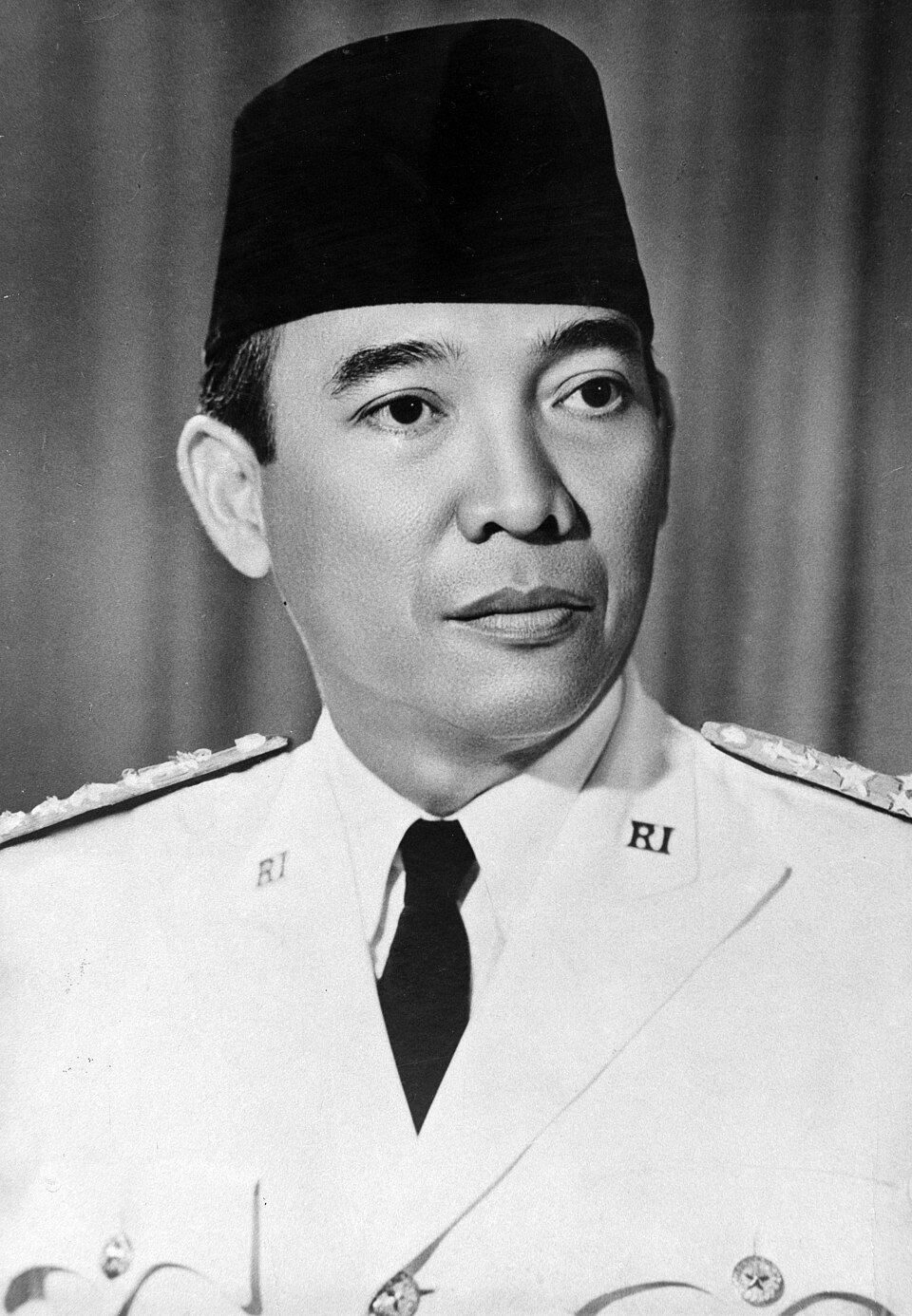
Long before "Indonesia" existed, its islands ran the world's spice trade. The maritime empire of Srivijaya, based on Sumatra, dominated the Strait of Malacca from the seventh century; the Java-based Majapahit empire of the fourteenth century claimed sway over much of the archipelago and remains a touchstone of national imagination. Nutmeg, cloves, and mace — once grown nowhere else on Earth but the Maluku islands — drew Portuguese, then Dutch traders, and the Dutch East India Company gradually converted commerce into conquest. By the early twentieth century, the Netherlands ruled the whole archipelago as the Dutch East Indies. Japanese occupation during World War II shattered the colonial order, and on 17 August 1945 nationalist leaders Sukarno and Hatta proclaimed independence, which the Dutch conceded only after four years of armed revolution and diplomacy. Sukarno's turbulent Guided Democracy ended in the mass violence of 1965-66 and General Suharto's New Order — three decades of authoritarian development that collapsed with the 1998 Asian financial crisis. The Reformasi era that followed brought free elections, sweeping decentralization, and East Timor's separation, transforming Indonesia into one of the world's most consequential democracies.
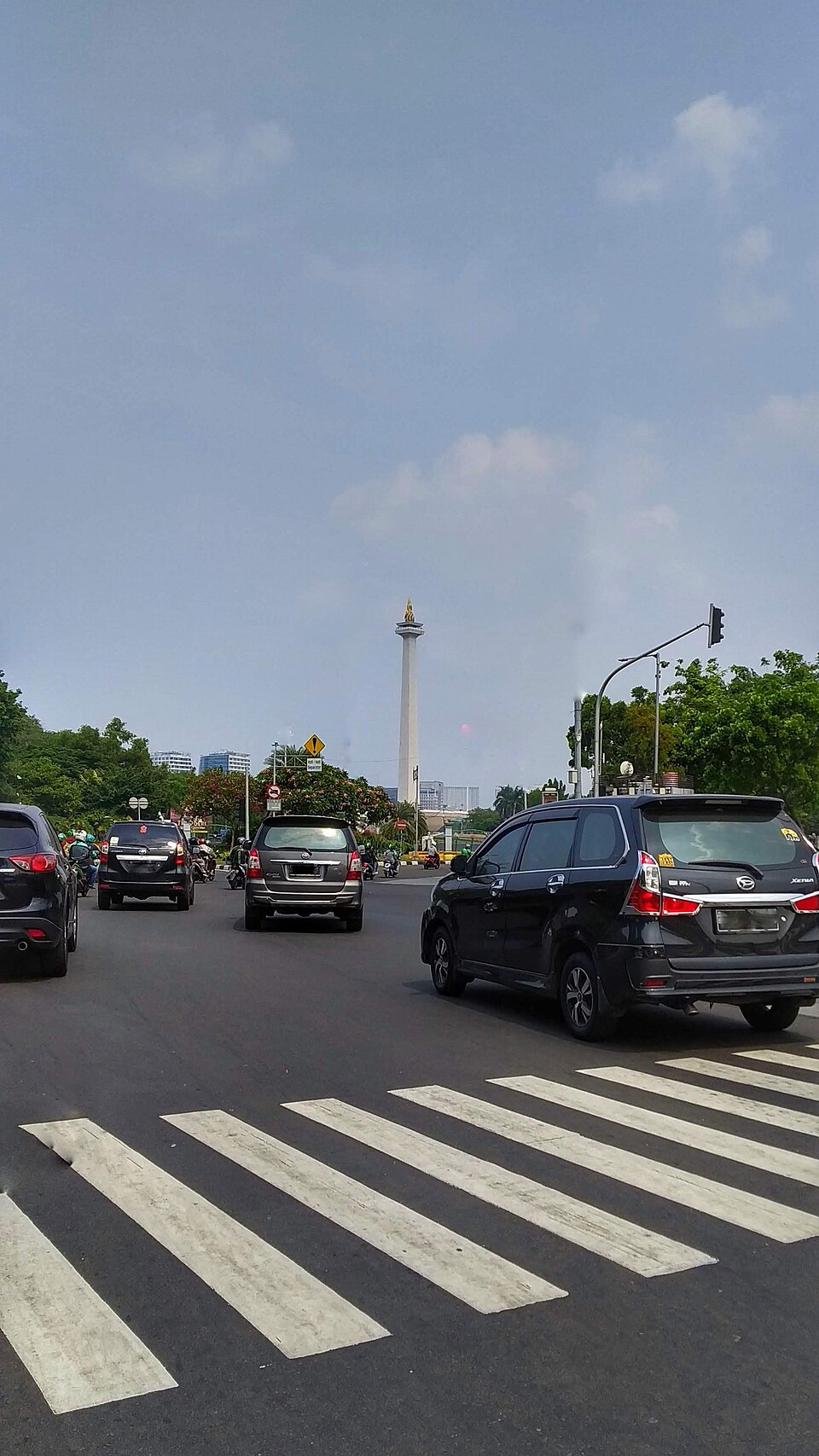
History, Indonesia
RasyaAbhirama13 / CC BY-SA 3.0

Culture

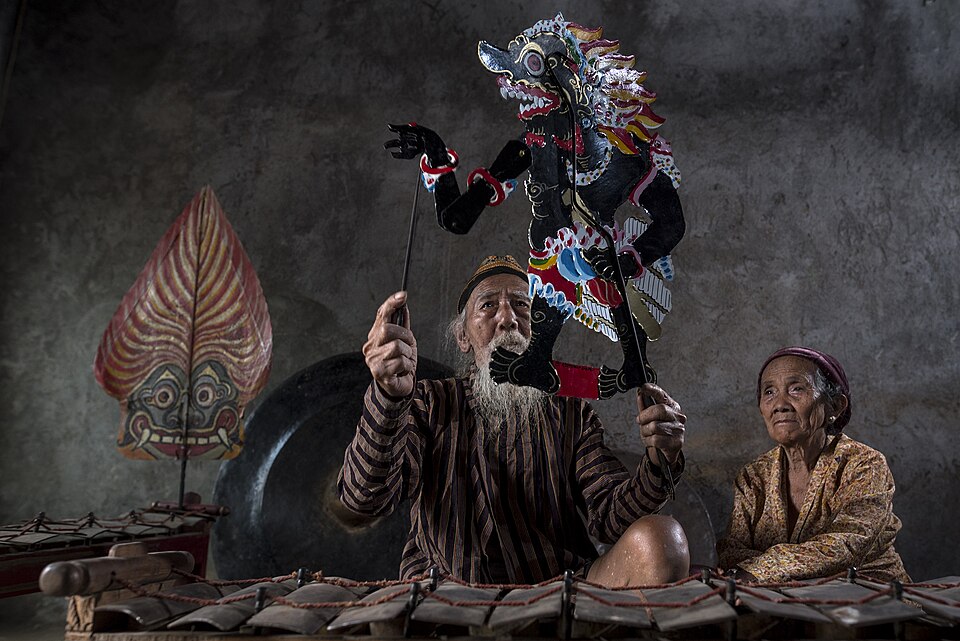
Indonesia's national census has counted over 1,300 ethnic groups, and daily life reflects that mosaic. The Javanese — about 40 percent of the population — bring a culture of refined indirection, from the layered speech registers of the Javanese language to the shadow-puppet theatre of wayang kulit, where a lone puppeteer voices gods, clowns, and kings through all-night performances that UNESCO recognizes as a masterpiece of oral heritage. Sundanese West Java, Minangkabau Sumatra with its matrilineal clans and dramatic horn-roofed houses, the Toraja highlands of Sulawesi with their elaborate funerary rites, and Hindu Bali with its temple festivals and daily palm-leaf offerings each sustain distinct worlds. Islam, practiced by about 87 percent of Indonesians, is woven through with local tradition: the archipelago's conversion came largely through traders and Sufi teachers rather than conquest, producing a religious culture famous for its accommodations with older Hindu-Buddhist and animist practice. Adat — customary law — still governs land, marriage, and ceremony in many regions, formally acknowledged alongside national law. The unifying thread is Bahasa Indonesia, a deliberately egalitarian standardized Malay that gave a polyglot nation a common tongue nobody's ethnic group could claim as its own.
Culture, Indonesia
Candra Firmansyah / CC BY-SA 4.0

Points Of Pride

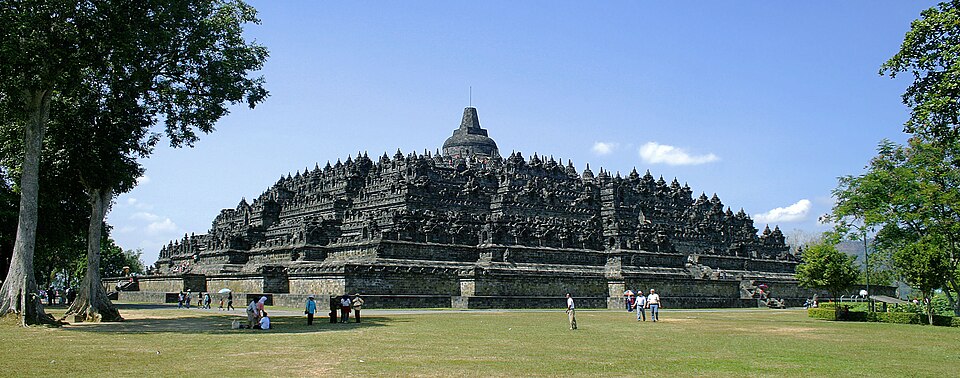
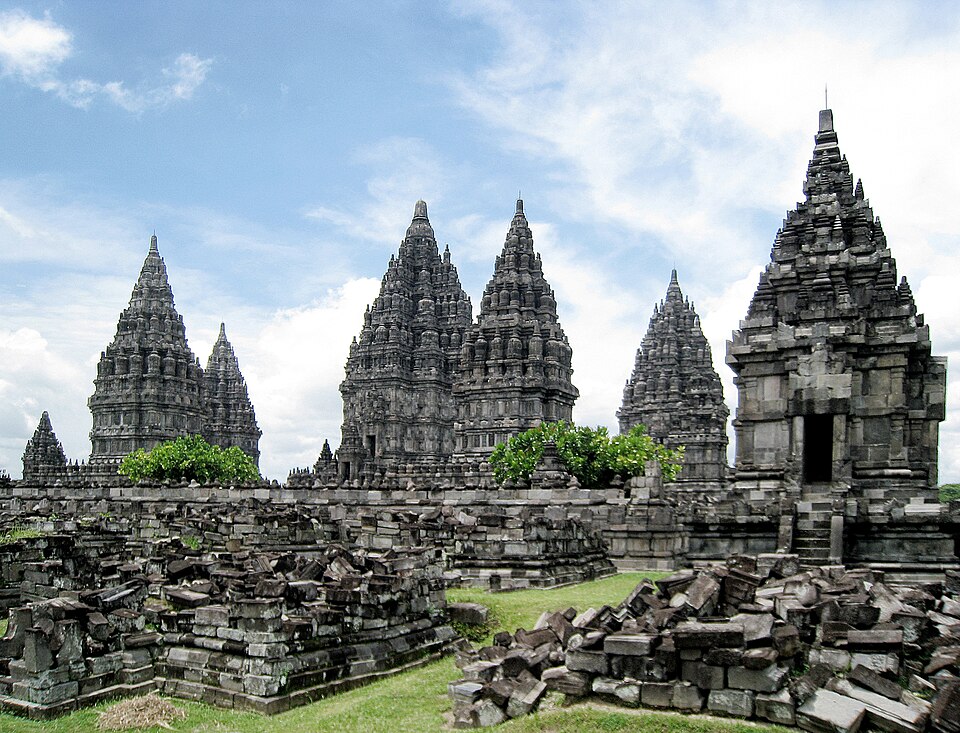
Indonesians can point to superlatives in nearly every register. Borobudur in central Java is the largest Buddhist temple on Earth — a ninth-century mountain of carved stone with more than 2,600 relief panels, inscribed by UNESCO as World Heritage — while nearby Prambanan is one of Asia's grandest Hindu complexes. Komodo National Park shelters the world's largest lizard, found nowhere else. The country is one of the planet's most biodiverse, its forests and reefs anchoring the Coral Triangle, the richest marine ecosystem known. Economically, Indonesia is a G20 member — the only Southeast Asian one — and by purchasing power parity ranks among the world's largest economies, holding its G20 presidency in 2022. Bali draws millions of visitors a year and consistently ranks among the world's most celebrated destinations in UNWTO tourism figures. In sport, Indonesian badminton is a dynasty: the country has collected Olympic golds across four decades, beginning the moment the sport entered the Games. And in Bahasa Indonesia, the country pulled off one of history's most successful language-planning feats — near-universal adoption of a national language within two generations.
Points Of Pride, Indonesia
Gunawan Kartapranata / CC BY-SA 3.0

Cultural Fusion

Every great trade wind left a layer on Indonesia. Indian merchants and priests brought Hinduism and Buddhism in the first millennium, giving Java and Bali their temples, their epics — the Ramayana and Mahabharata still animate dance and puppetry — and a Sanskrit vocabulary that salts the modern language. Arab and Gujarati traders carried Islam into port cities from the thirteenth century, and it spread through commerce and Sufi persuasion, blending with what came before rather than erasing it: Java's wali songo saints are credited with teaching Islam through gamelan and wayang. Chinese settlers, present for centuries, produced the hybrid Peranakan culture whose cuisine, batik styles, and loanwords (bakso, mie, teh) are now simply Indonesian. Three and a half centuries of Dutch presence left architecture, legal codes, and words for everything from offices (kantor) to tires (ban). Betawi culture in Jakarta is itself a fusion people — descendants of Javanese, Balinese, Chinese, Arab, and Portuguese-speaking communities thrown together in a colonial port. Even the national dish debate reflects fusion: satay has Middle Eastern kebab ancestry, nasi goreng shows Chinese technique, and rendang travelled with Minangkabau migrants across the strait.
Cultural Fusion, Indonesia
Gunawan Kartapranata / CC BY-SA 3.0

Music & Dance

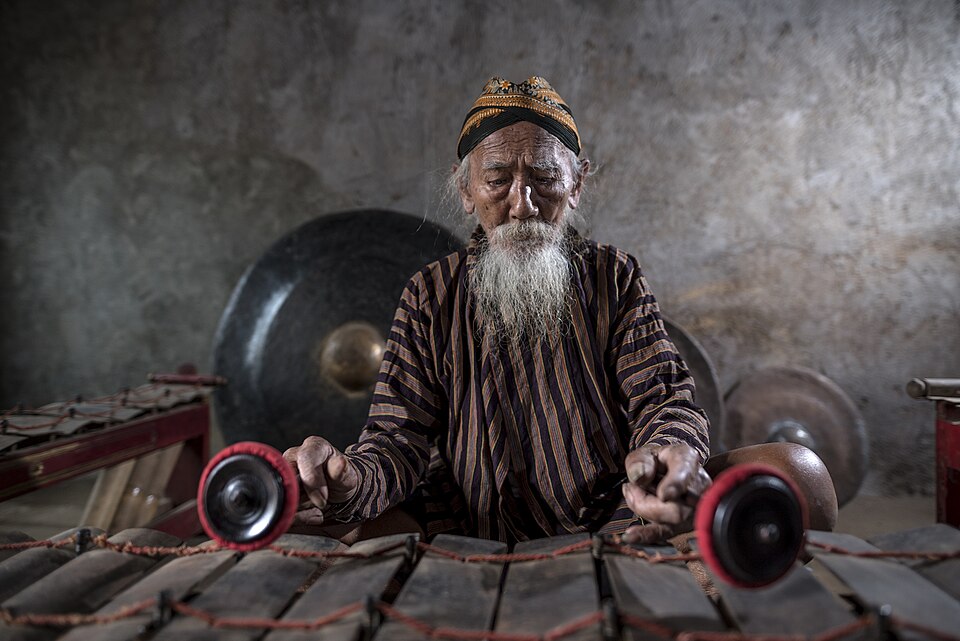
The sound most identified with Indonesia is the gamelan: bronze gongs, metallophones, and drums tuned as a single interlocking instrument, played by an ensemble in which no individual part makes sense alone. UNESCO inscribed gamelan on its intangible heritage list in 2021, and its shimmering textures famously influenced Debussy after he heard a Javanese ensemble in 1889. West Java contributes the angklung, a shaken bamboo rattle tuned to single pitches so that melody requires cooperation — an instrument UNESCO recognized in 2010 and one that schoolchildren across the country still learn. Aceh's saman, the "dance of a thousand hands," seats rows of performers who clap, slap, and sway in accelerating unison; it too carries UNESCO inscription. Bali offers the trance-like kecak, a chorus of chanting men encircling dancers enacting the Ramayana, and the exquisitely codified legong. East Java's reog features dancers bearing enormous lion-peacock masks by the strength of their jaws. Alongside the traditional runs the gloriously popular: dangdut, a thumping dance-hall genre blending Malay, Indian film, and Arab pop influences, is the unofficial soundtrack of Indonesian street life, while kroncong preserves a gentler echo of Portuguese-era string music.
Music & Dance, Indonesia
Candra Firmansyah / CC BY-SA 4.0

Cuisine & Misattributed Foods

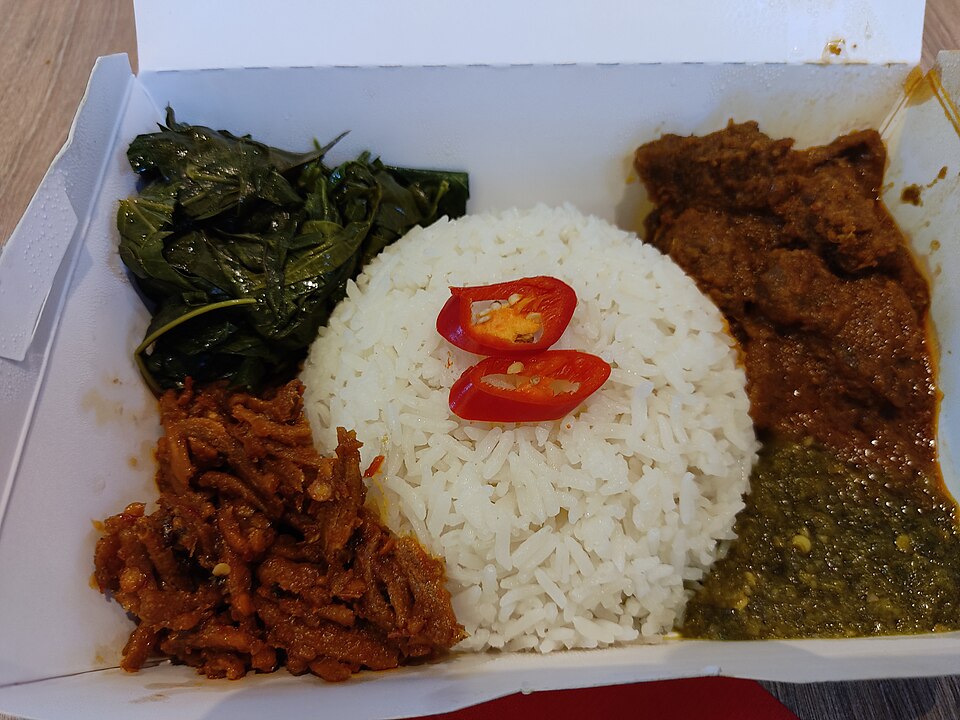
Indonesian food is built on the spices that once redrew world maps — and on sambal, the chili paste that appears in hundreds of regional forms and without which no meal feels complete. Rendang, the Minangkabau masterpiece of beef simmered for hours in coconut milk and spice until nearly dry, is engineered for tropical preservation and regularly tops global best-dish polls. Nasi goreng, the garlicky, kecap-manis-sweetened fried rice, is the everyday national comfort food; satay skewers grilled over coconut-shell charcoal come slathered in peanut sauce that varies by island. Java gave the world tempeh — fermented soybean cake, one of the few globally adopted foods of unambiguously Indonesian origin — and gudeg, jackfruit stewed sweet in Yogyakarta. Sulawesi's seafood, Padang restaurants that stack dozens of dishes before diners and charge only for what is eaten, Balinese babi guling, and the sago staples of the eastern islands mark a cuisine that changes every few hundred kilometers. Behind it all sits jamu, the herbal wellness tradition of turmeric, ginger, and tamarind tonics, inscribed by UNESCO in 2023 — proof that in Indonesia even medicine is a branch of cooking.
Cuisine & Misattributed Foods, Indonesia
Dr.Francostein1975 / CC BY-SA 4.0

National Dress

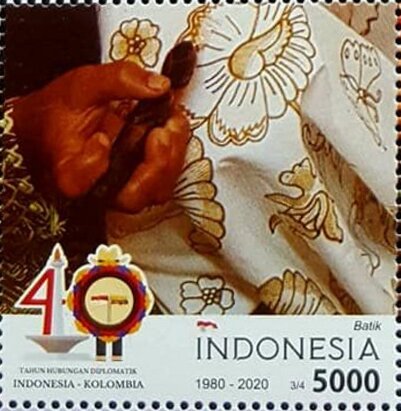
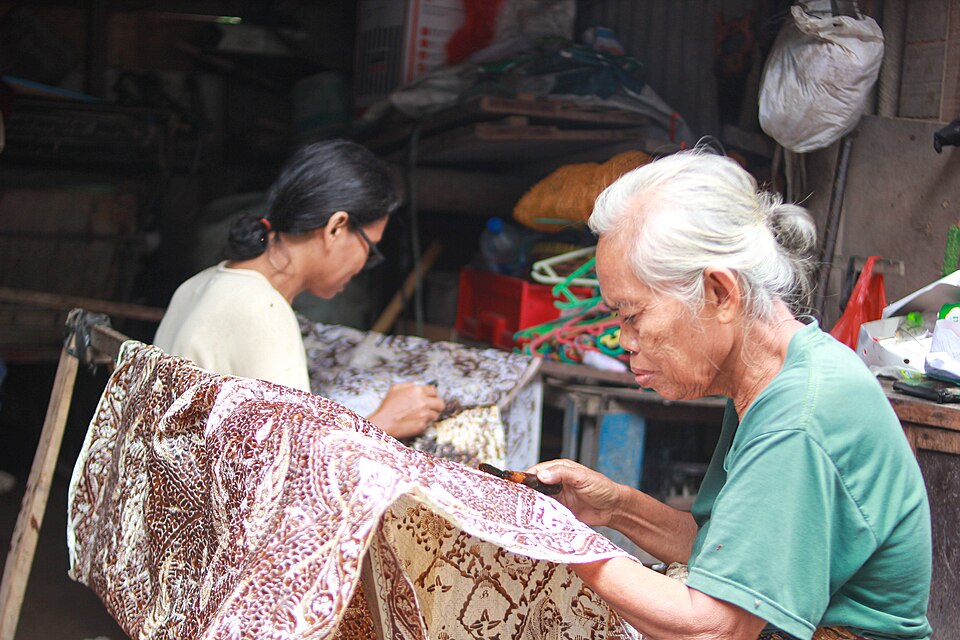
Batik is Indonesia's signature cloth and something close to a national institution. The technique — drawing patterns in hot wax with a copper pen called a canting, dyeing, then boiling the wax away, layer after layer — reaches its most refined forms in the court cities of Yogyakarta and Surakarta, where certain patterns were once reserved for royalty. UNESCO inscribed Indonesian batik as intangible cultural heritage in 2009, and Indonesians responded by making Friday an informal national batik day; a fine hand-drawn batik tulis can take months to complete. The kebaya, the fitted, often sheer embroidered blouse worn over a batik sarong, was jointly inscribed by UNESCO in 2024 across five Southeast Asian nations and remains the formal dress of Indonesian women, worn by everyone from brides to flag-raising officials. Men's national dress pairs batik shirts with the peci, the black felt cap that Sukarno turned into a nationalist emblem worn by presidents ever since. Beyond Java, the textile map explodes: the tie-dyed warp threads of ikat in Nusa Tenggara, Sumatra's gold-threaded songket, Toraja's beadwork — each region's weaving is an identity document you can wear.
National Dress, Indonesia
Post of Indonesia / Public domain

Sports & Inspiring Athletes

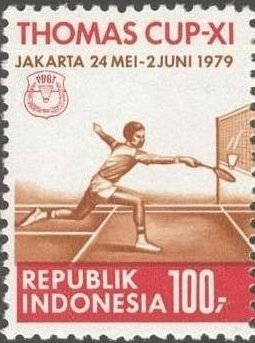
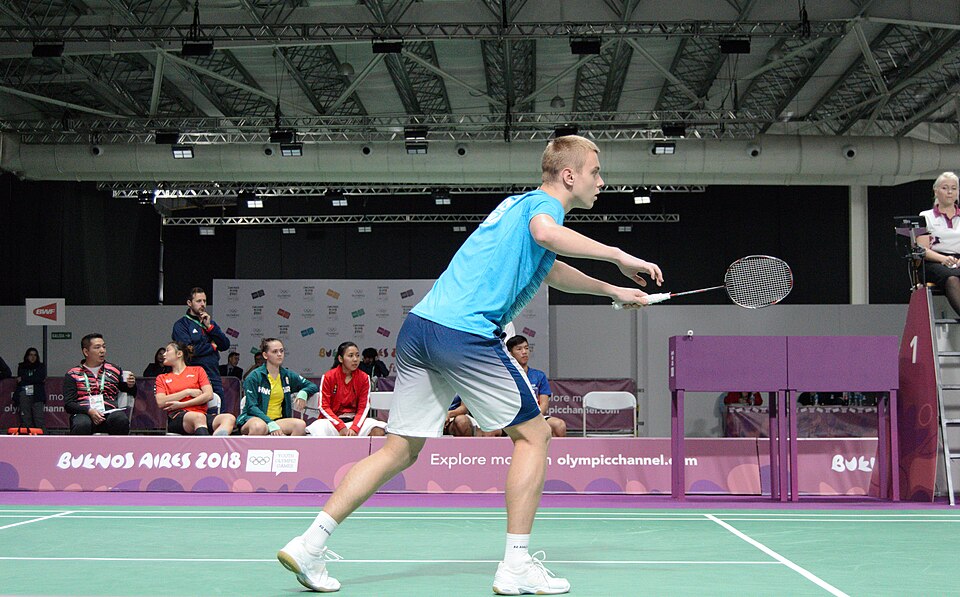
Badminton is Indonesia's sporting religion. When the sport entered the Olympics at Barcelona 1992, Susi Susanti and Alan Budikusuma — later married — took the women's and men's singles golds, and every Indonesian Olympic title for the next three decades came off a badminton court, through legends like Taufik Hidayat and the 2020 women's doubles champions Greysia Polii and Apriyani Rahayu. The streak finally diversified at Paris 2024, when speed climber Veddriq Leonardo won gold on the wall. Football commands the biggest crowds and the deepest passion: as the Dutch East Indies, Indonesia was the first Asian team ever to play in a FIFA World Cup, in 1938, and the country hosted the FIFA U-17 World Cup in 2023, with its national team's recent runs igniting scenes of mass celebration. The homegrown martial art pencak silat — part combat system, part performance, recognized by UNESCO in 2019 — is practiced in thousands of schools, and sepak takraw players volley rattan balls with acrobatic bicycle kicks. Indonesia has also hosted the Asian Games twice, in 1962 and 2018, the latter shared between Jakarta and Palembang.
Sports & Inspiring Athletes, Indonesia
Post of Indonesia / Public domain

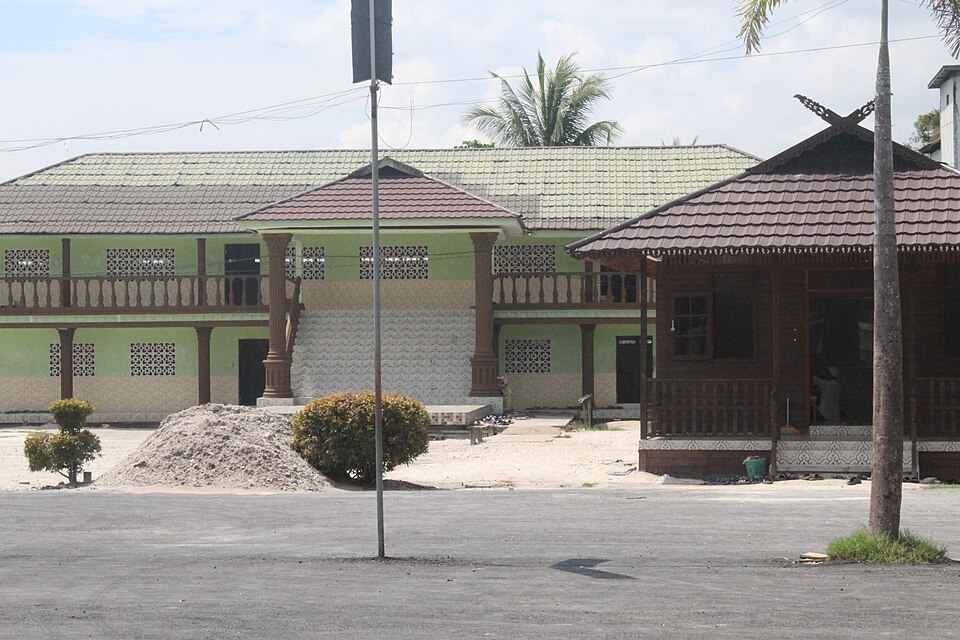
Notable Educational Programs

Indonesian schooling runs on a 6-3-3 ladder — six years of primary, three of junior secondary, three of senior secondary — with twelve years now compulsory in policy, serving one of the largest student populations on Earth across more than 200,000 schools. What makes the system distinctive is its dual structure: alongside general schools under the education ministry runs a full parallel track of Islamic education — madrasah day schools and the famed pesantren, residential boarding schools where millions of students, santri, live and study a blended curriculum of national subjects and classical Islamic texts. Some pesantren are centuries old and function as complete communities. Distance is the other defining challenge: reaching children on thousands of scattered islands has driven programs deploying young teachers to frontier and outermost regions, small-island boarding facilities, and the Kartu Indonesia Pintar smart-card program, which channels cash assistance to keep poor students enrolled. The Merdeka Belajar ("Freedom to Learn") reforms of recent years scrapped national exams in favor of competency assessments and loosened the curriculum. Results are a work in progress — Indonesia participates in OECD PISA assessments and its scores lag regional leaders — but access has been transformed: youth literacy is now near-universal, a generational leap UNESCO figures make plain.
Notable Educational Programs, Indonesia
Ilham Mufti Laksono / CC BY-SA 4.0

Wars & Conflicts

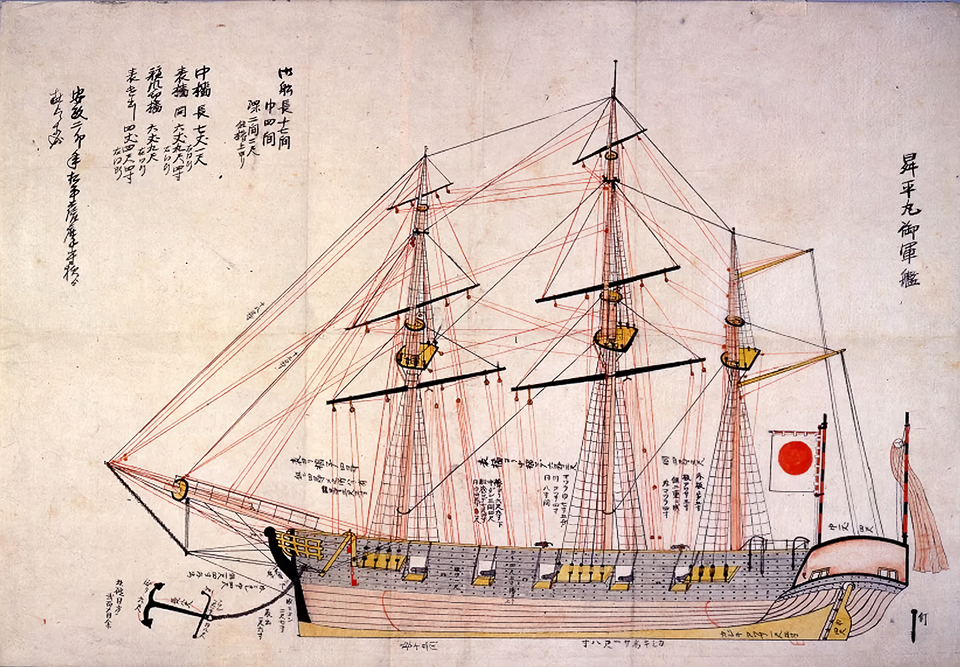
Indonesia's principal active conflict is the decades-long separatist insurgency in its easternmost Papua region, which UCDP tracks as an ongoing armed conflict between the state and the West Papua National Liberation Army (TPNPB), the armed wing of the Free Papua Movement. The conflict has escalated sharply through 2025 and into 2026, with fighting spreading across the central highlands provinces and rights monitors reporting large-scale displacement of Indigenous Papuan civilians. In July 2026 the conflict drew international attention when the TPNPB shot dead an American pilot, Nicholas Gosselin, after his small plane landed at an airstrip in Yahukimo, Highland Papua; the group called the killing a "message" to the US and Indonesian governments and claimed the aircraft had been ferrying Indonesian troops, while Indonesia's military confirmed the attack and recovered the pilot's body (CNN, AP, July 2026). The two sides' positions remain far apart: pro-independence groups reject the 1969 UN-supervised "Act of Free Choice" that incorporated the territory into Indonesia and demand a self-determination referendum, while Jakarta maintains Papua is an integral, internationally recognized part of Indonesia, classifies the armed groups as criminal or terrorist organizations, and points to special autonomy funds and accelerated development as its answer to Papuan grievances.
Current as of 2026-07-16
Wars & Conflicts, Indonesia
Unknown authorUnknown author / Public domain

Land & Border Disputes

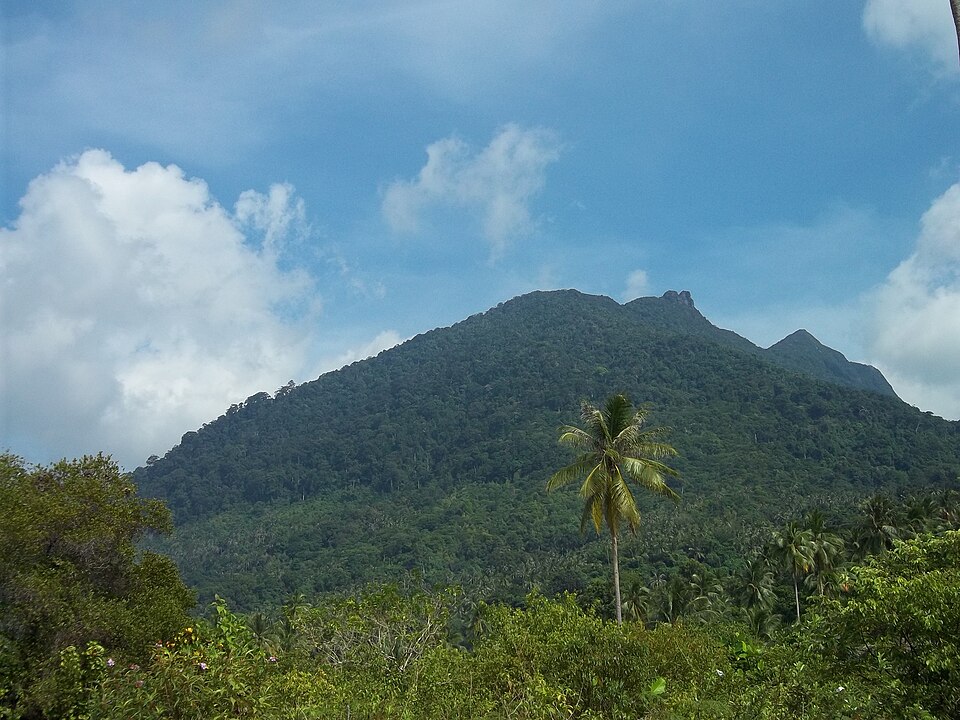
For a country with 54,000 kilometers of coastline and ten neighbors, Indonesia's borders are remarkably settled — but not entirely. The most consequential friction is in the waters northeast of the Natuna Islands, where China's expansive "nine-dash line" claim in the South China Sea overlaps Indonesia's UN-recognized exclusive economic zone. Indonesia insists it is not a party to the South China Sea disputes and rejects any overlap as baseless under the UN Convention on the Law of the Sea, but Chinese coast guard vessels and fishing fleets have repeatedly appeared in the zone, prompting Jakarta to rename the area the "North Natuna Sea," reinforce its military presence, and stage pointed presidential visits. With Malaysia, Indonesia lost a landmark case at the ICJ in 2002, when the court awarded the islands of Sipadan and Ligitan to Malaysia on grounds of effective administration — a ruling Indonesia accepted but which left the adjacent Ambalat maritime area, believed rich in hydrocarbons, still contested; the two neighbors have since pursued negotiations and in 2023 settled parts of their Sulawesi Sea boundary. Land and maritime boundaries with Timor-Leste have been progressively resolved by agreement, and a long-running EEZ boundary with Vietnam was finalized in 2022 after twelve years of talks.
Land & Border Disputes, Indonesia
a_rabin / CC BY 2.0
Land, Life & Legacy

Land & Climate

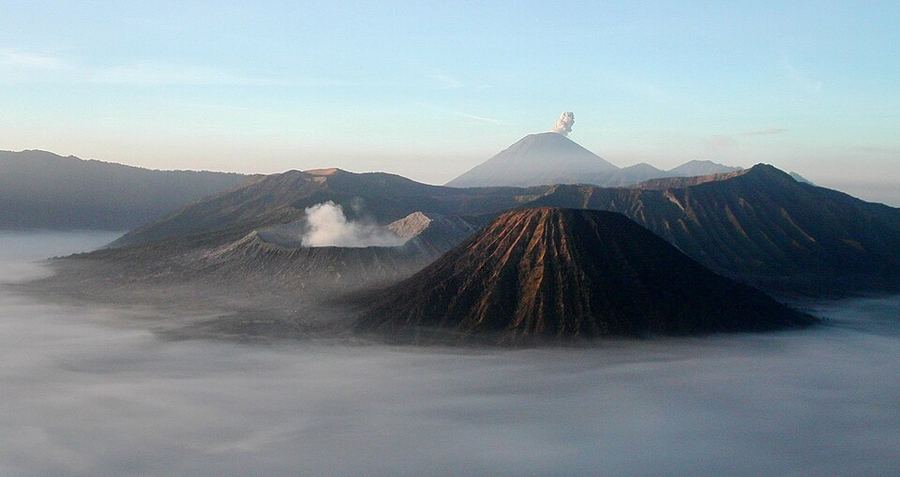
Indonesia is the largest archipelagic state in the world, roughly 17,000 islands strung along the equator over more than 5,000 kilometres, with Java, Sumatra, Kalimantan on Borneo, Sulawesi and Papua the largest. It sits where the Eurasian, Indo-Australian and Pacific plates converge, on the Pacific Ring of Fire, and has more active volcanoes than any other country, among them Merapi above Yogyakarta, Tambora, whose 1815 eruption cooled the world's climate, and Krakatoa in the Sunda Strait. The same tectonics bring severe earthquakes and tsunamis, including the 2004 Indian Ocean tsunami that devastated Aceh. Wallace's Line, running between Bali and Lombok and through the Makassar Strait, marks the boundary between Asian and Australasian fauna and was one of the founding observations of biogeography. The climate is tropical, hot and humid throughout the year, with a wet monsoon roughly from October to April and a drier season in between. The rainforests and carbon-rich peatlands are globally significant, and fire and haze from land clearing recur as a regional problem.

Entertainment

Indonesian leisure begins at the warung — the family-run stall where coffee, conversation, and clove-cigarette smoke stretch for hours — and scales up to Bali, where surfers work Uluwatu's breaks, yogis fill Ubud's studios, and millions of visitors a year make the island one of the world's most celebrated destinations in UNWTO tallies. Divers rank Raja Ampat and the Komodo islands among the planet's richest reefs; hikers climb Rinjani and Bromo for volcanic sunrises; Yogyakarta pairs Borobudur dawn pilgrimages with all-night wayang performances. Jakarta's weekend ritual is Car-Free Day, when the Sudirman-Thamrin corridor fills with joggers, cyclists, and street musicians, and its malls function as air-conditioned town squares. Independence Day on 17 August brings panjat pinang — greased-pole climbing contests — and neighborhood games nationwide, while Ramadan evenings turn cities into open-air food festivals for breaking the fast. Football matchdays and badminton finals, watched communally, complete the national calendar of shared time.
Entertainment, Indonesia
Wokshots / CC BY-SA 4.0

Art & Museums

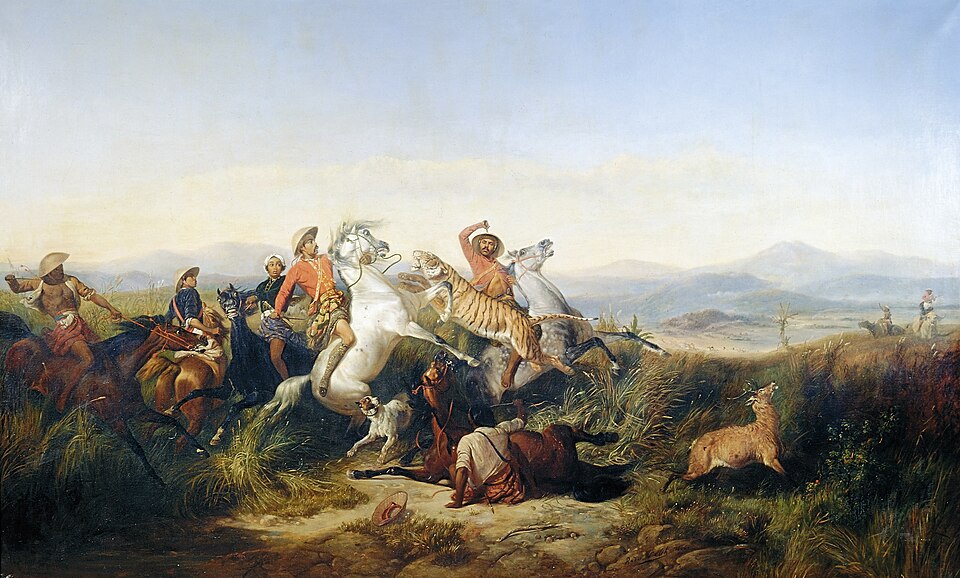
Indonesian painting entered the modern canon with Raden Saleh, the Javanese aristocrat who trained in Europe and whose Romantic masterpiece 'The Arrest of Prince Diponegoro' (1857) answered colonial history painting in its own idiom. In the 1930s S. Sudjojono founded Persagi, arguing that Indonesian artists should paint Indonesian reality rather than the tourist-pleasing 'Mooi Indie' landscapes of the colonial market, while in Bali the Pita Maha collective — founded in Ubud in 1936 with the painters Walter Spies and Rudolf Bonnet under the patronage of the Sukawati royal house — transformed temple-narrative painting into a living school still practiced there today. Affandi, the self-taught expressionist who squeezed paint straight from the tube and worked it with his fingers, became the country's most internationally exhibited modernist. Today the National Gallery in Jakarta, Museum MACAN (opened 2017), and Ubud's Neka and ARMA museums anchor a booming scene, while batik itself — UNESCO-inscribed — remains the art form most Indonesians hold in their hands.
Art & Museums, Indonesia
Raden Saleh / Public domain

Notable People

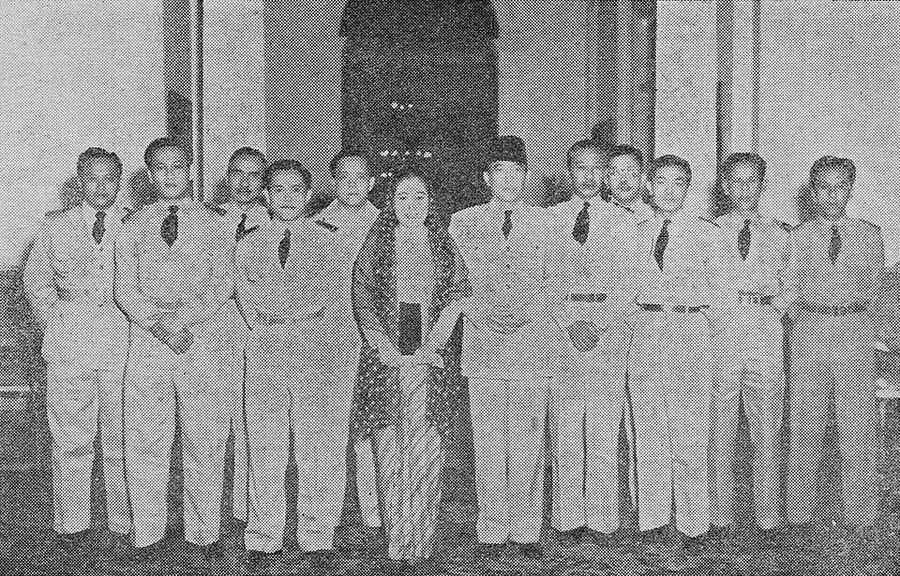
Indonesia's pantheon starts with its founders: Sukarno, the orator who proclaimed independence and named the state ideology Pancasila, and Mohammad Hatta, the economist vice president. Raden Adjeng Kartini, the Javanese noblewoman whose letters demanded education for girls, became the national icon of women's emancipation; her birthday is a national observance. Pramoedya Ananta Toer, who composed the 'Buru Quartet' orally to fellow political prisoners before he was permitted paper, is the country's most translated author, and poet Chairil Anwar reinvented Indonesian verse before dying at twenty-six. B. J. Habibie, the German-trained aeronautical engineer whose crack-propagation work entered aviation textbooks, became the president who opened the democratic era, and Megawati Sukarnoputri followed as the country's first woman president. Badminton's Rudy Hartono, winner of eight All England titles, and Olympic champion Susi Susanti remain sporting immortals, while the Hartono brothers of Kudus rank among the world's richest people on Forbes lists.
Notable People, Indonesia
Onbekend/Anonymous / Public domain

Inventions & Breakthroughs

Indonesia's most consequential invention may be edible: tempeh, the firm cake of soybeans bound by Rhizopus mold, developed in Java centuries ago and now a global protein staple — one of the few internationally adopted foods of clearly Indonesian origin. Balinese farmers engineered subak, the thousand-year-old cooperative irrigation system that distributes volcanic lake water through temple-mediated water democracy, inscribed by UNESCO as a cultural landscape in 2012; the pinisi shipbuilding art of South Sulawesi, also UNESCO-listed, still launches ocean-going wooden schooners built without blueprints. Batik's layered wax-resist dyeing and the angklung's tuned-bamboo acoustics are technologies as much as arts. In the modern era, engineer Tjokorda Raka Sukawati patented Sosrobahu (1987), a pivoting pile-head system that lets elevated highway arms be built parallel to traffic and swung into position — licensed across Asia — while B. J. Habibie's theory of crack propagation shaped how the aircraft industry predicts metal fatigue.
Inventions & Breakthroughs, Indonesia
Ahaetulla / CC BY-SA 4.0

Science & Technology

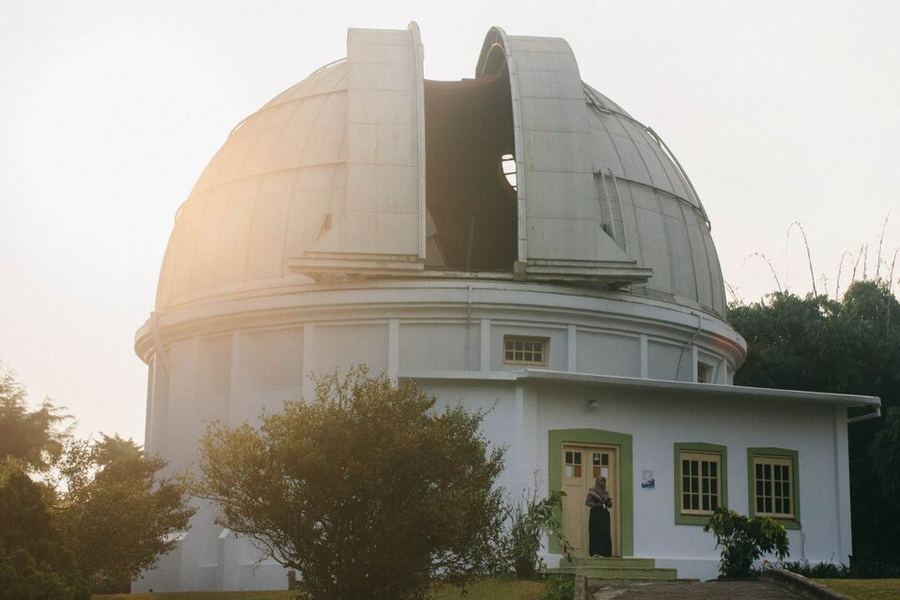
Indonesia's technical profile follows its geology and its industrial policy. Sitting on the Ring of Fire, it holds some of the largest geothermal resources on earth and is among the world's leading geothermal producers, with fields at Kamojang, Wayang Windu and Sarulla. Nickel has become the other strategic industry: a ban on exporting raw ore pushed smelting and battery-materials processing onshore, making the country central to electric-vehicle supply chains. Research was reorganised in 2021 when the National Research and Innovation Agency, BRIN, absorbed the former science, technology assessment, space and nuclear agencies. In aerospace, PT Dirgantara Indonesia at Bandung builds the CN-235 transport aircraft developed jointly with CASA of Spain; the programme was driven by B. J. Habibie, an aeronautical engineer who later became president. The Palapa satellites, beginning in 1976, gave Indonesia one of the earliest domestic communications-satellite systems, a practical answer to governing a country spread across thousands of islands. The Eijkman Institute in Jakarta carries the name of Christiaan Eijkman, whose beriberi research there led to the discovery of vitamins.
On The World Stage
Champions of Indonesia

Champions & Defining Moments

Indonesia's global sporting signature is written in badminton. The country has won the Thomas Cup — the sport's world men's team championship — fourteen times, more than any other nation, and Rudy Hartono's eight All England singles titles, seven of them consecutive from 1968 to 1974, remain the tournament record. At the Olympics, Susi Susanti and Alan Budikusuma swept the singles golds at Barcelona 1992, Taufik Hidayat took Athens 2004, Tontowi Ahmad and Liliyana Natsir won the mixed doubles at Rio 2016, and Greysia Polii with Apriyani Rahayu claimed the women's doubles in Tokyo. Weightlifter Eko Yuli Irawan medaled at four consecutive Games from 2008 to 2020, and at Paris 2024 Veddriq Leonardo won speed-climbing gold while Rizki Juniansyah added another in weightlifting — Indonesia's first Olympic titles outside badminton. In football, the 1938 World Cup appearance as the Dutch East Indies made Indonesia Asia's first World Cup nation, and it hosted the FIFA U-17 World Cup in 2023.

BugWarp / CC BY-SA 4.0
Economy, Trade & Government

Currency & GDP

Rupiah — IDR (Rp)

GDP (PPP): $4.102 trillion (2024 est.)

Per capita: $14,500 (2024 est.)

Exports

$300.868 billion (2024 est.)

coal, palm oil, iron alloys, lignite, garments (2023)

Partners: China 24%, USA 9%, India 8%, Japan 8%, Singapore 5% (2023)

Imports

$279.419 billion (2024 est.)

refined petroleum, crude petroleum, plastics, vehicle parts/accessories, integrated circuits (2023)

Partners: China 29%, Singapore 8%, Japan 7%, USA 5%, Malaysia 5% (2023)

Government

Type: presidential republic

Independence: 17 August 1945 (declared independence from the Netherlands)

Terrain → Where People Live

How mountains, coasts, and rivers shape settlement (LandScan).

Coming — data

Migration & Ethnic Settlement

Where groups settled and how people move (GeoEPR + UNHCR).

Coming — data

Universities

Notable institutions, mappable as points.

Coming — data
Economy & government facts: CIA World Factbook (public domain), via OpenFactBook / factbook.json.
Every fact and narrative claim will carry a visible source citation. Data-driven sections light up automatically wherever HERA has coverage.