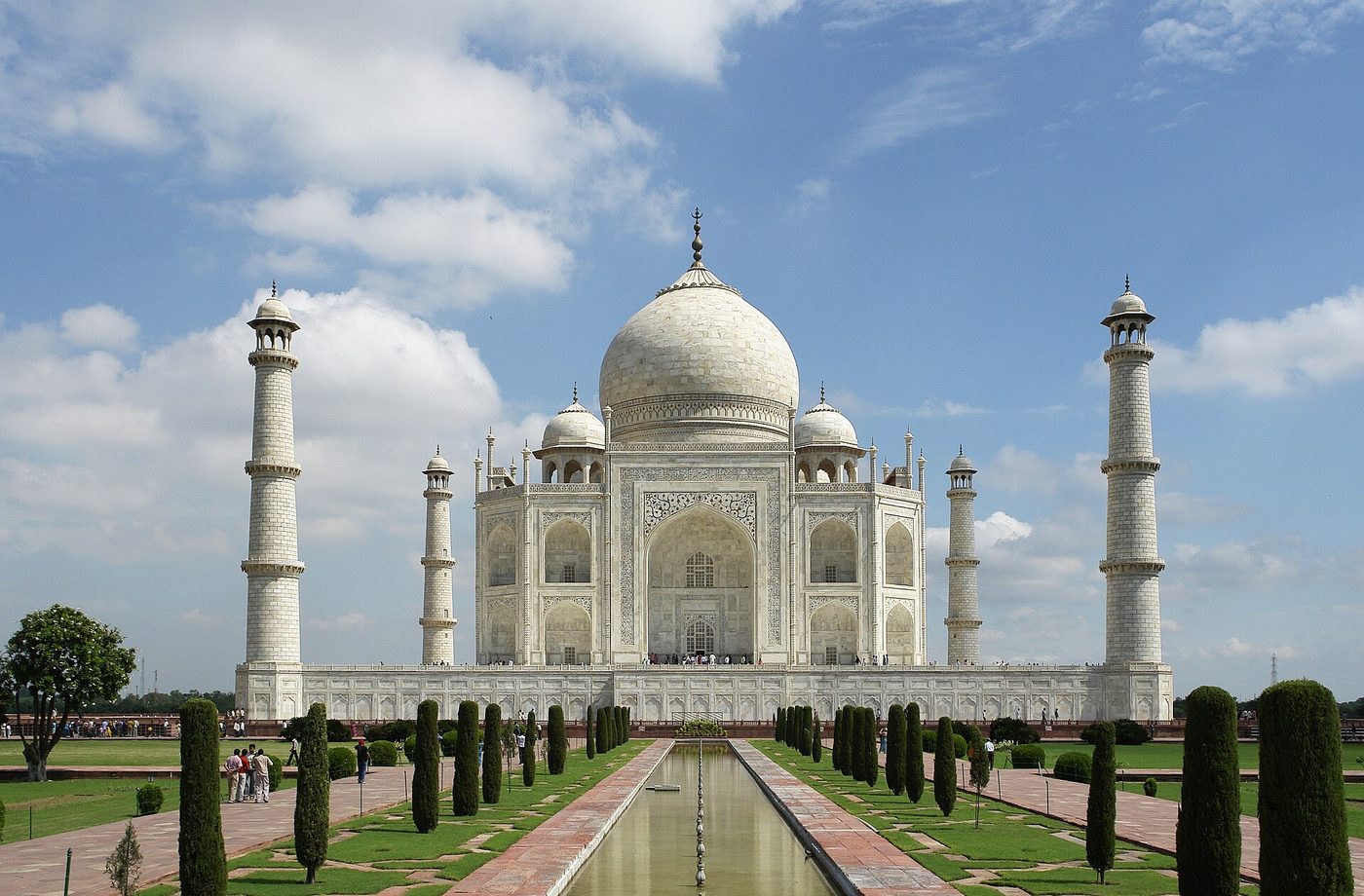
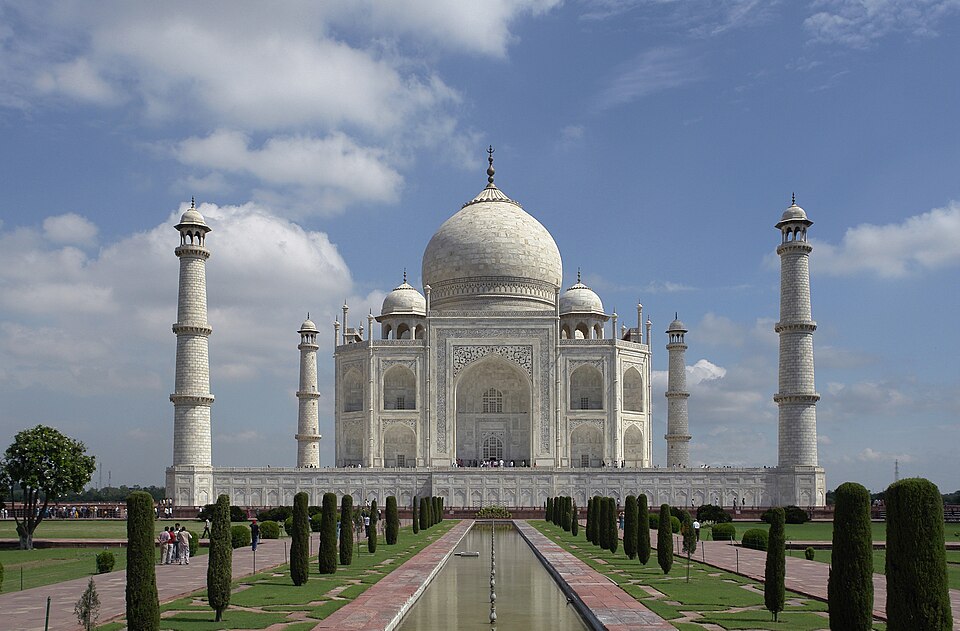
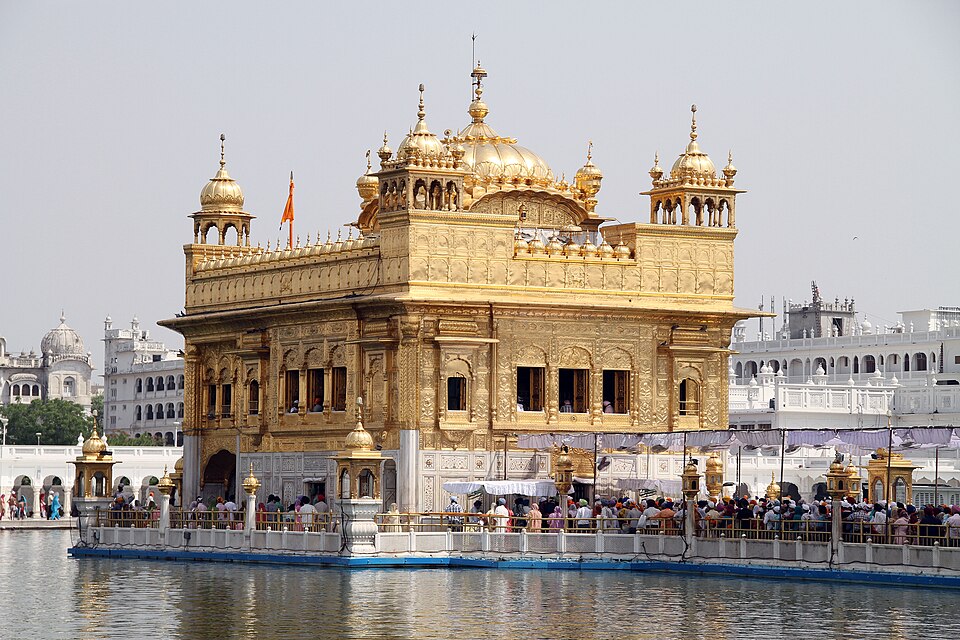
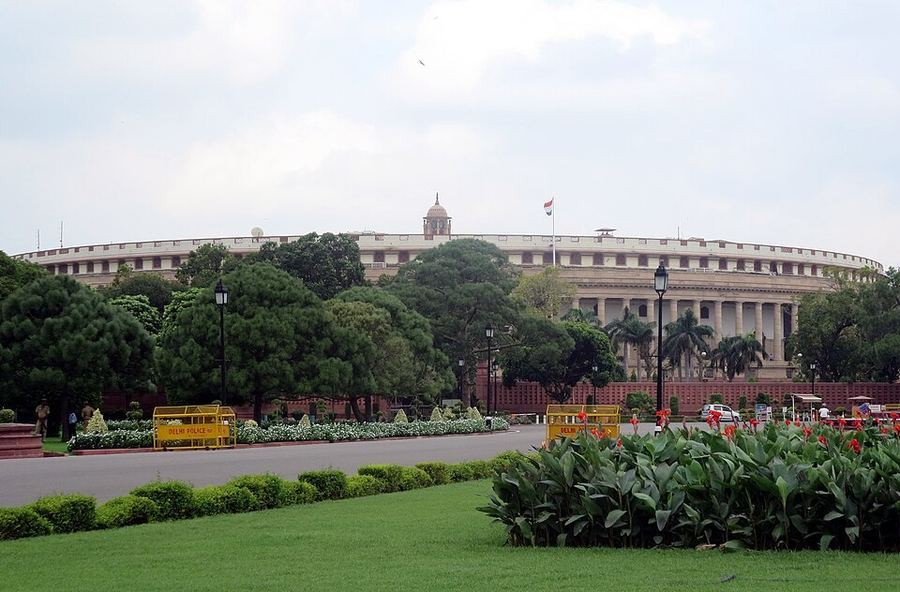
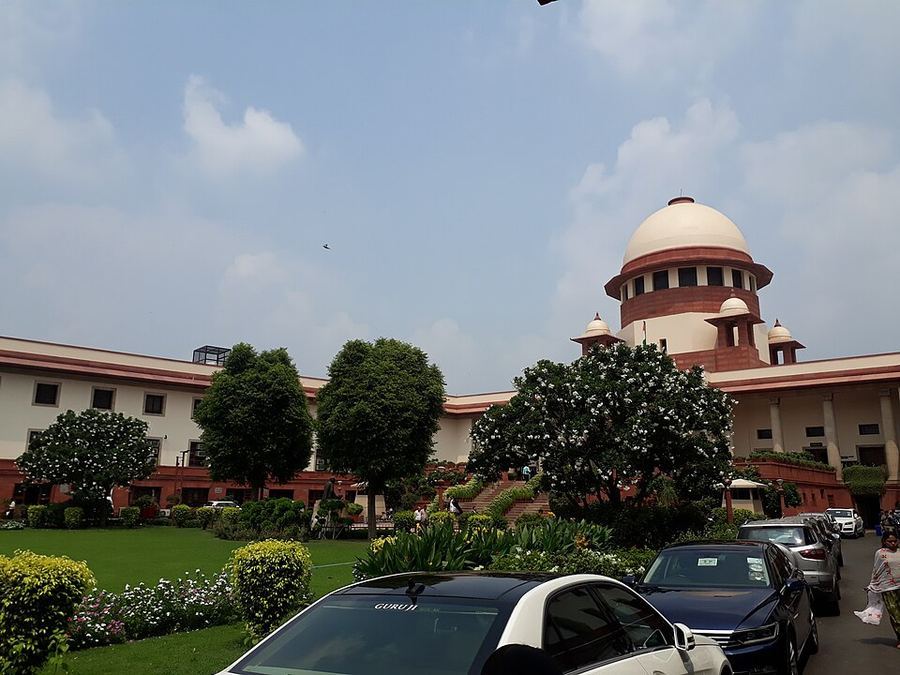
Taj Mahal — Photo: Yann ; edited by Jim Carter / CC BY-SA 4.0 via Wikimedia Commons
Did You Know
The Kumbh Mela pilgrimage, inscribed by UNESCO as intangible cultural heritage, periodically draws crowds of tens of millions to the Ganges — the largest peaceful gatherings ever assembled. — UNESCO
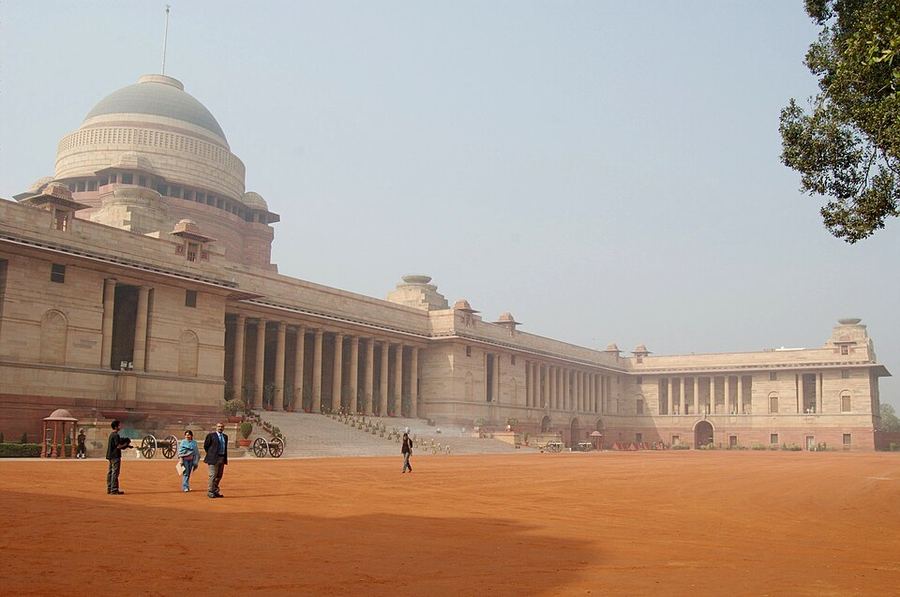
India is the world's most populous country — roughly 1.42 billion people by 2025 estimates — and its largest democracy, a federal parliamentary republic governed from New Delhi. Independent since 15 August 1947, it compresses staggering diversity into a single constitutional frame: Hindi and English serve as link languages atop a constellation that includes Bengali, Marathi, Telugu, Tamil, Gujarati, Urdu and hundreds more, while Hindus (79.8%), Muslims (14.2%), Christians, Sikhs, Buddhists and Jains share the same map. The economy, valued at about $14.2 trillion in purchasing-power terms, ranks among the world's largest and fastest-growing, exporting refined petroleum, packaged medicines, cut diamonds and garments while importing crude oil, gold and integrated circuits. With a median age of just 30.1 years, India fields one of the youngest big-country workforces on Earth — a demographic dividend powering its software hubs in Bengaluru and Hyderabad, its film studios in Mumbai, and a space program that has reached the Moon and Mars. From Himalayan glaciers to tropical Kerala backwaters, it is less a country than a continent that votes.
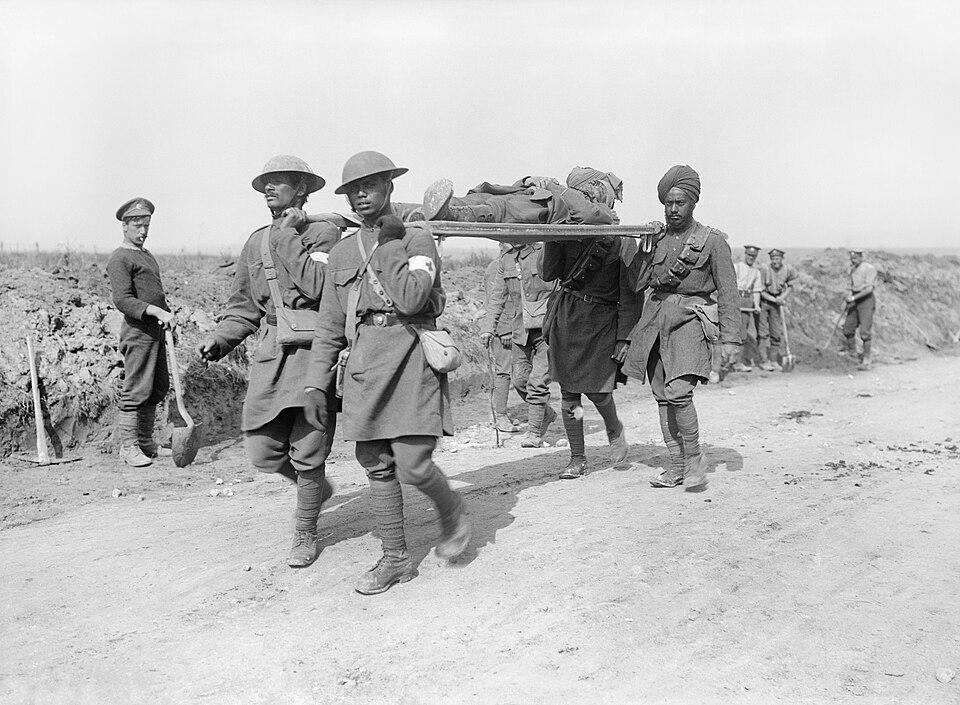
India's recorded story opens in the Bronze Age: the Indus Valley Civilization built planned brick cities like Harappa and Mohenjo-daro with covered drains around 2600 BCE, when much of the world was still in villages. The Vedic age that followed seeded Sanskrit literature and Hinduism; the Maurya Empire under Ashoka (3rd century BCE) spread Buddhist ideals across Asia after the emperor renounced conquest; and the Gupta era (4th–6th centuries CE) produced a golden age of mathematics, astronomy and sculpture. Waves of sultanates culminated in the Mughal Empire, whose emperors left the Taj Mahal and a Persianate court culture. The British East India Company's commercial foothold hardened into the British Raj in 1858, until Mohandas Gandhi's mass nonviolent campaigns — salt marches, boycotts, civil disobedience — made colonial rule untenable. Independence came at midnight on 15 August 1947, shadowed by Partition, which split the subcontinent into India and Pakistan and displaced millions. The 1950 constitution, drafted under B. R. Ambedkar, created a secular republic with universal suffrage from day one. The Green Revolution ended recurring famine, and the 1991 economic liberalization unleashed the growth that has since redrawn the global economy.
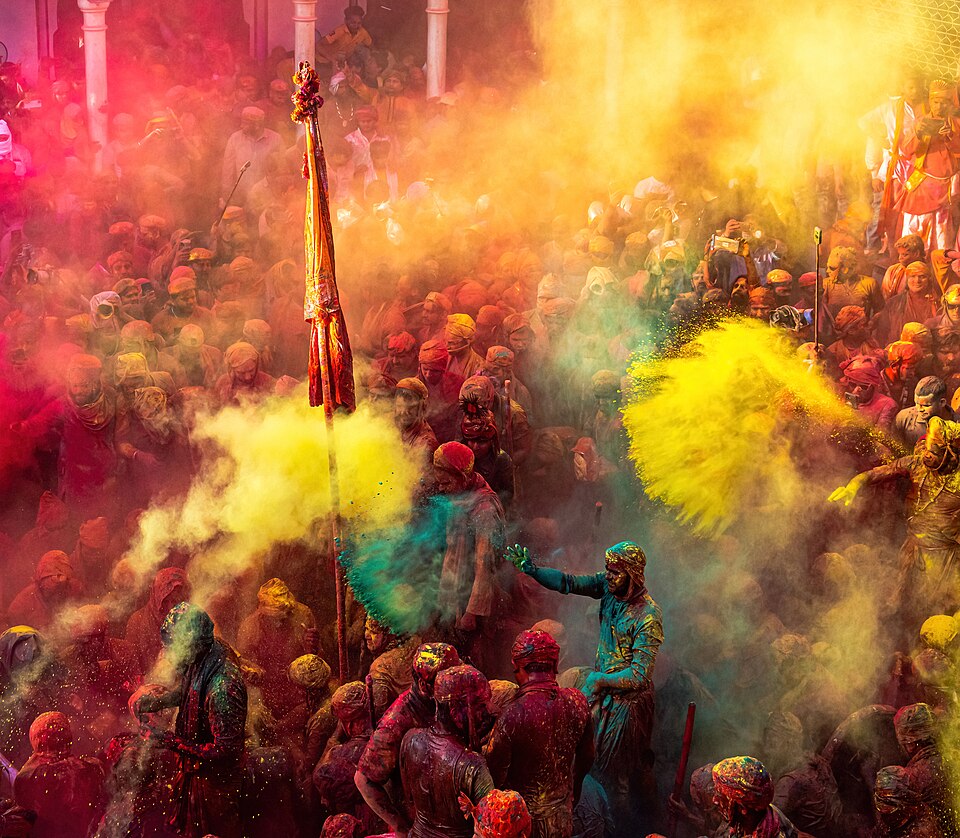
India is the birthplace of four major religions — Hinduism, Buddhism, Jainism and Sikhism — and its calendar reads like a festival relay: Diwali's oil lamps, Holi's clouds of colored powder, Eid feasts, Durga Puja's towering goddess effigies, Christmas in Goa and Kerala. The 2011 national census recorded 121 languages spoken by 10,000 or more people, sorted into 22 scheduled languages, and everyday life is routinely trilingual. Family remains the load-bearing institution; multigenerational households, elaborate weddings that run for days, and arranged introductions still coexist with dating apps in the megacities. Yoga, inscribed by UNESCO as intangible cultural heritage in 2016, went from Himalayan ascetic practice to global export, and the Kumbh Mela pilgrimage — also UNESCO-listed — periodically assembles the largest peaceful gatherings in human history on the banks of the Ganges. Cinema is the popular religion that unites everything else: India produces more feature films than any other country, in Hindi, Tamil, Telugu, Malayalam, Kannada and Bengali, and a Friday release can set the national mood. Hospitality is codified in the ancient phrase 'atithi devo bhava' — the guest is god.
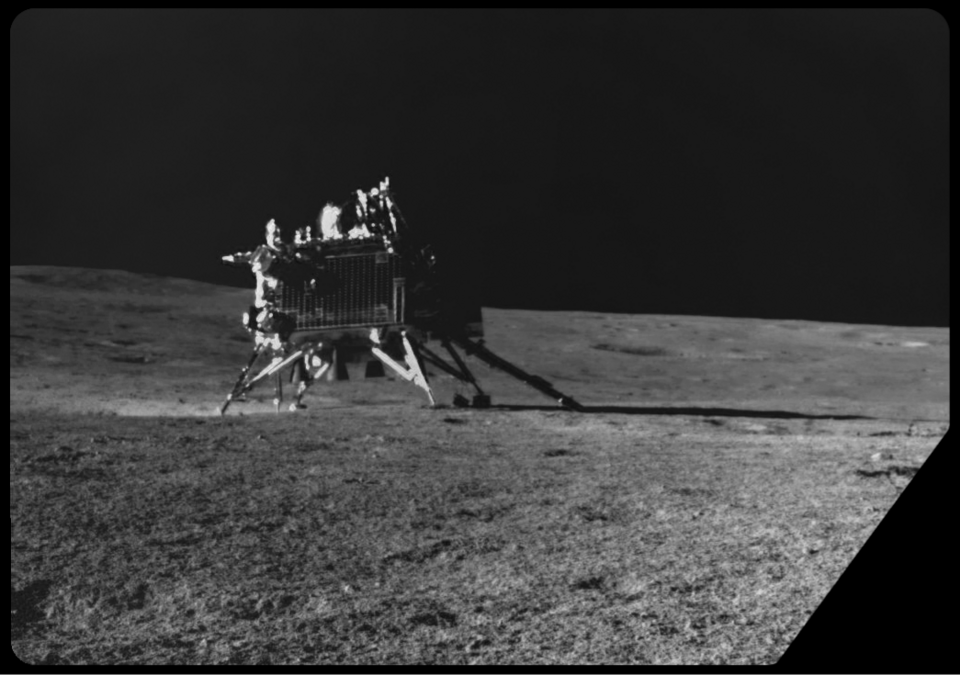
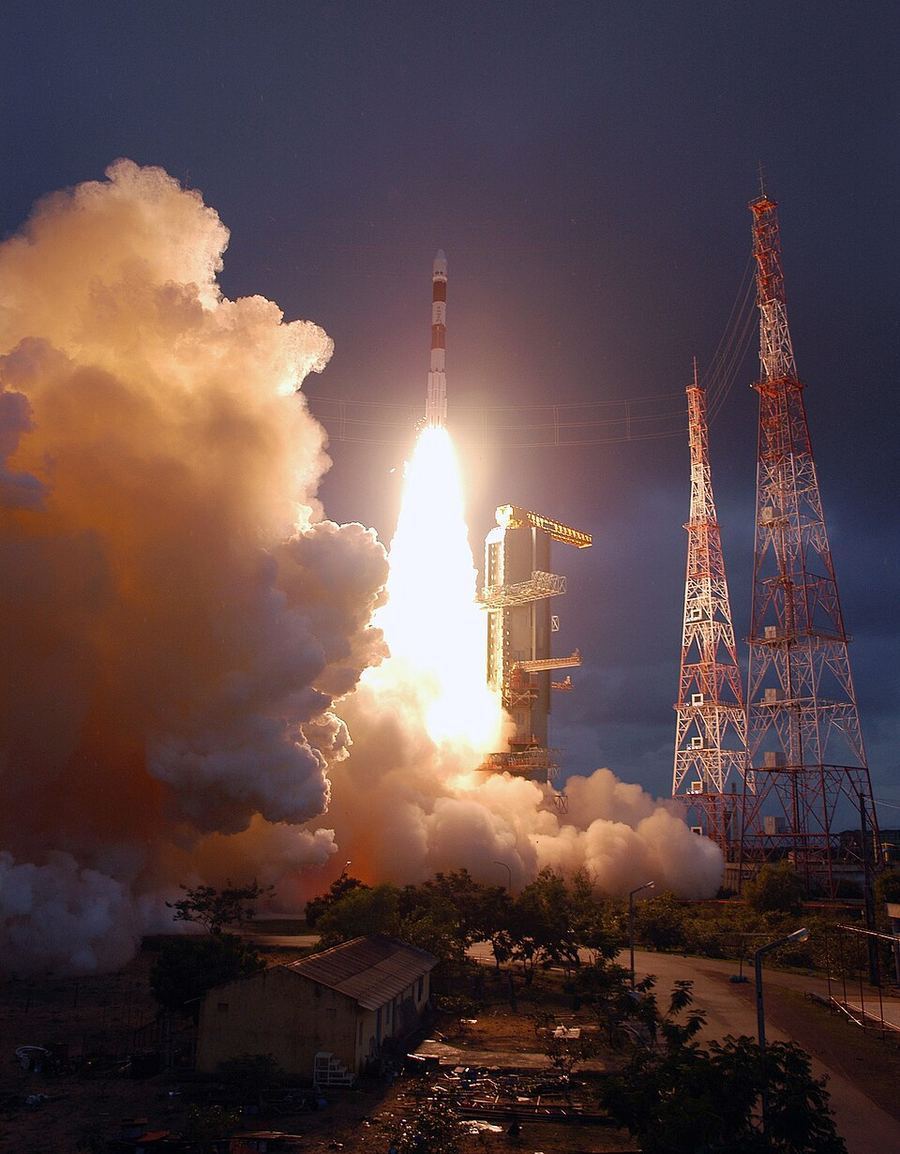
In August 2023 the Chandrayaan-3 lander touched down near the Moon's south pole — a world first — and India had already reached Mars orbit on its maiden attempt in 2014, feats achieved on famously lean budgets. The country counts more than 40 UNESCO World Heritage sites, from the Taj Mahal and the temples of Khajuraho to the mountain railways and Western Ghats. It is a pharmacy to the world: Indian manufacturers supply a huge share of global vaccine doses, a role WHO-linked procurement has leaned on for decades. Its IT-services industry, centered on Bengaluru, Hyderabad and Pune, made 'Bangalored' a verb, and Indian-origin executives run several of the world's most valuable companies tracked by Forbes. The democracy itself is a point of pride: national elections are the largest organized human exercise on the planet, with an electorate approaching one billion. Add the world's largest film output, a diaspora that remits more money home than any other nation's according to World Bank data, and a chess prodigy pipeline that produced the youngest world champion — the list of superlatives keeps growing.
India's genius is synthesis. Centuries of Indo-Islamic exchange produced the Taj Mahal's Persian-Indian architecture, the Urdu language — Hindustani grammar dressed in Persian and Arabic vocabulary — and Hindustani classical music, where Sufi devotional forms like qawwali share ancestry with Hindu temple traditions. The Bhakti and Sufi movements cross-pollinated for centuries, and Sikhism itself emerged in Punjab conversant with both Hindu and Islamic thought. Portuguese Goa contributed chilies (now inseparable from Indian cooking), vindaloo and Iberian-style churches; the British left English, railways, cricket, tea-drinking as a mass habit, and the parliamentary system India then made its own. The fusion runs outward too: Indian indenture and migration seeded creolized Indian cultures from Trinidad and Mauritius to Fiji, and today the Indian diaspora — the world's largest at roughly 35 million people by UN estimates — feeds Bollywood box offices, curry houses and tech campuses on every continent. Even the national cuisine is a fusion artifact: the tomato, potato and chili that define it all arrived through post-Columbian trade. India absorbs, remixes, and re-exports — it has done so for three thousand years.
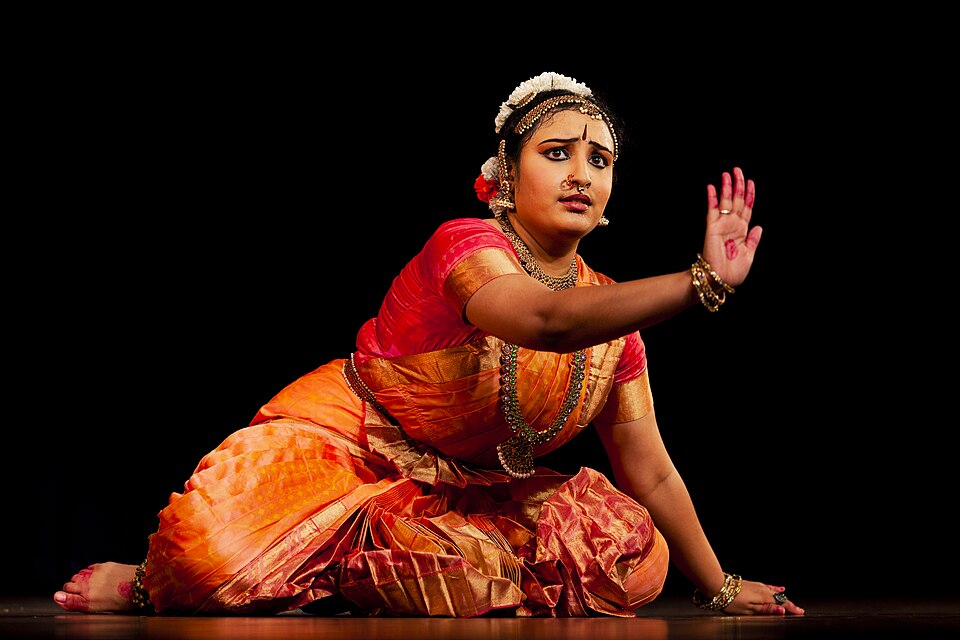
Indian classical music splits into two great streams: Hindustani in the north, built on improvised ragas unfolding over tabla rhythms, and Carnatic in the south, with its intricate compositions honoring deities in Telugu and Tamil. Sitar master Ravi Shankar carried the raga to the world stage — and into the Beatles' catalog. Dance is equally codified: India recognizes eight classical forms, including Bharatanatyam's sculptural precision from Tamil Nadu, Kathak's spinning storytelling from the north, Kathakali's painted-face epic theater from Kerala, and Odissi, Kuchipudi, Manipuri, Mohiniyattam and Sattriya. UNESCO's intangible heritage lists honor several performance traditions, among them Kutiyattam Sanskrit theatre, the Ramlila epic performances, Kalbelia songs and dances of Rajasthan, Chhau dance, and Gujarat's whirling garba. Folk energy is everywhere — Punjab's shoulder-bouncing bhangra became a global club sound via the diaspora. And towering over all of it is film music: Bollywood's playback singers and choreographed ensemble numbers are the country's true pop mainstream, where classical ornamentation, folk beats, hip-hop and electronic production collide in a single three-minute song that half a billion people can hum by Monday.
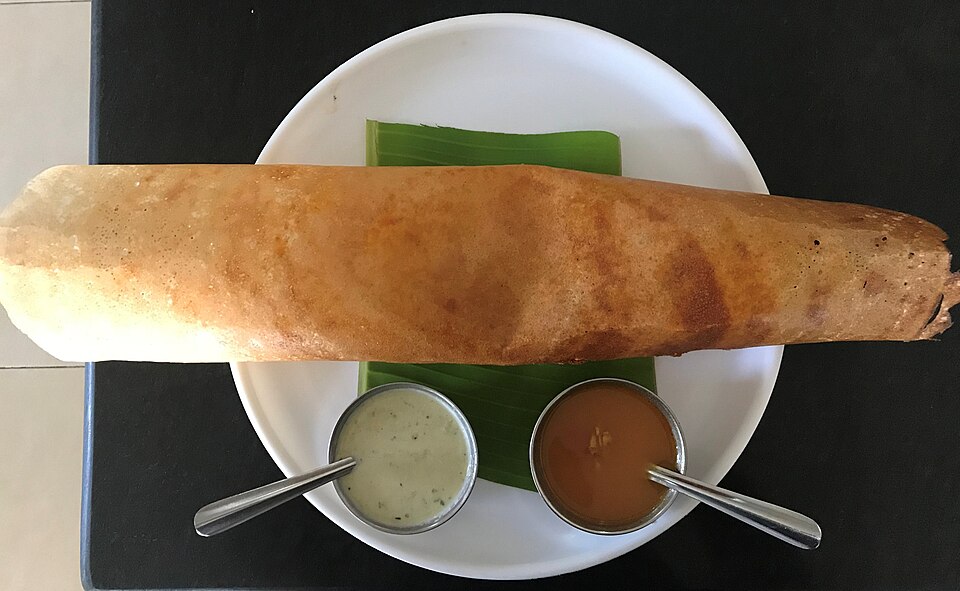
There is no single Indian cuisine — there are dozens, organized loosely by geography. The wheat-growing north bakes rotis and naan in tandoor ovens and simmers dairy-rich gravies like butter chicken and paneer makhani; the rice-eating south ferments dosas and idlis served with sambar and coconut chutney; Bengal builds meals around river fish and mustard oil; Gujarat perfected the vegetarian thali; Hyderabad claims the most storied biryani; Goa's vindaloo carries Portuguese vinegar and chilies. India is among the world's largest producers and exporters of spices, and the masala philosophy — layering cumin, coriander, turmeric, cardamom and chili into a balanced whole — is the cuisine's connective tissue. A large share of Indians are vegetarian, making the country a global center of meatless cooking refined over millennia. Street food is a civic institution: chaat stalls, pani puri vendors, Mumbai's vada pav and Kolkata's kathi rolls feed millions daily. Masala chai — spiced, milky, sweet — is the national fuel. Empire and migration carried it all abroad, where 'curry' became shorthand in Britain and beyond for one of the deepest culinary traditions on Earth.
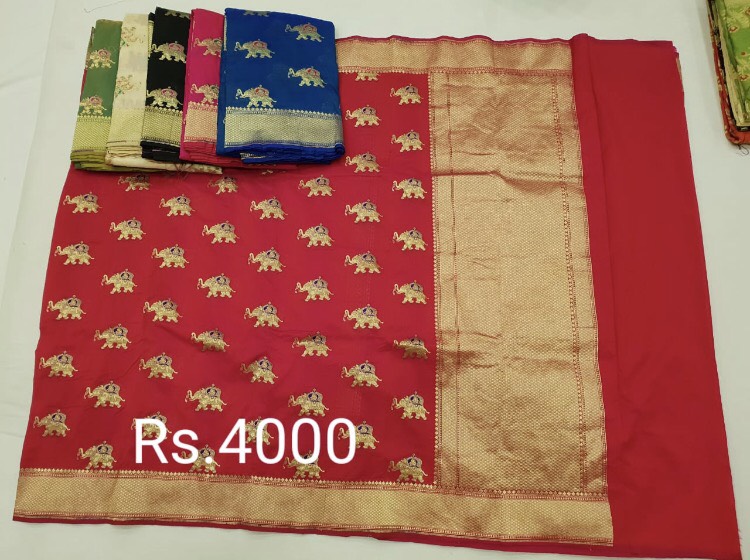
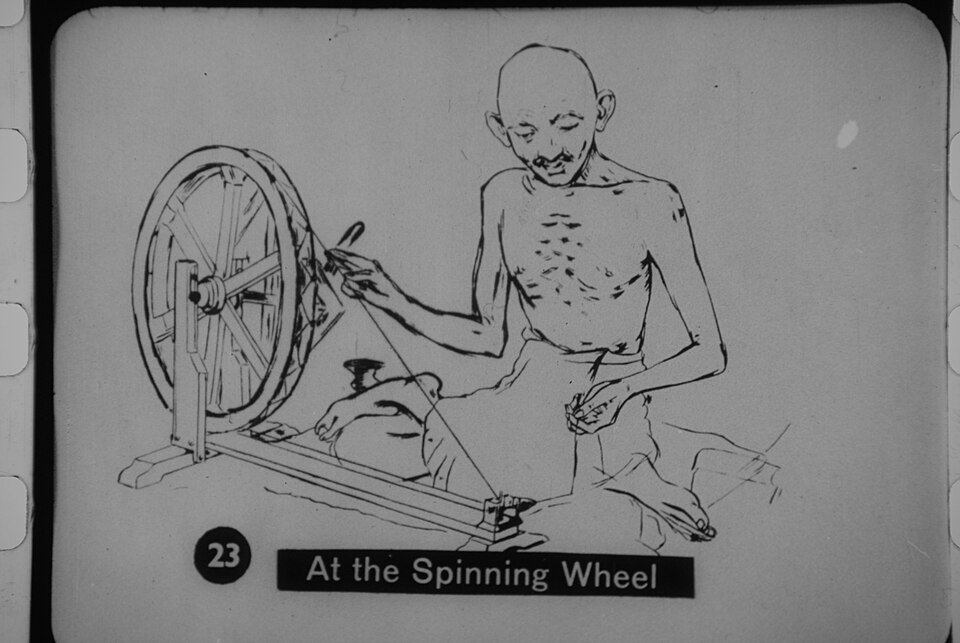
The sari — five to nine meters of unstitched cloth draped over a blouse and petticoat — is among the world's oldest continuously worn garments, and every region drapes and weaves it differently: Varanasi's gold-brocaded Banarasi silks, Tamil Nadu's heavy Kanchipuram weaves, Bengal's airy tants, Maharashtra's nine-yard nauvari. Men's traditional wear runs from the dhoti and kurta to the formal sherwani and the bandhgala 'Nehru' jacket that entered global fashion vocabulary. The salwar kameez with dupatta scarf, rooted in Punjab, is everyday wear for women across the country, and the lehenga takes over at weddings. Headwear signals identity: the Sikh dastar (turban) is a religious article, while regional turbans in Rajasthan announce community and occasion by color and tie. Cloth itself carries political memory — Gandhi made hand-spun khadi the uniform of the independence movement, and the spinning wheel briefly sat at the center of the national flag's design story. India's handloom sector remains one of the world's largest craft economies, and traditional weaving and textile arts feature in UNESCO's heritage listings, keeping millions of artisans threading centuries-old patterns into contemporary wardrobes.
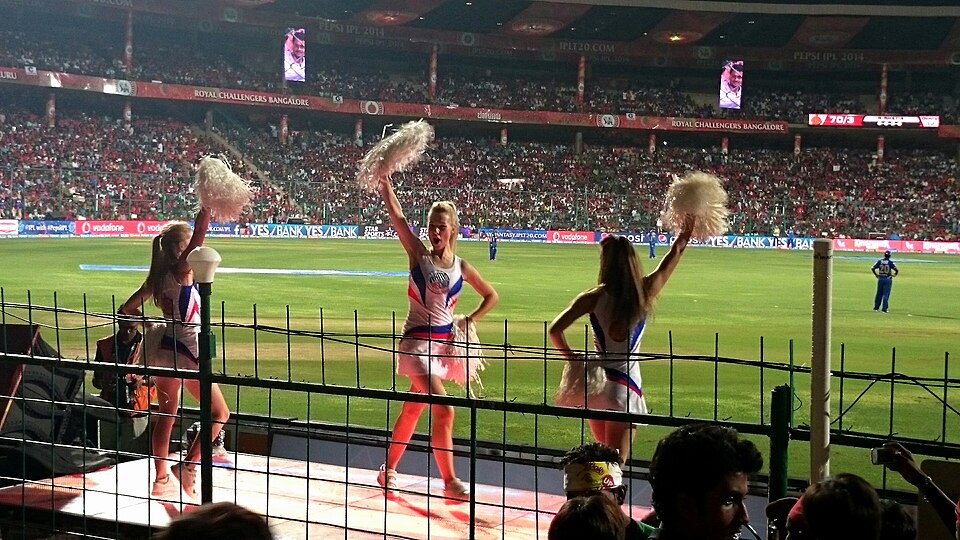
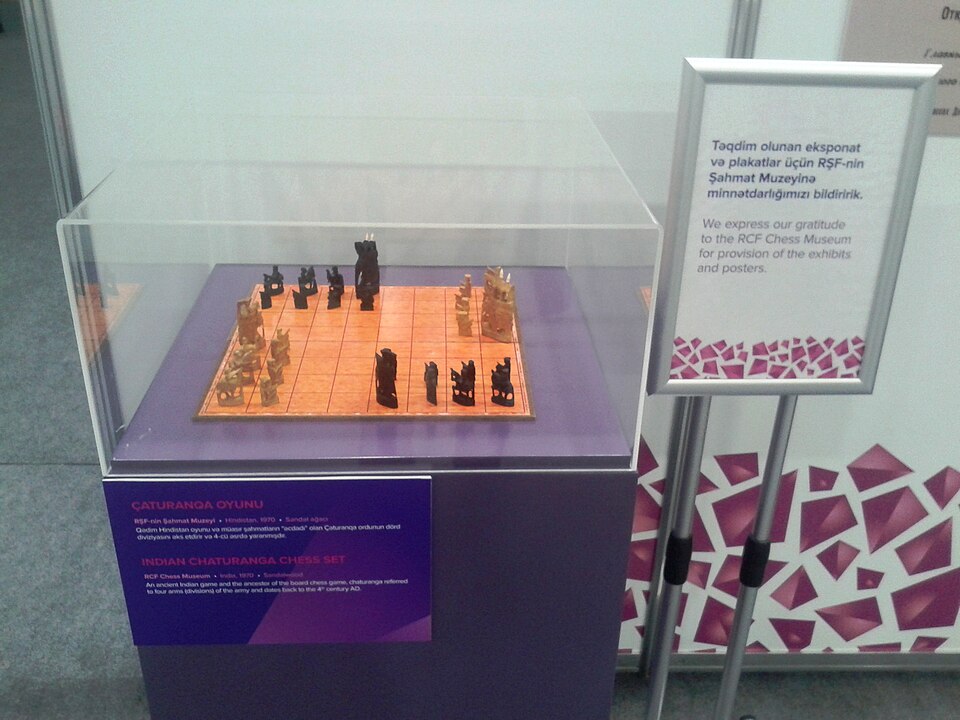
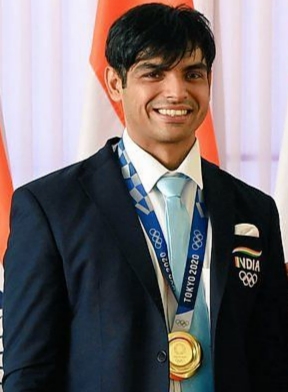
Cricket is India's secular religion. World Cup victories in 1983 and 2011 are national mythology, the 2024 T20 World Cup added another, and the Indian Premier League has become one of the most valuable sports properties on the planet by Forbes' reckoning, its franchise auctions rivaling American leagues. Before cricket's ascendancy, field hockey built the trophy case: India's men won eight Olympic gold medals, including six straight from 1928 to 1956, a record recognized by the IOC. Individual Olympic glory arrived more recently — javelin thrower Neeraj Chopra's gold at the Tokyo Games made him a household name, and India has signaled ambitions to host the Olympics, with the IOC acknowledging its interest in the 2036 Games. Chess is a homecoming story: the game descends from the ancient Indian chaturanga, and the country now mass-produces grandmasters, including a world champion in his teens. Kabaddi, the indigenous raiding sport, packs arenas in its professional league. Football commands passionate regional followings in Kerala, West Bengal and the northeast, though the national team remains modest in FIFA's rankings — a gap the world's most populous country is openly determined to close.
India runs the world's largest school system, with well over 200 million students, and its 2009 Right to Education Act made schooling free and compulsory for children aged six to fourteen. The National Education Policy of 2020 restructured the old 10+2 ladder into a 5+3+3+4 model emphasizing early childhood learning, mother-tongue instruction in early grades, and flexible degrees. The midday meal scheme (now PM POSHAN) is the planet's largest school lunch program, serving hot cooked meals to more than 100 million children daily — an attendance and nutrition intervention studied worldwide, including by UN agencies. At the summit sit the Indian Institutes of Technology and Indian Institutes of Management, whose entrance exams are among the most selective anywhere; over a million candidates sit the IIT-JEE for a few thousand seats, and alumni populate global tech leadership. ISRO's successes have been converted into STEM inspiration at scale, with space-themed outreach and thousands of Atal Tinkering Labs installing 3D printers and robotics kits in schools. Challenges persist — literacy stood at 74% in the 2011 census with wide state and gender gaps — but World Bank data shows enrollment near-universal at primary level, and the frontier has shifted to learning quality.
India's security picture shifted sharply in 2025–26. After gunmen killed 26 civilians, mostly tourists, at Pahalgam in Indian-administered Kashmir on 22 April 2025, India blamed Pakistan-based militants and launched Operation Sindoor in May 2025, striking what it described as terrorist infrastructure in Pakistan and Pakistan-administered Kashmir. Pakistan denied any role in the attack, said Indian strikes killed civilians, and retaliated; roughly four days of missile, drone and air exchanges followed — the worst fighting between the nuclear-armed neighbors in decades, per BBC News and Reuters — before a ceasefire took hold on 10 May 2025. As of mid-2026 the truce holds but remains brittle: New Delhi says any future attack will draw a military response, while Islamabad denies sponsoring militancy and accuses India of destabilizing behavior, per Al Jazeera and AP reporting. Lower-intensity militancy persists in Kashmir. Elsewhere the trendlines diverge: the government declared its decades-old Maoist (Naxalite) insurgency effectively finished around its March 2026 deadline, with the movement's leadership killed or surrendered and its territory reduced to a few districts. In Manipur, ethnic violence between Meitei and Kuki communities that began in 2023 has subsided markedly since a new state government took office in February 2026, though displacement and mistrust linger. UCDP data tracks all three conflict systems.
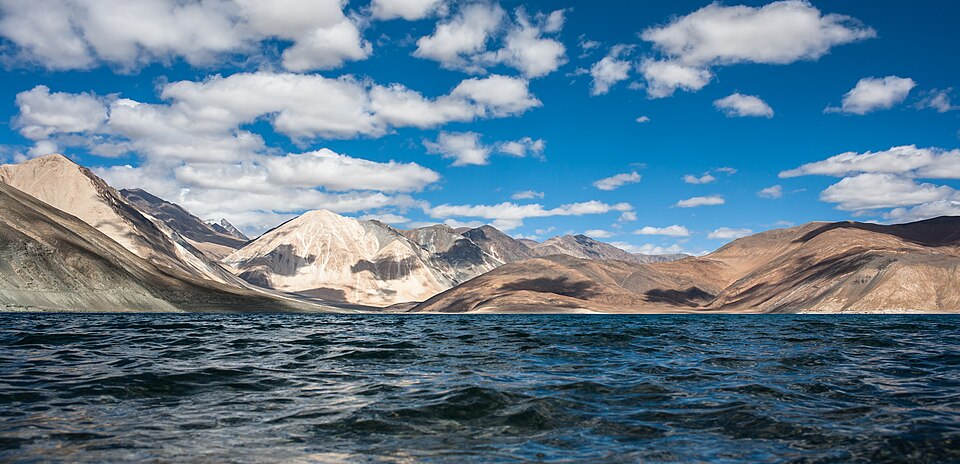
India's two headline territorial disputes date to the mid-20th century. Kashmir has been contested with Pakistan since Partition in 1947: India claims the entire former princely state of Jammu and Kashmir, while Pakistan administers Azad Kashmir and Gilgit-Baltistan and disputes India's control of the remainder. The two countries fought wars over the territory in 1947–48, 1965 and 1999, and the Line of Control — a military demarcation rather than an agreed border — divides it today; a UN military observer group (UNMOGIP) has been stationed along the line since 1949. India's 2019 revocation of the region's special constitutional status, reorganizing it into union territories, was welcomed domestically and rejected by Pakistan. With China, the dispute runs along the Himalayas: China administers Aksai Chin, a high-altitude desert India claims as part of Ladakh and which was the theater of the 1962 war, while India administers Arunachal Pradesh, which China claims as 'South Tibet.' The de facto boundary, the Line of Actual Control, is undemarcated, and both armies maintain large deployments along it following deadly clashes in 2020. Each government publishes maps showing the full extent of its claims; the CIA World Factbook and UN documentation record all positions without adjudicating them.
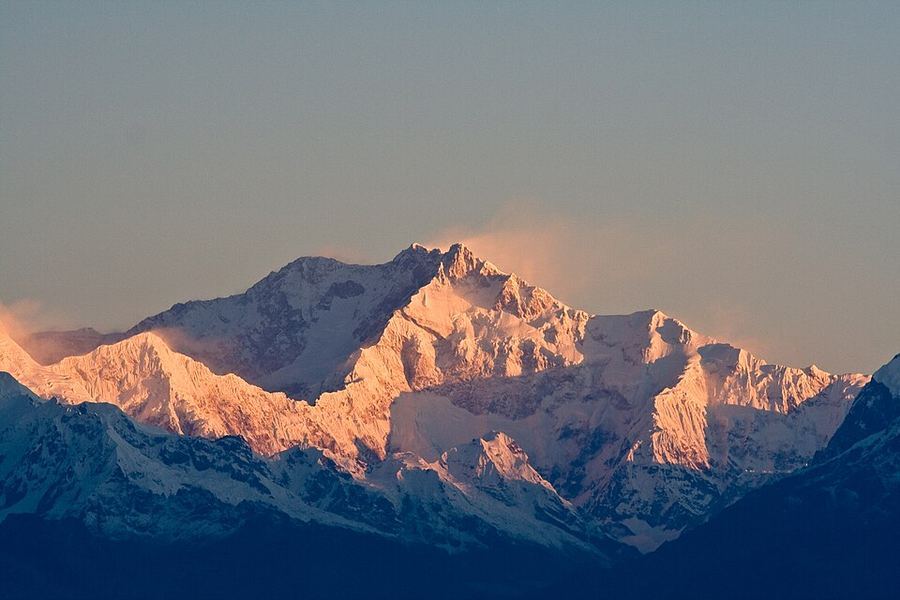
India covers about 3.29 million square kilometres and divides into three great structural regions. In the north the Himalaya form the frontier with China, Nepal and Bhutan, and Kangchenjunga on the Nepalese border, at 8,586 metres, is the highest point in India. Below them the Indo-Gangetic Plain is an immense alluvial trough laid down by the Indus, Ganges and Brahmaputra, the most fertile and most densely settled part of the country. South of that the Deccan Plateau of peninsular India rests on much older rock, tilted so that its rivers run east, and is flanked by the Western and Eastern Ghats with a narrow coastal strip on either side. The Thar Desert occupies Rajasthan, the salt flats of the Rann of Kutch lie on the Pakistani border, and the Sundarbans mangroves are shared with Bangladesh. The southwest monsoon, which usually reaches Kerala at the start of June and withdraws by autumn, delivers most of the annual rainfall and effectively sets the agricultural calendar; Mawsynram and Cherrapunji in Meghalaya are among the wettest places on earth. Heatwaves and erratic monsoon behaviour are both intensifying.
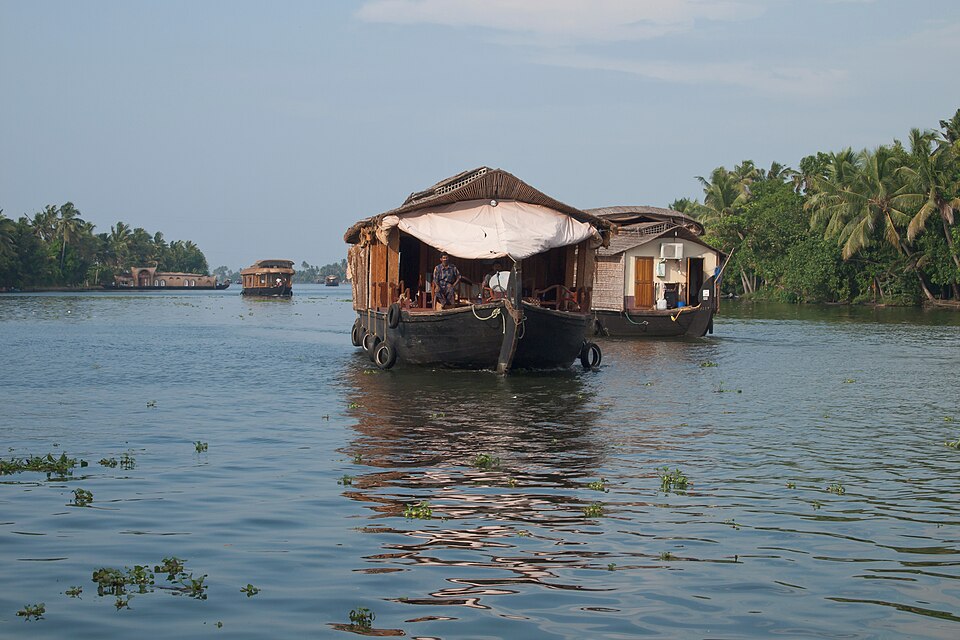
Indian leisure is festival-shaped and cricket-timed. Evenings fill maidans with pickup matches, and an Indian Premier League night stops household traffic the way a holiday does; cinema is the other mass ritual, with single-screen halls and multiplexes premiering over a thousand films a year. Families holiday along circuits the railways made possible: hill stations like Shimla, Ooty, and Darjeeling in summer, Goa's beaches and Kerala's backwater houseboats in winter, Rajasthan's palace cities year-round. Wildlife tourism has boomed as tiger numbers recovered — India now holds roughly three-quarters of the world's wild tigers, drawing safari crowds to Ranthambore and Corbett — and the Taj Mahal remains among the most visited monuments anywhere, anchoring tourism flows tracked by UNWTO. Pilgrimage doubles as travel at colossal scale, from Varanasi's ghats to the Kumbh Mela's tens of millions. Daily pleasures are smaller: chai stalls, street-food rounds of chaat and pani puri, morning yoga and laughter clubs in public parks.
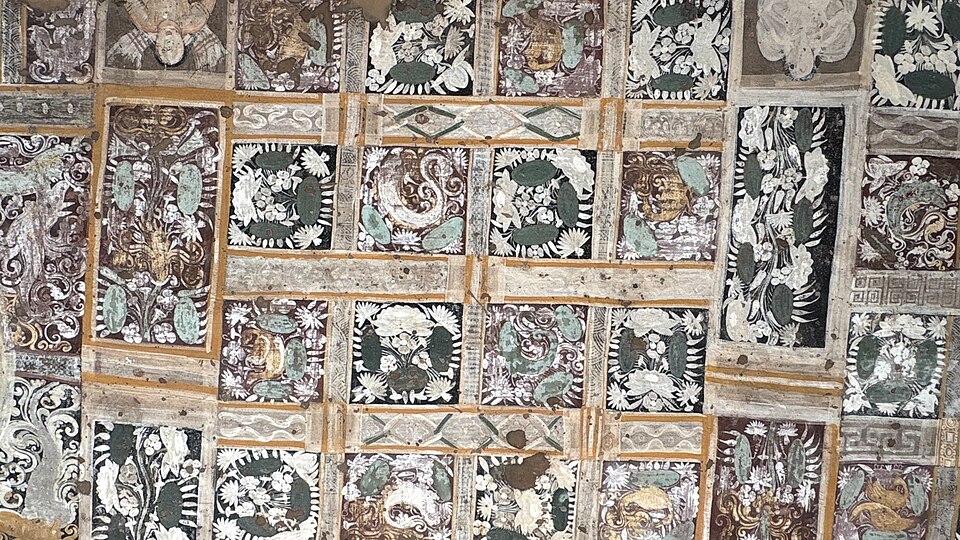
Indian painting spans two millennia, from the Buddhist murals of the Ajanta caves — a UNESCO World Heritage site whose finest frescoes date to the fifth century — through the jewel-toned Mughal miniature ateliers of Akbar and Jahangir and the Rajput and Pahari court schools that followed. Raja Ravi Varma fused European oil technique with Hindu mythology in the late nineteenth century, and his mass-printed oleographs put gods on household walls across the subcontinent. The Bengal School of Abanindranath Tagore turned back toward indigenous idioms as cultural nationalism rose, before Amrita Sher-Gil — half-Hungarian, wholly transformative — bridged Paris modernism and village India in a career cut short at twenty-eight. The Progressive Artists' Group, founded in Bombay in 1947 by M. F. Husain, S. H. Raza, and F. N. Souza, defined postcolonial modernism, and their canvases now set South Asian auction records. Folk traditions — Madhubani, Warli, Pattachitra — thrive alongside, collected by the National Gallery of Modern Art in Delhi.
India's roll call crosses every field. Mohandas Gandhi turned nonviolence into a world-historical force; Rabindranath Tagore won the 1913 Nobel Prize in Literature — the first awarded to a non-European — and composed the national anthems of both India and Bangladesh. Srinivasa Ramanujan, the self-taught Madras clerk, filled notebooks with theorems mathematicians still mine, and C. V. Raman's 1930 physics Nobel for light scattering made him Asia's first science laureate. B. R. Ambedkar drafted the constitution; Mother Teresa, Amartya Sen, and Kailash Satyarthi added Nobel honors in peace and economics to the ledger. Satyajit Ray's Apu Trilogy placed Indian cinema in the world canon, and playback singer Lata Mangeshkar recorded across seven decades. Sachin Tendulkar retired with one hundred international centuries; Viswanathan Anand won five world chess championships before teenager D. Gukesh became the youngest-ever world champion in 2024. Industrialists from the Tata dynasty to Mukesh Ambani, a fixture atop Forbes' Asia rankings, round out the register.
India's deepest contribution to civilization may be nothing at all: the concept of zero as a number and the decimal place-value system, developed by Indian mathematicians and codified by Brahmagupta in the seventh century, reached Europe through the Arab world as 'Arabic numerals.' Chess descends from chaturanga; wootz steel, exported from South India for two millennia, became the legendary 'Damascus' blade metal; and the ancient surgeon Sushruta described cataract couching and reconstructive rhinoplasty centuries before the common era. Ayurveda and yoga — the latter inscribed by UNESCO — remain living systems practiced worldwide. Modern Indian science kept the streak: Jagadish Chandra Bose demonstrated millimeter-wave radio in the 1890s, Satyendra Nath Bose's quantum statistics gave physics the boson, and Narinder Kapany's work on fiber optics underpins the internet's plumbing. Frugal engineering is the contemporary signature — the Mars Orbiter Mission reached orbit in 2014 for roughly the budget of a Hollywood film, and the UPI instant-payment network now processes more real-time transactions than any system on Earth.
India's space programme is its most visible technical achievement: ISRO put Chandrayaan-1 into lunar orbit in 2008, reached Mars orbit at the first attempt with the Mangalyaan mission in 2014, and landed Chandrayaan-3 near the lunar south pole in 2023, while the PSLV has become a dependable commercial launcher of small satellites. Pharmaceutical manufacturing is the largest industry by global impact: India supplies more generic medicines by volume than any other country, and the Serum Institute of India in Pune is the world's largest vaccine producer by doses. Information-technology services built around Bengaluru, Hyderabad and Pune turned into a major export sector through firms such as TCS, Infosys and Wipro. More recently the country has built digital public infrastructure at unusual scale, with the Aadhaar biometric identity system and the UPI instant-payment network handling billions of transactions a month. The deeper scientific tradition includes C. V. Raman's Nobel Prize in 1930 for the scattering effect that bears his name, Satyendra Nath Bose's statistics, Srinivasa Ramanujan's mathematics, and M. S. Swaminathan's role in the Green Revolution.
India's Olympic story opened with field hockey: eight gold medals, including six consecutive from Amsterdam 1928 to Melbourne 1956, when the wizardry of Dhyan Chand made the team untouchable. Individual gold waited until Abhinav Bindra's 10-meter air rifle title at Beijing 2008; javelin thrower Neeraj Chopra followed at Tokyo 2020 — India's first athletics gold — then added the 2023 world championship and silver at Paris. Badminton's P. V. Sindhu won a world title and two Olympic medals; wrestlers Sushil Kumar and Sakshi Malik, six-time world champion boxer Mary Kom, and shooter Manu Bhaker, with two bronzes at Paris 2024, broadened the base. Cricket is where India rules outright: World Cup wins in 1983 and 2011, T20 titles in 2007 and 2024, and the 2025 Champions Trophy, while the IPL ranks among the world's most valuable sports leagues. In chess, Viswanathan Anand's five crowns preceded D. Gukesh's 2024 world title at eighteen, and India has formally signaled its ambition to host the 2036 Olympic Games.