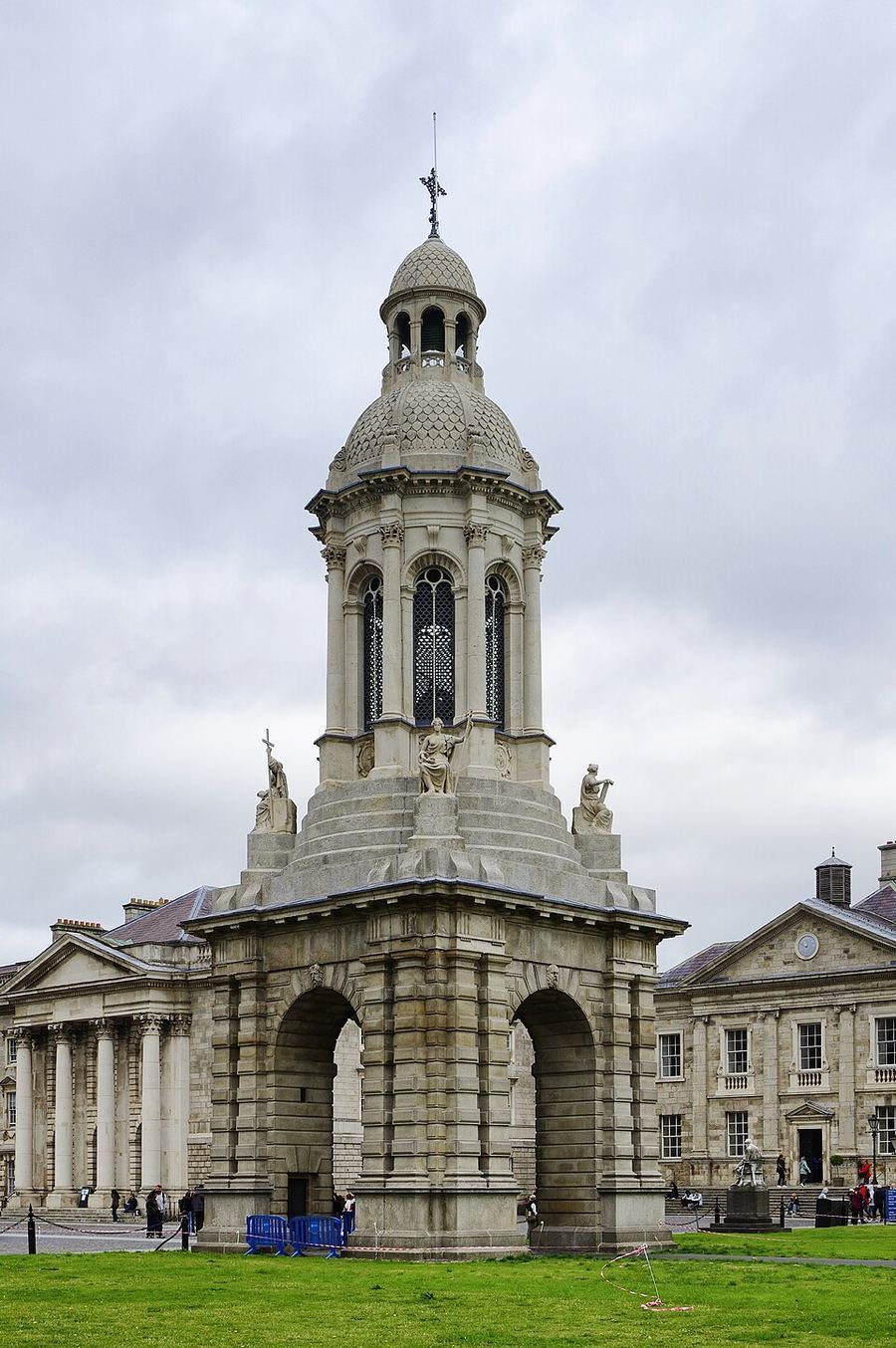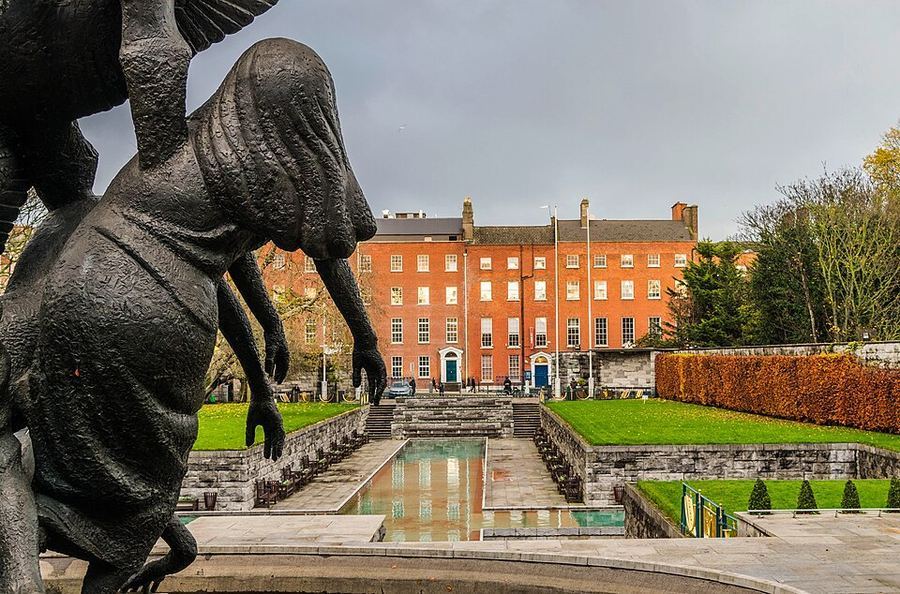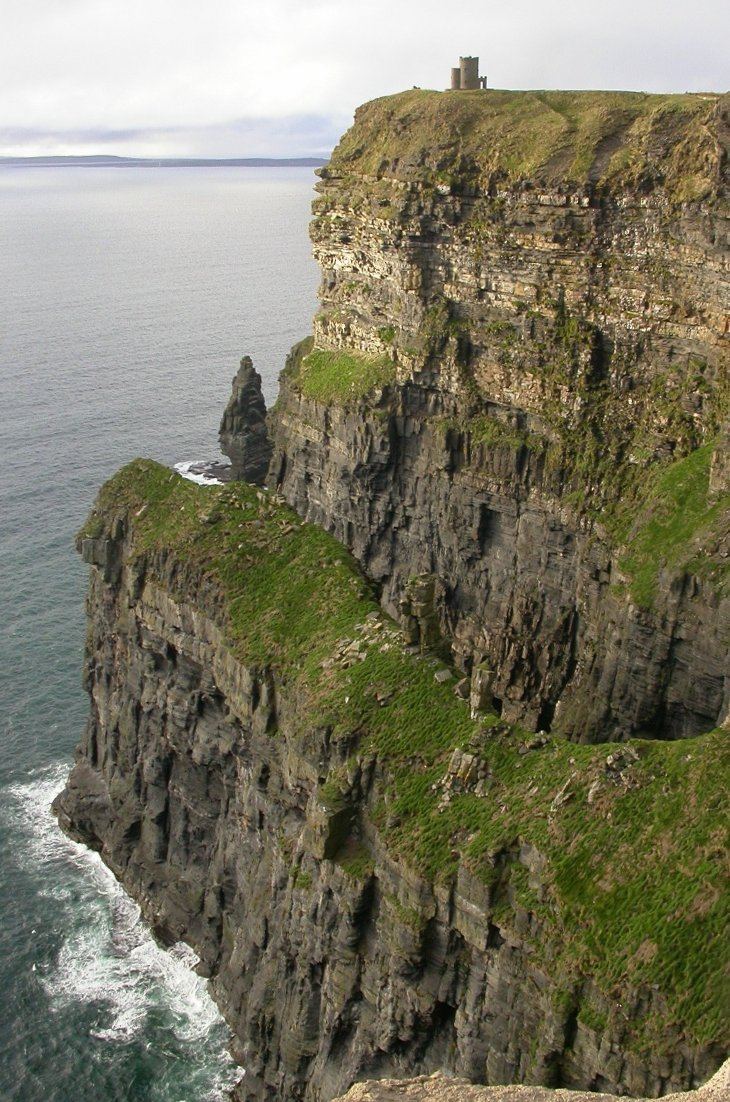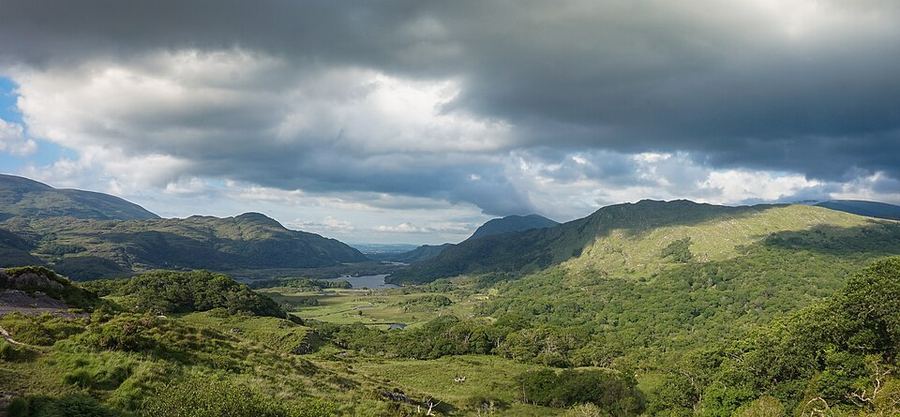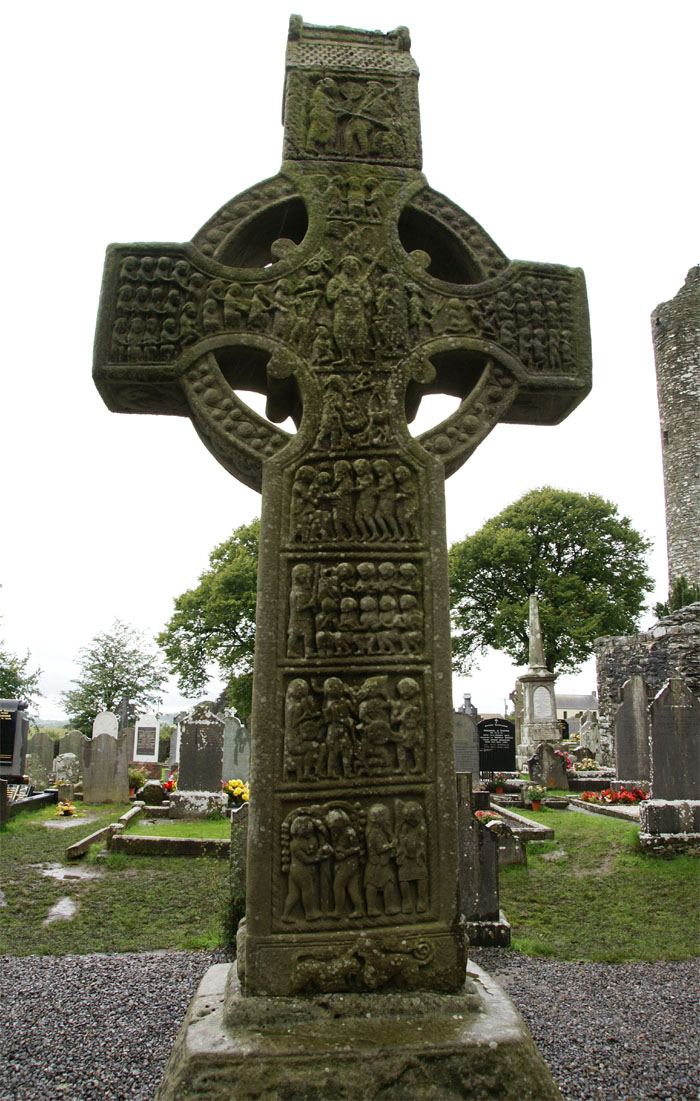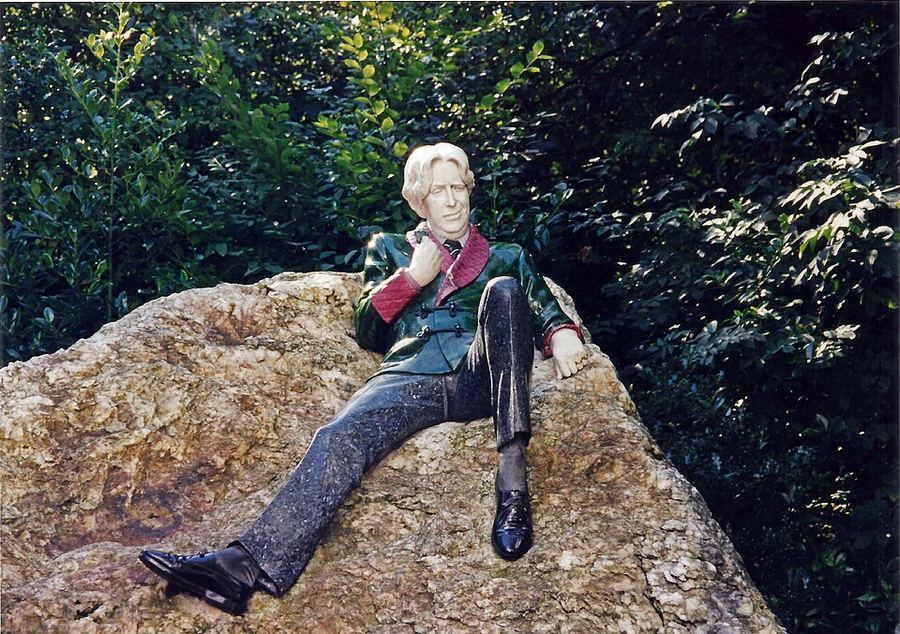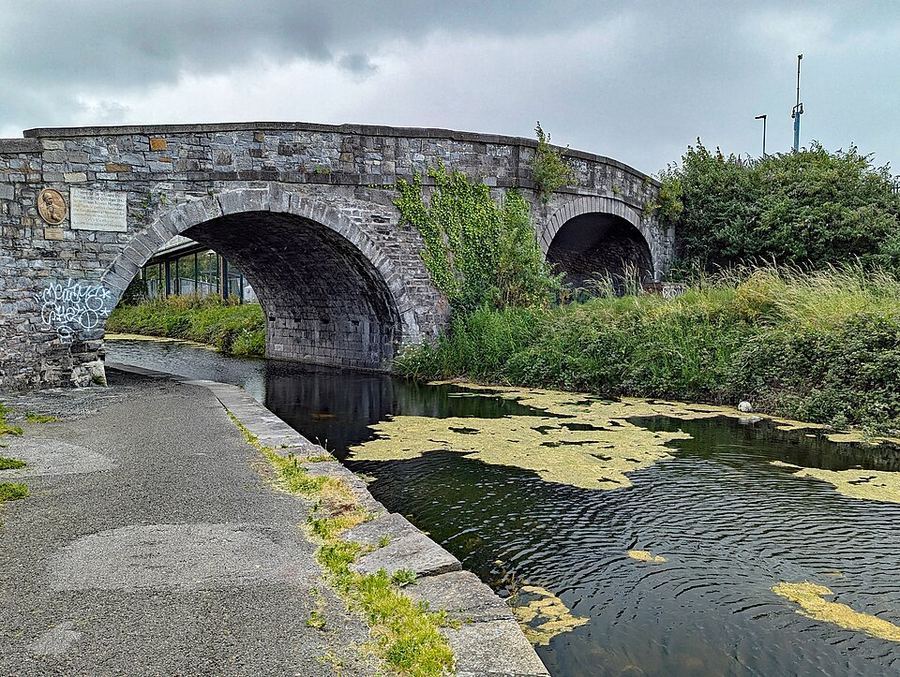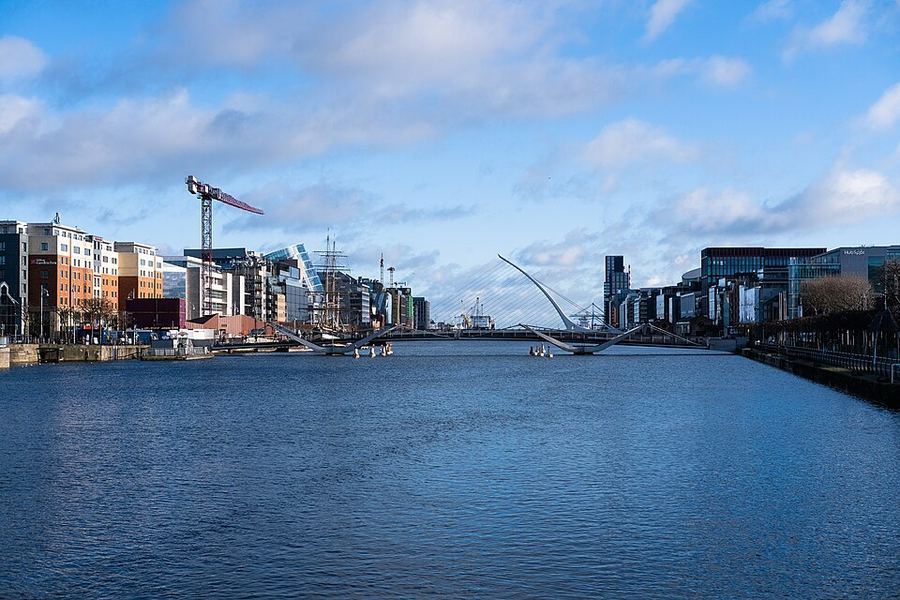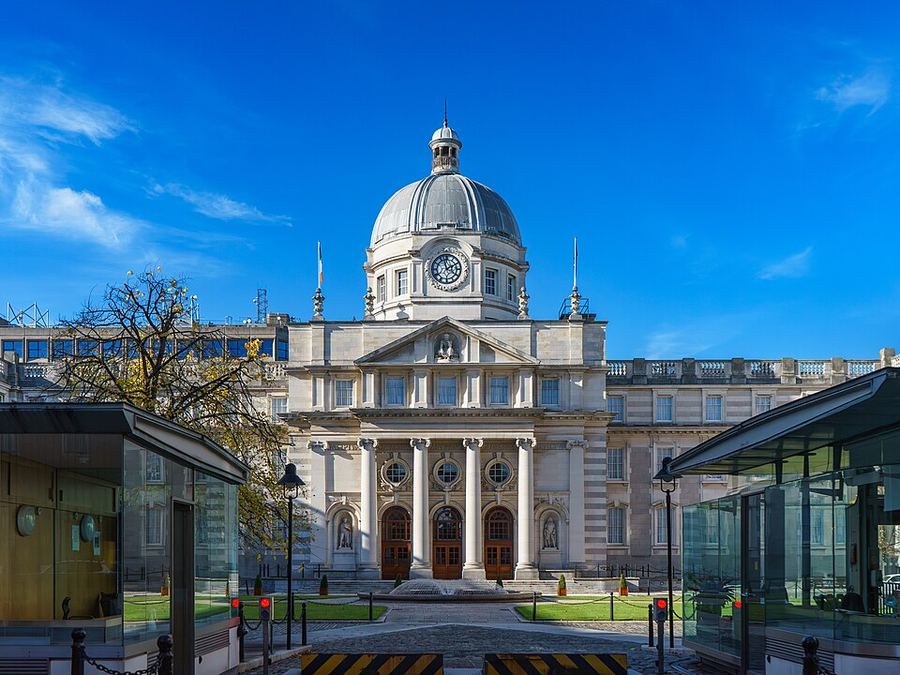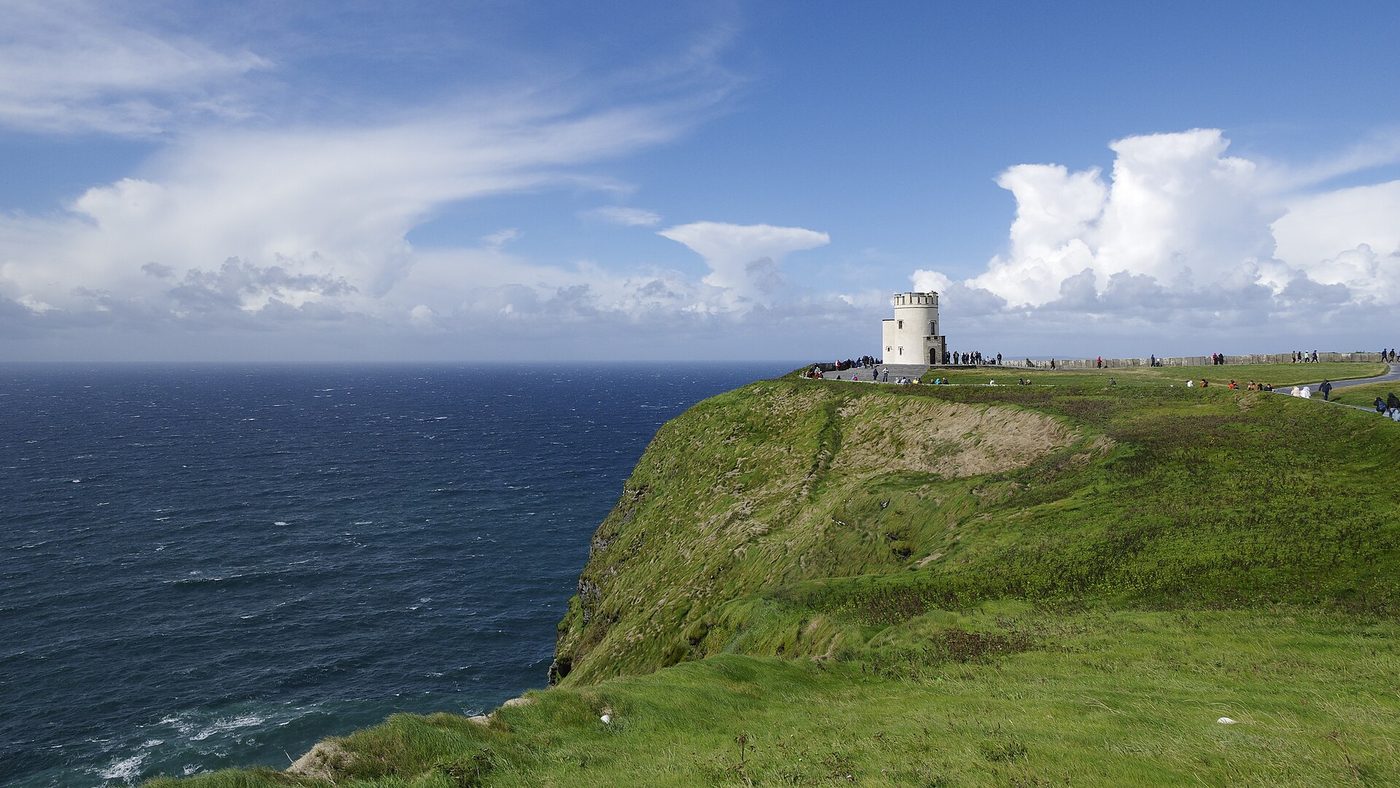
Ireland is a parliamentary republic of roughly 5.2 million people occupying about five sixths of an island on the north-western edge of Europe, with Northern Ireland — part of the United Kingdom — filling the remainder. Dublin, the capital, sits on the east coast where the River Liffey meets the Irish Sea, and concentrates the state's government, universities and the European headquarters of a remarkable share of global technology and pharmaceutical firms. Independence came in stages rather than at a stroke: the Anglo-Irish Treaty of December 1921, the Irish Free State in 1922, and the Republic of Ireland Act that took effect in 1949. Roman Catholicism, professed by about 69% of the population, shaped the state's first half-century and has receded sharply since; nearly 15% now report no religion. English is the language of daily life and Irish is the first official language, spoken to some degree by about 38% of people and used as a community language in the Gaeltacht districts of the western seaboard. Since joining the European Economic Community in 1973 the country has moved from agricultural periphery to one of the most open economies in the world, exporting vaccines, packaged medicines and integrated circuits, and its literature, music and diaspora give it a global presence out of all proportion to its size.
Dublin's urban core is home to about 1,124,520 people.
Among the world's megacities, though, it's one of many — the giants of Asia and Latin America run larger still:
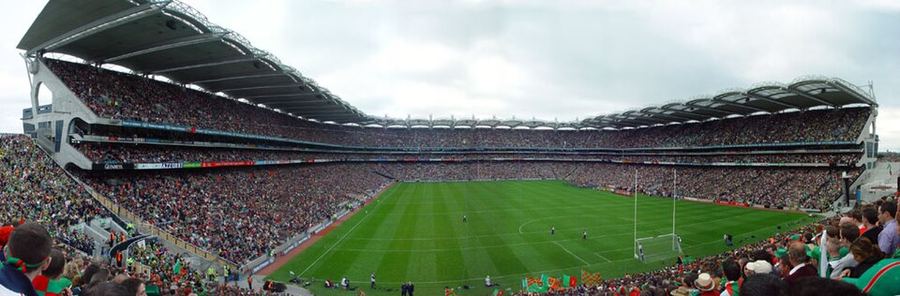
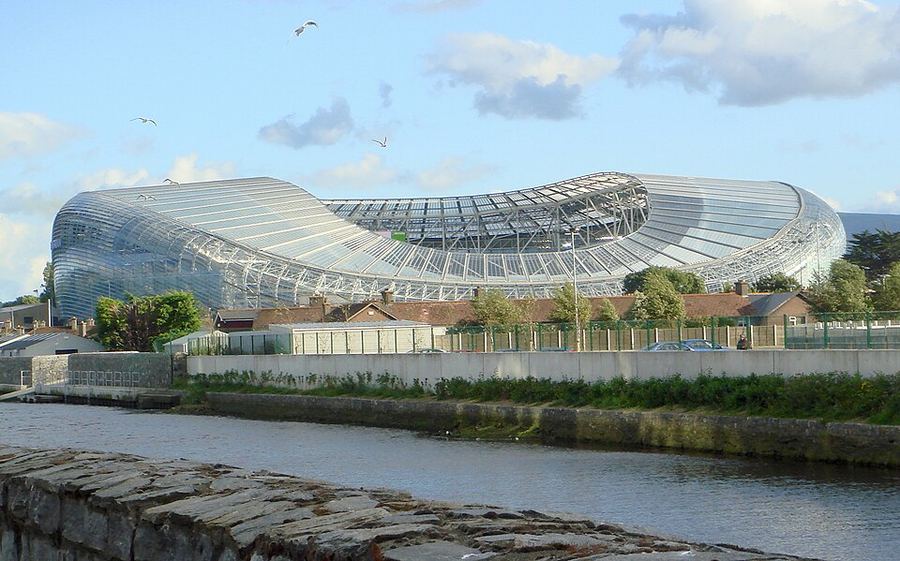
Ireland's international sporting reputation rests on three pillars. The first is rugby: the all-island team reached the top of the world rankings in 2023, its provinces have been repeat winners of the European Champions Cup, and the Six Nations is the fixed point of the Irish sporting calendar. The second is horses. Coolmore Stud in County Tipperary and the training operation at Ballydoyle under Aidan O'Brien have made Ireland a dominant force in flat racing and breeding, while Irish-trained jumpers routinely take the majority of races at the Cheltenham Festival; the Curragh in County Kildare has staged the Irish Derby since the nineteenth century. The third is individual excellence at Olympic and world level. Sonia O'Sullivan won the 5,000 metres world title in 1995 and Olympic silver at Sydney in 2000; Katie Taylor took lightweight boxing gold at London in 2012 before a professional career that helped establish women's boxing as a headline sport; and Irish rowing and sailing crews have added Olympic medals in recent Games. In golf, Shane Lowry won The Open at Royal Portrush in 2019, and the country's links courses regularly host the sport's oldest championship.
Euro — EUR (€)
GDP (PPP): $620.544 billion (2024 est.)
Per capita: $115,300 (2024 est.)
$761.876 billion (2023 est.)
vaccines, packaged medicine, nitrogen compounds, integrated circuits, hormones (2023)
Partners: USA 28%, Germany 11%, UK 8%, Belgium 8%, China 7% (2023)
$580.399 billion (2023 est.)
aircraft, nitrogen compounds, vaccines, packaged medicine, integrated circuits (2023)
Partners: UK 20%, USA 17%, France 10%, China 7%, Germany 7% (2023)
Type: parliamentary republic
Independence: 6 December 1921 (from the UK); 6 December 1922 (Irish Free State established); 18 April 1949 (Republic of Ireland Act enabled)
How mountains, coasts, and rivers shape settlement (LandScan).
Coming — dataWhere groups settled and how people move (GeoEPR + UNHCR).
Coming — dataNotable institutions, mappable as points.
Coming — data