HERA · Human Entity Reference Atlas by Masego Inc

← Iran 🌐 3D View
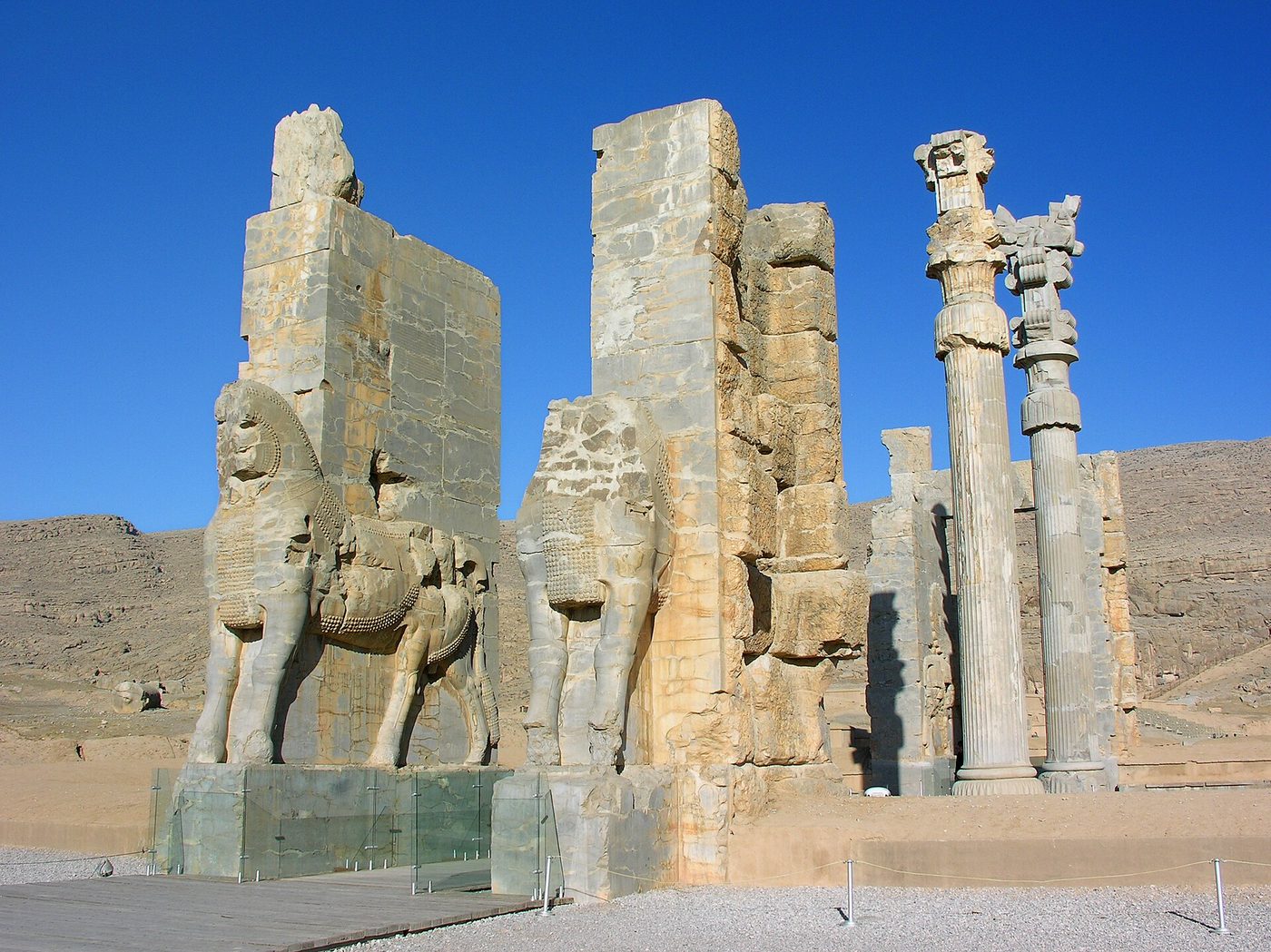
Persepolis, Iran
Iran IRN
Persepolis — Photo: Hansueli Krapf / CC BY-SA 3.0 via Wikimedia Commons
Did You Know The desert city of Yazd, a UNESCO World Heritage site, has cooled its houses for centuries with badgirs — windcatcher towers that funnel breezes indoors, an ancient form of passive air conditioning. — UNESCO

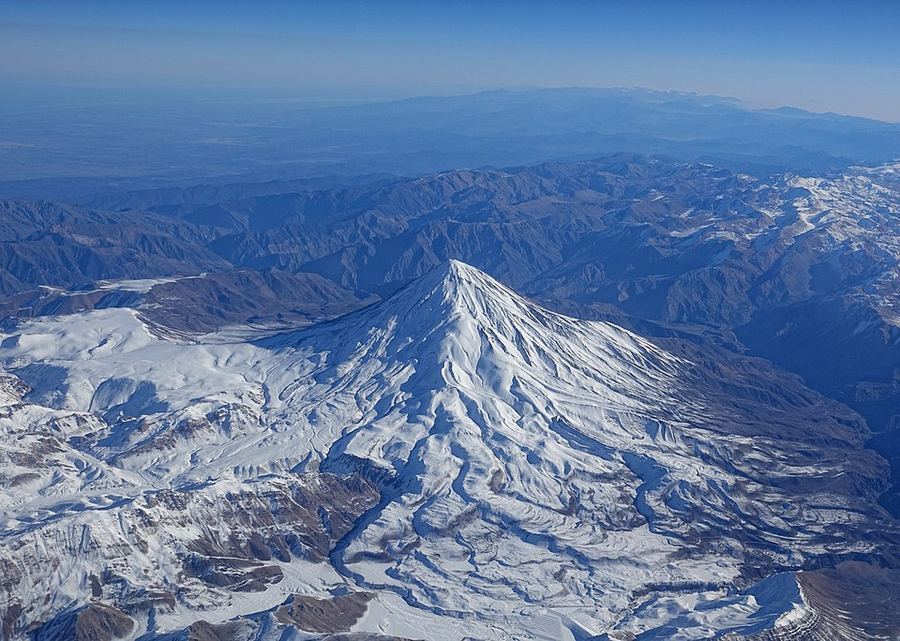
Iran occupies the great plateau between the Caspian Sea and the Persian Gulf, a land bridge between the Middle East, Central Asia, and South Asia that has shaped world history for more than 2,500 years. Heir to the ancient Elamite and Achaemenid Persian empires, it is one of the world's oldest continuous civilizations, and its official language, Persian (Farsi), is among the oldest literary languages still spoken. Roughly 89.2 million people (2025 est.) live in a theocratic republic proclaimed on 1 April 1979, governed from Tehran, a metropolis sprawling beneath the snow-capped Alborz range. The terrain is dramatic: the Zagros Mountains wall off Mesopotamia to the west, the volcanic cone of Mount Damavand — the highest peak in the Middle East — rises above the Caspian littoral, and vast salt deserts fill the interior. The economy, measured at about $1.486 trillion in purchasing-power terms (2024 est.), rests on some of the world's largest oil and natural gas reserves, with China taking roughly 35% of exports. Persians form the largest ethnic group, joined by Azeris, Kurds, Lurs, Baloch, Arabs, and Turkmen in a mosaic as old as the plateau itself.

CIA World FactbookUNESCOGlottologEncyclopaedia Britannica
Population
89,177,357
Capital
Tehran
Currency
﷼ IRR
Time zones
1
Largest city
Tehran
Local Time
Tehran
Human Geography Themes
Loading national figures…
Largest Cities
Tehran11,142,683
Mashhad5,377,005
Karaj3,585,417
Isfahan2,321,699
Ahwaz1,907,837
Tabriz1,685,463
Shiraz1,618,347
Qom1,210,059
In Perspective

Tehran's urban core is home to about 11,142,683 people.

That's bigger than London, Paris, Madrid and Toronto — each a great world city in its own right.

Tehran11,142,683
London10,408,332
Paris9,366,654
Madrid5,680,137
Toronto5,566,382

Among the world's megacities, though, it's one of many — the giants of Asia and Latin America run larger still:

Tehran11,142,683
Jakarta40,545,126
Dhaka37,307,160
Tokyo33,244,670
Shanghai30,678,616
Cairo25,230,325

More people live in Tehran than in the entire nation of Sweden, Greece, Portugal or Israel.

The Country & Its People

History

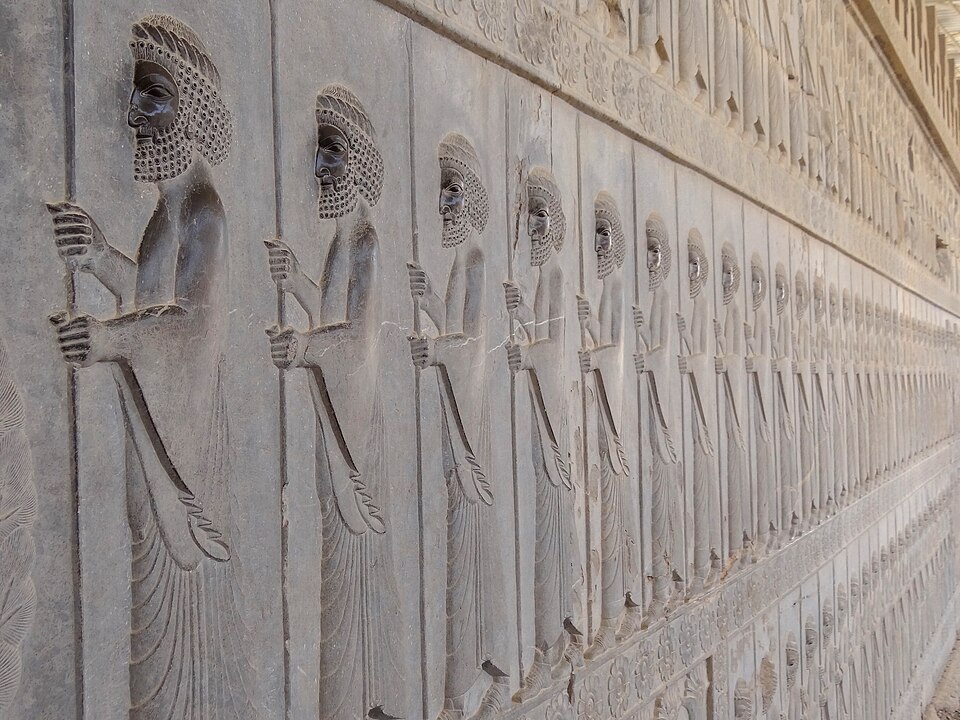
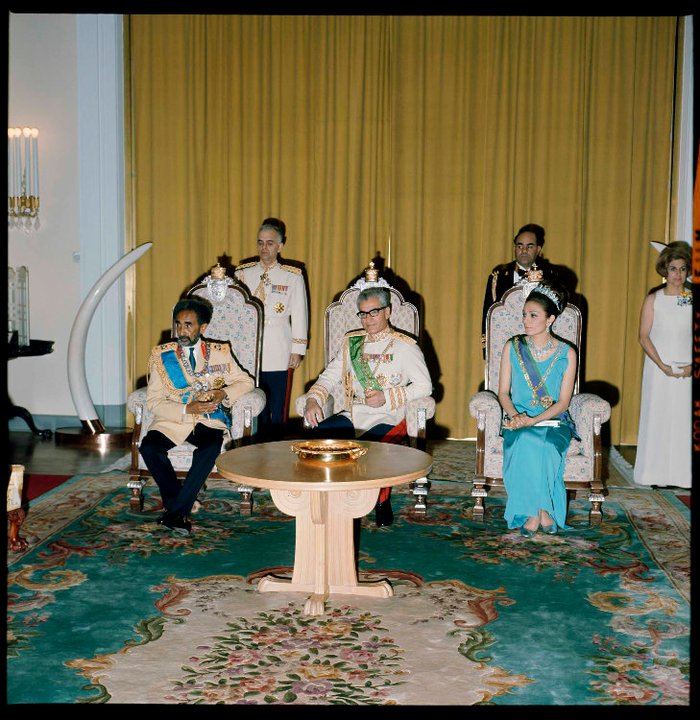
Around 550 B.C., Cyrus the Great forged the Achaemenid Empire, the largest the world had yet seen, stretching from the Indus to the Aegean and remembered for the tolerant style of rule recorded on the Cyrus Cylinder. Its ceremonial capital, Persepolis, still stands near Shiraz, its stone reliefs of tribute-bearers from across the empire now a UNESCO World Heritage site; Alexander the Great burned it in 330 B.C. The Parthian and Sasanian dynasties revived Persian power and dueled Rome for centuries, until the Arab conquest of the seventh century brought Islam — though Persian language and identity endured and flourished within the new order, powering much of the Islamic Golden Age. In 1501 the Safavid dynasty reunified Iran and established Twelver Shia Islam as the state religion, a decision that still defines the country; the Qajars followed in 1794, and the Pahlavi dynasty from 1925 built the centralized modern state, formally asking the world to call the country 'Iran' rather than Persia in 1935. The 1979 revolution swept away the monarchy, and the Islamic Republic was proclaimed on 1 April 1979 under Ayatollah Ruhollah Khomeini. The devastating 1980-88 war with Iraq consumed the republic's first decade and remains a touchstone of national memory.
History, Iran
Adam Jones from Kelowna, BC, Canada / CC BY-SA 2.0

Culture

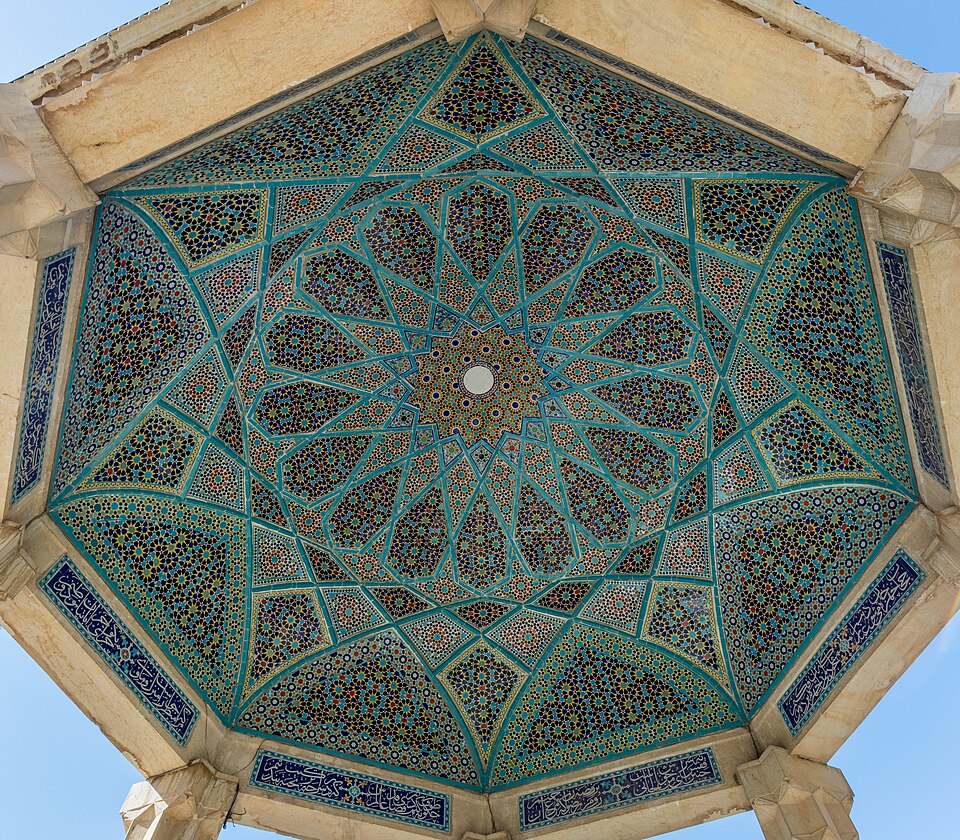
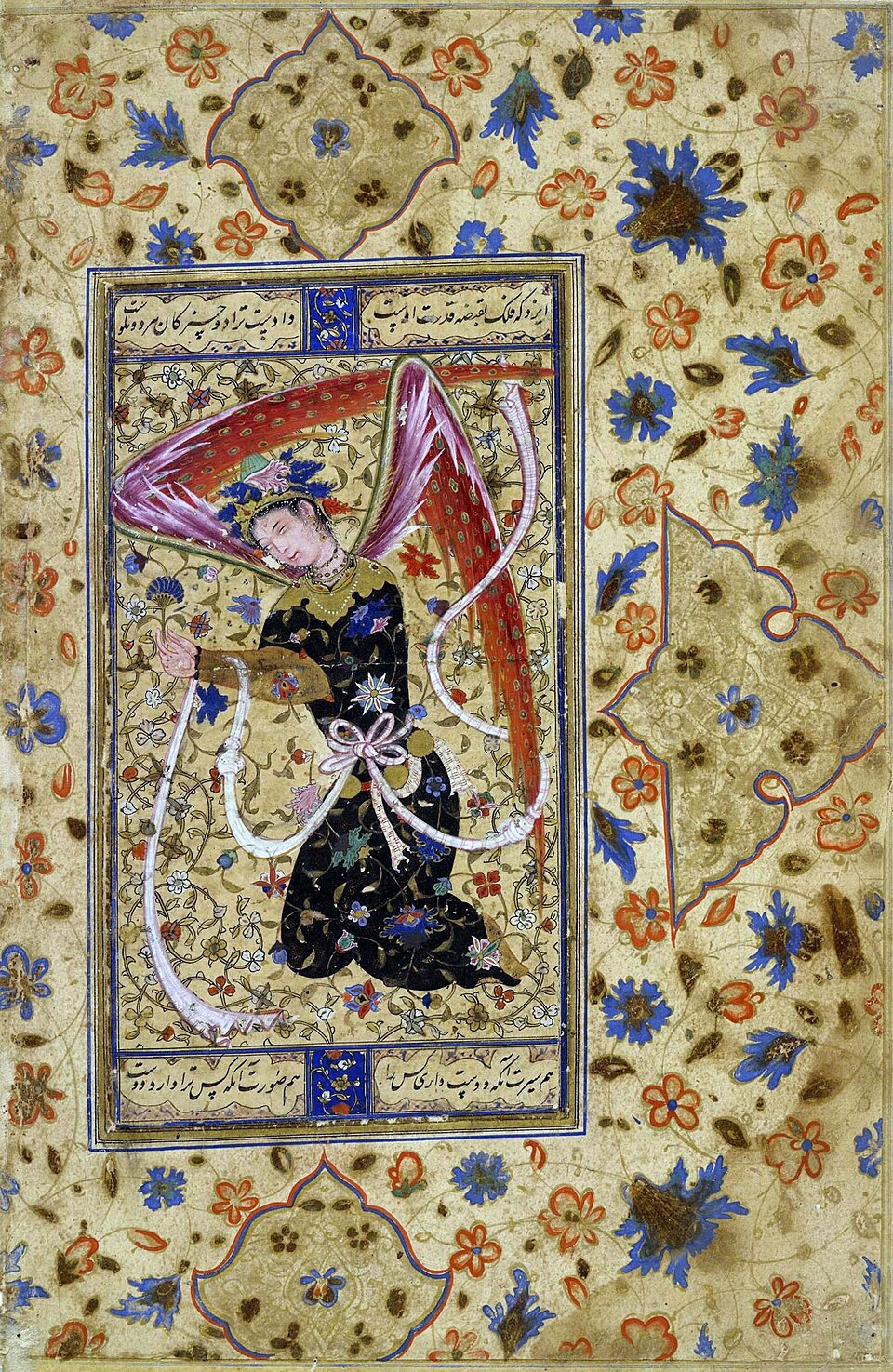
Few nations live inside their poetry the way Iran does. Ferdowsi's Shahnameh — the 'Book of Kings,' some 50,000 couplets completed around 1010 — is credited with preserving the Persian language itself, and its heroes Rostam and Sohrab are household names a millennium later. Iranians still practice fal-e Hafez, opening the Divan of the fourteenth-century Shirazi master Hafez at random to divine the future, and crowds gather nightly at his garden tomb; Rumi's mystical Masnavi and Omar Khayyam's quatrains carried Persian verse across the world. The spring equinox festival of Nowruz, the Persian New Year inscribed by UNESCO as intangible cultural heritage, resets the calendar with the haft-sin table of seven symbolic items, deep house-cleaning, and nearly two weeks of visiting relatives. Persian carpets — the weaving traditions of Kashan and Fars are themselves UNESCO-inscribed — turn geometry and garden imagery into a portable art form found in homes worldwide. The Persian miniature, a jewel-like painting tradition Iran shares with its neighbors on UNESCO's heritage list, illustrated those same epics and romances for royal courts.
Culture, Iran
Diego Delso / CC BY-SA 4.0

Points Of Pride

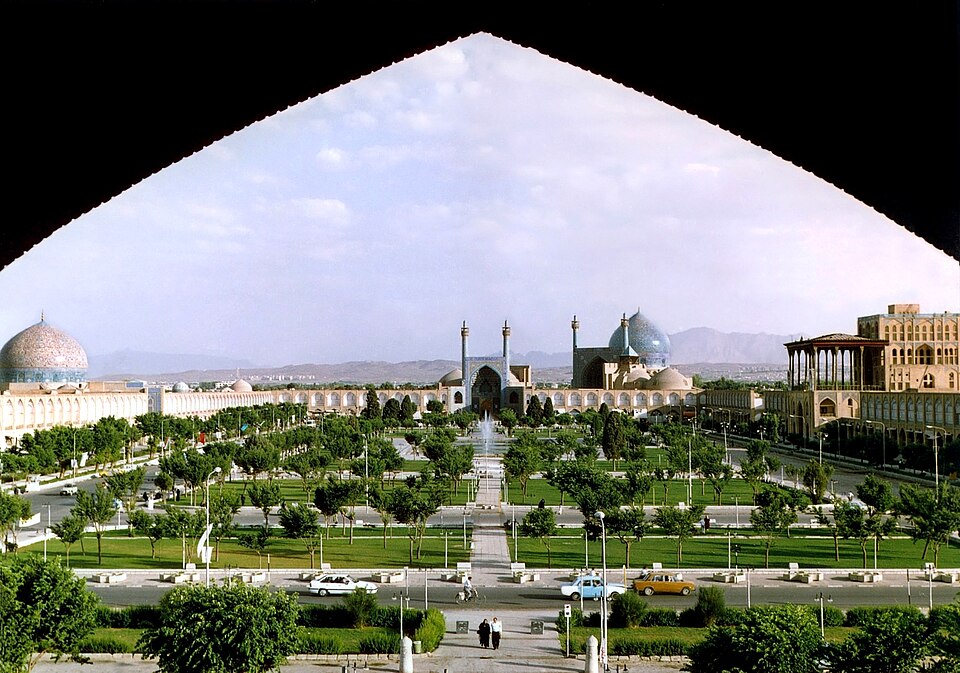
Iran counts more than two dozen UNESCO World Heritage sites, a roster that reads like a history of human ingenuity: Persepolis, the mud-brick old city of Yazd, Tehran's Golestan Palace, and the Persian Garden, whose fourfold 'chahar bagh' design became the template for paradise gardens from Andalusia to the Taj Mahal. Isfahan's Naqsh-e Jahan Square, framed by the turquoise-domed mosques of the Safavid golden age, inspired the proverb 'Esfahan nesf-e jahan' — 'Isfahan is half the world.' Persian engineers of antiquity built the qanat, gently sloping underground aqueducts that carry mountain water invisibly across deserts; eleven of these still-functioning systems are World Heritage-listed. Iranian cinema commands global respect: director Asghar Farhadi won Academy Awards for 'A Separation' and 'The Salesman,' extending the humanist filmmaking tradition associated with Abbas Kiarostami. Medieval Persian scholars such as Avicenna, whose Canon of Medicine served as a standard European medical text for centuries, anchor a scientific heritage Iranians cite with particular pride.
Points Of Pride, Iran
en:User:Arad / CC BY-SA 3.0

Cultural Fusion

Iran has always been a crossroads, and its population reflects millennia of movement along the Silk Road: Persians share the plateau with Azeris concentrated in the northwest, Kurds along the Zagros, Lurs and Bakhtiari in the central mountains, Arabs in Khuzestan, Baloch in the southeast, and Turkmen on the northeastern steppe. The linguistic map is correspondingly rich — Persian is official, but Azeri and other Turkic dialects, Kurdish, Gilaki and Mazandarani, Luri, Balochi, and Arabic are all spoken, a diversity documented across the wider Iranian language family. Culture flowed outward as much as inward: Persianate literature, painting, and courtly manners set the tone for the Mughal courts of India and the Ottoman world, making Persian the poetic and diplomatic lingua franca of much of Asia for centuries. The religious landscape is predominantly Muslim (98.5%, mostly Shia with a Sunni minority), yet Iran retains ancient communities of Christians, Jews, and Zoroastrians — the latter still tending fire temples of the faith that dominated the plateau before Islam. Cuisine and music carry the same layering, blending plateau, Caucasus, Mesopotamian, and Central Asian threads into something distinctly Iranian.
Cultural Fusion, Iran
Jeanne Menj / CC BY 2.0

Music & Dance

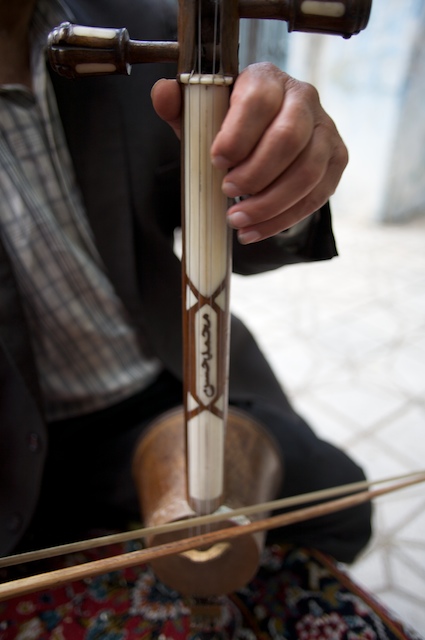
Classical Persian music is organized around the radif — a memorized repertoire of hundreds of melodic figures, passed from master to pupil and inscribed by UNESCO as intangible cultural heritage — from which performers improvise within modal systems called dastgah. Its sound world is unmistakable: the plucked tar and setar, the hammered santur, the breathy ney flute, the spike-fiddle kamancheh (whose craft and playing are also UNESCO-listed), and the tombak drum, accompanying an ornamented vocal style that often sets classical poetry to melody. In the villages of Khorasan, bakhshi bards sing epics to the two-stringed dotar, another UNESCO-recognized tradition linking Iran to Central Asia. Folk dance varies by region — Azeri, Kurdish, Gilaki, and Baloch communities each keep circle and line dances tied to weddings and harvests, and Azeri ashiq minstrelsy thrives in the northwest. Most distinctive of all is the zurkhaneh, the 'house of strength,' where athletes swing wooden clubs in rhythm to a drummer-singer chanting verses of the Shahnameh — a ritual fusion of music, poetry, and athletics inscribed by UNESCO in 2010.
Music & Dance, Iran
Nick Taylor / CC BY 2.0

Cuisine & Misattributed Foods

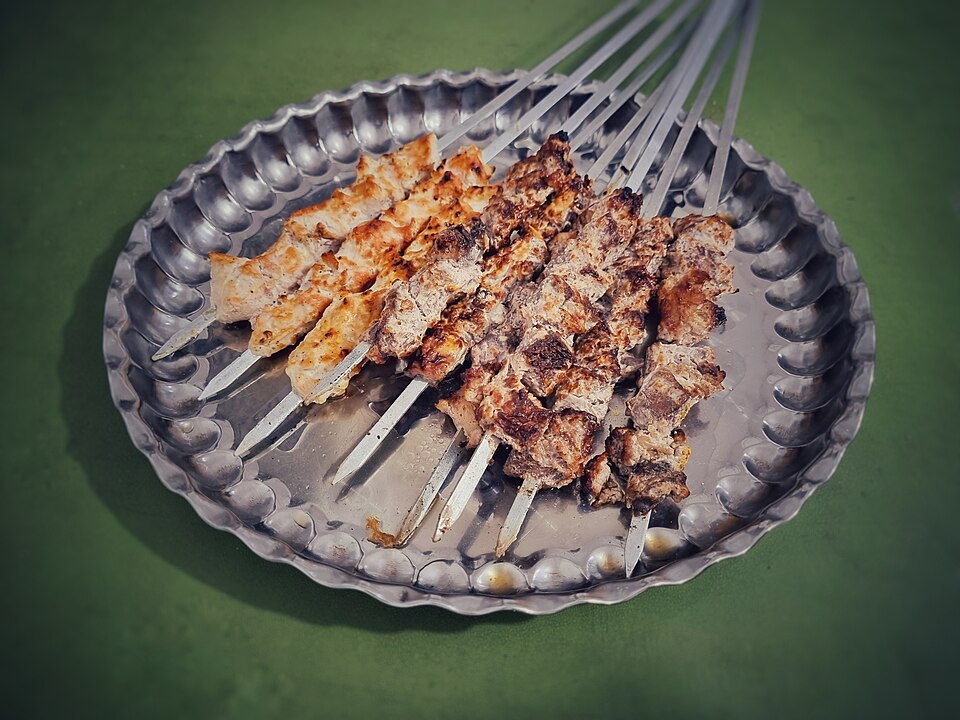
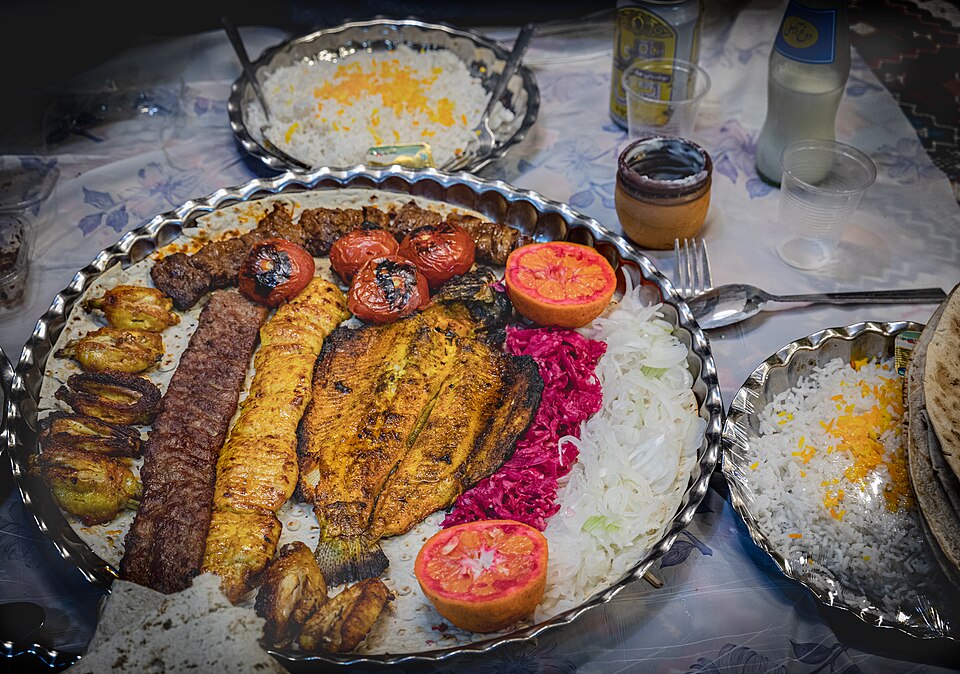
Persian cooking is built on rice elevated to an art: chelow, steamed until each saffron-tinted grain stands apart, prized above all for its tahdig — the golden, crackling crust from the bottom of the pot that families compete to claim. Chelow kabab, charcoal-grilled skewers of marinated lamb or beef served over that rice, is widely regarded as the national dish. The soul of the cuisine lies in khoresh, slow-simmered stews balancing sour against sweet: ghormeh sabzi, dense with sautéed herbs and dried limes, and fesenjan, a silky reduction of ground walnuts and pomegranate molasses usually paired with duck or chicken. Iran is the world's leading producer of saffron, and its cooks deploy it alongside rosewater, barberries, and pistachios in both savory dishes and sweets. Flatbread — sangak baked on a bed of hot pebbles, lavash rolled paper-thin — anchors every table, part of a flatbread culture UNESCO has recognized across the region, all washed down with endless rounds of tea from the samovar. On Yalda, the winter solstice night inscribed by UNESCO, families stay up late over pomegranates, watermelon, and readings from Hafez.
Cuisine & Misattributed Foods, Iran
Amin Noubahar / CC BY-SA 4.0

National Dress

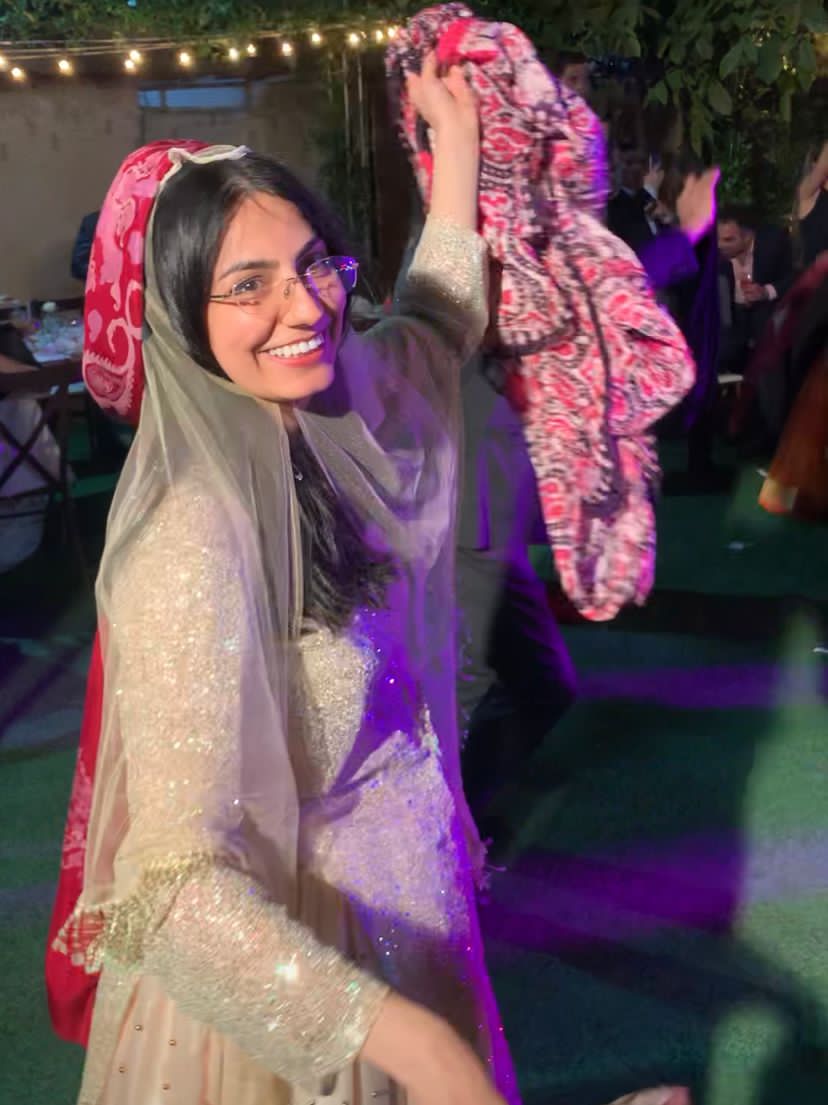
There is no single Iranian costume; instead the country wears its ethnic geography. Kurdish men favor wide trousers bound with broad sashes, Turkmen communities keep tall sheepskin hats and richly embroidered robes, Baloch women stitch dense geometric needlework onto long gowns, and Qashqai nomad women layer brilliantly colored skirts that flare in wedding dances. Among the Bakhtiari of the Zagros, men still wear the chogha, a distinctive hand-woven wool coat striped in black and white. The chador — a full-length semicircle of cloth held closed at the front — long predates the Islamic Republic as a traditional garment, especially in shrine cities such as Qom and Mashhad. Since the 1979 revolution, law has required women in public to observe hijab, most commonly a headscarf worn with a manteau in the cities; men's everyday dress is typically Western, with the aba cloak and turban distinguishing the Shia clergy. Urban Tehran fashion, working within these rules, remains famously inventive — a running conversation between tradition and modernity.
National Dress, Iran
NoushinOmidvar / CC BY-SA 4.0

Sports & Inspiring Athletes

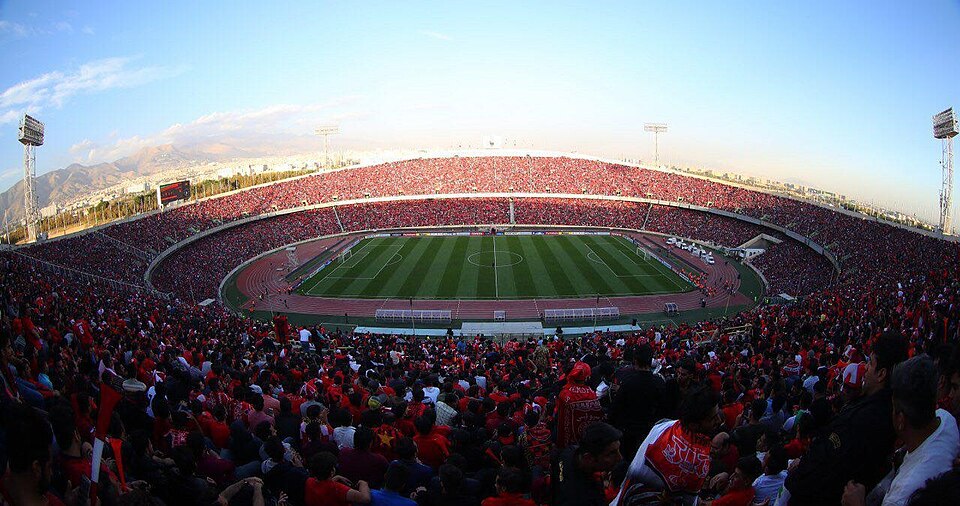
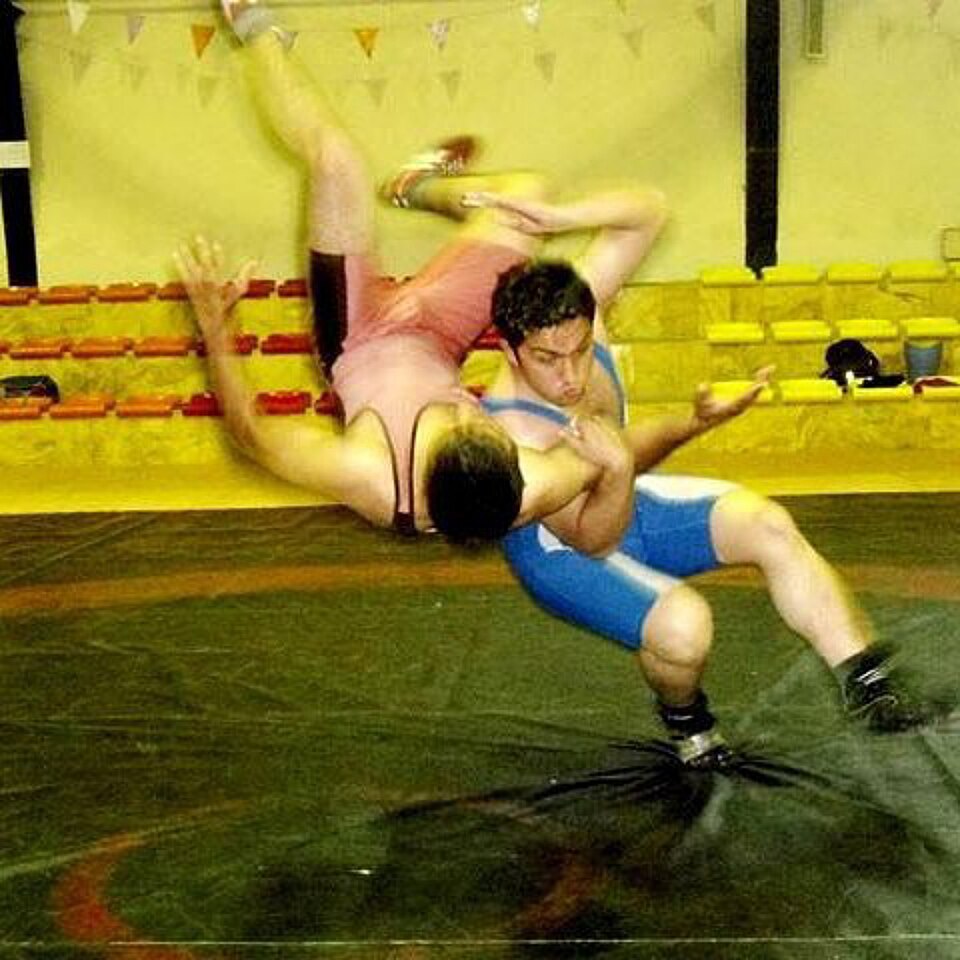
Football is Iran's consuming passion: Team Melli has reached the FIFA World Cup six times (1978, 1998, 2006, 2014, 2018, 2022) and won three consecutive Asian titles between 1968 and 1976, while Tehran's vast Azadi Stadium fills for the Persepolis-Esteghlal derby, one of Asia's fiercest club rivalries. Iran's 1998 World Cup victory over the United States in Lyon remains one of the tournament's most storied single matches. Wrestling, however, is the historic national sport, rooted in the 'pahlevani' heroic athletics of the zurkhaneh inscribed by UNESCO; Gholamreza Takhti, Olympic freestyle champion at Melbourne 1956, is revered to this day as much for his chivalry as his titles. The Olympic medal table tells the story — the bulk of Iran's medals have come in wrestling, weightlifting, and taekwondo, including super-heavyweight lifter Hossein Rezazadeh's back-to-back golds at Sydney 2000 and Athens 2004. Kimia Alizadeh became the first Iranian woman to win an Olympic medal, taking taekwondo bronze at Rio 2016. Iran also claims polo's deep ancestry: chogan, the horseback game of the ancient Persian courts, is UNESCO-inscribed heritage, and volleyball has surged into a strong second place in national affection.
Sports & Inspiring Athletes, Iran
Mahdi Zare/Fars News Agency / CC BY 4.0

Notable Educational Programs

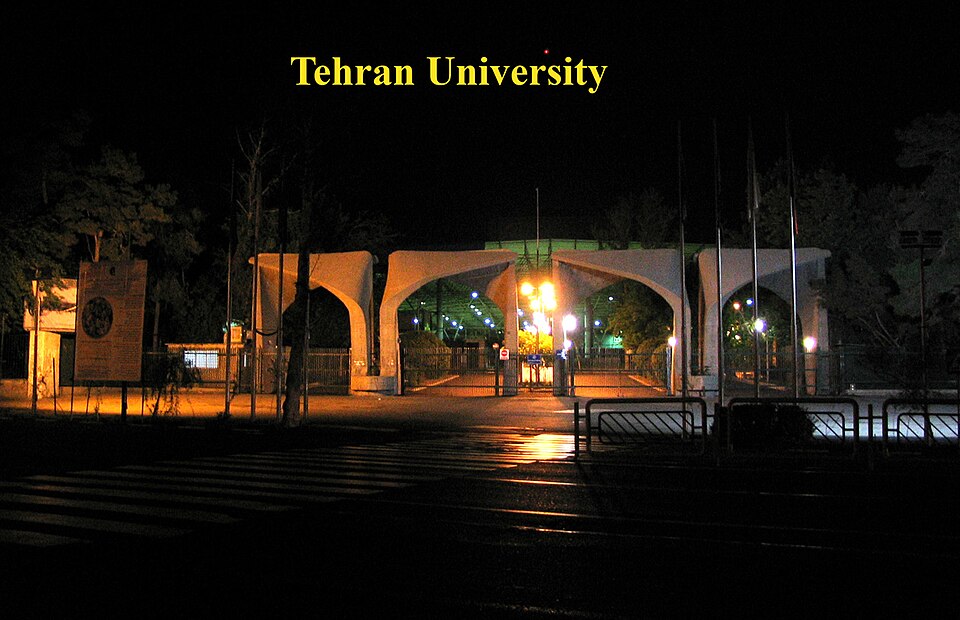
Modern Iranian higher education dates to the founding of the University of Tehran in 1934, still the country's flagship, and the system has since grown into one of the region's largest — comprehensive state universities, elite engineering schools, the sprawling Islamic Azad University network, and the centuries-old seminaries of Qom. Admission to public universities runs through the konkur, a fiercely competitive national entrance examination that shapes adolescent life much as its counterparts do in East Asia. Literacy campaigns after 1979, building on earlier efforts, raised reading rates dramatically within a generation, and schooling now reaches essentially all children at the primary level. One of the system's most striking features is gender balance: women have in many years made up around half or more of university students, with strong representation in medicine and the sciences. With a median age of 35.2 years, Iran's large educated cohort — particularly its engineers and physicians — is visible both in a substantial global diaspora and in the country's scientific publishing output.
Notable Educational Programs, Iran
Behrooz Rezvani / CC BY 3.0

Wars & Conflicts

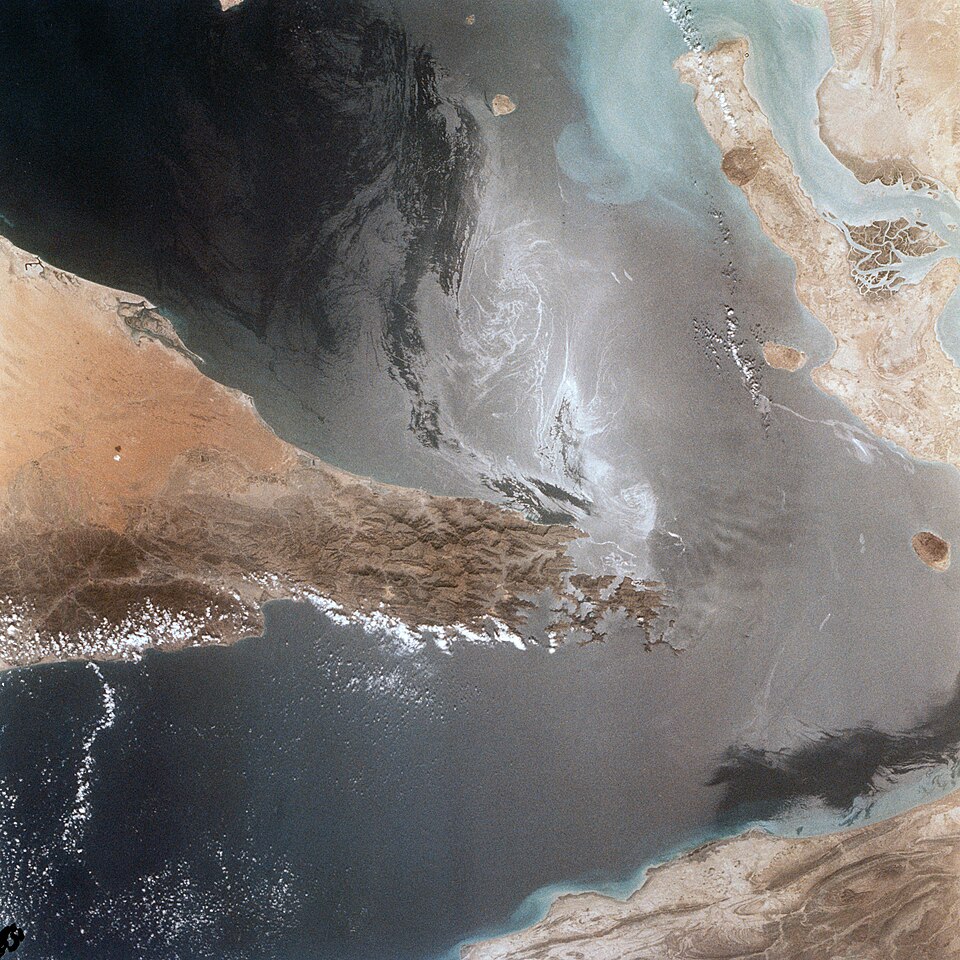
As of 10 August 2026, Iran remains formally at war with the United States and Israel — a conflict that began on 28 February 2026 with US-Israeli air strikes that killed Supreme Leader Ali Khamenei, now succeeded by his son Mojtaba Khamenei — but the fragile pause in direct US-Iran strikes that took hold around 1-2 August, when President Trump said he had called off a planned attack, has broadly held through 10 August, without maturing into a formal ceasefire. The first days of the pause were turbulent: Trump said negotiations would resume on Monday 3 August, but The Washington Post reported on 2 August that Iran rejected his claim that talks would restart, and CNN reported Trump then called Iran's leadership 'unbelievably duplicitous' after Tehran said it was dealing only with Oman. Since then Washington's posture has shifted toward economic pressure: Trump told Axios on 9 August that the US is 'only semi-negotiating' with Iran and 'low-keying it,' citing Iranian inflation and depleted finances, and Bloomberg reported on 10 August that he was signaling reliance on the naval blockade and economic strain rather than new military strikes. The Strait of Hormuz remains effectively closed and the US naval blockade of Iran remains in force. On the diplomatic track, Foreign Minister Abbas Araghchi said Iran and Oman were 'very close' to a deal on managing transit through the strait via a temporary route, and Oman called the talks 'positive and constructive' (CNN and Bloomberg, 8 August 2026) — but Iran's Supreme National Security Council declared on 8 August that the strait will not reopen until the US 'corrects its behavior,' issuing sweeping conditions that CBS News and Fortune reported include lifting the blockade and sanctions, withdrawing US forces from the region, releasing frozen assets, compensating Iran for war damage, and permanently ending attacks on Iran and its regional allies; Tehran also says no direct talks can occur until Washington honors the June interim deal. Attacks on shipping continue: the UAE said an Iranian missile targeted an ADNOC tanker in the strait on 8 August with no casualties — reported as the 16th attack on an ADNOC vessel since February — which Iran's Gulf neighbors condemned (Al Jazeera and US News & World Report, 8 August 2026). The war's regional spillover has intensified through Iran-aligned Houthi forces: the Houthis claimed ballistic-missile attacks on two Saudi oil tankers on 5 August (CNN and Bloomberg, August 2026) and a drone strike on Saudi Aramco's Jazan refinery on 9 August — Saudi authorities said the fire was extinguished with no injuries (NPR and Reuters, 9 August 2026). On 7 August, Saudi Arabia, Turkey, and Pakistan signed the 'Mecca Joint Defense Agreement,' a mutual-defense pact treating an attack on one as an attack on all; Turkey said it is not aimed at Iran (Al Jazeera and Foreign Policy, 7 August 2026). On the US side, CNN and CNBC reported on 9 August a Pentagon memo, first reported by The Washington Post, in which Deputy Defense Secretary Steve Feinberg gave defense contractors 21 days to submit plans for faster weapons production, with US Patriot interceptor stocks reportedly down at least 65% from pre-war levels (estimates cited ranged from 759 to 827 remaining, against roughly 2,330 before the war). Trump has continued to say a Hormuz deal 'could be soon' while warning of a 'harsh' new attack if the strait stays closed (Fox News, 5-7 August 2026); Tehran, per Al Jazeera's 10 August reporting, insists there is 'no military solution' to reopening it.
Current as of 2026-08-10
Wars & Conflicts, Iran
NASA / Public domain

Land & Border Disputes

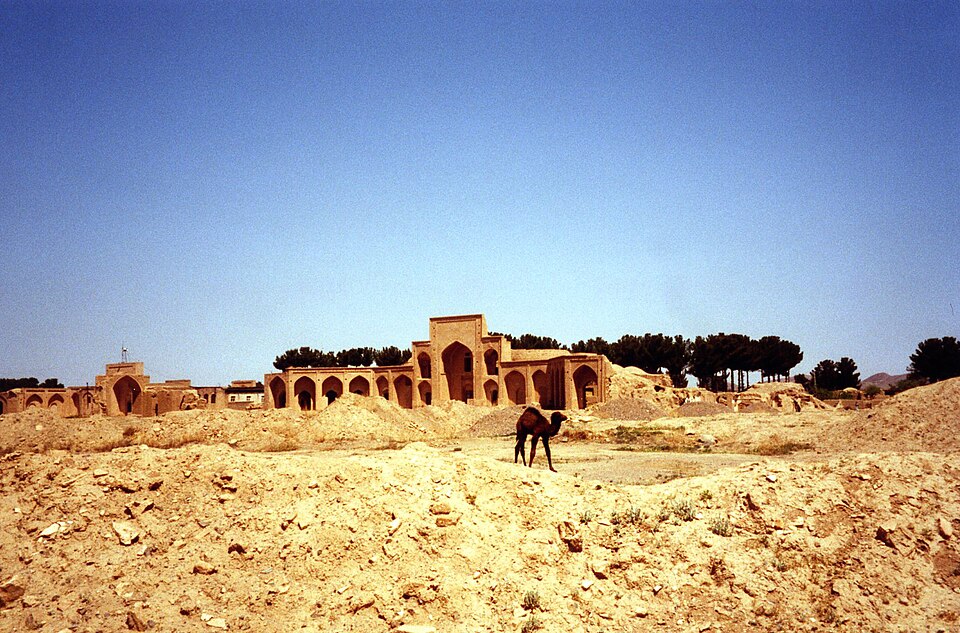
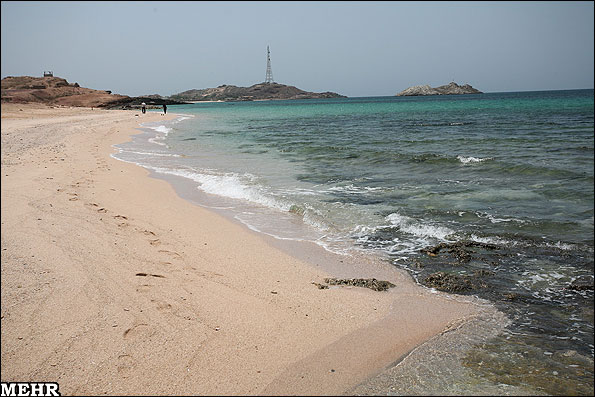
Iran's longest-running territorial dispute concerns three small Persian Gulf islands — Abu Musa and the Greater and Lesser Tunbs — which Iran has administered since 1971 and which the United Arab Emirates also claims; the islands sit near the approaches to the Strait of Hormuz, giving the disagreement strategic weight far beyond their size. Iran maintains the islands are historically Iranian territory, while the UAE has called for direct negotiations or international adjudication, and the dispute periodically resurfaces in regional diplomacy. In the north, the legal division of the Caspian Sea among Iran, Azerbaijan, Kazakhstan, Russia, and Turkmenistan was substantially addressed by a 2018 convention on the sea's legal status signed by all five littoral states, but aspects of seabed and subsoil delimitation — which govern rights to offshore oil and gas fields — remain unsettled. Iran, holding the shortest Caspian coastline, has been the most cautious of the five about finalizing boundaries. Iran and Iraq also share a long history of friction over the Shatt al-Arab waterway boundary, formally addressed in the 1975 Algiers Agreement.
Land & Border Disputes, Iran
Mohammad jafari / CC BY 4.0
Land, Life & Legacy

Land & Climate

Iran covers about 1.65 million square kilometres and is essentially a high interior plateau rimmed by mountains. The Zagros range runs northwest to southeast down the western side, and the oilfields lie along its southwestern flank; the Alborz range fronts the Caspian in the north and carries Mount Damavand, a dormant volcano at 5,610 metres and the highest peak in the Middle East. Between the ranges lie the great interior basins, the salt desert of the Dasht-e Kavir and the Dasht-e Lut, where satellite instruments have recorded some of the hottest land-surface temperatures ever measured. Iran has coasts on two very different seas: the Caspian in the north, backed by a narrow humid strip where rice and tea are grown, and the Persian Gulf and Gulf of Oman in the south, with the Strait of Hormuz at their entrance. Most of the country is arid or semi-arid and continental, with cold highland winters and hot dry summers. Water is the pressing environmental problem: aquifers are being drawn down, rivers over-allocated, and Lake Urmia has shrunk dramatically.

Entertainment

Iranian leisure has ancient choreography. The thirteenth day of Nowruz, Sizdah Bedar, sends virtually the entire nation outdoors to picnic — a ritual so universal that parks, riverbanks, and roadside verges disappear beneath carpets and samovars. Picnicking is a year-round passion, and so is hiking: Tehranis stream up the Darband and Tochal trails of the Alborz on Fridays, and the same range holds Dizin and Shemshak, ski resorts among the highest in the world, with long powder seasons above 3,000 meters. Families summer on the humid, green Caspian coast; winter sun-seekers fly to Kish and Qeshm islands in the Gulf. Evenings belong to the teahouse and the garden — Isfahan's crowds promenade across its Safavid bridges, Shirazis gather at the tombs of Hafez and Saadi to read poetry aloud — and to football, whose derby days fill Tehran's Azadi Stadium. UNESCO-listed bazaars like Tabriz's vaulted labyrinth still double as social worlds as much as marketplaces.
Entertainment, Iran
Ninara / CC BY 2.0

Art & Museums

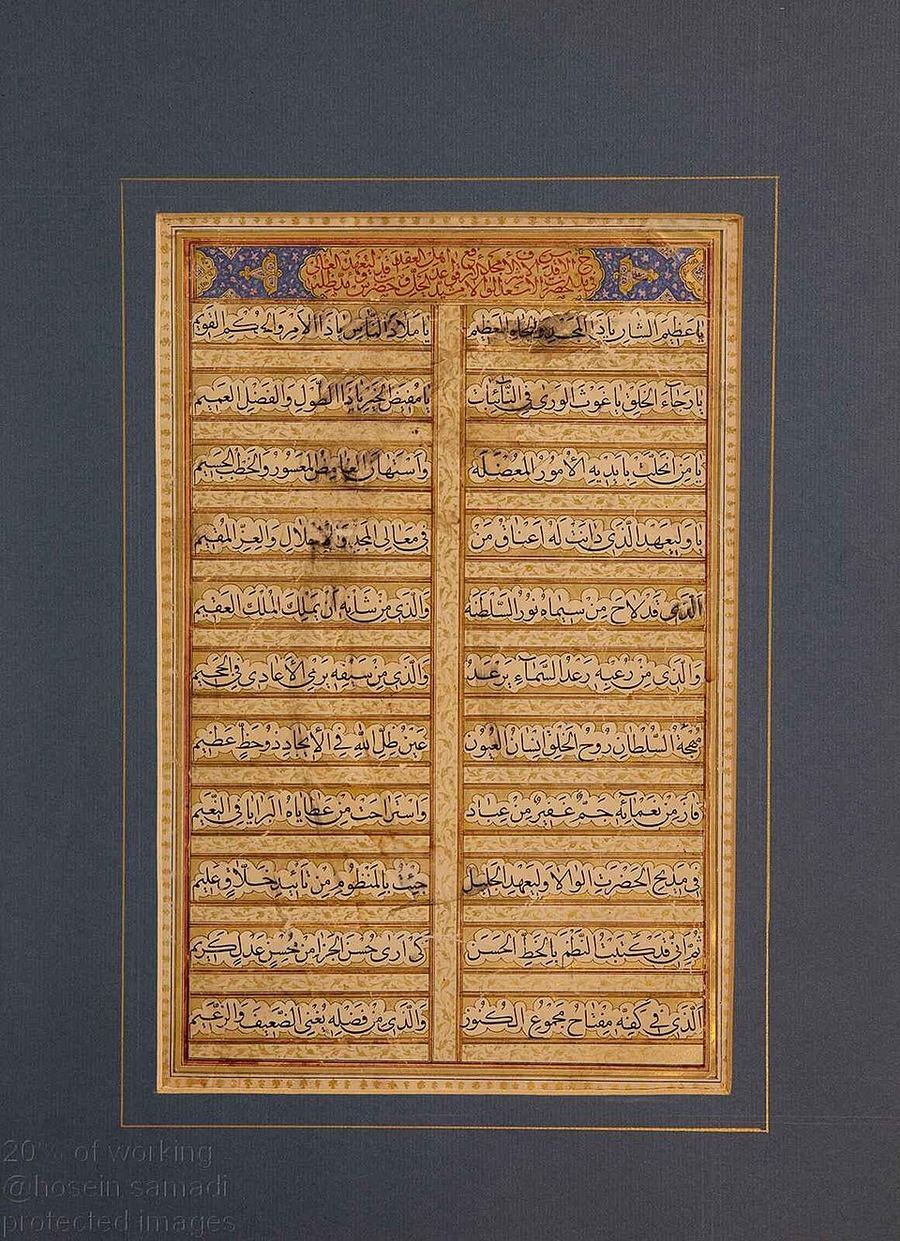
Iran's defining pictorial art is the miniature — jewel-like manuscript painting that reached its height when Kamal ud-Din Behzad directed the Herat workshops in the fifteenth century and later led the Safavid royal atelier in Tabriz; Reza Abbasi's languid single-page figures defined the Isfahan school a century on, and the art form is inscribed by UNESCO as intangible cultural heritage. Calligraphy holds equal rank: the hanging elegance of nastaliq script, perfected by masters such as Mir Emad, is considered the visual signature of Persian culture. Kamal-ol-Molk brought European academic realism to the Qajar court in the nineteenth century, and the 1960s Saqqakhaneh movement — Parviz Tanavoli's 'Heech' sculptures, Hossein Zenderoudi's talismanic canvases, Monir Farmanfarmaian's mirror mosaics — fused folk Shia iconography with modernism, making its artists mainstays of international auctions. The Tehran Museum of Contemporary Art guards a storied trove of Western modern masters — Picasso, Pollock, Warhol — assembled before 1979 and ranked among the finest such collections outside Europe and America.
Art & Museums, Iran
anonymous / Public domain

Notable People

Iran's contribution to the human roster runs from Cyrus the Great, whose clay cylinder is often cited as an early charter of tolerant rule, through the medieval polymaths: Avicenna (Ibn Sina), whose Canon of Medicine taught European doctors for six centuries; al-Razi (Rhazes), the physician who first distinguished smallpox from measles; al-Biruni, who calculated Earth's radius with startling accuracy; and Omar Khayyam, mathematician of cubic equations and poet of the Rubaiyat. The modern era is no thinner. Maryam Mirzakhani became the first woman ever awarded the Fields Medal, mathematics' highest honor, in 2014; Ali Javan co-invented the gas laser; Shirin Ebadi won the 2003 Nobel Peace Prize, the first for a Muslim woman. Filmmakers Abbas Kiarostami and two-time Academy Award winner Asghar Farhadi carried Iranian cinema to world stature; poet Forugh Farrokhzad reshaped Persian verse in a brief, incandescent career; and Olympic wrestling champion Gholamreza Takhti remains the national ideal of the chivalrous strongman.
Notable People, Iran
Avicenna / CC BY 4.0

Inventions & Breakthroughs

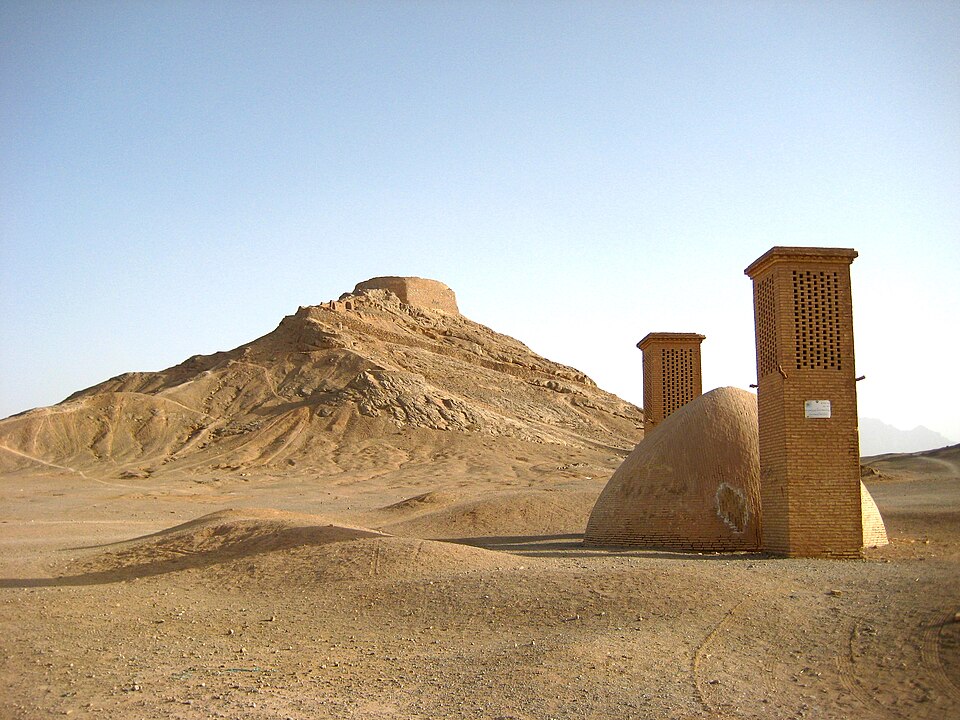
Persian ingenuity solved the desert. The qanat — gravity-fed underground aqueducts running for kilometers — made civilization possible on an arid plateau, and its companions are equally elegant: the badgir windcatcher that cools buildings passively, and the yakhchal, a mud-brick dome that stored ice through summer millennia before refrigeration. The world's earliest known windmills turned in Sistan by the ninth century, grinding grain on vertical axes. The Achaemenids ran a relay postal system along the Royal Road so admired that Herodotus' description of its couriers — halted by neither snow nor rain nor heat of night — still echoes on New York's main post office. Persian scholars of the Islamic Golden Age then industrialized knowledge itself: al-Razi pioneered distillation chemistry and clinical observation, Avicenna systematized medicine, and al-Khwarizmi's treatises gave the world 'algebra' and, through his Latinized name, the 'algorithm.' Even leisure traces back to Persia: polo began as chogan in its royal courts — a UNESCO-recognized heritage — and backgammon's ancestors were played on the plateau.
Inventions & Breakthroughs, Iran
Taranis-iuppiter / CC BY-SA 3.0

Science & Technology

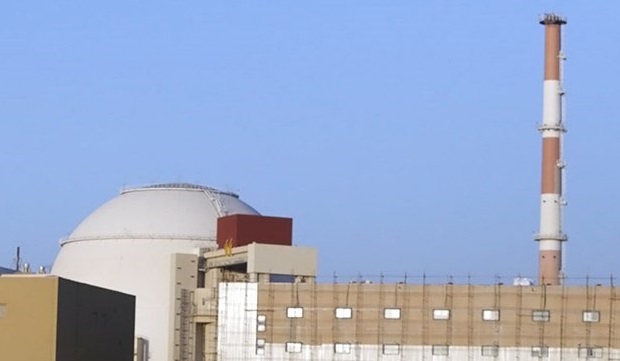
Iran's oldest technology is hydraulic: the qanat, a gently sloping underground tunnel that carries groundwater from an upland aquifer to a settlement without pumping, has been in use for millennia and is inscribed by UNESCO as the Persian Qanat, while the windcatcher, or badgir, is a matching piece of passive cooling architecture. The medieval Persian contribution to science was central, from al-Khwarizmi, whose name gives us the word algorithm and whose book gives us algebra, through Avicenna's Canon of Medicine, to Omar Khayyam's calendar reform and Nasir al-Din al-Tusi's observatory at Maragheh. In modern times the country produces a very large number of engineering graduates through Sharif University of Technology, the University of Tehran and Amirkabir University; Maryam Mirzakhani, a Sharif graduate, became in 2014 the first woman awarded the Fields Medal, for work on the geometry of Riemann surfaces. Iran operates the Bushehr nuclear power plant and a heavily contested uranium enrichment programme, and it placed the Omid satellite in orbit on a domestically built launcher in 2009. The Royan Institute is regionally prominent in stem-cell and fertility research.
On The World Stage
Champions of Iran

Champions & Defining Moments

Iran's Olympic ledger is anchored in the combat sports. Freestyle wrestler Gholamreza Takhti won gold at Melbourne 1956 with silvers either side, and successors like Hassan Yazdani — gold at Rio 2016, silver at Tokyo — have kept Iran among the world's elite wrestling nations. Super-heavyweight lifter Hossein Rezazadeh took back-to-back golds at Sydney 2000 and Athens 2004 with world-record totals; taekwondo fighter Hadi Saei collected golds in 2004 and 2008 to become Iran's most decorated Olympian, and Kimia Alizadeh's Rio 2016 bronze made her the first Iranian woman on an Olympic podium. In football, Team Melli has qualified for six FIFA World Cups; Ali Daei's 109 international goals stood as the men's world record until 2021, and the 2-1 victory over the United States at France 1998 remains the national team's most celebrated night. Sitting volleyball adds a Paralympic dynasty, and the men's volleyball team has beaten the world's best in top-flight international play.

Wrestlingnews2025 / CC BY 4.0
Economy, Trade & Government

Currency & GDP

Iranian Rial — IRR (﷼)

GDP (PPP): $1.486 trillion (2024 est.)

Per capita: $16,200 (2024 est.)

Exports

$100.031 billion (2024 est.)

plastics, iron ore, alcohols, natural gas, refined copper (2023)

Partners: China 35%, Turkey 16%, India 8%, Pakistan 7%, Armenia 5% (2023)

Imports

$117.176 billion (2024 est.)

broadcasting equipment, vehicle parts/accessories, corn, soybeans, vehicle bodies (2023)

Partners: China 34%, UAE 20%, Turkey 11%, Brazil 8%, Germany 4% (2023)

Government

Type: theocratic republic

Independence: 1 April 1979 (Islamic Republic of Iran proclaimed); notable earlier dates: ca. 550 B.C. (Achaemenid or Persian Empire established); A.D. 1501 (Iran reunified under the Safavid dynasty); 1794 (beginning of Qajar dynasty); 12 December 1925 (modern Iran established under the PAHLAVI dynasty)

Terrain → Where People Live

How mountains, coasts, and rivers shape settlement (LandScan).

Coming — data

Migration & Ethnic Settlement

Where groups settled and how people move (GeoEPR + UNHCR).

Coming — data

Universities

Notable institutions, mappable as points.

Coming — data
Economy & government facts: CIA World Factbook (public domain), via OpenFactBook / factbook.json.
Every fact and narrative claim will carry a visible source citation. Data-driven sections light up automatically wherever HERA has coverage.