HERA · Human Entity Reference Atlas by Masego Inc

← Iceland 🌐 3D View
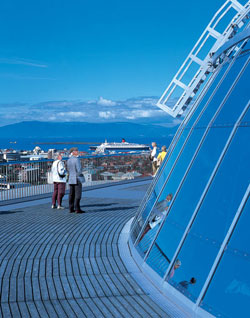
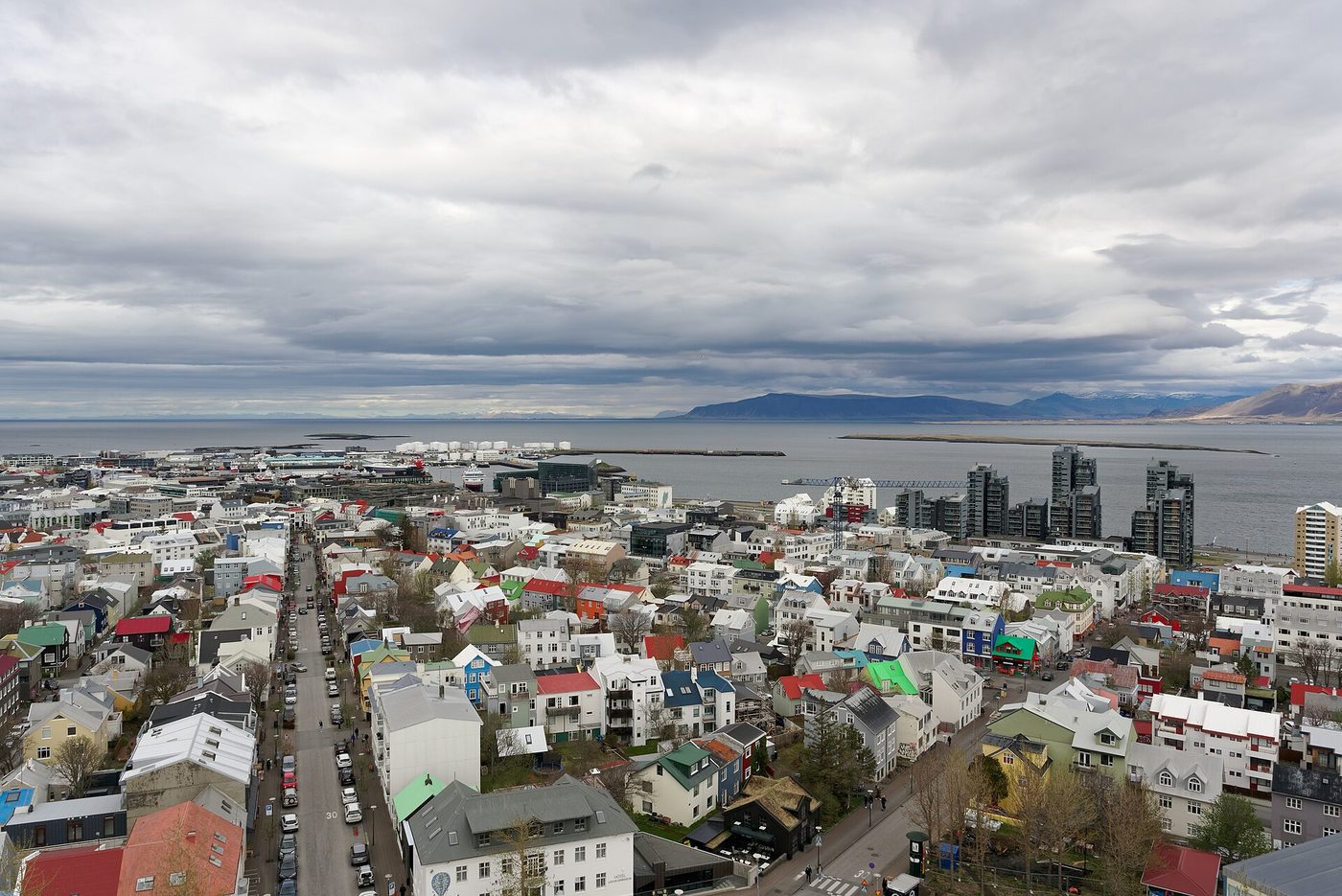
View of Reykjavík from Hallgrímskirkja, 20230507 1229 5733, Iceland
Iceland ISL
View of Reykjavík from Hallgrímskirkja, 20230507 1229 5733 — Photo: Jakub Hałun / CC BY-SA 4.0 via Wikimedia Commons
Did You Know The English word geyser comes from Geysir, the name of a single hot spring in the Haukadalur valley in southern Iceland. — Encyclopaedia Britannica

Iceland is a unitary parliamentary republic of about 364,000 people occupying a volcanic island of roughly 103,000 square kilometres in the North Atlantic, just below the Arctic Circle and directly astride the Mid-Atlantic Ridge. Reykjavik, the capital, is the world's northernmost capital of a sovereign state and holds, with its surrounding municipalities, the great majority of the population. Settlement began in the late ninth century by Norse farmers who brought Gaelic wives and slaves with them from Ireland and Scotland, and the assembly they founded at Thingvellir in 930 is the ancestor of the modern Althing. The island passed under Norwegian and then Danish rule, became a sovereign state under the Danish crown on 1 December 1918, and declared a republic on 17 June 1944 while Denmark was under German occupation. Icelandic, a North Germanic language conservative enough that medieval sagas remain broadly readable, is the national tongue; the Evangelical Lutheran Church of Iceland is established and claims about 59% of the population. The economy runs on fish, aluminium smelted with renewable power, and tourism, and it is unusual in the developed world for generating essentially all of its electricity and almost all of its space heating from geothermal and hydroelectric sources.

CIA World FactbookEncyclopaedia Britannica
Population
364,036
Capital
Reykjavik
Currency
kr ISK
Time zones
Largest city
Reykjavik
Human Geography Themes
Loading national figures…
Largest Cities
Reykjavik206,895
In Perspective

Reykjavik's urban core is home to about 206,895 people.

Among the world's megacities, though, it's one of many — the giants of Asia and Latin America run larger still:

Reykjavik206,895
Jakarta40,545,126
Dhaka37,307,160
Tokyo33,244,670
Shanghai30,678,616
Cairo25,230,325
The Country & Its People

History

Iceland was one of the last habitable places on Earth to be settled. Norse farmers arrived from about 874, and the Landnamabok records Ingolfur Arnarson as the first to make a permanent home at what became Reykjavik. In 930 the settlers established the Althing, an open-air assembly of chieftains at Thingvellir, which around the year 1000 resolved the country's religious division by adopting Christianity while permitting private pagan practice. The thirteenth century produced the sagas — prose narratives of the settlement families written in Icelandic — and also the internal warfare of the Sturlung era, which ended when Icelandic chieftains accepted the Norwegian crown between 1262 and 1264. Danish rule followed, along with a royal trade monopoly imposed from 1602 that lasted until 1787. The Laki fissure eruption of 1783 and 1784 poisoned pasture with fluorine and sulphur and caused the famine known as the Mist Hardships, killing roughly a fifth of the population. A nineteenth-century independence movement led by Jon Sigurdsson secured home rule in 1904 and sovereignty under the Danish crown in 1918. British troops occupied the island in 1940 and American forces relieved them in 1941; the republic was proclaimed at Thingvellir on 17 June 1944. The banking system collapsed spectacularly in October 2008, and tourism drove the recovery that followed.
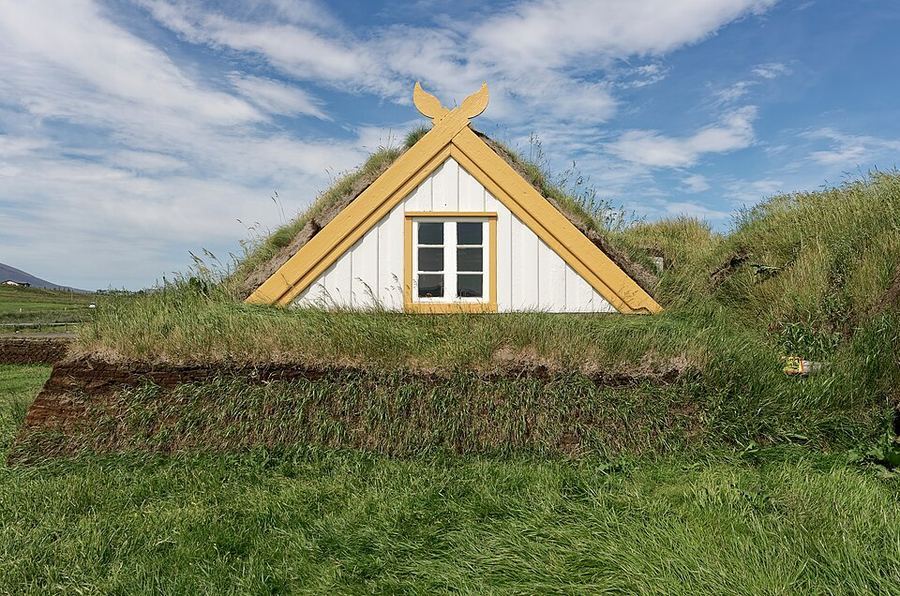
Culture

Iceland is a literary culture before it is anything else. The sagas gave a small, poor farming society a body of prose narrative that European literature has few equals for, and the habit stuck: the country publishes and reads books at a rate near the top of any international comparison, and the jolabokaflod, the flood of new titles released before Christmas so that books can be given on Christmas Eve, is a genuine national ritual rather than a marketing slogan. The language itself is treated as heritage to be actively maintained, with new words coined from Old Norse roots rather than borrowed — the word for computer, tolva, fuses the words for number and prophetess. Icelanders use patronymics rather than family surnames, so that a woman named Anna whose father is Jon is Anna Jonsdottir, and the national telephone directory is alphabetised by first name. The geothermal swimming pool, present in almost every settlement, functions as the village square, with serious conversation conducted in the hot pots at the edge. Equality is a point of self-definition: the Women's Day Off of 24 October 1975 stopped the country, and Iceland ranks at the top of international gender comparisons.

Points Of Pride

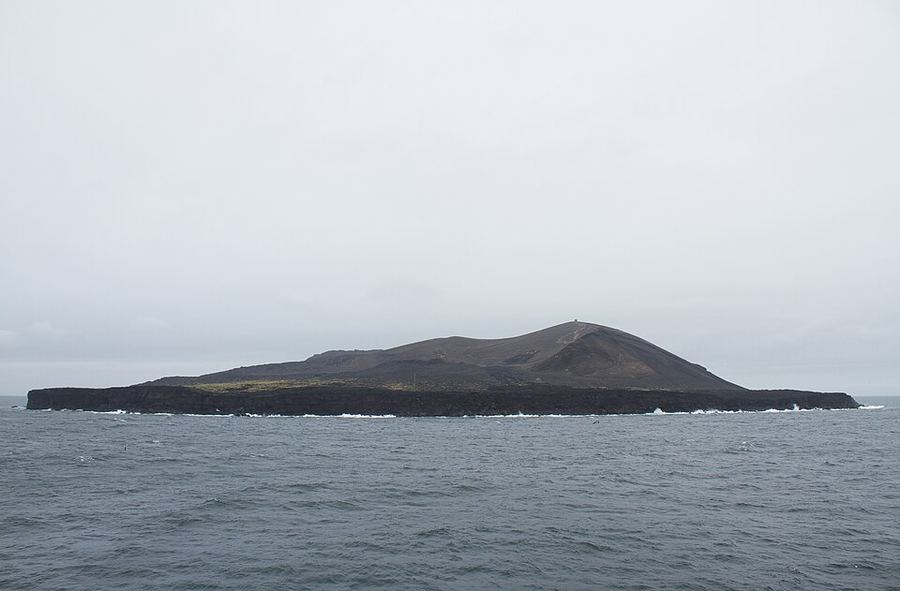
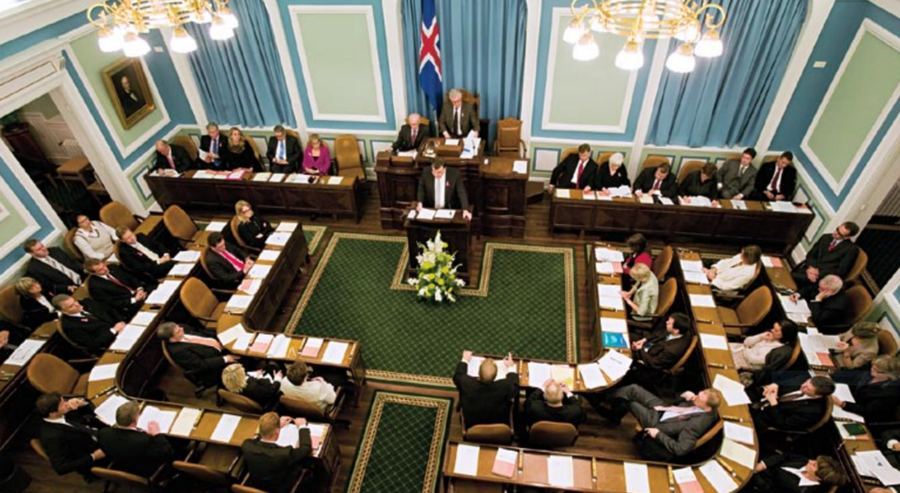
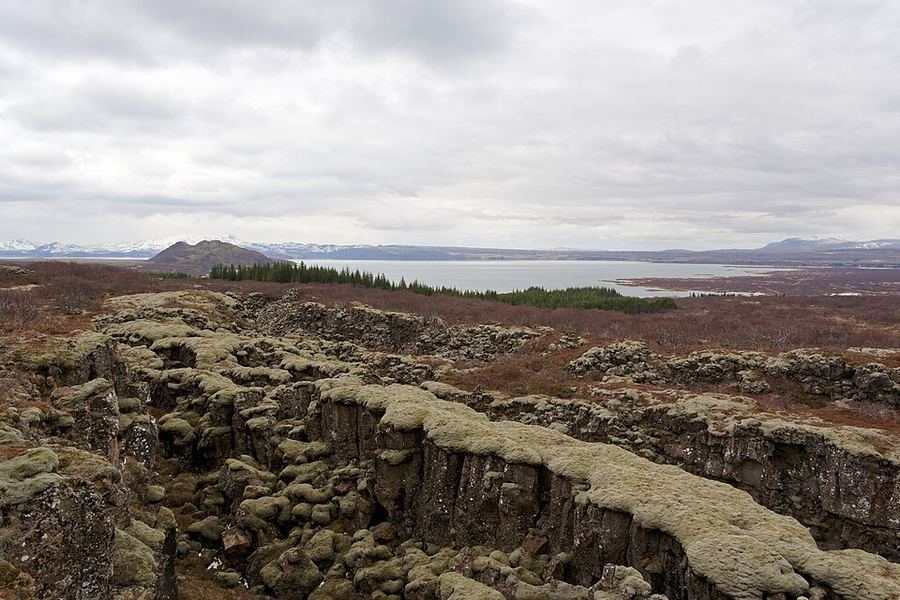
The Althing, founded at Thingvellir in 930, is generally described as the oldest parliament in the world still in existence, though it was suspended for several decades in the nineteenth century before being restored. Thingvellir itself, where the assembly met on the rift between the North American and Eurasian plates, was inscribed as a UNESCO World Heritage site in 2004 for that cultural history. Two natural properties followed: Surtsey in 2008, an island that rose out of the sea in an eruption between 1963 and 1967 and has been kept almost entirely off-limits so that scientists can watch colonisation by plants and animals from the beginning; and Vatnajokull National Park in 2019, built around the largest ice cap in Europe by volume and the volcanoes beneath it. Halldor Laxness won the Nobel Prize in Literature in 1955. In 1980 Iceland elected Vigdis Finnbogadottir as president, the first woman anywhere to win a democratic direct election as head of state, and in 2009 Johanna Sigurdardottir became the world's first openly gay head of government. The medieval manuscripts returned from Denmark from 1971 onward were received as national treasures, and the collection is recognised on the UNESCO Memory of the World register.

Cultural Fusion

The founding population was itself a mixture. The settlers were Norse, but they came by way of Ireland, Scotland and the Northern Isles, and genetic studies of modern Icelanders find a strongly Norse paternal ancestry alongside a substantially Gaelic maternal one — the consequence of Norse men arriving with Celtic wives and captives. Traces survive in personal names such as Njall and Kjartan and in some scholarly arguments about saga narrative style. Five and a half centuries of Danish rule left administrative vocabulary, Lutheran church organisation and a taste for particular pastries, and Danish remained a required school subject long after independence. The Second World War brought a second decisive contact: British and then American troops outnumbered the adult male population, and the United States base at Keflavik, which operated from 1951 until 2006, made American radio, food and popular music part of everyday Icelandic life a generation earlier than elsewhere in the Nordic region. The most recent layer is European labour migration. Icelanders now make up about 79% of residents, with Poles at 5.8% forming the largest immigrant community, followed by Danes and, since 2022, a significant Ukrainian population, so that Reykjavik schools operate in more languages than at any point in the country's history.

Music & Dance

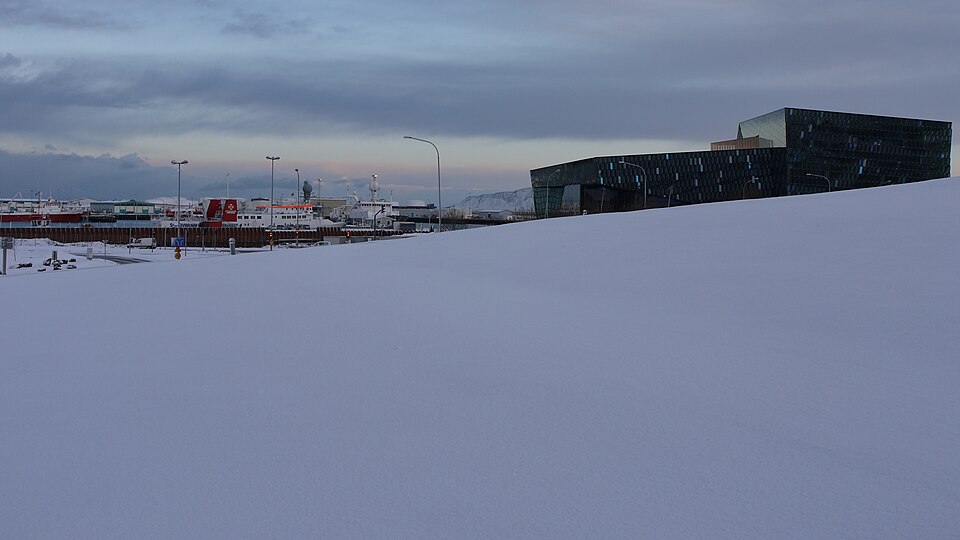
The oldest Icelandic musical form is the rimur, long narrative poems chanted rather than sung to fixed metres, a tradition that carried saga material through centuries in which the country had almost no instruments. Alongside it survived tvisongur, a two-part singing in parallel fifths that had disappeared elsewhere in Europe and remained in Icelandic farm practice into the twentieth century, and the vikivaki, a chain dance accompanied by sung verse. Formal composition arrived late; Jon Leifs, whose orchestral work Hekla attempts to render a volcanic eruption in sound, remains the country's most distinctive twentieth-century composer. What made Icelandic music globally visible was pop. Bjork, first with the Sugarcubes and then in a solo career of unusual formal ambition, became the country's most recognisable cultural export; Sigur Ros built slow, high-register rock sung partly in an invented vocabulary; and Of Monsters and Men, Kaleo and the jazz singer Laufey have all reached international audiences since. The Iceland Airwaves festival, held in Reykjavik each autumn in bars and churches as well as concert halls, functions as the industry's shop window, and Harpa, the glass-faceted concert hall on the Reykjavik harbour opened in 2011, gave the Iceland Symphony Orchestra a permanent home.

Cuisine & Misattributed Foods

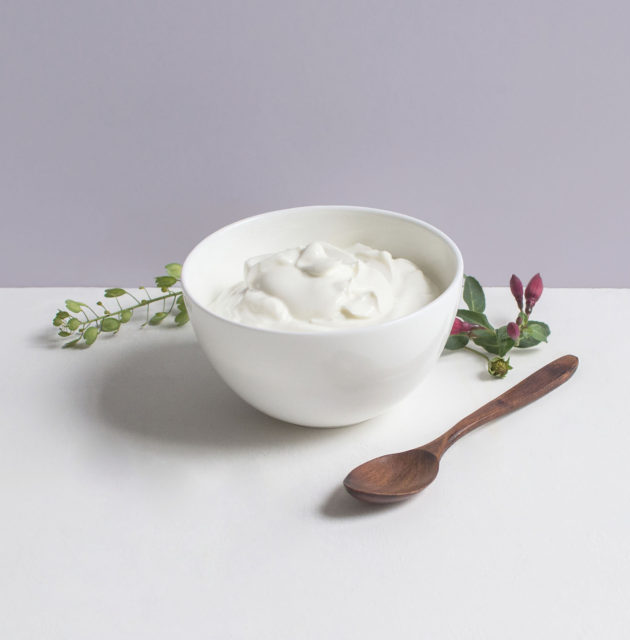
Icelandic food was shaped by a treeless island with no grain and long winters, which meant preserving everything. Lamb, raised on free-ranging summer pasture, and fish, principally cod and haddock, are the two pillars. Skyr, a thick cultured dairy product technically closer to a fresh cheese than a yoghurt, has been made since the settlement and is now an export. Preservation techniques account for the most distinctive dishes: hangikjot, lamb smoked over sheep dung and birch and eaten at Christmas; hardfiskur, wind-dried fish torn into strips and spread with butter; and the notorious hakarl, Greenland shark buried and fermented for months to break down the toxins that make it otherwise inedible, traditionally taken with a shot of the caraway spirit brennivin. These, with soured ram's testicles and singed sheep's head, are assembled into the Thorramatur platter eaten at midwinter Thorrablot feasts, more as a rite than as everyday eating. Ordinary meals lean on plokkfiskur, a fish and potato mash, and on rye bread that in some districts is still baked by burying the dough in geothermally heated ground. Geothermal greenhouses supply tomatoes and cucumbers year-round, and the lamb hot dog, sold from harbourside stands, is the national street food.

National Dress

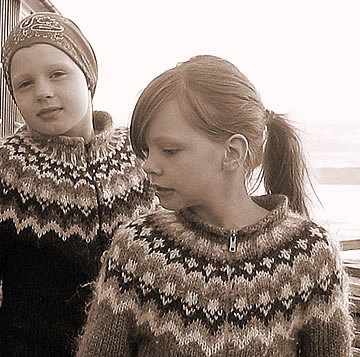
The Icelandic national costume, the thjodbuningur, exists in several distinct historical forms rather than one, and all of them are worn in earnest at confirmations, weddings and on the national day. The oldest surviving women's form is the faldbuningur, characterised by a tall curved white headdress. From it developed the peysufot, a plainer dark ensemble with a knitted jacket and a tasselled cap worn hanging to one side, which was everyday wear for much of the nineteenth century, and the upphlutur, in which a laced bodice in embroidered wool is worn over a white blouse with a long dark skirt. The most elaborate is the skautbuningur, a formal costume with a white veiled headdress and gold or silver embroidery, designed in the middle of the nineteenth century by the painter Sigurdur Gudmundsson as a deliberate act of national revival, along with the kyrtill. Men's national dress is a dark wool jacket and knee breeches with silver buttons. Separately, the lopapeysa — a pullover knitted from unspun Icelandic wool with a patterned yoke around the shoulders — is a twentieth-century creation that has become the informal national garment, worn daily rather than ceremonially.

Sports & Inspiring Athletes

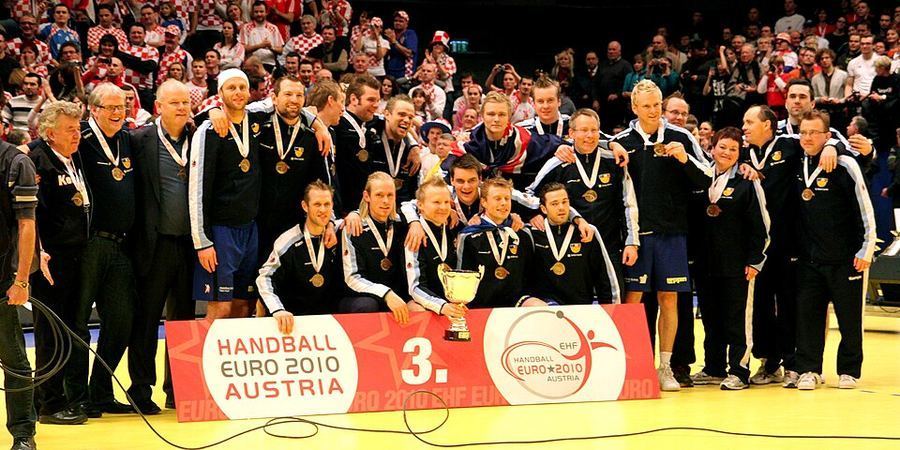
Handball is the sport Icelanders treat as their own — described locally, without much irony, as the national game — and the men's team has been a fixture at world and European championships for decades, winning Olympic silver at Beijing in 2008, the best result any Icelandic team has achieved in any sport. Football is the sport of mass participation, and the country's investment in full-size heated indoor halls and artificial pitches from the early 2000s, which allowed children to train through the winter, is generally credited with the results that followed. Glima, a form of trouser-grip wrestling with rules recorded in medieval texts, survives as a living traditional sport with a national championship, and its emphasis on balance and stepping rather than force distinguishes it from other Nordic wrestling styles. Strength sport has an outsized presence: three Icelanders have between them taken the World's Strongest Man title nine times, and Icelandic women have twice won the CrossFit Games. Basketball has a strong domestic league, swimming benefits from the pool in every town, and equestrian competition in the gaits unique to the Icelandic horse is a serious national circuit rather than a novelty.

Notable Educational Programs

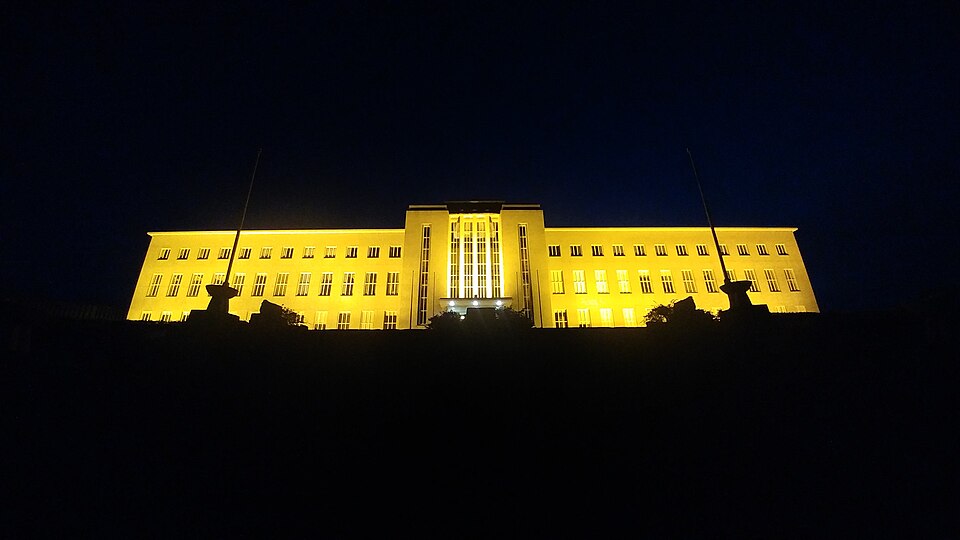
Schooling is compulsory and free from age six to sixteen in a single unified comprehensive stage, followed by upper secondary schools that lead either to the matriculation examination or to vocational qualification. Literacy is effectively universal and has been for far longer than in most of Europe, a legacy of a Lutheran requirement that households be able to read scripture combined with the long winters of a farming society. The University of Iceland, founded in Reykjavik in 1911 on the centenary of Jon Sigurdsson's birth, remains the largest institution and charges only a registration fee rather than tuition; Reykjavik University, the Agricultural University and the University of Akureyri complete the sector. Icelandic Sign Language was recognised in law as a first language in 2011. Research and heritage work meet in the Arni Magnusson Institute for Icelandic Studies, which holds the medieval manuscripts repatriated from Denmark beginning in 1971 — the return of the Flateyjarbok and the Codex Regius was broadcast live and treated as a national event. Iceland participates in Nordic and European exchange schemes, and the country hosts a long-established United Nations training programme in geothermal energy that brings engineers from developing countries to study for a full academic year.

Wars & Conflicts

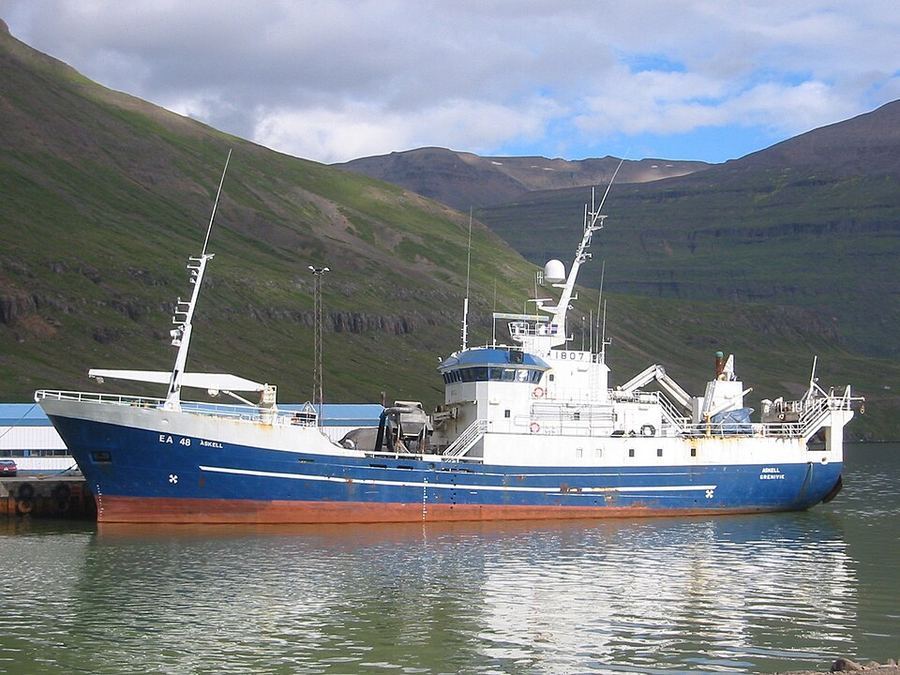
Iceland has no army, navy or air force, and has never had one — a position it has maintained even as a founding member of NATO since 1949, an accession so contested that a crowd rioted outside the Althing on 30 March that year. Defence has been provided by others: British forces occupied the island in May 1940 to keep it out of German hands, the United States took over in 1941, and an American base operated at Keflavik from 1951 until its closure in 2006, since when allied air policing has been rotational. The country's own conflicts have been fought at sea by its Coast Guard. The three Cod Wars against the United Kingdom, in 1958 to 1961, 1972 to 1973 and 1975 to 1976, arose from successive Icelandic extensions of exclusive fishing limits from four to twelve, then fifty, then two hundred nautical miles. Icelandic patrol vessels cut the trawl warps of British boats, Royal Navy frigates were deployed to protect them, ships were rammed, and Iceland broke off diplomatic relations in 1976 — but no one was killed in combat, and Iceland won each round.
Current as of 2026-08-06

Land & Border Disputes

Iceland has no land border and therefore no territorial dispute in the ordinary sense; its disagreements are about water, fish and the seabed. The most persistent concerns the Hatton-Rockall area of the north-east Atlantic, where Icelandic, British, Irish and Danish-Faroese claims to an extended continental shelf beyond 200 nautical miles overlap, submitted to the relevant United Nations commission and unresolved for decades. A second recurring dispute is over pelagic fish. As mackerel stocks shifted north into Icelandic waters after 2007, Iceland set unilateral quotas that the European Union, Norway and the Faroe Islands rejected as excessive, prompting years of failed coastal-state negotiations and threats of trade measures; comparable arguments have followed over blue whiting and herring. Iceland's whaling policy is the issue that most often puts it at odds with international opinion: the country lodged a reservation against the International Whaling Commission moratorium and has permitted commercial hunting of fin and minke whales, drawing formal protest from other governments and conservation bodies. The Icesave affair, in which the United Kingdom and the Netherlands sought repayment of depositor compensation after the 2008 bank collapse, was resolved in Iceland's favour by the EFTA Court in 2013.
Land, Life & Legacy

Land & Climate

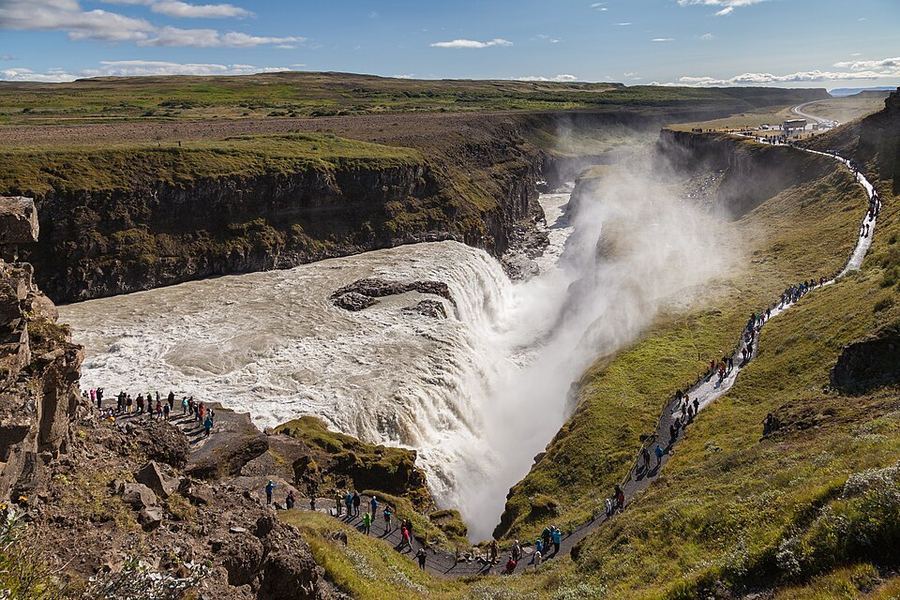
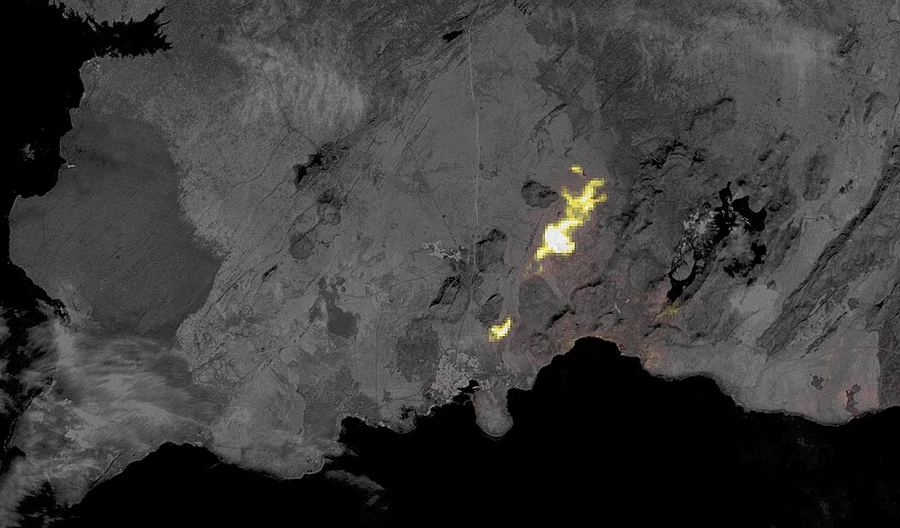
Iceland sits directly on the Mid-Atlantic Ridge, where the North American and Eurasian plates pull apart at roughly two centimetres a year, and the whole island is a product of that spreading combined with a mantle plume beneath it. The result is one of the most volcanically active places on Earth, with around thirty active systems: Hekla, Katla, Grimsvotn, Eyjafjallajokull, whose 2010 ash cloud closed much of European airspace, and the Reykjanes peninsula, which resumed erupting in 2021 after eight centuries of quiet and has forced repeated evacuations of the town of Grindavik. Ice covers about a tenth of the country, dominated by Vatnajokull, the largest ice cap in Europe by volume, beneath which subglacial eruptions generate the catastrophic outburst floods Icelanders call jokulhlaup. The highest point, Hvannadalshnukur, reaches 2,110 metres on the rim of Oraefajokull. Water is everywhere and dramatic: Gullfoss in its canyon, Dettifoss in the north-east among the most powerful waterfalls in Europe by volume of flow, and the geyser field at Haukadalur that gave the word geyser to every language. Despite the latitude the climate is subpolar oceanic rather than arctic, moderated by warm Atlantic currents, with cool summers, surprisingly mild winters near the coast, and persistent wind.

Entertainment

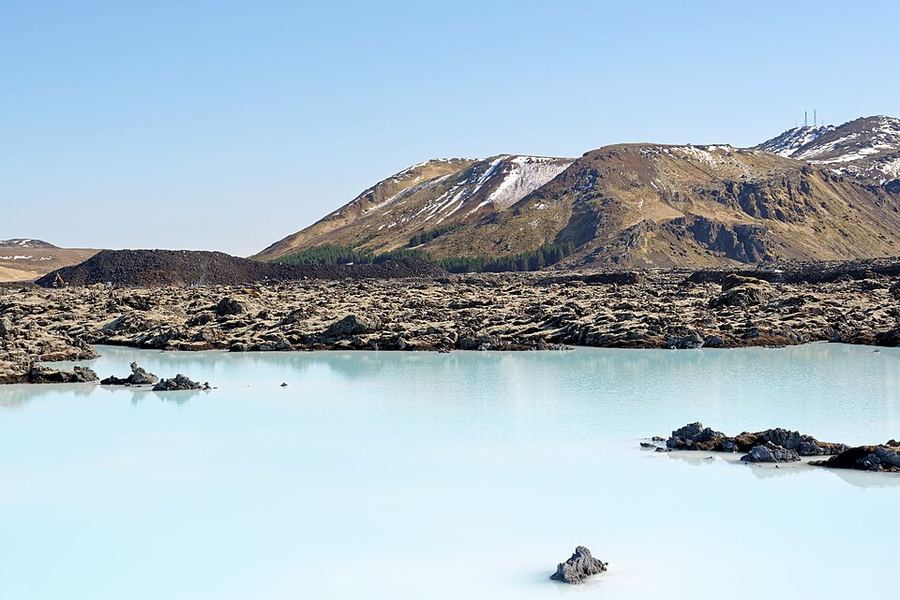
The geothermally heated public swimming pool is the centre of Icelandic leisure. Almost every settlement has one, they are open through the dark and the snow, and the ritual is the same everywhere: swim, then move to the hot pots at 38 to 42 degrees where the day's argument happens. The commercial version, the Blue Lagoon in a lava field on the Reykjanes peninsula, is the country's single most visited attraction. Beyond the water, the outdoors dominates. The Laugavegur route across the rhyolite hills from Landmannalaugar to Thorsmork is among the best-known multi-day walks in the Nordic countries; glacier hiking, ice caving and highland travel in modified vehicles have grown into a substantial industry; and summer berry-picking and autumn sheep round-ups, the rettir, remain widely practised. The Icelandic horse — small, five-gaited, and protected by a rule that no horse leaving the country may return — supports riding as a mass pastime. Chess is unusually popular for the population size, a status cemented when Reykjavik hosted the Fischer-Spassky world championship match in 1972. Long winter evenings, unsurprisingly, are given to reading, and to watching handball and football.

Art & Museums

Icelandic visual art is young, because for most of the country's history there was neither the wealth nor the material for it — the great medieval achievement was the illuminated manuscript, of which the Flateyjarbok is the most spectacular survivor. Painting begins in earnest around 1900, and its dominant figure is Johannes Kjarval, who spent a long career converting Icelandic lava fields, moss and light into a personal semi-abstract language and is commemorated in the Kjarvalsstadir gallery in Reykjavik. Sculpture arrived with Einar Jonsson, whose symbolist figures fill a purpose-built museum beside Hallgrimskirkja, and Asmundur Sveinsson, whose rounded forms drawn from folklore and labour stand in the garden of his domed studio-house. Architecture has one unmistakable landmark: Hallgrimskirkja, designed by the state architect Gudjon Samuelsson with a facade of stepped columns quoting the basalt formations of the Icelandic coast, begun in 1945 and completed in 1986. Contemporary Icelandic art travels well — Erro gave the country a major pop artist, Ragnar Kjartansson has become a leading international figure in video and durational performance, and Olafur Eliasson, of Danish-Icelandic background, designed the honeycombed glass facade of the Harpa concert hall.

Notable People

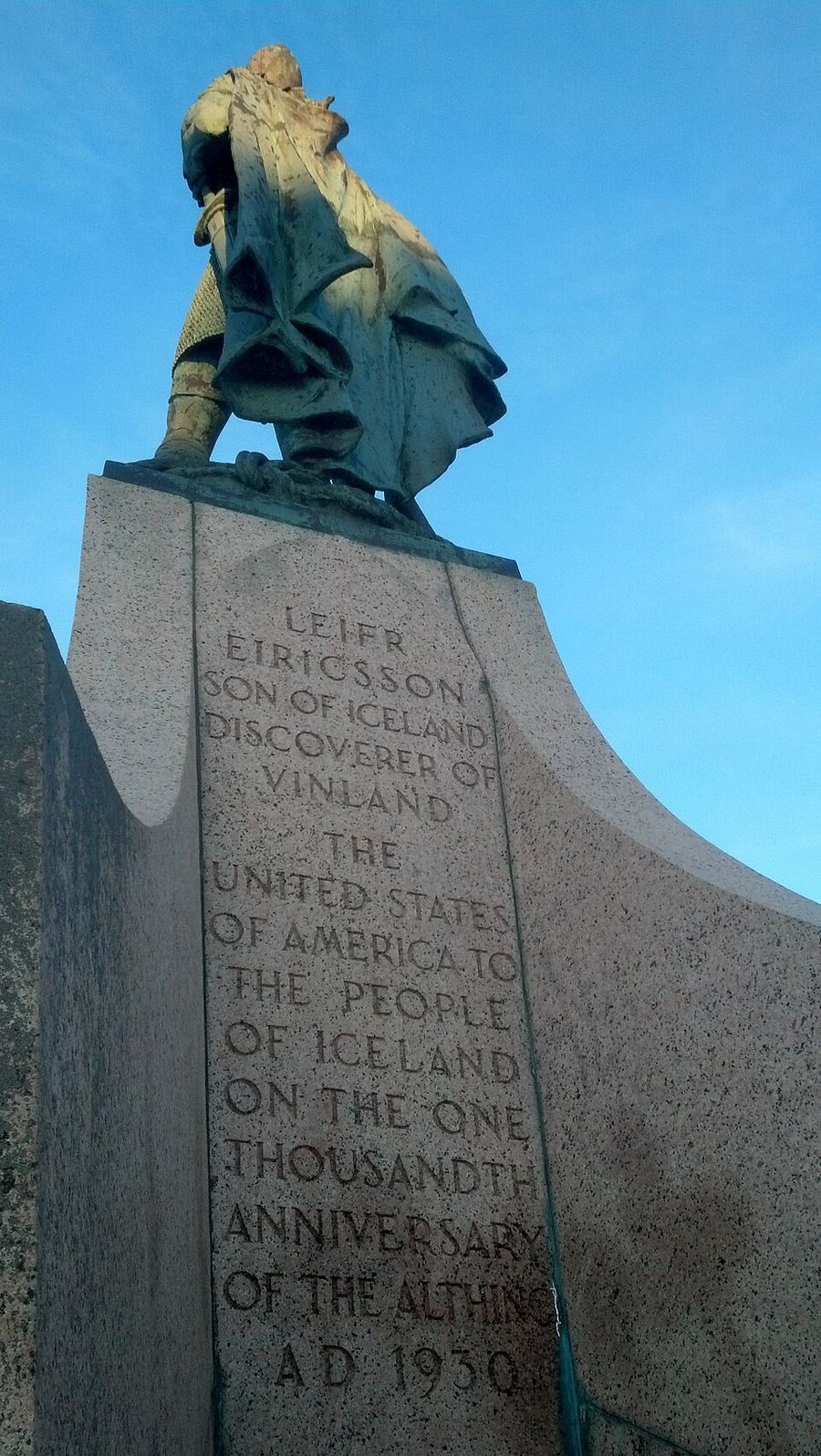
Leifur Eiriksson, born in Iceland and raised in Greenland, reached the North American coast around the year 1000, five centuries before Columbus, and a statue of him presented by the United States stands in front of Hallgrimskirkja. Snorri Sturluson, chieftain, historian and politician, wrote the Prose Edda and the Heimskringla, the two works that preserve most of what is known of Norse mythology and Norwegian royal history, and was killed at his farm at Reykholt in 1241. Jon Sigurdsson led the nineteenth-century independence campaign and gave his birthday, 17 June, to the republic. Halldor Laxness won the Nobel Prize in Literature in 1955 for novels including Independent People, an unsentimental account of an Icelandic sheep farmer's stubbornness. Vigdis Finnbogadottir served as president from 1980 to 1996 after becoming the first woman in the world elected head of state in a direct national vote. Bjork Gudmundsdottir is the country's most widely known living artist. Kari Stefansson founded deCODE genetics in 1996 and turned Icelandic genealogy and medical records into a globally significant research resource. Hafthor Julius Bjornsson, Magnus Ver Magnusson and Jon Pall Sigmarsson between them have won the World's Strongest Man title nine times.

Inventions & Breakthroughs

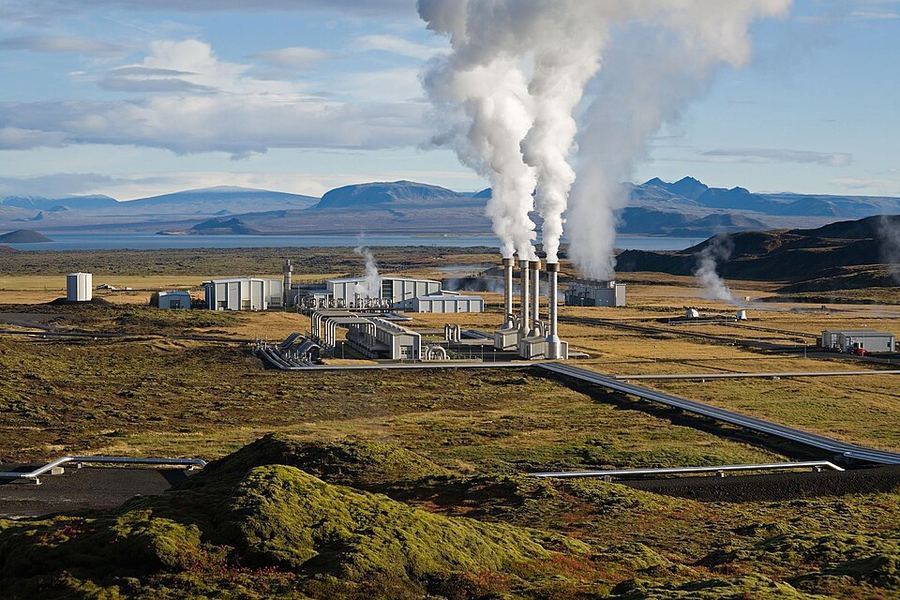
Iceland's contribution to technology is concentrated in a few fields where its geology or its population structure gave it an advantage. The most consequential is geothermal engineering: Reykjavik began piping hot water from natural fields to heat buildings in the 1930s, and the district-heating model developed there now warms roughly nine in ten Icelandic homes and has been exported through a long-running United Nations training programme based in the capital. That same geology underpins CarbFix, developed at the Hellisheidi power station, which dissolves carbon dioxide in water and injects it into basalt where it mineralises into stone within about two years — a method now studied as a template for permanent carbon storage, and the reason the direct air capture company Climeworks sited its first commercial plants in Iceland. In medicine, Ossur, founded in Reykjavik in 1971, became a world leader in prosthetics and produced some of the first commercially available bionic limbs with powered ankles, while Kerecis developed wound grafts made from cod skin. Marel, founded in 1983 out of university research, supplies a large share of the world's automated fish, poultry and meat processing equipment. deCODE's population-scale genome sequencing has produced findings on disease risk published in the leading journals.
IEANatureScienceUN

Science & Technology

Iceland's defining technical achievement is running an entire modern economy on renewable energy. Essentially all of its electricity comes from hydroelectric and geothermal generation, and roughly nine in ten buildings are heated with geothermal water piped directly from the ground, an arrangement that displaced imported coal and oil over the second half of the twentieth century and left the country with abnormally cheap, low-carbon power. That power is what makes aluminium smelting viable — aluminium is the country's largest single export despite the absence of any domestic bauxite — and has more recently attracted data centres seeking cheap electricity and free cooling. The same geology supports a distinctive research profile. Volcanology and glaciology are national specialisms of international standing, sharpened by the practical need to forecast eruptions and the outburst floods that follow them, and Icelandic monitoring data underpinned the European response to the 2010 Eyjafjallajokull ash cloud. In the life sciences, deCODE genetics has combined the country's unusually complete genealogical records with population-scale sequencing to identify disease-linked variants, publishing extensively in the leading journals. Carbon mineralisation in basalt, pioneered at Hellisheidi, has made Iceland a test bed for permanent carbon dioxide storage.
IEANatureScienceWorld Bank
On The World Stage

Champions & Defining Moments

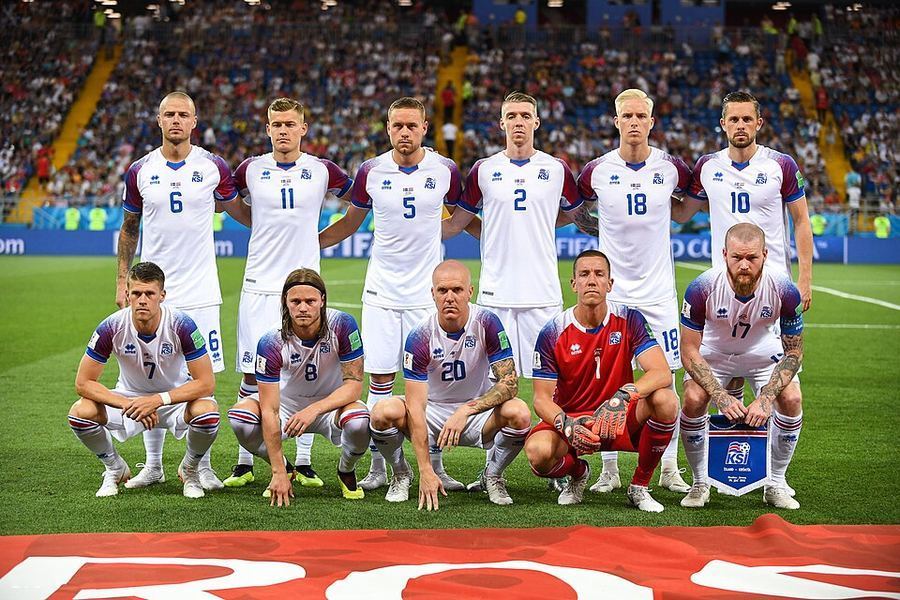
Iceland's international sporting fame arrived suddenly with football. At the 2016 European Championship in France, a nation of around 330,000 people reached the quarter-finals, eliminating England 2-1 in the round of sixteen, and the slow, accelerating thunderclap its supporters performed after matches was copied by crowds all over the world. Two years later Iceland became the least populous country ever to qualify for the FIFA World Cup, drawing its opening match against Argentina in Russia. The women's national team has been a regular qualifier for the European Championship over the same period. Handball supplies the country's most decorated international record, with Olympic silver in 2008 and repeated appearances in the closing stages of world and European championships. In strength and fitness sport Iceland is genuinely dominant relative to its size: Jon Pall Sigmarsson and Magnus Ver Magnusson each won four World's Strongest Man titles, Hafthor Julius Bjornsson took the 2018 crown, and Annie Mist Thorisdottir and Katrin Davidsdottir have each twice been crowned Fittest Woman on Earth at the CrossFit Games. Reykjavik's hosting of the 1972 world chess championship remains the country's best-known sporting event.

Economy, Trade & Government

Currency & GDP

Iceland Krona — ISK (kr)

GDP (PPP): $26.561 billion (2024 est.)

Per capita: $65,600 (2024 est.)

Exports

$13.916 billion (2024 est.)

aluminum, fish, orthopedic appliances, animal meal, iron alloys (2023)

Partners: Netherlands 27%, Germany 11%, USA 10%, UK 8%, Norway 6% (2023)

Imports

$14.298 billion (2024 est.)

refined petroleum, cars, carbon-based electronics, aluminum oxide, computers (2023)

Partners: Norway 11%, China 9%, Germany 9%, Netherlands 8%, USA 7% (2023)

Government

Type: unitary parliamentary republic

Independence: 1 December 1918 (became a sovereign state under the Danish Crown); 17 June 1944 (from Denmark; birthday of Jon SIGURDSSON, leader of Iceland's 19th-century independence movement)

Terrain → Where People Live

How mountains, coasts, and rivers shape settlement (LandScan).

Coming — data

Migration & Ethnic Settlement

Where groups settled and how people move (GeoEPR + UNHCR).

Coming — data

Universities

Notable institutions, mappable as points.

Coming — data
Economy & government facts: CIA World Factbook (public domain), via OpenFactBook / factbook.json.
Every fact and narrative claim will carry a visible source citation. Data-driven sections light up automatically wherever HERA has coverage.