HERA · Human Entity Reference Atlas by Masego Inc

← Jamaica 🌐 3D View
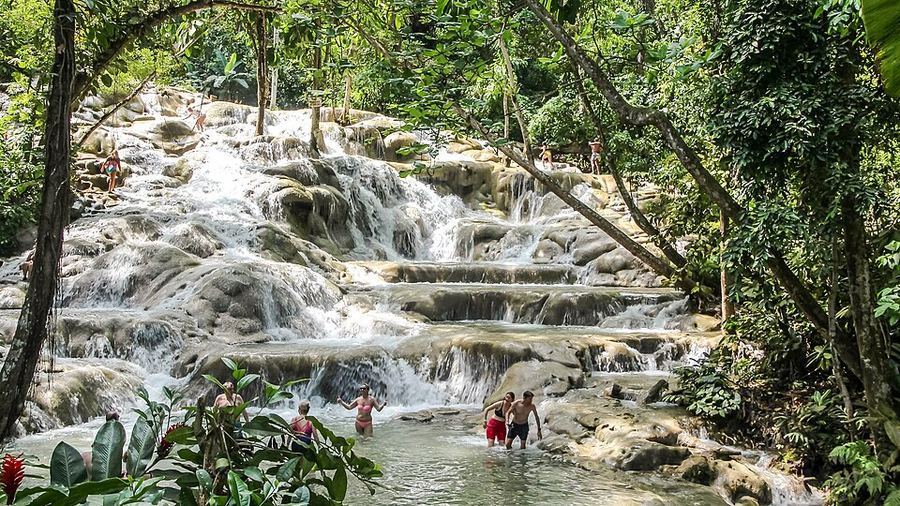
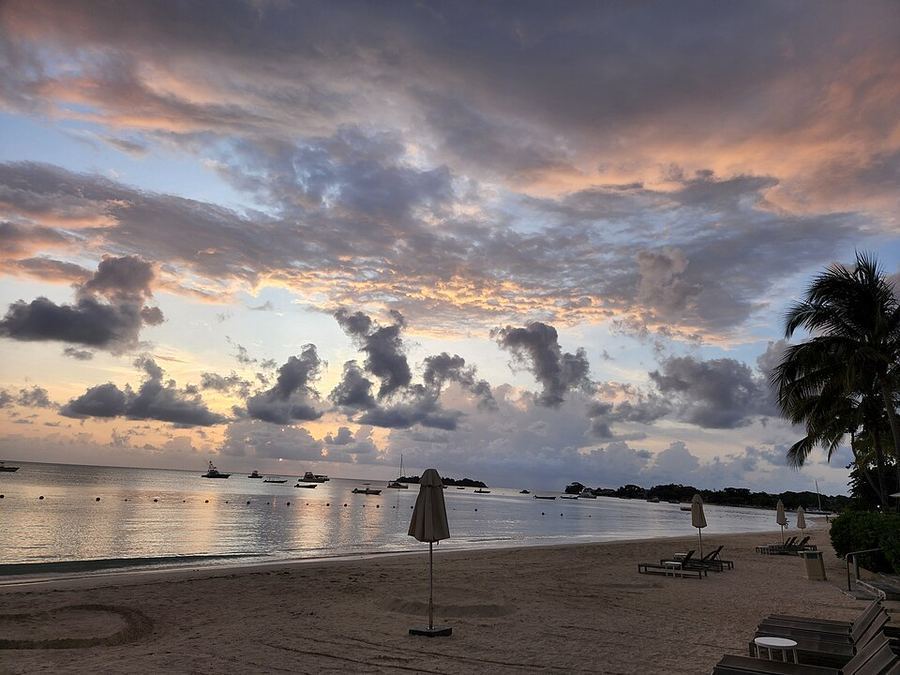
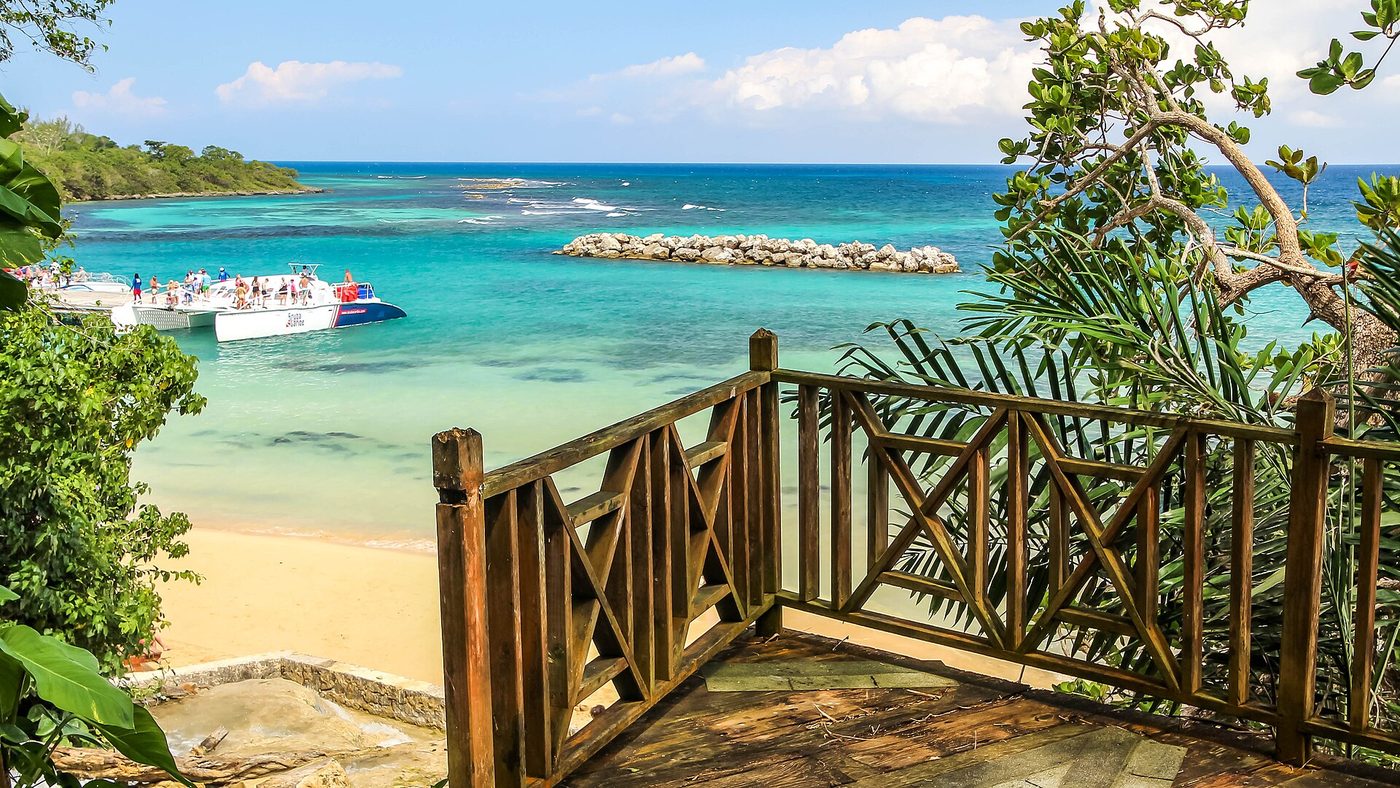
Jamaica Ocho Rios Dunn's River Falls (beach), Jamaica
Jamaica JAM
Jamaica Ocho Rios Dunn's River Falls (beach) — Photo: Dr. Thomas Liptak / CC BY-SA 4.0 via Wikimedia Commons
Did You Know Dub — invented in Kingston studios in the early 1970s by engineers stripping the vocals off a record and treating the mixing desk as an instrument — created the remix, the instrumental version and much of the working method of modern music production. — UNESCO

Jamaica is an island of about 2.9 million people in the Greater Antilles, the third largest in the Caribbean after Cuba and Hispaniola, lying some 145 kilometres south of Cuba. Kingston, on a deep natural harbour on the south coast, is the capital and by far the largest city. Independence from the United Kingdom came on 6 August 1962, the first of the anglophone Caribbean territories to achieve it, and the country remains a parliamentary democracy under a constitutional monarchy and a member of the Commonwealth, though successive governments have set out plans to become a republic. About 92% of Jamaicans identify as Black, the descendants of Africans brought to the island in the Atlantic slave trade, with smaller mixed, East Indian and Chinese communities; the national motto, Out of Many, One People, refers to that mixture. English is the official language and Jamaican Patois, an English-lexifier creole, is the language of everyday life. Protestant denominations account for about 65% of religious affiliation, with a small but internationally influential Rastafari community. The economy runs on tourism, bauxite and alumina, remittances and services. Jamaica's global footprint — in music, in sprinting, in language — is far larger than its size or income would predict.

CIA World FactbookEncyclopaedia Britannica
Population
2,938,503
Capital
Kingston
Currency
None JMD
Time zones
Largest city
Kingston
Human Geography Themes
Loading national figures…
Largest Cities
Kingston593,375
Portmore342,759
Montego Bay116,517
Mandeville96,832
May Pen74,795
Old Harbour59,138
In Perspective

Kingston's urban core is home to about 593,375 people.

Among the world's megacities, though, it's one of many — the giants of Asia and Latin America run larger still:

Kingston593,375
Jakarta40,545,126
Dhaka37,307,160
Tokyo33,244,670
Shanghai30,678,616
Cairo25,230,325
The Country & Its People

History

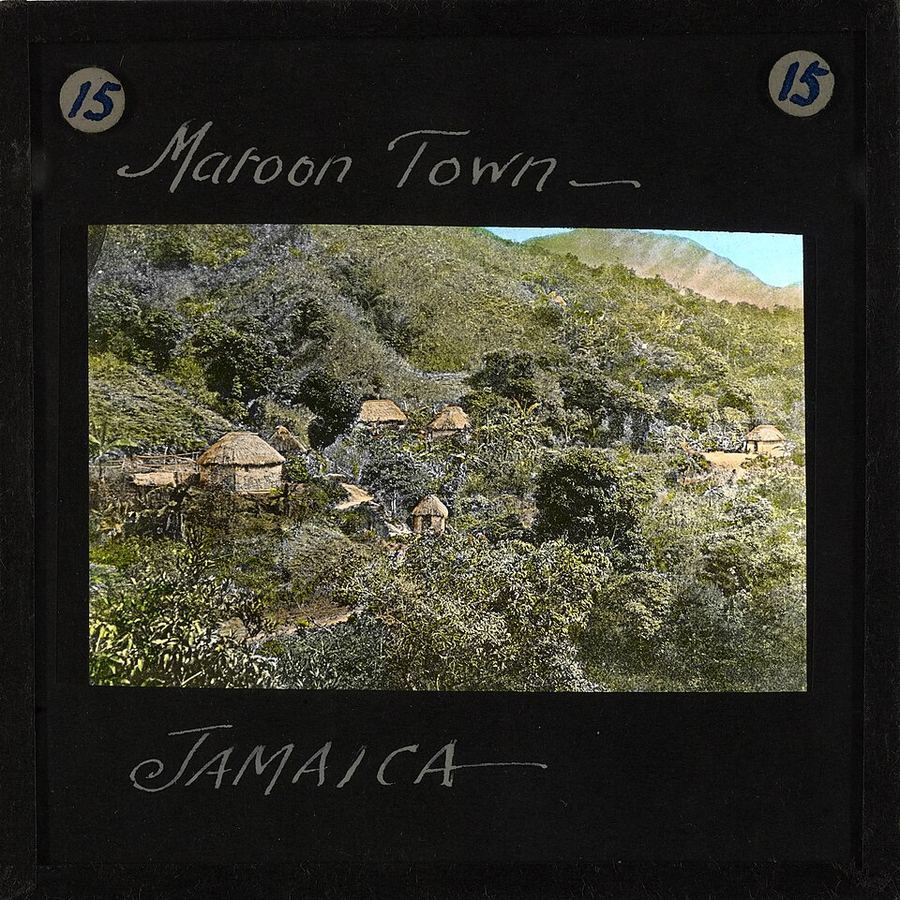
Jamaica was settled by Taino people who called it Xaymaca. Columbus landed in 1494 and Spanish colonisation from 1509 destroyed the indigenous population within a century through violence, forced labour and disease. An English expedition took the island in 1655, and over the following 180 years Jamaica became the most valuable sugar colony in the British empire, worked by hundreds of thousands of enslaved Africans under a regime of exceptional brutality. Resistance was continuous. Communities of escaped people, the Maroons, held the interior and fought the British to a treaty in 1739 under the leader Cudjoe, while Nanny led the Windward Maroons in the east. Tacky's Revolt of 1760 and the Baptist War of Christmas 1831, led by the deacon Samuel Sharpe, shook the plantation system and hastened abolition; slavery ended in 1834 and full emancipation followed in 1838. The Morant Bay rebellion of 1865, led by Paul Bogle and costing the assemblyman George William Gordon his life, brought direct Crown rule. Marcus Garvey built the largest Black mass movement in history from 1914. Labour unrest in 1938 produced the unions and the two parties that have alternated in power ever since, adult suffrage came in 1944, and independence followed on 6 August 1962.
Culture

Jamaican culture is loud, verbal and unusually confident, and it has exported itself with remarkable success. Language is the first marker: everyone speaks Patois, a creole with English vocabulary and West African grammatical structure, and its proverbs, rhythms and inventiveness carry the national humour. The storytelling tradition centres on Anansi, the trickster spider brought from Akan tradition in what is now Ghana, whose small size and cunning against the powerful is a transparent inheritance from slavery. Christianity is dominant, with Protestant denominations claiming about 65% of the population, and church attendance, gospel singing and Sunday dress remain central to community life; alongside it survive the African-derived practices of Kumina, Revival Zion and Pocomania. Rastafari, which emerged in the 1930s around the belief in the divinity of Ethiopia's Emperor Haile Selassie and grew after his 1966 visit to the island, accounts for barely 1% of the population but shaped the country's music, language and international image out of all proportion. Family structures are often matrifocal, with grandmothers holding households together and migration to Britain, the United States and Canada threaded through nearly every family history.

Points Of Pride

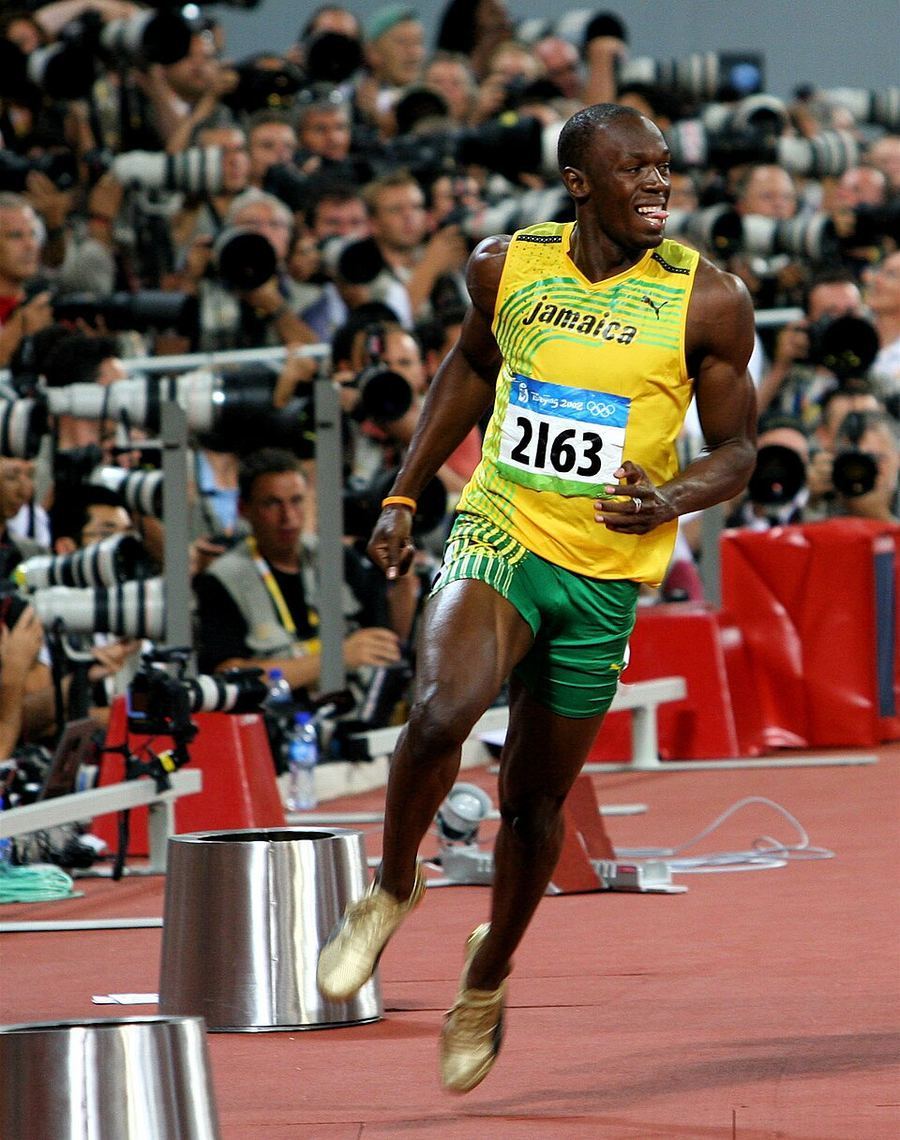
Reggae is the achievement Jamaicans place first, and UNESCO formalised the point by inscribing the reggae music of Jamaica on the Representative List of the Intangible Cultural Heritage of Humanity in 2018, citing its role as a vehicle for social commentary and injustice as much as for entertainment. Bob Marley remains one of the most recognised musicians who ever lived. The Blue and John Crow Mountains, inscribed as a mixed natural and cultural World Heritage site in 2015, are the country's only World Heritage property, protecting both an exceptionally biodiverse cloud forest and the mountain refuges in which the Windward Maroons sustained their independence. In athletics, Jamaica has produced the fastest human beings ever recorded: Usain Bolt's world records of 9.58 seconds over 100 metres and 19.19 over 200, both set at the 2009 World Championships in Berlin, still stand, and Shelly-Ann Fraser-Pryce has won the world 100 metres title five times. Marcus Garvey's Universal Negro Improvement Association was the largest organised movement of people of African descent in history. Jamaica was the first anglophone Caribbean country to become independent, in 1962, and Blue Mountain coffee is among the most expensive in the world.

Cultural Fusion

The national motto, Out of Many, One People, describes a genuine layering. Taino words survived Spanish and English colonisation and passed into world languages — hurricane, hammock, barbecue and canoe all reached English through the Caribbean — and the cassava flatbread called bammy is a direct Taino inheritance. The dominant layer is West and Central African, brought by the enslaved: Akan naming and the Anansi stories, Kongo-derived Kumina drumming and spirit practice, and the rhythmic and tonal habits that underlie every Jamaican musical form. Spain left place names such as Ocho Rios and Port Antonio and the technique behind escovitch fish; Britain left the parliamentary system, the common law, the Anglican and Baptist churches, cricket and the Cornish pasty that became the Jamaican patty. After emancipation, indentured labourers from India and China arrived to work the estates, and their descendants gave the island curry goat, roti and the network of Chinese-Jamaican shops that supplied rural districts for generations; Lebanese and Syrian traders added another commercial layer. The patty as eaten today — a curry-spiced beef filling in a turmeric-yellow British pastry shell — is the whole history in one object.

Music & Dance

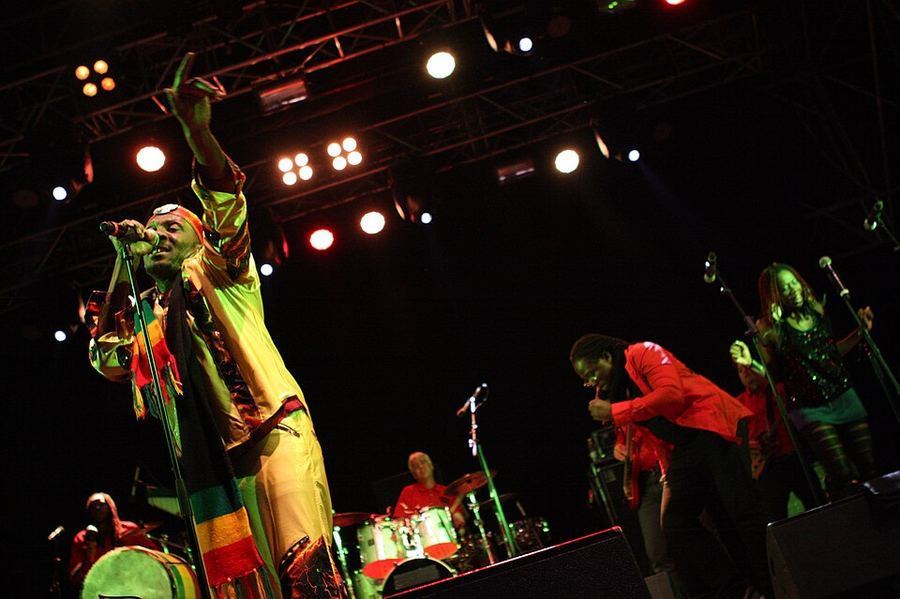
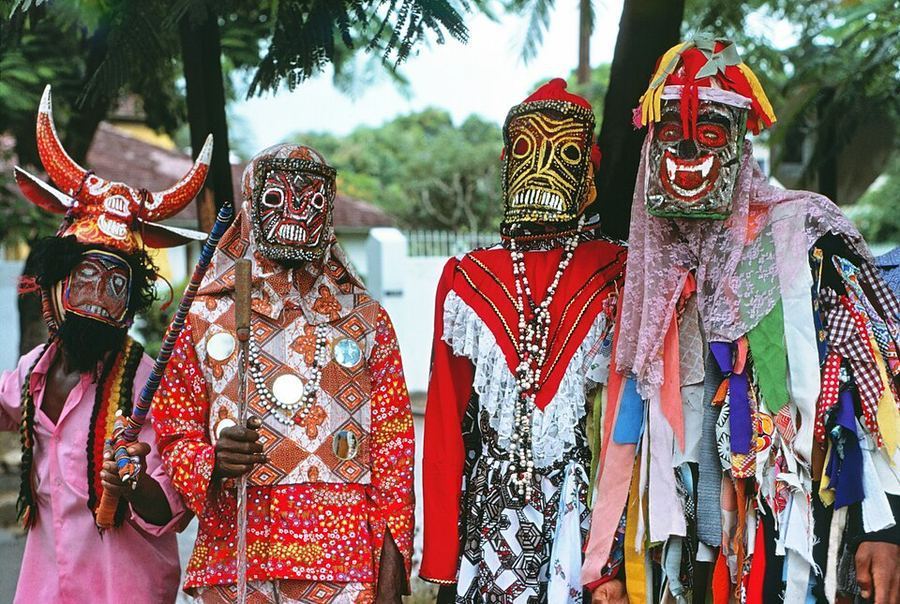
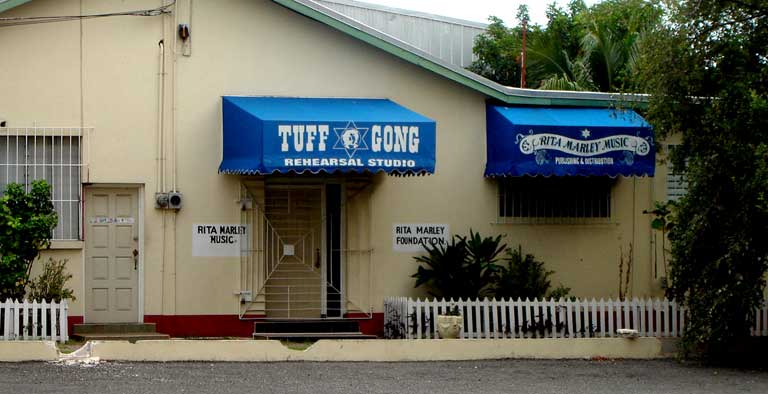
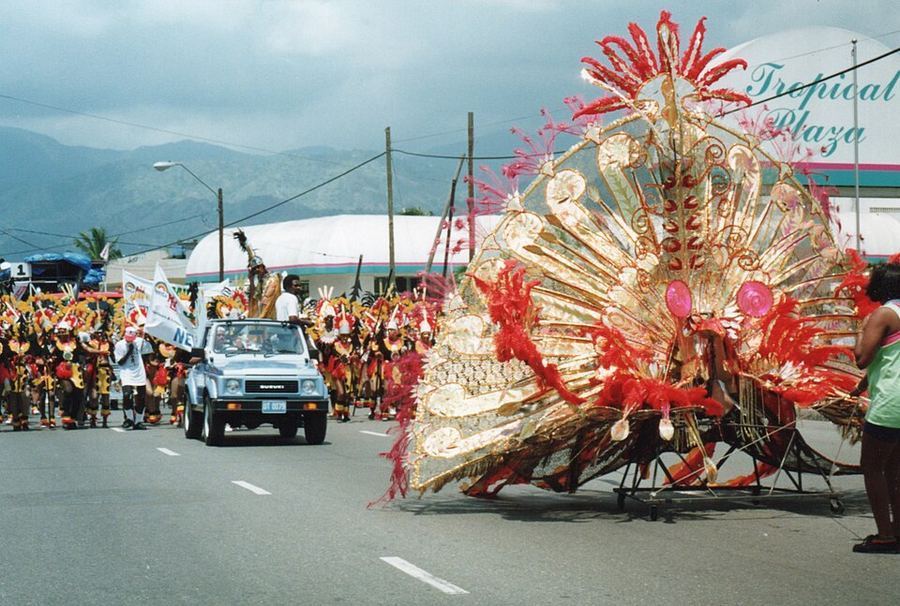
No country of comparable size has generated as many musical forms. Mento, a rural acoustic style with banjo, hand drum and rumba box, gave way around 1962 to ska, an up-tempo horn-driven music built at Studio One and Treasure Isle by players including the Skatalites; ska slowed into rocksteady in 1966 and rocksteady into reggae by 1968, with its emphasis on the third beat and its lyrics of poverty, politics and faith. Bob Marley and the Wailers, Peter Tosh, Bunny Wailer, Jimmy Cliff, Toots and the Maytals and Burning Spear carried it worldwide. The engineers then invented something more: dub, in which King Tubby and Lee Scratch Perry stripped vocals from a track, drenched the remains in reverb and delay and treated the mixing desk as an instrument, creating the remix and much of the grammar of modern electronic production. Dancehall followed in the 1980s, faster, digital and sharper-tongued. Sound system culture, in which rival crews compete over enormous stacked speakers with a deejay toasting over the records, travelled with Jamaican migrants to the Bronx and became one of the roots of hip-hop. Dance forms range from the ceremonial Jonkonnu masquerade and the quadrille to Kumina and the constantly renewed vocabulary of dancehall.

Cuisine & Misattributed Foods

Jamaican cooking is built on fire, smoke and heat. Jerk is the national technique: meat rubbed with a paste of scotch bonnet peppers, allspice — the berry Jamaicans call pimento, of which the island is the world's principal producer — thyme and scallion, then cooked slowly over smouldering pimento wood, a method with its origins among the Maroons who needed to preserve and cook meat in the interior without drawing attention. The national dish is ackee and saltfish, sautéing salted cod with the yellow arils of the ackee, a West African fruit that must be allowed to open naturally on the tree because it is toxic before it ripens; cooked, it resembles scrambled egg. Rice and peas, simmered with coconut milk and kidney beans, accompanies almost everything, and curry goat, oxtail with broad beans, brown stew chicken, escovitch fish in a pickled vinegar and onion dressing, and callaloo fill out the repertoire. Bammy, the pressed cassava flatbread, is Taino; festival, a sweet fried dumpling, is the standard side with fish. Blue Mountain coffee, grown above 900 metres in the eastern range, commands some of the highest prices of any coffee in the world, and rum has been distilled at Appleton Estate since 1749.

National Dress

Jamaica's national costume is built around bandana, the red-and-white checked madras cotton that arrived through the East Indian trade and became identified with rural Jamaican women in the nineteenth century. The woman's version is a full skirt, sometimes worn with the hem caught up to show a ruffled white petticoat, over a white blouse with a bandana panel, finished with a matching head tie knotted at the front; the man's is a bandana shirt with dark trousers. It is worn for Jonkonnu, for Heritage Week, at Independence celebrations in August and by the quadrille dance troupes that keep the associated repertoire alive, rather than as daily dress. A second, deliberately modern national garment is the Kariba suit, a collarless short-sleeved men's jacket introduced in the 1970s as a tropical alternative to the imported wool suit and adopted for state and parliamentary occasions. Rastafari dress forms a third and internationally more famous register: the red, gold and green of the Ethiopian flag, the knitted tam worn over uncut locks, and a preference for natural fibres. In everyday life Jamaicans dress with notable care, and church clothing in particular is a serious matter of hats, suits and formality.

Sports & Inspiring Athletes

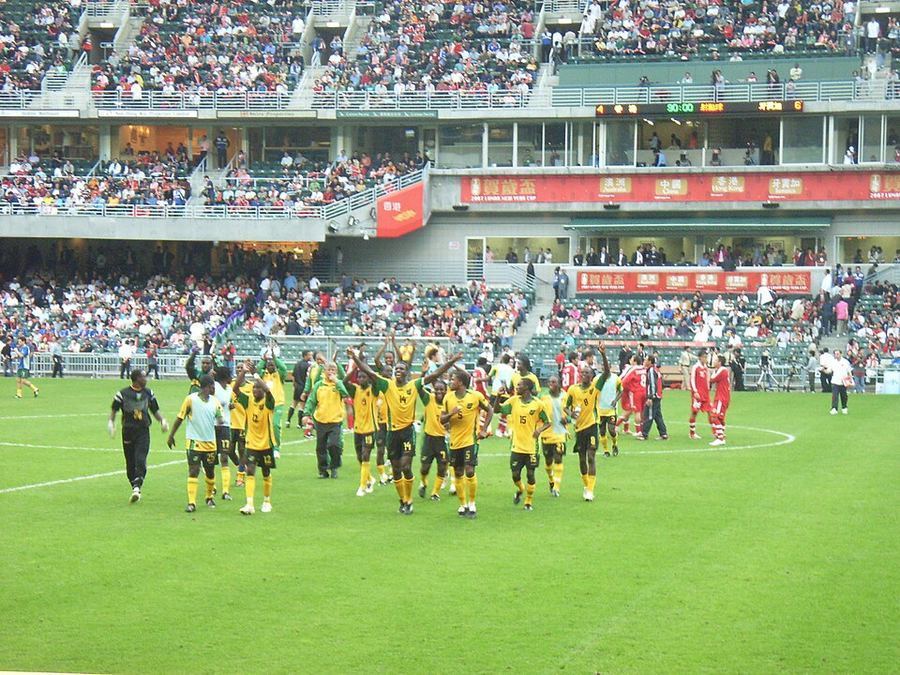
Athletics is Jamaica's dominant sport, and its foundation is not a professional academy but a school competition: the Inter-Secondary Schools Boys and Girls Championships, first staged in 1910, in which teenage sprinters compete before packed stands and national television, feeding a coaching culture that has made a country of under three million the strongest sprinting nation on Earth. Cricket is the other inheritance, played within the West Indies regional team rather than as a national side; Sabina Park in Kingston is a Test venue, and Jamaica has supplied George Headley, Michael Holding, Courtney Walsh and Chris Gayle to the regional game. Football is the most widely played sport, and the men's national team, the Reggae Boyz, qualified for the 1998 World Cup in France, the first anglophone Caribbean nation to reach the finals. Netball is the leading women's team sport, with the Sunshine Girls ranked among the top handful of nations for decades. Boxing, track cycling and swimming maintain a presence, and the bobsled team that qualified for the 1988 Winter Olympics in Calgary — with no snow at home and a borrowed sled — remains the most affectionately remembered Jamaican sporting story abroad.

Notable Educational Programs

Education is free and compulsory at the primary and lower secondary levels, and the system is examination-driven: the Primary Exit Profile determines secondary placement, and the Caribbean Examinations Council's CSEC and CAPE certificates, shared across the anglophone Caribbean, govern progression to tertiary study. Traditional high schools founded in the colonial period, many of them church foundations, retain considerable prestige and are the same institutions that dominate the national athletics championships. The University of the West Indies opened its first campus at Mona, outside Kingston, in 1948, initially as a college of the University of London; it remains the region's flagship institution and Jamaica's principal centre of research in medicine, natural science and Caribbean studies. The University of Technology, Jamaica, and Northern Caribbean University at Mandeville complete the main university sector, and the Edna Manley College of the Visual and Performing Arts trains the country's artists, dancers and musicians. Vocational training runs through the HEART trust levy system. Adult literacy is high by regional standards, but emigration of skilled graduates — including teachers and nurses recruited to North America and Britain — is a chronic constraint that Jamaican policy documents describe openly.

Wars & Conflicts

Jamaica has never fought an external war, and its conflicts have been internal. The Maroon wars of the eighteenth century ended in treaties in 1739 and 1740 that granted the Maroon towns land and autonomy in exchange for returning runaways, a settlement whose terms are still invoked in disputes over Maroon land rights today. The Baptist War of 1831 and the Morant Bay rebellion of 1865 were suppressed with mass executions. In the modern period the defining violence has been political and criminal. Rival party affiliations hardened into armed garrison communities in Kingston during the 1970s, and the 1980 general election campaign is generally reckoned to have cost hundreds of lives. Gang organisations built around drug trafficking and, later, lottery scamming have given Jamaica one of the highest homicide rates in the world, and successive governments have responded with states of public emergency and zones of special operations. The security operation in Tivoli Gardens in May 2010 to arrest the gang leader Christopher Coke killed more than seventy people, most of them civilians, and a subsequent commission of enquiry found serious failings by the security forces. The Jamaica Defence Force is small and has served in regional disaster relief.
Current as of 2026-08-06

Land & Border Disputes

Jamaica has no land borders and therefore no land frontier dispute, and its external disagreements are maritime and constitutional. Maritime boundaries have been settled by agreement with Cuba in 1994 and with Colombia in 1993, the latter creating an unusual joint regime area of shared jurisdiction over fisheries and seabed resources in the waters around the Serranilla and Bajo Nuevo banks, an arrangement complicated by subsequent International Court of Justice rulings on Colombian and Nicaraguan claims in the same part of the Caribbean. Delimitation with Haiti and with Nicaragua remains incomplete, and Jamaica has pursued its entitlements under the UN Convention on the Law of the Sea, including in relation to the Pedro Bank and the Pedro Cays to the south-west. The most active political dispute is domestic and historical rather than territorial. Jamaica has announced its intention to replace the British monarch as head of state with a president, a change requiring constitutional amendment and referendum, and it participates in the CARICOM Reparations Commission's claim on European states for the consequences of slavery and the slave trade — a demand raised directly with British officials during royal and ministerial visits.
Land, Life & Legacy

Land & Climate

Jamaica covers about 10,990 square kilometres and is essentially a limestone plateau tilted and eroded into dramatic relief. The Blue Mountains run along the eastern end and rise to Blue Mountain Peak at 2,256 metres, high enough for cloud forest, cool nights and the coffee that carries the range's name. Roughly two thirds of the island is limestone, and in the west it forms the Cockpit Country, a cone karst landscape of steep conical hills separated by deep sinkhole hollows that is almost impossible to traverse without local knowledge — which is precisely why the Leeward Maroons were able to hold it against British troops. Underground drainage riddles the limestone with caves and springs; the Black River in the south-west, the longest navigable river, feeds the Great Morass wetland and its crocodiles. The coast alternates between the white sand and reef of the north, at Negril, Montego Bay and Ocho Rios, and the harbours and mangroves of the south. The climate is tropical maritime, hot and humid at sea level and temperate in the mountains, with rainfall concentrated in May and from September to November. The island lies in the hurricane belt: Gilbert crossed it directly in 1988 and Beryl struck in July 2024.

Entertainment

Dominoes is the national pastime, played fast and slammed hard onto the table at bars, yards and street corners, with a running commentary that is half the point. Music is inseparable from leisure: the weekly street dance, the sound system session run off a truckload of speakers, and the summer festivals, of which Reggae Sumfest in Montego Bay each July is the largest. Beaches serve locals as well as visitors, from Negril's long western strand to the river-meets-sea bathing spots on the north coast, and Sundays bring family gatherings, church and cooking. Rafting on the Rio Grande in Portland — poled bamboo rafts, a tourist pastime originally popularised by the actor Errol Flynn from his estate nearby — and climbing the terraced cascade at Dunn's River Falls are long-established outings. Sport is watched communally: cricket at Sabina Park, football on any patch of level ground, horse racing at Caymanas Park. The single biggest sporting occasion in the calendar is not professional at all — the Inter-Secondary Schools Boys and Girls Championships, known simply as Champs, first held in 1910, fills the National Stadium for four days each spring and is broadcast nationally.

Art & Museums

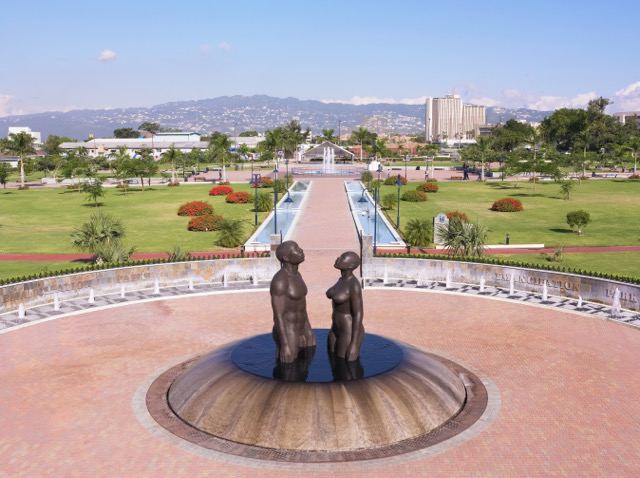
Modern Jamaican art has a clear founding moment: Edna Manley's carved figure Negro Aroused of 1935, a hunched body straining upward, which gave the emerging nationalist movement a visual symbol and made her the central figure of the country's art establishment. Around the formally trained painters — Albert Huie, Barrington Watson, David Pottinger — grew a parallel and equally esteemed tradition of self-taught artists that Jamaica calls Intuitive: John Dunkley, a barber whose dark, densely worked landscapes are now the most valuable Jamaican paintings, and Mallica Reynolds, known as Kapo, a Revivalist bishop who painted and carved visionary religious subjects. The National Gallery of Jamaica, opened in Kingston in 1974, is the oldest and largest public art museum in the anglophone Caribbean and holds both traditions along with Taino carvings of extraordinary quality, of which the wooden zemi figures recovered from a cave in Carpenter's Mountain are the most celebrated examples in existence. Sculpture in public space is prominent, from Christopher Gonzalez's controversial Bob Marley figure to Laura Facey's Redemption Song monument at Emancipation Park. Record sleeve and dancehall poster design constitute a vernacular graphic tradition of real influence.
Encyclopaedia BritannicaBritish MuseumSmithsonian

Notable People

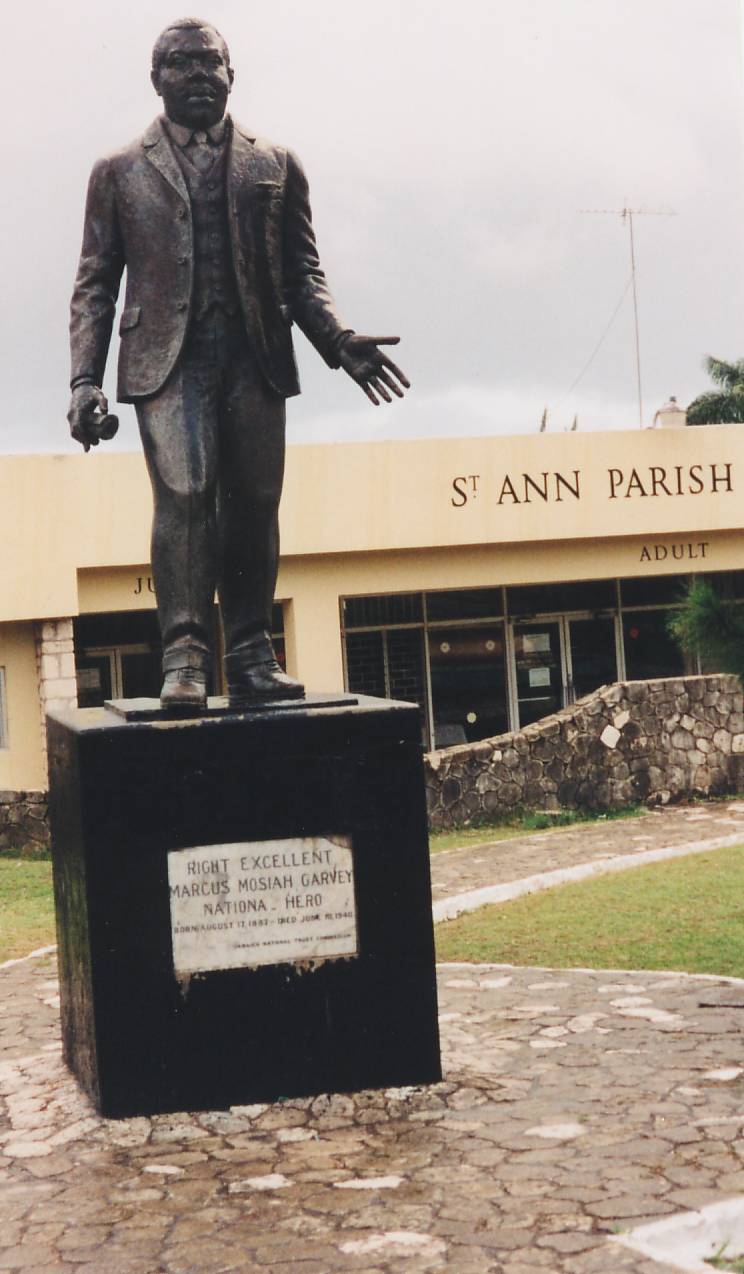
Jamaica has seven official National Heroes, and the list is a history of resistance: Nanny of the Maroons, who led the Windward Maroons against the British in the 1730s and is the only woman among them; Samuel Sharpe, the Baptist deacon hanged after the 1831 rebellion; Paul Bogle and George William Gordon, executed after Morant Bay in 1865; Marcus Garvey, who built the Universal Negro Improvement Association into a mass movement across the Americas and Africa and founded the Black Star Line; and Alexander Bustamante and Norman Manley, the cousins who founded the two political parties and led the island to independence. Bob Marley, born at Nine Mile in 1945, became the most widely recognised figure ever to emerge from the developing world in popular music. Louise Bennett-Coverley, universally known as Miss Lou, spent a career insisting in poems and broadcasts that Patois was a language and not bad English, and largely won the argument. Usain Bolt holds the world records at 100 and 200 metres. Claude McKay, born in Clarendon, became a central poet of the Harlem Renaissance, and Marlon James won the Booker Prize in 2015 for A Brief History of Seven Killings.

Inventions & Breakthroughs

Jamaica's inventive record is concentrated in sound. Dub, developed in Kingston studios in the early 1970s by engineers including Osbourne Ruddock, known as King Tubby, and Lee Scratch Perry, established that a recording could be raw material rather than a finished object: the vocal could be dropped, the drum and bass isolated, and reverb, delay and filtering applied live at the desk as a performance. That practice invented the remix, the instrumental B-side and the idea of the producer as author, and it underlies most electronic dance music and a great deal of modern pop production. The sound system itself — custom-built amplification, hand-wired valve pre-amps, enormous bass bins and an operator toasting rhythmically over the record — was a Jamaican engineering culture as much as a musical one, and its migration to New York with Jamaican families produced the deejaying that became hip-hop. Outside music, the animal geneticist Thomas Lecky produced tropically adapted cattle at Hope Farm from the 1940s, breeding the Jamaica Hope dairy cow to combine milk yield with heat and tick tolerance, a model for tropical livestock development. The jerk technique, developed by Maroons in the interior, is Jamaica's oldest surviving technology.

Science & Technology

Jamaica's industrial technology has centred on bauxite. The island was for a long period the world's largest exporter of the ore, and alumina refining remains a significant part of the economy, with aluminium oxide the leading merchandise export; the associated red mud disposal and land rehabilitation are correspondingly significant environmental problems. Kingston holds an institution of global reach that few visitors expect: the International Seabed Authority, the United Nations body that regulates mineral activity on the deep ocean floor beyond national jurisdiction, has been headquartered in the Jamaican capital since 1994. Research capacity is concentrated at the University of the West Indies at Mona, in tropical medicine, sickle-cell research, marine and environmental science and seismology — the Earthquake Unit there monitors an island that sits on an active plate boundary and lost Port Royal to an earthquake in 1692. Energy policy has moved steadily away from imported oil: the Wigton wind farm in Manchester parish, commissioned in 2004, was for years the largest in the English-speaking Caribbean, and utility-scale solar has followed. Jamaica has been an early and vocal participant in international climate negotiations, submitting one of the first enhanced national climate plans among developing countries.
On The World Stage

Champions & Defining Moments

Jamaican sprinting is one of the great sustained national dominances in world sport. Usain Bolt won eight Olympic gold medals and set world records of 9.58 seconds for 100 metres and 19.19 for 200 at the 2009 World Championships in Berlin, both of which still stand; Shelly-Ann Fraser-Pryce became the first woman to win five world titles over 100 metres and took Olympic gold in Beijing in 2008 and London in 2012; Elaine Thompson-Herah won both the 100 and 200 metres at consecutive Olympic Games in Rio in 2016 and Tokyo in 2020. Merlene Ottey preceded them with a medal haul across seven Olympic Games that was, at the time, the largest by any woman in track and field. The men's and women's sprint relay squads have been perennial medallists. Beyond athletics, Jamaican cricketers have been central to West Indies sides that dominated the world game in the 1970s and 1980s, and the Sunshine Girls have contested medals at successive Commonwealth Games and world netball championships. The 1998 World Cup qualification and the 1988 Olympic bobsled team gave the island two further moments of global sporting recognition.

World AthleticsIOCFIFACommonwealth Games Federation
Economy, Trade & Government

Currency & GDP

Jamaican Dollar — JMD (None)

GDP (PPP): $29.13 billion (2024 est.)

Per capita: $10,300 (2024 est.)

Exports

$7.124 billion (2024 est.)

aluminum oxide, refined petroleum, natural gas, liquor, processed fruits and nuts (2023)

Partners: USA 37%, Russia 7%, Latvia 7%, Iceland 7%, UK 5% (2023)

Imports

$9.524 billion (2024 est.)

refined petroleum, natural gas, cars, crude petroleum, plastic products (2023)

Partners: USA 39%, China 11%, Brazil 4%, Colombia 4%, Japan 4% (2023)

Government

Type: parliamentary democracy (Parliament) under a constitutional monarchy; a Commonwealth realm

Independence: 6 August 1962 (from the UK)

Terrain → Where People Live

How mountains, coasts, and rivers shape settlement (LandScan).

Coming — data

Migration & Ethnic Settlement

Where groups settled and how people move (GeoEPR + UNHCR).

Coming — data

Universities

Notable institutions, mappable as points.

Coming — data
Economy & government facts: CIA World Factbook (public domain), via OpenFactBook / factbook.json.
Every fact and narrative claim will carry a visible source citation. Data-driven sections light up automatically wherever HERA has coverage.