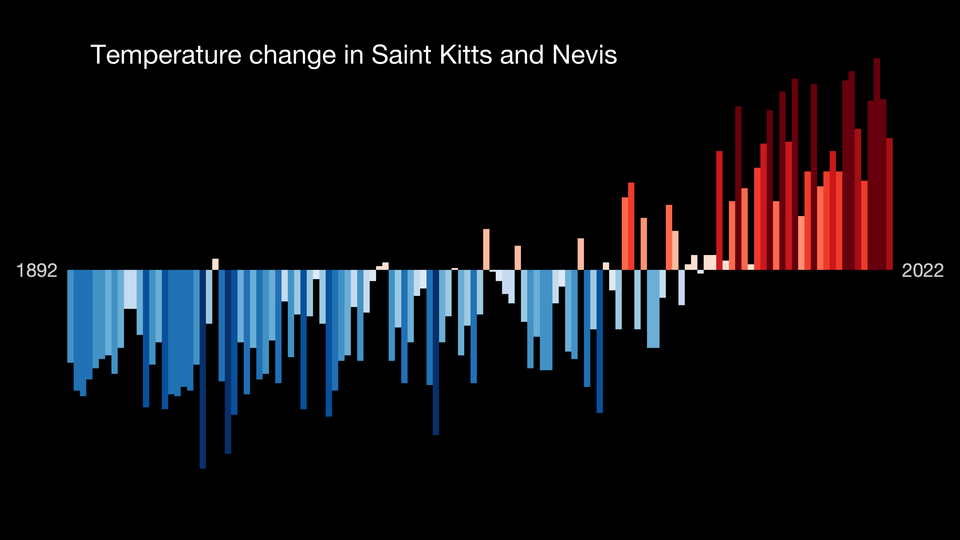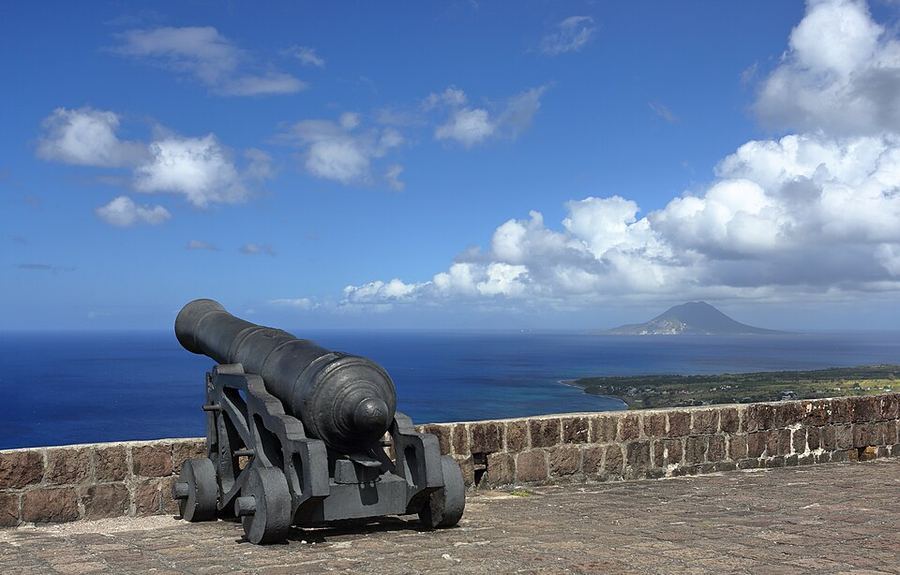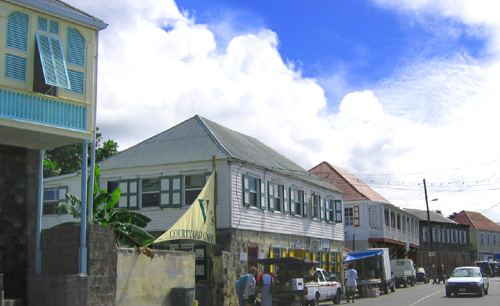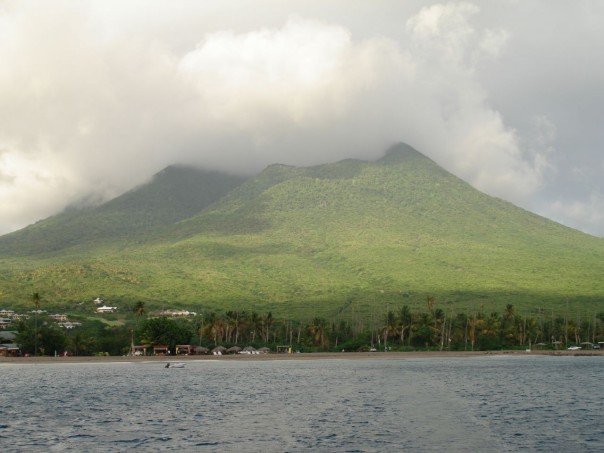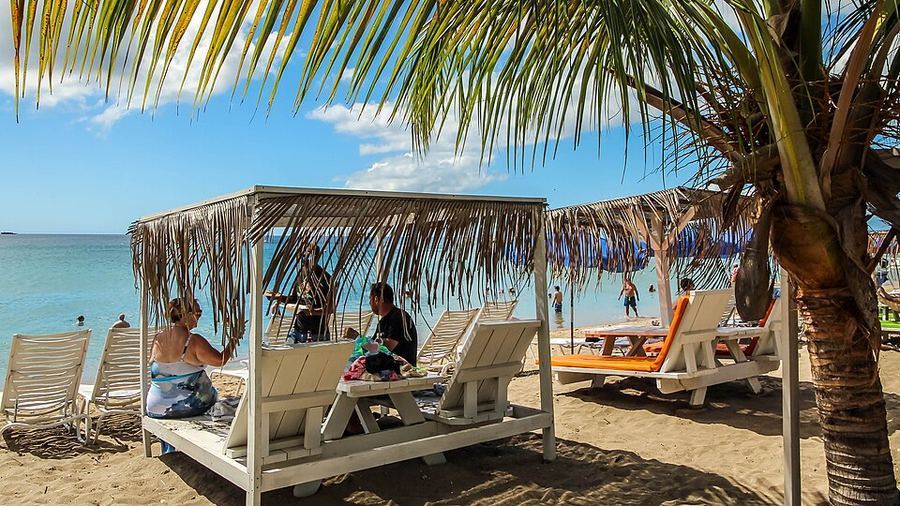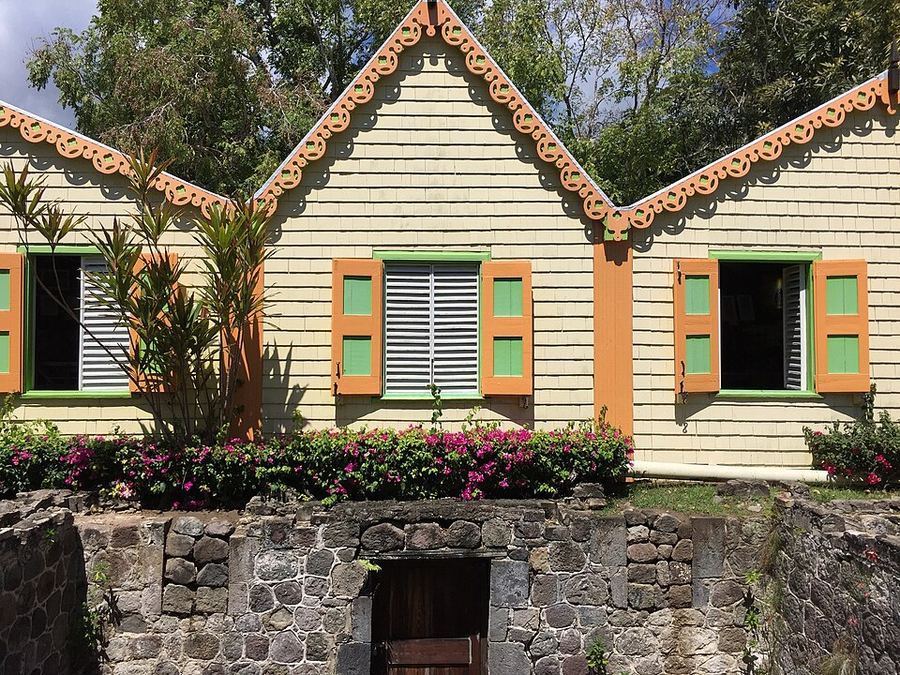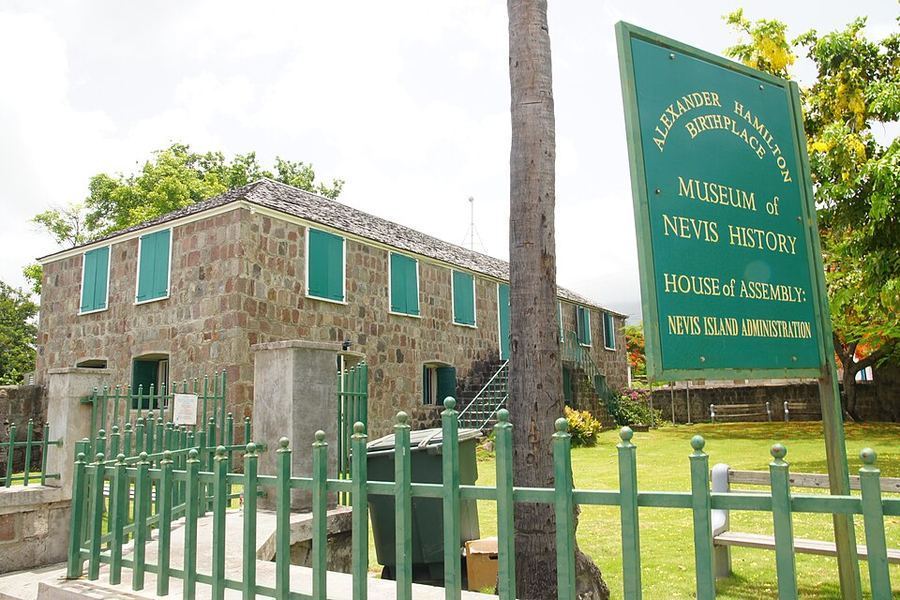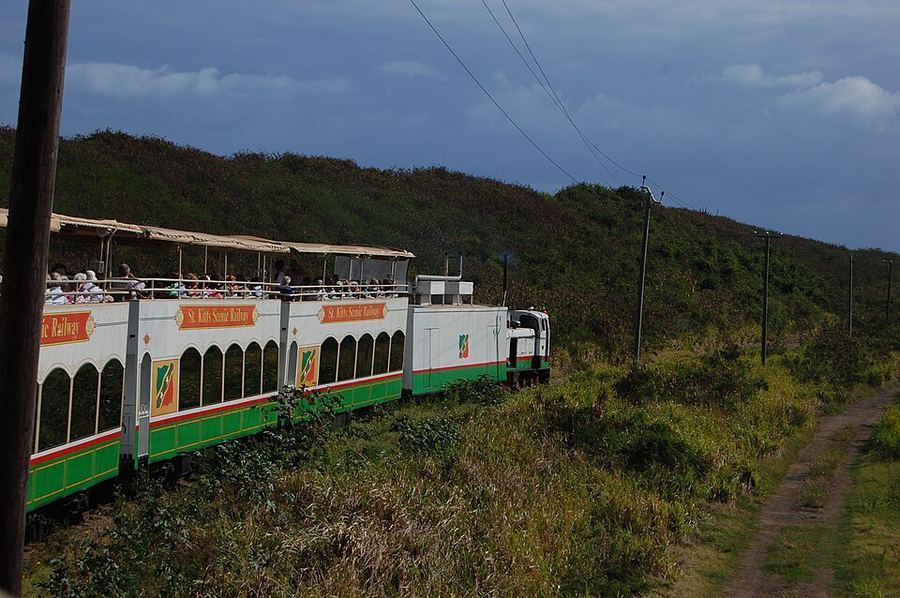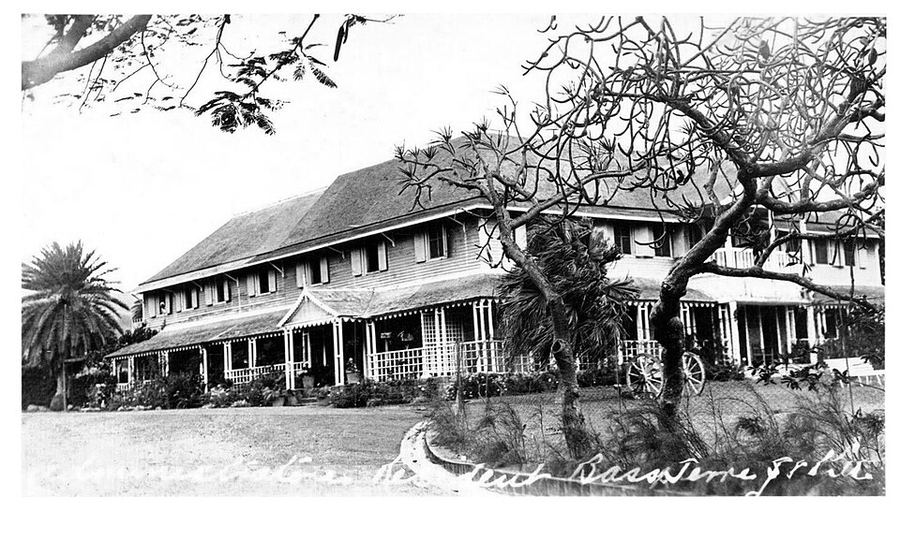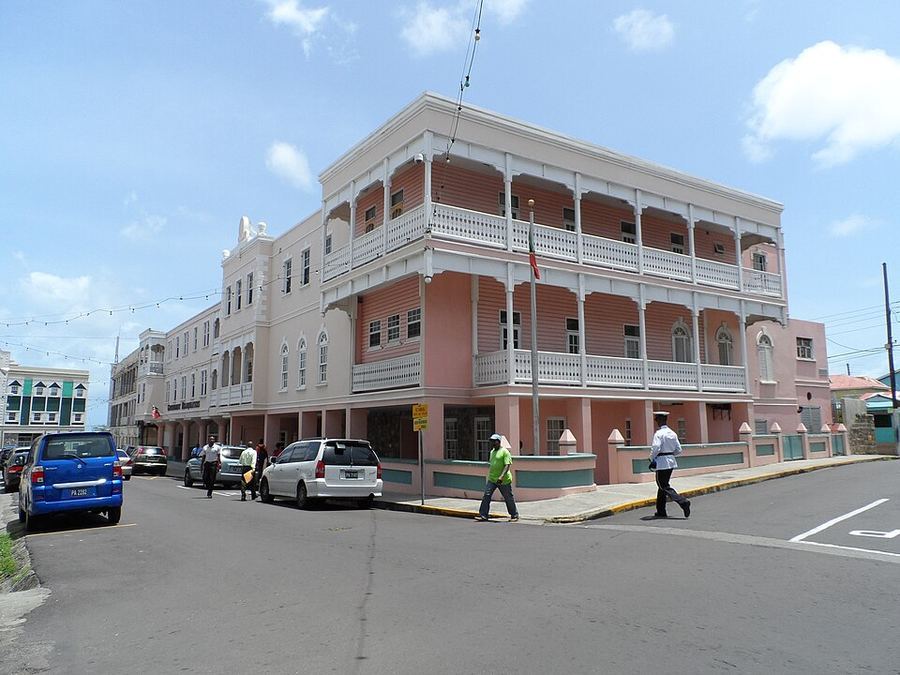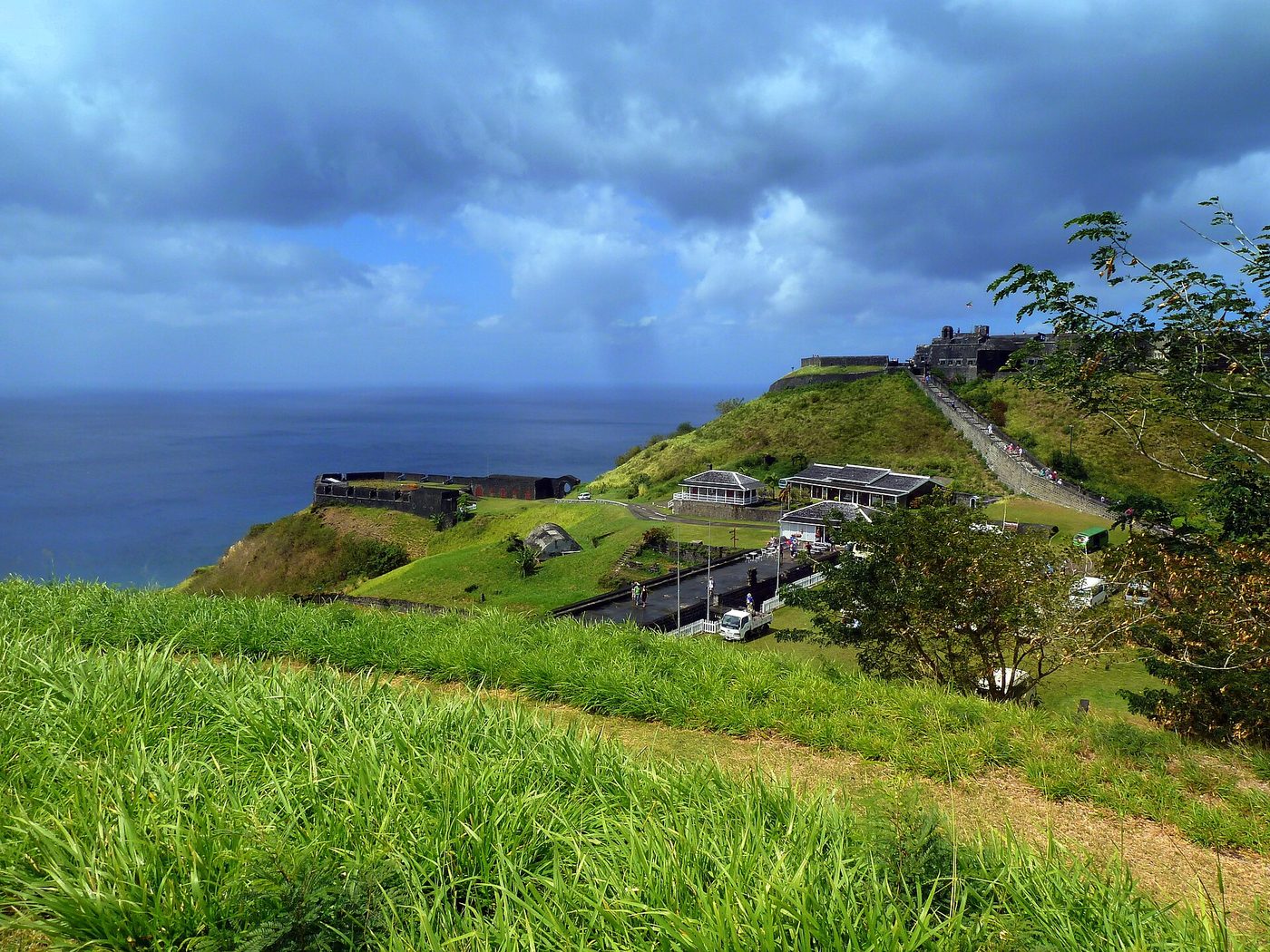
Saint Kitts and Nevis is a two-island federation in the Leeward Islands of the eastern Caribbean and, at about 261 square kilometres and some 55,000 people, the smallest sovereign state in the Americas by both area and population. The larger island, Saint Christopher — universally called Saint Kitts — is shaped like a paddle, its handle running south-east toward the three-kilometre channel known as The Narrows, across which sits the near-circular island of Nevis, dominated by a single cloud-capped volcanic cone. Basseterre, on Saint Kitts, is the federal capital and the seat of parliament; Charlestown is the principal town of Nevis, which retains its own island assembly, premier and administration under a federal constitution unusual for granting an explicit route to secession. The country became independent from the United Kingdom on 19 September 1983 and remains a Commonwealth realm with King Charles III as head of state. The population is overwhelmingly of African descent, English is the sole official language, and Christianity — Anglican, Methodist, Moravian and Roman Catholic — predominates. Three centuries of sugar monoculture ended when the state industry closed in 2005, and the economy now rests on tourism, offshore services, light manufacturing and a citizenship-by-investment programme that is the oldest of its kind in the world.
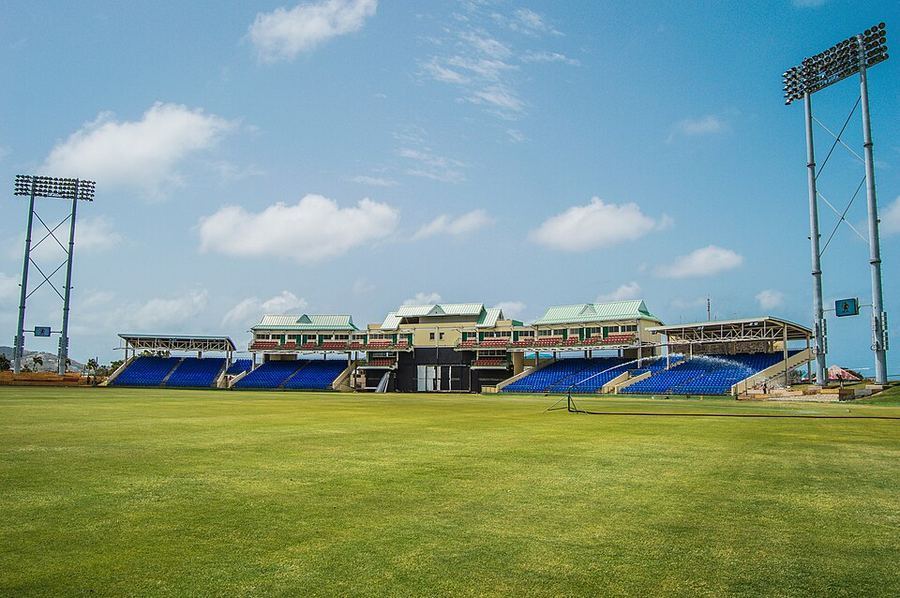
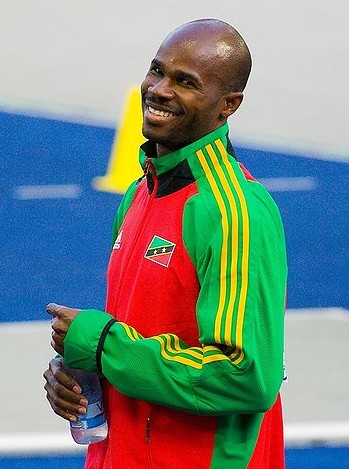
The country's outstanding international achievement belongs to the sprinter Kim Collins, who won the 100 metres at the World Athletics Championships in Paris in 2003 — an extraordinary result for a nation of fewer than sixty thousand people — having already taken Commonwealth Games gold over the distance in Manchester in 2002 and world championship bronze in 2001 and 2011. He carried the flag at four Olympic Games and remained internationally competitive into his fortieth year. Saint Kitts and Nevis first competed at the Olympics at Seoul in 1988 and has appeared at every Summer Games since, principally in athletics; the men's 4x100 metres relay squad, built around Collins, Antoine Adams, Jason Rogers and Brijesh Lawrence, reached global finals and is the country's strongest team unit. The federation has not yet won an Olympic medal. Kittitian and Nevisian cricketers reach the highest level through the West Indies team, and Warner Park's hosting of 2007 World Cup matches remains a point of national pride. The country also competes at the Commonwealth Games, the Pan American Games and the CARIFTA Games, where its junior sprinters regularly medal.
East Caribbean Dollar — XCD ($)
GDP (PPP): $1.465 billion (2024 est.)
Per capita: $31,300 (2024 est.)
$504.391 million (2024 est.)
ships, measuring instruments, beer, electrical transformers, electrical control boards (2023)
Partners: Malta 49%, USA 21%, Turkey 7%, St. Vincent & the Grenadines 5%, Guyana 3% (2023)
$642.934 million (2024 est.)
refined petroleum, ships, cars, jewelry, poultry (2023)
Partners: USA 50%, Italy 11%, China 8%, Japan 2%, UK 2% (2023)
Type: federal parliamentary democracy under a constitutional monarchy; a Commonwealth realm
Independence: 19 September 1983 (from the UK)
How mountains, coasts, and rivers shape settlement (LandScan).
Coming — dataWhere groups settled and how people move (GeoEPR + UNHCR).
Coming — dataNotable institutions, mappable as points.
Coming — data