History
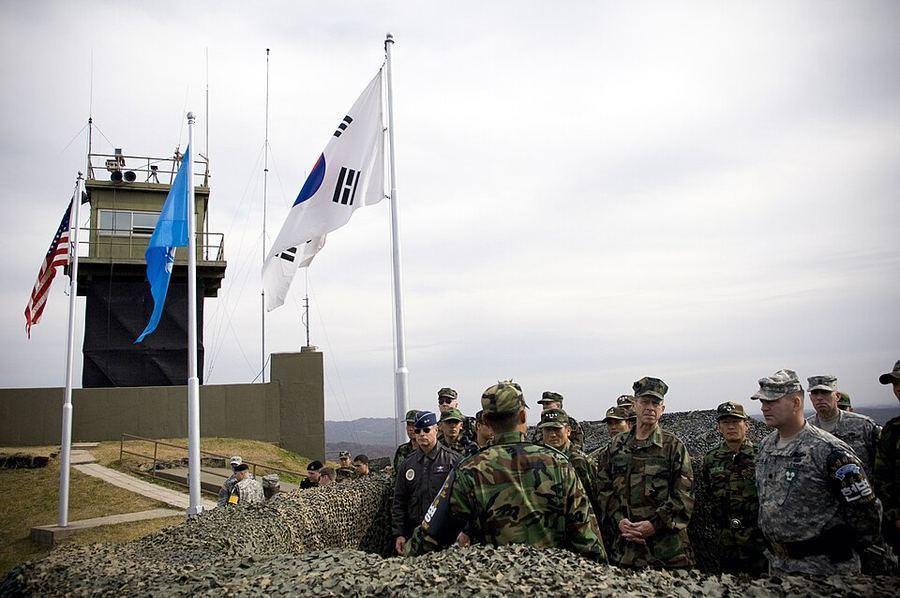
South Korea occupies the southern half of a mountainous peninsula and has spent seven decades turning scarcity into spectacle. A country with almost no oil, iron, or arable abundance now ships $835 billion in exports a year — integrated circuits, cars, refined petroleum — and posts a GDP per capita of roughly $50,400. Its 51.5 million people are among the most urban and most connected on Earth, clustered heavily around Seoul, a capital region that hums on some of the world's fastest broadband. The same society that built Samsung semiconductors and Hyundai shipyards also exports its imagination: K-pop, K-drama, film, and food have made 'Hallyu,' the Korean Wave, a global brand. Yet South Korea is also a country of sharp edges — a median age of 47 and the world's lowest fertility rates signal rapid aging, and an armistice line, not a peace treaty, still separates it from a nuclear-armed North. Few nations pack this much achievement, anxiety, and ambition into 100,000 square kilometers.
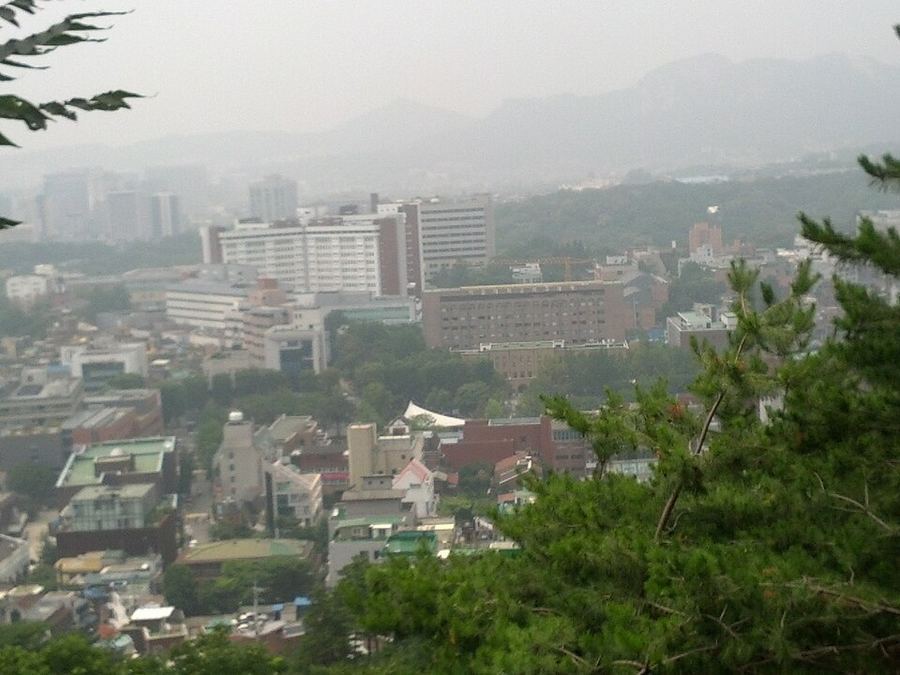
Seoul's urban core is home to about 22,261,692 people.
That's bigger than London, Paris, Madrid and Toronto — each a great world city in its own right.
Among the world's megacities, though, it's one of many — the giants of Asia and Latin America run larger still:
More people live in Seoul than in the entire nation of Sweden, Greece, Portugal or Israel.
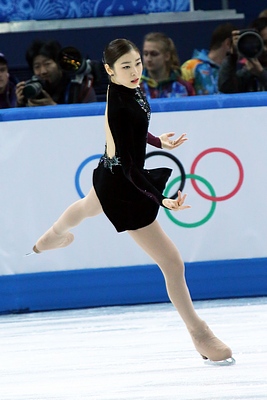
South Korea's global sporting ledger is deep. It has hosted the Summer Olympics (Seoul 1988), the Winter Olympics (PyeongChang 2018), and co-hosted the FIFA World Cup (2002) — a triple few nations can match — and the 2002 semifinal run remains the best World Cup finish by any Asian team. Olympic specialties border on monopoly: Korean women won every Olympic team archery gold from the event's introduction in 1988 through Tokyo 2020, where An San collected three golds, and short-track speed skating has delivered more Korean Olympic titles than any other sport. Kim Yuna's figure-skating gold at Vancouver 2010 came with a world-record score, and marathoner Sohn Kee-chung won gold at Berlin 1936, forced to compete under the Japanese flag. In football, Son Heung-min won the Premier League Golden Boot in 2022, the first Asian player to do so, while Park Se-ri's 1998 U.S. Women's Open victory ignited the Korean pipeline that came to dominate women's professional golf.
Presidential republic
Lee Jae-myung — President
In office since 4 June 2025
Kim Min-seok — Prime Minister
Unicameral
Composition — Democratic Party of Korea majority
Democratic Party of Korea 161 · People Power Party 90 · People Future Party 18 · Other 31
Last election 4/10/2024 · 20.3% women
consists of a chief justice and 13 justices); Constitutional Court (consists of a court head and 8 justices
Won — KRW (₩)
GDP (PPP): $2.607 trillion (2023 est.)
Per capita: $50,400 (2023 est.)
$835.149 billion (2024 est.)
integrated circuits, cars, refined petroleum, plastics, machine parts (2023)
Partners: China 25%, USA 18%, Hong Kong 4%, Japan 4%, Taiwan 4% (2023)
$758.724 billion (2024 est.)
integrated circuits, natural gas, crude petroleum, machinery, cars (2023)
Partners: China 31%, USA 13%, Japan 9%, Germany 5%, Australia 4% (2023)
Type: presidential republic
Independence: 15 August 1945 (from Japan)
How mountains, coasts, and rivers shape settlement (LandScan).
Coming — dataWhere groups settled and how people move (GeoEPR + UNHCR).
Coming — dataNotable institutions, mappable as points.
Coming — data