HERA · Human Entity Reference Atlas by Masego Inc

← Laos 🌐 3D View
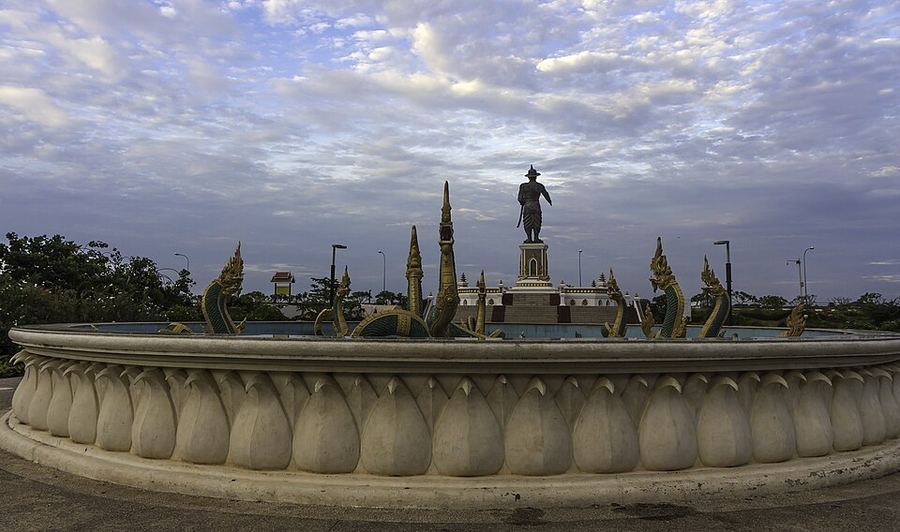
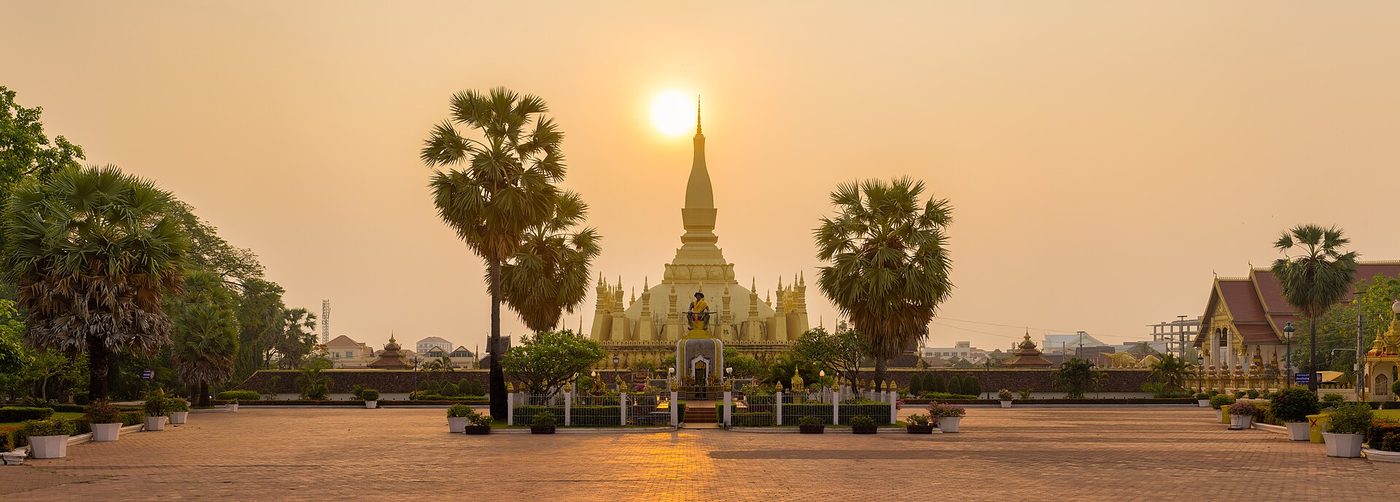
Pha That Luang Sunrise Panorama BLS, Laos
Laos LAO
Pha That Luang Sunrise Panorama BLS — Photo: Benh LIEU SONG ( Flickr ) / CC BY-SA 4.0 via Wikimedia Commons
Did You Know The name of the old kingdom, Lan Xang, means land of a million elephants. — Encyclopaedia Britannica

Laos is the only landlocked country in Southeast Asia, a mountainous republic of roughly eight million people bordered by China, Vietnam, Cambodia, Thailand and Myanmar, with the Mekong River running down much of its western frontier and supplying the plains on which most of the population lives. It is governed as a one-party state by the Lao People's Revolutionary Party, which took power on 2 December 1975 after abolishing the six-century-old monarchy. Vientiane, on a bend of the Mekong facing Thailand, is the capital and largest city; Luang Prabang, the former royal capital upriver at the confluence of the Mekong and the Nam Khan, is the cultural centre. Independence from France was proclaimed in 1949 and confirmed by treaty in October 1953. The population is exceptionally diverse for its size: ethnic Lao make up about 53 percent, with Khmu, Hmong, Phouthay, Tai, Makong, Katang, Lue and Akha among dozens of other groups, and more than eighty languages in use alongside official Lao. Theravada Buddhism is the majority faith and is closely bound to Lao identity, while animist practice remains strong in the uplands. Electricity is now the leading export, sold to Thailand and China, alongside fertilisers, gold, garments and paper.

CIA World FactbookEncyclopaedia BritannicaWorld BankGlottolog
Population
7,953,556
Capital
Vientiane (Viangchan)
Currency
None LAK
Time zones
Largest city
Vientiane
Human Geography Themes
Loading national figures…
Largest Cities
Vientiane268,835
Pakse98,334
Luang Prabang64,254
In Perspective

Vientiane's urban core is home to about 268,835 people.

Among the world's megacities, though, it's one of many — the giants of Asia and Latin America run larger still:

Vientiane268,835
Jakarta40,545,126
Dhaka37,307,160
Tokyo33,244,670
Shanghai30,678,616
Cairo25,230,325
The Country & Its People

History

Tai-speaking peoples moved into the middle Mekong valley over centuries, and in 1353 Fa Ngum unified the principalities into the kingdom of Lan Xang, the land of a million elephants, with its capital at Muang Sua, later Luang Prabang; he brought with him from Angkor the Phra Bang Buddha image that gave the city its name and established Theravada Buddhism as the state religion. Lan Xang reached its height in the sixteenth and seventeenth centuries, and King Setthathirath moved the capital to Vientiane in 1560 and built the great stupa of Pha That Luang. Around 1707 the kingdom fragmented into Luang Prabang, Vientiane and Champasak, leaving the pieces vulnerable to Siamese and Vietnamese pressure; Siamese armies sacked Vientiane in 1828 after the revolt of Chao Anouvong and carried off much of its population. France absorbed the Lao territories into Indochina from 1893. Japanese occupation and the Lao Issara independence movement followed, and full sovereignty was recognised in 1953. Civil war between the royal government and the communist Pathet Lao ran through the 1950s and 1960s, entangled with the Vietnam War, and ended with the abolition of the monarchy and the declaration of the Lao People's Democratic Republic on 2 December 1975.
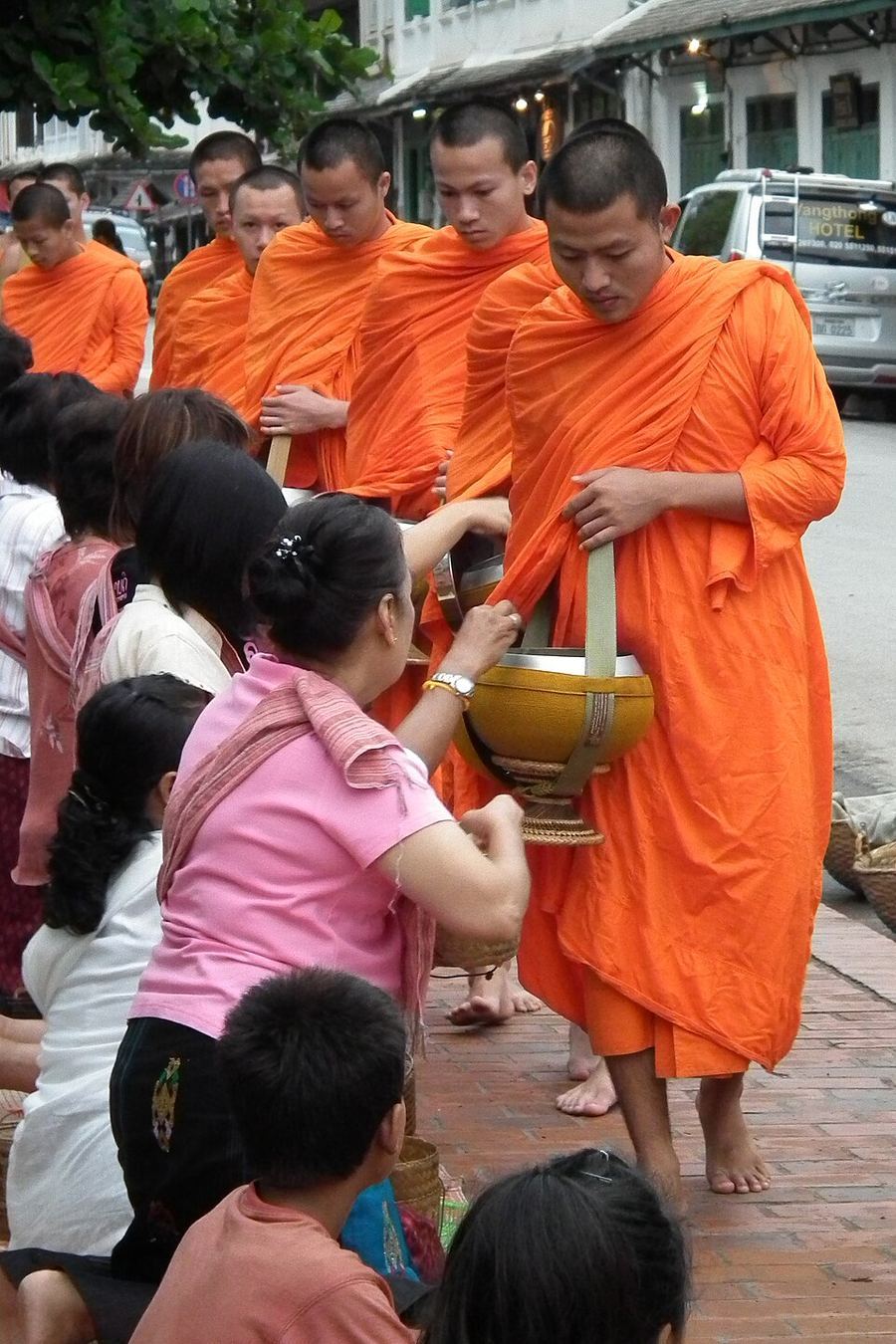
Culture

Lao life is organised around the wat, the rice cycle and the extended family. Theravada Buddhism shapes the year and the life course: most Lao men ordain as novices or monks for a period, and the daily tak bat, in which barefoot monks walk the streets at dawn to receive offerings of sticky rice, is a routine act of merit-making rather than a performance, most famously in Luang Prabang. Layered beneath and alongside Buddhism is belief in phi, the spirits of place, ancestors and household, honoured at small spirit houses in every compound and propitiated in the baci ceremony — the country's most characteristic ritual — in which white cotton threads are tied around the wrists of a guest, a newlywed, a traveller or a patient to bind the thirty-two spiritual components of the person back into the body. Upland communities such as the Hmong, Khmu and Akha maintain distinct animist and shamanic traditions, textiles and calendars. The prevailing social manner values restraint, deference and the avoidance of confrontation, and the phrase bo pen nyang, roughly never mind, is widely taken to encapsulate a national temperament.

Points Of Pride

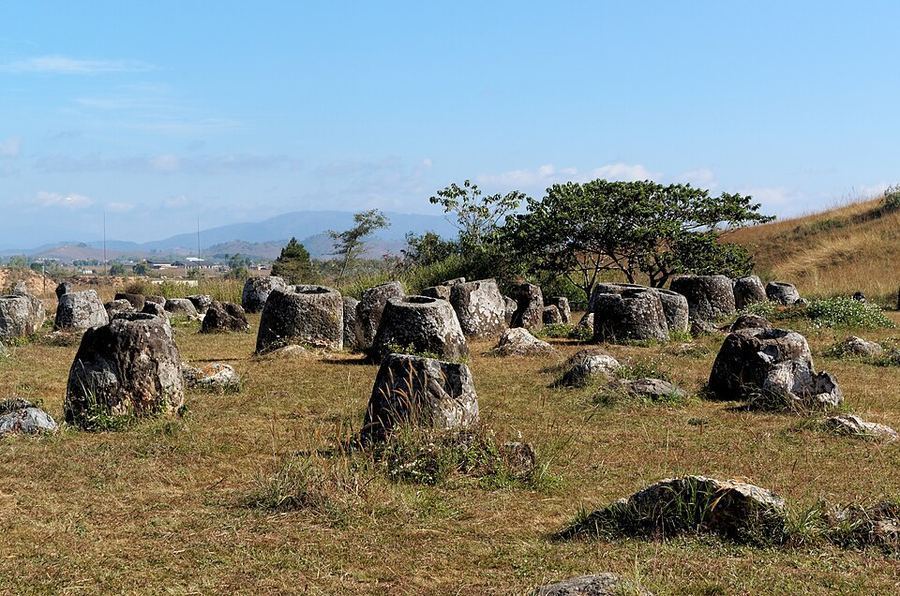
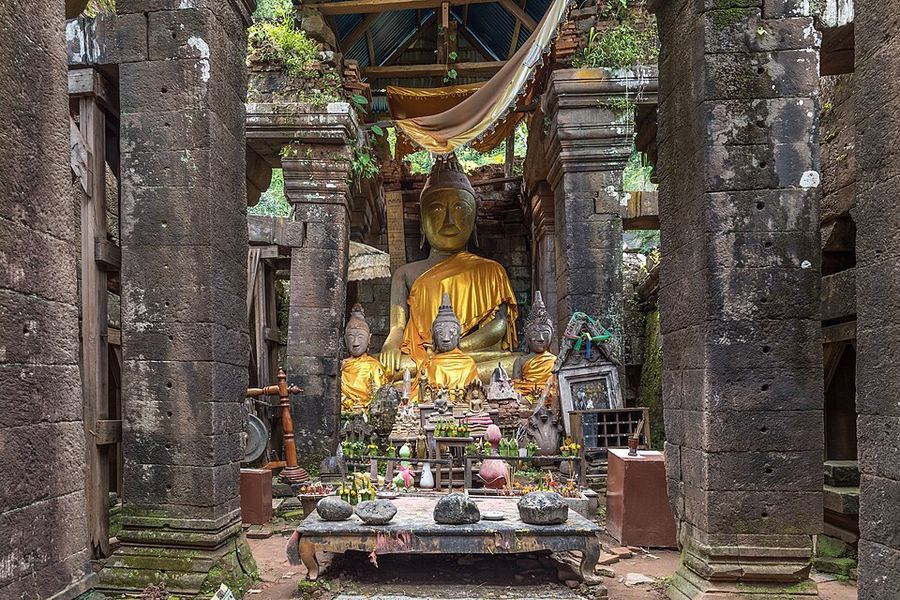
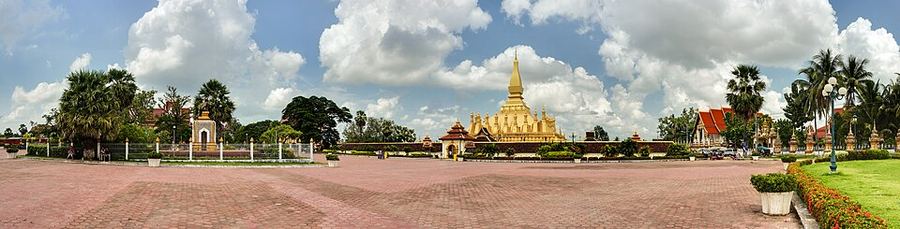
Luang Prabang, inscribed by UNESCO in 1995, is the country's great treasure: a peninsula town of gilded wat, French colonial shophouses and royal buildings where the daily alms round and the annual festivals continue much as they have for centuries, and one of the best-preserved historic urban landscapes in Southeast Asia. Vat Phou in Champasak, a Khmer temple complex on a hillside aligned to a sacred mountain and predating Angkor in its earliest phases, was inscribed in 2001, and the Plain of Jars in Xiengkhuang — thousands of carved stone vessels up to three metres tall, made in the Iron Age and long inaccessible because of unexploded ordnance — was inscribed in 2019 after decades of clearance. Pha That Luang, the golden stupa in Vientiane rebuilt after the Siamese sack, is the national symbol and appears on the state emblem. UNESCO also recognises the khene, the bamboo mouth organ, as intangible cultural heritage. Lao silk and cotton weaving, with its supplementary-weft patterning and natural dyes, is among the finest textile traditions in mainland Southeast Asia and a genuine source of national pride.

Cultural Fusion

Laos is one of the most ethnically complex countries in Asia relative to its population, and the state has long grouped its peoples by elevation: Lao Loum in the lowlands along the Mekong, Lao Theung on the midland slopes, and Lao Sung in the high mountains, a shorthand that flattens dozens of Tai-Kadai, Austroasiatic, Hmong-Mien and Tibeto-Burman communities but captures a real geography of settlement, agriculture and religion. Lowland Lao culture is closely related to that of northeastern Thailand, with which it shares language, food and the mor lam singing tradition, and the Mekong functions as a corridor rather than a wall. Khmer influence entered through Vat Phou and through the Buddhist and courtly forms inherited from Angkor; Vietnamese and Chinese merchant communities have long been established in the towns, and Chinese investment and migration have increased sharply with the railway and the northern economic zones. French rule left the baguette and coffee culture, colonial architecture in Vientiane, Luang Prabang and Savannakhet, petanque courts in every provincial town, and a body of legal and administrative vocabulary. Hmong migration to the United States, France and Australia after 1975 created a substantial diaspora that maintains close ties.

Music & Dance

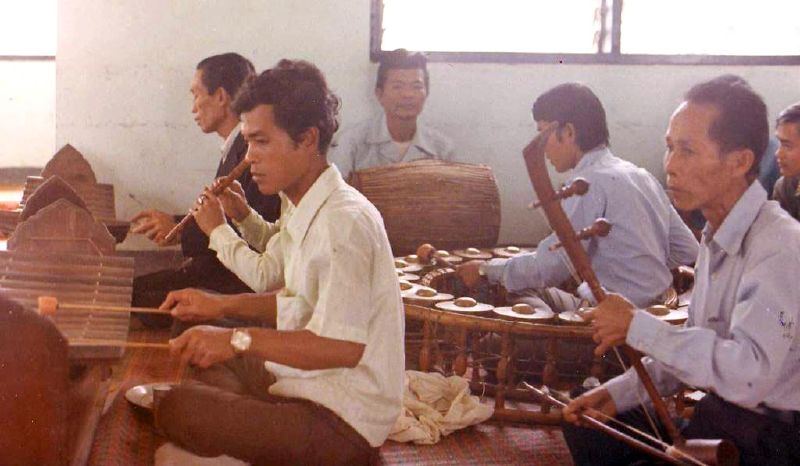
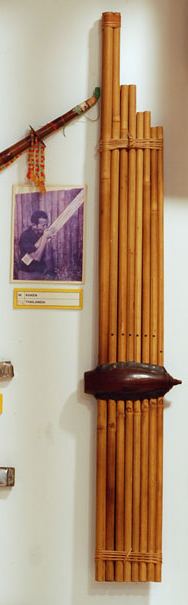
The khene, a mouth organ made of paired bamboo pipes fitted with metal reeds and bound to a hardwood windchest, is the emblematic Lao instrument, capable of continuous sound through simultaneous inhalation and exhalation and of dense chordal accompaniment; UNESCO inscribed the khene music of the Lao people on its Representative List of Intangible Cultural Heritage in 2017. Its principal use is to accompany lam, or mor lam, a genre of sung poetry in which a singer delivers rhymed verse — courtship, comedy, moral instruction, complaint — in a fast, speech-like flow, often as a duel between a man and a woman. Regional lam styles are numerous and locally identified. The national social dance is the lamvong, a slow circle dance in which couples move counter-clockwise with rotating hand gestures and no contact, performed at every wedding and festival by all ages. Classical court music and dance, developed at the royal courts and drawing on the Ramayana in its Lao form, the Phra Lak Phra Ram, survives at Luang Prabang in reduced form. Contemporary Lao pop and hip-hop draw heavily on Thai models while returning to khene and lam motifs.

Cuisine & Misattributed Foods

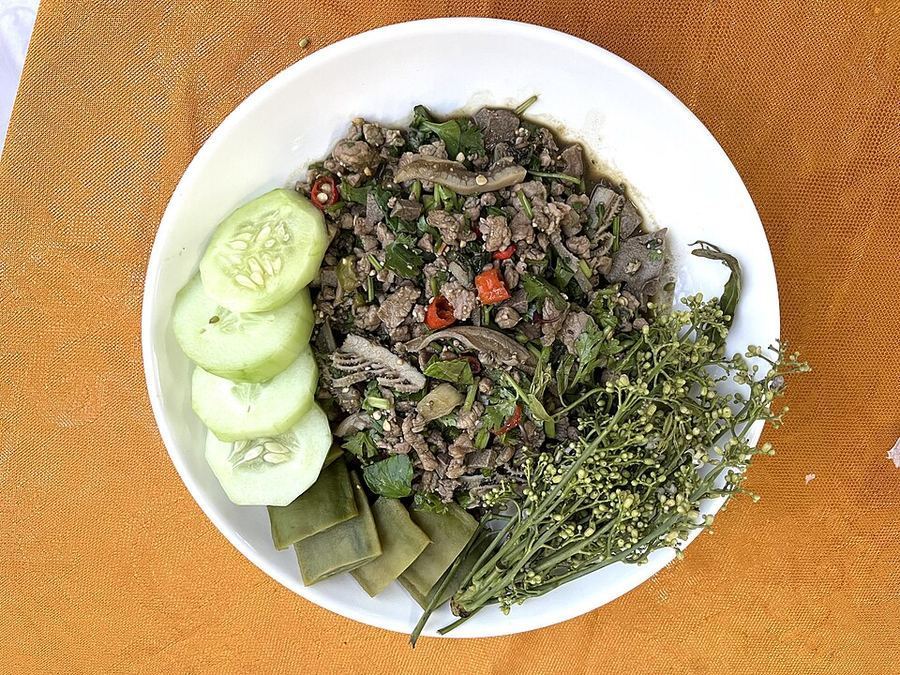
Sticky rice is not merely a staple in Laos but the defining food: steamed in a conical bamboo basket, kept warm in a woven container and eaten with the hands, rolled into a ball and used to pick up everything else, and consumed in greater quantity per person here than anywhere else in the world. The national dish is laap, minced meat or fish tossed with lime, fish sauce, chilli, shallot, mint and toasted ground rice that gives the dish its characteristic nutty texture; it is served at every celebration and its name carries connotations of good fortune. Tam mak hoong, green papaya pounded in a mortar with garlic, chilli, lime, palm sugar and padaek, is eaten daily. Padaek itself — unfiltered fermented fish, coarser and stronger than the clear fish sauces of the region — is the foundational seasoning and the flavour that most distinguishes Lao cooking from that of its neighbours. Other staples include khao poon rice-noodle soup, or lam stew thickened with sakhaan pepperwood, grilled river fish stuffed with lemongrass, and mounds of raw herbs and leaves eaten alongside every meal. French rule left excellent baguettes, sold as khao jee sandwiches, and Bolaven Plateau coffee; Beerlao is the national brand.

National Dress

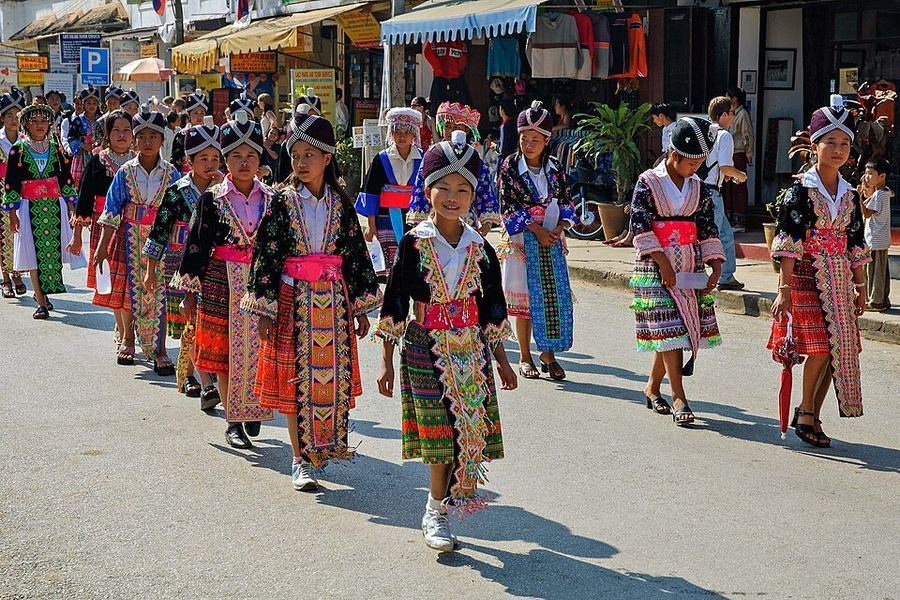
The sinh is the national dress of Lao women and remains genuinely everyday clothing rather than costume: a tube skirt of woven silk or cotton, wrapped and folded at the waist, constructed in three distinct parts — the hua sinh at the waistband, the pheun sinh forming the body of the skirt, and the tin sinh, a decorated hem band that is often the most elaborate and expensive element, woven with supplementary gold or silver weft in patterns that can indicate region and ethnicity. It is compulsory dress for women in government offices, schools and universities and is worn to temples and formal occasions with a pha biang, a shawl draped diagonally across the chest over one shoulder. Men's traditional dress is the salong, a wide wrapped trouser, worn with a collarless shirt and sash, though Western clothing is standard for men in daily life. Upland communities maintain distinct and often spectacular dress: Hmong indigo batik and appliqué with silver collars and coin ornament, Akha headdresses of silver discs and beads, and Katu and Tai Dam weaving each carrying their own patterning. Lao silk weaving is a household and workshop craft of considerable technical sophistication.

Sports & Inspiring Athletes

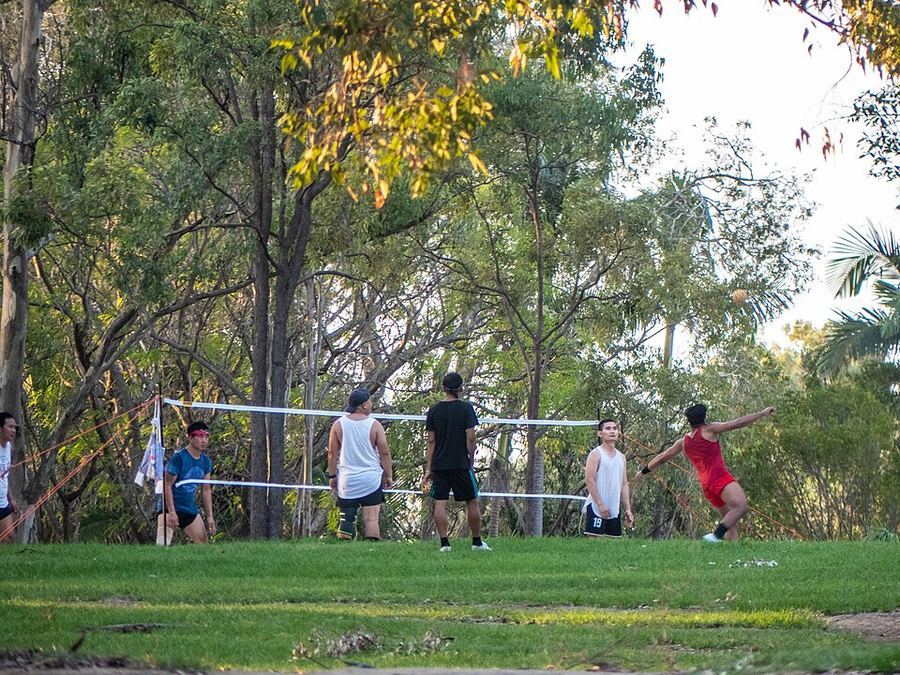
Sepak takraw, the kick volleyball played with a rattan ball over a net using feet, knees, chest and head, is the most widely played traditional sport and is contested competitively at regional games; its informal street version, kataw, is played in a circle in every village at dusk. Muay Lao, the Lao form of kickboxing closely related to muay Thai and fought with fists, elbows, knees and shins, has a long following and is staged at festivals and in Vientiane arenas. Football is the most popular modern sport, run by the Lao Football Federation with a domestic league centred on Vientiane, and the national team plays in Southeast Asian and Asian qualifying competition without yet having reached a major finals. Boat racing on the Mekong and its tributaries, with long crews of dozens of paddlers representing villages, districts and government offices, is the most participatory competitive tradition in the country and draws the largest crowds of the year during Boun Ok Phansa. Petanque, inherited from the French, is played seriously and organised nationally, and Laos is among the stronger nations in the sport. Volleyball, badminton and athletics are widely played in schools.

Notable Educational Programs

Laos has raised primary enrolment close to universal levels since the 1990s and has substantially increased adult literacy, but the system carries the twin burdens of geography and language: schools are scattered across mountainous provinces with poor roads, and a large share of children begin school speaking a first language other than Lao, which contributes to high repetition and early dropout. Completion of lower and upper secondary education remains the weakest link, particularly for girls in upland districts and for ethnic minority communities, and learning outcomes lag enrolment by a wide margin according to World Bank and UNICEF assessments. The National University of Laos, established in Vientiane in 1996 by consolidating a set of separate institutes, is the country's principal higher education institution, joined by universities at Champasak, Savannakhet and Luang Prabang and by specialised health and technical schools. Bilingual and mother-tongue-based early education programmes have been piloted with donor support to address the language barrier. A distinctive national programme is risk education on unexploded ordnance, delivered in schools across the most heavily contaminated provinces, since children are among the most frequent casualties of the war-era submunitions.

Wars & Conflicts

Laos was drawn into the Vietnam War as the corridor of the Ho Chi Minh Trail, and between 1964 and 1973 the United States conducted a covert bombing campaign there — the Secret War — flying more than half a million missions and dropping over two million tonnes of ordnance, which by most measures makes Laos the most heavily bombed country per head of population in history. Around a third of the roughly 270 million cluster submunitions dropped failed to detonate, and an estimated 80 million remain in the ground; unexploded ordnance has killed or injured tens of thousands of people since the war ended, contaminates farmland across the eastern provinces and is cleared at a rate that will take generations. President Obama's visit in 2016, the first by a serving United States president, came with a substantial increase in clearance funding. The civil war between the Royal Lao Government and the Pathet Lao ended in 1975 with the communist victory, the abolition of the monarchy and the flight of around a tenth of the population, including many Hmong who had fought alongside American forces; a low-level Hmong insurgency persisted in remote areas for decades afterward.
Current as of 2026-08-07

Land & Border Disputes

Laos has settled most of its boundaries, though its frontier with Thailand along the Mekong has been the exception. Disagreement over the interpretation of French colonial-era maps in the Ban Rom Klao area led to a short but serious border war between the two countries from December 1987 to February 1988, in which several hundred soldiers were killed before a ceasefire; demarcation of the remaining land sectors and of islands and sandbars in the Mekong has continued through a joint boundary commission since. Segments of the borders with Cambodia and Myanmar have also required prolonged survey work. The country's most consequential international disagreements today concern water rather than territory. Laos has pursued a strategy of becoming the battery of Southeast Asia through mainstem and tributary dams on the Mekong, and projects including Xayaburi and Don Sahong have drawn formal objections from Cambodia and Vietnam and criticism from scientists over their effects on sediment flow, fish migration and the Tonle Sap flood pulse downstream. These are handled through the consultation procedures of the Mekong River Commission, which produce recommendations rather than binding decisions.
Land, Life & Legacy

Land & Climate

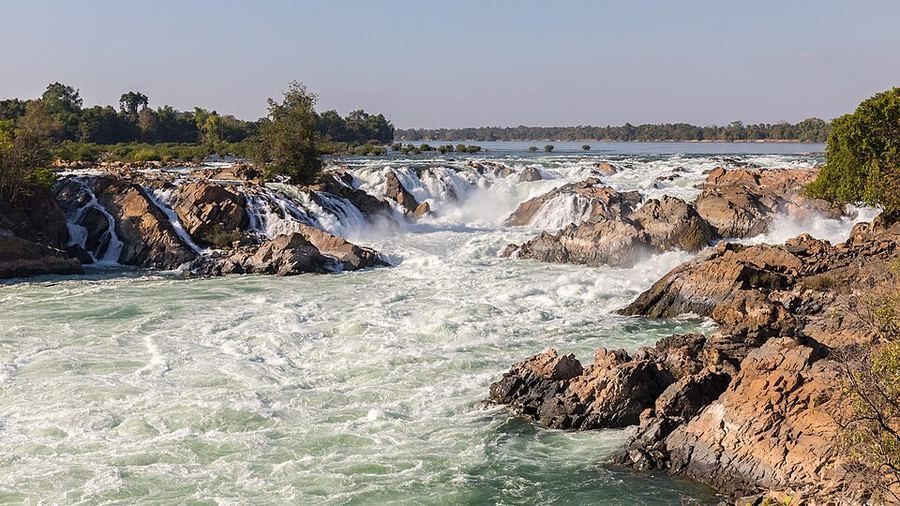
Laos is mountainous and forested over most of its area, with about seventy percent of the country classed as upland and only the Mekong floodplain and a series of interior basins offering flat, cultivable ground. The Annamite Range runs the length of the eastern border with Vietnam; the northern provinces are steeply dissected highland; and Phou Bia in the Xiangkhoang massif, at 2,819 metres, is the highest point. The Mekong flows for roughly 1,900 kilometres through or along the country and is the organising axis of settlement, transport, fishing and now hydropower, joined by major tributaries including the Nam Ou, Nam Ngum and Se Kong. In the far south the river spreads into Si Phan Don, the four thousand islands, and drops over the Khone Phapheng Falls, the largest waterfall in Southeast Asia by volume and an absolute barrier to navigation, in a stretch that shelters one of the last populations of Irrawaddy dolphins. The Bolaven Plateau in the south, formed of volcanic soil at around 1,000 metres, produces the country's coffee. The climate is tropical monsoon, with a wet season from May to October, a cool dry season to February and a hot dry season to April.

Entertainment

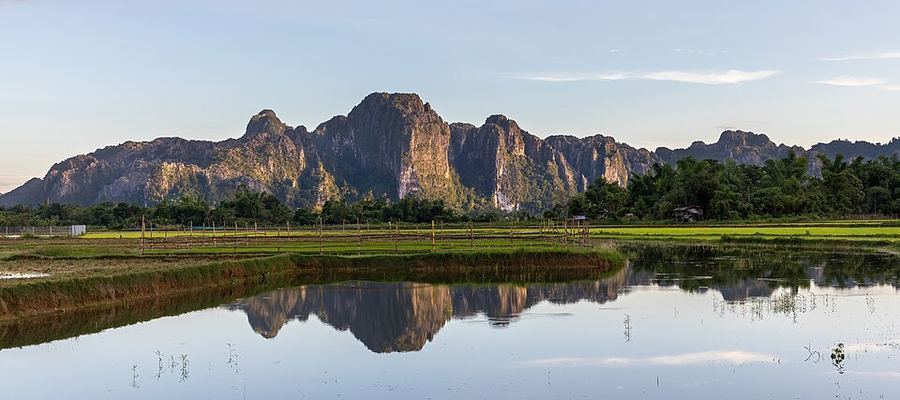
The Lao festival calendar, the boun, provides the year's structure. Pi Mai Lao, the new year in mid-April, is three days of Buddha-image washing, sand-stupa building and general dousing with water in the hottest part of the year. Boun Bang Fai, the rocket festival in May, sends home-made bamboo and PVC rockets into the sky to petition for rain, with prizes for altitude and penalties — usually a mud bath — for the makers whose rockets fail. Boun Ok Phansa at the end of the rains brings candle-lit boats floated on the Mekong and boat racing, with long crews from villages and offices competing before large crowds in Vientiane and Luang Prabang. Boun That Luang in November, centred on the great stupa in Vientiane, is the largest religious gathering of the year. Everyday leisure is unhurried: eating and drinking at riverside restaurants, sunset on the Mekong, badminton and takraw in the street at dusk, karaoke, and petanque, a French inheritance played on gravel courts in every town and taken seriously enough to be a competitive national sport. Domestic travel to Vang Vieng's karst landscape and to the Bolaven waterfalls has grown steadily.

Art & Museums

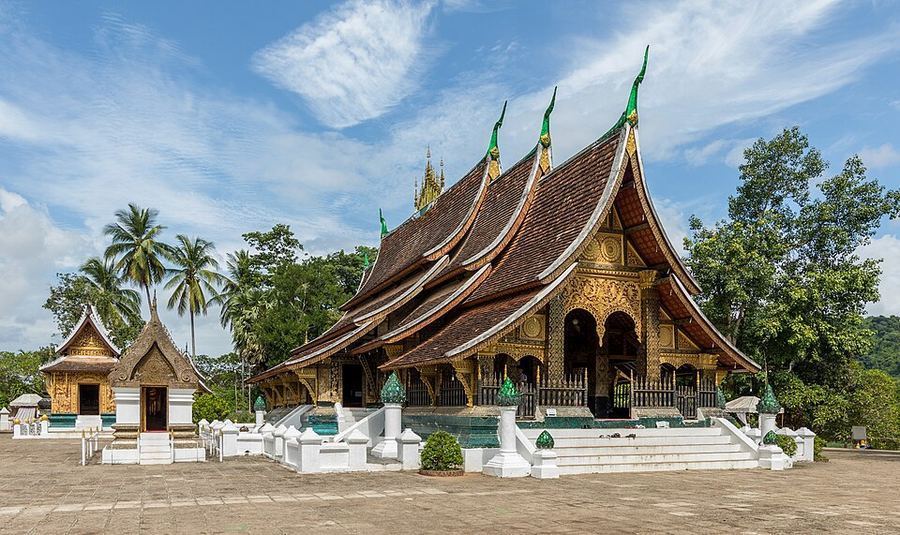
Lao art is overwhelmingly Buddhist and architectural. The distinctive Lao wat, with its low sweeping multi-tiered roof, carved and gilded pediment and mosaic-inlaid walls, reaches its finest expression at Wat Xieng Thong in Luang Prabang, built in 1560, whose rear wall carries a tree-of-life mosaic in coloured glass. Lao Buddha sculpture developed recognisable local forms, including the standing calling-for-rain image with arms held straight at the sides and the contemplating-the-bodhi-tree posture, cast in bronze and often gilded; the Phra Bang, the palladium of the kingdom, is kept in Luang Prabang. Pha That Luang in Vientiane, with its lotus-bud spire, is the country's supreme monument. Textile art is the great secular tradition: silk and cotton woven on frame looms with supplementary weft and ikat techniques, dyed with indigo, lac and other natural colours, and patterned with naga serpents, diamonds and ancestral motifs that differ by community. Xieng Khuan, the Buddha Park outside Vientiane created by the mystic Bunleua Sulilat from the late 1950s, is an eccentric concrete garden of Buddhist and Hindu figures and one of the country's most visited sites.

Notable People

Fa Ngum, who unified the Mekong principalities into Lan Xang in 1353 and established Theravada Buddhism as the state religion, is the founding figure of Lao statehood, and King Setthathirath, who moved the capital to Vientiane in 1560 and built Pha That Luang and Wat Xieng Thong, is the great builder-king. Chao Anouvong, who led the revolt against Siamese domination in 1826 and whose defeat brought the sack of Vientiane, has been rehabilitated as a national hero and stands in statue on the Vientiane riverfront. In the twentieth century, Prince Souphanouvong, known as the Red Prince, broke with his royal family to lead the Pathet Lao and became the first president of the Lao People's Democratic Republic, while Kaysone Phomvihane, the party's general secretary and the country's dominant political figure until his death in 1992, appears on the currency and in a national museum. Prince Souvanna Phouma, half-brother of Souphanouvong, spent two decades trying to hold a neutralist coalition together through the civil war. The writer Outhine Bounyavong and the modern painter and sculptor community around Vientiane represent contemporary Lao cultural life.

Inventions & Breakthroughs

Laos does not present itself as a country of technical invention, and its distinctive contributions are craft and agricultural technologies developed over centuries. The khene is the most striking: a free-reed mouth organ whose paired bamboo pipes and metal reeds allow continuous polyphonic sound produced on both the in-breath and the out-breath, an instrument sophisticated enough to have been studied by organologists and recognised by UNESCO in 2017. Lao weaving technique — supplementary weft patterning, weft ikat and the natural dyeing of silk with lac, indigo, ebony fruit and turmeric — represents an accumulated body of knowledge held largely by women and transmitted within households. Upland communities developed rotational swidden systems and terraced wet rice adapted to steep, thin soils, and lowland farmers maintain distinct glutinous rice varieties suited to the Mekong flood regime. Padaek fermentation preserves the seasonal fish catch of the Mekong into the dry months. The country's principal modern engineering effort is hydroelectric: a chain of dams on Mekong tributaries and mainstem, beginning with Nam Ngum in 1971 and including Nam Theun 2, built to make Laos an electricity exporter to its neighbours.

Science & Technology

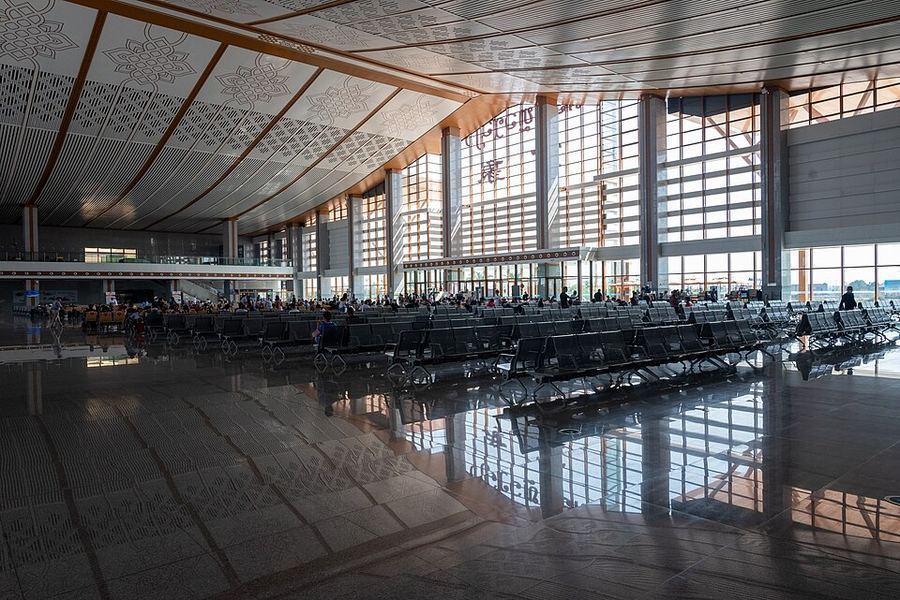
Laos has a very small research base and its technological development has been driven by infrastructure investment rather than domestic science. Hydropower is the central case: the country has built dozens of dams on the Mekong and its tributaries, beginning with Nam Ngum in 1971 and including the World Bank-supported Nam Theun 2 project commissioned in 2010, with the explicit aim of exporting electricity to Thailand, Vietnam and China, and power is now the leading export earner. The strategy carries real risks, made plain when a saddle dam of the Xe-Pian Xe-Namnoy project failed in July 2018, flooding villages in Attapeu province, killing dozens and displacing thousands. The Laos-China Railway, a 414-kilometre electrified line from Boten on the Chinese border to Vientiane, opened in December 2021 and is the largest single piece of infrastructure in the country's history, cutting a journey that took two days to a few hours and reorienting trade northward. LaoSat-1, a communications satellite built and financed by China, was launched in 2015. Agricultural and health research is conducted largely through international partnerships, with unexploded ordnance survey and clearance a permanent applied programme.
On The World Stage

Champions & Defining Moments

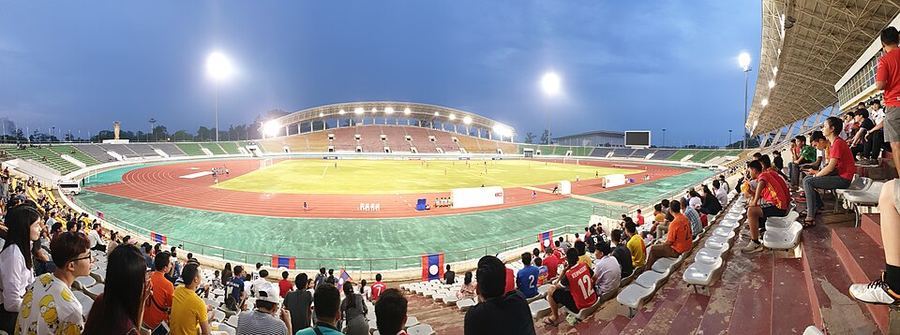
Laos first competed at the Olympic Games in Moscow in 1980 and has taken part in every Summer Games since, sending small teams in athletics, swimming, shooting, judo, taekwondo and boxing, generally under universality places; it has not yet won an Olympic medal. Its most significant international sporting moment was as a host: Vientiane staged the Southeast Asian Games in December 2009, the first time Laos had hosted the region's largest multi-sport event, for which the Lao National Stadium was built north of the capital with Chinese financing, and the Lao team returned its best-ever medal haul. The country's strongest global discipline is petanque, in which Lao players — particularly women — have won medals at world championships and have repeatedly taken gold at the Southeast Asian Games, an unusual specialism traceable directly to the French colonial period. Lao athletes also compete at the Asian Games and in sepak takraw and muay competitions across the region. Constraints on international performance are the familiar ones for a low-income country: limited facilities, small budgets and few opportunities for athletes to train or compete abroad.

IOCOlympediaFIFA
Economy, Trade & Government

Currency & GDP

Lao Kip — LAK (None)

GDP (PPP): $66.905 billion (2024 est.)

Per capita: $8,600 (2024 est.)

Exports

$9.698 billion (2023 est.)

electricity, fertilizers, gold, garments, paper (2023)

Partners: China 39%, Thailand 34%, Australia 4%, USA 4%, Cambodia 2% (2023)

Imports

$8.596 billion (2023 est.)

refined petroleum, cars, raw sugar, plastic products, trucks (2023)

Partners: Thailand 58%, China 36%, Japan 1%, Singapore 1%, Germany 1% (2023)

Government

Type: communist party-led state

Independence: 19 July 1949 (from France); 22 October 1953 (Franco-Lao Treaty recognizes full independence)

Terrain → Where People Live

How mountains, coasts, and rivers shape settlement (LandScan).

Coming — data

Migration & Ethnic Settlement

Where groups settled and how people move (GeoEPR + UNHCR).

Coming — data

Universities

Notable institutions, mappable as points.

Coming — data
Economy & government facts: CIA World Factbook (public domain), via OpenFactBook / factbook.json.
Every fact and narrative claim will carry a visible source citation. Data-driven sections light up automatically wherever HERA has coverage.