HERA · Human Entity Reference Atlas by Masego Inc

← Liberia 🌐 3D View
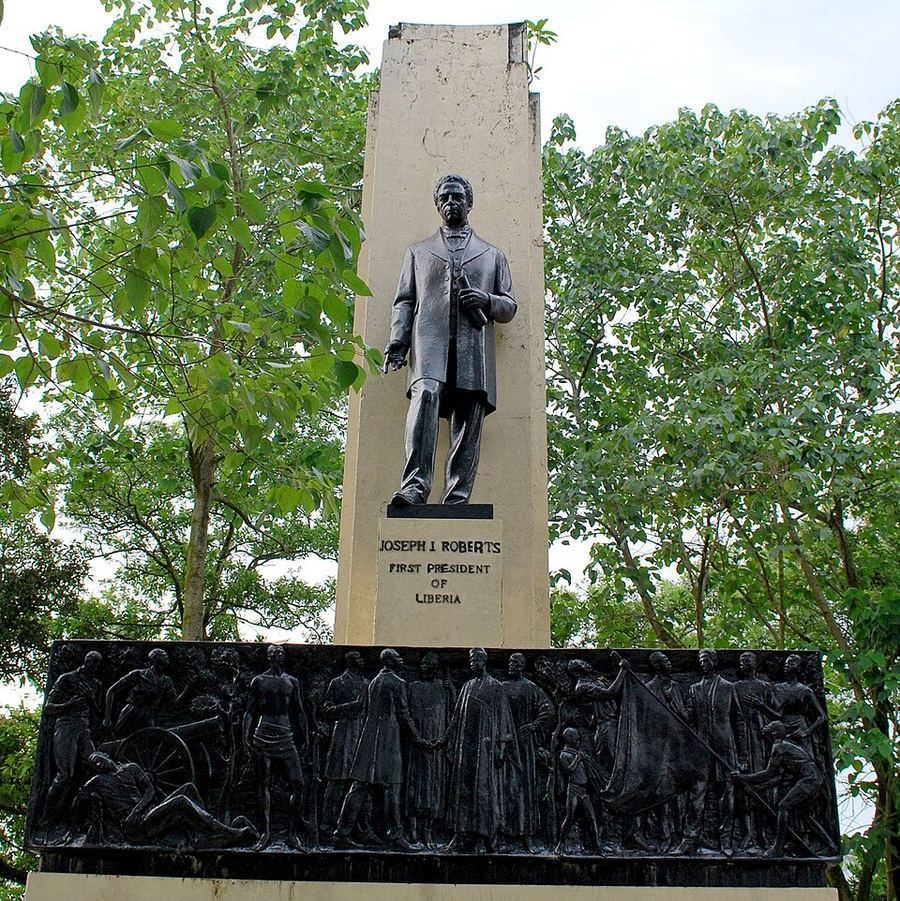
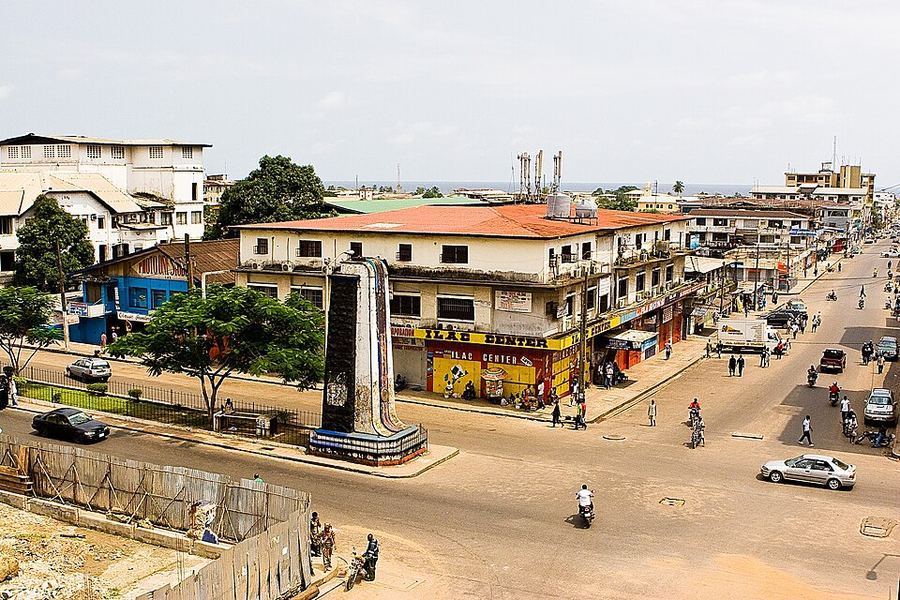
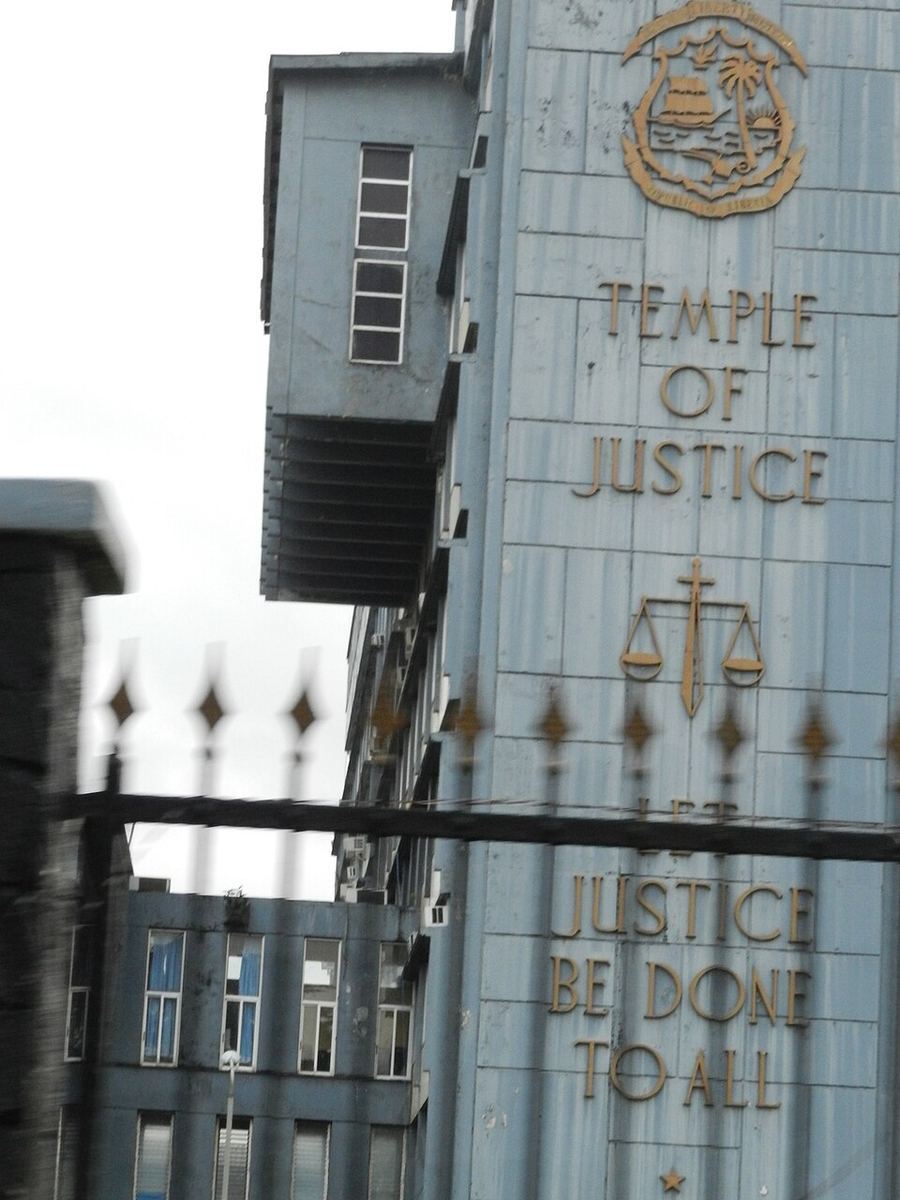
Monrovia, Liberia - panoramio (89) (cropped), Liberia
Liberia LBR
Monrovia, Liberia - panoramio (89) (cropped) — Photo: blk24ga / CC BY 3.0 via Wikimedia Commons
Did You Know Kickball — played by kicking a rubber ball around a baseball-style diamond — is the most widely played sport among Liberian girls and women. — Encyclopaedia Britannica

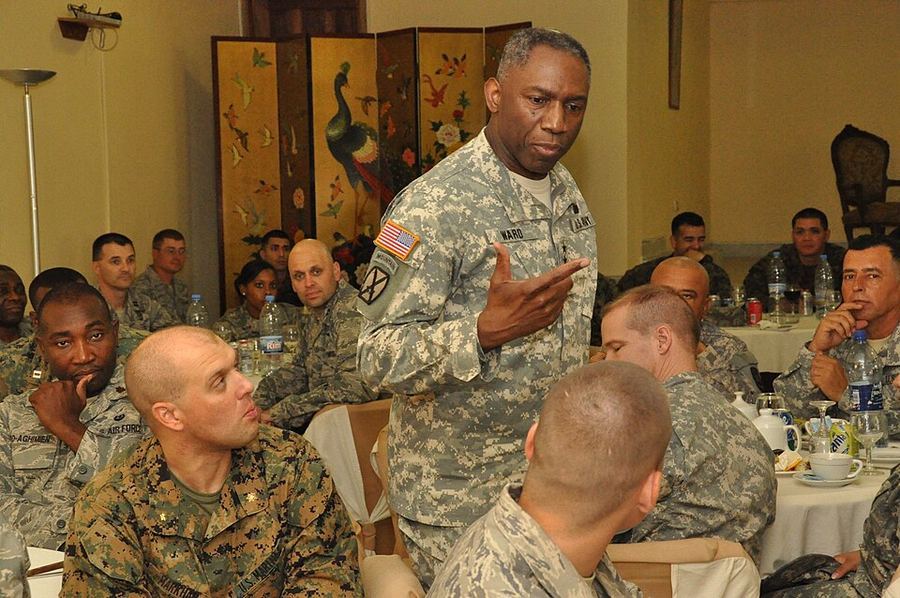
Liberia is a West African presidential republic of roughly 5.5 million people on the Atlantic coast between Sierra Leone, Guinea and Côte d'Ivoire, occupying about 111,000 square kilometres of coastal lagoon, dense rainforest and interior plateau. It occupies a singular place in African history as the continent's oldest republic: founded from 1822 as a settlement for free-born and formerly enslaved African Americans sponsored by the American Colonization Society, it declared independence on 26 July 1847 and was never formally colonised by a European power. Monrovia, named for the American president James Monroe, is the capital and by far the largest city. The population is very young, with a median age of about 20, and comprises some sixteen indigenous ethnic groups — the Kpelle the largest at about a fifth, followed by the Bassa, Grebo, Gio, Mano, Kru and others — alongside the descendants of the nineteenth-century settlers, known as Americo-Liberians. English is the official language, used by a minority as a first language and spoken alongside more than two dozen indigenous languages and widely used Liberian English varieties. Around 85 percent of the population is Christian and 12 percent Muslim. Gold, iron ore, rubber and a large open shipping registry are the main sources of foreign earnings.

CIA World FactbookEncyclopaedia BritannicaWorld BankGlottolog
Population
5,563,541
Capital
Monrovia
Currency
None LRD
Time zones
Largest city
Monrovia
Human Geography Themes
Loading national figures…
Largest Cities
Monrovia2,049,818
Buchanan79,368
Kakata78,566
Gbarnga77,865
Ganta72,447
Voinjama71,959
Pleebo62,322
Harbel City55,323
In Perspective

Monrovia's urban core is home to about 2,049,818 people.

That's bigger than Amsterdam — each a great world city in its own right.

Monrovia2,049,818
Amsterdam1,223,407

Among the world's megacities, though, it's one of many — the giants of Asia and Latin America run larger still:

Monrovia2,049,818
Jakarta40,545,126
Dhaka37,307,160
Tokyo33,244,670
Shanghai30,678,616
Cairo25,230,325
The Country & Its People

History

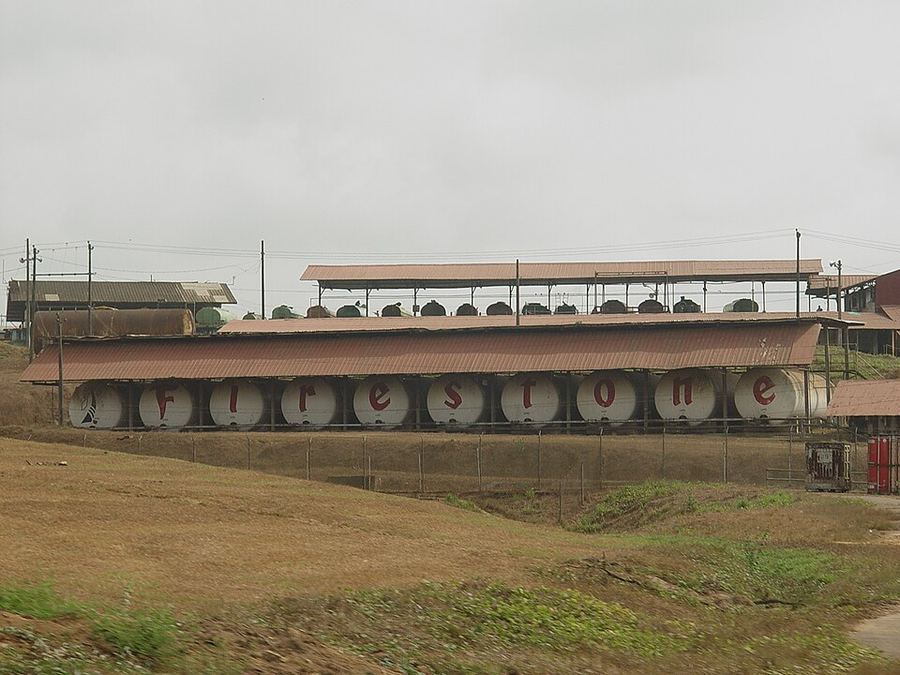
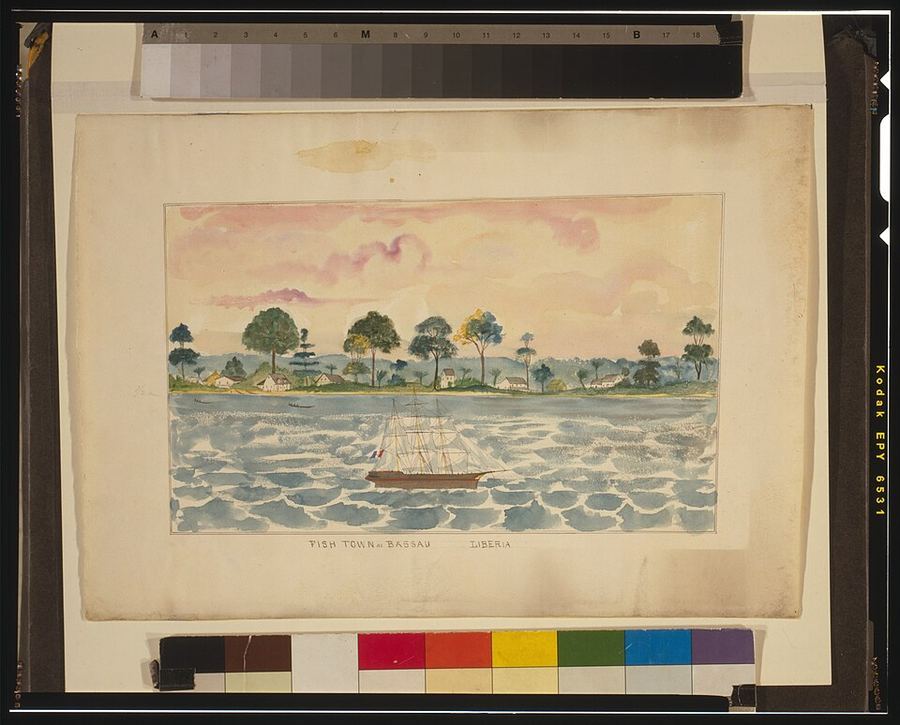
The region was settled for centuries by Mande, Kru and Mel-speaking peoples whose societies were organised around lineage, secret societies and long-distance trade in kola, salt and iron; Portuguese traders named the coast for the malagueta pepper they bought there. From 1822 the American Colonization Society landed free-born and formerly enslaved African Americans at Cape Mesurado, and on 26 July 1847 the settlers declared the Republic of Liberia with a constitution and flag closely modelled on those of the United States, making it Africa's first modern republic. Political power was held for over a century by the Americo-Liberian minority through the True Whig Party, which excluded the indigenous majority from citizenship and the franchise well into the twentieth century. Firestone's rubber concession of 1926, then the largest in the world, and an open shipping registry shaped the economy. In April 1980 Master Sergeant Samuel Doe, of Krahn origin, seized power in a coup that killed President William Tolbert and ended settler rule. Charles Taylor's invasion at Christmas 1989 began fourteen years of civil war in two phases, ending with Taylor's exile in 2003 and a United Nations mission; Ellen Johnson Sirleaf was elected in 2005 as Africa's first woman head of state.
Culture

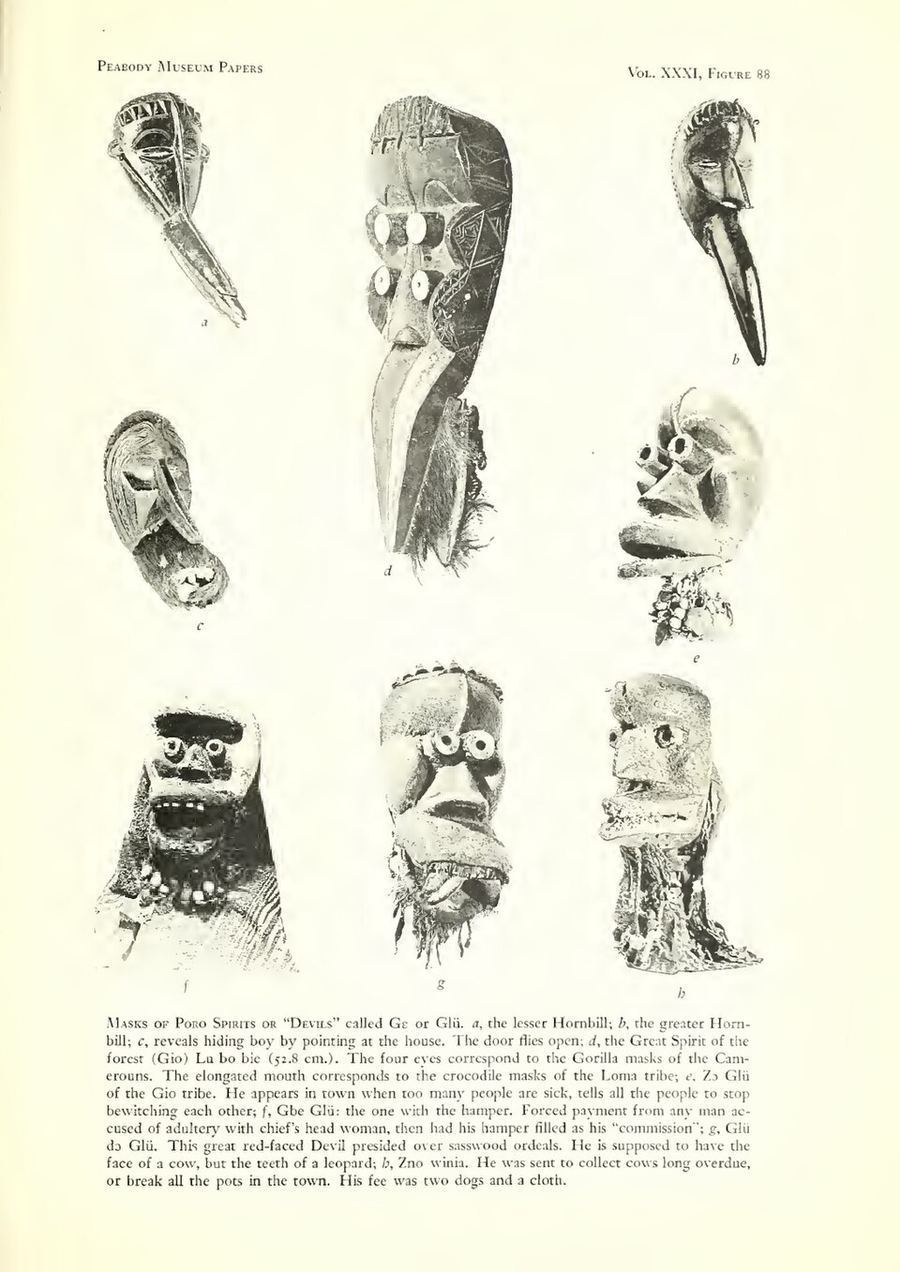
Liberian culture is shaped by the meeting of indigenous West African societies with a nineteenth-century African American settler culture, and the seam between them has defined national life. Among most indigenous communities, the Poro society for men and the Sande society for women are the central institutions of initiation, education and social regulation, controlling masking traditions, training in law and craft, and the passage into adulthood; membership and its knowledge are secret, and the societies retain real authority in rural areas. Extended family and lineage govern land, marriage and obligation, and the palava hut — a round open-sided structure in which disputes are talked through until resolution — is the traditional forum for mediation, a form that was consciously invoked in post-war reconciliation. Americo-Liberian culture brought Baptist and Methodist churches, American-style formal dress, the frame houses of Monrovia and Harper, and the celebration of 26 July as Independence Day with its distinct oratory. Christianity is pervasive and the church is a primary institution of community life, coexisting with older belief. Liberian English varieties, including the Kru-influenced coastal speech, are the practical lingua franca.

Points Of Pride

Liberia's foremost point of pride is its founding claim: Africa's oldest republic, independent since 1847, never colonised, and for much of the nineteenth and twentieth centuries a symbol of Black self-government referenced by pan-Africanists across the continent and the diaspora. Its flag, with a single white star on a blue canton over eleven red and white stripes, gave the country the name Lone Star. Liberia was a founding member of the United Nations and of the Organisation of African Unity, and its diplomats played a role in the international legal case against apartheid South Africa's administration of South West Africa. Ellen Johnson Sirleaf's election in 2005 made her the first woman elected head of state anywhere in Africa, and she shared the Nobel Peace Prize in 2011 with her compatriot Leymah Gbowee, whose women's peace movement helped end the civil war — the only time two women from the same country have shared the prize. Sapo National Park protects the largest remaining block of primary rainforest in the country and part of the Upper Guinean forest, home to pygmy hippopotamus and forest elephant. George Weah's 1995 Ballon d'Or remains the only one won by an African player.

Cultural Fusion

The country's defining cultural encounter was between the indigenous peoples of the Grain Coast and the African American settlers who arrived from 1822, together with recaptured Africans landed from intercepted slave ships, known as Congos, who were resettled in Liberia and absorbed into the settler community. The settlers brought American Protestant Christianity, the English language, Masonic lodges, American political forms and a coastal, town-based way of life, and for over a century maintained a social boundary between themselves and the interior that shaped Liberian politics until 1980 and left an inheritance of grievance. Cultural exchange nonetheless ran both ways, producing a distinctive creole culture in Monrovia, Buchanan and Harper. Lebanese and Indian merchant communities have long been established in commerce. Cross-border kinship is significant: the Mande, Mano, Gio, Kissi and Vai peoples span the frontiers with Guinea, Sierra Leone and Côte d'Ivoire, which meant that the region's wars in the 1990s and 2000s moved fighters, refugees and weapons in both directions. Long periods of exile during the civil war built substantial Liberian communities in the United States, particularly around Minneapolis and Philadelphia, that remain closely connected to home.

Music & Dance

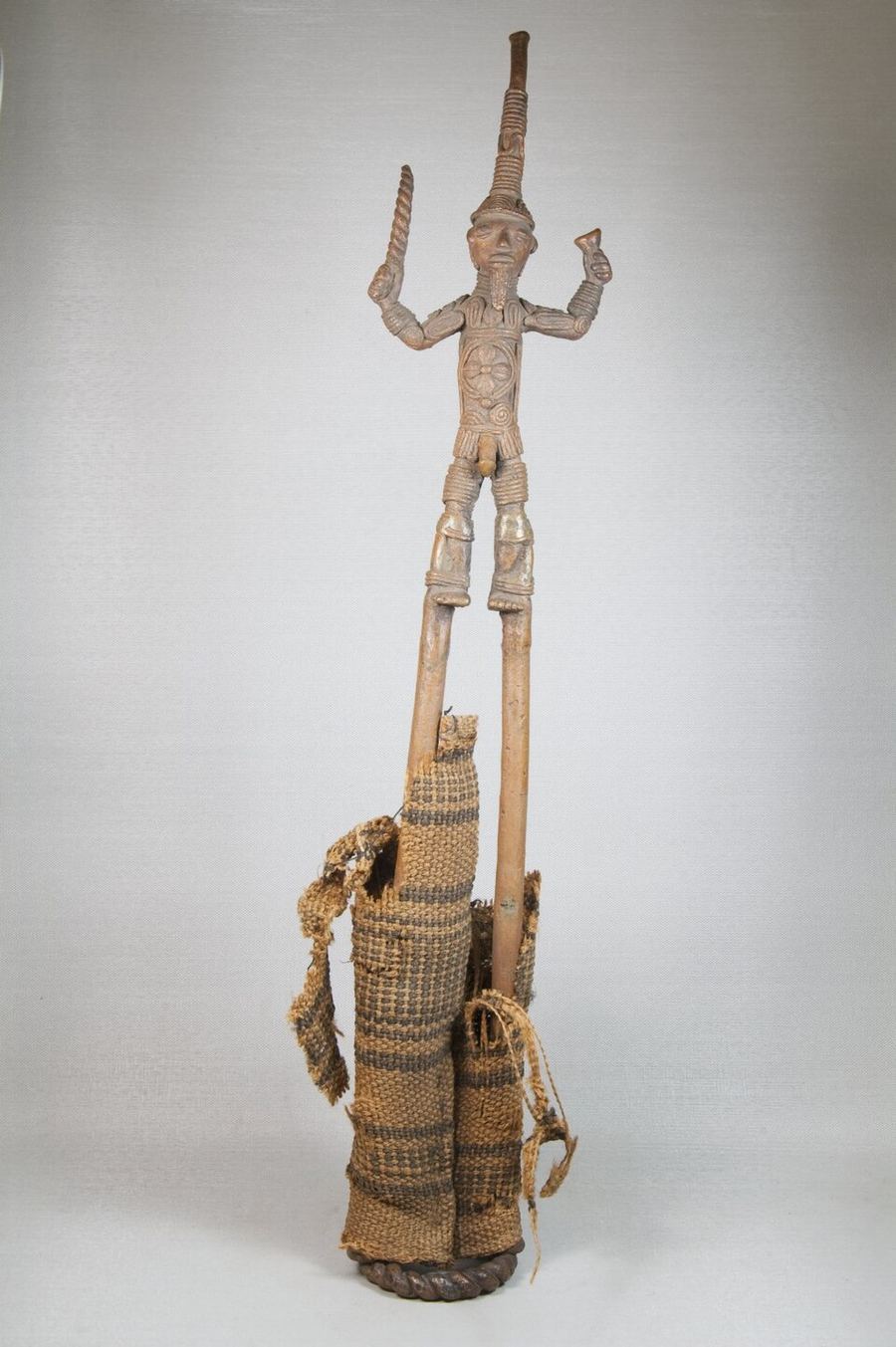
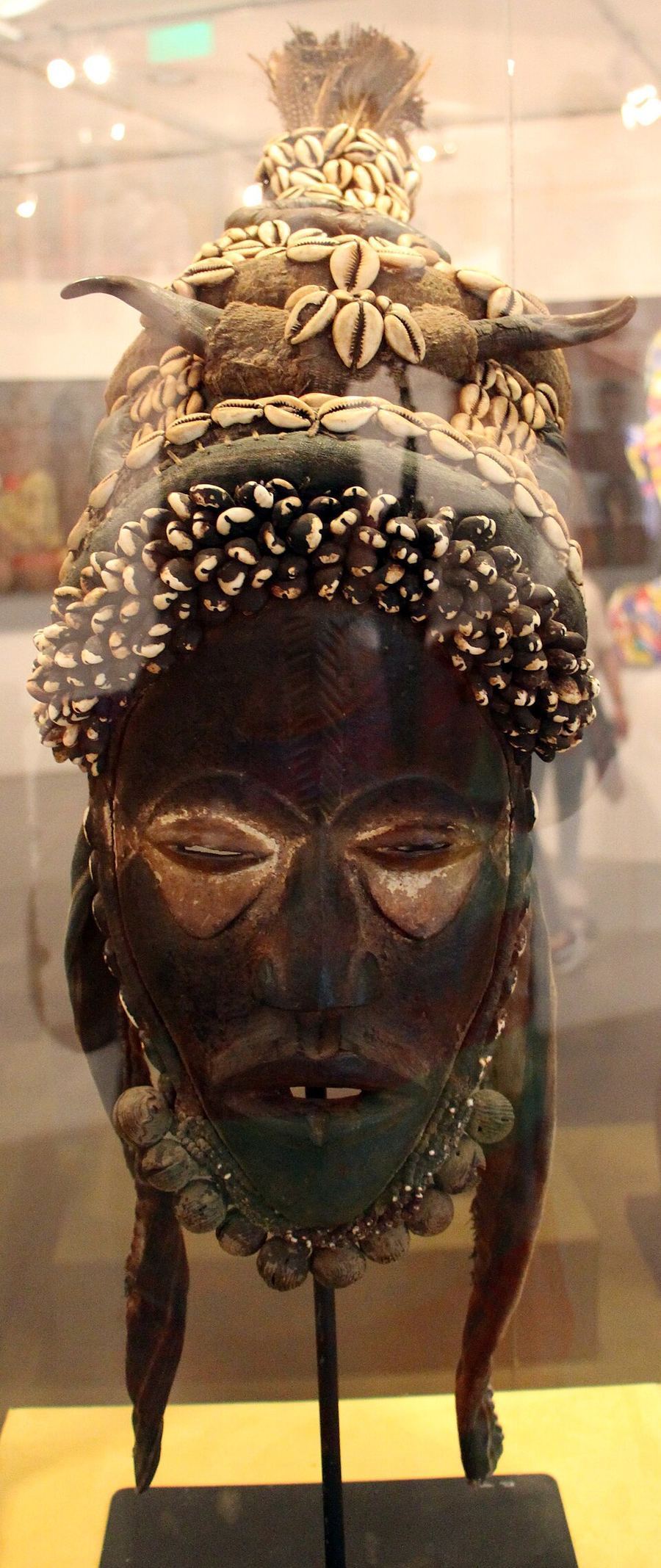
Traditional Liberian music is drum-led and tied to occasion — initiation, harvest, funerals, the installation of chiefs — with talking drums, slit gongs, the sasaa gourd rattle, and the kora-related plucked lutes of the Mande-speaking north. Masked dance is its most powerful form: the masks of the Poro and Sande societies, worn by initiates who become the spirit rather than represent it, appear at ceremonies with raffia costume and stilts, and the Dan and Mano masking traditions of the interior are among the most celebrated in West African art. The most spectacular performer is the acrobatic dancer supported on stilts of great height, moving with a fluency that has become a signature of Liberian and Ivorian performance. Vai and Kpelle epic singing and Grebo choral traditions add distinct regional layers. Popular music took shape around highlife and, from the 1970s, gospel; the civil war years produced hipco, a Liberian hip-hop style rapped in colloquial Liberian English on explicitly political themes, which became the dominant youth genre in the 2000s alongside gbema. Church choirs are the most widely practised musical institution in the country.

Cuisine & Misattributed Foods

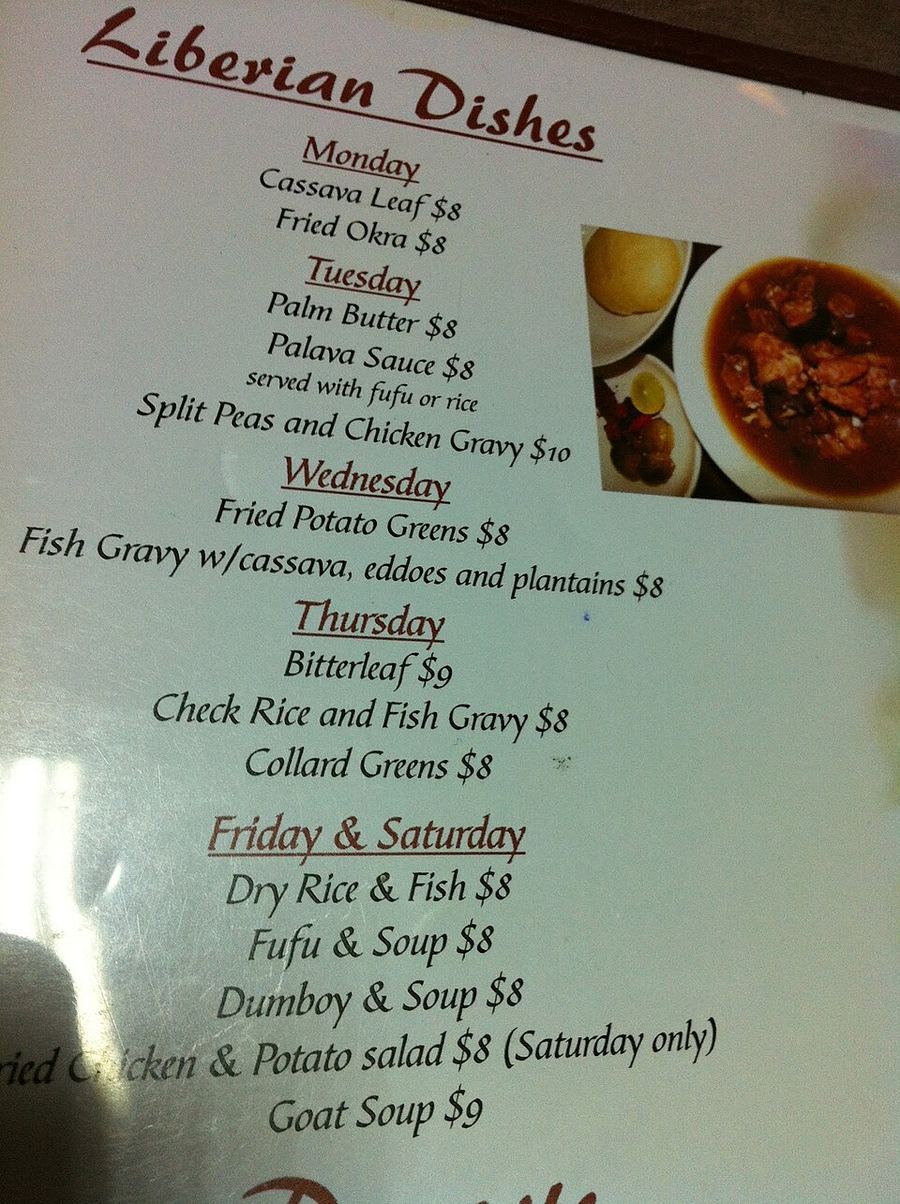
Liberian cooking is rice-centred to a degree that shapes politics: rice is the staple to the point that a proposed increase in its price triggered the riots of 1979 that preceded the coup, and a Liberian meal without it is not considered a meal. The characteristic dishes are thick sauces served over rice — palm butter, made by boiling and pressing palm nuts into a rich orange base cooked with fish, meat and chilli; cassava leaf, pounded fine and stewed long with palm oil, smoked fish and meat; potato greens, prepared the same way from sweet potato leaves; and check rice, cooked with greens folded through it. Pepper soup, dumboy and GB — pounded cassava eaten as a stiff dough with soup — and jollof rice are staples. Fufu of fermented cassava is dipped into soup by hand. Palm oil, hot country pepper, smoked and dried fish and bouillon define the flavour. Coastal communities eat abundant fish and shellfish, and the interior contributes bushmeat, though hunting pressure and disease risk have made this contentious. Palm wine tapped from the tree and cane juice are the traditional drinks, and the American settler inheritance appears in cornbread, doughnuts and Independence Day cake.

National Dress

The garment most associated with Liberia is the country cloth, a narrow-strip fabric woven on horizontal looms in the interior — most famously by Loma, Vai and Mandingo weavers — in indigo, white and earth tones, sewn together into gowns, robes, blankets and hammocks; a country-cloth gown is a prestige garment and a traditional gift to a distinguished visitor. Men wear the flowing embroidered robe common across West Africa, and the Liberian suit, a short-sleeved tailored shirt-jacket worn without a tie, has become the standard formal dress for men in government and business, worn at the legislature and on state occasions. Women wear the lappa suit: a wrapped skirt of printed cotton with a matching top and a headtie, made in coordinated sets, which is worn for church, weddings, funerals and official events and functions as the effective national dress. Americo-Liberian tradition preserved nineteenth-century American formal styles — top hats and frock coats at Independence Day and Masonic occasions — that survive in ceremony. Masking traditions produce the country's most striking regalia, in raffia, carved wood and cloth, worn by society initiates rather than as costume.

Sports & Inspiring Athletes

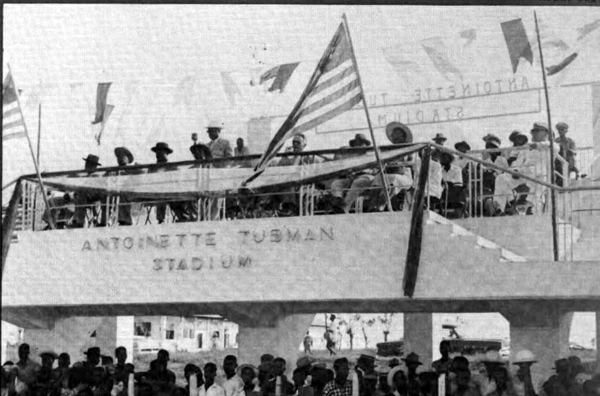
Football is overwhelmingly the national sport, governed by the Liberia Football Association, with a domestic league centred on Monrovia clubs including Invincible Eleven, Mighty Barrolle and LISCR, and a national team known as the Lone Star that carries enormous popular investment. The team came closest to qualifying for the Africa Cup of Nations under George Weah's playing career, reaching the finals in 1996 and 2002, and Weah at points financed and even played for the national side himself. Kickball, a game closely related to baseball played by kicking a rubber ball, is the most widely played sport among Liberian girls and women and is organised into school and county competitions, a genuinely distinctive national sporting tradition with roots in the American settler inheritance. Basketball, volleyball and athletics have school and club followings, and boxing has produced professional fighters. Traditional wrestling and canoe racing persist in some counties. Sporting infrastructure was devastated by the civil war, and the Samuel Kanyon Doe Sports Complex in Paynesville, the national stadium, served for years as a camp for displaced people before being restored to sporting use.

Notable Educational Programs

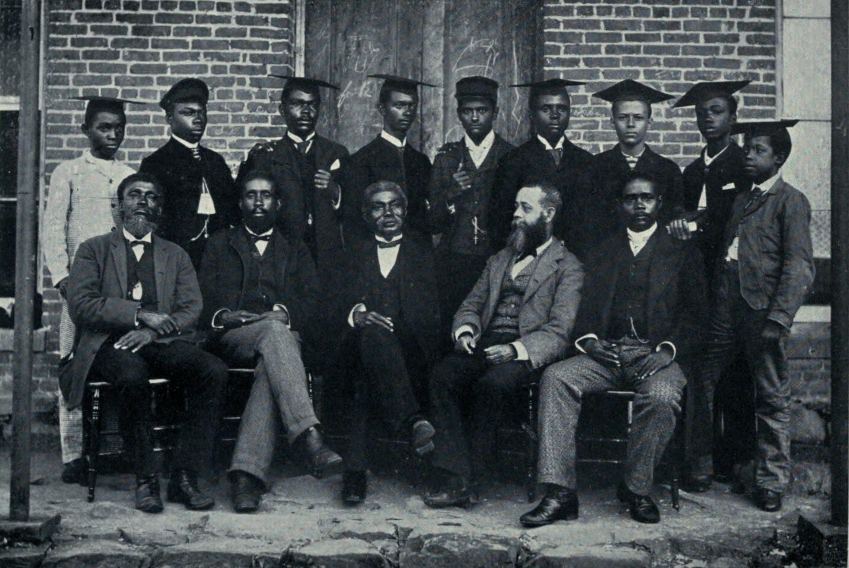
Liberia's education system was among the most severely damaged in Africa by fourteen years of civil war: schools were destroyed, a generation of teachers was killed or displaced, and enrolment collapsed. Reconstruction since 2003 has raised primary enrolment substantially, but the system remains under acute strain, with large numbers of over-age students, a shortage of qualified teachers, low completion rates at secondary level and learning outcomes that the World Bank and UNICEF identify as among the weakest in the region; adult literacy remains low, particularly among rural women. The University of Liberia in Monrovia, chartered in 1862, is one of the oldest degree-granting institutions in sub-Saharan Africa, joined by Cuttington University, founded by the Episcopal Church in 1889 and relocated to Bong County, and by a growing set of community colleges established in the counties since the war. The government has pursued reform through public-private partnership arrangements for primary schools, an approach that has been both piloted at scale and contested. Free tuition at public universities was introduced in 2018. The Ebola epidemic of 2014 and 2015 closed schools nationwide for months, compounding earlier losses.

Wars & Conflicts

Liberia's civil war ran in two phases from December 1989 to 2003 and killed an estimated 250,000 people out of a population of around three million, displacing perhaps half the country. Charles Taylor's National Patriotic Front invaded from Côte d'Ivoire at the end of 1989, President Samuel Doe was captured and killed in 1990, and the war fragmented into competing factions along ethnic lines, with widespread use of child soldiers, systematic sexual violence and massacres of civilians; the West African force ECOMOG intervened, and a first settlement brought Taylor to the presidency in 1997 before fighting resumed. The war was intertwined with Sierra Leone's, where Taylor backed the Revolutionary United Front in exchange for diamonds. He resigned and went into exile in 2003 under intense pressure, including from the women's peace movement, and a United Nations mission of some 15,000 troops deployed to secure the peace, remaining until 2018. Taylor was convicted by the Special Court for Sierra Leone in 2012 of aiding war crimes there and is serving a fifty-year sentence in the United Kingdom. Liberia's own Truth and Reconciliation Commission reported in 2009, but a war crimes court for crimes committed in Liberia was only formally established by the government in 2024.
Current as of 2026-08-07

Land & Border Disputes

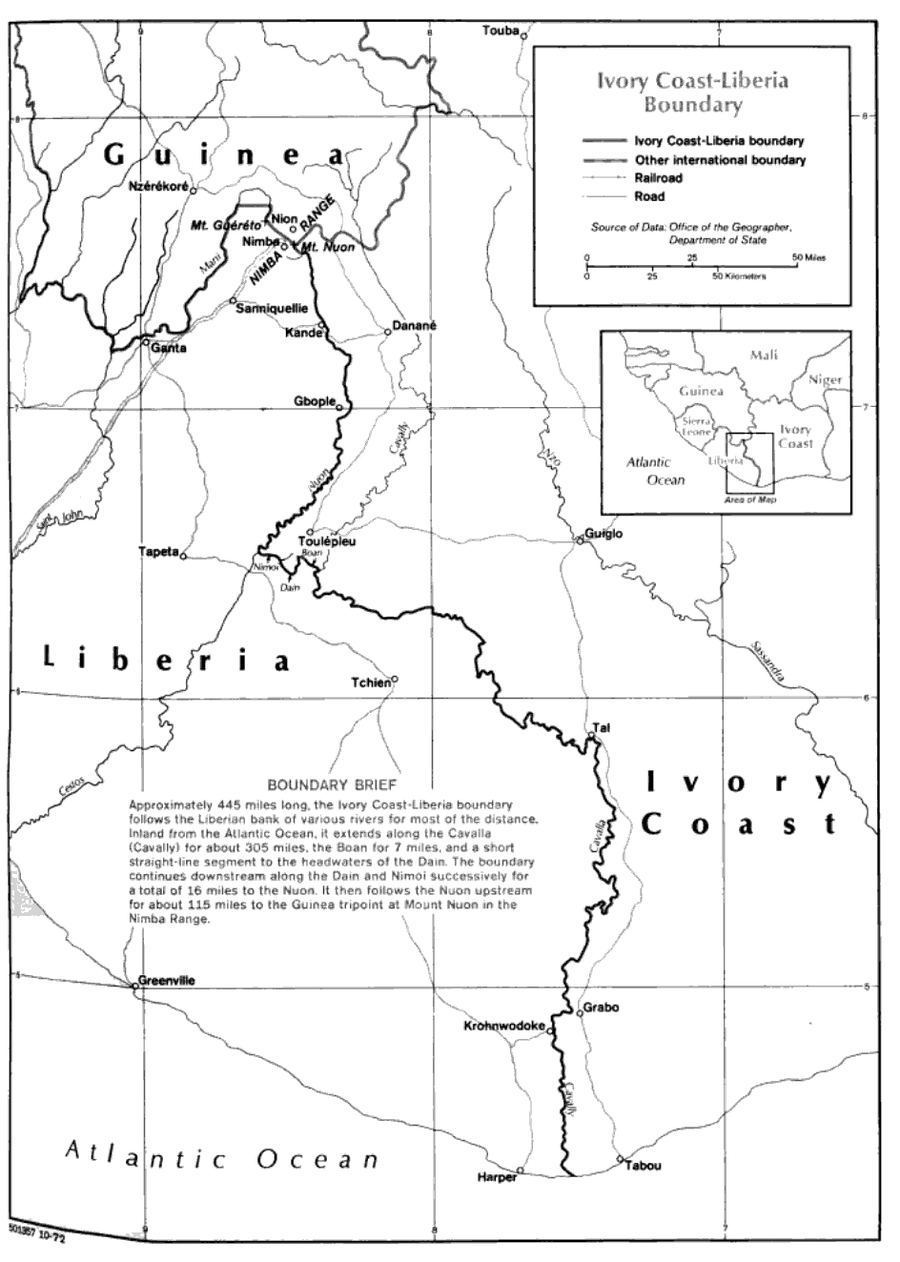
Liberia has no significant international territorial dispute. Its land boundaries with Sierra Leone, Guinea and Côte d'Ivoire are settled in principle, though demarcation is incomplete in places and the frontier regions have been the site of cross-border movements of refugees, fighters and weapons during the interlocking West African conflicts of the 1990s and 2000s; the Ivorian crisis of 2010 and 2011 in particular pushed tens of thousands of refugees and armed men across the eastern border, and both governments have since cooperated on frontier security. A minor disagreement with Sierra Leone concerns the precise line of the Mano River boundary in one sector. The disputes that matter most in practice are internal and resource-related: contested land tenure between customary holdings and formally titled concessions, and the allocation of very large agricultural, logging and mining concessions — rubber, oil palm, iron ore and timber — which have generated persistent conflict between companies and communities over compensation, boundaries and consent. The country's open ship registry has drawn international regulatory scrutiny rather than dispute, and Liberia has cooperated with United Nations sanctions regimes on timber and diamonds imposed during and after the war.
Land, Life & Legacy

Land & Climate

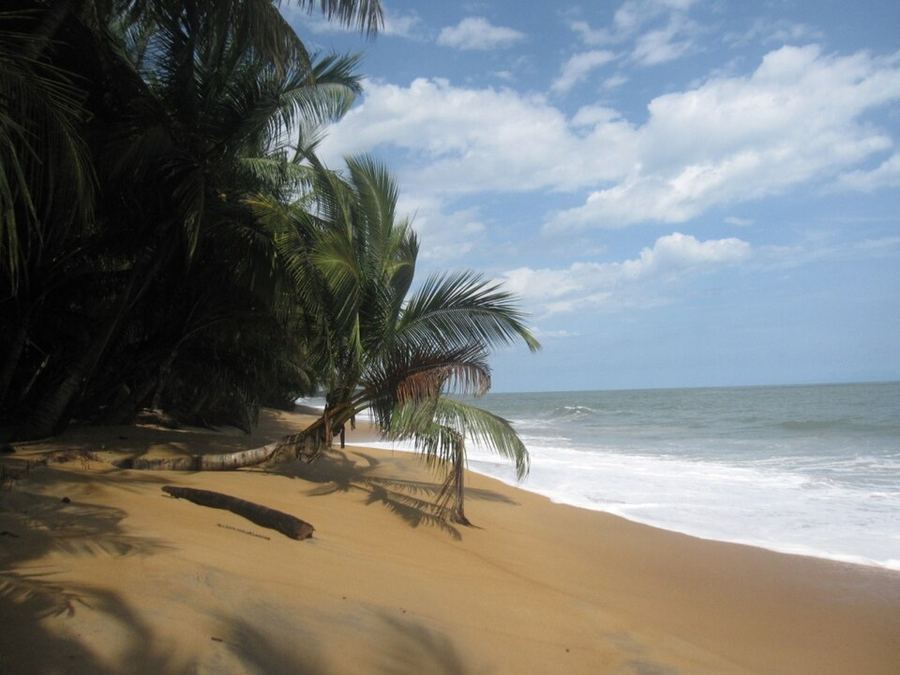
Liberia has about 580 kilometres of Atlantic coastline, fringed by sandbars, lagoons and mangrove creeks, behind which the land rises through a belt of rolling hills to a forested interior plateau and, in the north, to the Nimba range on the Guinean border, where Mount Wuteve and the Nimba highlands reach the country's highest elevations. Six major rivers — the Mano, Lofa, St Paul, St John, Cestos and Cavalla — run roughly parallel from the interior to the sea, cutting the country into strips and historically making east-west travel harder than north-south. Liberia holds the largest remaining share of the Upper Guinean rainforest, an ecosystem of exceptional endemism that once stretched from Guinea to Ghana and now survives mainly in fragments; Sapo National Park in Sinoe County protects the country's largest intact block, home to pygmy hippopotamus, forest elephant, chimpanzee and the zebra duiker. The climate is tropical and among the wettest in Africa: Monrovia receives well over four metres of rain a year, concentrated in a long wet season from May to October, with a drier interval from November to April when the harmattan carries Saharan dust south.

Entertainment

Football is the organising pastime of Liberian leisure, played on beaches, in streets and on any cleared ground, and watched collectively in video clubs wherever there is a generator and a screen; European league matches draw crowds as reliably as domestic ones. The Atlantic beaches near Monrovia — Thinker's Village, Kendeja, Robertsport up the coast — are the standard weekend destination, and Robertsport has acquired an international reputation among surfers for its long point breaks. Church activity fills a large part of the week, with services, choir practice, revivals and women's and youth fellowships. Card games, checkers, ludo and the sowing game known regionally as ludo or queah are played in the shade of markets and compounds. Palm wine bars and cook shops are the everyday social venues, and Monrovia's music scene, built around hipco and gospel, supports live performance and a busy radio culture. Independence Day on 26 July brings parades, oratory and family feasting, and the annual traditional festivals of the interior counties feature masked dance and cultural troupes. Domestic tourism is limited by roads that become nearly impassable in the rainy season.

Art & Museums

Liberia's contribution to world art is its masking tradition. The masks of the Dan and Mano peoples of the interior — smooth, oval, with narrow slit or round eyes and an inward, composed expression — are among the most admired sculptural forms of West Africa and were influential on European modernists in the early twentieth century; they belong to the Poro and Sande complexes and each type has a defined ritual function, from adjudication to entertainment to the great Sande sowei helmet mask worn by women, one of the very few masking traditions anywhere performed by women. Carving extends to figures, spoons, staffs, game boards and the ornamented food-serving spoons associated with Dan hospitality. Weaving of country cloth, basketry, pottery and gold and silver working are established crafts. The Vai people developed their own indigenous script in the 1830s, one of the very few writing systems invented in Africa independently, which remains in limited use. Liberian collections were scattered and the National Museum in Monrovia was looted during the civil war, so much of the finest material sits abroad in the Smithsonian, the British Museum and European ethnographic collections.
SmithsonianBritish MuseumEncyclopaedia BritannicaMetropolitan Museum of Art

Notable People

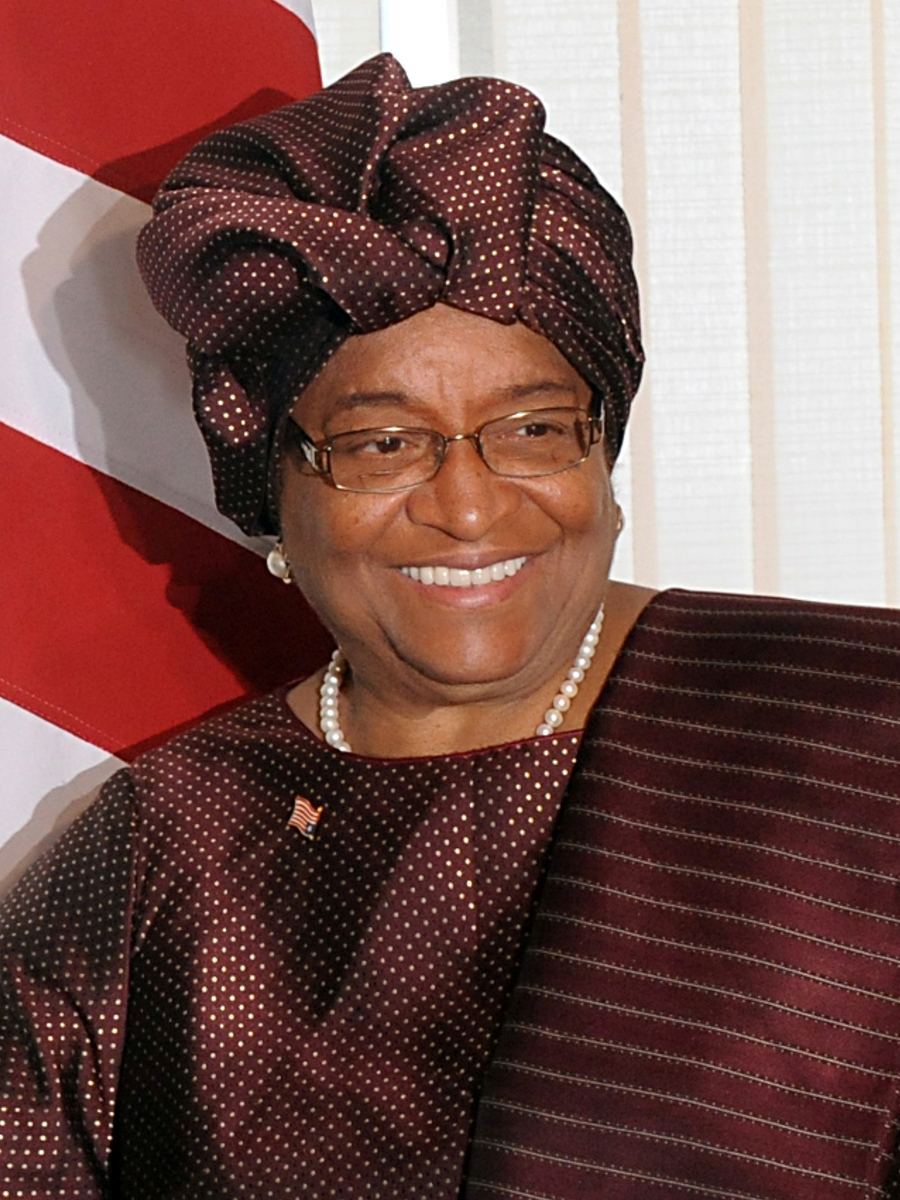
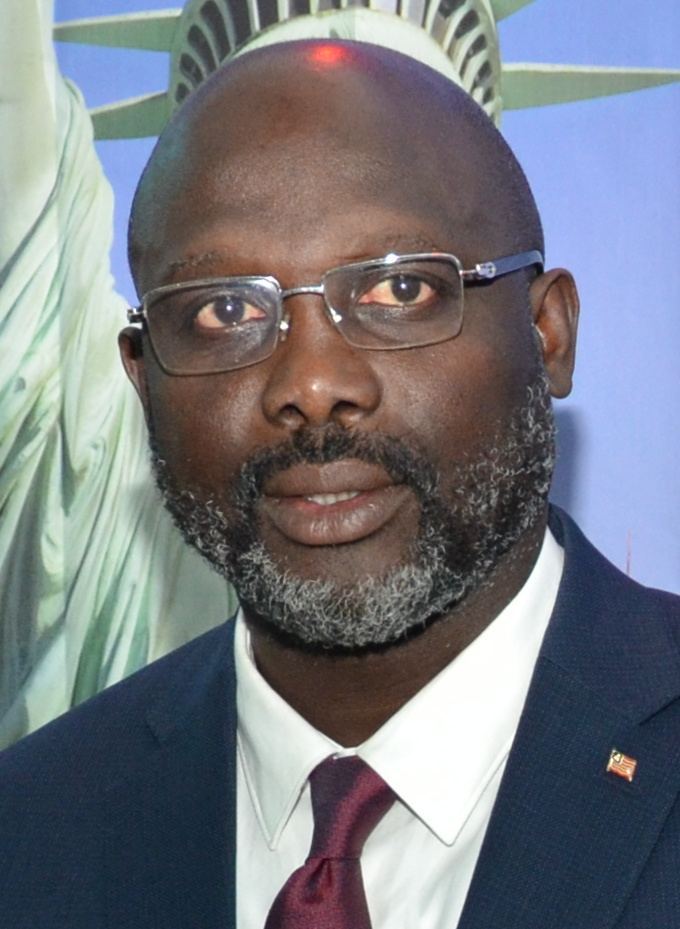
Ellen Johnson Sirleaf, elected president in 2005 after a career at the World Bank and the United Nations, was the first woman elected head of state in Africa, governed for twelve years through post-war reconstruction and the Ebola epidemic, and shared the Nobel Peace Prize in 2011. Leymah Gbowee shared that prize for leading the Women of Liberia Mass Action for Peace, the movement of Christian and Muslim women whose sit-ins and pressure on the warring parties helped force the 2003 talks that ended the conflict. Joseph Jenkins Roberts, born free in Virginia, became the republic's first president in 1848. William Tubman governed from 1944 to 1971 and opened citizenship and the franchise to the indigenous majority. George Weah, the striker who played for Monaco, Paris Saint-Germain and Milan and in 1995 became the only African footballer to win the Ballon d'Or, was elected president in 2017 and served a single term. Momolu Duwalu Bukele is credited with devising the Vai syllabary in the 1830s. Angie Brooks was the first African woman to preside over the United Nations General Assembly, in 1969.

Inventions & Breakthroughs

The most remarkable Liberian invention is a writing system. In the 1830s Momolu Duwalu Bukele and a small group of associates devised the Vai syllabary, a script of over two hundred characters representing syllables of the Vai language, created without direct copying of any existing alphabet — one of the very few independently invented writing systems in Africa and one of the few anywhere invented in the modern era and demonstrably spread through ordinary literacy rather than institutional imposition. It has been studied closely by cognitive scientists interested in what literacy does to thought, most influentially in fieldwork on Vai readers published in the 1980s, and it is still taught and used. Liberia's other distinctive contributions are institutional and industrial: the open ship registry, established in 1948, made the Liberian flag one of the largest merchant fleets in the world by registered tonnage and helped create the modern flag-of-convenience system, and it remains a significant source of state revenue. Traditional technologies include narrow-strip country cloth weaving, palm oil and palm wine processing, and iron smelting traditions of the interior recorded before the colonial era.
Encyclopaedia BritannicaScienceUNSmithsonian

Science & Technology

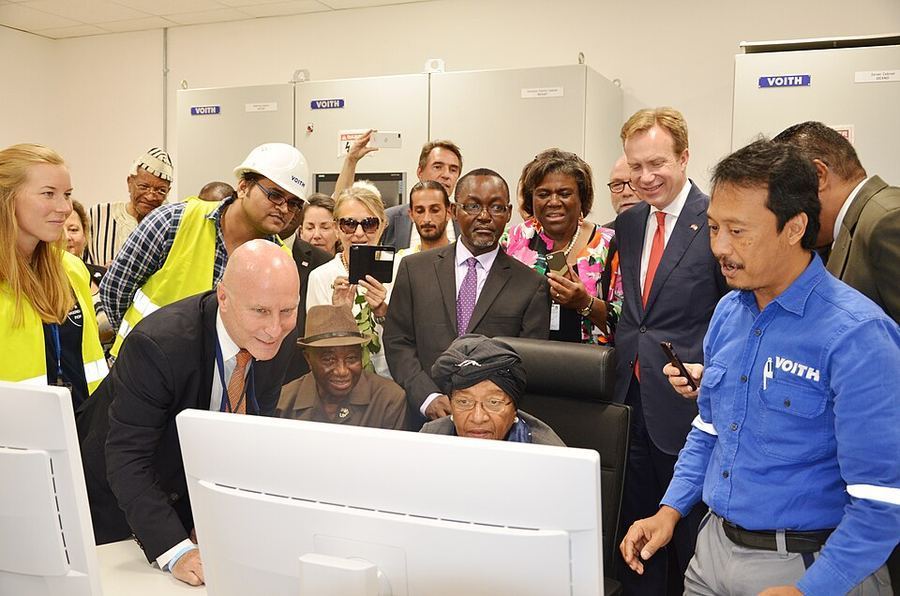
Liberia's research capacity is small and concentrated in public health, where the country's recent experience made it internationally significant. The Ebola epidemic of 2014 and 2015 killed more than 4,800 people in Liberia and overwhelmed a health system that had barely a few dozen doctors for the whole country; the response established the Liberian Institute for Biomedical Research and, with the United States National Institutes of Health, the PREVAIL research partnership, which conducted vaccine and treatment trials and long-term studies of Ebola survivors that produced findings of global importance about viral persistence and post-recovery illness. That infrastructure was subsequently redeployed for COVID-19 and for Lassa fever, which is endemic in the region. The National Public Health Institute of Liberia now coordinates surveillance. Outside health, applied science centres on natural resources: forest inventory and conservation biology in the Upper Guinean forest, much of it in partnership with international conservation organisations at Sapo and East Nimba, and geological survey work supporting the iron ore and gold sectors. Electricity access is among the lowest in the world, and the rehabilitated Mount Coffee hydroelectric plant on the St Paul River is the country's principal generating asset.
On The World Stage

Champions & Defining Moments

George Weah is the country's towering international sporting figure and one of the greatest African players in the history of the game: after moving from Monrovia to Cameroon and then to Monaco under Arsène Wenger, he starred for Paris Saint-Germain and Milan, and in 1995 won the Ballon d'Or, FIFA World Player of the Year and African Footballer of the Year in the same season — the only African player ever to win the Ballon d'Or. He was later elected president of Liberia. The Lone Star national team qualified for the Africa Cup of Nations in 1996 and 2002 but has never reached a World Cup, and Liberian players continue to feature in European leagues. Liberia first competed at the Olympic Games in Helsinki in 1956 and has appeared at most Summer Games since, principally in athletics and boxing, without yet winning a medal; sprinters trained in the United States have provided its most competitive entries. Liberia takes part in the African Games and West African regional competitions, and its post-war sporting recovery has depended heavily on diaspora players and on facilities rebuilt with international assistance.

FIFAIOCOlympedia
Economy, Trade & Government

Currency & GDP

Liberian Dollar — LRD (None)

GDP (PPP): $9.308 billion (2024 est.)

Per capita: $1,700 (2024 est.)

Exports

$1.22 billion (2022 est.)

gold, ships, iron ore, rubber, refined petroleum (2023)

Partners: Switzerland 30%, UK 13%, France 8%, Germany 7%, Lebanon 4% (2023)

Imports

$1.961 billion (2022 est.)

ships, refined petroleum, rice, trucks, centrifuges (2023)

Partners: China 48%, Japan 21%, Germany 8%, Brazil 3%, Cote d'Ivoire 3% (2023)

Government

Type: presidential republic

Independence: 26 July 1847

Terrain → Where People Live

How mountains, coasts, and rivers shape settlement (LandScan).

Coming — data

Migration & Ethnic Settlement

Where groups settled and how people move (GeoEPR + UNHCR).

Coming — data

Universities

Notable institutions, mappable as points.

Coming — data
Economy & government facts: CIA World Factbook (public domain), via OpenFactBook / factbook.json.
Every fact and narrative claim will carry a visible source citation. Data-driven sections light up automatically wherever HERA has coverage.