HERA · Human Entity Reference Atlas by Masego Inc

← Lithuania 🌐 3D View
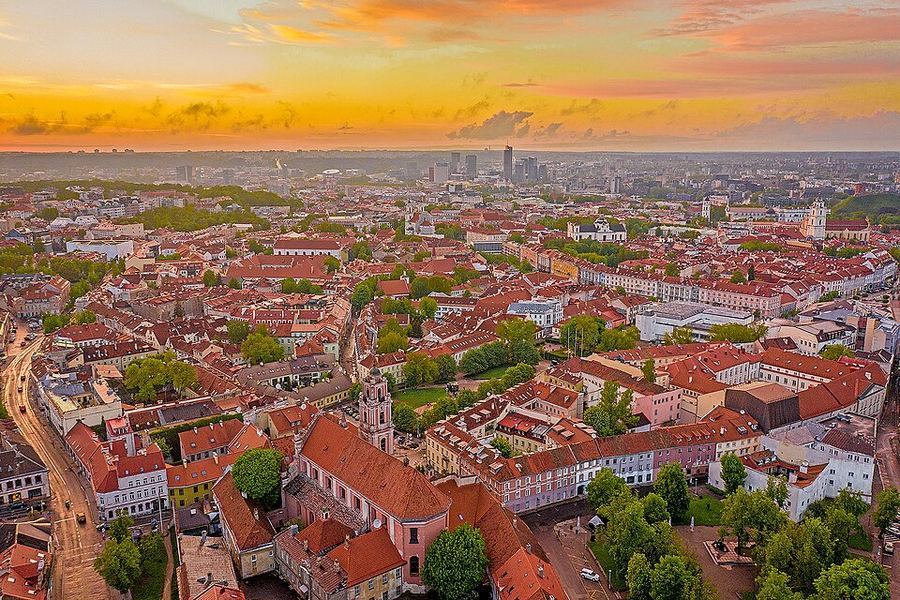
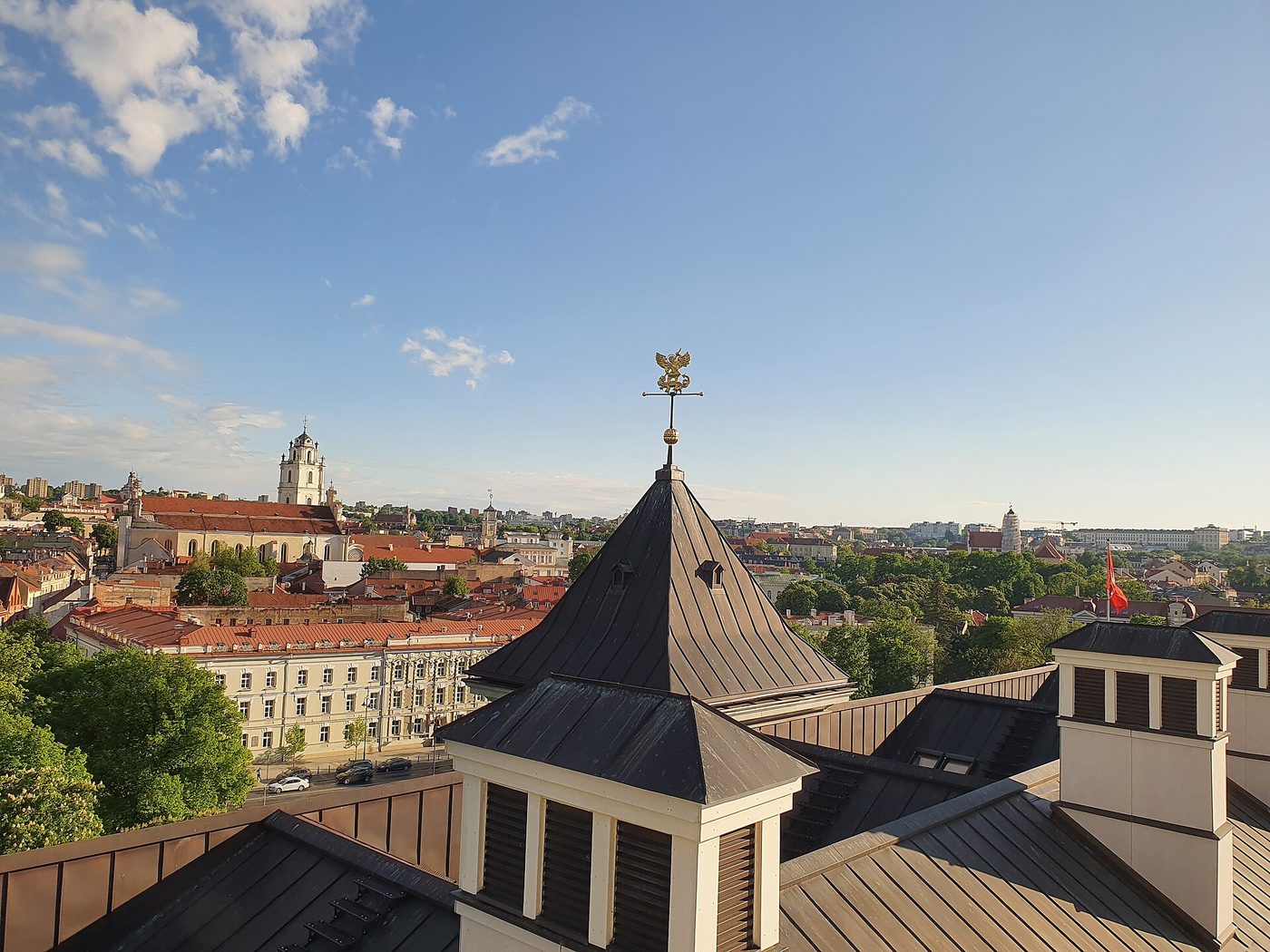
Vilnius Old Town Lithuania, Lithuania
Lithuania LTU
Vilnius Old Town Lithuania — Photo: Pofka / CC BY-SA 4.0 via Wikimedia Commons
Did You Know Lithuania's 1992 Olympic basketball team, short of funds after independence, competed in tie-dyed uniforms paid for by the Grateful Dead — and won bronze. — BBC

Lithuania is a Baltic republic of about 2.8 million people, the largest and southernmost of the three Baltic states, bordered by Latvia, Belarus, Poland and the Russian exclave of Kaliningrad, with a short but consequential stretch of Baltic coastline behind the sand dunes of the Curonian Spit. Vilnius, the capital, holds one of the largest surviving medieval old towns in Northern Europe; Kaunas, the interwar provisional capital, is the second city and an architectural monument in its own right. The country is a semi-presidential republic with a directly elected president alongside a government answerable to the Seimas. Its population is 84.6% Lithuanian, with Polish and Russian minorities of about 6.5% and 5%, and it is roughly three-quarters Roman Catholic — a religious identity that mattered under both tsarist and Soviet rule. Lithuanian is one of only two surviving Baltic languages and is prized by linguists as the most conservative living Indo-European tongue. Lithuania joined the EU and NATO in 2004, adopted the euro in 2015 and the OECD in 2018, and now records GDP per capita of about $47,200 at purchasing power parity. Its economy runs on refined petroleum, furniture, plastics, food processing, logistics and a fast-grown financial-technology sector, and its politics are dominated by its position on NATO's eastern edge.

CIA World FactbookWorld BankEncyclopaedia BritannicaEurostatOECD
Population
2,815,687
Capital
Vilnius
Currency
€ EUR
Time zones
Largest city
Vilnius
Human Geography Themes
Loading national figures…
Largest Cities
Vilnius353,223
Kaunas236,910
Klaipėda117,872
Panevėžys69,938
In Perspective

Vilnius's urban core is home to about 353,223 people.

Among the world's megacities, though, it's one of many — the giants of Asia and Latin America run larger still:

Vilnius353,223
Jakarta40,545,126
Dhaka37,307,160
Tokyo33,244,670
Shanghai30,678,616
Cairo25,230,325
The Country & Its People

History

Lithuania dates its statehood to 6 July 1253, when Mindaugas was crowned king, and it was the last polity in Europe to accept Christianity, converting only in 1387 after Grand Duke Jogaila married the Polish queen and took the throne in Kraków. Before and after that the Grand Duchy expanded extraordinarily: under Vytautas the Great, who died in 1430, it stretched from the Baltic almost to the Black Sea and was the largest state in Europe. In 1410 Polish and Lithuanian forces broke the Teutonic Order at Grunwald — Žalgiris in Lithuanian, a name still carried by the country's most famous sports club. The Union of Lublin in 1569 fused the Grand Duchy and Poland into a single Commonwealth, which the partitions of 1772, 1793 and 1795 dismembered; Lithuania fell to the Russian Empire. Failed uprisings in 1831 and 1863 were followed by a ban on printing Lithuanian in the Latin alphabet from 1864 to 1904, defied by the knygnešiai, the book smugglers who carried presses and texts in from East Prussia. Independence was declared on 16 February 1918. Poland seized Vilnius in 1920, making Kaunas the provisional capital until 1939. The Molotov-Ribbentrop Pact delivered Lithuania to Soviet occupation in 1940, Nazi occupation followed in 1941, and Soviet rule returned in 1944. Lithuania declared the restoration of independence on 11 March 1990, the first Soviet republic to do so.
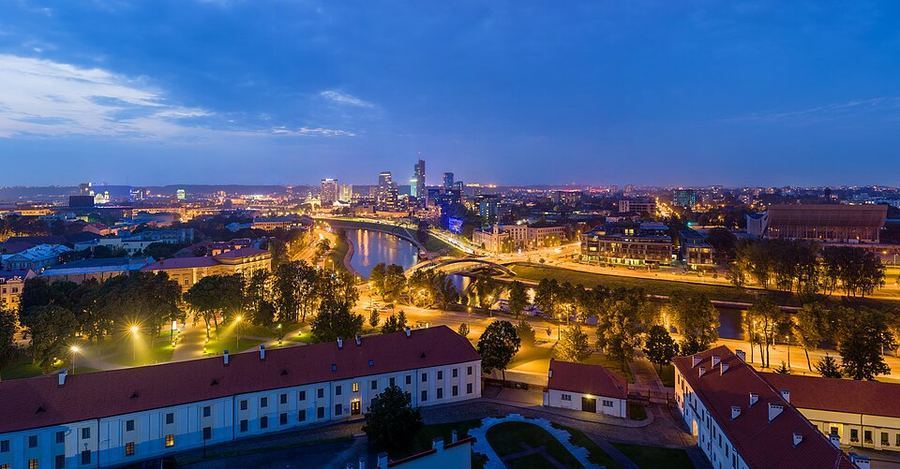
History, Lithuania
Diliff / CC BY-SA 3.0

Culture

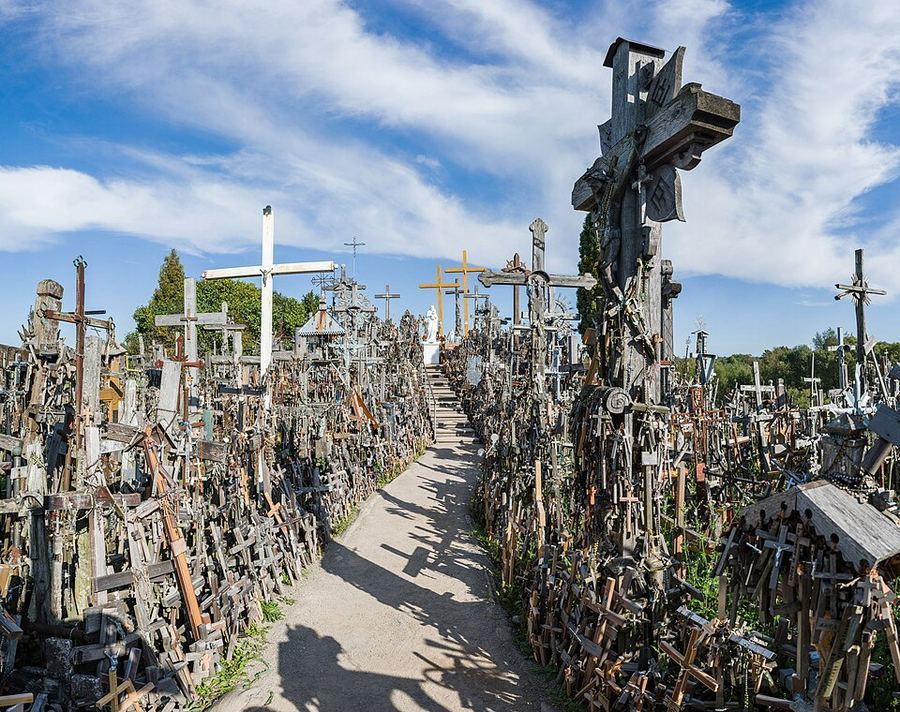
Lithuanian culture rests on an unusually deep sense of linguistic and pagan continuity layered under a strong Catholicism. The language itself is a cultural artefact: Lithuanian retains grammatical features lost elsewhere in Indo-European, which is why nineteenth-century philologists studied it beside Sanskrit, and language preservation carries a political weight earned during the tsarist printing ban. Beneath the Catholic calendar, older seasonal observance survives in practice and in revival — Rasos or Joninės at midsummer, with bonfires, wreaths floated on water and the search for the fern blossom; Užgavėnės before Lent, with grotesque masks, the straw effigy Morė and the duel between Lašininis and Kanapinis. Folk religion is visible in the landscape through cross-crafting, the making and raising of carved wooden crosses at roadsides, farmsteads and graves, a tradition UNESCO inscribed as intangible heritage and one that fused Christian and pre-Christian symbolism. Family and village singing traditions, the sauna, forest foraging for mushrooms and berries, and Užgavėnės pancakes are ordinary rather than folkloric. National identity was reassembled in the nineteenth century by writers and priests and reasserted in the late 1980s through the Sąjūdis movement, in which songs and mass singing were the principal instrument of protest.
Culture, Lithuania
Diliff / CC BY-SA 3.0

Points Of Pride

Lithuanians point first to 11 March 1990, when Lithuania became the first Soviet republic to declare independence restored, and to the Baltic Way of 23 August 1989, when roughly two million people joined hands in a chain of some 675 kilometres from Vilnius through Riga to Tallinn on the fiftieth anniversary of the Molotov-Ribbentrop Pact; UNESCO added the documentary record of the Baltic Way to its Memory of the World register. Second is the Grand Duchy: at its fourteenth-century height it was the largest state in Europe, and Lithuania was the last European country to be Christianised, which is remembered as endurance rather than backwardness. Third is Vilnius University, founded in 1579 and among the oldest universities in Central and Eastern Europe. Fourth is the built heritage — the historic centre of Vilnius, the Curonian Spit, the Kernavė archaeological site, points of the Struve Geodetic Arc, and, since 2023, the interwar modernist architecture of Kaunas, all inscribed by UNESCO. Fifth is the language, defended through a forty-year printing ban by the knygnešiai and now treated as a living link to the Indo-European past. Sixth, and mentioned as readily as any of these, is basketball.
Points Of Pride, Lithuania
BigHead / CC BY-SA 4.0

Cultural Fusion

Vilnius has always been a multi-confessional city, and the traces are still legible. The Polish-Lithuanian Commonwealth left a Polish-speaking population that remains about 6.5% of the country and is concentrated in the Vilnius region, with Polish-language schools and a long-running argument over the spelling of names in official documents. The Jewish presence was older and, until 1941, enormous: Vilnius was known as the Jerusalem of the North, home of Elijah ben Solomon Zalman, the Vilna Gaon, and the founding city of the YIVO Institute for Jewish Research in 1925. The Holocaust destroyed almost the entire community, and the surviving Litvak heritage — synagogue remains, the Ponary killing site, Yiddish scholarship carried abroad — is now a matter of memory and restitution. Two smaller communities were settled deliberately by Vytautas the Great around 1397: Crimean Karaites at Trakai, who keep a kenesa, a distinct language and the kibinai pastry now sold across Lithuania, and Lipka Tatars, Sunni Muslims whose wooden mosques still stand in villages near Vilnius and Kaunas. Old Believers, refugees from the Russian Orthodox schism, form another old minority. Baltic pagan practice has been revived in the Romuva movement.
Cultural Fusion, Lithuania
Julo / CC BY-SA 3.0

Music & Dance

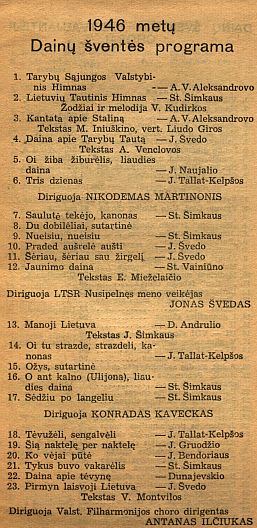
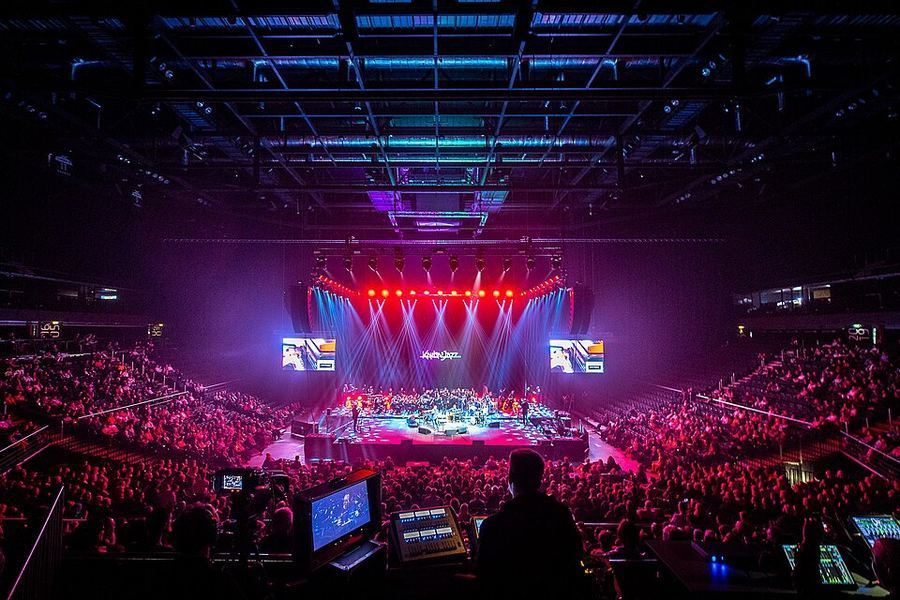
Lithuania's most distinctive musical form is the sutartinė, an archaic polyphonic song sung by two, three or four women in tightly dissonant seconds, with interlocking texts and often a swaying, walking choreography; UNESCO inscribed sutartinės as intangible cultural heritage in 2010, and their harmonic logic has no close parallel in Europe. The instruments that accompany that world are equally particular: the kanklės, a plucked box zither treated as the national instrument; skudučiai, sets of single-note wooden whistles played hocket-style by a group so that the melody emerges between players; and the long wooden trumpets called ragai and daudytės. The mass expression of all this is the Song Celebration, the Dainų šventė, a periodic gathering of choirs, folk ensembles and dancers in Vilnius numbering tens of thousands of performers; UNESCO recognises the Baltic song and dance celebrations of Lithuania, Latvia and Estonia jointly as intangible heritage, and these festivals supplied the 'Singing Revolution' of the late 1980s with both its crowds and its repertoire. In art music the towering figure is Mikalojus Konstantinas Čiurlionis, who wrote symphonic poems and piano cycles while painting. Lithuanian jazz, built around the Ganelin Trio, earned an international reputation in the Soviet period.
Music & Dance, Lithuania
Dainų šventė: [programa]. Vilnius, 1946. 36 p. / Public domain

Cuisine & Misattributed Foods

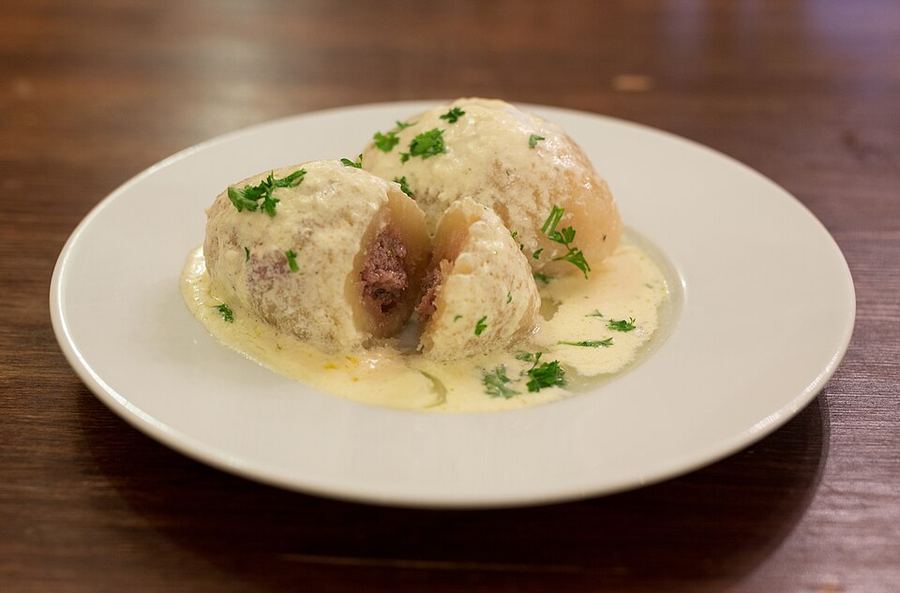
Lithuanian cooking is northern, starch-heavy and built on potato, rye, pork and dairy. The national dish is cepelinai, large boiled dumplings of grated and riced potato — named for their zeppelin shape — stuffed with minced pork or curd and served under a sauce of bacon, onion and sour cream. Kugelis is the baked equivalent, a dense potato pudding, and žemaičių blynai are potato pancakes folded around meat. The summer counterpart is šaltibarščiai, a cold soup of kefir and grated beetroot with cucumber, dill and chopped egg, an alarming shade of pink and served with a side of hot boiled potatoes. Dark sour rye bread is a staple in its own right and the base of gira, the fermented bread drink. Trakai contributes kibinai, the crescent-shaped meat pastry of the Karaite community. Smoked and cured pork products, including the stuffed stomach sausage skilandis, are traditional farm preserves. The celebration cake is šakotis, batter poured onto a rotating spit over an open fire so it builds into a spiky golden tree. Lithuania also retains a living farmhouse brewing tradition in the northern Aukštaitija region, using local yeasts and raw-ale methods that have drawn international brewing interest.
Cuisine & Misattributed Foods, Lithuania
Diliff / CC BY-SA 3.0

National Dress

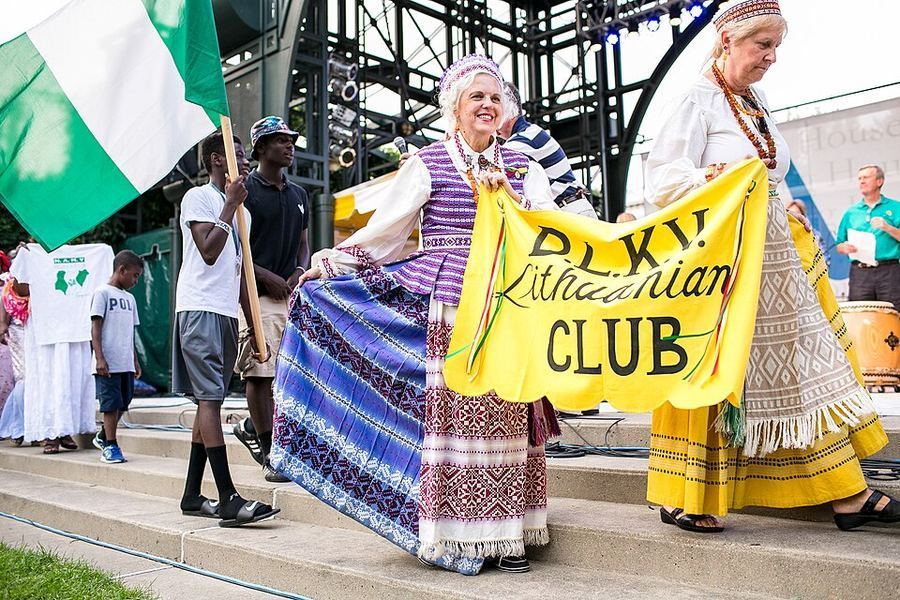
Lithuanian national costume is regional rather than singular, and the five ethnographic regions — Aukštaitija, Žemaitija or Samogitia, Dzūkija, Suvalkija and Lithuania Minor — each have recognised versions reconstructed from nineteenth-century examples and worn today mainly at the Song Celebration, folk ensembles and national holidays. The common structure for women is a long linen chemise with a woven or embroidered skirt, an apron, a fitted bodice or vest, and a headdress that signals marital status: an embroidered band or wreath for unmarried women, a linen cap or wrapped headcloth for married ones. Suvalkija's costume is the most opulent, with dense floral weaving and silk aprons; Dzūkija's is plainer and heavier in linen; Lithuania Minor's shows Prussian influence. Men wear linen shirts, wool trousers, a long coat and a hat, with a woven sash at the waist. The element that carries most meaning is the juosta, a narrow patterned sash woven on a rigid heddle or on tablets, given as a gift, tied to crosses and used in ritual, its geometric motifs varying by locality. Amber, the Baltic fossil resin gathered on the coast, supplies the characteristic jewellery.
National Dress, Lithuania
NPS / Public domain

Sports & Inspiring Athletes

Basketball is the national sport to a degree unusual anywhere, routinely described in Lithuania as the second religion. The game arrived with returning emigrants in the 1930s, and the newly independent republic won the European championship in 1937 and again in 1939, hosting the second tournament in Kaunas. Žalgiris Kaunas, named for the 1410 battle, became the vehicle for national feeling during the Soviet period, and its rivalry with CSKA Moscow was political as much as sporting; the club won the EuroLeague in 1999. The Lithuanian Basketball League and the Kaunas and Vilnius arenas draw large crowds, and youth development is systematic. Beyond basketball, athletics has produced Olympic champions in the discus, swimming has produced them in the pool, and modern pentathlon, shooting and rowing have all yielded medals. Football is a distant second in support, though the national league operates and Lithuanian players appear in European clubs. Strongman competition has an unexpectedly high profile thanks to Žydrūnas Savickas, a multiple World's Strongest Man winner. Ice hockey, cycling and orienteering have committed followings, and the forest terrain suits cross-country skiing in hard winters.
Sports & Inspiring Athletes, Lithuania
Augustas Didžgalvis / CC BY-SA 4.0

Notable Educational Programs

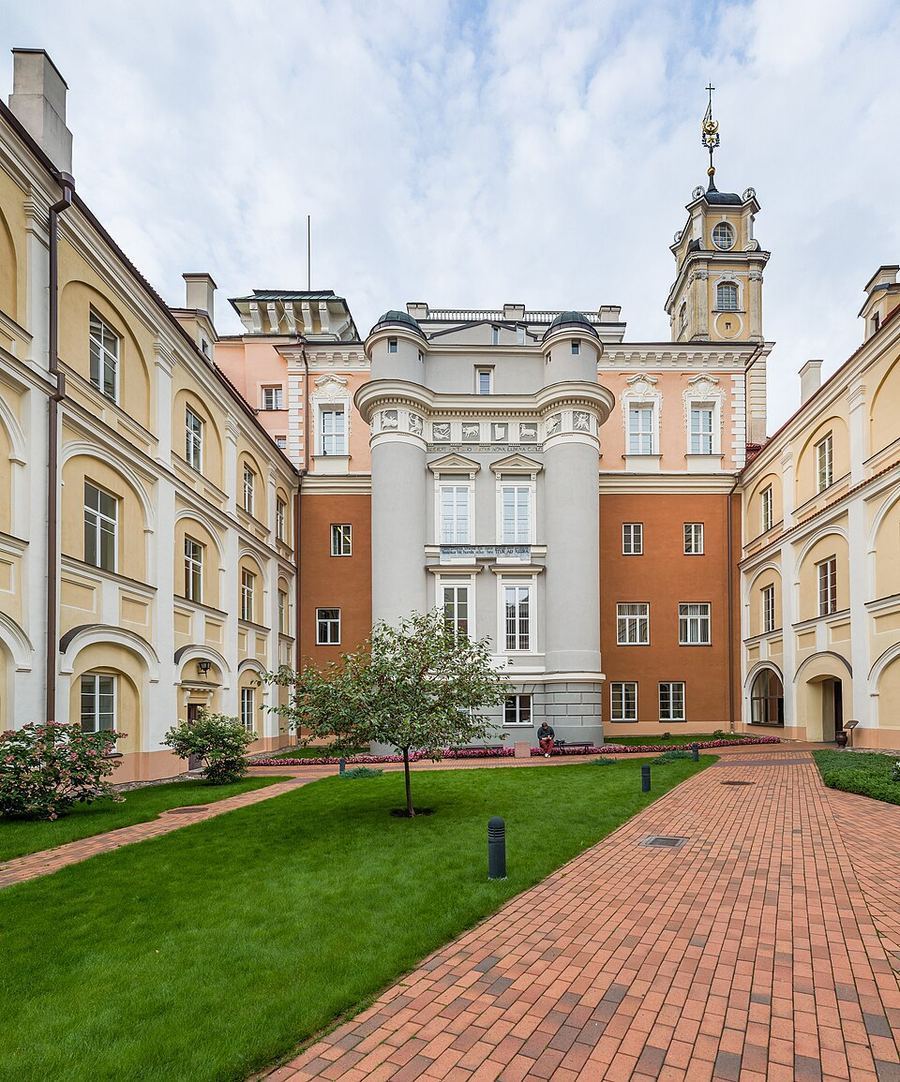
Vilnius University, chartered in 1579 by Stephen Báthory as a Jesuit academy, is the oldest university in the Baltic states and one of the oldest in Central and Eastern Europe; closed by the tsarist authorities after the 1831 uprising and reopened in 1919, it remains the country's principal research institution and the home of its laser and biotechnology work. Kaunas hosts Vytautas Magnus University, founded in 1922, suppressed under Soviet rule and restored in 1989, and Kaunas University of Technology, the main engineering school. Lithuania's education history includes a specific and celebrated act of resistance: during the 1864-1904 ban on Lithuanian printing in Latin letters, the knygnešiai smuggled books from East Prussia and ran clandestine village schools, and their memory underpins how the country talks about literacy and language rights. The modern system produces one of the higher rates of tertiary attainment among young adults in the European Union, with a persistent gender gap in favour of women, and the country has invested in returning emigrant researchers and in English-taught programmes that recruit internationally. Schools also carry the Song Celebration, which depends on choirs and folk-dance groups organised through the education system.
Notable Educational Programs, Lithuania
Diliff / CC BY-SA 3.0

Wars & Conflicts

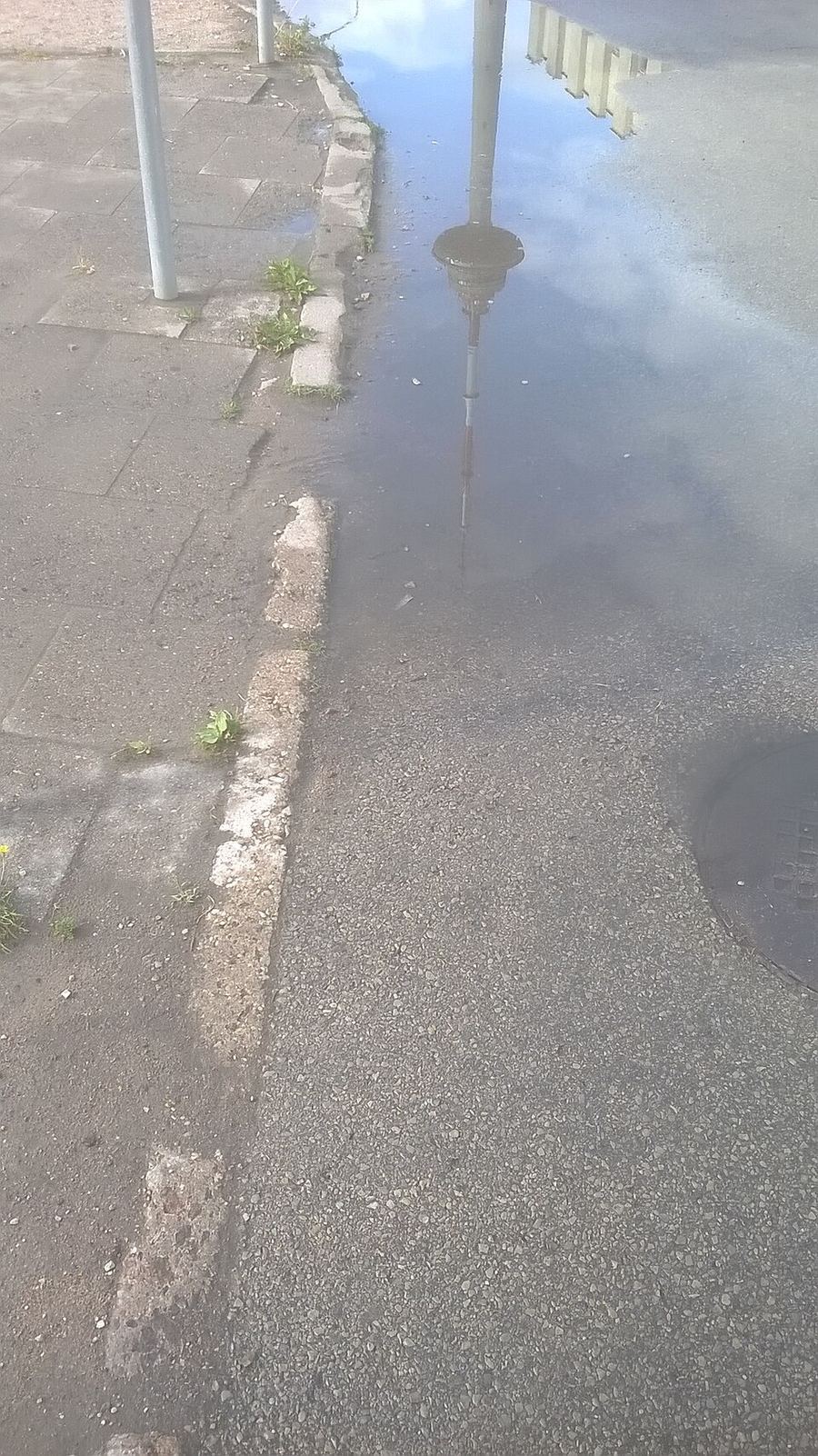
Lithuania has no armed conflict on its territory, but it is a front-line NATO state and its security politics are dominated by Russia and Belarus. The last fighting on Lithuanian soil was the partisan war of 1944-53, when the Forest Brothers resisted Soviet reoccupation, and the Soviet crackdown of January 1991, when troops stormed the Vilnius television tower and fourteen civilians were killed. Since Russia's full-scale invasion of Ukraine in 2022, Lithuania has been among Kyiv's most forward supporters, hosting a NATO enhanced forward presence battlegroup led by Germany and negotiating the stationing of a permanent German brigade, and it has absorbed tens of thousands of Ukrainian refugees. Its most acute recent crisis came in 2021, when Belarus channelled migrants to the border in what Vilnius and the EU described as state-organised instrumentalisation, prompting a border barrier and emergency legislation that drew criticism from human rights organisations over pushbacks. Lithuania has also been the target of Chinese economic coercion after allowing a Taiwanese Representative Office to open in Vilnius in 2021, which led Beijing to downgrade relations and restrict trade. The narrow Suwałki corridor between Belarus and Kaliningrad is a standing planning concern.
Current as of 2026-08-07
Wars & Conflicts, Lithuania
Illustr / CC BY-SA 4.0

Land & Border Disputes

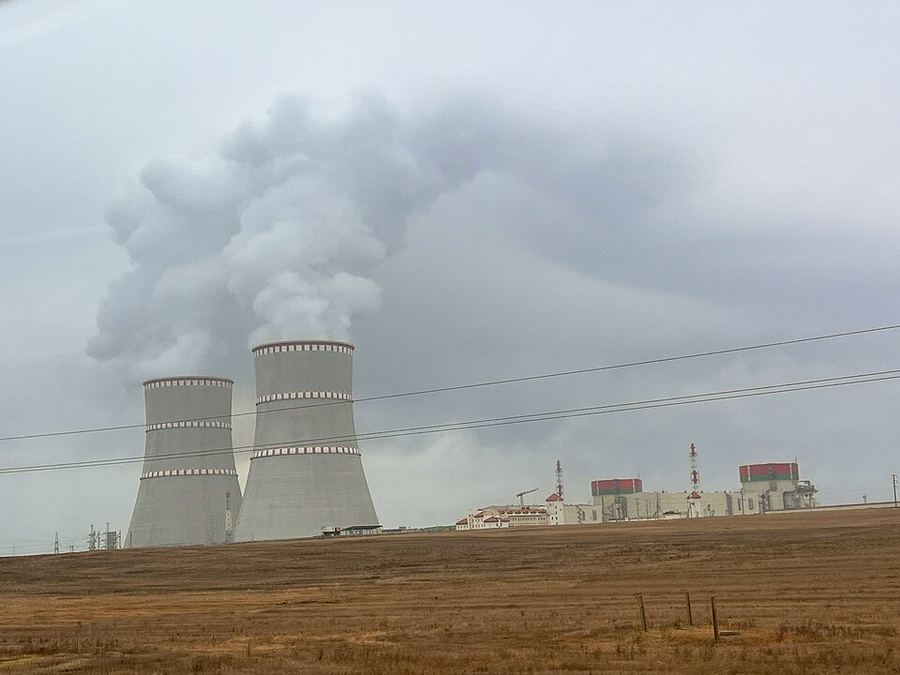
Lithuania's land borders are settled in law, though not all of the associated arrangements are comfortable. The boundary and maritime delimitation treaty with Russia, signed in 1997, was ratified by Lithuania in 1999 and by Russia only in 2003, and demarcation of the Kaliningrad frontier proceeded from there; Lithuania also administers the transit regime under which Russian nationals and goods cross its territory between Kaliningrad and the rest of Russia, an arrangement that has repeatedly become a point of friction, most sharply in 2022 when the application of EU sanctions to sanctioned goods in transit prompted Russian threats. With Latvia, the land border is agreed but the maritime boundary agreement has not been brought fully into force, the sticking point being rights to potential hydrocarbon exploration in the shared Baltic shelf. A separate and vocal dispute concerns Belarus rather than territory: Lithuania has objected since construction began to the Astravyets nuclear power plant, roughly 50 kilometres from Vilnius, on safety and siting grounds, has legislated to bar electricity from it, and has pressed the case in EU and international forums.
Land & Border Disputes, Lithuania
Bdx / CC0
Land, Life & Legacy

Land & Climate

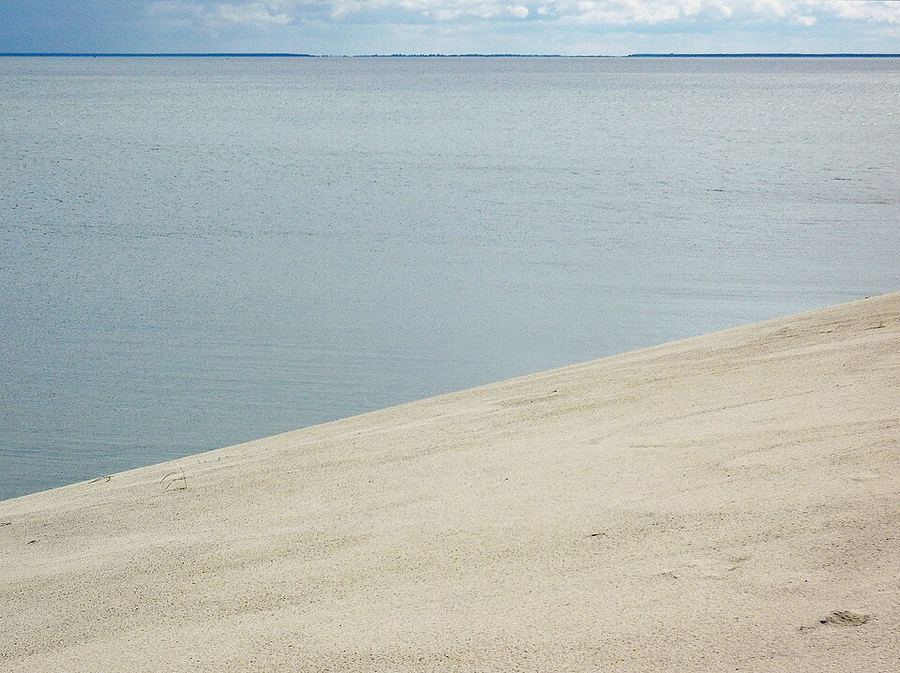
Lithuania is a low, glaciated country: the Ice Sheet that retreated across it left moraine hills, thousands of lakes and a scatter of boulders, and nothing rises far — Aukštojas Hill, the highest point, reaches only 294 metres. Forest covers about a third of the land, mostly pine and spruce on sandy soils, with the Dzūkija pine forests in the south and the lake district of Aukštaitija in the north-east. The Nemunas is the great river, rising in Belarus and crossing the country westward to a delta on the Curonian Lagoon; the Neris joins it at Kaunas. The coast is short, only about 90 kilometres, and its defining feature is the Curonian Spit, a 98-kilometre sand barrier shared with Russia's Kaliningrad exclave, whose migrating dunes were stabilised by two centuries of deliberate afforestation and which UNESCO inscribed in 2000 as a cultural landscape. Klaipėda, at the mouth of the lagoon, is the only seaport. The climate is transitional between maritime and continental: cool cloudy summers averaging around 17°C, cold winters with reliable snow cover and Baltic gales, and precipitation spread through the year with an autumn maximum. A point near Purnuškės, north of Vilnius, was calculated in 1989 as the geographical centre of Europe.
Land & Climate, Lithuania
Hartmut Schmidt Heidelberg / CC BY-SA 4.0

Entertainment

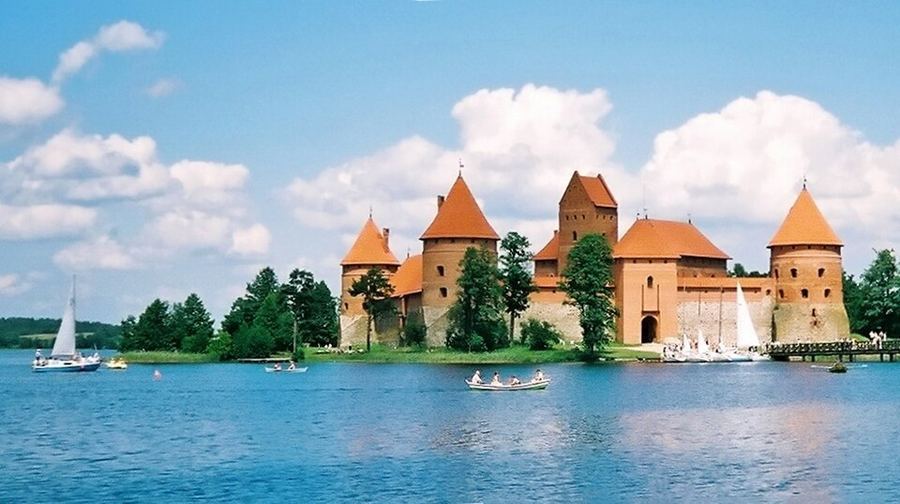
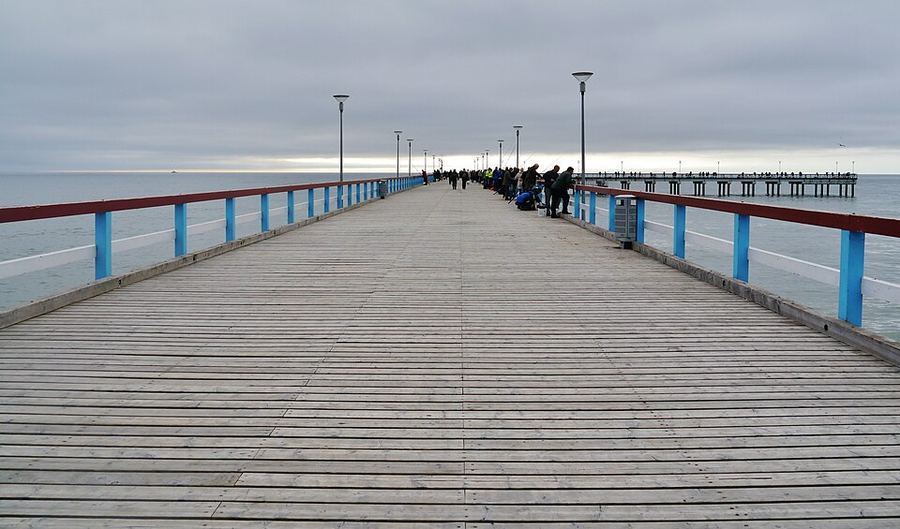
Summer leisure moves to the coast and the lakes. Palanga is the traditional seaside resort, with its pier, botanical park and the Amber Museum in the Tiškevičiai palace; Nida and the villages of the Curonian Spit offer the dunes, the weathervane-marked fishing tradition and Thomas Mann's summer cottage. Inland, the Aukštaitija and Dzūkija national parks support canoeing on the Ūla and Žeimena, lake swimming and long-distance cycling. Mushroom picking is close to a national sport in autumn, with families disappearing into the pine forests for boletus and chanterelles, and berry gathering fills the summer. The pirtis, the Lithuanian sauna with birch whisks and a cold plunge, is a social ritual rather than a spa treatment. Druskininkai, a spa town on the Nemunas, combines mineral treatments with a large indoor water park and a nearby ski slope, and Grūtas Park outside it displays Soviet monuments removed from public squares. Trakai Island Castle, restored on its lake, is the most visited day trip from Vilnius. Vilnius itself is one of the few European capitals that permits hot-air balloon flights over the city centre, and the Užupis district maintains its own tongue-in-cheek constitution.
Entertainment, Lithuania
Zairon / CC BY-SA 4.0

Art & Museums

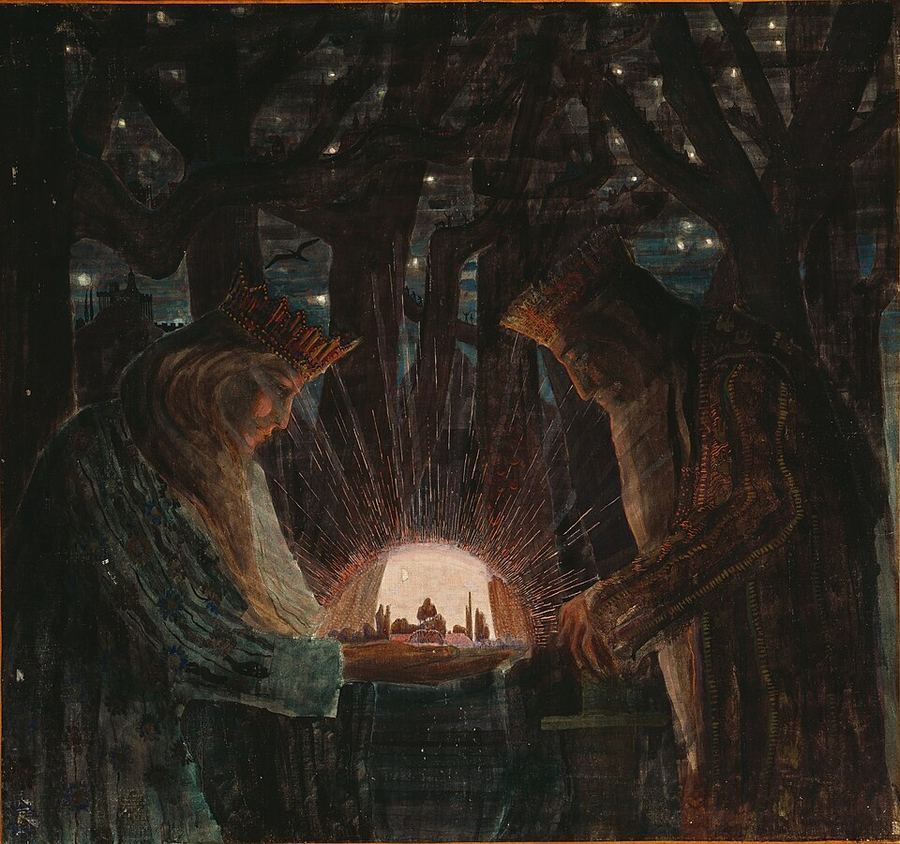
The central figure in Lithuanian art is Mikalojus Konstantinas Čiurlionis, who between about 1903 and his death in 1911 produced several hundred paintings — cycles such as the Sonatas and the Zodiac, structured like music, symbolist in imagery and strikingly close to abstraction before abstraction existed — while composing symphonic poems. The M. K. Čiurlionis National Museum of Art in Kaunas holds the collection. Folk sculpture is the older tradition: carved wooden crosses, chapel-posts and the seated Rūpintojėlis, the pensive Christ resting his head on his hand, made by village carvers, and cross-crafting itself is on UNESCO's intangible heritage list. Vilnius produced a distinctive late Baroque architecture, and its university and churches supported an art school from the eighteenth century. Two Lithuanian-born figures shaped the twentieth-century avant-garde from New York: George Maciunas, who founded and named Fluxus, and Jonas Mekas, the diarist filmmaker and co-founder of Anthology Film Archives, widely described as the godfather of American avant-garde cinema. The sculptor Jacques Lipchitz was born at Druskininkai. Contemporary Lithuanian art won the Golden Lion for best national participation at the 2019 Venice Biennale with the performed opera Sun & Sea.
Art & Museums, Lithuania
Mikalojus Konstantinas Čiurlionis / Public domain

Notable People

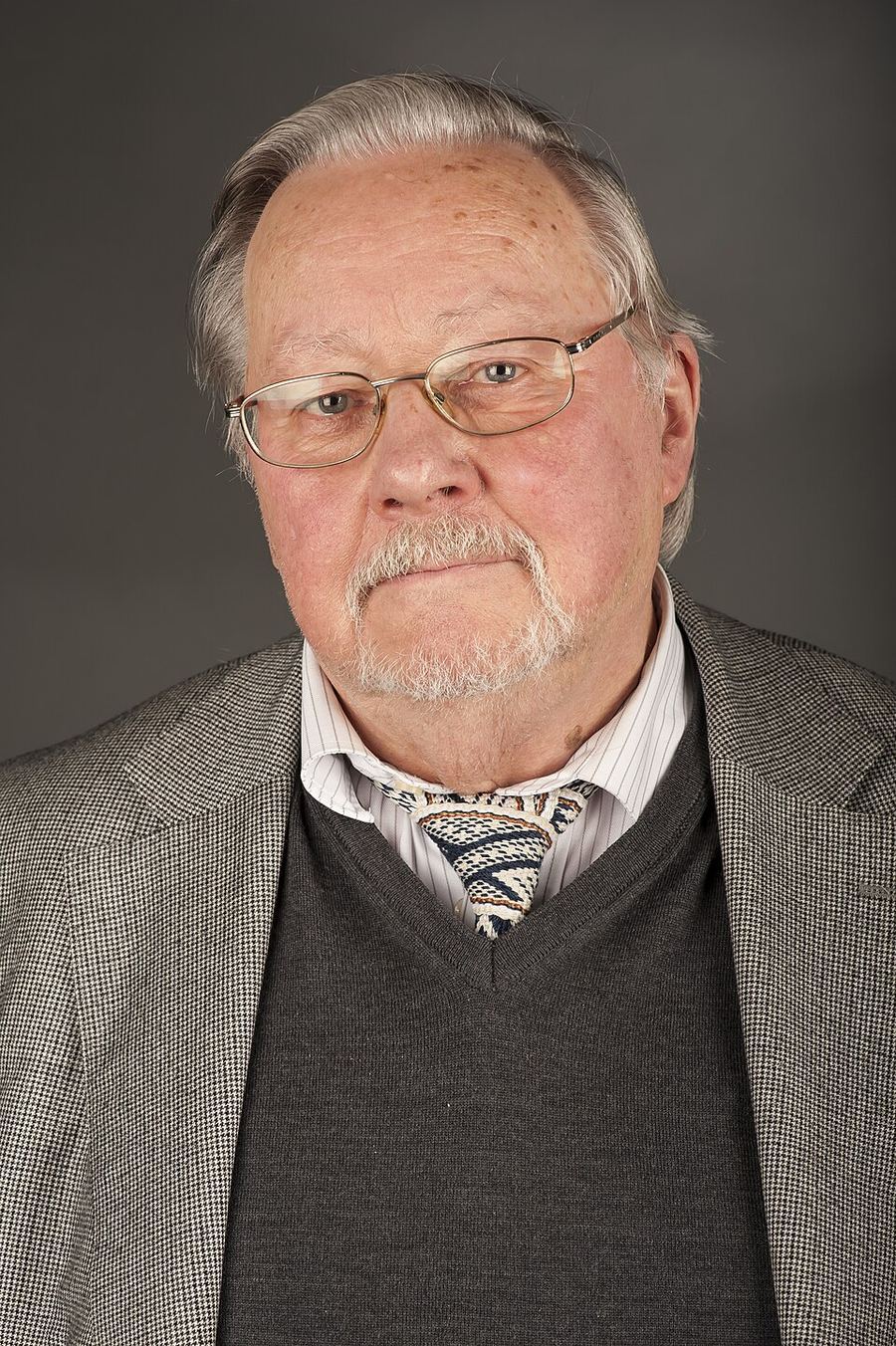
Mindaugas, crowned in 1253, and Vytautas the Great, who extended the Grand Duchy to its widest reach before his death in 1430, anchor the national story; Jogaila, who became Władysław II Jagiełło of Poland, founded a dynasty that ruled much of Central Europe. Elijah ben Solomon Zalman, the Vilna Gaon, made eighteenth-century Vilnius the intellectual capital of non-Hasidic Judaism. Mikalojus Konstantinas Čiurlionis remains the emblematic artist. Twentieth-century Vilnius and Kaunas produced an extraordinary emigré cohort: the philosopher Emmanuel Levinas, born in Kaunas; the violinist Jascha Heifetz and the novelist Romain Gary, both born in Vilnius; the archaeologist Marija Gimbutas, whose Kurgan hypothesis reshaped debate on Indo-European origins; and the filmmaker Jonas Mekas. The Nobel laureate Czesław Miłosz was raised in the Lithuanian countryside and educated at Vilnius. Vytautas Landsbergis, a musicologist who led the Sąjūdis movement, became the country's head of state at the 1990 declaration of independence; Dalia Grybauskaitė served two terms as president from 2009. In sport, the basketball centre Arvydas Sabonis and the guard Šarūnas Marčiulionis are national figures, and the biochemist Virginijus Šikšnys is Lithuania's best-known living scientist.
Notable People, Lithuania
Foto-AG Gymnasium Melle / CC BY-SA 3.0

Inventions & Breakthroughs

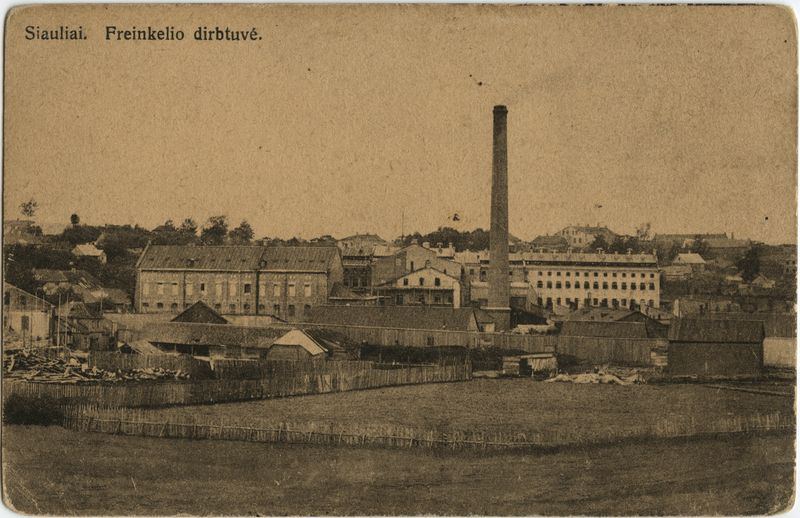
Lithuania's modern technical signature is the ultrafast laser. Research at Vilnius University's laser centre in the Soviet period spun out into companies — Light Conversion and Ekspla among them — that became significant suppliers of femtosecond and picosecond laser systems to research laboratories worldwide, an unusually specialised niche for a country of under three million. In molecular biology, Virginijus Šikšnys and colleagues at Vilnius University worked out the mechanism by which the CRISPR-Cas9 complex cuts DNA and can be programmed to target chosen sequences, published in 2012; Šikšnys shared the 2018 Kavli Prize in Nanoscience with Emmanuelle Charpentier and Jennifer Doudna for that work. Vilnius also built an early and durable industry in restriction enzymes and other molecular biology reagents, founded as Fermentas and now part of a multinational. Historically, Kazimieras Simonavičius, an artillery officer of the Grand Duchy, published Artis Magnae Artilleriae in 1650, which set out designs for multistage rockets and stabilising fins and is cited in histories of rocketry. In craft, the tradition of cross-crafting and the woven sash produced original design vocabularies rather than devices.
Inventions & Breakthroughs, Lithuania
Unknown authorUnknown author / Public domain

Science & Technology

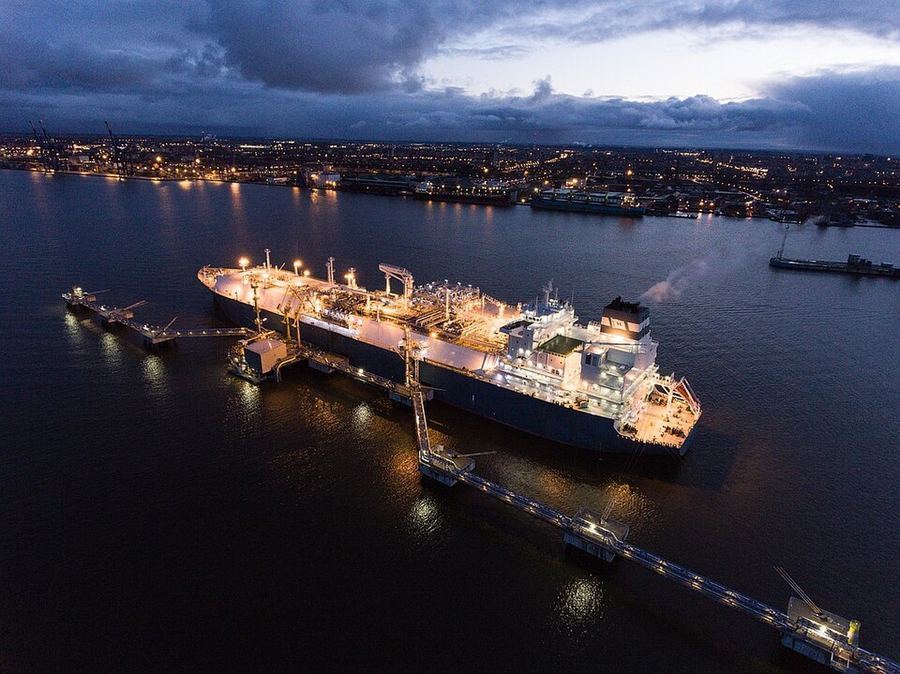
For its size Lithuania is unusually specialised. Laser physics is the flagship: a research tradition established at Vilnius University in the 1960s and 1970s produced companies that now supply a meaningful share of the world's scientific femtosecond laser systems, and lasers are among the country's most distinctive high-technology exports. Life sciences form the second cluster, built on decades of enzyme and reagent production in Vilnius and on gene-editing research; Virginijus Šikšnys's work on the CRISPR-Cas9 mechanism placed a Lithuanian laboratory at the centre of one of biology's defining developments, and the government has treated biotechnology as a strategic sector. The third is financial technology. After Lithuania's central bank began issuing electronic money and specialised bank licences on an accessible timetable, Vilnius became one of the EU's largest fintech licensing hubs, attracting firms seeking passported access to the single market — a policy that brought scale quickly and also brought supervisory and anti-money-laundering scrutiny. Energy security has driven engineering of another kind: the Klaipėda floating liquefied natural gas terminal, commissioned in 2014 and named Independence, ended dependence on Russian pipeline gas, and the Baltic states desynchronised their grids from the post-Soviet system to join the continental European network.
NatureScienceReutersFinancial TimesIEA
Science & Technology, Lithuania
AB Klaipėdos Nafta / CC BY-SA 4.0
On The World Stage
Champions of Lithuania

Champions & Defining Moments

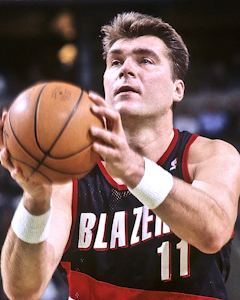
Lithuania's global sporting identity is basketball. After independence the national team took bronze at the 1992, 1996 and 2000 Olympic Games, the first of those in tie-dyed kit funded by the Grateful Dead after the team arrived without a budget — an episode that became part of the sport's folklore and the subject of the documentary The Other Dream Team. Šarūnas Marčiulionis was among the first players from the Soviet Union to sign in the NBA, and Arvydas Sabonis, delayed by injury and politics, entered the league in his thirties and was later inducted into the Naismith Memorial Basketball Hall of Fame; his son Domantas and Jonas Valančiūnas have continued the line. Lithuania hosted the EuroBasket in 2011 and the FIFA Futsal World Cup in 2021. Outside basketball, Virgilijus Alekna won consecutive Olympic discus titles in 2000 and 2004 and holds a world championship record of his own; Rūta Meilutytė won Olympic gold in the 100 metres breaststroke at London 2012 at fifteen; Laura Asadauskaitė won the modern pentathlon at the same Games; and Daina Gudzinevičiūtė took shooting gold in 2000.

IOCOlympediaWorld AthleticsFIFABBC
Government & Leadership

Semi-presidential republic

Seat of the executive

Executive

Gitanas Nauseda — PresidentINDEPENDENT

In office since 12 July 2019

Inga Ruginiene — Prime Minister

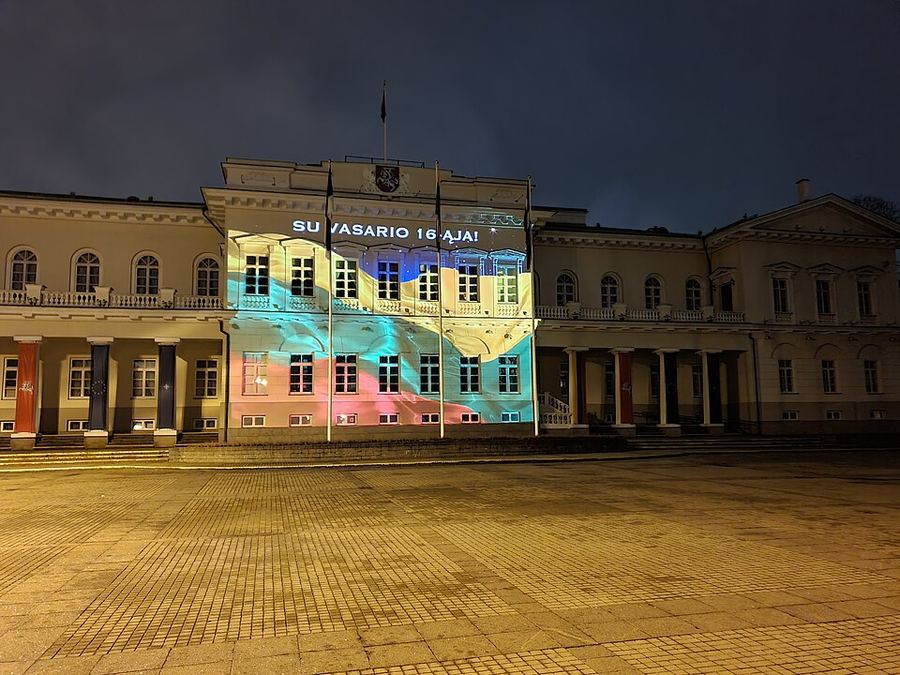
DrUtrecht / CC BY-SA 4.0
The legislature

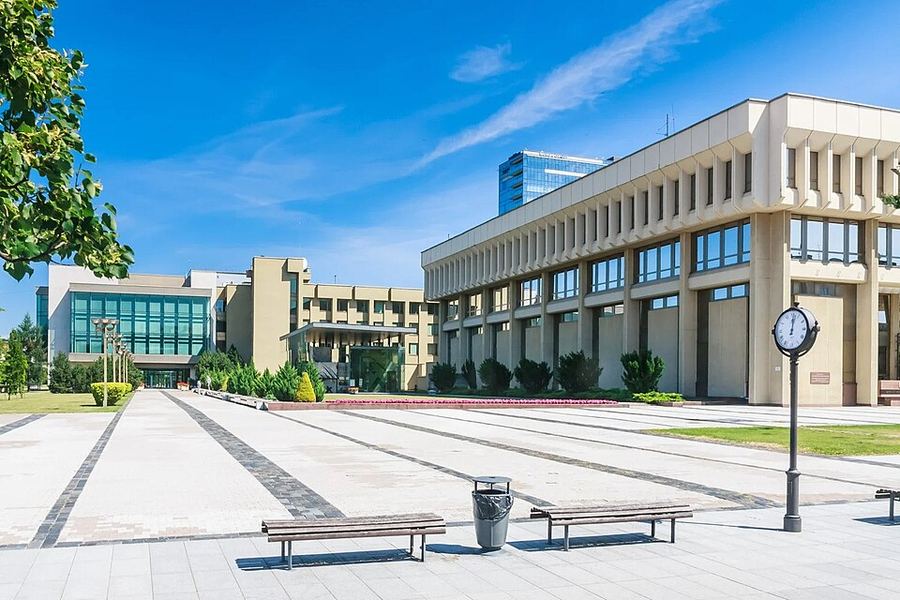
Parliament (Seimas)

Unicameral

Composition — LSDP largest party

LSDP 52 · TS-LKD 28 · PPNA 20 · DSVL 14 · LS 12 · LVŽS 8 · Other 7

Last election 10/13/2024 to 10/27/2024 · 28.4% women

The highest court
The highest court — Unknown authorUnknown author / CC0

Supreme Court

consists of 37 judges); Constitutional Court (consists of 9 judges

Economy, Trade & Government

Currency & GDP

Euro — EUR (€)

GDP (PPP): $136.227 billion (2024 est.)

Per capita: $47,200 (2024 est.)

Exports

$62.896 billion (2024 est.)

refined petroleum, furniture, plastic products, wheat, cars (2023)

Partners: Latvia 11%, Poland 8%, Germany 7%, Netherlands 6%, Russia 6% (2023)

Imports

$58.491 billion (2024 est.)

crude petroleum, cars, natural gas, packaged medicine, plastic products (2023)

Partners: Germany 13%, Poland 13%, Latvia 8%, USA 7%, Norway 5% (2023)

Government

Type: semi-presidential republic

Independence: 16 February 1918 (from Soviet Russia and Germany); 11 March 1990 (declared from the Soviet Union); 6 September 1991 (recognized by the Soviet Union); notable earlier dates: 6 July 1253 (coronation of MINDAUGAS, traditional founding date); 1 July 1569 (Polish-Lithuanian Commonwealth created)

Terrain → Where People Live

How mountains, coasts, and rivers shape settlement (LandScan).

Coming — data

Migration & Ethnic Settlement

Where groups settled and how people move (GeoEPR + UNHCR).

Coming — data

Universities

Notable institutions, mappable as points.

Coming — data
Economy & government facts: CIA World Factbook (public domain), via OpenFactBook / factbook.json.
Every fact and narrative claim will carry a visible source citation. Data-driven sections light up automatically wherever HERA has coverage.