HERA · Human Entity Reference Atlas by Masego Inc

← Macao 🌐 3D View
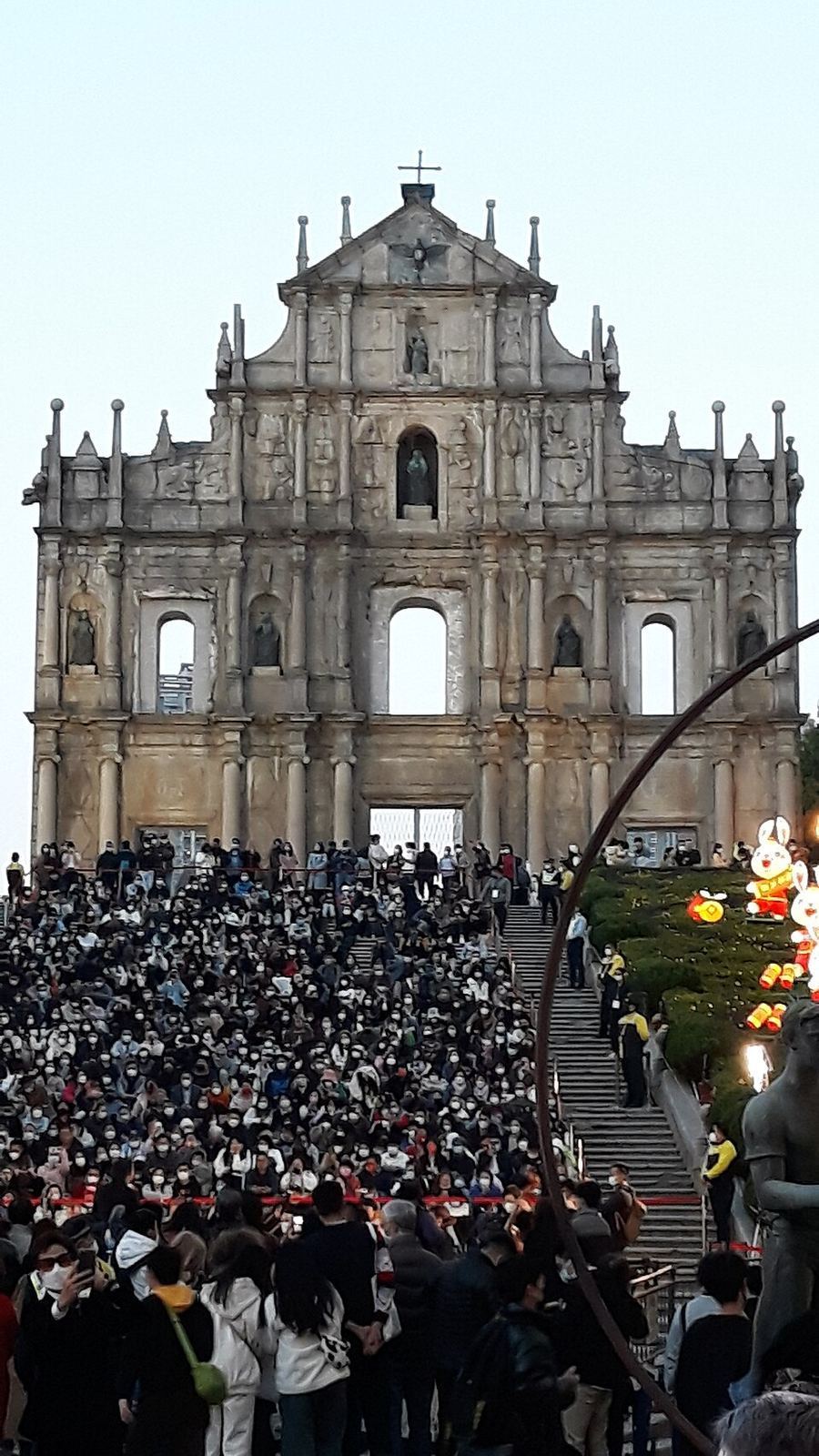
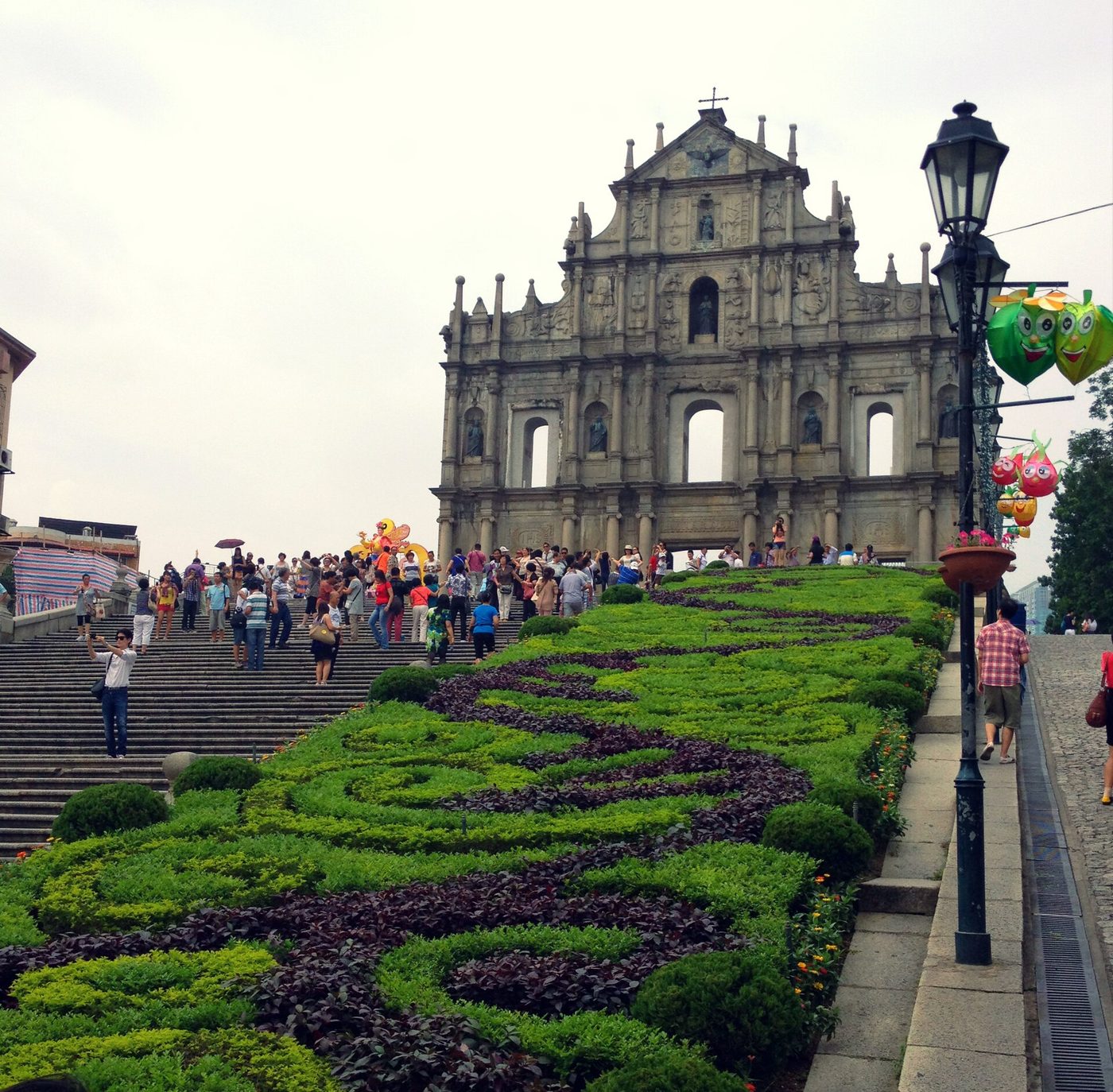
Ruins Of St Paul's Cathedral, Macau, Macao
Macao MAC
Ruins Of St Paul's Cathedral, Macau — Photo: Brenden Brain / CC BY-SA 3.0 via Wikimedia Commons
Did You Know Patuá, the Portuguese-based creole of the Macanese community, is classed as critically endangered with only a few dozen fluent speakers, and survives publicly mainly through an annual theatre production. — UNESCO

Macao is a Special Administrative Region of the People's Republic of China on the western side of the Pearl River Delta, about 60 kilometres from Hong Kong and bordering the Guangdong city of Zhuhai. It occupies roughly 33 square kilometres — a peninsula plus the islands of Taipa and Coloane, joined since the 2000s by the reclaimed Cotai strip — and with about 644,000 residents it is among the most densely populated places on earth. Macao has no capital of its own; it is governed as a single territory under a Basic Law that took effect at the handover from Portugal on 20 December 1999, providing for a high degree of autonomy under the 'one country, two systems' framework for fifty years. Chinese and Portuguese are both official languages, though Cantonese is spoken by about 81% of residents and Portuguese by well under one percent. Folk religion, at 58.9%, and Buddhism, at 17.3%, predominate, with a historically influential Catholic minority. The economy is unlike any other: gaming and tourism generate the overwhelming share of revenue, making Macao the largest gambling market in the world, and per capita GDP is about $112,800 at purchasing power parity. Life expectancy is among the highest recorded anywhere.

CIA World FactbookWorld BankEncyclopaedia BritannicaWHO
Population
644,426
Capital
Currency
None MOP
Time zones
Largest city
Human Geography Themes
Loading national figures…
The Country & Its People

History

Portuguese traders settled the peninsula from 1557, paying ground rent to Ming officials, and Macao became the first permanent European settlement in East Asia and the pivot of a trade triangle linking Guangzhou, Nagasaki and Goa. The Jesuits made it their gateway to China: St. Paul's College, founded in 1594, was the first Western-style institution of higher learning in East Asia, and Matteo Ricci passed through on his way to the imperial court. A Dutch fleet attacked in 1622 and was repelled. Macao's prosperity faded as Japan closed and as Hong Kong rose after 1841, and Portugal moved from tenancy to a claim of sovereignty, declared unilaterally in 1849 and acknowledged in the Sino-Portuguese treaty of 1887. Portuguese neutrality in the Second World War made the territory a refuge for people fleeing occupied China and Hong Kong. The 12-3 incident of December 1966, when pro-Beijing protests turned violent and the administration capitulated to a list of demands, ended Portuguese authority in practice. After the 1974 revolution Portugal offered to hand Macao back and China declined at that time; the Joint Declaration was signed in 1987 and the transfer took place on 20 December 1999. Liberalisation of the gaming monopoly in 2002 then transformed the territory.
Culture

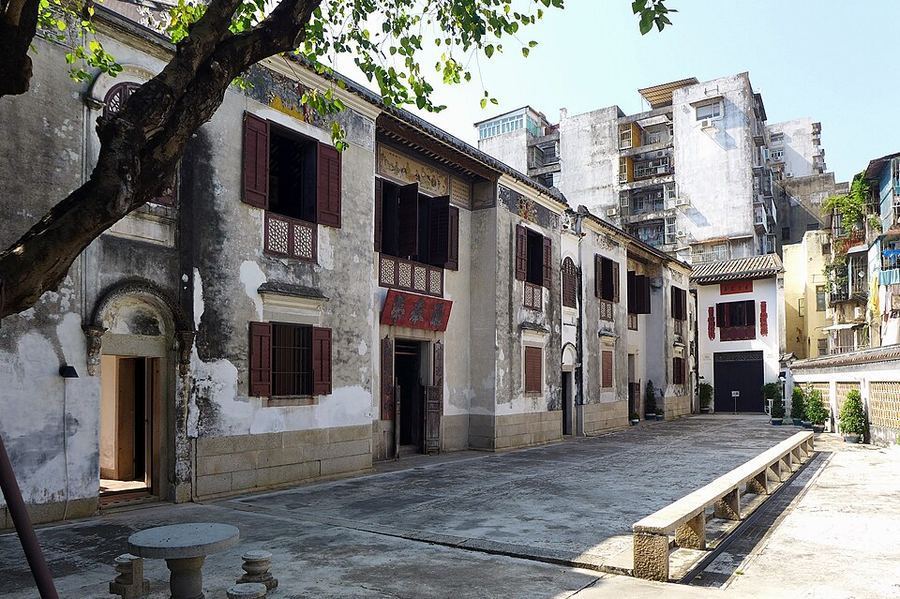
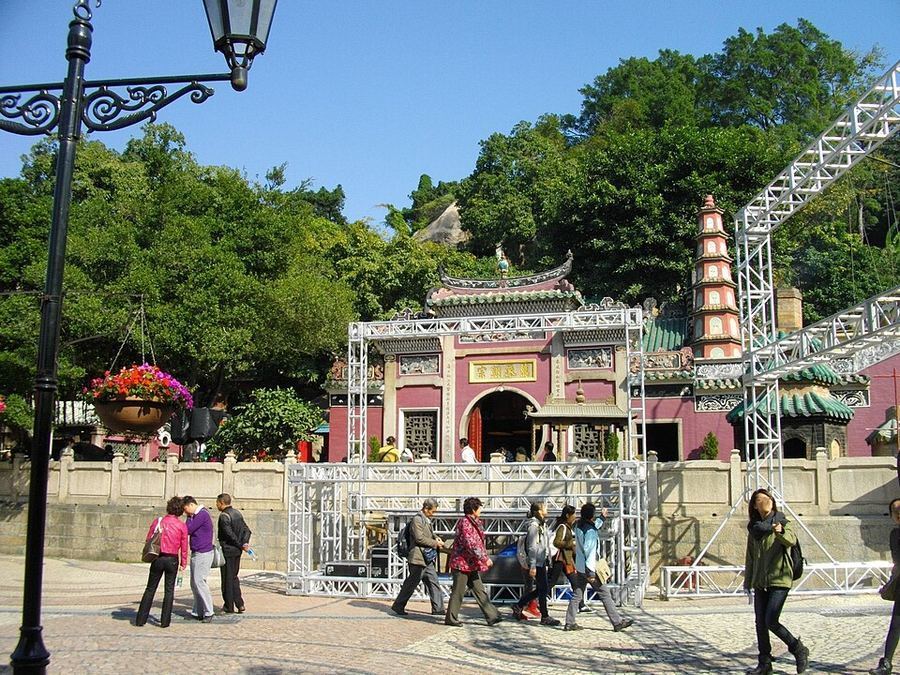
Macao's culture is overwhelmingly Cantonese in its daily texture, with a Portuguese layer that is thin in population and thick in institutions and streetscape. Temple life anchors the calendar: the A-Ma Temple beneath Barra Hill, which predates the Portuguese arrival and gave the territory its name — A-Ma Gau, the bay of A-Ma — draws crowds at the A-Ma Festival, and Na Tcha, Kun Iam and Tin Hau temples each keep their own feast days. The Feast of the Drunken Dragon, staged by the fish traders' guild on the eighth day of the fourth lunar month, sends dancers through the streets with carved dragon head and tail sections, drinking and spraying rice wine as they go; it is recognised on China's national intangible cultural heritage list and belongs entirely to Macao. Catholic observance runs in parallel and in public: the Procession of the Passion carries a figure of Christ between churches in Lent, and the Our Lady of Fátima procession leaves St. Dominic's each 13 May. Public holidays follow both calendars. Gaming is the economic and social fact underlying everything, employing a large share of the workforce directly or indirectly.

Points Of Pride

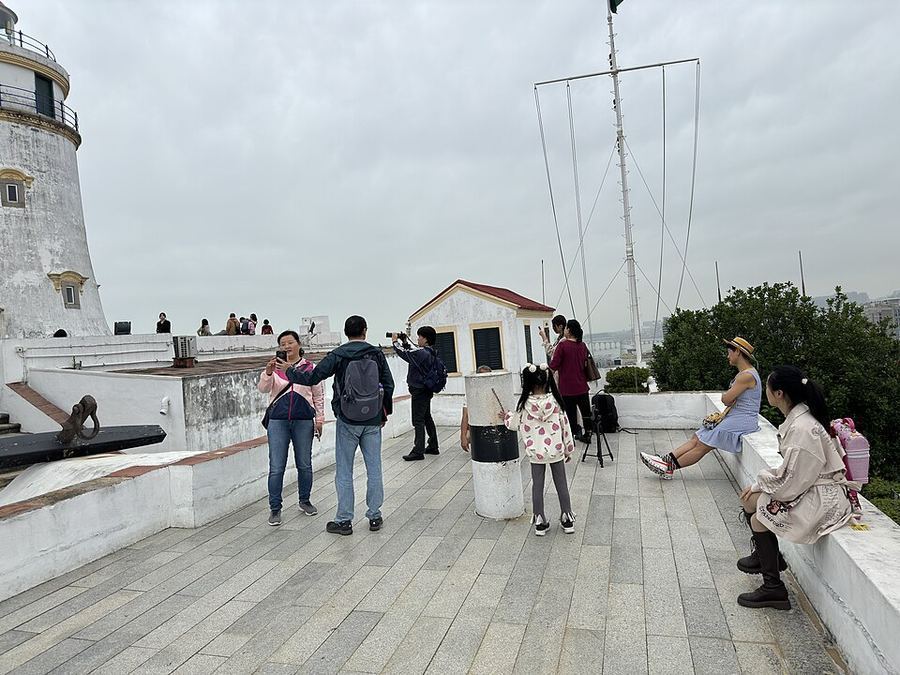
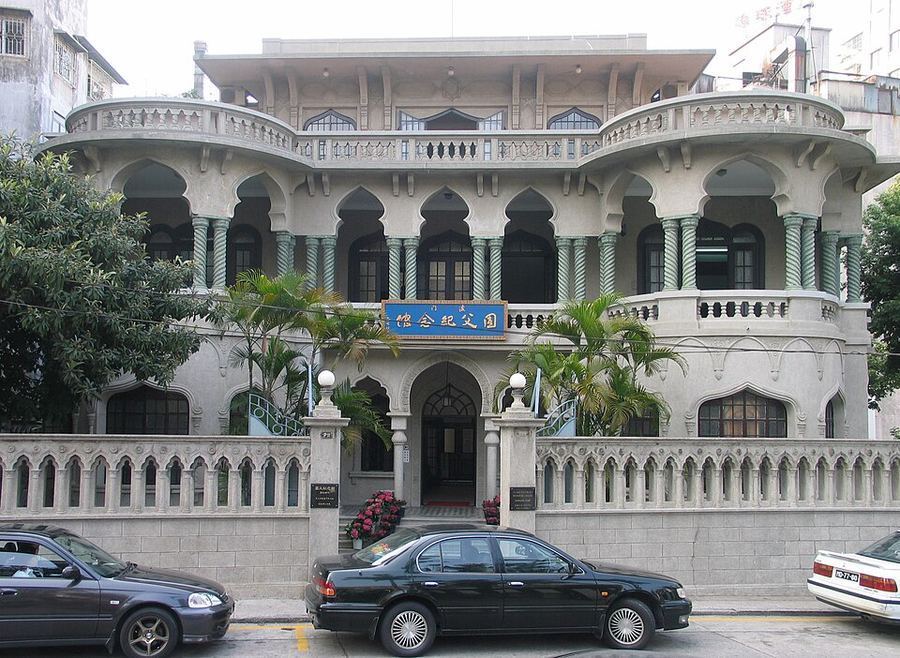
The Historic Centre of Macao, inscribed by UNESCO in 2005, is the territory's foremost claim: more than twenty monuments and squares within a few walkable blocks that document over four centuries of continuous Chinese and Portuguese coexistence, including the Ruins of St. Paul's, Senado Square with its wave-patterned Portuguese mosaic paving, the A-Ma Temple, the Mandarin's House, the Moorish Barracks and the Guia Fortress with its chapel and its 1865 lighthouse, the first modern lighthouse on the China coast. Second is the cuisine: Macanese cooking, developed over centuries in the households of mixed Portuguese-Asian families, has a good claim to be the world's oldest fusion cuisine, and UNESCO designated Macao a Creative City of Gastronomy in 2017. Third is the scale of the gaming industry, which overtook the Las Vegas Strip in revenue in 2006 and has been the world's largest by a wide margin since. Fourth is the Macao Grand Prix, run on public streets since 1954. Fifth is longevity and wealth: Macao records some of the highest life expectancy and per capita income figures in the world.

Cultural Fusion

Macao is one of the world's clearest examples of durable cultural hybridity. The Macanese — Macaense — are the community that formed from Portuguese men and Chinese, Malay, Japanese, Indian and African women across the centuries of the Portuguese maritime network, and they produced their own language, food and social world. Their creole, Patuá or Maquista, is Portuguese-based with Malay, Sinhalese, Cantonese and English elements; UNESCO classes it as critically endangered, with only a few dozen fluent speakers left, and it survives publicly mainly through the annual Patuá-language theatre of the Dóci Papiaçám di Macau troupe. The physical city is equally mixed: pastel Portuguese-Baroque churches stand beside Chinese temples, street names appear in Chinese characters and Portuguese on blue-and-white azulejo tiles, and calçada portuguesa mosaic paving covers the squares. Portuguese remains co-official under the Basic Law, and Macao has been given a specific institutional role as China's bridge to the Lusophone world, hosting since 2003 the permanent secretariat of the Forum for Economic and Trade Co-operation between China and Portuguese-speaking Countries and running the Lusofonia Festival each autumn.

Music & Dance

Cantonese opera is the deepest performance tradition, shared with Guangdong and Hong Kong and inscribed by UNESCO as intangible cultural heritage in 2009; amateur associations still stage it in temples, community halls and at festival time, and the elaborate costumes and falsetto vocal style remain familiar to older audiences. Lion and dragon dancing accompany temple feasts, business openings and Lunar New Year, and Macao's distinctive variant is the Drunken Dragon dance of the fish traders' guild, in which performers carry only the head and tail of the dragon and move in a deliberately unsteady, wine-fuelled gait. The Macanese community maintains Portuguese folk dance groups whose ranchos perform at the Lusofonia Festival alongside music from Angola, Mozambique, Cape Verde, Brazil and Timor-Leste — an unusual concentration of Lusophone traditions in East Asia. Institutional music is well funded: the Macao Orchestra plays a Western symphonic repertoire, the Macao Chinese Orchestra plays the traditional one, and the Macao International Music Festival each autumn brings international ensembles. The casino resorts have added a further layer, staging large-scale resident spectaculars and drawing Cantopop and international touring acts to the Cotai arenas.

Cuisine & Misattributed Foods

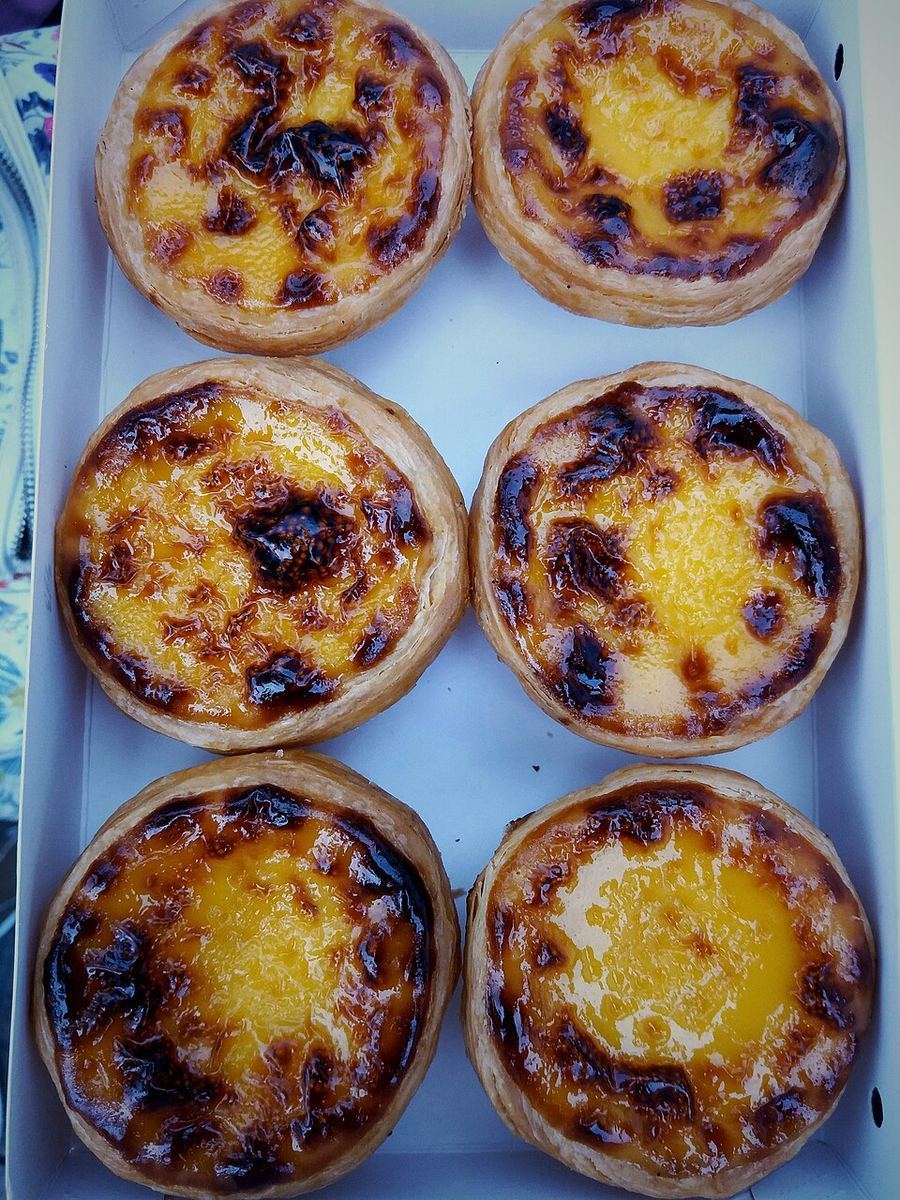
Macao supports two cuisines side by side. The everyday one is Cantonese — dim sum, roast meats, congee, seafood and the dried pork jerky sold in noisy competition along Rua da Felicidade. The rarer one is Macanese, cooked historically in Macanese homes rather than restaurants and assembled from the whole Portuguese maritime world: Portuguese technique and ingredients crossed with Indian and Southeast Asian spice and Chinese method. Its emblematic home dish is minchi, minced beef or pork fried with soy, Worcestershire sauce, onion and diced potato and served with rice and a fried egg. Galinha à africana, 'African chicken', is grilled and coated in a sauce of chilli, coconut and peanut whose ancestry runs through Portuguese Africa; tacho is a winter stew of Chinese and Portuguese meats; capella is a baked minced-meat loaf; and serradura, a chilled layered cream and biscuit dessert, closes the meal. Bacalhau appears in a dozen forms. The single most famous item is the Portuguese egg tart in its Macao version, with a caramelised scorched top, popularised at Coloane village from 1989 and now sold across Asia, closely followed by the pork chop bun.

National Dress

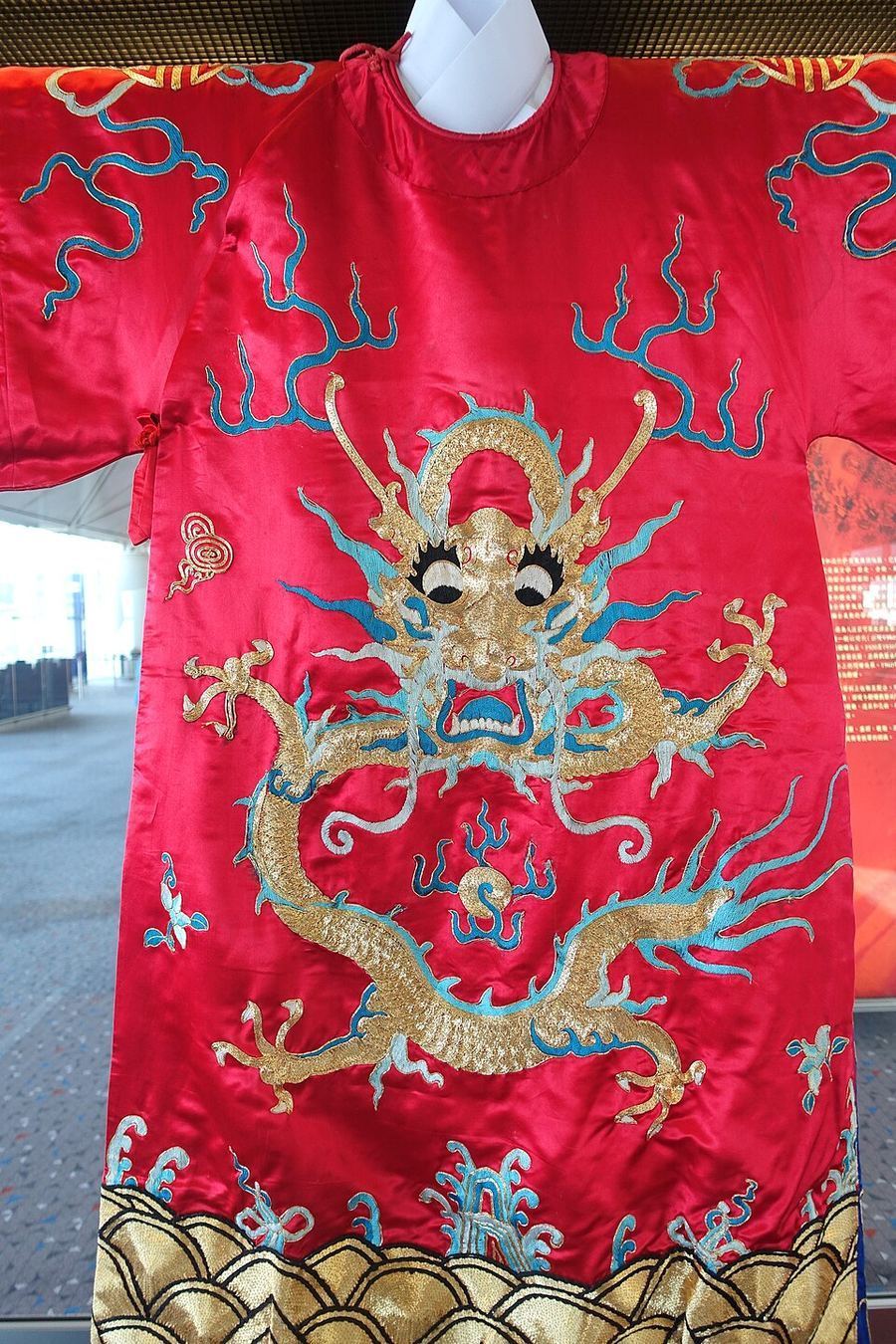
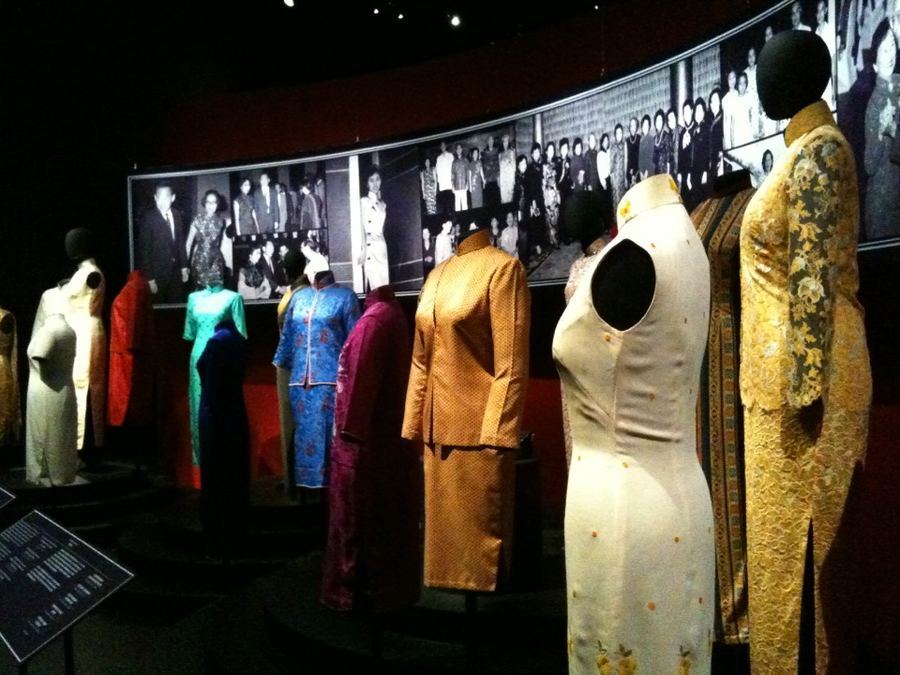
Macao has no single traditional dress, and its garments follow its communities. The historically distinctive one belonged to Macanese women: the dó, a black or dark silk hooded cloak that covered the head and much of the body, worn to church and in the street into the early twentieth century and often left only the face visible — a garment with no exact Portuguese or Chinese equivalent, and now seen only in photographs, museum collections and Patuá theatre productions. Chinese Macao follows the wider Cantonese pattern: the cheongsam or qipao for formal occasions and weddings, the red bridal ensemble in traditional ceremonies, and the elaborate embroidered and headdressed costumes of Cantonese opera, which are the most spectacular clothing regularly on public view. The Macanese and Portuguese associations bring out regional Portuguese folk costume — full skirts, aprons, waistcoats and headscarves — for the Lusofonia Festival, where they appear beside Angolan, Cape Verdean and Timorese dress. Uniforms of another kind define daily life, since the casino and hotel industry clothes a large fraction of the working population in house livery.

Sports & Inspiring Athletes

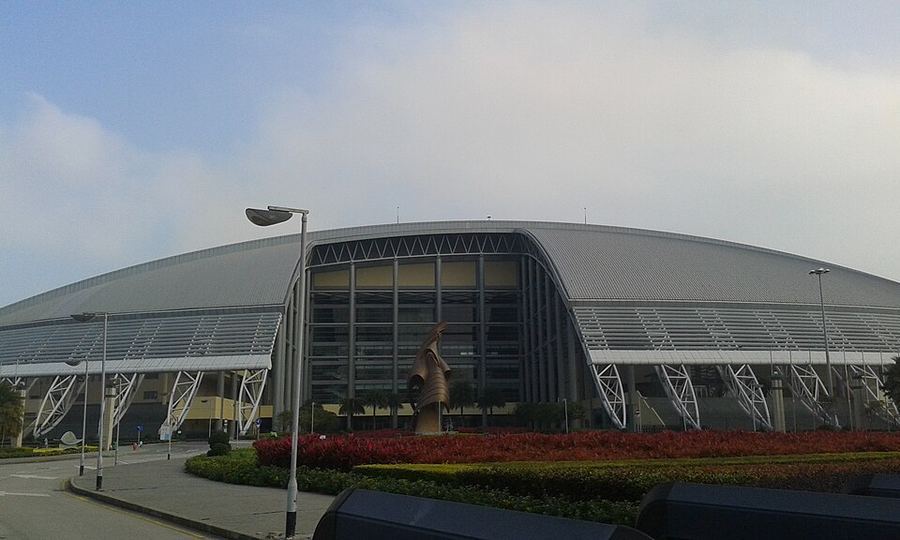
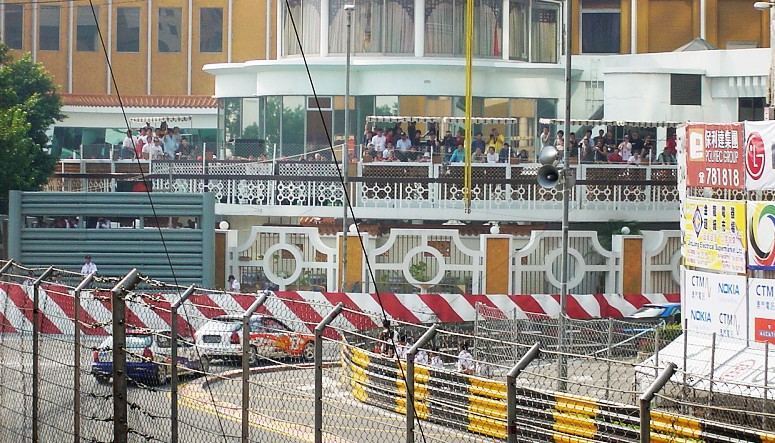
Macao's sporting identity is dominated by one event and a set of participation sports. The Macao Grand Prix, run every November since 1954 on the Guia Circuit — a 6.2-kilometre street course of public roads that squeezes between apartment blocks and includes the notoriously narrow Melco hairpin — is one of very few race meetings anywhere at which both cars and motorcycles compete on the same street circuit, pairing a premier single-seater race with the Macau Motorcycle Grand Prix and a touring car event. Wushu is the territory's strongest competitive discipline and the source of most of its international medals, supported by a well-organised local federation. Dragon boat racing is popular and competitive, with international regattas held on the Nam Van lakes. Football is played through a domestic league and a national team, and basketball, volleyball, table tennis and badminton are widely played in a territory where public sports facilities are extensive relative to the population. Macao hosted the East Asian Games in 2005, which prompted the construction of the Macau East Asian Games Dome and other venues that still carry the local sporting calendar.

Notable Educational Programs

Macao's educational history begins with St. Paul's College, founded by the Jesuits in 1594 as the first Western-style institution of higher learning in East Asia and a training centre for the China mission until its suppression and the fire that destroyed the church. Modern higher education is recent. The University of Macau opened in 1981 as the private University of East Asia and was taken into public hands a decade later; its campus is the subject of one of the most unusual legal arrangements anywhere, having moved in 2013 onto Hengqin Island — physically part of the Chinese mainland, but leased to and administered under Macao law, reached from Macao by a dedicated undersea tunnel. Macao Polytechnic University, the Macau University of Science and Technology and the Institute for Tourism Studies complete the sector, the last reflecting an economy in which hospitality and gaming management are core professions. Schooling is overwhelmingly run by private and church-affiliated bodies under public funding, with instruction variously in Cantonese, Mandarin, Portuguese or English, and the government provides fifteen years of free education from kindergarten through secondary school — an unusually long free entitlement.

Wars & Conflicts

Macao has not experienced armed conflict in modern times, and its historical episodes of violence were short. A Dutch fleet attacked in June 1622 and was driven off by a defence made up largely of Jesuits, residents and enslaved Africans, a victory commemorated for centuries afterwards. Governor João Ferreira do Amaral, who had expelled Chinese customs officials and asserted Portuguese sovereignty, was assassinated in 1849. The most consequential confrontation was the 12-3 incident of December 1966, when a dispute over a school building in Taipa escalated into pro-Beijing demonstrations and rioting; several people were killed, and the Portuguese administration signed a public apology and accepted a set of demands, after which real authority in the territory shifted decisively. Macao remained formally neutral during the Second World War and became a refuge for people fleeing occupied China and Hong Kong, though it came under severe Japanese pressure and hardship. Since the 1999 handover the territory has seen relatively little public unrest by regional standards, the largest recent instance being demonstrations in 2014 against a bill on benefits for senior officials, which was withdrawn. Macao enacted its own national security legislation in 2009 and revised it in 2023.
Current as of 2026-08-07

Land & Border Disputes

Macao has no territorial disputes. Its only land boundary, with Zhuhai in Guangdong province, is an internal boundary of the People's Republic of China rather than an international frontier, and the questions that arise around it are administrative and jurisdictional rather than contested. Two of those arrangements are unusual enough to note. In 2009 the National People's Congress Standing Committee authorised a parcel of Hengqin Island, on the mainland side, to be leased to Macao and placed under Macao's jurisdiction for the new University of Macau campus, an enclave of one legal system inside another with a term running to 2049; the Guangdong-Macao In-Depth Cooperation Zone announced for Hengqin in 2021 extended the model of joint administration considerably further. Separately, Macao historically had no defined sea area of its own, and in 2015 the State Council delimited roughly 85 square kilometres of waters under Macao's jurisdiction along with a clarified land boundary — resolving a long-standing ambiguity rather than a claim. The broader question that attracts international comment is not territorial but constitutional: how the autonomy guaranteed under the Basic Law operates and what follows its fifty-year term in 2049.
Land, Life & Legacy

Land & Climate

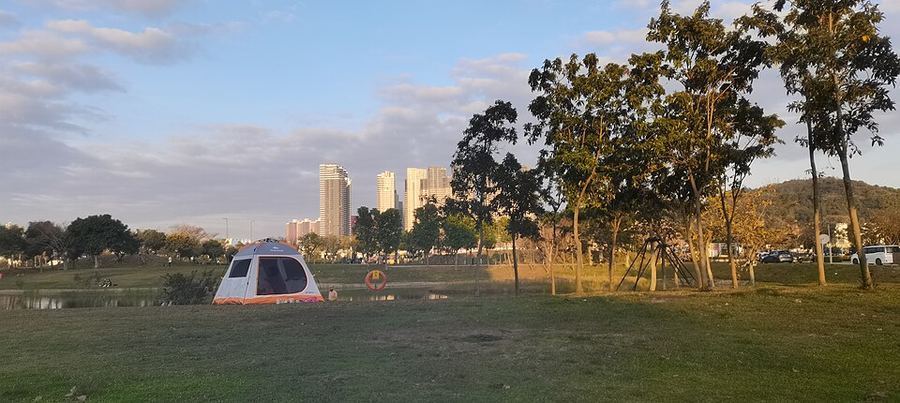
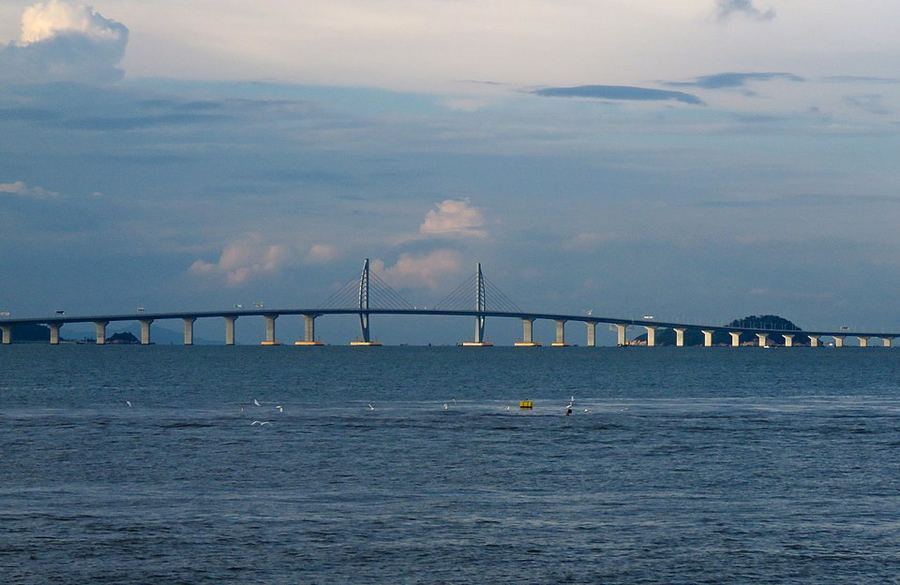
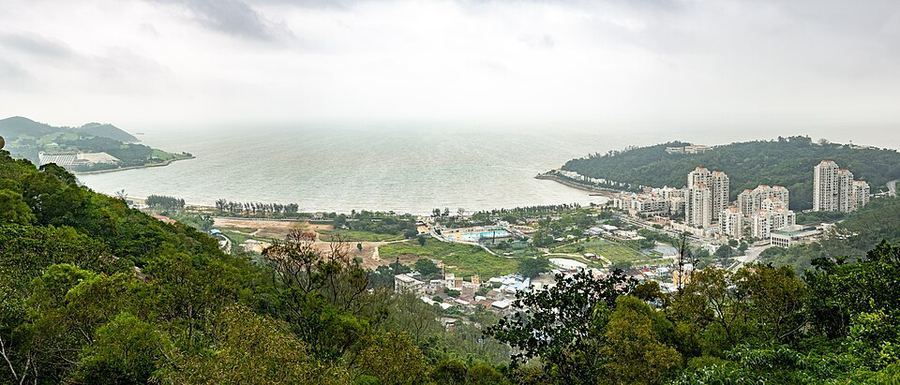
Macao sits on the western bank of the Pearl River estuary, where the river's silt meets the South China Sea, and it is small and getting larger. The original settlement occupied a narrow peninsula joined to the mainland at Zhuhai by a sandy isthmus; the islands of Taipa and Coloane lay offshore, and successive reclamation has joined them into a single landmass by creating Cotai between them, taking the total area to roughly 33 square kilometres from about half that a century ago. There is almost no natural relief left — Coloane's Alto de Coloane, at around 170 metres, is the high point, and Guia Hill on the peninsula the only other rise of consequence. Water is turbid and brown near the peninsula from river sediment and clearer off Coloane, where Hac Sa beach retains its dark sand. Population density is among the world's highest, and the land shortage explains both the reclamation and the vertical building. The climate is humid subtropical and monsoonal: hot, wet, sticky summers averaging around 29°C with typhoons between May and October, and mild, drier winters rarely near freezing. Since 2018 the 55-kilometre Hong Kong-Zhuhai-Macao Bridge has crossed the estuary.

Entertainment

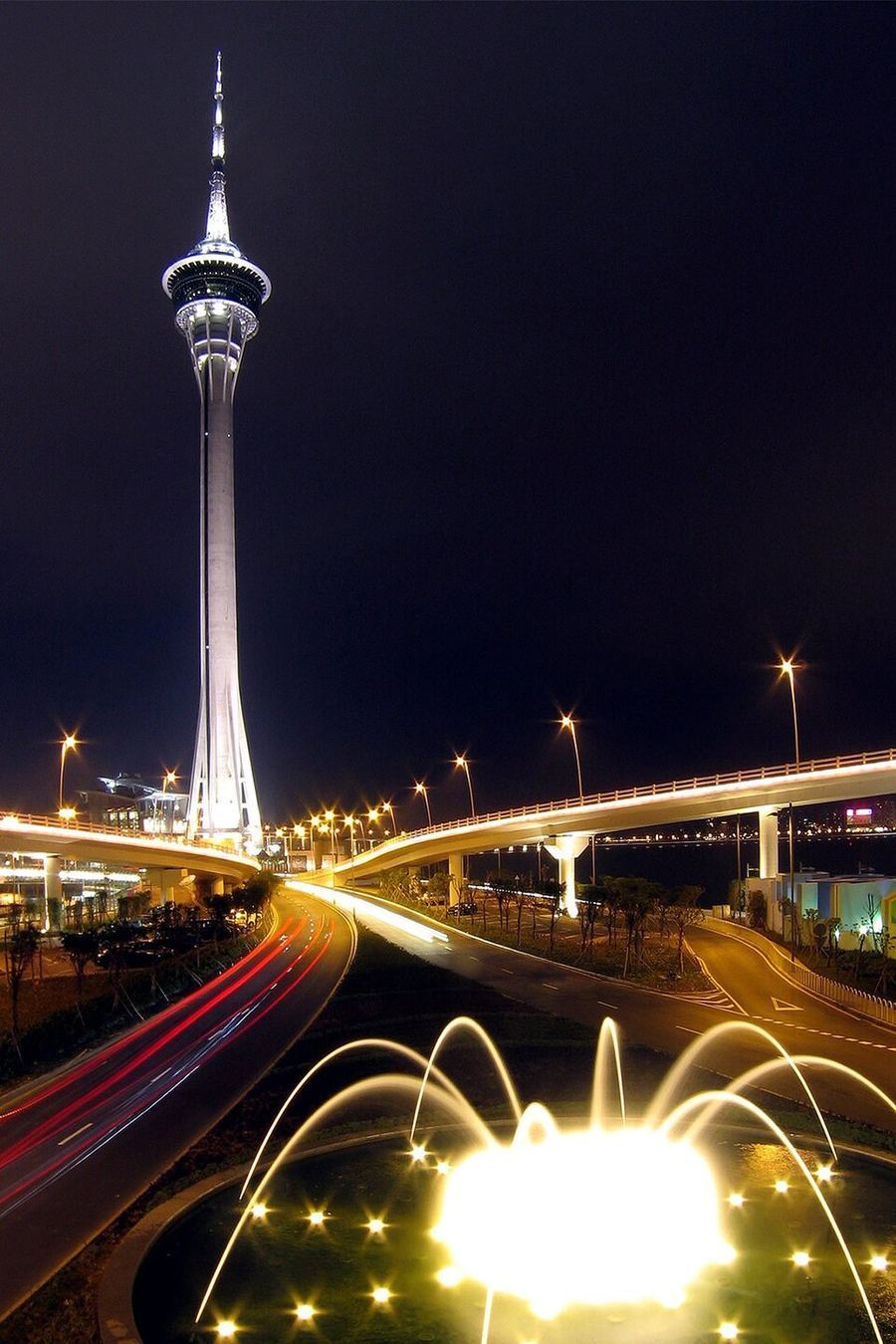
Leisure in Macao runs at two speeds. The Cotai strip is the high-volume version: a row of vast integrated resorts with casino floors, shopping arcades, theatres, arenas and themed attractions, drawing tens of millions of visitors a year, the great majority from mainland China and Hong Kong, with baccarat rather than slot machines dominating the tables. The Macao Tower, 338 metres tall, carries an observation deck with a glass floor, a skywalk around the outer rim and a bungee jump of 233 metres that is recognised as the world's highest commercial jump. The slower version is the old town and the islands: wandering the Historic Centre between Senado Square, the Ruins of St. Paul's and A-Ma Temple; climbing Guia Hill for the fortress and lighthouse; eating through Taipa Village's food streets; and taking the bus to Coloane for the village square, the egg tarts, the Chapel of St. Francis Xavier and the black sand of Hac Sa beach. Hiking trails cross Coloane's wooded hills. Dragon boat racing on the Nam Van lakes, the November Grand Prix and the Macao Food Festival punctuate the year.

Art & Museums

Macao's most remarkable artwork is a wall. The surviving façade of the Mater Dei church, universally called the Ruins of St. Paul's, is a five-tier stone frontispiece carved in the early seventeenth century under Jesuit direction by craftsmen including Japanese Christian exiles, and it reads as a catechism in stone in which European saints and Marian imagery sit beside chrysanthemums, a Chinese-style dragon, a Japanese chrysanthemum motif and inscriptions in Chinese characters — Counter-Reformation theology translated for an Asian audience. The rest of the church burned in 1835. Macao also has a distinguished place in the history of European painting in Asia through George Chinnery, the English artist who lived in the territory from 1825 until his death in 1852 and whose oils and rapid sketches are the principal visual record of the south China coast in that period; he is buried in the Old Protestant Cemetery. The Macao Museum of Art on the waterfront holds Chinnery's work, Chinese export painting, calligraphy and ceramics, and shows contemporary artists. Calçada portuguesa — hand-laid black and white limestone mosaic paving — covers the historic squares and is itself a craft tradition maintained by imported Portuguese pavers.

Notable People

The dominant modern figure is Stanley Ho, who held the exclusive gaming concession from 1962 until liberalisation in 2002 and built the industry, the ferries and much of the infrastructure around it; his death in 2020 closed an era, though family interests remain central. Edmund Ho Hau Wah, a banker from a prominent local family, served as the first Chief Executive of the Special Administrative Region from 1999 to 2009. The historical figures largely passed through rather than stayed. Matteo Ricci arrived at Macao in 1582 and learned Chinese there before entering the empire, and the Jesuit college he trained in shaped the mission to China. Robert Morrison, the first Protestant missionary to China, worked in Macao from 1807, compiled the first Chinese-English dictionary and translated the Bible into Chinese; he is buried in the Old Protestant Cemetery, which he helped establish. George Chinnery painted the territory for nearly three decades. Sun Yat-sen practised medicine in Macao in the 1890s before turning to revolution, and a memorial house records it. Tradition, though not firm evidence, holds that Luís de Camões wrote part of Os Lusíadas in a grotto here, now a garden bearing his name. José dos Santos Ferreira was the great poet of Patuá.

Inventions & Breakthroughs

Macao's inventions are cultural syntheses rather than devices, and they are genuinely original. Macanese cuisine is the clearest: a systematic body of dishes created in Macanese households by combining Portuguese ingredients and technique with Chinese, Malay, Indian and African elements, developed continuously from the sixteenth century and now recognised by UNESCO through the territory's designation as a Creative City of Gastronomy. Patuá is the linguistic equivalent — a stable Portuguese-based creole with its own grammar, vocabulary and literature that could only have formed in this particular meeting of populations, and which is now critically endangered. The Macao-style egg tart, with its caramelised scorched surface, was devised in Coloane in 1989 by adapting the Portuguese pastel de nata to local taste and has since been exported across East Asia. In built form, Macao produced a distinctive Sino-Portuguese architecture — the shophouse with Iberian mouldings, the carved stone façade of St. Paul's, the calçada paving. In the twentieth century the territory pioneered the integrated resort model at scale, and the engineering of the Cotai reclamation and of the Hong Kong-Zhuhai-Macao Bridge crossing represent its major infrastructure achievements.

Science & Technology

For a territory of its size Macao supports a small but genuinely visible research base, concentrated in two universities. The State Key Laboratory of Analog and Mixed-Signal VLSI at the University of Macau works on integrated circuit design — data converters, radio-frequency front ends and power management — and has become one of the more consistently published academic groups in that field internationally, an unexpected specialism for a gaming economy. The Macau University of Science and Technology hosts the State Key Laboratory of Lunar and Planetary Sciences, which analyses data from China's lunar and Mars missions and has contributed to the scientific programme around the Chang'e series; Macao's involvement in the space programme extended to the Macao Science Satellite-1 mission, launched in 2023 to study the geomagnetic field, developed jointly with mainland institutions. Applied research elsewhere follows the economy: traditional Chinese medicine quality control, hospitality and tourism analytics, and gaming systems. The territory's largest technological artefacts are civil engineering works — the reclamation that created Cotai, the light rapid transit line opened in 2019, and the Hong Kong-Zhuhai-Macao Bridge, a 55-kilometre crossing combining bridge spans with an immersed tunnel and artificial islands.
On The World Stage

Champions & Defining Moments

Macao's global sporting reputation rests almost entirely on its Grand Prix, which occupies an unusual and respected niche in motorsport. The street circuit's blend of a long fast straight and a tight, walled hill section makes it a recognised proving ground for young single-seater drivers, and its premier race has been held as an international Formula Three event and as an FIA Formula 3 World Cup; Ayrton Senna won the inaugural Formula Three running in 1983 and Michael Schumacher won in 1990, and a long list of drivers who went on to Formula One have the Macao win on their record. The Macau Motorcycle Grand Prix has a comparable standing among road racers, alongside the Isle of Man and the Irish road races, and a similar reputation for danger. Outside motorsport Macao competes internationally under its own flag in Asian and East Asian competition and in world championships in wushu, but it is not a member of the International Olympic Committee and therefore does not send a team to the Olympic Games — an anomaly it shares with very few territories of comparable wealth and sporting infrastructure.

Economy, Trade & Government

Currency & GDP

Pataca — MOP (None)

GDP (PPP): $77.524 billion (2024 est.)

Per capita: $112,800 (2024 est.)

Exports

$41.839 billion (2023 est.)

jewelry, garments, broadcasting equipment, precious metal watches, video and card games (2023)

Partners: Hong Kong 73%, China 6%, USA 6%, Philippines 3%, Singapore 1% (2023)

Imports

$23.205 billion (2023 est.)

jewelry, garments, trunks and cases, broadcasting equipment, electricity (2023)

Partners: China 36%, Hong Kong 17%, USA 6%, France 6%, Japan 5% (2023)

Government

Type: executive-led limited democracy; a special administrative region of the People's Republic of China

Independence: none (special administrative region of China)

Terrain → Where People Live

How mountains, coasts, and rivers shape settlement (LandScan).

Coming — data

Migration & Ethnic Settlement

Where groups settled and how people move (GeoEPR + UNHCR).

Coming — data

Universities

Notable institutions, mappable as points.

Coming — data
Economy & government facts: CIA World Factbook (public domain), via OpenFactBook / factbook.json.
Every fact and narrative claim will carry a visible source citation. Data-driven sections light up automatically wherever HERA has coverage.