HERA · Human Entity Reference Atlas by Masego Inc

← Moldova 🌐 3D View
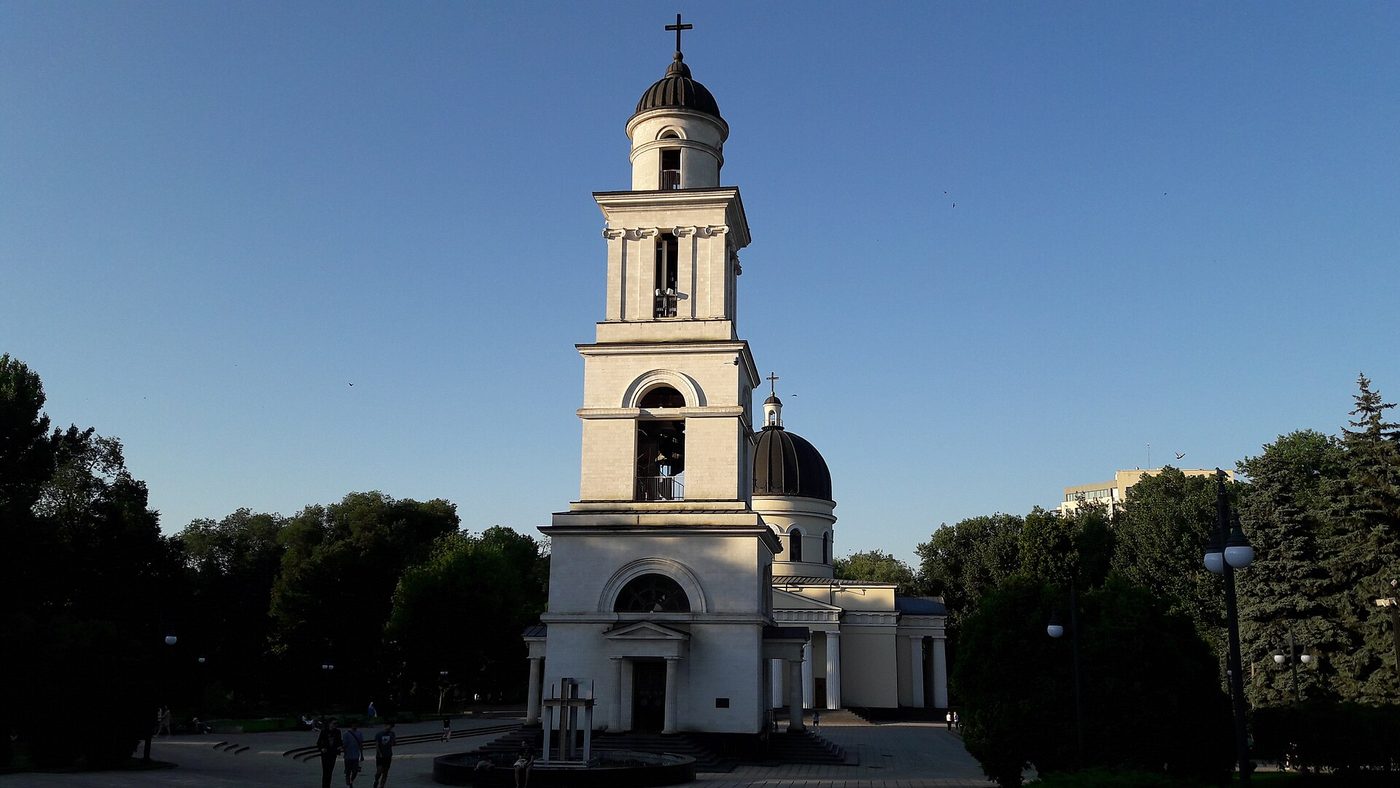
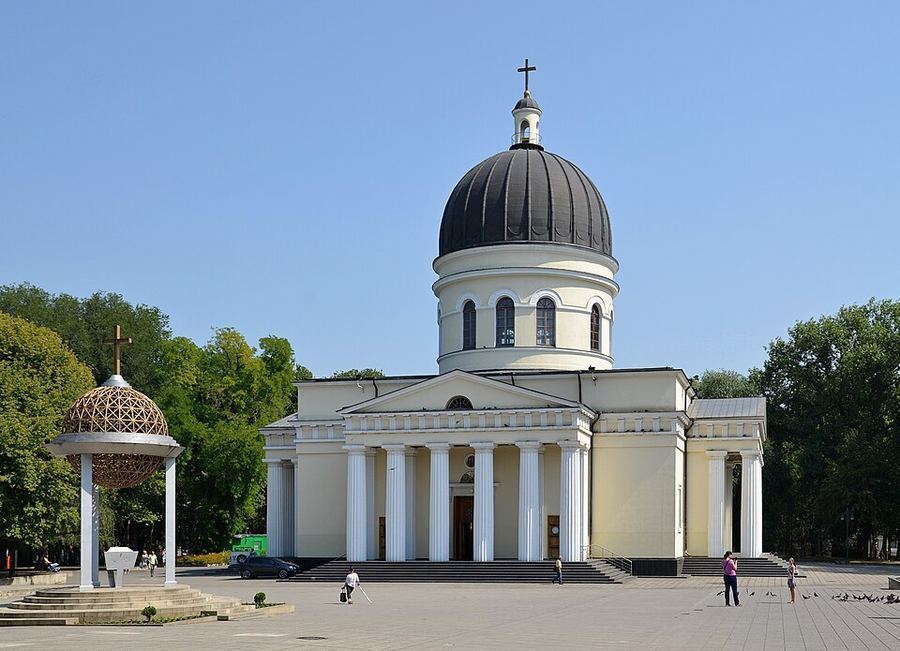
Nativity Cathedral (Chișinău) - Bell tower 02, Moldova
Moldova MDA
Nativity Cathedral (Chișinău) - Bell tower 02 — Photo: Tomasz Bladyniec / CC BY 4.0 via Wikimedia Commons
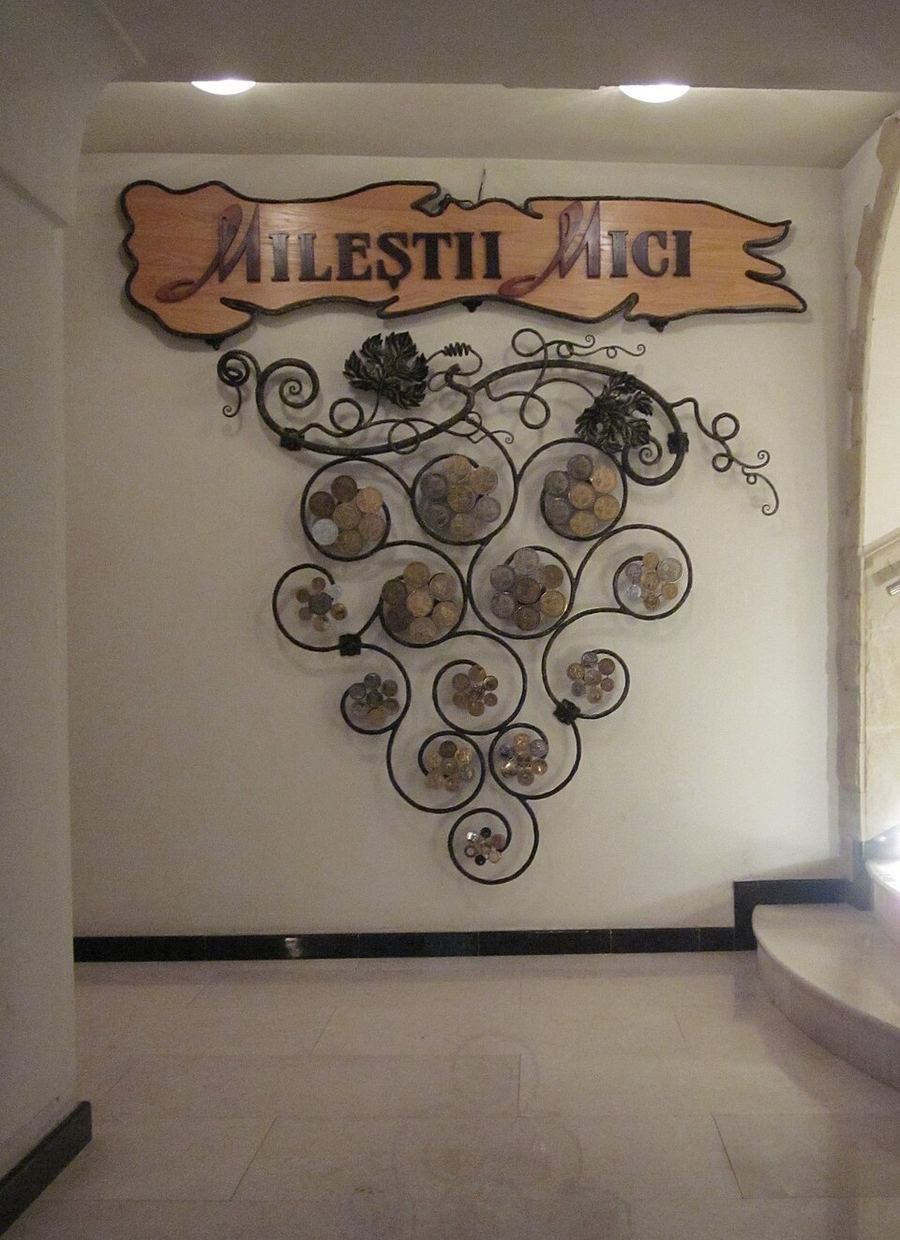
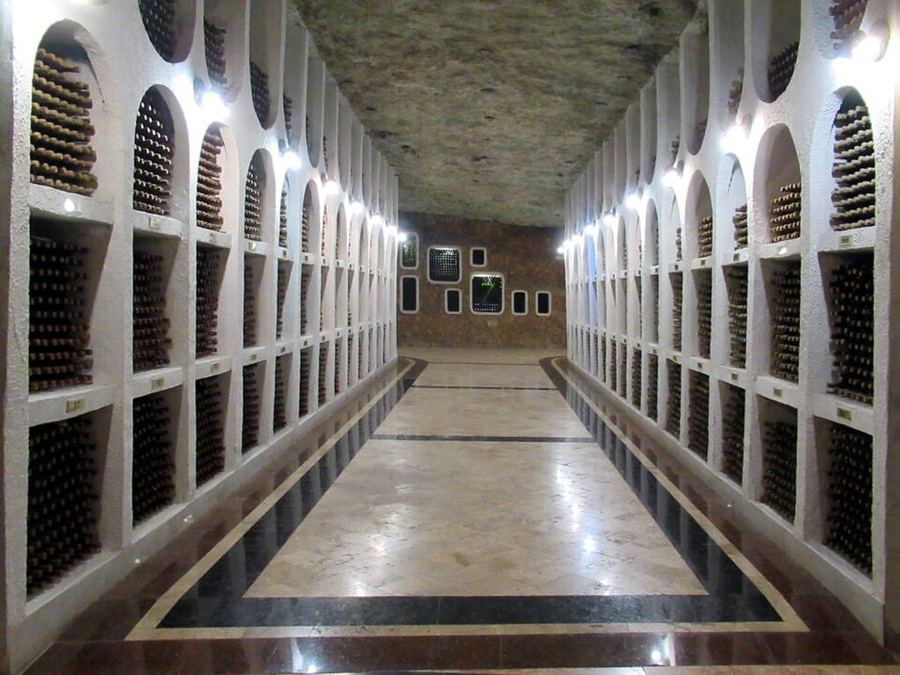
Did You Know The wine cellars at Milestii Mici occupy roughly 200 kilometres of galleries left behind by limestone quarrying, and hold one of the largest bottled wine collections anywhere in the world. — Encyclopaedia Britannica

Moldova is a landlocked parliamentary republic of about 3.6 million people between Romania and Ukraine, occupying the eastern half of the historic principality of Moldavia and taking its shape from two rivers, the Prut and the Dniester. Independent since 27 August 1991, it is a country defined as much by what it has lost as by what it holds: a breakaway administration on the left bank of the Dniester that it has not governed since a short war in 1992, and sustained emigration that has left a median age of 40.4 years and villages running on remittances. Its language is Romanian, spoken by 80.2% of the population, and about 90% of Moldovans identify as Orthodox Christian, but the country also contains Turkic-speaking Gagauz Christians with their own autonomous region, Bulgarian and Ukrainian districts, and a Russian-speaking urban layer. Its economy is the smallest in Europe by output per head at roughly $16,500 on a purchasing-power basis, built on agriculture, garments, insulated wire and a fast-growing software sector, with three-quarters of the land under some of the richest black soil on the continent. Moldova became a European Union candidate in June 2022 and opened accession negotiations in June 2024.

CIA World FactbookWorld BankReuters
Population
3,578,930
Capital
Chisinau in Romanian (Kishinev in Russian)
Currency
None MDL
Time zones
Largest city
Chișinău
Human Geography Themes
Loading national figures…
Largest Cities
Chișinău450,581
Tiraspol130,489
Bender83,205
Bălți77,275
Rybnitsa68,169
In Perspective

Chișinău's urban core is home to about 450,581 people.

Among the world's megacities, though, it's one of many — the giants of Asia and Latin America run larger still:

Chișinău450,581
Jakarta40,545,126
Dhaka37,307,160
Tokyo33,244,670
Shanghai30,678,616
Cairo25,230,325
The Country & Its People

History

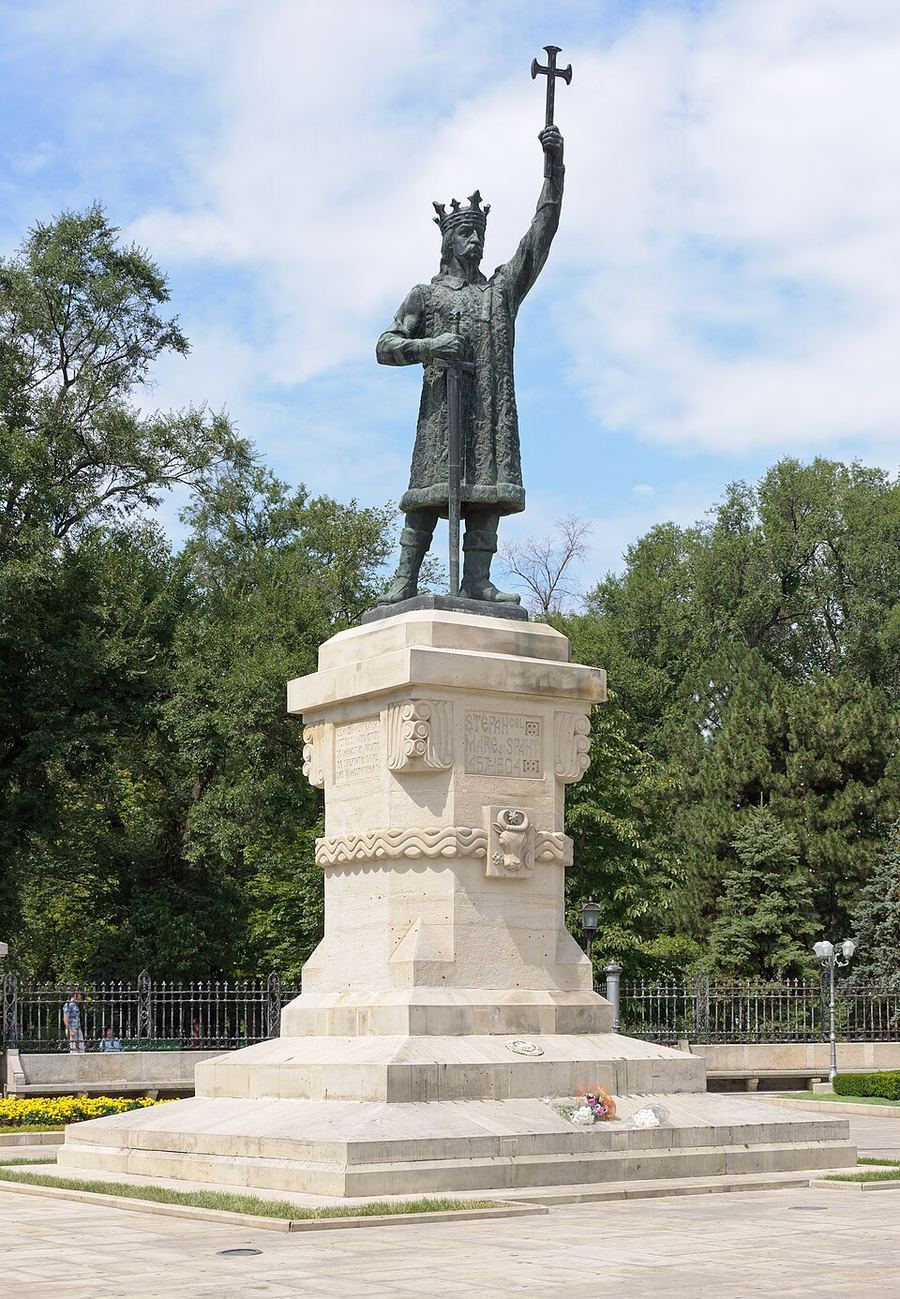
The Principality of Moldavia emerged in the mid-fourteenth century between the Carpathians and the Dniester, and reached its height under Stephen the Great, who ruled from 1457 to 1504, held off Ottoman and Hungarian armies, and endowed a chain of monasteries that still anchor the national memory. Moldavia became an Ottoman tributary in the sixteenth century, and in 1812 the Treaty of Bucharest transferred its eastern half, Bessarabia, to the Russian Empire — the partition from which modern Moldova descends. Bessarabia declared union with Romania in 1918. The Molotov-Ribbentrop Pact of 1939 assigned it to the Soviet sphere, and in 1940 the USSR annexed it and created the Moldavian Soviet Socialist Republic, joining Bessarabian districts to a strip of territory on the left bank of the Dniester. Soviet rule brought deportations, famine in 1946-47, Russification of the language into a Cyrillic script, and heavy industrialisation of the left bank. A language movement in 1989 restored the Latin alphabet, and independence followed on 27 August 1991 as the Soviet Union dissolved. The first post-Soviet decade was defined by the 1992 war on the Dniester and by economic collapse; the second by migration westward. Moldova received European Union candidate status in June 2022 and opened accession negotiations in June 2024.
Culture

Moldovan culture is Romanian in language and Orthodox in rhythm, layered over a century and a half of Russian and Soviet administration. About 90% of the population identifies as Orthodox Christian, and the calendar still turns on Easter, Christmas and the parish hram, the patron-saint day when a village opens its houses to anyone who arrives. Hospitality is close to obligatory: the masa, a long seated table of food, wine and toasts, is the basic social form, and refusing a host's wine is read as a slight rather than a preference. Rural life remains close at hand even for city households — most families keep a village connection, a plot, or relatives who send produce to Chisinau. The country is also shaped by absence. Sustained emigration to Romania, Italy and Russia has left villages with a visible generation gap, and remittances have rebuilt houses that stand empty most of the year. Two folk practices Moldova shares with Romania are inscribed on UNESCO's Representative List of the Intangible Cultural Heritage of Humanity: the men's Christmas carolling groups known as colindat, inscribed in 2013, and traditional wall-carpet craftsmanship, inscribed in 2016.

Points Of Pride

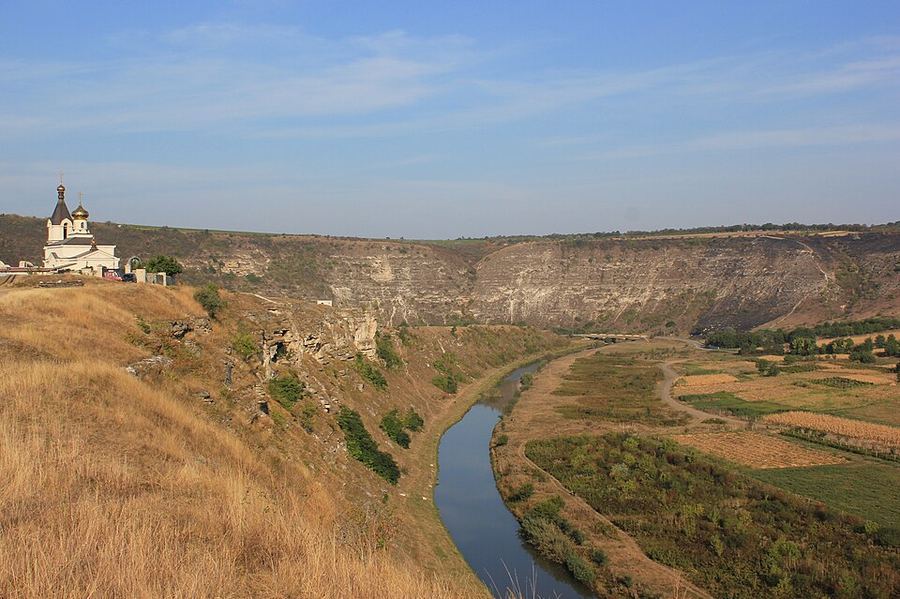
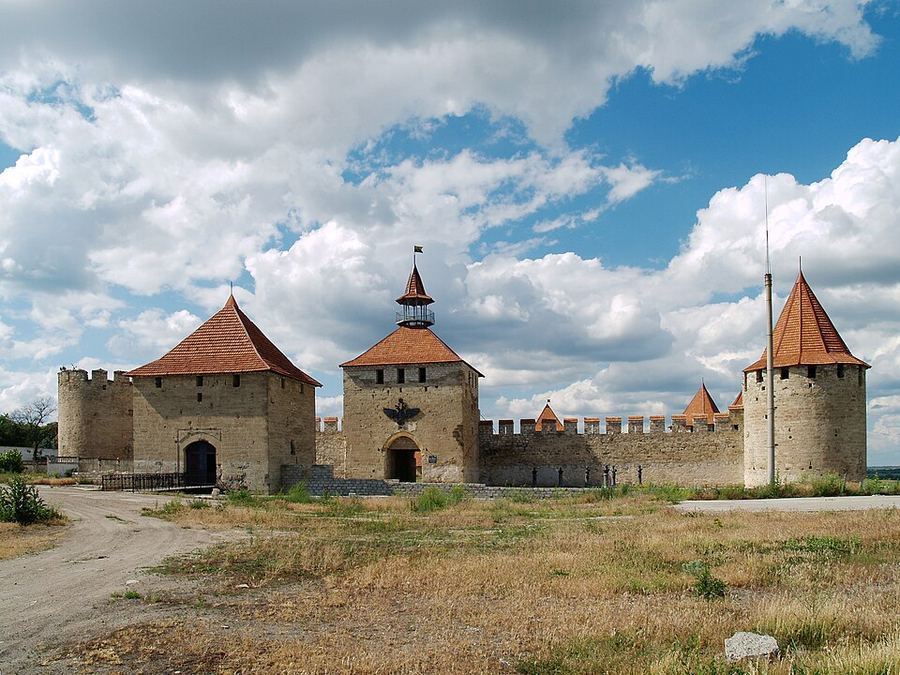
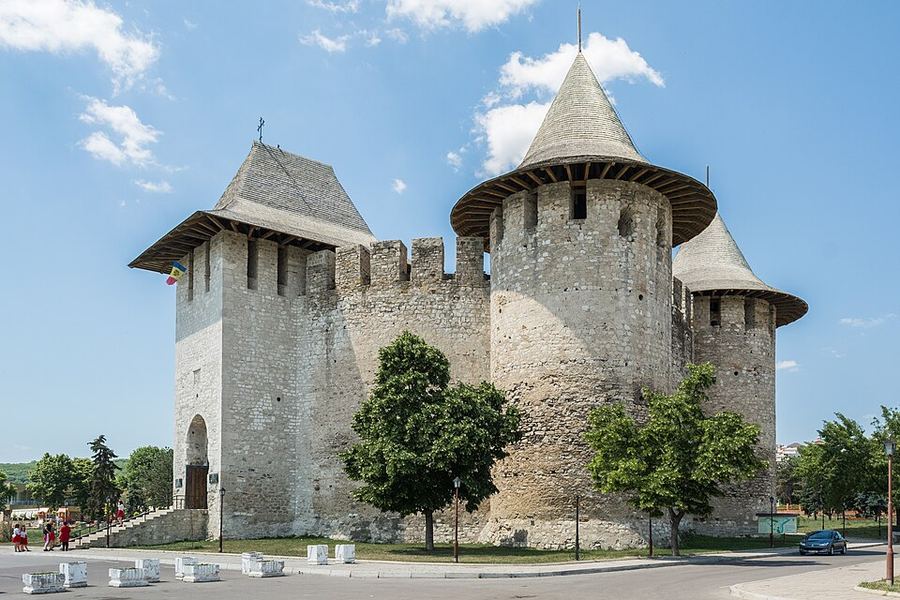
Moldova's proudest possessions are underground. The cellars at Milestii Mici, cut into limestone galleries that run for roughly 200 kilometres, hold one of the largest bottled wine collections in the world; the rival cellar at Cricova is large enough that visitors are driven through its streets, which carry the names of the wines stored along them. Above ground, Orheiul Vechi is the country's signature landscape — a limestone meander of the Raut river holding a cave monastery cut into the cliff, still occupied, above the village of Butuceni. Soroca Fortress, raised in stone in the early sixteenth century on Stephen the Great's foundation, is the best-preserved of Moldavia's Dniester strongholds and commands the river crossing to Ukraine. Moldova also holds a share of the Struve Geodetic Arc, the nineteenth-century survey chain inscribed by UNESCO in 2005 across ten countries from Norway to the Black Sea. The National Wine Day festival, held in Chisinau each October, is the closest thing the country has to a secular national holiday, and the indigenous grapes it celebrates — Feteasca Neagra, Feteasca Alba, Rara Neagra and Viorica — are grown almost nowhere else.

Cultural Fusion

Moldova is a small country with an unusually complicated interior. The 2014 census recorded a population that is 75.1% Moldovan and 7% Romanian — a distinction about identity rather than speech, since both groups speak the same language, which the constitution and courts now call Romanian. Ukrainians make up 6.6% and Russians 4.1%, concentrated in Chisinau, Balti and the left bank, where Russian still works as an everyday lingua franca and is spoken by 9.7% of the population as a first language. The most distinctive minority is the Gagauz, 4.6% of the country: Turkic-speaking Orthodox Christians who settled the southern Bugeac steppe from the Balkans in the early nineteenth century, and who since 1994 have governed the autonomous territorial unit of Gagauzia from Comrat. Bulgarians, 1.9%, cluster around Taraclia in the same southern belt. Soroca in the north is the seat of a prominent Roma community whose hilltop mansions, built by returning migrants in extravagant borrowed styles, are among the most photographed buildings in the country. The result is a state where a village school may teach in Romanian, a market three streets away trades in Russian, and a regional assembly debates in Gagauz.

Music & Dance

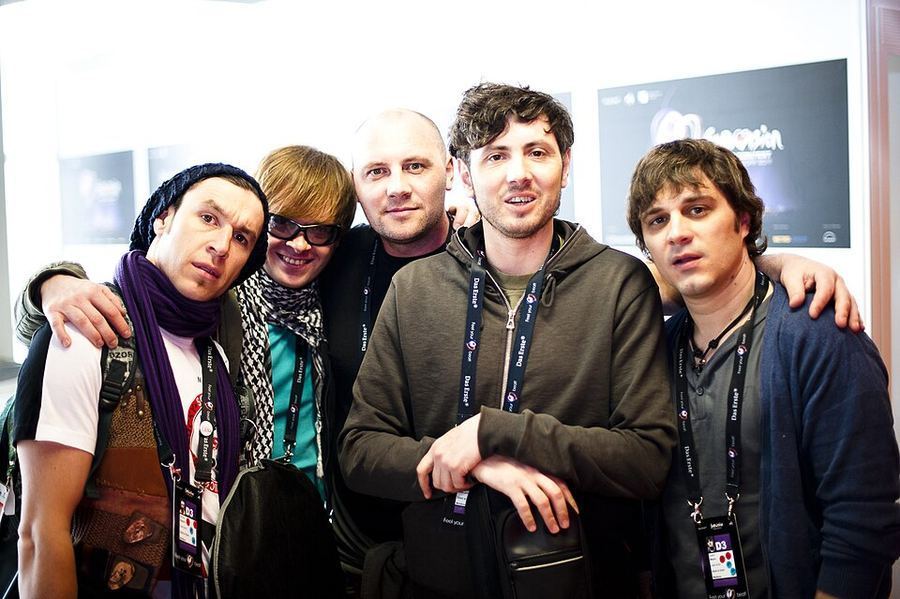
Moldovan folk music belongs to the wider Romanian tradition and is carried by lautari, hereditary professional musicians who play weddings, funerals and village feasts. The core ensemble is a taraf: violin leading, with the tambal, a hammered dulcimer, the nai panpipes, the cimpoi bagpipe, the wooden fluier and, since the nineteenth century, accordion and double bass. The repertoire divides between the doina, a slow, unmeasured, ornamented lament sung or played rubato, and the fast circle and line dances — hora, sarba and batuta — that close every celebration. The Joc National Academic Folk Dance Ensemble, founded in 1945, professionalised these dances into a stage form and remains the country's best-known cultural export. Chisinau supports a National Opera and Ballet Theatre named for Maria Biesu, the soprano who made the company internationally visible in the 1960s and 1970s. In popular music Moldova has punched above its weight at the Eurovision Song Contest, where the folk-punk band Zdob si Zdub represented the country in 2005 and again in 2022, and where SunStroke Project took third place in 2017, the country's best result — the same group whose saxophone hook from the 2010 contest became a durable internet meme.

Cuisine & Misattributed Foods

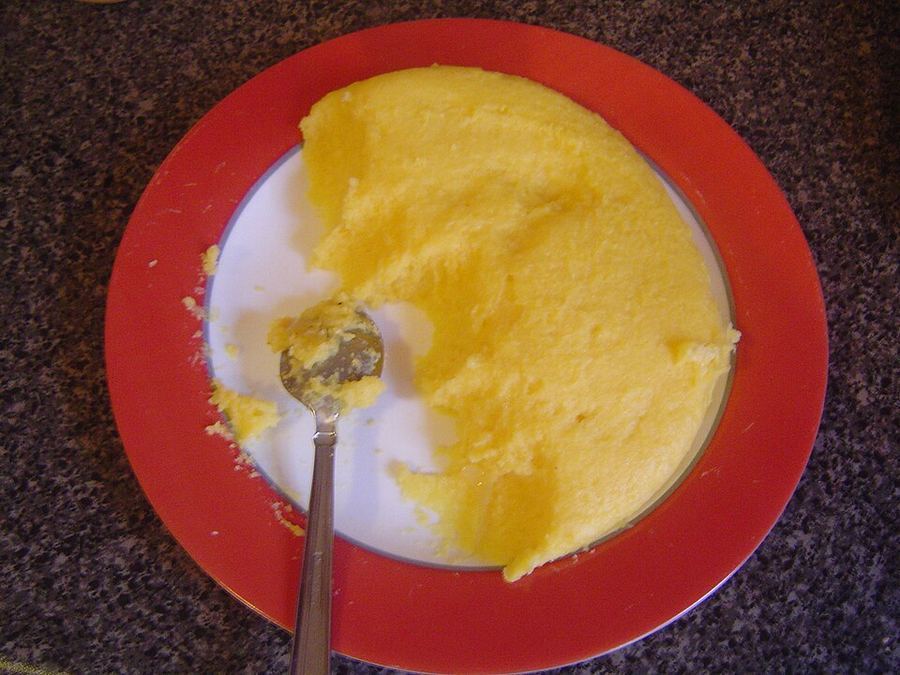
Moldovan cooking is peasant food from very good soil. The staple is mamaliga, a firm cornmeal porridge turned out and cut with a thread, eaten with sheep's cheese, sour cream and often a fried fish or a pork stew; before maize arrived from the Americas it was made from millet, and it still functions as bread does elsewhere. Plachinte are flat filled pastries — with brinza cheese, potato, cabbage, pumpkin or sour cherries — sold at every roadside and made in every household. Zeama is the national soup: chicken and hand-pulled noodles soured with bors, a fermented wheat-bran liquid, and finished with lovage. Sarmale, cabbage or vine leaves rolled around minced pork and rice, are the festival dish, and mititei, skinless grilled minced-meat rolls, the summer one. Preserving is a serious domestic craft, and cellars hold pickled tomatoes, peppers, sauerkraut and compotes. Wine is not an accompaniment but part of the meal, usually house wine from a family's own vines; the country's brandy has its own protected designation, divin. Walnuts, sunflower oil, quince and grapes appear constantly, and seed oils are among Moldova's leading exports.

National Dress

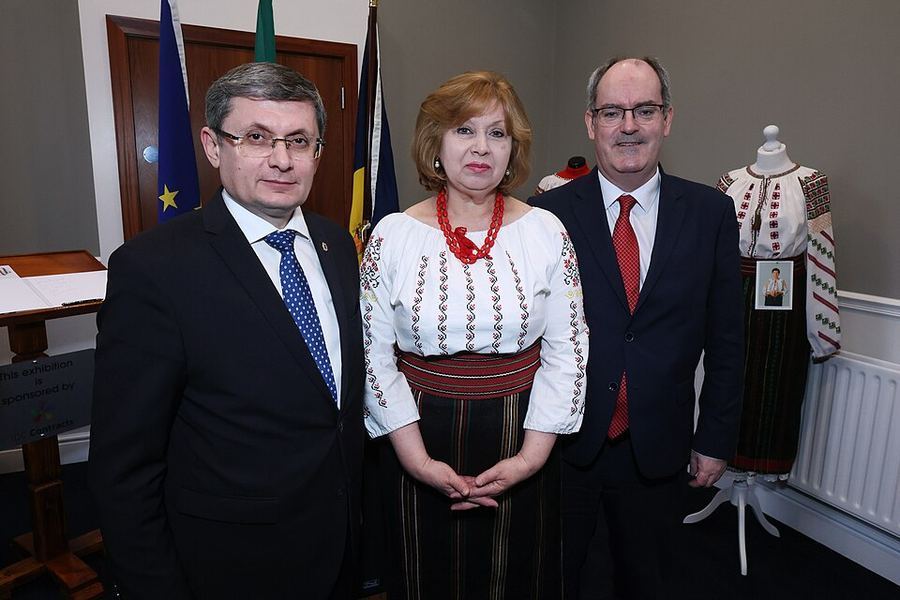
The centrepiece of Moldovan traditional dress is the ie, a white linen or hemp blouse embroidered densely across the shoulder panel, the altita, in geometric and floral motifs whose colours and arrangement once identified a woman's district and marital status. In 2022 UNESCO inscribed the art of this shoulder-embroidered blouse on its Representative List of the Intangible Cultural Heritage of Humanity as a shared element of cultural identity in Romania and the Republic of Moldova. Women wear it with the catrinta, a wrapped woven skirt, a woven belt, and a headscarf; unmarried women historically went bareheaded or wore a floral wreath. Men wear a long white shirt worn outside the trousers, gathered by a wide woven or leather belt, with a conical black or grey lambskin cap, the caciula, in winter and a straw hat in summer. Both wear the opinci, soft leather moccasins with pointed toes, and heavy homespun wool coats for cold weather. Everyday use ended in the twentieth century, but the ie has had a strong revival as national dress for weddings, folk ensembles, Independence Day and diaspora gatherings, and contemporary designers in Chisinau now build collections around its embroidery.

Sports & Inspiring Athletes

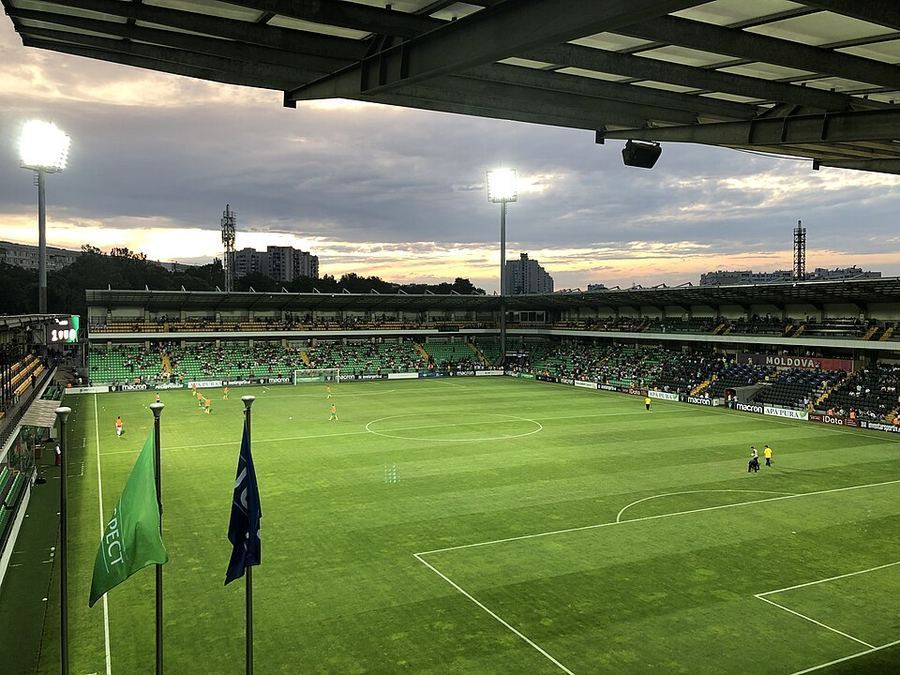
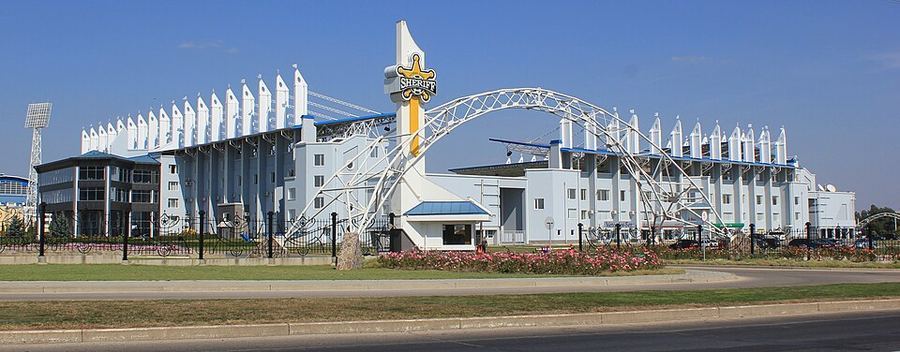
Moldova's competitive strengths are the individual disciplines the Soviet system trained for: wrestling in both Greco-Roman and freestyle, judo, boxing, weightlifting, shooting, archery and canoe sprint. These, rather than team sports, have produced the country's Olympic medals since it first competed independently at Atlanta in 1996, having been recognised by the International Olympic Committee in 1993. Football is the mass spectator sport. The Moldovan National Division is dominated by Sheriff Tiraspol, based in the breakaway left bank but playing in the national league, and the Zimbru Stadium in Chisinau is the country's main football ground. The national team has never qualified for a World Cup or European Championship. Rugby has a real following by regional standards, and the national fifteen has been a consistent presence in the second tier of European competition. Trinta, a jacketed folk wrestling in which throws are scored from a standing grip, survives as the traditional village sport and is still contested at festivals. Chess is widely played, and the country supports a strong junior tradition in it as in the combat sports.
IOCOlympediaFIFA

Notable Educational Programs

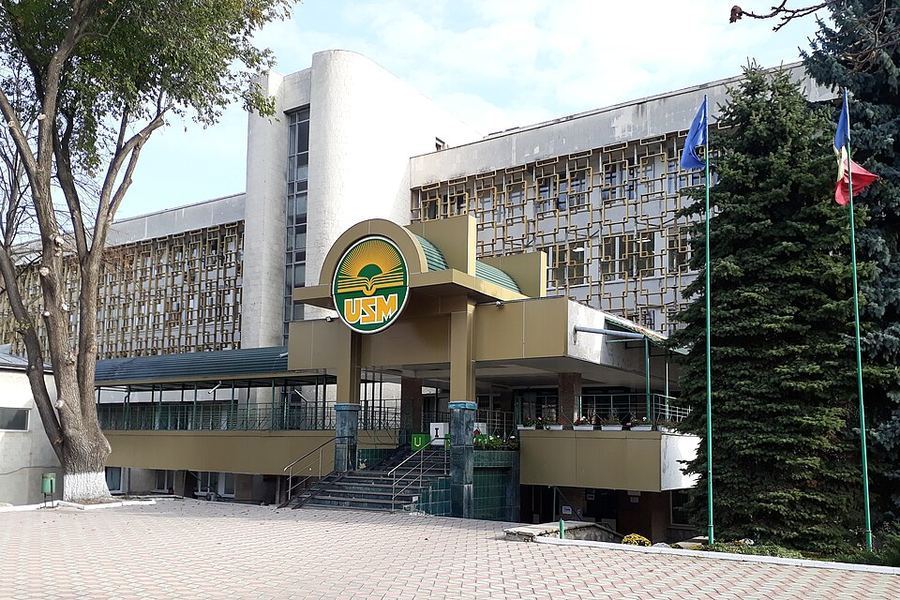
Moldova runs a broadly Soviet-descended system reorganised on European lines: compulsory schooling from age six through the ninth grade, then a split between the academic lyceum leading to the baccalaureate and vocational colleges. Instruction is in Romanian, with a parallel network of Russian-language schools and provision for teaching in Gagauz, Ukrainian and Bulgarian in the districts where those communities live. Adult literacy is close to universal. Moldova joined the Bologna Process in 2005 and restructured its degrees into the three-cycle bachelor, master and doctoral sequence, which has made its qualifications portable across the European Higher Education Area — an advantage for students and a driver of emigration in equal measure. The principal institutions are all in Chisinau: the State University of Moldova, founded in 1946; the Technical University of Moldova; the Academy of Economic Studies; and the Nicolae Testemitanu State University of Medicine and Pharmacy, which draws a large international student body, particularly from India and Israel, on English-language medical programmes. Comrat State University serves Gagauzia. The system's central problems are demographic — falling enrolments as families emigrate — and the retention of graduates.

Wars & Conflicts

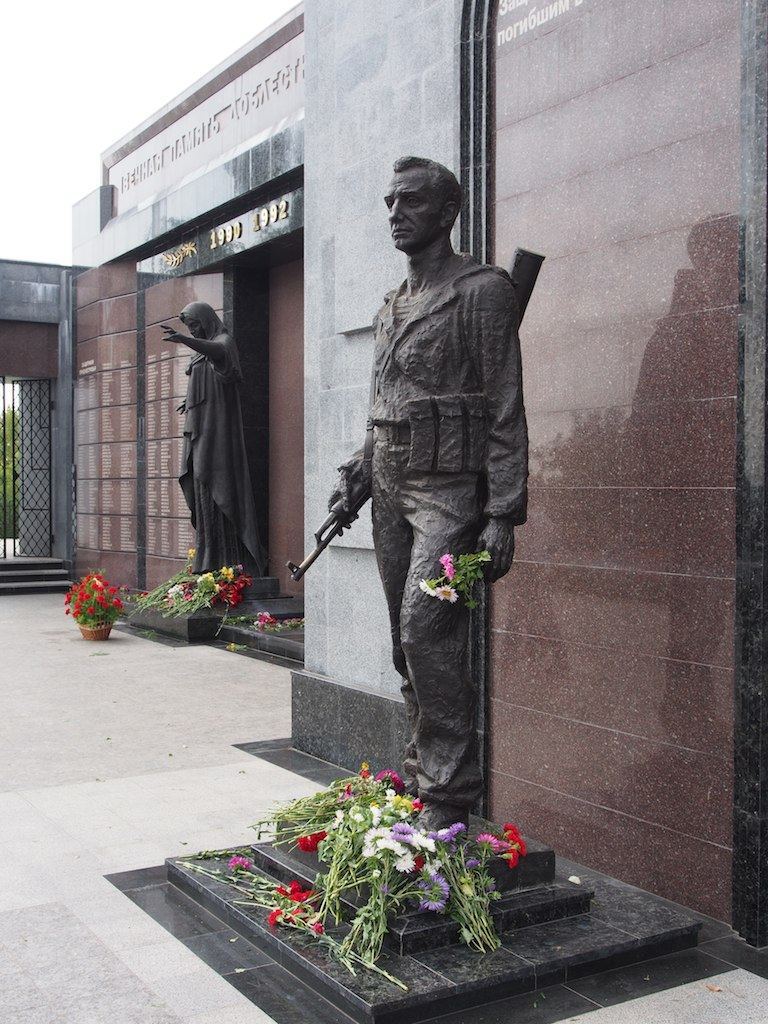
Moldova's defining conflict is the war on the Dniester. After the Moldavian SSR's left-bank districts declared a separate republic in 1990, fighting escalated in March 1992 around Dubasari, Cocieri and the city of Bender, drawing in the Soviet 14th Army stationed on the left bank under Russian command. A ceasefire signed on 21 July 1992 created a demilitarised security zone policed by a Joint Control Commission of Moldovan, Transnistrian and Russian contingents. Estimates of the dead run to around a thousand. The line has held since, making Transnistria one of Europe's longest frozen conflicts; negotiations under the OSCE-chaired 5+2 format have produced practical agreements on transport and schooling but no settlement. A parallel Gagauz secession movement in the same period was resolved without war, through the 1994 law granting Gagauzia autonomous status. Russia's full-scale invasion of Ukraine in 2022 made Moldova a front-line neighbour: missile debris has fallen on Moldovan territory, gas supplies to the country were cut, and Moldova was hosting 136,845 refugees as of 2024 estimates, one of the highest per-capita burdens in Europe.
Current as of 2026-08-07

Land & Border Disputes

Moldova has no contested international boundary, but it does not control all its territory. Transnistria — the strip on the left bank of the Dniester plus the right-bank city of Bender — has functioned as a separate administration since 1992 with its own currency, security forces and Russian troops on the ground, while no United Nations member state, including Russia, recognises it as independent. Every state that has taken a position treats it as part of the Republic of Moldova. In Ilascu and Others v. Moldova and Russia, decided in 2004, the European Court of Human Rights found that the territory remained under Russia's effective authority and held Russia responsible for violations there, a ruling reaffirmed in later Transnistrian cases. Moldova has repeatedly asked at the United Nations General Assembly for the withdrawal of Russian forces and the removal of the ammunition depot at Cobasna. Relations with Gagauzia are a domestic autonomy dispute rather than a territorial one, periodically strained over the region's foreign-policy orientation. The land borders with Romania along the Prut and with Ukraine are settled and demarcated, including the 1999 exchange that gave Moldova its Danube frontage at Giurgiulesti.
UNCIA World FactbookReutersAmnesty International
Land, Life & Legacy

Land & Climate

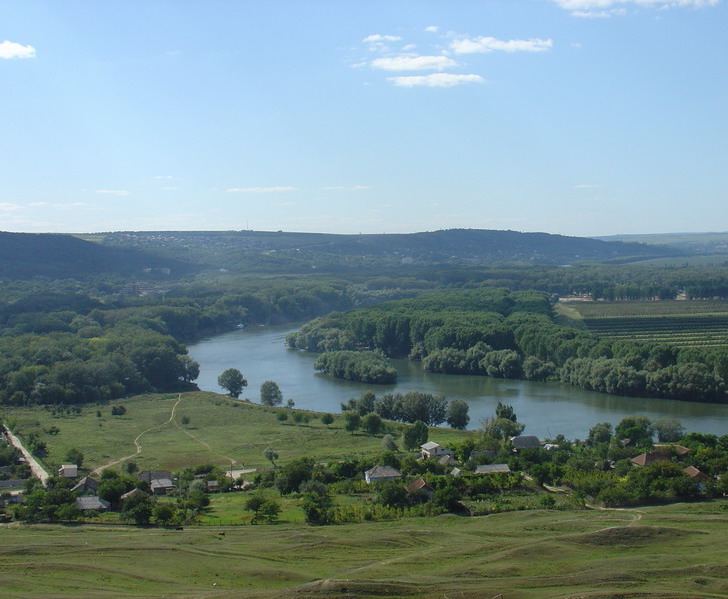
Moldova is a landlocked country of about 33,800 square kilometres wedged between Romania to the west and Ukraine on every other side, roughly the size of Belgium. Its shape is set by two rivers: the Prut, which forms the entire western border with Romania, and the Dniester, called the Nistru locally, which runs the length of the country from north-west to south-east. Between them lies gently rolling upland — the wooded central hills known as the Codru, where the highest point, Balanesti Hill, reaches only 430 metres. The north is open plateau farmland; the south flattens into the Bugeac, a former steppe now under vines, sunflowers and orchards. Moldova's defining physical asset is its soil: chernozem, the deep black earth of the Eurasian steppe belt, covers roughly three-quarters of the territory and makes agriculture central to the economy despite the country's size. The climate is moderate continental, with warm summers, cold but not severe winters, and a long autumn that suits viticulture; drought is the main recurring hazard. The only maritime access is a 430-metre frontage on the Danube at Giurgiulesti, secured in a land exchange with Ukraine, where Moldova built its single port.

Entertainment

Weekends in Moldova run on two tracks: the city park and the village. In Chisinau, Stefan cel Mare Central Park and the lakeside Valea Morilor draw walkers, chess players and wedding parties, and the Botanical Garden and Dendrarium serve as the city's green rooms. The strong tradition of the dacha or country plot means many urban families spend Saturdays outside the city tending vines and fruit trees, and the autumn grape harvest is a social season as much as an agricultural one. Wine tourism is the country's principal leisure industry: the underground cellar routes at Cricova and Milestii Mici, the estate wineries at Purcari and Chateau Vartely, and National Wine Day in Chisinau each October. Orheiul Vechi is the standard day trip, combining the cave monastery, the rural guesthouses of Butuceni, and walking along the Raut gorge. Fishing and picnicking along the Dniester, and swimming at the Costesti and Dubasari reservoirs, fill the summer. Banya and sauna culture persists from the Soviet period. Football and, in winter, indoor sports occupy younger audiences, but the enduring national leisure form remains the long table with family, wine and a great many toasts.

Art & Museums

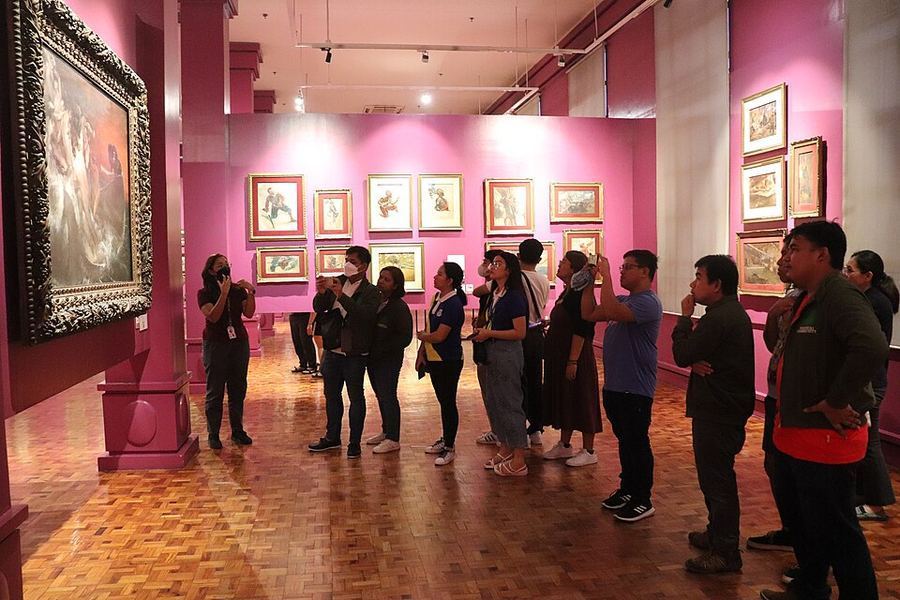
Moldova's older visual tradition is ecclesiastical: post-Byzantine icon painting and church fresco cycles in the Moldavian manner, preserved at monasteries such as Capriana and Curchi and in the cave churches of Orheiul Vechi and Tipova. Secular painting arrived in the nineteenth century through Russian academic training, and the twentieth century produced the school that still defines Moldovan art. Mihail Grecu and Valentina Rusu-Ciobanu, working through the Soviet decades, pushed against socialist realism toward flattened form, folk motif and strong colour; Igor Vieru drew on village life and illustration; Aurel David's stylised portrait of the poet Mihai Eminescu as a tree became one of the most reproduced images in the country. The National Art Museum of Moldova in Chisinau, housed in three historic buildings on Strada 31 August 1989, holds the principal collection of icons, folk textiles and this modern school. Craft remains genuinely alive rather than revived: hand-knotted wall carpets, whose craftsmanship UNESCO inscribed in 2016, along with Hutsul-influenced woodcarving, pottery and the embroidery of the ie. Contemporary art is concentrated in a small Chisinau gallery scene and in artists working between Moldova, Romania and western Europe.

Notable People

Stephen the Great, who ruled Moldavia from 1457 to 1504, is the founding figure of national memory; his monument stands at the head of Chisinau's main boulevard, which also carries his name. The poet and priest Alexei Mateevici, who died in 1917 at twenty-nine, wrote 'Limba noastra' — 'Our Language' — which became the national anthem in 1994, making Moldova one of the few states whose anthem is a hymn to its language rather than its army or ruler. Maria Biesu, the soprano who won the Tokyo international competition in 1967 and became a fixture of the Soviet opera stage, remains the country's most celebrated performer, and the Chisinau opera house carries her name. The composer Eugen Doga, born in 1937, wrote the waltz for the 1978 film 'A Hunting Accident' that is his best-known work internationally. The geographer and biologist Lev Berg, born in Bendery in 1876, shaped Russian physical geography and limnology. In politics, Maia Sandu, a former World Bank economist, became the country's first woman president in 2020 and won a second term in 2024 on a platform of European Union accession.

Inventions & Breakthroughs

Moldova is not a country with a long list of patented firsts, and it is more honest to describe its technical achievement as adaptive than inventive. Its most distinctive engineering is the conversion of worked-out limestone mines into wine cities: the galleries at Cricova and Milestii Mici, quarried for the building stone of Chisinau, were reused from the middle of the twentieth century as cellars whose constant temperature and humidity need no mechanical control, creating storage on a scale that would be uneconomic to build from scratch. Moldovan viticulture developed and maintains its own protected brandy category, divin, distinct from the French designation, and the Soviet-era research institutes in Chisinau did substantial work on vine breeding and disease resistance, producing crossings such as Viorica that are now grown as commercial varieties. In medicine, Nicolae Testemitanu, whose name the state medical university carries, built a model of rural health-service organisation in the 1960s that was applied across the republic. Contemporary technical output is concentrated in software rather than hardware, exported through the Moldova IT Park established in 2018 rather than through domestic manufacturing.

Science & Technology

Moldova's research base is small and concentrated in Chisinau, organised around the Academy of Sciences of Moldova, founded in 1961, and the universities, with genuine depth in the fields the country's economy actually needs: soil science, viticulture and oenology, plant breeding, and food technology. Physics and materials work at the State University and the Technical University has an established record in semiconductors and thin films. Research spending is low as a share of national income and the sector has lost people steadily to emigration, which is the binding constraint on almost everything the country attempts scientifically. The clearest recent success is information technology. The Moldova IT Park, a virtual regime created in 2018 that consolidates a resident company's obligations into a single tax on turnover, has grown into a substantial software-export sector serving European and North American clients, and it is now one of the country's fastest-growing sources of foreign earnings — a striking contrast with a merchandise export list still led by insulated wire, garments, seed oils and wheat. Broadband and mobile coverage are good by regional standards, and Chisinau's fibre network reaches most of the city.
On The World Stage

Champions & Defining Moments

For a country of 3.6 million, Moldova's most visible moment in world sport came on 28 September 2021, when Sheriff Tiraspol — playing its first ever UEFA Champions League group stage — beat Real Madrid 2-1 at the Santiago Bernabeu, one of the most lopsided results in the competition's history. The club has been the country's standing representative in European competition for two decades and built the Sheriff Sports Complex in Tiraspol, easily the largest sports facility in the country. At the Olympic Games Moldova competes as a small delegation, with medal chances concentrated in wrestling, shooting, archery and canoe sprint; the country has yet to win an Olympic gold. Moldova joined FIFA and UEFA in 1994 and plays full qualifying campaigns, where results against larger neighbours are followed closely at home. A substantial number of Moldovan-born athletes compete for other countries, particularly Romania and Russia, a consequence of the same emigration that shapes the rest of national life. The country also hosts stages of international cycling and athletics events on a modest scale, and its wrestlers are regular finalists at European championships.

Economy, Trade & Government

Currency & GDP

Moldovan Leu — MDL (None)

GDP (PPP): $39.342 billion (2024 est.)

Per capita: $16,500 (2024 est.)

Exports

$5.717 billion (2024 est.)

insulated wire, garments, refined petroleum, seed oils, wheat (2023)

Partners: Romania 31%, Ukraine 13%, Italy 6%, Germany 6%, Czechia 4% (2023)

Imports

$10.418 billion (2024 est.)

refined petroleum, natural gas, cars, packaged medicine, plastic products (2023)

Partners: Romania 16%, Ukraine 13%, China 11%, Turkey 8%, Germany 7% (2023)

Government

Type: parliamentary republic

Independence: 27 August 1991 (from the Soviet Union)

Terrain → Where People Live

How mountains, coasts, and rivers shape settlement (LandScan).

Coming — data

Migration & Ethnic Settlement

Where groups settled and how people move (GeoEPR + UNHCR).

Coming — data

Universities

Notable institutions, mappable as points.

Coming — data
Economy & government facts: CIA World Factbook (public domain), via OpenFactBook / factbook.json.
Every fact and narrative claim will carry a visible source citation. Data-driven sections light up automatically wherever HERA has coverage.