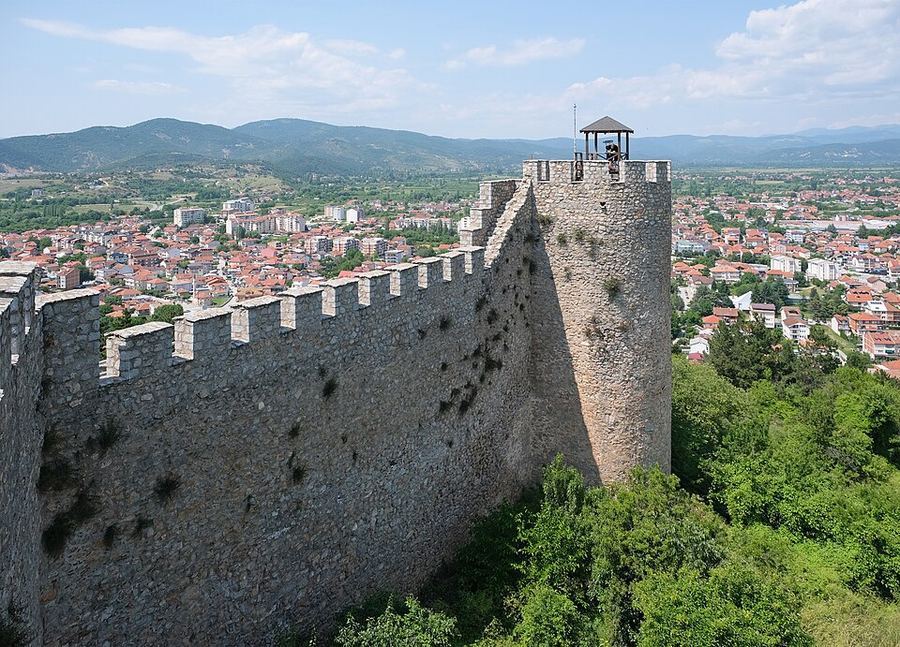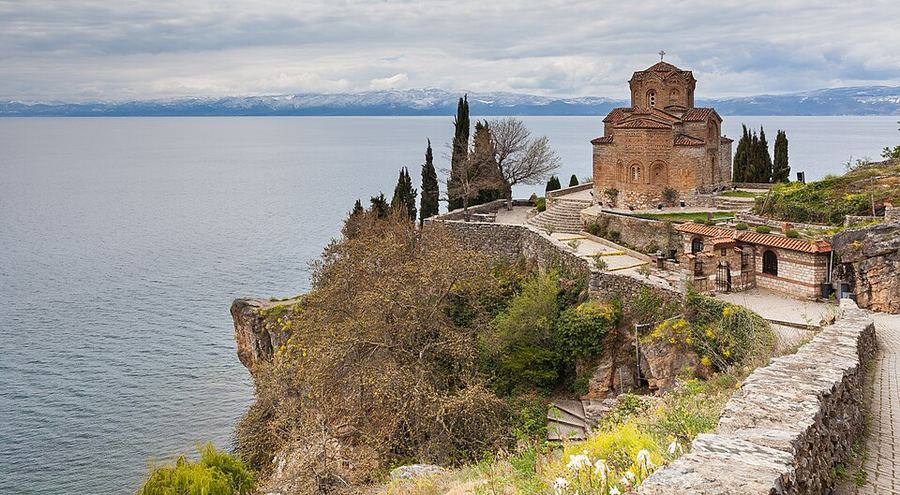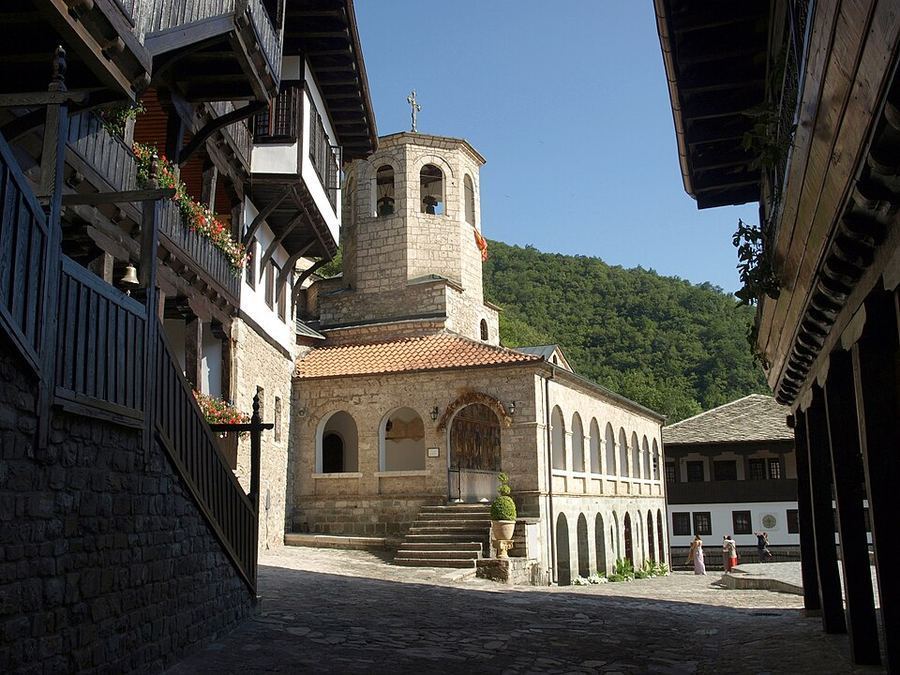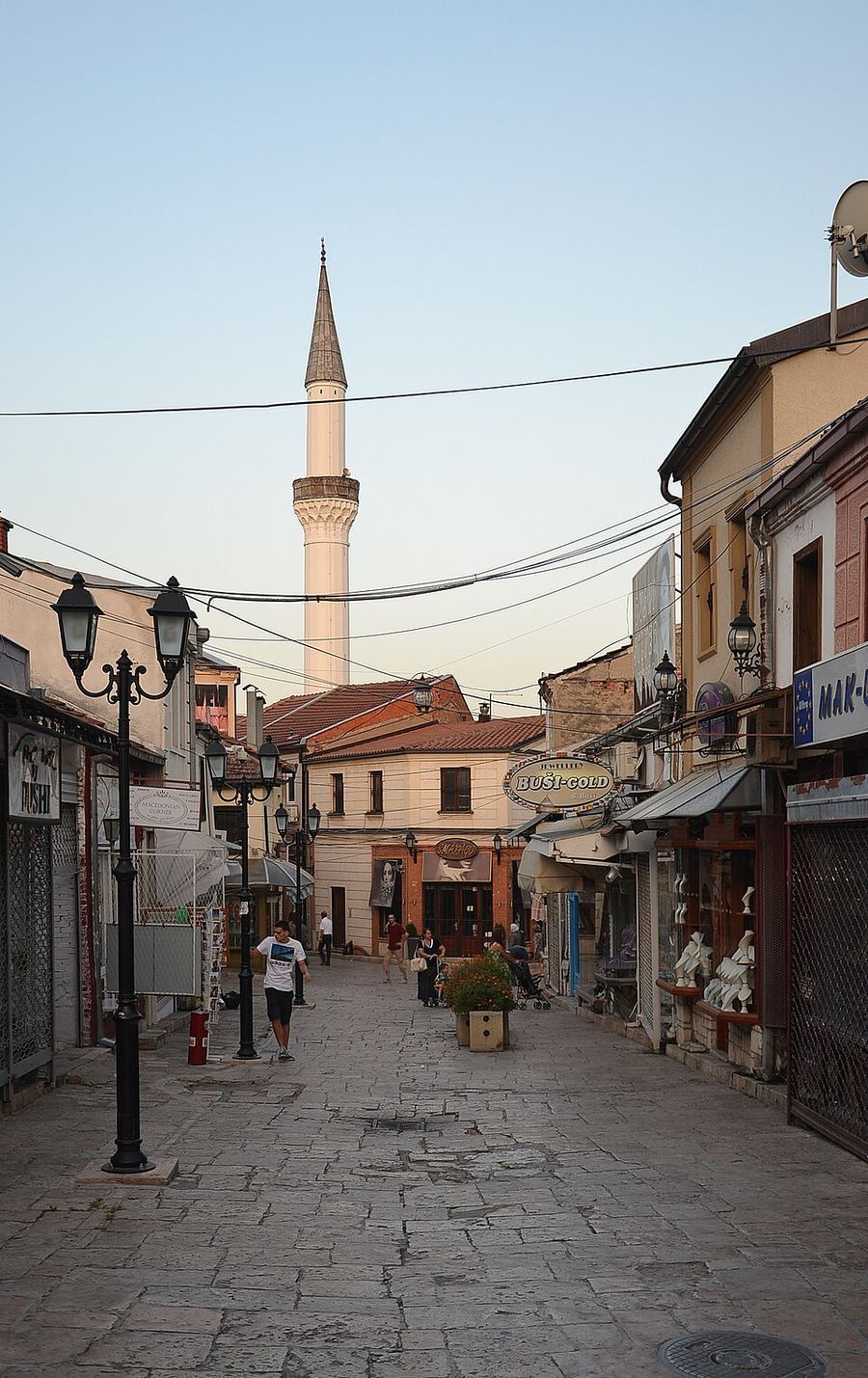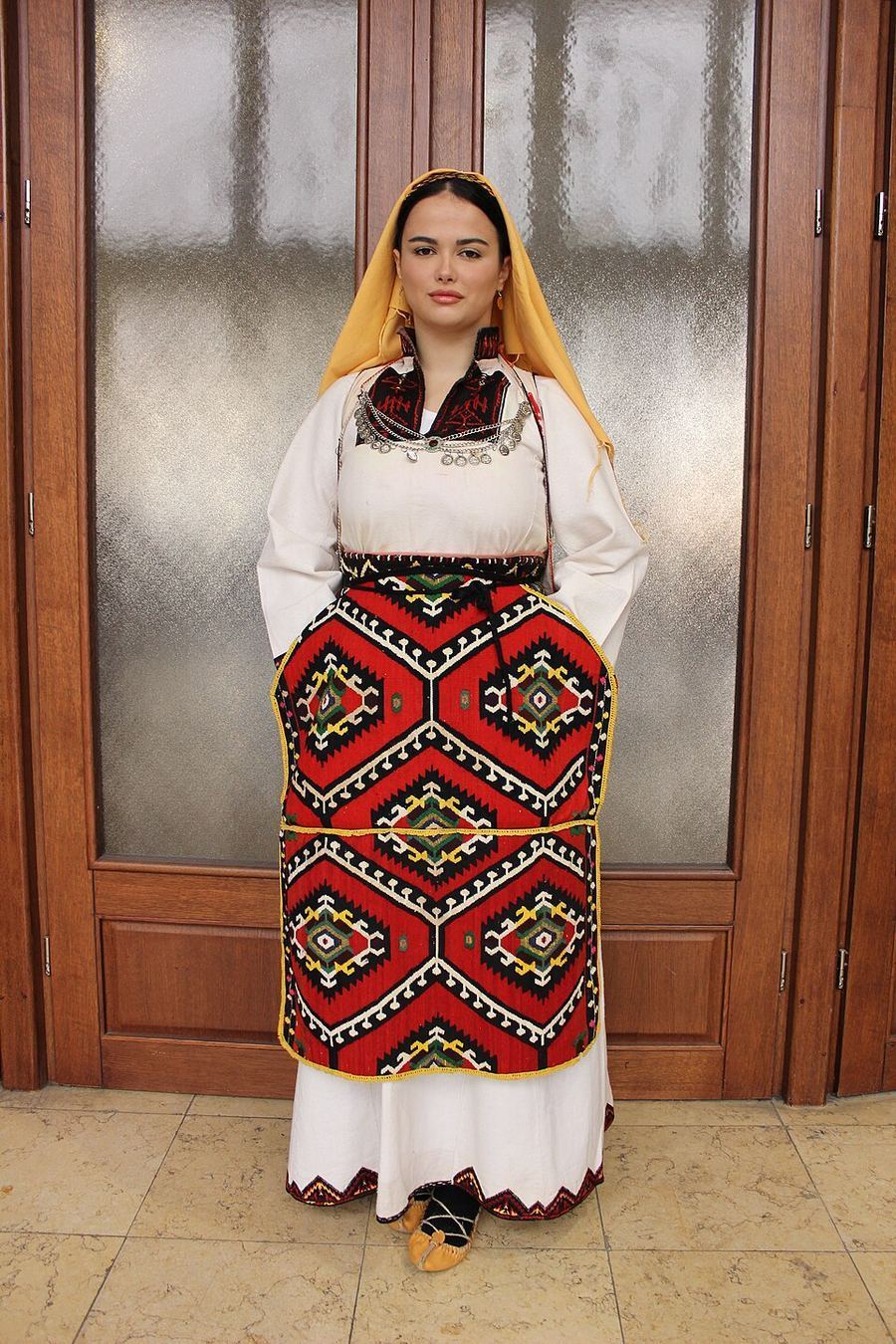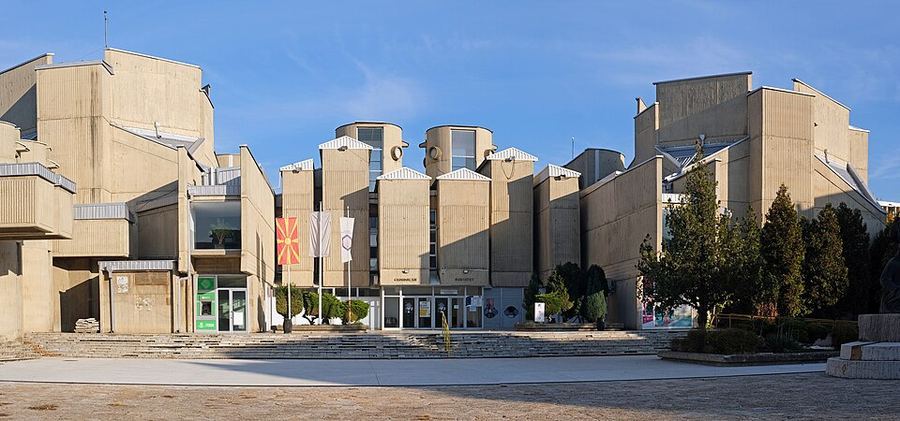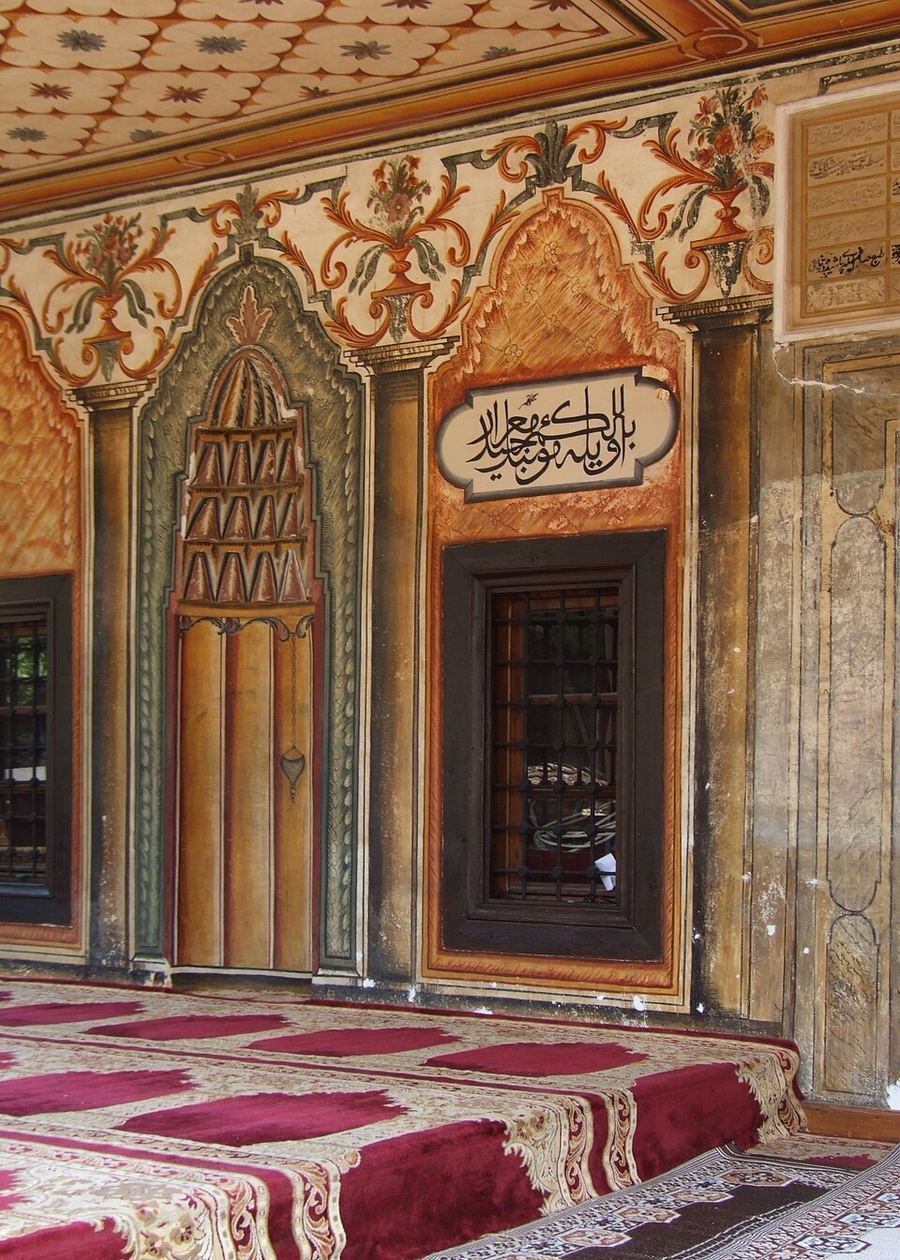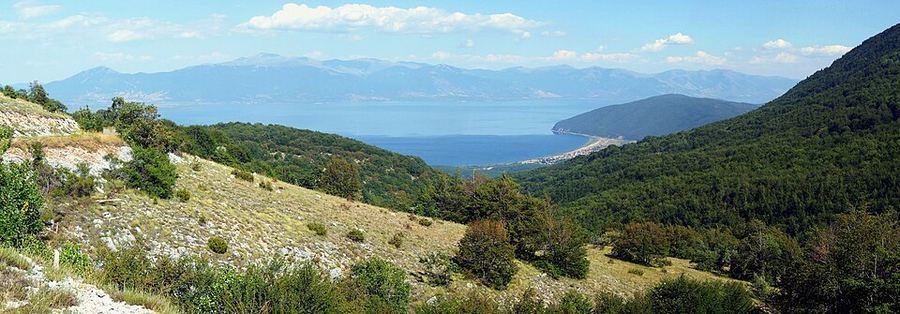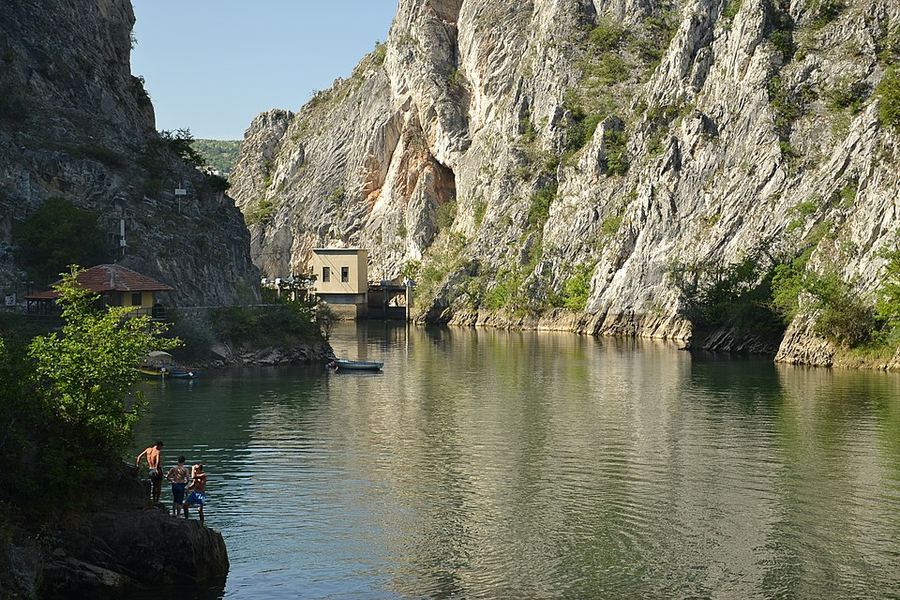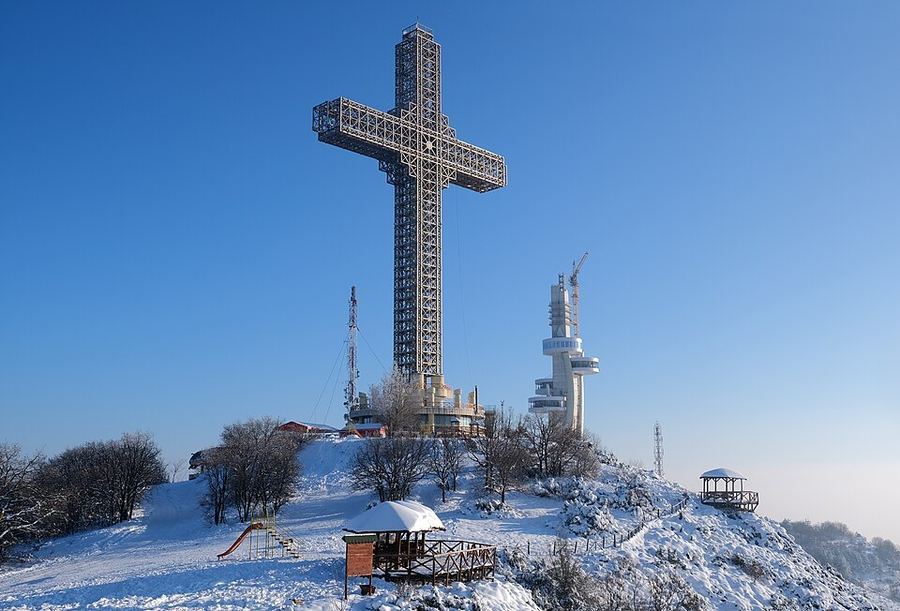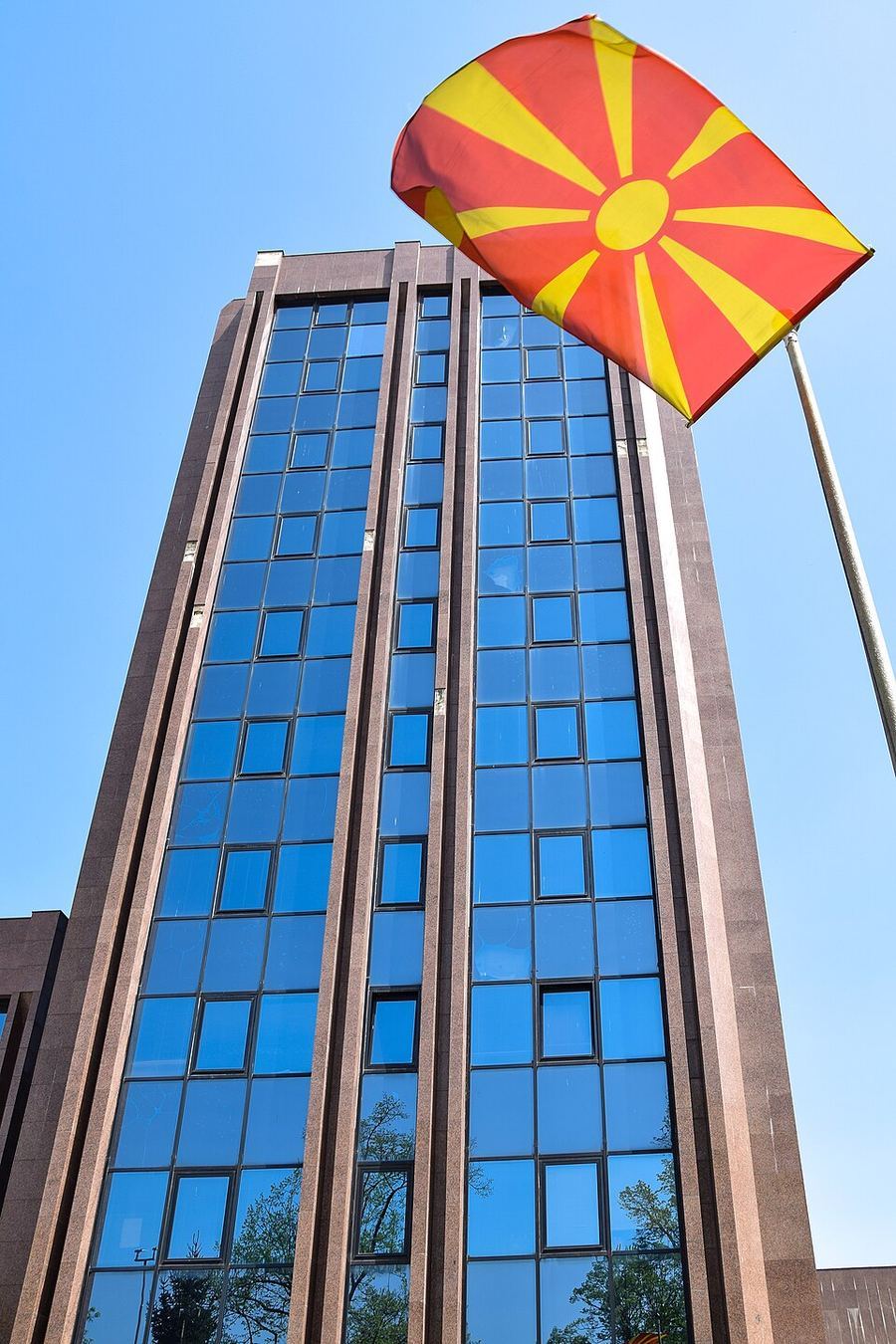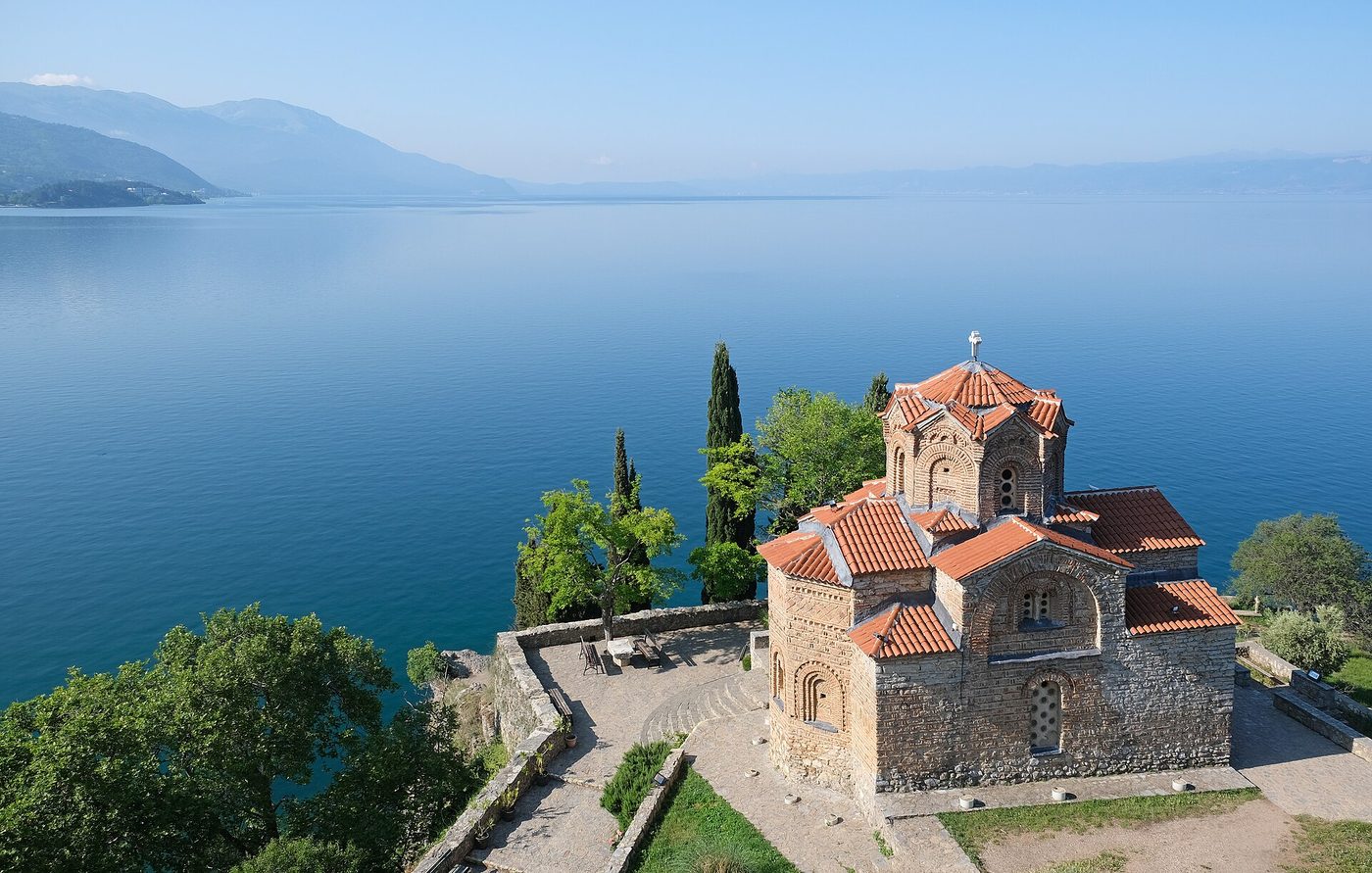
North Macedonia is a landlocked parliamentary republic of about 2.1 million people in the central Balkans, occupying the basin of the Vardar river between Kosovo, Serbia, Bulgaria, Greece and Albania. It left Yugoslavia by referendum on 8 September 1991 — the only republic to do so without war — and then spent nearly three decades in a dispute with Greece over its own name, resolved by the Prespa Agreement of 2018, which allowed it to join NATO in 2020. It is one of Europe's most plural societies for its size: 58.4% Macedonian and 24.3% Albanian, with Turkish, Romani, Serb and Vlach communities besides, and 46.1% Orthodox Christian alongside 32.2% Muslim, with Macedonian and Albanian both official. Its cultural inheritance is unusually deep for a small country — the Ohrid literary school of the ninth century, the Byzantine frescoes at Nerezi and Ohrid, and the woodcarving of the Debar masters — and its lake at Ohrid is a UNESCO World Heritage site inscribed for both nature and culture. The economy, at roughly $24,500 per head on a purchasing-power basis, runs on automotive-supply manufacturing for the German market, agriculture, wine and a growing software sector.
Skopje's urban core is home to about 495,673 people.
Among the world's megacities, though, it's one of many — the giants of Asia and Latin America run larger still:
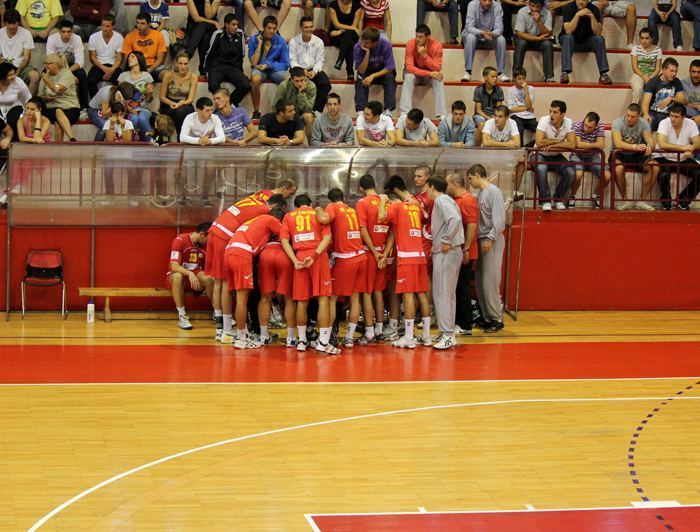
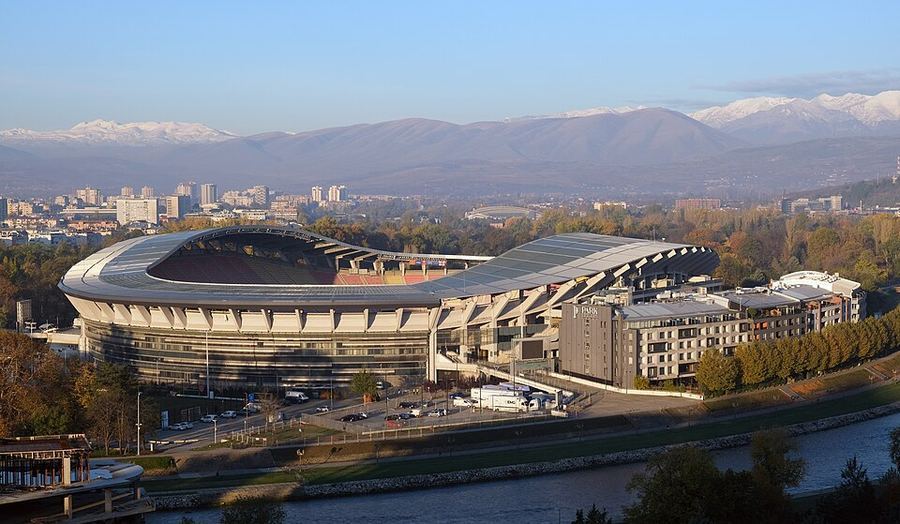
For a country of 2.1 million, North Macedonia's football team has produced results that are hard to explain. Goran Pandev's goal in Georgia in November 2020 carried it to Euro 2020, the country's first appearance at a major tournament. In March 2021 it beat Germany 2-1 in Duisburg, ending a long German unbeaten run in home World Cup qualifiers. A year later, in March 2022 in Palermo, Aleksandar Trajkovski scored in the second minute of stoppage time to beat Italy 1-0 and eliminate the reigning European champions from World Cup qualification — probably the most celebrated ninety minutes in Macedonian sporting history. In handball the country is a fixture at European and World Championships, and Vardar Skopje's two Champions League titles put it briefly at the summit of the European club game. Olympic participation dates from Atlanta in 1996, and the country has taken two medals, in wrestling and taekwondo. Macedonian players and coaches are widely dispersed through European handball and football, and the diaspora across Germany, Switzerland, Italy and Australia follows the national teams closely.
Denar — MKD (None)
GDP (PPP): $43.844 billion (2024 est.)
Per capita: $24,500 (2024 est.)
$10.445 billion (2024 est.)
reaction and catalytic products, insulated wire, electricity, garments, seats (2023)
Partners: Germany 39%, Serbia 8%, Bulgaria 6%, Greece 5%, Czechia 3% (2023)
$12.644 billion (2024 est.)
platinum, refined petroleum, laboratory ceramic ware, cars, natural gas (2023)
Partners: UK 12%, Germany 10%, Greece 9%, China 9%, Serbia 8% (2023)
Type: parliamentary republic
Independence: 8 September 1991 (referendum endorsed independence from Yugoslavia)
How mountains, coasts, and rivers shape settlement (LandScan).
Coming — dataWhere groups settled and how people move (GeoEPR + UNHCR).
Coming — dataNotable institutions, mappable as points.
Coming — data