HERA · Human Entity Reference Atlas by Masego Inc

← Mali 🌐 3D View
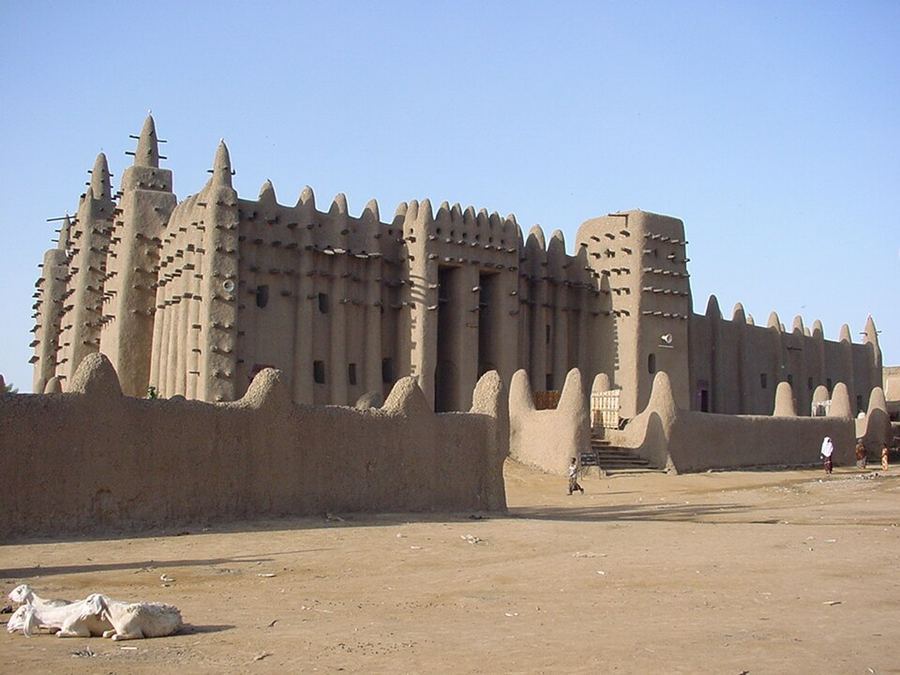
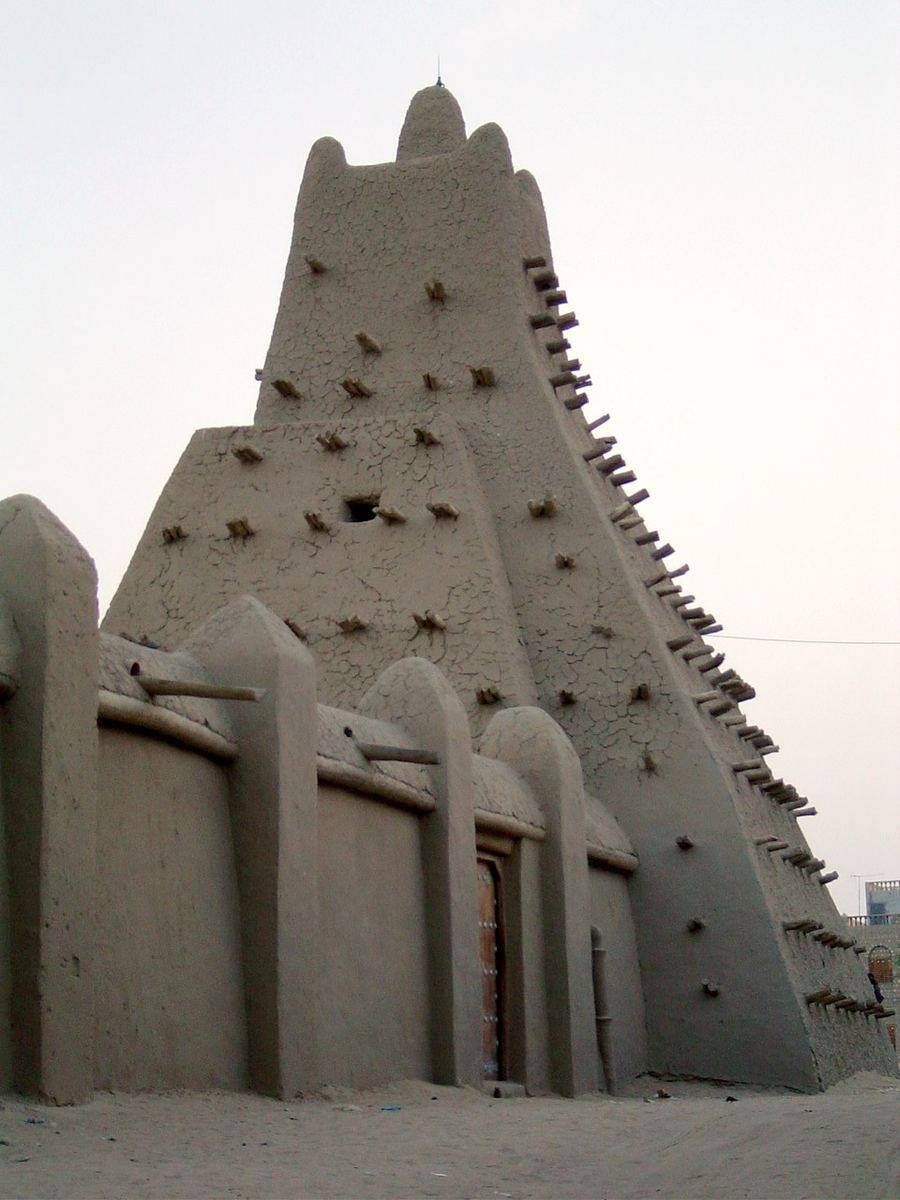
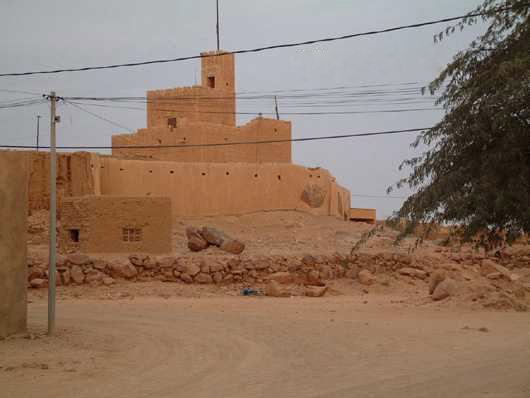
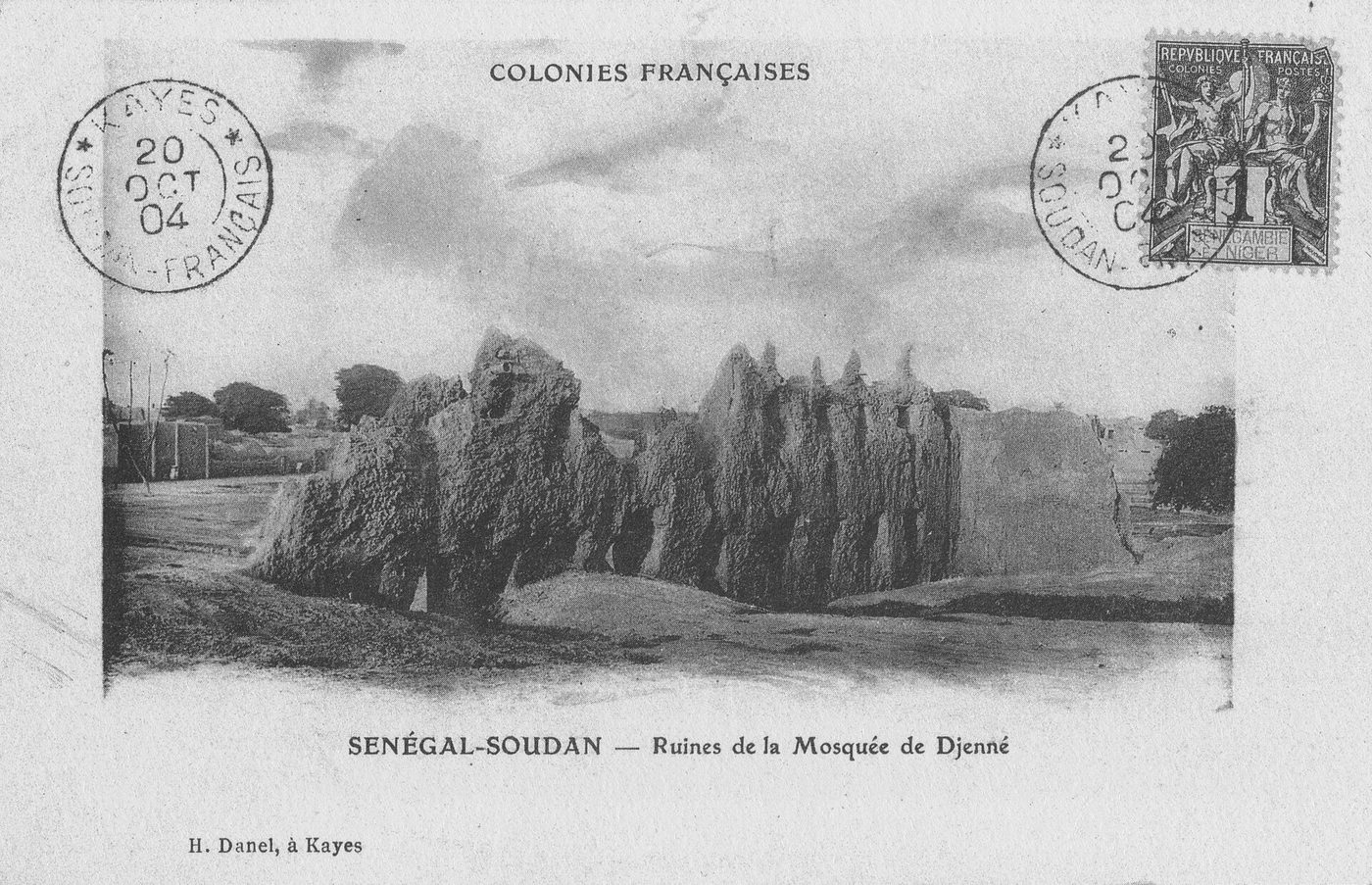
Djenne ruins ancient mosque - H. Danel, Mali
Mali MLI
Djenne ruins ancient mosque - H. Danel — Photo: H. Danel / Public domain via Wikimedia Commons
Did You Know African rice, Oryza glaberrima, was domesticated in the inland delta of the Niger about three thousand years ago — entirely independently of the Asian rice grown everywhere else. — FAO

Mali is a landlocked republic of about 22.6 million people in West Africa, the largest country in the region at 1.24 million square kilometres, stretching from Sudanian savanna in the south through the Sahel to deep Sahara in the north, with the Niger river arcing through all three. It takes its name from the medieval Mali Empire, whose ruler Mansa Musa controlled the trans-Saharan gold trade and whose cities of Timbuktu and Djenne were centres of Islamic scholarship whose manuscript libraries survive. Independent from France since 22 September 1960, the country is 93.9% Muslim and ethnically plural, with Bambara the largest group at 33.3% and Fulani, Soninke, Senufo, Malinke, Dogon, Songhai and Tuareg besides; a 2023 constitution made thirteen national languages official and reduced French to a working language. Mali has been at war since 2012, when a Tuareg rebellion and a coup opened the north to jihadist groups; two further coups since 2020 have brought a military government that expelled French and United Nations forces and left ECOWAS. Gold and cotton dominate exports, the median age is 16.5 years, and output per head is roughly $2,900 on a purchasing-power basis.

CIA World FactbookWorld BankUN
Population
22,634,423
Capital
Bamako
Currency
Fr XOF
Time zones
Largest city
Bamako
Human Geography Themes
Loading national figures…
Largest Cities
Bamako3,960,563
Sikasso423,182
Kayes287,391
Ségou286,478
Koutiala286,417
Sénou218,887
Kati206,376
Gao174,988
In Perspective

Bamako's urban core is home to about 3,960,563 people.

That's bigger than Barcelona, Berlin, Rome and Amsterdam — each a great world city in its own right.

Bamako3,960,563
Barcelona3,908,362
Berlin3,601,776
Rome2,556,354
Amsterdam1,223,407

Among the world's megacities, though, it's one of many — the giants of Asia and Latin America run larger still:

Bamako3,960,563
Jakarta40,545,126
Dhaka37,307,160
Tokyo33,244,670
Shanghai30,678,616
Cairo25,230,325
The Country & Its People

History

Mali carries the name of one of the great medieval states of the world. The Mali Empire was founded by Sundiata Keita after his victory at Kirina around 1235, and its governing compact, the Manden Charter proclaimed at Kurukan Fuga about a year later, was transmitted orally for eight centuries; UNESCO inscribed it in 2009. Under Mansa Musa, who ruled from about 1312 to 1337, the empire controlled the trans-Saharan gold trade, and his pilgrimage to Mecca in 1324 distributed so much gold in Cairo that it depressed the metal's value there for years. Timbuktu and Djenne became centres of Islamic scholarship, and the Songhai Empire that succeeded Mali under Sunni Ali and Askia Muhammad extended that reach until a Moroccan army destroyed it at Tondibi in 1591. Bamana kingdoms at Segou and Kaarta, the Massina and Toucouleur states, and Samori Toure's resistance filled the following centuries until French conquest created the colony of French Sudan. After a brief federation with Senegal, Mali declared independence on 22 September 1960 under Modibo Keita. Military rule under Moussa Traore lasted from 1968 to 1991; democracy followed until a rebellion and coup in 2012 began the present crisis.
Culture

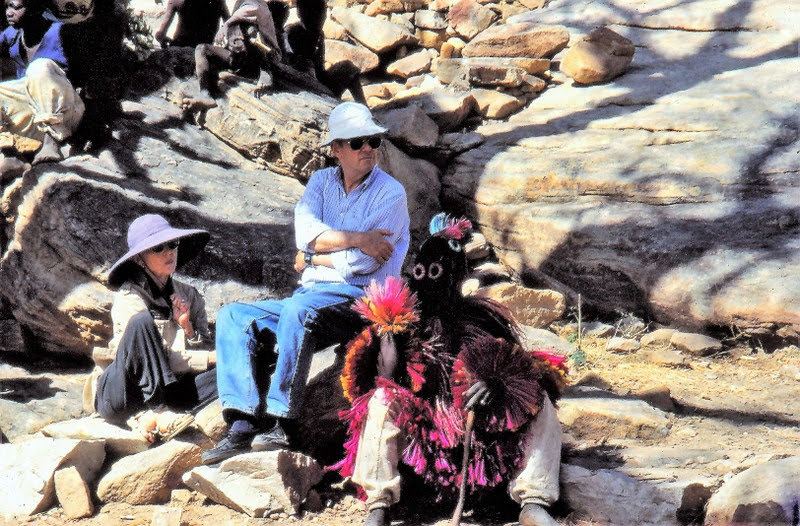
Mali is 93.9% Muslim, and Islam here is layered over much older institutions rather than replacing them. The most distinctive is the griot — jeli in Bambara — the hereditary caste of oral historians, praise singers, genealogists and mediators who hold a family's and a lineage's memory and speak on their behalf at every important occasion. Griot families such as the Kouyate have served the Keita line since Sundiata's own griot, Balla Fasseke, and the office remains functional rather than ceremonial: griots still negotiate marriages and settle disputes. A second institution is sanankuya, the joking kinship, which licenses ritual mockery between particular surnames and ethnic groups and works as a genuine mechanism for defusing conflict across ethnic lines. Age grades, hunters' associations and initiation societies structure village life; the Dogon of the Bandiagara escarpment maintain the most elaborate ceremonial cycle, including masked dama funerary dances. Mali's population is also extremely young, with a median age of 16.5 years — among the youngest in the world — which means most Malians alive today have known only the period since the 2012 crisis began.

Points Of Pride

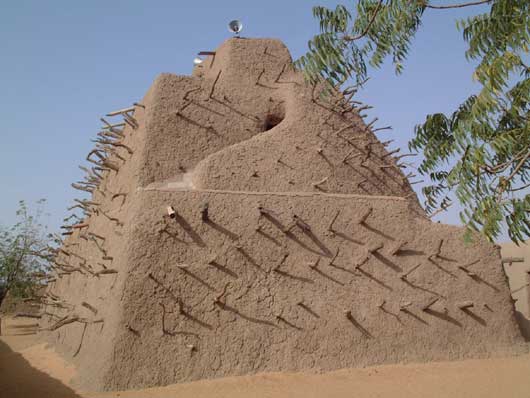
Mali holds four UNESCO World Heritage sites, all of them currently on the List of World Heritage in Danger: Timbuktu, inscribed in 1988 for its mosques and its scholarly tradition; the Old Towns of Djenne, also 1988, whose Great Mosque is the largest mud-brick building in the world and is replastered every year by the whole town working together; the Cliff of Bandiagara in Dogon country, a mixed cultural and natural site inscribed in 1989; and the Tomb of Askia at Gao, inscribed in 2004. The Timbuktu manuscripts — hundreds of thousands of volumes on astronomy, law, medicine and poetry held in family libraries — are the physical proof that written scholarship flourished in West Africa for centuries, and their rescue in 2012 and 2013, when librarians smuggled some 350,000 of them out of the occupied city to Bamako in trunks and on river boats, is the country's most-told modern story. Mansa Musa is routinely described as the wealthiest individual in recorded history. And Malian music — kora, ngoni, balafon and desert blues — is among the most influential in the world.

Cultural Fusion

Mali is a country of many peoples and no single majority. Bambara are the largest group at 33.3%, followed by Fulani at 13.3%, Soninke at 9.8%, Senufo and Minianka at 9.6%, Malinke at 8.8%, Dogon at 8.7%, Songhai at 5.9%, and Tuareg and Bella at 1.7%, with Bobo and others besides. Bambara functions as the country's lingua franca, understood far beyond the people who claim it as a mother tongue, and the 2023 constitution made thirteen national languages official while reducing French — spoken by 17.2% of the population — to the status of a working language. Geography arranges the mixture: Songhai and Tuareg in the Saharan north, Fulani herders through the Sahel, Bambara and Malinke farmers in the Sudanian south, Dogon on the escarpment. What binds them are institutions that cross ethnic lines — Islam, the griot tradition, and sanankuya joking kinship, which pairs specific clans and peoples in obligatory mutual teasing. The trans-Saharan trade left Arab and Berber influence in the north, the Niger river carried commerce along its whole length, and the French period added an administrative and educational layer over all of it.

Music & Dance

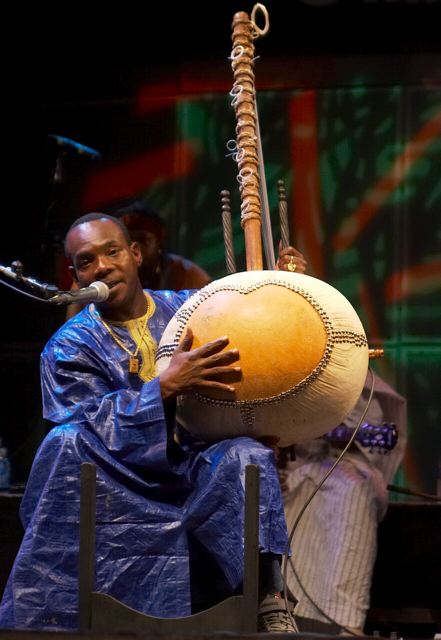
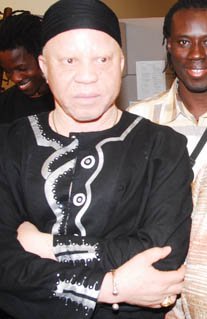
Mali is one of the most musically consequential countries on earth. The griot instruments are the foundation: the kora, a 21-string harp-lute whose greatest player, Toumani Diabate, came from a line of kora musicians reaching back generations; the ngoni, the plucked lute that Bassekou Kouyate amplified into a lead instrument and which is an ancestor of the banjo; and the balafon, the gourd-resonated wooden xylophone whose Senufo tradition UNESCO inscribed in 2012 as shared heritage with Burkina Faso and Cote d'Ivoire. The djembe drum comes from the same Mande world. From Niafunke on the Niger, Ali Farka Toure played a guitar music so close to Mississippi blues that the resemblance reordered assumptions about where the blues came from; he won Grammy awards with Ry Cooder in 1995 and with Toumani Diabate in 2006. Salif Keita, a noble-born albino who broke caste rules by becoming a singer, is the Golden Voice of Africa. Oumou Sangare sings the Wassoulou tradition and about women's lives within it; Amadou and Mariam met at Bamako's institute for the blind; and Tinariwen created Tuareg desert blues in exile, winning a Grammy in 2012.

Cuisine & Misattributed Foods

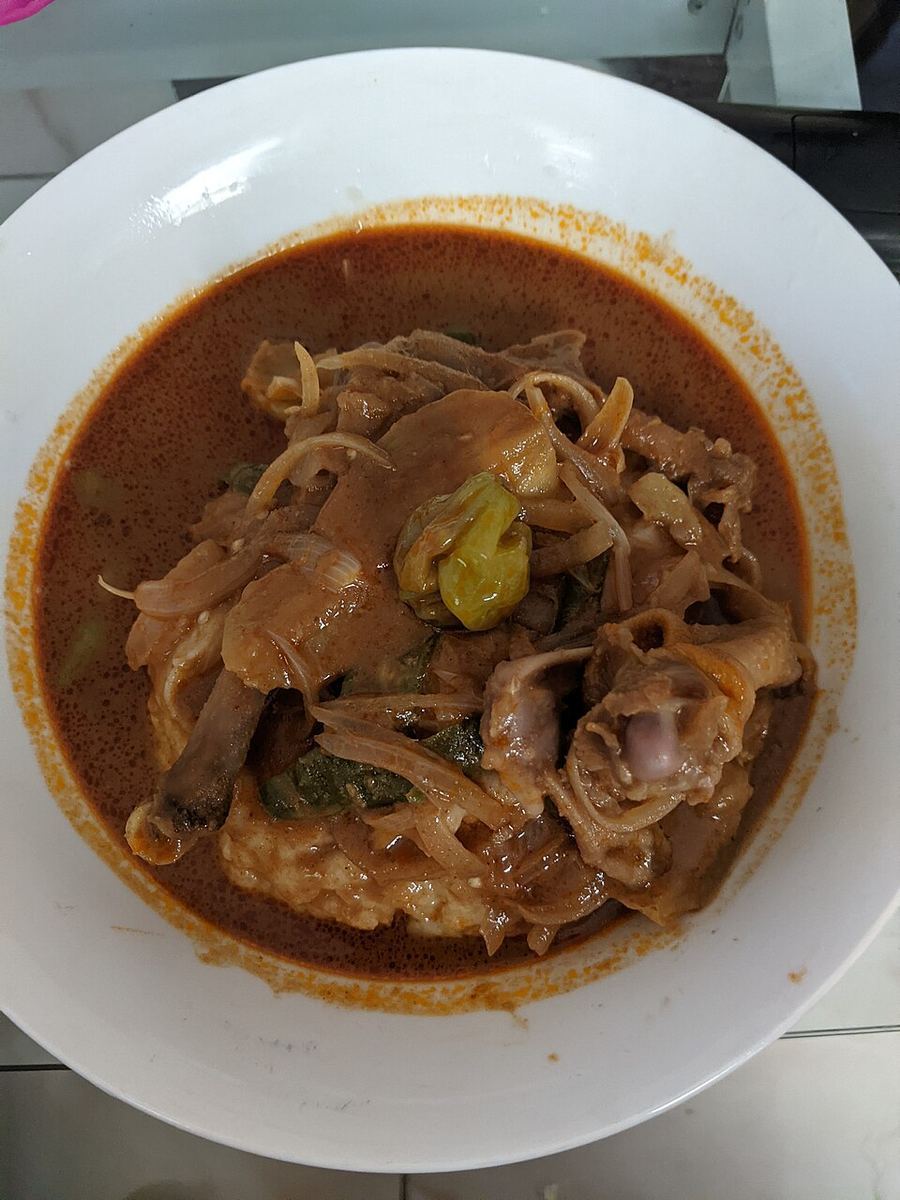
Malian cooking is built on grain and sauce. In the countryside the staple is to, a stiff porridge of millet or sorghum eaten by hand and dipped in sauce; in the towns rice dominates, most often as riz au gras, rice cooked in a seasoned tomato and meat broth. The national dish is tigadegena, a thick groundnut sauce with beef, lamb or chicken served over rice — the Malian version of the sauce known across West Africa. Other standard sauces use baobab leaf, okra, sorrel and dark leafy greens. Fonio, an ancient West African grain that cooks fast and grows on poor soil, is a Malian speciality, and African rice was domesticated in the Niger's inland delta thousands of years ago. Fish from the river matters enormously: capitaine, the Nile perch, grilled whole, along with smoked and dried fish traded far inland. Mutton and zebu beef come from one of Africa's largest livestock herds. Dege, a chilled millet-and-yoghurt dish, is the everyday sweet. And tea is a ritual rather than a drink — strong green tea brewed and poured three times, each round sweeter than the last, over the course of an afternoon.

National Dress

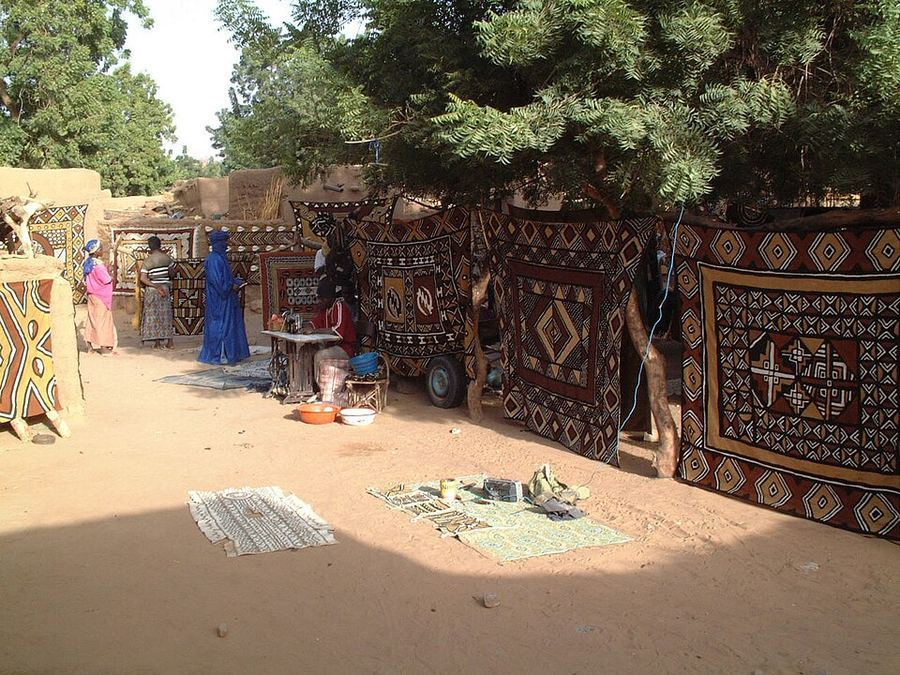
Malian dress is one of the country's major art forms. The grand boubou, a wide flowing robe worn over matching trousers with elaborate machine or hand embroidery at the neck, is the formal garment for men and, in its own cut, for women; the prestige fabric is bazin riche, a damask cotton that is dyed, starched and then beaten with wooden mallets until it takes a hard shine, a craft that employs whole neighbourhoods in Bamako. Women wear a fitted top with a wrapped pagne and an elaborately tied headwrap, and Fulani women are known for enormous crescent gold earrings and amber ornament. The cloth Mali is famous for internationally is bogolanfini, or mud cloth: hand-woven cotton strips painted with fermented iron-rich mud that reacts with tannins from boiled leaves to fix a permanent dark ground, leaving pale symbolic motifs. Traditionally made by Bamana women, it was brought into contemporary fashion by the designer Chris Seydou in the 1970s and 1980s and has been borrowed worldwide since. In the Saharan north, Tuareg men wear the indigo tagelmust wound as turban and face veil.

Sports & Inspiring Athletes

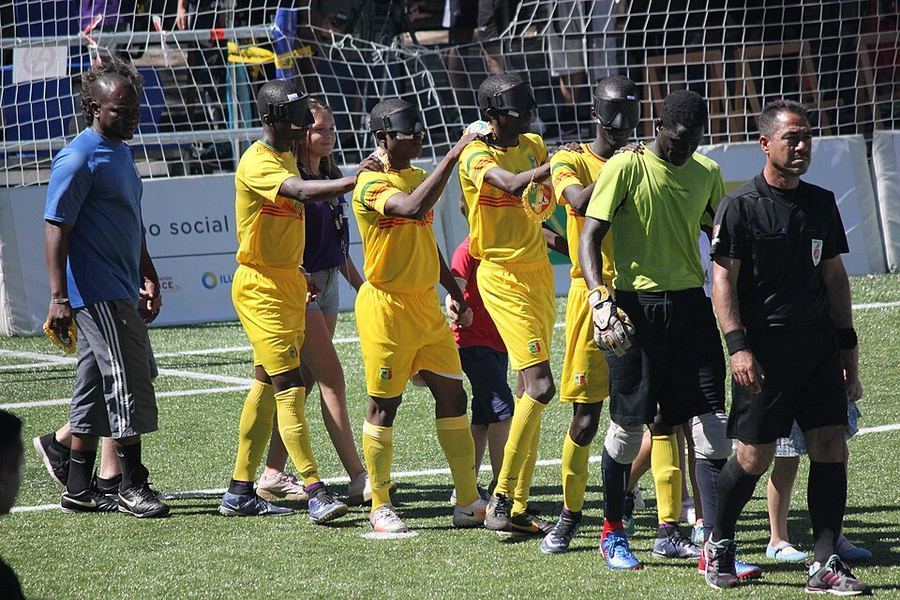
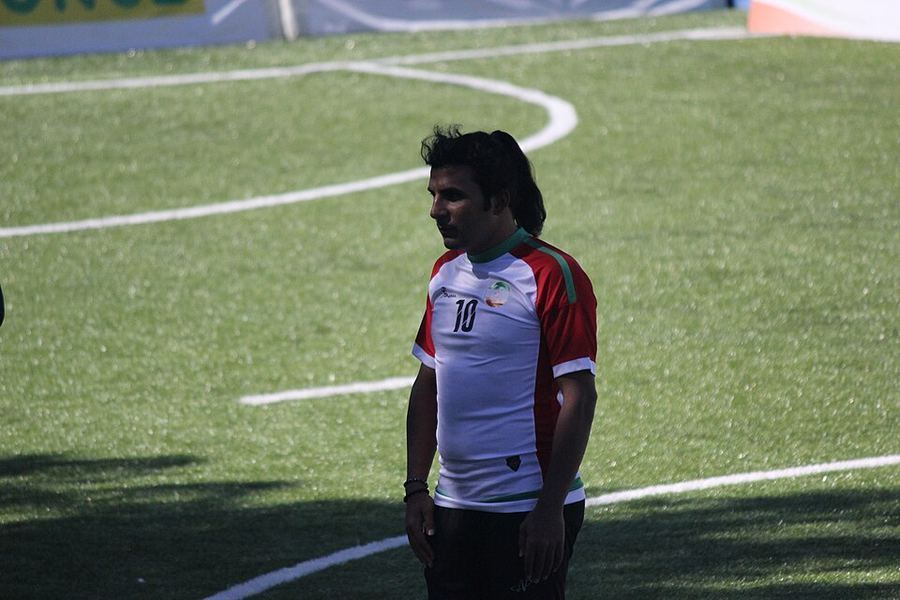
Football is overwhelmingly the national sport. The men's national team, the Eagles, finished runners-up at the Africa Cup of Nations in 1972 and fourth when Mali hosted the tournament in 2002, and the Stade du 26 Mars in Bamako is the country's main ground. Mali's real distinction is in youth football: its under-17 side reached the final of the FIFA U-17 World Cup in 2015 and its under-20 side finished third at that year's U-20 World Cup, and Malian academies are among the most productive in Africa, supplying players across the French, Spanish and English leagues. Basketball is the other major success, and here the women lead: Mali's under-19 women reached the final of the FIBA U19 World Cup in 2021, the first African team to reach a FIBA world final at any level, and the senior women's team is a fixture at the AfroBasket. Traditional wrestling draws crowds at festivals, and hunters' associations maintain their own ceremonial competitions. Athletics, taekwondo and judo make up most of Mali's Olympic representation; the country has yet to win an Olympic medal.

Notable Educational Programs

Mali has one of the oldest scholarly traditions in Africa and one of the lowest literacy rates in the world today, and both statements are true at once. Timbuktu's Sankore mosque was a centre of Islamic learning from the fourteenth century, and the manuscript libraries built up there and at Djenne represent centuries of written scholarship. The modern system, inherited from French colonial administration, has never reached most of the population: enrolment is low, dropout is high, classes are very large, and teacher shortages are chronic. Quranic schooling remains the first or only education many children receive. Bilingual programmes teaching early grades in national languages before transitioning to French have run since the 1990s, and the 2023 constitution's elevation of thirteen national languages to official status gives that approach new weight. Higher education is concentrated in Bamako, where the former single university was reorganised in 2011 into four separate institutions covering social sciences, humanities, law and — the strongest of them — sciences and technology; the University of Segou was established in 2010. The conflict has closed well over a thousand schools across the centre and north.

Wars & Conflicts

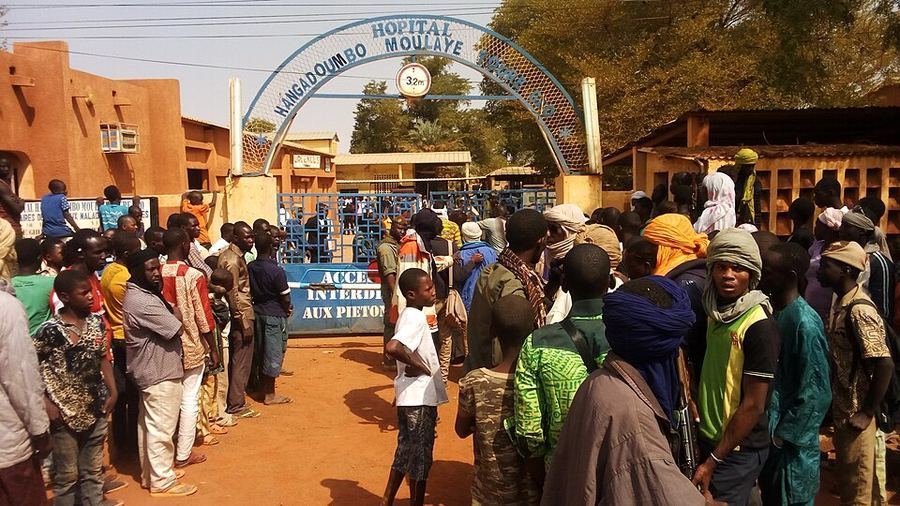
Mali has been at war since 2012. Tuareg movements in the north had rebelled repeatedly since 1963, but in January 2012 the MNLA, reinforced by fighters and weapons returning from Libya, overran the northern regions; a coup in Bamako that March collapsed the state's response, and jihadist groups then displaced the MNLA and took Timbuktu, Gao and Kidal, where they destroyed mausoleums and shrines. French forces intervened in January 2013, and a United Nations mission, MINUSMA, deployed the same year and became the deadliest peacekeeping operation in the organisation's history before Mali ordered it out in 2023. A peace agreement signed in Algiers in 2015 was terminated by the government in January 2024. Two further coups, in August 2020 and May 2021, brought a military government that expelled French forces, brought in Russian personnel, and joined Burkina Faso and Niger in the Alliance of Sahel States and in leaving ECOWAS. Violence has spread from the north into central Mali, where jihadist groups, self-defence militias and the army have all committed massacres — Ogossagou in 2019, Moura in 2022. Roughly 136,000 people were displaced or seeking refuge as of 2024 estimates.
Current as of 2026-08-07

Land & Border Disputes

Mali's one formal territorial dispute was settled by the International Court of Justice. A contested stretch of the Mali-Burkina Faso frontier known as the Agacher Strip, believed to hold mineral potential, produced fighting in 1974 and again in a short war around Christmas 1985; both states had already agreed to submit the question to the Court, and its Chamber delivered judgment in the Frontier Dispute case on 22 December 1986, dividing the disputed area roughly in half. Both accepted the ruling and the boundary has held since. Mali's other boundaries — with Mauritania, Algeria, Niger, Senegal, Guinea and Cote d'Ivoire — are not contested, though large stretches of the Saharan frontiers are effectively unpoliced and cross-border movement by armed groups is the central security problem for all of them. The live dispute is internal and about sovereignty rather than borders: the MNLA's unilateral declaration in April 2012 of an independent state of Azawad in northern Mali, which no country recognised and which the government rejects absolutely. Mali's departure from ECOWAS alongside Burkina Faso and Niger has made its regional relationships the main diplomatic question.
Land, Life & Legacy

Land & Climate

Mali is the largest country in West Africa, landlocked at about 1.24 million square kilometres, and it is divided by rainfall into three long bands. The northern two-thirds is Sahara — rock, sand and the salt workings of Taoudenni, from which slabs are still carried south by camel caravan. The middle is Sahel, semi-arid grazing land that supports one of Africa's largest livestock populations and that has been pushed by drought and cultivation toward desertification for half a century. The south is Sudanian savanna with a real rainy season, and it is where most Malians live and nearly all crops grow. Running through all three is the Niger, which enters from Guinea, arcs north-east past Bamako, Segou, Mopti, Timbuktu and Gao, and spreads midway into the Inner Niger Delta, a seasonal floodplain of roughly 30,000 square kilometres that is one of Africa's most important wetlands for fisheries, grazing and migratory birds. The highest point is Hombori Tondo at 1,155 metres, near the sandstone towers known as the Hand of Fatima. The climate is hot and increasingly erratic, with the dusty harmattan blowing off the desert from November to February.

Entertainment

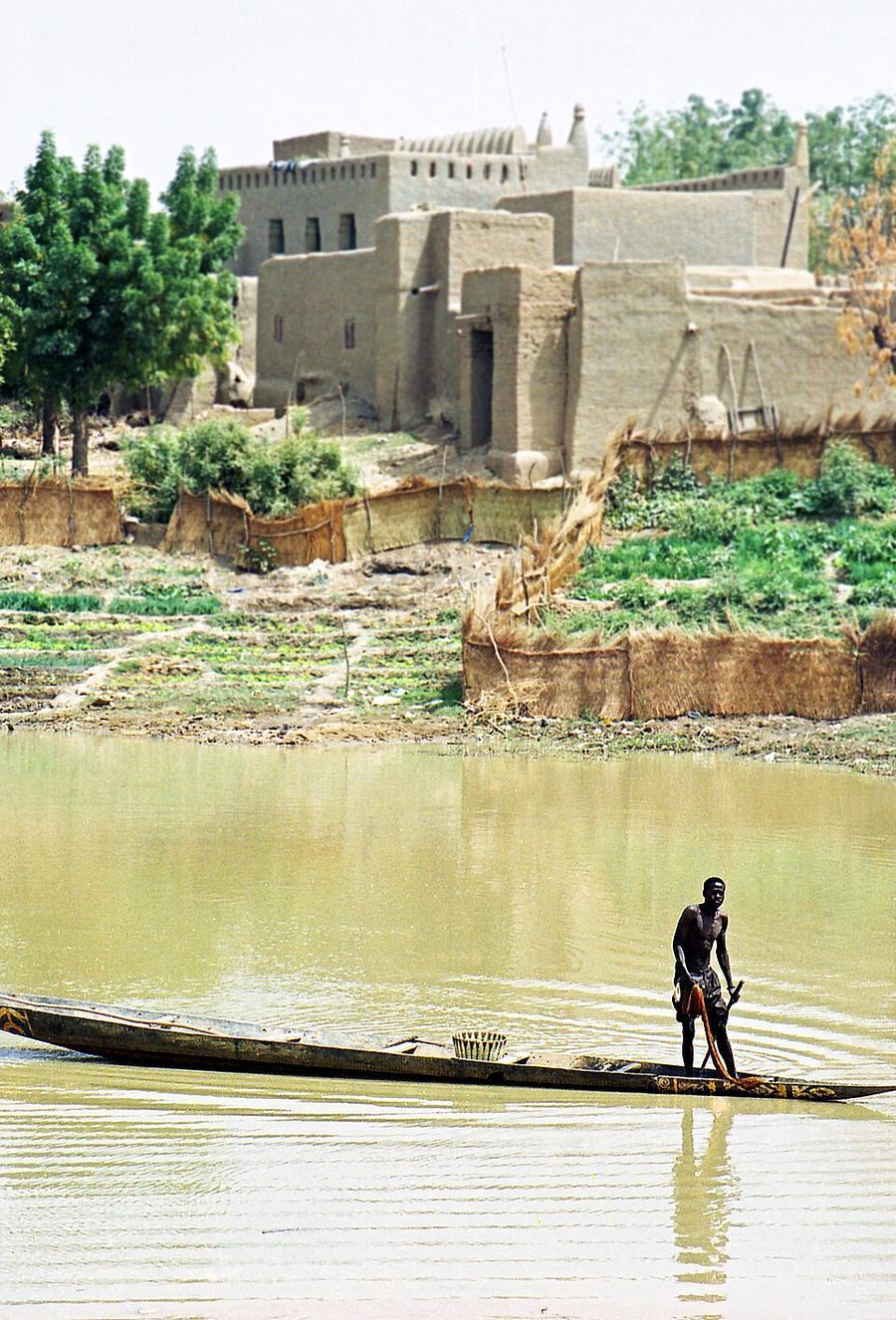
The central Malian social form is the grin — a group of friends who meet at the same spot most days, usually on a street corner or in a courtyard, to brew tea over a small charcoal stove and talk. Making the three rounds of tea properly takes hours, which is the point; the grin is where politics is argued, work is found and news travels, and it is as much an institution as any formal association. Beyond it, football is watched everywhere there is a screen, and played on any open ground. Weddings, baptisms and Tabaski, the feast of Eid al-Adha with its sheep, are the great expenditures and the great gatherings, and griots perform at all of them. Bamako has an outsized live music scene for a city its size, with clubs and open-air venues that made the city a destination for the world music circuit. River life along the Niger — pirogues, the Mopti port, the seasonal fishing — organises leisure as well as work. Tourism to Dogon country, Timbuktu and Djenne, once substantial, has largely stopped because of the insecurity in the centre and north.

Art & Museums

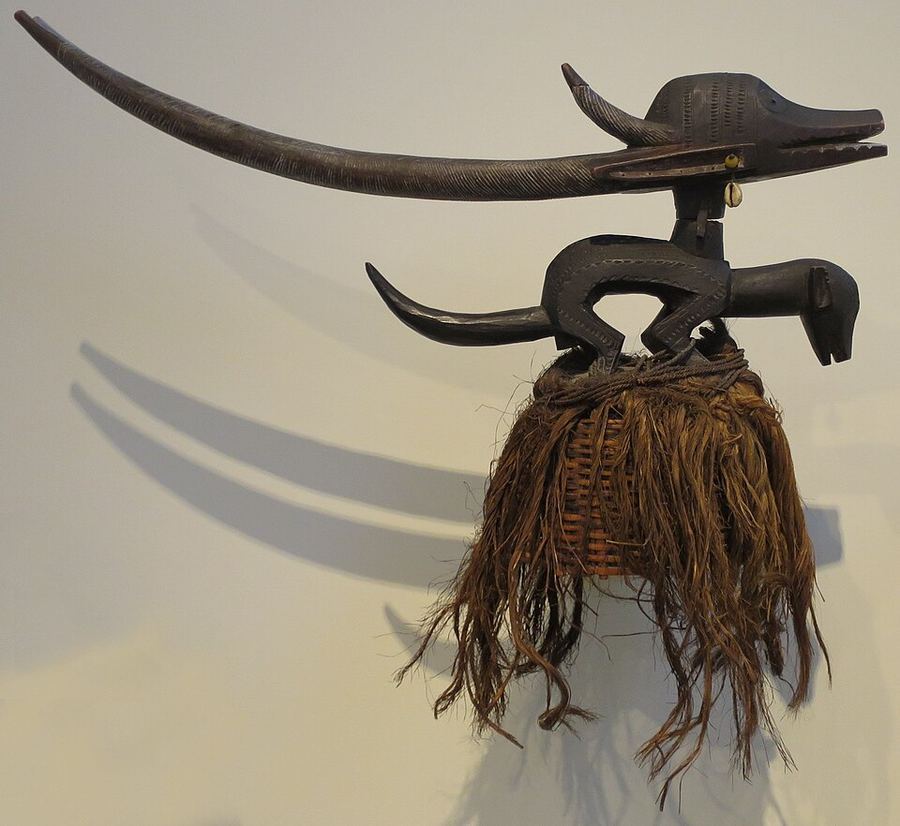
Mali's oldest surviving art is architectural: the Sudano-Sahelian mud building tradition, in which walls of sun-dried banco brick are rendered in mud plaster and pierced by projecting bundles of palm wood — the toron — which serve as permanent scaffolding for the annual replastering. The Great Mosque of Djenne is its masterpiece and the largest mud-brick structure in the world. In sculpture, the Bamana chiwara, an antelope headdress carved in openwork and worn in agricultural dances, is among the most widely recognised objects of African art anywhere, and the terracotta figures excavated at Djenne-Djeno document a sculptural tradition running back two thousand years. Dogon carving — ancestor figures, granary doors, kanaga and sirige masks, and the low-roofed toguna meeting shelters — was central to twentieth-century European ideas of African art. Textiles are the living form, above all bogolan mud cloth. Mali's most influential modern art is photographic: Seydou Keita's studio portraits of Bamako in the 1950s and Malick Sidibe's photographs of its nightlife in the 1960s made both internationally famous, and Sidibe received the Golden Lion for lifetime achievement at the Venice Biennale in 2007.
Encyclopaedia BritannicaMetropolitan Museum of ArtUNESCOSmithsonian

Notable People

Sundiata Keita, who founded the Mali Empire in the thirteenth century, and Mansa Musa, whose 1324 pilgrimage to Mecca made the empire's wealth legendary in Europe and the Arab world, are the towering historical figures; Askia Muhammad, who ruled Songhai from Gao, lies in the tomb inscribed by UNESCO in 2004. Modibo Keita led the country to independence in 1960 and became its first president. Amadou Hampate Ba, the Fulani writer and ethnographer who spent his life recording oral tradition, gave the world the line that in Africa an old man dying is a library burning, and remains the country's most quoted intellectual; Yambo Ouologuem won the Prix Renaudot in 1968; Seydou Badian Kouyate wrote both novels and the words of the national anthem. In music, Ali Farka Toure, Salif Keita, Toumani Diabate and Oumou Sangare are known worldwide. In photography, Seydou Keita and Malick Sidibe changed how the world sees mid-century Africa. In sport, the footballer Salif Keita, known as Domingo, won the first African Footballer of the Year award in 1970.

Inventions & Breakthroughs

Mali's contributions are agricultural, architectural and constitutional rather than industrial. African rice, Oryza glaberrima, was domesticated in the inland delta of the Niger some three thousand years ago, independently of Asian rice, and fonio — a fast-growing, drought-tolerant grain now attracting international attention for exactly those properties — comes from the same region. The mud architecture of Djenne and Timbuktu is a genuine building technology: banco brick and plaster, shaped so that the mass of the walls buffers extreme heat, with permanent toron scaffolding built into the facade so the annual replastering can be done by the community rather than by specialists. Bogolan dyeing is applied chemistry worked out empirically — iron-rich river mud reacting with tannins absorbed from boiled leaves to fix a colourfast dark ground. And the Manden Charter, proclaimed at Kurukan Fuga around 1236 and transmitted orally by griots ever since, set out obligations of governance, the treatment of prisoners and the protection of life at a date that puts it among the earliest such statements anywhere. Modern research capacity is concentrated almost entirely in medicine.

Science & Technology

Mali's strongest scientific institution is medical. The Malaria Research and Training Centre at the University of Sciences, Techniques and Technologies of Bamako, built up over decades by the parasitologist Ogobara Doumbo until his death in 2018, became one of Africa's leading malaria research centres, running field sites, training a generation of West African scientists, and hosting clinical trials of the malaria vaccines now being deployed across the continent. Beyond health, applied research concentrates on drought-tolerant crops, livestock and irrigation in a country where agriculture is the livelihood of most of the population. The industrial economy is dominated by gold: Mali is among Africa's largest producers, with large mines at Loulo-Gounkoto, Syama and Fekola alongside extensive artisanal digging, and gold is why the United Arab Emirates takes 73% of the country's exports, most of it flowing to refineries in Dubai. Cotton is the other export pillar and the main source of rural cash income. Electricity access remains low outside the cities, though solar generation and off-grid systems are expanding, and mobile money has spread far faster than banking ever did.
On The World Stage

Champions & Defining Moments

Mali's global sporting presence runs through football's development system. Malian players are found throughout European club football, and the national academies — the successors of a tradition that produced Salif Keita, the first African Footballer of the Year in 1970 — have made the country a standing exporter of talent to France in particular, where the large Malian diaspora also supplies players to the French national setup. At youth level Mali competes with anyone: the 2015 FIFA U-17 World Cup final and a third place at the U-20 World Cup in the same year put it briefly among the best development sides in the world. Women's basketball has given Mali its other international breakthrough, with the under-19 team reaching a FIBA World Cup final in 2021. The country has competed at the Summer Olympics since Munich in 1972 and has never won a medal, sending small teams in athletics, judo, taekwondo and swimming. Mali hosted the Africa Cup of Nations in 2002, building stadiums in Bamako, Segou, Mopti, Sikasso and Kayes, and continues to compete in Francophone and West African regional games.

FIFAIOCOlympedia
Economy, Trade & Government

Currency & GDP

CFA Franc BCEAO — XOF (Fr)

GDP (PPP): $71.253 billion (2024 est.)

Per capita: $2,900 (2024 est.)

Exports

$6.13 billion (2023 est.)

gold, cotton, oil seeds, fertilizers, gum resins (2023)

Partners: UAE 73%, Switzerland 15%, Australia 5%, China 1%, Uganda 1% (2023)

Imports

$8.066 billion (2023 est.)

refined petroleum, broadcasting equipment, cement, cotton fabric, plastic products (2023)

Partners: Cote d'Ivoire 25%, Senegal 19%, China 12%, France 5%, Burkina Faso 4% (2023)

Government

Type: semi-presidential republic

Independence: 22 September 1960 (from France)

Terrain → Where People Live

How mountains, coasts, and rivers shape settlement (LandScan).

Coming — data

Migration & Ethnic Settlement

Where groups settled and how people move (GeoEPR + UNHCR).

Coming — data

Universities

Notable institutions, mappable as points.

Coming — data
Economy & government facts: CIA World Factbook (public domain), via OpenFactBook / factbook.json.
Every fact and narrative claim will carry a visible source citation. Data-driven sections light up automatically wherever HERA has coverage.