HERA · Human Entity Reference Atlas by Masego Inc

← Martinique 🌐 3D View
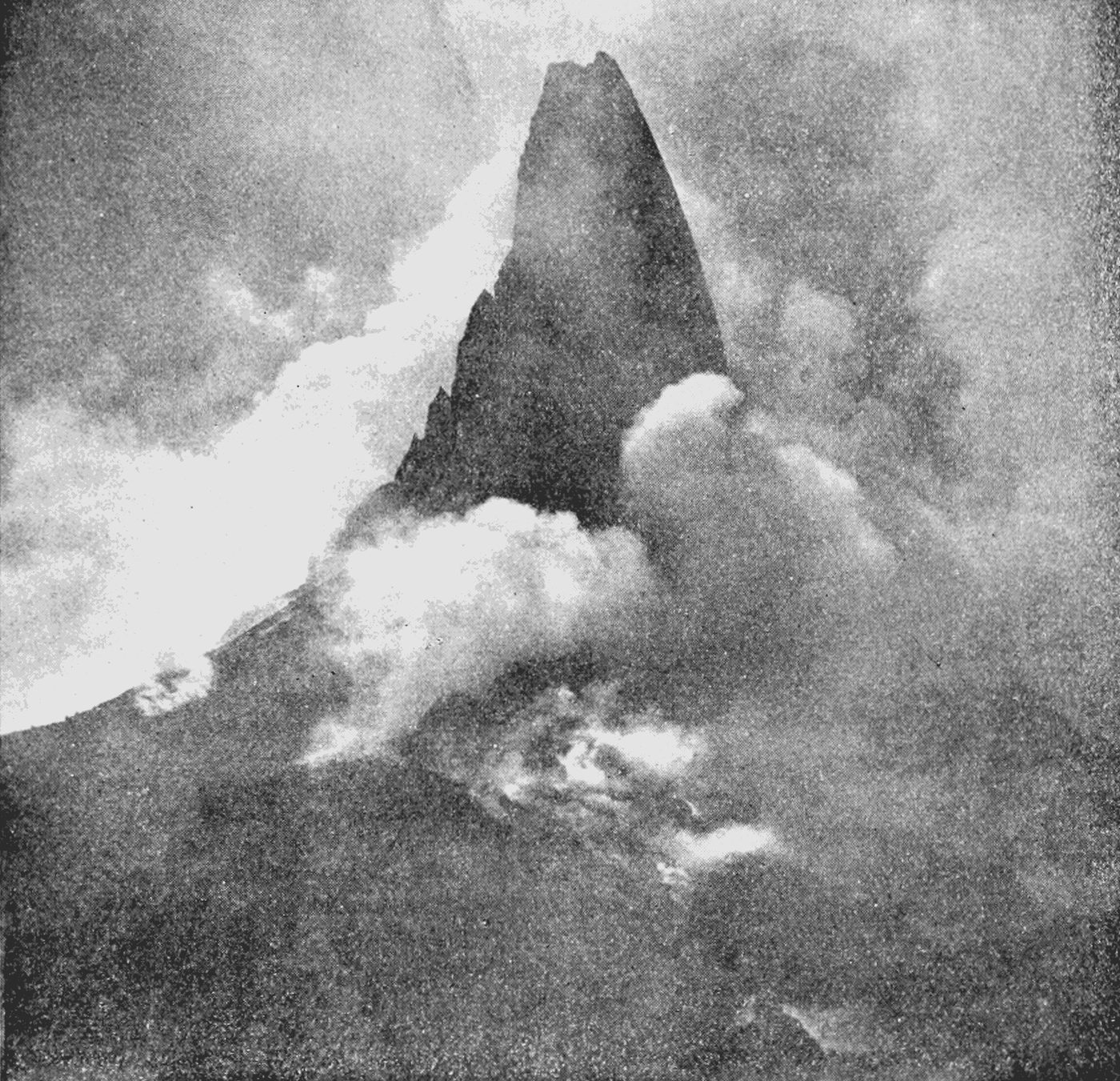
PSM V63 D471 Obelisque of mount pelee vulcano, Martinique
Martinique MTQ
PSM V63 D471 Obelisque of mount pelee vulcano — Photo: Unknown author Unknown author / Public domain via Wikimedia Commons
Did You Know With about 35 percent of its residents aged sixty or over on 1 January 2025, Martinique is the oldest region in France, and its population is shrinking faster than that of any other French region. — national statistics office

Martinique is a volcanic island in the Lesser Antilles that is part of France and, through France, an outermost region of the European Union. It is administered as a single territorial collectivity, a structure created in December 2015 that merged the former departmental and regional councils into one assembly sitting alongside a state-appointed prefect. Fort-de-France, on a deep natural bay on the Caribbean coast, is the capital, port and largest commune. INSEE estimated the population at 355,500 on 1 January 2025; it has been falling by roughly 0.7 percent a year, the steepest decline of any French region, and with about 35 percent of residents aged sixty or over Martinique is now the oldest region in France. French is the official language, Martinican Creole the language of daily life, and Roman Catholicism the dominant religion. The euro is the currency and French law the framework. Martinique's outsized place in the francophone world comes from ideas rather than size: this island of some 1,100 square kilometres produced Aime Cesaire, Frantz Fanon and Edouard Glissant.

national statistics officeEncyclopaedia BritannicaEurostat
Population
Capital
Currency
Time zones
Largest city
Fort-de-France
Human Geography Themes
Loading national figures…
Largest Cities
Fort-de-France91,150
In Perspective

Fort-de-France's urban core is home to about 91,150 people.

Among the world's megacities, though, it's one of many — the giants of Asia and Latin America run larger still:

Fort-de-France91,150
Jakarta40,545,126
Dhaka37,307,160
Tokyo33,244,670
Shanghai30,678,616
Cairo25,230,325
The Country & Its People

History

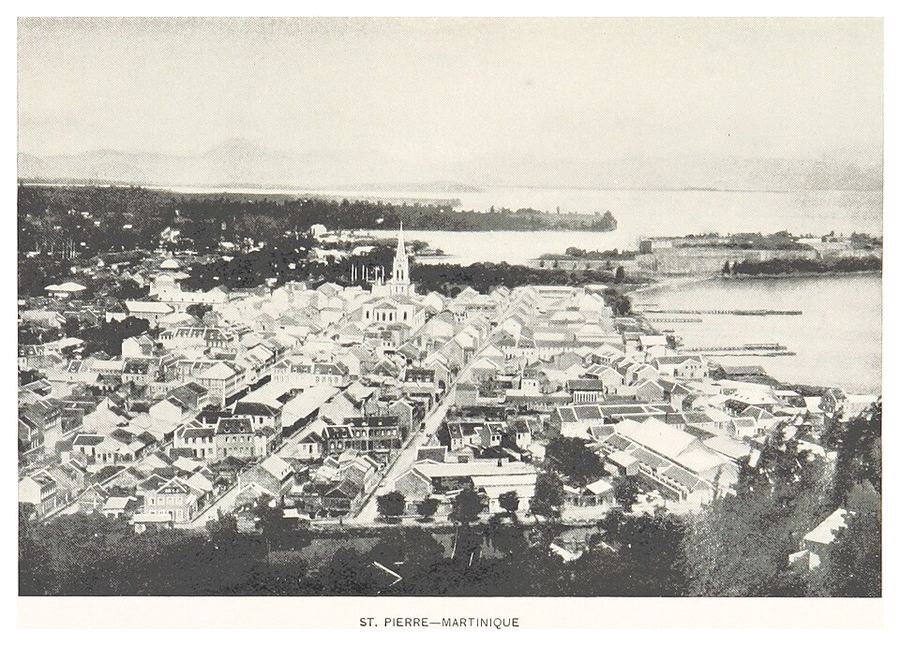
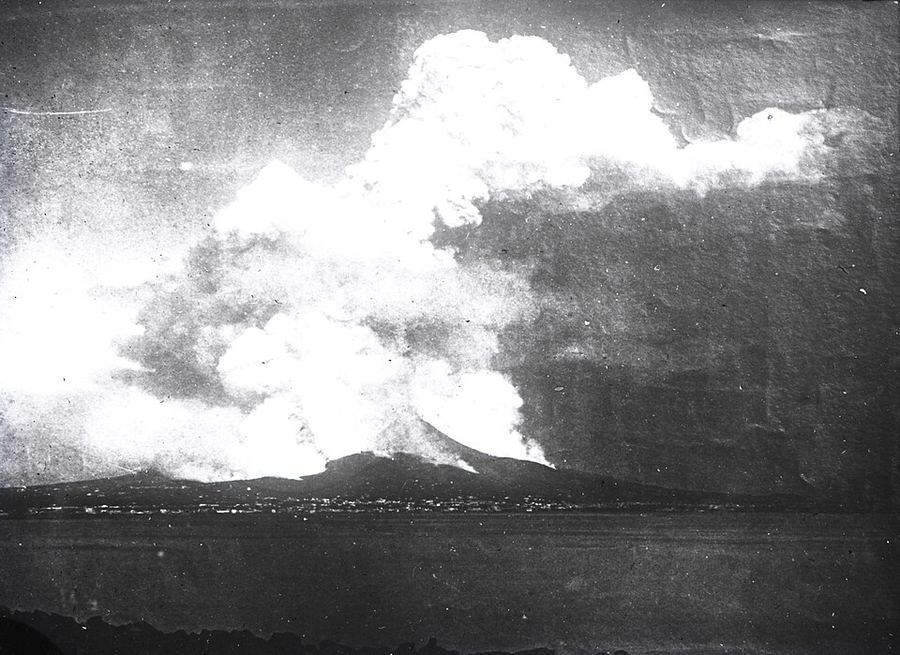
Kalinago people, who called the island Madinina, held it when Europeans arrived, having displaced earlier Arawak-speaking settlers. French colonisation began in 1635, and by the later seventeenth century sugar had made Martinique one of the most valuable possessions in the French empire, worked by Africans transported through the slave trade. Britain occupied the island repeatedly during the Anglo-French wars. The Revolution's abolition of slavery in 1794 barely touched Martinique, which was then in British hands and whose planters preferred it that way; emancipation came only with the decree of 27 April 1848, hastened on the island by a rising at Saint-Pierre. On 8 May 1902 Mount Pelee destroyed Saint-Pierre, then the cultural capital of the French Antilles, killing on the order of thirty thousand people in minutes and making the eruption the deadliest volcanic event of the twentieth century. Departmentalisation followed on 19 March 1946, with the Martinican deputy Aime Cesaire as the law's rapporteur. The post-war decades brought French welfare provision, sustained emigration to metropolitan France, and recurrent conflict over living costs and economic concentration.
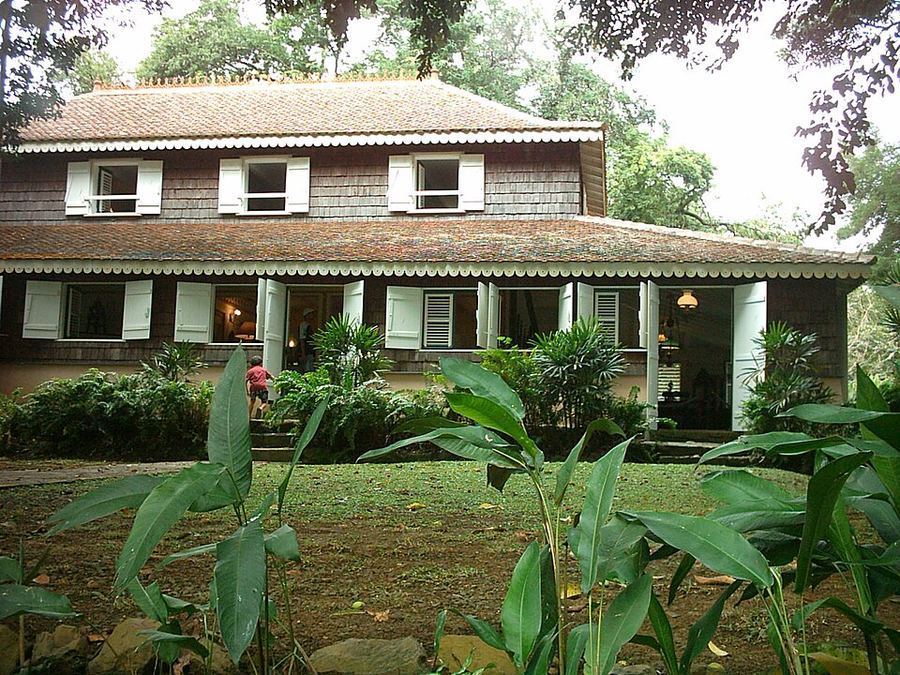
History, Martinique
Tux-Man / CC BY-SA 3.0

Culture

Martinican culture is Creole culture with an unusually strong intellectual tradition attached to it. The island gave the francophone world Negritude, elaborated by Aime Cesaire with Leopold Sedar Senghor and Leon-Gontran Damas in 1930s Paris, and then the critiques and extensions of it: Frantz Fanon's psychiatry of colonialism, Edouard Glissant's poetics of relation and creolisation, and the 1989 manifesto Eloge de la Creolite, in which Jean Bernabe, Patrick Chamoiseau and Raphael Confiant argued for Creole identity on its own terms rather than as an African diaspora. That argument is not confined to books; it runs through radio debate, school curricula and the status of the Creole language. Daily culture is Catholic in calendar and Creole in texture: Carnival building to the burning of the effigy Vaval, the black-and-white diablesses of Ash Wednesday, storytelling and the veillee, bele drumming in the northern communes, and a strong civic culture of associations. Family life stretches across the Atlantic, with a large Martinican population in metropolitan France and constant movement between the two.
Culture, Martinique
Georges-Michel Granville / CC BY-SA 4.0

Points Of Pride

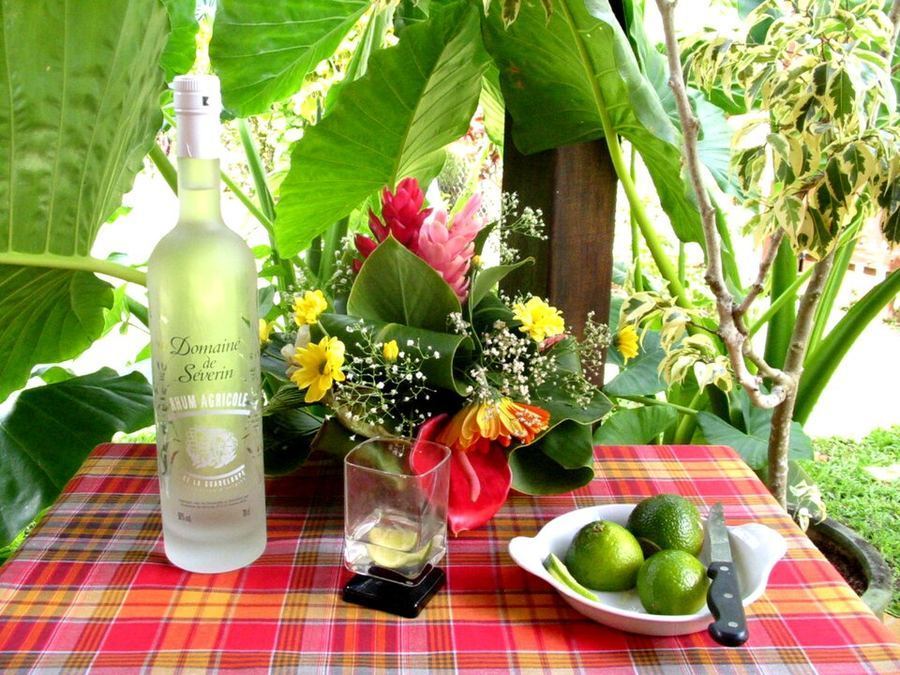
On 23 September 2023 UNESCO inscribed the Volcanoes and Forests of Mount Pelee and the Pitons of Northern Martinique on the World Heritage List, recognising a serial property covering roughly a tenth of the island: the volcano whose 1902 eruption became a founding case study of modern volcanology, together with forest continuums running from the shore to the summits and endemic species found nowhere else. Martinique's other great pride is intellectual. Aime Cesaire, poet of Cahier d'un retour au pays natal and mayor of Fort-de-France for more than half a century, Frantz Fanon, whose Black Skin, White Masks and The Wretched of the Earth are read on every continent, and Edouard Glissant are claimed by the island as its own. Patrick Chamoiseau won the Prix Goncourt in 1992 for Texaco. In the material register, the island holds the only appellation d'origine controlee in the world for a cane spirit, granted to rhum agricole by decree on 5 November 1996, and the yole, its traditional sailing craft, carries UNESCO intangible heritage recognition.
Points Of Pride, Martinique
Enrevseluj / CC BY-SA 4.0

Cultural Fusion

Every layer of Martinique's population arrived under different terms and left a different mark. Kalinago and earlier Amerindian peoples left place names, cassava processing and canoe forms. The French brought language, Catholicism, law and the plantation, and a small planter class, the bekes, whose descendants still hold much of the island's commercial capital, a fact that sits at the centre of Martinican social argument. Africans brought overwhelmingly from West and Central Africa reconstituted rhythm, foodways, kinship and belief under conditions designed to erase them; bele drumming and the storytelling tradition of the conteur descend directly from that reconstruction. After 1848 indentured labourers arrived from India, mainly Tamil-speaking, and their descendants maintain temples and ceremonies in the north; the colombo curry entered Creole cooking with them. Chinese and Levantine merchants added another layer in the nineteenth and twentieth centuries. Edouard Glissant coined the vocabulary now used across the Caribbean for what this produced: not a melting pot but creolisation, an unpredictable process in which contact makes something that none of the contributing cultures could have predicted.
Cultural Fusion, Martinique
Thérèse Gaigé / CC0

Music & Dance

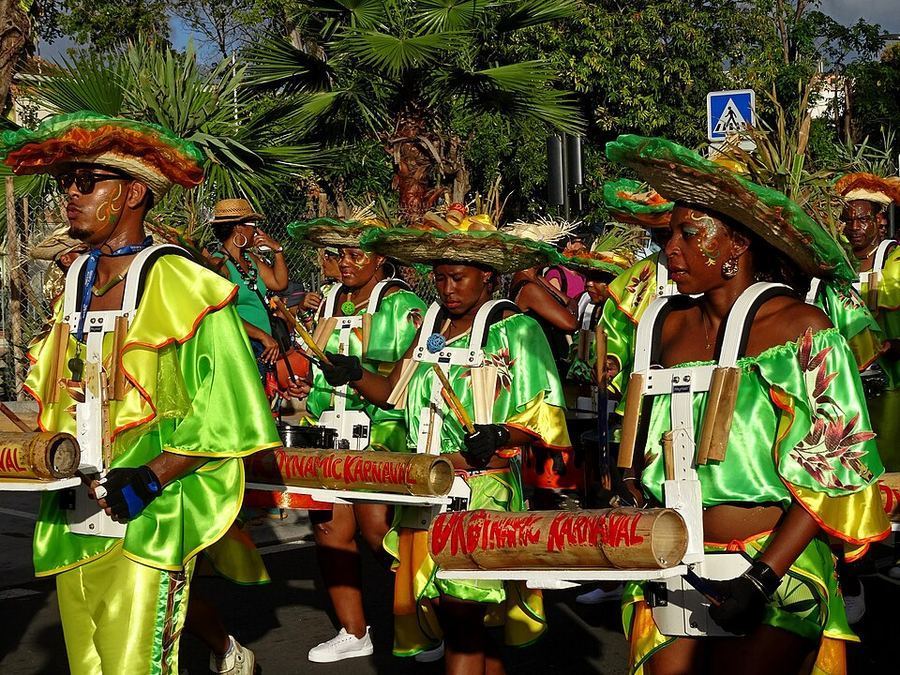
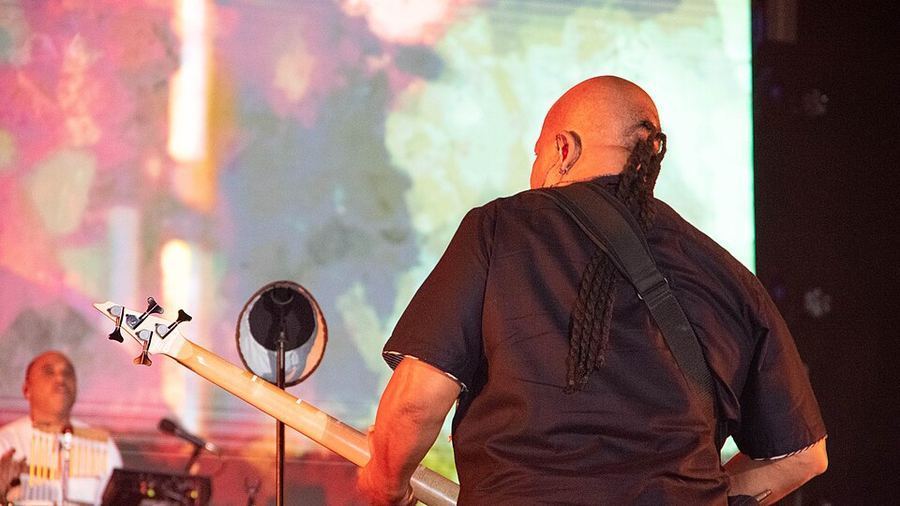
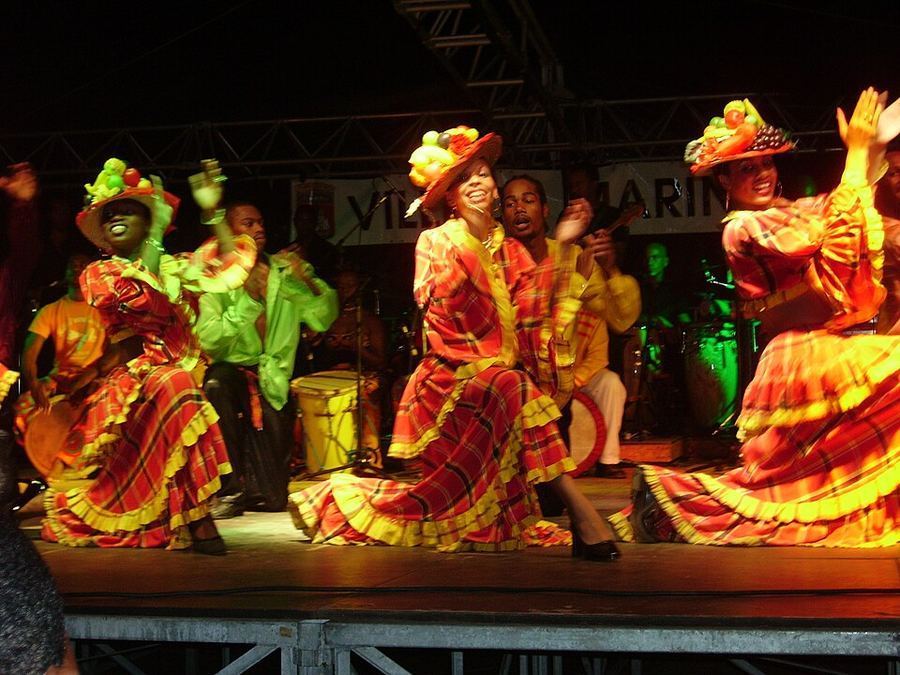
Bele is the deepest layer: a drum, dance and call-and-response singing tradition from the rural north, performed around the tanbou de bele played horizontally with the drummer astride it, with the ti-bwa sticks beating the rhythm on the drum's body. It survived as plantation-country music, was marginalised, and has been deliberately revived since the 1980s by associations teaching it to children. The chouval bwa, a merry-go-round music with drums and accordion, belongs to the fairground and to Carnival. The biguine, which spread from Saint-Pierre to Paris in the 1920s and 1930s and became the sound of Antillean nightlife in Europe, is Martinique's most famous historical export. The modern one is zouk: the band Kassav', founded in 1979 by Guadeloupean and Martinican musicians, with the Martinican singer Jocelyne Beroard among its central voices, made a Caribbean carnival rhythm into a global dance music. Carnival itself is the island's largest musical event, driven by the percussion of the vide processions through Fort-de-France.
Music & Dance, Martinique
Borisghost / CC0

Cuisine & Misattributed Foods

Martinican cooking runs on the same Creole grammar as its neighbours, with dishes it defends as its own. Feroce d'avocat is the emblem: mashed avocado worked with cassava flour, shredded salt cod and enough chilli to earn the name. Accras de morue, the salt-cod fritters, and boudin creole, a spiced blood sausage, open most meals, generally alongside a ti-punch made with white rhum agricole, cane syrup and lime. Colombo, the curry brought by Indian indentured labourers, is cooked with chicken, pork or goat. Blaff is fish poached in a sour, spiced broth; court-bouillon uses tomato and lime; chatrou, the small local octopus, is fricasseed. Matoutou de crabe, a crab and rice dish, belongs to Easter Monday and is eaten outdoors on the beach almost as a civic obligation. Sweet things lean on the island's fruit and its cane: bananas, guava, coconut sorbet, and the sugar-cane syrup that goes into everything. The rum itself, distilled from fresh cane juice rather than molasses, is treated as a national product rather than a souvenir.
Cuisine & Misattributed Foods, Martinique
Wikimedia Commons / CC BY-SA 1.0

National Dress

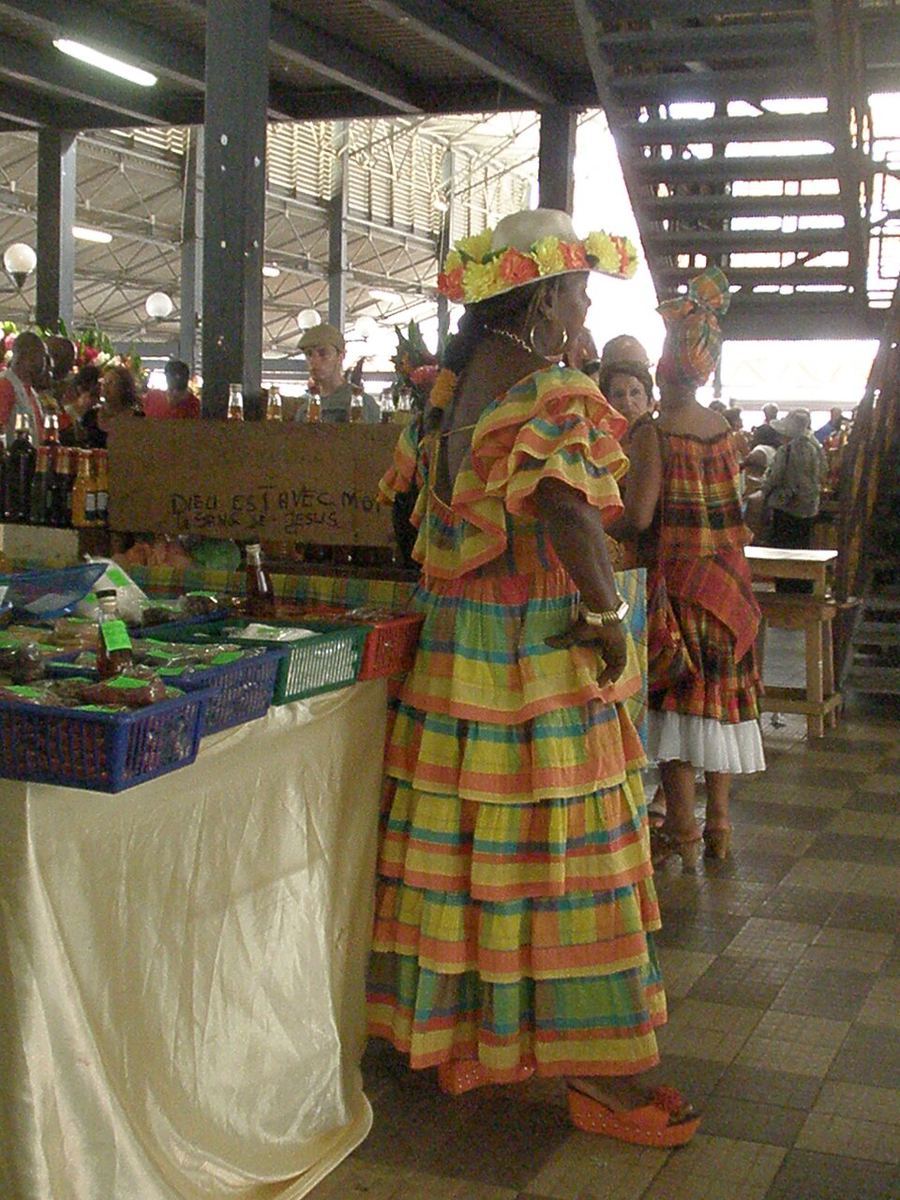
The Martinican Creole costume is built from madras, the checked cotton whose name records the Indian port it came from, and it is worn today as an assertion of identity rather than as everyday clothing. The full ensemble is the grande robe: a long, full skirt over a lace-edged jupon, a bodice, and a foulard draped across the shoulders, with the head wrapped in a starched madras tie folded into points. Local custom reads the points as a signal of the wearer's situation, one for free, two for attached, three for married and more as an invitation to try anyway, and guides at Carnival still explain it that way. Heavy gold jewellery is integral, particularly the collier-choux, a hollow torque of linked gold cabbage-shaped elements, and long chains of gold beads that historically represented savings a woman could carry. The dress reappears for Carnival, for weddings, first communions and cultural festivals, and in the costumes of bele dancers, where the everyday working version, simpler and made for movement, is the one used.
National Dress, Martinique
Wikimedia Commons / CC BY-SA 3.0

Sports & Inspiring Athletes

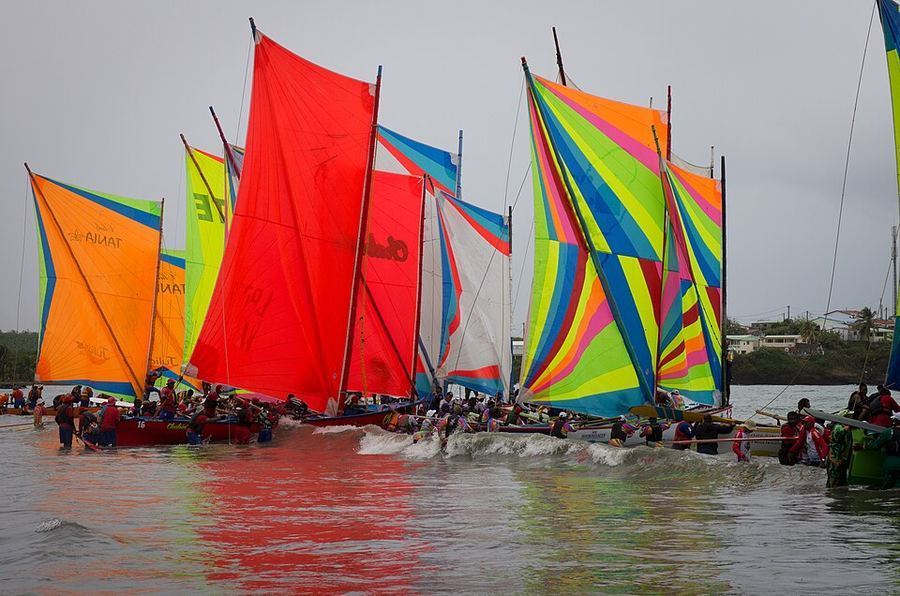
Football is the dominant sport, organised by the Ligue de Football de la Martinique, with a domestic championship whose clubs draw strong communal followings and feed players into the French mainland leagues. Athletics, basketball, handball and cycling all have substantial club structures, and the Tour cycliste international de la Martinique is a fixture of the summer. But the sport that defines the island is sailing the yole. The round-the-island tour, run over successive stages between coastal communes with crews balanced far out on poles and sponsors' colours on the sails, is followed by an accompanying fleet of spectator boats and by radio and television coverage that shuts down normal programming; it is the closest thing Martinique has to a national championship in anything. Traditional rowing and canoe races between communes fill out the calendar, as do surf and kitesurf competitions on the Atlantic coast. School and association sport is well funded by French standards, which is one reason the island produces professional athletes at a rate out of proportion to its population.
Sports & Inspiring Athletes, Martinique
Larcher Felix / CC BY-SA 4.0

Notable Educational Programs

Martinique operates the French national education system through its own rectorate, with the same curriculum, teacher recruitment and baccalaureat as metropolitan France. Higher education is provided by the Universite des Antilles, whose Martinique campus at Schoelcher, just outside Fort-de-France, houses law, economics, letters and human sciences; the institution took its present two-campus form after French Guiana separated to found its own university in 2014, an episode that left lasting friction over the balance between the Guadeloupe and Martinique poles. Creole has an institutional foothold that is unusual for a regional language in France: a dedicated competitive teaching qualification was created in the early 2000s, Creole language and culture can be taken at the baccalaureat, and bilingual streams operate in some schools. As an outermost region of the European Union, Martinique takes part in Erasmus mobility and EU-funded training and research programmes. Very high numbers of school leavers still go to metropolitan France for study, and their return or non-return is a central factor in the island's demographic decline.
Notable Educational Programs, Martinique
Wikimedia Commons / Public domain

Wars & Conflicts

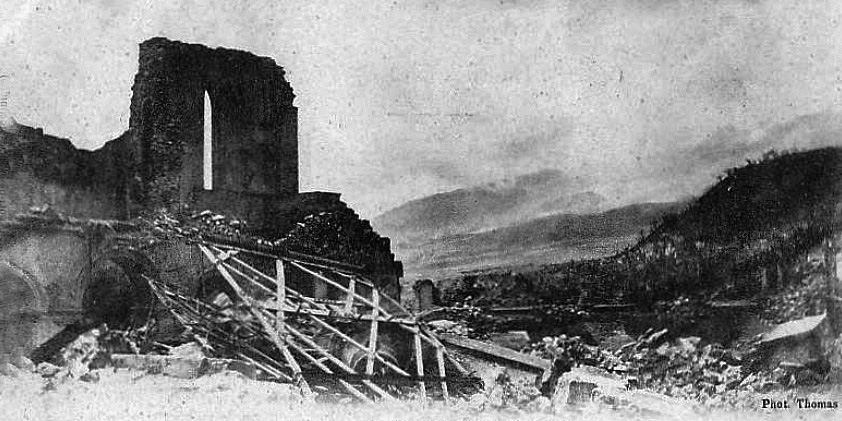
Martinique has no armed conflict; its confrontations are social, economic and legal. The historical reference points are the slave risings that forced the pace of emancipation in 1848 and the labour struggles of the plantation era, notably the strikes at Le Carbet and elsewhere in the early twentieth century in which workers were killed. In the modern period the defining episode is the general strike of 2009, when a coalition of unions and associations shut the island down for weeks in parallel with Guadeloupe, protesting the cost of living and the concentration of commerce and land in a small number of hands. That grievance has not gone away, and price-control protests have recurred, most visibly in the demonstrations and unrest of 2024 over the cost of food. The other running confrontation is over chlordecone, the organochlorine pesticide used in banana plantations into the early 1990s, which has contaminated soils, rivers and coastal waters for decades and left a legacy of public health anger that the judicial process has not resolved.
Agence France-PresseReutersLe MondeBBC
Current as of 2026-08-08
Wars & Conflicts, Martinique
Thomas 1902 / Public domain

Land & Border Disputes

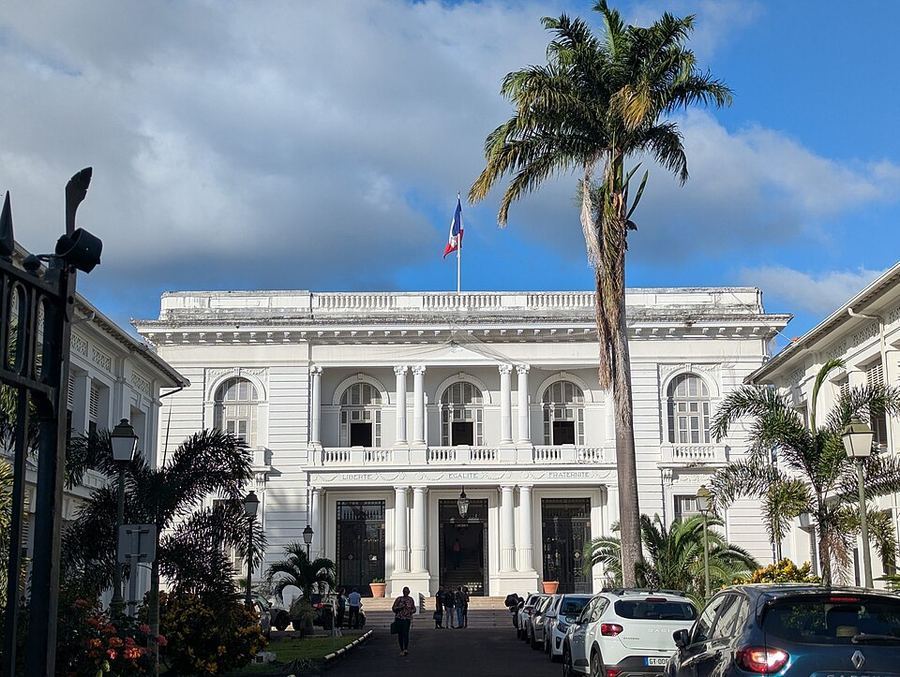
Martinique has no territorial dispute with a foreign state. Its maritime boundaries face Dominica to the north and Saint Lucia to the south, and are handled by France as part of the state's external competence. The disputes that matter are internal. Institutionally, Martinique voted in January 2010 against acquiring greater autonomy under article 74 of the French constitution, then voted in favour of merging its departmental and regional councils into a single territorial collectivity, which came into being in December 2015; the balance between autonomy and integration remains a live electoral question. The most bitter dispute is the chlordecone affair, where Martinican and Guadeloupean plaintiffs have pursued the French state and the banana industry through the courts over the authorisation and continued use of the pesticide, and where the decision by investigating magistrates to dismiss the criminal case was met with protest and appeal. A quieter but persistent argument concerns land and commercial concentration in the hands of the beke minority, and the pace of economic diversification away from bananas and tourism.
Land & Border Disputes, Martinique
Concord / CC BY-SA 4.0
Land, Life & Legacy

Land & Climate

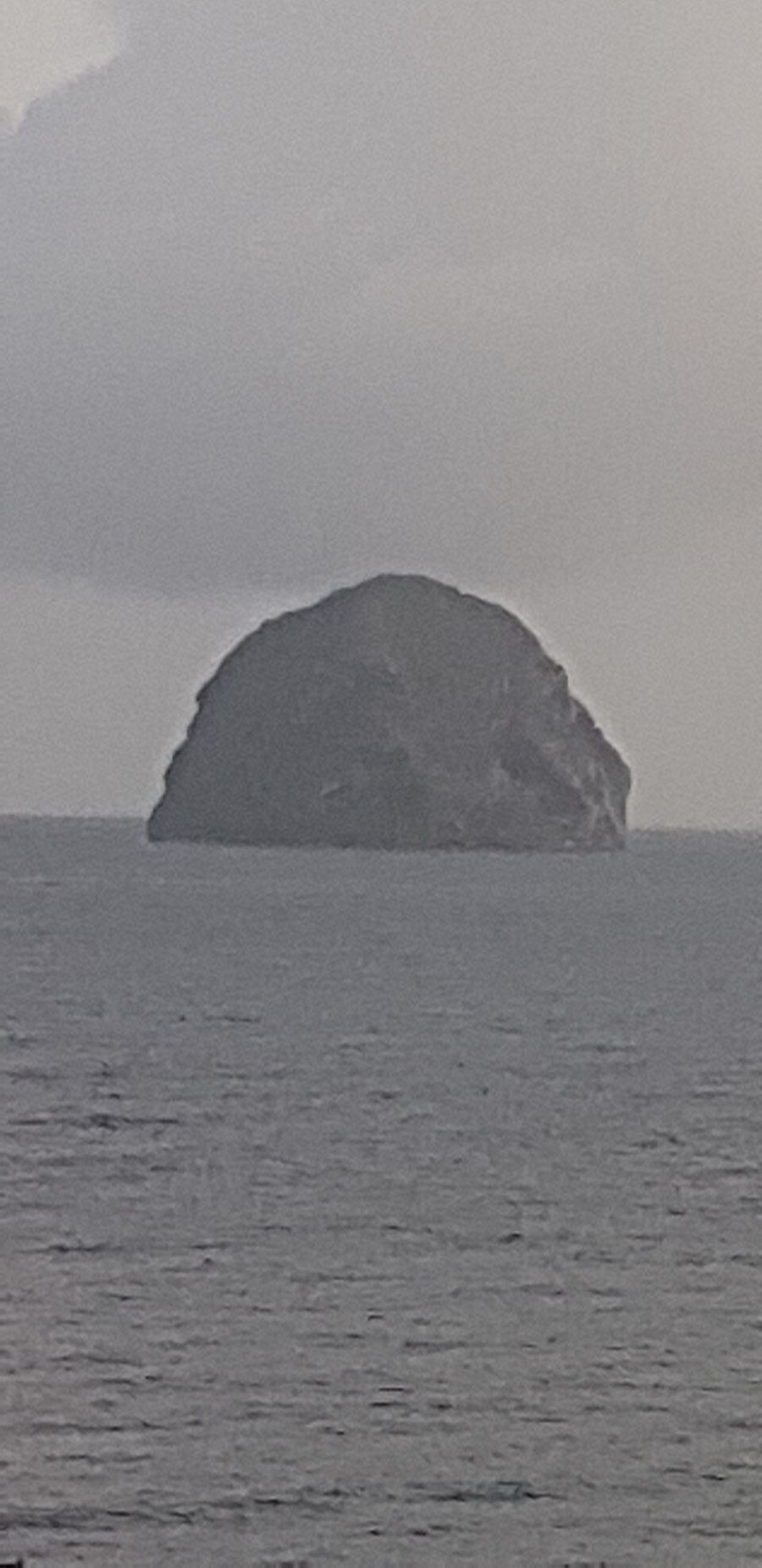
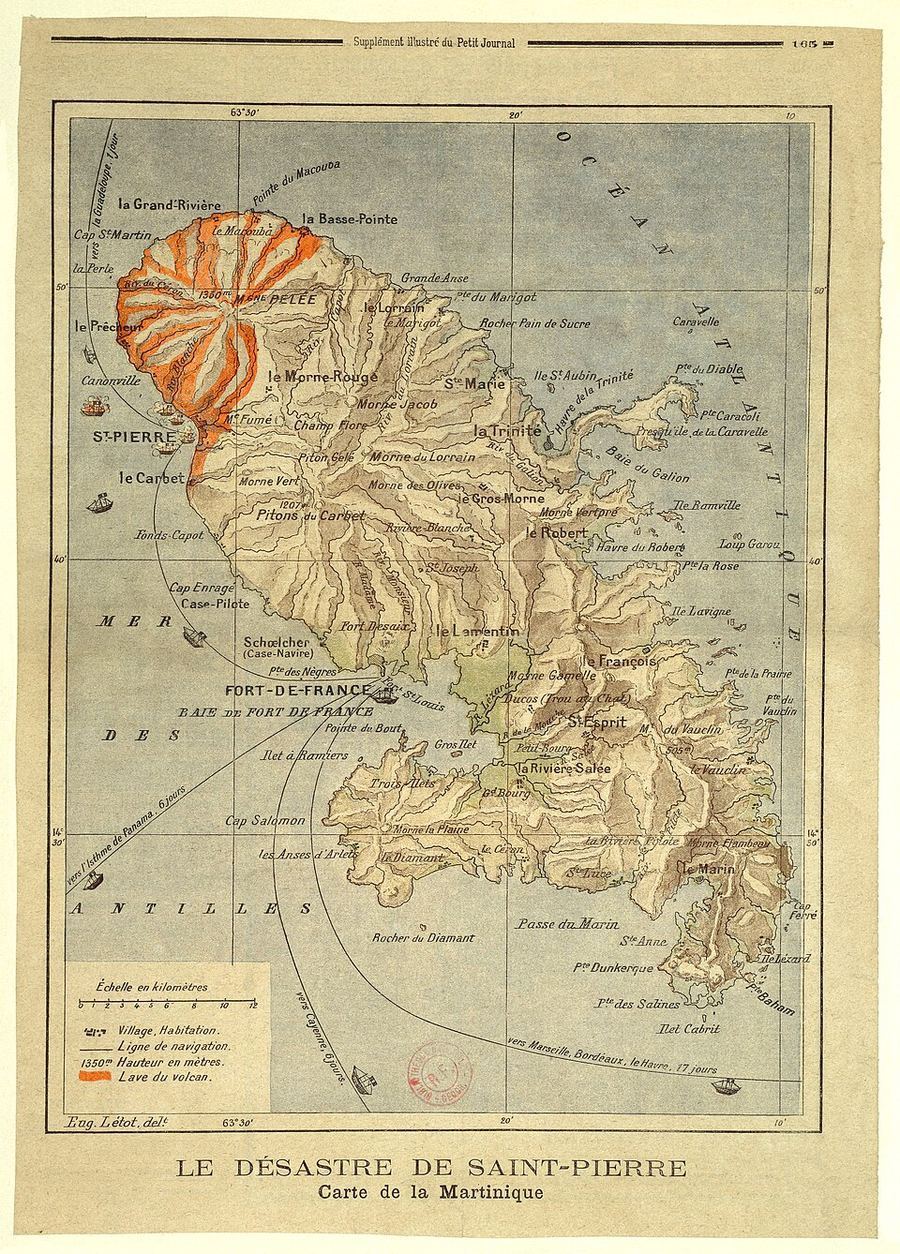
Martinique is a single volcanic island of roughly 1,100 square kilometres in the middle of the Lesser Antilles arc, and it is sharply divided north to south. The north is young, wet and steep: Mount Pelee, still active at around 1,400 metres, and the jagged Pitons du Carbet behind it, cloaked in rainforest that receives several metres of rain a year. The centre holds the plain of Le Lamentin and the deep, sheltered Baie de Fort-de-France. The south is older, lower and much drier, with rolling hills, mangroves, the exposed Atlantic coast of the Caravelle peninsula, and the white-sand beaches around Sainte-Anne and Les Trois-Ilets that carry the tourist economy. Offshore stands the Rocher du Diamant, a basalt plug the Royal Navy garrisoned and commissioned as a warship in 1804. The climate is tropical maritime, tempered by the trade winds, with a drier careme from January to April and a humid hivernage from June to November that coincides with the hurricane season; Hurricane Dean in 2007 flattened much of the banana crop.
Land & Climate, Martinique
Eugène Letot(+1941). Upload, stitch and restoration by Jebulon / Public domain

Entertainment

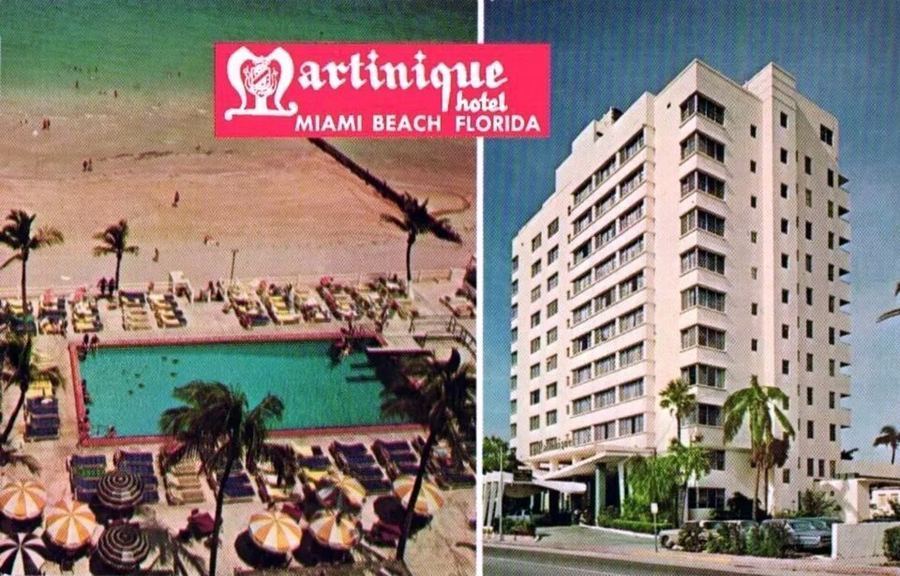
Weekends belong to the sea. Families take over the south-coast beaches around Sainte-Anne, Les Salines and Les Trois-Ilets from early morning with coolers, grills and dominoes, and Easter Monday is spent eating crab on the sand. Sailing is close to an obsession: alongside conventional yachting there is the yole, the traditional round-bottomed craft sailed without a keel by a crew hiked far out on wooden poles, whose annual round-the-island tour is the biggest spectator event of the Martinican year and draws a following flotilla. Hiking is serious in the north, on the trails up Mount Pelee, along the Canal des Esclaves and around the Caravelle peninsula. Diving and kitesurfing work the Atlantic side. Inland, the rum distilleries function as visitor destinations in their own right, as do the Jardin de Balata and the plantation houses. In town, the markets of Fort-de-France, the football ground and the Carnival calendar organise social life, and the vide processions pull the whole island into the street.
Entertainment, Martinique
Dick Deutsch Co., Miami Beach / Public domain

Art & Museums

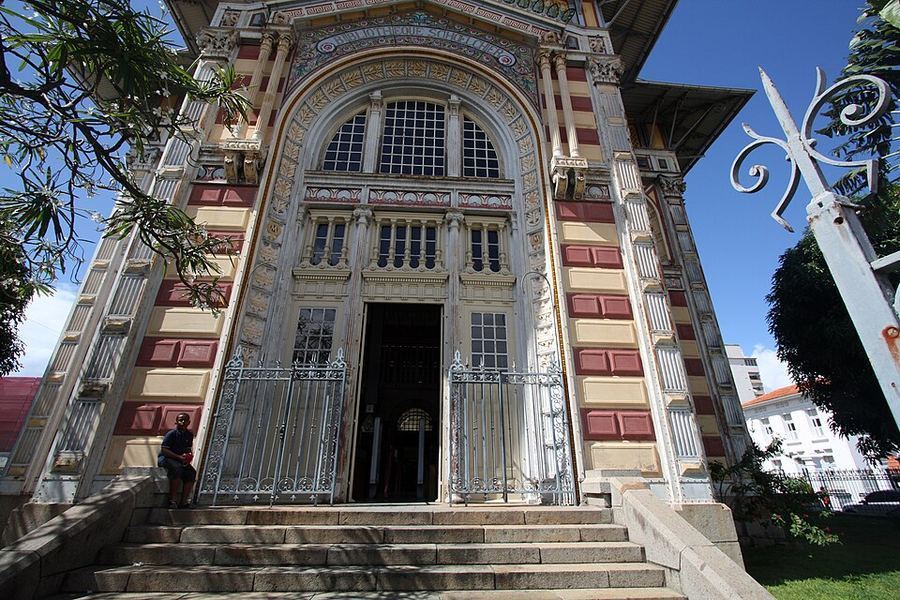
Martinique's artistic reputation rests above all on writing. Aime Cesaire's Cahier d'un retour au pays natal, first published in 1939, remains one of the founding poems of twentieth-century francophone literature; the journal Tropiques, which he edited during the war with Suzanne Cesaire and Rene Menil, connected the island to surrealism, and Andre Breton, passing through in 1941, became an early champion. Edouard Glissant built a body of novels and theory that reframed Caribbean identity around relation rather than root. Patrick Chamoiseau's Texaco took the Prix Goncourt in 1992, and Raphael Confiant writes in both French and Creole. In architecture, the Bibliotheque Schoelcher in Fort-de-France is the landmark: an ornate iron-framed pavilion designed by Pierre-Henri Picq, shown at the Paris exposition of 1889, then dismantled, shipped and re-erected on the island. Visual art centres on the memory of Saint-Pierre and the volcano, with the Musee Volcanologique and the town's ruins as subject matter, and on a lively contemporary scene of painting, photography and Carnival costume design.
Art & Museums, Martinique
Vlad Podvorny / CC BY-SA 3.0

Notable People

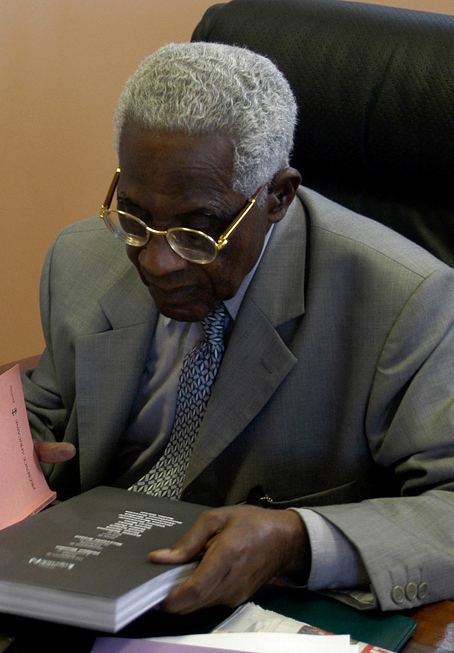
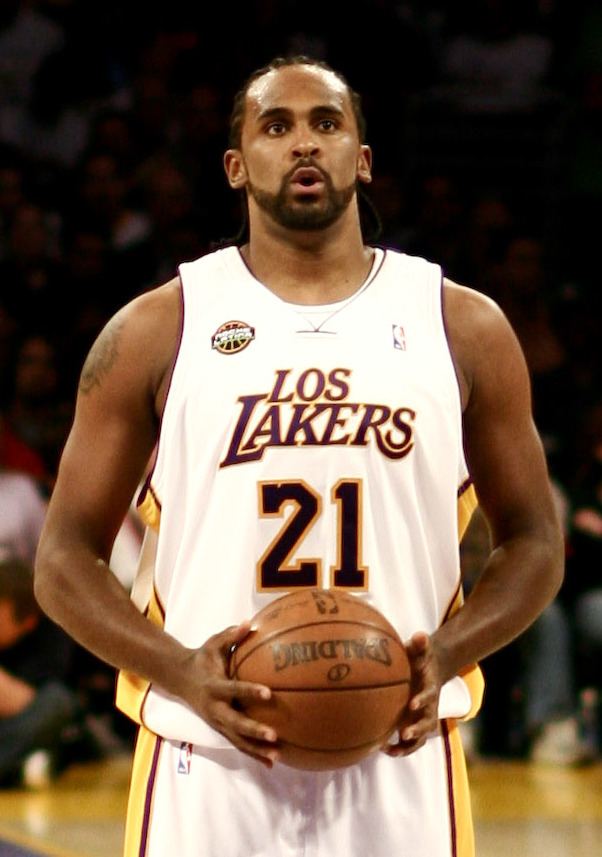
Aime Cesaire, born at Basse-Pointe in 1913 and dead in 2008, was poet, co-founder of Negritude, mayor of Fort-de-France from 1945 for over half a century, and rapporteur of the 1946 law that made the old colonies departments of France. Frantz Fanon, born in Fort-de-France in 1925, trained as a psychiatrist, served in Algeria and wrote Black Skin, White Masks and The Wretched of the Earth before his death at thirty-six. Edouard Glissant, born at Sainte-Marie in 1928, became the Caribbean's most influential theorist of creolisation. Suzanne Cesaire wrote the essays that gave Tropiques its edge; Patrick Chamoiseau and Raphael Confiant continued the line. Joseph Zobel's La Rue Cases-Negres became the film Sugar Cane Alley. Josephine de Beauharnais, born at Les Trois-Ilets in 1763, went from a Martinican plantation to empress of the French, a memory the island treats with open ambivalence. In music, Jocelyne Beroard of Kassav' is the best-known voice; in sport, the basketball player Ronny Turiaf, born at Le Robert, won an NBA championship.
Notable People, Martinique
Jean Baptiste Devaux / CC BY-SA 4.0

Inventions & Breakthroughs

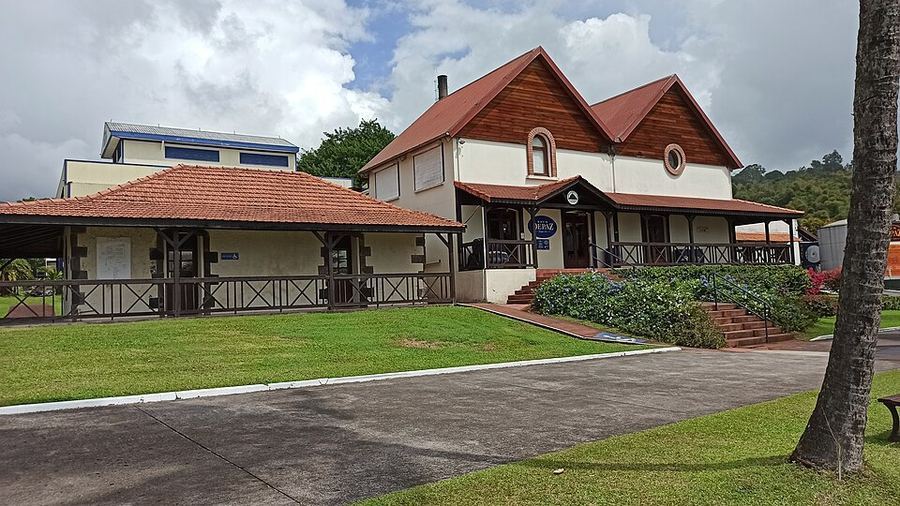
Martinique's inventive record is agricultural, maritime and intellectual rather than industrial, and the honest version is more interesting than a list of patents. The island perfected rhum agricole, distilled directly from fresh pressed sugar-cane juice rather than from molasses, and secured for it the only appellation d'origine controlee ever granted to a cane spirit, by decree on 5 November 1996; the associated distillation column, cane varieties and ageing rules amount to a codified technology. The yole is the other genuine invention: a keelless, round-bottomed sailing boat developed by local fishermen, kept upright by crew members balanced on long wooden bois-dresse poles, a solution to Caribbean coastal conditions that has no equivalent elsewhere and is now built purely for racing. In the realm of ideas, Negritude and, later, Glissant's concepts of creolisation, opacity and the Tout-Monde are Martinican intellectual constructions that have been adopted by writers and scholars far outside the Caribbean. Contemporary technical effort concentrates on volcano monitoring, chlordecone remediation and agricultural diversification away from bananas.
Inventions & Breakthroughs, Martinique
Otto Von Viani / CC BY-SA 4.0

Science & Technology

Volcanology is the island's defining science, for the plainest of reasons. The destruction of Saint-Pierre on 8 May 1902 by a pyroclastic density current from Mount Pelee gave the discipline the term nuee ardente and became the worldwide reference case for how an explosive volcano kills; the failure to evacuate the town, partly for electoral reasons, is still taught as a case study in risk communication. The Martinique volcanological and seismological observatory, run by the Institut de physique du globe de Paris, monitors Pelee continuously, and renewed seismic activity since 2019 has kept the volcano under heightened surveillance. Environmental science is dominated by chlordecone: mapping contaminated soils, tracking the pesticide through water, crops, livestock and fish, and researching remediation and human exposure has occupied French research institutes on the island for two decades. The Universite des Antilles and the university hospital support work in tropical medicine and marine ecology, and the sargassum seaweed influxes affecting Caribbean coasts since 2011 have added a further monitoring and disposal challenge.
Science & Technology, Martinique
Alfred Lacroix / Public domain
On The World Stage
Champions of Martinique

Champions & Defining Moments

As part of France, Martinique sends its athletes to the Olympic Games under the French flag, and Martinican-born or Martinican-descended competitors have been a persistent presence in French teams in athletics, judo, handball, football and basketball; the basketball player Ronny Turiaf, from Le Robert, went from the island to the French national team and to an NBA championship. In football, Martinique also maintains a separate international existence: it is a member of CONCACAF, the confederation for North and Central America and the Caribbean, without being a member of FIFA, which lets it enter the Gold Cup and the Caribbean competitions while barring it from World Cup qualifying. Its appearances at the Gold Cup, where a team drawn from a population of a third of a million faces the United States and Mexico, are followed intensely at home. The arrangement leaves Martinique in the same position as Guadeloupe: visible internationally under two different flags, and periodically arguing about which one should count.

IOCFIFAOlympediaBBC
Economy, Trade & Government

Terrain → Where People Live

How mountains, coasts, and rivers shape settlement (LandScan).

Coming — data

Migration & Ethnic Settlement

Where groups settled and how people move (GeoEPR + UNHCR).

Coming — data

Universities

Notable institutions, mappable as points.

Coming — data
Every fact and narrative claim will carry a visible source citation. Data-driven sections light up automatically wherever HERA has coverage.