HERA · Human Entity Reference Atlas by Masego Inc

← Malaysia 🌐 3D View
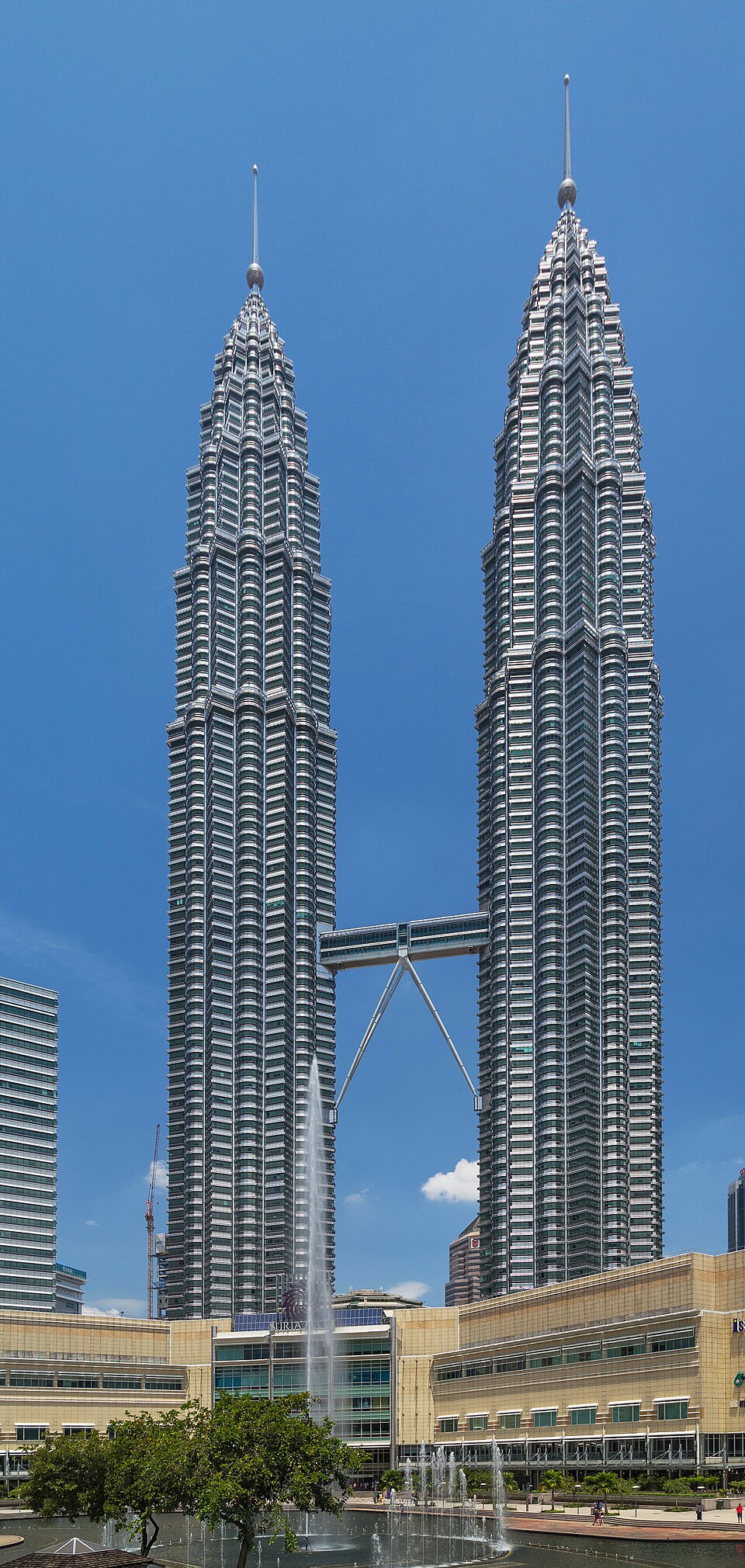
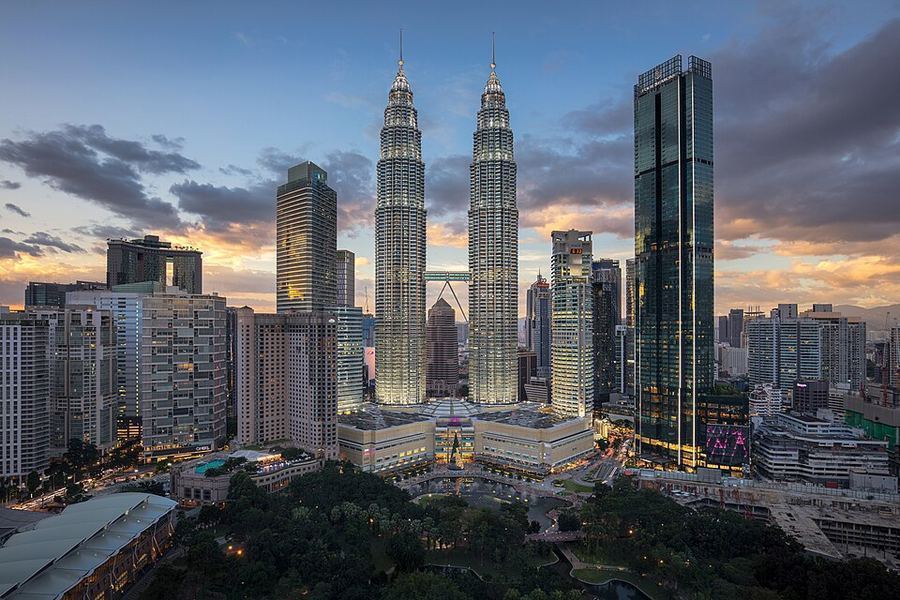
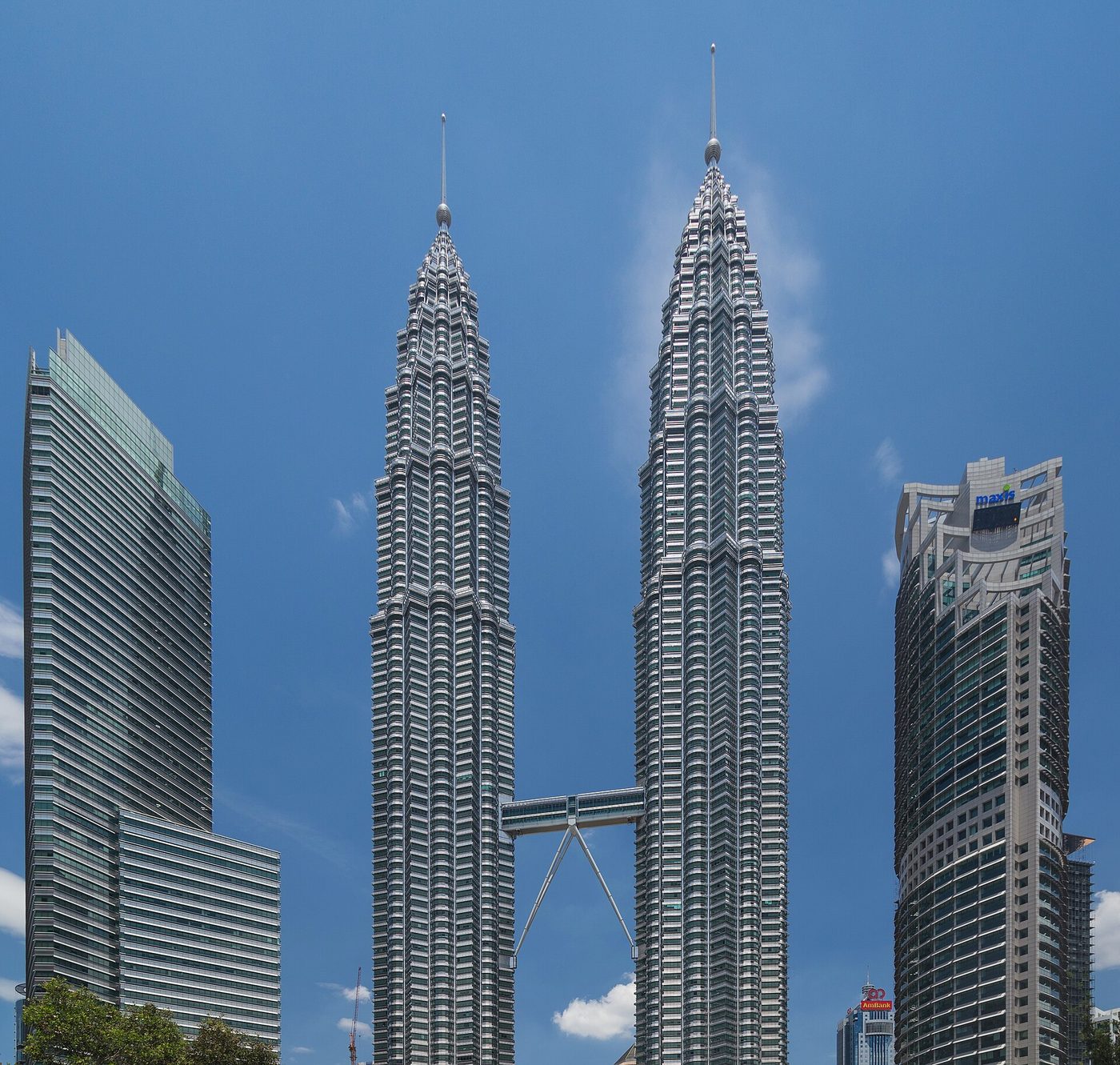
2016 Kuala Lumpur, Petronas Towers (26), Malaysia
Malaysia MYS
2016 Kuala Lumpur, Petronas Towers (26) — Photo: Marcin Konsek / CC BY-SA 4.0 via Wikimedia Commons
Did You Know Gunung Mulu National Park in Sarawak, a UNESCO World Heritage site, contains the Sarawak Chamber — the largest known cave chamber on Earth, so vast it could reportedly hold dozens of jumbo jets. — UNESCO

Malaysia is a country in two halves: Peninsular Malaysia reaching down from the Thai border toward Singapore, and the states of Sabah and Sarawak across the South China Sea on the island of Borneo. Some 34.9 million people live in this federal parliamentary constitutional monarchy, a nation whose defining trait is plurality — Bumiputera Malays and indigenous peoples make up about 64 percent of the population, alongside Chinese (20.6 percent) and Indian (6 percent) communities whose ancestors arrived over centuries of trade and colonial-era migration. Bahasa Malaysia is official, but English, Mandarin, Cantonese, Hokkien, Tamil, and dozens of indigenous Bornean languages fill its markets and classrooms. Independent from Britain since 31 August 1957, Malaysia transformed itself from a tin-and-rubber colony into an upper-middle-income manufacturing power: integrated circuits, petroleum, natural gas, and palm oil drive exports worth over $300 billion a year, and GDP per capita now tops $34,000 at purchasing power parity. Kuala Lumpur, crowned by the Petronas Towers, anchors one of Southeast Asia's most dynamic and youthful economies, with a median age of just 32.

CIA World FactbookWorld BankIMF
Population
34,905,275
Capital
Kuala Lumpur
Currency
RM MYR
Time zones
Largest city
Kuala Lumpur
Human Geography Themes
Loading national figures…
Largest Cities
Kuala Lumpur8,413,206
Johor Bahru1,703,324
Ipoh861,933
Kota Kinabalu810,843
George Town756,641
Kuching587,986
Malacca City548,073
Bukit Mertajam521,985
In Perspective

Kuala Lumpur's urban core is home to about 8,413,206 people.

That's bigger than Madrid, Toronto, Chicago and Sydney — each a great world city in its own right.

Kuala Lumpur8,413,206
Madrid5,680,137
Toronto5,566,382
Chicago5,318,735
Sydney4,375,394

Among the world's megacities, though, it's one of many — the giants of Asia and Latin America run larger still:

Kuala Lumpur8,413,206
Jakarta40,545,126
Dhaka37,307,160
Tokyo33,244,670
Shanghai30,678,616
Cairo25,230,325

More people live in Kuala Lumpur than in the entire nation of Denmark, Singapore, Finland or Norway.

The Country & Its People

History

Malaysia's story pivots on the Strait of Malacca, one of the world's great maritime chokepoints. Around 1400, a Sumatran prince named Parameswara founded the Sultanate of Malacca, which grew into a fabulously wealthy entrepot where Arab, Indian, and Chinese traders met the monsoon winds — and where Islam took root in the Malay world. The Portuguese seized Malacca in 1511, the Dutch took it in 1641, and the British gradually absorbed the peninsula from the late eighteenth century, importing Chinese labor for tin mines and Indian labor for rubber plantations — migrations that permanently reshaped the population. Japanese occupation in World War II shattered colonial prestige, and a communist insurgency known as the Malayan Emergency (1948–1960) shadowed the road to independence, achieved on 31 August 1957 under Tunku Abdul Rahman. In 1963 Malaya joined with Singapore, Sabah, and Sarawak to form Malaysia; Singapore departed in 1965. After deadly intercommunal riots in May 1969, the New Economic Policy sought to rebalance wealth among ethnic groups — a policy framework whose legacy still shapes Malaysian politics. Decades of rapid industrialization followed, symbolized by the Petronas Towers rising over Kuala Lumpur in the 1990s.
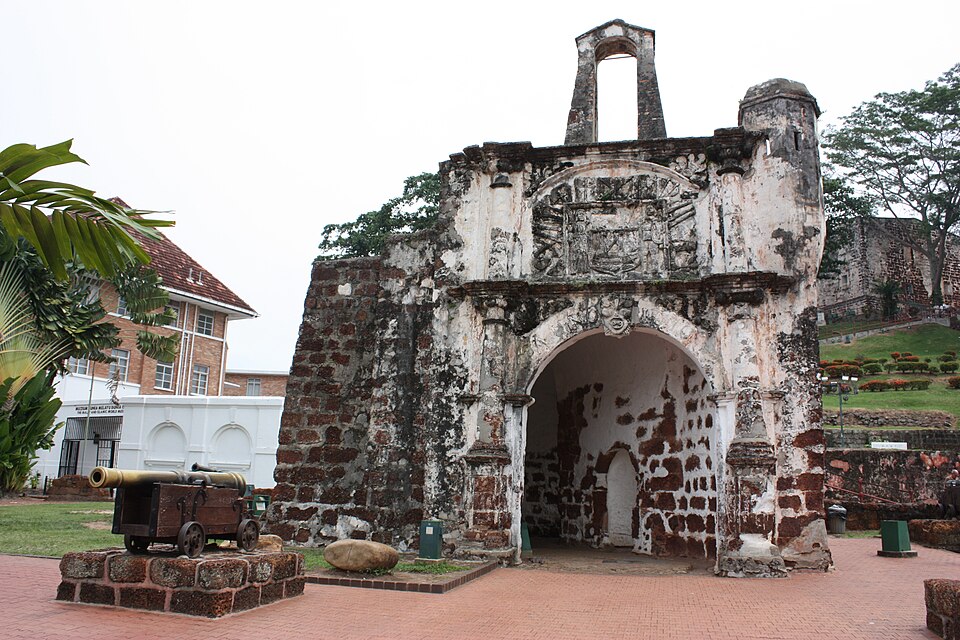
History, Malaysia
Irwan Shah Bin Abdullah / https://ehalal.io/muslim-friendly-travel-2024/Malacca / CC BY-SA 4.0

Culture

Malaysian culture runs on a calendar of everyone's festivals. Hari Raya Aidilfitri, Chinese New Year, Deepavali, Christmas, and the Bornean harvest festivals of Gawai (Sarawak) and Kaamatan (Sabah) are all public occasions, and the distinctly Malaysian institution of the 'open house' — rumah terbuka — sees families of one faith host neighbors of every other, tables groaning with food. Islam is the official religion, practiced by about 63.5 percent of the population, alongside Buddhism (18.7 percent), Christianity (9.1 percent), and Hinduism (6.1 percent), so mosques, Chinese temples, gurdwaras, and churches often share the same streetscape — nowhere more visibly than on Jalan Tokong in Melaka and in George Town, Penang, whose historic multicultural townscapes UNESCO inscribed as World Heritage in 2008. Traditional arts remain alive: batik and songket textiles, the shadow-puppet theatre wayang kulit, and kite-flying with the crescent-shaped wau bulan in Kelantan. East Malaysia adds its own register — Iban longhouse traditions in Sarawak, Kadazan-Dusun rice rituals in Sabah — reminders that 'Malaysian' encompasses dozens of indigenous peoples with distinct languages, adat (customary law), and cosmologies.
Culture, Malaysia
philip.mallis / CC BY-SA 2.0

Points Of Pride

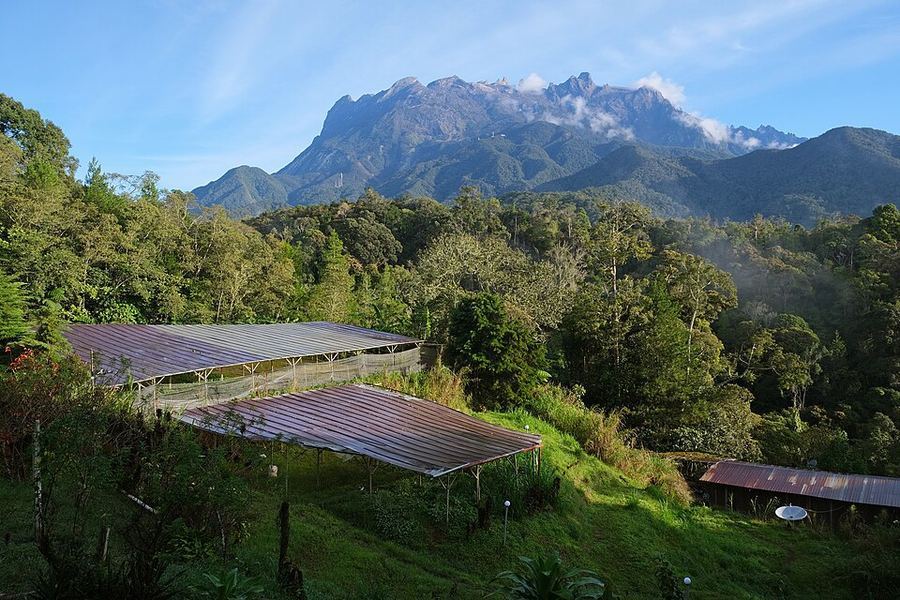
Malaysians can point skyward and seaward with equal satisfaction. The Petronas Towers, completed in 1998, were the tallest buildings on Earth until 2004 and remain the world's tallest twin towers — and Kuala Lumpur outdid itself with Merdeka 118, which at 678.9 meters became the second-tallest building in the world when completed. Natural superlatives are just as striking: Kinabalu Park and Gunung Mulu National Park were among the country's first UNESCO World Heritage sites, the latter containing the Sarawak Chamber, the largest known cave chamber on the planet, while Mount Kinabalu (4,095 m) towers over Borneo. Taman Negara protects rainforest estimated at some 130 million years old, among the most ancient on Earth. Malaysia is also one of Southeast Asia's most-visited countries, drawing tens of millions of international arrivals a year to Penang's street food, Langkawi's beaches, and Borneo's wildlife. Economically, the country punches above its weight as one of the world's leading exporters of semiconductors and palm oil, and Malaysians take particular pride in national icons from badminton greats to the homegrown Proton car and the national airline's global reach.
Points Of Pride, Malaysia
Marcin Konsek / CC BY-SA 4.0

Cultural Fusion

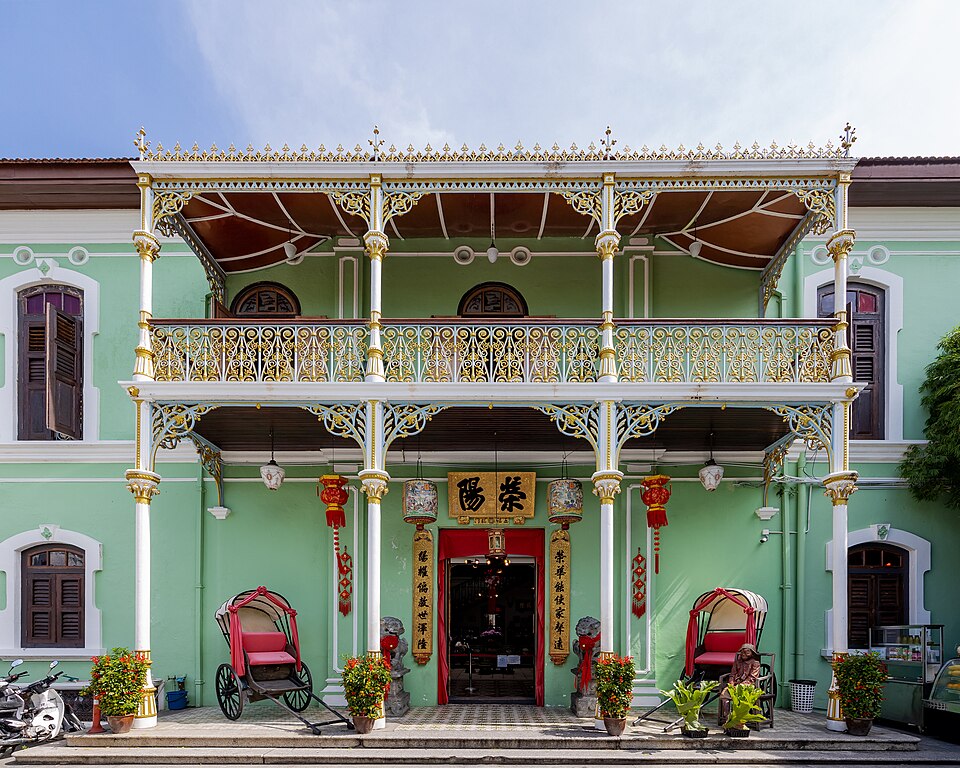
Fusion is not a garnish in Malaysia; it is the recipe. The most celebrated example is the Peranakan or Baba-Nyonya community — descendants of Chinese traders who settled in Malacca and Penang from the fifteenth century onward and intermarried locally, producing a hybrid culture with its own Malay-inflected Hokkien patois, ornately beaded kasut manek slippers, the elegant nyonya kebaya, and a cuisine that marries Chinese technique with Malay spice. Melaka also nurtured the Chitty, a Tamil-Hindu community speaking Malay, and the Kristang, Eurasians descended from Portuguese colonists who still speak a Portuguese-based creole five centuries after Afonso de Albuquerque's fleet arrived. Everyday life is equally blended: the mamak stall, run by Tamil Muslim Malaysians, is the country's unofficial town square, serving roti canai and teh tarik at midnight to customers of every ethnicity. Malaysians code-switch constantly, seasoning conversation with 'bahasa rojak' — mixed language named after rojak, the tossed fruit-and-sauce salad that doubles as the national metaphor for itself. Even the sacred borrows across lines: Malay weddings feature Indian-derived henna ceremonies, and Chinese Malaysian kopitiams anchor breakfast culture nationwide. Centuries of monsoon trade made hybridity Malaysia's default setting.
Cultural Fusion, Malaysia
This Photo was taken by Supanut Arunoprayote. Feel free to use any of my images, but please mention me as the author and may send me a message. (สามารถใช้ภาพได้อิสระ แต่กรุณาใส่เครดิตผู้ถ่ายและอาจส่งข้อความบอกกล่าวด้วย) Please do not upload an updated image here without consultation with the Author. The author would like to make corrections only at his own source. This ensures that the changes are preserved.Please if you think that any changes should be required, please inform the author.Otherwise you can upload a new image with a new name. Please use one of the templates derivative or extract. / CC BY 4.0

Music & Dance

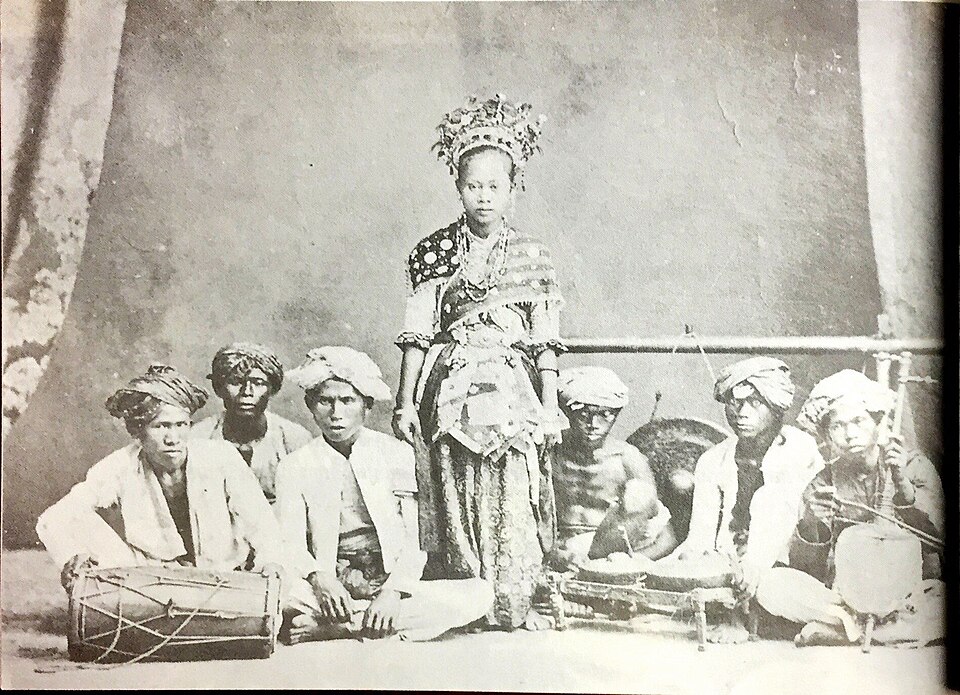
Malaysia's performing arts map its layered heritage. Mak yong, an ancient Malay dance-drama from Kelantan combining ritual, romance, and improvised comedy, was proclaimed by UNESCO as a Masterpiece of the Oral and Intangible Heritage of Humanity in 2005 — poignantly, in the very state where public performance had been restricted on religious grounds. Dondang sayang, the teasing sung-poetry exchange of love pantun verses accompanied by violin, gongs, and rebana drums, grew up in multicultural Melaka and joined UNESCO's intangible heritage list in 2018; it is performed by Malay, Peranakan, Chitty, and Portuguese-Eurasian communities alike. Social dances endure at weddings and festivals: the flirtatious, quick-stepping joget (itself descended from Portuguese branyo), the graceful Johor zapin with roots in Arab hadhrami migration, and the call-and-response choral spectacle of dikir barat. East Malaysia contributes the Iban ngajat warrior dance, all slow poise and hornbill-feather regalia, and the Kadazan-Dusun sumazau, arms outstretched like birds in flight. The Malay gamelan and the nobat royal court ensemble carry older palace traditions, while silat, the Malay martial art whose performance dimension UNESCO inscribed in 2019, blurs the line between combat and choreography.
Music & Dance, Malaysia
Unknown authorUnknown author / Public domain

Cuisine & Misattributed Foods

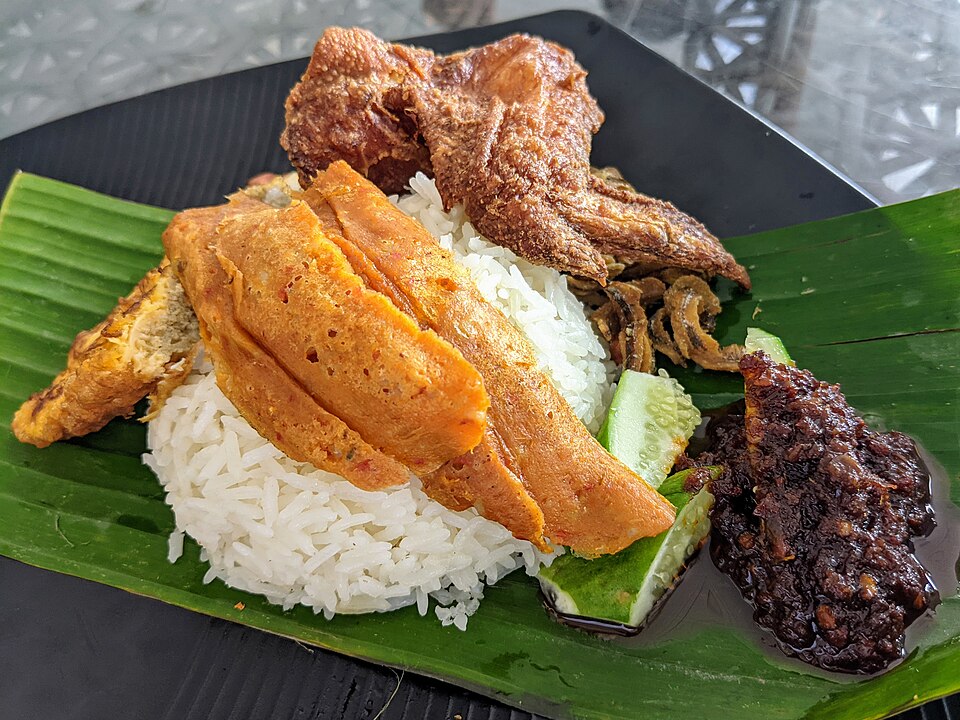
Malaysian food may be the country's most persuasive diplomat. The unofficial national dish is nasi lemak — rice steamed in coconut milk and pandan, served with fiery sambal, fried anchovies, peanuts, cucumber, and a boiled egg — eaten from banana-leaf packets at breakfast and from hotel buffets at midnight. Every community contributed to the table: Malay kitchens gave rendang and satay; Chinese Malaysians perfected char kway teow, Hokkien mee, and Hainanese chicken rice; Indian Malaysians supplied banana-leaf curries and the flaky, flying dough of roti canai; and the Peranakans invented Nyonya cuisine, where Chinese ingredients meet lemongrass, galangal, and belacan. Laksa alone is a national argument — Penang's tart, fish-based asam laksa versus the coconut-rich curry laksa of Kuala Lumpur and Sarawak's own prawn-and-sambal version. Street food is the great social leveler: hawker centers and mamak stalls stay open into the small hours, washed down with teh tarik, tea theatrically 'pulled' between two cups into a frothy ribbon. And looming over it all is the durian, the spiky, creamy, notoriously pungent 'king of fruits,' which Malaysians export to eager markets abroad and debate with religious intensity at home.
Cuisine & Misattributed Foods, Malaysia
Jpatokal / CC BY-SA 4.0

National Dress

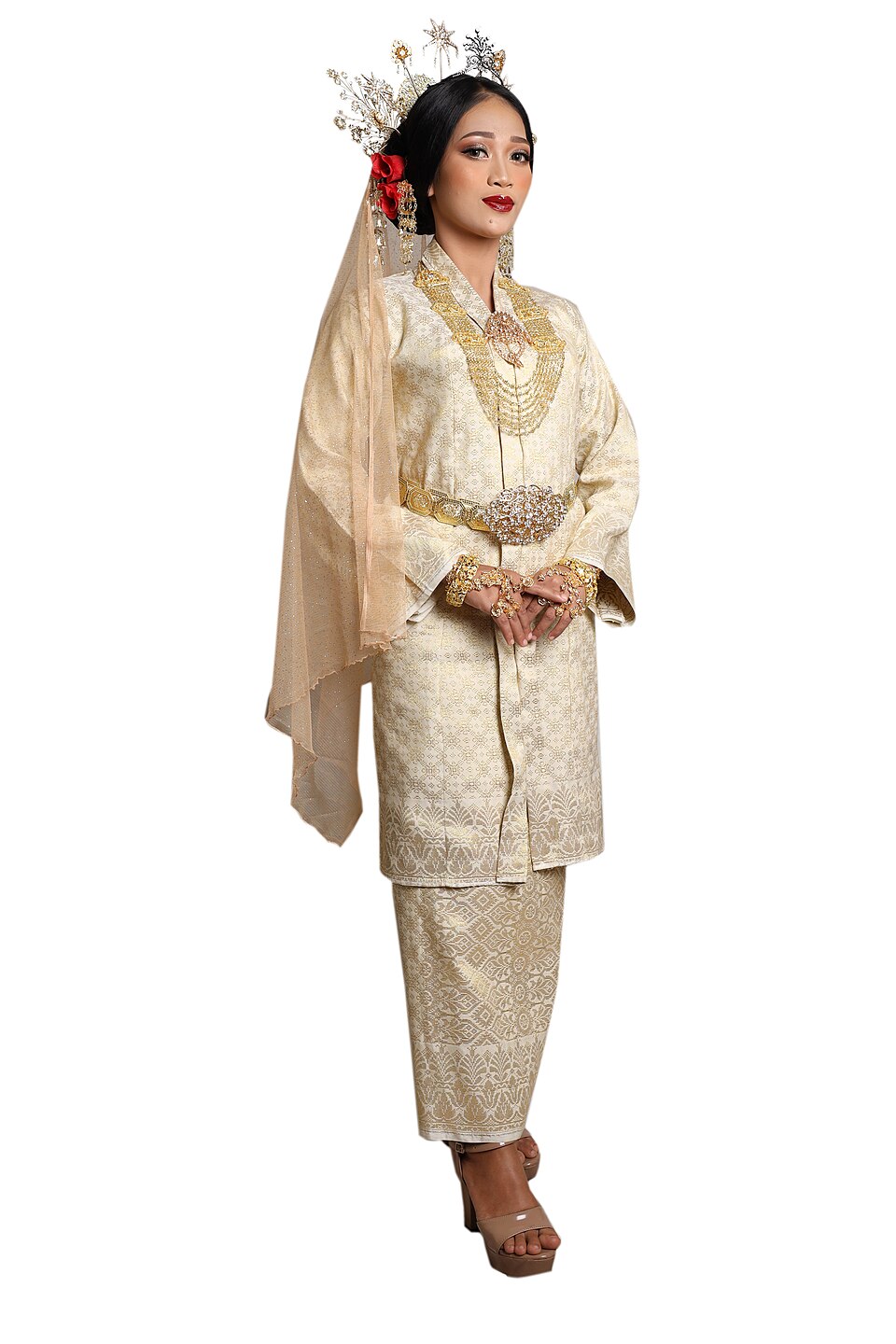
Malaysian dress codes read like a census in fabric. For Malay men, formal occasions call for the baju melayu — a loose tunic and trousers wrapped at the waist with a samping of woven songket brocade and topped by the songkok cap; women wear the baju kurung, a long, gracefully unfitted tunic over an ankle-length skirt, or the more fitted kebaya. The nyonya kebaya of the Peranakan community, a sheer, exquisitely embroidered blouse fastened with a three-piece kerongsang brooch, is a masterpiece of the fusion aesthetic — and kebaya traditions across the region were inscribed by UNESCO in 2024 as intangible heritage shared by Malaysia and its neighbors. Chinese Malaysians bring out the cheongsam at Lunar New Year, Indian Malaysian women wear the sari or salwar kameez for Deepavali and weddings, and Sikh men wear the turban daily. East Malaysia's indigenous regalia is spectacular: Iban ceremonial dress with silver belts and hornbill motifs, Kadazan-Dusun black velvet trimmed in gold. The great national equalizer, though, is batik — the wax-resist patterned cloth, distinct in style from Java's, that serves as official Malaysian formalwear; batik shirts are expected attire for many state functions.
National Dress, Malaysia
Riski Syahputra / CC BY-SA 4.0

Sports & Inspiring Athletes

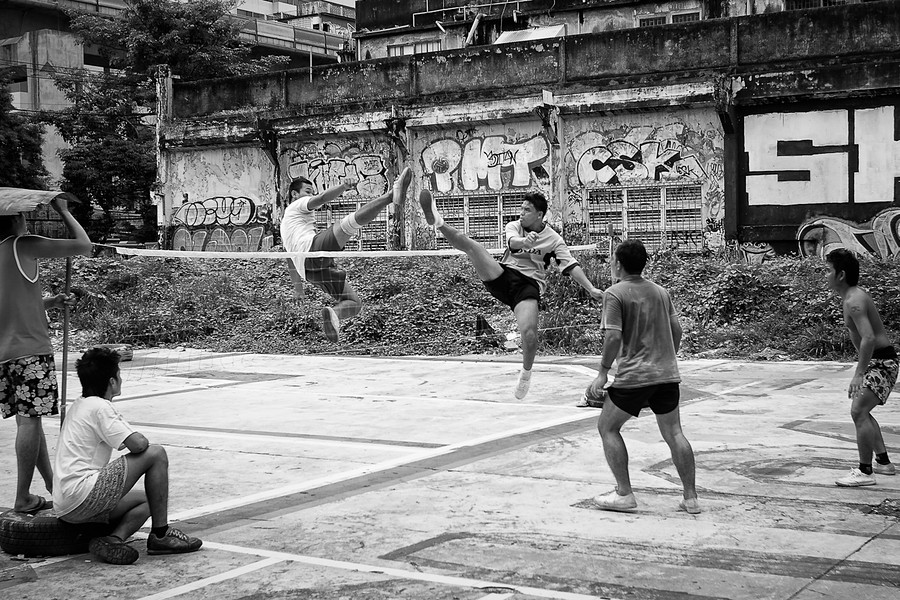
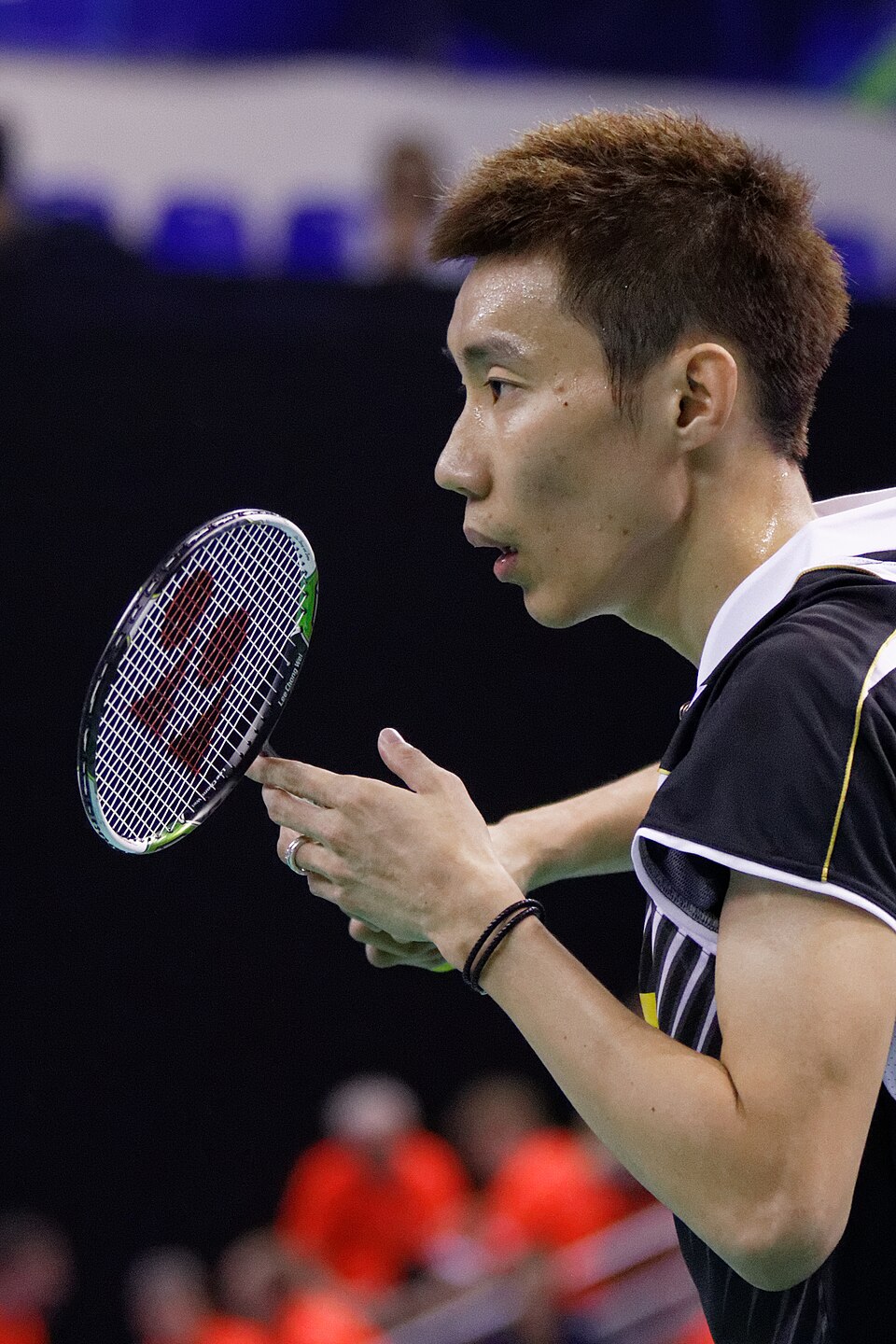
Badminton is Malaysia's sporting religion. The country claimed the Thomas Cup, the sport's world team championship, five times, and national hero Lee Chong Wei spent years ranked world number one, collecting three Olympic silver medals (2008, 2012, 2016) in duels with China's Lin Dan that stopped the nation. Remarkably, Malaysia has stood on many Olympic podiums — in badminton, track cycling, and diving — without yet winning gold, a national quest renewed every four years. Beyond the courts, squash legend Nicol David dominated her sport for a decade, holding the world number one ranking for an unprecedented 108 consecutive months, and track cyclist Azizulhasni Awang, the 'Pocket Rocketman,' won keirin medals at successive Olympic Games. Sepak takraw — volleyball played with the feet and a rattan ball, its very name half Malay ('sepak,' kick) — is the beloved kampung game turned regional showpiece. The Sepang International Circuit hosted Formula One's Malaysian Grand Prix from 1999 to 2017 and still stages MotoGP, while football commands weekend loyalties through the Malaysia Super League and the historic Merdeka Tournament, one of Asia's oldest international football competitions. Kuala Lumpur hosted the 1998 Commonwealth Games, the first in Asia.
Sports & Inspiring Athletes, Malaysia
Robertpollai / CC BY 3.0

Notable Educational Programs

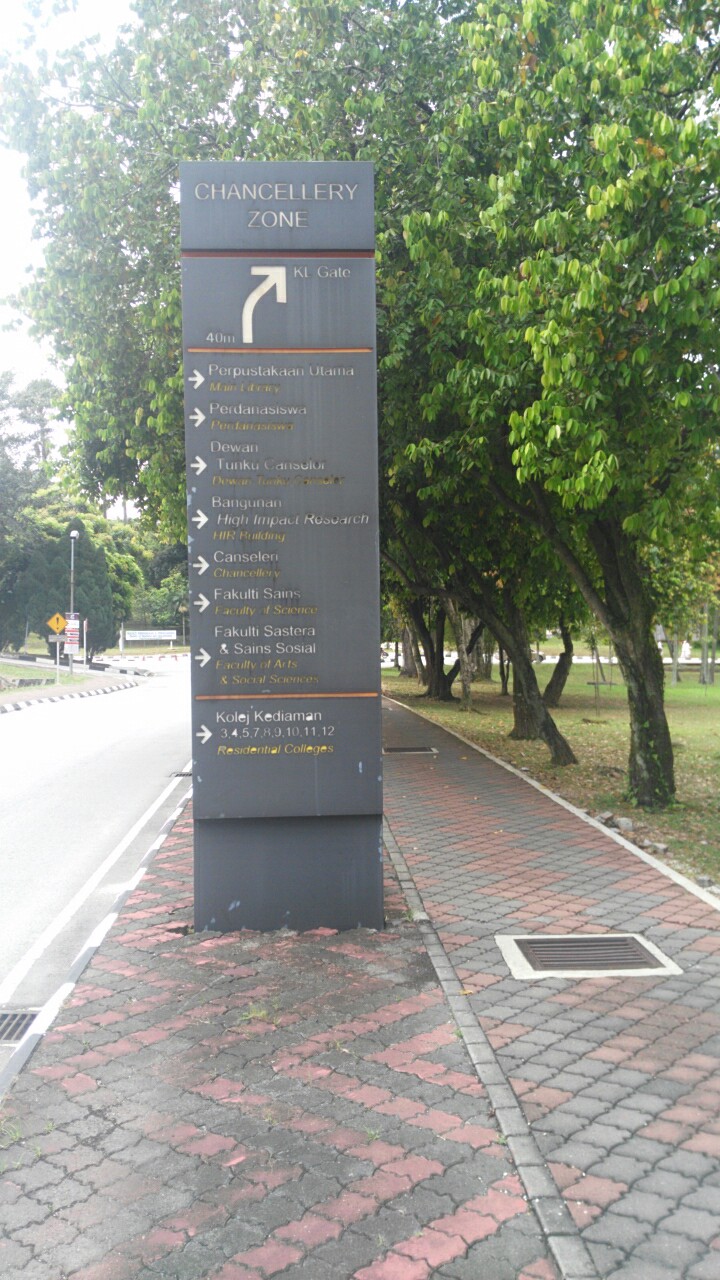
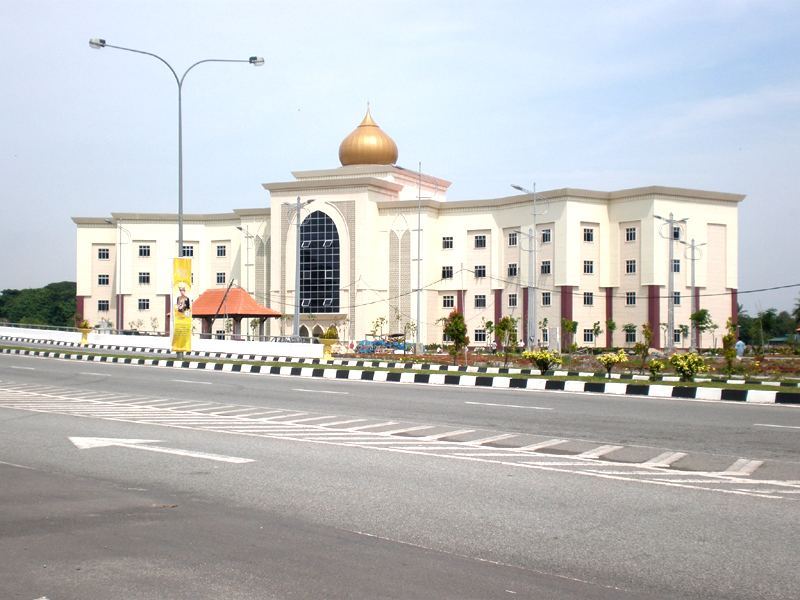
Malaysian schooling follows a 6-3-2 structure — six years of primary school, three of lower secondary, and two of upper secondary, capped by the SPM national examination — with free public education and near-universal enrollment. What makes the system distinctive is its parallel streams, a direct inheritance of the country's plural society. Alongside national schools teaching in Bahasa Malaysia, government-supported 'national-type' vernacular primary schools teach in Mandarin (SJK(C)) or Tamil (SJK(T)), a constitutional accommodation that keeps mother-tongue education alive; Chinese independent secondary schools additionally offer their own UEC certificate. A parallel religious stream of sekolah agama provides Islamic education, from state-run religious schools to the government-assisted people's religious schools, and Islamic studies is a core subject for Muslim pupils in national schools. Selective boarding institutions — the elite sekolah berasrama penuh and the MARA junior science colleges (MRSM) — channel high performers, particularly Bumiputera students, toward science and technology. After secondary school, routes diverge into matriculation colleges, Form Six (STPM), polytechnics, and a crowded university sector. Malaysia has also positioned itself as a regional education hub, hosting branch campuses of British and Australian universities and drawing tens of thousands of international students.
Notable Educational Programs, Malaysia
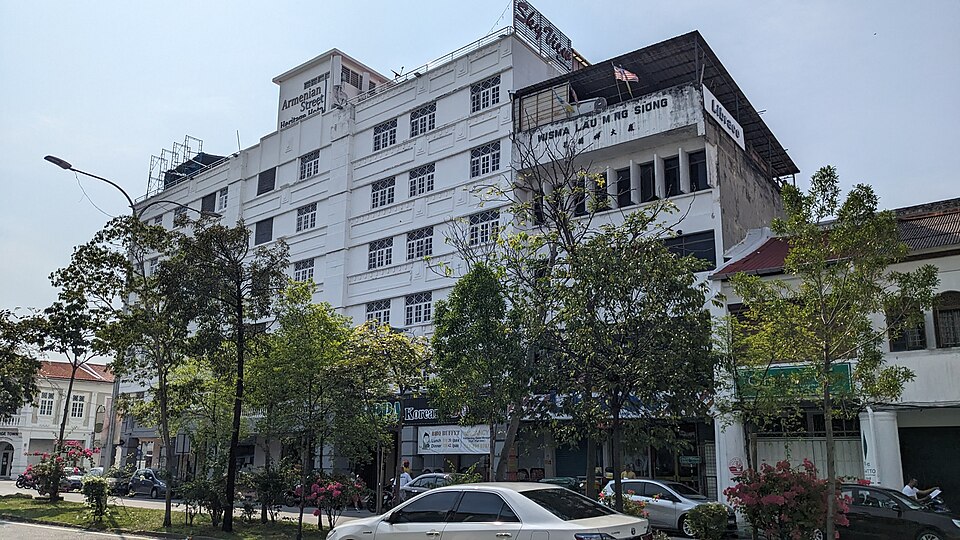
Chaoyang Sunrise / CC BY-SA 4.0

Wars & Conflicts

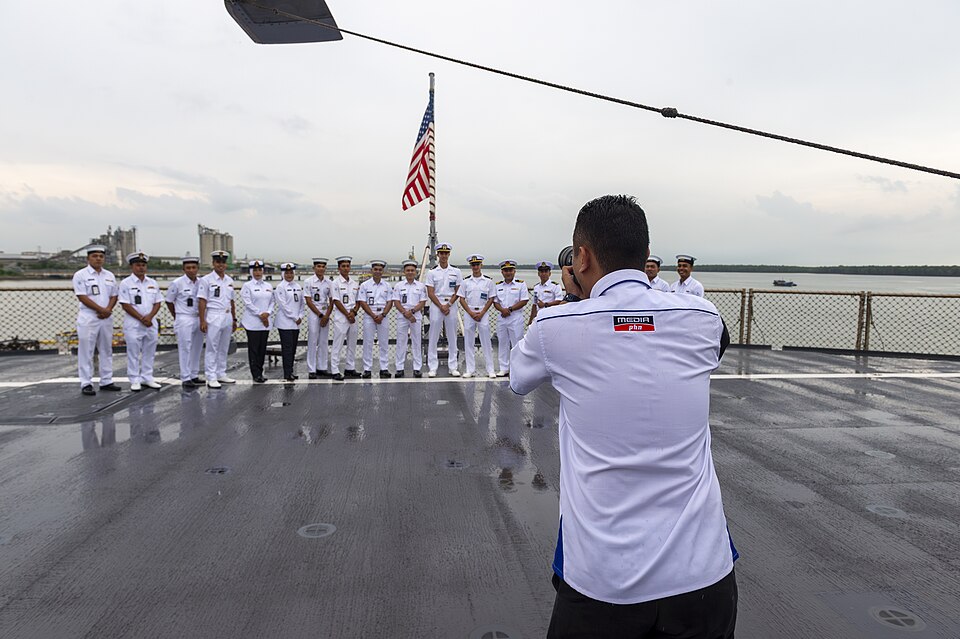
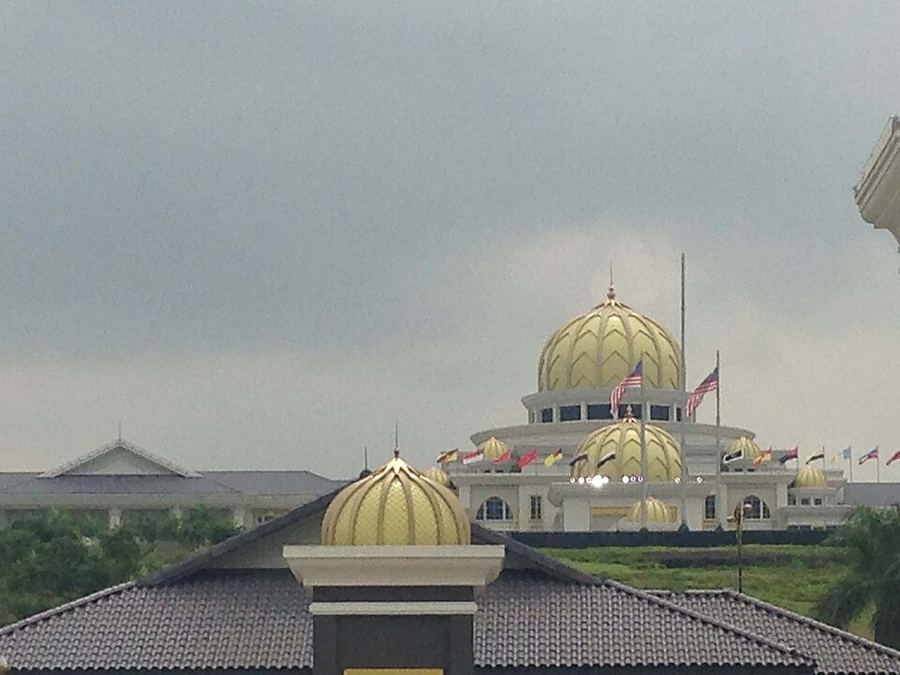
Malaysia faces no armed conflict on its territory as of mid-2026, and conflict-data monitors such as UCDP record no active state-based conflict involving Malaysia. Its security file is maritime and diplomatic. China Coast Guard vessels maintained a near-constant presence around Luconia Shoals inside Malaysia's exclusive economic zone off Sarawak through 2024–2025, shadowing Malaysian oil and gas operations; Kuala Lumpur has responded with quiet diplomatic protests while continuing offshore drilling, a low-drama posture noted by regional analysts and outlets including VOA and Reuters. As 2025 ASEAN chair, Malaysia took an unusually prominent security role: after Thailand and Cambodia exchanged fire along their border in July 2025, Prime Minister Anwar Ibrahim hosted emergency talks in Putrajaya that produced a ceasefire on 28 July 2025, followed by the Kuala Lumpur Peace Accord signed at the October ASEAN Summit — coverage carried by Reuters, Al Jazeera, and AP — though clashes flared again in December 2025 and Malaysia convened a special ASEAN foreign ministers' meeting in response. Separately, the Paris Court of Appeal in December 2025 annulled the $14.9 billion arbitration award claimed by self-described heirs of the Sultan of Sulu, closing a legal saga linked to Sabah's colonial-era history. Domestic security incidents remain rare; the last significant armed incursion was the 2013 Lahad Datu standoff in Sabah.
Current as of 2026-07-16
Wars & Conflicts, Malaysia
U.S. Navy photo by Petty Officer 2nd Class Ben Bellamacina / Public domain

Land & Border Disputes

Malaysia's disputes are almost entirely about lines on water. In the South China Sea, Malaysia claims part of the Spratly Islands and occupies several features, including Swallow Reef (Layang-Layang), which it has developed with an airstrip and dive resort; its claims overlap with those of China, Vietnam, the Philippines, Taiwan, and Brunei, and China's expansive 'nine-dash line' cuts deep into Malaysia's exclusive economic zone off Borneo — friction most visible around Luconia Shoals, where Chinese coast guard vessels patrol near Malaysian oil and gas fields. Malaysia has pressed its case through legal channels, including continental shelf submissions to the UN. To the east, the Philippines maintains a dormant claim to Sabah, rooted in the Sulu Sultanate's nineteenth-century lease of North Borneo — a claim Malaysia rejects, pointing to the 1963 formation of Malaysia following a UN-assessed ascertainment of Sabahan opinion. Two disputes have been settled at the International Court of Justice: in 2002 the ICJ awarded the islands of Ligitan and Sipadan to Malaysia over Indonesia's claim, and in 2008 it awarded Pedra Branca to Singapore while giving Middle Rocks to Malaysia. Maritime boundary talks with Indonesia, including the Ambalat area, continue amicably.
Land & Border Disputes, Malaysia
matthew lee / CC BY 2.0
Land, Life & Legacy

Land & Climate

Malaysia covers about 330,000 square kilometres in two parts separated by some 600 kilometres of the South China Sea. Peninsular Malaysia shares a land border with Thailand in the north and is linked to Singapore by causeway in the south; a mountainous spine, the Titiwangsa range, runs down it with plains on both coasts, the western one holding Kuala Lumpur, Penang and most of the population. East Malaysia comprises Sarawak and Sabah on northern Borneo, wrapped around Brunei, with rugged interior highlands rising to Mount Kinabalu at 4,095 metres, the highest peak in the country and a World Heritage site, and the Mulu caves, which include some of the largest known cave chambers in the world. The Strait of Malacca along the west coast is one of the busiest shipping lanes anywhere. The climate is equatorial: hot, humid and wet through the year with no real dry season, though the northeast monsoon from November to March brings heavy rain and flooding to the east coast. Rainforest, peat swamp and the expansion of oil palm dominate the land-use debate.

Entertainment

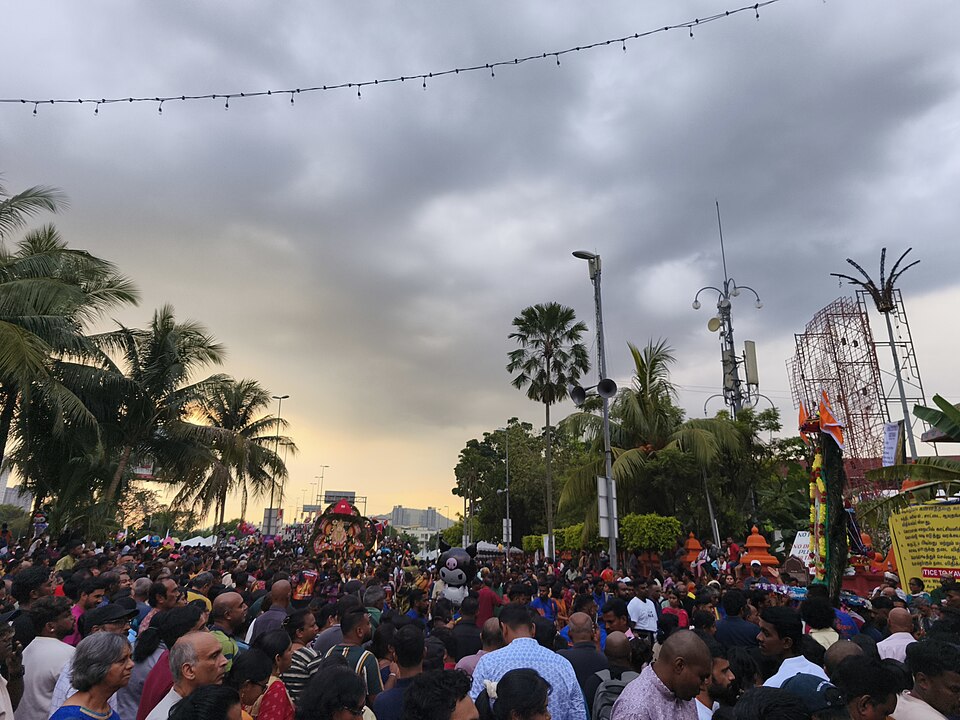
Malaysian leisure is democratic and delicious. The evening institutions are the pasar malam night market and the mamak stall, where teh tarik and roti canai flow past midnight; George Town and Kuala Lumpur rank among Asia's street-food capitals. Getaways follow the country's geography: Langkawi's beaches and UNESCO Global Geopark, the colonial-era hill station of the Cameron Highlands with its tea plantations, diving at Sipadan — routinely rated among the world's finest dive sites — and orangutan and proboscis-monkey watching in Borneo's national parks. Genting Highlands, the casino-resort city in the clouds an hour above Kuala Lumpur, draws millions, while the Rainforest World Music Festival in Sarawak and the George Town Festival in Penang anchor the cultural calendar; Thaipusam at the Batu Caves brings one of the world's most spectacular Hindu processions to the capital's doorstep each year. Tourism is serious business — Malaysia has recorded more than 25 million international arrivals in its best years, among the highest totals in Southeast Asia.
Entertainment, Malaysia
*angys* / CC BY-SA 4.0

Art & Museums

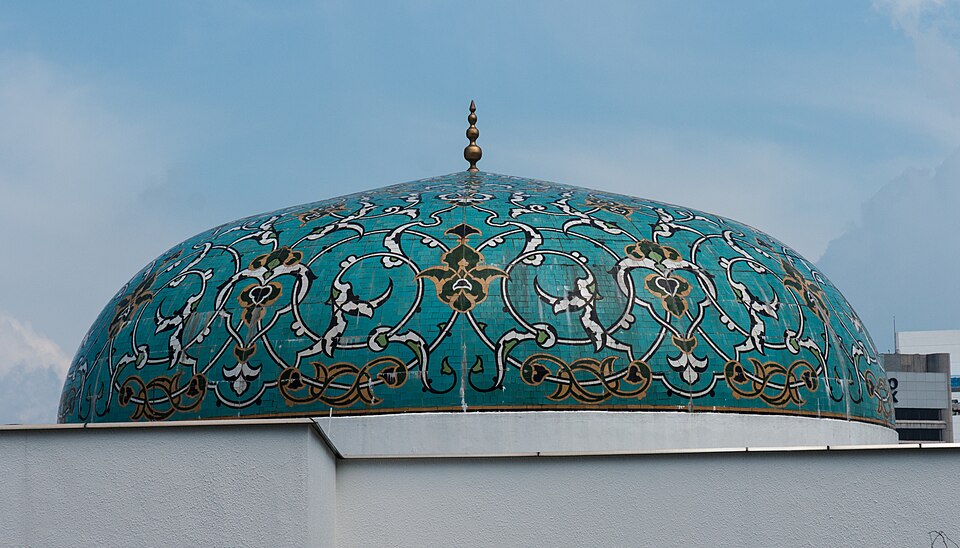
Malaysian art runs from cave wall to skyline. The Niah Caves of Sarawak preserve prehistoric paintings beside the 'death-ship' burials of ancient communities, and Gua Tambun in Perak holds rock art thousands of years old. Classical crafts remain the backbone: hand-drawn batik, gold-threaded songket brocade woven in Terengganu and Kelantan, silverwork and pewter — Royal Selangor, founded in Kuala Lumpur in 1885, grew into the world's largest pewter maker — and the intricately carved shadow puppets of wayang kulit. Modern painting found its footing after independence: Latiff Mohidin's 'Pago Pago' series fused Southeast Asian forms with international modernism, Ibrahim Hussein built a global career from his Kuala Lumpur studio, and Syed Ahmad Jamal championed abstraction; the National Art Gallery, established in 1958, holds the national collection. The Islamic Arts Museum Malaysia, opened in Kuala Lumpur in 1998, is Southeast Asia's largest museum of Islamic art, its galleries of calligraphy, textiles, and architectural models drawing scholars and tourists alike.
Art & Museums, Malaysia
CEphoto, Uwe Aranas / CC BY-SA 3.0

Notable People

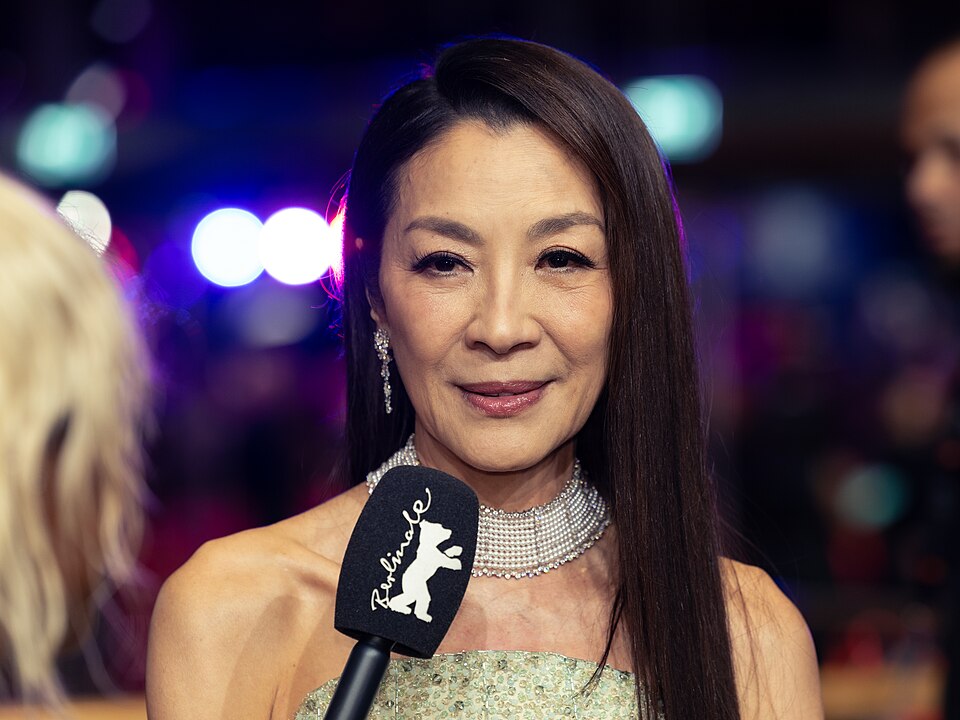
Malaysia's best-known names span politics, cinema, and sport. Tunku Abdul Rahman, the prince-lawyer who negotiated independence and proclaimed 'Merdeka!' in 1957, is honored as the father of independence. Mahathir Mohamad dominated politics like no other — prime minister for 22 years (1981–2003), then again from 2018 at age 92 as the world's oldest elected head of government. On screen, Ipoh-born Michelle Yeoh rose from Hong Kong action stardom to the 2023 Academy Award for Best Actress for Everything Everywhere All at Once — the first Malaysian, and the first Asian woman, to win it. Penang-born Jimmy Choo turned bespoke shoemaking into a global luxury name. In sport, badminton's Lee Chong Wei spent roughly 349 weeks ranked world number one, and squash's Nicol David was voted the greatest female player in her sport's history. Add tycoons like Robert Kuok, long Malaysia's richest man in Forbes' rankings, and Wu Lien-teh, the Penang-born plague fighter nominated for a Nobel Prize in 1935.
Notable People, Malaysia
Harald Krichel / CC BY-SA 4.0

Inventions & Breakthroughs

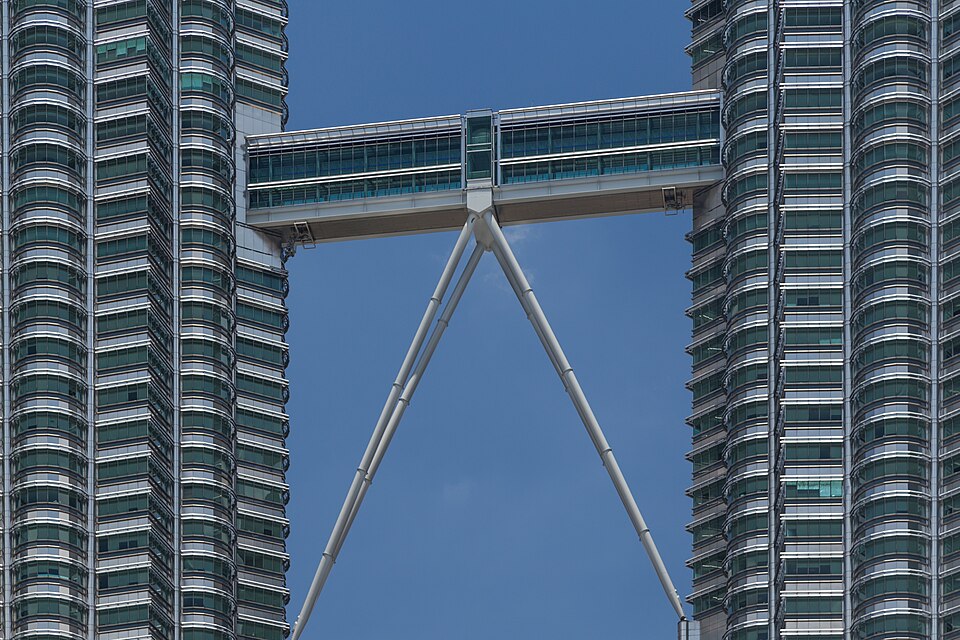
Malaysia's contributions lean applied. The Penang-born physician Wu Lien-teh, dispatched to fight the Manchurian plague of 1910–11, designed the layered gauze anti-plague mask now regarded as a forerunner of the modern respirator and pioneered epidemic-control methods credited with saving countless lives — work that made him, in 1935, the first Malayan nominated for a Nobel Prize. Agricultural science is the quieter legacy: the Rubber Research Institute of Malaysia bred the high-yielding clones and refined the tapping methods that kept the country the world's leading rubber producer for much of the twentieth century, and Malaysian agronomists later did the same for oil palm, developing the high-yield varieties behind the nation's dominance of the global palm-oil trade. Engineering ambition turned vertical: the Petronas Towers, completed in 1998, advanced supertall design — their double-decker skybridge is engineered to slide as the towers sway — and Merdeka 118 followed as the world's second-tallest building. The Proton Saga of 1985, Southeast Asia's first national car, remains a milestone of industrial policy.
Inventions & Breakthroughs, Malaysia
Marcin Konsek / CC BY-SA 4.0

Science & Technology

Malaysia's industrial technology grew out of a deliberate bet made in the early 1970s, when Penang's free-trade zone attracted semiconductor firms to set up assembly plants; the state has since become a significant global centre for chip assembly, testing and packaging, and electrical and electronic goods dominate exports. Commodity science is the older strand: the Malaysian Rubber Board's breeding and latex processing research made the country a leading rubber producer, and the Malaysian Palm Oil Board's work includes the sequencing of the oil-palm genome, published in 2013, aimed at raising yield per hectare rather than clearing more land. Petronas, the state oil and gas company, developed deepwater production capability and built the Petronas Towers as its headquarters. Universiti Malaya and Universiti Sains Malaysia anchor the research universities, alongside the national ICT institute MIMOS. Malaysia's first astronaut, Sheikh Muszaphar Shukor, flew to the International Space Station in 2007. The country is also a substantial manufacturer of solar photovoltaic modules and has been expanding utility-scale solar generation.
On The World Stage
Champions of Malaysia

Champions & Defining Moments

Malaysia's global sporting identity was forged on the badminton court. It has won the Thomas Cup — the sport's world men's team title — five times, including as inaugural champion in 1949 behind players like the great Wong Peng Soon, and Malaysians have contested Olympic and All England finals for generations; Lee Chong Wei's three consecutive Olympic singles silvers (2008, 2012, 2016), each lost in a final against a Chinese rival, are national epics of near-miss. The Olympic haul spans badminton, diving — Pandelela Rinong's platform bronze at London 2012 made her the country's first female medalist — and track cycling, where Azizulhasni Awang took keirin bronze at Rio 2016 and silver at Tokyo; a first Olympic gold still eludes the nation. Nicol David ruled world squash from the top ranking for 108 consecutive months and won eight world titles. The Sepang circuit hosted Formula One from 1999 to 2017 and still stages MotoGP, and Kuala Lumpur's 1998 Commonwealth Games were the first held in Asia.

Pierre-Yves Beaudouin / CC BY-SA 4.0
Economy, Trade & Government

Currency & GDP

Malaysian Ringgit — MYR (RM)

GDP (PPP): $1.212 trillion (2024 est.)

Per capita: $34,100 (2024 est.)

Exports

$301.789 billion (2024 est.)

integrated circuits, refined petroleum, crude petroleum, natural gas, palm oil (2023)

Partners: China 21%, Singapore 12%, USA 12%, Japan 5%, Hong Kong 5% (2023)

Imports

$279.09 billion (2024 est.)

integrated circuits, refined petroleum, crude petroleum, coal, broadcasting equipment (2023)

Partners: China 24%, Singapore 11%, USA 7%, Japan 5%, Taiwan 5% (2023)

Government

Type: federal parliamentary constitutional monarchy

Independence: 31 August 1957 (from the UK)

Terrain → Where People Live

How mountains, coasts, and rivers shape settlement (LandScan).

Coming — data

Migration & Ethnic Settlement

Where groups settled and how people move (GeoEPR + UNHCR).

Coming — data

Universities

Notable institutions, mappable as points.

Coming — data
Economy & government facts: CIA World Factbook (public domain), via OpenFactBook / factbook.json.
Every fact and narrative claim will carry a visible source citation. Data-driven sections light up automatically wherever HERA has coverage.