HERA · Human Entity Reference Atlas by Masego Inc

← Namibia 🌐 3D View
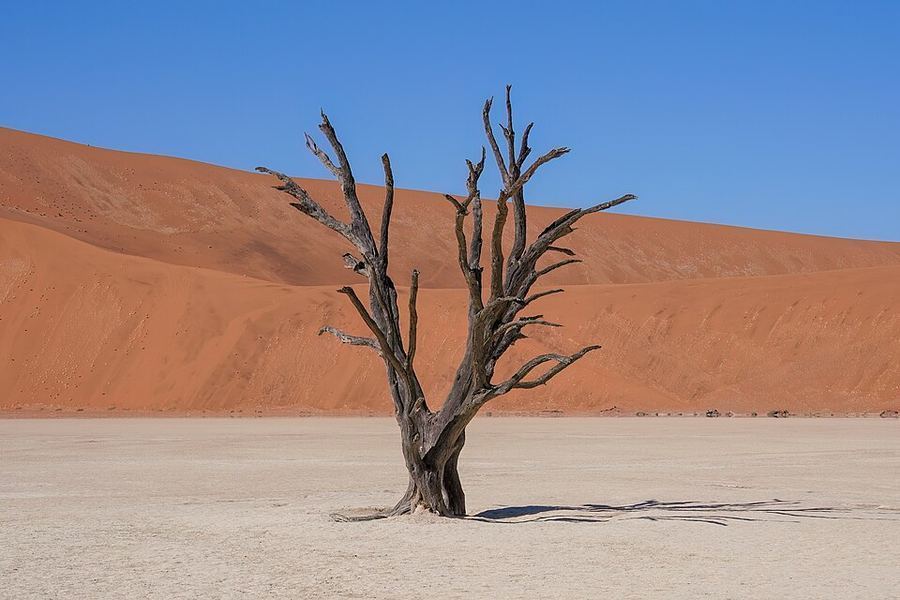
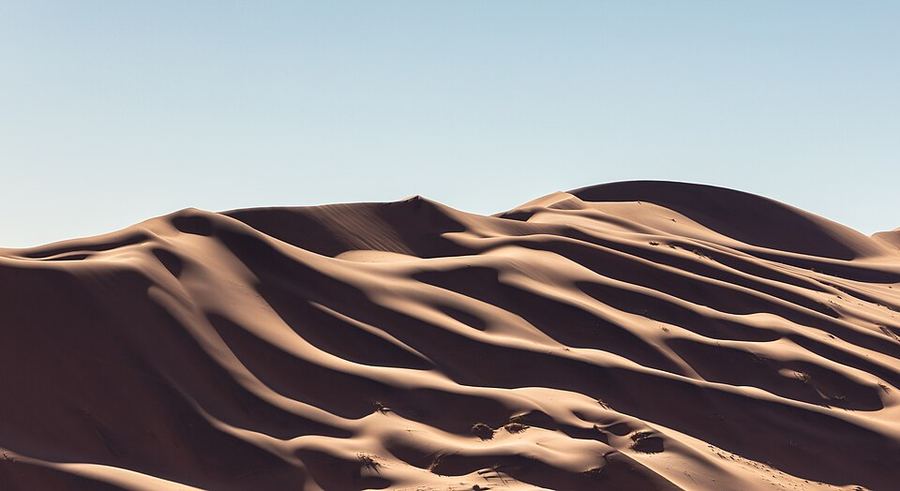
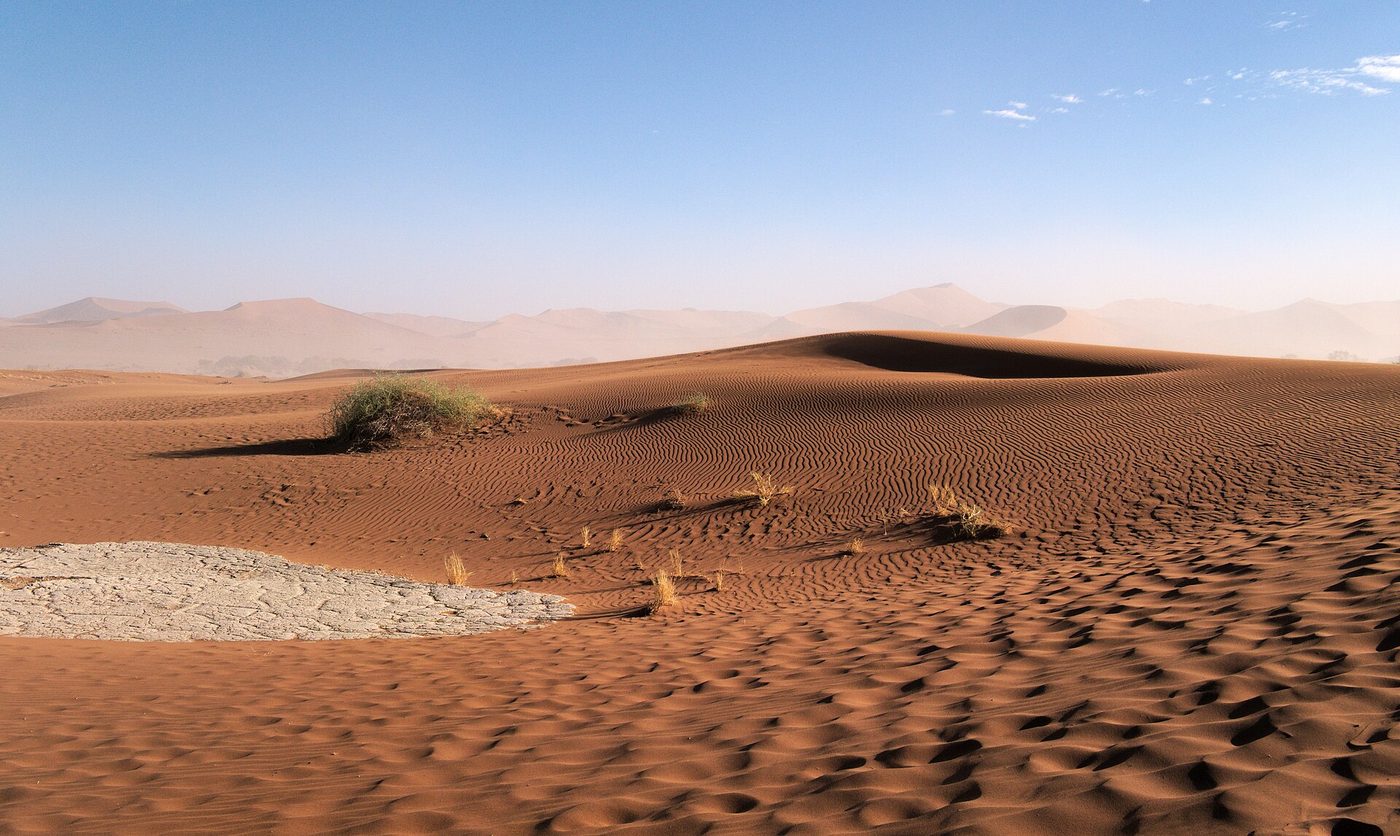
Sossusvlei Dune Rippled cropped, Namibia
Namibia NAM
Sossusvlei Dune Rippled cropped — Photo: Daniel Kraft / CC BY-SA 3.0 via Wikimedia Commons
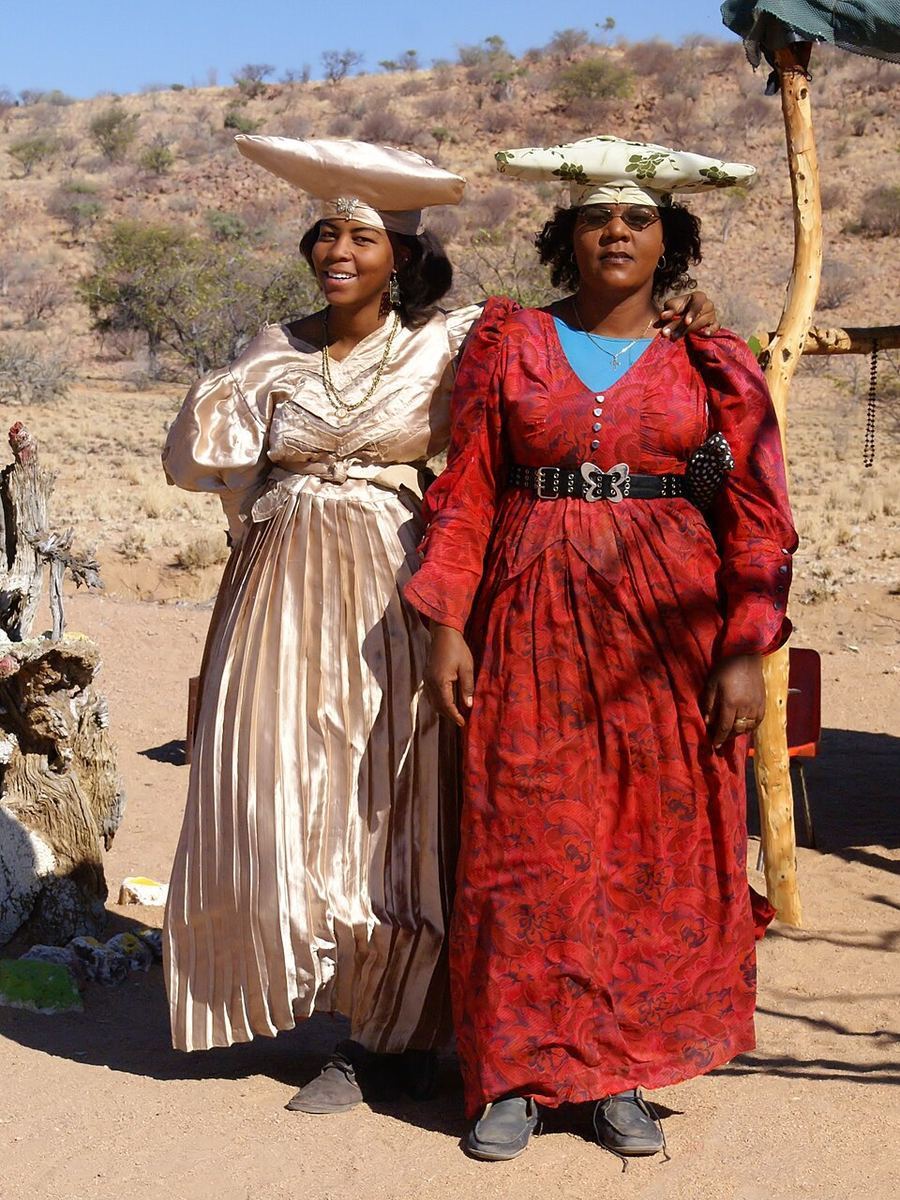
Did You Know The Herero women's floor-length Victorian gown and horn-shaped headdress began as dress imposed by German missionaries and is now worn as a deliberate assertion of Herero survival. — Encyclopaedia Britannica

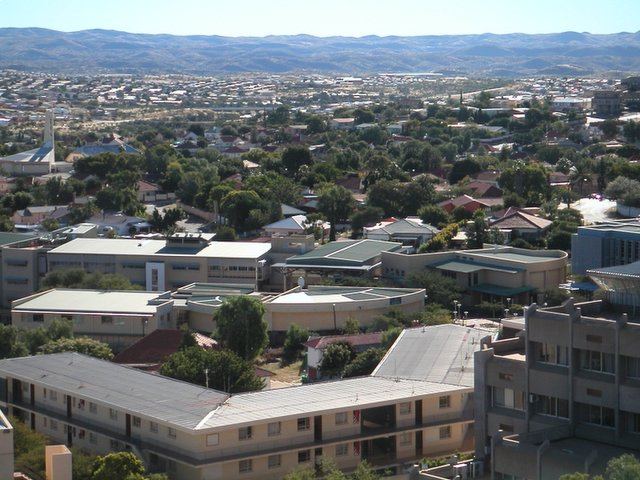
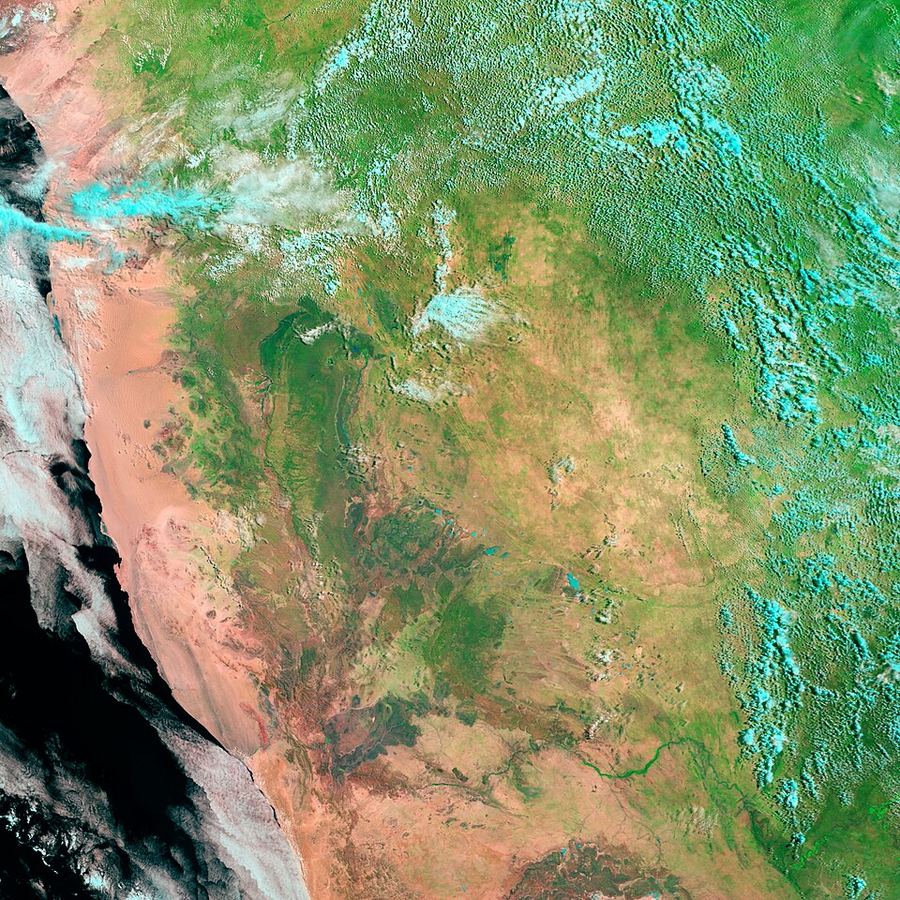
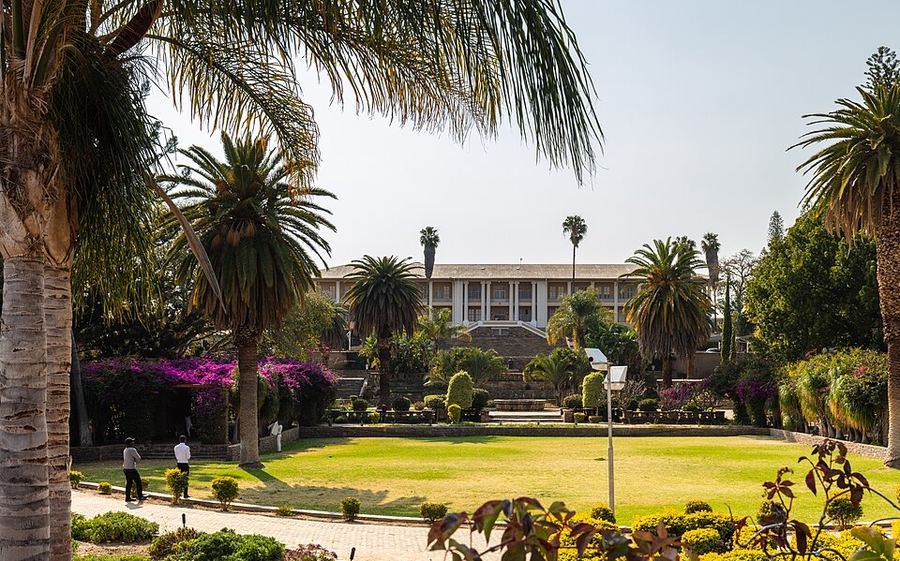
Namibia occupies the south-western corner of Africa, a country of about 2.9 million people spread across 824,000 square kilometres of desert, escarpment and savannah, giving it one of the lowest population densities on Earth. The Namib Desert runs the length of its Atlantic coast and the Kalahari its eastern border; between them lies a central plateau where Windhoek, the capital, sits at around 1,700 metres. Ovambo-speaking people from the far north make up about half the population, alongside Kavango, Herero, Damara, Nama, San, Caprivian, Baster and a European-descended minority; English is the sole official language, chosen at independence in 1990 in deliberate preference to Afrikaans, which nonetheless remains the country's most widely understood lingua franca. Namibia was German South West Africa from 1884, then ruled by South Africa from 1915 through a League of Nations mandate that South Africa refused to relinquish, and it won independence on 21 March 1990 after a twenty-four-year liberation war. The economy rests on mining, above all diamonds recovered from the seabed and uranium from the Namib, plus fishing off the Benguela current, cattle and a substantial tourism sector. It is an upper-middle-income country with severe and persistent inequality.

CIA World FactbookWorld BankEncyclopaedia BritannicaUN
Population
2,852,777
Capital
Windhoek
Currency
None NAD
Time zones
Largest city
Windhoek
Human Geography Themes
Loading national figures…
Largest Cities
Windhoek417,842
Walvis Bay84,904
Swakopmund77,247
Rundu67,498
In Perspective

Windhoek's urban core is home to about 417,842 people.

Among the world's megacities, though, it's one of many — the giants of Asia and Latin America run larger still:

Windhoek417,842
Jakarta40,545,126
Dhaka37,307,160
Tokyo33,244,670
Shanghai30,678,616
Cairo25,230,325
The Country & Its People

History

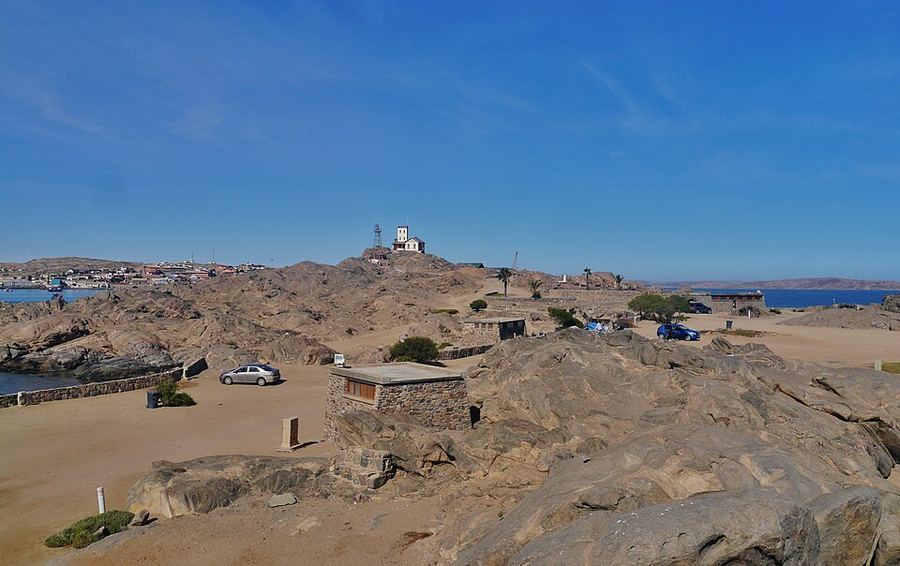
San hunter-gatherers occupied the region for millennia before Khoekhoe herders and, from the north, Bantu-speaking Ovambo and Herero cattle keepers moved in. Portuguese navigators left a stone padrão at Cape Cross in 1486, but the coast's aridity deterred settlement until Britain annexed Walvis Bay in 1878 and Germany declared a protectorate over the rest in 1884. German rule provoked sustained resistance, and the Herero and Nama uprisings of 1904 to 1908 were met with a campaign of extermination: after the Battle of Waterberg, General Lothar von Trotha's forces drove survivors into the Omaheke desert and held prisoners in camps, most notoriously on Shark Island at Lüderitz, killing a very large proportion of both populations. South Africa took the territory in 1915 and administered it under a League of Nations mandate, extending apartheid law to it and refusing to accept UN supervision after 1945. The UN General Assembly terminated the mandate in 1966 and the International Court of Justice declared South Africa's continued presence illegal in 1971. SWAPO began armed struggle in 1966; after the Tripartite Accord of 1988 and UN-supervised elections in 1989, Namibia became independent on 21 March 1990 under Sam Nujoma.
Culture

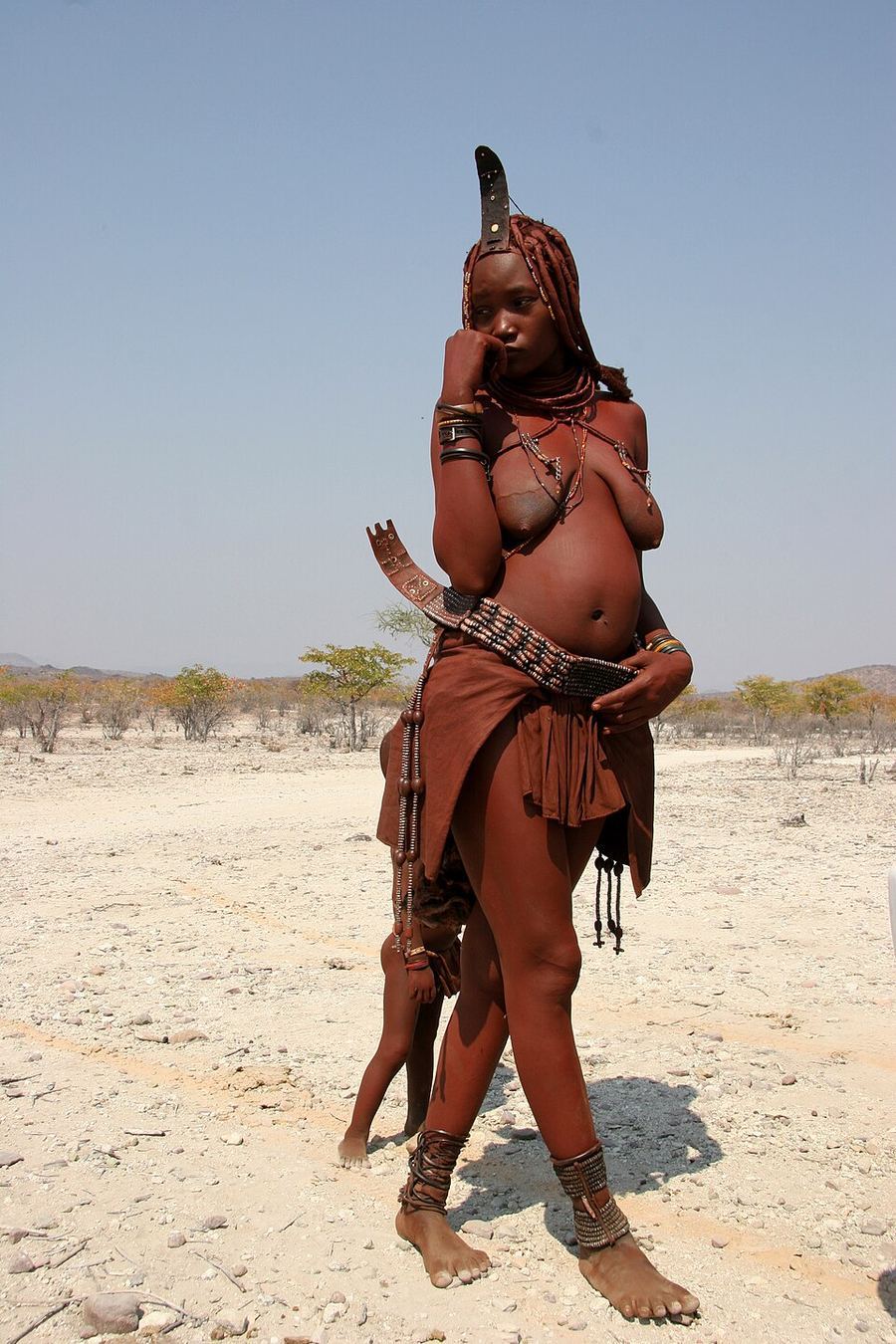
Namibian culture is plural and regionally distinct rather than national. In the densely settled north, Ovambo society is organised around homesteads, mahangu millet cultivation and cattle, with a strong Lutheran church presence inherited from Finnish missionaries. Herero communities in the central and eastern regions keep cattle at the centre of ritual and social standing, maintain the sacred ancestral fire, the okuruwo, at the homestead, and hold annual commemorations at Okahandja and Omaruru where mounted men in uniform and women in full dress honour the leaders killed in the genocide. Nama and Damara communities in the south and centre speak Khoekhoegowab with its distinctive click consonants and hold their own commemorative days. The Himba of the Kunene region in the north-west, a Herero-related pastoral people, remain among the most culturally conservative, with women covering skin and hair in otjize, a paste of butterfat and red ochre. San communities in the east retain the oldest cultural lineage in southern Africa under severe pressure. Overlaying all of it is a shared national politics of liberation, commemorated in Heroes' Day on 26 August and Cassinga Day on 4 May.

Points Of Pride

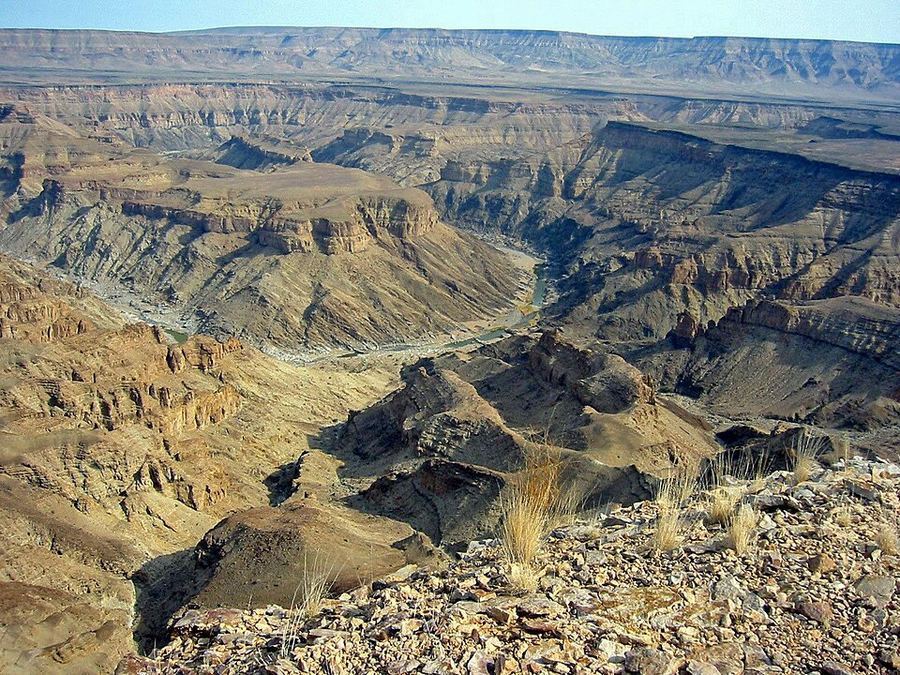
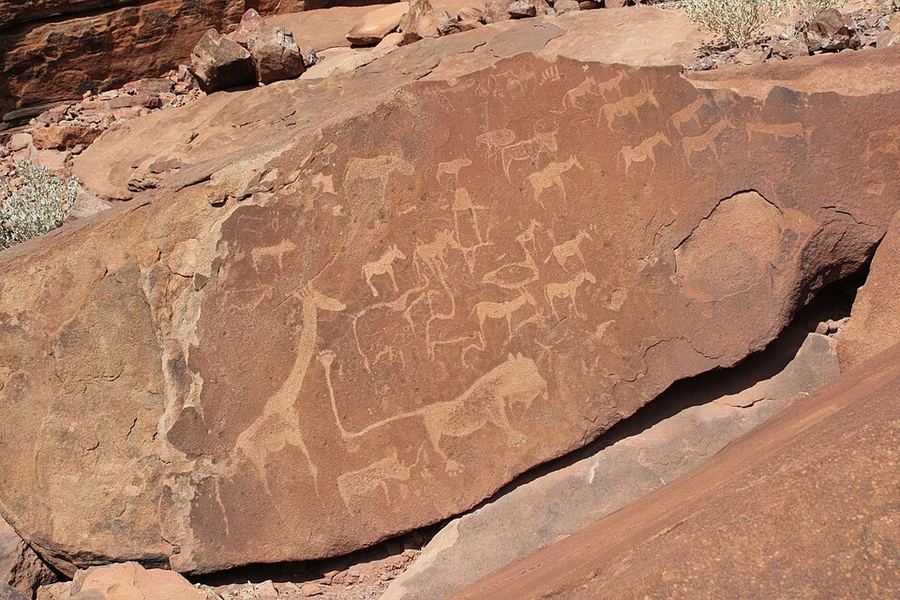
Namibia holds two UNESCO World Heritage sites. Twyfelfontein in Damaraland, inscribed in 2007, is one of the largest concentrations of rock engravings in Africa, thousands of petroglyphs of animals and tracks pecked into sandstone over millennia. The Namib Sand Sea, inscribed in 2013, is the only coastal desert on Earth where fog is the dominant water source, and its dunes at Sossusvlei and the dead camelthorn trees standing on the white clay pan at Deadvlei are the country's signature image. The Fish River Canyon in the south is the largest canyon in Africa. Etosha National Park's salt pan and waterholes make it one of the continent's most reliable places to see wildlife. Namibia's greatest institutional pride, though, is conservation policy: it was the first African country to write environmental protection into its constitution, and its communal conservancy programme, which transferred rights over wildlife and tourism revenue to rural communities from 1996, now covers a large share of the country and underpins the world's largest population of free-roaming black rhino outside a formally protected area, along with recovered desert-adapted elephant and lion.

Cultural Fusion

Namibia's mixtures are mostly the sediment of colonisation. Afrikaans, imposed through South African administration, became the country's actual lingua franca across ethnic lines and remains so, even though English was chosen as the sole official language at independence specifically to break with that inheritance. German survives in Swakopmund and Lüderitz in street names, bakeries, a German-language newspaper and a brewing tradition, and Windhoek Lager is still made to the German purity law. The most striking fusion is sartorial: Herero women adopted the long, high-necked Victorian dress imposed by German missionaries in the nineteenth century, then made it their own, adding a horizontal horn-shaped headdress that echoes cattle horns, and it is now worn with pride as a marker of Herero identity and survival, a garment of humiliation turned into a statement. Baster communities around Rehoboth, descended from Cape Colony unions between Dutch settlers and Khoekhoe women, speak Afrikaans and maintain their own historical self-government tradition. In music and food, Angolan, South African and increasingly Zimbabwean and Zambian influence flows in along the northern and eastern borders.

Music & Dance

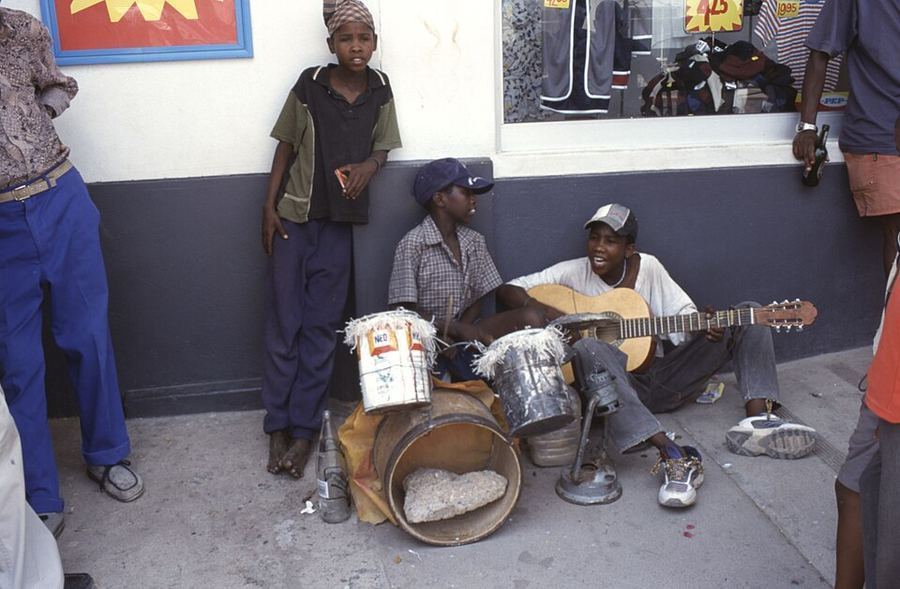
Traditional performance varies sharply by region: Ovambo oudano dance and song, Damara /gais, the Nama stap with its shuffling paired steps, and Herero ceremonial song at the ancestral commemorations. Liberation-era music occupies a special place, and Jackson Kaujeua, who wrote and performed in exile and returned at independence, is the country's most revered musician; the Ndilimani Cultural Troupe, formed within SWAPO during the struggle, still performs. Since independence two genres have dominated popular listening. Oviritje is a Herero-language style built on accordion, keyboard and a driving rhythm, sung in Otjiherero and hugely popular in the central regions. Namibian kwaito and hip hop, drawing on the South African kwaito template, produced the country's biggest commercial stars, among them Gazza and The Dogg, while EES built a distinctive Namlish and German-inflected style with a following in Germany as well as at home. Damara punch is a fast, minimal electronic dance style with a devoted following. Elemotho works an acoustic, Kalahari-rooted line that has travelled well internationally, winning the RFI Discoveries award in 2012.
Encyclopaedia BritannicaBBCAgence France-Presse

Cuisine & Misattributed Foods

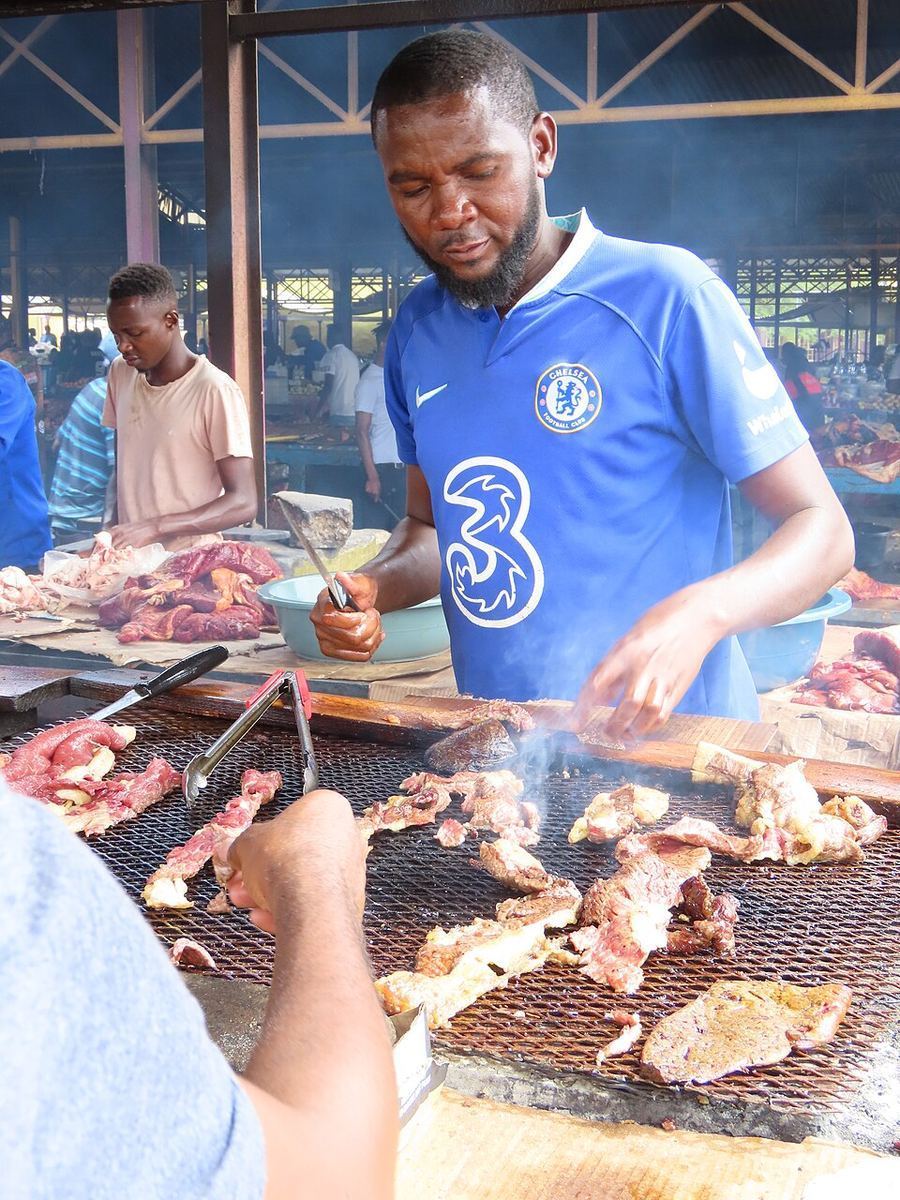
Namibian eating divides between the north, where mahangu pearl millet is the staple, and the rest of the country, where maize meal and meat dominate. Oshifima, a stiff mahangu porridge, is eaten with relishes of dried spinach, beans, meat or the small dried fish traded down from the Angolan border, and washed down with oshikundu or ontaku, a lightly fermented millet drink. Meat is central everywhere: Namibia is a major beef producer, and biltong and dried sausage are everyday foods rather than delicacies. The most distinctive national dish is kapana, thin strips of beef grilled over open fires and cut to order at open-air markets, above all the Single Quarters market in Katutura in Windhoek, eaten immediately with a dry chilli and spice mix and a tomato salsa. Potjiekos, a slow stew cooked in a three-legged cast-iron pot over coals, comes from the Afrikaans tradition, as does braaivleis. Seasonal delicacies are prized: omajova, enormous termite-mound mushrooms that appear after the first rains, and Kalahari truffles. The German inheritance persists in bakeries, cured meats, and the brewing of Windhoek Lager to the Reinheitsgebot.

National Dress

Namibia's most recognisable dress is the Herero ohorokova: a floor-length, long-sleeved, high-necked gown built over multiple petticoats, in bold patterned fabric, worn with the otjikaiva, a wide horizontal headdress shaped to suggest cattle horns. Its origin is German missionary insistence that Herero women adopt Victorian dress, and its meaning today is the opposite of submission; it is worn at commemorations of the genocide, at weddings and at funerals as a deliberate assertion of continuity. Herero men wear military-style uniforms at the same commemorations, appropriated from the German colonial forces. Nama and Damara women wear a related but distinct Victorian-derived dress with a bonnet-style headscarf. Ovambo dress features the odelela, a striped pink and white cloth used for wrapped skirts and dresses at weddings and cultural events. Himba women in the Kunene wear leather skirts and shell and iron ornament, and coat skin and braided hair with otjize, a mixture of butterfat and powdered red ochre. San dress traditionally used skin and beadwork, with ostrich eggshell beads worked into jewellery that remains a significant craft product.

Sports & Inspiring Athletes

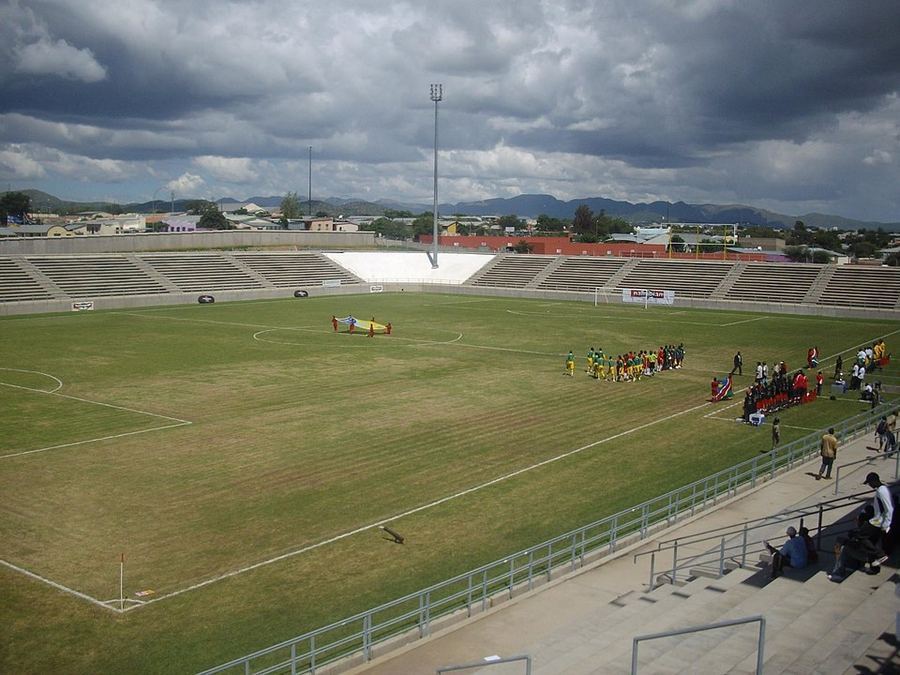
Football is the most widely played sport and the Brave Warriors carry the largest domestic following, with the Namibia Premier League based mainly in Windhoek and the coastal towns. Rugby union has the deepest institutional roots, inherited from South African schooling and concentrated in Windhoek and the German- and Afrikaans-speaking communities, and it is the sport in which Namibia has been most consistently present internationally. Cricket has grown substantially since the 2000s and is now a genuine third code, supported by a strong schools structure. Athletics has produced the country's greatest champions, with a sprinting tradition running from Frankie Fredericks to Christine Mboma and Beatrice Masilingi. Boxing has an unusually strong professional record for the population, producing world champions including Harry Simon, Paulus Moses and Julius Indongo. Netball, netball-adjacent school sports, and both road and mountain cycling are widely played. Hunting is a major organised activity with a large commercial sector attached, and angling off the Atlantic coast draws national competitions. Facilities outside Windhoek, Walvis Bay and Swakopmund remain thin, which constrains participation in the north where most of the population lives.

Notable Educational Programs

Namibia inherited a school system deliberately segregated and unequally funded under South African administration, and rebuilding it has been the central social project since 1990. Primary education was made free of tuition fees in 2013 and secondary in 2016, and enrolment and gender parity are now high by regional standards, though outcomes remain uneven between the well-resourced central schools and the crowded rural north, and the shift to English-medium instruction created a lasting shortage of teachers fluent enough to deliver it. The University of Namibia, founded in 1992, is the largest institution, with campuses across the country and its medical school in Windhoek; the Namibia University of Science and Technology, upgraded from the Polytechnic of Namibia in 2015, handles engineering, computing, natural resources and logistics; and the International University of Management is the main private provider. Vocational training centres under the Namibia Training Authority handle trades. The Gobabeb Namib Research Institute in the desert, run jointly with the state, doubles as a field training centre for Namibian and international students in desert ecology, hydrology and climate science.

Wars & Conflicts

The Herero and Nama genocide of 1904 to 1908 is the defining atrocity of Namibian history: German colonial forces under Lothar von Trotha issued an extermination order after the Battle of Waterberg, drove survivors into the waterless Omaheke, and operated prison camps including the one on Shark Island at Lüderitz, killing a very large share of both peoples. Germany formally acknowledged the events as genocide in 2021 and offered a development package over thirty years, but Herero and Nama representative organisations rejected the terms as inadequate and as negotiated without them, and the matter is unresolved. The liberation war ran from SWAPO's first armed action in 1966 to the ceasefire in 1989 and included the South African raid on the Cassinga camp in Angola in May 1978, which killed hundreds of Namibian refugees and is commemorated annually. Since independence the country has seen two episodes of armed conflict: Namibian participation alongside Zimbabwe and Angola in the Democratic Republic of the Congo war from 1998, and a secessionist attack on Katima Mulilo in August 1999 by the Caprivi Liberation Army, which triggered a mass treason trial that ran for well over a decade.
UNHuman Rights WatchReutersBBCAmnesty InternationalUCDP
Current as of 2026-08-07

Land & Border Disputes

Namibia's most significant boundary dispute has been settled. Kasikili Island, known as Sedudu in Botswana, sits in the Chobe River where the two countries meet, and both claimed it; they referred the question jointly to the International Court of Justice, which ruled in December 1999 that the boundary followed the northern channel and that the island therefore belonged to Botswana, and Namibia accepted the judgment. The status of Walvis Bay, retained by South Africa at Namibian independence along with the offshore Penguin Islands, was resolved by their transfer to Namibia in 1994. One boundary question remains genuinely open: the border with South Africa along the Orange River. The colonial-era definition placed it at the river's northern bank rather than the mid-channel line that international practice would normally imply, which would give South Africa the entire river; Namibia disputes this, and the matter carries practical weight for water rights, riverbed diamond deposits and irrigation. Namibia's other borders, with Angola, Zambia, Botswana and Zimbabwe, are settled, and the narrow Zambezi region panhandle, a product of nineteenth-century German ambition to reach the Zambezi, is uncontested.
Land, Life & Legacy

Land & Climate

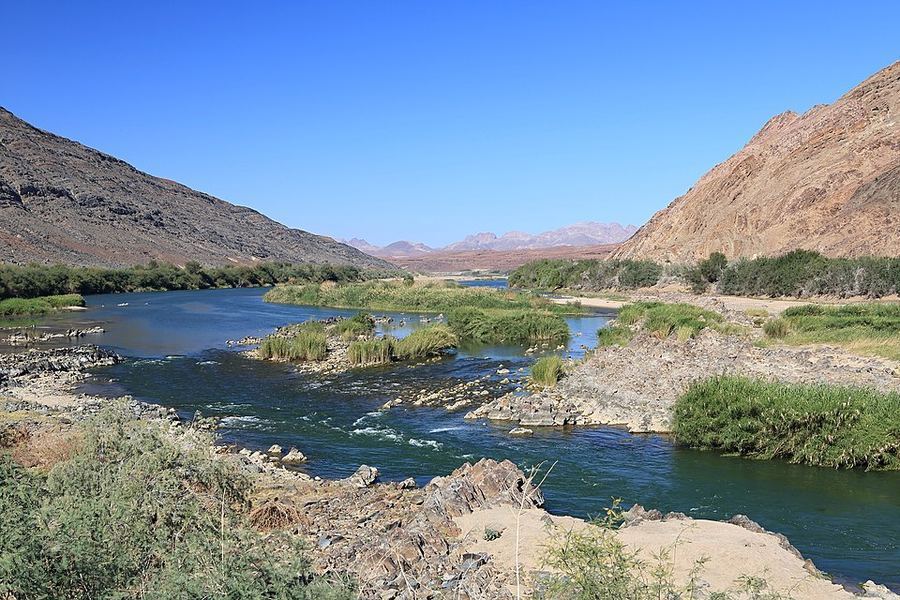
Namibia is the driest country in sub-Saharan Africa, and its structure runs in three north-south bands. The Namib, a coastal desert generally considered the oldest on Earth at around 55 million years, stretches the full 1,500-kilometre Atlantic coast; it receives almost no rain, and its life depends on fog driven inland by the cold Benguela current, which also makes the coast bleak and strewn with wrecks, hence the name Skeleton Coast. Behind it the Great Escarpment rises to a central plateau carrying Windhoek and most of the farmland, topped by the Brandberg massif whose Königstein summit at 2,573 metres is the country's highest point. East of that the land falls into the Kalahari sands. The Fish River Canyon cuts deep into the southern plateau. Only the northern and north-eastern borders carry perennial rivers, the Kunene, Okavango and Zambezi; everywhere else the rivers are ephemeral. Rainfall arrives, when it does, between November and April and ranges from under 20 millimetres a year on the coast to around 600 in the Zambezi region. Drought is recurrent and severe, and both flood and drought cycles have intensified.

Entertainment

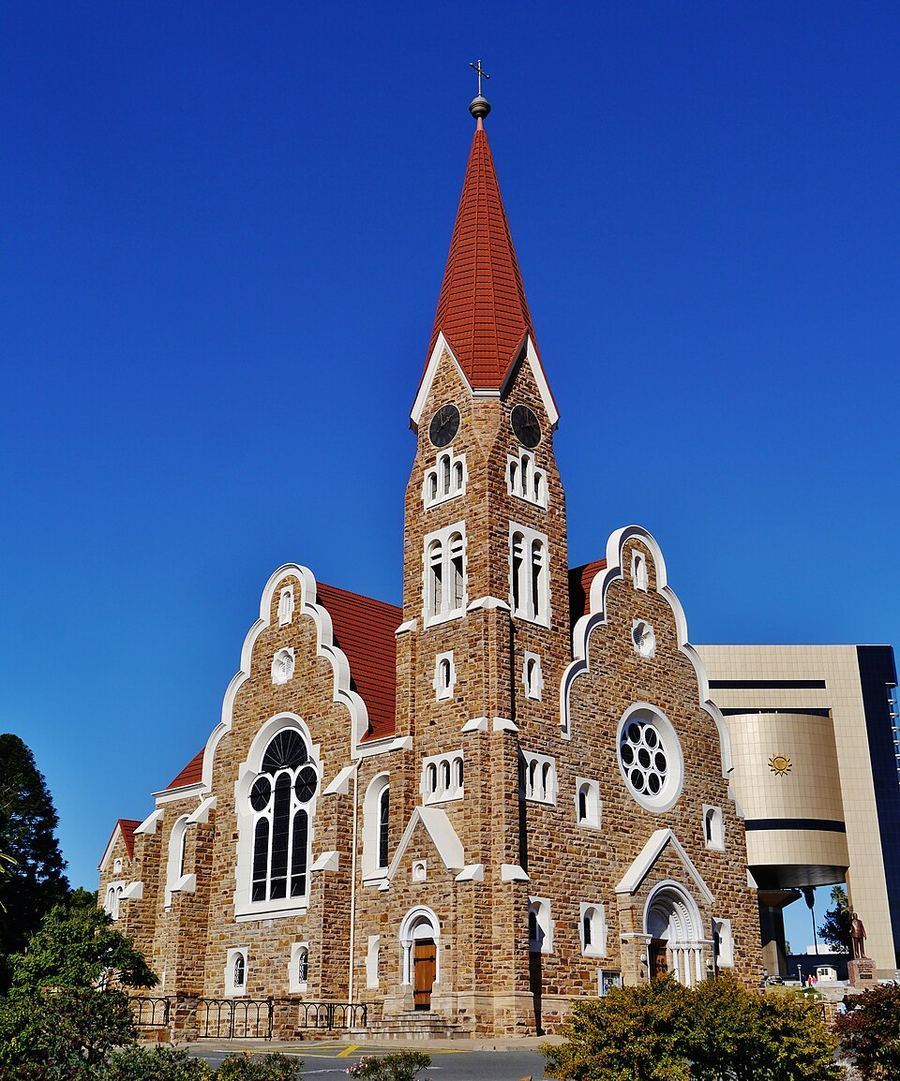
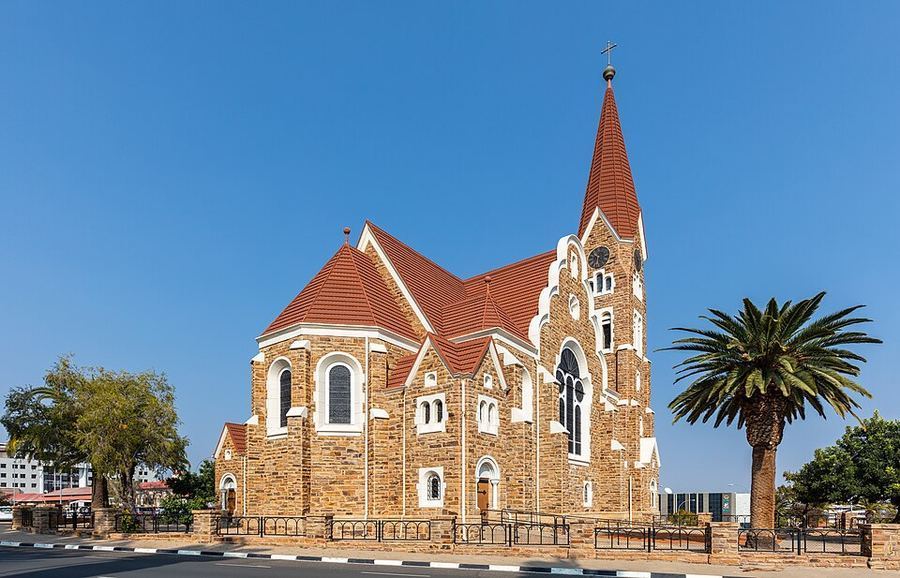
Namibian recreation is dominated by distance and open country: self-drive travel on gravel roads, camping, and hunting and fishing are all mainstream pursuits rather than niche ones. Sossusvlei at sunrise, the climb up Big Daddy dune, and the pan at Deadvlei are the standard national outing as well as the tourist one. Etosha's waterholes, several of them floodlit at night, draw Namibians on long weekends. Swakopmund, a seaside town of German colonial architecture, is where the interior goes for cool air and the sea, and has built an adventure industry around sandboarding, quad biking and skydiving over the dunes; the Walvis Bay lagoon nearby holds large flamingo flocks. Fishing off the Skeleton Coast for kabeljou and steenbras is a serious pursuit. The braai, an outdoor meat fire, is the default weekend social form across all communities. In town, football, church activity and the bars and kapana grills of Katutura and other townships carry most social life. Hiking is concentrated on the Fish River Canyon trail, a demanding multi-day route open only in the cooler months, and on the Brandberg and Naukluft.

Art & Museums

Namibia's oldest art is among the most significant in Africa. The engravings at Twyfelfontein, thousands of them, show giraffe, rhino, lion and antelope alongside animal spoor, and are read as connected to hunter-gatherer ritual over a period of at least two thousand years. On the Brandberg, the painted figure known as the White Lady, recorded by Abbé Breuil in the 1940s and long misinterpreted as Mediterranean in origin, is now understood as part of an indigenous San painting tradition. The dominant modern figure is John Muafangejo, an Ovambo artist trained at the Rorke's Drift art centre, whose black and white linocuts of biblical scenes, mission life, Ovambo history and the violence of the apartheid period, dense with hand-lettered text, became the visual signature of Namibian art before his death in 1987 and hang in major international collections. The National Art Gallery of Namibia in Windhoek is the principal public institution, and the Namibia Craft Centre supports basketry, ostrich eggshell beadwork, Himba and San craft and township printmaking. Katutura has produced a distinct contemporary scene working in photography, textile and installation.

Notable People

Hendrik Witbooi, the Nama kaptein who fought the German colonial administration until his death in 1905, and Samuel Maharero, who led the Herero uprising of 1904, are the foundational resistance figures, and Witbooi's portrait appears on Namibian banknotes. Sam Nujoma led SWAPO through the liberation war from 1960, became the first president at independence in 1990, served three terms and died in February 2025. Hifikepunye Pohamba, his successor, was awarded the Mo Ibrahim Prize for African leadership in 2014 after leaving office at the end of his term. Hage Geingob served as the country's first prime minister and later as president until his death in office in February 2024, and Netumbo Nandi-Ndaitwah, a liberation-era figure and long-serving foreign minister, won the November 2024 election to become Namibia's first woman president. John Muafangejo is the country's defining artist and Jackson Kaujeua its defining musician. In sport, Frankie Fredericks won four Olympic silver medals in the 100 and 200 metres in 1992 and 1996, Christine Mboma took 200-metre silver in Tokyo, Harry Simon held a world light-middleweight title undefeated, and Jacques Burger captained Saracens in English rugby.

Inventions & Breakthroughs

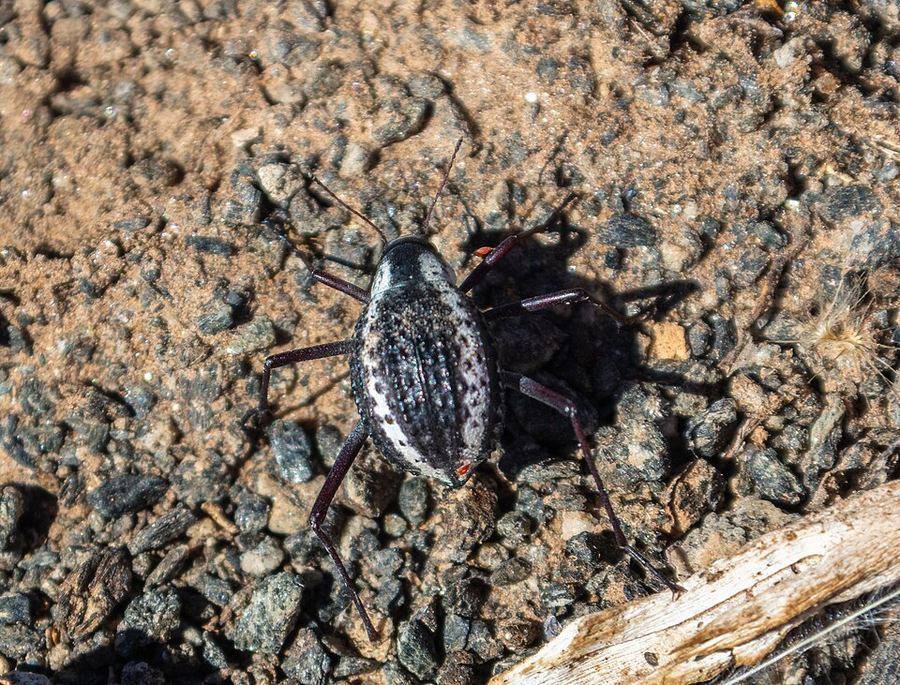
Namibia's inventive contributions are ecological and extractive rather than consumer technology. The country pioneered the community conservancy model: legislation from 1996 gave rural communities on communal land legal rights over the wildlife on it and the revenue from tourism and controlled hunting, converting animals from a liability into an asset and reversing decades of decline. The model has since been studied and copied across southern and eastern Africa and is Namibia's most exported idea. In mining, the country is the world centre of marine diamond recovery: Debmarine's specialised vessels use seabed crawlers and airlift systems to recover diamonds from gravels under more than a hundred metres of Atlantic water off the Orange River mouth, a technology developed largely for Namibian conditions and used almost nowhere else at scale. Namibian desert biology has also fed directly into materials science: the fog-basking beetles of the Namib, which harvest drinking water from coastal fog on their backs, were the subject of research published in Nature in 2001 that inspired a line of biomimetic water-harvesting and condensation surfaces now pursued in laboratories worldwide.
NatureUNDPReutersScience

Science & Technology

The Namib is one of the world's most intensively studied deserts, and the Gobabeb Namib Research Institute, operating in the sand sea since the early 1960s, has produced decades of work on fog precipitation, dune ecology and the physiology of organisms that survive on atmospheric moisture alone. That research produced the country's most widely known scientific export, the study of Namib beetles that harvest fog water on their backs, published in Nature and taken up as a model for biomimetic water-collection surfaces. The fairy circles of the pro-Namib grasslands, regularly spaced bare patches whose cause has been argued between termite activity and vegetation self-organisation, have generated a long-running scientific debate in the same journals. Namibia's astronomical conditions are exceptional, with very dark skies and stable air, and the High Energy Stereoscopic System, an array of gamma-ray telescopes in the Khomas Highland, has been a significant instrument in high-energy astrophysics since 2002. In applied fields, the country is among the world's largest uranium producers, with the Rössing and Husab mines in the Namib; offshore oil discoveries in the Orange Basin from 2022 and the planned green hydrogen development in the south have made energy technology a central national question.
NatureScienceIEAReuters
On The World Stage

Champions & Defining Moments

Namibia's Olympic record is dominated by one athlete: Frankie Fredericks won silver in both the 100 and 200 metres at Barcelona in 1992 and repeated the pair at Atlanta in 1996, four medals that stood as the country's entire Olympic haul until Christine Mboma took silver in the 200 metres at the Tokyo Games. In rugby union Namibia has qualified for every Rugby World Cup since 1999, seven consecutive tournaments, a remarkable record of persistence for a country of under three million, though it has yet to win a match at the finals. The football team qualified for the Africa Cup of Nations in 1998, 2008, 2019 and the 2023 edition played in early 2024, where it recorded its first ever AFCON victory by beating Tunisia. In cricket, Namibia qualified for the men's T20 World Cup in 2021 and reached the Super 12 stage, beating Ireland and the Netherlands, and has appeared in subsequent editions. The country also competes at the Commonwealth Games and the African Games, where boxing, athletics and cycling supply most of its medals.

IOCOlympediaFIFACommonwealth Games Federation
Economy, Trade & Government

Currency & GDP

Namibia Dollar — NAD (None)

GDP (PPP): $31.154 billion (2024 est.)

Per capita: $10,300 (2024 est.)

Exports

$5.887 billion (2024 est.)

gold, diamonds, radioactive chemicals, fish, refined petroleum (2023)

Partners: South Africa 27%, China 12%, Botswana 8%, Belgium 7%, France 5% (2023)

Imports

$9.199 billion (2024 est.)

refined petroleum, copper ore, ships, electricity, trucks (2023)

Partners: South Africa 36%, China 9%, India 7%, UAE 4%, USA 3% (2023)

Government

Type: presidential republic

Independence: 21 March 1990 (from South African mandate)

Terrain → Where People Live

How mountains, coasts, and rivers shape settlement (LandScan).

Coming — data

Migration & Ethnic Settlement

Where groups settled and how people move (GeoEPR + UNHCR).

Coming — data

Universities

Notable institutions, mappable as points.

Coming — data
Economy & government facts: CIA World Factbook (public domain), via OpenFactBook / factbook.json.
Every fact and narrative claim will carry a visible source citation. Data-driven sections light up automatically wherever HERA has coverage.